Binance Square
tooba raj
10.1k Posts

tooba raj

"Hey everyone! I'm a Spot Trader expert specializing in Intra-Day Trading, Dollar-Cost Averaging (DCA), and Swing Trading. Follow me for the latest market updat
Open Trade
High-Frequency Trader
1.2 Years
582 Following
14.8K+ Followers
9.1K+ Liked
Posts
Portfolio
PINNED
·
--
6.5 Million Kids. One Simple Question. Maybe this was never just about investing. $1,000. For many families, that's where the story begins. More than 6.5 million American children have reportedly enrolled in Trump Accounts, with eligible children receiving a $1,000 government-funded starting balance. At first glance, it looks like a financial literacy initiative. But there's another perspective worth considering. A child's first investment account can also become their first experience with a financial brand. And first impressions often last. Money compounds over time. So can familiarity and trust. Perhaps it's simply a program designed to encourage long-term investing. Or perhaps it's also a long-term branding strategy. If your goal was to build influence that lasts for decades, what would be more effective? Another wave of political advertising... Or helping fund a child's very first investment account? One question remains: When today's children become tomorrow's voters, what will stay with them longer—the $1,000 they received, or the name attached to the account? $TRUMP $TRX
6.5 Million Kids. One Simple Question.

Maybe this was never just about investing.

$1,000.

For many families, that's where the story begins.

More than 6.5 million American children have reportedly enrolled in Trump Accounts, with eligible children receiving a $1,000 government-funded starting balance.

At first glance, it looks like a financial literacy initiative.

But there's another perspective worth considering.

A child's first investment account can also become their first experience with a financial brand. And first impressions often last.

Money compounds over time.

So can familiarity and trust.

Perhaps it's simply a program designed to encourage long-term investing.

Or perhaps it's also a long-term branding strategy.

If your goal was to build influence that lasts for decades, what would be more effective?

Another wave of political advertising...

Or helping fund a child's very first investment account?

One question remains:

When today's children become tomorrow's voters, what will stay with them longer—the $1,000 they received, or the name attached to the account?

$TRUMP $TRX
If you've completed all 7 check-ins, held your assets for the required 7 days, and your Qualification Status shows "Completed", you're now eligible to withdraw your funds from your Binance Web3 Wallet. ✅ 7 Check-ins completed ✅ 7-Day asset holding completed ✅ Qualification Status: Completed You can now safely withdraw your USDT/assets from your wallet.
If you've completed all 7 check-ins, held your assets for the required 7 days, and your Qualification Status shows "Completed", you're now eligible to withdraw your funds from your Binance Web3 Wallet.

✅ 7 Check-ins completed
✅ 7-Day asset holding completed
✅ Qualification Status: Completed

You can now safely withdraw your USDT/assets from your wallet.
VN-Index keeps slipping, and market liquidity is drying up. Yet total margin debt has climbed to a record of nearly 450,000 billion VND. That raises an interesting question. If capital is leaving the market, who's taking on all this leverage? Are institutions quietly building positions before a potential rebound, or are retail investors relying on margin to hold losing positions? If it's the latter, another sharp decline could trigger a wave of forced selling. What's your take on the story behind these numbers? $DEXE $RIF $NIGHT
VN-Index keeps slipping, and market liquidity is drying up. Yet total margin debt has climbed to a record of nearly 450,000 billion VND.

That raises an interesting question.

If capital is leaving the market, who's taking on all this leverage?

Are institutions quietly building positions before a potential rebound, or are retail investors relying on margin to hold losing positions?

If it's the latter, another sharp decline could trigger a wave of forced selling.

What's your take on the story behind these numbers?

$DEXE $RIF $NIGHT
I'm in Guy's Taking this setup with 20x leverage $ERA {future}(ERAUSDT) Possible Target 0.15 $HEMI {future}(HEMIUSDT) possible Target 0.0070 - 0.0075 $XNO {spot}(XNOUSDT) Risk is defined. Execution matters. Let's see what the market gives us. go
I'm in Guy's

Taking this setup with 20x leverage

$ERA


Possible Target 0.15

$HEMI


possible Target 0.0070 - 0.0075

$XNO

Risk is defined. Execution matters.

Let's see what the market gives us.

go
Article
PREDICTION MARKETS ON BINANCE: THE FUTURE OF FINANCE OR JUST A NEW FORM OF GAMBLING?Crypto was supposed to reinvent finance. Yet the deeper I look into the industry, the more I find myself asking a different question: What if it's also reinventing gambling? Prediction markets. Meme coins. 100x leverage. Airdrop farming. Mystery Boxes. Reward points. They all carry different labels, but many are designed around the same principle: Keeping people engaged through dopamine-driven experiences. The uncomfortable part is that we often celebrate this as "user engagement." But what if, in reality, we're simply getting better at engineering addiction? Supporters of prediction markets often make a compelling argument: «"They help discover truth by aggregating collective knowledge."» There's truth in that. But casinos also rely on probabilities. The real issue isn't whether a prediction market is accurate. The deeper question is: What kind of behavior is it encouraging? Every civilization is ultimately shaped not only by what it builds, but by what it rewards. When speculation becomes entertainment... Entertainment becomes habit... And habit becomes a business model... The line between investing and gambling begins to blur. Perhaps crypto's biggest innovation isn't decentralization alone. Perhaps it's the ability to tokenize uncertainty itself. More people are no longer buying assets solely because they believe in long-term value. They're buying possible outcomes. In many ways, we're no longer trading assets. We're trading probabilities. And maybe that's the real philosophical shift. Every financial system eventually has to answer one simple question: Is it designed to create lasting value, or to capture and monetize human attention? If a protocol earns more revenue by encouraging users to place one more bet, one more trade, or one more prediction... Can we still call it financial infrastructure? Or is it simply a casino powered by blockchain? Maybe the real debate is no longer whether crypto resembles gambling. Maybe it's whether, in a world optimized for dopamine, the distinction between the two still truly exists. #Crypto #Web3 #PredictionMarkets $BTC $HYPE $POL

PREDICTION MARKETS ON BINANCE: THE FUTURE OF FINANCE OR JUST A NEW FORM OF GAMBLING?

Crypto was supposed to reinvent finance.
Yet the deeper I look into the industry, the more I find myself asking a different question:
What if it's also reinventing gambling?
Prediction markets.
Meme coins.
100x leverage.
Airdrop farming.
Mystery Boxes.
Reward points.
They all carry different labels, but many are designed around the same principle:
Keeping people engaged through dopamine-driven experiences.
The uncomfortable part is that we often celebrate this as "user engagement."
But what if, in reality, we're simply getting better at engineering addiction?
Supporters of prediction markets often make a compelling argument:
«"They help discover truth by aggregating collective knowledge."»
There's truth in that.
But casinos also rely on probabilities.
The real issue isn't whether a prediction market is accurate.
The deeper question is:
What kind of behavior is it encouraging?
Every civilization is ultimately shaped not only by what it builds, but by what it rewards.
When speculation becomes entertainment...
Entertainment becomes habit...
And habit becomes a business model...
The line between investing and gambling begins to blur.
Perhaps crypto's biggest innovation isn't decentralization alone.
Perhaps it's the ability to tokenize uncertainty itself.
More people are no longer buying assets solely because they believe in long-term value.
They're buying possible outcomes.
In many ways, we're no longer trading assets.
We're trading probabilities.
And maybe that's the real philosophical shift.
Every financial system eventually has to answer one simple question:
Is it designed to create lasting value, or to capture and monetize human attention?
If a protocol earns more revenue by encouraging users to place one more bet, one more trade, or one more prediction...
Can we still call it financial infrastructure?
Or is it simply a casino powered by blockchain?
Maybe the real debate is no longer whether crypto resembles gambling.
Maybe it's whether, in a world optimized for dopamine, the distinction between the two still truly exists.
#Crypto #Web3 #PredictionMarkets
$BTC $HYPE $POL
THE NEXT CRYPTO BATTLE MAY NOT BE ABOUT SPEED — IT COULD BE ABOUT STABLECOINS. Richard Teng recently highlighted an interesting trend: 4 of the 6 fastest-growing stablecoins this year are built on Binance and BNB Chain. At first, this might seem like another statistic about market growth. But it actually points to a much deeper transformation taking place across the crypto industry. Stablecoins are evolving far beyond their original role as trading pairs. Today, they're becoming the backbone of Real-World Assets (RWA), cross-border payments, tokenized finance, yield products, and institutional adoption. Projects such as USD1, USDY, USYC, and RLUSD are expanding rapidly because they represent more than digital versions of fiat currency. They're helping build the infrastructure for the next phase of blockchain-based finance. What's equally interesting is where this growth is happening. BNB Chain is increasingly positioning itself as a major hub for emerging stablecoin ecosystems, attracting liquidity and new financial applications instead of competing solely on transaction speed or smart contract activity. Of course, rapid growth shouldn't be confused with market dominance. USDT and USDC continue to lead the stablecoin market by a significant margin in terms of total supply and liquidity. But history has shown that strong growth trends often reveal where future capital and innovation are beginning to concentrate. This raises an important question: Could the next major competition between blockchains be less about TPS, TVL, or the number of dApps... and more about who becomes the home of global stablecoin liquidity? That may turn out to be one of the most important crypto narratives to watch in the years ahead.
THE NEXT CRYPTO BATTLE MAY NOT BE ABOUT SPEED — IT COULD BE ABOUT STABLECOINS.

Richard Teng recently highlighted an interesting trend: 4 of the 6 fastest-growing stablecoins this year are built on Binance and BNB Chain.

At first, this might seem like another statistic about market growth. But it actually points to a much deeper transformation taking place across the crypto industry.

Stablecoins are evolving far beyond their original role as trading pairs. Today, they're becoming the backbone of Real-World Assets (RWA), cross-border payments, tokenized finance, yield products, and institutional adoption.

Projects such as USD1, USDY, USYC, and RLUSD are expanding rapidly because they represent more than digital versions of fiat currency. They're helping build the infrastructure for the next phase of blockchain-based finance.

What's equally interesting is where this growth is happening.

BNB Chain is increasingly positioning itself as a major hub for emerging stablecoin ecosystems, attracting liquidity and new financial applications instead of competing solely on transaction speed or smart contract activity.

Of course, rapid growth shouldn't be confused with market dominance.

USDT and USDC continue to lead the stablecoin market by a significant margin in terms of total supply and liquidity. But history has shown that strong growth trends often reveal where future capital and innovation are beginning to concentrate.

This raises an important question:

Could the next major competition between blockchains be less about TPS, TVL, or the number of dApps... and more about who becomes the home of global stablecoin liquidity?

That may turn out to be one of the most important crypto narratives to watch in the years ahead.
🚨🚨🚨 AI WANTS TO TRADE YOUR CRYPTO. BUT THERE'S ONE THING IT SHOULD NEVER CONTROL. The race to build AI-powered crypto agents is accelerating. These systems can monitor markets around the clock, analyze breaking news in seconds, track thousands of wallets simultaneously, and execute trades without fear or emotion. On paper, they sound like the perfect trader. But here's the real question: If AI is smart enough to manage your portfolio, why isn't anyone comfortable letting it control your private key? Because one principle has never changed: Whoever controls the private key controls the assets. Not the trader. Not the strategy. Not the AI. The key is ownership. That's why the next generation of AI wallet infrastructure is being designed with clear boundaries. Let AI analyze. Let AI automate. Let AI execute approved actions. But don't let AI become the owner of your funds. Automation and ownership are not the same thing. Crypto has spent years teaching people one lesson: Don't blindly trust third parties with your assets. As AI becomes more capable, it's easy to forget that lesson. The biggest risk of the AI era may not be hackers or exchange failures. It could be giving complete control to a system that cannot accept responsibility when something goes wrong. AI can be an incredible assistant. A powerful researcher. An efficient trading partner. But ownership should always remain in your hands. Because once you hand over the keys… You may also be handing over your financial freedom. $BTC $ETH $SOL
🚨🚨🚨 AI WANTS TO TRADE YOUR CRYPTO.

BUT THERE'S ONE THING IT SHOULD NEVER CONTROL.

The race to build AI-powered crypto agents is accelerating.

These systems can monitor markets around the clock, analyze breaking news in seconds, track thousands of wallets simultaneously, and execute trades without fear or emotion.

On paper, they sound like the perfect trader.

But here's the real question:

If AI is smart enough to manage your portfolio, why isn't anyone comfortable letting it control your private key?

Because one principle has never changed:

Whoever controls the private key controls the assets.

Not the trader.

Not the strategy.

Not the AI.

The key is ownership.

That's why the next generation of AI wallet infrastructure is being designed with clear boundaries.

Let AI analyze.

Let AI automate.

Let AI execute approved actions.

But don't let AI become the owner of your funds.

Automation and ownership are not the same thing.

Crypto has spent years teaching people one lesson:

Don't blindly trust third parties with your assets.

As AI becomes more capable, it's easy to forget that lesson.

The biggest risk of the AI era may not be hackers or exchange failures.

It could be giving complete control to a system that cannot accept responsibility when something goes wrong.

AI can be an incredible assistant.

A powerful researcher.

An efficient trading partner.

But ownership should always remain in your hands.

Because once you hand over the keys…

You may also be handing over your financial freedom.

$BTC $ETH $SOL
U.S. ETF Flows Are Sending A Very Clear Message. I was looking at the ETF numbers from July 17 and 18 and honestly the picture could not be more straightforward. Bitcoin pulled in over $132 million. Ethereum kept steady with nearly $37 million flowing in. And then you scroll down the list. XRP: nothing. SOL: nothing. LINK: nothing. AVAX: nothing. DOGE: nothing. BNB: nothing. LTC: nothing. HYPE actually saw capital leave. People talk about altcoin seasons and institutional adoption like it is right around the corner for every project. But ETF flows do not lie. They show you exactly where serious money actually goes when it is making real decisions, not Twitter decisions. The thing is, institutions are not sitting around looking for the next 10x gem. They need assets with deep liquidity, clear regulatory standing, and enough scale to absorb hundreds of millions or even billions of dollars without moving the market. Right now only Bitcoin and Ethereum check all those boxes. Bitcoin as digital gold. Ethereum as financial infrastructure. Everything else is still being treated as speculation, not strategy. That does not mean altcoins cannot run hard in a bull market. They absolutely can. But being pumped in a bull market and being trusted by major institutional funds are two very different things. The banquet is open. For now only two guests got invited. What do you think SOL, XRP or BNB actually need to do to earn a real seat at that table? #ETFvsBTCvsBTC #BTC #ETH $BTC $ETH $XRP
U.S. ETF Flows Are Sending A Very Clear Message.
I was looking at the ETF numbers from July 17 and 18 and honestly the picture could not be more straightforward.
Bitcoin pulled in over $132 million. Ethereum kept steady with nearly $37 million flowing in. And then you scroll down the list.

XRP: nothing.
SOL: nothing.
LINK: nothing.
AVAX: nothing.
DOGE: nothing.
BNB: nothing.
LTC: nothing.

HYPE actually saw capital leave.
People talk about altcoin seasons and institutional adoption like it is right around the corner for every project. But ETF flows do not lie. They show you exactly where serious money actually goes when it is making real decisions, not Twitter decisions.
The thing is, institutions are not sitting around looking for the next 10x gem. They need assets with deep liquidity, clear regulatory standing, and enough scale to absorb hundreds of millions or even billions of dollars without moving the market. Right now only Bitcoin and Ethereum check all those boxes. Bitcoin as digital gold. Ethereum as financial infrastructure.
Everything else is still being treated as speculation, not strategy.
That does not mean altcoins cannot run hard in a bull market. They absolutely can. But being pumped in a bull market and being trusted by major institutional funds are two very different things.
The banquet is open. For now only two guests got invited.
What do you think SOL, XRP or BNB actually need to do to earn a real seat at that table?
#ETFvsBTCvsBTC #BTC #ETH
$BTC $ETH $XRP
🚨CRYPTO ISN'T AS STRONG AS IT LOOKS. Most people think the biggest risk in crypto is a hacker breaking into a blockchain, wallet, or exchange. But sometimes, no hack is needed at all. All it takes is someone who understands the governance rules better than everyone else. BonkDAO recently became a perfect example. With only about 2.9% voter participation, a proposal reportedly passed that allowed roughly $20 million to be withdrawn from the treasury. Since then, more than $5.5 million worth of BONK has reportedly been moved to centralized exchanges, including Binance and Coinbase. The surprising part? The blockchain wasn't hacked. No smart contract failed. No wallet was compromised. Everything happened according to the protocol's own governance rules. That's the real lesson. A token's security isn't determined only by its technology—it also depends on how its governance works. Before investing, it's worth asking: • Who controls the treasury? • How active is the community in governance? • Can a tiny percentage of voters make decisions involving millions of dollars? If those questions don't have clear answers, the project may be more vulnerable than it appears. Think of it like a house with reinforced steel doors—but the keys are left outside. Crypto itself isn't weak. However, poorly designed governance can make even a strong project fragile. When you buy a token, you're not just investing in price action. You're also placing trust in its governance, decentralization, community participation, and resilience against economic attacks. Meme coins can deliver incredible returns, but they also carry unique governance risks. If participation drops, liquidity disappears, or governance is manipulated, confidence can vanish just as quickly. Price matters. Governance matters even more. $BONK $SHIB $DOGE
🚨CRYPTO ISN'T AS STRONG AS IT LOOKS.

Most people think the biggest risk in crypto is a hacker breaking into a blockchain, wallet, or exchange.

But sometimes, no hack is needed at all.

All it takes is someone who understands the governance rules better than everyone else.

BonkDAO recently became a perfect example.

With only about 2.9% voter participation, a proposal reportedly passed that allowed roughly $20 million to be withdrawn from the treasury.

Since then, more than $5.5 million worth of BONK has reportedly been moved to centralized exchanges, including Binance and Coinbase.

The surprising part?

The blockchain wasn't hacked.

No smart contract failed.

No wallet was compromised.

Everything happened according to the protocol's own governance rules.

That's the real lesson.

A token's security isn't determined only by its technology—it also depends on how its governance works.

Before investing, it's worth asking:

• Who controls the treasury?
• How active is the community in governance?
• Can a tiny percentage of voters make decisions involving millions of dollars?

If those questions don't have clear answers, the project may be more vulnerable than it appears.

Think of it like a house with reinforced steel doors—but the keys are left outside.

Crypto itself isn't weak.

However, poorly designed governance can make even a strong project fragile.

When you buy a token, you're not just investing in price action.

You're also placing trust in its governance, decentralization, community participation, and resilience against economic attacks.

Meme coins can deliver incredible returns, but they also carry unique governance risks.

If participation drops, liquidity disappears, or governance is manipulated, confidence can vanish just as quickly.

Price matters. Governance matters even more.

$BONK $SHIB $DOGE
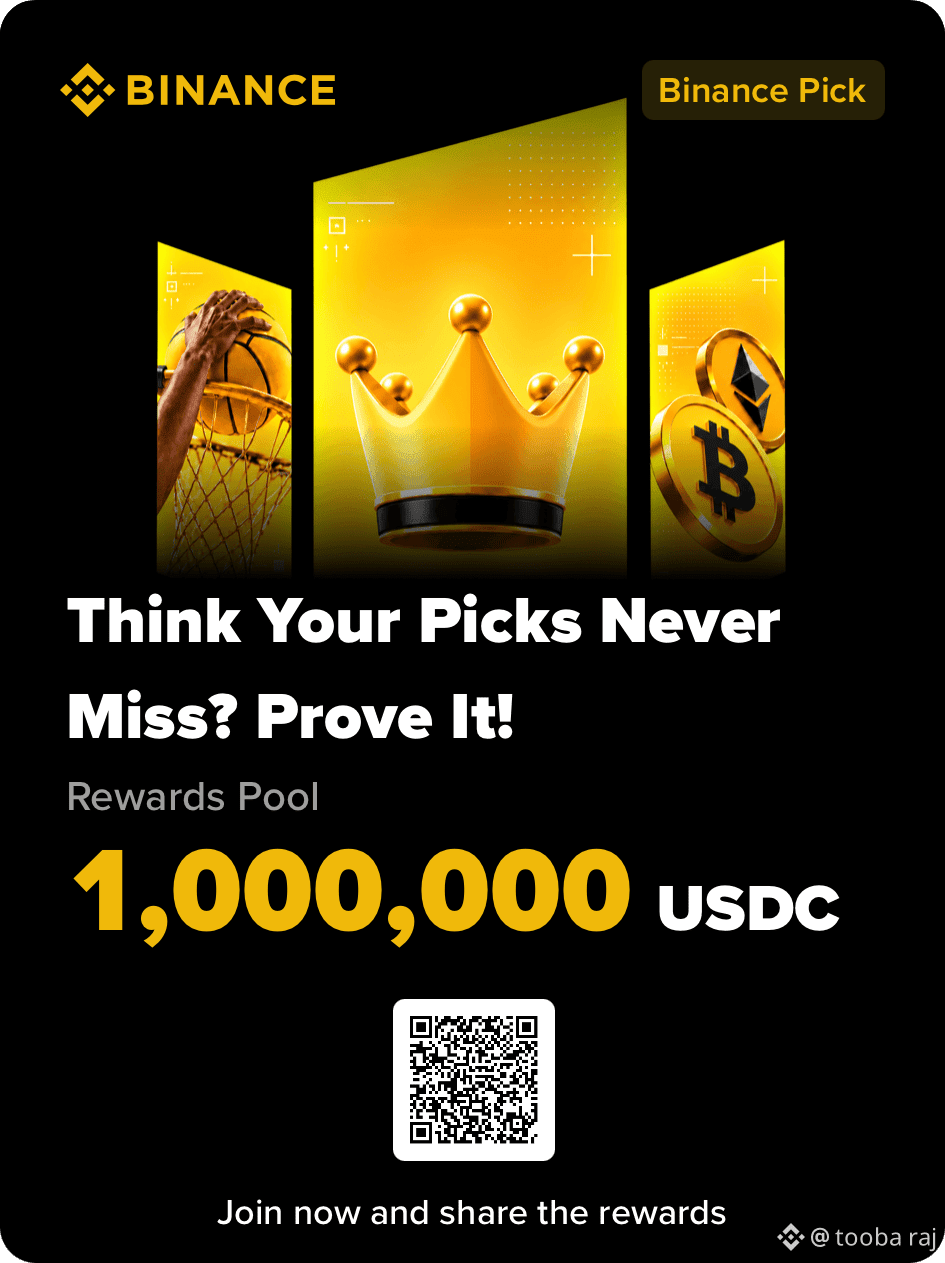
WHEN ONE ERA FACES THE NEXT. ⚽ Some finals crown a champion. Others become the moment football changes forever. Argentina arrives as the reigning world champion, backed by a generation that has defined international football for years. Their experience, mentality, and winning culture make them one of the toughest teams to beat. Standing opposite is Spain—a fearless young side built on possession, intensity, and confidence. Their style reflects a new generation that isn't waiting for the future—they're ready to shape it now. If Spain wins, it won't only be another World Cup trophy. It could become the moment the football world recognizes that a new era has truly begun. Great teams leave a legacy. New generations build the next one. My prediction: 🇪🇸 Spain 2–1 Argentina This is only a personal opinion, not a guaranteed result. Argentina has the experience of champions, while Spain has impressed many with its form, energy, and tactical identity throughout the tournament. Who do you think lifts the trophy? Will Argentina extend its legacy, or is this Spain's moment to begin a new chapter? #Binance #PickAndWin $HYPE $BNB $BTC
WHEN ONE ERA FACES THE NEXT. ⚽

Some finals crown a champion.

Others become the moment football changes forever.

Argentina arrives as the reigning world champion, backed by a generation that has defined international football for years. Their experience, mentality, and winning culture make them one of the toughest teams to beat.

Standing opposite is Spain—a fearless young side built on possession, intensity, and confidence. Their style reflects a new generation that isn't waiting for the future—they're ready to shape it now.

If Spain wins, it won't only be another World Cup trophy.

It could become the moment the football world recognizes that a new era has truly begun.

Great teams leave a legacy.

New generations build the next one.

My prediction: 🇪🇸 Spain 2–1 Argentina

This is only a personal opinion, not a guaranteed result. Argentina has the experience of champions, while Spain has impressed many with its form, energy, and tactical identity throughout the tournament.

Who do you think lifts the trophy? Will Argentina extend its legacy, or is this Spain's moment to begin a new chapter?

#Binance #PickAndWin

$HYPE $BNB $BTC
🇫🇷 France has moved to block Polymarket. France's National Gambling Authority (ANJ) has instructed internet service providers to restrict access to Polymarket, arguing that it operates as an unlicensed gambling platform. But this isn't just about one platform. The bigger issue is whether prediction markets should be treated as gambling—or recognized as a new type of financial market. Unlike traditional betting sites, prediction markets allow participants to trade on the likelihood of real-world events, from elections and interest rate decisions to inflation, geopolitics, and global conflicts. Here, information itself becomes a tradable asset. If regulators classify these platforms as gambling, they'll be governed by gambling laws. If they're viewed as financial markets, an entirely different regulatory framework applies. That's why France's decision could influence how prediction markets are regulated across Europe. At its core, the debate isn't just about Polymarket—it's about defining an entirely new asset class. So what do you think? Are prediction markets gambling, financial markets, or something entirely new? $BTC $ETH $XRP
🇫🇷 France has moved to block Polymarket.

France's National Gambling Authority (ANJ) has instructed internet service providers to restrict access to Polymarket, arguing that it operates as an unlicensed gambling platform.

But this isn't just about one platform.

The bigger issue is whether prediction markets should be treated as gambling—or recognized as a new type of financial market.

Unlike traditional betting sites, prediction markets allow participants to trade on the likelihood of real-world events, from elections and interest rate decisions to inflation, geopolitics, and global conflicts.

Here, information itself becomes a tradable asset.

If regulators classify these platforms as gambling, they'll be governed by gambling laws. If they're viewed as financial markets, an entirely different regulatory framework applies.

That's why France's decision could influence how prediction markets are regulated across Europe.

At its core, the debate isn't just about Polymarket—it's about defining an entirely new asset class.

So what do you think?

Are prediction markets gambling, financial markets, or something entirely new?

$BTC $ETH $XRP
I'm Watching $SNDKB at a Key Support Zone Holding the 1,415-1,425 support area and showing signs of a relief bounce. A sustained hold here could extend the recovery. LONG SETUP Entry: 1,415-1,425 Stop Loss: 1,405 Targets: TP1: 1,450 TP2: 1,475 TP3: 1,500 Holding support keeps the bullish setup intact. Trade Here $KAITO {future}(KAITOUSDT)
I'm Watching $SNDKB at a Key Support Zone

Holding the 1,415-1,425 support area and showing signs of a relief bounce. A sustained hold here could extend the recovery.

LONG SETUP

Entry: 1,415-1,425

Stop Loss: 1,405

Targets:

TP1: 1,450

TP2: 1,475

TP3: 1,500

Holding support keeps the bullish setup intact.

Trade Here

$KAITO
$STABLE {future}(STABLEUSDT) has a strong long-term trend, but weak volume. Best bought on pullbacks, not at highs. Entry: 0.0380 - 0.0385 SL: 0.0378 TP: 0.0398 0.0410 0.0430 0.0450 -> 0.0500 $TAC
$STABLE
has a strong long-term trend, but weak volume. Best bought on pullbacks, not at highs.

Entry: 0.0380 - 0.0385

SL: 0.0378

TP: 0.0398 0.0410 0.0430 0.0450 ->

0.0500

$TAC
$SKYAI {future}(SKYAIUSDT) is rebounding, but the higher-timeframe trend is still bearish. Best treated as a short-term momentum scalp, not a hold. Entry: 0.0340 - 0.0345 SL: 0.0338 TP: 0.0365 0.0380 0.0400 -0.0420 - 0.0440 $ESPORTS {future}(ESPORTSUSDT)
$SKYAI
is rebounding, but the higher-timeframe trend is still bearish. Best treated as a short-term momentum scalp, not a hold.

Entry: 0.0340 - 0.0345

SL: 0.0338

TP: 0.0365 0.0380 0.0400 -0.0420 -

0.0440

$ESPORTS
BNB Exchange Flows Are Telling an Interesting Story 👀 Most people focus on BNB's price chart, but exchange flow data often reveals what market participants are actually doing behind the scenes. Recent on-chain trends show that BNB exchange balances have remained relatively stable compared to many other major assets. However, periodic spikes in exchange inflows tend to appear during periods of increased volatility, while steady outflows often coincide with stronger holding behavior. The interesting part is that stable exchange reserves don't automatically signal bullish or bearish conditions. They may simply reflect BNB's unique role within the Binance ecosystem, where it's continuously used for trading fee discounts, Launchpool participation, staking, and DeFi activity rather than sitting idle. That means exchange flow data should never be viewed in isolation. Combining it with trading volume, active addresses, derivatives positioning, and on-chain activity provides a much clearer picture of market sentiment. A large inflow during weak demand could indicate potential selling pressure, while the same inflow during strong buying activity may be absorbed with little impact. The takeaway? Exchange flows are an important indicator—but they're just one piece of the puzzle. Context is what turns raw data into meaningful insight. What's your favorite on-chain metric for tracking BNB—exchange flows, active wallets, staking activity, or something else? #BNB #Binance #CryptoTrends2024 #OnChainAnalytics #write2earn🌐💹 $BNB
BNB Exchange Flows Are Telling an Interesting Story 👀
Most people focus on BNB's price chart, but exchange flow data often reveals what market participants are actually doing behind the scenes.
Recent on-chain trends show that BNB exchange balances have remained relatively stable compared to many other major assets. However, periodic spikes in exchange inflows tend to appear during periods of increased volatility, while steady outflows often coincide with stronger holding behavior.
The interesting part is that stable exchange reserves don't automatically signal bullish or bearish conditions. They may simply reflect BNB's unique role within the Binance ecosystem, where it's continuously used for trading fee discounts, Launchpool participation, staking, and DeFi activity rather than sitting idle.
That means exchange flow data should never be viewed in isolation. Combining it with trading volume, active addresses, derivatives positioning, and on-chain activity provides a much clearer picture of market sentiment. A large inflow during weak demand could indicate potential selling pressure, while the same inflow during strong buying activity may be absorbed with little impact.
The takeaway? Exchange flows are an important indicator—but they're just one piece of the puzzle. Context is what turns raw data into meaningful insight.
What's your favorite on-chain metric for tracking BNB—exchange flows, active wallets, staking activity, or something else? #BNB #Binance #CryptoTrends2024 #OnChainAnalytics
#write2earn🌐💹
$BNB
BTC Exchange Flows Are Sending a Mixed Signal 👀 Everyone is watching Bitcoin's price, but fewer people are paying attention to what exchanges are doing. Recent exchange flow data shows BTC reserves on many centralized exchanges remain near multi-year lows, while occasional spikes in exchange inflows appear during periods of higher volatility. Here's what makes that interesting: lower exchange balances are often interpreted as investors moving coins into self-custody, reducing immediate selling pressure. But short-term inflow spikes can also suggest that some holders are preparing to sell or reposition their portfolios. Neither signal tells the full story on its own. Exchange flows should be viewed alongside ETF activity, derivatives positioning, on-chain demand, and macroeconomic conditions. A single metric rarely predicts the next major move. The market is sending mixed signals, which is exactly why patience matters more than certainty. What's your view? Are current BTC exchange flows signaling accumulation, or are they quietly setting up the next wave of selling? 👇 #Bitcoin #BTC #OnChain #trading #Write2Earn $BTC
BTC Exchange Flows Are Sending a Mixed Signal 👀

Everyone is watching Bitcoin's price, but fewer people are paying attention to what exchanges are doing.

Recent exchange flow data shows BTC reserves on many centralized exchanges remain near multi-year lows, while occasional spikes in exchange inflows appear during periods of higher volatility.

Here's what makes that interesting: lower exchange balances are often interpreted as investors moving coins into self-custody, reducing immediate selling pressure. But short-term inflow spikes can also suggest that some holders are preparing to sell or reposition their portfolios.

Neither signal tells the full story on its own. Exchange flows should be viewed alongside ETF activity, derivatives positioning, on-chain demand, and macroeconomic conditions. A single metric rarely predicts the next major move.

The market is sending mixed signals, which is exactly why patience matters more than certainty.

What's your view? Are current BTC exchange flows signaling accumulation, or are they quietly setting up the next wave of selling? 👇

#Bitcoin #BTC #OnChain #trading
#Write2Earn
$BTC
Been looking into Grvt's current campaign and something caught my eye that I keep thinking about. The Binance Wallet Booster campaign running from July 10 to 17 is offering a share of 1.5M $GRVT at TGE. Sounds good right. But here is the thing, you do not need to trade or deposit anything. Just complete some simple wallet missions and you are done. Now I get why they did it. Easy onboarding, low friction, more signups. Makes sense from a growth perspective. But Grvt's actual product is built around something much more interesting. Capital efficiency, unified margin, yield generating collateral, making every dollar work harder across the whole ecosystem. That is the real story here. And none of that is something you actually experience in this campaign. That gap is what I keep coming back to. The acquisition strategy and the core value proposition are not really talking to the same person right now. One is optimized for getting people in the door. The other is built for people who actually care about how their capital performs. It is not necessarily a mistake. Every project needs users first. But the real question I have is what happens after TGE. How many of these new wallets actually stick around and use the unified balance and yield features. How many just collected the rewards and moved on. Retention after token launch will tell us a lot more about Grvt than this campaign ever could. #GRVT $EVAA @grvt_io #BTC #BinanceTurns9 #JuneCPIFedHike20% #USJuneCPIEasesTo3.8% $BSB {alpha}(560x595deaad1eb5476ff1e649fdb7efc36f1e4679cc) {future}(SXTUSDT) $LAB {future}(LABUSDT)
Been looking into Grvt's current campaign and something caught my eye that I keep thinking about.
The Binance Wallet Booster campaign running from July 10 to 17 is offering a share of 1.5M $GRVT at TGE. Sounds good right. But here is the thing, you do not need to trade or deposit anything. Just complete some simple wallet missions and you are done.
Now I get why they did it. Easy onboarding, low friction, more signups. Makes sense from a growth perspective. But Grvt's actual product is built around something much more interesting. Capital efficiency, unified margin, yield generating collateral, making every dollar work harder across the whole ecosystem. That is the real story here.
And none of that is something you actually experience in this campaign.
That gap is what I keep coming back to. The acquisition strategy and the core value proposition are not really talking to the same person right now. One is optimized for getting people in the door. The other is built for people who actually care about how their capital performs.
It is not necessarily a mistake. Every project needs users first. But the real question I have is what happens after TGE. How many of these new wallets actually stick around and use the unified balance and yield features. How many just collected the rewards and moved on.
Retention after token launch will tell us a lot more about Grvt than this campaign ever could.
#GRVT
$EVAA
@grvt_io

#BTC
#BinanceTurns9

#JuneCPIFedHike20%

#USJuneCPIEasesTo3.8%

$BSB

$LAB
Log in to explore more content
Join global crypto users on Binance Square
⚡️ Get latest and useful information about crypto.
💬 Trusted by the world’s largest crypto exchange.
👍 Discover real insights from verified creators.
Email / Phone number
Sitemap
Cookie Preferences
Platform T&Cs