
Hocviencostv
104 Posts

Hocviencostv
Cập nhật chia sẻ thông tin mới nhất costv. Hãy nắm bắt cơ hội khi còn có thể. HÃY THEO DÕI TÔI KHI BẠN NẮM GIỮ COS
Open Trade
Occasional Trader
6.5 Years
1 Following
72 Followers
127 Liked
Posts
Portfolio
All
Quotes



CZ
·
--
Happy Year of the Horse!

DAVID BNB
·
--
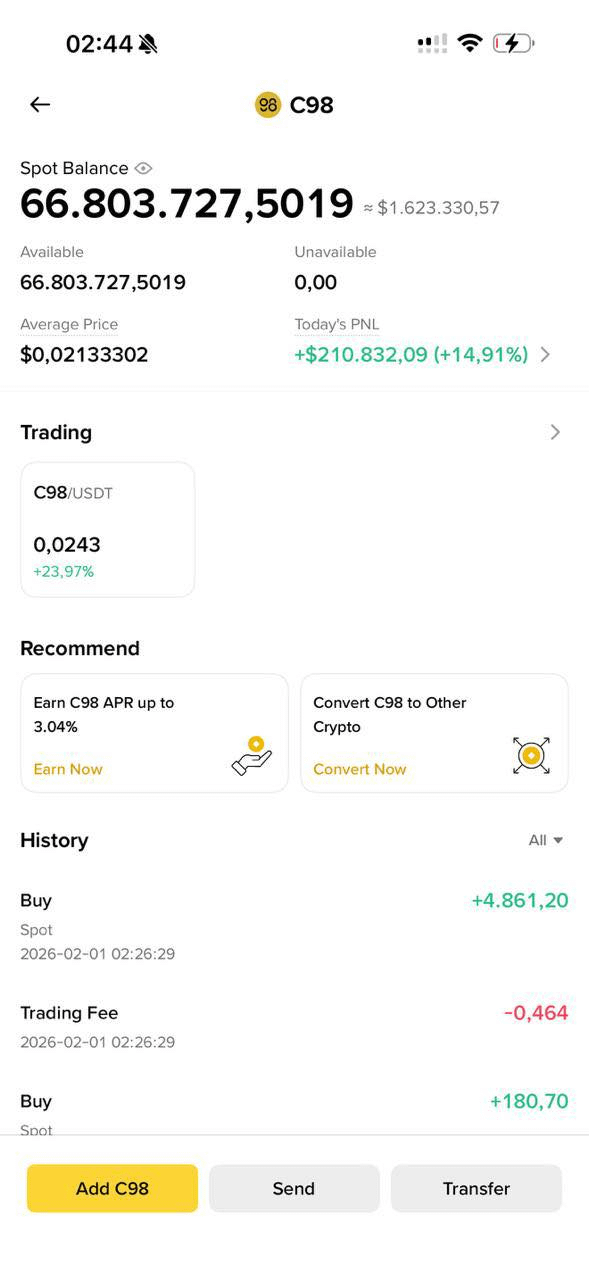
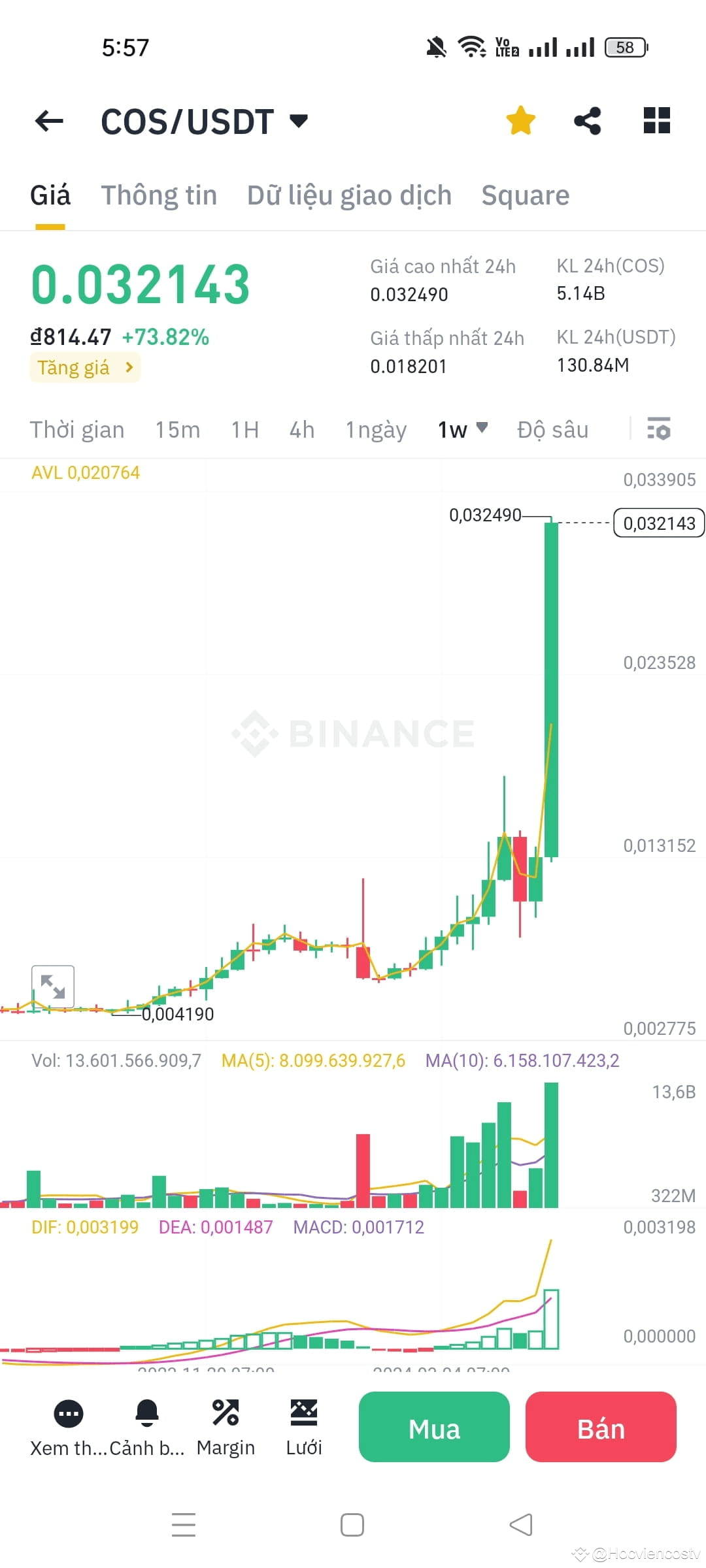
Bullish⭐ It's been a long time since I last saw the news $C98 pump, the technology unicorn of Vietnam that once dominated the crypto world
- Suddenly reminded of the familiar saying that c98 under 3$ is a gift
- I wonder how many brothers are still holding c98? Probably quite few
- But c98 is pumping now, congratulations to the c98 holders...
- Suddenly reminded of the familiar saying that c98 under 3$ is a gift
- I wonder how many brothers are still holding c98? Probably quite few
- But c98 is pumping now, congratulations to the c98 holders...

Hocviencostv
·
--
HERE IS THE REASON WHY BINANCE HAS NOT LISTED PI..
There are several main reasons explaining why Binance has not listed Pi Network as of now (March 17, 2025), based on recent information and analysis:
Not meeting technical and transparency standards:
Pi Network, although it "opened the network" on February 20, 2025, after more than 6 years of development, has not yet made its smart contracts and source code public. These are fundamental factors that major exchanges like Binance require to evaluate a cryptocurrency project. Furthermore, Pi's blockchain network is not fully decentralized, with mainnet nodes still controlled by the Pi Network team, raising doubts about transparency and the level of decentralization.
Binance's strict evaluation process:
Binance has a rigorous evaluation process to decide on listing any token. The criteria include project quality, development team, technology, market demand, security, and legal compliance. Although the community vote from February 17 to February 27, 2025, indicated that 87.1% of users supported listing Pi, Binance emphasized that this result is merely for reference. The final decision depends on internal assessment, and Pi may not fully meet these requirements yet.
Legal risks and reputation:
In many countries, including Vietnam, cryptocurrencies like Pi are not recognized as legal means of payment. Binance, being the largest exchange in the world, must be cautious to avoid legal risks or closer scrutiny from regulatory authorities. Listing a controversial project like Pi could affect the exchange's reputation, especially after recent criticisms regarding the listing of high-risk "memecoins."
#cos $COS
There are several main reasons explaining why Binance has not listed Pi Network as of now (March 17, 2025), based on recent information and analysis:
Not meeting technical and transparency standards:
Pi Network, although it "opened the network" on February 20, 2025, after more than 6 years of development, has not yet made its smart contracts and source code public. These are fundamental factors that major exchanges like Binance require to evaluate a cryptocurrency project. Furthermore, Pi's blockchain network is not fully decentralized, with mainnet nodes still controlled by the Pi Network team, raising doubts about transparency and the level of decentralization.
Binance's strict evaluation process:
Binance has a rigorous evaluation process to decide on listing any token. The criteria include project quality, development team, technology, market demand, security, and legal compliance. Although the community vote from February 17 to February 27, 2025, indicated that 87.1% of users supported listing Pi, Binance emphasized that this result is merely for reference. The final decision depends on internal assessment, and Pi may not fully meet these requirements yet.
Legal risks and reputation:
In many countries, including Vietnam, cryptocurrencies like Pi are not recognized as legal means of payment. Binance, being the largest exchange in the world, must be cautious to avoid legal risks or closer scrutiny from regulatory authorities. Listing a controversial project like Pi could affect the exchange's reputation, especially after recent criticisms regarding the listing of high-risk "memecoins."
#cos $COS






Hocviencostv
·
--
HERE IS THE REASON WHY BINANCE HAS NOT LISTED PI..
There are several main reasons explaining why Binance has not listed Pi Network as of now (March 17, 2025), based on recent information and analysis:
Not meeting technical and transparency standards:
Pi Network, although it "opened the network" on February 20, 2025, after more than 6 years of development, has not yet made its smart contracts and source code public. These are fundamental factors that major exchanges like Binance require to evaluate a cryptocurrency project. Furthermore, Pi's blockchain network is not fully decentralized, with mainnet nodes still controlled by the Pi Network team, raising doubts about transparency and the level of decentralization.
Binance's strict evaluation process:
Binance has a rigorous evaluation process to decide on listing any token. The criteria include project quality, development team, technology, market demand, security, and legal compliance. Although the community vote from February 17 to February 27, 2025, indicated that 87.1% of users supported listing Pi, Binance emphasized that this result is merely for reference. The final decision depends on internal assessment, and Pi may not fully meet these requirements yet.
Legal risks and reputation:
In many countries, including Vietnam, cryptocurrencies like Pi are not recognized as legal means of payment. Binance, being the largest exchange in the world, must be cautious to avoid legal risks or closer scrutiny from regulatory authorities. Listing a controversial project like Pi could affect the exchange's reputation, especially after recent criticisms regarding the listing of high-risk "memecoins."
#cos $COS
There are several main reasons explaining why Binance has not listed Pi Network as of now (March 17, 2025), based on recent information and analysis:
Not meeting technical and transparency standards:
Pi Network, although it "opened the network" on February 20, 2025, after more than 6 years of development, has not yet made its smart contracts and source code public. These are fundamental factors that major exchanges like Binance require to evaluate a cryptocurrency project. Furthermore, Pi's blockchain network is not fully decentralized, with mainnet nodes still controlled by the Pi Network team, raising doubts about transparency and the level of decentralization.
Binance's strict evaluation process:
Binance has a rigorous evaluation process to decide on listing any token. The criteria include project quality, development team, technology, market demand, security, and legal compliance. Although the community vote from February 17 to February 27, 2025, indicated that 87.1% of users supported listing Pi, Binance emphasized that this result is merely for reference. The final decision depends on internal assessment, and Pi may not fully meet these requirements yet.
Legal risks and reputation:
In many countries, including Vietnam, cryptocurrencies like Pi are not recognized as legal means of payment. Binance, being the largest exchange in the world, must be cautious to avoid legal risks or closer scrutiny from regulatory authorities. Listing a controversial project like Pi could affect the exchange's reputation, especially after recent criticisms regarding the listing of high-risk "memecoins."
#cos $COS

Hocviencostv
·
--
HERE IS THE REASON WHY BINANCE HAS NOT LISTED PI..
There are several main reasons explaining why Binance has not listed Pi Network as of now (March 17, 2025), based on recent information and analysis:
Not meeting technical and transparency standards:
Pi Network, although it "opened the network" on February 20, 2025, after more than 6 years of development, has not yet made its smart contracts and source code public. These are fundamental factors that major exchanges like Binance require to evaluate a cryptocurrency project. Furthermore, Pi's blockchain network is not fully decentralized, with mainnet nodes still controlled by the Pi Network team, raising doubts about transparency and the level of decentralization.
Binance's strict evaluation process:
Binance has a rigorous evaluation process to decide on listing any token. The criteria include project quality, development team, technology, market demand, security, and legal compliance. Although the community vote from February 17 to February 27, 2025, indicated that 87.1% of users supported listing Pi, Binance emphasized that this result is merely for reference. The final decision depends on internal assessment, and Pi may not fully meet these requirements yet.
Legal risks and reputation:
In many countries, including Vietnam, cryptocurrencies like Pi are not recognized as legal means of payment. Binance, being the largest exchange in the world, must be cautious to avoid legal risks or closer scrutiny from regulatory authorities. Listing a controversial project like Pi could affect the exchange's reputation, especially after recent criticisms regarding the listing of high-risk "memecoins."
#cos $COS
There are several main reasons explaining why Binance has not listed Pi Network as of now (March 17, 2025), based on recent information and analysis:
Not meeting technical and transparency standards:
Pi Network, although it "opened the network" on February 20, 2025, after more than 6 years of development, has not yet made its smart contracts and source code public. These are fundamental factors that major exchanges like Binance require to evaluate a cryptocurrency project. Furthermore, Pi's blockchain network is not fully decentralized, with mainnet nodes still controlled by the Pi Network team, raising doubts about transparency and the level of decentralization.
Binance's strict evaluation process:
Binance has a rigorous evaluation process to decide on listing any token. The criteria include project quality, development team, technology, market demand, security, and legal compliance. Although the community vote from February 17 to February 27, 2025, indicated that 87.1% of users supported listing Pi, Binance emphasized that this result is merely for reference. The final decision depends on internal assessment, and Pi may not fully meet these requirements yet.
Legal risks and reputation:
In many countries, including Vietnam, cryptocurrencies like Pi are not recognized as legal means of payment. Binance, being the largest exchange in the world, must be cautious to avoid legal risks or closer scrutiny from regulatory authorities. Listing a controversial project like Pi could affect the exchange's reputation, especially after recent criticisms regarding the listing of high-risk "memecoins."
#cos $COS

Hocviencostv
·
--
HERE IS THE REASON WHY BINANCE HAS NOT LISTED PI..
There are several main reasons explaining why Binance has not listed Pi Network as of now (March 17, 2025), based on recent information and analysis:
Not meeting technical and transparency standards:
Pi Network, although it "opened the network" on February 20, 2025, after more than 6 years of development, has not yet made its smart contracts and source code public. These are fundamental factors that major exchanges like Binance require to evaluate a cryptocurrency project. Furthermore, Pi's blockchain network is not fully decentralized, with mainnet nodes still controlled by the Pi Network team, raising doubts about transparency and the level of decentralization.
Binance's strict evaluation process:
Binance has a rigorous evaluation process to decide on listing any token. The criteria include project quality, development team, technology, market demand, security, and legal compliance. Although the community vote from February 17 to February 27, 2025, indicated that 87.1% of users supported listing Pi, Binance emphasized that this result is merely for reference. The final decision depends on internal assessment, and Pi may not fully meet these requirements yet.
Legal risks and reputation:
In many countries, including Vietnam, cryptocurrencies like Pi are not recognized as legal means of payment. Binance, being the largest exchange in the world, must be cautious to avoid legal risks or closer scrutiny from regulatory authorities. Listing a controversial project like Pi could affect the exchange's reputation, especially after recent criticisms regarding the listing of high-risk "memecoins."
#cos $COS
There are several main reasons explaining why Binance has not listed Pi Network as of now (March 17, 2025), based on recent information and analysis:
Not meeting technical and transparency standards:
Pi Network, although it "opened the network" on February 20, 2025, after more than 6 years of development, has not yet made its smart contracts and source code public. These are fundamental factors that major exchanges like Binance require to evaluate a cryptocurrency project. Furthermore, Pi's blockchain network is not fully decentralized, with mainnet nodes still controlled by the Pi Network team, raising doubts about transparency and the level of decentralization.
Binance's strict evaluation process:
Binance has a rigorous evaluation process to decide on listing any token. The criteria include project quality, development team, technology, market demand, security, and legal compliance. Although the community vote from February 17 to February 27, 2025, indicated that 87.1% of users supported listing Pi, Binance emphasized that this result is merely for reference. The final decision depends on internal assessment, and Pi may not fully meet these requirements yet.
Legal risks and reputation:
In many countries, including Vietnam, cryptocurrencies like Pi are not recognized as legal means of payment. Binance, being the largest exchange in the world, must be cautious to avoid legal risks or closer scrutiny from regulatory authorities. Listing a controversial project like Pi could affect the exchange's reputation, especially after recent criticisms regarding the listing of high-risk "memecoins."
#cos $COS

Hocviencostv
·
--
HERE IS THE REASON WHY BINANCE HAS NOT LISTED PI..
There are several main reasons explaining why Binance has not listed Pi Network as of now (March 17, 2025), based on recent information and analysis:
Not meeting technical and transparency standards:
Pi Network, although it "opened the network" on February 20, 2025, after more than 6 years of development, has not yet made its smart contracts and source code public. These are fundamental factors that major exchanges like Binance require to evaluate a cryptocurrency project. Furthermore, Pi's blockchain network is not fully decentralized, with mainnet nodes still controlled by the Pi Network team, raising doubts about transparency and the level of decentralization.
Binance's strict evaluation process:
Binance has a rigorous evaluation process to decide on listing any token. The criteria include project quality, development team, technology, market demand, security, and legal compliance. Although the community vote from February 17 to February 27, 2025, indicated that 87.1% of users supported listing Pi, Binance emphasized that this result is merely for reference. The final decision depends on internal assessment, and Pi may not fully meet these requirements yet.
Legal risks and reputation:
In many countries, including Vietnam, cryptocurrencies like Pi are not recognized as legal means of payment. Binance, being the largest exchange in the world, must be cautious to avoid legal risks or closer scrutiny from regulatory authorities. Listing a controversial project like Pi could affect the exchange's reputation, especially after recent criticisms regarding the listing of high-risk "memecoins."
#cos $COS
There are several main reasons explaining why Binance has not listed Pi Network as of now (March 17, 2025), based on recent information and analysis:
Not meeting technical and transparency standards:
Pi Network, although it "opened the network" on February 20, 2025, after more than 6 years of development, has not yet made its smart contracts and source code public. These are fundamental factors that major exchanges like Binance require to evaluate a cryptocurrency project. Furthermore, Pi's blockchain network is not fully decentralized, with mainnet nodes still controlled by the Pi Network team, raising doubts about transparency and the level of decentralization.
Binance's strict evaluation process:
Binance has a rigorous evaluation process to decide on listing any token. The criteria include project quality, development team, technology, market demand, security, and legal compliance. Although the community vote from February 17 to February 27, 2025, indicated that 87.1% of users supported listing Pi, Binance emphasized that this result is merely for reference. The final decision depends on internal assessment, and Pi may not fully meet these requirements yet.
Legal risks and reputation:
In many countries, including Vietnam, cryptocurrencies like Pi are not recognized as legal means of payment. Binance, being the largest exchange in the world, must be cautious to avoid legal risks or closer scrutiny from regulatory authorities. Listing a controversial project like Pi could affect the exchange's reputation, especially after recent criticisms regarding the listing of high-risk "memecoins."
#cos $COS
Hocviencostv
·
--
HERE IS THE REASON WHY BINANCE HAS NOT LISTED PI..
There are several main reasons explaining why Binance has not listed Pi Network as of now (March 17, 2025), based on recent information and analysis:
Not meeting technical and transparency standards:
Pi Network, although it "opened the network" on February 20, 2025, after more than 6 years of development, has not yet made its smart contracts and source code public. These are fundamental factors that major exchanges like Binance require to evaluate a cryptocurrency project. Furthermore, Pi's blockchain network is not fully decentralized, with mainnet nodes still controlled by the Pi Network team, raising doubts about transparency and the level of decentralization.
Binance's strict evaluation process:
Binance has a rigorous evaluation process to decide on listing any token. The criteria include project quality, development team, technology, market demand, security, and legal compliance. Although the community vote from February 17 to February 27, 2025, indicated that 87.1% of users supported listing Pi, Binance emphasized that this result is merely for reference. The final decision depends on internal assessment, and Pi may not fully meet these requirements yet.
Legal risks and reputation:
In many countries, including Vietnam, cryptocurrencies like Pi are not recognized as legal means of payment. Binance, being the largest exchange in the world, must be cautious to avoid legal risks or closer scrutiny from regulatory authorities. Listing a controversial project like Pi could affect the exchange's reputation, especially after recent criticisms regarding the listing of high-risk "memecoins."
#cos $COS
There are several main reasons explaining why Binance has not listed Pi Network as of now (March 17, 2025), based on recent information and analysis:
Not meeting technical and transparency standards:
Pi Network, although it "opened the network" on February 20, 2025, after more than 6 years of development, has not yet made its smart contracts and source code public. These are fundamental factors that major exchanges like Binance require to evaluate a cryptocurrency project. Furthermore, Pi's blockchain network is not fully decentralized, with mainnet nodes still controlled by the Pi Network team, raising doubts about transparency and the level of decentralization.
Binance's strict evaluation process:
Binance has a rigorous evaluation process to decide on listing any token. The criteria include project quality, development team, technology, market demand, security, and legal compliance. Although the community vote from February 17 to February 27, 2025, indicated that 87.1% of users supported listing Pi, Binance emphasized that this result is merely for reference. The final decision depends on internal assessment, and Pi may not fully meet these requirements yet.
Legal risks and reputation:
In many countries, including Vietnam, cryptocurrencies like Pi are not recognized as legal means of payment. Binance, being the largest exchange in the world, must be cautious to avoid legal risks or closer scrutiny from regulatory authorities. Listing a controversial project like Pi could affect the exchange's reputation, especially after recent criticisms regarding the listing of high-risk "memecoins."
#cos $COS
Hocviencostv
·
--
HERE IS THE REASON WHY BINANCE HAS NOT LISTED PI..
There are several main reasons explaining why Binance has not listed Pi Network as of now (March 17, 2025), based on recent information and analysis:
Not meeting technical and transparency standards:
Pi Network, although it "opened the network" on February 20, 2025, after more than 6 years of development, has not yet made its smart contracts and source code public. These are fundamental factors that major exchanges like Binance require to evaluate a cryptocurrency project. Furthermore, Pi's blockchain network is not fully decentralized, with mainnet nodes still controlled by the Pi Network team, raising doubts about transparency and the level of decentralization.
Binance's strict evaluation process:
Binance has a rigorous evaluation process to decide on listing any token. The criteria include project quality, development team, technology, market demand, security, and legal compliance. Although the community vote from February 17 to February 27, 2025, indicated that 87.1% of users supported listing Pi, Binance emphasized that this result is merely for reference. The final decision depends on internal assessment, and Pi may not fully meet these requirements yet.
Legal risks and reputation:
In many countries, including Vietnam, cryptocurrencies like Pi are not recognized as legal means of payment. Binance, being the largest exchange in the world, must be cautious to avoid legal risks or closer scrutiny from regulatory authorities. Listing a controversial project like Pi could affect the exchange's reputation, especially after recent criticisms regarding the listing of high-risk "memecoins."
#cos $COS
There are several main reasons explaining why Binance has not listed Pi Network as of now (March 17, 2025), based on recent information and analysis:
Not meeting technical and transparency standards:
Pi Network, although it "opened the network" on February 20, 2025, after more than 6 years of development, has not yet made its smart contracts and source code public. These are fundamental factors that major exchanges like Binance require to evaluate a cryptocurrency project. Furthermore, Pi's blockchain network is not fully decentralized, with mainnet nodes still controlled by the Pi Network team, raising doubts about transparency and the level of decentralization.
Binance's strict evaluation process:
Binance has a rigorous evaluation process to decide on listing any token. The criteria include project quality, development team, technology, market demand, security, and legal compliance. Although the community vote from February 17 to February 27, 2025, indicated that 87.1% of users supported listing Pi, Binance emphasized that this result is merely for reference. The final decision depends on internal assessment, and Pi may not fully meet these requirements yet.
Legal risks and reputation:
In many countries, including Vietnam, cryptocurrencies like Pi are not recognized as legal means of payment. Binance, being the largest exchange in the world, must be cautious to avoid legal risks or closer scrutiny from regulatory authorities. Listing a controversial project like Pi could affect the exchange's reputation, especially after recent criticisms regarding the listing of high-risk "memecoins."
#cos $COS




Log in to explore more content