
TianCi_Club
168 Posts

TianCi_Club
 Square Verified
Report
Block User
广交朋友 一起多交流多沟通 推特号@TianCi_Club
Open Trade
Occasional Trader
1.8 Years
176 Following
6.6K+ Followers
1.2K+ Liked
Posts
Portfolio
All
Quotes
Videos
PINNED
·
--
Article
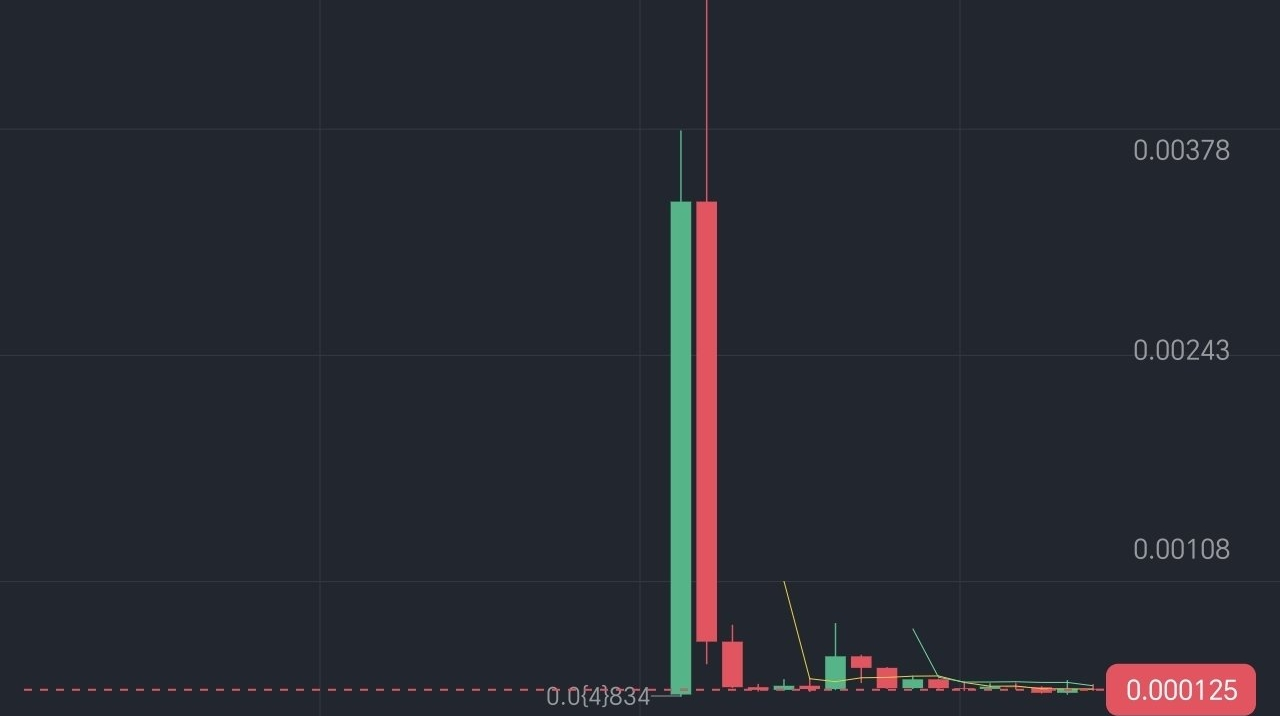
Scammers make $100,000 a day by creating memecoins.Scammers make $100,000 a day by creating memecoins.
But I have exposed their scheme, and I hope you do not fall for it.
Deep dive into memecoins and traps set by scammers 🧵👇
The bull market cycle is in full swing, and meme coins are starting to get attention - even on TikTok. But with all this hype, more and more scammers are flooding in, eager to scam your money. The craziest and most frightening thing is that even experienced traders can fall into these scam traps.
To understand how ridiculous this situation is, it all comes down to PumpFun. Of course, it was not created for scammers, but no one can stop them. With so many tokens being created every day, scammers take advantage of this, and they often go unnoticed. That's why I want to share this with you, so you won’t fall into their traps.
Scammers make $100,000 a day by creating memecoins.
Scammers make $100,000 a day by creating memecoins.
But I have exposed their scheme, and I hope you do not fall for it.
Deep dive into memecoins and traps set by scammers 🧵👇
The bull market cycle is in full swing, and meme coins are starting to get attention - even on TikTok. But with all this hype, more and more scammers are flooding in, eager to scam your money. The craziest and most frightening thing is that even experienced traders can fall into these scam traps.
To understand how ridiculous this situation is, it all comes down to PumpFun. Of course, it was not created for scammers, but no one can stop them. With so many tokens being created every day, scammers take advantage of this, and they often go unnoticed. That's why I want to share this with you, so you won’t fall into their traps.
But I have exposed their scheme, and I hope you do not fall for it.
Deep dive into memecoins and traps set by scammers 🧵👇
The bull market cycle is in full swing, and meme coins are starting to get attention - even on TikTok. But with all this hype, more and more scammers are flooding in, eager to scam your money. The craziest and most frightening thing is that even experienced traders can fall into these scam traps.
To understand how ridiculous this situation is, it all comes down to PumpFun. Of course, it was not created for scammers, but no one can stop them. With so many tokens being created every day, scammers take advantage of this, and they often go unnoticed. That's why I want to share this with you, so you won’t fall into their traps.
25
2
31
55.9k
·
--
Article
biyapayWhen I was doing overseas asset allocation before, the most obvious pain point was this: funds, information, and trading scenarios were always split across different places.
To check quotes you need one tool, to exchange currency you need another channel, and when you’re really ready to trade you have to switch to other accounts. Over time, a lot of time gets spent on “finding the entry point,” instead of analyzing the market and making decisions.
After getting in touch with BiyaPay, my biggest takeaway is that it integrates the previously scattered workflows.
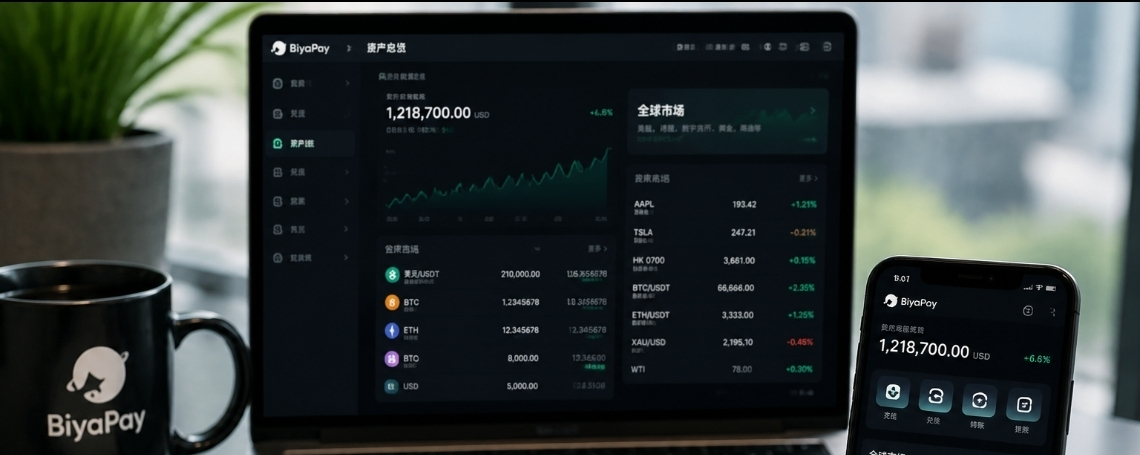
Normally, I first check global market information on the platform. The updates across different markets—US stocks, Hong Kong stocks, digital assets, as well as gold and crude oil—can all be viewed in one place. For people who frequently follow multiple markets, this kind of information aggregation truly improves efficiency. You don’t have to keep switching back and forth between different platforms every day, and it also makes it easier to spot how changes are related across markets.
biyapay
When I was doing overseas asset allocation before, the most obvious pain point was this: funds, information, and trading scenarios were always split across different places.
To check quotes you need one tool, to exchange currency you need another channel, and when you’re really ready to trade you have to switch to other accounts. Over time, a lot of time gets spent on “finding the entry point,” instead of analyzing the market and making decisions.
After getting in touch with BiyaPay, my biggest takeaway is that it integrates the previously scattered workflows.
Normally, I first check global market information on the platform. The updates across different markets—US stocks, Hong Kong stocks, digital assets, as well as gold and crude oil—can all be viewed in one place. For people who frequently follow multiple markets, this kind of information aggregation truly improves efficiency. You don’t have to keep switching back and forth between different platforms every day, and it also makes it easier to spot how changes are related across markets.
To check quotes you need one tool, to exchange currency you need another channel, and when you’re really ready to trade you have to switch to other accounts. Over time, a lot of time gets spent on “finding the entry point,” instead of analyzing the market and making decisions.
After getting in touch with BiyaPay, my biggest takeaway is that it integrates the previously scattered workflows.
Normally, I first check global market information on the platform. The updates across different markets—US stocks, Hong Kong stocks, digital assets, as well as gold and crude oil—can all be viewed in one place. For people who frequently follow multiple markets, this kind of information aggregation truly improves efficiency. You don’t have to keep switching back and forth between different platforms every day, and it also makes it easier to spot how changes are related across markets.
2
1
137
·
--
Bullish
$LIKE’s unstoppable power!!!
CJMihkPYswa3k6az9SUbepjKnkJQ6KWpGG5p9qW9n7NV
Why do they say $LIKE is a king-tier project among $SOL ?
There’s a meeting tonight—everyone can go listen and get an airdrop!
① Trend: this is exactly how Web3 finance works at the foundation—during a bear market, you build a position and plan the layout; during a bull market, you benefit. That’s also why last year they discovered this project site but still didn’t launch right away—the big market situation wasn’t stable. All that hard waiting was to wait for the right moment. Now that it’s time to set sail, it’s truly the perfect timing—right place, right time, right people. It also shows the operating team’s understanding and caution. They’re worthy of our full support and letting them go full throttle.
② Safety: Like is not a newly issued coin. Instead, on the S0L chain, it has an old coin with over 800 days. All the tokens are fully circulating and return to the liquidity pool. The liquidity pool is the key—funds worth several tens of millions. Such a thick pool didn’t come from financing; it’s all made of zero-foam assets left behind from the past, enough to carry everyone’s entrepreneurial dreams.
③ Contract security: if there were any loopholes in the contract, after more than 800 days, would there still be so many people waiting for us to take it? This proves the contract is absolutely clean and safe, so our investment is protected.
④ High returns: after playing with crypto for so many years, everyone should understand one truth—if you want to make money, you must go where there’s money. You need sufficient scale to support it. And we have a several-million liquidity pool of zero-foam assets, plus strong community resonance. Once it launches, it will quickly break 100,000 S0L. We’ve chosen the time node to build positions during the bear market. It’s estimated that the next support level will be 400U. At 200U, those of you who follow in the group may already achieve financial freedom.
⑤ Led by a professional operations team: they’re all top-tier talent in the industry, with detailed development plans. Currently, they’ve already made a two-year roadmap.
⑥ Business model synergy and market value: a great business model is the best market-value management. The model is the highlight.
1、Investment safety is guaranteed
2、High returns and stability
3、Absolutely faithful to the essence of blockchain: open, fair, just, and transparent
4、No special channels—everyone who wants to unlock the wealth code must start from 0 @LIKE_V6_Club
$LIKE’s unstoppable power!!!
CJMihkPYswa3k6az9SUbepjKnkJQ6KWpGG5p9qW9n7NV
Why do they say $LIKE is a king-tier project among $SOL ?
There’s a meeting tonight—everyone can go listen and get an airdrop!
① Trend: this is exactly how Web3 finance works at the foundation—during a bear market, you build a position and plan the layout; during a bull market, you benefit. That’s also why last year they discovered this project site but still didn’t launch right away—the big market situation wasn’t stable. All that hard waiting was to wait for the right moment. Now that it’s time to set sail, it’s truly the perfect timing—right place, right time, right people. It also shows the operating team’s understanding and caution. They’re worthy of our full support and letting them go full throttle.
② Safety: Like is not a newly issued coin. Instead, on the S0L chain, it has an old coin with over 800 days. All the tokens are fully circulating and return to the liquidity pool. The liquidity pool is the key—funds worth several tens of millions. Such a thick pool didn’t come from financing; it’s all made of zero-foam assets left behind from the past, enough to carry everyone’s entrepreneurial dreams.
③ Contract security: if there were any loopholes in the contract, after more than 800 days, would there still be so many people waiting for us to take it? This proves the contract is absolutely clean and safe, so our investment is protected.
④ High returns: after playing with crypto for so many years, everyone should understand one truth—if you want to make money, you must go where there’s money. You need sufficient scale to support it. And we have a several-million liquidity pool of zero-foam assets, plus strong community resonance. Once it launches, it will quickly break 100,000 S0L. We’ve chosen the time node to build positions during the bear market. It’s estimated that the next support level will be 400U. At 200U, those of you who follow in the group may already achieve financial freedom.
⑤ Led by a professional operations team: they’re all top-tier talent in the industry, with detailed development plans. Currently, they’ve already made a two-year roadmap.
⑥ Business model synergy and market value: a great business model is the best market-value management. The model is the highlight.
1、Investment safety is guaranteed
2、High returns and stability
3、Absolutely faithful to the essence of blockchain: open, fair, just, and transparent
4、No special channels—everyone who wants to unlock the wealth code must start from 0 @LIKE_V6_Club
CJMihkPYswa3k6az9SUbepjKnkJQ6KWpGG5p9qW9n7NV
Why do they say $LIKE is a king-tier project among $SOL ?
There’s a meeting tonight—everyone can go listen and get an airdrop!
① Trend: this is exactly how Web3 finance works at the foundation—during a bear market, you build a position and plan the layout; during a bull market, you benefit. That’s also why last year they discovered this project site but still didn’t launch right away—the big market situation wasn’t stable. All that hard waiting was to wait for the right moment. Now that it’s time to set sail, it’s truly the perfect timing—right place, right time, right people. It also shows the operating team’s understanding and caution. They’re worthy of our full support and letting them go full throttle.
② Safety: Like is not a newly issued coin. Instead, on the S0L chain, it has an old coin with over 800 days. All the tokens are fully circulating and return to the liquidity pool. The liquidity pool is the key—funds worth several tens of millions. Such a thick pool didn’t come from financing; it’s all made of zero-foam assets left behind from the past, enough to carry everyone’s entrepreneurial dreams.
③ Contract security: if there were any loopholes in the contract, after more than 800 days, would there still be so many people waiting for us to take it? This proves the contract is absolutely clean and safe, so our investment is protected.
④ High returns: after playing with crypto for so many years, everyone should understand one truth—if you want to make money, you must go where there’s money. You need sufficient scale to support it. And we have a several-million liquidity pool of zero-foam assets, plus strong community resonance. Once it launches, it will quickly break 100,000 S0L. We’ve chosen the time node to build positions during the bear market. It’s estimated that the next support level will be 400U. At 200U, those of you who follow in the group may already achieve financial freedom.
⑤ Led by a professional operations team: they’re all top-tier talent in the industry, with detailed development plans. Currently, they’ve already made a two-year roadmap.
⑥ Business model synergy and market value: a great business model is the best market-value management. The model is the highlight.
1、Investment safety is guaranteed
2、High returns and stability
3、Absolutely faithful to the essence of blockchain: open, fair, just, and transparent
4、No special channels—everyone who wants to unlock the wealth code must start from 0 @LIKE_V6_Club

1
29
·
--
#grvt With the continuous development of the crypto market, the security of funds on trading platforms and the user experience have become the top concerns for everyone. Recently, I took a deep dive into @grvt_io, a highly groundbreaking hybrid derivatives exchange (HEX).
By combining the efficient matching engine of centralized exchanges with the non-custodial smart contracts of decentralized exchanges, GRVT allows users to enjoy lightning-fast trading speeds while still retaining absolute control over their assets. After multiple trust crises in the industry, this “self-custody of assets + high-performance trading” model is undoubtedly a big confidence booster for crypto traders. Whether for institutional users who prioritize security or everyday traders who seek a smooth experience, this innovative architecture is highly appealing. Looking forward to it making a big splash in the derivatives space in the future! #grvt
#grvt With the continuous development of the crypto market, the security of funds on trading platforms and the user experience have become the top concerns for everyone. Recently, I took a deep dive into @grvt_io, a highly groundbreaking hybrid derivatives exchange (HEX).
By combining the efficient matching engine of centralized exchanges with the non-custodial smart contracts of decentralized exchanges, GRVT allows users to enjoy lightning-fast trading speeds while still retaining absolute control over their assets. After multiple trust crises in the industry, this “self-custody of assets + high-performance trading” model is undoubtedly a big confidence booster for crypto traders. Whether for institutional users who prioritize security or everyday traders who seek a smooth experience, this innovative architecture is highly appealing. Looking forward to it making a big splash in the derivatives space in the future! #grvt
By combining the efficient matching engine of centralized exchanges with the non-custodial smart contracts of decentralized exchanges, GRVT allows users to enjoy lightning-fast trading speeds while still retaining absolute control over their assets. After multiple trust crises in the industry, this “self-custody of assets + high-performance trading” model is undoubtedly a big confidence booster for crypto traders. Whether for institutional users who prioritize security or everyday traders who seek a smooth experience, this innovative architecture is highly appealing. Looking forward to it making a big splash in the derivatives space in the future! #grvt
115
·
--
In many people's financial management lists, stable growth always occupies an important position. Especially against the backdrop of frequent market fluctuations, more and more investors are beginning to pay attention to a traditional tool that has been re-examined - U.S. Certificates of Deposit (CDs).Many people's first encounter with CDs is because they are simple: a set term, fixed returns, and maturity payout. Essentially, it is a way to lock funds in a bank for a period of time in exchange for guaranteed returns. Compared to floating assets, CDs emphasize certainty and planning more. This 'visible endpoint' structure makes it commonly used as a stabilizer in asset allocation.
But the real issue often lies not in the product itself, but in how to participate.
For investors outside overseas markets, obtaining information, opening accounts, and designing fund pathways are often more complex than understanding product logic. Many people understand the interest rate structure of CDs, yet in actual operation, they are deterred by aspects such as deposits, currency exchange, and account management. Thus, a simple financial tool becomes less accessible.
In many people's financial management lists, stable growth always occupies an important position. Especially against the backdrop of frequent market fluctuations, more and more investors are beginning to pay attention to a traditional tool that has been re-examined - U.S. Certificates of Deposit (CDs).
Many people's first encounter with CDs is because they are simple: a set term, fixed returns, and maturity payout. Essentially, it is a way to lock funds in a bank for a period of time in exchange for guaranteed returns. Compared to floating assets, CDs emphasize certainty and planning more. This 'visible endpoint' structure makes it commonly used as a stabilizer in asset allocation.
But the real issue often lies not in the product itself, but in how to participate.
For investors outside overseas markets, obtaining information, opening accounts, and designing fund pathways are often more complex than understanding product logic. Many people understand the interest rate structure of CDs, yet in actual operation, they are deterred by aspects such as deposits, currency exchange, and account management. Thus, a simple financial tool becomes less accessible.
But the real issue often lies not in the product itself, but in how to participate.
For investors outside overseas markets, obtaining information, opening accounts, and designing fund pathways are often more complex than understanding product logic. Many people understand the interest rate structure of CDs, yet in actual operation, they are deterred by aspects such as deposits, currency exchange, and account management. Thus, a simple financial tool becomes less accessible.
3
268
·
--
Federal Reserve's 'Open Secret' Rate Cuts: How to Re-anchor Wealth Markers in the Volatile Liquidity Feast?As the bell on Wall Street echoes repeatedly in the game of inflation data, the Federal Reserve's interest rate policy finally heads toward that 'open secret'—the beginning of the rate cut cycle. For sharp investors, this is not only a turning point in macro nodes but also a prologue to the redistribution of liquidity.
However, just identifying the 'golden pit' in the US and Hong Kong stock markets does not mean one can smoothly seize the opportunity. In this round of cross-cycle games, many investors find that the real obstacle often lies not in the depth of understanding, but in the breadth of execution efficiency.
Federal Reserve's 'Open Secret' Rate Cuts: How to Re-anchor Wealth Markers in the Volatile Liquidity Feast?
As the bell on Wall Street echoes repeatedly in the game of inflation data, the Federal Reserve's interest rate policy finally heads toward that 'open secret'—the beginning of the rate cut cycle. For sharp investors, this is not only a turning point in macro nodes but also a prologue to the redistribution of liquidity.
However, just identifying the 'golden pit' in the US and Hong Kong stock markets does not mean one can smoothly seize the opportunity. In this round of cross-cycle games, many investors find that the real obstacle often lies not in the depth of understanding, but in the breadth of execution efficiency.
However, just identifying the 'golden pit' in the US and Hong Kong stock markets does not mean one can smoothly seize the opportunity. In this round of cross-cycle games, many investors find that the real obstacle often lies not in the depth of understanding, but in the breadth of execution efficiency.
55
·
--
In today's world, where the wave of digitalization sweeps across the globe, personal financial vision has long been an exploration shrouded in fog: the 'invisible walls' of traditional finance.Due to the nature of my work, I often need to engage in business dealings with different countries and regions. In the early stages of exploration, what troubled me the most was not the business itself, but those intricate 'invisible walls.'
You may have encountered similar situations: when a payment flows across borders, it often has to go through layers of intermediary banks, each of which may incur a fee with ambiguous implications. By the time the funds finally reach the account, the amount is often far from what was expected. Not to mention that to participate in the global mainstream securities market, the cumbersome process of opening offshore accounts, long waits, and high maintenance costs can easily exhaust most people's patience.
In today's world, where the wave of digitalization sweeps across the globe, personal financial vision has long been an exploration shrouded in fog: the 'invisible walls' of traditional finance.
Due to the nature of my work, I often need to engage in business dealings with different countries and regions. In the early stages of exploration, what troubled me the most was not the business itself, but those intricate 'invisible walls.'
You may have encountered similar situations: when a payment flows across borders, it often has to go through layers of intermediary banks, each of which may incur a fee with ambiguous implications. By the time the funds finally reach the account, the amount is often far from what was expected. Not to mention that to participate in the global mainstream securities market, the cumbersome process of opening offshore accounts, long waits, and high maintenance costs can easily exhaust most people's patience.
You may have encountered similar situations: when a payment flows across borders, it often has to go through layers of intermediary banks, each of which may incur a fee with ambiguous implications. By the time the funds finally reach the account, the amount is often far from what was expected. Not to mention that to participate in the global mainstream securities market, the cumbersome process of opening offshore accounts, long waits, and high maintenance costs can easily exhaust most people's patience.
1
3
449
·
--
How to make the flow of funds more efficient and cost-effective?
Many times, we focus on the subtle fluctuations in yield, yet often overlook those 'invisible costs' that are quietly consumed during the flow of funds.
The 'silent evaporation' in the account: the real pain points of cross-border settlement
Some time ago, a friend who is involved in cross-border e-commerce complained to me. A payment from overseas, after being transferred through three intermediary banks, deducting the remittance fee, and adding that incomprehensible exchange rate spread, ended up being nearly 3% less than expected. In today's world where profits are already transparent, this 3% is almost his net profit for more than half a month.
How to make the flow of funds more efficient and cost-effective
?
Many times, we focus on the subtle fluctuations in yield, yet often overlook those 'invisible costs' that are quietly consumed during the flow of funds.
The 'silent evaporation' in the account: the real pain points of cross-border settlement
Some time ago, a friend who is involved in cross-border e-commerce complained to me. A payment from overseas, after being transferred through three intermediary banks, deducting the remittance fee, and adding that incomprehensible exchange rate spread, ended up being nearly 3% less than expected. In today's world where profits are already transparent, this 3% is almost his net profit for more than half a month.
Many times, we focus on the subtle fluctuations in yield, yet often overlook those 'invisible costs' that are quietly consumed during the flow of funds.
The 'silent evaporation' in the account: the real pain points of cross-border settlement
Some time ago, a friend who is involved in cross-border e-commerce complained to me. A payment from overseas, after being transferred through three intermediary banks, deducting the remittance fee, and adding that incomprehensible exchange rate spread, ended up being nearly 3% less than expected. In today's world where profits are already transparent, this 3% is almost his net profit for more than half a month.
2
346
·
--
In today's world of increasingly close globalization and collaboration, whether they are freelancers working remotely, financial personnel of multinational corporations, or investors hoping to capture opportunities in the global market, they all face a common challenge: how to overcome geographical and institutional barriers to achieve efficient capital flow?We often say 'time is money,' but in the context of cross-border settlement, the flow of money is often diluted by complicated procedures, opaque spreads, and long wait times. Many people are looking for an ideal state: is it possible to complete the global transfer of assets at extremely low costs or even with 'zero loss'?
The 'Zero Fee Rate' in the Mist: Gimmick or Trend?
In every corner of the internet, we often see the slogan 'zero fee cross-border transfers.' However, as an observer who has navigated the financial world for many years, I understand the balance behind the commercial logic. The so-called 'zero fee rate' often hides in extremely high exchange rate differences or subsequent withdrawal thresholds.
In today's world of increasingly close globalization and collaboration, whether they are freelancers working remotely, financial personnel of multinational corporations, or investors hoping to capture opportunities in the global market, they all face a common challenge: how to overcome geographical and institutional barriers to achieve efficient capital flow?
We often say 'time is money,' but in the context of cross-border settlement, the flow of money is often diluted by complicated procedures, opaque spreads, and long wait times. Many people are looking for an ideal state: is it possible to complete the global transfer of assets at extremely low costs or even with 'zero loss'?
The 'Zero Fee Rate' in the Mist: Gimmick or Trend?
In every corner of the internet, we often see the slogan 'zero fee cross-border transfers.' However, as an observer who has navigated the financial world for many years, I understand the balance behind the commercial logic. The so-called 'zero fee rate' often hides in extremely high exchange rate differences or subsequent withdrawal thresholds.
The 'Zero Fee Rate' in the Mist: Gimmick or Trend?
In every corner of the internet, we often see the slogan 'zero fee cross-border transfers.' However, as an observer who has navigated the financial world for many years, I understand the balance behind the commercial logic. The so-called 'zero fee rate' often hides in extremely high exchange rate differences or subsequent withdrawal thresholds.
1
273
·
--
In today's increasingly close global collaboration, whether it is developers working remotely, entrepreneurs in cross-border e-commerce, or investors looking for opportunities in the global market, everyone faces a common puzzle: why is it that the handling fee displayed during the transfer is not high, yet the funds always seem to 'shrink' inexplicably when they finally reach the account?This phenomenon is known in the financial world as 'invisible costs.' In today's frequent interactions between digital assets and traditional fiat currencies, understanding and mastering the logic of transparent finance is much more important than simply looking for 'low fees.'
The disappearing 'price difference': Are you surrounded by invisible costs?
My friend Old Zhang has recently been venting about handling an overseas collaboration fee. He received a payment through traditional channels, and on the surface, the handling fee was only a few dozen dollars. However, when he finally converted it, he found that nearly 2% had inexplicably disappeared. Old Zhang was baffled until I helped him break down the process, and he realized that the missing 2% was all hidden in the 'exchange rate spread.'
In today's increasingly close global collaboration, whether it is developers working remotely, entrepreneurs in cross-border e-commerce, or investors looking for opportunities in the global market, everyone faces a common puzzle: why is it that the handling fee displayed during the transfer is not high, yet the funds always seem to 'shrink' inexplicably when they finally reach the account?
This phenomenon is known in the financial world as 'invisible costs.' In today's frequent interactions between digital assets and traditional fiat currencies, understanding and mastering the logic of transparent finance is much more important than simply looking for 'low fees.'
The disappearing 'price difference': Are you surrounded by invisible costs?
My friend Old Zhang has recently been venting about handling an overseas collaboration fee. He received a payment through traditional channels, and on the surface, the handling fee was only a few dozen dollars. However, when he finally converted it, he found that nearly 2% had inexplicably disappeared. Old Zhang was baffled until I helped him break down the process, and he realized that the missing 2% was all hidden in the 'exchange rate spread.'
The disappearing 'price difference': Are you surrounded by invisible costs?
My friend Old Zhang has recently been venting about handling an overseas collaboration fee. He received a payment through traditional channels, and on the surface, the handling fee was only a few dozen dollars. However, when he finally converted it, he found that nearly 2% had inexplicably disappeared. Old Zhang was baffled until I helped him break down the process, and he realized that the missing 2% was all hidden in the 'exchange rate spread.'
2
202
·
--
In the magnificent development history of artificial intelligence (AI), NVIDIA is undoubtedly the most dazzling footnote. From an obscure graphics card manufacturer to a global computing power giant with a market value on par with tech giants, its rise is not only a victory of technology but also a microcosm of the trends of the era.However, as an ordinary investor, while marveling at the dividends of the era, deeper thoughts often lie in: in the current rapid advancement of tech giants, how can we participate in this global asset allocation with lower barriers and greater efficiency?
NVIDIA: From 'Gaming Graphics Card' to 'Soul of AI'
Looking back at NVIDIA's market value leap, you will find that its core logic has undergone a qualitative change. In the early days, NVIDIA was more often labeled as 'gaming' and 'graphics card'. But with the advent of the large model era, computing power has become a scarce resource akin to electricity. NVIDIA's GPUs are no longer just beloved by gaming enthusiasts; they have become the foundational cornerstone for global data centers, autonomous driving, and general artificial intelligence operations.
In the magnificent development history of artificial intelligence (AI), NVIDIA is undoubtedly the most dazzling footnote. From an obscure graphics card manufacturer to a global computing power giant with a market value on par with tech giants, its rise is not only a victory of technology but also a microcosm of the trends of the era.
However, as an ordinary investor, while marveling at the dividends of the era, deeper thoughts often lie in: in the current rapid advancement of tech giants, how can we participate in this global asset allocation with lower barriers and greater efficiency?
NVIDIA: From 'Gaming Graphics Card' to 'Soul of AI'
Looking back at NVIDIA's market value leap, you will find that its core logic has undergone a qualitative change. In the early days, NVIDIA was more often labeled as 'gaming' and 'graphics card'. But with the advent of the large model era, computing power has become a scarce resource akin to electricity. NVIDIA's GPUs are no longer just beloved by gaming enthusiasts; they have become the foundational cornerstone for global data centers, autonomous driving, and general artificial intelligence operations.
NVIDIA: From 'Gaming Graphics Card' to 'Soul of AI'
Looking back at NVIDIA's market value leap, you will find that its core logic has undergone a qualitative change. In the early days, NVIDIA was more often labeled as 'gaming' and 'graphics card'. But with the advent of the large model era, computing power has become a scarce resource akin to electricity. NVIDIA's GPUs are no longer just beloved by gaming enthusiasts; they have become the foundational cornerstone for global data centers, autonomous driving, and general artificial intelligence operations.
2
186
·
--
From early physical part-time jobs to today's digital skill monetization, and even global asset allocation, people's avenues for obtaining returns have long since extended beyond national borders.However, after trying countless types of 'revenue-generating apps' or financial strategies, many people encounter the same bottleneck: the 'last mile' issue of returns. Whether it's service fees earned on overseas platforms or investment dividends captured in international markets, how to safely, efficiently, and transparently convert these digital achievements into accessible liquidity has become the key to widening the gap in financial freedom.
Today, we are not just talking about how to 'make money,' but rather from a higher perspective, discussing the essential wisdom of diversified revenue management in the digital age.
From early physical part-time jobs to today's digital skill monetization, and even global asset allocation, people's avenues for obtaining returns have long since extended beyond national borders.
However, after trying countless types of 'revenue-generating apps' or financial strategies, many people encounter the same bottleneck: the 'last mile' issue of returns. Whether it's service fees earned on overseas platforms or investment dividends captured in international markets, how to safely, efficiently, and transparently convert these digital achievements into accessible liquidity has become the key to widening the gap in financial freedom.
Today, we are not just talking about how to 'make money,' but rather from a higher perspective, discussing the essential wisdom of diversified revenue management in the digital age.
Today, we are not just talking about how to 'make money,' but rather from a higher perspective, discussing the essential wisdom of diversified revenue management in the digital age.
2
320
·
--
In today's world where global payments are increasingly convenient, many people think of Zelle as the first tool when engaging in U.S. consumer spending or international transfers.It has become popular across the U.S. with 'instant transfers' and 'zero fees', but for many friends overseas or those without a mainstream U.S. bank account, a core question remains unresolved: Can I still use Zelle without a bank account?
This desire for flexible capital flow essentially reflects our higher pursuit of efficiency in digital monetary transactions.
Zelle in the Mist: The 'High Barrier' Behind Convenience
From a technical logic perspective, Zelle was originally created as a 'fast transfer line' by major banks in the U.S. to combat third-party payment tools. This means its core identity is deeply tied to bank accounts.
In today's world where global payments are increasingly convenient, many people think of Zelle as the first tool when engaging in U.S. consumer spending or international transfers.
It has become popular across the U.S. with 'instant transfers' and 'zero fees', but for many friends overseas or those without a mainstream U.S. bank account, a core question remains unresolved: Can I still use Zelle without a bank account?
This desire for flexible capital flow essentially reflects our higher pursuit of efficiency in digital monetary transactions.
Zelle in the Mist: The 'High Barrier' Behind Convenience
From a technical logic perspective, Zelle was originally created as a 'fast transfer line' by major banks in the U.S. to combat third-party payment tools. This means its core identity is deeply tied to bank accounts.
This desire for flexible capital flow essentially reflects our higher pursuit of efficiency in digital monetary transactions.
Zelle in the Mist: The 'High Barrier' Behind Convenience
From a technical logic perspective, Zelle was originally created as a 'fast transfer line' by major banks in the U.S. to combat third-party payment tools. This means its core identity is deeply tied to bank accounts.
2
431
·
--
In today's world where digital finance is becoming increasingly popular, mobile payments have already penetrated every crevice of life. For friends who have been paying attention to overseas markets or have cross-border payment needs, the name Cash App is certainly familiar.With its minimalist interface and 'instant' transfer speed, it has accumulated a massive following in the North American market.
However, as the scale of the funds we are handling gradually expands, an unavoidable question emerges: Behind this convenience, is our money really safe enough? Can payment tools like Cash App, which lean towards social attributes, support our increasingly growing global financial security awareness?
1. The 'security blind spots' of social payments: Do you really understand Cash App?
From a product logic perspective, the original intention of Cash App's design is to solve AA payments or small transfers between friends. This 'lightweight' design is certainly user-friendly, but it has inherent vulnerabilities in terms of security.
In today's world where digital finance is becoming increasingly popular, mobile payments have already penetrated every crevice of life. For friends who have been paying attention to overseas markets or have cross-border payment needs, the name Cash App is certainly familiar.
With its minimalist interface and 'instant' transfer speed, it has accumulated a massive following in the North American market.
However, as the scale of the funds we are handling gradually expands, an unavoidable question emerges: Behind this convenience, is our money really safe enough? Can payment tools like Cash App, which lean towards social attributes, support our increasingly growing global financial security awareness?
1. The 'security blind spots' of social payments: Do you really understand Cash App?
From a product logic perspective, the original intention of Cash App's design is to solve AA payments or small transfers between friends. This 'lightweight' design is certainly user-friendly, but it has inherent vulnerabilities in terms of security.
However, as the scale of the funds we are handling gradually expands, an unavoidable question emerges: Behind this convenience, is our money really safe enough? Can payment tools like Cash App, which lean towards social attributes, support our increasingly growing global financial security awareness?
1. The 'security blind spots' of social payments: Do you really understand Cash App?
From a product logic perspective, the original intention of Cash App's design is to solve AA payments or small transfers between friends. This 'lightweight' design is certainly user-friendly, but it has inherent vulnerabilities in terms of security.
1
185
·
--
For friends who frequently deal with overseas business or have experience living in the U.S., Zelle is almost an unavoidable name.For friends who frequently deal with overseas business or have experience living in the U.S., Zelle is almost an unavoidable name. It is known for its 'smooth' transfer experience, but there are many questions that come with it: Does Zelle belong to traditional wire transfers or the Automated Clearing House (ACH)?
Clarifying these underlying logics can not only help us avoid pitfalls in transfers but also allow us to find better advanced solutions when building cross-border liquidity flexibility.
Zelle in the Mist: What Kind of 'Fast' Is It Anyway?
In simple terms, Zelle is neither a pure wire transfer nor a typical ACH. It's more like a 'real-time payment network' based on underlying bank accounts.
For friends who frequently deal with overseas business or have experience living in the U.S., Zelle is almost an unavoidable name.
For friends who frequently deal with overseas business or have experience living in the U.S., Zelle is almost an unavoidable name. It is known for its 'smooth' transfer experience, but there are many questions that come with it: Does Zelle belong to traditional wire transfers or the Automated Clearing House (ACH)?
Clarifying these underlying logics can not only help us avoid pitfalls in transfers but also allow us to find better advanced solutions when building cross-border liquidity flexibility.
Zelle in the Mist: What Kind of 'Fast' Is It Anyway?
In simple terms, Zelle is neither a pure wire transfer nor a typical ACH. It's more like a 'real-time payment network' based on underlying bank accounts.
Clarifying these underlying logics can not only help us avoid pitfalls in transfers but also allow us to find better advanced solutions when building cross-border liquidity flexibility.
Zelle in the Mist: What Kind of 'Fast' Is It Anyway?
In simple terms, Zelle is neither a pure wire transfer nor a typical ACH. It's more like a 'real-time payment network' based on underlying bank accounts.
1
195
·
--
In today's world, where the digital wave sweeps across the globe, the boundaries of our lives and work are dissolving at an unprecedented speed. Whether it is digital nomads on the other side of the ocean, creators showcasing their talents on global platforms, or investors hoping to capture growth dividends in international markets, they all face a common challenge.How can the flow of funds transcend geographical and institutional barriers, achieving true freedom and efficiency like the transmission of information?
This extreme pursuit of digital financial connectivity is prompting us to rethink traditional asset circulation methods and seek a more forward-looking 'financial overpass'.
1. Crossing Islands: The Evolution and Limitations of Traditional Payments
For a long time, when it comes to cross-border payments, PayPal has often been the default 'industry standard'. It has greatly facilitated online transactions globally, allowing us to easily subscribe to a newspaper or purchase a set of design materials. However, as our financial needs have diversified—from simple 'consumer payments' to deeper 'asset allocation'—the limitations of traditional payment tools have gradually become apparent.
In today's world, where the digital wave sweeps across the globe, the boundaries of our lives and work are dissolving at an unprecedented speed. Whether it is digital nomads on the other side of the ocean, creators showcasing their talents on global platforms, or investors hoping to capture growth dividends in international markets, they all face a common challenge.
How can the flow of funds transcend geographical and institutional barriers, achieving true freedom and efficiency like the transmission of information?
This extreme pursuit of digital financial connectivity is prompting us to rethink traditional asset circulation methods and seek a more forward-looking 'financial overpass'.
1. Crossing Islands: The Evolution and Limitations of Traditional Payments
For a long time, when it comes to cross-border payments, PayPal has often been the default 'industry standard'. It has greatly facilitated online transactions globally, allowing us to easily subscribe to a newspaper or purchase a set of design materials. However, as our financial needs have diversified—from simple 'consumer payments' to deeper 'asset allocation'—the limitations of traditional payment tools have gradually become apparent.
This extreme pursuit of digital financial connectivity is prompting us to rethink traditional asset circulation methods and seek a more forward-looking 'financial overpass'.
1. Crossing Islands: The Evolution and Limitations of Traditional Payments
For a long time, when it comes to cross-border payments, PayPal has often been the default 'industry standard'. It has greatly facilitated online transactions globally, allowing us to easily subscribe to a newspaper or purchase a set of design materials. However, as our financial needs have diversified—from simple 'consumer payments' to deeper 'asset allocation'—the limitations of traditional payment tools have gradually become apparent.
2
121
·
--
In the digitally interconnected era, geographical distances are quietly being erased by technology. Whether it's for business trips across the North American continent or to send a greeting to a friend far away in Mexico, that long dialing code is essentially our 'first threshold' to reach the world.However, many people often get confused by the complex area code rules when dialing a Mexican phone number for the first time. Mastering the logic behind these numbers is not only to connect with the voice on the other end but also to establish a connection that transcends geographical boundaries.
1. Decoding Mexico: The 'Digital Map' Behind Dialing
Mexico's communication system has undergone several upgrades and currently has a unified dialing rule nationwide. If you want to accurately contact friends or partners in Mexico from abroad, you first need to understand its core structure.
In the digitally interconnected era, geographical distances are quietly being erased by technology. Whether it's for business trips across the North American continent or to send a greeting to a friend far away in Mexico, that long dialing code is essentially our 'first threshold' to reach the world.
However, many people often get confused by the complex area code rules when dialing a Mexican phone number for the first time. Mastering the logic behind these numbers is not only to connect with the voice on the other end but also to establish a connection that transcends geographical boundaries.
1. Decoding Mexico: The 'Digital Map' Behind Dialing
Mexico's communication system has undergone several upgrades and currently has a unified dialing rule nationwide. If you want to accurately contact friends or partners in Mexico from abroad, you first need to understand its core structure.
1. Decoding Mexico: The 'Digital Map' Behind Dialing
Mexico's communication system has undergone several upgrades and currently has a unified dialing rule nationwide. If you want to accurately contact friends or partners in Mexico from abroad, you first need to understand its core structure.
1
197
·
--
In today's increasingly frequent digital communication, we are not only crossing geographical boundaries but also frequently interacting with economies around the world through screens. Sometimes, a simple character can unveil a corner of globalized life. For example, when you are drafting a multinational business plan or writing to a friend in London.However, the headache is that many keyboards do not have this symbol directly labeled. This small obstacle at our fingertips is actually the initial experience we encounter when exploring global financial connectivity: the world is interconnected, but we need to master the right tools and methods to break through those invisible barriers.
1. Cross-boundary at your fingertips: How to input the pound symbol on different devices?
Whether in work reports or daily communication, mastering the shortcut for inputting the pound symbol (£) can greatly enhance efficiency. Here is a practical guide for mainstream devices:
In today's increasingly frequent digital communication, we are not only crossing geographical boundaries but also frequently interacting with economies around the world through screens. Sometimes, a simple character can unveil a corner of globalized life. For example, when you are drafting a multinational business plan or writing to a friend in London.
However, the headache is that many keyboards do not have this symbol directly labeled. This small obstacle at our fingertips is actually the initial experience we encounter when exploring global financial connectivity: the world is interconnected, but we need to master the right tools and methods to break through those invisible barriers.
1. Cross-boundary at your fingertips: How to input the pound symbol on different devices?
Whether in work reports or daily communication, mastering the shortcut for inputting the pound symbol (£) can greatly enhance efficiency. Here is a practical guide for mainstream devices:
1. Cross-boundary at your fingertips: How to input the pound symbol on different devices?
Whether in work reports or daily communication, mastering the shortcut for inputting the pound symbol (£) can greatly enhance efficiency. Here is a practical guide for mainstream devices:
1
451
·
--
In the landscape of globalization, the flow of funds often resembles a relay race across latitudes and longitudes. For many students or professionals newly arrived overseas, obtaining a money order (Money Order) at a convenience store (like CVS or 7-Eleven) might be their first encounter withThis retro financial instrument, although it seems a bit 'slow-paced' in today's digital age, still plays an indispensable role when it comes to paying rent, handling administrative fees, or making small cross-border remittances. However, the cumbersome and uncertain nature of paper vouchers often leads one to ponder: in this rapidly changing era, is there a solution that better meets the demands of global asset liquidity?
The Game at Your Fingertips: How to Fill Out a CVS Money Order
Imagine standing in front of the busy CVS counter, clutching the freshly printed MoneyGram money order. It's not just a piece of paper; it's a vessel of your credit. Every stroke needs to be executed with utmost caution.
In the landscape of globalization, the flow of funds often resembles a relay race across latitudes and longitudes. For many students or professionals newly arrived overseas, obtaining a money order (Money Order) at a convenience store (like CVS or 7-Eleven) might be their first encounter with
This retro financial instrument, although it seems a bit 'slow-paced' in today's digital age, still plays an indispensable role when it comes to paying rent, handling administrative fees, or making small cross-border remittances. However, the cumbersome and uncertain nature of paper vouchers often leads one to ponder: in this rapidly changing era, is there a solution that better meets the demands of global asset liquidity?
The Game at Your Fingertips: How to Fill Out a CVS Money Order
Imagine standing in front of the busy CVS counter, clutching the freshly printed MoneyGram money order. It's not just a piece of paper; it's a vessel of your credit. Every stroke needs to be executed with utmost caution.
The Game at Your Fingertips: How to Fill Out a CVS Money Order
Imagine standing in front of the busy CVS counter, clutching the freshly printed MoneyGram money order. It's not just a piece of paper; it's a vessel of your credit. Every stroke needs to be executed with utmost caution.
1
207
·
--
In today's era of volatility and opportunity, investors' perspectives are no longer limited to a small corner. For many seeking stable wealth growth, 'not putting all eggs in one basket' is not just a proverb, but the core logic behind building a diversified asset layout.Prologue: From 'Guardian' to 'Pathfinder'
Mr. Wang is an investor who has been deeply involved in the market for many years. In recent years, he has been accustomed to seeking opportunities within familiar areas. However, with the shifting global economic cycles, he realized that a single asset class and regional limitations were becoming obstacles to the growth of his wealth.
"In the past, I thought that asset allocation across regions was a highly challenging and complex process," Mr. Wang recalled. When trying to access global mainstream securities markets, he encountered many issues that had troubled earlier pioneers: the cumbersome procedures for opening overseas accounts, the long wait for cross-border capital flows, and the high costs hidden behind exchange rate fluctuations.
In today's era of volatility and opportunity, investors' perspectives are no longer limited to a small corner. For many seeking stable wealth growth, 'not putting all eggs in one basket' is not just a proverb, but the core logic behind building a diversified asset layout.
Prologue: From 'Guardian' to 'Pathfinder'
Mr. Wang is an investor who has been deeply involved in the market for many years. In recent years, he has been accustomed to seeking opportunities within familiar areas. However, with the shifting global economic cycles, he realized that a single asset class and regional limitations were becoming obstacles to the growth of his wealth.
"In the past, I thought that asset allocation across regions was a highly challenging and complex process," Mr. Wang recalled. When trying to access global mainstream securities markets, he encountered many issues that had troubled earlier pioneers: the cumbersome procedures for opening overseas accounts, the long wait for cross-border capital flows, and the high costs hidden behind exchange rate fluctuations.
Mr. Wang is an investor who has been deeply involved in the market for many years. In recent years, he has been accustomed to seeking opportunities within familiar areas. However, with the shifting global economic cycles, he realized that a single asset class and regional limitations were becoming obstacles to the growth of his wealth.
"In the past, I thought that asset allocation across regions was a highly challenging and complex process," Mr. Wang recalled. When trying to access global mainstream securities markets, he encountered many issues that had troubled earlier pioneers: the cumbersome procedures for opening overseas accounts, the long wait for cross-border capital flows, and the high costs hidden behind exchange rate fluctuations.
2
29
Log in to explore more content
Join global crypto users on Binance Square
⚡️ Get latest and useful information about crypto.
💬 Trusted by the world’s largest crypto exchange.
👍 Discover real insights from verified creators.
Email / Phone number
Trending Topics
AppleDebutsFoldablePhone
36,173 views
764 Discussing
Apple just dropped the foldable iPhone — and the market is paying attention. This isn't just another product cycle; it's a new product category, a new CEO on stage, and a $1,999 price tag that pushes $AAPL further into ultra-premium territory. Foldables are the narrative, and Apple is now the headline.
#appledebutsfoldablephone #EUExtendsCentralContactPointToCASPs #US10YTreasuryYieldHitsHighestSinceNov2023 #BrentCrudeTops$100 #USTreasuryToBuyBackUpTo$6BLongDatedDebt
KimHotbae
·2 Likes
·2.8k views
TSMCAugustRevenueUp53.3%YoY
6,235 views
209 Discussing
IranSaysReadyToEscalateWarWithUS
9,189 views
228 Discussing