
TheLexus
730 Posts

TheLexus
Report
Block User
53 Following
12.8K+ Followers
8.0K+ Liked
Posts
All
Quotes
Live
·
--
BREAKING: US markets are rallying broadly in the initial reaction to the US midterm results:
1. S&P 500: +1.7%
2. Dow Jones: +2.4%
3. Nasdaq 100: +2.0%
4. Silver: +5.0%
5. Gold: +3.0%
6. Bitcoin: +3.0%
7. WTI Crude: -3.5%
US stocks have added +$1.3 trillion in market cap today.
BREAKING: US markets are rallying broadly in the initial reaction to the US midterm results:
1. S&P 500: +1.7%
2. Dow Jones: +2.4%
3. Nasdaq 100: +2.0%
4. Silver: +5.0%
5. Gold: +3.0%
6. Bitcoin: +3.0%
7. WTI Crude: -3.5%
US stocks have added +$1.3 trillion in market cap today.
1. S&P 500: +1.7%
2. Dow Jones: +2.4%
3. Nasdaq 100: +2.0%
4. Silver: +5.0%
5. Gold: +3.0%
6. Bitcoin: +3.0%
7. WTI Crude: -3.5%
US stocks have added +$1.3 trillion in market cap today.
878
·
--
Ranges punish trend traders. Inside a range, breakouts fail more often than they continue, so chasing the first push out often means buying the top. Wait for price to return to the edges and show rejection. Patience pays here. More market structure daily, stick around.
Ranges punish trend traders. Inside a range, breakouts fail more often than they continue, so chasing the first push out often means buying the top. Wait for price to return to the edges and show rejection. Patience pays here. More market structure daily, stick around.
1
120
·
--
Bitcoin's difficulty adjustment is its quiet heartbeat.
Every 2,016 blocks, mining gets harder as miners join and easier as they leave, keeping blocks near 10 minutes.
No committee, no bailout, just code. More plain breakdowns like this here.
Bitcoin's difficulty adjustment is its quiet heartbeat.
Every 2,016 blocks, mining gets harder as miners join and easier as they leave, keeping blocks near 10 minutes.
No committee, no bailout, just code. More plain breakdowns like this here.
Every 2,016 blocks, mining gets harder as miners join and easier as they leave, keeping blocks near 10 minutes.
No committee, no bailout, just code. More plain breakdowns like this here.
88
·
--
Ethereum gas is a demand meter, not a fee.
A spike means crowded blocks: mints, liquidations, hot apps fighting for space. High fees do not mean ETH is strong, just that people pay to move first.
Quiet gas means quiet speculation. More signals like this, decoded here daily.
Ethereum gas is a demand meter, not a fee.
A spike means crowded blocks: mints, liquidations, hot apps fighting for space. High fees do not mean ETH is strong, just that people pay to move first.
Quiet gas means quiet speculation. More signals like this, decoded here daily.
A spike means crowded blocks: mints, liquidations, hot apps fighting for space. High fees do not mean ETH is strong, just that people pay to move first.
Quiet gas means quiet speculation. More signals like this, decoded here daily.
143
·
--
Altseason does not start when everyone is screaming about it. It starts quietly, while Bitcoin is still stealing the spotlight.
Here is the rotation most traders miss: money flows BTC, then large caps, then mid caps, then the small caps nobody was watching. Each stage lasts longer than impatient traders expect, and each one ends with the same trap, chasing green candles after the move is already old.
Watch Bitcoin dominance, not hype. When it rolls over after a strong run, capital does not leave crypto. It just moves down the risk curve.
The patient trader rotates early. The impatient one buys the top of someone else's rotation.
I break down these cycles every week, follow along and you will start seeing them before the crowd does.
140
·
--
Update: Binance's full zk proof for the Oct 31 snapshot is now live, covering BTC, ETH, USDT, BNB, SOL, USDC, XRP, USD1, RLUSD and ZEC at 1:1 or better, with replenishment at about 95%. Phase two withdrawals also opened today, from 11:00 ICT, rolling out asset by asset across nine networks. Check your asset on the withdrawal page first, and ignore anyone offering paid priority, that is a scam. This is a snapshot check, not a full solvency audit.
Update: Binance's full zk proof for the Oct 31 snapshot is now live, covering BTC, ETH, USDT, BNB, SOL, USDC, XRP, USD1, RLUSD and ZEC at 1:1 or better, with replenishment at about 95%. Phase two withdrawals also opened today, from 11:00 ICT, rolling out asset by asset across nine networks. Check your asset on the withdrawal page first, and ignore anyone offering paid priority, that is a scam. This is a snapshot check, not a full solvency audit.
93
·
--
Traders don't lose by picking bad coins. They lose by selling winners too early.
It pumps 30%, you panic sell, then it runs 200% more.
Fix: decide your exit before you buy. Take partial profit if you must, but let a piece ride while the thesis holds.
More mind traps daily.
Traders don't lose by picking bad coins. They lose by selling winners too early.
It pumps 30%, you panic sell, then it runs 200% more.
Fix: decide your exit before you buy. Take partial profit if you must, but let a piece ride while the thesis holds.
More mind traps daily.
It pumps 30%, you panic sell, then it runs 200% more.
Fix: decide your exit before you buy. Take partial profit if you must, but let a piece ride while the thesis holds.
More mind traps daily.
176
·
--
DeFi lending has no margin call, only liquidation.
One number matters: health factor. Above 1, safe. Below 1, liquidators can repay your loan and seize collateral at a discount.
Keep it above 2. Check it before red candles, not after.
More DeFi lessons here daily.
DeFi lending has no margin call, only liquidation.
One number matters: health factor. Above 1, safe. Below 1, liquidators can repay your loan and seize collateral at a discount.
Keep it above 2. Check it before red candles, not after.
More DeFi lessons here daily.
One number matters: health factor. Above 1, safe. Below 1, liquidators can repay your loan and seize collateral at a discount.
Keep it above 2. Check it before red candles, not after.
More DeFi lessons here daily.
164
·
--
Your coins on an exchange are an IOU, not coins in your pocket. If withdrawals freeze, your portfolio is just a number on someone else's screen.
Hardware wallet, seed phrase offline, test small first. Boring security beats clever trading.
More lessons like this, no hype.
Your coins on an exchange are an IOU, not coins in your pocket. If withdrawals freeze, your portfolio is just a number on someone else's screen.
Hardware wallet, seed phrase offline, test small first. Boring security beats clever trading.
More lessons like this, no hype.
Hardware wallet, seed phrase offline, test small first. Boring security beats clever trading.
More lessons like this, no hype.
280
·
--
Exchange flows are the market's pulse check.
Coins flooding in often mean selling pressure is building. Coins leaving for cold storage mean holders are digging in.
One day means little. A sustained trend tells the story.
Follow the flows, and price starts making sense.
Exchange flows are the market's pulse check.
Coins flooding in often mean selling pressure is building. Coins leaving for cold storage mean holders are digging in.
One day means little. A sustained trend tells the story.
Follow the flows, and price starts making sense.
Coins flooding in often mean selling pressure is building. Coins leaving for cold storage mean holders are digging in.
One day means little. A sustained trend tells the story.
Follow the flows, and price starts making sense.
136
·
--
That dip below support was often a liquidity grab, not a breakdown.
Stops cluster below support. Price wicks down, takes them, then reclaims the level.
Watch the reclaim, not the wick. A close back above says more than the dip did.
I break down traps like this every day.
That dip below support was often a liquidity grab, not a breakdown.
Stops cluster below support. Price wicks down, takes them, then reclaims the level.
Watch the reclaim, not the wick. A close back above says more than the dip did.
I break down traps like this every day.
Stops cluster below support. Price wicks down, takes them, then reclaims the level.
Watch the reclaim, not the wick. A close back above says more than the dip did.
I break down traps like this every day.
176
·
--
Correction: Binance's full proof of reserves is now expected Tuesday, Nov 3, not today. A snapshot from Oct 31 is already live, showing 10 major assets at 1:1 or better. The full zk proof is what lets users verify their own balances, and that part is still pending.
Correction: Binance's full proof of reserves is now expected Tuesday, Nov 3, not today. A snapshot from Oct 31 is already live, showing 10 major assets at 1:1 or better. The full zk proof is what lets users verify their own balances, and that part is still pending.
130
·
--
Most traders do not blow up on one bad trade. They blow up on five good-looking trades at once.
If you risk 2% on BTC, 2% on ETH, 2% on SOL and 2% on two BTC beta alts, you are not risking 2%. On a red day, they often fall together, so your real risk is closer to 10%.
Check correlation before you size up. Ask: if Bitcoin dumps, do all of these dump with it? If yes, treat them as one position, not five.
Pros manage total portfolio heat, not just single-trade risk. Amateurs count wins. Survivors count what they can lose in one day.
More of this, no fluff, right here.
155
·
--
Stablecoins do not hold $1 by magic. They hold it by reserves, redemption, and liquidity.
Check what backs one, how fast redemptions settle, and how thin its pools get under stress.
Depegs start with doubt, then a rush for the exit. I track the quiet risks before they trend.
Stablecoins do not hold $1 by magic. They hold it by reserves, redemption, and liquidity.
Check what backs one, how fast redemptions settle, and how thin its pools get under stress.
Depegs start with doubt, then a rush for the exit. I track the quiet risks before they trend.
Check what backs one, how fast redemptions settle, and how thin its pools get under stress.
Depegs start with doubt, then a rush for the exit. I track the quiet risks before they trend.
153
·
--
Bridging to a Layer 2 feels instant and cheap. Getting back is the real test.
Most rollups use one sequencer to order transactions, and native withdrawals can take days. Fast bridges skip the wait, but add another contract and another party to trust.
Check three things before you bridge: who runs the sequencer, how long the exit takes, and how battle tested the bridge contract is.
Cheap in is easy. A clean exit is what matters, and I unpack traps like this here daily.
161
·
--
Revenge trading turns one loss into three.
You lose, size up to win it back fast, and take a setup you would normally skip. The second loss stings more, so you chase again.
My rule: two losses in a day, I stop. No exceptions. More of that here, daily.
Revenge trading turns one loss into three.
You lose, size up to win it back fast, and take a setup you would normally skip. The second loss stings more, so you chase again.
My rule: two losses in a day, I stop. No exceptions. More of that here, daily.
You lose, size up to win it back fast, and take a setup you would normally skip. The second loss stings more, so you chase again.
My rule: two losses in a day, I stop. No exceptions. More of that here, daily.
160
·
--
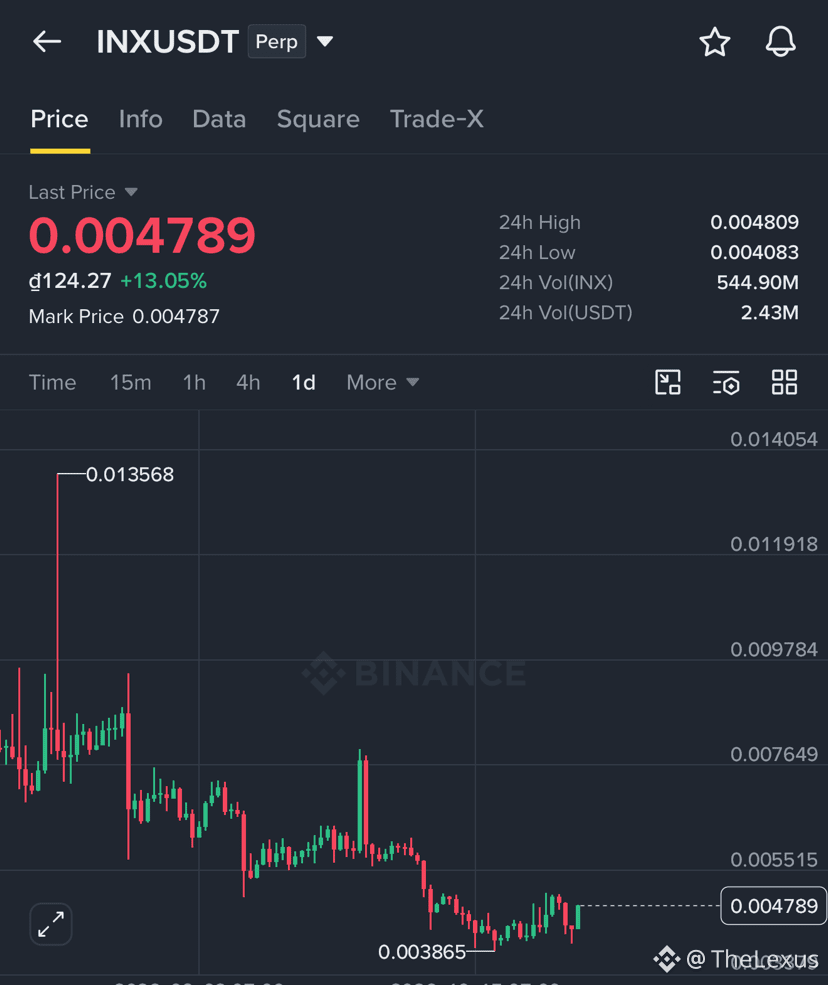
$INX - Long
Entry: 0.00465 - 0.00480
TP: 0.005515 / 0.007649
Stoploss: 0.00405
Explanation: Bounce off 0.003865 on the 1D, +13% on the day with higher lows forming. Order book leans bid (60%). Invalidated on a close below stoploss.
Not financial advice. DYOR and manage your risk.
$INX - Long
Entry: 0.00465 - 0.00480
TP: 0.005515 / 0.007649
Stoploss: 0.00405
Explanation: Bounce off 0.003865 on the 1D, +13% on the day with higher lows forming. Order book leans bid (60%). Invalidated on a close below stoploss.
Not financial advice. DYOR and manage your risk.
Entry: 0.00465 - 0.00480
TP: 0.005515 / 0.007649
Stoploss: 0.00405
Explanation: Bounce off 0.003865 on the 1D, +13% on the day with higher lows forming. Order book leans bid (60%). Invalidated on a close below stoploss.
Not financial advice. DYOR and manage your risk.
318
·
--
Bản dịch đây anh, em chưa đăng gì cả:
The Binance hacker, probably one of the smartest moves I have ever witnessed.
First Tether froze $1.5B in USDT. Then Circle also froze $800M in USDC. Everyone thought that with this, their money was completely stuck.
But the hacker seems to have anticipated all of that.
They did not leave the stolen USDT sitting in a wallet, but deposited it into Aave as collateral, then used it to borrow ETH and disappear.
Tether can only freeze USDT. The borrowed ETH cannot be frozen.
As a result, what is left in Aave is the frozen collateral, while the hacker has free ETH to use.
If the protocol side cannot recover it, they may not even need to repay the borrowed ETH.
Even though the two companies froze over $2B in the blink of an eye, just one individual who understands DeFi mechanics was able to slip past both. Absolutely legendary. The hacker is terrifyingly calm.
677
·
--
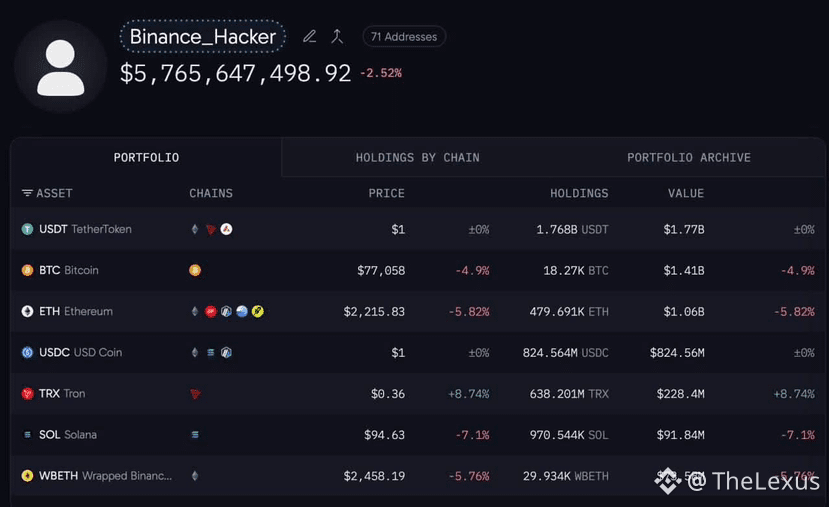
The Binance hacker has finished selling all $UNI,$ ENA, $PEPE,$ LINK, $AAVE,$ ONDO and $WLD tokens, exchanging them for a total of 70,480 $ETH (worth $158.25 million).
Sold 7.02 million $UNI (worth $39.63 million) at $5.65.
Sold 217.5 million $ENA (worth $33.93 million) at $0.16.
Sold 7.77 trillion $PEPE (worth $31.66 million) at $0.0000041.
Sold 2.57 million $LINK (worth $26.05 million) at $10.14.
Sold 127,953 $AAVE (worth $14.27 million) at $111.55.
Sold 21.85 million $ONDO (worth $6.62 million) at $0.30.
Sold 17.32 million $WLD (worth $6.09 million) at $0.35.
144
·
--
Most traders chase breakouts. Pros wait for the retest.
Weak breakouts trap buyers and snap back. Strong moves return to test old resistance as new support, and hold.
That retest is not a missed entry, it is a second chance with clearer risk. More structure like this, daily.
Most traders chase breakouts. Pros wait for the retest.
Weak breakouts trap buyers and snap back. Strong moves return to test old resistance as new support, and hold.
That retest is not a missed entry, it is a second chance with clearer risk. More structure like this, daily.
Weak breakouts trap buyers and snap back. Strong moves return to test old resistance as new support, and hold.
That retest is not a missed entry, it is a second chance with clearer risk. More structure like this, daily.
151
Log in to explore more content
Join global crypto users on Binance Square
⚡️ Get latest and useful information about crypto.
💬 Trusted by the world’s largest crypto exchange.
👍 Discover real insights from verified creators.
Email / Phone number
Trending Topics
BTCRebounds80K
0 views
31 Discussing
Bitcoin erased yesterday’s losses and climbed back above $80,000 (around $80,700)
Why?👇
Election uncertainty has eased
A strong short squeeze (over $415 million in short positions liquidated)
Falling oil prices eased inflation concerns
⭐ The rebound is strong, wiping out a $5,000 loss in a single day, but a large part of it came from liquidations, not genuine institutional buying.
$80,000 is the line in the sand today
Above it, the market is fine; below it, expect caution and volatility.
This is my personal opinion and not investment advice.
DYOR
$BTC
#BTCRebounds80K
Storm89
·0 Likes
·65 views
Binance98PercentReplenished
1,010 views
152 Discussing
USMidterms-WhatAreMarketsExpecting?
201,602 views
1,584 Discussing