
TheBinBank
55 Posts
TheBinBank
Convicción. Paciencia. BTC.
Frequent Trader
2.1 Years
6 Following
25 Followers
21 Liked
Posts
All
Quotes
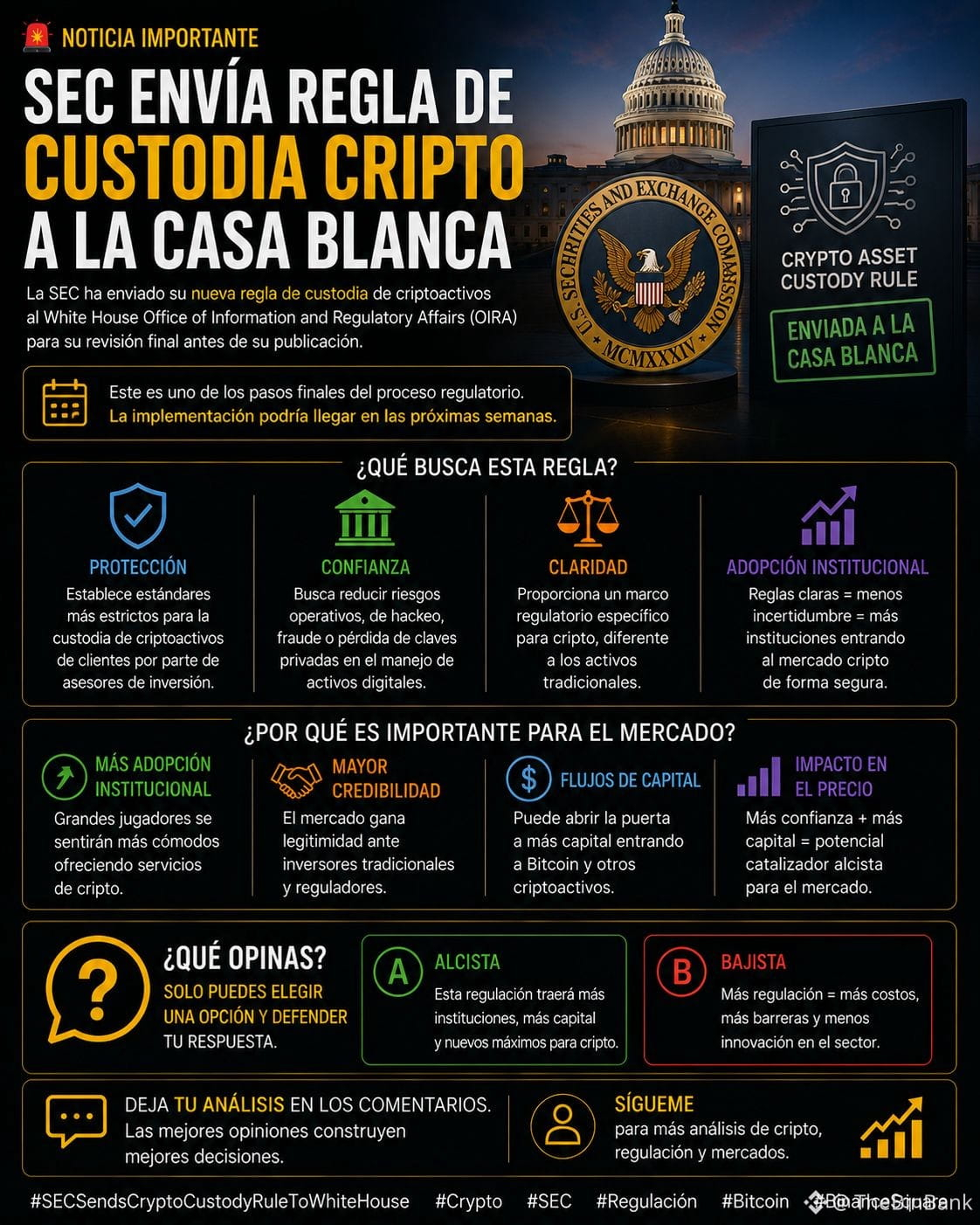
🚨 This could be much more important for Bitcoin than another ETF.
The SEC has just sent the White House its proposal to rewrite the rules for crypto asset custody.
Looks like bureaucracy.
It isn’t.
One of the biggest obstacles to trillions of dollars in institutional money entering crypto is simple:
👉 Who can custody the assets, and under what rules?
If the new framework reduces uncertainty and makes it easier for advisers and funds to hold crypto for their clients, Wall Street could have less friction to increase its exposure.
But there’s another side:
⚠️ More regulation can also mean more control, higher costs, and barriers for some participants.
That’s why I want to break down Binance Square 👇
🟢 A) BULLISH — clear rules = institutions + capital flowing in.
🔴 B) BEARISH — more regulation = less freedom and innovation.
My question: would you prefer Bitcoin to grow faster thanks to Wall Street, even if that meant greater institutionalization?
👇 Defend your answer.
➕ Follow me. We’re looking for the news that can move money before it moves the price.
#SECSendsCryptoCustodyRuleToWhiteHouse #Bitcoin #Crypto #SEC #BinanceSquare
$BTC
The SEC has just sent the White House its proposal to rewrite the rules for crypto asset custody.
Looks like bureaucracy.
It isn’t.
One of the biggest obstacles to trillions of dollars in institutional money entering crypto is simple:
👉 Who can custody the assets, and under what rules?
If the new framework reduces uncertainty and makes it easier for advisers and funds to hold crypto for their clients, Wall Street could have less friction to increase its exposure.
But there’s another side:
⚠️ More regulation can also mean more control, higher costs, and barriers for some participants.
That’s why I want to break down Binance Square 👇
🟢 A) BULLISH — clear rules = institutions + capital flowing in.
🔴 B) BEARISH — more regulation = less freedom and innovation.
My question: would you prefer Bitcoin to grow faster thanks to Wall Street, even if that meant greater institutionalization?
👇 Defend your answer.
➕ Follow me. We’re looking for the news that can move money before it moves the price.
#SECSendsCryptoCustodyRuleToWhiteHouse #Bitcoin #Crypto #SEC #BinanceSquare
$BTC
🚨 TODAY the market can change its narrative in minutes.
Everyone is looking at Bitcoin. I’m looking at CPI + PPI.
July’s inflation data can determine which expectation gains strength in the market:
📉 Inflation cools → more pressure to cut rates → liquidity ↑ → BTC 🚀
📈 Inflation surprises to the upside → the Fed stays tougher → dollar/yields ↑ → BTC under pressure.
But here’s the catch:
The data matters less than the gap between what comes out and what Wall Street already expected.
That’s where volatility usually starts. 👀
👇 LEAVE YOUR PREDICTION BEFORE THE DATA:
🟢 BTC ends the week HIGHER
🔴 BTC ends the week LOWER
$BTC
Don’t edit your comment after. 😏
We’ll be back here by the end of the week.
➕ Follow me. We’re trying to read the move before it happens, not explain it afterward.
#USJulyCPI&PPIDueThisWeek #Bitcoin #CPI #PPI #BinanceSquare
Everyone is looking at Bitcoin. I’m looking at CPI + PPI.
July’s inflation data can determine which expectation gains strength in the market:
📉 Inflation cools → more pressure to cut rates → liquidity ↑ → BTC 🚀
📈 Inflation surprises to the upside → the Fed stays tougher → dollar/yields ↑ → BTC under pressure.
But here’s the catch:
The data matters less than the gap between what comes out and what Wall Street already expected.
That’s where volatility usually starts. 👀
👇 LEAVE YOUR PREDICTION BEFORE THE DATA:
🟢 BTC ends the week HIGHER
🔴 BTC ends the week LOWER
$BTC
Don’t edit your comment after. 😏
We’ll be back here by the end of the week.
➕ Follow me. We’re trying to read the move before it happens, not explain it afterward.
#USJulyCPI&PPIDueThisWeek #Bitcoin #CPI #PPI #BinanceSquare
🚨 This week Bitcoin doesn't call the shots. Inflation does.
The July CPI and PPI data releases in the US can change expectations for the Fed in minutes… and with them, the dollar, interest rates, and BTC.
$BTC
The market is stuck between two scenarios:
🔥 Lower inflation → Fed more flexible → liquidity ↑ → BTC could take off.
🧊 Higher inflation → high rates for longer → pressure on BTC.
But be careful: the most dangerous move usually happens when the data surprises the consensus.
👇 Let's make a prediction BEFORE knowing the result:
🟢 A) Inflation surprises to the downside → BTC 🚀
🔴 B) Inflation surprises to the upside → BTC 📉
Leave your prediction now. After the data, we’ll come back to this post and see who read the market best. 👀
➕ Follow me if you want to get ahead of the news that can move
Bitcoin before the candle appears.
#USJulyCPI&PPIDueThisWeek #Bitcoin #CPI #PPI #BinanceSquare
The July CPI and PPI data releases in the US can change expectations for the Fed in minutes… and with them, the dollar, interest rates, and BTC.
$BTC
The market is stuck between two scenarios:
🔥 Lower inflation → Fed more flexible → liquidity ↑ → BTC could take off.
🧊 Higher inflation → high rates for longer → pressure on BTC.
But be careful: the most dangerous move usually happens when the data surprises the consensus.
👇 Let's make a prediction BEFORE knowing the result:
🟢 A) Inflation surprises to the downside → BTC 🚀
🔴 B) Inflation surprises to the upside → BTC 📉
Leave your prediction now. After the data, we’ll come back to this post and see who read the market best. 👀
➕ Follow me if you want to get ahead of the news that can move
Bitcoin before the candle appears.
#USJulyCPI&PPIDueThisWeek #Bitcoin #CPI #PPI #BinanceSquare
🚨 Wall Street doesn't need you to buy Bitcoin. It only needs you to want exposure to it.
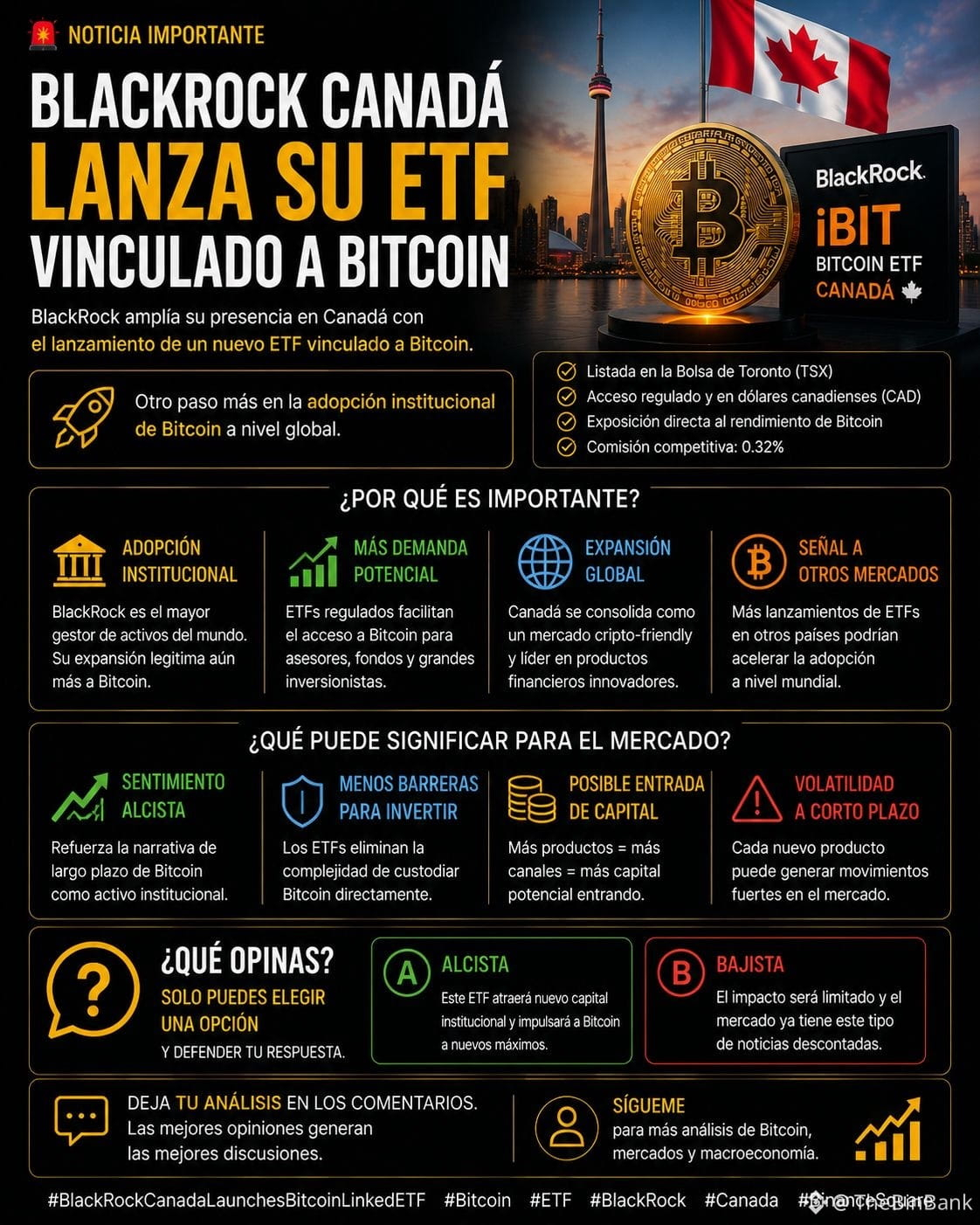
BlackRock continues bringing Bitcoin into the traditional financial system, making it easier for Canadian investors to gain exposure to BTC through a regulated ETF.
And that's the real story:
₿ Bitcoin was born to eliminate intermediaries.
🏦 Now some of the biggest financial intermediaries in the world want to offer it to their clients.
That might seem contradictory… but it could also be one of the biggest sources of demand for BTC.
The question is no longer whether institutions will arrive.
They already have.
👇 Now I want to split the Bitcoiners:
🟢 A) ETF — convenience, regulation, and easy access.
🟠 B) REAL BTC — self-custody, your own keys, and zero intermediaries.
If you had to hold it for 10 years and ONLY could choose one, which would you choose?
Defend your answer. 👇
➕ Follow me if you want to keep track of the signals showing how institutional money is changing Bitcoin.
$BTC
#BlackRockCanadaLaunchesBitcoinLinkedETF #Bitcoin #BTC #ETF #BinanceSquare
BlackRock continues bringing Bitcoin into the traditional financial system, making it easier for Canadian investors to gain exposure to BTC through a regulated ETF.
And that's the real story:
₿ Bitcoin was born to eliminate intermediaries.
🏦 Now some of the biggest financial intermediaries in the world want to offer it to their clients.
That might seem contradictory… but it could also be one of the biggest sources of demand for BTC.
The question is no longer whether institutions will arrive.
They already have.
👇 Now I want to split the Bitcoiners:
🟢 A) ETF — convenience, regulation, and easy access.
🟠 B) REAL BTC — self-custody, your own keys, and zero intermediaries.
If you had to hold it for 10 years and ONLY could choose one, which would you choose?
Defend your answer. 👇
➕ Follow me if you want to keep track of the signals showing how institutional money is changing Bitcoin.
$BTC
#BlackRockCanadaLaunchesBitcoinLinkedETF #Bitcoin #BTC #ETF #BinanceSquare
🚨 This appointment in Iran could matter more for Bitcoin than it seems.
Iran has appointed Rezaee to lead its Security Council, right as markets remain extremely sensitive to any shift in Middle East tensions.
Most people will see this as political news.
Markets will look at something else:
🛢️ Oil
💵 Dollar
⚠️ Geopolitical risk
₿ Bitcoin $BTC
An escalation can trigger a rush to safety and increase volatility.
A de-escalation can send capital back into risk assets.
📌 That’s why BTC’s next move could start in Tehran, not on a Bitcoin chart.
👇 I want a prediction:
🟢 A) Tensions decrease → markets ↑
🔴 B) We’ll see a new escalation → volatility ↑
Where will BTC be a week later: higher or lower?
Save this post. We’ll be back in 7 days to see who was right. 👀
➕ Follow me to connect geopolitics, macro, and Bitcoin before the market makes its move.
#IranNamesRezaeeToHeadSecurityCouncil #Bitcoin #Geopolitics #Crypto #BinanceSquare
Iran has appointed Rezaee to lead its Security Council, right as markets remain extremely sensitive to any shift in Middle East tensions.
Most people will see this as political news.
Markets will look at something else:
🛢️ Oil
💵 Dollar
⚠️ Geopolitical risk
₿ Bitcoin $BTC
An escalation can trigger a rush to safety and increase volatility.
A de-escalation can send capital back into risk assets.
📌 That’s why BTC’s next move could start in Tehran, not on a Bitcoin chart.
👇 I want a prediction:
🟢 A) Tensions decrease → markets ↑
🔴 B) We’ll see a new escalation → volatility ↑
Where will BTC be a week later: higher or lower?
Save this post. We’ll be back in 7 days to see who was right. 👀
➕ Follow me to connect geopolitics, macro, and Bitcoin before the market makes its move.
#IranNamesRezaeeToHeadSecurityCouncil #Bitcoin #Geopolitics #Crypto #BinanceSquare
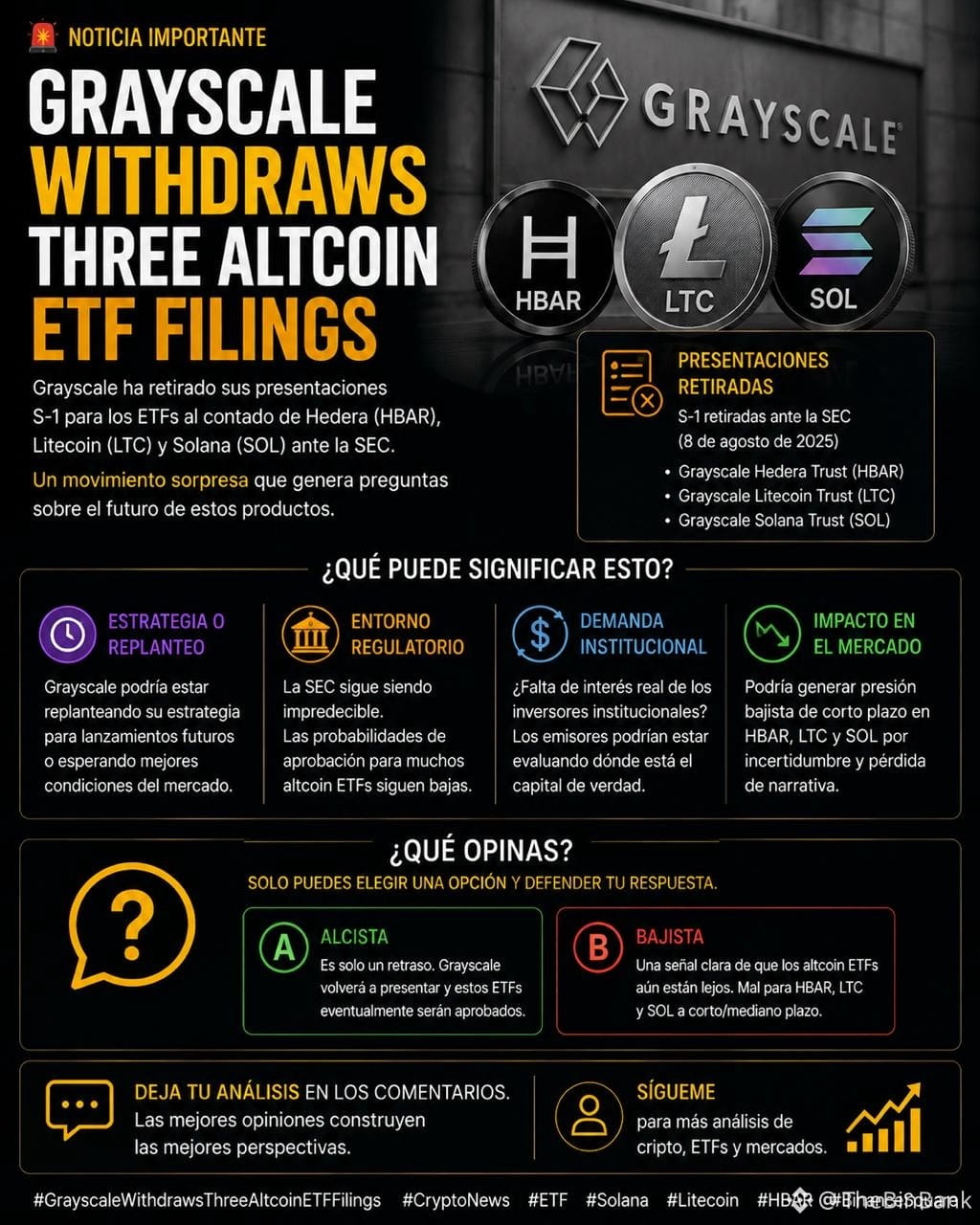
🚨 Grayscale has just removed 3 altcoin ETFs in just 190 seconds. This does NOT seem coincidental.
ADA. HBAR. DOT.
Three requests withdrawn practically back-to-back.
citeturn0news3turn0news5
The easy reaction is to say:
“Grayscale has lost confidence in altcoins.”
But there’s another, much more interesting possibility…
What if they’re simply repositioning themselves ahead of the regulatory environment before trying again?
📌 Because withdrawing an application doesn’t necessarily mean abandoning the asset.
And here’s where I want to split it up with Binance Square 👇
🟢 A) It’s strategy. Altcoin ETFs will end up on Wall Street.
🔴 B) It’s a warning. Institutional demand for these altcoins is being overestimated.
💬 ADA, HBAR, or DOT: if you could only keep ONE for the next 5 years, which would you choose?
I want arguments. 👇
➕ Follow me if you want to spot institutional signals before they turn into a narrative.
$ADA
#GrayscaleWithdrawsThreeAltcoinETFFilings #ADA #HBAR #DOT #BinanceSquare
ADA. HBAR. DOT.
Three requests withdrawn practically back-to-back.
citeturn0news3turn0news5
The easy reaction is to say:
“Grayscale has lost confidence in altcoins.”
But there’s another, much more interesting possibility…
What if they’re simply repositioning themselves ahead of the regulatory environment before trying again?
📌 Because withdrawing an application doesn’t necessarily mean abandoning the asset.
And here’s where I want to split it up with Binance Square 👇
🟢 A) It’s strategy. Altcoin ETFs will end up on Wall Street.
🔴 B) It’s a warning. Institutional demand for these altcoins is being overestimated.
💬 ADA, HBAR, or DOT: if you could only keep ONE for the next 5 years, which would you choose?
I want arguments. 👇
➕ Follow me if you want to spot institutional signals before they turn into a narrative.
$ADA
#GrayscaleWithdrawsThreeAltcoinETFFilings #ADA #HBAR #DOT #BinanceSquare
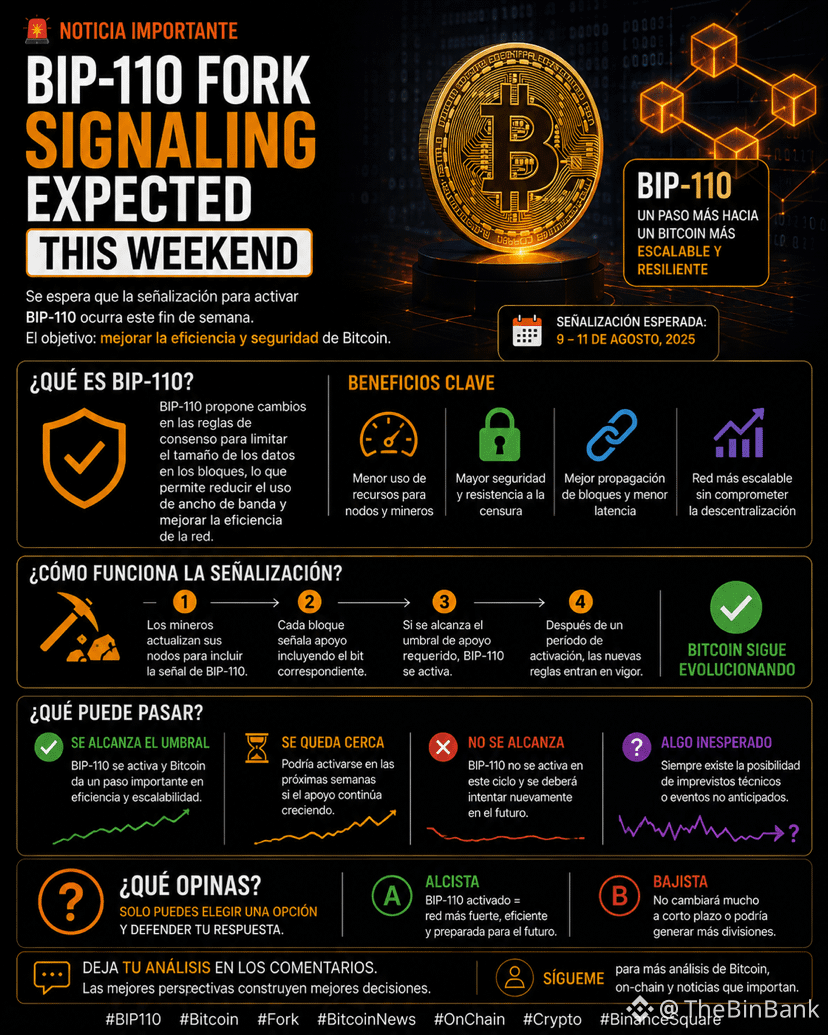
🚨 Bitcoin has just entered a battle that most holders don’t even know exists.
The mandatory signaling for BIP-110 has already begun.
The problem?
To move forward, it needs approximately 55% signaling.
Reported miner support: less than 3%. 👀
BIP-110 aims to temporarily restrict certain ways of storing non-financial data on Bitcoin, including uses associated with inscriptions and Ordinals.
But with such a huge gap between the required threshold and the current support, the real story isn’t the upgrade anymore...
It’s Bitcoin’s consensus being put to the test.
👇 I want you to take a stance:
🟢 A) BIP-110 is necessary. Bitcoin must prioritize its monetary function.
🔴 B) BIP-110 goes against Bitcoin’s philosophy. The network shouldn’t decide which data is valid.
💬 Defend your position. This debate is far more important than watching the BTC price over the next 24 hours.
➕ Follow me if you want to keep track of the signals that are really happening inside Bitcoin—not just its price.
#BIP110ForkSignalingExpectedThisWeekend #BIP110 #Bitcoin #BTC #BinanceSquare
$BTC
The mandatory signaling for BIP-110 has already begun.
The problem?
To move forward, it needs approximately 55% signaling.
Reported miner support: less than 3%. 👀
BIP-110 aims to temporarily restrict certain ways of storing non-financial data on Bitcoin, including uses associated with inscriptions and Ordinals.
But with such a huge gap between the required threshold and the current support, the real story isn’t the upgrade anymore...
It’s Bitcoin’s consensus being put to the test.
👇 I want you to take a stance:
🟢 A) BIP-110 is necessary. Bitcoin must prioritize its monetary function.
🔴 B) BIP-110 goes against Bitcoin’s philosophy. The network shouldn’t decide which data is valid.
💬 Defend your position. This debate is far more important than watching the BTC price over the next 24 hours.
➕ Follow me if you want to keep track of the signals that are really happening inside Bitcoin—not just its price.
#BIP110ForkSignalingExpectedThisWeekend #BIP110 #Bitcoin #BTC #BinanceSquare
$BTC
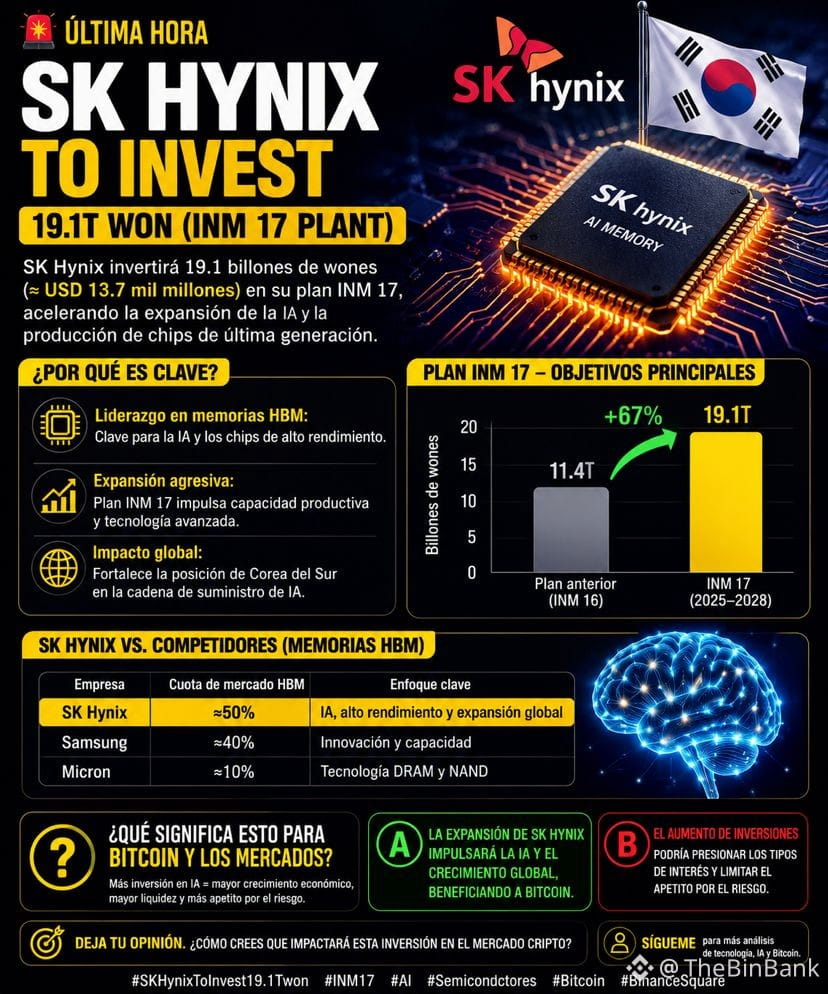
🚨 $13.7 BILLION says more than any AI prediction. Follow the money.
SK Hynix plans to invest 19.1 trillion won in its M17 plant, another massive bet on the exploding demand for advanced memory and AI infrastructure.
This is the signal 👇
🧠 AI needs more computing power.
🔥 More computing = more demand for HBM and advanced chips.
💰 Billions are being deployed NOW to build that capacity.
Companies don’t commit this kind of capital because AI might grow.
They’re preparing for what they believe comes next.
And here’s the question investors should be asking:
👇 Is the AI boom still early… or are we already in a bubble?
🟢 A) Early. This decade belongs to AI.
🔴 B) Bubble. Expectations have gone too far.
💬 Convince me. I want arguments, not just A or B.
➕ Follow me for the signals behind the headlines — before the crowd notices them.
#SKHynixToInvest19.1TWonInM17Plant #AI #Semiconductors #Bitcoin #BinanceSquare
$BTC
SK Hynix plans to invest 19.1 trillion won in its M17 plant, another massive bet on the exploding demand for advanced memory and AI infrastructure.
This is the signal 👇
🧠 AI needs more computing power.
🔥 More computing = more demand for HBM and advanced chips.
💰 Billions are being deployed NOW to build that capacity.
Companies don’t commit this kind of capital because AI might grow.
They’re preparing for what they believe comes next.
And here’s the question investors should be asking:
👇 Is the AI boom still early… or are we already in a bubble?
🟢 A) Early. This decade belongs to AI.
🔴 B) Bubble. Expectations have gone too far.
💬 Convince me. I want arguments, not just A or B.
➕ Follow me for the signals behind the headlines — before the crowd notices them.
#SKHynixToInvest19.1TWonInM17Plant #AI #Semiconductors #Bitcoin #BinanceSquare
$BTC
🚨 Fewer than 200K unemployment claims. Looks like good news… but it could complicate things for Bitcoin.
Initial unemployment claims in the US remain below 200,000, showing that the labor market is still resilient.
Here’s the paradox 👇
💪 Strong employment = resilient economy.
🏦 Resilient economy = less urgency for the Fed to cut rates.
💰 Higher rates for longer = less liquidity for risk assets.
That’s why an “improving” economic data point isn’t always good news for BTC.
📌 The question that really matters now:
What will weigh more in Bitcoin’s next move?
🟢 A) Strong economy → more confidence → BTC ↑
🔴 B) Higher rates for longer → BTC ↓
💬 Make your case. Let’s come back here when the next Fed decision comes.
➕ Follow me if you want to connect macro data to Bitcoin before the market makes its move.
#USInitialJoblessClaimsStayBelow200K #Bitcoin #Fed #Macro #BinanceSquare
Initial unemployment claims in the US remain below 200,000, showing that the labor market is still resilient.
Here’s the paradox 👇
💪 Strong employment = resilient economy.
🏦 Resilient economy = less urgency for the Fed to cut rates.
💰 Higher rates for longer = less liquidity for risk assets.
That’s why an “improving” economic data point isn’t always good news for BTC.
📌 The question that really matters now:
What will weigh more in Bitcoin’s next move?
🟢 A) Strong economy → more confidence → BTC ↑
🔴 B) Higher rates for longer → BTC ↓
💬 Make your case. Let’s come back here when the next Fed decision comes.
➕ Follow me if you want to connect macro data to Bitcoin before the market makes its move.
#USInitialJoblessClaimsStayBelow200K #Bitcoin #Fed #Macro #BinanceSquare
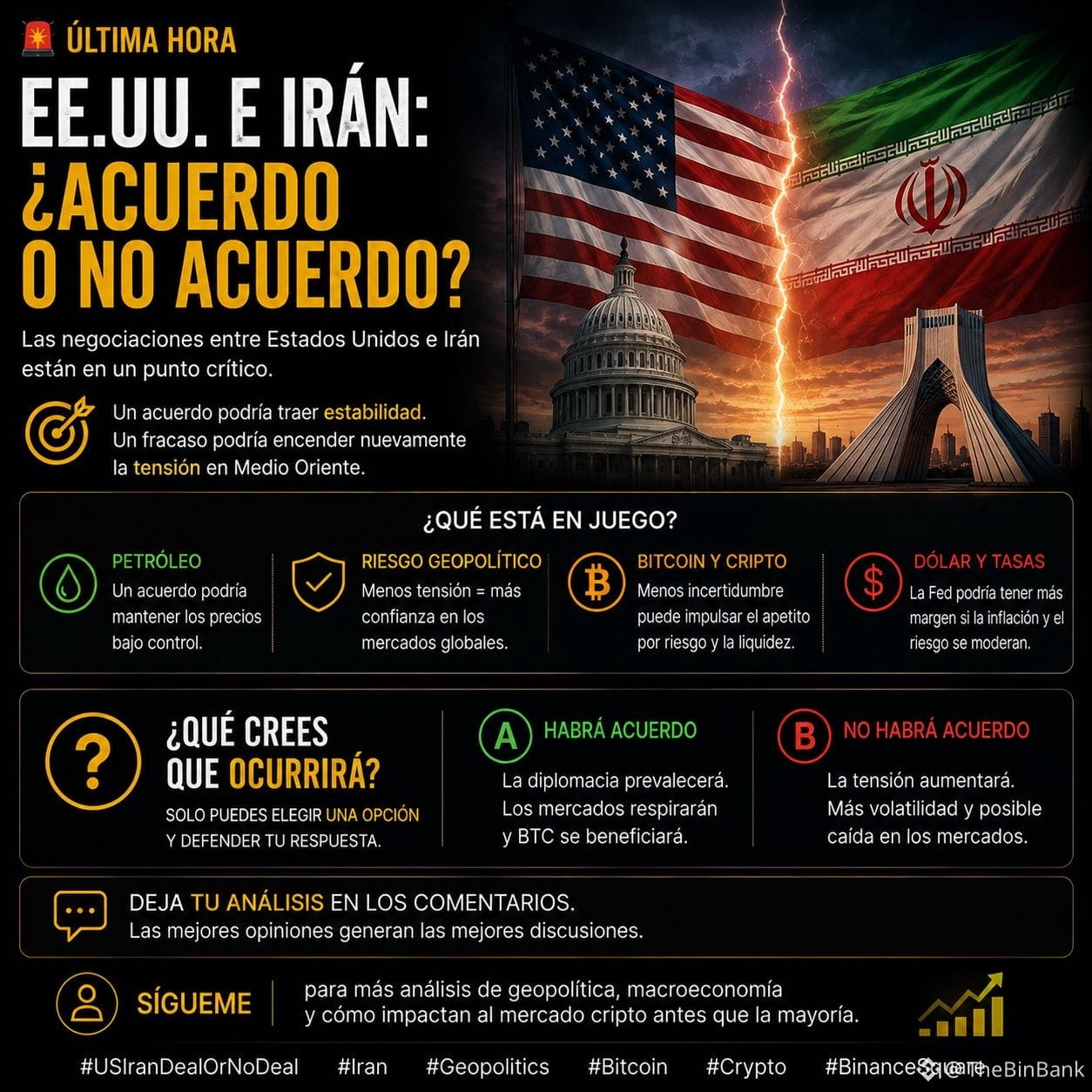
🚨 Bitcoin's next move might not depend on Bitcoin.
Negotiations between the US and Iran are back in the spotlight.
If there is a deal, it could reduce geopolitical tension, stabilize oil, and increase risk appetite. If talks fail, volatility could return to the markets within hours.
📌 Big rallies don't always start with a crypto news headline.
Sometimes they begin with a geopolitical event.
👇 You can choose only one option:
🟢 A) There will be a deal and the markets will react positively.
🔴 B) There will be no deal and we'll see a new wave of volatility.
💬 Don't just write A or B. Explain what you think will happen and how it will affect Bitcoin.
📈 Follow me if you want to understand how geopolitics can move the market before most people.
#USIranDealOrNoDeal #Bitcoin #Crypto #Geopolitics #BinanceSquare
$BTC
Negotiations between the US and Iran are back in the spotlight.
If there is a deal, it could reduce geopolitical tension, stabilize oil, and increase risk appetite. If talks fail, volatility could return to the markets within hours.
📌 Big rallies don't always start with a crypto news headline.
Sometimes they begin with a geopolitical event.
👇 You can choose only one option:
🟢 A) There will be a deal and the markets will react positively.
🔴 B) There will be no deal and we'll see a new wave of volatility.
💬 Don't just write A or B. Explain what you think will happen and how it will affect Bitcoin.
📈 Follow me if you want to understand how geopolitics can move the market before most people.
#USIranDealOrNoDeal #Bitcoin #Crypto #Geopolitics #BinanceSquare
$BTC
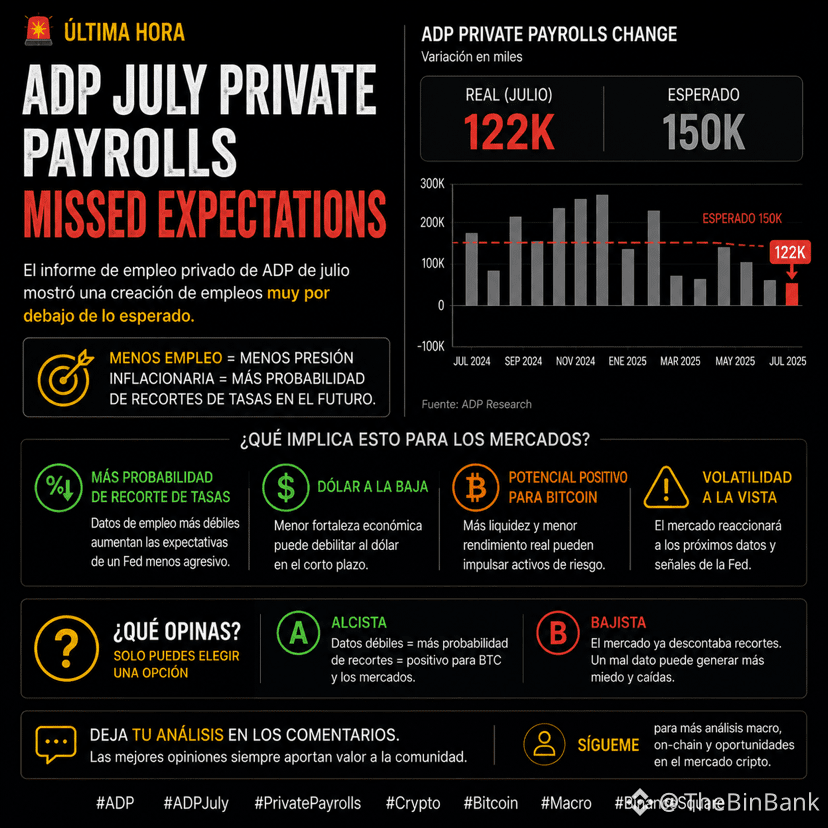
🚨 The data Wall Street was waiting for… came in worse than expected.
ADP’s private payrolls for July came in below expectations.
Why does it matter?
Because a weaker labor market can increase expectations for rate cuts by the Fed. And when the market starts pricing in more liquidity, Bitcoin and risk assets often move into the spotlight.
📌 Big trends don’t start when everyone agrees. They start when the data changes the narrative.
👇 You can only choose one option:
🟢 A) This data is bullish for Bitcoin.
🔴 B) This is a bad sign for the economy and it will eventually affect the crypto market too.
💬 Don’t just pick A or B. Explain your analysis and let’s debate it.
📈 Follow me if you want to understand how macroeconomic data ends up moving Bitcoin before the headlines.
#ADPJulyPrivatePayrollsMissedExpectations #Bitcoin #Macro #Crypto #BinanceSquare
ADP’s private payrolls for July came in below expectations.
Why does it matter?
Because a weaker labor market can increase expectations for rate cuts by the Fed. And when the market starts pricing in more liquidity, Bitcoin and risk assets often move into the spotlight.
📌 Big trends don’t start when everyone agrees. They start when the data changes the narrative.
👇 You can only choose one option:
🟢 A) This data is bullish for Bitcoin.
🔴 B) This is a bad sign for the economy and it will eventually affect the crypto market too.
💬 Don’t just pick A or B. Explain your analysis and let’s debate it.
📈 Follow me if you want to understand how macroeconomic data ends up moving Bitcoin before the headlines.
#ADPJulyPrivatePayrollsMissedExpectations #Bitcoin #Macro #Crypto #BinanceSquare
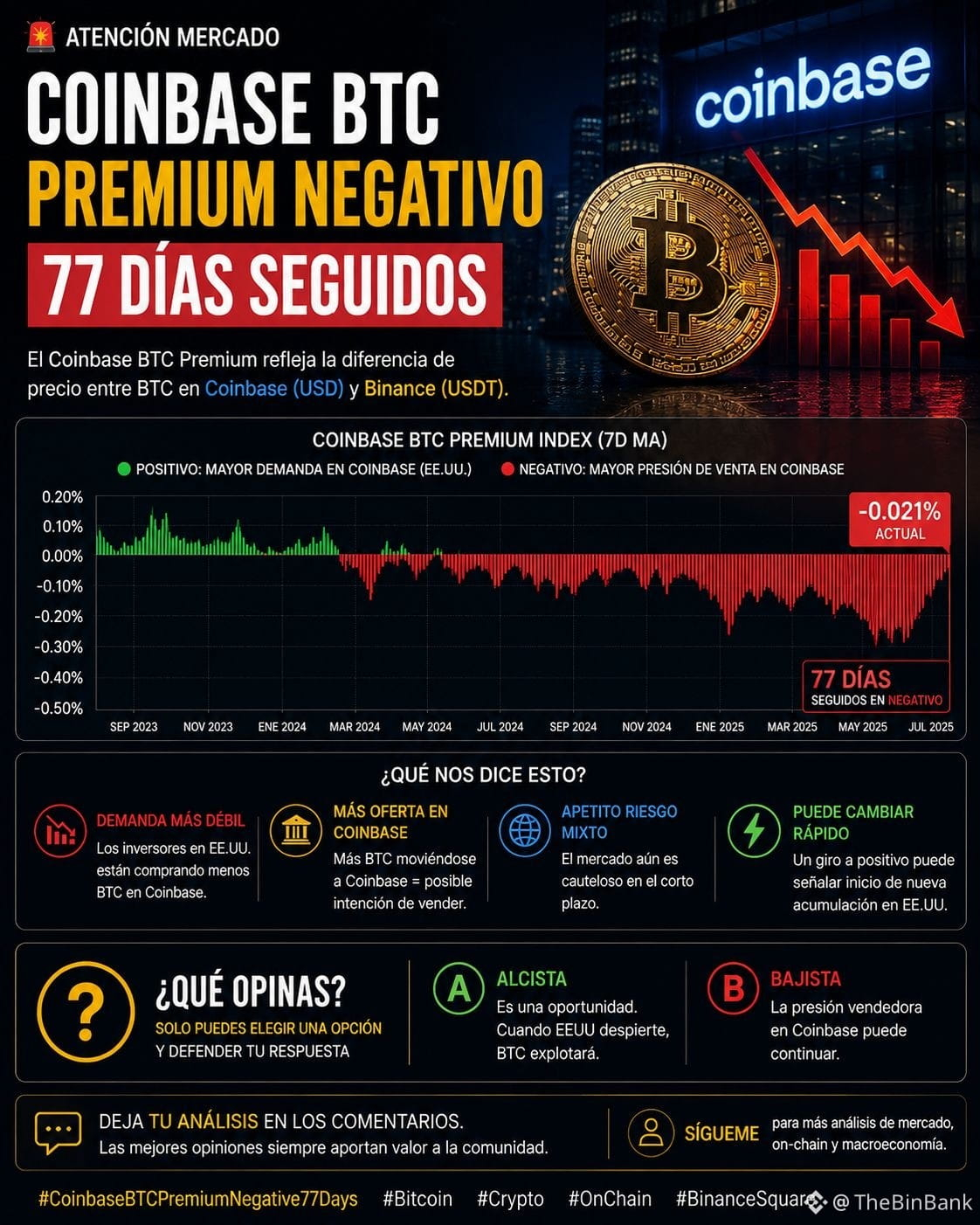
🚨 77 days. That’s how long the Coinbase Bitcoin Premium has been negative.
Most people just look at the price of Bitcoin.
More experienced investors watch where money is flowing in (or out).
A negative Coinbase Premium usually indicates that demand in the U.S. is weaker than in other markets. But here’s the
interesting part...
📌 The best opportunities often show up when sentiment is at its lowest.
👇 You can only choose one option:
🟢 A) It’s a sign of accumulation before the next push.
🔴 B) It reflects weakness and there’s still a major correction ahead.
💬 Don’t just answer A or B. Convince me that your analysis is
the right one.
📈 Follow me if you want to understand the on-chain metrics and indicators that often predict market moves before the headlines.
$BTC
#CoinbaseBTCPremiumNegative77Days #Bitcoin #OnChain #Crypto #BinanceSquare
Most people just look at the price of Bitcoin.
More experienced investors watch where money is flowing in (or out).
A negative Coinbase Premium usually indicates that demand in the U.S. is weaker than in other markets. But here’s the
interesting part...
📌 The best opportunities often show up when sentiment is at its lowest.
👇 You can only choose one option:
🟢 A) It’s a sign of accumulation before the next push.
🔴 B) It reflects weakness and there’s still a major correction ahead.
💬 Don’t just answer A or B. Convince me that your analysis is
the right one.
📈 Follow me if you want to understand the on-chain metrics and indicators that often predict market moves before the headlines.
$BTC
#CoinbaseBTCPremiumNegative77Days #Bitcoin #OnChain #Crypto #BinanceSquare
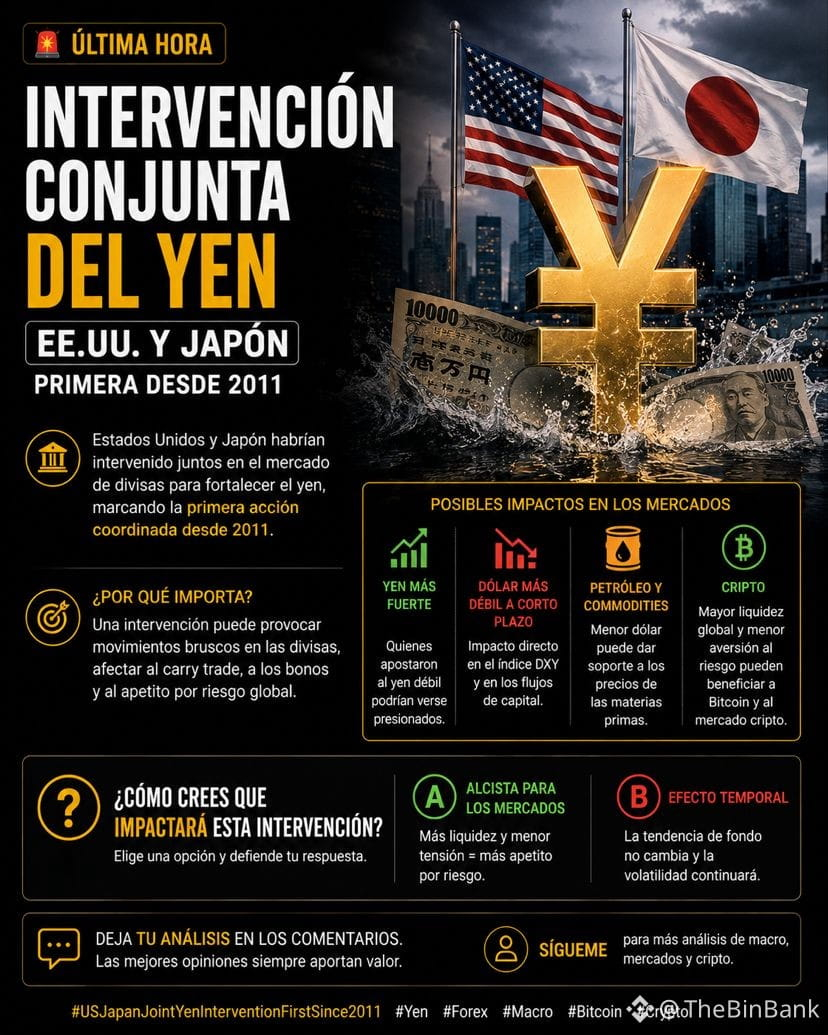
🚨 This is not news about Japan. It’s news about global money.
For the first time since 2011, the U.S. and Japan may have intervened jointly to strengthen the yen.
Why should you care if you invest in Bitcoin?
Because when governments intervene in the foreign exchange market, they change capital flows, liquidity, and risk appetite. And that can end up impacting everything from the dollar to cryptocurrencies.
📌 Big moves don’t always start in Bitcoin. Sometimes they start in the forex market.
👇 You can choose only one option:
🟢 A) This intervention will be positive for Bitcoin and risk assets.
🔴 B) It won’t change the market trend; it’s only a temporary effect.
💬 Don’t just vote—explain your argument. The best comments usually bring the best ideas.
📈 Follow me if you want to understand how macroeconomic decisions end up moving the crypto market before most people.
#USJapanJointYenInterventionFirstSince2011 #Bitcoin #Macro #Forex #BinanceSquare
For the first time since 2011, the U.S. and Japan may have intervened jointly to strengthen the yen.
Why should you care if you invest in Bitcoin?
Because when governments intervene in the foreign exchange market, they change capital flows, liquidity, and risk appetite. And that can end up impacting everything from the dollar to cryptocurrencies.
📌 Big moves don’t always start in Bitcoin. Sometimes they start in the forex market.
👇 You can choose only one option:
🟢 A) This intervention will be positive for Bitcoin and risk assets.
🔴 B) It won’t change the market trend; it’s only a temporary effect.
💬 Don’t just vote—explain your argument. The best comments usually bring the best ideas.
📈 Follow me if you want to understand how macroeconomic decisions end up moving the crypto market before most people.
#USJapanJointYenInterventionFirstSince2011 #Bitcoin #Macro #Forex #BinanceSquare
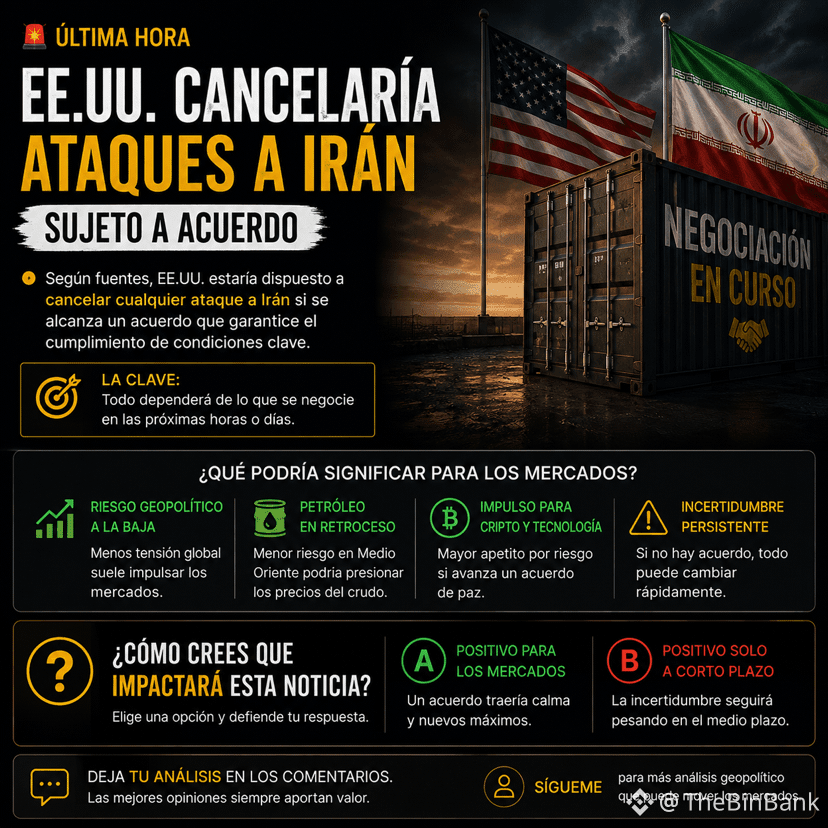
🚨 If this agreement is finalized, it could change the market narrative within hours.
The United States would be willing to cancel an attack against Iran if an agreement is reached.
Why does it matter?
Because a reduction in geopolitical tensions could affect oil, the dollar, and risk appetite. And when money goes back to seeking risk, Bitcoin and cryptocurrencies are often among the first assets to react.
📌 The market doesn’t just follow the news. It anticipates its consequences.
👇 You can choose only one option:
🟢 A) An agreement will drive Bitcoin and the markets.
🔴 B) The impact will be temporary and volatility will continue.
💬 Don’t just reply with A or B. Explain your argument; the best analyses create the best conversations.
📈 Follow me if you want to understand how geopolitics ends up moving the crypto market before most people.
#USToCancelIranAttackSubjectToDeal #Bitcoin #Crypto #Geopolitics #BinanceSquare
The United States would be willing to cancel an attack against Iran if an agreement is reached.
Why does it matter?
Because a reduction in geopolitical tensions could affect oil, the dollar, and risk appetite. And when money goes back to seeking risk, Bitcoin and cryptocurrencies are often among the first assets to react.
📌 The market doesn’t just follow the news. It anticipates its consequences.
👇 You can choose only one option:
🟢 A) An agreement will drive Bitcoin and the markets.
🔴 B) The impact will be temporary and volatility will continue.
💬 Don’t just reply with A or B. Explain your argument; the best analyses create the best conversations.
📈 Follow me if you want to understand how geopolitics ends up moving the crypto market before most people.
#USToCancelIranAttackSubjectToDeal #Bitcoin #Crypto #Geopolitics #BinanceSquare
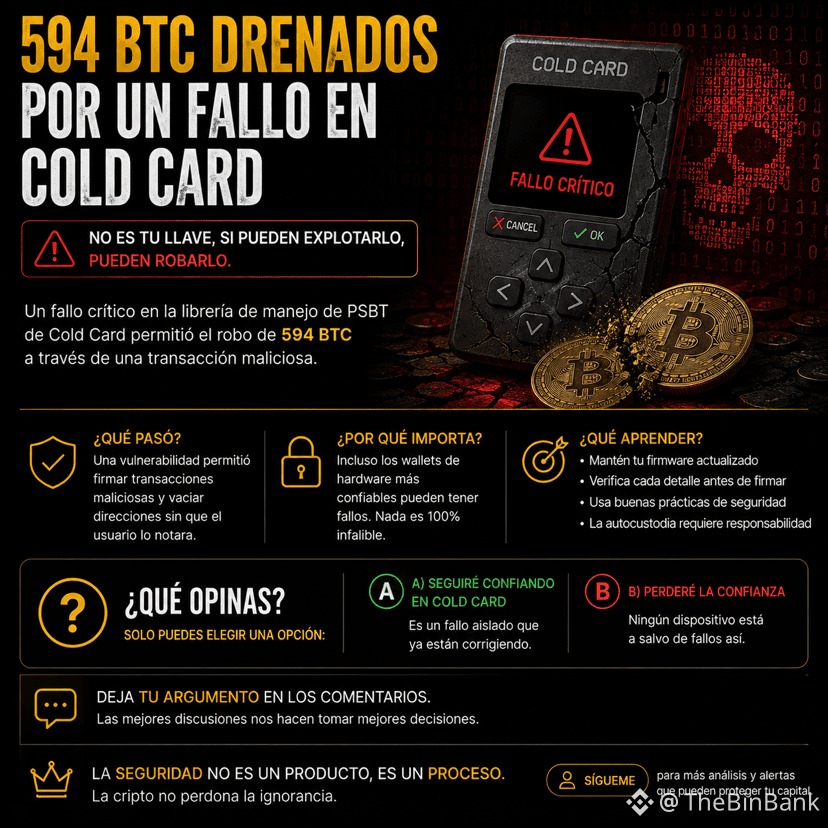
🚨 Do you think a hardware wallet makes you invulnerable? Think again.
The news about a flaw related to Coldcard that may have allowed the draining of 594 BTC reminds us of an uncomfortable reality:
Security doesn’t depend only on the device. It depends on how you use it.
In cryptocurrencies there is no zero risk. Even the most respected tools can be affected by vulnerabilities, implementation errors, or sophisticated attacks.
📌 The best investment isn’t the most expensive wallet. It’s developing good security habits.
👇 You can choose only one option:
🟢 A) I would keep using a hardware wallet. It’s the safest way to self-custody.
🔴 B) After news like this, I prefer to keep my funds on a trusted exchange.
💬 Don’t just reply with A or B. Explain why. I want to read your reasoning.
📈 Follow me if you’re interested in news that can truly help you protect your assets in the crypto world.
#ColdcardFlawDrains594BTC #Bitcoin #CryptoSecurity #SelfCustody #BinanceSquare
The news about a flaw related to Coldcard that may have allowed the draining of 594 BTC reminds us of an uncomfortable reality:
Security doesn’t depend only on the device. It depends on how you use it.
In cryptocurrencies there is no zero risk. Even the most respected tools can be affected by vulnerabilities, implementation errors, or sophisticated attacks.
📌 The best investment isn’t the most expensive wallet. It’s developing good security habits.
👇 You can choose only one option:
🟢 A) I would keep using a hardware wallet. It’s the safest way to self-custody.
🔴 B) After news like this, I prefer to keep my funds on a trusted exchange.
💬 Don’t just reply with A or B. Explain why. I want to read your reasoning.
📈 Follow me if you’re interested in news that can truly help you protect your assets in the crypto world.
#ColdcardFlawDrains594BTC #Bitcoin #CryptoSecurity #SelfCustody #BinanceSquare
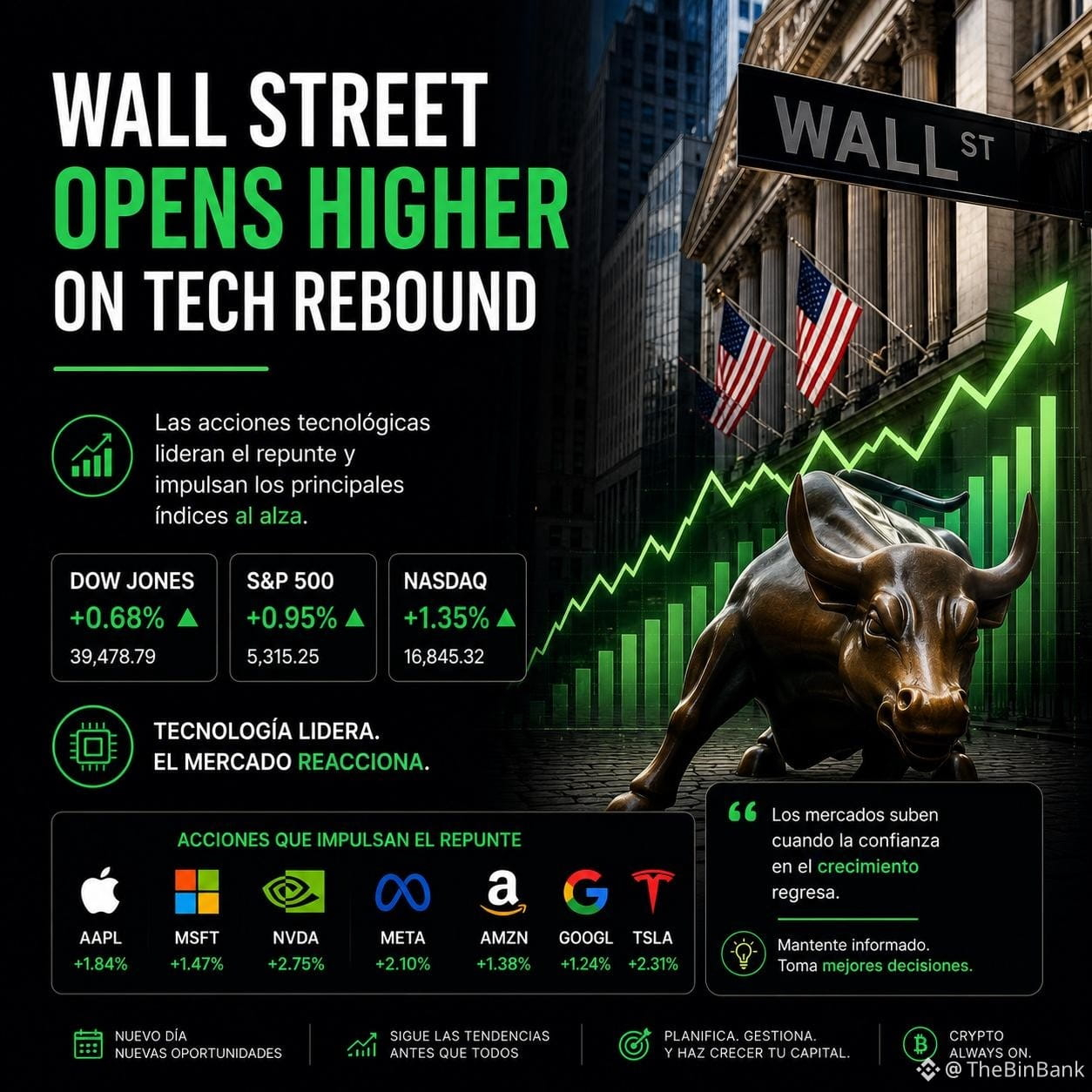
🚨 While many are still waiting for a drop... Wall Street is rising again.
The rebound in tech stocks once again shows that the market often punishes those who wait for the “perfect entry.”
Whenever the tech sector regains strength, the same question comes back:
Will that optimism also lift Bitcoin... or will the crypto market continue on its own path?
👇 You can choose only one option:
🟢 A) If tech goes up, Bitcoin will be next.
🔴 B) Bitcoin no longer depends on Wall Street.
💬 Don’t just answer with a letter. Defend your position. I want to read the best argument.
📈 Follow me if you want analysis that connects macroeconomics, technology, and the crypto market before most people.
$BTC
#WallStreetOpensHigherOnTechRebound #Bitcoin #WallStreet #TechStocks #BinanceSquare
The rebound in tech stocks once again shows that the market often punishes those who wait for the “perfect entry.”
Whenever the tech sector regains strength, the same question comes back:
Will that optimism also lift Bitcoin... or will the crypto market continue on its own path?
👇 You can choose only one option:
🟢 A) If tech goes up, Bitcoin will be next.
🔴 B) Bitcoin no longer depends on Wall Street.
💬 Don’t just answer with a letter. Defend your position. I want to read the best argument.
📈 Follow me if you want analysis that connects macroeconomics, technology, and the crypto market before most people.
$BTC
#WallStreetOpensHigherOnTechRebound #Bitcoin #WallStreet #TechStocks #BinanceSquare
🚨 A 11% drop doesn’t happen by chance. The market is sending a message.
The KOSPI plunged 11% after concerns about possible China restrictions related to DUV chip technology.
This shows a reality many investors forget:
Chips aren’t just technology anymore. They’re a key piece of the global economy, artificial intelligence, and competition between world powers.
📌 When the semiconductor sector shakes, the impact can spread far beyond stocks... even into the crypto market.
👇 You can choose only one option:
🟢 A) This drop is an opportunity to buy.
🔴 B) The worst for the tech sector hasn’t happened yet.
💬 Explain your answer. The best opportunities usually show up
when the market is divided.
📈 Follow me if you want to understand how global events end up affecting Bitcoin, AI, and the markets before most people.
$BTC
#KOSPICrashes11%OnChinaDUVChipThreat #KOSPI #Semiconductors #Crypto #BinanceSquare
The KOSPI plunged 11% after concerns about possible China restrictions related to DUV chip technology.
This shows a reality many investors forget:
Chips aren’t just technology anymore. They’re a key piece of the global economy, artificial intelligence, and competition between world powers.
📌 When the semiconductor sector shakes, the impact can spread far beyond stocks... even into the crypto market.
👇 You can choose only one option:
🟢 A) This drop is an opportunity to buy.
🔴 B) The worst for the tech sector hasn’t happened yet.
💬 Explain your answer. The best opportunities usually show up
when the market is divided.
📈 Follow me if you want to understand how global events end up affecting Bitcoin, AI, and the markets before most people.
$BTC
#KOSPICrashes11%OnChinaDUVChipThreat #KOSPI #Semiconductors #Crypto #BinanceSquare
🚨 A 11% drop doesn’t happen by chance. The market is sending a message.
The KOSPI plummeted 11% amid concerns about possible China restrictions related to DUV chip technology.
This shows a reality that many investors forget:
Chips are no longer just technology. They’re a key piece of the global economy, artificial intelligence, and competition between superpowers.
📌 When the semiconductor sector shakes, the impact can spread far beyond stocks… even into the crypto market.
👇 Choose only one option:
🟢 A) This drop is an opportunity to buy.
🔴 B) The worst for the tech sector hasn’t happened yet.
💬 Explain your answer. The best opportunities often appear when the market is divided.
📈 Follow me if you want to understand how global events end up affecting Bitcoin, AI, and the markets before most people.
$BTC
#KOSPICrashes11%OnChinaDUVChipThreat #KOSPI #Semiconductors #Crypto #BinanceSquare
The KOSPI plummeted 11% amid concerns about possible China restrictions related to DUV chip technology.
This shows a reality that many investors forget:
Chips are no longer just technology. They’re a key piece of the global economy, artificial intelligence, and competition between superpowers.
📌 When the semiconductor sector shakes, the impact can spread far beyond stocks… even into the crypto market.
👇 Choose only one option:
🟢 A) This drop is an opportunity to buy.
🔴 B) The worst for the tech sector hasn’t happened yet.
💬 Explain your answer. The best opportunities often appear when the market is divided.
📈 Follow me if you want to understand how global events end up affecting Bitcoin, AI, and the markets before most people.
$BTC
#KOSPICrashes11%OnChinaDUVChipThreat #KOSPI #Semiconductors #Crypto #BinanceSquare
🛢️ A few days ago everyone was talking about oil above $100... today it’s down close to 6%.
That’s how fast the market changes.
The biggest moves don’t usually punish someone for being wrong once, but rather the person who makes impulsive decisions out of FOMO or panic.
📌 A drop in oil can ease inflation expectations and change the narrative around interest rates. And when the macro narrative shifts, Bitcoin and crypto react too.
👇 You can choose only one option:
🟢 A) The drop in oil is good news for Bitcoin.
🔴 B) It won’t have a relevant impact on the crypto market.
💬 Defend your position in the comments. I want to read arguments, not just answers.
📈 Follow me if you want to understand how macroeconomic news ends up moving the crypto market.
#OilDropsAbout6% #Bitcoin #Macro #Crypto #BinanceSquare
That’s how fast the market changes.
The biggest moves don’t usually punish someone for being wrong once, but rather the person who makes impulsive decisions out of FOMO or panic.
📌 A drop in oil can ease inflation expectations and change the narrative around interest rates. And when the macro narrative shifts, Bitcoin and crypto react too.
👇 You can choose only one option:
🟢 A) The drop in oil is good news for Bitcoin.
🔴 B) It won’t have a relevant impact on the crypto market.
💬 Defend your position in the comments. I want to read arguments, not just answers.
📈 Follow me if you want to understand how macroeconomic news ends up moving the crypto market.
#OilDropsAbout6% #Bitcoin #Macro #Crypto #BinanceSquare
🚨 Another crypto platform announces its closure... and leaves a lesson that many learn too late.
BitMart plans to cease operations in January 2027.
Each market cycle reminds us of the same thing: no exchange is eternal. That’s why experienced investors don’t just look for returns—they also prioritize risk management and control of their assets.
📌 "Not your keys, not your coins" is still one of the most
important rules in the crypto world.
👇 I want to hear your opinion:
🟢 A) I keep most of my crypto in my own wallet.
🟠 B) I prefer to leave them on an exchange for convenience.
💬 Why did you choose that option? Let’s read different points of view.
📈 Follow me if you want to learn how to protect your wealth while taking advantage of market opportunities.
#BitMartToWindDownByJan2027 #Bitcoin #Crypto #SelfCustody #BinanceSquare
BitMart plans to cease operations in January 2027.
Each market cycle reminds us of the same thing: no exchange is eternal. That’s why experienced investors don’t just look for returns—they also prioritize risk management and control of their assets.
📌 "Not your keys, not your coins" is still one of the most
important rules in the crypto world.
👇 I want to hear your opinion:
🟢 A) I keep most of my crypto in my own wallet.
🟠 B) I prefer to leave them on an exchange for convenience.
💬 Why did you choose that option? Let’s read different points of view.
📈 Follow me if you want to learn how to protect your wealth while taking advantage of market opportunities.
#BitMartToWindDownByJan2027 #Bitcoin #Crypto #SelfCustody #BinanceSquare
Log in to explore more content