

淘金者指南
86 Posts

淘金者指南
Report
Block User
8 Following
27 Followers
34 Liked
Posts
·
--
@BabylonLabs_io is flipping Babylon’s narrative from a staked security service to collateral infrastructure. Its TBV enables native BTC to be used without wrapping and without cross-chain transfers, becoming the underlying collateral for lending and stablecoins across any chain. This is no longer about providing security to the network—it’s about making BTC a financeable asset, shifting the business model from earning security fees to connecting the demand for financial products. The expectations of $BABY are also being reshaped by this pivot. #baby
@BabylonLabs_io is flipping Babylon’s narrative from a staked security service to collateral infrastructure. Its TBV enables native BTC to be used without wrapping and without cross-chain transfers, becoming the underlying collateral for lending and stablecoins across any chain. This is no longer about providing security to the network—it’s about making BTC a financeable asset, shifting the business model from earning security fees to connecting the demand for financial products. The expectations of $BABY are also being reshaped by this pivot. #baby

122
·
--
The most easily overlooked fact in the Bitcoin ecosystem is not that there aren’t new applications, but that the security capabilities accumulated over more than a decade have never become a public good for other networks. @BabylonLabs_io is precisely pursuing this direction: it opens up Bitcoin’s security through Staking to more chains, so idle BTC is no longer just a static store of value. $BABY reflects the logic that in the future, competition among chains won’t only be about TPS—it will also be about sources of security and trust. Even if new innovations still need a long time to be validated, enabling existing Bitcoin to play a greater role is, by itself, a more fundamental value pathway. #baby
The most easily overlooked fact in the Bitcoin ecosystem is not that there aren’t new applications, but that the security capabilities accumulated over more than a decade have never become a public good for other networks. @BabylonLabs_io is precisely pursuing this direction: it opens up Bitcoin’s security through Staking to more chains, so idle BTC is no longer just a static store of value. $BABY reflects the logic that in the future, competition among chains won’t only be about TPS—it will also be about sources of security and trust. Even if new innovations still need a long time to be validated, enabling existing Bitcoin to play a greater role is, by itself, a more fundamental value pathway. #baby

95
·
--
Let @BabylonLabs_io, which enables Bitcoin to earn yield through self-custodial staking, use the EOTS mechanism to guarantee that misbehavior will expose the private key. TVL has already exceeded $5.6 billion, and Aave, dYdX, and others are integrated. The staking period is fixed at 15 months; when the market turns against you, you cannot exit early. Penalties currently only cover double-signing. Locking funds means handing over liquidity—your self-custodied private key can’t help you get out at the extreme moment. $BABY#baby
Let @BabylonLabs_io, which enables Bitcoin to earn yield through self-custodial staking, use the EOTS mechanism to guarantee that misbehavior will expose the private key. TVL has already exceeded $5.6 billion, and Aave, dYdX, and others are integrated. The staking period is fixed at 15 months; when the market turns against you, you cannot exit early. Penalties currently only cover double-signing. Locking funds means handing over liquidity—your self-custodied private key can’t help you get out at the extreme moment. $BABY #baby

134
·
--
A BTC collateral cannot be used for Aave today; tomorrow you switch to a stablecoin protocol. Once the TBV vault is created, it is bound to the app and cannot be migrated—this directly sacrifices composability. But liquidation paths differ across applications: binding early helps prevent multiple protocols from simultaneously competing for the right to dispose of the same collateral. To switch apps, you must repay and exit first, then build a new vault, which costs more. For assets like native BTC, risk isolation matters more than flexible switching: one app failing should not contaminate other use cases. The trade-off that @BabylonLabs_io made on $BABY is to hard-code the responsibility boundaries, rather than leave a universal toggle. #baby
A BTC collateral cannot be used for Aave today; tomorrow you switch to a stablecoin protocol. Once the TBV vault is created, it is bound to the app and cannot be migrated—this directly sacrifices composability. But liquidation paths differ across applications: binding early helps prevent multiple protocols from simultaneously competing for the right to dispose of the same collateral. To switch apps, you must repay and exit first, then build a new vault, which costs more. For assets like native BTC, risk isolation matters more than flexible switching: one app failing should not contaminate other use cases. The trade-off that @BabylonLabs_io made on $BABY is to hard-code the responsibility boundaries, rather than leave a universal toggle. #baby

113
·
--
As the scope for global regulatory arbitrage narrows, operating with multiple licenses in parallel is the hard requirement for capturing institutional capital. GRVT has already secured Bermuda Class M and is pushing toward Class F full licensing, while also placing Abu Dhabi ADGM, Dubai VARA, and the EU MiCA into its compliance pipeline. This Middle East–Europe–offshore combination of licenses isn’t for show—it’s an access barrier designed to lock in institutional liquidity. The Goldman-affiliated team clearly understands that, here, compliance isn’t a cost; it’s a moat that makes it hard for later entrants to replicate. The speed at which @grvt_io is rolling out its plan alone shows this isn’t a test—it’s claiming a position. #grvt
As the scope for global regulatory arbitrage narrows, operating with multiple licenses in parallel is the hard requirement for capturing institutional capital. GRVT has already secured Bermuda Class M and is pushing toward Class F full licensing, while also placing Abu Dhabi ADGM, Dubai VARA, and the EU MiCA into its compliance pipeline. This Middle East–Europe–offshore combination of licenses isn’t for show—it’s an access barrier designed to lock in institutional liquidity. The Goldman-affiliated team clearly understands that, here, compliance isn’t a cost; it’s a moat that makes it hard for later entrants to replicate. The speed at which @grvt_io is rolling out its plan alone shows this isn’t a test—it’s claiming a position. #grvt

57
·
--
The suffocating feeling of realizing that, late at night, a withdrawal request is stuck in review and customer support only replies with templated lines—it's the kind of account that’s there but can’t move at all. No matter how smooth the trading interface is, if the withdrawal button is essentially a sham, that silky experience instantly turns into a cage trapping your funds.
Off-chain matching is fast and on-chain settlement is transparent, but that’s not the end of the risk. If the scope of contract authorization isn’t clear, the withdrawal route is hidden, and in extreme market conditions you may still be unable to exit in time. Before placing an order, confirm that the address, authorization, and withdrawal path are all visible and fully under your control—only then do you truly have the right to exit. Traders following @grvt_io may want to verify the on-chain path for themselves in the #grvt topic.
The suffocating feeling of realizing that, late at night, a withdrawal request is stuck in review and customer support only replies with templated lines—it's the kind of account that’s there but can’t move at all. No matter how smooth the trading interface is, if the withdrawal button is essentially a sham, that silky experience instantly turns into a cage trapping your funds.
Off-chain matching is fast and on-chain settlement is transparent, but that’s not the end of the risk. If the scope of contract authorization isn’t clear, the withdrawal route is hidden, and in extreme market conditions you may still be unable to exit in time. Before placing an order, confirm that the address, authorization, and withdrawal path are all visible and fully under your control—only then do you truly have the right to exit. Traders following @grvt_io may want to verify the on-chain path for themselves in the #grvt topic.
Off-chain matching is fast and on-chain settlement is transparent, but that’s not the end of the risk. If the scope of contract authorization isn’t clear, the withdrawal route is hidden, and in extreme market conditions you may still be unable to exit in time. Before placing an order, confirm that the address, authorization, and withdrawal path are all visible and fully under your control—only then do you truly have the right to exit. Traders following @grvt_io may want to verify the on-chain path for themselves in the #grvt topic.

83
·
--
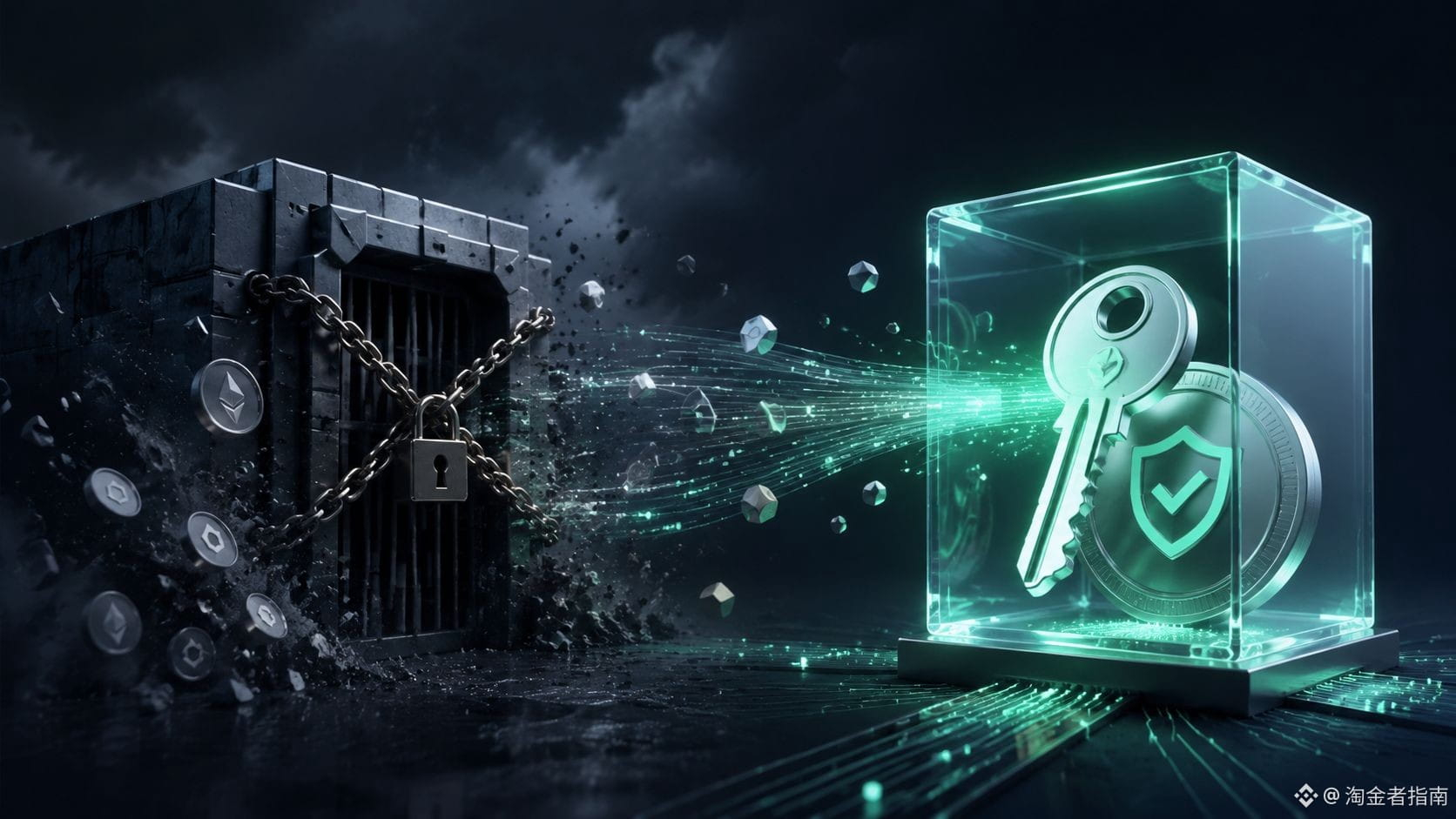
When the exchange suddenly suspends withdrawals, and the numbers in your account instantly turn into unreachable code, that sense of helplessness makes one thing clear: whoever holds the private key truly controls the assets. GRVT’s self-custody design lets users hold the private key, sign directly on-chain, and removes the risk of funds being locked unilaterally by the platform.
Self-custody is not risk-free—losing the private key or signing the wrong contract can be just as fatal. Its real value is that, even in extreme market conditions, you still retain the right to withdraw and exit. On Chinese hot-topic charts, data on the same subject may not be equivalent to feedback from older English API interfaces; what the frontend displays doesn’t necessarily reflect on-chain reality. Before placing an order, confirm that the funding address, authorizations, and withdrawal path are all fully visible to you. @grvt_io #grvt
When the exchange suddenly suspends withdrawals, and the numbers in your account instantly turn into unreachable code, that sense of helplessness makes one thing clear: whoever holds the private key truly controls the assets. GRVT’s self-custody design lets users hold the private key, sign directly on-chain, and removes the risk of funds being locked unilaterally by the platform.
Self-custody is not risk-free—losing the private key or signing the wrong contract can be just as fatal. Its real value is that, even in extreme market conditions, you still retain the right to withdraw and exit. On Chinese hot-topic charts, data on the same subject may not be equivalent to feedback from older English API interfaces; what the frontend displays doesn’t necessarily reflect on-chain reality. Before placing an order, confirm that the funding address, authorizations, and withdrawal path are all fully visible to you. @grvt_io #grvt
Self-custody is not risk-free—losing the private key or signing the wrong contract can be just as fatal. Its real value is that, even in extreme market conditions, you still retain the right to withdraw and exit. On Chinese hot-topic charts, data on the same subject may not be equivalent to feedback from older English API interfaces; what the frontend displays doesn’t necessarily reflect on-chain reality. Before placing an order, confirm that the funding address, authorizations, and withdrawal path are all fully visible to you. @grvt_io #grvt
68
·
--
People often equate “having control of the private key” with the sense of security that comes with self-custody. In reality, they rarely ask: when a platform service goes down or legal disputes result in assets being frozen, can you still transfer your funds without any hindrance? Recently, I came across an institutional-grade wallet that dissolves single points of failure through multi-party computation, quietly returning control to the user itself via biometric authentication and responsive recovery.
GRVT uses Dfns’ MPC wallet to eliminate single-point dependencies. Even if you lose your recovery seed phrase, it can still be recovered in extreme scenarios. The real test is whether you can move your assets out independently, without approval, when platform disputes arise. If you still need customer support to unfreeze them, what does self-custody even mean? @grvt_io #grvt
People often equate “having control of the private key” with the sense of security that comes with self-custody. In reality, they rarely ask: when a platform service goes down or legal disputes result in assets being frozen, can you still transfer your funds without any hindrance? Recently, I came across an institutional-grade wallet that dissolves single points of failure through multi-party computation, quietly returning control to the user itself via biometric authentication and responsive recovery.
GRVT uses Dfns’ MPC wallet to eliminate single-point dependencies. Even if you lose your recovery seed phrase, it can still be recovered in extreme scenarios. The real test is whether you can move your assets out independently, without approval, when platform disputes arise. If you still need customer support to unfreeze them, what does self-custody even mean? @grvt_io #grvt
GRVT uses Dfns’ MPC wallet to eliminate single-point dependencies. Even if you lose your recovery seed phrase, it can still be recovered in extreme scenarios. The real test is whether you can move your assets out independently, without approval, when platform disputes arise. If you still need customer support to unfreeze them, what does self-custody even mean? @grvt_io #grvt

73
·
--
That ordinarily routine trade in the middle of the night, when the “system maintenance” prompt suddenly popped up, made me repeatedly question myself about a position I couldn’t move: Are the numbers shown in my account truly my assets? Self-custody means far more than simply being able to view a private key in ordinary times—it’s whether, in extreme situations, users have a path to exit on their own without needing platform permission.
GRVT incorporates this philosophy into its design: a hybrid architecture driven by zero-knowledge technology, so that trading performance and security no longer have to come at each other’s expense. When exchange pauses become the norm and the test of the system, what we need—an on-screen asset balance, or real control that doesn’t require anyone’s approval? @grvt_io #grvt?
That ordinarily routine trade in the middle of the night, when the “system maintenance” prompt suddenly popped up, made me repeatedly question myself about a position I couldn’t move: Are the numbers shown in my account truly my assets? Self-custody means far more than simply being able to view a private key in ordinary times—it’s whether, in extreme situations, users have a path to exit on their own without needing platform permission.
GRVT incorporates this philosophy into its design: a hybrid architecture driven by zero-knowledge technology, so that trading performance and security no longer have to come at each other’s expense. When exchange pauses become the norm and the test of the system, what we need—an on-screen asset balance, or real control that doesn’t require anyone’s approval? @grvt_io #grvt?
GRVT incorporates this philosophy into its design: a hybrid architecture driven by zero-knowledge technology, so that trading performance and security no longer have to come at each other’s expense. When exchange pauses become the norm and the test of the system, what we need—an on-screen asset balance, or real control that doesn’t require anyone’s approval? @grvt_io #grvt?

1
104
·
--

Article
38.6 m (about 38.6 minutes) later, I saw the limits of on-chain automationYesterday, I spent 38.6 minutes (about 38.6 minutes) organizing the apps on my phone. I noted this number on purpose, because during the process I discovered something rather frightening: my bank app automatically categorizes my spending, my email automatically filters out junk, and an AI reads through a long article in seconds. I gradually handed over the controls, yet I was completely unaware. When it comes to money, are we really ready to let the system make decisions for us?
I just happened to see the split Awais pointed out when reading through Newton Protocol’s own site. The homepage talks about “digital labor” and AI agents doing the miscellaneous work on-chain for you, but if you scroll down to each line of actual, concrete functionality—in-hands terms—it’s all written for compliance teams and institutional treasuries: investor qualification screening, sanctions-list filtering, per-address rate limits, and rules for legal jurisdictions. $NEWT and #Newt are framed in a story of autonomy and agents, but what can be deployed first is a strategy engine prepared for issuers of regulated assets. Spending limits, whitelisted payees—these are the modules that are actually running.
38.6 m (about 38.6 minutes) later, I saw the limits of on-chain automation
Yesterday, I spent 38.6 minutes (about 38.6 minutes) organizing the apps on my phone. I noted this number on purpose, because during the process I discovered something rather frightening: my bank app automatically categorizes my spending, my email automatically filters out junk, and an AI reads through a long article in seconds. I gradually handed over the controls, yet I was completely unaware. When it comes to money, are we really ready to let the system make decisions for us?
I just happened to see the split Awais pointed out when reading through Newton Protocol’s own site. The homepage talks about “digital labor” and AI agents doing the miscellaneous work on-chain for you, but if you scroll down to each line of actual, concrete functionality—in-hands terms—it’s all written for compliance teams and institutional treasuries: investor qualification screening, sanctions-list filtering, per-address rate limits, and rules for legal jurisdictions. $NEWT and #Newt are framed in a story of autonomy and agents, but what can be deployed first is a strategy engine prepared for issuers of regulated assets. Spending limits, whitelisted payees—these are the modules that are actually running.
I just happened to see the split Awais pointed out when reading through Newton Protocol’s own site. The homepage talks about “digital labor” and AI agents doing the miscellaneous work on-chain for you, but if you scroll down to each line of actual, concrete functionality—in-hands terms—it’s all written for compliance teams and institutional treasuries: investor qualification screening, sanctions-list filtering, per-address rate limits, and rules for legal jurisdictions. $NEWT and #Newt are framed in a story of autonomy and agents, but what can be deployed first is a strategy engine prepared for issuers of regulated assets. Spending limits, whitelisted payees—these are the modules that are actually running.
45
·
--
Last night I spent 38.6 m (about 38.6 minutes) organizing my phone desktop and found that the bank automatically recorded transactions and my email automatically filtered out spam—I did nothing. The whole system did it for me. It was that moment when a chill ran down my spine—if an on-chain vault can be so “automatic,” who’s making decisions about my money? What the Newton Protocol is doing isn’t letting AI spend your money for you; it’s inserting Rego rule checks before a transaction: whether the amount exceeds limits, whether the address is on the whitelist—everything must pass first. Only if it passes do they let it through; if it doesn’t, it’s directly rejected. Now on the Newton Mainnet Beta, every transfer verified by $NEWT must carry an attestation to prove it. Rules are embedded in the transaction flow, no longer just soft constraints in documentation. #Newt @NewtonProtocol
Last night I spent 38.6 m (about 38.6 minutes) organizing my phone desktop and found that the bank automatically recorded transactions and my email automatically filtered out spam—I did nothing. The whole system did it for me. It was that moment when a chill ran down my spine—if an on-chain vault can be so “automatic,” who’s making decisions about my money? What the Newton Protocol is doing isn’t letting AI spend your money for you; it’s inserting Rego rule checks before a transaction: whether the amount exceeds limits, whether the address is on the whitelist—everything must pass first. Only if it passes do they let it through; if it doesn’t, it’s directly rejected. Now on the Newton Mainnet Beta, every transfer verified by $NEWT must carry an attestation to prove it. Rules are embedded in the transaction flow, no longer just soft constraints in documentation. #Newt @NewtonProtocol

83
·
--
In everyday trading, many people think that self-custody is only about keeping their own private keys, while overlooking its real meaning: in extreme moments, you can control your assets without needing anyone’s permission. In stable times, the centralized and self-custody experiences are almost indistinguishable. The real test isn’t in daily operations, but in the instant of an abnormal shutdown or when withdrawals are paused.
Off-chain order matching and settlement make your holdings more like a platform’s IOU than executable assets. A design that blends efficiency with self-custody lets users always initiate an exit to the contract, without depending on the platform to recover. @grvt_io is precisely the practice of writing the right to exit into the underlying layer—if an outage freezes withdrawals, do you truly own the assets, or are they only temporarily authorized? #grvt?
In everyday trading, many people think that self-custody is only about keeping their own private keys, while overlooking its real meaning: in extreme moments, you can control your assets without needing anyone’s permission. In stable times, the centralized and self-custody experiences are almost indistinguishable. The real test isn’t in daily operations, but in the instant of an abnormal shutdown or when withdrawals are paused.
Off-chain order matching and settlement make your holdings more like a platform’s IOU than executable assets. A design that blends efficiency with self-custody lets users always initiate an exit to the contract, without depending on the platform to recover. @grvt_io is precisely the practice of writing the right to exit into the underlying layer—if an outage freezes withdrawals, do you truly own the assets, or are they only temporarily authorized? #grvt?
Off-chain order matching and settlement make your holdings more like a platform’s IOU than executable assets. A design that blends efficiency with self-custody lets users always initiate an exit to the contract, without depending on the platform to recover. @grvt_io is precisely the practice of writing the right to exit into the underlying layer—if an outage freezes withdrawals, do you truly own the assets, or are they only temporarily authorized? #grvt?

65
·
--
People who have experienced centralized exchanges freezing accounts definitely understand—there’s an utter helplessness in watching your own assets while being unable to transfer or withdraw them, and it’s colder than any market crash. The nominal “ownership” reveals its brutal truth when a service shuts down: you don’t have the keys—you only have a work order awaiting approval.
The real way to resolve the predicament is to ensure the right to exit is completely free from manual approval. The “One Balance” design that merges margin with interest-bearing holdings—if it still relies on the absence of on-chain self-custody, then it’s merely repackaging an IOU. In extreme market conditions, when trading is paused, should the contract unconditionally allow withdrawals, or should the backend simply cut off your access? This is exactly the boundary that @grvt_io and #grvt are trying to redefine.
People who have experienced centralized exchanges freezing accounts definitely understand—there’s an utter helplessness in watching your own assets while being unable to transfer or withdraw them, and it’s colder than any market crash. The nominal “ownership” reveals its brutal truth when a service shuts down: you don’t have the keys—you only have a work order awaiting approval.
The real way to resolve the predicament is to ensure the right to exit is completely free from manual approval. The “One Balance” design that merges margin with interest-bearing holdings—if it still relies on the absence of on-chain self-custody, then it’s merely repackaging an IOU. In extreme market conditions, when trading is paused, should the contract unconditionally allow withdrawals, or should the backend simply cut off your access? This is exactly the boundary that @grvt_io and #grvt are trying to redefine.
The real way to resolve the predicament is to ensure the right to exit is completely free from manual approval. The “One Balance” design that merges margin with interest-bearing holdings—if it still relies on the absence of on-chain self-custody, then it’s merely repackaging an IOU. In extreme market conditions, when trading is paused, should the contract unconditionally allow withdrawals, or should the backend simply cut off your access? This is exactly the boundary that @grvt_io and #grvt are trying to redefine.

75
·
--

Article
AI Voice Scam for $400 at Dawn—Vault Authorizations Should Follow the RulesAt 2 a.m., my phone buzzed and spit out a voice message. My brother, gasping, said he’d been scammed by scalpers—someone told him to transfer $400 just to get into the Kansas stadium. The pause and the bitter smirk at the end were all his—except this wasn’t my brother. It was AI synthesized from a few seconds of audio in a social video. Even voiceprints can be forged. Imagine AI carrying out strategies for your vault: a stop-loss instruction gets put on-chain without passing any authorization gate, and you might not even have time to react.
Behind the scam @Suyay shared in the plaza today is the fact that AI voice phishing has surged by 1,200% year over year, and Americans lost $893M to it last year. Most conversations about AI in crypto still revolve around smarter models. Newton Protocol’s question is different: how can we let AI interact with a blockchain autonomously—without relying on black-box trust? Their approach is a secure rollup designed specifically for AI strategies and automated trading, and they use VaultKit to connect rule-checking tools to the vault.
AI Voice Scam for $400 at Dawn—Vault Authorizations Should Follow the Rules
At 2 a.m., my phone buzzed and spit out a voice message. My brother, gasping, said he’d been scammed by scalpers—someone told him to transfer $400 just to get into the Kansas stadium. The pause and the bitter smirk at the end were all his—except this wasn’t my brother. It was AI synthesized from a few seconds of audio in a social video. Even voiceprints can be forged. Imagine AI carrying out strategies for your vault: a stop-loss instruction gets put on-chain without passing any authorization gate, and you might not even have time to react.
Behind the scam @Suyay shared in the plaza today is the fact that AI voice phishing has surged by 1,200% year over year, and Americans lost $893M to it last year. Most conversations about AI in crypto still revolve around smarter models. Newton Protocol’s question is different: how can we let AI interact with a blockchain autonomously—without relying on black-box trust? Their approach is a secure rollup designed specifically for AI strategies and automated trading, and they use VaultKit to connect rule-checking tools to the vault.
Behind the scam @Suyay shared in the plaza today is the fact that AI voice phishing has surged by 1,200% year over year, and Americans lost $893M to it last year. Most conversations about AI in crypto still revolve around smarter models. Newton Protocol’s question is different: how can we let AI interact with a blockchain autonomously—without relying on black-box trust? Their approach is a secure rollup designed specifically for AI strategies and automated trading, and they use VaultKit to connect rule-checking tools to the vault.
69
·
--
At 2 a.m., my phone vibrated. My brother’s voice, yelling at me to quickly transfer $400 to buy sports tickets—pauses and teasing tone all sounded like him, yet it was an AI clone. If a voice can fool family members, how much more terrifying is it when no one even verifies that AI has taken money from a linked vault. Newton Protocol’s approach is simple: let Rego (a pre-transaction rule checker)审 once first—only if it passes will an attestation be generated to grant access; if it fails, it’s rejected directly. Now, on the Newton Mainnet Beta, any transaction validated with $NEWT must include this proof—the rules are no longer just decoration in documentation. @NewtonProtocol #Newt
At 2 a.m., my phone vibrated. My brother’s voice, yelling at me to quickly transfer $400 to buy sports tickets—pauses and teasing tone all sounded like him, yet it was an AI clone. If a voice can fool family members, how much more terrifying is it when no one even verifies that AI has taken money from a linked vault. Newton Protocol’s approach is simple: let Rego (a pre-transaction rule checker)审 once first—only if it passes will an attestation be generated to grant access; if it fails, it’s rejected directly. Now, on the Newton Mainnet Beta, any transaction validated with $NEWT must include this proof—the rules are no longer just decoration in documentation. @NewtonProtocol #Newt

1
89
·
--

Article
Under the AI Shell, What’s Really Running Are the RulesYou put the money into an automated vault. What you fear most isn’t that it’s slow—it’s that it only executes when you press a button, and it doesn’t understand the rules you’ve written on the instruction page. Stop-loss, whitelist, investor eligibility, sanctions lists—everything sounds complete. But if no one enforces checks before a trade is sent, then the rules are just for show.
Today, rank 2 first brings up a Web3 comparison chart between NEWT and traditional automation. Then rank 6 breaks @NewtonProtocol down even more plainly: it’s always packaged as an AI agent, verifiable automation, autonomous trading—but once you sit down and read the documentation, what truly carries the weight is Rego. Rego is the policy language that institutions use for access control and compliance engines, and the use cases in the docs aren’t for retail trading bots. They’re for investor eligibility, jurisdiction rules, and sanctions screening.
Under the AI Shell, What’s Really Running Are the Rules
You put the money into an automated vault. What you fear most isn’t that it’s slow—it’s that it only executes when you press a button, and it doesn’t understand the rules you’ve written on the instruction page. Stop-loss, whitelist, investor eligibility, sanctions lists—everything sounds complete. But if no one enforces checks before a trade is sent, then the rules are just for show.
Today, rank 2 first brings up a Web3 comparison chart between NEWT and traditional automation. Then rank 6 breaks @NewtonProtocol down even more plainly: it’s always packaged as an AI agent, verifiable automation, autonomous trading—but once you sit down and read the documentation, what truly carries the weight is Rego. Rego is the policy language that institutions use for access control and compliance engines, and the use cases in the docs aren’t for retail trading bots. They’re for investor eligibility, jurisdiction rules, and sanctions screening.
Today, rank 2 first brings up a Web3 comparison chart between NEWT and traditional automation. Then rank 6 breaks @NewtonProtocol down even more plainly: it’s always packaged as an AI agent, verifiable automation, autonomous trading—but once you sit down and read the documentation, what truly carries the weight is Rego. Rego is the policy language that institutions use for access control and compliance engines, and the use cases in the docs aren’t for retail trading bots. They’re for investor eligibility, jurisdiction rules, and sanctions screening.
63
·
--
Do you think an AI agent will trade—so the key is whether it’s smart enough? Today, someone on the hot list noticed a Web3 comparison chart of NEWT vs traditional automation, and found that the load-bearing block is actually Rego: investor eligibility, jurisdiction rules, and sanctions screening all need to be written as pre-trade policies first. Newton Protocol doesn’t just slap AI slogans onto a vault; it makes every action pass a policy check first, and then generates an attestation to grant approval. On the Newton Mainnet Beta, $NEWT needs to look at the pass/fail records. #Newt @NewtonProtocol
Do you think an AI agent will trade—so the key is whether it’s smart enough? Today, someone on the hot list noticed a Web3 comparison chart of NEWT vs traditional automation, and found that the load-bearing block is actually Rego: investor eligibility, jurisdiction rules, and sanctions screening all need to be written as pre-trade policies first. Newton Protocol doesn’t just slap AI slogans onto a vault; it makes every action pass a policy check first, and then generates an attestation to grant approval. On the Newton Mainnet Beta, $NEWT needs to look at the pass/fail records. #Newt @NewtonProtocol

1
71
·
--

Article
Guns and authorization documents—who decides the safety of your money?You're not worried that AI is too strong—you’re worried that when AI moves your money, no one truly translates the “should we or shouldn’t we” authorization into on-chain execution. Wallet permissions, vault limits, automated market making—behind every button is the same question: who really has the say before a trade is made.
Think about this: a gun on the table changes nothing; it’s a document marked “approved” that produces the outcome of control. Power alone doesn't create consequences. The whole industry has spent too long asking how to make AI more powerful, forgetting to ask first how authorization gets translated onto the chain. As someone keeps saying today: transactions can pass all identity, amount, and condition checks—but if the smart contract can’t verify that those checks truly happened, then compliance is just a joke.
Guns and authorization documents—who decides the safety of your money?
You're not worried that AI is too strong—you’re worried that when AI moves your money, no one truly translates the “should we or shouldn’t we” authorization into on-chain execution. Wallet permissions, vault limits, automated market making—behind every button is the same question: who really has the say before a trade is made.
Think about this: a gun on the table changes nothing; it’s a document marked “approved” that produces the outcome of control. Power alone doesn't create consequences. The whole industry has spent too long asking how to make AI more powerful, forgetting to ask first how authorization gets translated onto the chain. As someone keeps saying today: transactions can pass all identity, amount, and condition checks—but if the smart contract can’t verify that those checks truly happened, then compliance is just a joke.
Think about this: a gun on the table changes nothing; it’s a document marked “approved” that produces the outcome of control. Power alone doesn't create consequences. The whole industry has spent too long asking how to make AI more powerful, forgetting to ask first how authorization gets translated onto the chain. As someone keeps saying today: transactions can pass all identity, amount, and condition checks—but if the smart contract can’t verify that those checks truly happened, then compliance is just a joke.
1
1
57
·
--
You stare at that DeFi vault—every stop-loss and take-profit rule is written in black and white, but on-chain contracts simply don’t recognize it. Passing every check means little— even if every off-chain check passes, without any on-chain proof, the money still walks away just as easily. Newton Protocol makes this real: before a transaction, it runs Rego rules first, and compliance is what yields the release/approval proof. Now on the Newton Mainnet Beta, every verification for $NEWT is required to include an attestation—rules are no longer just a formality. @NewtonProtocol #Newt
You stare at that DeFi vault—every stop-loss and take-profit rule is written in black and white, but on-chain contracts simply don’t recognize it. Passing every check means little— even if every off-chain check passes, without any on-chain proof, the money still walks away just as easily. Newton Protocol makes this real: before a transaction, it runs Rego rules first, and compliance is what yields the release/approval proof. Now on the Newton Mainnet Beta, every verification for $NEWT is required to include an attestation—rules are no longer just a formality. @NewtonProtocol #Newt

1
91
·
--

Article
Vault risk control is not an automatic switchDo you think that if the vault page mentions risk control, the money will automatically be kept in check by the rules? Reality isn’t that simple. A lot of pools cram “compliance,” “real-time risk control,” and “AI strategies” into their pitch, but what users really want to know is: do these checks actually get wired into the transaction flow before trades, or do they only exist on the introduction page.
Today, a Rank 3 hot-topic post made this question very clear. The author went through @NewtonProtocol’s policy-pack repo and found that the commonly mentioned Chainalysis, Hexagate, RedStone, Credora, and Webacy are not some hardwired security layer inside the vault. Instead, they’re the menu items that the curator selected themselves in the dashboard.
Vault risk control is not an automatic switch
Do you think that if the vault page mentions risk control, the money will automatically be kept in check by the rules? Reality isn’t that simple. A lot of pools cram “compliance,” “real-time risk control,” and “AI strategies” into their pitch, but what users really want to know is: do these checks actually get wired into the transaction flow before trades, or do they only exist on the introduction page.
Today, a Rank 3 hot-topic post made this question very clear. The author went through @NewtonProtocol’s policy-pack repo and found that the commonly mentioned Chainalysis, Hexagate, RedStone, Credora, and Webacy are not some hardwired security layer inside the vault. Instead, they’re the menu items that the curator selected themselves in the dashboard.
Today, a Rank 3 hot-topic post made this question very clear. The author went through @NewtonProtocol’s policy-pack repo and found that the commonly mentioned Chainalysis, Hexagate, RedStone, Credora, and Webacy are not some hardwired security layer inside the vault. Instead, they’re the menu items that the curator selected themselves in the dashboard.
2
65
Log in to explore more content
Join global crypto users on Binance Square
⚡️ Get latest and useful information about crypto.
💬 Trusted by the world’s largest crypto exchange.
👍 Discover real insights from verified creators.
Email / Phone number
Trending Topics
BinanceLaunchesBinanceIntelligence
469,832 views
3,295 Discussing
Binance Intelligence is Binance's suite of AI-powered tools and infrastructure integrated directly into the Binance ecosystem. It is designed to assist traders and investors by automating market analysis, risk monitoring, and decision-making tools
#BinanceLaunchesBinanceIntelligence
CryptofactswithFARAZ
·1 Likes
·122 views
BitcoinTargets2026OpenAt$87570
3,239 views
84 Discussing
BitcoinRejectedAt$87KThirdTime
2,998 views
66 Discussing