
未知数也是定数
445 Posts

未知数也是定数
抓不住机会就自己创造机会。
31 Following
71 Followers
620 Liked
Posts
Verified
#dusk A while back, I was tinkering with smart contracts on a testnet, and the redundant on-chain computation and hefty fees gave me a hard lesson. It forced me to look at the underlying logic of @Dusk from a different angle.
People in the space all think Ethereum compatibility is absolutely the mainstream. But once you get to high-intensity off-chain density evaluation and privacy interactions, the generic monolithic architecture often can’t hold up.
They carved two parallel lanes in the underlying layer. DuskEVM, which everyone often discusses, is just a buffer to help Solidity developers migrate seamlessly. The real “hardcore” privacy computation engine is actually the native virtual machine called Piecrust. Running Zero-Knowledge verification directly in the native environment incurs far less compute overhead, but developers face a second learning curve.$DEBIT
So who exactly insists on this kind of native capability? Just look at Citadel’s identity credential protocol in isolation. Traditional institutions fear that their transaction strategies and customer details will be exposed to the whole network—yet they’re also tightly constrained by regulators on compliant processes. Citadel uses zero-knowledge proofs to help users and institutions generate revocable privacy permissions, completing KYC verification without leaking identity privacy. It hits the exact pain point that generic public chains can’t deliver.$BTC
However, there’s a huge gap between idealism and deployment. Splitting business contracts and identity permissions means the system interaction path gets longer, and application development becomes twice as difficult. If later teams cut corners by hiding behind the compatibility layer, the native identity and privacy evaluation “cards” can easily become mere paperwork.
In the end, $DUSK is betting on the true timeline of compliant funds entering the market. Whether these bottom-up technical barriers are worth it can’t be answered by geek self-entertainment alone—it depends on whether, in the next cycle, financial big firms are willing to pay real money for it.
People in the space all think Ethereum compatibility is absolutely the mainstream. But once you get to high-intensity off-chain density evaluation and privacy interactions, the generic monolithic architecture often can’t hold up.
They carved two parallel lanes in the underlying layer. DuskEVM, which everyone often discusses, is just a buffer to help Solidity developers migrate seamlessly. The real “hardcore” privacy computation engine is actually the native virtual machine called Piecrust. Running Zero-Knowledge verification directly in the native environment incurs far less compute overhead, but developers face a second learning curve.$DEBIT
So who exactly insists on this kind of native capability? Just look at Citadel’s identity credential protocol in isolation. Traditional institutions fear that their transaction strategies and customer details will be exposed to the whole network—yet they’re also tightly constrained by regulators on compliant processes. Citadel uses zero-knowledge proofs to help users and institutions generate revocable privacy permissions, completing KYC verification without leaking identity privacy. It hits the exact pain point that generic public chains can’t deliver.$BTC
However, there’s a huge gap between idealism and deployment. Splitting business contracts and identity permissions means the system interaction path gets longer, and application development becomes twice as difficult. If later teams cut corners by hiding behind the compatibility layer, the native identity and privacy evaluation “cards” can easily become mere paperwork.
In the end, $DUSK is betting on the true timeline of compliant funds entering the market. Whether these bottom-up technical barriers are worth it can’t be answered by geek self-entertainment alone—it depends on whether, in the next cycle, financial big firms are willing to pay real money for it.
老钱终究得打钱!
25%
极客自嗨没人用!
10%
吹再多不如拉盘!
65%
20 votes • Voting closed
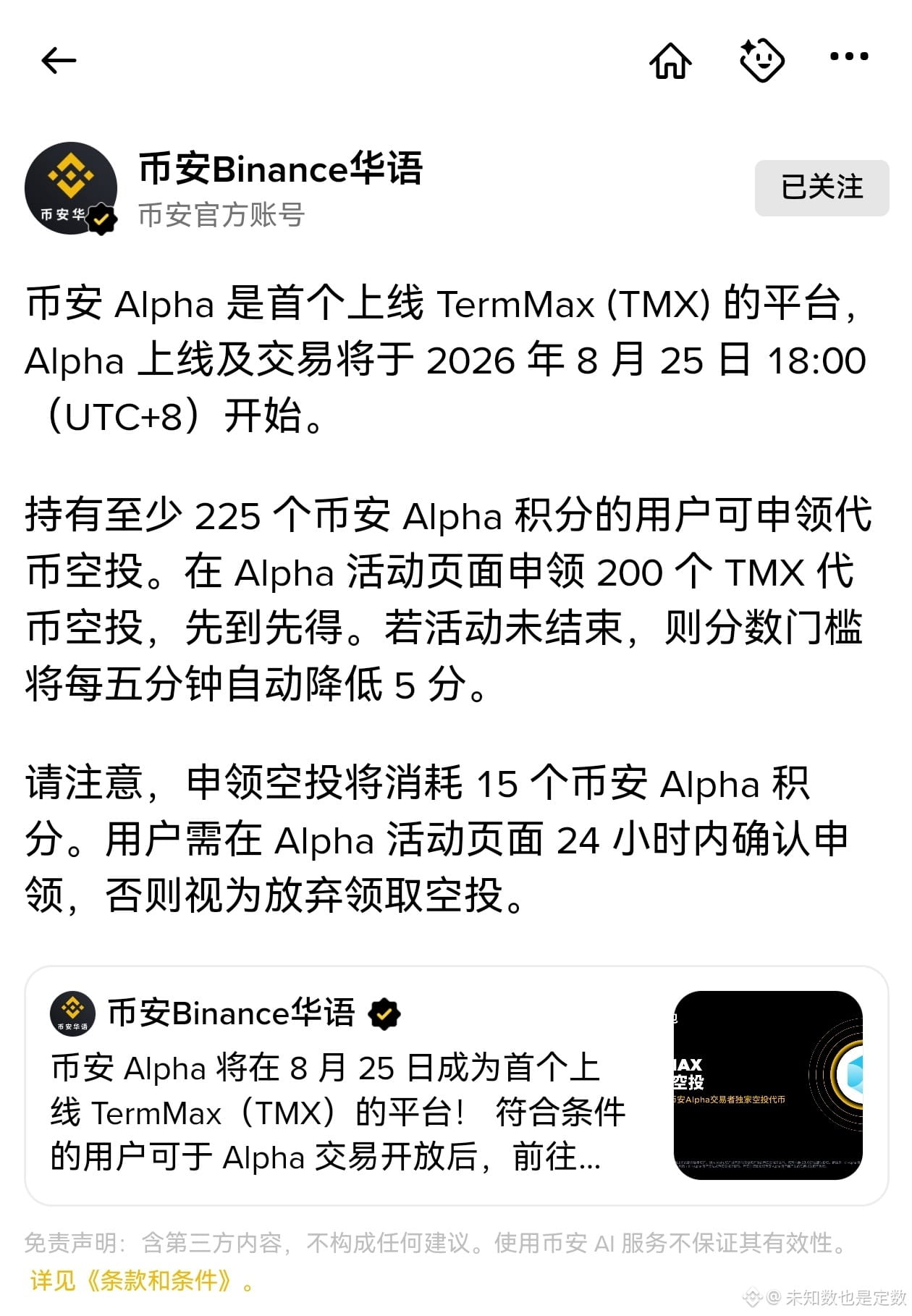
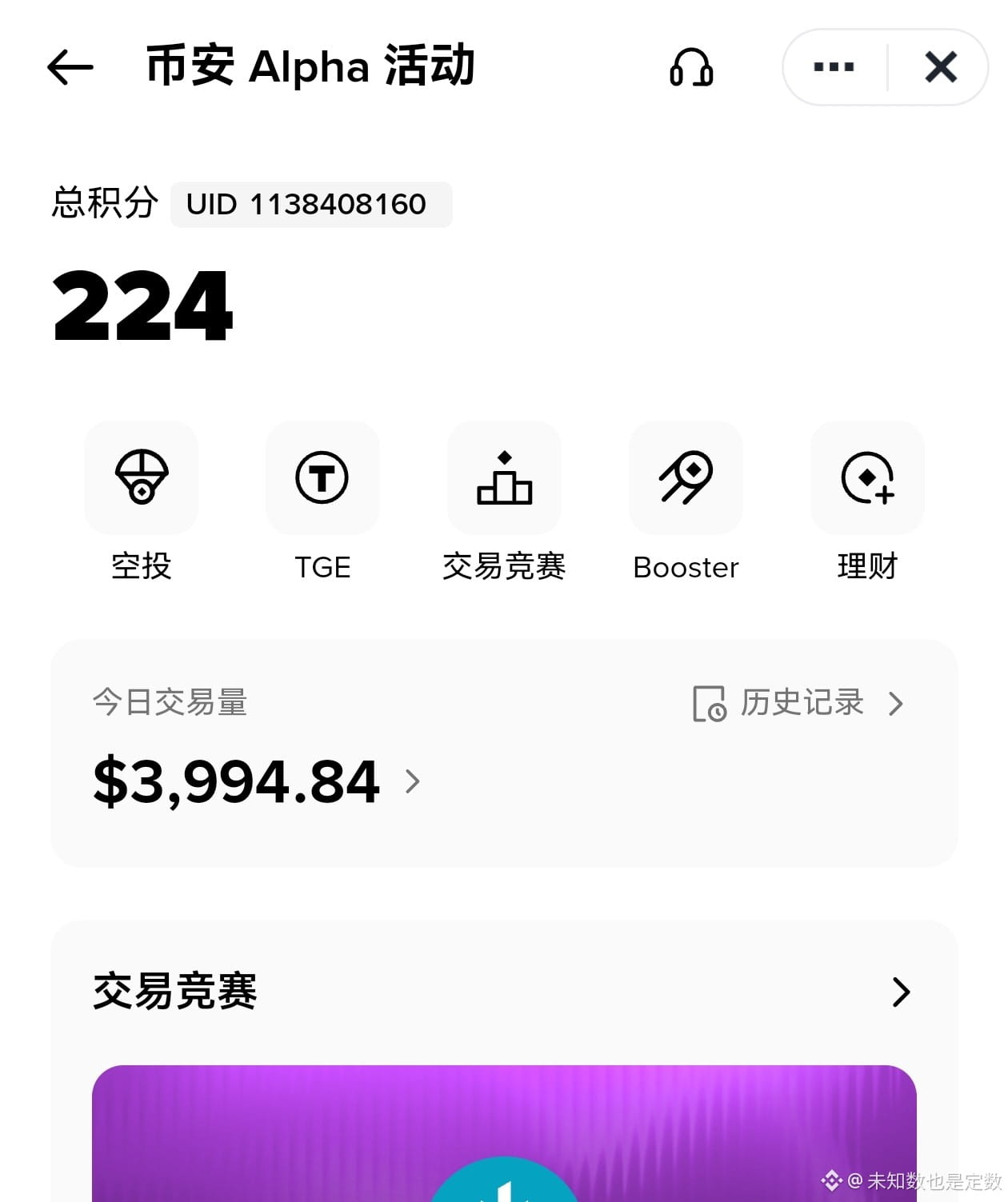
The air drop was just barely off by one point today, and I'm not doing so great 🤡🤡🤡🤡
Partly True
#dusk Last week something awkward happened. I went to the bank to handle some business, but the teller’s card got “stuck” in an identity-verification page that seemed to be frozen, while the line behind me only kept getting longer. In the end, the account manager’s solution was simple: just shut down the new system that was throwing the error and switch back to the old internal software. That incident made one thing clear: field staff never really care how advanced the backend technology is—if it delays operations on-site, even the most beautiful tools will be discarded on the spot. $RE
In the on-chain compliance track, people are essentially stepping into the same trap. Many projects loudly advertise privacy protection, but the moment you generate a Zero-Knowledge proof on the frontend, the computer fans start blasting and the page hangs for several minutes. Risk-control staff at institutions would rather continue using traditional offline reports than sit there and wait for the web page to finish processing.
Recently, I reviewed the technical proposal from @Dusk . They tried to rewrite this deadlock from the source. By replacing the traditional execution layer with Piecrust VM, which is built specifically for zero-knowledge proving, they were able to bring the computational overhead down—making in-browser proving finally feasible in practice. Then, combined with the zero-knowledge identity verification mechanism of the Citadel protocol, they aimed to complete compliance checks without the data ever leaving the domain.
But abandoning the general-purpose EVM route to develop a custom virtual machine is a double-edged sword. While it improves cryptographic execution efficiency, it greatly raises the barriers for external app integration and for liquidity migration. And not to mention, under high-concurrency pressure in extreme market conditions, it’s still unclear whether ordinary office equipment will “freeze” when running circuit compilation—there’s still a lack of large-scale real-network load-testing data to support it. $BTC
When I was observing $DUSK , I never cared how sophisticated the copywriting packaging was—I only looked to see whether it could stand up to the tests of real financial business. If the underlying architecture is built beautifully, but in the end people still can’t afford to wait because of high application barriers or long terminal processing times, then what’s the fundamental difference from that bank system that was forced to switch back to old software? Would busy trading desks really pay the bill for so-called technical elegance, just to absorb waiting costs of even a few extra seconds?
In the on-chain compliance track, people are essentially stepping into the same trap. Many projects loudly advertise privacy protection, but the moment you generate a Zero-Knowledge proof on the frontend, the computer fans start blasting and the page hangs for several minutes. Risk-control staff at institutions would rather continue using traditional offline reports than sit there and wait for the web page to finish processing.
Recently, I reviewed the technical proposal from @Dusk . They tried to rewrite this deadlock from the source. By replacing the traditional execution layer with Piecrust VM, which is built specifically for zero-knowledge proving, they were able to bring the computational overhead down—making in-browser proving finally feasible in practice. Then, combined with the zero-knowledge identity verification mechanism of the Citadel protocol, they aimed to complete compliance checks without the data ever leaving the domain.
But abandoning the general-purpose EVM route to develop a custom virtual machine is a double-edged sword. While it improves cryptographic execution efficiency, it greatly raises the barriers for external app integration and for liquidity migration. And not to mention, under high-concurrency pressure in extreme market conditions, it’s still unclear whether ordinary office equipment will “freeze” when running circuit compilation—there’s still a lack of large-scale real-network load-testing data to support it. $BTC
When I was observing $DUSK , I never cared how sophisticated the copywriting packaging was—I only looked to see whether it could stand up to the tests of real financial business. If the underlying architecture is built beautifully, but in the end people still can’t afford to wait because of high application barriers or long terminal processing times, then what’s the fundamental difference from that bank system that was forced to switch back to old software? Would busy trading desks really pay the bill for so-called technical elegance, just to absorb waiting costs of even a few extra seconds?
绝对不为它买单
80%
勉强硬着头皮用
0%
卡在开发者这关
20%
10 votes • Voting closed
#dusk These days, all the articles about blockchain privacy compliance networks in the square—@Dusk —have been written to death, haven’t they? Either they “mechanism-breakdown” everything, or they dissect the underlying architecture. Or else they churn out the institutional compliance concepts and cryptography. Today, let’s switch perspectives and break down XSC stealth contracts from the market maker and quantitative trading angle. You’ll find that this mechanism actually hides a liquidity deadlock—like pushing funds into a black-box dead end.
In everyday transparent DEX trading, market efficiency depends extremely on “seeing the cards.” Quant bots need to watch pool reserves and order-book depth closely, and use arbitrage to control impermanent loss. But in XSC stealth pools, trade parameters are encrypted with zero-knowledge proofs. Market makers can’t see the true depth, and even the size of counterparty positions is a blind spot. $ETH
Over the past few days, I’ve kept replaying practical scenarios. When you can’t establish precise, dynamic risk control, providing liquidity to a stealth pool is essentially “blind flying.” To avoid the adverse selection risk caused by an information black hole, market-maker capital can only widen the bid-ask spread. That ends up backfiring on ordinary users: either they endure outrageous slippage, or they pay high implicit costs. $BTC
Dusk also slices funds into three dimensions: UTXO privacy, transparent accounts, and privacy contracts. Liquidity is already not deep. If market makers want to do cross-track arbitrage, they not only have to endure on-chain latency, but also really have to prepare double the capital to front-run trades. Asset fragmentation makes all of this extremely troublesome.
No denying that $DUSK has indeed built a pretty compliance “mansion,” but capital efficiency is the real hard truth. Without efficient price discovery, even ingenious contracts can easily become castles in the air. I believe large market makers will still be watching in the short term and won’t dare to go all-in on this maze-like game.
That said, I’m also genuinely curious how everyone sees this liquidity battle. Do you think this mechanism can ultimately attract institutional big whales to step in and provide depth?
In everyday transparent DEX trading, market efficiency depends extremely on “seeing the cards.” Quant bots need to watch pool reserves and order-book depth closely, and use arbitrage to control impermanent loss. But in XSC stealth pools, trade parameters are encrypted with zero-knowledge proofs. Market makers can’t see the true depth, and even the size of counterparty positions is a blind spot. $ETH
Over the past few days, I’ve kept replaying practical scenarios. When you can’t establish precise, dynamic risk control, providing liquidity to a stealth pool is essentially “blind flying.” To avoid the adverse selection risk caused by an information black hole, market-maker capital can only widen the bid-ask spread. That ends up backfiring on ordinary users: either they endure outrageous slippage, or they pay high implicit costs. $BTC
Dusk also slices funds into three dimensions: UTXO privacy, transparent accounts, and privacy contracts. Liquidity is already not deep. If market makers want to do cross-track arbitrage, they not only have to endure on-chain latency, but also really have to prepare double the capital to front-run trades. Asset fragmentation makes all of this extremely troublesome.
No denying that $DUSK has indeed built a pretty compliance “mansion,” but capital efficiency is the real hard truth. Without efficient price discovery, even ingenious contracts can easily become castles in the air. I believe large market makers will still be watching in the short term and won’t dare to go all-in on this maze-like game.
That said, I’m also genuinely curious how everyone sees this liquidity battle. Do you think this mechanism can ultimately attract institutional big whales to step in and provide depth?
巨鲸就爱暗池
30%
做市商不陪玩
20%
搬小板凳吃瓜
50%
10 votes • Voting closed
#dusk Following the idea of probing the underlying layer, I went back to look at the architecture of @Dusk . These days, every public chain is just blindly stitching together compatibility, like packing a universal plug when traveling—only to discover that once you connect a high-power device, the breaker trips. $DUSK didn’t do that. It uses a dual-track parallel approach. I found that when it comes to high-intensity private computation, “one-click compatibility” out of convenience becomes a drag.
The native engine called Piecrust is the place I most want to dig into. Everyone focuses on DuskEVM, which can “free-ride” Ethereum code, but it’s easy to forget that it’s actually built directly on L1. This isn’t a transitional shell—it’s an engine specifically designed for zero-knowledge proofs, using ultra-low-overhead native instructions to chew through the hard bones of cryptography.$BTC
What’s most painstaking to figure out is the verification logic. I’ve run local tests myself: if you want to cram complex ciphertext decryption into a regular instruction set, the per-transaction fee will teach you a lesson in minutes. Piecrust’s advantages in handling cryptographic computations are genuinely on a crushing level.
But having two engines also hides traps. Business logic and cryptography are forcibly split apart, and the development barrier becomes visibly higher. I suspect that if most developers are afraid of the hassle and just keep relying on the compatibility layer to eat ready-made solutions, then this native compute capability will most likely end up gathering dust.$ETH
At this point, I’m no longer hung up on how hard the dual-track setup is—I only care whether this whole framework can handle real institutional funds. When big institutions come in, they have to both lock down transaction trade secrets and deal with regulatory audits. Ordinary environments can’t support that at all.
My next step will focus on stress-testing the Citadel identity system. In the end, this isn’t just technical self-entertainment. Whether you can turn institutions’ complex privacy needs into underlying infrastructure that the market is willing to pay real money for—that’s the line between survival and failure. Whether this narrative can land will come down to who’s willing to pull out the wallet next. That’s the core that anyone participating in #dusk ’s discussion should be watching most closely.
The native engine called Piecrust is the place I most want to dig into. Everyone focuses on DuskEVM, which can “free-ride” Ethereum code, but it’s easy to forget that it’s actually built directly on L1. This isn’t a transitional shell—it’s an engine specifically designed for zero-knowledge proofs, using ultra-low-overhead native instructions to chew through the hard bones of cryptography.$BTC
What’s most painstaking to figure out is the verification logic. I’ve run local tests myself: if you want to cram complex ciphertext decryption into a regular instruction set, the per-transaction fee will teach you a lesson in minutes. Piecrust’s advantages in handling cryptographic computations are genuinely on a crushing level.
But having two engines also hides traps. Business logic and cryptography are forcibly split apart, and the development barrier becomes visibly higher. I suspect that if most developers are afraid of the hassle and just keep relying on the compatibility layer to eat ready-made solutions, then this native compute capability will most likely end up gathering dust.$ETH
At this point, I’m no longer hung up on how hard the dual-track setup is—I only care whether this whole framework can handle real institutional funds. When big institutions come in, they have to both lock down transaction trade secrets and deal with regulatory audits. Ordinary environments can’t support that at all.
My next step will focus on stress-testing the Citadel identity system. In the end, this isn’t just technical self-entertainment. Whether you can turn institutions’ complex privacy needs into underlying infrastructure that the market is willing to pay real money for—that’s the line between survival and failure. Whether this narrative can land will come down to who’s willing to pull out the wallet next. That’s the core that anyone participating in #dusk ’s discussion should be watching most closely.
#dusk Last night I bought a few meme coins. In the morning I checked and most of them already had a small profit. So I just sold them all, and the gains safely landed in my pocket. After finishing the short-term “meat,” I refocused my energy on hardcore infrastructure. After all, making fast money depends on sentiment, but when large capital moves in, you still have to look at fundamentals—which is why I have to mention the @Dusk I’ve been digging into recently.
Old Wall Street money still hesitates to enter mainly because it’s stuck on ledger visibility. Whether you’re a market maker or an asset-management institution, nobody wants to hang their trading cards on-chain in the open. But if you go with a pure privacy chain, you absolutely can’t pass regulatory scrutiny. This leaves traditional assets on-chain trapped in a dead end of “go nowhere.” $BTC
After reviewing its underlying logic, I found this solution is actually pretty clever. It doesn’t hard-fight cryptography; instead, it creates auditable zero-knowledge proofs, and it runs two transaction models in parallel. It’s like building both a “transparent pool” and a “dark pool” on-chain at the same time. Institutions trade from the dark pool in normal times, with their trading cards completely invisible. When facing oversight, they can immediately generate proofs to validate their innocence. $ETH
The plan is great, but the more I connect it with real-world trading logic, the more uneasy I feel. When big funds all rush into the dark pool to avoid follow-sellers, they essentially drain the real liquidity of the public market. This could create an extremely dangerous situation: the order-book depth we see in the transparent pool every day may just be an illusion. If an extreme market event happens, institutions in the dark pool could rush ahead to dump, and retail traders in the transparent pool would be very likely to face a liquidity dry-up. Not to mention, who exactly controls that compliance “key” matters—if intervention occurs, it could instantly become a single point of failure.
So in light of how hot the narrative is right now, today I built a small position with quantity $DUSK , and next I plan to focus on observing the real friction costs brought by the dual-pool mechanism. The technical approach really is quite tricky— it grabs institutions’ weak points— but whether the dark-pool privilege backfires on retail investors is the key to how far it can go. For now, the thing to watch is the true turnover rate of the first deployed asset. Once the numbers play out, that’s the real logic. In your practice, would you dare to go heavy on a token that comes with this kind of institution-only dark-pool privilege?
Old Wall Street money still hesitates to enter mainly because it’s stuck on ledger visibility. Whether you’re a market maker or an asset-management institution, nobody wants to hang their trading cards on-chain in the open. But if you go with a pure privacy chain, you absolutely can’t pass regulatory scrutiny. This leaves traditional assets on-chain trapped in a dead end of “go nowhere.” $BTC
After reviewing its underlying logic, I found this solution is actually pretty clever. It doesn’t hard-fight cryptography; instead, it creates auditable zero-knowledge proofs, and it runs two transaction models in parallel. It’s like building both a “transparent pool” and a “dark pool” on-chain at the same time. Institutions trade from the dark pool in normal times, with their trading cards completely invisible. When facing oversight, they can immediately generate proofs to validate their innocence. $ETH
The plan is great, but the more I connect it with real-world trading logic, the more uneasy I feel. When big funds all rush into the dark pool to avoid follow-sellers, they essentially drain the real liquidity of the public market. This could create an extremely dangerous situation: the order-book depth we see in the transparent pool every day may just be an illusion. If an extreme market event happens, institutions in the dark pool could rush ahead to dump, and retail traders in the transparent pool would be very likely to face a liquidity dry-up. Not to mention, who exactly controls that compliance “key” matters—if intervention occurs, it could instantly become a single point of failure.
So in light of how hot the narrative is right now, today I built a small position with quantity $DUSK , and next I plan to focus on observing the real friction costs brought by the dual-pool mechanism. The technical approach really is quite tricky— it grabs institutions’ weak points— but whether the dark-pool privilege backfires on retail investors is the key to how far it can go. For now, the thing to watch is the true turnover rate of the first deployed asset. Once the numbers play out, that’s the real logic. In your practice, would you dare to go heavy on a token that comes with this kind of institution-only dark-pool privilege?
#dusk In the first part, we just talked about DuskEVM’s privacy boundaries. Today, we’ll continue by looking at the AEGIS security analysis report they recently released. I’ve personally done quite a few real-world stress tests on various public chains, so I know very well that when things go wrong on-chain, it’s often not the core consensus—it’s the surrounding mechanisms, such as gas-fee refunds.
In the past, many low-level architectures had serious logic separation: zero-knowledge proofs would strictly verify the core data on the frontend, but when it came to refunding fees, the system trusted peripheral parameters that hadn’t been cryptographically bound. That’s essentially hanging the vault keys on the door—if someone walking by wants to do something malicious, they could just slip in and grab what they can, or deliberately cause trouble to bring the network to a halt.$BTC
@Dusk This time, their fix is quite decisive. They abandoned single-point interception and forced the fee validation to be checked at both the mempool entry and the VM boundary—two checkpoints. They not only precisely compute gas consumption with strict math, but they also directly lock the refund recipient address into the underlying verification. If someone tries to swap the address midway, the entire transaction is immediately invalidated.
But here’s the catch: by tightly binding small auxiliary data and ZK together, their defenses are indeed welded shut like an airtight fortress. The trade-off, however, is that it makes every account calculation extremely laborious. Running a public chain is always about finding a balance between absolute security and execution speed. They want to use a no-loopholes approach so that major institutions can confidently pour funds in—so the logic checks out.$ETH
Still, based on my stress-testing experience, I suspect there will be a significant question when this goes live on the mainnet. If faced with real-world, extremely high-volume transaction surges, will a mechanism with two heavy-duty anti-theft gates simply drag down the block production pace?
The official explanation of the patch logic is very thorough, but how fast it can run when you really push the throttle is still unknown—we haven’t seen the cards from any extreme-load test yet. What do you think: with this kind of layered hardening, will it truly stand up to the challenge of high concurrency in real practice? Let’s discuss in the comments. $DUSK
In the past, many low-level architectures had serious logic separation: zero-knowledge proofs would strictly verify the core data on the frontend, but when it came to refunding fees, the system trusted peripheral parameters that hadn’t been cryptographically bound. That’s essentially hanging the vault keys on the door—if someone walking by wants to do something malicious, they could just slip in and grab what they can, or deliberately cause trouble to bring the network to a halt.$BTC
@Dusk This time, their fix is quite decisive. They abandoned single-point interception and forced the fee validation to be checked at both the mempool entry and the VM boundary—two checkpoints. They not only precisely compute gas consumption with strict math, but they also directly lock the refund recipient address into the underlying verification. If someone tries to swap the address midway, the entire transaction is immediately invalidated.
But here’s the catch: by tightly binding small auxiliary data and ZK together, their defenses are indeed welded shut like an airtight fortress. The trade-off, however, is that it makes every account calculation extremely laborious. Running a public chain is always about finding a balance between absolute security and execution speed. They want to use a no-loopholes approach so that major institutions can confidently pour funds in—so the logic checks out.$ETH
Still, based on my stress-testing experience, I suspect there will be a significant question when this goes live on the mainnet. If faced with real-world, extremely high-volume transaction surges, will a mechanism with two heavy-duty anti-theft gates simply drag down the block production pace?
The official explanation of the patch logic is very thorough, but how fast it can run when you really push the throttle is still unknown—we haven’t seen the cards from any extreme-load test yet. What do you think: with this kind of layered hardening, will it truly stand up to the challenge of high concurrency in real practice? Let’s discuss in the comments. $DUSK
#dusk Yesterday I bought coins on DEX and got sandwiched again. To prevent the transaction from failing, I slightly increased the slippage, and the moment it executed, a sandwich-sniping bot took me for a few hundred dollars. That experience is really heartbreaking. But then I thought about it: when retail users get clipped for a few hundred bucks, we just complain a few times. If it were a traditional institution operating at the scale of tens of millions of dollars, how would they dare to place buy and sell orders openly in a public blockchain marketplace like that? For legitimate forces, having their cards exposed means a straightforward loss of real money.
This matches the logic many people discussed before: institutions aren’t staying away from ordinary public chains not because issuing assets is too hard, but because transaction trails are too easy to reconstruct and infer. Following that pain point and looking at @Dusk , I think everyone is currently fixated on ordinary anonymous transfers, and that’s a bit off track.
Its real killer feature is “on-chain corporate governance,” the deep end of the pool. When large capital moves RWA assets on-chain, things like shareholder dividends, anonymous voting, and ownership changes—these business secrets can’t simply be published to the whole network.
The clever part of @Dusk is that it uses zero-knowledge proofs to build a switchable privacy ledger, and it specifically integrates with Europe’s MiCA regulations. This allows institutions to handle corporate actions quietly, while also giving dedicated viewing keys separately to regulators or auditors. In other words, it’s financial-grade selective disclosure—completely separating everyday users’ transfer privacy from institutions’ business privacy. $BTC
But after digging into its underlying logic, I found that achieving this kind of finance-level concealment also comes at a cost. Running this zero-knowledge system is very resource-intensive; the requirements for compute power and operational maintenance are much higher than those of a typical chain. If you’re used to traditional finance teams with minimalist back offices, switching to such a heavy-duty architecture would definitely be a painful integration and adjustment process. $ETH
So whether a design like $DUSK succeeds or fails doesn’t depend on how flashy the technical documentation is—it depends on how painful it is for traditional capital to be watched and tormented by what’s on-chain. If Wall Street believes that leaking details about building positions and dividends is absolutely intolerable, then naturally they’re willing to grit their teeth and absorb the complex integration costs. Let’s give it some patience and observe: when compliant assets are truly settled in the future, will they choose transparency or privacy? That’s the only core value here.
This matches the logic many people discussed before: institutions aren’t staying away from ordinary public chains not because issuing assets is too hard, but because transaction trails are too easy to reconstruct and infer. Following that pain point and looking at @Dusk , I think everyone is currently fixated on ordinary anonymous transfers, and that’s a bit off track.
Its real killer feature is “on-chain corporate governance,” the deep end of the pool. When large capital moves RWA assets on-chain, things like shareholder dividends, anonymous voting, and ownership changes—these business secrets can’t simply be published to the whole network.
The clever part of @Dusk is that it uses zero-knowledge proofs to build a switchable privacy ledger, and it specifically integrates with Europe’s MiCA regulations. This allows institutions to handle corporate actions quietly, while also giving dedicated viewing keys separately to regulators or auditors. In other words, it’s financial-grade selective disclosure—completely separating everyday users’ transfer privacy from institutions’ business privacy. $BTC
But after digging into its underlying logic, I found that achieving this kind of finance-level concealment also comes at a cost. Running this zero-knowledge system is very resource-intensive; the requirements for compute power and operational maintenance are much higher than those of a typical chain. If you’re used to traditional finance teams with minimalist back offices, switching to such a heavy-duty architecture would definitely be a painful integration and adjustment process. $ETH
So whether a design like $DUSK succeeds or fails doesn’t depend on how flashy the technical documentation is—it depends on how painful it is for traditional capital to be watched and tormented by what’s on-chain. If Wall Street believes that leaking details about building positions and dividends is absolutely intolerable, then naturally they’re willing to grit their teeth and absorb the complex integration costs. Let’s give it some patience and observe: when compliant assets are truly settled in the future, will they choose transparency or privacy? That’s the only core value here.
Last night, when reversing in the garage, I had the habit of staring at the rear-view camera feed. As a result, the blind spot in my right side mirror scraped a bicycle parked in the dark. If you become too dependent on the high-tech main screen in front of you, it can cause you to miss the most real physical blind spots.
Let’s go back to the cross-chain incident recap for @Dusk . Everyone is focused on the hot wallet limits and the state-machine separation of those obvious, surface-level operations, yet they overlook a deeply deadly blind spot that very few people mention: the one-way black-hole effect of privacy chains.
When a bridge on a general public chain is hacked, the flow of assets is at least transparent and traceable on-chain, and security teams can often follow the trail to track it down. But once our assets cross into a privacy network, it’s like walking into a windowless room with no surveillance—the tolerance for error at the entry guard mechanism is extremely low. They now separate signatures and event listeners, and run them with independent workers. From a code-logic perspective, this indeed prevents a single point of failure from bringing down the whole system. $BTC
But many people don’t realize that as long as the underlying operational permissions of these node servers are still held by the same group of people, this “isolation” is only at the software layer. If there’s a physical-level server intrusion or malicious behavior from insiders, the defense line remains fragile.
I personally tested their updated step-by-step confirmation mechanism with a small amount two days ago. After the hot wallet is depleted, it directly triggers an emergency stop; then it requires human approval to switch to the cold wallet. This does reduce the probability of funds being swept up in one go to a very low level. However, there is a trade-off: these kinds of operations, steeped in the flavor of traditional financial risk control, come at a cost—sacrificing the originally smooth operational experience. The movement of funds becomes noticeably more sluggish. $ETH
From my hands-on perspective, in the current stage, this “clumsy” approach is a bitter medicine that $DUSK has to swallow. There’s always a seesaw between security and efficiency. Even though the risk-control threshold is now set very high, I still wouldn’t be blindly optimistic. After all, whether the people holding the keys can withstand the next round of phishing or deception targeting insiders is still an unknown.
As for whether, after #dusk , they can smoothly transition this semi-manual defense system into a truly decentralized verification node pool—I think it’s still too early to make a final conclusion. We need to judge based on the network’s operational data they produce next.
Let’s go back to the cross-chain incident recap for @Dusk . Everyone is focused on the hot wallet limits and the state-machine separation of those obvious, surface-level operations, yet they overlook a deeply deadly blind spot that very few people mention: the one-way black-hole effect of privacy chains.
When a bridge on a general public chain is hacked, the flow of assets is at least transparent and traceable on-chain, and security teams can often follow the trail to track it down. But once our assets cross into a privacy network, it’s like walking into a windowless room with no surveillance—the tolerance for error at the entry guard mechanism is extremely low. They now separate signatures and event listeners, and run them with independent workers. From a code-logic perspective, this indeed prevents a single point of failure from bringing down the whole system. $BTC
But many people don’t realize that as long as the underlying operational permissions of these node servers are still held by the same group of people, this “isolation” is only at the software layer. If there’s a physical-level server intrusion or malicious behavior from insiders, the defense line remains fragile.
I personally tested their updated step-by-step confirmation mechanism with a small amount two days ago. After the hot wallet is depleted, it directly triggers an emergency stop; then it requires human approval to switch to the cold wallet. This does reduce the probability of funds being swept up in one go to a very low level. However, there is a trade-off: these kinds of operations, steeped in the flavor of traditional financial risk control, come at a cost—sacrificing the originally smooth operational experience. The movement of funds becomes noticeably more sluggish. $ETH
From my hands-on perspective, in the current stage, this “clumsy” approach is a bitter medicine that $DUSK has to swallow. There’s always a seesaw between security and efficiency. Even though the risk-control threshold is now set very high, I still wouldn’t be blindly optimistic. After all, whether the people holding the keys can withstand the next round of phishing or deception targeting insiders is still an unknown.
As for whether, after #dusk , they can smoothly transition this semi-manual defense system into a truly decentralized verification node pool—I think it’s still too early to make a final conclusion. We need to judge based on the network’s operational data they produce next.
#dusk $DUSK Last week I went to run tax documents for the studio. To prove the lawful sources of several overseas client payment receipts, I printed out nearly half a year of my bank statements so the teller could check them line by line.
Seeing all those little bits of personal privacy from my everyday online shopping and food delivery fully exposed was genuinely uncomfortable. To be compliant in real-world business, does it really require stripping someone’s personal privacy down to the bare skin? Those everyday knots made me start rethinking how decentralized privacy transactions should be played.
Following that pain point and looking again at @Dusk , everyone seems to be blindly debating zero-knowledge proofs. But what’s really clever is the Moonlight mechanism they’ve built. The other day I personally tested it by running dozens of transactions, and I found that its most impressive feature is that it allows you to achieve “selective transparency” within a single transfer. For example, when I send money to a client, I can separately hand the key for that specific transaction to the tax authority or an auditor to review, while I remain invisible on the chain’s public explorer. That perfectly hits the weak spot of traditional enterprises: they want blockchain benefits but are afraid of having commercial secrets laid bare.
Even more hardcore is the asymmetric trick in their underlying consensus. I went through the node execution rules in detail and found that the threshold to reject a block is much lower than the threshold to accept one. This kind of paranoid defense logic—being willing to wrongly stop things rather than allow incorrect settlements—matches the defensive mindset of traditional financial clearing. Coupled with the real-world moves they’ve made, such as directly holding shares in traditional exchanges and taking on EU MiCA regulations head-on, their actions are essentially all aimed at finding ways to open compliant channels for old money to enter. $BTC
That said, heavily relying on compliance and complex ciphertext computation can also lead to pitfalls. I’m thinking: if, under high concurrency on the mainnet, the ZK proof computation power can’t keep up, this conservative consensus might directly trigger protective slowdowns, and the user experience would surely take a hit. So over the past few days, I only used some idle funds that I normally spend on fees to build a small base position and left it there—basically buying a ticket to observe and track. I want to see just how much friction there really is when they connect with real-world securities in a true hands-on way. $ETH
Lastly, one more thing: with regulation getting stricter and stricter, do you think this kind of privacy architecture with compliance built in up front can truly make traditional capital lower its guard and smoothly get onboarded to the chain?
Seeing all those little bits of personal privacy from my everyday online shopping and food delivery fully exposed was genuinely uncomfortable. To be compliant in real-world business, does it really require stripping someone’s personal privacy down to the bare skin? Those everyday knots made me start rethinking how decentralized privacy transactions should be played.
Following that pain point and looking again at @Dusk , everyone seems to be blindly debating zero-knowledge proofs. But what’s really clever is the Moonlight mechanism they’ve built. The other day I personally tested it by running dozens of transactions, and I found that its most impressive feature is that it allows you to achieve “selective transparency” within a single transfer. For example, when I send money to a client, I can separately hand the key for that specific transaction to the tax authority or an auditor to review, while I remain invisible on the chain’s public explorer. That perfectly hits the weak spot of traditional enterprises: they want blockchain benefits but are afraid of having commercial secrets laid bare.
Even more hardcore is the asymmetric trick in their underlying consensus. I went through the node execution rules in detail and found that the threshold to reject a block is much lower than the threshold to accept one. This kind of paranoid defense logic—being willing to wrongly stop things rather than allow incorrect settlements—matches the defensive mindset of traditional financial clearing. Coupled with the real-world moves they’ve made, such as directly holding shares in traditional exchanges and taking on EU MiCA regulations head-on, their actions are essentially all aimed at finding ways to open compliant channels for old money to enter. $BTC
That said, heavily relying on compliance and complex ciphertext computation can also lead to pitfalls. I’m thinking: if, under high concurrency on the mainnet, the ZK proof computation power can’t keep up, this conservative consensus might directly trigger protective slowdowns, and the user experience would surely take a hit. So over the past few days, I only used some idle funds that I normally spend on fees to build a small base position and left it there—basically buying a ticket to observe and track. I want to see just how much friction there really is when they connect with real-world securities in a true hands-on way. $ETH
Lastly, one more thing: with regulation getting stricter and stricter, do you think this kind of privacy architecture with compliance built in up front can truly make traditional capital lower its guard and smoothly get onboarded to the chain?
#dusk Last Tuesday, I urgently needed to move some funds from overseas to buy an overseas US Treasury ETF and top up my position—but I was literally stuck for three whole days. Between time-zone reconciliation and the bank’s tedious manual compliance checks, by the time the money finally hit my account, it was already Friday afternoon. Watching the market run away while I could do nothing made it crystal clear why, lately, all the real players who understand the game are going all-in on putting real-world assets on-chain.
And prompted by this, I remembered something I’d glanced at before: @Dusk . Most “RWA” proposals in the industry are basically just issuing a simple pegged token. In essence, it’s no different from having a random meme token multiplied on-chain. It doesn’t touch the core financial rails at all. But its underlying logic is to put broker qualification checks, trade matching, and even final settlement into the same ledger. It’s like rewriting the entire backend system of a traditional securities exchange directly in code—then adding ZK privacy controls. That both satisfies regulation and ensures that an institution’s trading “face cards” aren’t exposed to the whole internet.
I looked at the legal framework behind it. It’s tied to entities holding multiple licenses—such as the EU’s MTF. That means the indices or bonds circulating on this network are protected by real legal “look-through” provisions, not some quick-and-easy, switchable money-pool. $BTC
But I have to tell the truth: the other day I tried to go through its early waiting list and identity verification process. Since I didn’t hold a European compliant identity, the system coldly blocked me right at the door. Those stringent compliance barriers directly cut off the participation path for ordinary players who aren’t European.
The materials mention tokenized securities worth hundreds of millions of euros can indeed support an early base of liquidity—but I still doubt the actual conversion rate of those settled funds into active on-chain orders. Moving traditional assets into code is only halfway through the journey. Maintaining deep liquidity is the real tough part. $ETH
In my view, whether $DUSK ends up as a high-end experiment for a small circle—or truly becomes a core channel for traditional institutions to enter—depends on how it handles slippage control and network loss when processing ultra-fast large-lot settlement. What do you think? Feel free to discuss it in the comments.
And prompted by this, I remembered something I’d glanced at before: @Dusk . Most “RWA” proposals in the industry are basically just issuing a simple pegged token. In essence, it’s no different from having a random meme token multiplied on-chain. It doesn’t touch the core financial rails at all. But its underlying logic is to put broker qualification checks, trade matching, and even final settlement into the same ledger. It’s like rewriting the entire backend system of a traditional securities exchange directly in code—then adding ZK privacy controls. That both satisfies regulation and ensures that an institution’s trading “face cards” aren’t exposed to the whole internet.
I looked at the legal framework behind it. It’s tied to entities holding multiple licenses—such as the EU’s MTF. That means the indices or bonds circulating on this network are protected by real legal “look-through” provisions, not some quick-and-easy, switchable money-pool. $BTC
But I have to tell the truth: the other day I tried to go through its early waiting list and identity verification process. Since I didn’t hold a European compliant identity, the system coldly blocked me right at the door. Those stringent compliance barriers directly cut off the participation path for ordinary players who aren’t European.
The materials mention tokenized securities worth hundreds of millions of euros can indeed support an early base of liquidity—but I still doubt the actual conversion rate of those settled funds into active on-chain orders. Moving traditional assets into code is only halfway through the journey. Maintaining deep liquidity is the real tough part. $ETH
In my view, whether $DUSK ends up as a high-end experiment for a small circle—or truly becomes a core channel for traditional institutions to enter—depends on how it handles slippage control and network loss when processing ultra-fast large-lot settlement. What do you think? Feel free to discuss it in the comments.
#dusk Last weekend on the high-speed rail, I handled an urgent on-chain transfer. The tunnel signal was extremely bad, and the confirmation page in my mobile wallet lagged for more than a dozen seconds. In that moment, the anxiety I felt just wanted me to cancel the transaction. That instinctive rejection triggered by even a tiny delay is, in fact, the fatal flaw that still prevents most cutting-edge cryptography from breaking into the real financial world. I think that even if the zero-knowledge proofs are perfect, if generating a proof every time makes the trader stare at the screen spinning for minutes, then this system can only gather dust in academic journals.
This is also why @Dusk has sparked my intense interest. They took an extremely risky approach: separating the proof-generation task from high-end server clusters and directly pushing it down into the user’s web browser. They also hard-set a ruthless requirement—finish the computation within two seconds. Forcing massive compute power to be compressed into the front end means the underlying circuitry must be cut down with extremely strict volume constraints, so that sensitive transaction data is fully isolated on-device and meets the privacy-review thresholds required by institutions. $BTC
However, many market analyses overlook a very well-hidden shoal: the compute power gap on mobile hardware. Two-second proof generation might be fine on a top-tier office computer, but in the real world, compliant authorization often happens in fragmented moments—like on the train or in a waiting room. Once you switch to a memory-limited smartphone browser, will this ultra-minimal circuit cause the device to instantly overheat or even kill the background process? Whether that risk exists is still a huge engineering question mark. Personally, I believe that if the mobile side freezes once due to complex computation, financial clients can just as easily and decisively revert to the old centralized systems.
The deeper hidden risk lies in the ownership and assignment of the auditing keys. When the entire proof-generation process is dumped into a fragile, standard front-end environment, who exactly holds the compliance key used to unlock privacy? Will authorization targeted to specific audit nodes introduce new interception risks? These are pain points that must be faced head-on.
I strongly agree with this pragmatic logic of using real in-cashier experience to drive optimization at the cryptographic layer. As for whether $DUSK can consistently hold the two-second response “life line” under high concurrency on the mainnet and under extreme mobile environments, I suspect it still needs to go through several rounds of stringent extreme stress testing before the backup button can truly become the main path.
This is also why @Dusk has sparked my intense interest. They took an extremely risky approach: separating the proof-generation task from high-end server clusters and directly pushing it down into the user’s web browser. They also hard-set a ruthless requirement—finish the computation within two seconds. Forcing massive compute power to be compressed into the front end means the underlying circuitry must be cut down with extremely strict volume constraints, so that sensitive transaction data is fully isolated on-device and meets the privacy-review thresholds required by institutions. $BTC
However, many market analyses overlook a very well-hidden shoal: the compute power gap on mobile hardware. Two-second proof generation might be fine on a top-tier office computer, but in the real world, compliant authorization often happens in fragmented moments—like on the train or in a waiting room. Once you switch to a memory-limited smartphone browser, will this ultra-minimal circuit cause the device to instantly overheat or even kill the background process? Whether that risk exists is still a huge engineering question mark. Personally, I believe that if the mobile side freezes once due to complex computation, financial clients can just as easily and decisively revert to the old centralized systems.
The deeper hidden risk lies in the ownership and assignment of the auditing keys. When the entire proof-generation process is dumped into a fragile, standard front-end environment, who exactly holds the compliance key used to unlock privacy? Will authorization targeted to specific audit nodes introduce new interception risks? These are pain points that must be faced head-on.
I strongly agree with this pragmatic logic of using real in-cashier experience to drive optimization at the cryptographic layer. As for whether $DUSK can consistently hold the two-second response “life line” under high concurrency on the mainnet and under extreme mobile environments, I suspect it still needs to go through several rounds of stringent extreme stress testing before the backup button can truly become the main path.
#dusk I have recently repeatedly tested the underlying architecture of @Dusk , which forcefully combines a transparent environment with zero-knowledge proofs. Many people in the industry think this design is quite clever, but from the perspective of real trading and capital deployment, I think it would be especially awkward in actual operation. Imagine trying to run liquidity on-chain: the funds must satisfy publicly verifiable audits while also accommodating the complex parameters of the hidden layer. This kind of back-and-forth state synchronization is very unfriendly to developers.
Last week I met with a few friends who specialize in putting traditional assets on-chain, and I found that compliant capital takes a very cautious attitude toward this kind of privacy setup. Over in Europe, scrutiny is strict, and auditors want a clearly documented trail of fund flows. If you hand over a pile of encrypted, obfuscated mathematical proofs to close the books, and something goes wrong on the balance sheet, there is basically no legal team willing to take the risk and sign off to assume responsibility.$BTC
Stepping back, even if this complex mechanism really does attract institutional money in the end, ordinary players would still need to think twice before paying the bill. Institutions can simply treat this as a data settlement channel and pay only a tiny, negligible technical fee. No matter how large the platform’s business volume becomes, it may still be severely disconnected from the price of the token we hold.$ETH
After digging through the code these past two days, I decided to move the position size I had originally reserved for it into other assets with greater certainty. The market at present seems to have given this compliant-privacy narrative an early premium, but the real test actually lies in whether developers are willing to invest effort into a fragmented state machine. The cryptographic design of a dual ledger is certainly ingenious, but without clear verification of an on-chain business model, DUSK looks more like an academic paper that remains at the theoretical stage. My personal judgment is that, before real traditional capital enters with compliance licenses and verifies things through live trading, blindly betting on $DUSK is not a trade with good value for money.
Last week I met with a few friends who specialize in putting traditional assets on-chain, and I found that compliant capital takes a very cautious attitude toward this kind of privacy setup. Over in Europe, scrutiny is strict, and auditors want a clearly documented trail of fund flows. If you hand over a pile of encrypted, obfuscated mathematical proofs to close the books, and something goes wrong on the balance sheet, there is basically no legal team willing to take the risk and sign off to assume responsibility.$BTC
Stepping back, even if this complex mechanism really does attract institutional money in the end, ordinary players would still need to think twice before paying the bill. Institutions can simply treat this as a data settlement channel and pay only a tiny, negligible technical fee. No matter how large the platform’s business volume becomes, it may still be severely disconnected from the price of the token we hold.$ETH
After digging through the code these past two days, I decided to move the position size I had originally reserved for it into other assets with greater certainty. The market at present seems to have given this compliant-privacy narrative an early premium, but the real test actually lies in whether developers are willing to invest effort into a fragmented state machine. The cryptographic design of a dual ledger is certainly ingenious, but without clear verification of an on-chain business model, DUSK looks more like an academic paper that remains at the theoretical stage. My personal judgment is that, before real traditional capital enters with compliance licenses and verifies things through live trading, blindly betting on $DUSK is not a trade with good value for money.
#dusk After a few years of battling it out in traditional financial markets, everyone comes to a painful realization: the “trades” you see on a screen are completely different from truly having funds “settled and made whole.” Whether it’s the old U.S. stock regime of T+2 or the currently rolling out T+1, the tiny time gap in between often triggers a clearing crisis in extreme market conditions. Back then, some platforms restricted retail trading—plainly speaking, they couldn’t cover the clearinghouse margin.
Last week, while researching settlement delays for on-chain assets, I found that the crypto market didn’t escape this curse either. Mainstream public chains like Ethereum—$ETH , and others—mostly use “probabilistic finality” (Probabilistic Finality). As long as there’s still a risk of block reorganization, it’s hard for truly financial-grade transactions to land safely and confidently.
To fully eliminate counterparty risk, the only solution is deterministic settlement.
Traditional financial clearing is like “sending registered mail to pay”: once both sides sign and approve, the letter is sent—but actual cash-and-goods settlement takes several days, with the additional risk of lost documents in the middle. And the solution proposed by @Dusk is to turn this into an “in-person exchange” by using an SBA (Succinct Attestation) consensus along with a Piecrust Zero-Knowledge Virtual Machine. Once the handshake is completed, asset transfer closes the loop instantly across both physical and logical layers.
From the perspective of capital-occupancy cost, a T+0, second-level settlement mechanism directly releases the guarantees and liquidity buffers that have been frozen for years to manage delays—making it essentially tailor-made infrastructure for today’s hottest high-frequency RWA assets and tokenized government bonds circulation. $BTC
However, in the tech world, there’s never a free lunch. SBA’s strong determinism also comes with a price: it is extremely sensitive to node network synchronization and latency. If the network faces a global-scale partition, block production speed may be severely squeezed in the short term. On the other hand, nodes running ZK optimizations require very high-end hardware, which undeniably raises the barrier for ordinary nodes to participate.
As more and more institution-grade assets move in, this kind of second-level deterministic settlement will most likely become core infrastructure for private equity and RWA transfer. $DUSK does capture a fatal pain point in traditional finance—but whether it can truly smash the bottleneck of clearing latency is yet to be proven. The real litmus test will be how its network performs under extreme pressure, especially its fault-tolerance mechanisms in practice.
Last week, while researching settlement delays for on-chain assets, I found that the crypto market didn’t escape this curse either. Mainstream public chains like Ethereum—$ETH , and others—mostly use “probabilistic finality” (Probabilistic Finality). As long as there’s still a risk of block reorganization, it’s hard for truly financial-grade transactions to land safely and confidently.
To fully eliminate counterparty risk, the only solution is deterministic settlement.
Traditional financial clearing is like “sending registered mail to pay”: once both sides sign and approve, the letter is sent—but actual cash-and-goods settlement takes several days, with the additional risk of lost documents in the middle. And the solution proposed by @Dusk is to turn this into an “in-person exchange” by using an SBA (Succinct Attestation) consensus along with a Piecrust Zero-Knowledge Virtual Machine. Once the handshake is completed, asset transfer closes the loop instantly across both physical and logical layers.
From the perspective of capital-occupancy cost, a T+0, second-level settlement mechanism directly releases the guarantees and liquidity buffers that have been frozen for years to manage delays—making it essentially tailor-made infrastructure for today’s hottest high-frequency RWA assets and tokenized government bonds circulation. $BTC
However, in the tech world, there’s never a free lunch. SBA’s strong determinism also comes with a price: it is extremely sensitive to node network synchronization and latency. If the network faces a global-scale partition, block production speed may be severely squeezed in the short term. On the other hand, nodes running ZK optimizations require very high-end hardware, which undeniably raises the barrier for ordinary nodes to participate.
As more and more institution-grade assets move in, this kind of second-level deterministic settlement will most likely become core infrastructure for private equity and RWA transfer. $DUSK does capture a fatal pain point in traditional finance—but whether it can truly smash the bottleneck of clearing latency is yet to be proven. The real litmus test will be how its network performs under extreme pressure, especially its fault-tolerance mechanisms in practice.
#dusk With the comprehensive implementation of the EU MiCA regulations, the crypto market is speeding into a hard-compliance era of “no finance without a license.” Under this trend, traditional financial giants have been trying to move assets such as government bonds and private credit onto the blockchain, but they quickly run into a thorny dilemma: choosing a public chain like $ETH means that holdings and trading details are fully exposed, effectively opening the vault to competitors; while choosing a pure privacy chain gets rejected by regulators because it lacks audit and inspection interfaces.
Recently, while tracking institutional RWA on-chain pathways, I found that institutions don’t want a lawless black box—they want a balanced solution that can both prevent corporate espionage and still support regulatory queries. Compared with fully transparent “glass houses,” the approach of @Dusk is more like a private financial center equipped with one-way perspective glass: outsiders can’t see the specific transaction amounts or positions, but when regulators conduct spot checks, licensed compliance officers can quickly produce compliance proof through audit keys.
To support this logic of “privacy plus compliance,” the underlying technology is crucial. What Dusk is doing is hard-coding, directly into the base layer via its native XSC confidential securities contract standard, the distribution of dividends, voting, and compliance logic. As a result, what used to rely on after-the-fact manual remediation for compliance validation becomes on-chain real-time enforced execution, greatly reducing legal friction during cross-border issuance and transfer of assets.
But technology architecture alone is clearly not enough. For on-chain financial assets, the hardest part is often real-world licensing and liquidity. One smart move by Dusk is directly tying to the Dutch securities exchange NPEX, which holds an EU MTF license. Through the DuskTrade platform, it aims to bring hundreds of millions of euros of traditional small- and mid-sized enterprise equity and bond issuance onto the chain. This approach of directly inheriting secondary-market compliance credentials is what truly builds an entry point for $DUSK to take on real-world assets.
In my view, this “technology + license” combination precisely targets institutions’ compliance privacy pain points. However, objectively speaking, between technical feasibility and big players truly signing on, there are still hurdles—namely, the inertia of traditional broker-dealer business practices and the difficulty of constructing on-chain liquidity. Even with the underlying infrastructure in place, it’s not something that can be resolved overnight to overcome the inertia of traditional capital. On-chain compliance privacy exploration has already taken a crucial step forward; what comes next is the scale at which specific assets actually get deposited.
Recently, while tracking institutional RWA on-chain pathways, I found that institutions don’t want a lawless black box—they want a balanced solution that can both prevent corporate espionage and still support regulatory queries. Compared with fully transparent “glass houses,” the approach of @Dusk is more like a private financial center equipped with one-way perspective glass: outsiders can’t see the specific transaction amounts or positions, but when regulators conduct spot checks, licensed compliance officers can quickly produce compliance proof through audit keys.
To support this logic of “privacy plus compliance,” the underlying technology is crucial. What Dusk is doing is hard-coding, directly into the base layer via its native XSC confidential securities contract standard, the distribution of dividends, voting, and compliance logic. As a result, what used to rely on after-the-fact manual remediation for compliance validation becomes on-chain real-time enforced execution, greatly reducing legal friction during cross-border issuance and transfer of assets.
But technology architecture alone is clearly not enough. For on-chain financial assets, the hardest part is often real-world licensing and liquidity. One smart move by Dusk is directly tying to the Dutch securities exchange NPEX, which holds an EU MTF license. Through the DuskTrade platform, it aims to bring hundreds of millions of euros of traditional small- and mid-sized enterprise equity and bond issuance onto the chain. This approach of directly inheriting secondary-market compliance credentials is what truly builds an entry point for $DUSK to take on real-world assets.
In my view, this “technology + license” combination precisely targets institutions’ compliance privacy pain points. However, objectively speaking, between technical feasibility and big players truly signing on, there are still hurdles—namely, the inertia of traditional broker-dealer business practices and the difficulty of constructing on-chain liquidity. Even with the underlying infrastructure in place, it’s not something that can be resolved overnight to overcome the inertia of traditional capital. On-chain compliance privacy exploration has already taken a crucial step forward; what comes next is the scale at which specific assets actually get deposited.
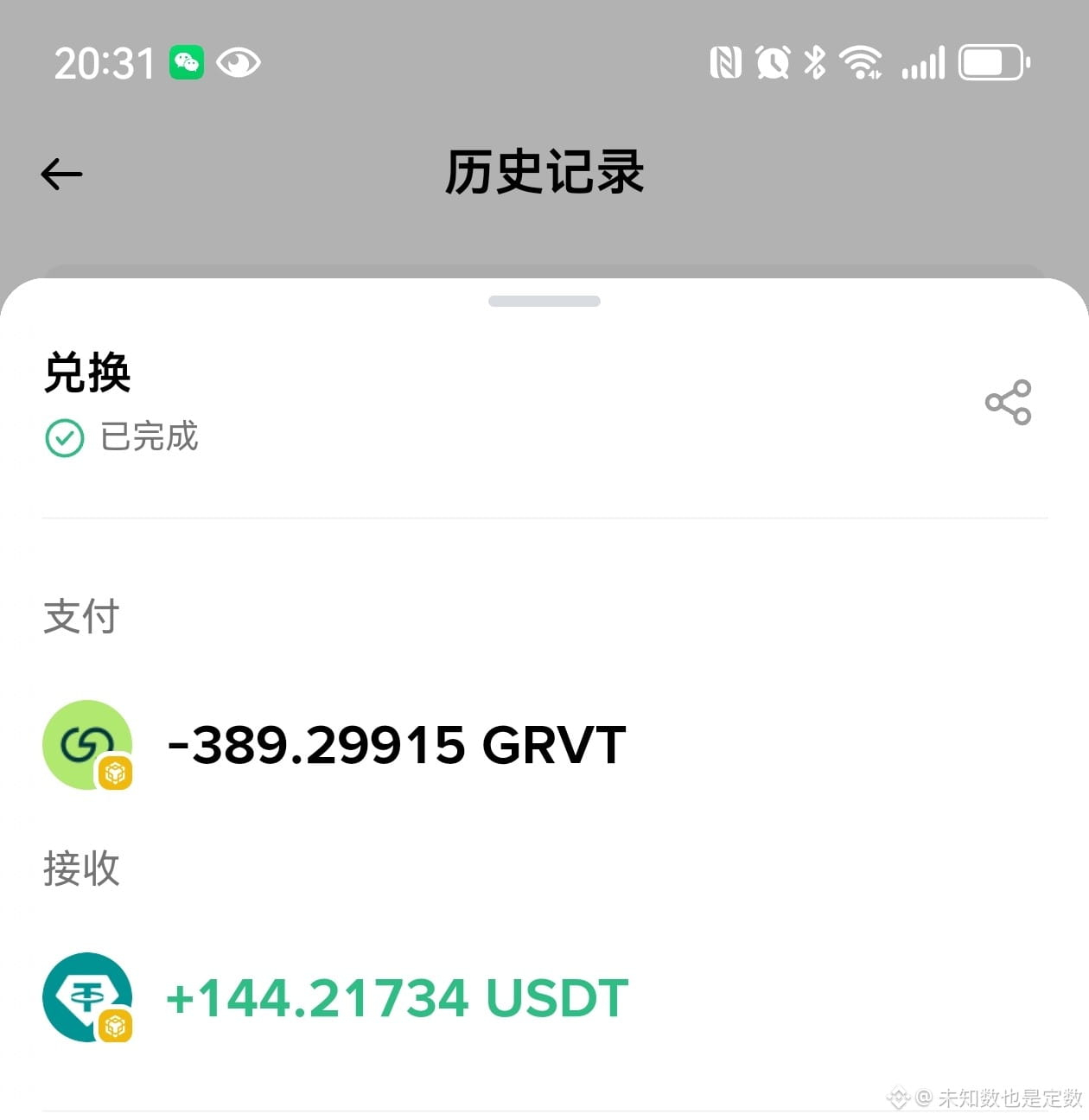
The air drop sold for only 40 U, but I didn’t expect the rewards to come close to 4 air drops, haha $GRVT
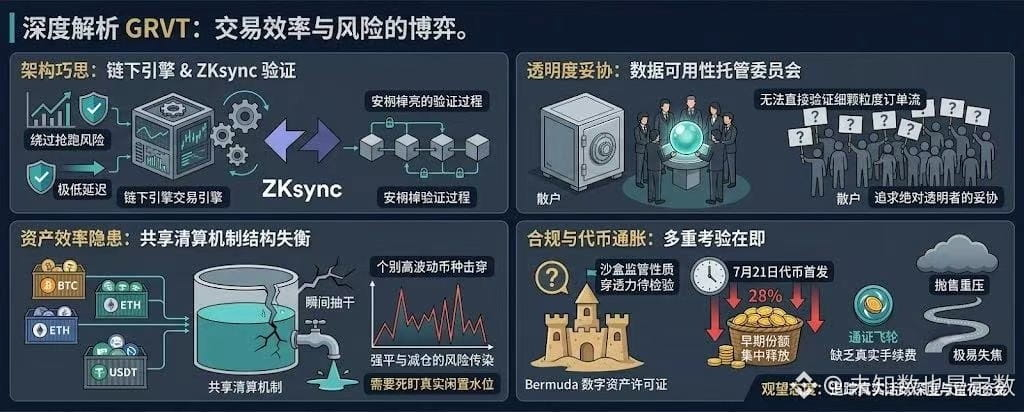
#grvt I’ve spent the past few days deeply dissecting the encrypted settlement structure of @grvt_io . I found that it moves the transaction engine off-chain and anchors verification to ZKsync—an approach with remarkable engineering ingenuity. This design sidesteps common front‑running risks and truly aligns with the high-frequency strategy’s urgent need for ultra-low latency. However, the other side of the coin is that data availability is hosted by a specific committee. This means we retail users can’t directly verify the fine-grained order flow from the public ledger. For pure “native” users who pursue absolute transparency, this compromise clearly carries an element of concession.$BTC
Returning to the asset-efficiency layer, the underlying shared clearing mechanism in its treasury hides structural imbalances. Such consolidated pools tie multi-currency margin to a single ship. When the operator frequently performs cross-asset hedging in the off-chain system, even if most strategy directions are correct, a sudden price breakdown driven by a specific high-volatility asset can instantaneously drain the usable level of the entire public pool. This liquidation-and-deleveraging risk contagion mechanism requires liquidity providers to constantly monitor the true idle liquidity level beneath the surface.$ETH
The digital asset license issued by Bermuda is, in form, compliant, but its regulatory boundaries have a sandbox-like quality; its ability to penetrate and regulate in practice still needs time to be tested. Next week, on July 21, the token will be launched for the first time—an even bigger test of the market’s ability to absorb it. With as much as 28% of early allocations concentrated for release, the resulting selling pressure is no small matter. If the platform lacks sufficient real fee flow cycling through, the token’s own flywheel is all too likely to lose focus.
As for the project #grvt , its attempts to optimize the trading experience are worth acknowledging. But the underlying risk chain and the ongoing battle between token incentives and inflation are still unfolding. My thinking is very clear: in the emotional market at the open, I’ll stay at a distance, and once the initial distribution and sell-pressure are fully cleared, I’ll go on-chain to track its true active depth and retained funds. Even if the business logic is currently a self-contained loop, the market’s eventual pricing often proves harsher than idealized projections. We’ll see where things go from here before making any further decision.
Returning to the asset-efficiency layer, the underlying shared clearing mechanism in its treasury hides structural imbalances. Such consolidated pools tie multi-currency margin to a single ship. When the operator frequently performs cross-asset hedging in the off-chain system, even if most strategy directions are correct, a sudden price breakdown driven by a specific high-volatility asset can instantaneously drain the usable level of the entire public pool. This liquidation-and-deleveraging risk contagion mechanism requires liquidity providers to constantly monitor the true idle liquidity level beneath the surface.$ETH
The digital asset license issued by Bermuda is, in form, compliant, but its regulatory boundaries have a sandbox-like quality; its ability to penetrate and regulate in practice still needs time to be tested. Next week, on July 21, the token will be launched for the first time—an even bigger test of the market’s ability to absorb it. With as much as 28% of early allocations concentrated for release, the resulting selling pressure is no small matter. If the platform lacks sufficient real fee flow cycling through, the token’s own flywheel is all too likely to lose focus.
As for the project #grvt , its attempts to optimize the trading experience are worth acknowledging. But the underlying risk chain and the ongoing battle between token incentives and inflation are still unfolding. My thinking is very clear: in the emotional market at the open, I’ll stay at a distance, and once the initial distribution and sell-pressure are fully cleared, I’ll go on-chain to track its true active depth and retained funds. Even if the business logic is currently a self-contained loop, the market’s eventual pricing often proves harsher than idealized projections. We’ll see where things go from here before making any further decision.
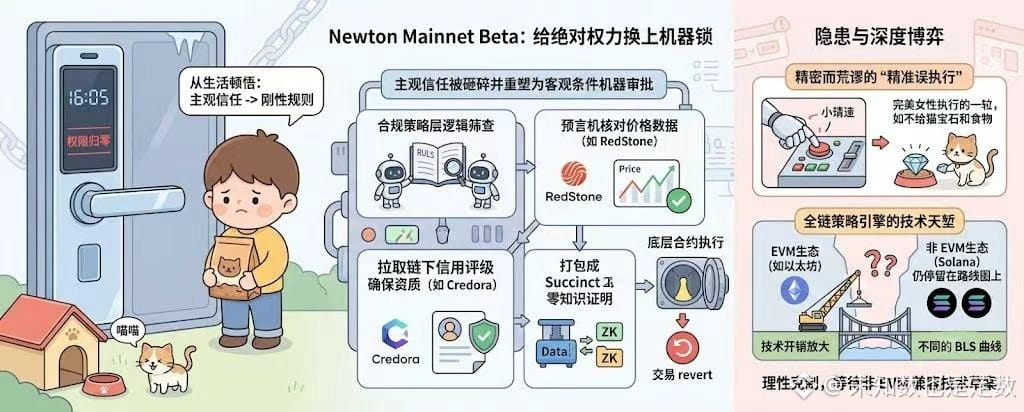
#newt Last night, while I was halfway through my shower and the soap on my body still hadn’t been rinsed off, the smart water valve suddenly and without warning cut off the water. It turned out that the algorithm detected I had been using water continuously for more than fifteen minutes, unilaterally judged that the home pipe had burst, and forcibly locked it down. That suffocating feeling of being unable to do anything even if I kept pressing “cancel” on my phone, and having to go downstairs to manually reset the main valve, instantly reminded me of @NewtonProtocol , which had just gone live on mainnet Beta. When we completely hand over decision-making power to cold code, “automation” without flexibility often leaves people in awkward situations.
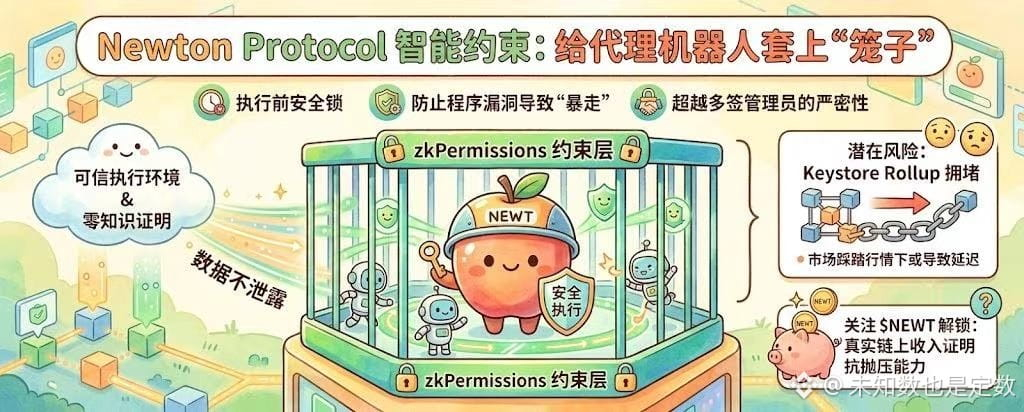
In order to avoid this kind of “runaway” behavior from agent bots on-chain, the project introduced a zkPermissions constraint layer based on Magic Labs technology. After dissecting its logic, I found that it did not focus on complex intent prediction, but instead concentrated on putting a safety lock in place before execution. Combined with a trusted execution environment and zero-knowledge proofs, every move made by the agent is tightly bound within preset rules. During normal periods when the network is running smoothly, this kind of constraint can indeed help users block deviations caused by software bugs, and is stricter than relying solely on multisig administrators. $BTC
But every coin has two sides. At present, its validator nodes still carry a fairly strong permissioned flavor, and the physical hardware base has historically never been absolutely foolproof. My personal judgment is that once the market faces a panic selloff and Gas fees surge, this cumbersome verification process is very likely to suffer block production delays due to congestion in the underlying Keystore Rollup, turning the so-called hard constraint into a useless formality. $ETH
As the later unlocking of $NEWT approaches, the project must prove its ability to withstand selling pressure with real on-chain business revenue. The route of putting a cage on the bot is unquestionably the right one, but before more convincing stress-test data under extreme pressure comes out, I still prefer to keep a tight grip on my wallet and remain cautious. #Newt
In order to avoid this kind of “runaway” behavior from agent bots on-chain, the project introduced a zkPermissions constraint layer based on Magic Labs technology. After dissecting its logic, I found that it did not focus on complex intent prediction, but instead concentrated on putting a safety lock in place before execution. Combined with a trusted execution environment and zero-knowledge proofs, every move made by the agent is tightly bound within preset rules. During normal periods when the network is running smoothly, this kind of constraint can indeed help users block deviations caused by software bugs, and is stricter than relying solely on multisig administrators. $BTC
But every coin has two sides. At present, its validator nodes still carry a fairly strong permissioned flavor, and the physical hardware base has historically never been absolutely foolproof. My personal judgment is that once the market faces a panic selloff and Gas fees surge, this cumbersome verification process is very likely to suffer block production delays due to congestion in the underlying Keystore Rollup, turning the so-called hard constraint into a useless formality. $ETH
As the later unlocking of $NEWT approaches, the project must prove its ability to withstand selling pressure with real on-chain business revenue. The route of putting a cage on the bot is unquestionably the right one, but before more convincing stress-test data under extreme pressure comes out, I still prefer to keep a tight grip on my wallet and remain cautious. #Newt
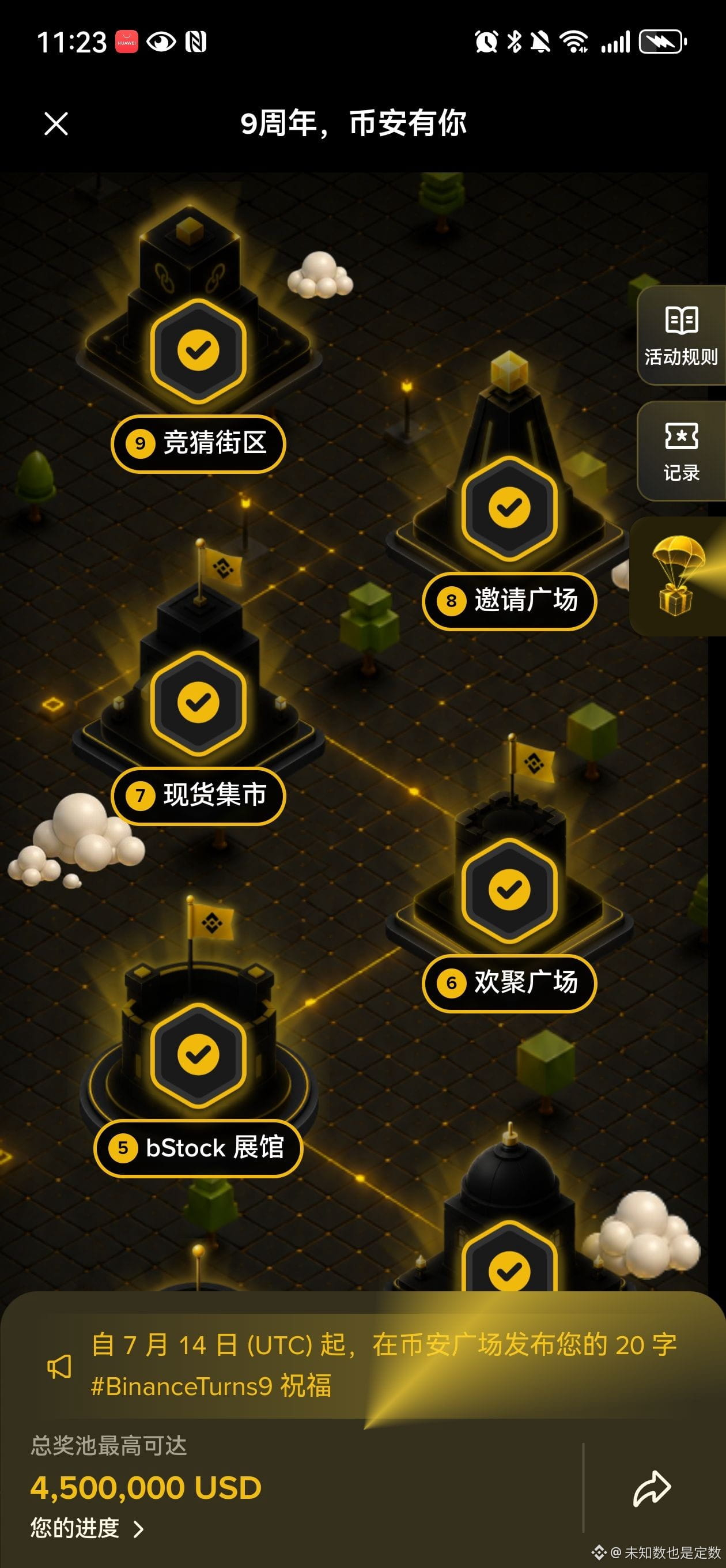
Together for nine years to build a legend, happy 9th birthday to Binance, the future is always possible! #币安九周年 #BinanceTurns9
Log in to explore more content