
大聪明FOMO版本
447 Posts

大聪明FOMO版本
做交易不要有偏见,生活本是佛心
🌏公众号:Ox大聪明解币趋势分析🔸
🎈手续费8折邀请码: BS9PM2O5 @Binance square 2028年度中文区最佳交易/技术分析博主。
Frequent Trader
9 Years
122 Following
1.7K+ Followers
822 Liked
Posts
All
Quotes
Videos
PINNED

Since I started playing with storage, I haven’t really played with small caps anymore. Here are a few rough ideas.
1. Never buy coins on the left side that are connected to a death spiral. For example, recent LAB—once it starts a death spiral, you’re basically abandoning the trade.
2. After something has previously surged massively, it’s now been ranging at the bottom and the market cap is extremely low (fully diluted is under 6m), for example BULLA (it has already pumped—don’t chase it now).
These may mean the market is being abandoned, or it may be recovering/collecting shares. The main idea is: having previously surged massively suggests there was a big player/whales involved, and an extremely low market cap suggests losses are limited. In both cases, it’s about probability.
3. You can keep an eye on breakouts with no volume. For instance, if a contract jumps 20% on a day when the trading volume is 3 million USD, it might be testing the market (a probe). You can potentially enter on the subsequent pullback.
I basically only profit from 2–4x moves, aiming for something stable—I’m afraid of getting A-killed.
1. Never buy coins on the left side that are connected to a death spiral. For example, recent LAB—once it starts a death spiral, you’re basically abandoning the trade.
2. After something has previously surged massively, it’s now been ranging at the bottom and the market cap is extremely low (fully diluted is under 6m), for example BULLA (it has already pumped—don’t chase it now).
These may mean the market is being abandoned, or it may be recovering/collecting shares. The main idea is: having previously surged massively suggests there was a big player/whales involved, and an extremely low market cap suggests losses are limited. In both cases, it’s about probability.
3. You can keep an eye on breakouts with no volume. For instance, if a contract jumps 20% on a day when the trading volume is 3 million USD, it might be testing the market (a probe). You can potentially enter on the subsequent pullback.
I basically only profit from 2–4x moves, aiming for something stable—I’m afraid of getting A-killed.
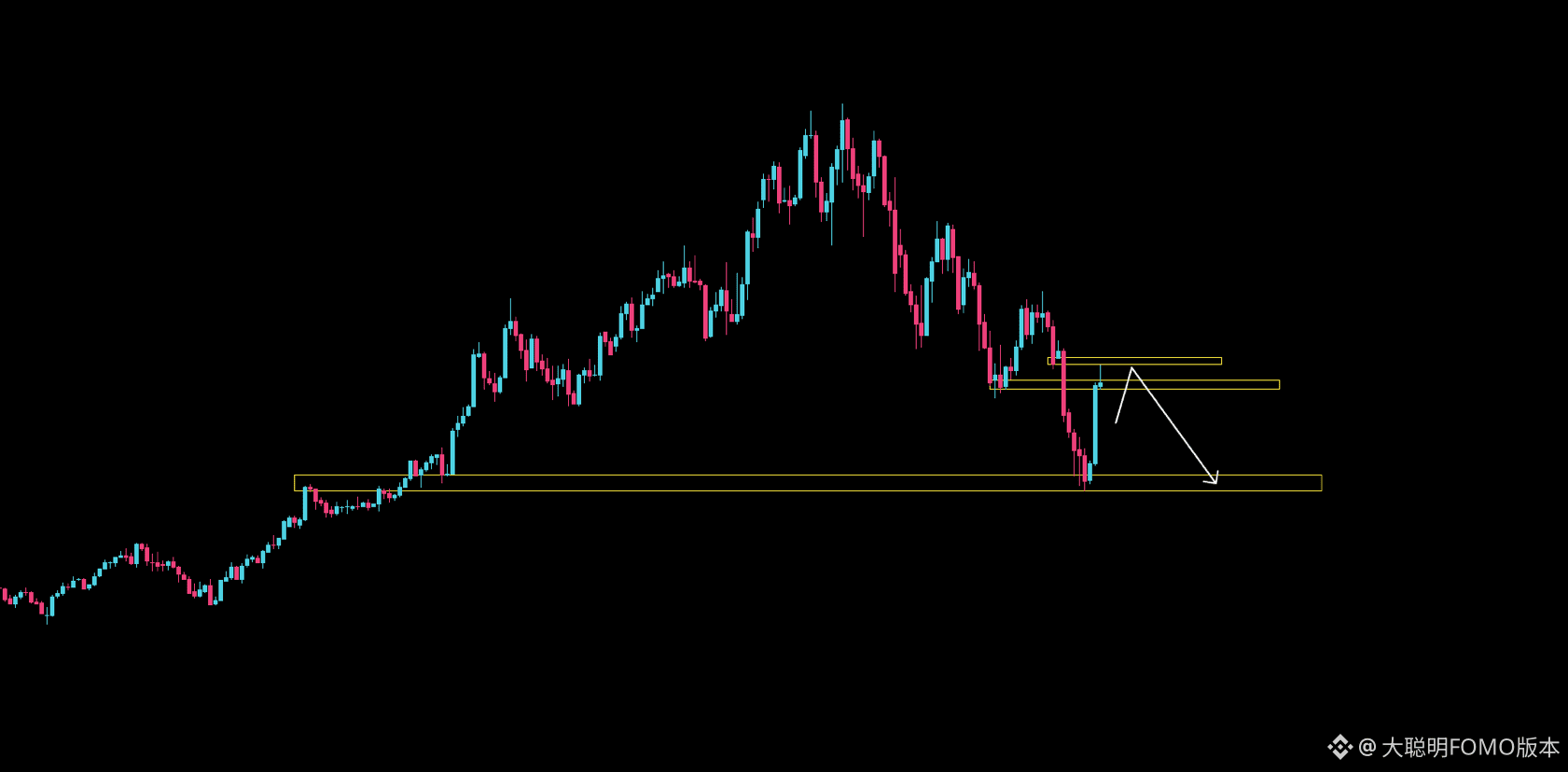
1280 ——> 16xx ——>1280 ——>1000 ——>(136X -143X )
SanDisk $SNDK has completed all four stages. Before the open, the highest reached 143X, and it’s falling from there. No matter what, once the target is reached, you should take profit.
If it’s the same as before—where if the intraday close didn’t reach the level, it wasn’t truly going up—then this time it should keep falling and then form a structure similar to a double top.
SanDisk $SNDK has completed all four stages. Before the open, the highest reached 143X, and it’s falling from there. No matter what, once the target is reached, you should take profit.
If it’s the same as before—where if the intraday close didn’t reach the level, it wasn’t truly going up—then this time it should keep falling and then form a structure similar to a double top.
$SNDK
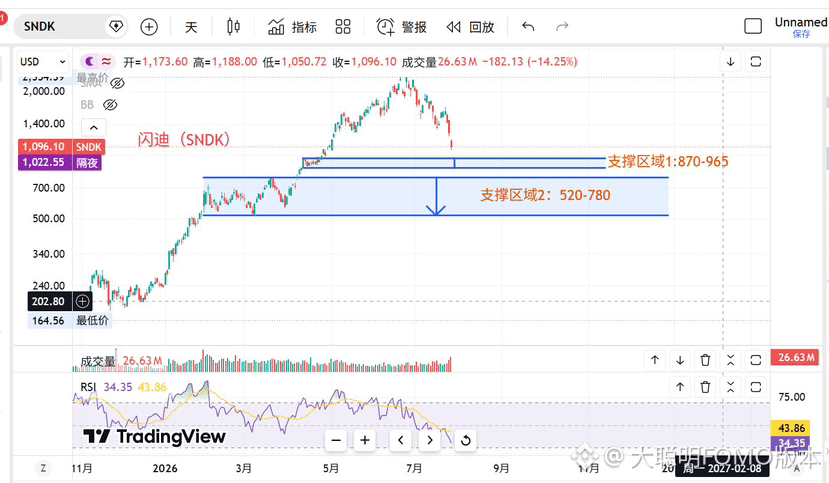
About the support levels of SanDisk ($SNDK )
From the relationship between volume and price, there are two support zones below $SNDK :
Support Zone 1 (870–965) was formed by a sideways consolidation during 4.13–4.23;
Support Zone 2 (520–780) was formed by a sideways consolidation during 1.30–4.07.
In an optimistic scenario, SNDK will find support in Support Zone 1; in a pessimistic scenario, it will find support in Support Zone 2.
Generally speaking, the longer a support zone has been consolidating and the higher the trading volume during that period, the stronger the support.
Support Zone 1 has a shorter consolidation time and relatively lower trading volume during that period, so its support is weaker; Support Zone 2 has a longer consolidation time and higher trading volume during that period, so the support is very strong.
Considering that the pre-market price of $SNDK has already dropped to around 1000, the probability of support in Support Zone 2 is relatively higher.
The above analysis is for reference only and does not constitute investment advice!
#SanDisk #SNDK #Memory
About the support levels of SanDisk ($SNDK )
From the relationship between volume and price, there are two support zones below $SNDK :
Support Zone 1 (870–965) was formed by a sideways consolidation during 4.13–4.23;
Support Zone 2 (520–780) was formed by a sideways consolidation during 1.30–4.07.
In an optimistic scenario, SNDK will find support in Support Zone 1; in a pessimistic scenario, it will find support in Support Zone 2.
Generally speaking, the longer a support zone has been consolidating and the higher the trading volume during that period, the stronger the support.
Support Zone 1 has a shorter consolidation time and relatively lower trading volume during that period, so its support is weaker; Support Zone 2 has a longer consolidation time and higher trading volume during that period, so the support is very strong.
Considering that the pre-market price of $SNDK has already dropped to around 1000, the probability of support in Support Zone 2 is relatively higher.
The above analysis is for reference only and does not constitute investment advice!
#SanDisk #SNDK #Memory
SNDKUS-1.68%
$SNDK
Can SanDisk bottom-fish?
First, the conclusion: Fundamentally, things haven’t broken down for now. But at this moment, it’s more suitable to wait for confirmation rather than treat a single sharp selloff as “a bargain.”
SanDisk has recently plunged nearly 10% in a single day. The most direct reason isn’t that the company suddenly lost orders, but that the entire storage sector has been re-rated: the market worries that tech giants will cut back AI-related capital expenditure, and also that the storage stocks that had surged by several multiples earlier have become too crowded in terms of trading.
The case for bottom-fishing is quite clear:
TrendForce expects NAND contract prices to keep rising quarter over quarter by 10%—15% in the third quarter, and that in 2026 the overall market will still be in a supply-demand imbalance of shortage. Demand for enterprise SSDs from AI servers hasn’t disappeared either. In other words, the price drop is happening while the industry is still raising prices.
However, the risks are just as evident:
NAND price growth is already narrowing, and consumer electronics are starting to feel the pressure of high pricing. TrendForce expects that as new supply is released, the NAND supply growth rate in 2027 could exceed demand. SanDisk had risen by several multiples earlier this year; the market was previously pricing in “long-term scarcity.” As soon as that expectation loosens, valuation could be compressed further.
Also note that CXMT mainly produces DRAM, so it’s not SanDisk’s direct competitor. What SanDisk truly needs to watch is NAND capacity from Samsung, SK hynix, Kioxia, and Yangtze Memory, as well as AI capital expenditure from companies such as Microsoft, Meta, and Amazon.
So whether SanDisk can bottom-fish shouldn’t be judged only by how much it has fallen. Instead, look at three data points:
Whether NAND contract prices continue to rise;
Whether enterprise SSD orders and gross margins remain stable;
Whether cloud providers continue to increase AI capital expenditure.
If these three indicators don’t all weaken at the same time, the selloff is more like a valuation and position liquidation. Only when prices, orders, and capital expenditure all turn downward together could it become a true turning point in the cycle.
What you can buy now is “still-tight fundamentals,” but you have to absorb “valuation mean reversion after a several-multiple rally.” This isn’t without opportunity, but it’s more suitable to observe in batches rather than bet all your judgment on a single day’s drop in the stock price.
Can SanDisk bottom-fish?
First, the conclusion: Fundamentally, things haven’t broken down for now. But at this moment, it’s more suitable to wait for confirmation rather than treat a single sharp selloff as “a bargain.”
SanDisk has recently plunged nearly 10% in a single day. The most direct reason isn’t that the company suddenly lost orders, but that the entire storage sector has been re-rated: the market worries that tech giants will cut back AI-related capital expenditure, and also that the storage stocks that had surged by several multiples earlier have become too crowded in terms of trading.
The case for bottom-fishing is quite clear:
TrendForce expects NAND contract prices to keep rising quarter over quarter by 10%—15% in the third quarter, and that in 2026 the overall market will still be in a supply-demand imbalance of shortage. Demand for enterprise SSDs from AI servers hasn’t disappeared either. In other words, the price drop is happening while the industry is still raising prices.
However, the risks are just as evident:
NAND price growth is already narrowing, and consumer electronics are starting to feel the pressure of high pricing. TrendForce expects that as new supply is released, the NAND supply growth rate in 2027 could exceed demand. SanDisk had risen by several multiples earlier this year; the market was previously pricing in “long-term scarcity.” As soon as that expectation loosens, valuation could be compressed further.
Also note that CXMT mainly produces DRAM, so it’s not SanDisk’s direct competitor. What SanDisk truly needs to watch is NAND capacity from Samsung, SK hynix, Kioxia, and Yangtze Memory, as well as AI capital expenditure from companies such as Microsoft, Meta, and Amazon.
So whether SanDisk can bottom-fish shouldn’t be judged only by how much it has fallen. Instead, look at three data points:
Whether NAND contract prices continue to rise;
Whether enterprise SSD orders and gross margins remain stable;
Whether cloud providers continue to increase AI capital expenditure.
If these three indicators don’t all weaken at the same time, the selloff is more like a valuation and position liquidation. Only when prices, orders, and capital expenditure all turn downward together could it become a true turning point in the cycle.
What you can buy now is “still-tight fundamentals,” but you have to absorb “valuation mean reversion after a several-multiple rally.” This isn’t without opportunity, but it’s more suitable to observe in batches rather than bet all your judgment on a single day’s drop in the stock price.
Today an old regular prostitute client texted me, saying this has been the best summer since he started. On this day, the little stars—because of Hynix/Hailice's collapse—had their years of savings wiped out.
In the past, it would take a few million Korean won just to get them to meet you; now all you need is:
2 million to get taken there for an overnight.
Flight tickets and hotels are all discounted everywhere.
If you just casually book a girl group member for an overnight, it only takes saving up a week of wages.
The other day, in a Gangnam hotel in Seoul,
suddenly, all the old regular clients sped up what they were doing—holding those bankrupt little stars, they trembled.
He said he was very happy, like he had the illusion of a human golden age.
In the past, it would take a few million Korean won just to get them to meet you; now all you need is:
2 million to get taken there for an overnight.
Flight tickets and hotels are all discounted everywhere.
If you just casually book a girl group member for an overnight, it only takes saving up a week of wages.
The other day, in a Gangnam hotel in Seoul,
suddenly, all the old regular clients sped up what they were doing—holding those bankrupt little stars, they trembled.
He said he was very happy, like he had the illusion of a human golden age.
Mainstream crypto exchanges focus on liquidity development and directly connecting to US stocks, is this correct?
On-chain US stocks could represent a new era for the still-maturing crypto market.
The initial turning point for the crypto market and the emergence of investment choices for people stem from the convenience provided for social financing by startup teams, enabling many A6 projects to gain massive traffic and funding support. Many A5 retail traders have thus risen, seizing the broken traditional and newly emerging investment storm opportunities. Where is the industry heading, and how did we get here?
As time progresses, the market has essentially welcomed the flow of traffic and the number of registered users. However, considering the stunning projects in the crypto space and the current US stock projects, it’s simply not enough.
When liquidity conversion and hype are urgently needed, leveraging the biggest opponent in US stocks, it’s easy to feel lost for the early crypto participants. 😕
This path seems endless, with profits swirling between zeros and ones.
On-chain US stocks could represent a new era for the still-maturing crypto market.
The initial turning point for the crypto market and the emergence of investment choices for people stem from the convenience provided for social financing by startup teams, enabling many A6 projects to gain massive traffic and funding support. Many A5 retail traders have thus risen, seizing the broken traditional and newly emerging investment storm opportunities. Where is the industry heading, and how did we get here?
As time progresses, the market has essentially welcomed the flow of traffic and the number of registered users. However, considering the stunning projects in the crypto space and the current US stock projects, it’s simply not enough.
When liquidity conversion and hype are urgently needed, leveraging the biggest opponent in US stocks, it’s easy to feel lost for the early crypto participants. 😕
This path seems endless, with profits swirling between zeros and ones.
$SKYAI Be cautious with the bags that are all about Chinese KOLs, especially since some are still active on Twitter during this time. Those who are still on-chain now are basically the most elite and the most speculative.
Honestly, it might ruffle some feathers, but taking profits and recouping your initial investment is a solid strategy; earlier on, I didn't say anything negative about it~
Honestly, it might ruffle some feathers, but taking profits and recouping your initial investment is a solid strategy; earlier on, I didn't say anything negative about it~

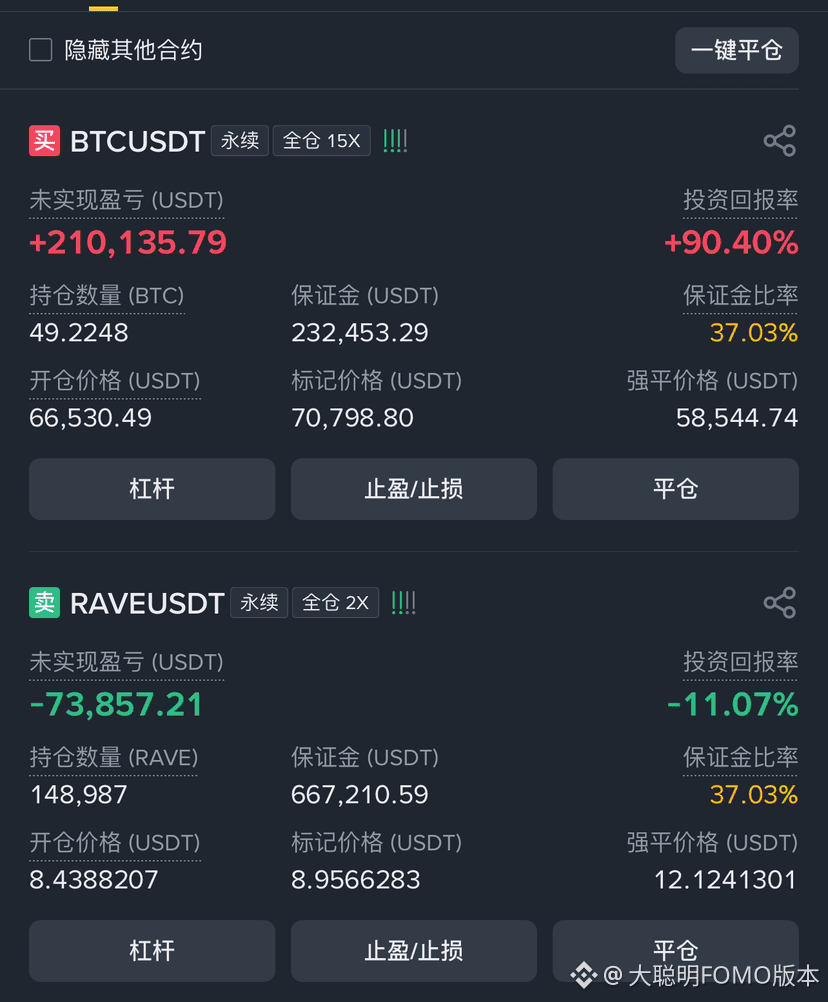
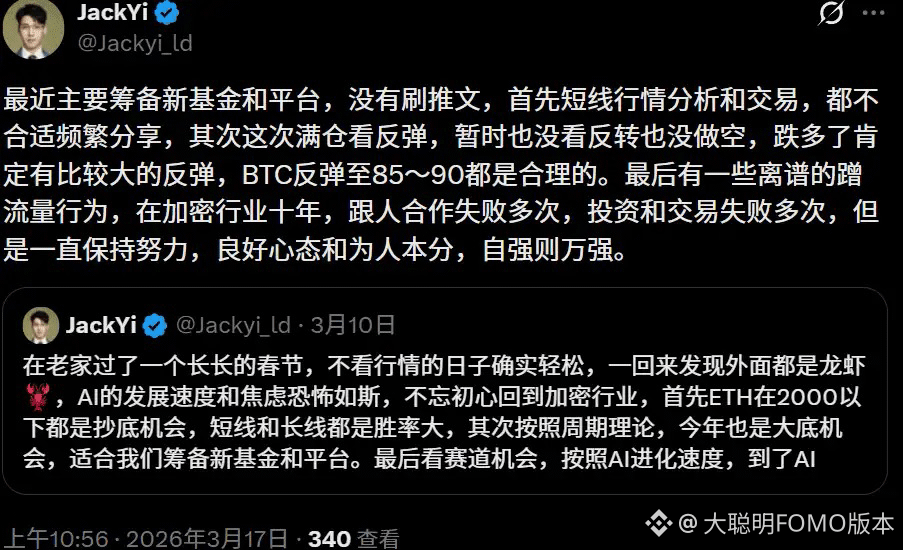
BlockBeats news, on March 17, Liquid Capital (formerly LD Capital) founder Yi Lihua stated, "Recently focused on preparing a new fund and platform, haven't been tweeting much. Firstly, short-term market analysis and trading are not suitable for frequent sharing. Secondly, this time I'm fully invested looking for a rebound, and I haven't seen a reversal or made any short positions. After a significant decline, a considerable rebound is certain. A rebound of BTC to $85,000 and $90,000 is reasonable. After ten years in the crypto industry, I have failed multiple times in collaborations, investments, and trading, but I have always maintained effort, a good mindset, and integrity. Self-improvement leads to great strength."
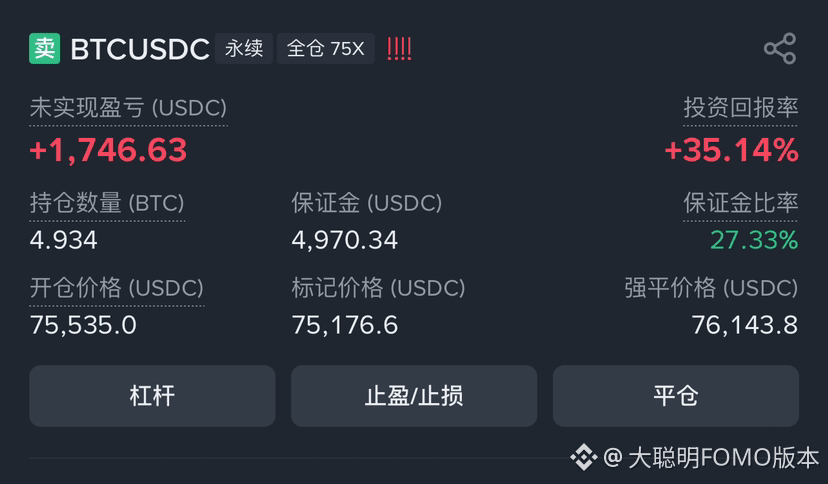
It must rebound to this position for shorting.
It must rebound to this position for shorting.

5 Core Truths of Trading,
First: High profits come from controlling drawdowns, not from win rates. A single large loss can wipe out the gains from the previous ten trades.
Second: Experts do not predict the market; they manage it. They do not guess tops or bottoms; they simply execute rules.
Third: Consistent profits come from a simple system combined with extreme discipline and long-term repetitive execution. The more complex it is, the more you lose; the simpler it is, the longer it lasts.
Fifth: Mindset is not developed through practice; it is managed through position sizing. An appropriate position size combined with stop-losses will naturally stabilize your mindset.
First: High profits come from controlling drawdowns, not from win rates. A single large loss can wipe out the gains from the previous ten trades.
Second: Experts do not predict the market; they manage it. They do not guess tops or bottoms; they simply execute rules.
Third: Consistent profits come from a simple system combined with extreme discipline and long-term repetitive execution. The more complex it is, the more you lose; the simpler it is, the longer it lasts.
Fifth: Mindset is not developed through practice; it is managed through position sizing. An appropriate position size combined with stop-losses will naturally stabilize your mindset.


BTC strictly adheres to the four-year halving bull market rule, with the bottom generally appearing about one and a half years after the peak of the bull market. This round of bear market is estimated to reach around 38000 in March next year, starting bottom fluctuations. (There will be at least two major institutional crashes in between)
In the entire year of 2027, complete a fluctuation range of 35000 to 47000, about 34.29%, and begin to rise. After the fifth BTC halving around April 20, 2028, there will be another one and a half years of bull market. Live well until March next year (the first level starts to warm up after reaching the bottom).
In the entire year of 2027, complete a fluctuation range of 35000 to 47000, about 34.29%, and begin to rise. After the fifth BTC halving around April 20, 2028, there will be another one and a half years of bull market. Live well until March next year (the first level starts to warm up after reaching the bottom).
BTC 60000 – 65000
ETH 1800 – 2000
SOL 50 – 75
This is the analysis price given by Tom Lee's analysts to internal clients when the market is at a high point in December, and it will drop by 10 - 20% from there.
ETH 1800 – 2000
SOL 50 – 75
This is the analysis price given by Tom Lee's analysts to internal clients when the market is at a high point in December, and it will drop by 10 - 20% from there.
大聪明FOMO版本
·
--
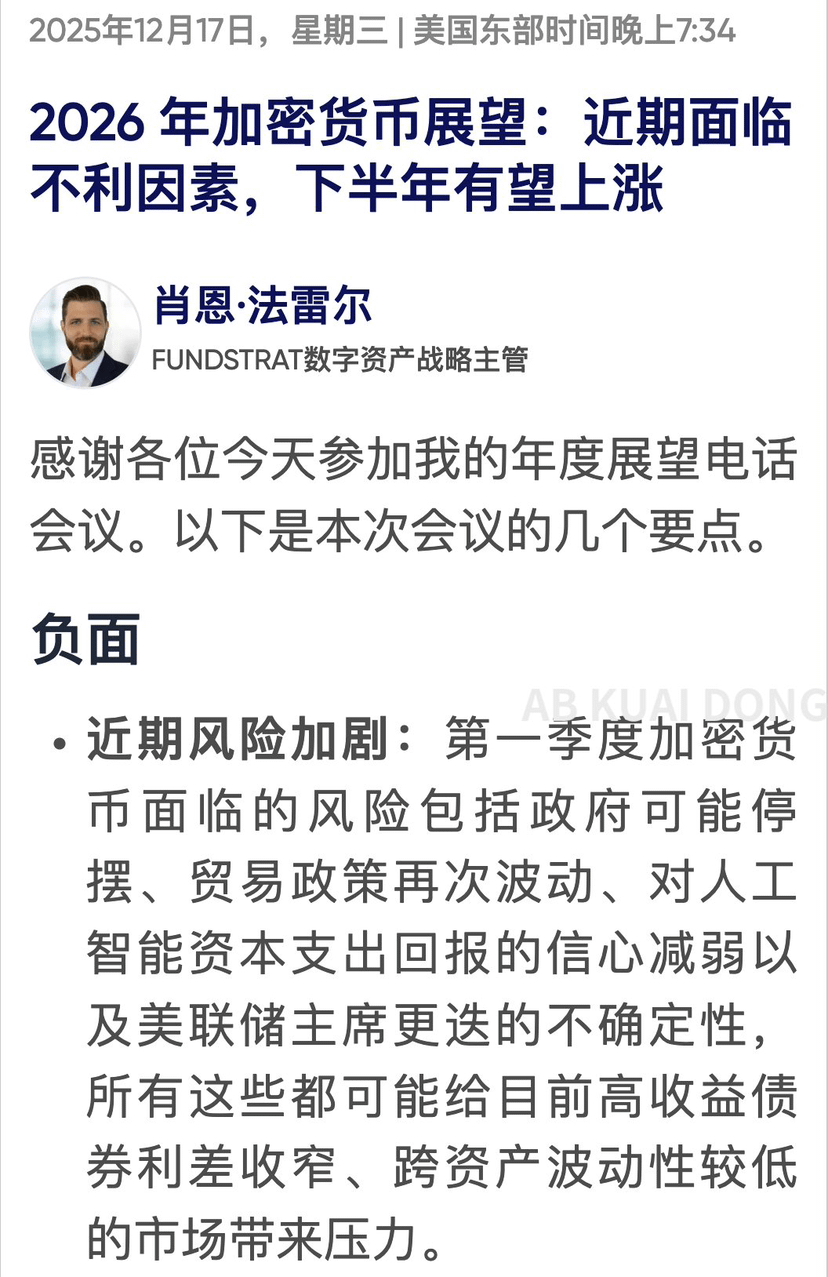
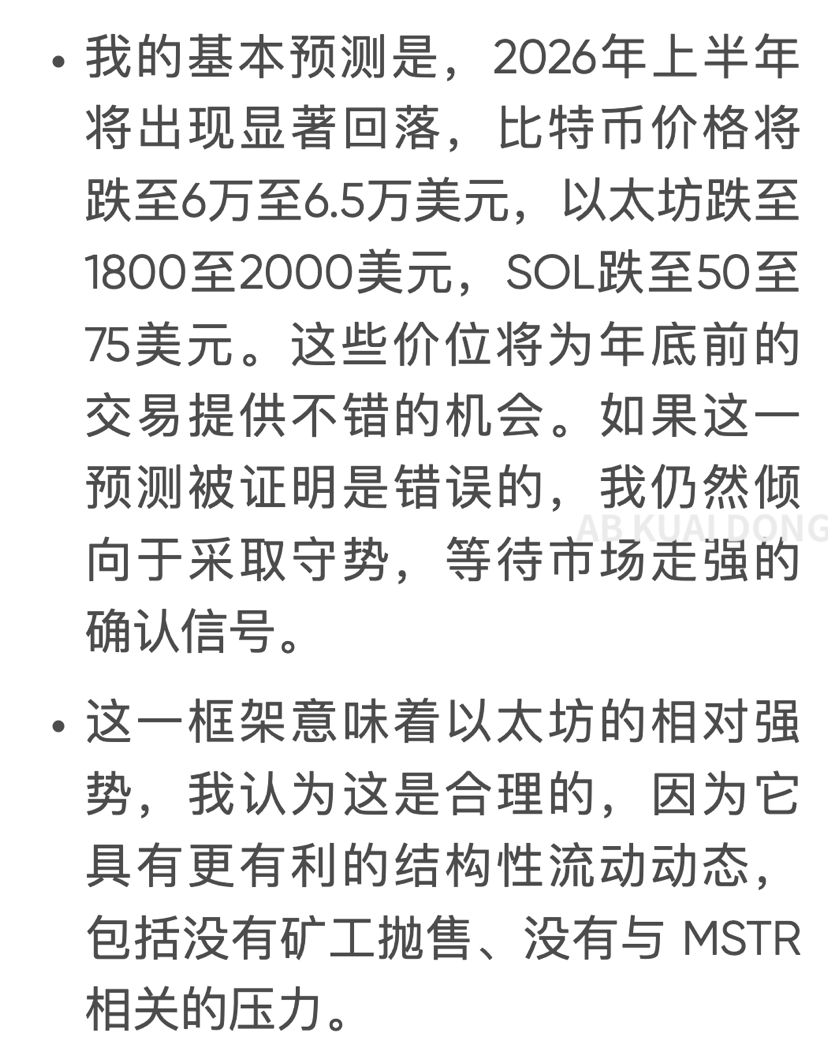
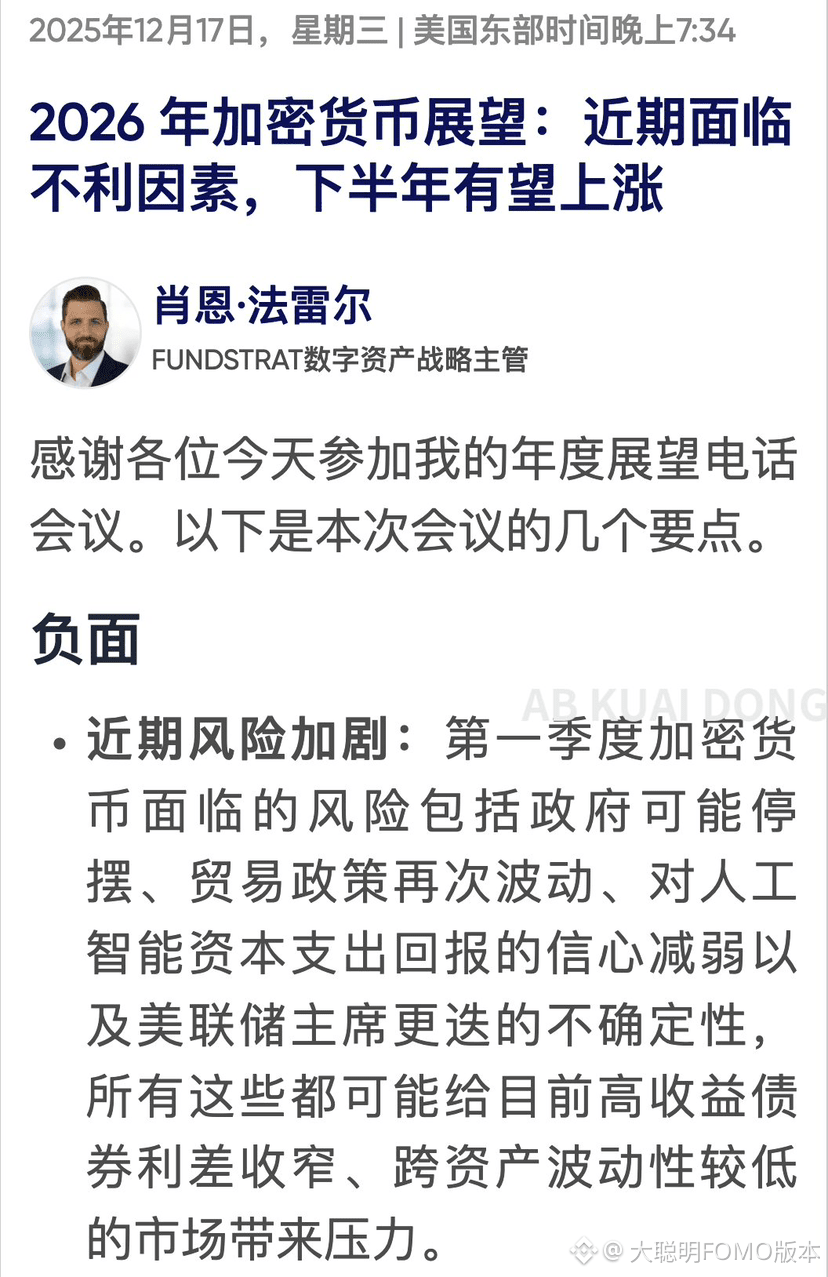
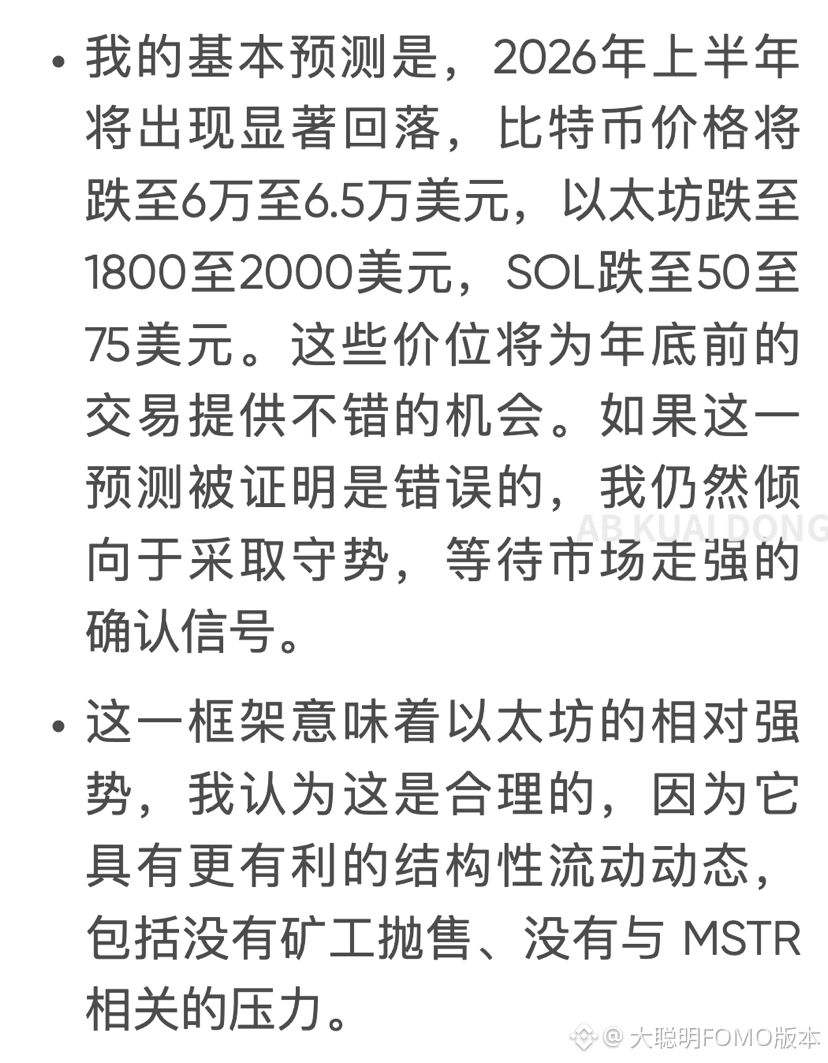
Although Tom Lee is betting on Bitcoin and Ethereum reaching new highs in January, his own fund Fundstrat, in its latest 2026 cryptocurrency strategy advice to internal clients.
Indicates that in the first half of the year, cryptocurrencies will experience a deeper correction, with target prices of:
BTC 60000 – 65000
ETH 1800 – 2000
SOL 50 – 75
He believes that when this price range appears in the first half of the year, it will be the best entry point, as it will provide highly attractive layout opportunities for the second half of the year.
And Ethereum will perform relatively strongly.
Indicates that in the first half of the year, cryptocurrencies will experience a deeper correction, with target prices of:
BTC 60000 – 65000
ETH 1800 – 2000
SOL 50 – 75
He believes that when this price range appears in the first half of the year, it will be the best entry point, as it will provide highly attractive layout opportunities for the second half of the year.
And Ethereum will perform relatively strongly.
Although Tom Lee is betting on Bitcoin and Ethereum reaching new highs in January, his own fund Fundstrat, in its latest 2026 cryptocurrency strategy advice to internal clients.
Indicates that in the first half of the year, cryptocurrencies will experience a deeper correction, with target prices of:
BTC 60000 – 65000
ETH 1800 – 2000
SOL 50 – 75
He believes that when this price range appears in the first half of the year, it will be the best entry point, as it will provide highly attractive layout opportunities for the second half of the year.
And Ethereum will perform relatively strongly.
Indicates that in the first half of the year, cryptocurrencies will experience a deeper correction, with target prices of:
BTC 60000 – 65000
ETH 1800 – 2000
SOL 50 – 75
He believes that when this price range appears in the first half of the year, it will be the best entry point, as it will provide highly attractive layout opportunities for the second half of the year.
And Ethereum will perform relatively strongly.
$BTC
The market probably won't reverse that quickly. You might think it's because a large holder is going to sell or because everyone wants to sell coins for the New Year, but it's actually just the external liquidity of the dollar being sluggish. Don't think too highly of yourself; the U.S. economy and employment data do not support aggressive rate cuts. The remaining term of old Powell is just garbage time, so be patient and hang in there...
$ETH
The market probably won't reverse that quickly. You might think it's because a large holder is going to sell or because everyone wants to sell coins for the New Year, but it's actually just the external liquidity of the dollar being sluggish. Don't think too highly of yourself; the U.S. economy and employment data do not support aggressive rate cuts. The remaining term of old Powell is just garbage time, so be patient and hang in there...
$ETH



Log in to explore more content