
Bullish Bold
710 Posts

Bullish Bold
Report
Block User
I'm Crypto Researcher & Trader:X-@BullishBold
19 Following
8.8K+ Followers
1.6K+ Liked
Posts
·
--
Bullish
The year-end crypto wishlist is getting ambitious.
Bitcoin back above $100K. Ethereum pushing past $3,500. Inflation cooling, altcoins waking up, and ETF inflows staying strong.
Then comes the bigger picture: fewer wars, clearer crypto rules from more countries, and greener portfolios across the market.
It’s a simple wish list—but each piece could shape the mood heading into year-end. Now the question is: which one gets there first?
The year-end crypto wishlist is getting ambitious.
Bitcoin back above $100K. Ethereum pushing past $3,500. Inflation cooling, altcoins waking up, and ETF inflows staying strong.
Then comes the bigger picture: fewer wars, clearer crypto rules from more countries, and greener portfolios across the market.
It’s a simple wish list—but each piece could shape the mood heading into year-end. Now the question is: which one gets there first?
Bitcoin back above $100K. Ethereum pushing past $3,500. Inflation cooling, altcoins waking up, and ETF inflows staying strong.
Then comes the bigger picture: fewer wars, clearer crypto rules from more countries, and greener portfolios across the market.
It’s a simple wish list—but each piece could shape the mood heading into year-end. Now the question is: which one gets there first?
102
·
--
Bullish
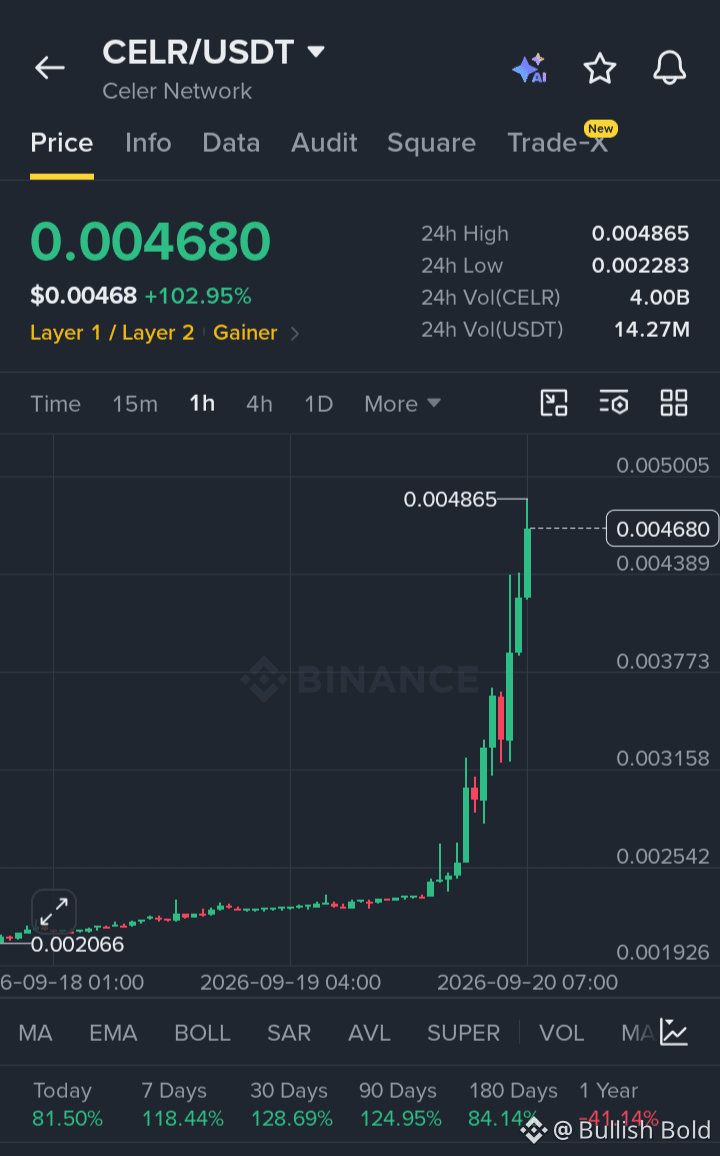
$CELR showing strong bullish momentum with aggressive expansion.
Buyers remain in control as structure continues to hold above the breakout zone.
Entry: 0.00440 - 0.00455
Stop: 0.00405
Targets
→ 0.00480
→ 0.00520
→ 0.00550
Liquidity has been swept above the recent high, with price reacting strongly from the breakout structure. Holding the entry zone keeps bullish continuation valid toward the next liquidity levels.
Click below to Take Trade
{future}(CELRUSDT)
$CELR showing strong bullish momentum with aggressive expansion.
Buyers remain in control as structure continues to hold above the breakout zone.
Entry: 0.00440 - 0.00455
Stop: 0.00405
Targets
→ 0.00480
→ 0.00520
→ 0.00550
Liquidity has been swept above the recent high, with price reacting strongly from the breakout structure. Holding the entry zone keeps bullish continuation valid toward the next liquidity levels.
Click below to Take Trade
Buyers remain in control as structure continues to hold above the breakout zone.
Entry: 0.00440 - 0.00455
Stop: 0.00405
Targets
→ 0.00480
→ 0.00520
→ 0.00550
Liquidity has been swept above the recent high, with price reacting strongly from the breakout structure. Holding the entry zone keeps bullish continuation valid toward the next liquidity levels.
Click below to Take Trade
146
·
--
Bullish
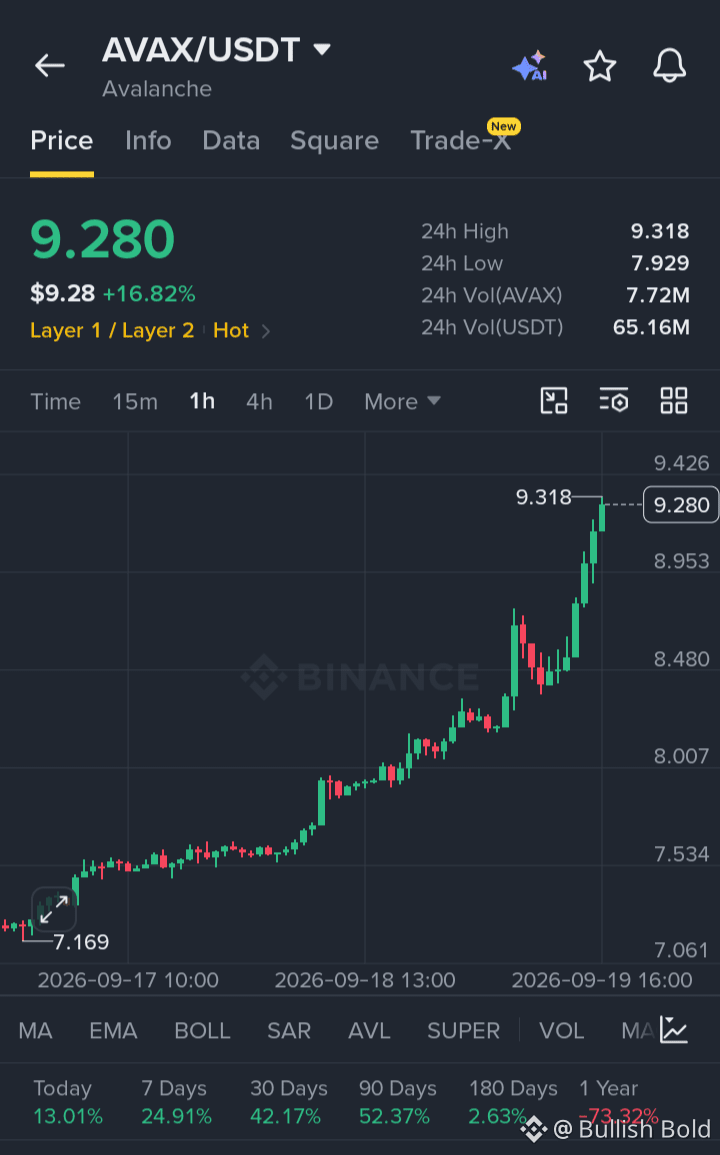
$AVAX is showing strong bullish momentum with aggressive upside expansion.
Buyers remain in control as price holds the breakout structure above key support.
Entry: 9.10 - 9.25
Stop: 8.85
Targets
→ 9.50
→ 9.80
→ 10.20
Liquidity has been swept above the recent highs, while strong buying reaction continues to support the bullish structure. Holding above 9.10 keeps momentum intact and leaves room for further expansion.
Click below to Take Trade
{future}(AVAXUSDT)
$AVAX is showing strong bullish momentum with aggressive upside expansion.
Buyers remain in control as price holds the breakout structure above key support.
Entry: 9.10 - 9.25
Stop: 8.85
Targets
→ 9.50
→ 9.80
→ 10.20
Liquidity has been swept above the recent highs, while strong buying reaction continues to support the bullish structure. Holding above 9.10 keeps momentum intact and leaves room for further expansion.
Click below to Take Trade
Buyers remain in control as price holds the breakout structure above key support.
Entry: 9.10 - 9.25
Stop: 8.85
Targets
→ 9.50
→ 9.80
→ 10.20
Liquidity has been swept above the recent highs, while strong buying reaction continues to support the bullish structure. Holding above 9.10 keeps momentum intact and leaves room for further expansion.
Click below to Take Trade
165
·
--
Bullish
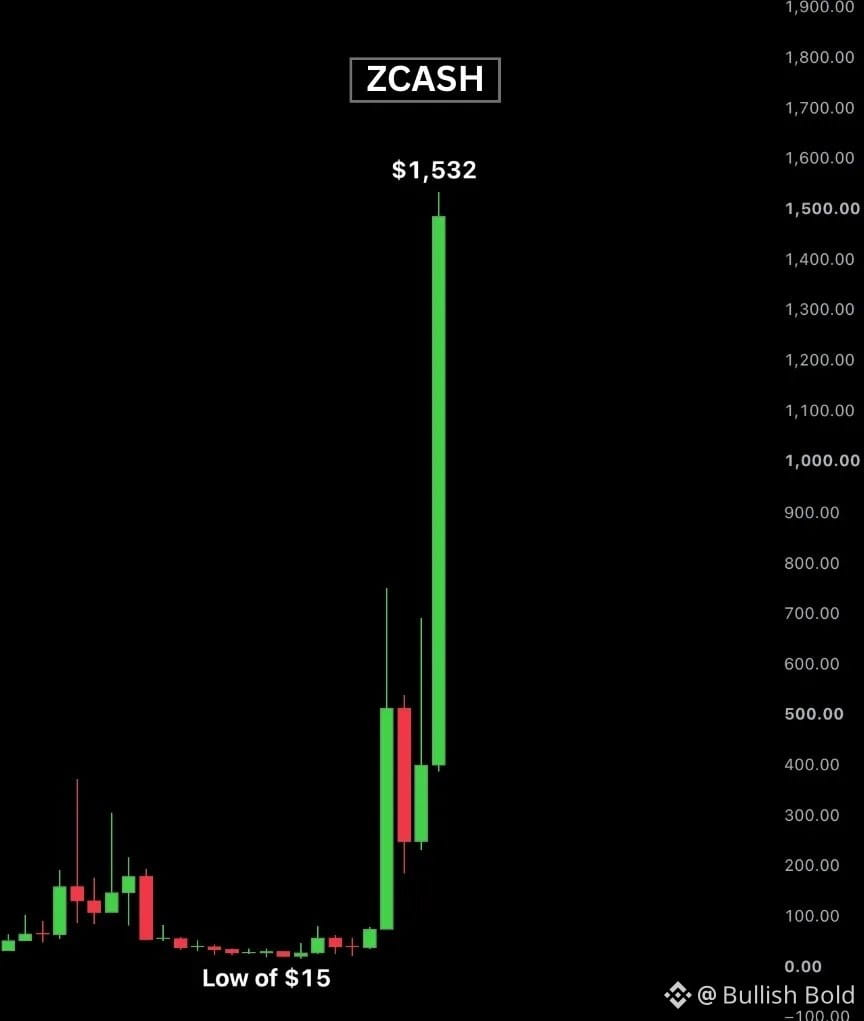
$ZEC has delivered a jaw-dropping move over the past two years.
A $10,400 investment made two years ago would now be worth more than $1 million.
That means ZEC climbed roughly 96x during the period, turning a relatively small position into a seven-figure sum.
Moves like this show how quickly crypto returns can compound when a token catches a major market wave.
The bigger question now: what comes next for ZEC?
$ZEC has delivered a jaw-dropping move over the past two years.
A $10,400 investment made two years ago would now be worth more than $1 million.
That means ZEC climbed roughly 96x during the period, turning a relatively small position into a seven-figure sum.
Moves like this show how quickly crypto returns can compound when a token catches a major market wave.
The bigger question now: what comes next for ZEC?
A $10,400 investment made two years ago would now be worth more than $1 million.
That means ZEC climbed roughly 96x during the period, turning a relatively small position into a seven-figure sum.
Moves like this show how quickly crypto returns can compound when a token catches a major market wave.
The bigger question now: what comes next for ZEC?
2
1k
·
--
Bullish
FOMC September: What’s The Fed’s Next Move?
The Fed decision is now the main macro event for markets, and this time the setup is particularly interesting.
August core CPI increased 0.3% month-over-month, while market expectations have moved strongly toward a 25-basis-point rate hike this week. The key question for me isn't only whether the Fed hikes, but what this decision tells us about the path ahead.
Is this simply a one-time move, or could it be the beginning of a longer tightening cycle?
A rate hike itself may already be partly reflected in prices, so the bigger reaction could come from the Fed's statement, projections and guidance on future policy.
If the Fed sounds more hawkish, higher yields and tighter financial conditions could put additional pressure on BTC and tech stocks, while the dollar and bond yields could become important signals to watch.
On the other hand, if the hike comes with a less aggressive message about future increases, risk assets could get some breathing room. Gold could also remain interesting as investors balance inflation concerns, rates and geopolitical uncertainty.
Bitcoin is currently trading around the $76K area, so I’m watching how BTC reacts after the decision rather than trying to predict the first candle.
Gold is also worth watching closely. XAUT is around the $4.3K area, and it has already shown strength ahead of the Fed decision.
For my next trade, I’m keeping XAUT on the radar through the volatility. The trade widget below shows the position I’m tracking.
My approach: no chasing the first move. I want to see whether the Fed's message confirms the initial market reaction, then manage risk accordingly.
The rate decision is one event.
The real signal may be what comes after it.
#FedRateWatch
FOMC September: What’s The Fed’s Next Move?
The Fed decision is now the main macro event for markets, and this time the setup is particularly interesting.
August core CPI increased 0.3% month-over-month, while market expectations have moved strongly toward a 25-basis-point rate hike this week. The key question for me isn't only whether the Fed hikes, but what this decision tells us about the path ahead.
Is this simply a one-time move, or could it be the beginning of a longer tightening cycle?
A rate hike itself may already be partly reflected in prices, so the bigger reaction could come from the Fed's statement, projections and guidance on future policy.
If the Fed sounds more hawkish, higher yields and tighter financial conditions could put additional pressure on BTC and tech stocks, while the dollar and bond yields could become important signals to watch.
On the other hand, if the hike comes with a less aggressive message about future increases, risk assets could get some breathing room. Gold could also remain interesting as investors balance inflation concerns, rates and geopolitical uncertainty.
Bitcoin is currently trading around the $76K area, so I’m watching how BTC reacts after the decision rather than trying to predict the first candle.
Gold is also worth watching closely. XAUT is around the $4.3K area, and it has already shown strength ahead of the Fed decision.
For my next trade, I’m keeping XAUT on the radar through the volatility. The trade widget below shows the position I’m tracking.
My approach: no chasing the first move. I want to see whether the Fed's message confirms the initial market reaction, then manage risk accordingly.
The rate decision is one event.
The real signal may be what comes after it.
#FedRateWatch
The Fed decision is now the main macro event for markets, and this time the setup is particularly interesting.
August core CPI increased 0.3% month-over-month, while market expectations have moved strongly toward a 25-basis-point rate hike this week. The key question for me isn't only whether the Fed hikes, but what this decision tells us about the path ahead.
Is this simply a one-time move, or could it be the beginning of a longer tightening cycle?
A rate hike itself may already be partly reflected in prices, so the bigger reaction could come from the Fed's statement, projections and guidance on future policy.
If the Fed sounds more hawkish, higher yields and tighter financial conditions could put additional pressure on BTC and tech stocks, while the dollar and bond yields could become important signals to watch.
On the other hand, if the hike comes with a less aggressive message about future increases, risk assets could get some breathing room. Gold could also remain interesting as investors balance inflation concerns, rates and geopolitical uncertainty.
Bitcoin is currently trading around the $76K area, so I’m watching how BTC reacts after the decision rather than trying to predict the first candle.
Gold is also worth watching closely. XAUT is around the $4.3K area, and it has already shown strength ahead of the Fed decision.
For my next trade, I’m keeping XAUT on the radar through the volatility. The trade widget below shows the position I’m tracking.
My approach: no chasing the first move. I want to see whether the Fed's message confirms the initial market reaction, then manage risk accordingly.
The rate decision is one event.
The real signal may be what comes after it.
#FedRateWatch

1
82
·
--
Bullish
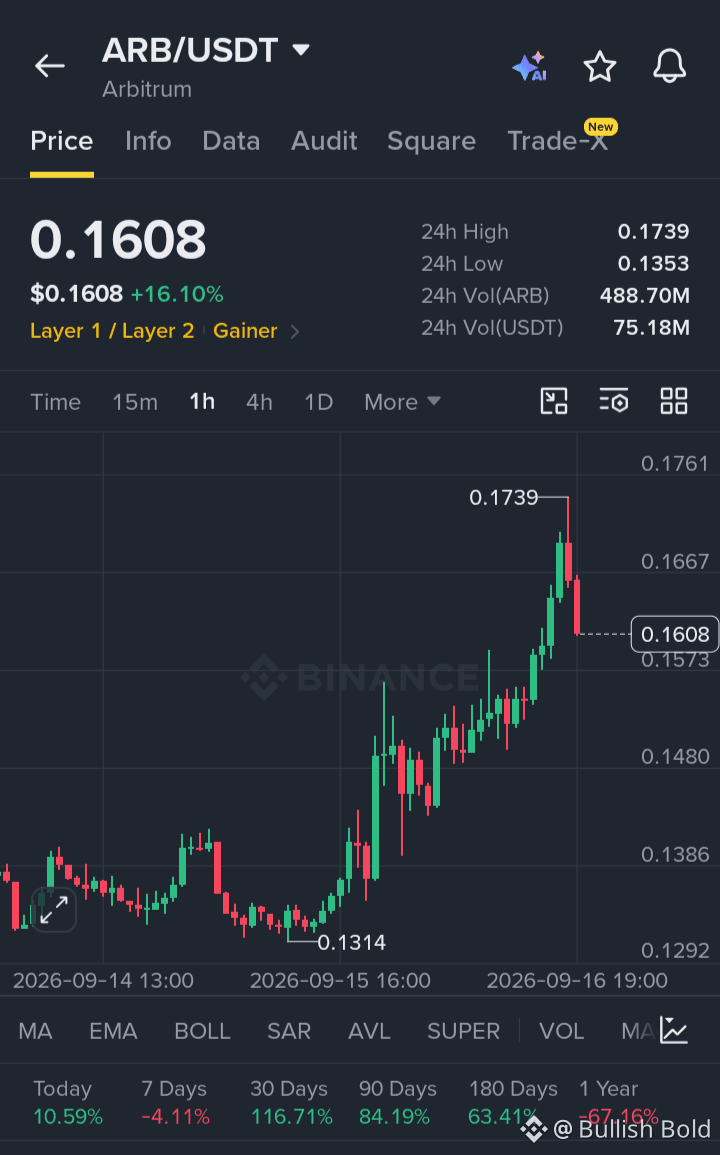
$ARB is showing strong bullish momentum with buyers pushing into fresh local highs.
Market structure remains bullish with control above the 0.1573 support zone.
Entry: 0.1580 - 0.1610
Stop: 0.1535
Targets
→ 0.1667
→ 0.1739
→ 0.1800
Liquidity is sitting below the recent breakout zone, while the reaction around 0.1573 will confirm whether buyers retain control. A clean hold of this structure can drive continuation toward the previous high and beyond.
Click below to Take Trade
{future}(ARBUSDT)
$ARB is showing strong bullish momentum with buyers pushing into fresh local highs.
Market structure remains bullish with control above the 0.1573 support zone.
Entry: 0.1580 - 0.1610
Stop: 0.1535
Targets
→ 0.1667
→ 0.1739
→ 0.1800
Liquidity is sitting below the recent breakout zone, while the reaction around 0.1573 will confirm whether buyers retain control. A clean hold of this structure can drive continuation toward the previous high and beyond.
Click below to Take Trade
Market structure remains bullish with control above the 0.1573 support zone.
Entry: 0.1580 - 0.1610
Stop: 0.1535
Targets
→ 0.1667
→ 0.1739
→ 0.1800
Liquidity is sitting below the recent breakout zone, while the reaction around 0.1573 will confirm whether buyers retain control. A clean hold of this structure can drive continuation toward the previous high and beyond.
Click below to Take Trade
349
·
--
Bullish
Big money is moving into crypto again.
BlackRock and other ETFs have bought $160.04 million worth of Bitcoin, alongside $121.02 million in Ethereum.
That puts nearly $281 million into the two largest crypto assets through these ETF purchases.
For me, the key signal is simple: institutional capital is still actively participating in the market.
Now the question is whether this buying pressure keeps building from here.
Big money is moving into crypto again.
BlackRock and other ETFs have bought $160.04 million worth of Bitcoin, alongside $121.02 million in Ethereum.
That puts nearly $281 million into the two largest crypto assets through these ETF purchases.
For me, the key signal is simple: institutional capital is still actively participating in the market.
Now the question is whether this buying pressure keeps building from here.
BlackRock and other ETFs have bought $160.04 million worth of Bitcoin, alongside $121.02 million in Ethereum.
That puts nearly $281 million into the two largest crypto assets through these ETF purchases.
For me, the key signal is simple: institutional capital is still actively participating in the market.
Now the question is whether this buying pressure keeps building from here.

159
·
--
Bullish
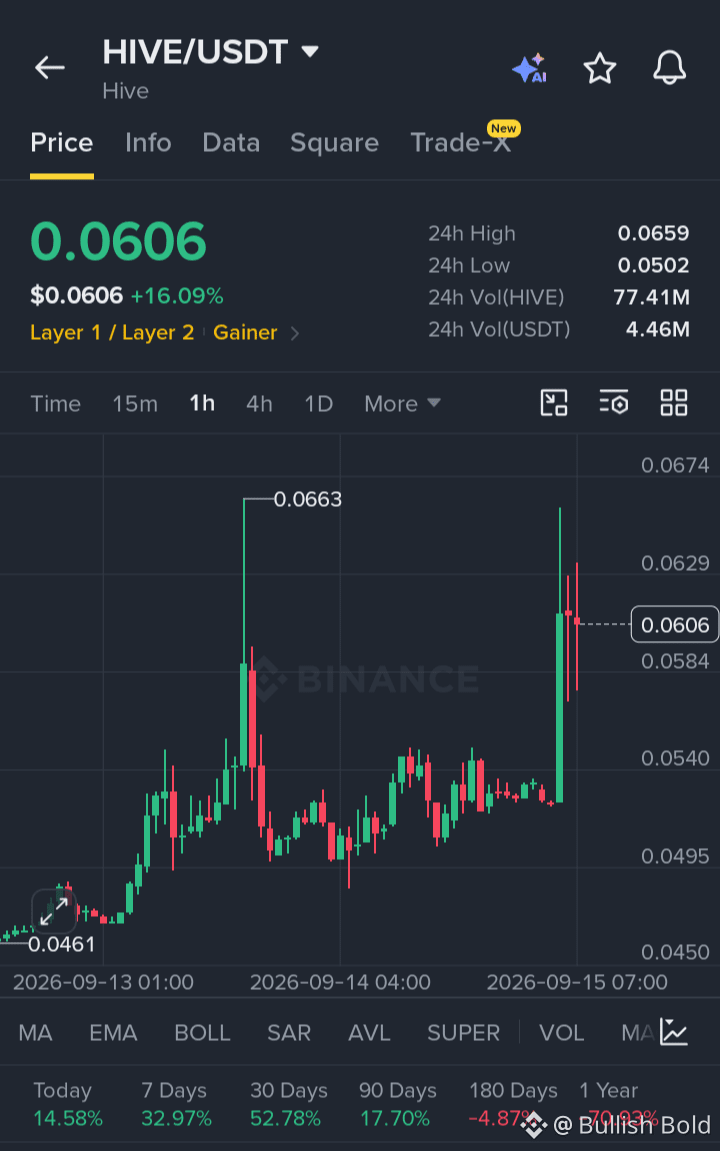
$HIVE is showing strong bullish momentum after an explosive breakout.
Buyers remain in control while the structure holds above the breakout zone.
Entry: 0.0584 - 0.0606
Stop: 0.0565
Targets
→ 0.0629
→ 0.0659
→ 0.0674
Liquidity has expanded sharply after the breakout, with price reacting strongly from the previous structure. Holding above 0.0584 keeps the bullish structure intact and opens room for another push into upper liquidity.
Click below to Take Trade
{future}(HIVEUSDT)
$HIVE is showing strong bullish momentum after an explosive breakout.
Buyers remain in control while the structure holds above the breakout zone.
Entry: 0.0584 - 0.0606
Stop: 0.0565
Targets
→ 0.0629
→ 0.0659
→ 0.0674
Liquidity has expanded sharply after the breakout, with price reacting strongly from the previous structure. Holding above 0.0584 keeps the bullish structure intact and opens room for another push into upper liquidity.
Click below to Take Trade
Buyers remain in control while the structure holds above the breakout zone.
Entry: 0.0584 - 0.0606
Stop: 0.0565
Targets
→ 0.0629
→ 0.0659
→ 0.0674
Liquidity has expanded sharply after the breakout, with price reacting strongly from the previous structure. Holding above 0.0584 keeps the bullish structure intact and opens room for another push into upper liquidity.
Click below to Take Trade
219
·
--
Bullish
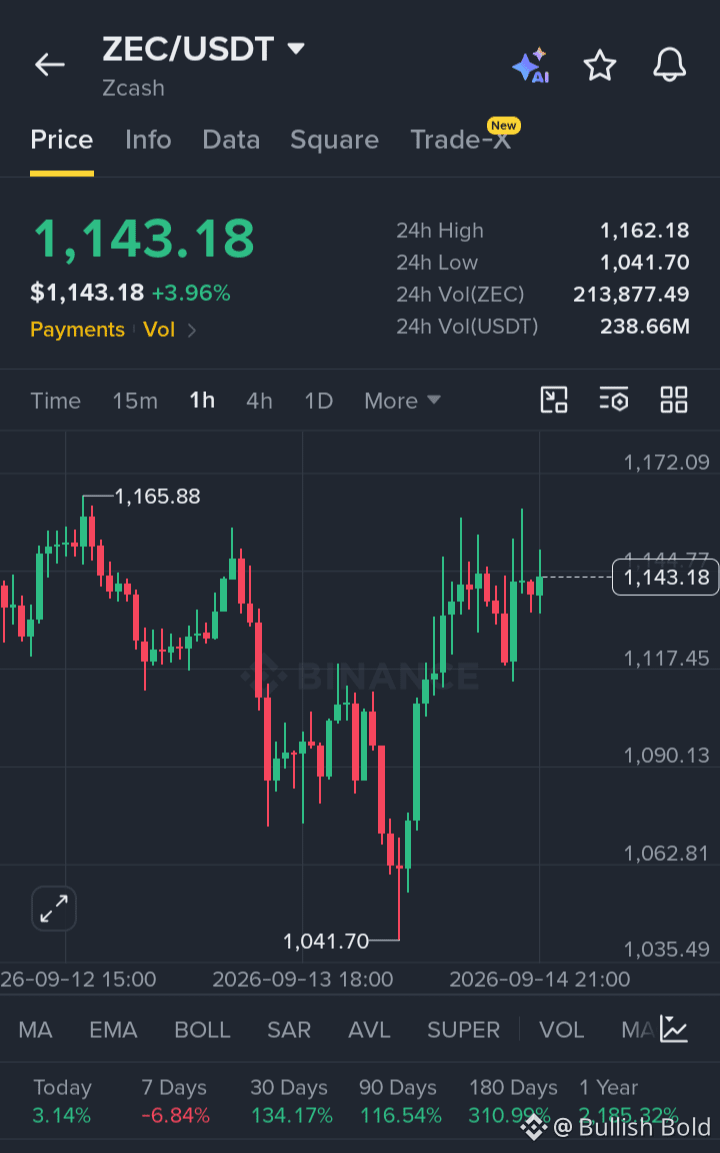
$ZEC is showing strong momentum after a sharp recovery from the lows.
ZEC structure remains bullish while buyers maintain control above key support.
Entry: 1,135 - 1,145
Stop: 1,115
Targets
→ 1,162
→ 1,180
→ 1,200
Liquidity is building above the recent highs while ZEC reacts strongly from the 1,117 support zone. Holding this structure keeps buyers in control and opens the path toward upper liquidity.
Click below to Take Trade
{future}(ZECUSDT)
$ZEC is showing strong momentum after a sharp recovery from the lows.
ZEC structure remains bullish while buyers maintain control above key support.
Entry: 1,135 - 1,145
Stop: 1,115
Targets
→ 1,162
→ 1,180
→ 1,200
Liquidity is building above the recent highs while ZEC reacts strongly from the 1,117 support zone. Holding this structure keeps buyers in control and opens the path toward upper liquidity.
Click below to Take Trade
ZEC structure remains bullish while buyers maintain control above key support.
Entry: 1,135 - 1,145
Stop: 1,115
Targets
→ 1,162
→ 1,180
→ 1,200
Liquidity is building above the recent highs while ZEC reacts strongly from the 1,117 support zone. Holding this structure keeps buyers in control and opens the path toward upper liquidity.
Click below to Take Trade
240
·
--
Bullish
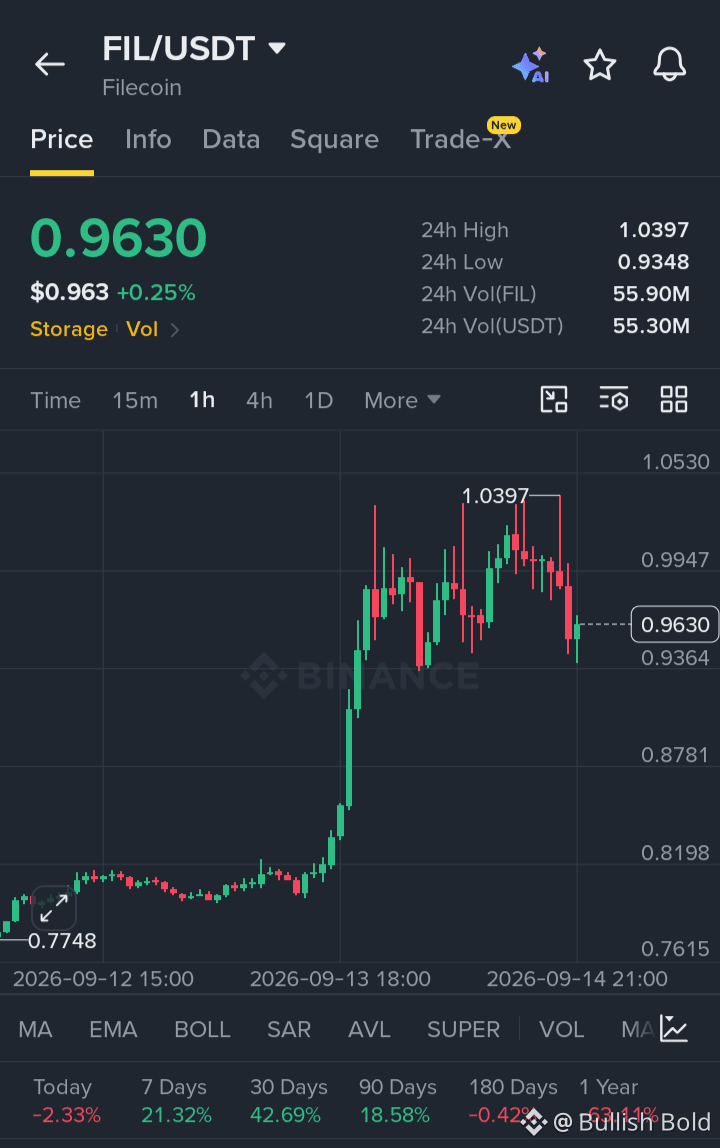
$FIL is showing strong momentum after an aggressive expansion from the lows.
FIL structure remains bullish while buyers defend the key support zone.
Entry: 0.9550 - 0.9650
Stop: 0.9320
Targets
→ 0.9947
→ 1.0200
→ 1.0397
Liquidity is building above the recent highs while FIL reacts strongly from the 0.9364 support zone. Holding this structure keeps buyers in control and opens the path toward upper liquidity.
Click below to Take Trade
{future}(FILUSDT)
$FIL is showing strong momentum after an aggressive expansion from the lows.
FIL structure remains bullish while buyers defend the key support zone.
Entry: 0.9550 - 0.9650
Stop: 0.9320
Targets
→ 0.9947
→ 1.0200
→ 1.0397
Liquidity is building above the recent highs while FIL reacts strongly from the 0.9364 support zone. Holding this structure keeps buyers in control and opens the path toward upper liquidity.
Click below to Take Trade
FIL structure remains bullish while buyers defend the key support zone.
Entry: 0.9550 - 0.9650
Stop: 0.9320
Targets
→ 0.9947
→ 1.0200
→ 1.0397
Liquidity is building above the recent highs while FIL reacts strongly from the 0.9364 support zone. Holding this structure keeps buyers in control and opens the path toward upper liquidity.
Click below to Take Trade
1
344
·
--
Bullish
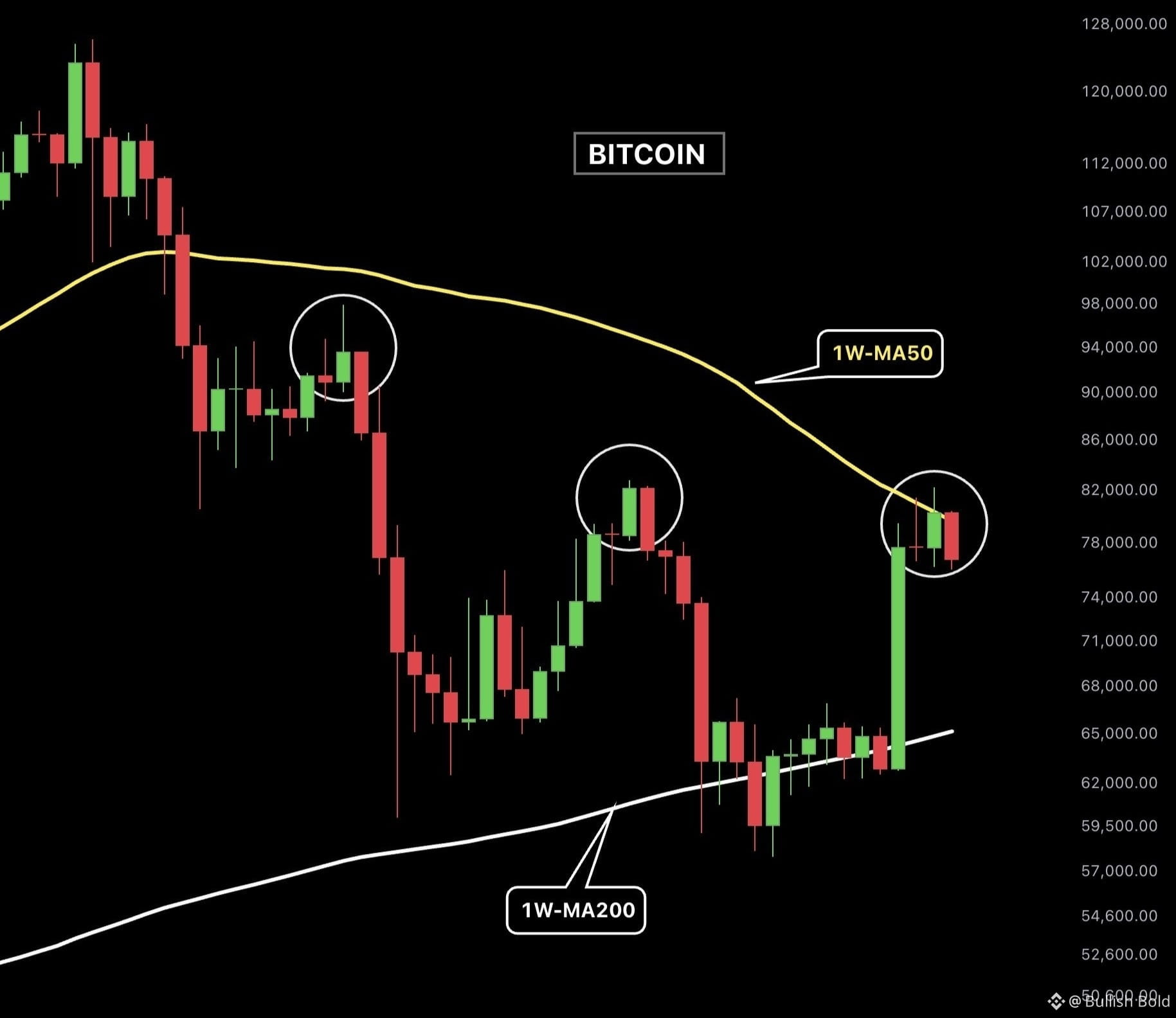
Bitcoin just hit a critical weekly barrier — and sellers pushed back.
$BTC was rejected at the 50-week MA. A weekly close back above it could strengthen the case that $57K marked the bottom and the bull market is truly underway.
The warning sign? The previous two rejections from this area were followed by major crashes.
If Bitcoin closes below the 50W MA again, attention shifts to the 200W MA near $65K.
This weekly close could shape the next big move.
Bitcoin just hit a critical weekly barrier — and sellers pushed back.
$BTC was rejected at the 50-week MA. A weekly close back above it could strengthen the case that $57K marked the bottom and the bull market is truly underway.
The warning sign? The previous two rejections from this area were followed by major crashes.
If Bitcoin closes below the 50W MA again, attention shifts to the 200W MA near $65K.
This weekly close could shape the next big move.
$BTC was rejected at the 50-week MA. A weekly close back above it could strengthen the case that $57K marked the bottom and the bull market is truly underway.
The warning sign? The previous two rejections from this area were followed by major crashes.
If Bitcoin closes below the 50W MA again, attention shifts to the 200W MA near $65K.
This weekly close could shape the next big move.
99
·
--
Bullish
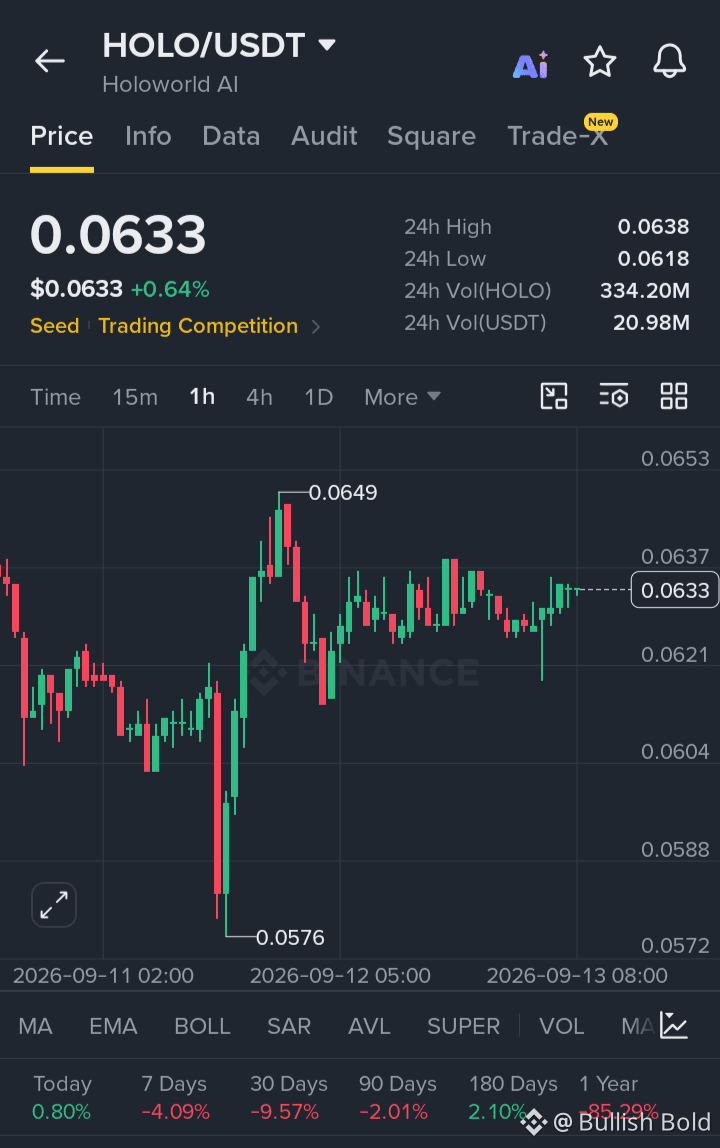
$HOLO is showing steady strength with buyers defending the recovery.
Structure remains bullish while buyers maintain control above the support zone.
Entry: 0.0625 - 0.0634
Stop: 0.0615
Targets
→ 0.0638
→ 0.0649
→ 0.0660
Liquidity remains concentrated above resistance, and the reaction from 0.0618 shows strong demand after the pullback. Holding the structure above 0.0615 keeps continuation pressure intact.
Click below to Take Trade
{future}(HOLOUSDT)
$HOLO is showing steady strength with buyers defending the recovery.
Structure remains bullish while buyers maintain control above the support zone.
Entry: 0.0625 - 0.0634
Stop: 0.0615
Targets
→ 0.0638
→ 0.0649
→ 0.0660
Liquidity remains concentrated above resistance, and the reaction from 0.0618 shows strong demand after the pullback. Holding the structure above 0.0615 keeps continuation pressure intact.
Click below to Take Trade
Structure remains bullish while buyers maintain control above the support zone.
Entry: 0.0625 - 0.0634
Stop: 0.0615
Targets
→ 0.0638
→ 0.0649
→ 0.0660
Liquidity remains concentrated above resistance, and the reaction from 0.0618 shows strong demand after the pullback. Holding the structure above 0.0615 keeps continuation pressure intact.
Click below to Take Trade
1
307
·
--
Bullish
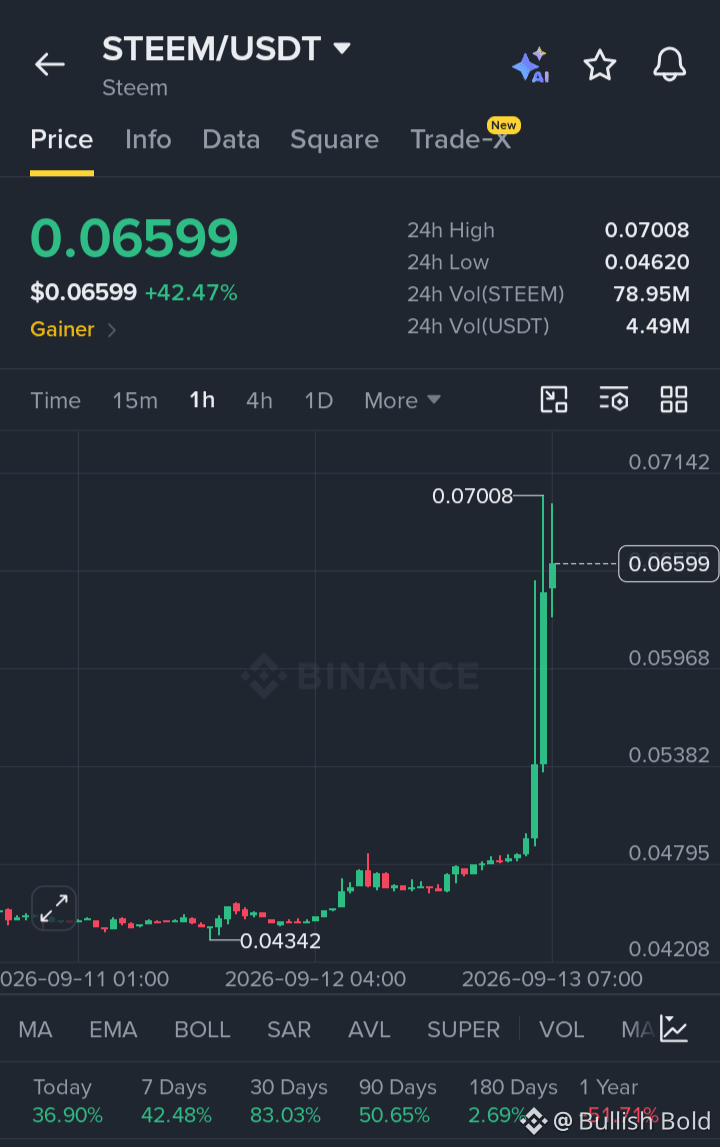
$STEEM is showing explosive strength with momentum firmly on the upside.
Structure remains bullish while buyers maintain control above the breakout zone.
Entry: 0.0630 - 0.0660
Stop: 0.0595
Targets
→ 0.0700
→ 0.0740
→ 0.0800
Liquidity expanded sharply through resistance, and the reaction near 0.07008 shows active profit-taking after the impulse. Holding the breakout structure above 0.0595 keeps continuation pressure intact.
Click below to Take Trade
{future}(STEEMUSDT)
$STEEM is showing explosive strength with momentum firmly on the upside.
Structure remains bullish while buyers maintain control above the breakout zone.
Entry: 0.0630 - 0.0660
Stop: 0.0595
Targets
→ 0.0700
→ 0.0740
→ 0.0800
Liquidity expanded sharply through resistance, and the reaction near 0.07008 shows active profit-taking after the impulse. Holding the breakout structure above 0.0595 keeps continuation pressure intact.
Click below to Take Trade
Structure remains bullish while buyers maintain control above the breakout zone.
Entry: 0.0630 - 0.0660
Stop: 0.0595
Targets
→ 0.0700
→ 0.0740
→ 0.0800
Liquidity expanded sharply through resistance, and the reaction near 0.07008 shows active profit-taking after the impulse. Holding the breakout structure above 0.0595 keeps continuation pressure intact.
Click below to Take Trade
115
·
--
Bullish
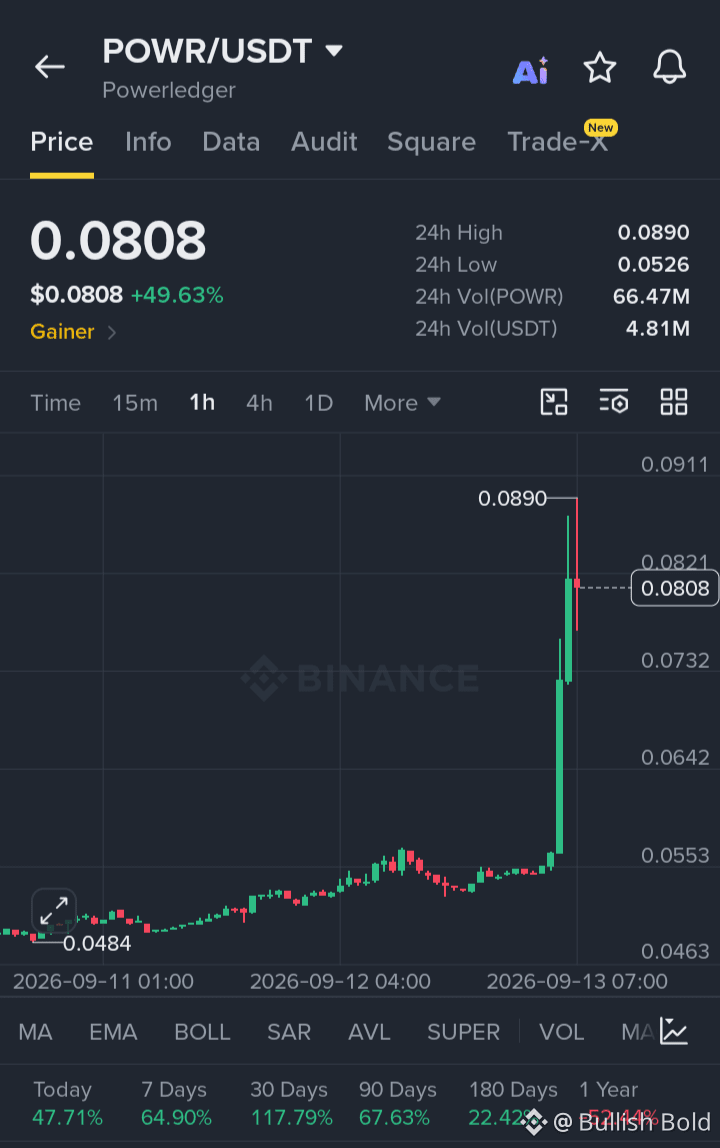
$POWR is showing explosive strength with momentum firmly on the upside.
Structure remains bullish while buyers maintain control above the breakout zone.
Entry: 0.0780 - 0.0810
Stop: 0.0730
Targets
→ 0.0850
→ 0.0890
→ 0.0950
Liquidity expanded sharply through resistance, and the reaction near 0.0890 shows active profit-taking after the impulse. Holding the breakout structure above 0.0730 keeps continuation pressure intact.
Click below to Take Trade
{future}(POWRUSDT)
$POWR is showing explosive strength with momentum firmly on the upside.
Structure remains bullish while buyers maintain control above the breakout zone.
Entry: 0.0780 - 0.0810
Stop: 0.0730
Targets
→ 0.0850
→ 0.0890
→ 0.0950
Liquidity expanded sharply through resistance, and the reaction near 0.0890 shows active profit-taking after the impulse. Holding the breakout structure above 0.0730 keeps continuation pressure intact.
Click below to Take Trade
Structure remains bullish while buyers maintain control above the breakout zone.
Entry: 0.0780 - 0.0810
Stop: 0.0730
Targets
→ 0.0850
→ 0.0890
→ 0.0950
Liquidity expanded sharply through resistance, and the reaction near 0.0890 shows active profit-taking after the impulse. Holding the breakout structure above 0.0730 keeps continuation pressure intact.
Click below to Take Trade
108
·
--
Bullish
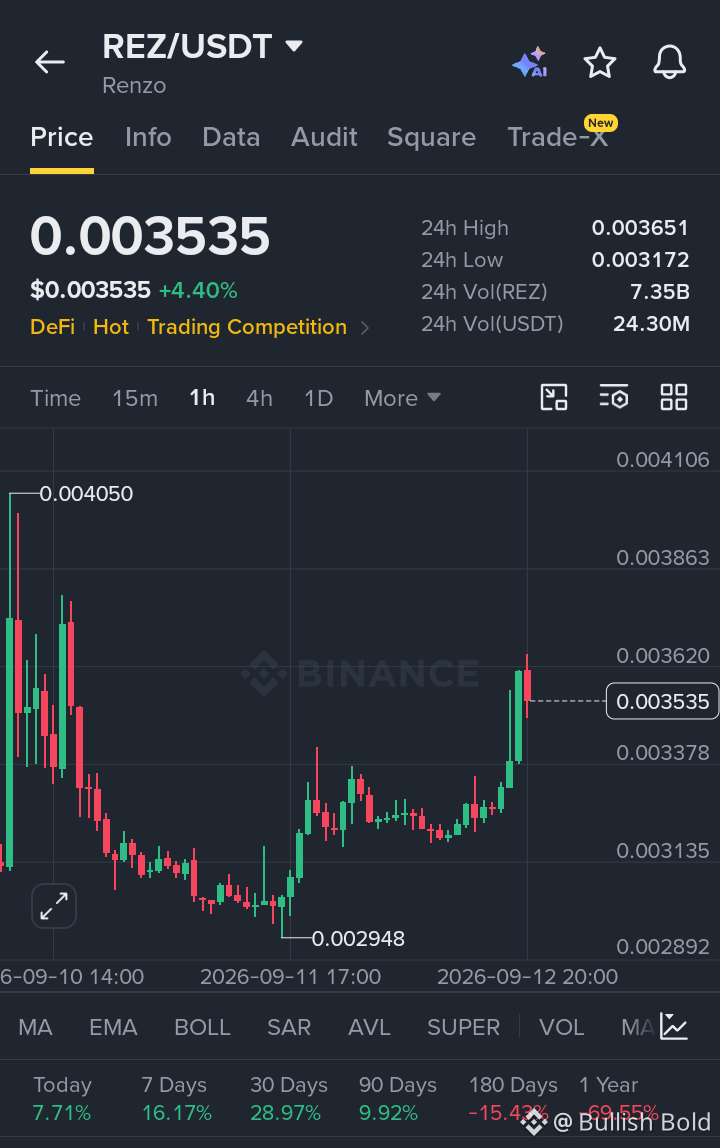
$REZ is showing strong bullish momentum with buyers pushing price aggressively toward resistance.
The structure remains bullish while REZ holds above the recent breakout zone.
Entry: 0.00348 - 0.00354
Stop: 0.00334
Targets
→ 0.00365
→ 0.00386
→ 0.00405
Liquidity is building above the recent high, while the reaction from lower levels confirms strong demand. Holding the breakout structure keeps buyers in control and opens room for continuation toward higher liquidity zones.
Click below to Take Trade
{future}(REZUSDT)
$REZ is showing strong bullish momentum with buyers pushing price aggressively toward resistance.
The structure remains bullish while REZ holds above the recent breakout zone.
Entry: 0.00348 - 0.00354
Stop: 0.00334
Targets
→ 0.00365
→ 0.00386
→ 0.00405
Liquidity is building above the recent high, while the reaction from lower levels confirms strong demand. Holding the breakout structure keeps buyers in control and opens room for continuation toward higher liquidity zones.
Click below to Take Trade
The structure remains bullish while REZ holds above the recent breakout zone.
Entry: 0.00348 - 0.00354
Stop: 0.00334
Targets
→ 0.00365
→ 0.00386
→ 0.00405
Liquidity is building above the recent high, while the reaction from lower levels confirms strong demand. Holding the breakout structure keeps buyers in control and opens room for continuation toward higher liquidity zones.
Click below to Take Trade
183
·
--
Bullish
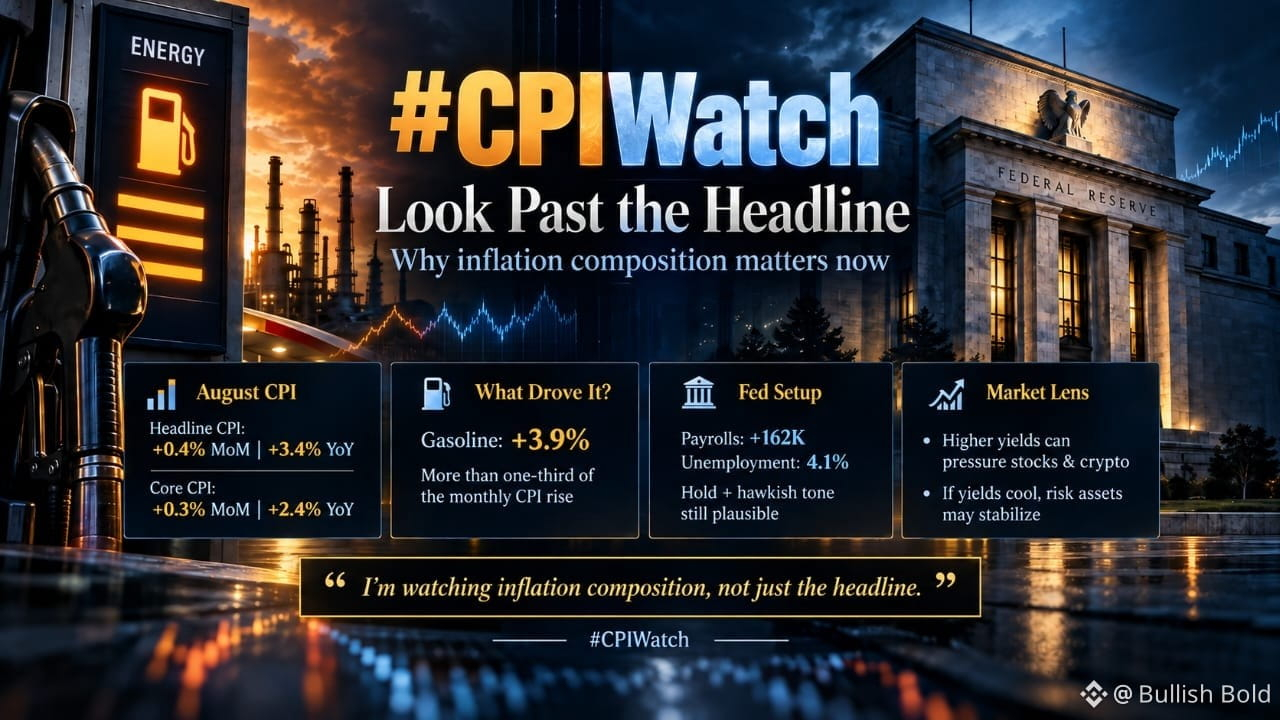
The headline CPI looks hot, but I’m more interested in what’s underneath it.
August CPI rose 0.4% MoM and 3.4% YoY, yet gasoline alone jumped 3.9% and accounted for more than a third of the monthly increase. Core CPI was firmer at 0.3% MoM, but eased to 2.4% YoY. That distinction matters before the next Fed decision.
Add 162K new payrolls and 4.1% unemployment, and the Fed still has room to stay restrictive. My take: this data does not automatically force a hike. A hold with a hawkish message still looks plausible.
For markets, I’m neutral-to-cautious. If yields keep climbing, stocks and crypto may stay under pressure. If yields fail to confirm the inflation scare, risk assets could stabilize quickly.
I’m watching the composition of inflation, not just the headline number.
What matters more now: energy-driven CPI or sticky core inflation?
#CPIWatch
The headline CPI looks hot, but I’m more interested in what’s underneath it.
August CPI rose 0.4% MoM and 3.4% YoY, yet gasoline alone jumped 3.9% and accounted for more than a third of the monthly increase. Core CPI was firmer at 0.3% MoM, but eased to 2.4% YoY. That distinction matters before the next Fed decision.
Add 162K new payrolls and 4.1% unemployment, and the Fed still has room to stay restrictive. My take: this data does not automatically force a hike. A hold with a hawkish message still looks plausible.
For markets, I’m neutral-to-cautious. If yields keep climbing, stocks and crypto may stay under pressure. If yields fail to confirm the inflation scare, risk assets could stabilize quickly.
I’m watching the composition of inflation, not just the headline number.
What matters more now: energy-driven CPI or sticky core inflation?
#CPIWatch
August CPI rose 0.4% MoM and 3.4% YoY, yet gasoline alone jumped 3.9% and accounted for more than a third of the monthly increase. Core CPI was firmer at 0.3% MoM, but eased to 2.4% YoY. That distinction matters before the next Fed decision.
Add 162K new payrolls and 4.1% unemployment, and the Fed still has room to stay restrictive. My take: this data does not automatically force a hike. A hold with a hawkish message still looks plausible.
For markets, I’m neutral-to-cautious. If yields keep climbing, stocks and crypto may stay under pressure. If yields fail to confirm the inflation scare, risk assets could stabilize quickly.
I’m watching the composition of inflation, not just the headline number.
What matters more now: energy-driven CPI or sticky core inflation?
#CPIWatch
194
·
--
Bullish
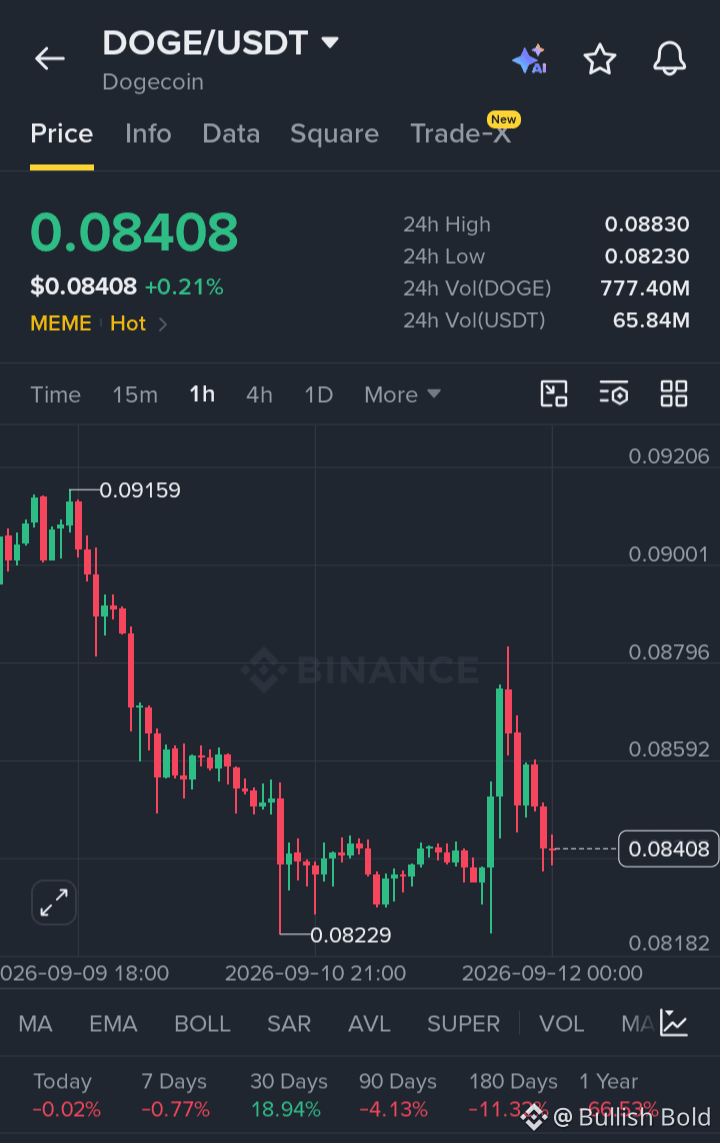
$DOGE is showing strong recovery potential after defending major liquidity near 0.08229.
Buyers remain in control while the rebound structure holds above key support.
Entry: 0.08380 - 0.08420
Stop: 0.08220
Targets
→ 0.08592
→ 0.08796
→ 0.09001
Liquidity is building above the recent reaction highs, while buyers continue defending the lower structure. Holding the entry zone keeps bullish continuation in focus.
Click below to Take Trade
{future}(DOGEUSDT)
$DOGE is showing strong recovery potential after defending major liquidity near 0.08229.
Buyers remain in control while the rebound structure holds above key support.
Entry: 0.08380 - 0.08420
Stop: 0.08220
Targets
→ 0.08592
→ 0.08796
→ 0.09001
Liquidity is building above the recent reaction highs, while buyers continue defending the lower structure. Holding the entry zone keeps bullish continuation in focus.
Click below to Take Trade
Buyers remain in control while the rebound structure holds above key support.
Entry: 0.08380 - 0.08420
Stop: 0.08220
Targets
→ 0.08592
→ 0.08796
→ 0.09001
Liquidity is building above the recent reaction highs, while buyers continue defending the lower structure. Holding the entry zone keeps bullish continuation in focus.
Click below to Take Trade
215
·
--
Bullish
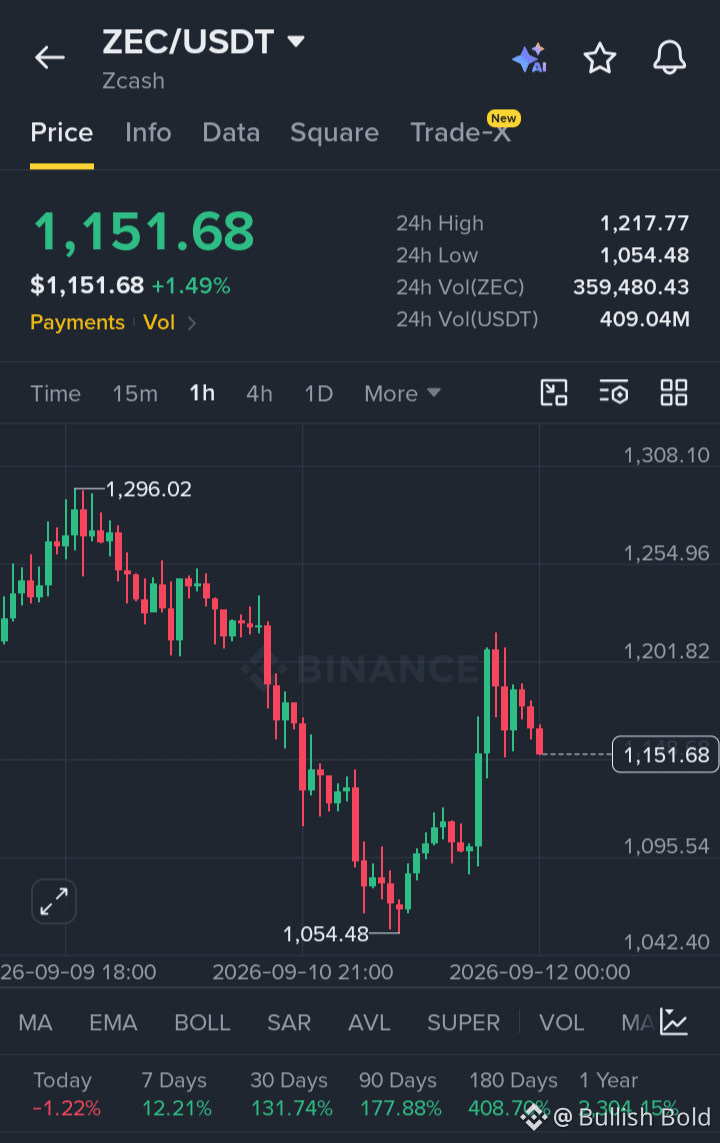
$ZEC is showing strong recovery momentum after defending major liquidity at 1,054.48.
Buyers remain in control while the rebound structure holds above reclaimed support.
Entry: 1,140 - 1,155
Stop: 1,120
Targets
→ 1,180
→ 1,201
→ 1,217
Liquidity is building above the recent reaction highs, while buyers continue defending the recovery structure. Holding the entry zone keeps bullish continuation in focus.
Click below to Take Trade
{future}(ZECUSDT)
$ZEC is showing strong recovery momentum after defending major liquidity at 1,054.48.
Buyers remain in control while the rebound structure holds above reclaimed support.
Entry: 1,140 - 1,155
Stop: 1,120
Targets
→ 1,180
→ 1,201
→ 1,217
Liquidity is building above the recent reaction highs, while buyers continue defending the recovery structure. Holding the entry zone keeps bullish continuation in focus.
Click below to Take Trade
Buyers remain in control while the rebound structure holds above reclaimed support.
Entry: 1,140 - 1,155
Stop: 1,120
Targets
→ 1,180
→ 1,201
→ 1,217
Liquidity is building above the recent reaction highs, while buyers continue defending the recovery structure. Holding the entry zone keeps bullish continuation in focus.
Click below to Take Trade
197
·
--
Bullish
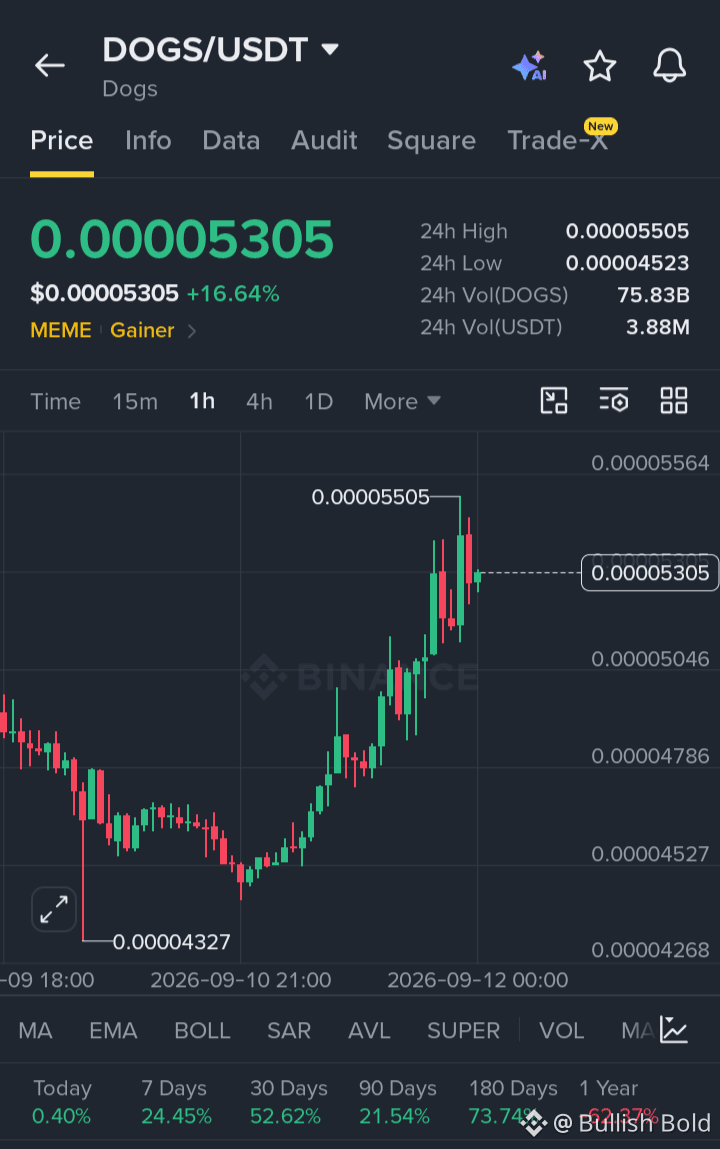
$DOGS is showing strong bullish momentum after a sharp breakout.
Buyers remain in control while the higher-high structure stays intact.
Entry: 0.00005220 - 0.00005310
Stop: 0.00005040
Targets
→ 0.00005505
→ 0.00005750
→ 0.00006000
Liquidity is building above the recent high, while pullback reactions continue to defend the breakout structure. Holding the entry zone keeps bullish continuation in focus.
Click below to Take Trade
{future}(DOGSUSDT)
$DOGS is showing strong bullish momentum after a sharp breakout.
Buyers remain in control while the higher-high structure stays intact.
Entry: 0.00005220 - 0.00005310
Stop: 0.00005040
Targets
→ 0.00005505
→ 0.00005750
→ 0.00006000
Liquidity is building above the recent high, while pullback reactions continue to defend the breakout structure. Holding the entry zone keeps bullish continuation in focus.
Click below to Take Trade
Buyers remain in control while the higher-high structure stays intact.
Entry: 0.00005220 - 0.00005310
Stop: 0.00005040
Targets
→ 0.00005505
→ 0.00005750
→ 0.00006000
Liquidity is building above the recent high, while pullback reactions continue to defend the breakout structure. Holding the entry zone keeps bullish continuation in focus.
Click below to Take Trade
1
374
·
--
Bullish
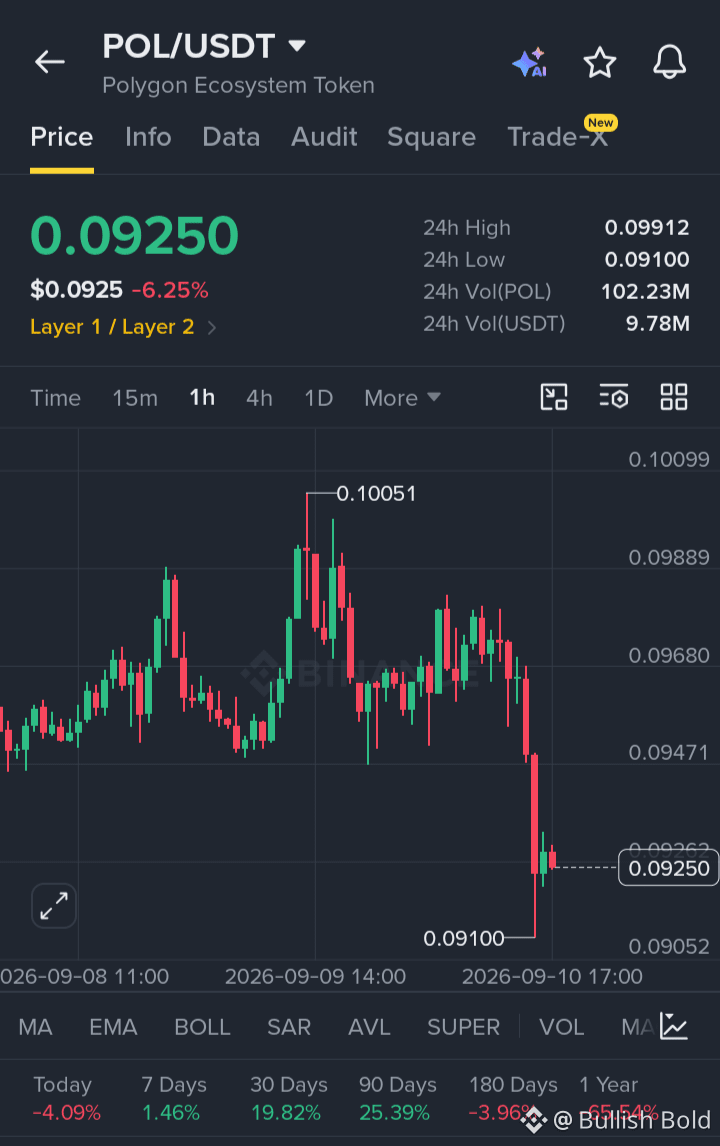
$POL is showing strong reaction strength after sweeping the local lows.
Price structure confirms buyers are attempting to regain control above the liquidity zone.
Entry: 0.0920–0.0926
Stop: 0.0908
Targets
→ 0.0947
→ 0.0968
→ 0.0991
Liquidity was swept near 0.0910 before a sharp reaction pushed POL back above the lows. Price is now testing the breakdown structure, and holding this zone keeps upside liquidity around 0.0947–0.0991 in focus.
Click below to Take Trade
{future}(POLUSDT)
$POL is showing strong reaction strength after sweeping the local lows.
Price structure confirms buyers are attempting to regain control above the liquidity zone.
Entry: 0.0920–0.0926
Stop: 0.0908
Targets
→ 0.0947
→ 0.0968
→ 0.0991
Liquidity was swept near 0.0910 before a sharp reaction pushed POL back above the lows. Price is now testing the breakdown structure, and holding this zone keeps upside liquidity around 0.0947–0.0991 in focus.
Click below to Take Trade
Price structure confirms buyers are attempting to regain control above the liquidity zone.
Entry: 0.0920–0.0926
Stop: 0.0908
Targets
→ 0.0947
→ 0.0968
→ 0.0991
Liquidity was swept near 0.0910 before a sharp reaction pushed POL back above the lows. Price is now testing the breakdown structure, and holding this zone keeps upside liquidity around 0.0947–0.0991 in focus.
Click below to Take Trade
134
Log in to explore more content
Join global crypto users on Binance Square
⚡️ Get latest and useful information about crypto.
💬 Trusted by the world’s largest crypto exchange.
👍 Discover real insights from verified creators.
Email / Phone number
Trending Topics
BOJRaisesRatesTo31YearHigh
149,596 views
2,314 Discussing
#BOJRaisesRatesTo31YearHigh
#BOJRaisesRatesTo31YearHigh 🇯🇵📈
The Bank of Japan has taken another major step by raising interest rates to their highest level in 31 years, putting global markets on alert. The move signals a continued shift away from Japan’s long-standing ultra-loose monetary policy. Higher Japanese rates could strengthen the yen, influence global bond yields, and potentially impact capital flows across financial markets. Crypto and risk assets may also react as investors reassess liquidity and risk exposure. Traders are now watching the BOJ’s next statements closely for clues about future rate decisions. Volatility could increase as markets digest the policy change and its potential global impact. #BOJ #Japan #Crypto #Markets #InterestRates $NVDAB
maqsoodahmed1
·1 Likes
·257 views
BuffettStepsDownAsBerkshireChairman
70,939 views
1,176 Discussing
XRPExchangeReservesHitSevenYearLow
78,050 views
1,062 Discussing