As I see it, Midnight Network stands out because it does not treat privacy as an afterthought.
It uses zero-knowledge proofs to let people and institutions prove that an action is valid without exposing the underlying data.
What interests me most is how it connects utility with ownership, allowing verification, smart contract use, and coordination while keeping sensitive information protected.
To myself, it feels less like secrecy for its own sake and more like a serious redesign of trust.
Midnight Network: Privacy-Preserving Utility on the Blockchain
I do not find Midnight interesting because it calls itself private. Crypto has produced no shortage of projects that wrap themselves in the language of secrecy, confidentiality, or anonymity. Most of them, in my view, stop at the surface. They promise concealment, but they do not seriously rethink the deeper architecture of trust. What drew me to Midnight was something more substantial. The project appears to ask a harder question: can a blockchain preserve verifiability without forcing people, institutions, and applications into unnecessary exposure? That question matters more than the usual blockchain marketing vocabulary. For years, the industry has acted as if transparency and trust are inseparable, as though public visibility were the only honest basis for coordination. I have never found that assumption fully convincing. In the real world, many of the most important forms of human activity depend on limited disclosure, not total openness. A patient should not have to expose medical records to prove entitlement to care. A business should not have to reveal commercially sensitive information to demonstrate compliance. A citizen should not have to surrender their entire history to establish that they satisfy a rule. Midnight, as I understand it, is trying to build for that overlooked middle ground. What makes the network worth studying is that it does not simply advocate privacy in the abstract. It proposes a technical and economic structure in which privacy becomes the default condition, while disclosure becomes something deliberate, selective, and context-dependent. This is why I resist calling it merely a privacy blockchain. That phrase is too blunt. Midnight is better understood as a system for controlled revelation. It is not interested in hiding everything. It is interested in making visibility proportionate. I think that distinction is the intellectual heart of the project. Too much writing about blockchain privacy collapses into a crude binary: either everything is visible, or everything is hidden. Midnight seems to reject that binary. In its place, it advances a more realistic social model, one that reflects how trust actually works outside crypto. In most institutional and human settings, what matters is not maximal disclosure. What matters is sufficient proof. That is a very different standard. It asks not, “Can everyone see all the underlying data?” but rather, “Can the relevant parties be satisfied that the relevant rule has been met?” Midnight’s architecture appears to take that second question seriously. From my perspective, this is why the network feels more mature than many earlier privacy efforts. It does not romanticize secrecy for its own sake. It treats privacy as an infrastructural condition for dignity, fairness, and legitimate coordination. I find that approach more persuasive than the older privacy narratives that were centered almost entirely on anonymity as an ideological endpoint. Midnight seems more concerned with what I would call disciplined confidentiality: the ability to retain control over information while still participating in systems of shared trust. The smart-contract model is one of the clearest expressions of this philosophy. On conventional public chains, the logic is brutally simple. State is public, execution is public, and observation is public. Developers build under the assumption that exposure is normal. Midnight appears to break that habit. It separates what must be visible to everyone from what can remain confidential while still being proven correct. I think this is one of the project’s most important moves, because it reframes blockchain design at the level of first principles. When I look at this structure, I do not just see a technical trick. I see a shift in legal, ethical, and institutional imagination. It asks the builder to think carefully: what truly belongs in public consensus, and what belongs in protected local or private computation? That question is rarely asked with enough seriousness in blockchain design. Too often, systems reveal data simply because the architecture was not subtle enough to do otherwise. Midnight seems to insist on subtlety. That insistence is inseparable from zero-knowledge proofs. Yet even here, I think the project deserves to be understood more carefully. Many blockchains now claim some connection to zero-knowledge technology. The phrase has become fashionable enough that it can lose explanatory value. In Midnight’s case, however, the proof system does not feel ornamental. It feels structural. The proof is what allows the network to accept the validity of an action without demanding full access to the underlying information. In other words, proof is the mechanism through which privacy and consensus are reconciled. I find this especially compelling because it addresses a problem that has long haunted digital systems: how to establish public confidence in processes that cannot ethically or commercially be made fully public. This problem extends far beyond crypto. It touches healthcare, finance, identity, governance, and increasingly artificial intelligence. Midnight’s model suggests that blockchain can play a role in these domains not by exposing everything, but by anchoring verifiable claims that emerge from protected environments. That is a much more ambitious use of distributed infrastructure than the familiar story of transparent token transfers. Another aspect that stands out to me is the project’s effort to make this complexity programmable for ordinary developers. In my experience, many technically sophisticated blockchain systems fail at the point where human beings must actually build with them. Elegant research does not automatically become viable infrastructure. Midnight’s use of a domain-specific language and its effort to bring privacy-preserving development into a more accessible workflow suggest that the team understands this. I think that matters enormously. A privacy system can be mathematically brilliant and still remain marginal if it requires every builder to think like a cryptographer. Midnight appears to be attempting something more practical. It is trying to absorb some of the cryptographic burden into the platform itself, so that developers can work closer to familiar programming habits while still producing applications with meaningful confidentiality properties. Whether that vision will fully hold at scale remains to be seen, but I regard the attempt as strategically sound. The future of privacy-preserving infrastructure will not be secured by theory alone. It will depend on whether competent developers can build useful things without drowning in complexity. I also think Midnight’s hybrid transaction and state philosophy deserves more recognition than it usually gets. Blockchain communities often become strangely theological about ledger models. One side defends UTXOs. Another defends account-based systems. Midnight appears less interested in purity than in suitability. It seems willing to draw from multiple traditions in order to support both confidential asset handling and more expressive application logic. I respect that choice. It suggests an engineering culture focused on adequacy rather than doctrine. In my reading, this flexibility is important because the world does not present one uniform category of digital action. A governance mechanism, a financial transfer, a credential system, and a privacy-sensitive marketplace do not all have the same architectural needs. Midnight’s refusal to collapse them into one rigid state model may prove to be one of its more durable advantages. It gives the network a wider conceptual range. Instead of asking every use case to submit to a predetermined metaphysics of transaction design, it allows different forms of logic to coexist. The economic model deepens this impression. I find the NIGHT and DUST structure unusually thoughtful. Most blockchain systems rely on a single-token logic in which governance, speculation, fee payment, and utility are entangled. Midnight separates these functions. NIGHT serves as the primary utility and governance token, while DUST acts as the resource consumed for computation and execution. What interests me is not only the duality itself, but the philosophy behind it. The system seems designed to make network usage feel less like constant extraction and more like provisioned capacity. This matters because user experience in blockchain is still shaped by ritualized friction. Before a person can do anything meaningful, they often need to acquire the right token, manage fee volatility, and treat every small interaction as a priced event. Midnight’s resource model appears to resist that pattern. If operational capacity is generated over time from held NIGHT, then application usage can begin to resemble infrastructure planning rather than repeated market exposure. I think that is a subtle but consequential improvement in how blockchain economics can be imagined. DUST, in particular, strikes me as a revealing invention. Because it is shielded and not simply another transferable speculative asset, it appears to reduce the information leakage that ordinary public fee models tend to create. This is the kind of design choice I find persuasive because it shows consistency. Midnight is not satisfied with privacy at the level of transaction content while ignoring privacy at the level of operational behavior. It seems aware that even the act of paying for computation can disclose patterns. Designing the resource layer to account for that suggests unusual depth. I also think the possibility of subsidized interaction is important. If developers or organizations can generate enough operational capacity to support user activity, then blockchain applications may begin to feel more like ordinary digital services. This is not a small matter. One of the reasons many blockchain products remain socially awkward is that they externalize too much infrastructural cost onto the user. Midnight appears to be searching for a different model, one in which the technical substrate does not constantly intrude on the human experience of use. In my view, that is exactly the direction serious blockchain design should be moving. The network’s relationship with Cardano adds another layer to its significance. I do not read Midnight as a project trying to perform total isolation. Its partner-chain orientation suggests a more networked and strategic posture. Rather than building as though privacy must exist in a sealed universe, it seems to position itself as a specialized environment within a broader ecosystem. I find that a sensible choice. Privacy technologies often fail not because their ideas are weak, but because they isolate themselves from the social and economic gravity needed for adoption. What I find especially notable is that this interdependence does not seem to dilute Midnight’s distinctiveness. If anything, it clarifies it. The project does not need to become everything. It needs to become very good at one thing that the larger blockchain world still handles poorly: enabling verifiable computation and exchange without unnecessary disclosure. That kind of specialization may prove stronger than the more common blockchain habit of trying to be universal from day one. The use cases, at least conceptually, are where Midnight’s design becomes easiest to appreciate. I can readily imagine why healthcare, identity, regulated finance, credentialing, governance, and privacy-sensitive AI workflows would need something like this. Public chains have always been structurally awkward in contexts where raw data cannot ethically or legally be exposed. Midnight appears to be designed for precisely those cases where proof must travel farther than data. That is why I think it has relevance beyond crypto-native experimentation. In fact, one of my strongest impressions is that Midnight is responding to a broader crisis in digital infrastructure. We increasingly live inside systems that demand evidence while overcollecting information. Institutions want accountability. Platforms want data. Regulators want visibility. Users want autonomy. These demands are often treated as mutually incompatible. Midnight seems to offer a different answer. It suggests that trustworthy systems do not always require more exposure. Sometimes they require better cryptographic discipline. This is particularly striking when I think about artificial intelligence and data governance. More and more of our digital future will depend on sensitive inputs, opaque models, and contested claims about correctness, bias, and legitimacy. We are entering a world where raw disclosure is often impossible, but blind trust is no longer acceptable. In that setting, the ability to prove meaningful properties of a computation without exposing everything behind it becomes extremely valuable. Midnight’s architecture appears aligned with that future. That is one reason I think it deserves attention from researchers who might not otherwise spend much time on blockchain. That said, I do not think admiration should slide into certainty. Midnight still has a great deal to prove. Elegant architecture is not the same thing as durable adoption. Developer tooling must become stable enough for real production use. The user experience must become legible enough that people can engage with the system without mastering its abstractions. The ecosystem must develop enough depth that applications do not feel stranded in a technically interesting but socially thin environment. These are not minor questions. They are the questions that decide whether a promising network becomes infrastructure or remains a well-argued possibility. I also think the conceptual richness of Midnight may become one of its communication challenges. Its ideas are stronger than its slogans. That is often a good sign for a research-oriented project, but it can be a problem in broader public discourse. Selective disclosure, proof-backed privacy, shielded operational resources, and hybrid ledger logic are not phrases that instantly organize themselves in the mind of a casual observer. Midnight will need to translate its architecture into language that institutions, developers, and users can trust without flattening the nuances that make it interesting in the first place. Even so, my overall judgment remains positive. I see Midnight as one of the more coherent attempts to rethink blockchain architecture from the perspective of confidentiality rather than spectacle. It does not simply ask how a public chain can hide more. It asks what a chain would look like if privacy were treated as a first-order design principle. That is a more profound question, and I think Midnight answers it with unusual seriousness. If I had to express its significance in one sentence, I would put it this way: Midnight is not trying to build a blockchain where nothing can be seen; it is trying to build one where visibility must be justified. To me, that is the project’s strongest and most original idea. It takes us beyond the adolescent fantasy of secrecy for secrecy’s sake and toward a more disciplined model of digital trust. I come away from Midnight with the sense that it is attempting something larger than a niche privacy solution. It is participating in a broader redefinition of what trustworthy infrastructure might become in a world exhausted by overexposure. Whether it fully succeeds is still an open question. But as a research object, a design statement, and a serious intervention in blockchain thinking, I believe it deserves to be studied carefully. It is asking the right question at the right time: not whether systems can reveal more, but whether they can finally learn the value of restraint. @MidnightNetwork $NIGHT #night #NIGHT
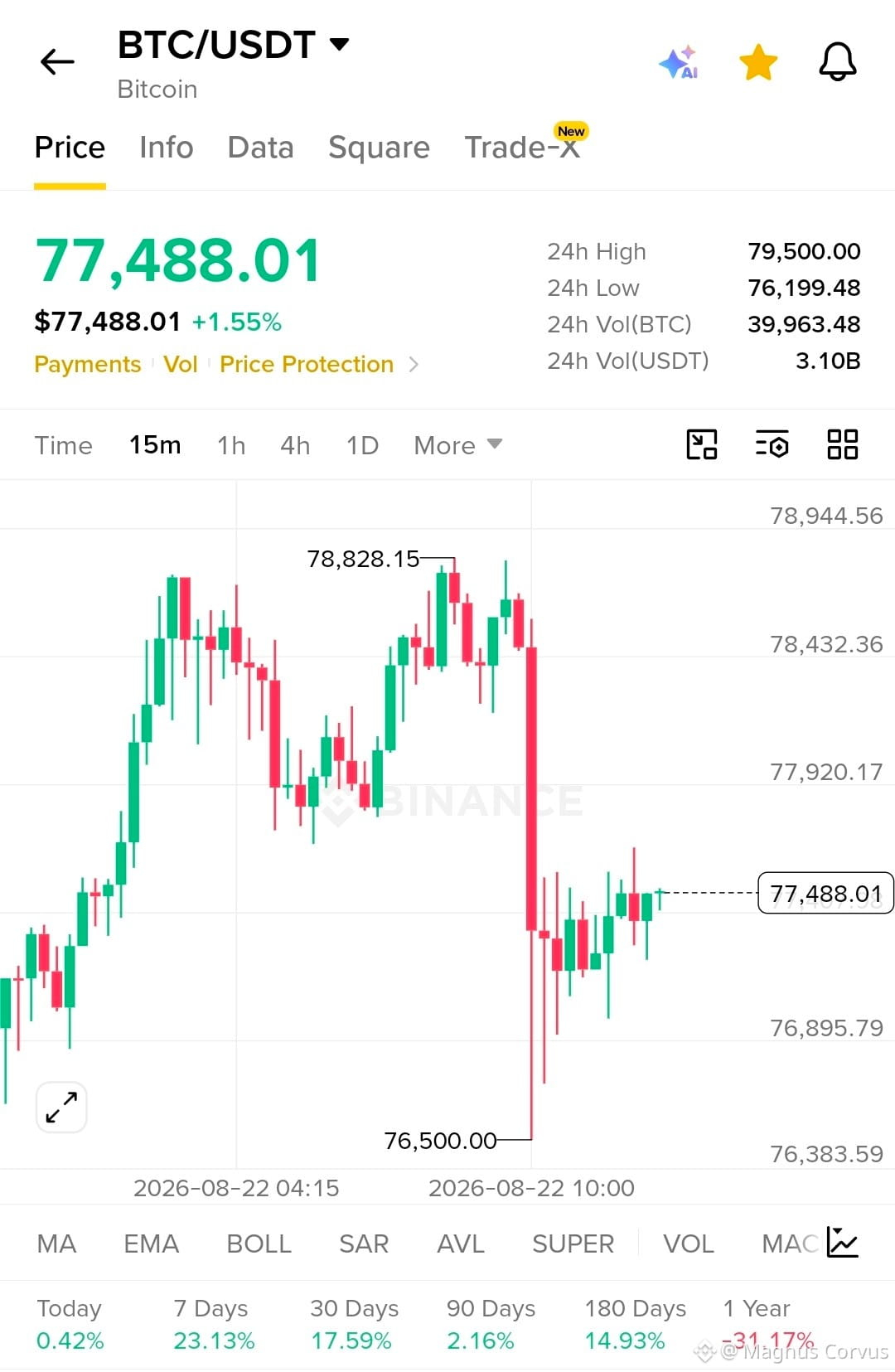
$BTC showing steady bullish rotation with higher low continuation forming. Structure remains controlled after downside liquidity sweep and range reclaim.
EP: 69950 – 70650
TP: 71350 72000 73200
SL: 68700 – 69200
Price reacted cleanly from local demand and is now compressing beneath short-term supply liquidity. Acceptance above range high unlocks upside expansion, while holding above mid support maintains constructive bullish structure.
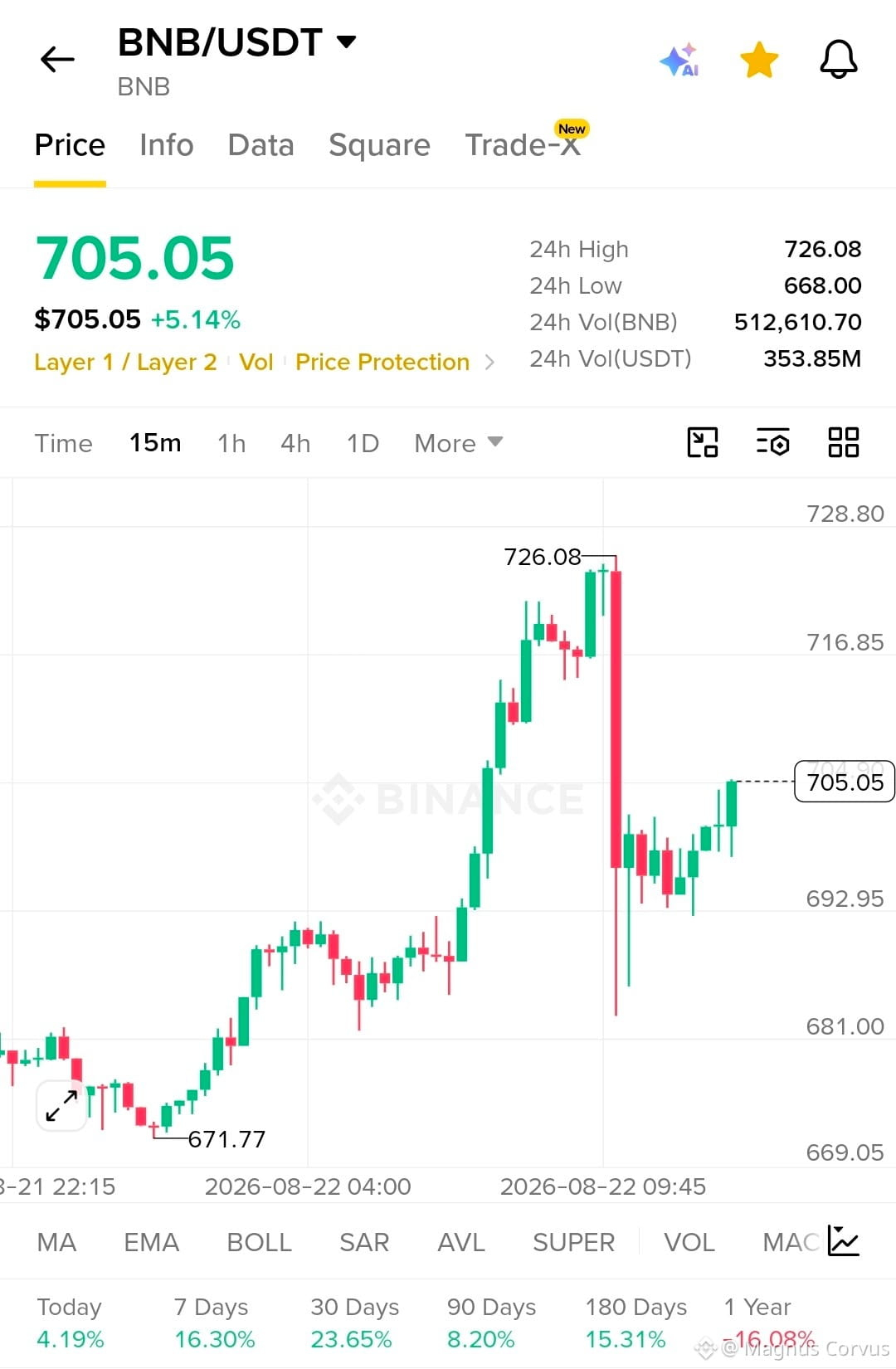
$BNB showing steady stabilization with constructive higher low development. Structure remains controlled after downside liquidity sweep and range reclaim.
EP: 638 – 645
TP: 652 660 675
SL: 628 – 632
Price reacted cleanly from local demand and is now rotating beneath recent supply liquidity. Acceptance above range high unlocks continuation potential, while holding above mid support keeps bullish structure intact.
$ZEC showing range compression after sharp downside expansion. Structure remains controlled with demand reacting at local liquidity base.
EP: 232 – 236
TP: 240 246 255
SL: 226 – 229
Price reacted from swept lows and is now consolidating within mid-range structure. Acceptance above short-term resistance unlocks upside liquidity, while holding above range support maintains stabilization bias.
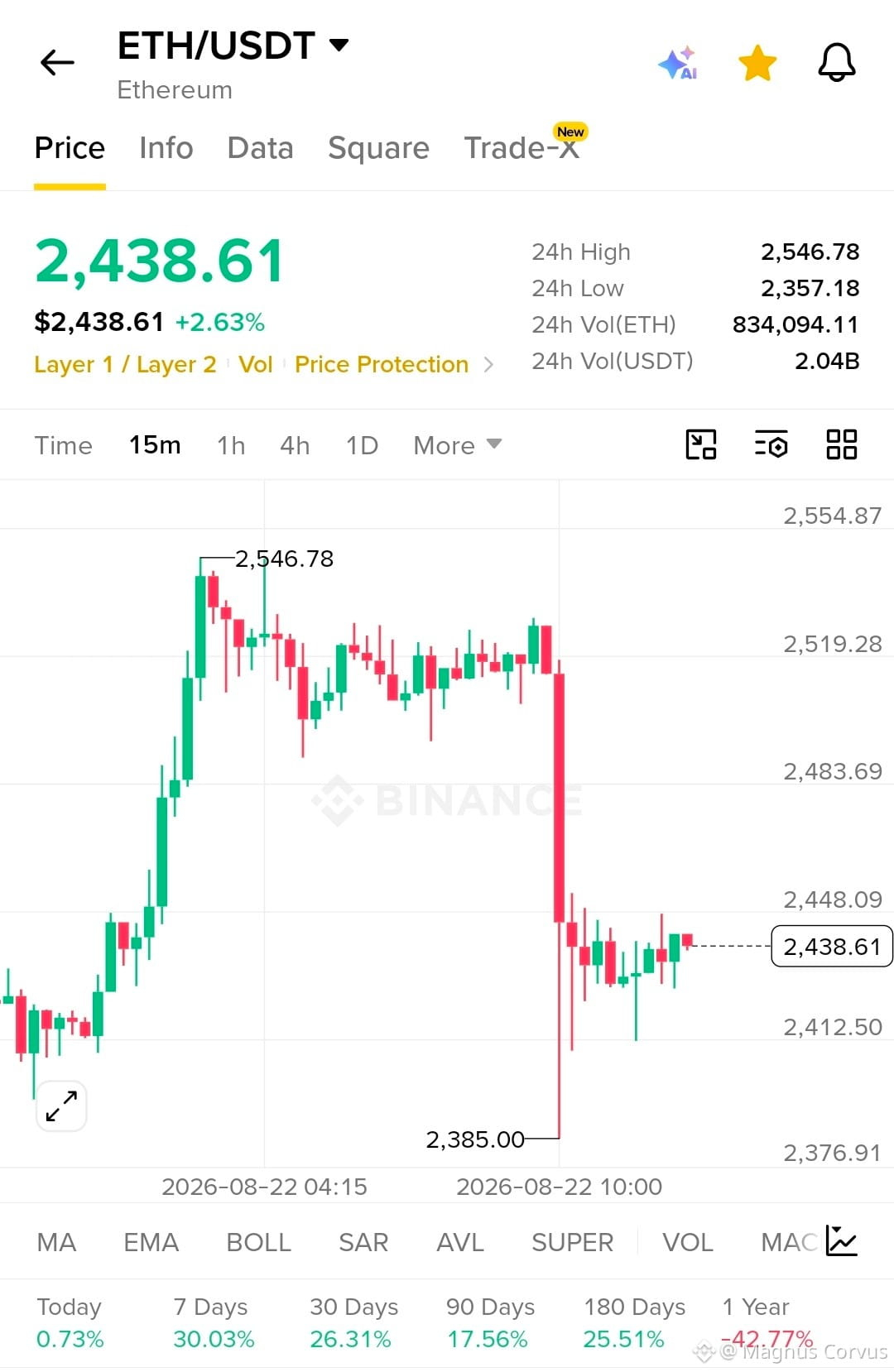
$ETH showing range stability with gradual bullish pressure building. Structure remains controlled with higher timeframe support holding.
EP: 2130 – 2160
TP: 2180 2230 2280
SL: 2085 – 2105
Price reacted from lower liquidity sweep and is now compressing within mid-range structure. Acceptance above local resistance opens momentum expansion, while holding above demand keeps constructive bias intact.
$PHA showing explosive bullish momentum with strong volume expansion. Structure remains controlled after vertical impulse and healthy pullback.
EP: 0.0385 – 0.0405
TP: 0.0445 0.0480 0.0520
SL: 0.0345 – 0.0360
Price reacted sharply from low liquidity base and is now consolidating under recent high. Acceptance above local resistance unlocks continuation, while holding above impulse origin keeps bullish structure intact.
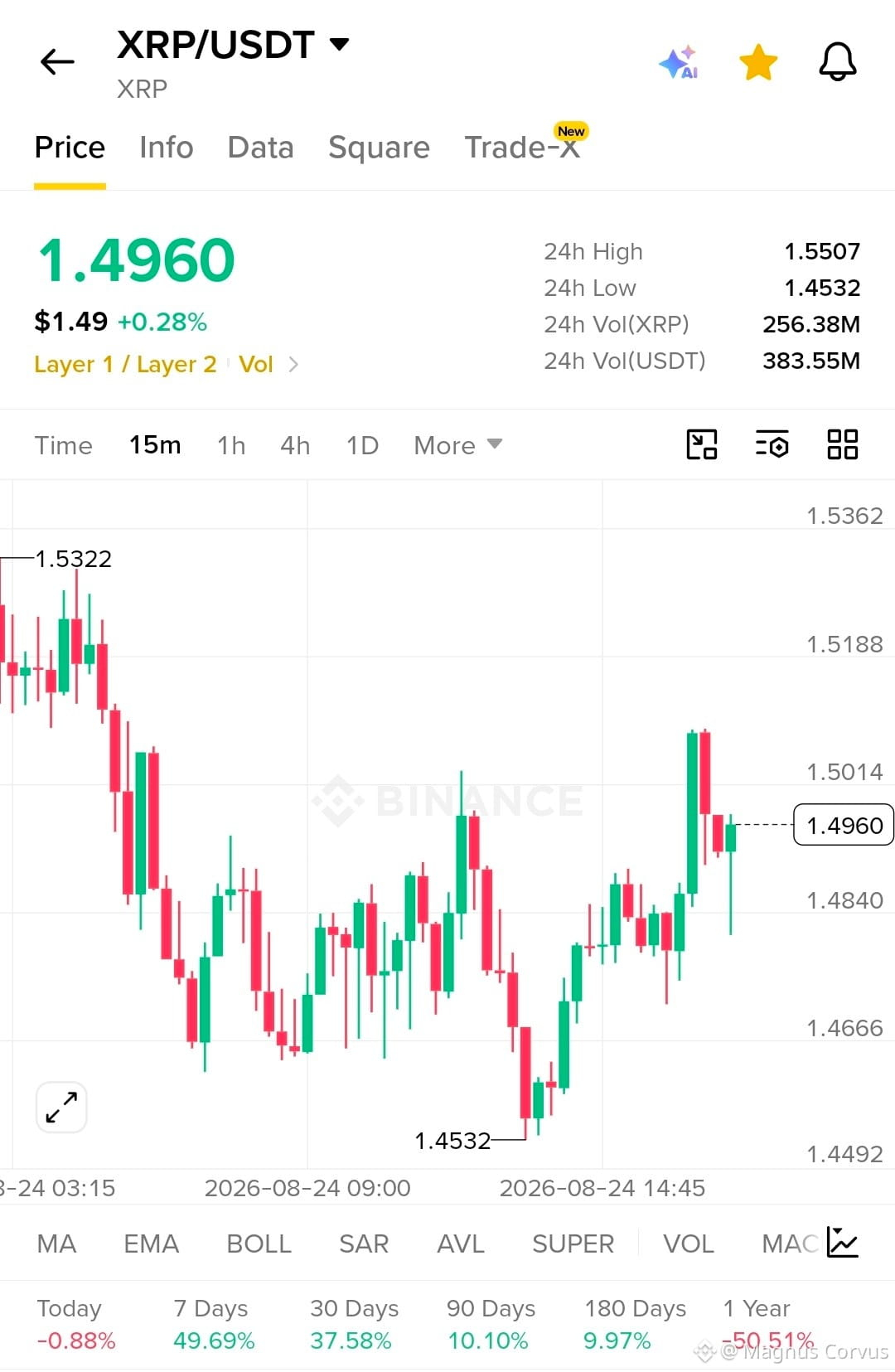
$XRP showing steady range strength with accumulation under resistance. Structure remains controlled with support holding after downside liquidity sweep.
EP: 1.440 – 1.455
TP: 1.466 1.481 1.500
SL: 1.418 – 1.425
Price reacted from lower demand and is compressing below short-term liquidity. Acceptance above range high opens expansion, while holding above mid support maintains constructive structure.
$TAO showing strong bullish recovery momentum with expansion volume. Structure remains controlled with higher low formation and upside liquidity sweep.
EP: 282 – 288
TP: 300 310 325
SL: 268 – 272
Price reacted cleanly from demand and is now rotating under recent high liquidity. Acceptance above 300 opens continuation, while holding above mid-range keeps bullish structure intact.
$TAO showing strong bullish recovery momentum with expansion volume. Structure remains controlled with higher low formation and upside liquidity sweep.
EP: 282 – 288
TP: 300 310 325
SL: 268 – 272
Price reacted cleanly from demand and is now rotating under recent high liquidity. Acceptance above 300 opens continuation, while holding above mid-range keeps bullish structure intact.
Liquidity was taken from the lows and price reacted clean from support. Current structure is compressing under local resistance while holding higher lows, which keeps upside continuation valid. As long as the base holds, expansion toward higher liquidity remains favored.
Liquidity was taken from the lows and price reacted well from support. Current structure is still constructive with buyers defending pullbacks and pressing price back into local resistance. As long as the range low holds, continuation to the upside remains in play.
Liquidity was swept into the lows and price reacted clean from demand. Current structure shows reclaim behavior above local support with room to expand if momentum holds. As long as price stays above the invalidation zone, upside remains favored.
When I look at SIGN, I do not see only a blockchain project. I see an attempt to solve a deeper problem in digital systems: how trust can be verified, not simply assumed. What interests me most is that SIGN connects credential verification with token distribution, turning legitimacy into something structured and usable. To me, this suggests a future where digital value does not just move quickly, but moves with proof, accountability, and a clearer sense of why it belongs where it goes.
When I began looking closely at SIGN, I did not approach it as just another blockchain initiative wrapped in ambitious language. I approached it as a research problem. I wanted to understand what kind of institutional gap this project was trying to fill, and whether that gap was real enough to matter beyond the usual cycles of crypto enthusiasm. The more I examined it, the more I felt that SIGN should not be read merely as a product, or even as a protocol, but as an attempt to respond to one of the most unresolved issues in digital systems: how legitimacy can be made portable, verifiable, and operational. That, to me, is the real subject here. For a long time, digital infrastructure has been optimized for transfer. We have become highly efficient at sending assets, recording transactions, and coordinating exchanges across networks. But I find that this success has concealed a deeper weakness. We still do not handle legitimacy very well. We know how to move value, yet we remain much less certain about how to prove who should receive that value, under what conditions, according to which rules, and with what degree of accountability afterward. In many cases, those answers remain hidden inside institutions, private databases, internal compliance processes, or informal operational trust. This is where SIGN becomes intellectually interesting to me. What it appears to be building is not simply another system for digital movement, but a framework for justified movement. In other words, it is concerned not only with where value goes, but with the evidentiary structure that explains why it goes there at all. I think this distinction deserves more attention than it usually gets. The language of “credential verification and token distribution” can initially sound narrow, technical, or commercially packaged. But once I began unpacking those terms, I found that they point toward a much broader institutional logic. A credential is not merely a badge or a document. It is an expression of recognized status. Distribution is not merely a payment event. It is the act of assigning consequence to that recognized status. The two belong together because they are both about eligibility. One defines who qualifies. The other makes qualification matter. This is why I do not see SIGN as a random pairing of adjacent functions. I see it as a project built around a single premise: that digital systems increasingly need a common language for recognition and allocation. That language has to be structured enough for machines, credible enough for institutions, and flexible enough for real-world political, legal, and operational complexity. In my view, this is precisely the terrain where SIGN is trying to establish itself. As I reflected on the project, I found myself returning to a simple observation. In older institutional environments, trust was usually embedded in place. A university verified a degree. A government verified identity. A company verified employment. A platform verified user status. A team verified token eligibility. Each verification lived inside the authority of its issuer. That model still exists, of course, but it strains under the conditions of contemporary digital life, where interactions are increasingly cross-platform, cross-border, and automated. A proof that only makes sense inside one closed institution is no longer sufficient for many emerging systems. What SIGN seems to be proposing is a way of extracting those proofs from their native silos without stripping them of meaning. I think that is its conceptual strength. It is trying to preserve institutional weight while increasing digital portability. The ambition is not to abolish authority, but to make authority legible in new ways. This matters because digital systems are now full of decisions that require defensible verification. A wallet may be eligible for a distribution because it belongs to a verified contributor. A user may qualify for access because of age, geography, or compliance status. A grant may be assigned because a milestone was completed. A benefit may be released because a prior condition was satisfied. A document may carry force because its signatory can be authenticated. What joins these examples, in my reading, is that they all involve claims that need to be trusted beyond the immediate context in which they were made. That is why I find the idea of attestations so important within the SIGN ecosystem. An attestation is not simply a statement. It is a structured claim with provenance. It links issuer, subject, schema, and often a degree of permanence or revocability. I see this as a meaningful transition in digital evidence. Traditional documents are readable by humans, but structured attestations are readable by systems. The difference is larger than it first appears. A PDF can persuade a person. An attestation can instruct an infrastructure. Once I understood that, the connection to token distribution became much clearer to me. Token distribution is often discussed in superficial terms, especially in crypto. People talk about launches, airdrops, community rewards, unlocks, or vesting events as though these were mostly operational or promotional exercises. But my own view is that distribution is one of the most politically loaded processes in any digital system. Distribution is where principles become consequences. It is where a system reveals who it values, whom it recognizes, whom it excludes, and how it justifies those boundaries. This is one reason I think SIGN deserves to be examined beyond market framing. The deeper significance of its distribution layer is that it treats allocation as something that should be structured, provable, and auditable. I find this important because too many allocation systems still rely on invisible judgment, brittle lists, internal scripts, or post hoc explanations. When value is distributed through such mechanisms, trust is often retroactive and fragile. People are expected to believe the process was fair because someone says it was. SIGN seems to challenge that model. It suggests that distribution should not be a black box followed by a press release. It should be a rule-bound act connected to evidence. That, in my view, is a very serious proposition. The more I sat with this idea, the more I felt that the project belongs to a wider shift in the architecture of governance. By governance, I do not mean only voting or token-based decision-making. I mean the much broader question of how systems recognize persons, events, rights, and conditions in a way that becomes actionable. Modern societies and digital economies increasingly require mechanisms that do more than simply record transactions. They need to encode the reasons transactions are allowed, blocked, delayed, released, or conditioned. This is the domain where verification and execution merge. I think this is why SIGN cannot be understood properly if it is treated only as “identity infrastructure.” Identity is part of it, certainly, but only part. The project’s more compelling dimension is that it tries to connect proof to outcome. It wants evidence to have operational force. A verified condition should not remain inert. It should be able to unlock access, authorize release, validate participation, or support institutional decision-making. That feature gives the project a relevance that extends beyond crypto-native settings. As I considered its broader implications, I found that many public and institutional systems face the same underlying problem. Social benefits need to be assigned according to documented eligibility. Educational credentials need to be verifiable without constant manual confirmation. Cross-border mobility systems need to validate identity and status without exposing unnecessary information. Treasury and grant systems need to distribute resources in ways that can later be examined. Even legal and contractual environments increasingly require digital records that are not easily manipulated or detached from their evidentiary context. In that sense, what SIGN is pursuing appears to me less like a niche market and more like a possible template for a new class of digital administration. I do not say that lightly. I am aware that many infrastructure projects speak in grand terms, and many fail to realize those ambitions. Still, I think it is important to distinguish between exaggerated scale claims and the underlying seriousness of the problem being addressed. In SIGN’s case, the problem itself is undeniably real. Our systems can move value at extraordinary speed, yet they still struggle to carry legitimacy with equal precision. I also think the project’s historical development is revealing. Its earlier roots in document signing and verifiable execution make sense to me as the beginning of a larger conceptual journey. First comes the question of whether agreements can be made trustworthy in digital form. Then comes the realization that agreements are only one type of institutional proof. From there, the field expands to credentials, attestations, compliance records, audit trails, and other structured claims. Eventually, those claims become inputs into distribution and access systems. When I trace that arc, I do not see random expansion. I see a fairly coherent movement from document trust to systems trust. That coherence is one of the reasons I take the project seriously. It suggests that its layers were not assembled arbitrarily. They emerged from a shared logic: if proof can be formalized, then that proof can be made usable; if it can be made usable, then it can shape allocation; and if allocation can be shaped by verifiable proof, then entire classes of institutional processes can be redesigned. At the same time, I want to remain careful. My own interpretation is not uncritical. A project of this breadth always faces the risk of overextension. SIGN now touches on attestations, distribution, identity, compliance, execution, and broader institutional infrastructure. Such breadth can be visionary, but it can also become diffuse. I think the burden on SIGN is to show that these elements are not merely adjacent markets gathered under one banner, but components of a unified architecture. There is also the question of depth. It is one thing to process transactions, issue claims, or support campaigns. It is another thing altogether to become indispensable. I have often found that the strongest infrastructure is not the infrastructure that appears most loudly, but the one that becomes difficult to replace because it solves a structural need better than alternatives do. For SIGN, that structural need would be the translation of legitimacy into programmable form. Whether it truly secures that place remains, in my mind, an open question. Yet even with those reservations, I think the project identifies a profound weakness in modern digital life. We have spent years celebrating decentralization, automation, and frictionless exchange, but relatively less time confronting the reality that systems still need reasons. They need reasons for inclusion and exclusion. Reasons for release and delay. Reasons for trust and refusal. The ideology of “trustlessness” often obscured this. In practice, trust never disappeared. It simply shifted into new locations. What SIGN seems to understand, and what I find particularly significant, is that the future may not belong to systems that eliminate trust, but to systems that render trust inspectable. This is a more mature vision. It accepts that someone still defines standards, issues claims, and verifies conditions. The challenge is not to pretend those roles vanish. The challenge is to make their actions transparent enough, structured enough, and portable enough that they can operate across fragmented digital environments without collapsing into opacity. This is why I keep coming back to the idea of verifiable trust. Not trust as sentiment. Not trust as branding. But trust as a documented condition. Who issued the claim? Under what schema? For whom? Can it be revoked? Can it be checked elsewhere? Can it trigger a consequence without requiring blind institutional faith each time? These questions may sound administrative, but I would argue that they are becoming central to the future of both digital governance and digital economy. In my reading, SIGN matters because it is building at exactly that intersection. It is concerned with the moment when recognition becomes action. A person is not only identified; they become eligible. A claim is not only recorded; it becomes usable. A distribution is not only executed; it can be explained. That is a much more important design space than many surface-level discussions acknowledge. If I had to express the project’s deeper significance in one sentence, I would say this: SIGN is an attempt to build infrastructure for legitimate allocation. I use that phrase deliberately. Allocation is where systems reveal their moral and institutional logic. It is where principles are converted into consequences. Any system that cannot justify allocation eventually loses credibility, no matter how fast, elegant, or decentralized it appears. SIGN is trying to solve that credibility problem at the infrastructural level. Whether it succeeds fully is still uncertain. But I think its importance already lies in identifying the right frontier. The next phase of digital infrastructure will not be shaped only by who can move the most value, attract the most users, or issue the loudest promises. It will be shaped, increasingly, by who can create systems that explain themselves. Systems that can defend why a resource was assigned, why a right was granted, why a claim was accepted, why a participant was recognized. For myself, that is the most compelling reason to study SIGN seriously. It is not only building rails for movement. It is attempting to build reasons for movement. And in a world where transactions are abundant but legitimacy is often thin, that may prove to be one of the most consequential forms of infrastructure we can build. @SignOfficial $SIGN #SIGN #signdigitalsovereigninfra
As I studied Midnight Network more closely, I found myself thinking less about secrecy and more about control. What interested me was not the idea of hiding everything, but the idea of choosing what deserves to remain private and what can be proven without full exposure. From my perspective, that is what makes Midnight worth paying attention to. I see it as an attempt to rethink blockchain privacy in a more mature way, where trust does not have to come at the cost of revealing too much. For me, its real significance lies in this balance: proof can stay visible, while sensitive reality remains protected.
Midnight Network: Rethinking Privacy, Proof, and Power in Blockchain
When I first began studying Midnight Network, I did not find myself looking at just another blockchain project trying to attach privacy as a fashionable feature. What caught my attention was something more structural. Midnight appears to be asking a more serious question than most networks in this space: what if blockchain privacy should not mean hiding everything, and should not mean exposing everything, but instead should mean controlling what becomes visible, to whom, and under what conditions? That question stayed with me because, in my view, it gets to the core weakness of modern blockchain design. Public blockchains solved the trust problem by making activity visible. But the industry often speaks as though visibility itself were the final achievement. In practice, I think this has produced a damaging imbalance. A system can be highly auditable and still be deeply unsuitable for real human, commercial, or institutional life. If every balance, transfer pattern, business interaction, and behavioral rhythm becomes permanently visible, then transparency stops being a public good and starts becoming a burden. This is where Midnight, at least conceptually, becomes interesting to me. I do not see it as a chain obsessed with secrecy. I see it as an attempt to redesign disclosure. That is a much more nuanced ambition. As I read through its model, what emerged was not a philosophy of darkness, but a philosophy of controlled revelation. Midnight is not simply trying to shield data. It is trying to create a blockchain environment where proof can remain public while the underlying sensitive information remains protected unless disclosure is deliberately chosen. From a research standpoint, I think this is the right starting point. Privacy on a blockchain has too often been treated in binary terms. Either a network is radically transparent, or it tries to vanish into cryptographic opacity. But life does not work in binaries. Institutions do not operate that way. Law does not operate that way. Even ordinary human relationships do not operate that way. We disclose selectively all the time. We reveal enough to function, not everything to survive. Midnight seems to be taking that human reality seriously and translating it into technical architecture. What I find especially significant is that Midnight is not presenting privacy as a romantic act of refusal. I do not read it as a project saying, “hide from the world.” I read it as saying, “keep the world from demanding more than it should know.” That is a very different tone. It shifts privacy from ideology into infrastructure. And in my opinion, that is exactly where the blockchain sector has been intellectually weak. It has often celebrated openness without sufficiently asking whether indiscriminate openness is socially intelligent. As I examined Midnight more closely, I came to see that its real ambition is not to make a hidden ledger. Its ambition is to make verification more refined. The crucial insight is that a blockchain does not always need the underlying data in public form. In many cases, what it truly needs is reliable proof that a condition has been satisfied. This is where zero-knowledge proof technology becomes central. The network is built around the idea that one can prove a fact without disclosing the full private substance behind that fact. That may sound abstract, but to me it has very concrete implications. A person might need to prove compliance without exposing all of their records. A company might need to prove that a rule was followed without revealing confidential trade information. A system might need to verify eligibility, authorization, or correctness without publishing the entire evidence stack to the open internet. Midnight’s architecture seems to be constructed around this principle: publish the proof, not the private file cabinet behind it. I find this intellectually stronger than the older privacy narratives that dominated crypto discussion for years. Those earlier models often revolved around shielding transfers or making transactions hard to trace. Midnight’s approach appears broader and more ambitious. It is less concerned with hiding movement for its own sake and more concerned with designing an environment where applications themselves can be built around mixed visibility. In other words, some elements can remain public, some can remain private, and some can be selectively disclosed when context demands it. This mixed-visibility model is, to my mind, one of the most important things about Midnight. Most blockchain systems force an awkward compromise. If one wants verifiability, one often has to surrender too much information. If one wants privacy, one often has to move meaningful logic off-chain or trust intermediaries to manage the sensitive parts. Midnight is trying to interrupt that pattern. It wants proof to become the public object while private inputs remain controlled. I think that is a much more mature conception of what a blockchain might be useful for in the real world. The more I reflected on it, the more I felt Midnight should not be interpreted merely as a privacy network. It should be interpreted as a network for selective accountability. That phrase matters to me because it captures the balance Midnight seems to be chasing. Total secrecy is often impractical. Total openness is often irresponsible. Selective accountability suggests a system where one can demonstrate compliance, correctness, or legitimacy without surrendering all informational boundaries. I also think the project’s relationship with the broader Cardano ecosystem gives it a particular strategic character. Midnight does not seem to be trying to replace every existing blockchain logic with a grand revolutionary break. Rather, it appears to be building itself as a specialized environment, one that can provide privacy-preserving services in a wider multi-chain landscape. From my perspective, this is a more realistic path than the familiar fantasy of total displacement. A chain that offers a missing function may have a clearer future than a chain that claims it will replace everything. Another part of Midnight that struck me as unusually thoughtful is its token design. I pay close attention to blockchain economics because so many projects fail not only for technical reasons, but because their incentives distort their own utility. In Midnight’s case, the separation between NIGHT and DUST is not just an interesting branding device. It reflects a serious attempt to solve a long-standing problem in blockchain systems: when the same token is used for speculation, governance, and transaction fees, price volatility directly affects usability. Midnight’s answer is to split those functions. NIGHT operates as the primary public token, while DUST acts as the shielded resource consumed for transactions and execution. Holding NIGHT generates DUST over time. What I find compelling here is the conceptual move. Instead of treating transaction costs as a permanently volatile toll tied directly to market speculation, Midnight tries to turn operational capacity into a renewable resource. In my reading, this has profound implications. It reframes the native asset not merely as something to trade, but as something that produces usable network capacity. The distinction may appear technical, but it changes how one thinks about value inside the network. A token is no longer only a vehicle of price expectation. It becomes a source of functional bandwidth. I think that is one of Midnight’s more original contributions to blockchain economic thinking. Still, I would be cautious not to romanticize the design. Any system that ties usage generation to asset holding can create asymmetries. Larger holders may naturally command more capacity. Smaller users may still depend on secondary access pathways, shared infrastructure, or intermediated services. So while I regard the NIGHT-DUST model as inventive, I also think its fairness will be proven only in real usage conditions, not in theory alone. The distribution philosophy also deserves attention. What I notice in Midnight’s broader rollout logic is that it appears to understand that social legitimacy matters. A privacy-oriented network cannot convincingly frame itself as public infrastructure if it begins as a tightly enclosed financial club. Distribution, in this sense, is not merely about allocation mechanics. It is about political tone. It sends a message about whether a network sees itself as an elite instrument or as something broader. But I would emphasize that broad distribution, by itself, proves very little. Many blockchain networks have distributed widely and still failed to produce meaningful utility. From a researcher’s standpoint, token spread is only the opening condition. The deeper question is whether developers can build on the system in ways that matter, and whether users actually need what those applications offer. Midnight’s long-term test will not be whether many people hold exposure to the network. It will be whether meaningful digital life begins to run through it. This is why I keep returning to the developer layer. In privacy systems, the tooling burden is often underestimated. A network can have elegant ideas and still become unusable if building on it demands excessive cryptographic sophistication, poor user experience design, or fragile development workflows. Midnight appears to understand this risk. Its attempt to offer a programmable environment for selective disclosure suggests that it knows privacy cannot remain the exclusive domain of specialists if it wants real adoption. Personally, I think the future of Midnight depends less on its abstract promise and more on whether it can make complex privacy logic feel normal to developers. If it succeeds there, it may open an entirely different class of blockchain applications. If it fails there, it may become one more intellectually admired project that never escapes technical circles. The applications I find most plausible are not the loudest or most theatrical ones. Financial services is a clear candidate because it lives under the constant pressure of contradictory demands. It must verify, audit, report, and comply, while also protecting client information, commercial strategy, and legally sensitive records. Public blockchains expose too much. Closed systems demand too much trust. Midnight, at least in theory, offers a third path: public proof with protected substance. Identity systems may be even more transformative. In my view, much of digital identity today is built on over-disclosure. People are repeatedly asked to surrender more information than a transaction truly requires. A more humane system would ask only for what is necessary. Midnight’s logic aligns with that principle. It suggests a world in which one can prove a condition without surrendering the whole self behind that condition. Enterprise use cases may be less glamorous, but I suspect they are among the most realistic. Real organizations run on partial visibility. They share information in layers. Partners see one layer, regulators another, internal teams another. Public blockchains rarely fit that reality well because their transparency model is too blunt. Midnight appears to be built for a world where confidentiality is not an exception but a normal operational need. I am also intrigued by the implications for data-sensitive computation and AI. As digital systems increasingly process sensitive data, a proof-oriented model could become much more valuable. If a network can help verify that certain computations were carried out correctly without exposing the underlying data, then its relevance could extend far beyond standard token transfers. I think this is one of the more underappreciated dimensions of Midnight’s architecture. It may matter not only because it protects transactions, but because it could help create trust in processes that cannot safely reveal all their inputs. Even so, I do not think the project should be discussed uncritically. There are real tensions within its design and positioning. One tension is philosophical. Any network built around selective disclosure eventually encounters a difficult question: who decides what is selective, and under whose pressure? It is easy to praise controlled visibility in principle. It is harder to preserve user agency when institutions, regulators, markets, and dominant actors begin to standardize what should be revealed. Midnight’s promise is appealing precisely because it seems to offer privacy without lawlessness. But that balance is fragile. In my judgment, the integrity of the system will depend on whether selective disclosure remains genuinely selective rather than drifting into routine compelled exposure. Another tension is institutional. Networks often begin with stewarded phases, trusted operators, and controlled governance paths. That can be practical in the early stage, but it also creates a credibility challenge. A network that speaks the language of privacy and autonomy must eventually show that it can decentralize in more than rhetoric. Otherwise, it risks offering cryptographic sophistication on top of conventional power arrangements. And then there is the oldest challenge in blockchain research: adoption through necessity. A project does not become important because its ideas are elegant. It becomes important because people discover that they cannot easily solve certain problems without it. Midnight will matter only if it becomes the place where selective disclosure is not merely better in theory, but indispensable in practice. Despite these uncertainties, I believe Midnight is one of the more serious attempts to rethink blockchain privacy for a more mature era. What stands out to me is not that it wants to hide data. What stands out is that it wants to redesign the boundary between proof and exposure. That is a much deeper intervention. It suggests that the future of blockchain may not belong to systems that are fully transparent or fully hidden, but to systems that know how to reveal with discipline. If I had to summarize my own position plainly, I would say this: Midnight interests me because it treats privacy as an architectural problem, not a cosmetic one. It does not simply ask how to conceal. It asks how to structure disclosure so that trust, confidentiality, and accountability can coexist without consuming one another. That, in my view, is its real significance. Midnight may or may not become foundational infrastructure. It may still face delays, governance tests, ecosystem hurdles, and market skepticism. But as a research subject, it deserves serious attention because it challenges one of blockchain’s oldest assumptions: that verification must always come with broad exposure. I do not think that assumption can survive the next phase of digital systems. Too much of modern life depends on proving things without surrendering everything. And that is why I keep coming back to Midnight. Not because it promises a hidden world. But because it is trying to build a more intelligent visible one. #night @MidnightNetwork $NIGHT
$AIA showing strong bullish expansion with continuation strength. Structure confirmed with buyers in clear control.
EP: 0.098 – 0.102
TP: 0.108 0.115 0.122
SL: 0.092 – 0.094
Liquidity was taken from prior range high followed by aggressive impulsive reaction and volume expansion. Price holding above breakout structure with shallow pullbacks, supporting continuation toward higher liquidity targets.
$COS showing strong recovery momentum after expansion move. Structure holding with buyers maintaining short term control.
EP: 0.00155 – 0.00160
TP: 0.00172 0.00188 0.00202
SL: 0.00144 – 0.00146
Liquidity was swept below range low followed by sharp reaction and impulsive expansion. Price now consolidating above reclaimed structure with volume support, positioning for continuation toward prior high liquidity zones.
$XAN showing strong bullish expansion with aggressive volume inflow. Structure confirms buyers in control with momentum continuation.
EP: 0.0129 – 0.0135
TP: 0.0142 0.0149 0.0156
SL: 0.0122 – 0.0118
Liquidity build-up below breakout zone followed by sharp impulsive reaction signals strong demand. Current price holding near highs reflects absorption and continuation potential while bullish structure remains intact.