
Fatima 5
11.6k Posts

Fatima 5
 Square Verified+
Report
Block User
(kite UID 779975)
High-Frequency Trader
1.7 Years
698 Following
30.3K+ Followers
26.6K+ Liked
Posts
All
Quotes
Videos
Live
PINNED
·
--
Verified
#sxt $SXT @SpaceandTimeDB
Your AI agent gave you a revenue number. But how do you know it did not make a mistake? 🤔
This is something I started thinking about after exploring Space and Times latest Enterprise launch.
Businesses want AI agents to work with financial reports customer records and internal data. But giving an AI access to every private record just to calculate one number creates an unnecessary risk.
I think this is where Space and Time becomes interesting.
Its Proof of SQL technology allows businesses to run SQL queries and generate cryptographic evidence that the calculation was performed correctly. The underlying records can remain private while auditors, applications or AI agents verify the result.
What caught my attention is that this is not simply about hiding information. It is about making the answer independently verifiable.
The system connects the SQL query committed data and calculated result through cryptographic proofs. If the data or computation does not match the proof, verification fails.
I also see a bigger opportunity beyond business reports. In tokenization verifiable data can help confirm ownership and asset records. In DeFi protocols can check financial calculations without blindly trusting a data provider. This makes Proof of SQL relevant wherever AI and financial decisions depend on accurate information.
The November 9 Enterprise launch makes this idea more practical by allowing businesses to deploy the technology in their own environments. Maple Finance, Indomobil, Trenez and The Data Foundation were named as launch partners.
Of course correct mathematics cannot guarantee that the original data is truthful. Data quality still matters.
That distinction is important to me.
As AI agents gain more responsibility should proving the information behind their decisions become a basic requirement?
#sxt $SXT @SpaceandTime
Your AI agent gave you a revenue number. But how do you know it did not make a mistake? 🤔
This is something I started thinking about after exploring Space and Times latest Enterprise launch.
Businesses want AI agents to work with financial reports customer records and internal data. But giving an AI access to every private record just to calculate one number creates an unnecessary risk.
I think this is where Space and Time becomes interesting.
Its Proof of SQL technology allows businesses to run SQL queries and generate cryptographic evidence that the calculation was performed correctly. The underlying records can remain private while auditors, applications or AI agents verify the result.
What caught my attention is that this is not simply about hiding information. It is about making the answer independently verifiable.
The system connects the SQL query committed data and calculated result through cryptographic proofs. If the data or computation does not match the proof, verification fails.
I also see a bigger opportunity beyond business reports. In tokenization verifiable data can help confirm ownership and asset records. In DeFi protocols can check financial calculations without blindly trusting a data provider. This makes Proof of SQL relevant wherever AI and financial decisions depend on accurate information.
The November 9 Enterprise launch makes this idea more practical by allowing businesses to deploy the technology in their own environments. Maple Finance, Indomobil, Trenez and The Data Foundation were named as launch partners.
Of course correct mathematics cannot guarantee that the original data is truthful. Data quality still matters.
That distinction is important to me.
As AI agents gain more responsibility should proving the information behind their decisions become a basic requirement?
4
1
20
482
·
--
$ICNT
set up the trade for short
quick short entry
$ICNT
set up the trade for short
quick short entry
set up the trade for short
quick short entry
3
1k
·
--
$MMT
LONG, but wait for pullback confirmation.
Entry: After holding above $0.235–$0.240.
Target 1: $0.260
Target 2: $0.2666
Stop-loss: Below $0.228
{future}(MMTUSDT)
$MMT
LONG, but wait for pullback confirmation.
Entry: After holding above $0.235–$0.240.
Target 1: $0.260
Target 2: $0.2666
Stop-loss: Below $0.228
LONG, but wait for pullback confirmation.
Entry: After holding above $0.235–$0.240.
Target 1: $0.260
Target 2: $0.2666
Stop-loss: Below $0.228
1
653
·
--
$MMT
set up the trade for short
buy and trade
$MMT
set up the trade for short
buy and trade
set up the trade for short
buy and trade
1
1
1.3k
·
--
$XRP
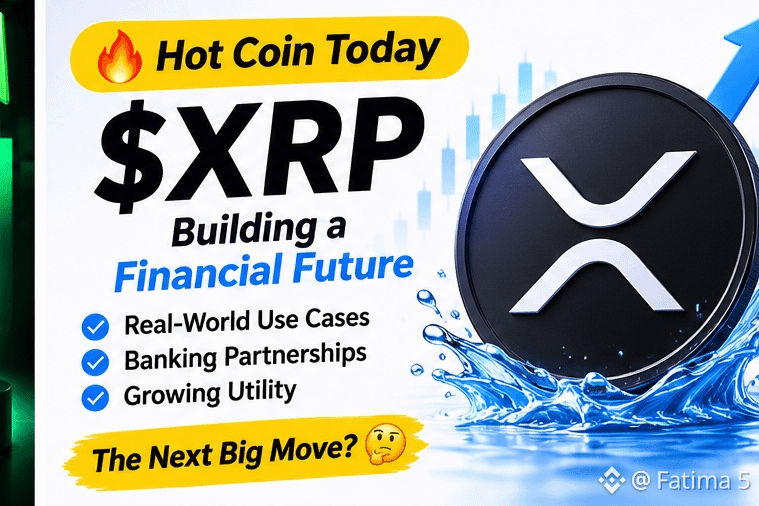
💧 Why I'm Keeping $XRP on My Watchlist!
I've always found XRP interesting because its story goes beyond ordinary crypto trading.
Its focus on cross-border payments and faster value transfers gives it a real-world use case worth following.
But utility alone doesn't guarantee price growth. Adoption, liquidity, market conditions, and actual demand all matter.
XRP is showing positive momentum today, so I'm watching whether buyers can sustain this strength instead of chasing a sudden move.
Do you believe XRP's payment utility can drive stronger long-term adoption?
{future}(XRPUSDT)
#BinanceSquare
$XRP
💧 Why I'm Keeping $XRP on My Watchlist!
I've always found XRP interesting because its story goes beyond ordinary crypto trading.
Its focus on cross-border payments and faster value transfers gives it a real-world use case worth following.
But utility alone doesn't guarantee price growth. Adoption, liquidity, market conditions, and actual demand all matter.
XRP is showing positive momentum today, so I'm watching whether buyers can sustain this strength instead of chasing a sudden move.
Do you believe XRP's payment utility can drive stronger long-term adoption?
#BinanceSquare
2
231
·
--
$MMT
is going to be upward direction
set up the trade for long
$MMT
is going to be upward direction
set up the trade for long
is going to be upward direction
set up the trade for long
1
135
·
--
⚡ $AKT Is Showing Interesting Strength!
Akash Network is one of the AI infrastructure projects I keep watching.
The interesting part is its decentralized cloud computing model. AI development needs computing power, and centralized cloud providers are not the only possible solution.
A decentralized marketplace for computing resources could offer another option for developers and businesses.
Today's positive price movement has attracted attention, but I believe actual network demand and adoption matter much more than short-term excitement.
Can decentralized cloud computing become a serious alternative in the AI economy?
#AKT #AkashNetwork
{future}(AKTUSDT)
⚡ $AKT Is Showing Interesting Strength!
Akash Network is one of the AI infrastructure projects I keep watching.
The interesting part is its decentralized cloud computing model. AI development needs computing power, and centralized cloud providers are not the only possible solution.
A decentralized marketplace for computing resources could offer another option for developers and businesses.
Today's positive price movement has attracted attention, but I believe actual network demand and adoption matter much more than short-term excitement.
Can decentralized cloud computing become a serious alternative in the AI economy?
#AKT #AkashNetwork
bullish
bearish
3 hr(s) left
2
184
·
--
$PIEVERSE
🔥 Why Is Everyone Watching $PIEVERSE?
I've been noticing the growing momentum around Pieverse, and today's market activity makes it interesting to watch.
What I find more important than a green candle is the idea behind the project. Payment infrastructure and blockchain-based financial tools could become useful as more people explore on-chain applications.
Still, a strong daily move doesn't automatically mean the trend will continue. I would watch trading volume, buyer strength, and whether the price can hold its recent gains.
Is $PIEVERSE building real momentum, or is this just short-term market excitement?
#PIEVERSE #Crypto #BinanceSquare
$PIEVERSE
🔥 Why Is Everyone Watching $PIEVERSE ?
I've been noticing the growing momentum around Pieverse, and today's market activity makes it interesting to watch.
What I find more important than a green candle is the idea behind the project. Payment infrastructure and blockchain-based financial tools could become useful as more people explore on-chain applications.
Still, a strong daily move doesn't automatically mean the trend will continue. I would watch trading volume, buyer strength, and whether the price can hold its recent gains.
Is $PIEVERSE building real momentum, or is this just short-term market excitement?
#PIEVERSE #Crypto #BinanceSquare
1
436
·
--
$BREV
is going to be upward direction
buy and trade
$BREV
is going to be upward direction
buy and trade
is going to be upward direction
buy and trade
4
764
·
--
$LIT Is One to Keep on the Radar!
Today's market activity has brought Lighter into focus.
What interests me about Lighter is its approach to decentralized trading. Traders want fast execution, transparent markets, and an experience that feels smooth rather than complicated.
But strong trading activity alone doesn't guarantee long-term success.
The bigger test is whether Lighter can keep attracting users and maintain liquidity when market excitement slows down.
I'm watching adoption and actual trading volume more closely than a single green candle.
Do you think $LIT can become a major name in decentralized trading?
#LIT #Lighter
4
1.3k
·
--
$ZAMA
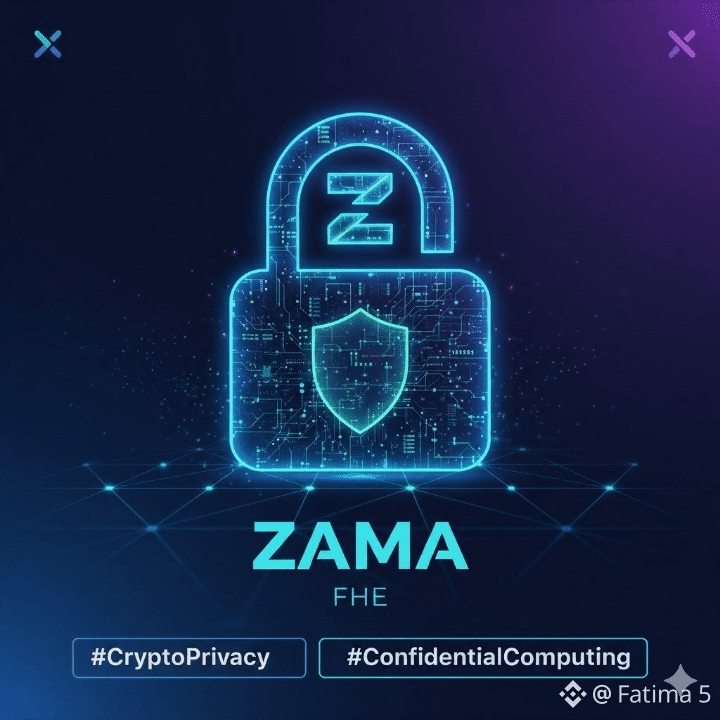
🔐 Why I am Watching $ZAMA Today!
One thing that makes Zama interesting to me is its focus on privacy in blockchain applications.
Public blockchains offer transparency but not every piece of information should be visible to everyone.
Zama's focus on Fully Homomorphic Encryption (FHE) aims to make it possible to compute on encrypted data without exposing the underlying information.
That could become important for private DeFi, financial applications, and confidential on-chain activity.
Still, real adoption and practical performance will matter more than hype.
Can privacy become one of the biggest narratives in crypto?
{future}(ZAMAUSDT)
$ZAMA
🔐 Why I am Watching $ZAMA Today!
One thing that makes Zama interesting to me is its focus on privacy in blockchain applications.
Public blockchains offer transparency but not every piece of information should be visible to everyone.
Zama's focus on Fully Homomorphic Encryption (FHE) aims to make it possible to compute on encrypted data without exposing the underlying information.
That could become important for private DeFi, financial applications, and confidential on-chain activity.
Still, real adoption and practical performance will matter more than hype.
Can privacy become one of the biggest narratives in crypto?
2
303
·
--
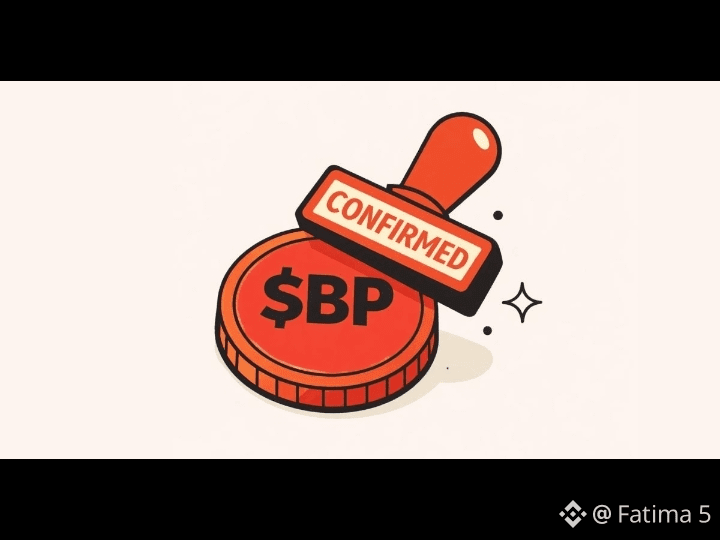
🔥 Backpack Is Getting My Attention Today!
I have been noticing the growing attention around $BP and today's strong market activity makes it interesting to watch.
What I find important is not just the price movement. Backpack has an opportunity to build a stronger position through its trading ecosystem and user experience.
A strong rally can attract traders quickly, but keeping those users is a different challenge.
For me, the next thing to watch is whether trading activity and real user demand can support this momentum.
Is $BP building lasting strength, or is this mainly short-term excitement?
#Backpack #BP #Crypto
3
197
·
--
$HUMA
set up the trade for short
quick short entry
$HUMA
set up the trade for short
quick short entry
set up the trade for short
quick short entry
1
7
1.1k
Log in to explore more content
Join global crypto users on Binance Square
⚡️ Get latest and useful information about crypto.
💬 Trusted by the world’s largest crypto exchange.
👍 Discover real insights from verified creators.
Email / Phone number
Trending Topics
BTCRemainsUnderPressureAfterHawkishFOMCMinutes
52,697 views
700 Discussing
FOMC Minutes | Fed Minutes Show Almost All Officials Expect More Rate Hikes, With Some Open to a Larger December Move
Binance News
·47 Likes
·57k views
AnthropicToDebutAfter$83IPOPricing
13,993 views
72 Discussing
NvidiaBoardReportedlySplitOverHuang’sReturn
17,473 views
297 Discussing