

分析师淼哥
3.2k Posts

分析师淼哥
Report
Block User
跟单请进聊天室id:a123123【历经三轮牛熊,擅长短线合约和中长线优质现货布局,在市场中屡创佳绩】同时,作为KOL,乐于分享,口碑极佳!
Occasional Trader
1.7 Years
12 Following
3.3K+ Followers
4.1K+ Liked
Posts
All
Quotes
·
--
Bullish
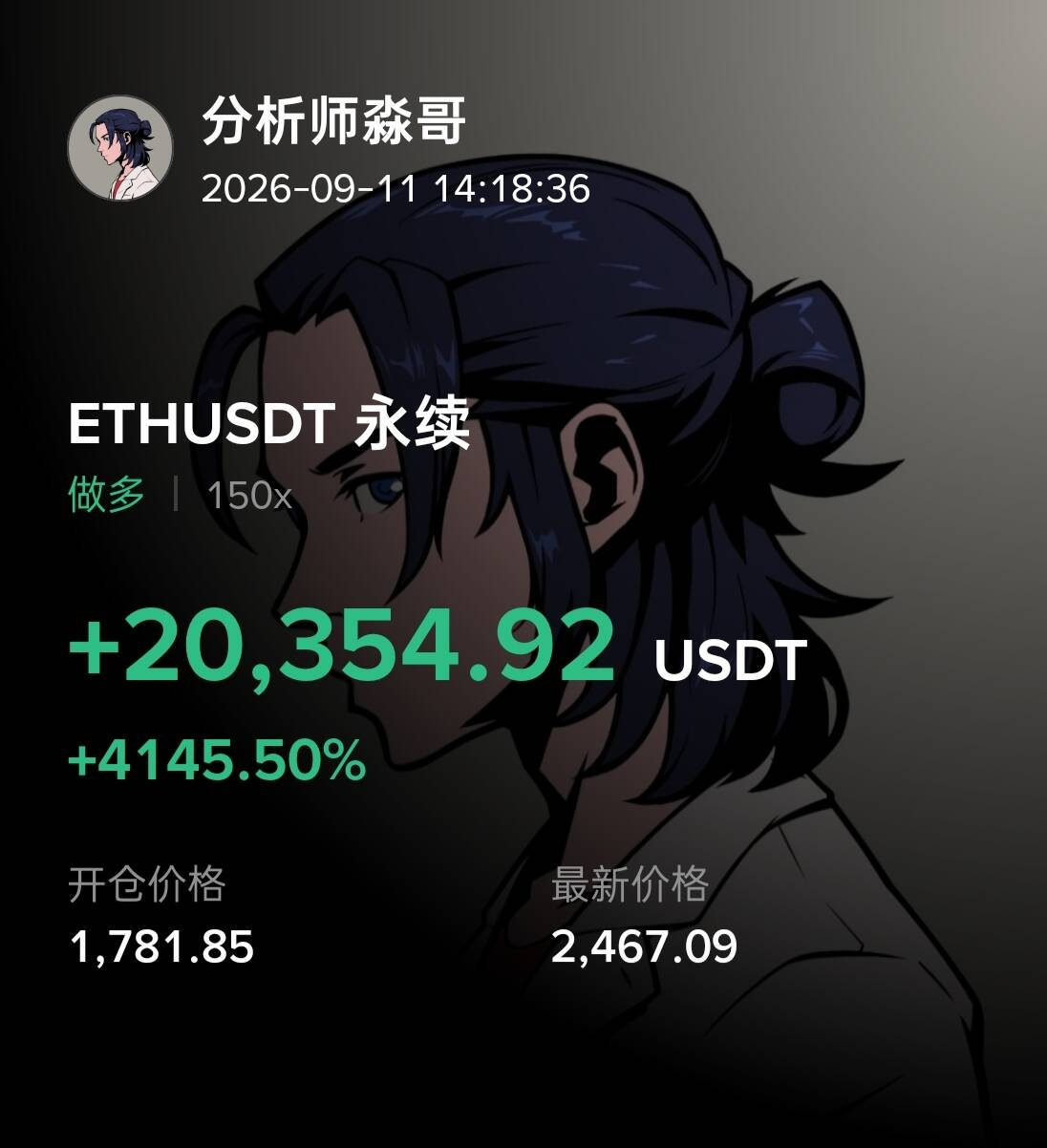
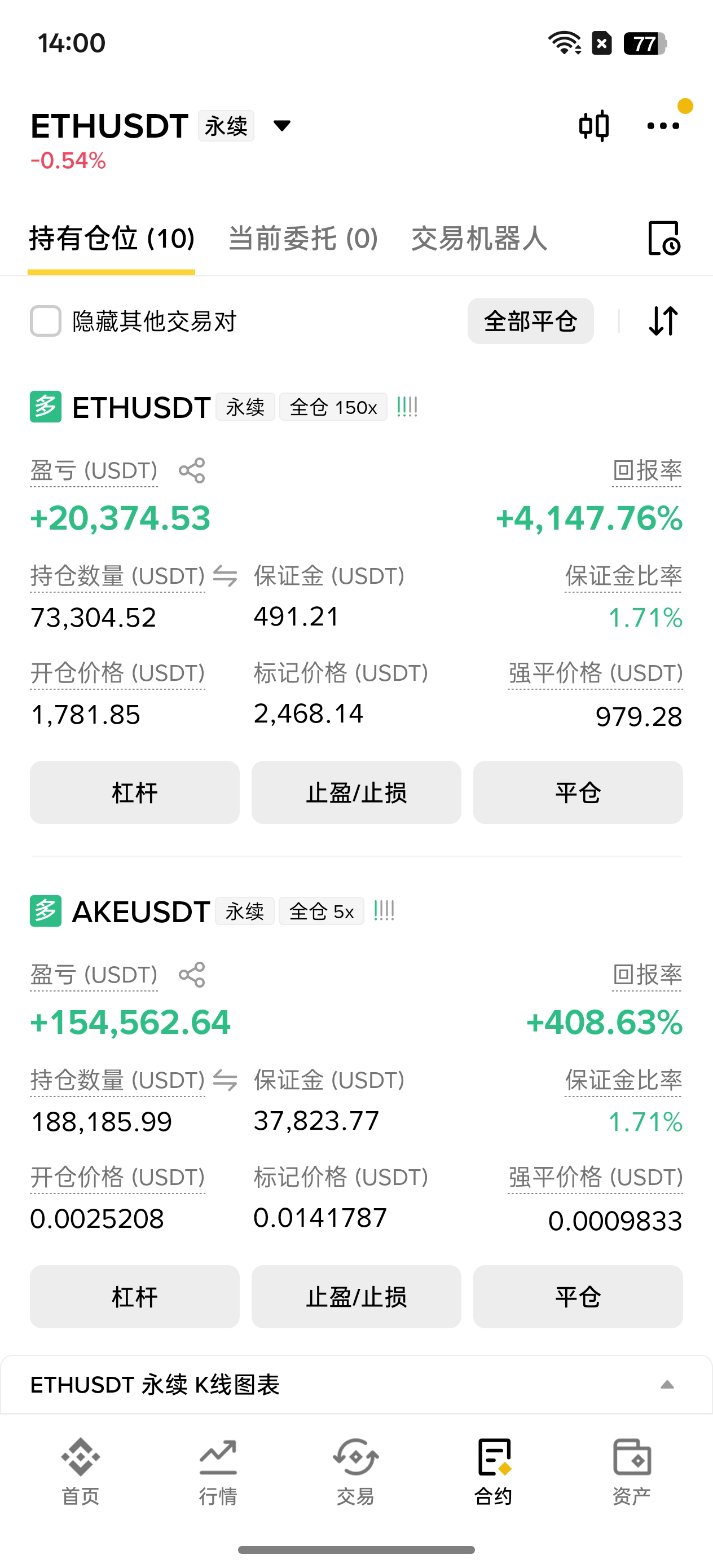
Big Biscuit $BTC trend has become very ugly because of last night’s 75k spike!
From being very optimistic to being cautiously bullish 😅
Because the 75k level has been broken, there’s a chance of a dip to 73k
It’s really a situation where if you make money you don’t run—you risk it turning to zero right away 😅
#CPI数据来袭能否触发9月加息 #美国合众银行完成Stellar跨境支付试点 #空头爆仓推动以太坊反弹 #以太坊时隔七个月重返2600美元
Keep watching:$ETH $ZEC $牛来 $RVN $SNDK $SPCX $SKHYNIX $LSK $SOL $BNB
2
285
·
--
Bullish
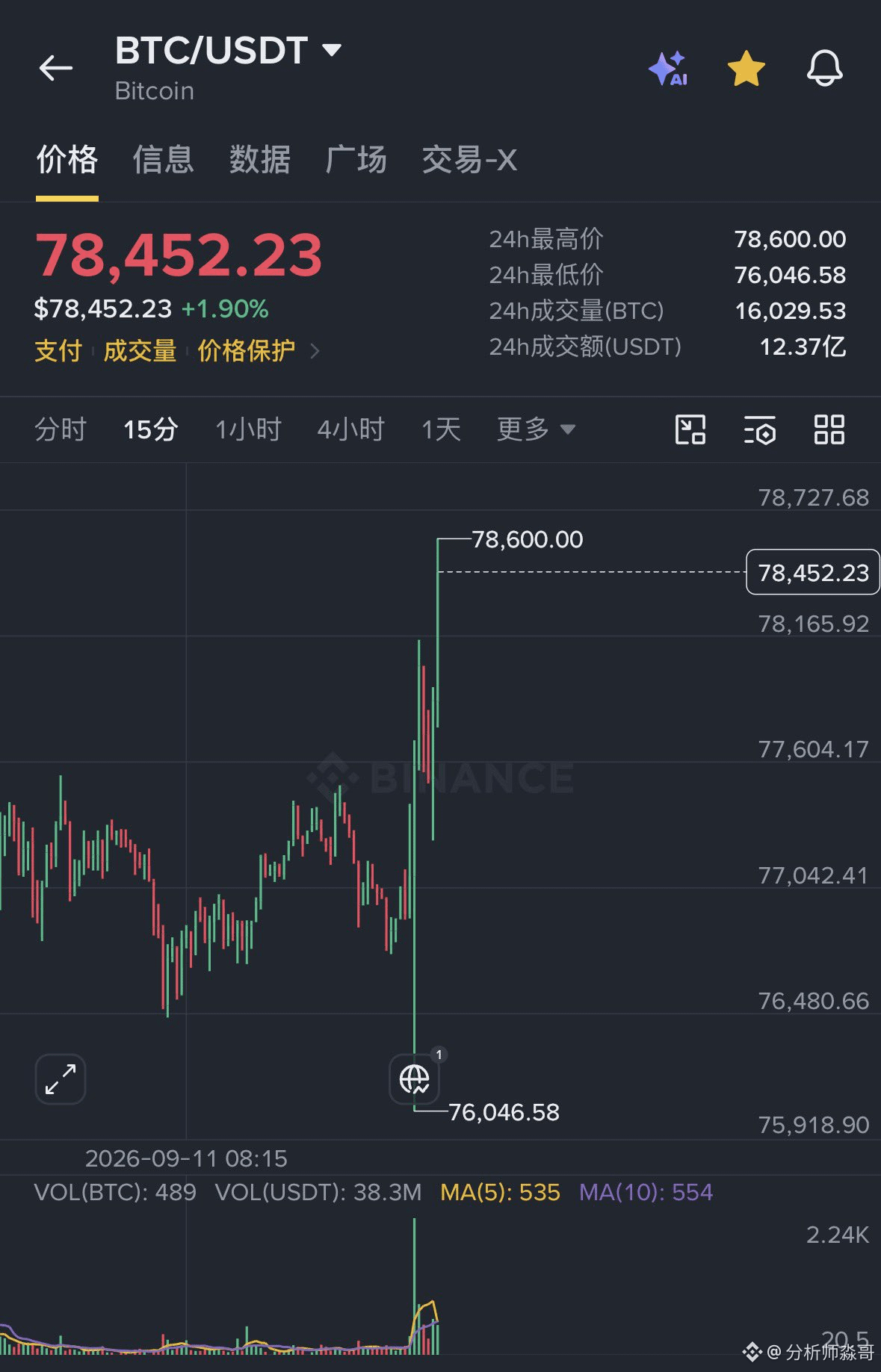
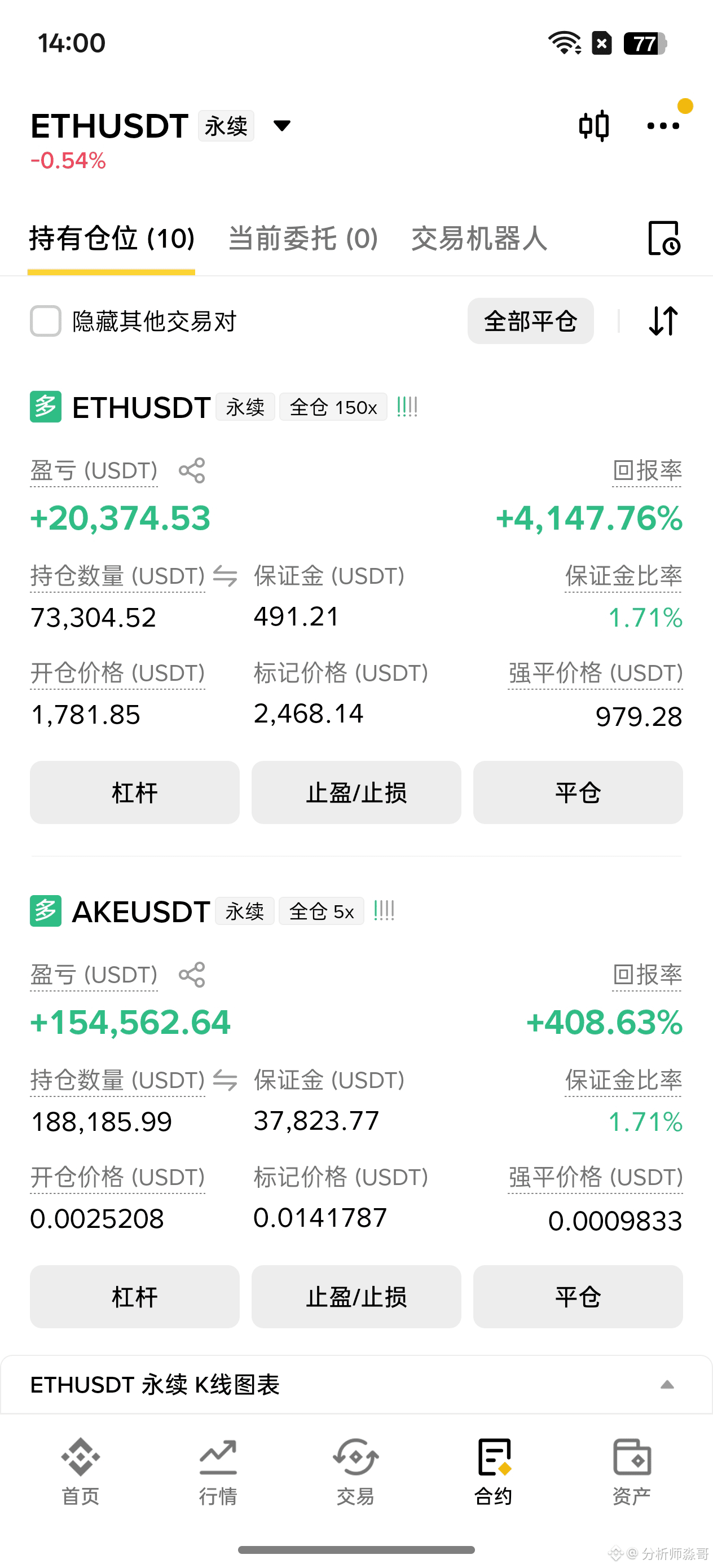
The moment the CPI data came out last night, this candlestick chart of $BTC shut up all the bullish and bearish teachers in silence! 😂
So tragic for the bears! After waiting all this time, in the end we still got taken down by both the bulls and the bears in the market! 😅
#CPI数据来袭能否触发9月加息 #美国合众银行完成Stellar跨境支付试点 #以太坊时隔七个月重返2600美元
Keep watching: $ETH $ZEC $牛来 $RVN $SNDK $SPCX $SKHYNIX $LSK $SOL $BNB
So tragic for the bears! After waiting all this time, in the end we still got taken down by both the bulls and the bears in the market! 😅
#CPI数据来袭能否触发9月加息 #美国合众银行完成Stellar跨境支付试点 #以太坊时隔七个月重返2600美元
Keep watching: $ETH $ZEC $牛来 $RVN $SNDK $SPCX $SKHYNIX $LSK $SOL $BNB
2
736
·
--
Bullish
Share the next trading ideas for $BTC !
The big pie hasn’t fully established above 80,000 and broken through 82,000 yet. Before that weekly resistance is cleared, I’ll still be watching for a rebound rather than a trend reversal!
If afterward it can effectively break above the weekly resistance at 82,000, and then after a pullback confirms that the price doesn’t lose that level, then that would be a more clear bullish signal!
At the moment, the sell pressure around the 80,000–82,000 area is still quite obvious. Price has climbed upward twice, but both times it was smashed back to the original level.
In the short term, it still leans bearish. I’m more inclined to test lower. The key is the consolidation range of 80,000–78,000. Before it breaks the previous high, in trading, it’s still mainly about selling rebounds as the primary approach. If shorting, use around 80,000 as the reference, with a stop loss placed above 83,000.
Keep monitoring:$ETH $ZEC $牛来 $RVN $SNDK $SPCX $SKHYNIX $LSK $SOL $BNB
#CPI数据来袭能否触发9月加息 #空头爆仓推动以太坊反弹 #以太坊时隔七个月重返2600美元

2
695
·
--
Bullish
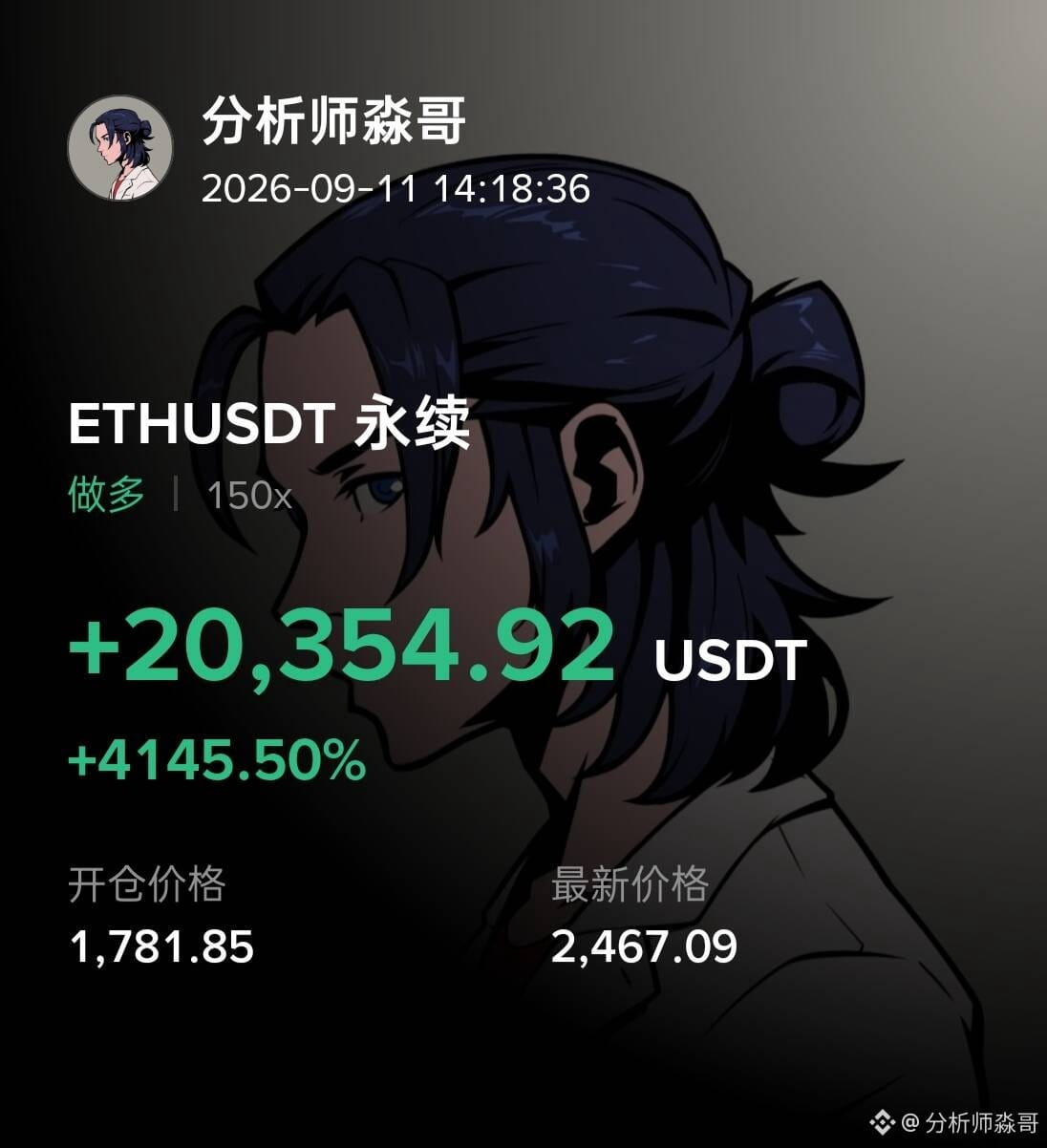
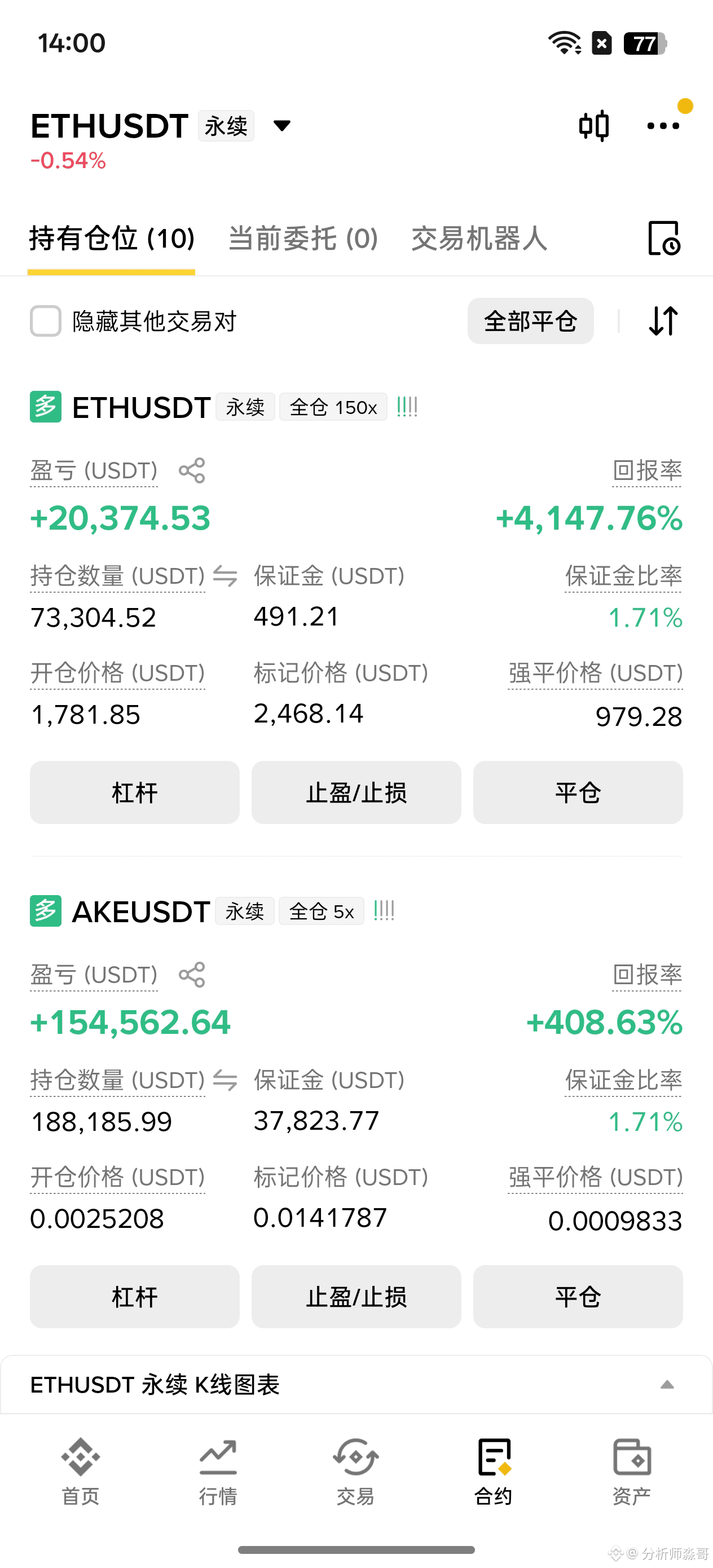
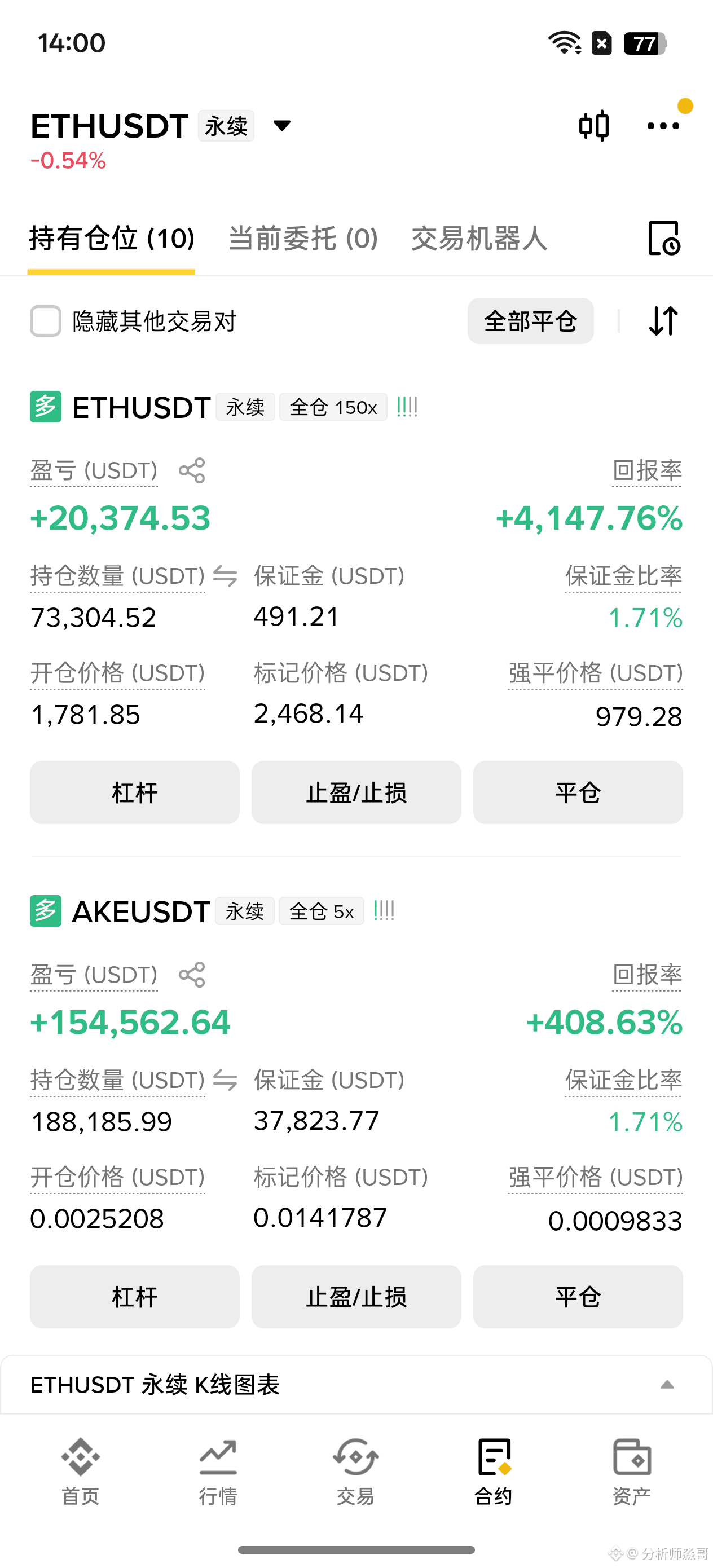
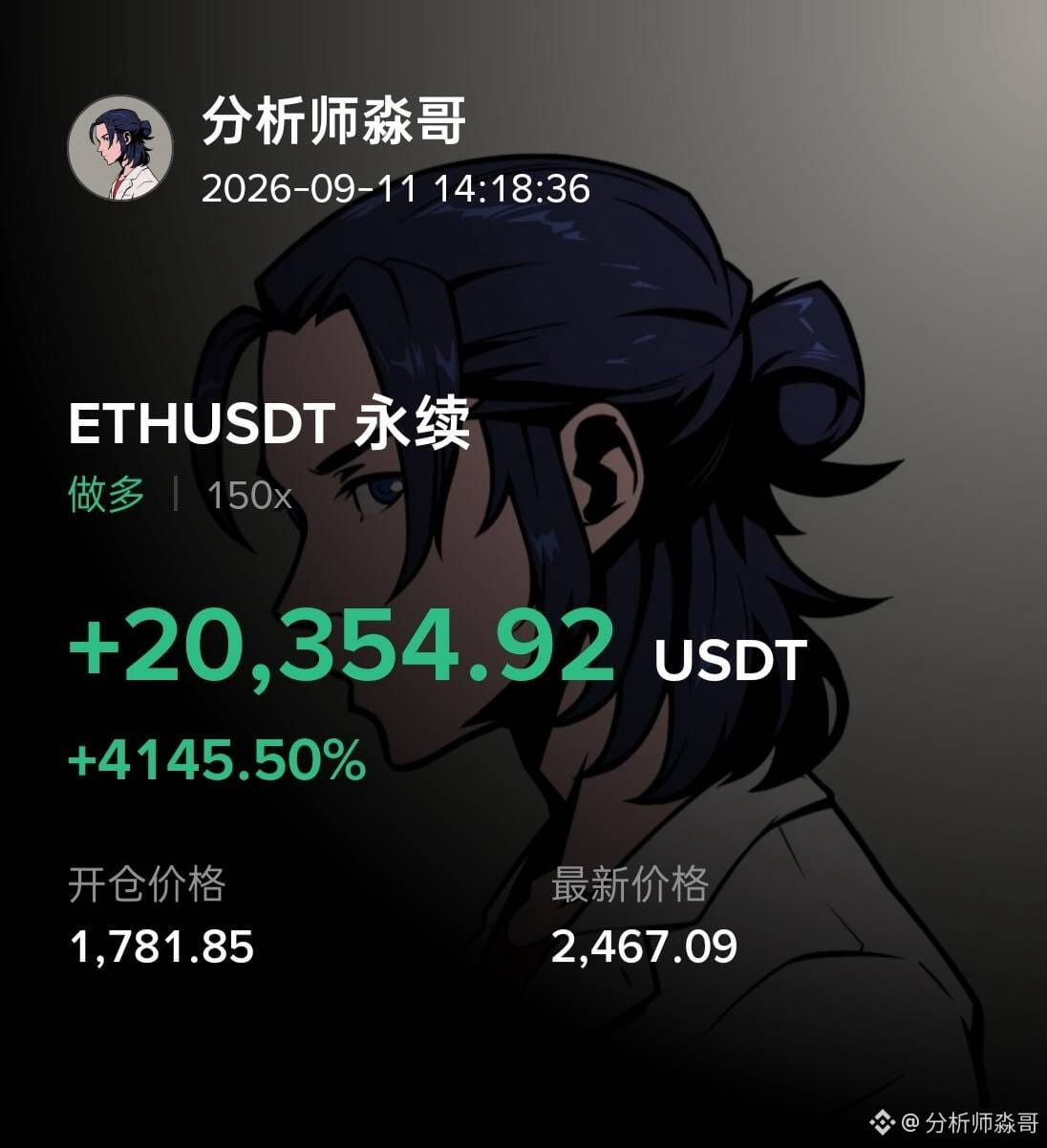
The market and my judgment are in sync. It started to decline gradually, and $ETH as well as many major coins still have one last wave of downside potential!
$BTC targets around 730,000. Don’t be greedy; what I say is I’ll enter in batches at 750,000.
What’s the difference between 750,000 and 730,000? Not much at all!
Even if you want to be greedy, there will be plenty of opportunities to roll your position later—there’s no need to fantasize about timing the very bottom. Just be close enough.
Keep monitoring: $ZEC $牛来 $RVN $SNDK $SPCX $SKHYNIX $LSK $SOL $BNB
#CPI数据来袭能否触发9月加息 #美国将于周一制裁一家大银行 #美国10年期美债收益率创2023年10月来新高 #加密前七资产占前百市值92.1%

2
885
·
--
Bullish
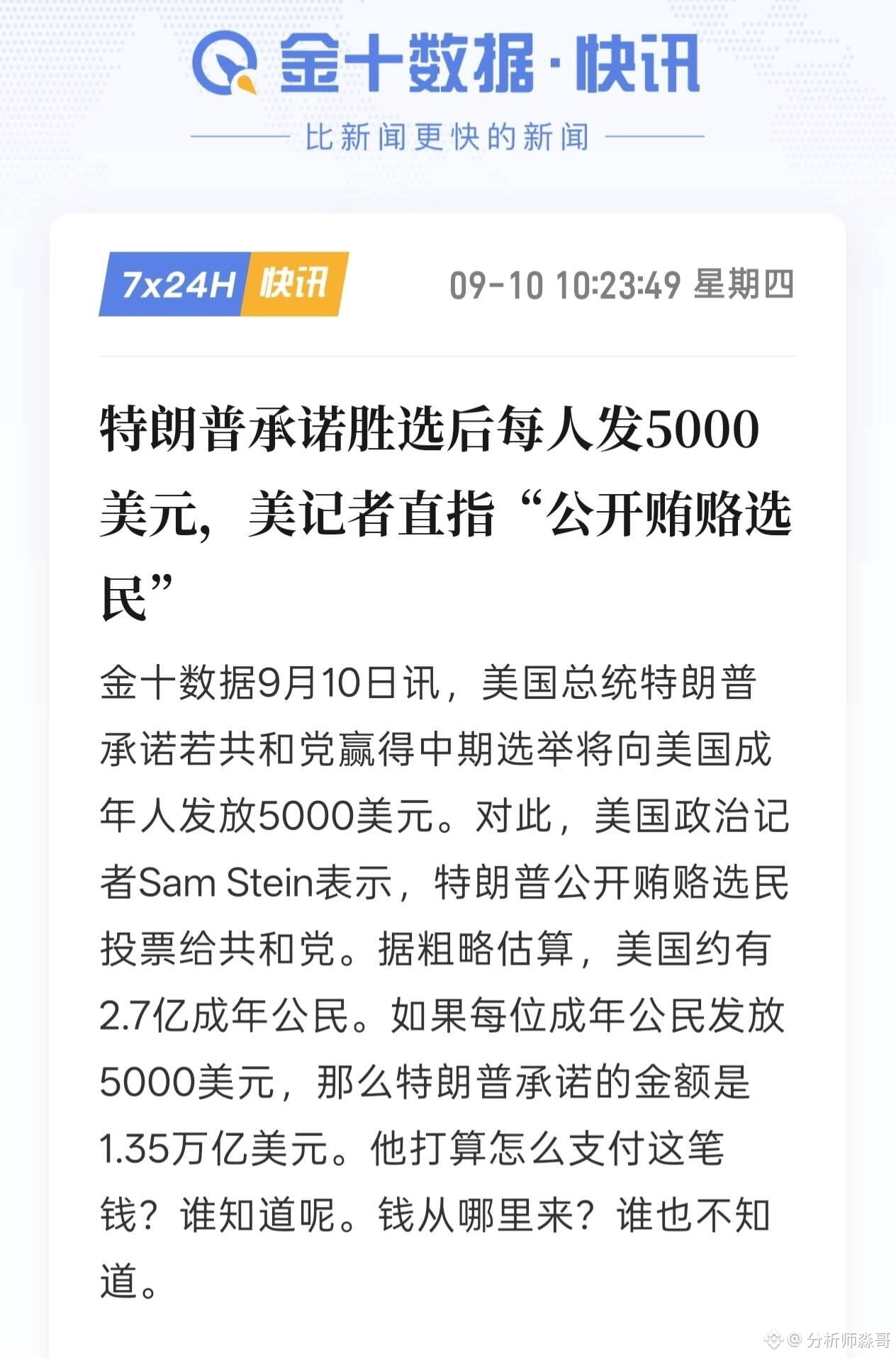
An expert has publicly bribed voters—just vote for me, and everyone gets $5,000!
But the U.S. has 270 million adult citizens. That means you’d need $135 million to cover it all!
Is this guy serious? 😂
#CPI数据来袭能否触发9月加息 #特朗普拒绝沙特打击胡塞武装请求 #加密市场板块连续两日下跌
$ETH $ZEC $BTC
An expert has publicly bribed voters—just vote for me, and everyone gets $5,000!
But the U.S. has 270 million adult citizens. That means you’d need $135 million to cover it all!
Is this guy serious? 😂
#CPI数据来袭能否触发9月加息 #特朗普拒绝沙特打击胡塞武装请求 #加密市场板块连续两日下跌
$ETH $ZEC $BTC
But the U.S. has 270 million adult citizens. That means you’d need $135 million to cover it all!
Is this guy serious? 😂
#CPI数据来袭能否触发9月加息 #特朗普拒绝沙特打击胡塞武装请求 #加密市场板块连续两日下跌
$ETH $ZEC $BTC
2
299
·
--
Bearish
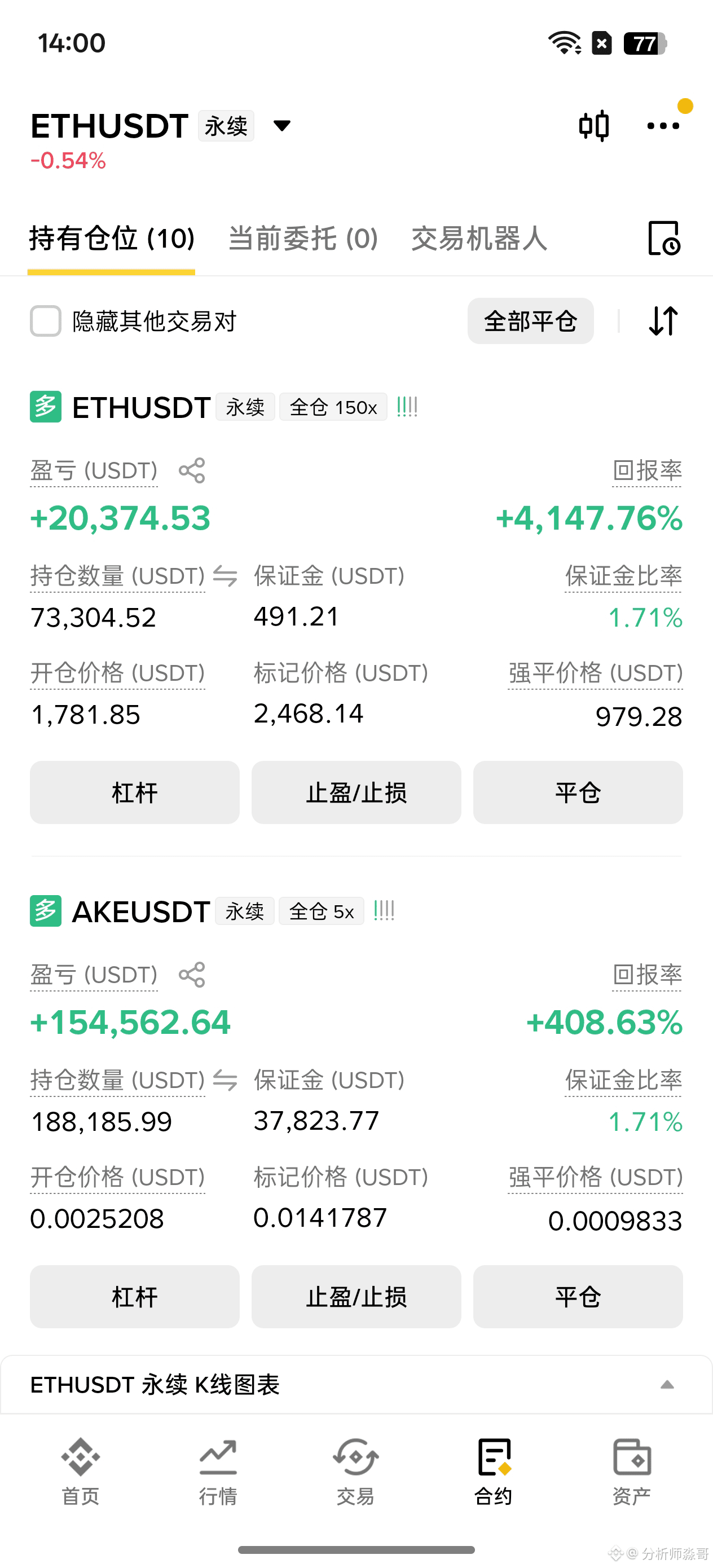
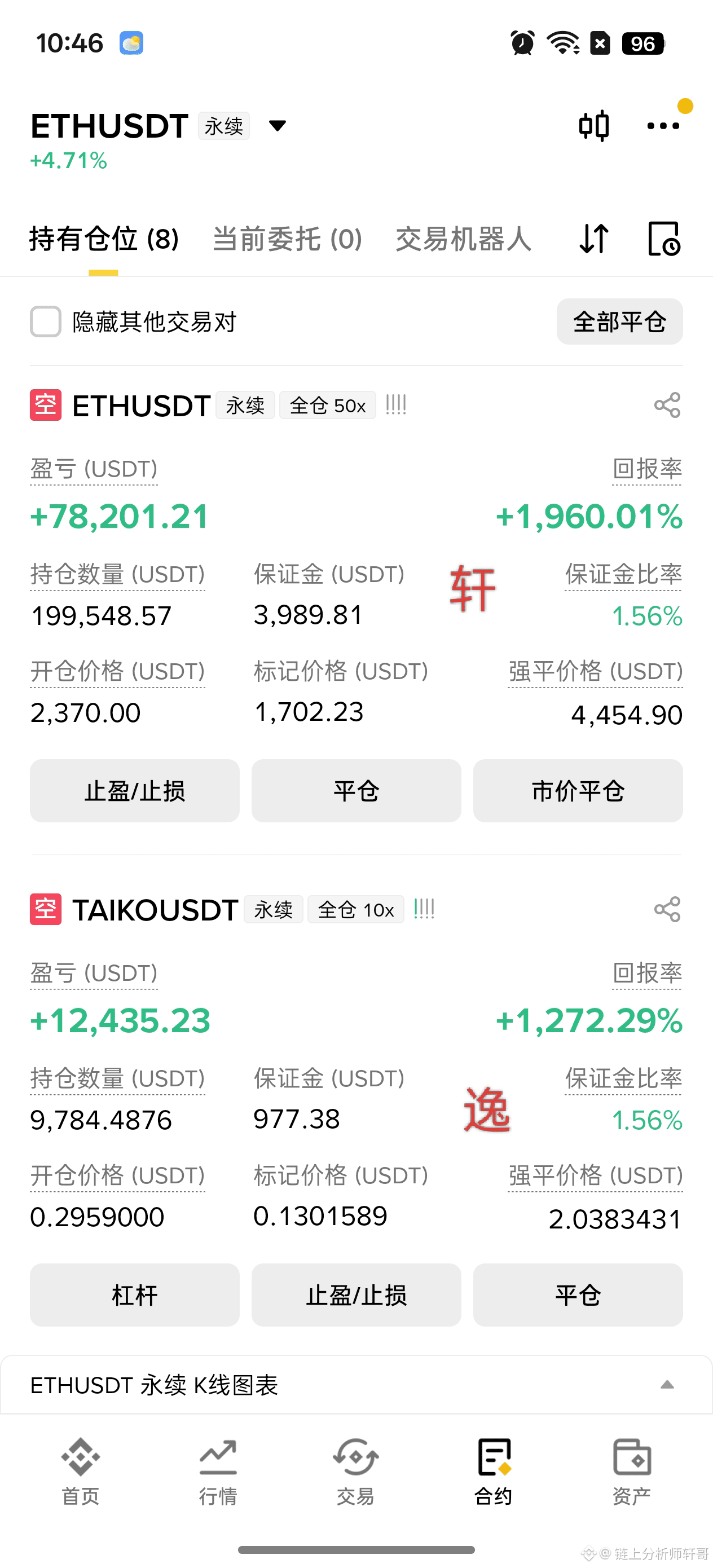
I personally guided someone from 1,400 U to 54,000 U.
In the end, though, I blocked him.
Many people think it was because he lost money.
No. It was because he started to believe he already had it figured out.
When I first met him, his account only had 1,400 U.
My first sentence to him was: take only 10% position size each time.
He panicked: “With such a small position, when will I ever turn it around?”
I only replied: “Turning it around depends on discipline, not on going all-in.”
Within less than a month, 1,400 U became 54,000 U.
People always ask what the secret is.
Actually, it’s just two words: roll the position.
When you make money, take your profits out.
The principal always stays in the safe zone.
Every profitable trade becomes the cushion that protects the next one.
But on Day 34,
he went behind my back and went all-in on a low-quality meme coin.
In a single day, he lost 43%. I asked him why.
He said, “I want to prove I have my own logic too.”
#币安九周年 #欧洲股市下跌 #沪指创三个月新低 #WTI原油触及73美元

196
·
--
Bullish
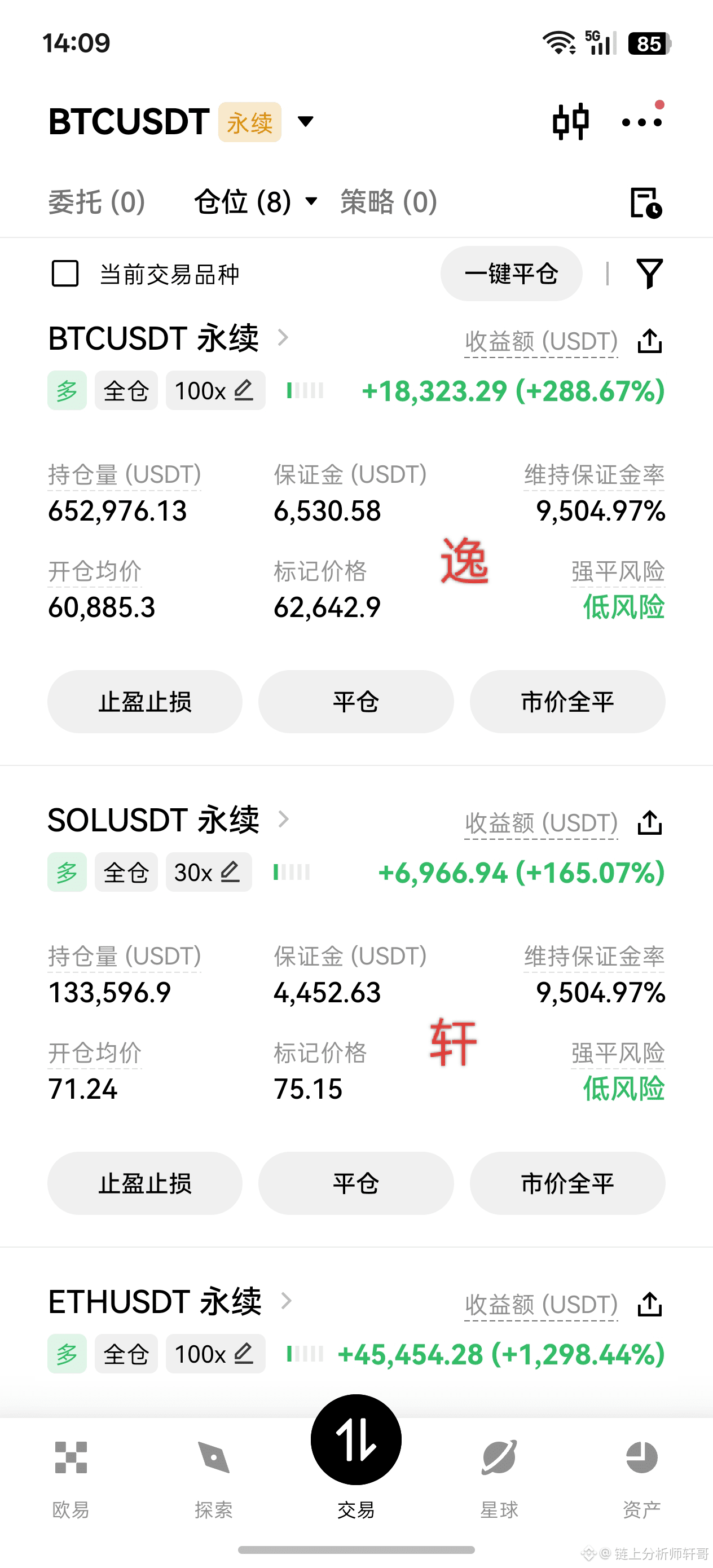
37 years old, from Hunan.
I have two apartments in Shanghai—one for my parents, one for myself.
These weren’t obtained overnight; they are the result of gradual accumulation over seven years of market experience. At first, I also made mistakes.
With initial capital of 150,000, it once shrank to 50,000. I went through anxiety, self-doubt, and insomnia. Later, I realized: the real problem isn’t the market—it’s my own rhythm.
So I split the funds and wrote down rules:
First, steady your mind first, then look at the price.
Don’t be impulsive when prices rise. Don’t panic when they fall. When emotions get out of control, any decision is easy to distort.
Second, even with smaller capital, you must understand allocation.
Leave room and don’t stake all opportunities on a single judgment.
Third, wait patiently for the big trend.
The market doesn’t offer good opportunities every day. Knowing how to wait is itself an advantage.
Fourth, improving your understanding matters more than chasing hot trends.
Opportunities you don’t understand are hard to hold onto.
Fifth, keep initiative and control.
When the market rises, act according to a plan; when it falls, have flexibility.
Sixth, look at liquidity and don’t touch things you don’t understand.
Seventh, watch volatility in the short term, and cycles in the long term.
#币安九周年 #韩国KOSPI盘中V型反转 #美国存储股盘前上涨 #三星电子探索美国ADR上市 #美光股价一个月跌近14%
1
821
·
--
Bullish
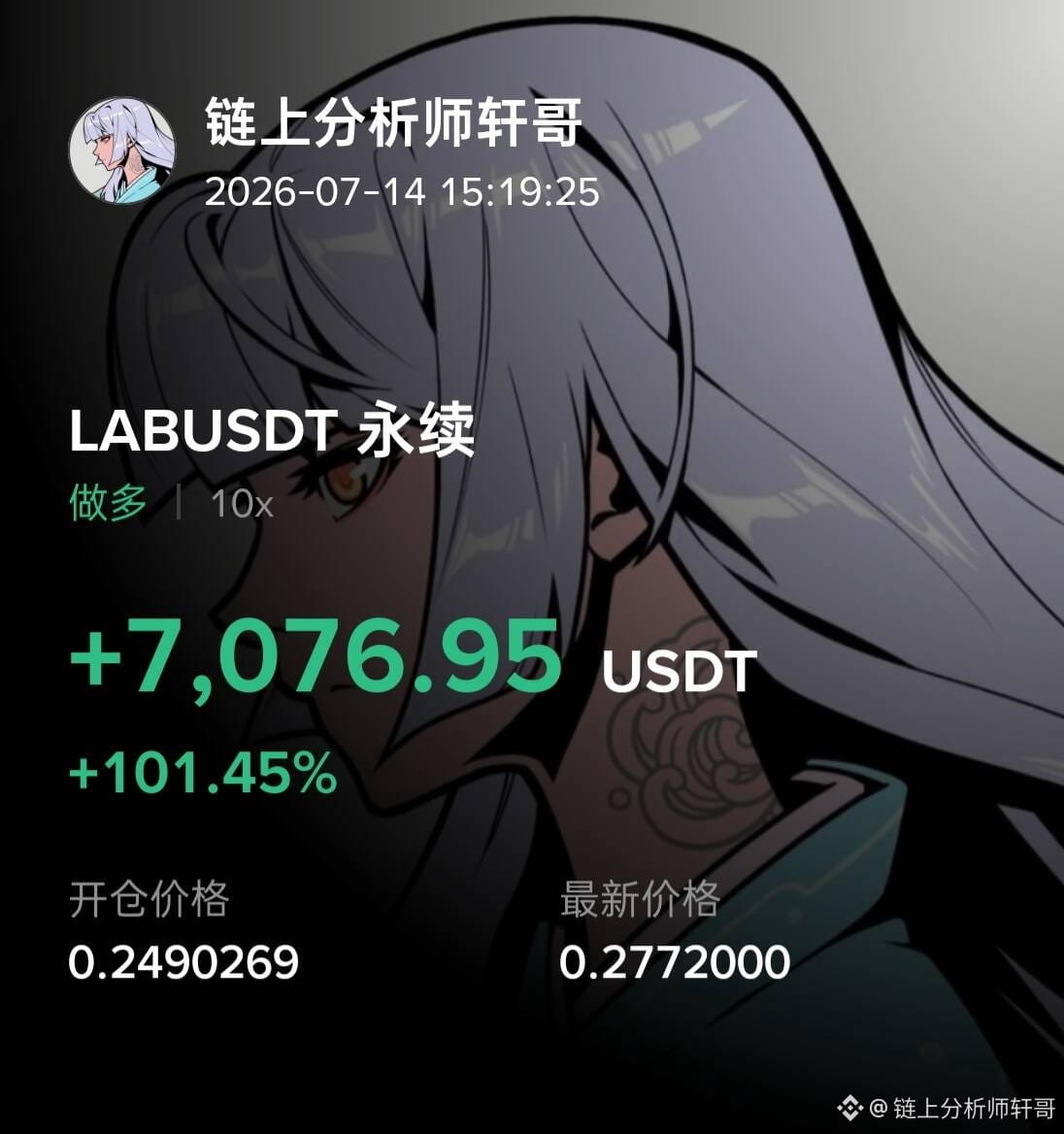
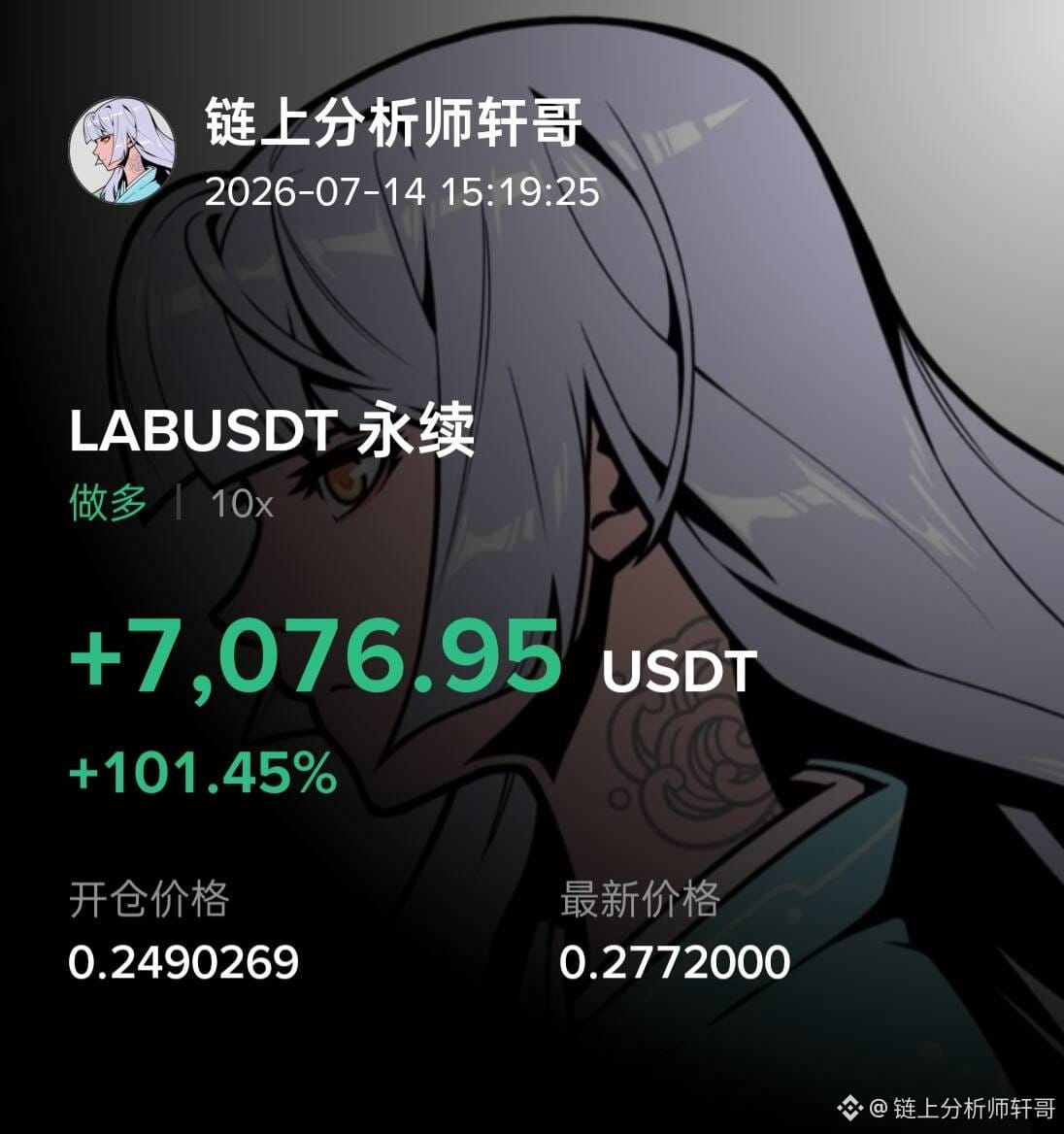
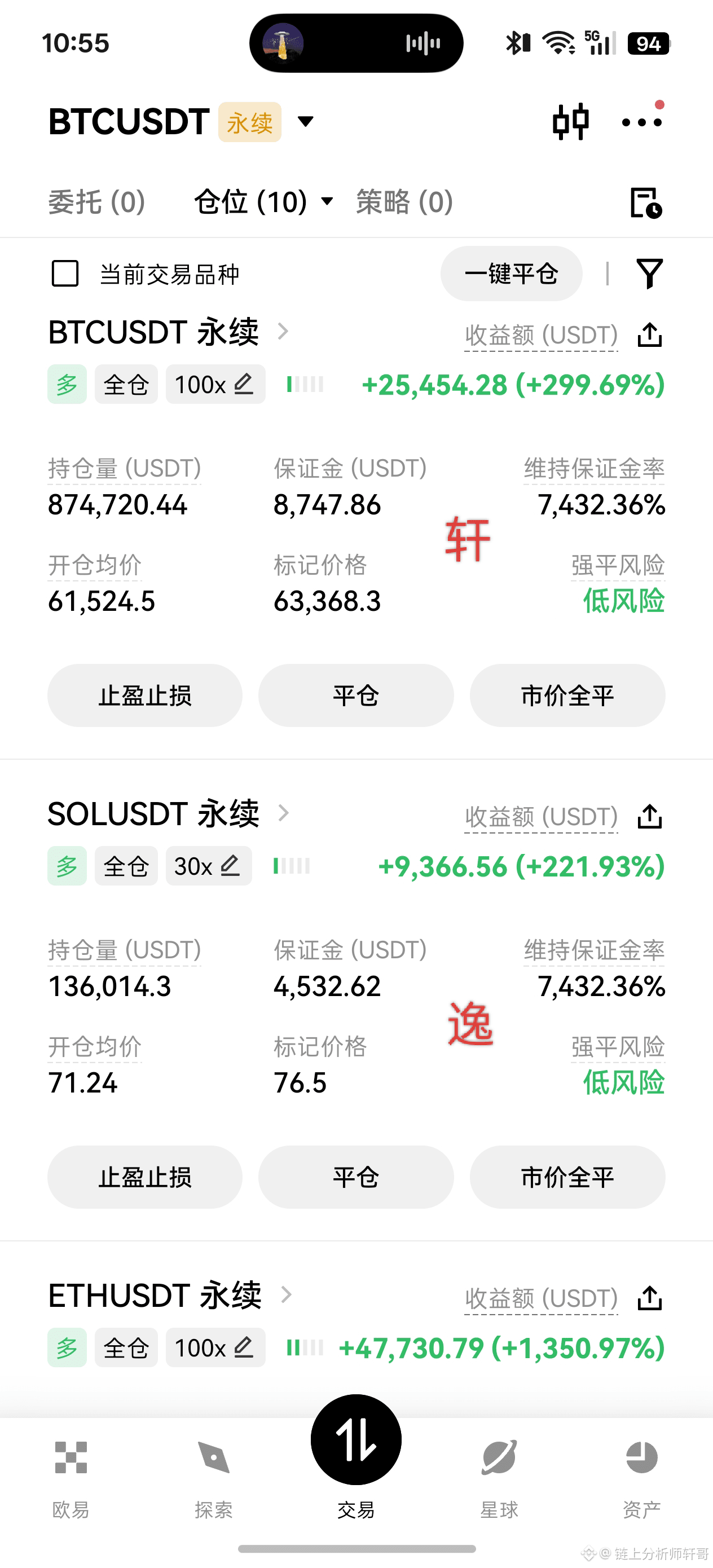
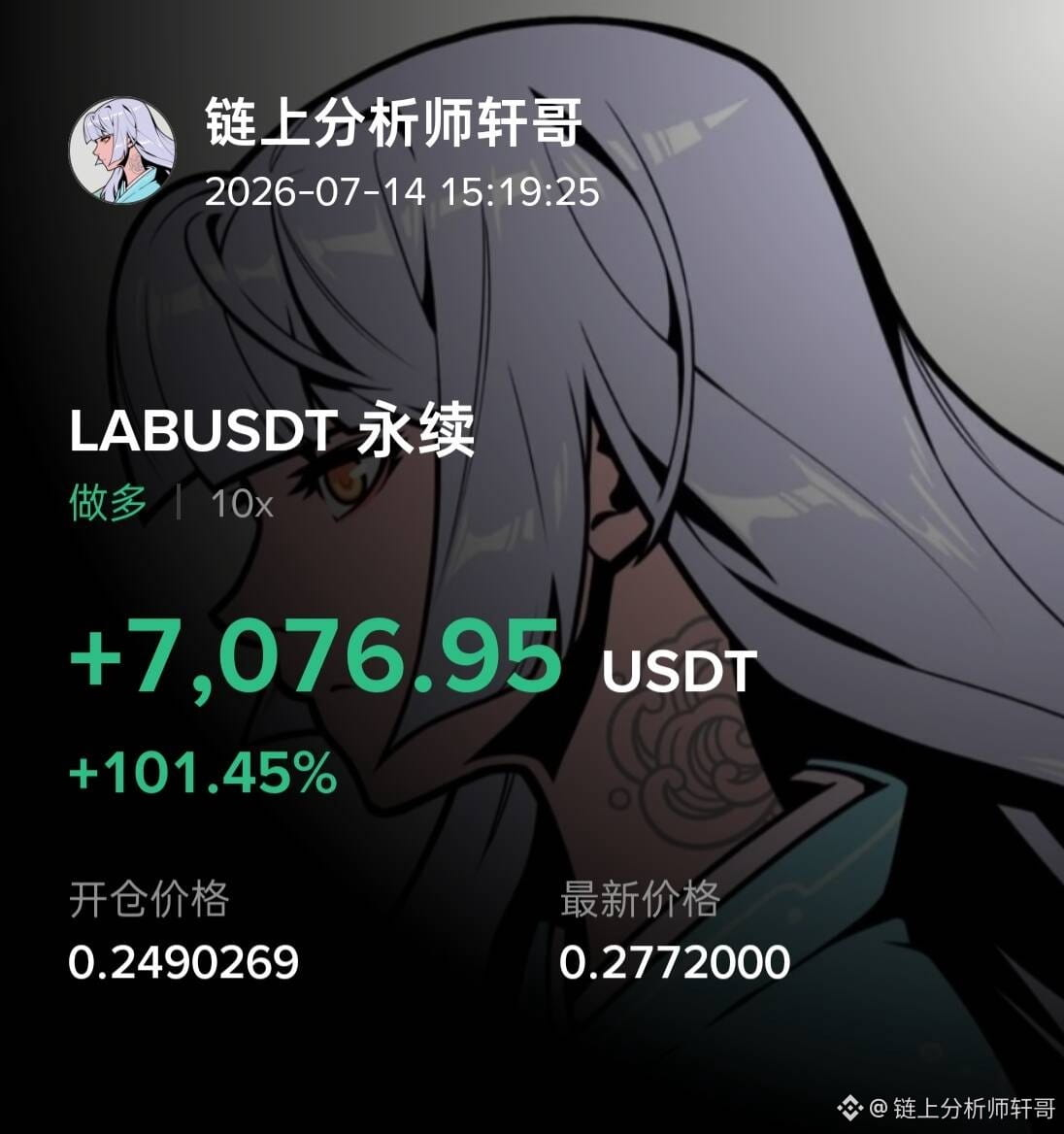
Crypto market roller coaster in three days: from 7,700U to 320,000U—my palms are all sweaty
Now I’m staring at the 320,000U in my account, and I still keep unconsciously touching my phone—afraid the app has frozen. This number is real, not “fake.”
Three days ago, when I walked in with 7,700U, even “take profit” was something I only dared to set as a small target. I never expected to end up riding a rocket straight up.
On the evening of the 6th, after I put the kids to sleep, I curled up on the sofa scrolling through the order book. I casually placed a long order at 3.309.
I put in 2,300U, thinking that if it went wrong I wouldn’t feel too bad—after all, the psychological shadow from chasing highs and getting trapped hasn’t faded yet.
At around 2 a.m., I got up to use the restroom. I grabbed my phone and saw the candlestick charts literally shoot into the sky—8.789! I rubbed my eyes three times. My hands were trembling as I barely managed to set take profit. The moment 20,000U hit my balance, I almost woke the kids.
The next day I woke up and started to doubt myself: is the market really this crazy? I stared at the chart until noon, still unable to resist. I went in again with 50,000U at 9.926.
This time my nerves stayed on edge. I refreshed the screen every five minutes. I ate just a couple bites of lunch and put the chopsticks down. When it surged to 19.9, I didn’t dare get greedy. I clicked take profit instantly, and when the 100,000U came in, my back was soaked—not from heat, but from fear.
But as I watched the price keep pushing higher, I suddenly panicked: this rise is too weird. I gritted my teeth and opened a short position at 20—switched sides.
That night was pure torment. I kept crouched on the sofa staring at the chart, drank three cans of soda, and ran to the bathroom eight times. Every time the candlestick jumped up, my heart tightened with it. Several times I wanted to close the position, but my finger hovered over the screen and then pulled back.
At 3 a.m., a big bearish candle slammed down with a “bang,” dropping straight to 8.66. The instant the account number jumped to 320,000U, my throat tightened. I didn’t dare call out—I just crouched on the floor and pinched my thigh. It hurt—like, real pain.
#币安九周年 #白银较1月纪录高点跌52% #美国存储股盘前上涨 #三星电子探索美国ADR上市
Keep watching:$ETH $ZEC $JCT $DODOX $BEAT $B $SKL $TAC $EVAA $US $VELVET $TAG $EDGE SYN $SNDK $SPCXB $LAB $MU $HYPE $BTC $BNB $SOL
209
·
--
Bullish
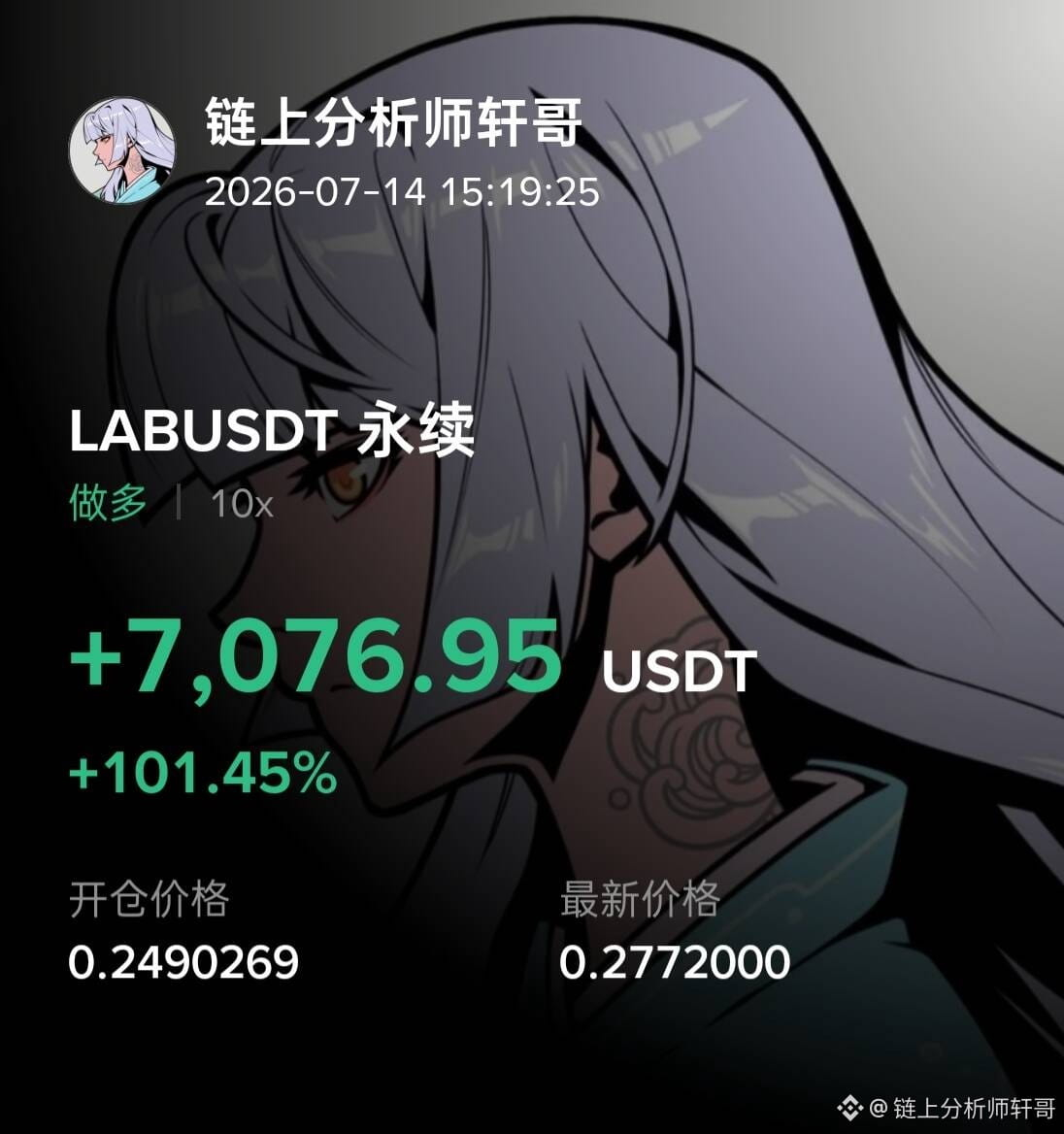
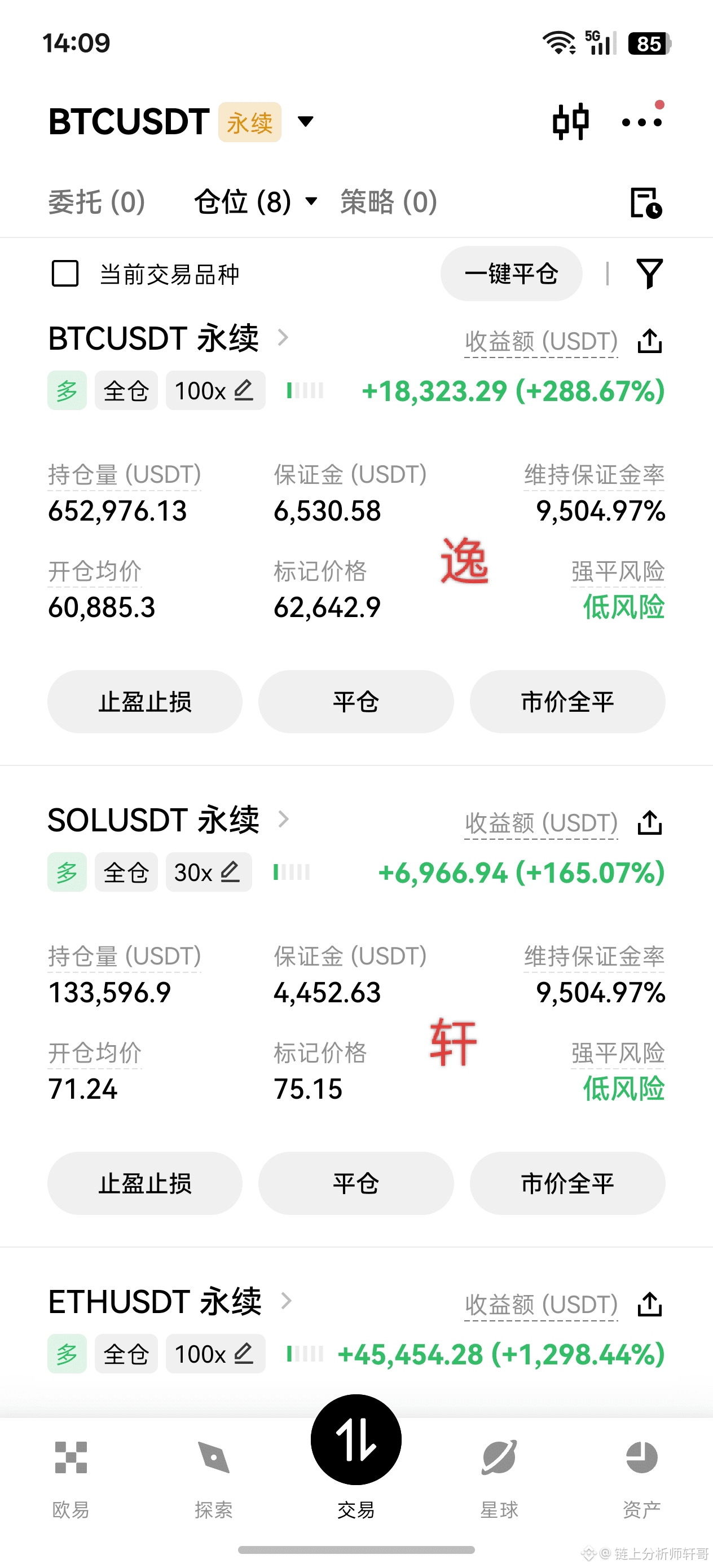
“I clearly went all-in… so why did it still reset to zero?”
Last night, someone in the plaza posted screenshots: with a 10,000U principal, they put the entire account into a 10x position—9,500U—no stop-loss, and the market only pulled back 3%. The account was liquidated immediately.
He thought “all-in = built to take a beating,” but in the end, there wasn’t even a single hair left.
I replied to him: It’s not the all-in that harmed you—the problem is treating all-in like a gambling table.
I. The truth behind all-in liquidation
The liquidation point has little to do with the leverage multiplier; it’s more about the “weight of your position.”
With a 1,000U account, if you open 900U+ at 10x leverage, a 5% move against you will wipe you out. If you only open 100U+ at 10x, it takes a 50% move to blow up.
Your friend bet 95% of the capital—basically sticking his neck under the market’s knife. A mere 3% wave is enough to behead him.
II. My “all-in three don’ts” rule
Since last year, I’ve used the same set of rules. I haven’t blown up in half a year, and I even doubled a little:
Don’t risk more than 20% of total funds per trade.
With a 10,000U account, you can take at most 2,000U into a position. Even with a 10% stop-loss, you only lose 200U—no damage to your capital.
Lock in a maximum loss of 3% per trade.
Using 2,000U with 10x leverage, the stop-loss level is only 1.5%. Once triggered, you lose 300U—exactly 3% of your total funds. You can go to sleep with the lights out.
In a range-bound market, keep your hands in your pockets.
Wait for the trend to show up before getting on the train. During consolidation, absolutely don’t get itchy. Don’t add to positions when in profit—avoid letting emotions slice you back the other way.
III. The correct way to do all-in: leave a buffer zone
The purpose of all-in isn’t to let you “go all the way in one shot,” but to give you “space to change direction.”
Split your principal into five parts. For each attempt, use only one part to test the waters. If you’re wrong, cut it off. If you’re right, hold it—light position testing and strict risk control is the right way to do it.
#币安九周年 #白银较1月纪录高点跌52% #美国存储股盘前上涨 #三星电子探索美国ADR上市
Keep following:$ETH $ZEC $JCT $DODOX $BEAT $B $SKL $TAC $EVAA $US $VELVET $TAG $EDGE SYN $SNDK $SPCXB $LAB $MU $HYPE $BTC $BNB $SOL
2
1
1.1k
·
--
Bullish
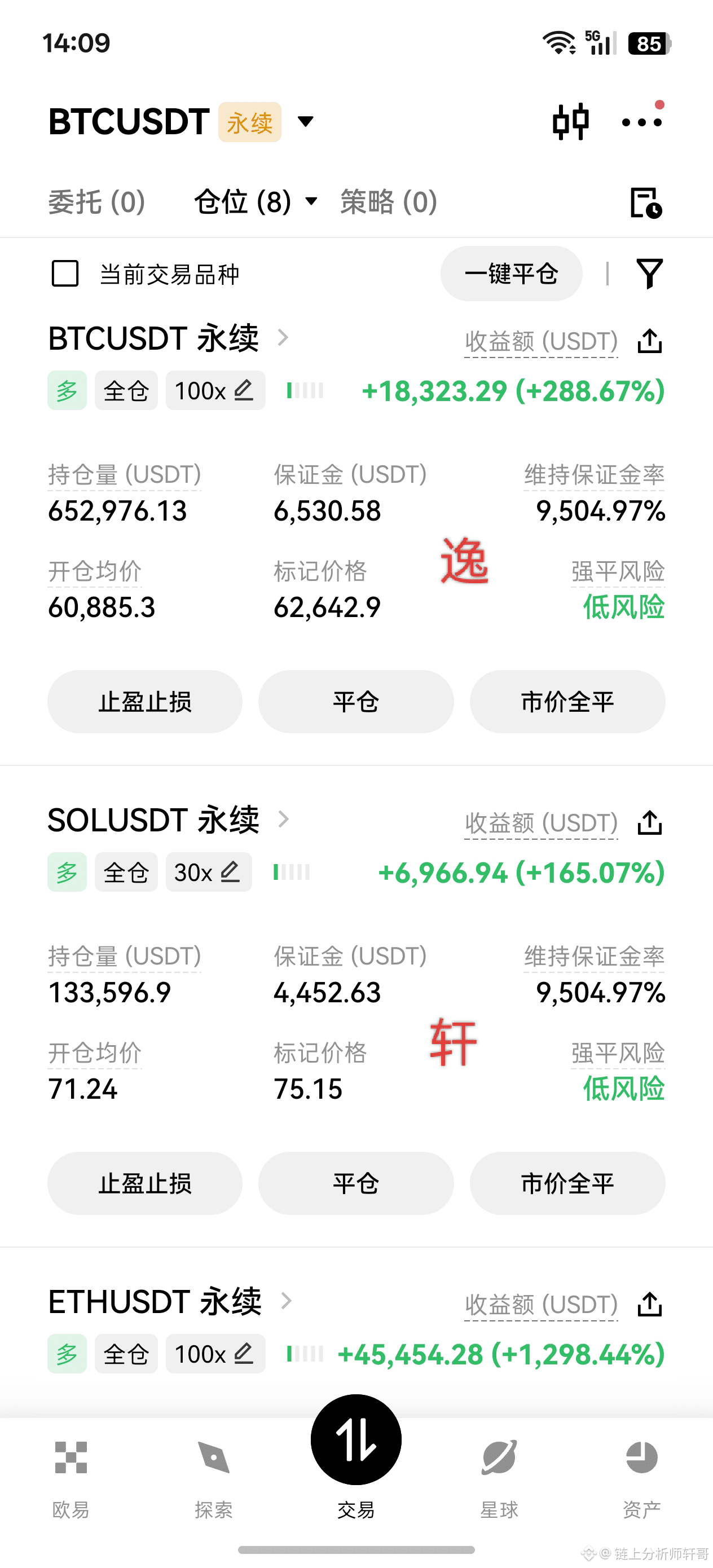
Last week, I went out for dinner with an old friend who had just returned from Singapore—a Benbang (Shanghai-style) restaurant in the old lane. The aroma of red-braised pork was irresistible.
He said, “Right now, investment returns are only one part of life. More than that, it’s about enjoying the process.”
Seven years ago, he was still a regular office worker with a bit of savings in hand, but he chose to enter the market.
Many people didn’t understand, but over these years, he hasn’t relied on impulsiveness. Instead, he has accumulated steadily through discipline.
Looking back at his experience, I realized that these are the key points that truly widen the gap:
First, when others panic, he stays calm.
When the market swings drastically, he doesn’t rush to follow his emotions—he observes trends and opportunities.
Second, when he notices the logic has changed, he adjusts in time.
Rising prices don’t mean it will always be correct. When his judgment becomes invalid, he knows how to protect his gains.
Third, he knows how to wait.
During the downturn, he reduces his actions and spends his time on exercise, learning, and life.
#币安九周年 #韩国KOSPI盘中V型反转 #美国存储股盘前上涨 #三星电子探索美国ADR上市
Keep an eye on:$ETH $ZEC $JCT $DODOX $BEAT $B $SKL $TAC $EVAA $US $VELVET $TAG $EDGE SYN $SNDK $SPCXB $LAB $MU $HYPE $BTC $BNB $SOL
2
201
·
--
Bullish
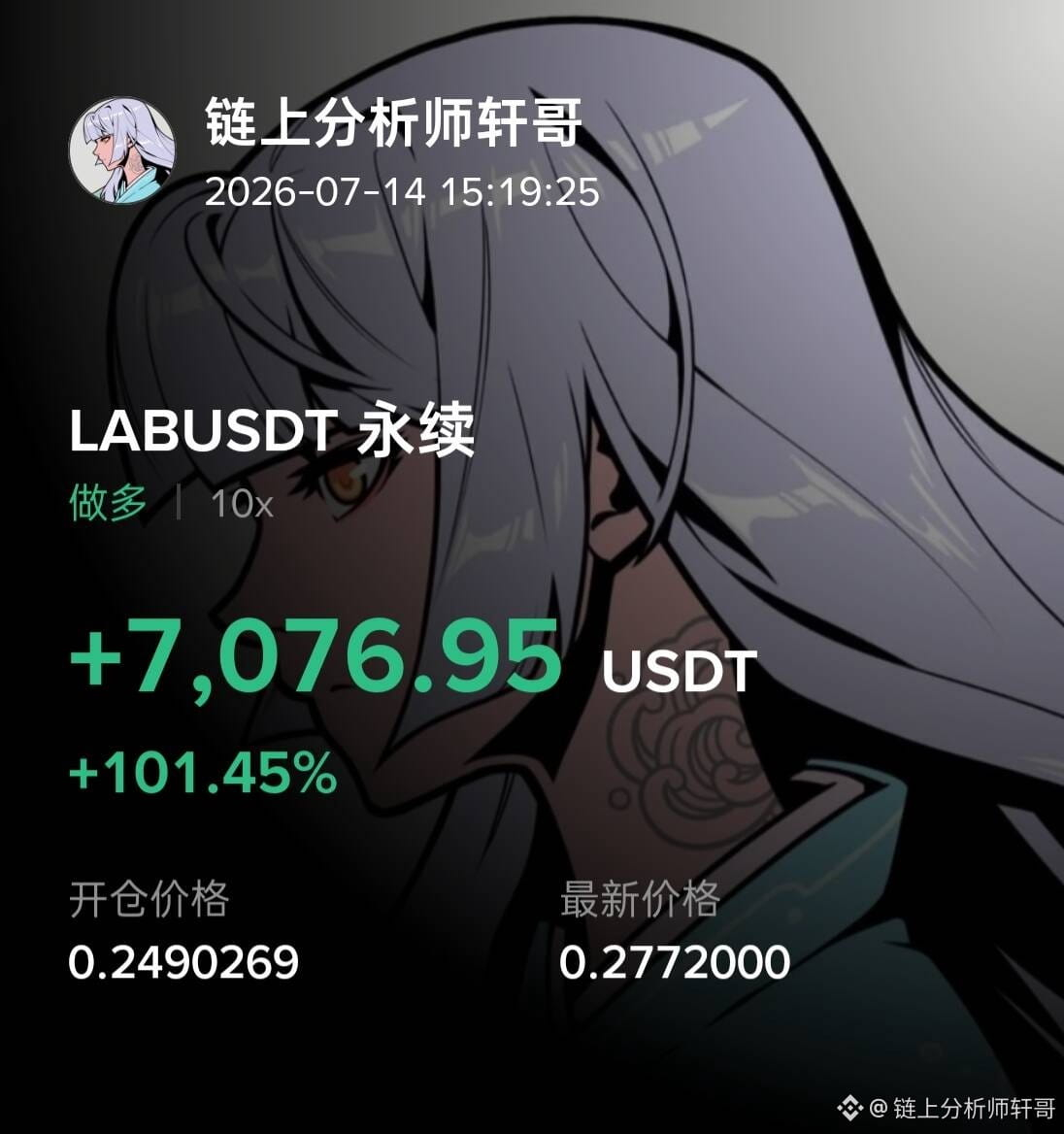
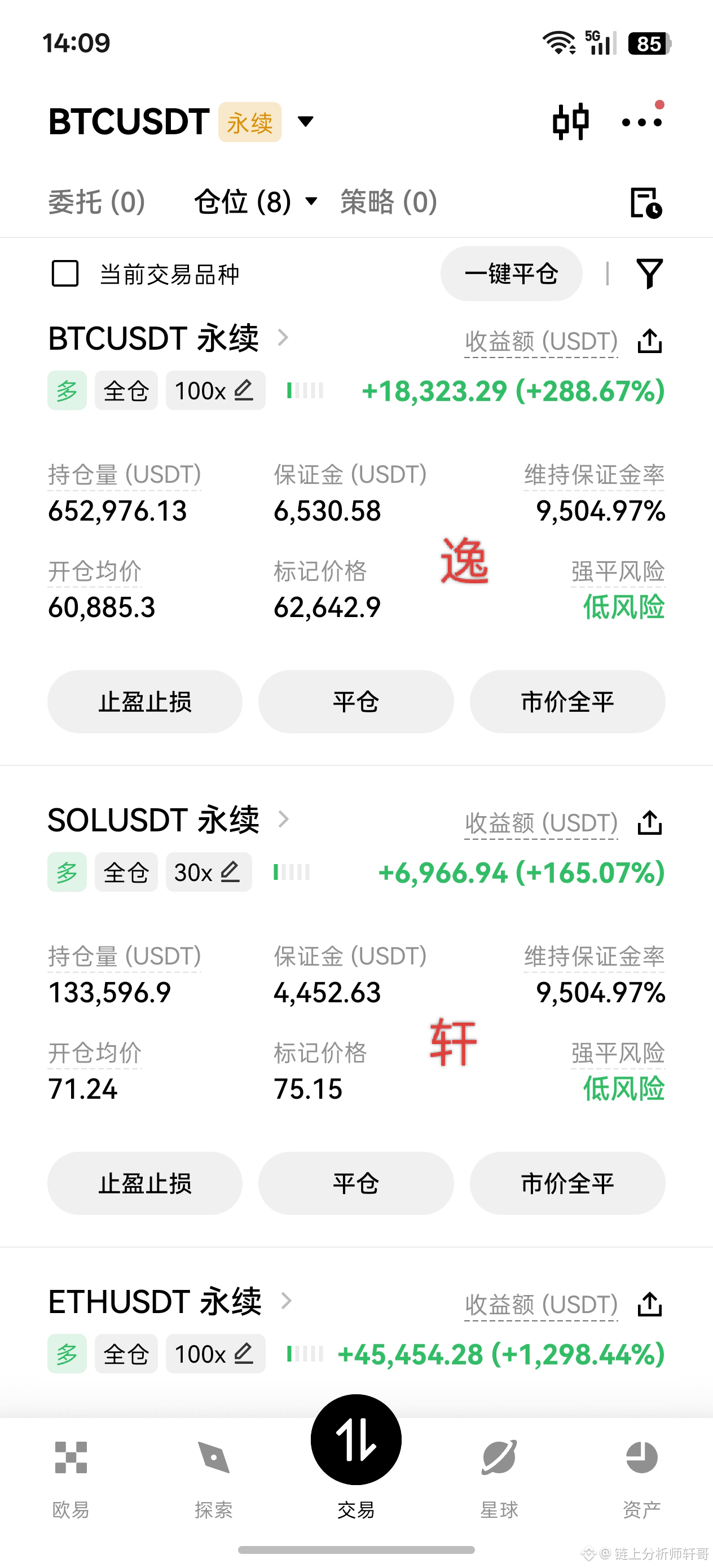
Last year, a friend came to see me with 1800U, saying he wanted to start over.
I didn’t give him any so-called “shortcuts”—I just told him to remember three sentences.
Three months later, by sheer execution, he grew his account to 50,000U, without going through any major loss of control.
First sentence: Money management matters more than opportunities.
Split 1800U into three parts:
One part to practice short-term trade timing, controlling the number of trades;
One part to wait for trend confirmation, and don’t trade frequently in chaotic market conditions;
One part kept as reserve to ensure you always have room to adjust.
First protect your principal—then you have the right to wait for opportunities.
Second sentence: Only trade the setups you can understand.
In a ranging market, make fewer moves; participate only when the trend is clear.
Don’t rush to chase hot topics, and don’t always try to catch the absolute lows. There are plenty of market opportunities, but patience is rarer.
Third sentence: Let rules replace emotions.
Before every action, write out the plan clearly: when to enter, and when to exit.
When the trigger condition is met, execute—don’t leave excuses for impulsiveness.
#币安九周年 #美国存储股盘前上涨 #三星电子探索美国ADR上市 #美光股价一个月跌近14%
Keep an eye on:$ETH $ZEC $JCT $DODOX $BEAT $B $SKL $TAC $EVAA $US $VELVET $TAG $EDGE SYN $SNDK $SPCXB $LAB $MU $HYPE $BTC $BNB $SOL
2
248
·
--
Bullish
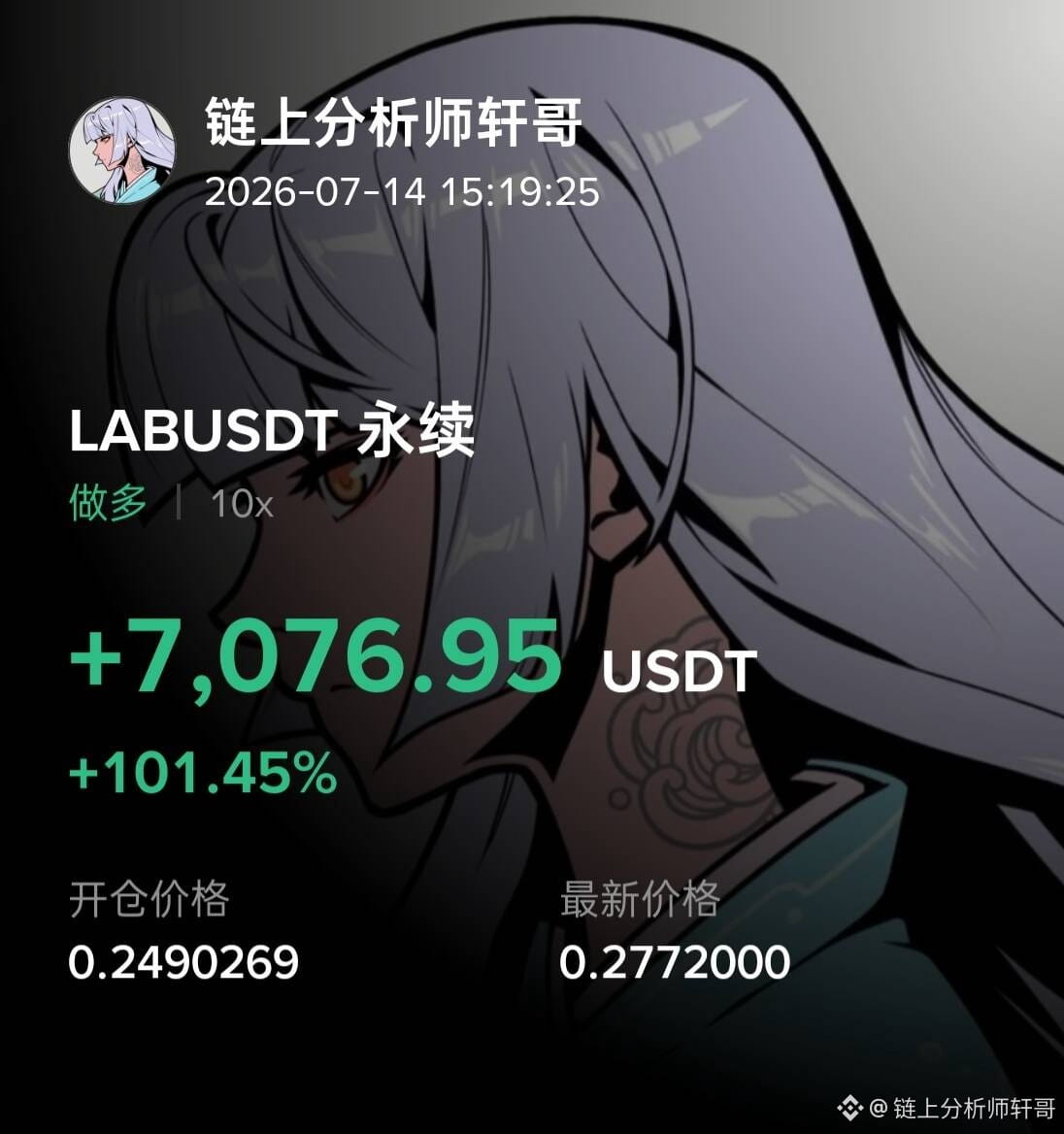
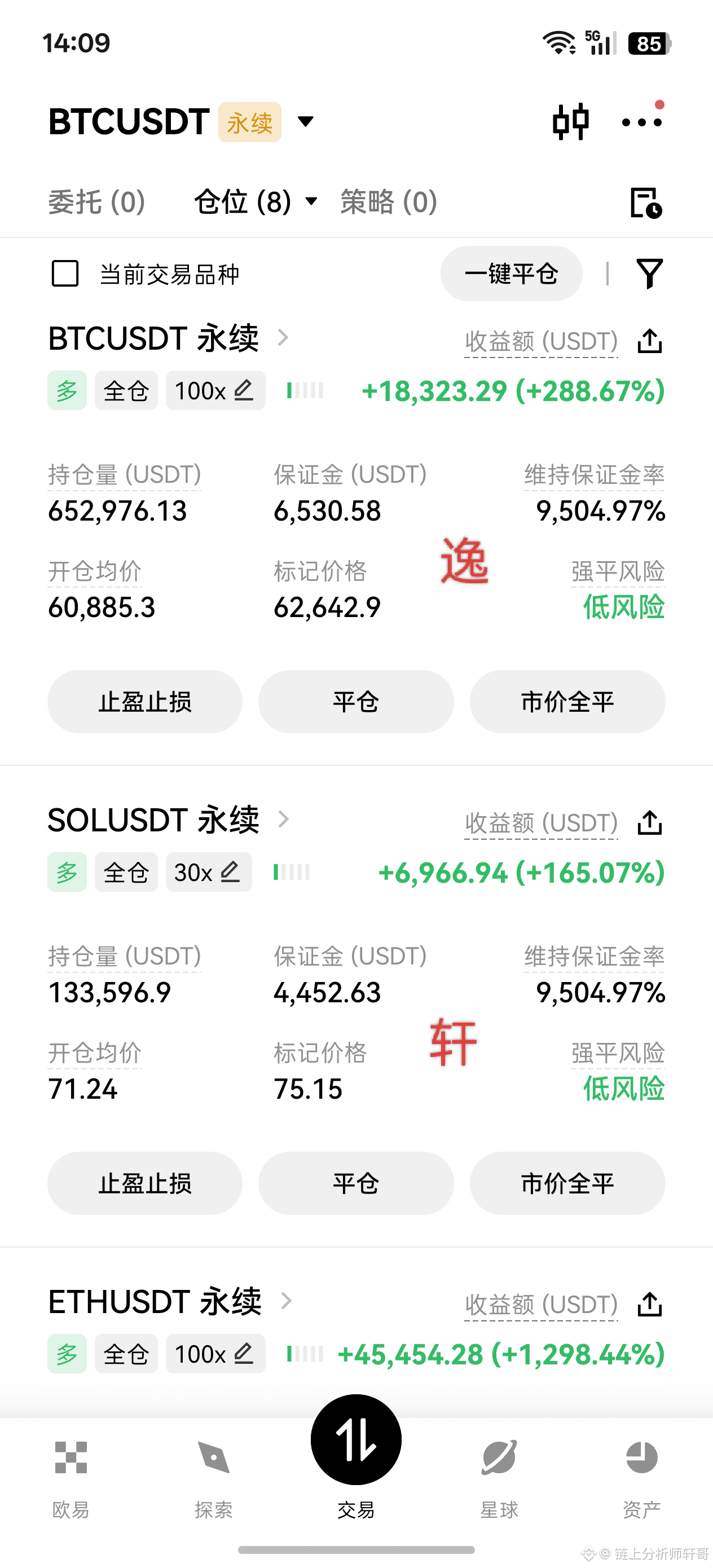
I’m a post-90s generation guy, from Chengdu, Sichuan, and currently living in Poly. I have two villas—one at home in my hometown, and one where I work.
Not a rich second-generation kid, and not relying on luck. I’ve been in the crypto market for 8 years, turning 80,000 yuan into 8 million. It wasn’t insider info, and it wasn’t guts for all-in bets. What I relied on was a “stupid” method that boils down to: slow is fast.
Today I won’t talk fluff, and I won’t pretend to be some big shot. For the 2555 days of pitfalls I’ve stepped into, and the 6 iron rules I’ve summarized, I’m going to tell you from the bottom of my heart.
If you understand just one, you’ll lose 100,000 less. If you manage three, you’ll already have outperformed 90% of retail traders.
1. When it rises fast and falls slow, the market maker is loading up
Don’t panic just because there’s a pullback. A rapid pump followed by a slow retreat isn’t the top—it’s distribution/positioning (washing out). The truly dangerous scenario is that kind of instant crash right after a surge on heavy volume—that’s the standard move of luring people in before unloading.
2. When it falls fast and rises slow, the market maker is making an exit
After a flash crash, any small bounce isn’t a buy-the-dip signal—it’s the last wave of luring. Don’t be fooled by, “It’s already down so much.” The real bottom will never give you a comfortable chance to board.
3. A top with rising volume doesn’t necessarily mean death; low volume is what’s really dangerous
At high levels, rising volume means there’s still money in the game—there might be one final push. What I fear most is high-level volume drying up; the market gets cold like an ice cave—that’s the dead silence right before a collapse.
4. Don’t get excited about a bottom volume spike; what matters is sustained volume
A one-time volume surge at the bottom is bait; sustained volume is what makes it believable—what indicates building positions.
5. In crypto, you trade emotion; up and down are all written in “volume”
Learn the “no” mindset: don’t get fixated, don’t be greedy, and don’t be afraid. Only then can you stay in cash and wait, and only then can you dare to act.
6. The highest realm in crypto is having a “no” mindset
Learn the “no” mindset: don’t get fixated, don’t be greedy, and don’t be afraid. Only then can you stay in cash and wait, and only then can you dare to act.
The market never lacks opportunities—what’s missing is whether you can control your hands and see the situation clearly. What really gets you out is not watching the chart every day, but having your own rhythm and judgment.
#币安九周年 #韩国KOSPI盘中V型反转 #美国存储股盘前上涨 #三星电子探索美国ADR上市
2
186
·
--
Bullish
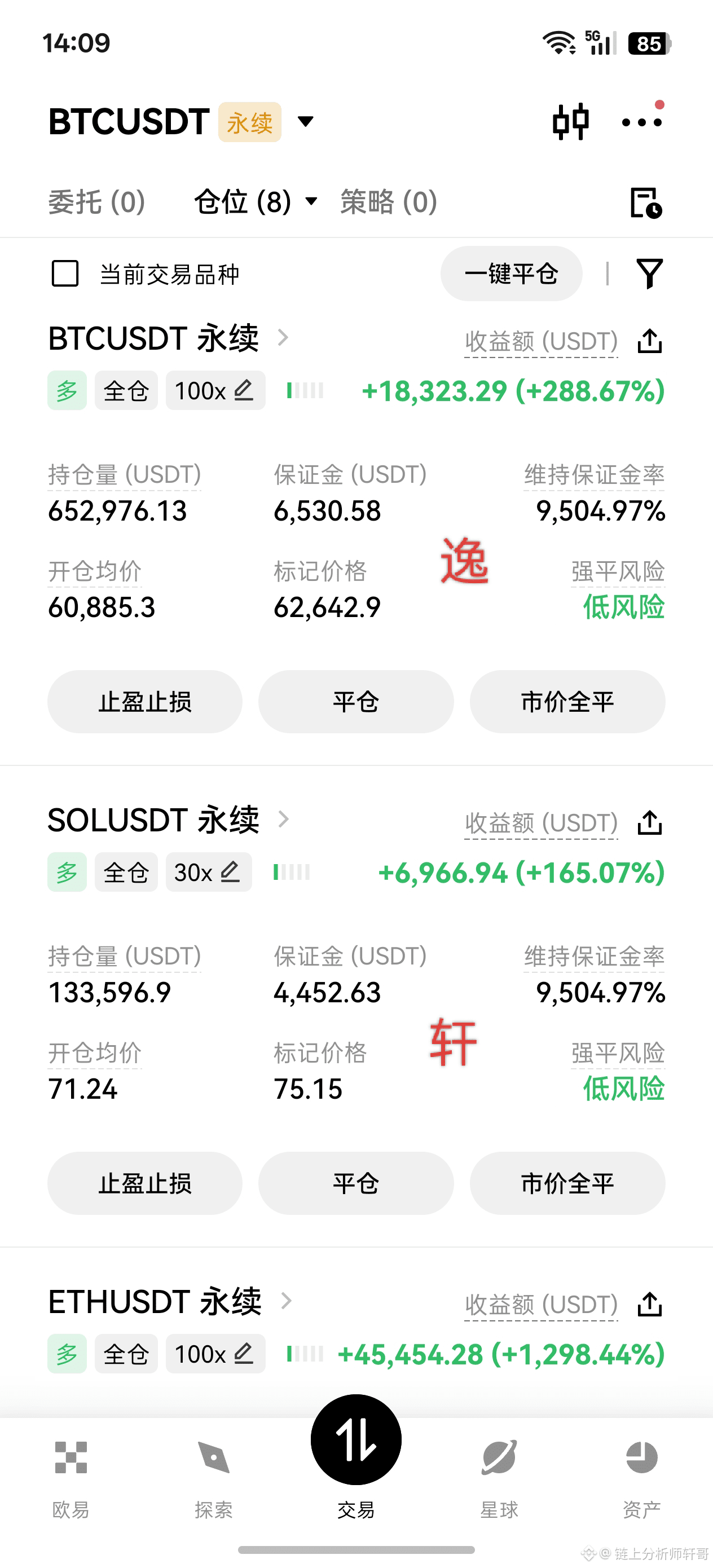
Let me make it clear first: I’m not a money-making/leading teacher, and I don’t provide any trading advice. I’m just a regular coin buddy who has fallen on the market many times and is still summarizing lessons.
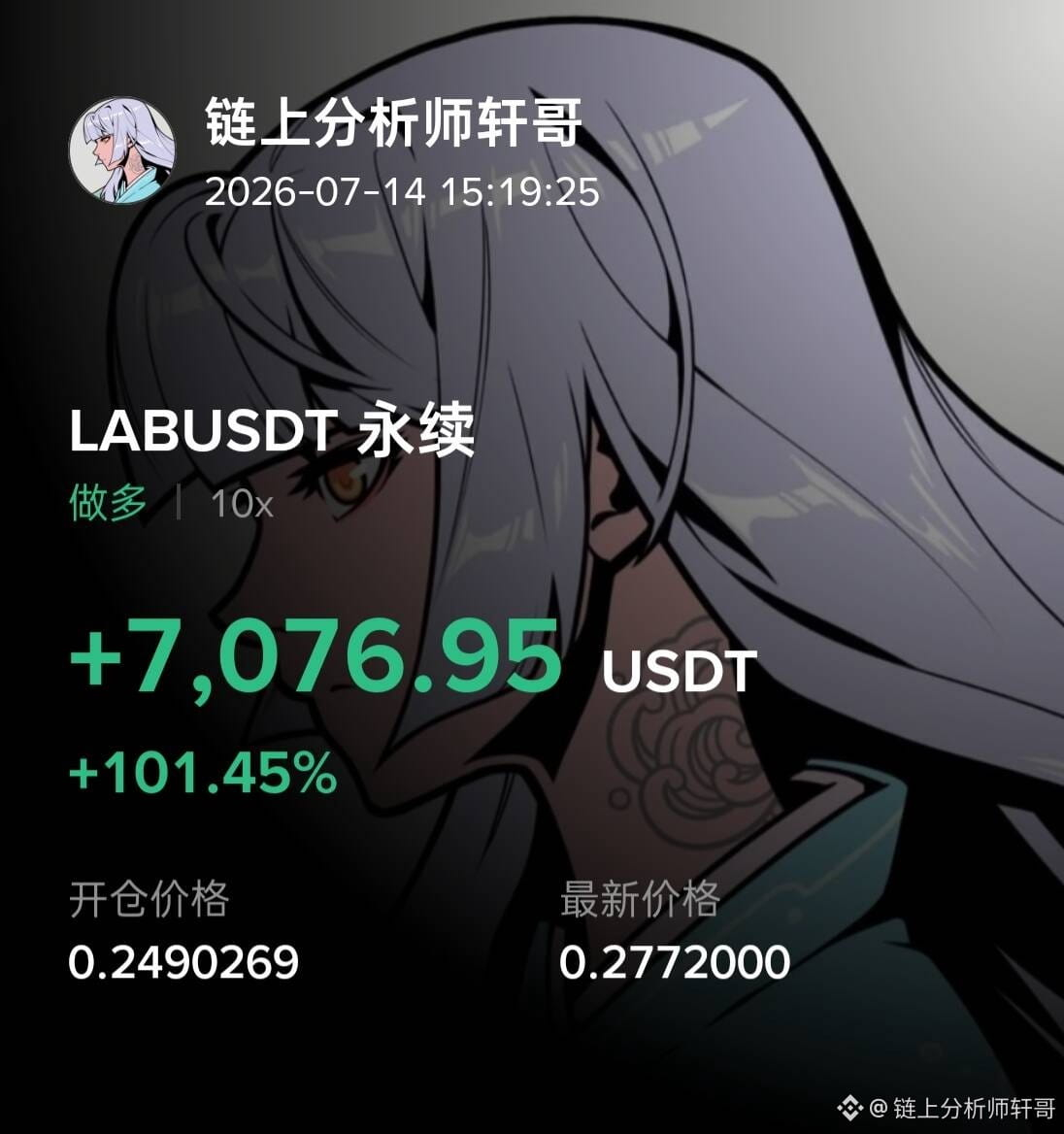
Last year, my younger cousin came to me with 2,700U and said he wanted to start over. I didn’t teach him complicated methods—I only told him to remember three sentences. After three months, he grew his account to 50,000U through discipline.
First sentence: Separate your funds—don’t put all your hope in one place.
Split 2,700U into three parts: short-term observation, trend participation, and reserve funds.
Each part has its purpose, and none of them can be moved around casually. First, make sure you can still stay in the game.
Second sentence: Only trade the market you can actually understand.
In a ranging (choppy) period, don’t overtrade—act only when the trend is clear.
Don’t chase sudden pumps, and don’t rush to guess the absolute bottom. There are plenty of opportunities. The key is not to have one mistake throw off your rhythm.
Third sentence: Let rules control your emotions.
Before entering, write a plan and decide in advance what your exit conditions are.
When you’re profitable, don’t get carried away; when you draw down, don’t panic. Don’t let a moment of impulsiveness decide your next step.
#币安九周年 #三星电子探索美国ADR上市 #美光股价一个月跌近14% #日韩股市收涨韩股盘中跌超5% #长鑫存储据悉7月27日上交所上市
Keep following: $ETH $ZEC $JCT $DODOX $BEAT $B $SKL $TAC $EVAA $US $VELVET $TAG $EDGE SYN $SNDK $SPCXB $LAB $MU $HYPE $BTC $BNB $SOL
2
190
·
--
Bullish
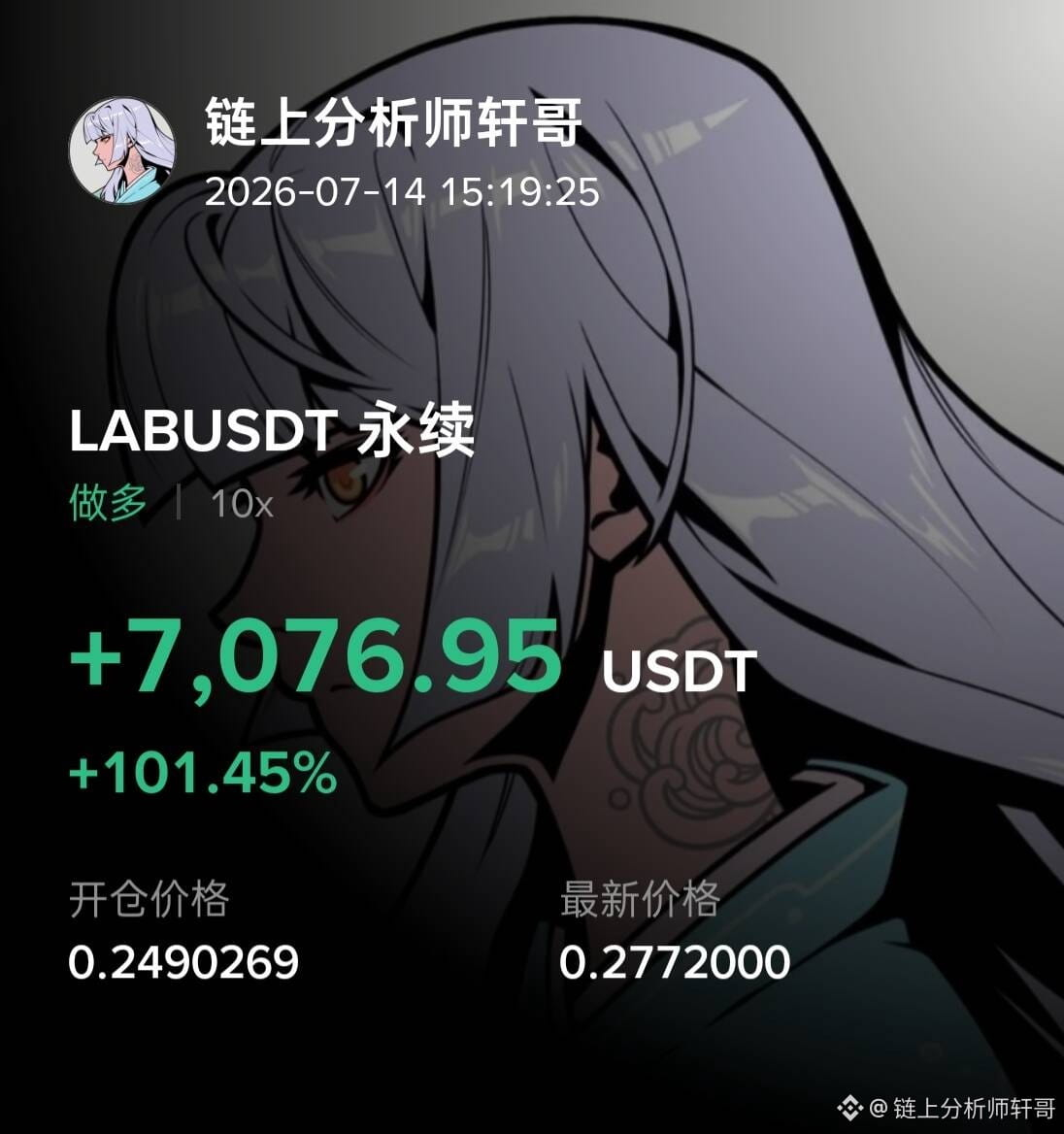
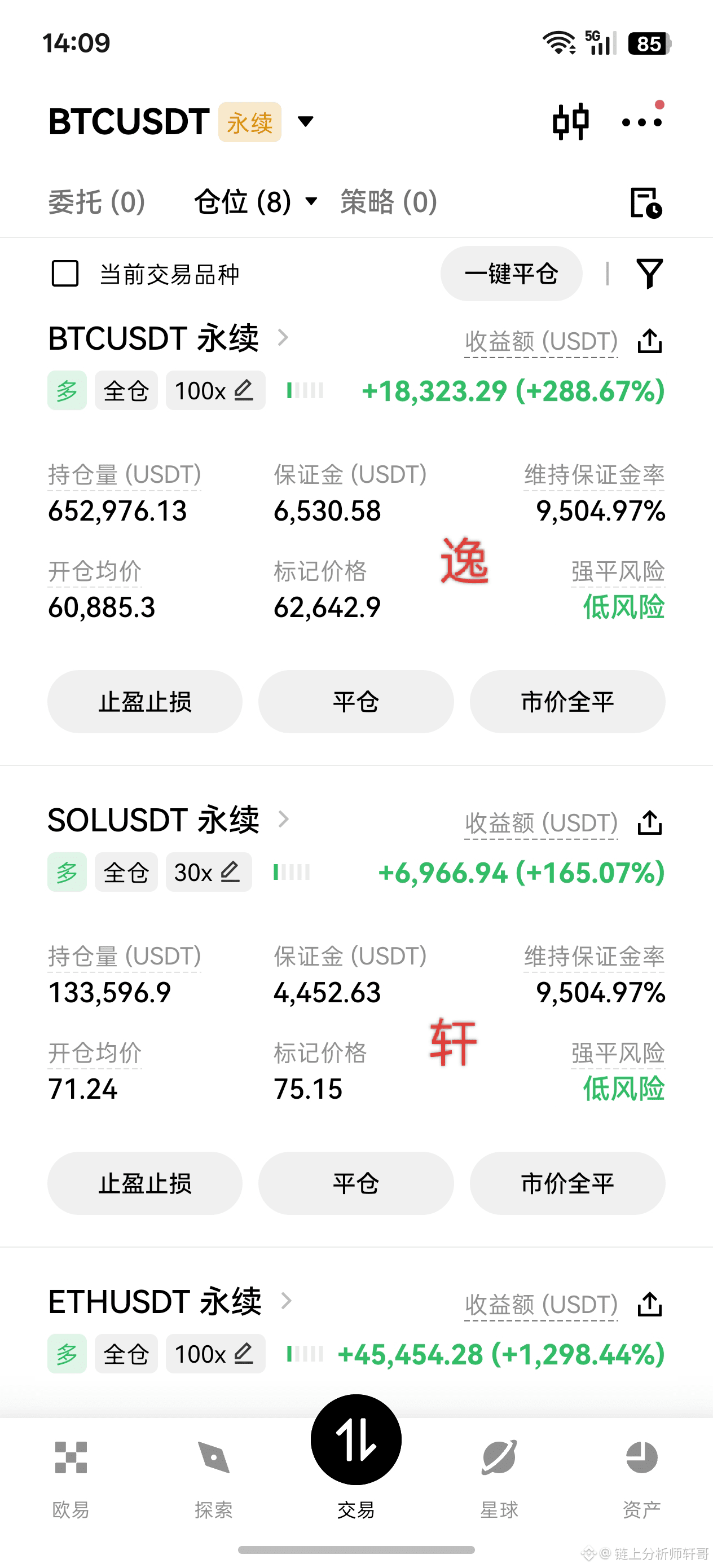
The disciple asked, “Master, you only do a few trades a year—why can you still take profits every time?”
I handed him a cup of tea: “First, understand the market’s rhythm, then decide whether to act.”
1. Don’t obsess over short-term noise
Minute-level fluctuations are mostly emotional interference. What truly matters is the daily and weekly trend. Don’t let a few candlesticks sway your judgment.
2. Start with a small position; confirm the larger trend before following
The first entry is just for observation. Once the direction is clear, adjust gradually. Your risk boundaries should always come before your profit targets.
3. Give your trading a pause button
After opening a position, only check whether the trend has changed and whether the logic has been broken. If nothing has changed, don’t let price swings pull you around.
4. Lower your presence
Account gains and losses are just number changes. You don’t need to prove yourself every day. Treat the market like a season—wait patiently for harvest.
5. Don’t let unrealized profit affect your judgment
Focus on whether the trend is continuing, not on how much you earned or lost in a single day. The real big opportunities come from the “boom” after long-term waiting.
6. Control the number of times you act
Trading isn’t about who moves fastest—it’s about who has more patience. Making fewer mistakes is an advantage in itself.
#币安九周年 #美光股价一个月跌近14% #日韩股市收涨韩股盘中跌超5% #长鑫存储据悉7月27日上交所上市 #美股美债齐跌
Keep following:$ETH $ZEC $JCT $DODOX $BEAT $B $SKL $TAC $EVAA $US $VELVET $TAG $EDGE SYN $SNDK $SPCXB $LAB $MU $HYPE $BTC $BNB $SOL
2
814
·
--
Bullish
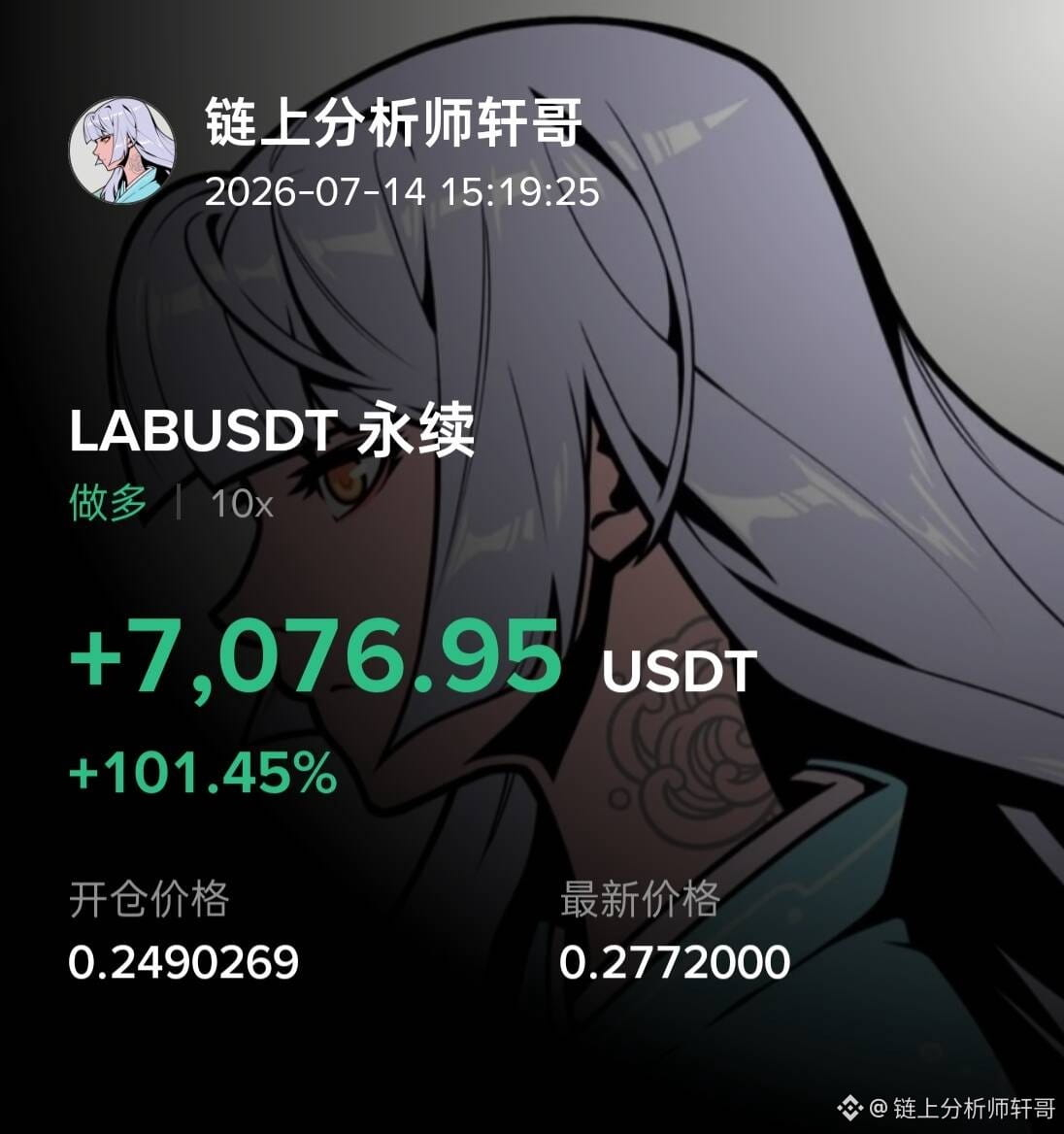
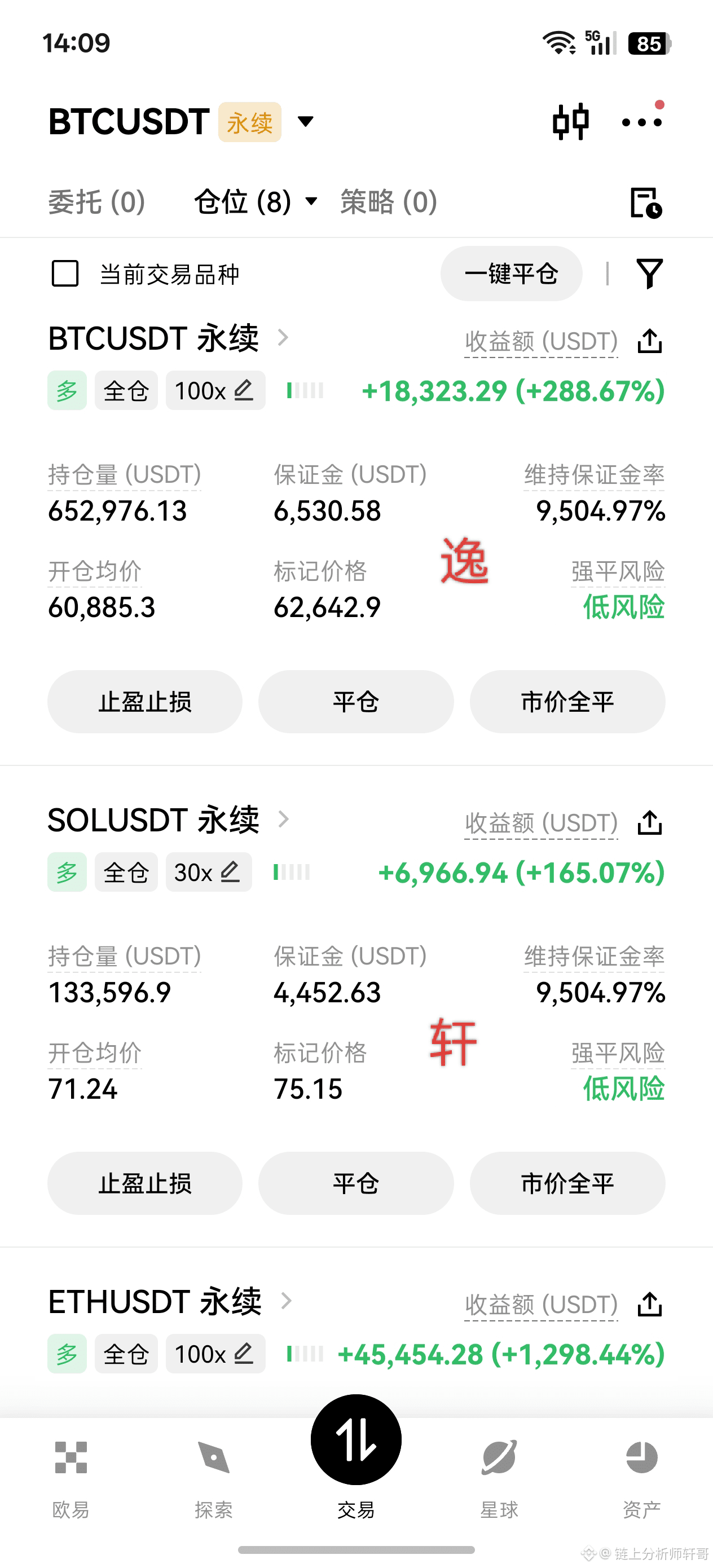
I'm a post-90s native of Chengdu, 34 years old. After 8 years of grinding it out in the crypto world—from 50,000 all the way to 5 million—I didn’t rely on inside information or luck. Instead, it was a trading logic that I repeatedly validated.
① Fast pump, slow drop: Many people think a top is in when they see it. But often, what they’re witnessing is the main players shaking out positions. The real danger is a surge on high volume followed by a quick pullback.
② Fast drop, slow rise: Don’t rush to bottom-fish. Those gradual rebounds are often just sentiment repair. Jumping in hastily can easily get you trapped again.
③ Watch volume at high levels: If volume can continue to expand at the top, the trend may not be over. But if volume starts to shrink at high levels, you should be more alert.
④ Don’t be impulsive at the bottom: One burst of high volume doesn’t necessarily mean opportunity. It’s more reliable only when there is sustained high volume and price holds its ground.
⑤ Volume-to-price matters: Price is just the result—trading volume is what truly reflects the money’s attitude. Learning to read volume is more valuable than obsessing over candlestick charts.
⑥ Experts know how to wait: When you should stay in cash, stay in cash. When it’s time to act, act. Don’t chase, don’t gamble, don’t panic. Real money-makers compete on discipline.
#币安九周年 #长鑫存储据悉7月27日上交所上市 #美股美债齐跌 #韩元创两个月新高
Keep following:$ETH $ZEC $JCT $DODOX $BEAT $B $SKL $TAC $EVAA $US $VELVET $TAG $EDGE SYN $SNDK $SPCXB $LAB $MU $HYPE $BTC $BNB $SOL

7
1
1.6k
·
--
Bearish
"Why do so many people know that contracts are likely to get liquidated, yet they still rush in like crazy?"
Because everyone wants to get rich overnight.
But the people who truly make money—never gamble.
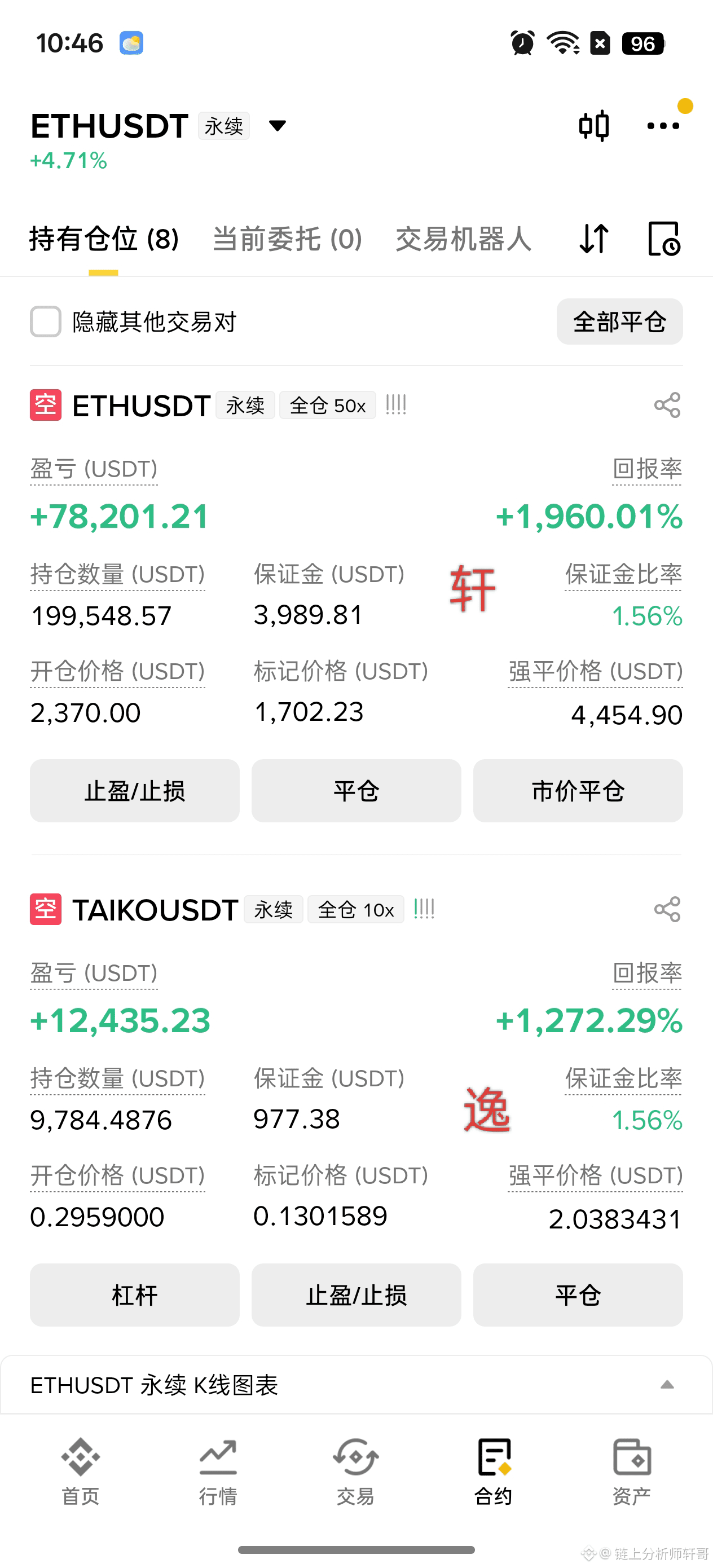
I’m from Quanzhou, Fujian. I’m 32. In 2017, I entered the crypto world with 200,000 yuan.
I don’t even know how to read candlestick charts. I’ve stepped into countless traps, been liquidated, and stayed up through the night. After eight years, my account reached 30 million.
It wasn’t insider information, and it wasn’t signals or pump-and-dumps. It was six trading rules—almost nobody is willing to tell you.
Rule one: Let sharp upswings slow down; don’t rush to sell.
Many times it’s not a top. It’s just that the main players are still accumulating.
The real danger is when, after a surge with heavy volume, they dump immediately.
Rule two: Let sharp selloffs ease up; don’t rush to bottom-fish.
A rebound isn’t necessarily an opportunity. More often, it’s just a trap to lure people in.
What the market loves to harvest most is the person who’s just lucky enough to think they timed it.
Rule three: Heavy volume at high levels isn’t scary. The absence of volume is.
If there’s volume, it means there’s still a battle.
If there’s no volume, it often means the main players have already left.
Rule four: When volume appears at the bottom, don’t rush in.
One day of heavy volume is a fake move.
Only continuous heavy volume might indicate a real start.
Rule five: It’s better to watch trading volume than candlestick charts.
Candlestick charts can lie.
Volume is the part that lies the least.
Rule six—and the most important.
For experts, what they compete on has never been technique. It’s emotion.
When you should be in cash, you can wait.
When you should take profit, you dare to leave.
When you should make a move, you don’t hesitate.
The people who really make big money aren’t the ones with the most accurate predictions—they’re the ones with the best discipline.
#币安九周年 #欧洲股市下跌 #沪指创三个月新低 #WTI原油触及73美元
Keep following:$ETH $ZEC $JCT $DODOX $BEAT $B $SKL $TAC $EVAA $US $VELVET $TAG $EDGE SYN $SNDK $SPCXB $LAB $MU $HYPE $BTC $BNB $SOL

63
·
--
Bearish
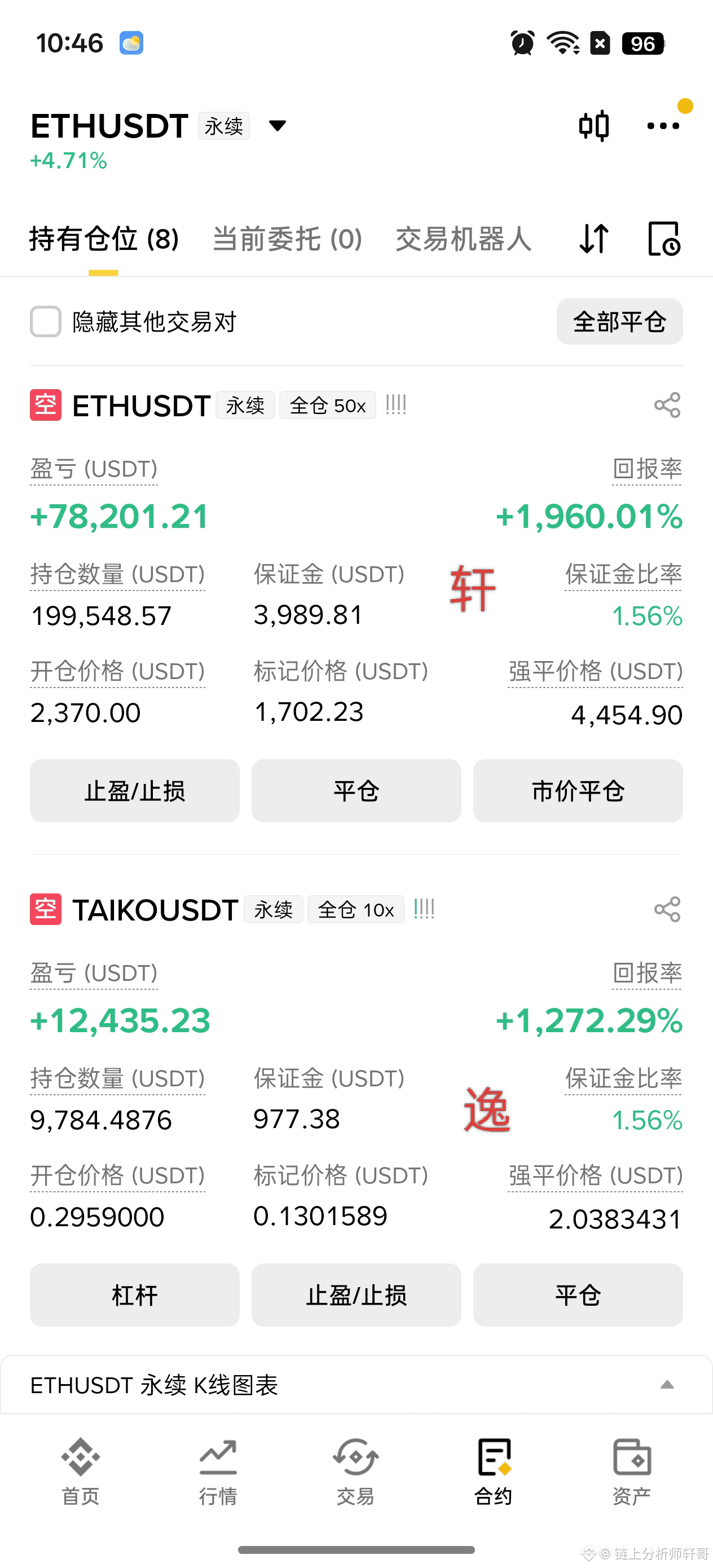
“At 33, after 8 years in crypto, did I actually make money? One sentence: from 2021 to 2023, my account rose to an 8-figure number.”
But what truly helped me make money wasn’t luck, and it wasn’t insider information.
Instead, it was a method that sounds kind of stupid, but helped me earn over 20 million— the 253 position-building method.
What does it mean? Let’s assume you have 100,000 in principal.
Step one: 2.
First, take 20%, meaning 20,000 for a trial position.
Remember: never go all-in from the start. The real catastrophic losses almost always begin with going all-in.
Step two: 5.
Use the remaining 50% to add positions in batches.
If it rises, don’t chase—wait for a pullback. If it drops, for every 8% it falls, add 10%.
This way, your cost basis becomes more and more reasonable, instead of buying once at the top.
Many people think that once the price drops, you’ve lost. Actually, what’s really lost is doing a single all-in (a “swing for the win”).
Step three: 3.
Finally, use the last 30%—wait until the trend is genuinely confirmed before entering.
For example, when BTC breaks through a key level and holds steady without falling back, then put the final 30,000 in.
Many people make money by luck, but lose money because of their own skill (or lack of it).
#币安九周年 #欧洲股市下跌 #沪指创三个月新低 #WTI原油触及73美元

75
·
--
Bearish
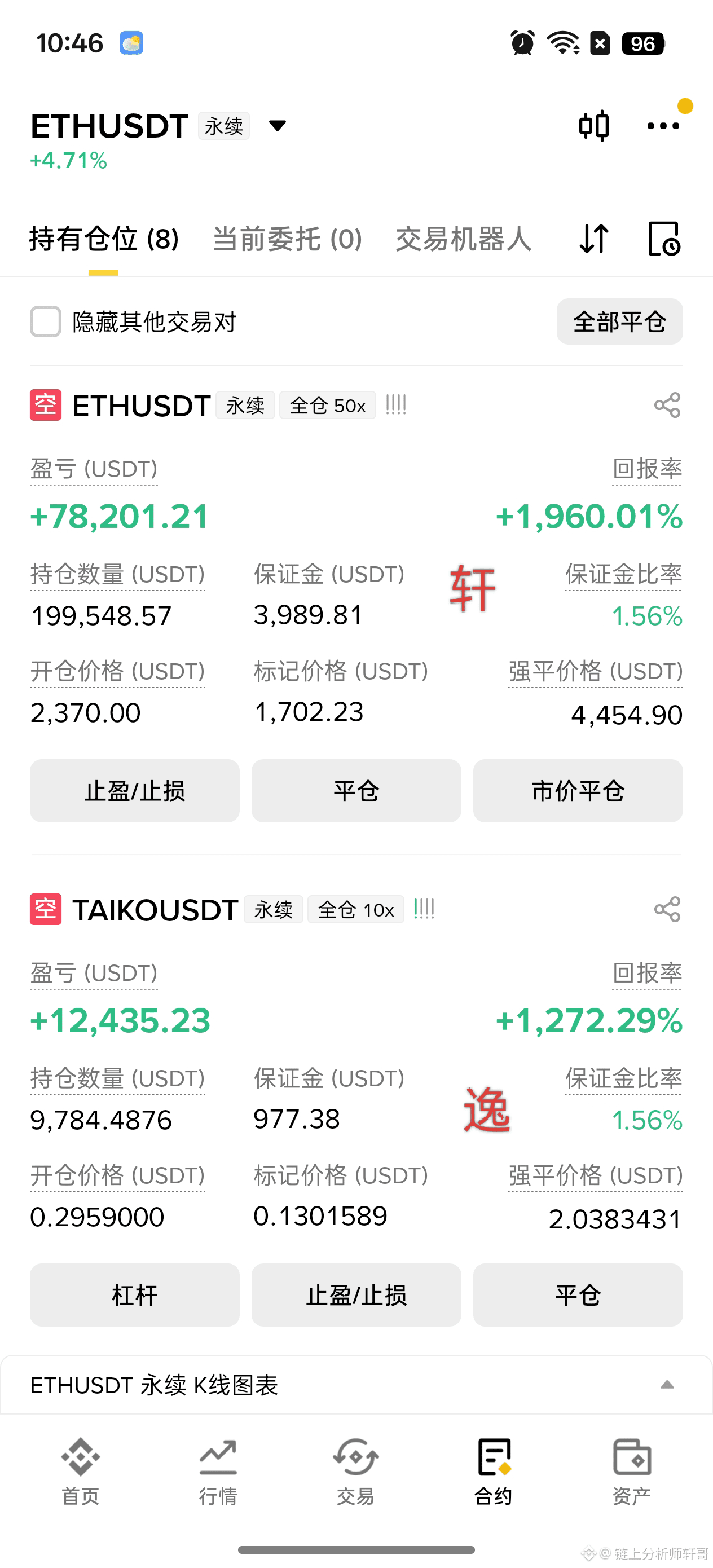
"In 2017, I brought 3000U into the market. While others blew up and sold their houses, my account slowly climbed out along a 45° curve."
Many people ask me: "Do you have some inside information?"
No.
"Do you study metaphysical charts all day?"
Not that either.
What I do is simple:
Turn myself from a gambler into someone with a probability edge.
These past 8 years, I’ve relied on just three pieces of logic.
First, lock in the money you make.
Every time I open a position, I set my take-profit and stop-loss in advance.
When profits reach the target, I withdraw part of them first.
If the market keeps rising, I compound. If the market reverses, the principal can still be protected.
Because in the market, the only real profits are the ones you cash out.
Second, don’t guess the market—wait for opportunities to come to you.
Others chase and kill on breakouts and reversals.
I only wait for positions that meet the conditions.
Look at the big trend, find the key ranges, and wait for a confirmed signal.
It’s better to miss, than to enter impulsively.
Third, swap small losses for big gains.
For each trade, the loss is limited in advance.
If I’m wrong, I exit with a small loss. If I’m right, let the profits run.
#币安九周年 #欧洲股市下跌 #沪指创三个月新低 #WTI原油触及73美元

2
147
·
--
Bearish
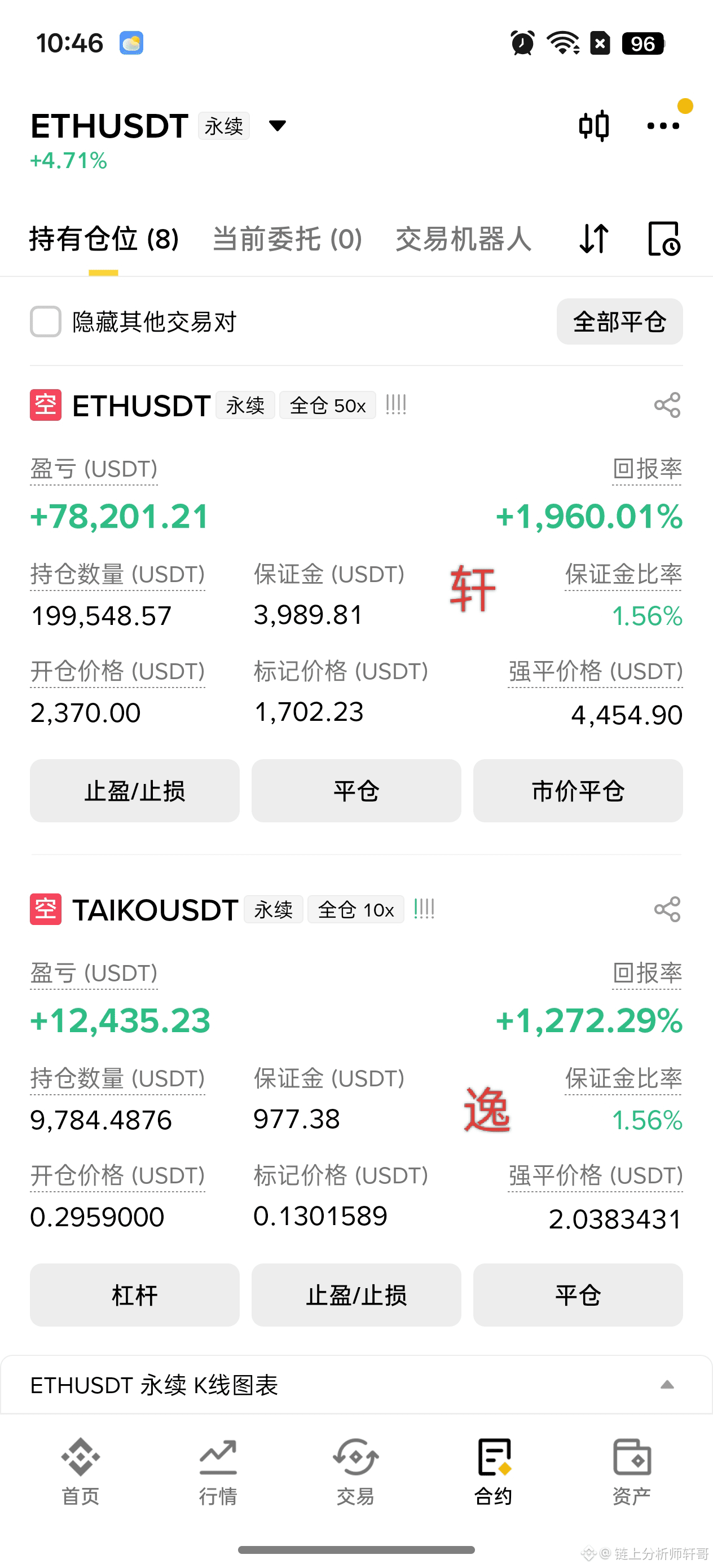
If your principal is less than 3000 USDT, don’t rush into trading!
I’ll say it plainly: when small accounts lose money, it’s not because they can’t buy coins—it’s because their position sizing is chaotic and their hands are too itchy.
Last year, I coached a newcomer. Their account had only 1500 USDT.
At the start, when placing orders, they were so nervous their hands even shook.
Many people think this kind of principal can’t turn around.
So what happened?
In 4 months, 1500 USDT grew to 19,000 USDT;
In 6 months, it reached 35,000 USDT—with not a single liquidation.
It wasn’t luck. It was only because of 3 strict rules.
First rule: Never go all-in.
With 1500 USDT, split it into three parts.
500 USDT for short-term trades, 500 USDT to hold for the next swing,
and the final 500 USDT—no matter how good the market is, don’t touch it.
The real winners aren’t the ones with the biggest positions, but the ones who last the longest.
Second rule: If there’s no opportunity, it’s better to stay flat.
Most of the time, the market is just ranging.
Trading every day only means you’re paying the platform.
If there’s a trend, trade it; if there isn’t, wait.
Once you’ve gained 12%, put half of the profit into your pocket first.
Many people lose—not because they can’t buy, but because they can’t bear to leave when they should.
Third rule: Discipline matters more than the行情.
When the stop-loss hits, leave immediately;
when you reach profit, reduce your position first;
when you’re losing, never add to the position.
#币安九周年 #欧洲股市下跌 #沪指创三个月新低 #WTI原油触及73美元
Keep an eye on:$ETH $ZEC $JCT $DODOX $BEAT $B $SKL $TAC $EVAA $US $VELVET $TAG $EDGE SYN $SNDK $SPCXB $LAB $MU $HYPE $BTC $BNB $SOL

2
83
·
--
Bearish
A few days ago, my disciple asked me, “Master, the more I learn indicator analysis, why do I lose faster?”
I only replied to him with one sentence: The real earners are all doing subtraction.
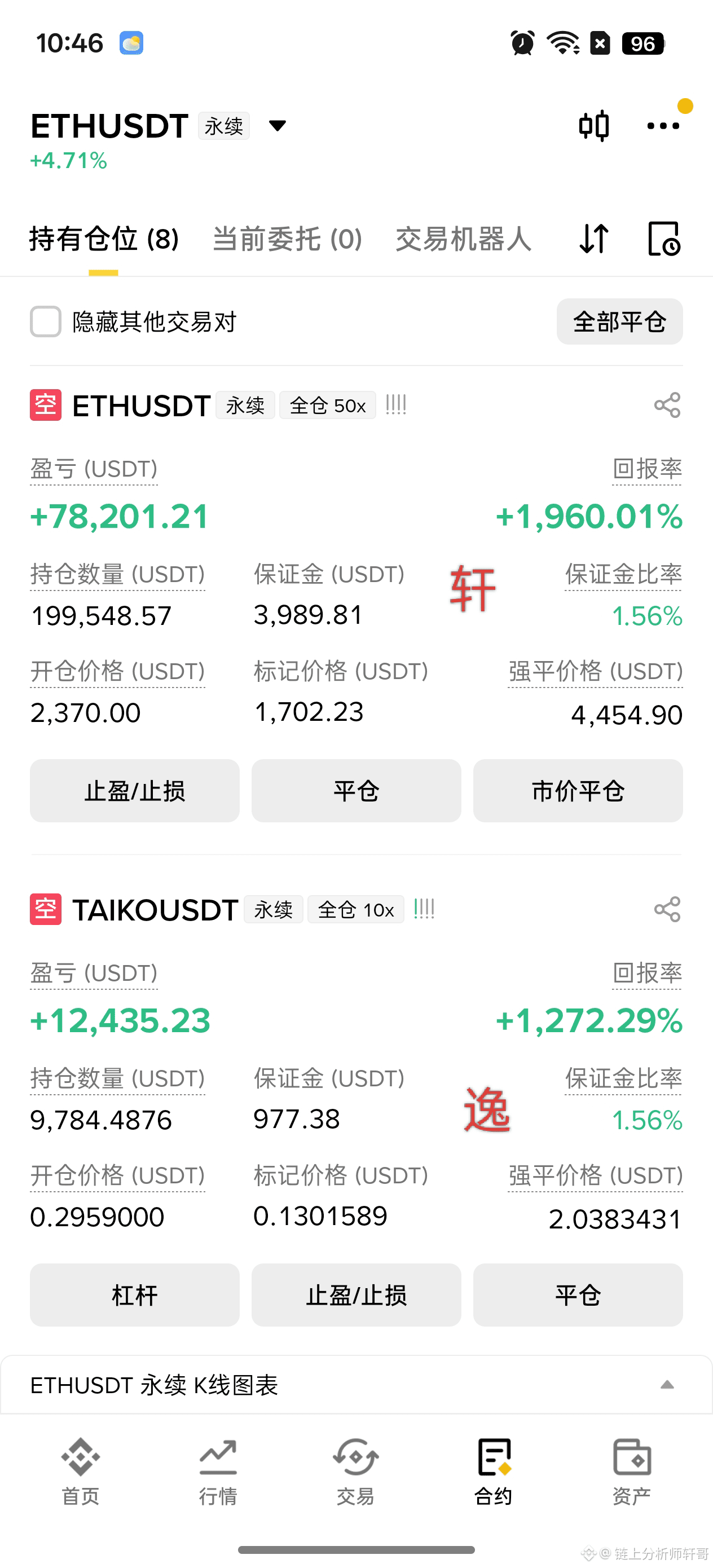
I once coached a follower who started with a base of 50,000, and over time made it to 30 million.
He had no inside information, and he didn’t stare at the charts all day.
He relied on just one action: only take opportunities that meet the conditions.
My trading system is very simple. I only look at one “N-shaped” pattern.
A rise, a pullback, then a breakout.
If the pattern holds, you enter. If the pattern breaks, you leave.
Set a stop-loss at 2% and take-profit at 10%.
If there’s no signal, you don’t open a trade for the day.
While others watch a dozen indicators every day, chasing hot sectors, chasing news, chasing sentiment.
Watch the chart for 5 minutes a day. Then spend the rest of your time living your life.
#币安九周年 #WTI原油触及73美元 #SK海力士创纪录跌15% #比特币ETF终结八周资金流出
Keep following: $ETH $ZEC $JCT $DODOX $BEAT $B $SKL $TAC $EVAA $US $VELVET $TAG $EDGE SYN $SNDK $SPCXB $LAB $MU $HYPE $BTC $BNB $SOL

35
Log in to explore more content
Join global crypto users on Binance Square
⚡️ Get latest and useful information about crypto.
💬 Trusted by the world’s largest crypto exchange.
👍 Discover real insights from verified creators.
Email / Phone number