

波哥带单
43 Posts
波哥带单
Report
Block User
公众号《阿波加密》日内捕捉大级别单边趋势,专攻ETH,BTC,专注日内波动
0 Following
3 Followers
43 Liked
Posts
PINNED
·
--
Scan the QR code to join Brother Bo's chat room and learn!!!
Scan the QR code to join Brother Bo's chat room and learn!!!

1
4
·
--
The market is so bad that anything you post is likely to get flamed.
Long story short:
1/ Legion should be announcing its Jump allocation today.
2/ Rumor has it that the next Legion project is Fermah, and you need to register for the waitlist first.
3/ Surf has been selling NFTs lately, and they sell out instantly every time. Looking at the rules, it’s clearly not profitable—they’re probably doing it to dilute points and control the market. If you had a membership before, remember to link your address. My guess is the rewards will be pretty small after dilution. And now that big companies are releasing Crypto AI products, there’s even less room for Surf to survive. TGE is its last window of opportunity, so it should happen soon.
4/ Daos World is back, and its whitelist form is open. Generally speaking, projects doing a second round tend to be pretty disappointing. Might as well take a shot: if you get whitelisted, give it a go; if not, don’t get your hopes up.
5/ AlloX’s ICO is on Sonar, with a $65M valuation and 100% unlocked. Not bad—worth checking out. $NEAR $ZEC
The market is so bad that anything you post is likely to get flamed.
Long story short:
1/ Legion should be announcing its Jump allocation today.
2/ Rumor has it that the next Legion project is Fermah, and you need to register for the waitlist first.
3/ Surf has been selling NFTs lately, and they sell out instantly every time. Looking at the rules, it’s clearly not profitable—they’re probably doing it to dilute points and control the market. If you had a membership before, remember to link your address. My guess is the rewards will be pretty small after dilution. And now that big companies are releasing Crypto AI products, there’s even less room for Surf to survive. TGE is its last window of opportunity, so it should happen soon.
4/ Daos World is back, and its whitelist form is open. Generally speaking, projects doing a second round tend to be pretty disappointing. Might as well take a shot: if you get whitelisted, give it a go; if not, don’t get your hopes up.
5/ AlloX’s ICO is on Sonar, with a $65M valuation and 100% unlocked. Not bad—worth checking out. $NEAR $ZEC
Long story short:
1/ Legion should be announcing its Jump allocation today.
2/ Rumor has it that the next Legion project is Fermah, and you need to register for the waitlist first.
3/ Surf has been selling NFTs lately, and they sell out instantly every time. Looking at the rules, it’s clearly not profitable—they’re probably doing it to dilute points and control the market. If you had a membership before, remember to link your address. My guess is the rewards will be pretty small after dilution. And now that big companies are releasing Crypto AI products, there’s even less room for Surf to survive. TGE is its last window of opportunity, so it should happen soon.
4/ Daos World is back, and its whitelist form is open. Generally speaking, projects doing a second round tend to be pretty disappointing. Might as well take a shot: if you get whitelisted, give it a go; if not, don’t get your hopes up.
5/ AlloX’s ICO is on Sonar, with a $65M valuation and 100% unlocked. Not bad—worth checking out. $NEAR $ZEC
1
1
·
--
Have you seen a wild coin like $BR?
It’s been wiping out both bulls and bears.
Over the past three days, its daily price swings have each exceeded 100%.
The price has now broken through to a new high again. The 0.6 level above the current price is a key resistance. If it can’t break through soon, the price may drop sharply; only a decisive breakout would open up more room to rise.
This kind of altcoin is supported entirely by hype and trading volume. Without volume or hype, the price will fall.
So at this level, Brother Guan doesn’t recommend chasing a long position. Wait for it to hit resistance and pull back, then consider opening a short.
#IsAFedRateHikeNowInevitable
The latest market analysis and price levels are being shared in the chatroom!!!
Have you seen a wild coin like $BR?
It’s been wiping out both bulls and bears.
Over the past three days, its daily price swings have each exceeded 100%.
The price has now broken through to a new high again. The 0.6 level above the current price is a key resistance. If it can’t break through soon, the price may drop sharply; only a decisive breakout would open up more room to rise.
This kind of altcoin is supported entirely by hype and trading volume. Without volume or hype, the price will fall.
So at this level, Brother Guan doesn’t recommend chasing a long position. Wait for it to hit resistance and pull back, then consider opening a short.
#IsAFedRateHikeNowInevitable
The latest market analysis and price levels are being shared in the chatroom!!!
It’s been wiping out both bulls and bears.
Over the past three days, its daily price swings have each exceeded 100%.
The price has now broken through to a new high again. The 0.6 level above the current price is a key resistance. If it can’t break through soon, the price may drop sharply; only a decisive breakout would open up more room to rise.
This kind of altcoin is supported entirely by hype and trading volume. Without volume or hype, the price will fall.
So at this level, Brother Guan doesn’t recommend chasing a long position. Wait for it to hit resistance and pull back, then consider opening a short.
#IsAFedRateHikeNowInevitable
The latest market analysis and price levels are being shared in the chatroom!!!
1
158
·
--
Is it really that hard to make consistent profits in crypto?
Lower your expectations and stay rational. Follow these points, and making consistent profits really isn’t that hard.
① Large capital (over RMB 10 million)
If you believe in the blockchain industry, don’t focus on short-term trading. Make a good call on the cycle, then go all in on Bitcoin in a 4-3-3 split. If you don’t want to swing trade, invest everything and hold until 2028–2029. If it doubles along the way, take out your original RMB 10 million and let the profits ride until the end of the major cycle. An overall annualized return of 30–50% shouldn’t be a problem.
② Capital of RMB 5–10 million
Allocate 5 portions to Bitcoin and 5 to Ethereum + SOL, entering in three tranches using the same 4-3-3 split. Hold Bitcoin until 2028–2029 and take out your principal if it doubles along the way. For Ethereum + SOL, take out your principal after a threefold gain, and hold the rest until the end of the major cycle.
③ Capital of RMB 2–5 million
You can skip Bitcoin, and stay away from altcoins. Go all in on Ethereum + SOL in a 4-3-3 split, following Bitcoin’s timing. Take out your principal after a gain of three times or more, and hold the rest until the end of the 2028–2029 major cycle.
④ Capital below RMB 2 million
You can skip Bitcoin; just allocate some at the start of the bull market. Put at least 8 portions into Ethereum + SOL, and use no more than 2 portions to pick around 3 promising altcoins. Take out your principal from Ethereum + SOL after a gain of three times or more. Sell all your altcoins and get out once they triple or more. By mid-2028, stay firmly away from altcoins; sell them all and move back into Ethereum + SOL. Hold until the major cycle ends in late 2028 or early 2029, then sell everything and take a break.
⑤ Even less capital $BTC
If you want to play it safe, follow Rule ④. Don’t listen to futures traders trying to brainwash you with claims like “spot trading won’t make money with little capital; you have to trade futures.” That tiny remaining position will most likely end up buried in the futures graveyard.
⑥ Summary
Don’t constantly chase pumps and selloffs along the way. Stay away from futures, and don’t recklessly chase overpriced altcoins.
By the end of this major cycle, you may not become incredibly wealthy, but you should at least beat inflation and outperform most investment returns.
#币安推出BinanceIntelligence
Is it really that hard to make consistent profits in crypto?
Lower your expectations and stay rational. Follow these points, and making consistent profits really isn’t that hard.
① Large capital (over RMB 10 million)
If you believe in the blockchain industry, don’t focus on short-term trading. Make a good call on the cycle, then go all in on Bitcoin in a 4-3-3 split. If you don’t want to swing trade, invest everything and hold until 2028–2029. If it doubles along the way, take out your original RMB 10 million and let the profits ride until the end of the major cycle. An overall annualized return of 30–50% shouldn’t be a problem.
② Capital of RMB 5–10 million
Allocate 5 portions to Bitcoin and 5 to Ethereum + SOL, entering in three tranches using the same 4-3-3 split. Hold Bitcoin until 2028–2029 and take out your principal if it doubles along the way. For Ethereum + SOL, take out your principal after a threefold gain, and hold the rest until the end of the major cycle.
③ Capital of RMB 2–5 million
You can skip Bitcoin, and stay away from altcoins. Go all in on Ethereum + SOL in a 4-3-3 split, following Bitcoin’s timing. Take out your principal after a gain of three times or more, and hold the rest until the end of the 2028–2029 major cycle.
④ Capital below RMB 2 million
You can skip Bitcoin; just allocate some at the start of the bull market. Put at least 8 portions into Ethereum + SOL, and use no more than 2 portions to pick around 3 promising altcoins. Take out your principal from Ethereum + SOL after a gain of three times or more. Sell all your altcoins and get out once they triple or more. By mid-2028, stay firmly away from altcoins; sell them all and move back into Ethereum + SOL. Hold until the major cycle ends in late 2028 or early 2029, then sell everything and take a break.
⑤ Even less capital $BTC
If you want to play it safe, follow Rule ④. Don’t listen to futures traders trying to brainwash you with claims like “spot trading won’t make money with little capital; you have to trade futures.” That tiny remaining position will most likely end up buried in the futures graveyard.
⑥ Summary
Don’t constantly chase pumps and selloffs along the way. Stay away from futures, and don’t recklessly chase overpriced altcoins.
By the end of this major cycle, you may not become incredibly wealthy, but you should at least beat inflation and outperform most investment returns.
#币安推出BinanceIntelligence
Lower your expectations and stay rational. Follow these points, and making consistent profits really isn’t that hard.
① Large capital (over RMB 10 million)
If you believe in the blockchain industry, don’t focus on short-term trading. Make a good call on the cycle, then go all in on Bitcoin in a 4-3-3 split. If you don’t want to swing trade, invest everything and hold until 2028–2029. If it doubles along the way, take out your original RMB 10 million and let the profits ride until the end of the major cycle. An overall annualized return of 30–50% shouldn’t be a problem.
② Capital of RMB 5–10 million
Allocate 5 portions to Bitcoin and 5 to Ethereum + SOL, entering in three tranches using the same 4-3-3 split. Hold Bitcoin until 2028–2029 and take out your principal if it doubles along the way. For Ethereum + SOL, take out your principal after a threefold gain, and hold the rest until the end of the major cycle.
③ Capital of RMB 2–5 million
You can skip Bitcoin, and stay away from altcoins. Go all in on Ethereum + SOL in a 4-3-3 split, following Bitcoin’s timing. Take out your principal after a gain of three times or more, and hold the rest until the end of the 2028–2029 major cycle.
④ Capital below RMB 2 million
You can skip Bitcoin; just allocate some at the start of the bull market. Put at least 8 portions into Ethereum + SOL, and use no more than 2 portions to pick around 3 promising altcoins. Take out your principal from Ethereum + SOL after a gain of three times or more. Sell all your altcoins and get out once they triple or more. By mid-2028, stay firmly away from altcoins; sell them all and move back into Ethereum + SOL. Hold until the major cycle ends in late 2028 or early 2029, then sell everything and take a break.
⑤ Even less capital $BTC
If you want to play it safe, follow Rule ④. Don’t listen to futures traders trying to brainwash you with claims like “spot trading won’t make money with little capital; you have to trade futures.” That tiny remaining position will most likely end up buried in the futures graveyard.
⑥ Summary
Don’t constantly chase pumps and selloffs along the way. Stay away from futures, and don’t recklessly chase overpriced altcoins.
By the end of this major cycle, you may not become incredibly wealthy, but you should at least beat inflation and outperform most investment returns.
#币安推出BinanceIntelligence

1
12
·
--
The crypto market is like a wild amusement park. Every tick of the candlestick chart puts human nature to the test.
Some chase rising prices like gamblers placing bets, then rush to cut their losses when prices fall. In the end, they discover that the numbers in their account have dropped even harder than their mood.
Seasoned veterans know the truth: your mindset is the most valuable asset to go all-in on.
Stop obsessing over other people’s returns. Someone doubled their money today; someone else timed the market perfectly and sold at the top tomorrow. These stories are like stimulants, tempting you to follow the crowd. But remember: people show off their highlights, not the losses they’re sitting on or the stop-losses they’ve triggered. $AAPLB
Everyone has a different risk tolerance. Someone else’s playbook won’t fit your account.
Learn to be friends with volatility. Panicking when a coin drops 20%? Look at Bitcoin’s history. Has there ever been a bull market that didn’t come after a 50% crash? The real opportunities are often hidden in moments of panic. When fear takes hold, the best thing to do is hold on to your coins, not run with the crowd.
Remember: in crypto, you don’t make money by chasing quick wins—you make it through an edge in understanding. $BTC
Don’t let short-term volatility lead you around or market sentiment cloud your judgment. Be patient and wait for the wind to change.
That’s the ultimate mindset for weathering both bull and bear markets.
#币安推出BinanceIntelligence
The crypto market is like a wild amusement park. Every tick of the candlestick chart puts human nature to the test.
Some chase rising prices like gamblers placing bets, then rush to cut their losses when prices fall. In the end, they discover that the numbers in their account have dropped even harder than their mood.
Seasoned veterans know the truth: your mindset is the most valuable asset to go all-in on.
Stop obsessing over other people’s returns. Someone doubled their money today; someone else timed the market perfectly and sold at the top tomorrow. These stories are like stimulants, tempting you to follow the crowd. But remember: people show off their highlights, not the losses they’re sitting on or the stop-losses they’ve triggered. $AAPLB
Everyone has a different risk tolerance. Someone else’s playbook won’t fit your account.
Learn to be friends with volatility. Panicking when a coin drops 20%? Look at Bitcoin’s history. Has there ever been a bull market that didn’t come after a 50% crash? The real opportunities are often hidden in moments of panic. When fear takes hold, the best thing to do is hold on to your coins, not run with the crowd.
Remember: in crypto, you don’t make money by chasing quick wins—you make it through an edge in understanding. $BTC
Don’t let short-term volatility lead you around or market sentiment cloud your judgment. Be patient and wait for the wind to change.
That’s the ultimate mindset for weathering both bull and bear markets.
#币安推出BinanceIntelligence
Some chase rising prices like gamblers placing bets, then rush to cut their losses when prices fall. In the end, they discover that the numbers in their account have dropped even harder than their mood.
Seasoned veterans know the truth: your mindset is the most valuable asset to go all-in on.
Stop obsessing over other people’s returns. Someone doubled their money today; someone else timed the market perfectly and sold at the top tomorrow. These stories are like stimulants, tempting you to follow the crowd. But remember: people show off their highlights, not the losses they’re sitting on or the stop-losses they’ve triggered. $AAPLB
Everyone has a different risk tolerance. Someone else’s playbook won’t fit your account.
Learn to be friends with volatility. Panicking when a coin drops 20%? Look at Bitcoin’s history. Has there ever been a bull market that didn’t come after a 50% crash? The real opportunities are often hidden in moments of panic. When fear takes hold, the best thing to do is hold on to your coins, not run with the crowd.
Remember: in crypto, you don’t make money by chasing quick wins—you make it through an edge in understanding. $BTC
Don’t let short-term volatility lead you around or market sentiment cloud your judgment. Be patient and wait for the wind to change.
That’s the ultimate mindset for weathering both bull and bear markets.
#币安推出BinanceIntelligence

2
227
·
--
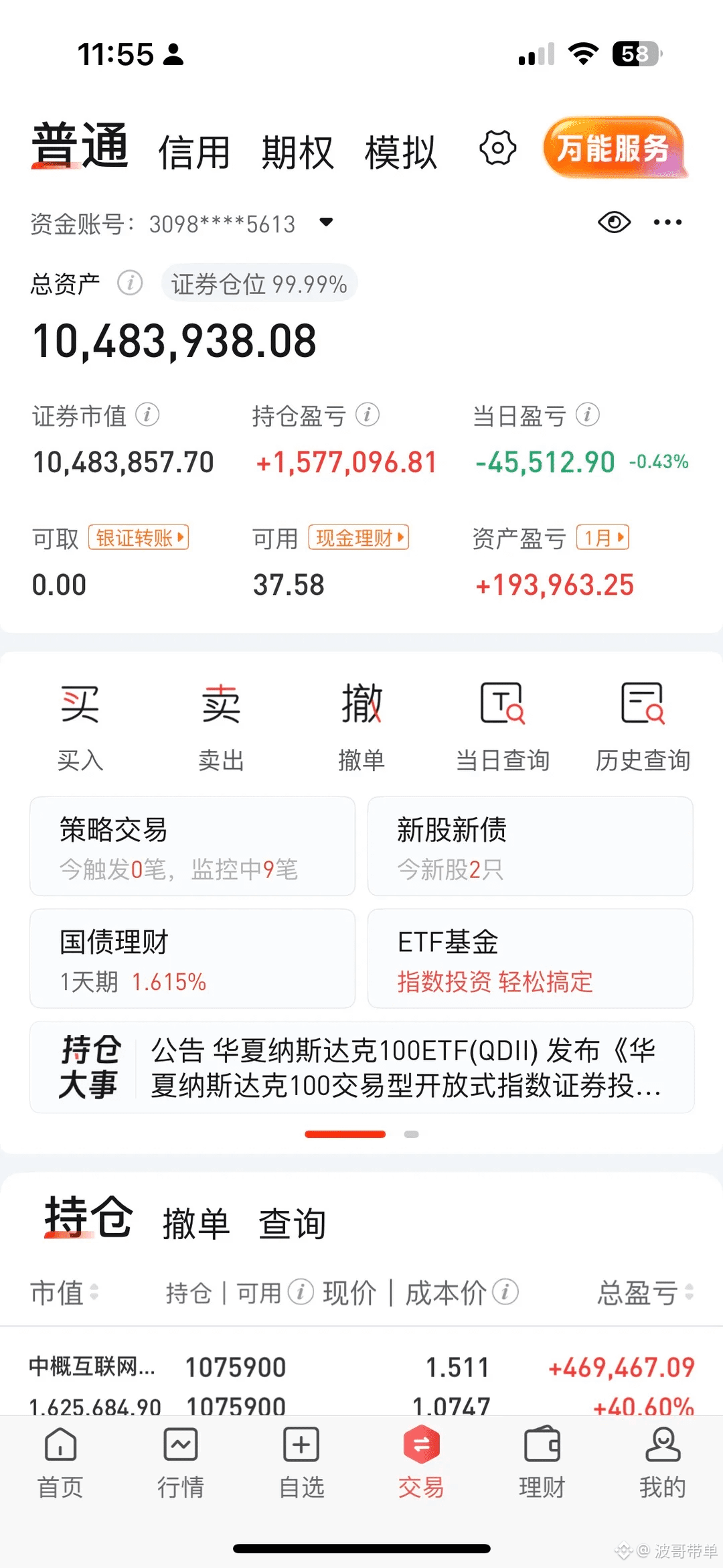
Six years—from debt to eight figures. I did just one thing right.
Six years ago, I was lying on the wooden floor of my rented room, staring blankly at the ceiling.
I had just 2,000U left in my account, owed 80,000 in online loans, and my phone was full of collection messages. I was afraid to answer calls, afraid to go out, and afraid to tell my family. That was the lowest point in my life.
But I didn’t give up.
Because I remembered why I’d first gotten into crypto—not to get rich overnight, but to change my life. If I didn’t even have my life, how could I change it?
In the first year, I focused on learning just one thing: how not to lose money.
I split my 2,000U into ten parts and used only one part at a time to test the waters. I set tight stop-losses and took profits as soon as I could. I didn’t make much that year, but I didn’t lose any either. When you’re in debt, not losing money is progress.
In the second year, I started making consistent profits. $QQQB
It wasn’t luck—it was discipline. I wrote a review of every trade, noting why I lost, my reasoning for buying, and when I closed the position. I filled three notebooks in a year, and grew my account from a few thousand U to five figures.
The third and fourth years were the hardest.
The bear market arrived, and one by one, people around me left. The group chats grew quieter and quieter. I stayed because I knew bear markets were the time to accumulate. I invested a fixed amount every month, buying when prices fell—and buying more the harder they fell.
My account barely grew during those two years, but I accumulated more and more coins.
In the fifth year, the bull market arrived. $AMZNB
My holdings started to take off. My 2,000U account grew to eight figures. I paid off my debts, bought a house for my family, and could finally live with my head held high.
Standing on the balcony of my new home, I understood one thing:
In crypto, making money isn’t about being smart. It’s about being able to hold on.
Over six years, I learned to control my greed, accept losses, and wait for opportunities. Those lessons are worth more than money.
If you’re going through a low point too, don’t give up.
As long as you’re still at the table, you still have a chance to turn things around. #币安推出BinanceIntelligence
Six years—from debt to eight figures. I did just one thing right.
Six years ago, I was lying on the wooden floor of my rented room, staring blankly at the ceiling.
I had just 2,000U left in my account, owed 80,000 in online loans, and my phone was full of collection messages. I was afraid to answer calls, afraid to go out, and afraid to tell my family. That was the lowest point in my life.
But I didn’t give up.
Because I remembered why I’d first gotten into crypto—not to get rich overnight, but to change my life. If I didn’t even have my life, how could I change it?
In the first year, I focused on learning just one thing: how not to lose money.
I split my 2,000U into ten parts and used only one part at a time to test the waters. I set tight stop-losses and took profits as soon as I could. I didn’t make much that year, but I didn’t lose any either. When you’re in debt, not losing money is progress.
In the second year, I started making consistent profits. $QQQB
It wasn’t luck—it was discipline. I wrote a review of every trade, noting why I lost, my reasoning for buying, and when I closed the position. I filled three notebooks in a year, and grew my account from a few thousand U to five figures.
The third and fourth years were the hardest.
The bear market arrived, and one by one, people around me left. The group chats grew quieter and quieter. I stayed because I knew bear markets were the time to accumulate. I invested a fixed amount every month, buying when prices fell—and buying more the harder they fell.
My account barely grew during those two years, but I accumulated more and more coins.
In the fifth year, the bull market arrived. $AMZNB
My holdings started to take off. My 2,000U account grew to eight figures. I paid off my debts, bought a house for my family, and could finally live with my head held high.
Standing on the balcony of my new home, I understood one thing:
In crypto, making money isn’t about being smart. It’s about being able to hold on.
Over six years, I learned to control my greed, accept losses, and wait for opportunities. Those lessons are worth more than money.
If you’re going through a low point too, don’t give up.
As long as you’re still at the table, you still have a chance to turn things around. #币安推出BinanceIntelligence
Six years ago, I was lying on the wooden floor of my rented room, staring blankly at the ceiling.
I had just 2,000U left in my account, owed 80,000 in online loans, and my phone was full of collection messages. I was afraid to answer calls, afraid to go out, and afraid to tell my family. That was the lowest point in my life.
But I didn’t give up.
Because I remembered why I’d first gotten into crypto—not to get rich overnight, but to change my life. If I didn’t even have my life, how could I change it?
In the first year, I focused on learning just one thing: how not to lose money.
I split my 2,000U into ten parts and used only one part at a time to test the waters. I set tight stop-losses and took profits as soon as I could. I didn’t make much that year, but I didn’t lose any either. When you’re in debt, not losing money is progress.
In the second year, I started making consistent profits. $QQQB
It wasn’t luck—it was discipline. I wrote a review of every trade, noting why I lost, my reasoning for buying, and when I closed the position. I filled three notebooks in a year, and grew my account from a few thousand U to five figures.
The third and fourth years were the hardest.
The bear market arrived, and one by one, people around me left. The group chats grew quieter and quieter. I stayed because I knew bear markets were the time to accumulate. I invested a fixed amount every month, buying when prices fell—and buying more the harder they fell.
My account barely grew during those two years, but I accumulated more and more coins.
In the fifth year, the bull market arrived. $AMZNB
My holdings started to take off. My 2,000U account grew to eight figures. I paid off my debts, bought a house for my family, and could finally live with my head held high.
Standing on the balcony of my new home, I understood one thing:
In crypto, making money isn’t about being smart. It’s about being able to hold on.
Over six years, I learned to control my greed, accept losses, and wait for opportunities. Those lessons are worth more than money.
If you’re going through a low point too, don’t give up.
As long as you’re still at the table, you still have a chance to turn things around. #币安推出BinanceIntelligence
1
9
·
--
After spending enough time in crypto, you realize there are actually very few opportunities to make real money.
The most common mistake beginners make is thinking trading means looking for buy points every day. If they don’t make a move for a day, they feel like they’ve missed something. But the market usually spends most of its time moving sideways. The few major trends that can truly change your account balance tend to come along only occasionally.
It’s not that many people never encounter opportunities.
It’s that they’ve already worn through their capital before the opportunities arrive.
Trading too often, chasing hot trends, constantly changing direction—it may look like you’re being proactive, but in reality, you’re just repeating the same mistakes.
Those who survive in the long run understand one thing:
Waiting is a form of trading, too.$ETH
If there’s no trend, don’t force a trade. If there’s no certainty, don’t gamble your capital. Wait for the market to give you a signal, then follow your plan.
In the end, trading isn’t about who can predict the market more accurately.
It’s about who can keep their impulses in check.
Making big money depends on seizing a handful of key opportunities; losing big money usually comes from countless impulsive trades.
So trading isn’t that complicated:$BTC
When a trend appears, follow it.
When the market moves sideways, manage your risk.
When you can’t make sense of things, stay out.
Being out of the market isn’t a waste of time—it’s keeping your powder dry for the next opportunity.
The market changes every day.
But the opportunities truly worth acting on are always few and far between.
#Winklevoss向美国SEC提交现货ZcashETF申请
After spending enough time in crypto, you realize there are actually very few opportunities to make real money.
The most common mistake beginners make is thinking trading means looking for buy points every day. If they don’t make a move for a day, they feel like they’ve missed something. But the market usually spends most of its time moving sideways. The few major trends that can truly change your account balance tend to come along only occasionally.
It’s not that many people never encounter opportunities.
It’s that they’ve already worn through their capital before the opportunities arrive.
Trading too often, chasing hot trends, constantly changing direction—it may look like you’re being proactive, but in reality, you’re just repeating the same mistakes.
Those who survive in the long run understand one thing:
Waiting is a form of trading, too.$ETH
If there’s no trend, don’t force a trade. If there’s no certainty, don’t gamble your capital. Wait for the market to give you a signal, then follow your plan.
In the end, trading isn’t about who can predict the market more accurately.
It’s about who can keep their impulses in check.
Making big money depends on seizing a handful of key opportunities; losing big money usually comes from countless impulsive trades.
So trading isn’t that complicated:$BTC
When a trend appears, follow it.
When the market moves sideways, manage your risk.
When you can’t make sense of things, stay out.
Being out of the market isn’t a waste of time—it’s keeping your powder dry for the next opportunity.
The market changes every day.
But the opportunities truly worth acting on are always few and far between.
#Winklevoss向美国SEC提交现货ZcashETF申请
The most common mistake beginners make is thinking trading means looking for buy points every day. If they don’t make a move for a day, they feel like they’ve missed something. But the market usually spends most of its time moving sideways. The few major trends that can truly change your account balance tend to come along only occasionally.
It’s not that many people never encounter opportunities.
It’s that they’ve already worn through their capital before the opportunities arrive.
Trading too often, chasing hot trends, constantly changing direction—it may look like you’re being proactive, but in reality, you’re just repeating the same mistakes.
Those who survive in the long run understand one thing:
Waiting is a form of trading, too.$ETH
If there’s no trend, don’t force a trade. If there’s no certainty, don’t gamble your capital. Wait for the market to give you a signal, then follow your plan.
In the end, trading isn’t about who can predict the market more accurately.
It’s about who can keep their impulses in check.
Making big money depends on seizing a handful of key opportunities; losing big money usually comes from countless impulsive trades.
So trading isn’t that complicated:$BTC
When a trend appears, follow it.
When the market moves sideways, manage your risk.
When you can’t make sense of things, stay out.
Being out of the market isn’t a waste of time—it’s keeping your powder dry for the next opportunity.
The market changes every day.
But the opportunities truly worth acting on are always few and far between.
#Winklevoss向美国SEC提交现货ZcashETF申请

1
345
·
--
Many people wonder: why can others multiply their money several times in a single market rally, while they only make a little before giving it all back?
The answer may lie in two words: “compounding positions.”
But compounding positions isn’t simply adding to your position, let alone betting all your capital. A truly disciplined approach can be summed up in one sentence:
Protect your principal and let your profits grow.
For example, if you have 100,000 U in your account, start by using only part of your funds to participate in the market. If you’re right and your profits grow, use those profits to increase your position. If the market reverses, your principal remains safe.
This is the exact opposite of how many people trade. When prices rise, they think their gains are too slow and rush to chase the rally; when prices fall, they can’t admit they were wrong and keep adding to their positions. In the end, it’s not that they can’t make money—they just get deeper and deeper into trouble by repeating their mistakes.
Compounding positions requires three conditions:
First, the trend is clear;$SPYB
Second, the market continues to attract capital;
Third, focus only on strong, mainstream directions.
Don’t hunt for coins that will surge every day, and don’t expect to capture the maximum profit every time.
The right approach is:
Enter with a small position when the price breaks through a key level.
Once the trend is confirmed, ride it using your profits.
If the trend breaks down, exit promptly.$PLTRB
Don’t try to guess the top or the bottom. Just capture the most certain part of the trend.
The truly skilled people in a bull market aren’t the ones who dare to gamble.
They’re the ones who know how to let profits run while protecting their principal.
There will always be market opportunities, but once your principal is gone, even the best opportunities have nothing to do with you.
#币安推出BinanceIntelligence
Many people wonder: why can others multiply their money several times in a single market rally, while they only make a little before giving it all back?
The answer may lie in two words: “compounding positions.”
But compounding positions isn’t simply adding to your position, let alone betting all your capital. A truly disciplined approach can be summed up in one sentence:
Protect your principal and let your profits grow.
For example, if you have 100,000 U in your account, start by using only part of your funds to participate in the market. If you’re right and your profits grow, use those profits to increase your position. If the market reverses, your principal remains safe.
This is the exact opposite of how many people trade. When prices rise, they think their gains are too slow and rush to chase the rally; when prices fall, they can’t admit they were wrong and keep adding to their positions. In the end, it’s not that they can’t make money—they just get deeper and deeper into trouble by repeating their mistakes.
Compounding positions requires three conditions:
First, the trend is clear;$SPYB
Second, the market continues to attract capital;
Third, focus only on strong, mainstream directions.
Don’t hunt for coins that will surge every day, and don’t expect to capture the maximum profit every time.
The right approach is:
Enter with a small position when the price breaks through a key level.
Once the trend is confirmed, ride it using your profits.
If the trend breaks down, exit promptly.$PLTRB
Don’t try to guess the top or the bottom. Just capture the most certain part of the trend.
The truly skilled people in a bull market aren’t the ones who dare to gamble.
They’re the ones who know how to let profits run while protecting their principal.
There will always be market opportunities, but once your principal is gone, even the best opportunities have nothing to do with you.
#币安推出BinanceIntelligence
The answer may lie in two words: “compounding positions.”
But compounding positions isn’t simply adding to your position, let alone betting all your capital. A truly disciplined approach can be summed up in one sentence:
Protect your principal and let your profits grow.
For example, if you have 100,000 U in your account, start by using only part of your funds to participate in the market. If you’re right and your profits grow, use those profits to increase your position. If the market reverses, your principal remains safe.
This is the exact opposite of how many people trade. When prices rise, they think their gains are too slow and rush to chase the rally; when prices fall, they can’t admit they were wrong and keep adding to their positions. In the end, it’s not that they can’t make money—they just get deeper and deeper into trouble by repeating their mistakes.
Compounding positions requires three conditions:
First, the trend is clear;$SPYB
Second, the market continues to attract capital;
Third, focus only on strong, mainstream directions.
Don’t hunt for coins that will surge every day, and don’t expect to capture the maximum profit every time.
The right approach is:
Enter with a small position when the price breaks through a key level.
Once the trend is confirmed, ride it using your profits.
If the trend breaks down, exit promptly.$PLTRB
Don’t try to guess the top or the bottom. Just capture the most certain part of the trend.
The truly skilled people in a bull market aren’t the ones who dare to gamble.
They’re the ones who know how to let profits run while protecting their principal.
There will always be market opportunities, but once your principal is gone, even the best opportunities have nothing to do with you.
#币安推出BinanceIntelligence

1
14
·
--
After getting liquidated five times, one thing about the way I trade changed noticeably:
I stopped setting myself a target for “how much to make today.”
When I had over 60,000 U in my account, numbers were all I could think about. Make 3,000 today, double it a little tomorrow. When the market was good, I wanted to capture the entire move in one go.
Back then, I really believed in one thing: when an opportunity comes, you have to go all in.
And I did make money. At its peak, my account looked impressive. But when the market turned, I realized I had no idea how to deal with losses.$LITEB
One trade went into the red, and I couldn't accept it. So I added another, hoping to bring down my average cost. The price fell again, and I started waiting for a rebound. By the time I finally stopped, my account had shrunk from tens of thousands of U to less than 1,000U at its worst.
Only later did I realize that the most dangerous thing isn't losing money. It's wanting to make it all back with your next trade every time you take a loss.
After that, I crossed “how much to make today” off my list entirely.
Now, when I open a position, I only care about one thing:$QQQB
How much am I prepared to lose if this trade goes wrong?
I decide on the position size, where I'll admit I'm wrong, and how much I'm willing to lose before I exit—all before opening the trade.
It's not because I've become timid. It's because I've finally realized that the most costly thing in trading isn't fees—it's losing control.
I changed another habit, too.
I don't keep all my profits in the account. When it's time to take some out, I do. Unrealized gains look reassuring in your account, but when the market turns, they can disappear just as quickly.
I used to be terrified of missing a big move. Now I'm more afraid of one trade changing the shape of my entire account.
That might be the most practical change after getting liquidated a few times.#美国抵押贷款利率升至7.49%
After getting liquidated five times, one thing about the way I trade changed noticeably:
I stopped setting myself a target for “how much to make today.”
When I had over 60,000 U in my account, numbers were all I could think about. Make 3,000 today, double it a little tomorrow. When the market was good, I wanted to capture the entire move in one go.
Back then, I really believed in one thing: when an opportunity comes, you have to go all in.
And I did make money. At its peak, my account looked impressive. But when the market turned, I realized I had no idea how to deal with losses.$LITEB
One trade went into the red, and I couldn't accept it. So I added another, hoping to bring down my average cost. The price fell again, and I started waiting for a rebound. By the time I finally stopped, my account had shrunk from tens of thousands of U to less than 1,000U at its worst.
Only later did I realize that the most dangerous thing isn't losing money. It's wanting to make it all back with your next trade every time you take a loss.
After that, I crossed “how much to make today” off my list entirely.
Now, when I open a position, I only care about one thing:$QQQB
How much am I prepared to lose if this trade goes wrong?
I decide on the position size, where I'll admit I'm wrong, and how much I'm willing to lose before I exit—all before opening the trade.
It's not because I've become timid. It's because I've finally realized that the most costly thing in trading isn't fees—it's losing control.
I changed another habit, too.
I don't keep all my profits in the account. When it's time to take some out, I do. Unrealized gains look reassuring in your account, but when the market turns, they can disappear just as quickly.
I used to be terrified of missing a big move. Now I'm more afraid of one trade changing the shape of my entire account.
That might be the most practical change after getting liquidated a few times.#美国抵押贷款利率升至7.49%
I stopped setting myself a target for “how much to make today.”
When I had over 60,000 U in my account, numbers were all I could think about. Make 3,000 today, double it a little tomorrow. When the market was good, I wanted to capture the entire move in one go.
Back then, I really believed in one thing: when an opportunity comes, you have to go all in.
And I did make money. At its peak, my account looked impressive. But when the market turned, I realized I had no idea how to deal with losses.$LITEB
One trade went into the red, and I couldn't accept it. So I added another, hoping to bring down my average cost. The price fell again, and I started waiting for a rebound. By the time I finally stopped, my account had shrunk from tens of thousands of U to less than 1,000U at its worst.
Only later did I realize that the most dangerous thing isn't losing money. It's wanting to make it all back with your next trade every time you take a loss.
After that, I crossed “how much to make today” off my list entirely.
Now, when I open a position, I only care about one thing:$QQQB
How much am I prepared to lose if this trade goes wrong?
I decide on the position size, where I'll admit I'm wrong, and how much I'm willing to lose before I exit—all before opening the trade.
It's not because I've become timid. It's because I've finally realized that the most costly thing in trading isn't fees—it's losing control.
I changed another habit, too.
I don't keep all my profits in the account. When it's time to take some out, I do. Unrealized gains look reassuring in your account, but when the market turns, they can disappear just as quickly.
I used to be terrified of missing a big move. Now I'm more afraid of one trade changing the shape of my entire account.
That might be the most practical change after getting liquidated a few times.#美国抵押贷款利率升至7.49%
1
2
·
--
I’ve noticed that people who trade futures are especially prone to being misled by one thing: leverage.
At 10x, you feel safe; at 50x, you feel like you’re playing with fire.
But once you’ve been doing this for a while, you realize that how much your account hurts has nothing to do with how big that “X” is. In the same 5% drop, one person’s account is only down a little, while another is already panicking and closing their position.
What’s the difference? Position size.
I’ve been there myself. I used to be really afraid of high leverage, so I deliberately kept it low, thinking that would keep me safe. As a result, I kept opening bigger and bigger positions, and still felt pretty comfortable. It wasn’t until the market moved against me that I realized low leverage hadn’t saved me at all.
Because what I’d really done wrong wasn’t how much leverage I used—it was failing to calculate how much I was actually putting at stake in that trade.
Now, when I look at a futures trade, I don’t start by looking at the leverage. First, I put the trade into one simple question:
“If it moves against me all the way from here, what’s the most I could lose?”$ETH
If I can’t accept that number, I don’t take the trade. If I can, I adjust my position size based on my entry point and stop-loss distance. With the right position size, leverage is simply a tool for managing margin.
That’s why you’ll sometimes see two people using the same 20x leverage: one keeps their position light, while the other gets so overextended they can barely breathe. The number looks the same, but the actual risk they’re taking is completely different.$SOL
That’s also the biggest change in how I trade futures now—
Before placing a trade, I used to think: “How much can I make on this one?”
Now my first thought is: “If this trade goes wrong, am I willing to pay this much for the lesson?”
Think that through before you hit the open button.
A lot of liquidations don’t happen because people got the direction wrong.
They happen because the moment the market moves even slightly against them, their position is already so large that they’ve left themselves no way out.
#SEC批准3倍比特币ETF上市
I’ve noticed that people who trade futures are especially prone to being misled by one thing: leverage.
At 10x, you feel safe; at 50x, you feel like you’re playing with fire.
But once you’ve been doing this for a while, you realize that how much your account hurts has nothing to do with how big that “X” is. In the same 5% drop, one person’s account is only down a little, while another is already panicking and closing their position.
What’s the difference? Position size.
I’ve been there myself. I used to be really afraid of high leverage, so I deliberately kept it low, thinking that would keep me safe. As a result, I kept opening bigger and bigger positions, and still felt pretty comfortable. It wasn’t until the market moved against me that I realized low leverage hadn’t saved me at all.
Because what I’d really done wrong wasn’t how much leverage I used—it was failing to calculate how much I was actually putting at stake in that trade.
Now, when I look at a futures trade, I don’t start by looking at the leverage. First, I put the trade into one simple question:
“If it moves against me all the way from here, what’s the most I could lose?”$ETH
If I can’t accept that number, I don’t take the trade. If I can, I adjust my position size based on my entry point and stop-loss distance. With the right position size, leverage is simply a tool for managing margin.
That’s why you’ll sometimes see two people using the same 20x leverage: one keeps their position light, while the other gets so overextended they can barely breathe. The number looks the same, but the actual risk they’re taking is completely different.$SOL
That’s also the biggest change in how I trade futures now—
Before placing a trade, I used to think: “How much can I make on this one?”
Now my first thought is: “If this trade goes wrong, am I willing to pay this much for the lesson?”
Think that through before you hit the open button.
A lot of liquidations don’t happen because people got the direction wrong.
They happen because the moment the market moves even slightly against them, their position is already so large that they’ve left themselves no way out.
#SEC批准3倍比特币ETF上市
At 10x, you feel safe; at 50x, you feel like you’re playing with fire.
But once you’ve been doing this for a while, you realize that how much your account hurts has nothing to do with how big that “X” is. In the same 5% drop, one person’s account is only down a little, while another is already panicking and closing their position.
What’s the difference? Position size.
I’ve been there myself. I used to be really afraid of high leverage, so I deliberately kept it low, thinking that would keep me safe. As a result, I kept opening bigger and bigger positions, and still felt pretty comfortable. It wasn’t until the market moved against me that I realized low leverage hadn’t saved me at all.
Because what I’d really done wrong wasn’t how much leverage I used—it was failing to calculate how much I was actually putting at stake in that trade.
Now, when I look at a futures trade, I don’t start by looking at the leverage. First, I put the trade into one simple question:
“If it moves against me all the way from here, what’s the most I could lose?”$ETH
If I can’t accept that number, I don’t take the trade. If I can, I adjust my position size based on my entry point and stop-loss distance. With the right position size, leverage is simply a tool for managing margin.
That’s why you’ll sometimes see two people using the same 20x leverage: one keeps their position light, while the other gets so overextended they can barely breathe. The number looks the same, but the actual risk they’re taking is completely different.$SOL
That’s also the biggest change in how I trade futures now—
Before placing a trade, I used to think: “How much can I make on this one?”
Now my first thought is: “If this trade goes wrong, am I willing to pay this much for the lesson?”
Think that through before you hit the open button.
A lot of liquidations don’t happen because people got the direction wrong.
They happen because the moment the market moves even slightly against them, their position is already so large that they’ve left themselves no way out.
#SEC批准3倍比特币ETF上市
1
139
·
--
Honestly, after spending long enough in this market, you’ve seen every kind of person.
Some people come in with a few thousand U and lose it all in half a month. Others struggle for years until they’ve been worn down emotionally.
But I still remember one guy I mentored last year.
When he first started, he had only 900 U and couldn’t even read a candlestick chart. When people hear how much he started with, their first reaction is always: How could anyone make it with that little?
But he had a rare quality: he didn’t act recklessly.$BTC
In three months, he grew his account to over 50,000 U. Now it’s consistently above 80,000 U. Some people say he just got lucky with the market. But I know what really got him to where he is today wasn’t luck—it was three habits.
First, he always keeps his money separate.
He uses one portion for short-term trades, only taking positions he understands; another for trend trades, waiting for a real market move; and keeps the rest in reserve, untouched until a key price level is reached.
Second, he doesn’t trade without a signal.
He used to chase hot trends too, getting anxious whenever he saw others making money. Over time, he realized that although the market goes up and down every day, not every day is worth trading. If he doesn’t understand what’s happening, he waits. If the direction isn’t confirmed, he stays out.
Third, he follows his rules whether he’s winning or losing.
If the price hits his preset stop, he exits. If it reaches his target, he takes profits in stages. Once his account grew, he started taking some of his profits off the table.
Chasing rising prices, adding to losing positions, and stubbornly holding on—all boil down to the same problem:
Turning trading into an outlet for your emotions.
People who last in this market aren’t right every time. When they’re wrong, they know how to keep their losses under control.#Strategy预估41亿美元所得税收益
Honestly, after spending long enough in this market, you’ve seen every kind of person.
Some people come in with a few thousand U and lose it all in half a month. Others struggle for years until they’ve been worn down emotionally.
But I still remember one guy I mentored last year.
When he first started, he had only 900 U and couldn’t even read a candlestick chart. When people hear how much he started with, their first reaction is always: How could anyone make it with that little?
But he had a rare quality: he didn’t act recklessly.$BTC
In three months, he grew his account to over 50,000 U. Now it’s consistently above 80,000 U. Some people say he just got lucky with the market. But I know what really got him to where he is today wasn’t luck—it was three habits.
First, he always keeps his money separate.
He uses one portion for short-term trades, only taking positions he understands; another for trend trades, waiting for a real market move; and keeps the rest in reserve, untouched until a key price level is reached.
Second, he doesn’t trade without a signal.
He used to chase hot trends too, getting anxious whenever he saw others making money. Over time, he realized that although the market goes up and down every day, not every day is worth trading. If he doesn’t understand what’s happening, he waits. If the direction isn’t confirmed, he stays out.
Third, he follows his rules whether he’s winning or losing.
If the price hits his preset stop, he exits. If it reaches his target, he takes profits in stages. Once his account grew, he started taking some of his profits off the table.
Chasing rising prices, adding to losing positions, and stubbornly holding on—all boil down to the same problem:
Turning trading into an outlet for your emotions.
People who last in this market aren’t right every time. When they’re wrong, they know how to keep their losses under control.#Strategy预估41亿美元所得税收益
Some people come in with a few thousand U and lose it all in half a month. Others struggle for years until they’ve been worn down emotionally.
But I still remember one guy I mentored last year.
When he first started, he had only 900 U and couldn’t even read a candlestick chart. When people hear how much he started with, their first reaction is always: How could anyone make it with that little?
But he had a rare quality: he didn’t act recklessly.$BTC
In three months, he grew his account to over 50,000 U. Now it’s consistently above 80,000 U. Some people say he just got lucky with the market. But I know what really got him to where he is today wasn’t luck—it was three habits.
First, he always keeps his money separate.
He uses one portion for short-term trades, only taking positions he understands; another for trend trades, waiting for a real market move; and keeps the rest in reserve, untouched until a key price level is reached.
Second, he doesn’t trade without a signal.
He used to chase hot trends too, getting anxious whenever he saw others making money. Over time, he realized that although the market goes up and down every day, not every day is worth trading. If he doesn’t understand what’s happening, he waits. If the direction isn’t confirmed, he stays out.
Third, he follows his rules whether he’s winning or losing.
If the price hits his preset stop, he exits. If it reaches his target, he takes profits in stages. Once his account grew, he started taking some of his profits off the table.
Chasing rising prices, adding to losing positions, and stubbornly holding on—all boil down to the same problem:
Turning trading into an outlet for your emotions.
People who last in this market aren’t right every time. When they’re wrong, they know how to keep their losses under control.#Strategy预估41亿美元所得税收益

1
1
·
--
Five years ago, I had just over 10,000 yuan left in my account.
Back then, I had one thought every day: How could I turn things around? When the next market rally came, would I be able to catch it?
Now my account is in the seven figures, and I find myself thinking more and more simply. It’s not that I’ve made enough. It’s that I’ve suffered real losses and felt real pain, so I know the price of impulsive trading.
First, never go all in.
No matter how confident I am about a market move, I never bet everything on it at once. The market always has surprises, and no matter how accurate you are, you can’t be right 100% of the time. Leaving some room in your position isn’t cowardice—it’s keeping a way out for yourself.
Many people lose money not because they got the direction wrong, but because they made one mistake and used up all their ammunition. When the next opportunity comes, all they can do is watch. $NMR
Second, only take opportunities you understand.
The market rises and falls every day, but there are only a few times when it’s truly worth making a move.
If prices are soaring wildly, don’t chase them; if they’re plunging, don’t rush to buy the dip. Wait for the trend to emerge and for the price to reach the right level, then act. The more desperate you are to make money, the more likely you are to end up holding what someone else doesn’t want.
Third, keep trading simple.
I don’t pile on indicators. I look at just three things: trend, strength, and price level.
If they line up, I trade; if they don’t, I wait. When I’m making a profit, I let it run a little longer; when I’m wrong, I admit it and get out promptly. Adding to a losing position is often not a strategy—it’s a refusal to admit you were wrong.
Finally, a message for those still hanging on in the market:
Don’t fight the trend. Don’t let your position get out of control. Don’t make decisions based on emotion.
There will always be opportunities.
But once your capital is gone, there really won’t be another chance. $BTC
Five years ago, I had just over 10,000 yuan left in my account.
Back then, I had one thought every day: How could I turn things around? When the next market rally came, would I be able to catch it?
Now my account is in the seven figures, and I find myself thinking more and more simply. It’s not that I’ve made enough. It’s that I’ve suffered real losses and felt real pain, so I know the price of impulsive trading.
First, never go all in.
No matter how confident I am about a market move, I never bet everything on it at once. The market always has surprises, and no matter how accurate you are, you can’t be right 100% of the time. Leaving some room in your position isn’t cowardice—it’s keeping a way out for yourself.
Many people lose money not because they got the direction wrong, but because they made one mistake and used up all their ammunition. When the next opportunity comes, all they can do is watch. $NMR
Second, only take opportunities you understand.
The market rises and falls every day, but there are only a few times when it’s truly worth making a move.
If prices are soaring wildly, don’t chase them; if they’re plunging, don’t rush to buy the dip. Wait for the trend to emerge and for the price to reach the right level, then act. The more desperate you are to make money, the more likely you are to end up holding what someone else doesn’t want.
Third, keep trading simple.
I don’t pile on indicators. I look at just three things: trend, strength, and price level.
If they line up, I trade; if they don’t, I wait. When I’m making a profit, I let it run a little longer; when I’m wrong, I admit it and get out promptly. Adding to a losing position is often not a strategy—it’s a refusal to admit you were wrong.
Finally, a message for those still hanging on in the market:
Don’t fight the trend. Don’t let your position get out of control. Don’t make decisions based on emotion.
There will always be opportunities.
But once your capital is gone, there really won’t be another chance. $BTC
Back then, I had one thought every day: How could I turn things around? When the next market rally came, would I be able to catch it?
Now my account is in the seven figures, and I find myself thinking more and more simply. It’s not that I’ve made enough. It’s that I’ve suffered real losses and felt real pain, so I know the price of impulsive trading.
First, never go all in.
No matter how confident I am about a market move, I never bet everything on it at once. The market always has surprises, and no matter how accurate you are, you can’t be right 100% of the time. Leaving some room in your position isn’t cowardice—it’s keeping a way out for yourself.
Many people lose money not because they got the direction wrong, but because they made one mistake and used up all their ammunition. When the next opportunity comes, all they can do is watch. $NMR
Second, only take opportunities you understand.
The market rises and falls every day, but there are only a few times when it’s truly worth making a move.
If prices are soaring wildly, don’t chase them; if they’re plunging, don’t rush to buy the dip. Wait for the trend to emerge and for the price to reach the right level, then act. The more desperate you are to make money, the more likely you are to end up holding what someone else doesn’t want.
Third, keep trading simple.
I don’t pile on indicators. I look at just three things: trend, strength, and price level.
If they line up, I trade; if they don’t, I wait. When I’m making a profit, I let it run a little longer; when I’m wrong, I admit it and get out promptly. Adding to a losing position is often not a strategy—it’s a refusal to admit you were wrong.
Finally, a message for those still hanging on in the market:
Don’t fight the trend. Don’t let your position get out of control. Don’t make decisions based on emotion.
There will always be opportunities.
But once your capital is gone, there really won’t be another chance. $BTC

1
9
·
--
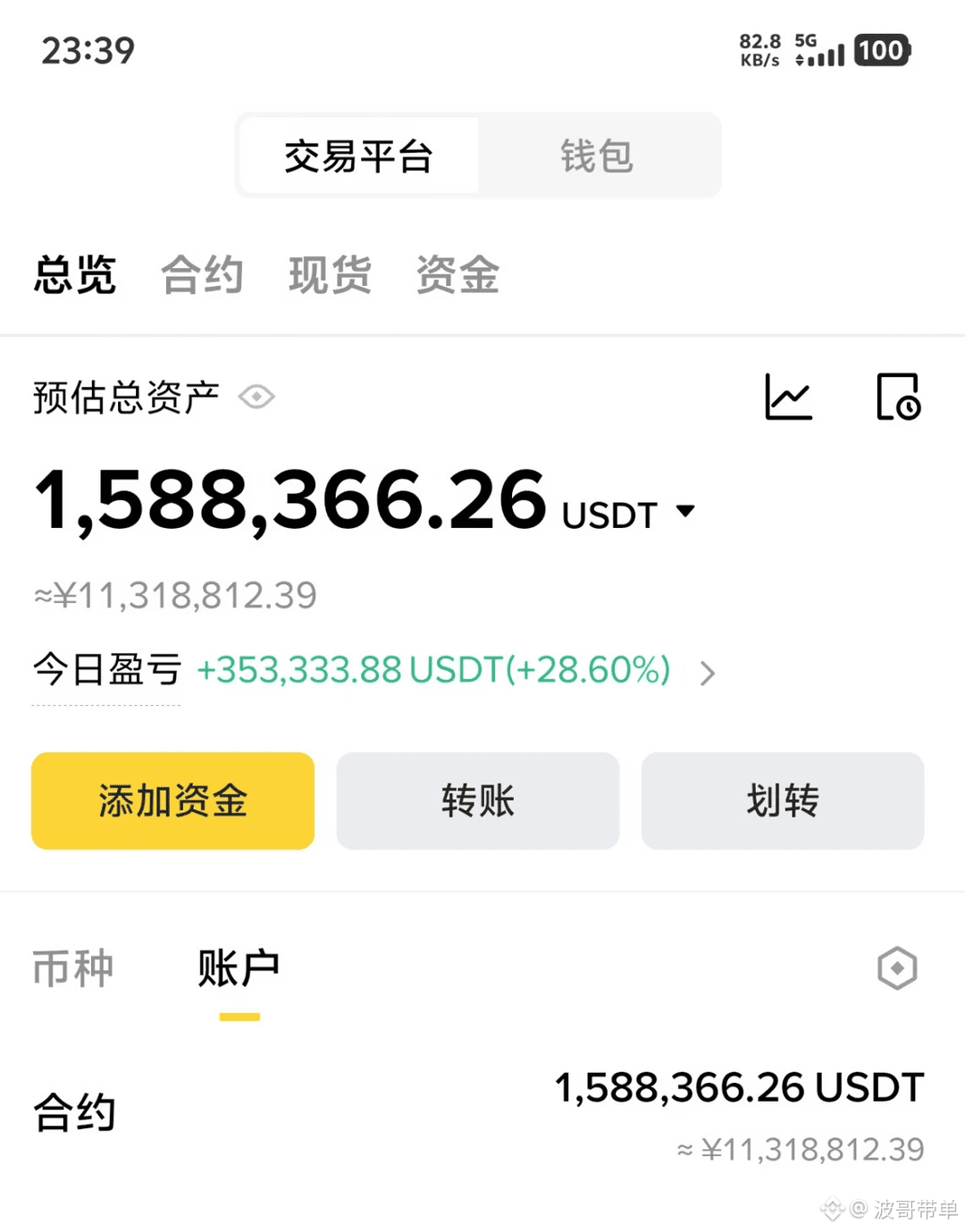
A while ago, a friend came to me with 1,400 U and said he wanted to trade futures.
I didn’t rush to teach him which indicators to look at. First, I told him: With this amount of money, don’t think about turning your life around—focus on staying in the game.
Two months later, he had grown his account to 67,000 U. Now it’s over 160,000 U. He hasn’t been liquidated once along the way.
When people hear numbers like that, their first reaction is, “He got lucky.” But I know exactly how he got here: not through luck, but by sticking to three things.
First, he never put all his money in one basket.
With 1,400 U, he didn’t go all in. He used some for short-term trades, only trading what he understood; some for trend trades, waiting specifically for big moves; and he barely touched the rest, keeping it as a lifeline.
If he got it wrong, he wouldn’t lose everything in one go. If he got it right, he still had bullets left to add to his position. Most people don’t lose because they misread the market—they lose because they use up all their chips on their first bad trade.
Second, he traded very rarely. $BTC
Staring at charts every day and constantly placing trades isn’t what makes you disciplined. Most of the time, crypto markets are range-bound, testing the waters, and luring traders in. There are only a handful of opportunities truly worth taking.
He’d rather wait in cash than force himself to find a trade just because he felt he “couldn’t stay out of the market.” He paid less in fees and managed to preserve his capital.
Third, he let his rules make decisions for him. $MSFTB
Before entering a trade, he set his stop-loss. If he was wrong, he got out. When the price reached his target, he took profits in stages instead of getting greedy for the last bit. If he took a loss, he never averaged down or got into a tug-of-war with a trade.
Growing a small account has never been about catching a huge surge or going all in. It’s about making fewer mistakes, protecting your capital, and slowly compounding small gains over and over.
Having little capital isn’t scary. What’s scary is having no rules and still hoping luck will change your life.
#币安推出BinanceIntelligence
A while ago, a friend came to me with 1,400 U and said he wanted to trade futures.
I didn’t rush to teach him which indicators to look at. First, I told him: With this amount of money, don’t think about turning your life around—focus on staying in the game.
Two months later, he had grown his account to 67,000 U. Now it’s over 160,000 U. He hasn’t been liquidated once along the way.
When people hear numbers like that, their first reaction is, “He got lucky.” But I know exactly how he got here: not through luck, but by sticking to three things.
First, he never put all his money in one basket.
With 1,400 U, he didn’t go all in. He used some for short-term trades, only trading what he understood; some for trend trades, waiting specifically for big moves; and he barely touched the rest, keeping it as a lifeline.
If he got it wrong, he wouldn’t lose everything in one go. If he got it right, he still had bullets left to add to his position. Most people don’t lose because they misread the market—they lose because they use up all their chips on their first bad trade.
Second, he traded very rarely. $BTC
Staring at charts every day and constantly placing trades isn’t what makes you disciplined. Most of the time, crypto markets are range-bound, testing the waters, and luring traders in. There are only a handful of opportunities truly worth taking.
He’d rather wait in cash than force himself to find a trade just because he felt he “couldn’t stay out of the market.” He paid less in fees and managed to preserve his capital.
Third, he let his rules make decisions for him. $MSFTB
Before entering a trade, he set his stop-loss. If he was wrong, he got out. When the price reached his target, he took profits in stages instead of getting greedy for the last bit. If he took a loss, he never averaged down or got into a tug-of-war with a trade.
Growing a small account has never been about catching a huge surge or going all in. It’s about making fewer mistakes, protecting your capital, and slowly compounding small gains over and over.
Having little capital isn’t scary. What’s scary is having no rules and still hoping luck will change your life.
#币安推出BinanceIntelligence
I didn’t rush to teach him which indicators to look at. First, I told him: With this amount of money, don’t think about turning your life around—focus on staying in the game.
Two months later, he had grown his account to 67,000 U. Now it’s over 160,000 U. He hasn’t been liquidated once along the way.
When people hear numbers like that, their first reaction is, “He got lucky.” But I know exactly how he got here: not through luck, but by sticking to three things.
First, he never put all his money in one basket.
With 1,400 U, he didn’t go all in. He used some for short-term trades, only trading what he understood; some for trend trades, waiting specifically for big moves; and he barely touched the rest, keeping it as a lifeline.
If he got it wrong, he wouldn’t lose everything in one go. If he got it right, he still had bullets left to add to his position. Most people don’t lose because they misread the market—they lose because they use up all their chips on their first bad trade.
Second, he traded very rarely. $BTC
Staring at charts every day and constantly placing trades isn’t what makes you disciplined. Most of the time, crypto markets are range-bound, testing the waters, and luring traders in. There are only a handful of opportunities truly worth taking.
He’d rather wait in cash than force himself to find a trade just because he felt he “couldn’t stay out of the market.” He paid less in fees and managed to preserve his capital.
Third, he let his rules make decisions for him. $MSFTB
Before entering a trade, he set his stop-loss. If he was wrong, he got out. When the price reached his target, he took profits in stages instead of getting greedy for the last bit. If he took a loss, he never averaged down or got into a tug-of-war with a trade.
Growing a small account has never been about catching a huge surge or going all in. It’s about making fewer mistakes, protecting your capital, and slowly compounding small gains over and over.
Having little capital isn’t scary. What’s scary is having no rules and still hoping luck will change your life.
#币安推出BinanceIntelligence
1
249
·
--
Anyone who has really lost money in crypto knows this: money made through luck is often lost again through wishful thinking.
Over the years, I’ve fallen into plenty of traps myself, and gradually summed up 8 lessons that I still follow today.
First, check the direction early in the day. $GLMR
Before the market opens, look at the trend and trading volume. Don’t let a sharp rise or fall over a few minutes sweep you along. If prices suddenly plunge, look for opportunities; if they suddenly surge, first think about how to lock in profits.
Second, don’t chase a sudden surge.
It’s okay to miss the first wave. Wait for a pullback and confirmation before entering. And don’t panic during a steep drop—building a position in stages matters more than trying to catch the bottom on impulse.
Third, don’t panic-sell on a small dip, and don’t overtrade in a sideways market.
Many losses aren’t caused by getting the direction wrong, but by acting too quickly. When there’s no clear market movement, frequent trading just means handing your money over in fees.
Fourth, plan your trades in advance.
Decide where you’ll enter and exit before opening a position. Don’t change your mind on the fly every time the price moves.
Fifth, trade in the direction of the trend. $BNB
Look for entry points on pullbacks and protect your profits on rallies. Follow the trend when it’s rising, and step aside promptly when it weakens. Don’t risk your principal just to spite the market.
Sixth, stay calm when others are going wild, and don’t lose your head when others panic.
When emotions are running hottest, it’s easiest to act impulsively. When the market is most chaotic, patience is put to the test.
Seventh, learn to wait during consolidation.
If there’s no clear direction, trade less. Wait for price action and the trend to give you a real signal, then focus your efforts.
Eighth, after a long period of sideways trading, be especially ready to take profits when trading volume suddenly surges and prices rise.
Don’t keep hoping to capture every last bit of the move. Profits only become yours once they’re safely in your pocket.
The hardest part of crypto has never been learning a few indicators—it’s keeping yourself in check.
Don’t chase rallies, don’t panic, don’t buy recklessly, and don’t get overconfident after one or two wins.
Stick to your rules, and your account has a chance to grow steadily over time. #Igloo关停Abstract区块链聚焦PENGU
Anyone who has really lost money in crypto knows this: money made through luck is often lost again through wishful thinking.
Over the years, I’ve fallen into plenty of traps myself, and gradually summed up 8 lessons that I still follow today.
First, check the direction early in the day. $GLMR
Before the market opens, look at the trend and trading volume. Don’t let a sharp rise or fall over a few minutes sweep you along. If prices suddenly plunge, look for opportunities; if they suddenly surge, first think about how to lock in profits.
Second, don’t chase a sudden surge.
It’s okay to miss the first wave. Wait for a pullback and confirmation before entering. And don’t panic during a steep drop—building a position in stages matters more than trying to catch the bottom on impulse.
Third, don’t panic-sell on a small dip, and don’t overtrade in a sideways market.
Many losses aren’t caused by getting the direction wrong, but by acting too quickly. When there’s no clear market movement, frequent trading just means handing your money over in fees.
Fourth, plan your trades in advance.
Decide where you’ll enter and exit before opening a position. Don’t change your mind on the fly every time the price moves.
Fifth, trade in the direction of the trend. $BNB
Look for entry points on pullbacks and protect your profits on rallies. Follow the trend when it’s rising, and step aside promptly when it weakens. Don’t risk your principal just to spite the market.
Sixth, stay calm when others are going wild, and don’t lose your head when others panic.
When emotions are running hottest, it’s easiest to act impulsively. When the market is most chaotic, patience is put to the test.
Seventh, learn to wait during consolidation.
If there’s no clear direction, trade less. Wait for price action and the trend to give you a real signal, then focus your efforts.
Eighth, after a long period of sideways trading, be especially ready to take profits when trading volume suddenly surges and prices rise.
Don’t keep hoping to capture every last bit of the move. Profits only become yours once they’re safely in your pocket.
The hardest part of crypto has never been learning a few indicators—it’s keeping yourself in check.
Don’t chase rallies, don’t panic, don’t buy recklessly, and don’t get overconfident after one or two wins.
Stick to your rules, and your account has a chance to grow steadily over time. #Igloo关停Abstract区块链聚焦PENGU
Over the years, I’ve fallen into plenty of traps myself, and gradually summed up 8 lessons that I still follow today.
First, check the direction early in the day. $GLMR
Before the market opens, look at the trend and trading volume. Don’t let a sharp rise or fall over a few minutes sweep you along. If prices suddenly plunge, look for opportunities; if they suddenly surge, first think about how to lock in profits.
Second, don’t chase a sudden surge.
It’s okay to miss the first wave. Wait for a pullback and confirmation before entering. And don’t panic during a steep drop—building a position in stages matters more than trying to catch the bottom on impulse.
Third, don’t panic-sell on a small dip, and don’t overtrade in a sideways market.
Many losses aren’t caused by getting the direction wrong, but by acting too quickly. When there’s no clear market movement, frequent trading just means handing your money over in fees.
Fourth, plan your trades in advance.
Decide where you’ll enter and exit before opening a position. Don’t change your mind on the fly every time the price moves.
Fifth, trade in the direction of the trend. $BNB
Look for entry points on pullbacks and protect your profits on rallies. Follow the trend when it’s rising, and step aside promptly when it weakens. Don’t risk your principal just to spite the market.
Sixth, stay calm when others are going wild, and don’t lose your head when others panic.
When emotions are running hottest, it’s easiest to act impulsively. When the market is most chaotic, patience is put to the test.
Seventh, learn to wait during consolidation.
If there’s no clear direction, trade less. Wait for price action and the trend to give you a real signal, then focus your efforts.
Eighth, after a long period of sideways trading, be especially ready to take profits when trading volume suddenly surges and prices rise.
Don’t keep hoping to capture every last bit of the move. Profits only become yours once they’re safely in your pocket.
The hardest part of crypto has never been learning a few indicators—it’s keeping yourself in check.
Don’t chase rallies, don’t panic, don’t buy recklessly, and don’t get overconfident after one or two wins.
Stick to your rules, and your account has a chance to grow steadily over time. #Igloo关停Abstract区块链聚焦PENGU
1
323
·
--
A word of caution for anyone with less than 800U in capital:
If you want to grow your account in crypto, don't expect to turn your life around overnight.
Last year, I coached a beginner who started with 500U. At first, he wasn't even familiar with the basic operations, but in three months he grew his account to 28,000U without ever getting liquidated. I later realized that what he did right wasn't catching a bunch of huge rallies, but consistently sticking to three rules.
First, always divide your capital. $BTC
With 500–800U, don't go all in. Split it into three parts: use one part for short-term trades, sticking to liquid coins like BTC and ETH, and exit once you hit your target; use another part for swing trades, entering only after the trend and trading volume confirm; keep the rest in reserve, and don't touch it if there are no opportunities.
Second, trade with the trend. Don't get worn down by choppy markets.
Most of the time, there's really not much worth trading. The more you trade in a sideways market, the more likely you are to chase rallies and sell in a panic—and you'll pay fees for nothing. The opportunities worth taking are those few moments when the direction is clear and the timing is right.
Third, discipline matters more than judgment. $MNST.US
Set your stop-loss before you enter a trade, and exit if you're wrong. Take profits in stages, and don't become reluctant to sell as your gains grow. The worst thing you can do is keep adding to a losing position, hoping to win it all back in one go.
The advantage of having a small amount of capital is flexibility; the downside is that it's easy to get impatient.
If you want to gradually grow 800U, don't bet it all on one trade. Make fewer mistakes, protect your principal, and let your profits compound little by little.#比特币跌破8.4万美元
A word of caution for anyone with less than 800U in capital:
If you want to grow your account in crypto, don't expect to turn your life around overnight.
Last year, I coached a beginner who started with 500U. At first, he wasn't even familiar with the basic operations, but in three months he grew his account to 28,000U without ever getting liquidated. I later realized that what he did right wasn't catching a bunch of huge rallies, but consistently sticking to three rules.
First, always divide your capital. $BTC
With 500–800U, don't go all in. Split it into three parts: use one part for short-term trades, sticking to liquid coins like BTC and ETH, and exit once you hit your target; use another part for swing trades, entering only after the trend and trading volume confirm; keep the rest in reserve, and don't touch it if there are no opportunities.
Second, trade with the trend. Don't get worn down by choppy markets.
Most of the time, there's really not much worth trading. The more you trade in a sideways market, the more likely you are to chase rallies and sell in a panic—and you'll pay fees for nothing. The opportunities worth taking are those few moments when the direction is clear and the timing is right.
Third, discipline matters more than judgment. $MNST.US
Set your stop-loss before you enter a trade, and exit if you're wrong. Take profits in stages, and don't become reluctant to sell as your gains grow. The worst thing you can do is keep adding to a losing position, hoping to win it all back in one go.
The advantage of having a small amount of capital is flexibility; the downside is that it's easy to get impatient.
If you want to gradually grow 800U, don't bet it all on one trade. Make fewer mistakes, protect your principal, and let your profits compound little by little.#比特币跌破8.4万美元
If you want to grow your account in crypto, don't expect to turn your life around overnight.
Last year, I coached a beginner who started with 500U. At first, he wasn't even familiar with the basic operations, but in three months he grew his account to 28,000U without ever getting liquidated. I later realized that what he did right wasn't catching a bunch of huge rallies, but consistently sticking to three rules.
First, always divide your capital. $BTC
With 500–800U, don't go all in. Split it into three parts: use one part for short-term trades, sticking to liquid coins like BTC and ETH, and exit once you hit your target; use another part for swing trades, entering only after the trend and trading volume confirm; keep the rest in reserve, and don't touch it if there are no opportunities.
Second, trade with the trend. Don't get worn down by choppy markets.
Most of the time, there's really not much worth trading. The more you trade in a sideways market, the more likely you are to chase rallies and sell in a panic—and you'll pay fees for nothing. The opportunities worth taking are those few moments when the direction is clear and the timing is right.
Third, discipline matters more than judgment. $MNST.US
Set your stop-loss before you enter a trade, and exit if you're wrong. Take profits in stages, and don't become reluctant to sell as your gains grow. The worst thing you can do is keep adding to a losing position, hoping to win it all back in one go.
The advantage of having a small amount of capital is flexibility; the downside is that it's easy to get impatient.
If you want to gradually grow 800U, don't bet it all on one trade. Make fewer mistakes, protect your principal, and let your profits compound little by little.#比特币跌破8.4万美元

BTC-3.72%
MNSTUS-0.89%
1
36
·
--
Can people who get so caught up in crypto trading that they can’t pull themselves away ever return to a normal life?
I don’t want to scare you, but honestly, if nothing changes, it’s really hard.
I know a guy who first got into the market with 3,000 USDT, just hoping to make a little extra money with funds he could afford to spare. He happened to catch a market rally, and in a week, his account shot up from 3,000 USDT to 60,000 USDT.
That experience may have been the real “turning point” for him.
Later, he told me, “So money really can come that quickly.”
After that, he began to think he’d found a shortcut to getting rich. Spot trading felt too slow, so he started trading futures. Small positions weren’t exciting enough, so he added leverage. A few hundred in profit wasn’t satisfying, so he kept thinking he could make more on the next trade. Then the market suddenly reversed, quickly wiping out tens of thousands of USDT in gains—and shrinking his original capital, too.
But the biggest problem wasn’t actually losing money.
It was that he couldn’t pull himself away from the charts.$NVDAB
The first thing he did when he woke up was check the market. He scrolled through candlestick charts while eating, and even lay in bed at night calculating his next trade. When he lost, he wanted to win it back; when he made money, he wanted to ramp things up even further. He was exhausted, but still kept telling himself, “Next time, I’ll definitely make it all back.”
That’s what makes it so easy to get trapped.
In the end, many people lose more than just their account balance—they lose the patience for a normal life. The thrill of doubling your money in a day can make a steady income feel painfully slow. After making quick money, living a calm, stable life can actually start to feel unbearable.
So the real danger sign in trading isn’t one particular loss. It’s when you start arranging your entire life around the market.#迪拜VARA发布储备资产审计规定
If it’s already affecting your sleep, work, or family, it’s time to stop and take a hard look at things.
The market will always be open, and there will be other opportunities.
But the time you lose in life is truly gone for good.
Trading should serve your life—not turn your life into a trade that never ends.
Can people who get so caught up in crypto trading that they can’t pull themselves away ever return to a normal life?
I don’t want to scare you, but honestly, if nothing changes, it’s really hard.
I know a guy who first got into the market with 3,000 USDT, just hoping to make a little extra money with funds he could afford to spare. He happened to catch a market rally, and in a week, his account shot up from 3,000 USDT to 60,000 USDT.
That experience may have been the real “turning point” for him.
Later, he told me, “So money really can come that quickly.”
After that, he began to think he’d found a shortcut to getting rich. Spot trading felt too slow, so he started trading futures. Small positions weren’t exciting enough, so he added leverage. A few hundred in profit wasn’t satisfying, so he kept thinking he could make more on the next trade. Then the market suddenly reversed, quickly wiping out tens of thousands of USDT in gains—and shrinking his original capital, too.
But the biggest problem wasn’t actually losing money.
It was that he couldn’t pull himself away from the charts.$NVDAB
The first thing he did when he woke up was check the market. He scrolled through candlestick charts while eating, and even lay in bed at night calculating his next trade. When he lost, he wanted to win it back; when he made money, he wanted to ramp things up even further. He was exhausted, but still kept telling himself, “Next time, I’ll definitely make it all back.”
That’s what makes it so easy to get trapped.
In the end, many people lose more than just their account balance—they lose the patience for a normal life. The thrill of doubling your money in a day can make a steady income feel painfully slow. After making quick money, living a calm, stable life can actually start to feel unbearable.
So the real danger sign in trading isn’t one particular loss. It’s when you start arranging your entire life around the market.#迪拜VARA发布储备资产审计规定
If it’s already affecting your sleep, work, or family, it’s time to stop and take a hard look at things.
The market will always be open, and there will be other opportunities.
But the time you lose in life is truly gone for good.
Trading should serve your life—not turn your life into a trade that never ends.
I don’t want to scare you, but honestly, if nothing changes, it’s really hard.
I know a guy who first got into the market with 3,000 USDT, just hoping to make a little extra money with funds he could afford to spare. He happened to catch a market rally, and in a week, his account shot up from 3,000 USDT to 60,000 USDT.
That experience may have been the real “turning point” for him.
Later, he told me, “So money really can come that quickly.”
After that, he began to think he’d found a shortcut to getting rich. Spot trading felt too slow, so he started trading futures. Small positions weren’t exciting enough, so he added leverage. A few hundred in profit wasn’t satisfying, so he kept thinking he could make more on the next trade. Then the market suddenly reversed, quickly wiping out tens of thousands of USDT in gains—and shrinking his original capital, too.
But the biggest problem wasn’t actually losing money.
It was that he couldn’t pull himself away from the charts.$NVDAB
The first thing he did when he woke up was check the market. He scrolled through candlestick charts while eating, and even lay in bed at night calculating his next trade. When he lost, he wanted to win it back; when he made money, he wanted to ramp things up even further. He was exhausted, but still kept telling himself, “Next time, I’ll definitely make it all back.”
That’s what makes it so easy to get trapped.
In the end, many people lose more than just their account balance—they lose the patience for a normal life. The thrill of doubling your money in a day can make a steady income feel painfully slow. After making quick money, living a calm, stable life can actually start to feel unbearable.
So the real danger sign in trading isn’t one particular loss. It’s when you start arranging your entire life around the market.#迪拜VARA发布储备资产审计规定
If it’s already affecting your sleep, work, or family, it’s time to stop and take a hard look at things.
The market will always be open, and there will be other opportunities.
But the time you lose in life is truly gone for good.
Trading should serve your life—not turn your life into a trade that never ends.

2
31
·
--
To be honest, after spending a long time in this market, I’ve seen all kinds of people. Some come in with a few thousand U and lose it all in half a month. Others struggle for years, until their nerves are almost completely worn down.
But one guy I mentored last year really left a deep impression on me.
When he first entered the market, he had only 900U and couldn’t even make sense of the most basic candlestick chart. When people hear how little he started with, their first reaction is always: How could anyone make it with that kind of money?
But he had one rare quality: he didn’t act recklessly.$SYN
After three months, he’d grown his account to over 50,000U. Now it’s steadily above 80,000U. Some people say he just got lucky with the market, but I know what really brought him this far wasn’t luck—it was three habits.
First, he always keeps his funds separate.
One portion is for short-term trades, and he only takes opportunities he understands. Another is for trend trading, waiting for a truly major move. He keeps the rest in reserve and never touches it unless a key level is reached.
Second, he doesn’t trade without a signal.$STX
He used to chase hot trends too, getting anxious whenever he saw other people making money. But over time, he realized that although the market goes up and down every day, there aren’t worthwhile opportunities to trade every day. If he doesn’t understand what’s happening, he waits. If the direction isn’t confirmed, he stays out of the market.
Third, he handles both profits and losses according to his rules.
If the price hits his predetermined loss level, he exits. When it reaches his target, he takes profits in stages. And once his account grew, he started taking some of the profits out.
Chasing rising prices, adding to losing positions, and stubbornly holding on all come down to the same problem:
They turn trading into an outlet for emotions.
The people who last in this market aren’t right every time. When they’re wrong, they know how to keep their losses contained.#Strategy市值排名上升
To be honest, after spending a long time in this market, I’ve seen all kinds of people. Some come in with a few thousand U and lose it all in half a month. Others struggle for years, until their nerves are almost completely worn down.
But one guy I mentored last year really left a deep impression on me.
When he first entered the market, he had only 900U and couldn’t even make sense of the most basic candlestick chart. When people hear how little he started with, their first reaction is always: How could anyone make it with that kind of money?
But he had one rare quality: he didn’t act recklessly.$SYN
After three months, he’d grown his account to over 50,000U. Now it’s steadily above 80,000U. Some people say he just got lucky with the market, but I know what really brought him this far wasn’t luck—it was three habits.
First, he always keeps his funds separate.
One portion is for short-term trades, and he only takes opportunities he understands. Another is for trend trading, waiting for a truly major move. He keeps the rest in reserve and never touches it unless a key level is reached.
Second, he doesn’t trade without a signal.$STX
He used to chase hot trends too, getting anxious whenever he saw other people making money. But over time, he realized that although the market goes up and down every day, there aren’t worthwhile opportunities to trade every day. If he doesn’t understand what’s happening, he waits. If the direction isn’t confirmed, he stays out of the market.
Third, he handles both profits and losses according to his rules.
If the price hits his predetermined loss level, he exits. When it reaches his target, he takes profits in stages. And once his account grew, he started taking some of the profits out.
Chasing rising prices, adding to losing positions, and stubbornly holding on all come down to the same problem:
They turn trading into an outlet for emotions.
The people who last in this market aren’t right every time. When they’re wrong, they know how to keep their losses contained.#Strategy市值排名上升
But one guy I mentored last year really left a deep impression on me.
When he first entered the market, he had only 900U and couldn’t even make sense of the most basic candlestick chart. When people hear how little he started with, their first reaction is always: How could anyone make it with that kind of money?
But he had one rare quality: he didn’t act recklessly.$SYN
After three months, he’d grown his account to over 50,000U. Now it’s steadily above 80,000U. Some people say he just got lucky with the market, but I know what really brought him this far wasn’t luck—it was three habits.
First, he always keeps his funds separate.
One portion is for short-term trades, and he only takes opportunities he understands. Another is for trend trading, waiting for a truly major move. He keeps the rest in reserve and never touches it unless a key level is reached.
Second, he doesn’t trade without a signal.$STX
He used to chase hot trends too, getting anxious whenever he saw other people making money. But over time, he realized that although the market goes up and down every day, there aren’t worthwhile opportunities to trade every day. If he doesn’t understand what’s happening, he waits. If the direction isn’t confirmed, he stays out of the market.
Third, he handles both profits and losses according to his rules.
If the price hits his predetermined loss level, he exits. When it reaches his target, he takes profits in stages. And once his account grew, he started taking some of the profits out.
Chasing rising prices, adding to losing positions, and stubbornly holding on all come down to the same problem:
They turn trading into an outlet for emotions.
The people who last in this market aren’t right every time. When they’re wrong, they know how to keep their losses contained.#Strategy市值排名上升

200
·
--
Five years ago, I had just over 10,000 yuan left in my account.
Back then, I thought about one thing every day: How could I turn things around? When the next market rally came, would I be able to seize the opportunity?
Now my account is worth seven figures, and my thinking has actually become simpler. It’s not that I’ve made enough money. It’s that I’ve truly lost money and felt the pain, so I know what impulsive trading can cost.
First, never go all in. $BTC
No matter how confident I am in a market move, I’ll never put all my chips in at once. The market is always full of surprises, and no matter how accurate your judgment is, you can never be 100% right. Leaving some room in your position isn’t cowardice—it’s giving yourself a way out. Many people don’t lose money because they got the direction wrong; they lose because they make one bad trade and use up all their chips, leaving themselves no chance to recover.
Second, only take opportunities I understand. $QI
The market goes up and down every day, but there really aren’t that many moves worth trading. If prices are surging wildly, don’t chase them; if they’re plunging in a panic, don’t rush to buy the dip. Wait for a trend to emerge and for the price to reach a key level before making a move. The more desperate you are to make money, the more likely you are to end up holding the chips other people don’t want.
Third, keep trading simple.
These days, I don’t pile on a bunch of indicators. I look at just three things: trend, strength, and price levels. If the conditions are right, I trade; if not, I wait. When I’m making a profit, I let it run a little longer; if I’m wrong, I admit it and exit promptly. Adding to a losing position again and again is often not a strategy—it’s just refusing to admit you were wrong.
Finally, to everyone still hanging in there in the market:
Don’t fight the trend, don’t let your position get out of control, and don’t make decisions based on emotion.
There will always be opportunities, but once your capital is gone, there really won’t be another chance.
#Strive斥资1.69亿美元增持2000枚BTC
Five years ago, I had just over 10,000 yuan left in my account.
Back then, I thought about one thing every day: How could I turn things around? When the next market rally came, would I be able to seize the opportunity?
Now my account is worth seven figures, and my thinking has actually become simpler. It’s not that I’ve made enough money. It’s that I’ve truly lost money and felt the pain, so I know what impulsive trading can cost.
First, never go all in. $BTC
No matter how confident I am in a market move, I’ll never put all my chips in at once. The market is always full of surprises, and no matter how accurate your judgment is, you can never be 100% right. Leaving some room in your position isn’t cowardice—it’s giving yourself a way out. Many people don’t lose money because they got the direction wrong; they lose because they make one bad trade and use up all their chips, leaving themselves no chance to recover.
Second, only take opportunities I understand. $QI
The market goes up and down every day, but there really aren’t that many moves worth trading. If prices are surging wildly, don’t chase them; if they’re plunging in a panic, don’t rush to buy the dip. Wait for a trend to emerge and for the price to reach a key level before making a move. The more desperate you are to make money, the more likely you are to end up holding the chips other people don’t want.
Third, keep trading simple.
These days, I don’t pile on a bunch of indicators. I look at just three things: trend, strength, and price levels. If the conditions are right, I trade; if not, I wait. When I’m making a profit, I let it run a little longer; if I’m wrong, I admit it and exit promptly. Adding to a losing position again and again is often not a strategy—it’s just refusing to admit you were wrong.
Finally, to everyone still hanging in there in the market:
Don’t fight the trend, don’t let your position get out of control, and don’t make decisions based on emotion.
There will always be opportunities, but once your capital is gone, there really won’t be another chance.
#Strive斥资1.69亿美元增持2000枚BTC
Back then, I thought about one thing every day: How could I turn things around? When the next market rally came, would I be able to seize the opportunity?
Now my account is worth seven figures, and my thinking has actually become simpler. It’s not that I’ve made enough money. It’s that I’ve truly lost money and felt the pain, so I know what impulsive trading can cost.
First, never go all in. $BTC
No matter how confident I am in a market move, I’ll never put all my chips in at once. The market is always full of surprises, and no matter how accurate your judgment is, you can never be 100% right. Leaving some room in your position isn’t cowardice—it’s giving yourself a way out. Many people don’t lose money because they got the direction wrong; they lose because they make one bad trade and use up all their chips, leaving themselves no chance to recover.
Second, only take opportunities I understand. $QI
The market goes up and down every day, but there really aren’t that many moves worth trading. If prices are surging wildly, don’t chase them; if they’re plunging in a panic, don’t rush to buy the dip. Wait for a trend to emerge and for the price to reach a key level before making a move. The more desperate you are to make money, the more likely you are to end up holding the chips other people don’t want.
Third, keep trading simple.
These days, I don’t pile on a bunch of indicators. I look at just three things: trend, strength, and price levels. If the conditions are right, I trade; if not, I wait. When I’m making a profit, I let it run a little longer; if I’m wrong, I admit it and exit promptly. Adding to a losing position again and again is often not a strategy—it’s just refusing to admit you were wrong.
Finally, to everyone still hanging in there in the market:
Don’t fight the trend, don’t let your position get out of control, and don’t make decisions based on emotion.
There will always be opportunities, but once your capital is gone, there really won’t be another chance.
#Strive斥资1.69亿美元增持2000枚BTC

217
·
--
A while ago, I helped a friend get started trading futures. When he first entered the market, he had only 1,400 U in capital.
When people see that number, their first reaction is usually: “With so little money, it’s way too hard to make it work.”
But two months later, his account had grown to 67,000 U, and it’s now over 160,000 U. Most importantly, he never had a single liquidation along the way.$GTC
When people see these results, they attribute them to luck. But what really determines whether an account can grow has never been how much you made on a single trade. It’s whether you have a set of rules you can follow consistently over the long term.
First, always split up your capital. Never put it all in at once.
For example, if you have 2,400 U, you can divide it into three parts: use one part for short-term trades, taking only opportunities you understand; use another for trend trading, specifically to wait for major moves; and keep the rest as a reserve, using it only when necessary. That way, even if your judgment is wrong, you won’t lose your chance to make a comeback all at once.
Second, don’t think you have to trade every day.$QI
There aren’t many truly great opportunities in crypto. Most of the time, the market is moving sideways, testing levels, or luring traders in. Many people trade every day and look incredibly hardworking, only to find they’ve paid a pile of fees while their capital keeps shrinking. Good trading isn’t about placing lots of trades. It’s about waiting until the direction is clear and the timing is right.
Third, let discipline keep your emotions in check.
Before opening a position, decide where your stop-loss will be. If you’re wrong, get out. Once you’ve reached your target, take profits in stages. And after a loss, don’t try to win it back by doubling down. Growing a small account isn’t about catching a massive rally every day, and it certainly isn’t about going all in on a single trade to turn your fortunes around.
Ultimately, it comes down to managing risk, patiently waiting for opportunities, and gradually compounding one small profit after another.
Having little capital isn’t scary. What’s truly dangerous is having no rules while constantly hoping luck will change the outcome.
#SEC批准3倍比特币ETF上市
A while ago, I helped a friend get started trading futures. When he first entered the market, he had only 1,400 U in capital.
When people see that number, their first reaction is usually: “With so little money, it’s way too hard to make it work.”
But two months later, his account had grown to 67,000 U, and it’s now over 160,000 U. Most importantly, he never had a single liquidation along the way.$GTC
When people see these results, they attribute them to luck. But what really determines whether an account can grow has never been how much you made on a single trade. It’s whether you have a set of rules you can follow consistently over the long term.
First, always split up your capital. Never put it all in at once.
For example, if you have 2,400 U, you can divide it into three parts: use one part for short-term trades, taking only opportunities you understand; use another for trend trading, specifically to wait for major moves; and keep the rest as a reserve, using it only when necessary. That way, even if your judgment is wrong, you won’t lose your chance to make a comeback all at once.
Second, don’t think you have to trade every day.$QI
There aren’t many truly great opportunities in crypto. Most of the time, the market is moving sideways, testing levels, or luring traders in. Many people trade every day and look incredibly hardworking, only to find they’ve paid a pile of fees while their capital keeps shrinking. Good trading isn’t about placing lots of trades. It’s about waiting until the direction is clear and the timing is right.
Third, let discipline keep your emotions in check.
Before opening a position, decide where your stop-loss will be. If you’re wrong, get out. Once you’ve reached your target, take profits in stages. And after a loss, don’t try to win it back by doubling down. Growing a small account isn’t about catching a massive rally every day, and it certainly isn’t about going all in on a single trade to turn your fortunes around.
Ultimately, it comes down to managing risk, patiently waiting for opportunities, and gradually compounding one small profit after another.
Having little capital isn’t scary. What’s truly dangerous is having no rules while constantly hoping luck will change the outcome.
#SEC批准3倍比特币ETF上市
When people see that number, their first reaction is usually: “With so little money, it’s way too hard to make it work.”
But two months later, his account had grown to 67,000 U, and it’s now over 160,000 U. Most importantly, he never had a single liquidation along the way.$GTC
When people see these results, they attribute them to luck. But what really determines whether an account can grow has never been how much you made on a single trade. It’s whether you have a set of rules you can follow consistently over the long term.
First, always split up your capital. Never put it all in at once.
For example, if you have 2,400 U, you can divide it into three parts: use one part for short-term trades, taking only opportunities you understand; use another for trend trading, specifically to wait for major moves; and keep the rest as a reserve, using it only when necessary. That way, even if your judgment is wrong, you won’t lose your chance to make a comeback all at once.
Second, don’t think you have to trade every day.$QI
There aren’t many truly great opportunities in crypto. Most of the time, the market is moving sideways, testing levels, or luring traders in. Many people trade every day and look incredibly hardworking, only to find they’ve paid a pile of fees while their capital keeps shrinking. Good trading isn’t about placing lots of trades. It’s about waiting until the direction is clear and the timing is right.
Third, let discipline keep your emotions in check.
Before opening a position, decide where your stop-loss will be. If you’re wrong, get out. Once you’ve reached your target, take profits in stages. And after a loss, don’t try to win it back by doubling down. Growing a small account isn’t about catching a massive rally every day, and it certainly isn’t about going all in on a single trade to turn your fortunes around.
Ultimately, it comes down to managing risk, patiently waiting for opportunities, and gradually compounding one small profit after another.
Having little capital isn’t scary. What’s truly dangerous is having no rules while constantly hoping luck will change the outcome.
#SEC批准3倍比特币ETF上市

301
·
--
I grew my account from a few thousand to a much larger one, and I’ve realized that many people lose money because they put too much faith in shortcuts.
After making a profit with one big position, they think they’ve found the secret to wealth. But have you ever considered doing that ten times in a row? Just one bad call could wipe out everything you made before.
First, don’t rush to prove yourself.
When you’re just starting out, don’t expect to make a lot of money right away. Start with small positions and learn through trial and error. Protect your capital first—that’s what gives you the chance to keep trading.
Second, don’t trade markets you don’t understand.
If there’s no clear trend, the timing isn’t right, or the opportunity is unclear, don’t force a trade. Often, staying out isn’t missing out—it’s waiting for a better entry.
Third, always plan your stop-loss in advance.
Don’t wait until the losses become unbearable to figure out what to do. Small losses can be managed; big losses can throw off your whole strategy.$NVDAB
Fourth, don’t try to grab all your profits at once.
No one can buy at the exact bottom and sell at the exact top. Once you’ve reached your target, take some profit off the table. Making money from trades you understand is already enough.
Fifth, be even more cautious as your account grows.
The most dangerous moment often isn’t when you first start losing money, but after you’ve made several winning trades and start getting overconfident. You keep increasing your position size, then one major pullback wipes out all your previous gains.
Sixth, when your account has grown significantly, learn to lock in your gains.
Withdraw some of your profits and give yourself a financial cushion. That way, the next time you face a market move, you won’t make reckless decisions out of fear of giving your gains back.$AAPLB
There’s no secret to growing a small account into a large one.
Manage your position size, avoid major mistakes, wait patiently, and stick to your plan.
It may seem slow, but the money that truly lasts is often built up little by little this way.
#BTC走势分析
I grew my account from a few thousand to a much larger one, and I’ve realized that many people lose money because they put too much faith in shortcuts.
After making a profit with one big position, they think they’ve found the secret to wealth. But have you ever considered doing that ten times in a row? Just one bad call could wipe out everything you made before.
First, don’t rush to prove yourself.
When you’re just starting out, don’t expect to make a lot of money right away. Start with small positions and learn through trial and error. Protect your capital first—that’s what gives you the chance to keep trading.
Second, don’t trade markets you don’t understand.
If there’s no clear trend, the timing isn’t right, or the opportunity is unclear, don’t force a trade. Often, staying out isn’t missing out—it’s waiting for a better entry.
Third, always plan your stop-loss in advance.
Don’t wait until the losses become unbearable to figure out what to do. Small losses can be managed; big losses can throw off your whole strategy.$NVDAB
Fourth, don’t try to grab all your profits at once.
No one can buy at the exact bottom and sell at the exact top. Once you’ve reached your target, take some profit off the table. Making money from trades you understand is already enough.
Fifth, be even more cautious as your account grows.
The most dangerous moment often isn’t when you first start losing money, but after you’ve made several winning trades and start getting overconfident. You keep increasing your position size, then one major pullback wipes out all your previous gains.
Sixth, when your account has grown significantly, learn to lock in your gains.
Withdraw some of your profits and give yourself a financial cushion. That way, the next time you face a market move, you won’t make reckless decisions out of fear of giving your gains back.$AAPLB
There’s no secret to growing a small account into a large one.
Manage your position size, avoid major mistakes, wait patiently, and stick to your plan.
It may seem slow, but the money that truly lasts is often built up little by little this way.
#BTC走势分析
After making a profit with one big position, they think they’ve found the secret to wealth. But have you ever considered doing that ten times in a row? Just one bad call could wipe out everything you made before.
First, don’t rush to prove yourself.
When you’re just starting out, don’t expect to make a lot of money right away. Start with small positions and learn through trial and error. Protect your capital first—that’s what gives you the chance to keep trading.
Second, don’t trade markets you don’t understand.
If there’s no clear trend, the timing isn’t right, or the opportunity is unclear, don’t force a trade. Often, staying out isn’t missing out—it’s waiting for a better entry.
Third, always plan your stop-loss in advance.
Don’t wait until the losses become unbearable to figure out what to do. Small losses can be managed; big losses can throw off your whole strategy.$NVDAB
Fourth, don’t try to grab all your profits at once.
No one can buy at the exact bottom and sell at the exact top. Once you’ve reached your target, take some profit off the table. Making money from trades you understand is already enough.
Fifth, be even more cautious as your account grows.
The most dangerous moment often isn’t when you first start losing money, but after you’ve made several winning trades and start getting overconfident. You keep increasing your position size, then one major pullback wipes out all your previous gains.
Sixth, when your account has grown significantly, learn to lock in your gains.
Withdraw some of your profits and give yourself a financial cushion. That way, the next time you face a market move, you won’t make reckless decisions out of fear of giving your gains back.$AAPLB
There’s no secret to growing a small account into a large one.
Manage your position size, avoid major mistakes, wait patiently, and stick to your plan.
It may seem slow, but the money that truly lasts is often built up little by little this way.
#BTC走势分析
180
Log in to explore more content
Join global crypto users on Binance Square
⚡️ Get latest and useful information about crypto.
💬 Trusted by the world’s largest crypto exchange.
👍 Discover real insights from verified creators.
Email / Phone number
Trending Topics
FedMinutesFocusOnOctoberPause
22,243 views
453 Discussing
#fedminutesfocusonoctoberpause
🚨 OCTOBER FED HIKE ODDS COLLAPSE TO 21.6%… Is $BTC About to React? 👀
The Fed is about to give markets another major clue.
Investors are waiting for today’s FOMC minutes — and the biggest question is whether October brings another rate hike… or a pause.
Right now, the odds of a 25-basis-point October hike have fallen to just 21.6%.
That’s a huge shift in expectations.
But here’s what makes this interesting… 👀
The Fed raised rates to 3.75%–4.00% in September, but recent weakness in jobs data and softer inflation have made another immediate hike look less certain.
And for crypto, this matters.
A Fed pause could reduce pressure on financial conditions and potentially improve risk appetite.
That could become a tailwind for BTC
But there’s a catch…
Bitcoin is already under pressure as the dollar and Treasury yields move higher.
So tonight’s minutes could become a volatility trigger.
Dovish Fed → liquidity hopes → bullish .
BTC narrative?
Hawkish Fed → higher-rate fears → more pressure on risk assets?
The real question:
Is October becoming the pause Bitcoin bulls have been waiting for… or could the Fed surprise the market again? 👀
Watch BTC + Fed expectations + Treasury yields closely.
#FederalReserve #Fed #Crypto #InterestRates
$ETH
$SOL
Shae Cassler Sw9r
·16 Likes
·33.2k views
BinanceLaunchesBinanceIntelligence
939,383 views
5,742 Discussing
EvernorthDelaysNasdaqDebutToOct12
0 views
0 Discussing