
暴富暴美宁萌
636 Posts

暴富暴美宁萌
Report
Block User
专注市场结构、资金流向与技术走势。分享个人对行情的判断和交易逻辑。市场没有绝对,只有概率和风险。保持独立思考,持续记录。
2 Following
3 Followers
6 Liked
Posts
·
--
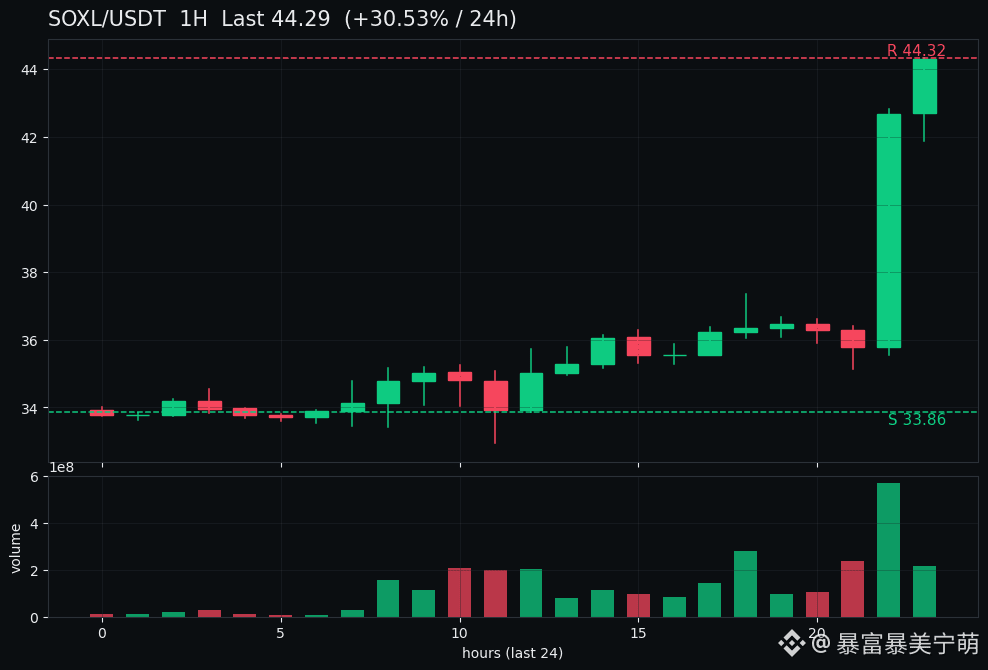
The semiconductor rebound was led by stocks driven by news: Nvidia reported Q3 revenue of $115.8 billion, up 103% year over year, and EPS of $2.68, both beating expectations. Its Q4 guidance was $130 billion. U.S. tech stocks rallied across the board overnight, and SK Hynix rose nearly 7%. SOXL, a 3x leveraged semiconductor ETF, gained 23.5% in 24 hours to $41.88, with trading volume of $2.745 billion. Leveraged ETFs rise fast and fall fast, too. This rally is more of a sentiment recovery—don't chase it as if it were a trend reversal. $SOXL
The semiconductor rebound was led by stocks driven by news: Nvidia reported Q3 revenue of $115.8 billion, up 103% year over year, and EPS of $2.68, both beating expectations. Its Q4 guidance was $130 billion. U.S. tech stocks rallied across the board overnight, and SK Hynix rose nearly 7%. SOXL, a 3x leveraged semiconductor ETF, gained 23.5% in 24 hours to $41.88, with trading volume of $2.745 billion. Leveraged ETFs rise fast and fall fast, too. This rally is more of a sentiment recovery—don't chase it as if it were a trend reversal. $SOXL
450
·
--
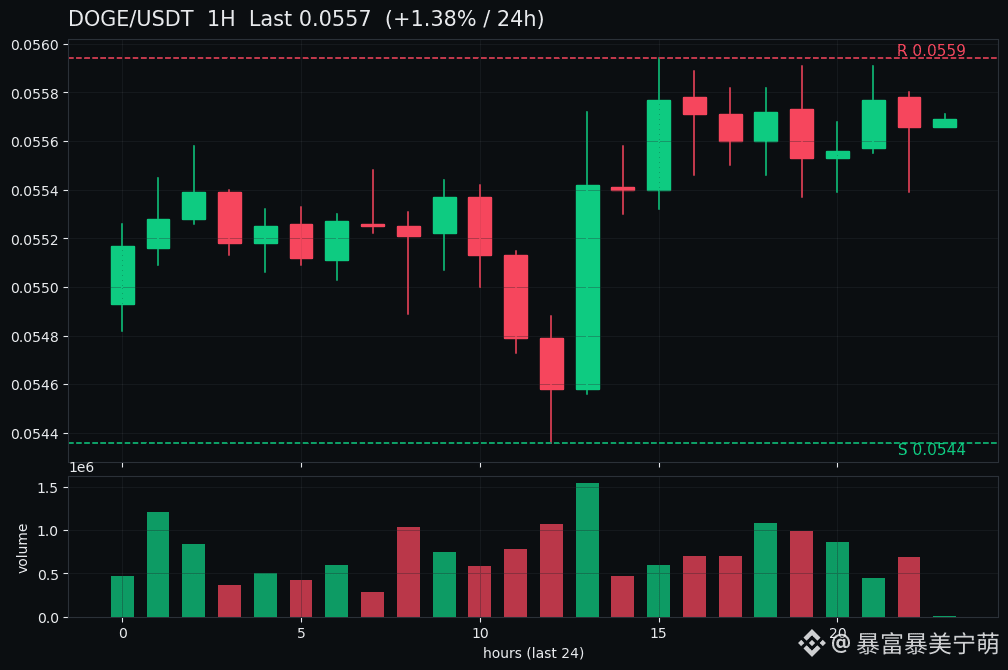
The reason DOGE is being picked this round is that the news flow is backed by real substance: last Saturday it once fell to around $0.05, hitting a new one-year low, and then recovered to $0.0556, up 0.78% over 24 hours. The $0.054 level has repeatedly held up the price since 2022, and this time it held again. On-chain data shows that whales holding 1 million to 10 million coins actually added about 290 million coins during the decline. But don’t just look at the optimistic side. U.S. spot DOGE ETFs have seen basically zero inflows since mid-October, and institutions have not come back yet. My view is: only if $0.054 holds can there be talk of a rebound; if it breaks, first look at $0.05. The DogeOS mainnet launch date is also still undecided, so don’t treat long-term stories as immediate bullish catalysts. $DOGE
The reason DOGE is being picked this round is that the news flow is backed by real substance: last Saturday it once fell to around $0.05, hitting a new one-year low, and then recovered to $0.0556, up 0.78% over 24 hours. The $0.054 level has repeatedly held up the price since 2022, and this time it held again. On-chain data shows that whales holding 1 million to 10 million coins actually added about 290 million coins during the decline. But don’t just look at the optimistic side. U.S. spot DOGE ETFs have seen basically zero inflows since mid-October, and institutions have not come back yet. My view is: only if $0.054 holds can there be talk of a rebound; if it breaks, first look at $0.05. The DogeOS mainnet launch date is also still undecided, so don’t treat long-term stories as immediate bullish catalysts. $DOGE
201
·
--
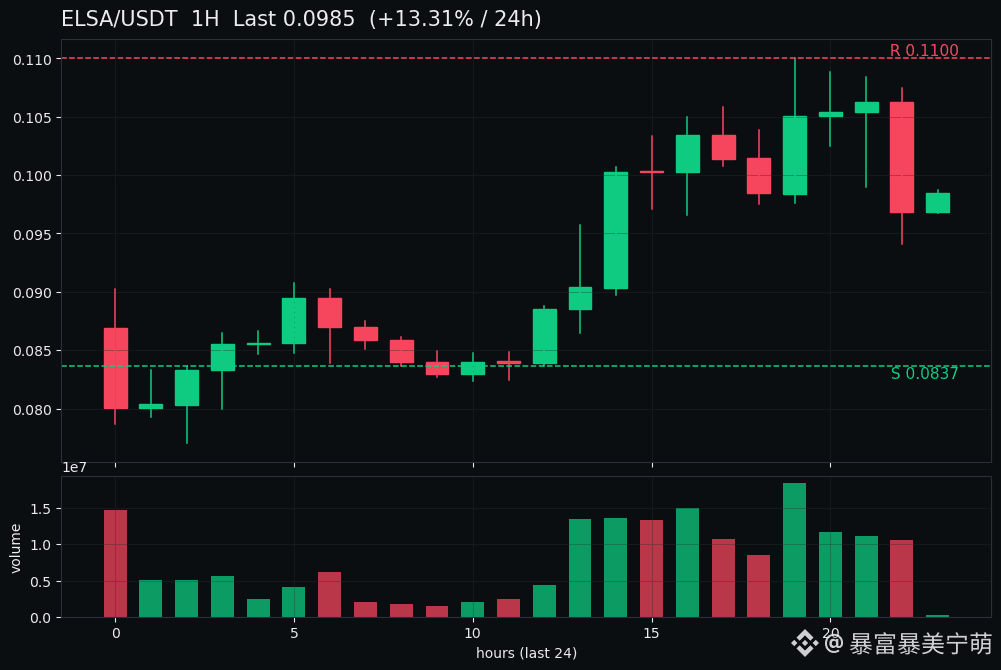
ELSA is up 23.37% today, trading at $0.0968, with $192 million in 24-hour trading volume and open interest up 32% in a day. Both volume and price are rising. This move is mainly being driven by spot trading in South Korea: on November 20, Upbit and Bithumb saw around $65 million in combined daily trading volume. The HeyElsa AI agent narrative has also quickly fueled interest. One thing to note, though: there have been no new project announcements behind this move—it’s purely driven by capital flows. Only about 30% of the supply is circulating, so unlocking pressure remains. This kind of hype can fade as quickly as it arrives. Previously, trading volume on South Korean exchanges briefly exceeded its usual level by more than 100 times, so chasing the rally could easily mean buying near the top. Support is at $0.0837, with resistance at $0.11. The risk of buying at elevated prices is considerable. $ELSA
ELSA is up 23.37% today, trading at $0.0968, with $192 million in 24-hour trading volume and open interest up 32% in a day. Both volume and price are rising. This move is mainly being driven by spot trading in South Korea: on November 20, Upbit and Bithumb saw around $65 million in combined daily trading volume. The HeyElsa AI agent narrative has also quickly fueled interest. One thing to note, though: there have been no new project announcements behind this move—it’s purely driven by capital flows. Only about 30% of the supply is circulating, so unlocking pressure remains. This kind of hype can fade as quickly as it arrives. Previously, trading volume on South Korean exchanges briefly exceeded its usual level by more than 100 times, so chasing the rally could easily mean buying near the top. Support is at $0.0837, with resistance at $0.11. The risk of buying at elevated prices is considerable. $ELSA
147
·
--
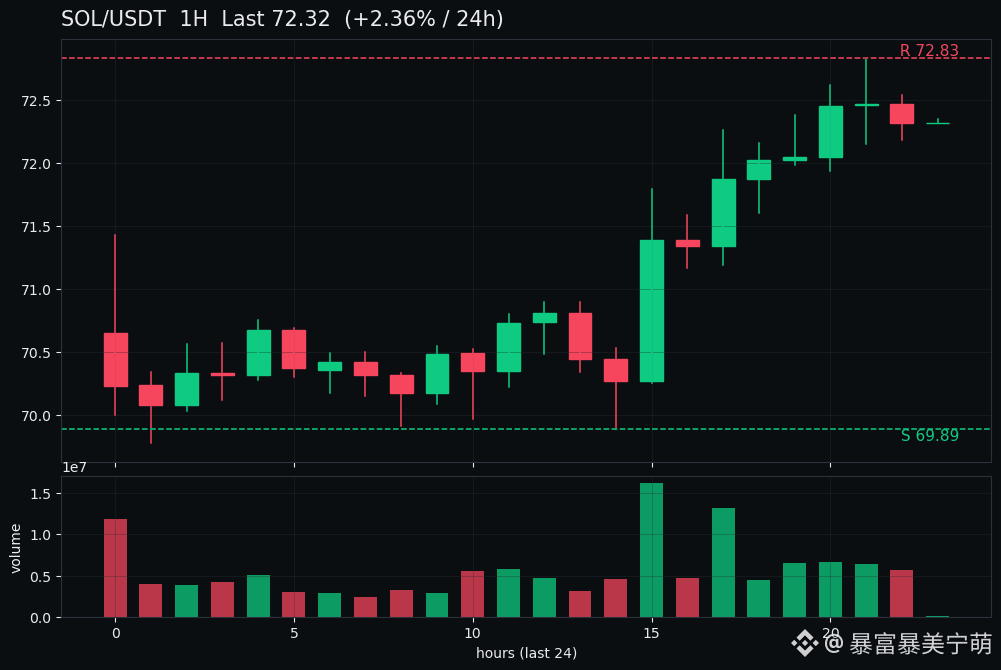
SOL is at $72.36 today, up 2.36% in 24 hours, with $1.1 billion in trading volume, making it one of the most active major coins today. There are two notable developments: U.S. spot SOL ETFs saw net inflows of $4.38 million last week, ending six consecutive weeks of outflows; and tokenized Anthropic shares recorded $135 million in trading volume on their first day on Solana. Both are more relevant over the medium to long term. Whether they can support the price in the short term still depends on the broader market. Funding rates remain negative, indicating that the bears haven’t fully exited. Keep in mind that SOL has fallen 30% over the past 30 days, so this move is more of an oversold rebound. $72.83 is near-term resistance; if SOL can’t hold above it, it may retest around $69.89. $SOL
SOL is at $72.36 today, up 2.36% in 24 hours, with $1.1 billion in trading volume, making it one of the most active major coins today. There are two notable developments: U.S. spot SOL ETFs saw net inflows of $4.38 million last week, ending six consecutive weeks of outflows; and tokenized Anthropic shares recorded $135 million in trading volume on their first day on Solana. Both are more relevant over the medium to long term. Whether they can support the price in the short term still depends on the broader market. Funding rates remain negative, indicating that the bears haven’t fully exited. Keep in mind that SOL has fallen 30% over the past 30 days, so this move is more of an oversold rebound. $72.83 is near-term resistance; if SOL can’t hold above it, it may retest around $69.89. $SOL
5
·
--
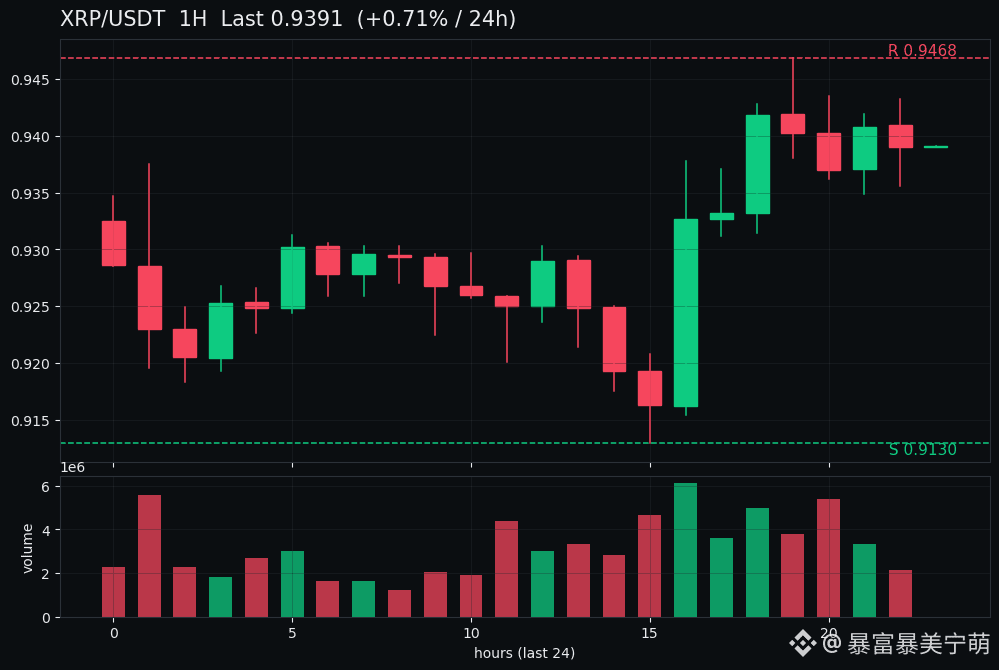
XRP is trading at $0.9386 today, essentially unchanged over the past 24 hours, but the news has been lively: it fell below $1 a few days ago, hitting a two-year low, before rebounding. Ripple’s CEO also said the crypto market could recover after Anthropic goes public. Trading volume is around $527 million, relatively high among major coins, suggesting interest picked up after XRP fell below the key $1 mark. The funding rate is 0.006%, so bullish sentiment isn’t particularly strong. Support over the next 12 hours is at $0.913, with initial resistance at $0.9468. A short-term move back above $1 won’t be easy. My take is that this rebound looks more like a breather after an oversold drop. Be cautious about chasing the rally; the key is whether XRP can regain and hold above $1. $XRP
XRP is trading at $0.9386 today, essentially unchanged over the past 24 hours, but the news has been lively: it fell below $1 a few days ago, hitting a two-year low, before rebounding. Ripple’s CEO also said the crypto market could recover after Anthropic goes public. Trading volume is around $527 million, relatively high among major coins, suggesting interest picked up after XRP fell below the key $1 mark. The funding rate is 0.006%, so bullish sentiment isn’t particularly strong. Support over the next 12 hours is at $0.913, with initial resistance at $0.9468. A short-term move back above $1 won’t be easy. My take is that this rebound looks more like a breather after an oversold drop. Be cautious about chasing the rally; the key is whether XRP can regain and hold above $1. $XRP
52
·
--
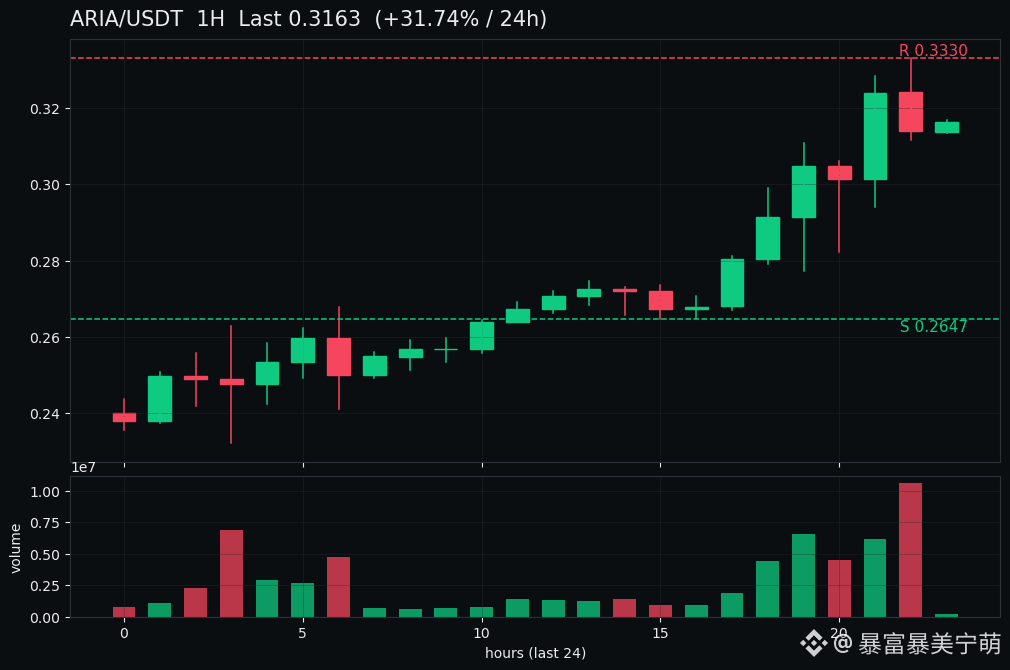
ARIA rose 28% today, with a price of $0.3177 and trading volume of $65.8 million. Volume was 3.6 times the previous period, showing strong momentum. On the news side, AriaAI’s Season 3 content launch was delayed by 24 hours, which is just a short-term hiccup; the bigger backdrop is the token unlock on November 21 worth about $8.15 million, accounting for roughly 20% of the market cap at the time, so the supply pressure has not been fully digested yet. The price is now approaching resistance at $0.333, with support near $0.264. When the rise is this fast and unlocks are still ahead, short-term volatility will be large, so don’t get carried away just by the gains. $ARIA
ARIA rose 28% today, with a price of $0.3177 and trading volume of $65.8 million. Volume was 3.6 times the previous period, showing strong momentum. On the news side, AriaAI’s Season 3 content launch was delayed by 24 hours, which is just a short-term hiccup; the bigger backdrop is the token unlock on November 21 worth about $8.15 million, accounting for roughly 20% of the market cap at the time, so the supply pressure has not been fully digested yet. The price is now approaching resistance at $0.333, with support near $0.264. When the rise is this fast and unlocks are still ahead, short-term volatility will be large, so don’t get carried away just by the gains. $ARIA
2
·
--
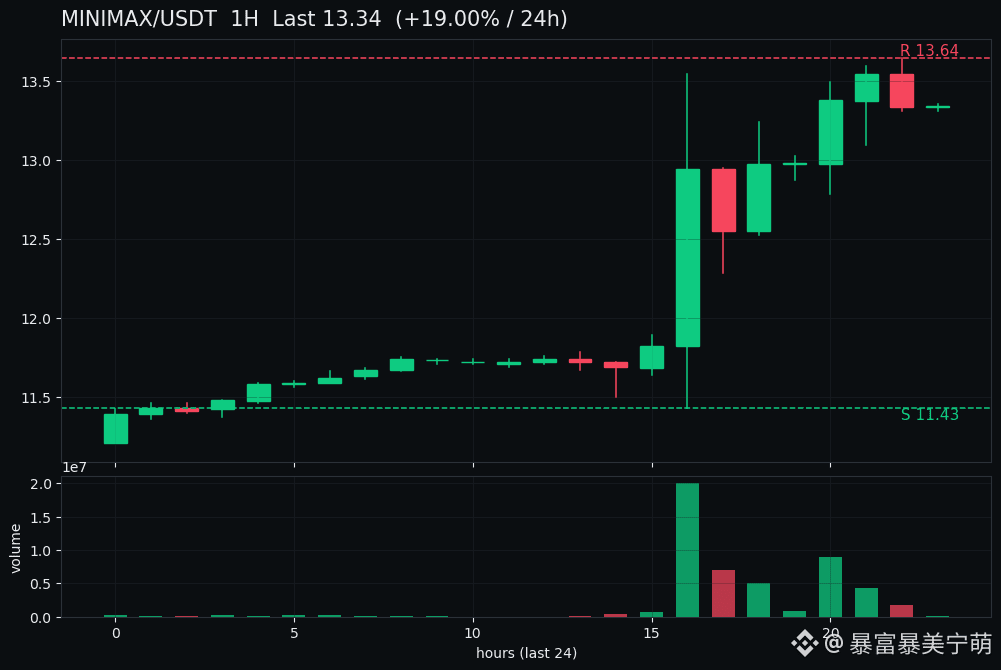
MiniMax is rebounding sharply today, currently at $13.35, up 19.73% in 24 hours, with trading volume 2.23 times higher than in the previous period—clear signs that buyers are coming back. On the news front, MiniMax announced on the evening of November 22 that its research into cryptanalysis of its in-house models had cracked several NIST candidate algorithms, bringing renewed attention to the AI company. One thing to note: this contract tracks MiniMax’s pre-IPO equity index, which previously fell from $22 to around $12. As it rebounds, watch whether it can hold above resistance at $13.64; support is at $11.43. The bounce is worth watching, but don’t chase it as if it were a trend reversal. $MINIMAX
MiniMax is rebounding sharply today, currently at $13.35, up 19.73% in 24 hours, with trading volume 2.23 times higher than in the previous period—clear signs that buyers are coming back. On the news front, MiniMax announced on the evening of November 22 that its research into cryptanalysis of its in-house models had cracked several NIST candidate algorithms, bringing renewed attention to the AI company. One thing to note: this contract tracks MiniMax’s pre-IPO equity index, which previously fell from $22 to around $12. As it rebounds, watch whether it can hold above resistance at $13.64; support is at $11.43. The bounce is worth watching, but don’t chase it as if it were a trend reversal. $MINIMAX
110
·
--
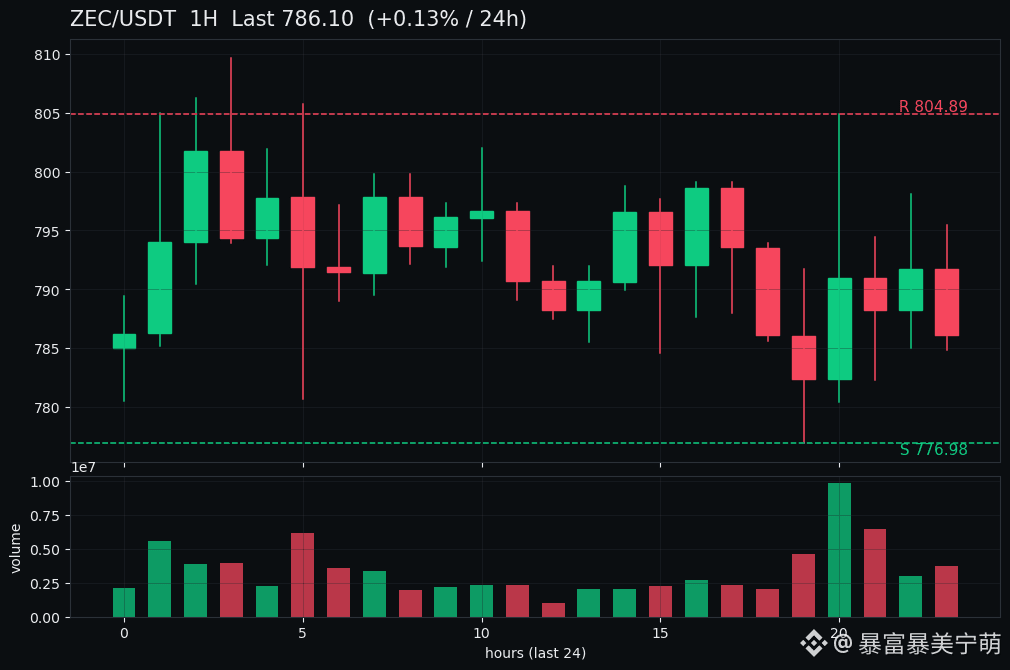
ZEC is trading narrowly around $787 today, up only 0.28%, while trading volume has reached $980 million, so the activity is still solid. The news flow is on the weak side: Grayscale's ZEC fund saw net outflows for the third consecutive week, with $17.52 million leaving last week and $61.42 million withdrawn so far this month, showing institutions are continuing to pull back. The good news is that the community treasury vote is still underway and will close on December 1, and Bitwise's spot ETF application is also moving through the process. In the short term, watch the $776.98 support and $804.89 resistance levels; until a clear direction emerges, don't rush to draw conclusions. $ZEC
ZEC is trading narrowly around $787 today, up only 0.28%, while trading volume has reached $980 million, so the activity is still solid. The news flow is on the weak side: Grayscale's ZEC fund saw net outflows for the third consecutive week, with $17.52 million leaving last week and $61.42 million withdrawn so far this month, showing institutions are continuing to pull back. The good news is that the community treasury vote is still underway and will close on December 1, and Bitwise's spot ETF application is also moving through the process. In the short term, watch the $776.98 support and $804.89 resistance levels; until a clear direction emerges, don't rush to draw conclusions. $ZEC
1
·
--
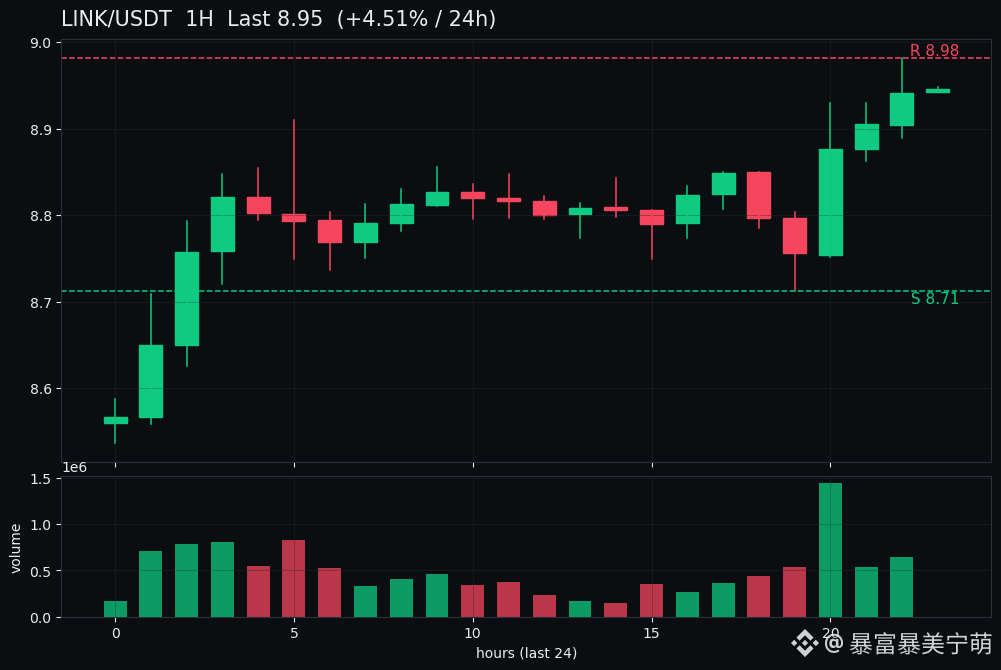
LINK is up 5.04% today at $8.949, making it one of the stronger rebounders among major cryptocurrencies. There’s concrete news behind the move: on November 22, Chainlink integrated S&P Global Ratings’ reserve risk assessments into Base, bringing institutional-grade data on-chain; on November 19, it also partnered with UBS to launch a production solution for tokenized structured notes. Chainlink Reserve recently added another 128,900 LINK, bringing its total holdings to around 6.8 million. Still, LINK spot ETFs have seen net outflows for three consecutive trading days, and the token is down nearly 29% over the past month, so this move looks more like an oversold bounce. The news is real, but whether the rally can last will depend on the broader market. $LINK
LINK is up 5.04% today at $8.949, making it one of the stronger rebounders among major cryptocurrencies. There’s concrete news behind the move: on November 22, Chainlink integrated S&P Global Ratings’ reserve risk assessments into Base, bringing institutional-grade data on-chain; on November 19, it also partnered with UBS to launch a production solution for tokenized structured notes. Chainlink Reserve recently added another 128,900 LINK, bringing its total holdings to around 6.8 million. Still, LINK spot ETFs have seen net outflows for three consecutive trading days, and the token is down nearly 29% over the past month, so this move looks more like an oversold bounce. The news is real, but whether the rally can last will depend on the broader market. $LINK
39
·
--
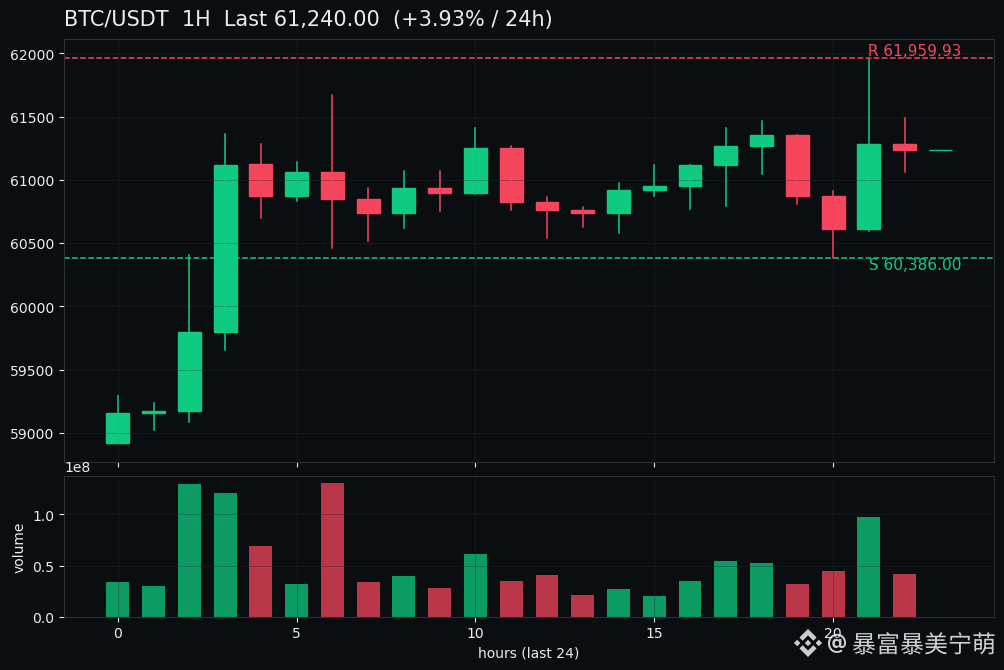
Bitcoin is up 3.26% over the past 24 hours, returning to $61,257, with $14.6 billion in trading volume, making it the most actively traded asset in the market. This rebound wasn’t driven by any single major news event; it’s mostly a return of capital after oversold conditions, along with a recovery in overall market sentiment. The funding rate is 0.0039%, indicating mild bullish sentiment without overheating. The key is whether resistance around $61,960 can hold; if it can’t, prices may continue to chop around $60,000. Chasing the rally in the short term offers only moderate risk-reward, so waiting for a pullback and confirmation is the safer approach. Ethereum and BNB are also up more than 3%, showing this isn’t just a Bitcoin rally—the broader market is recovering. Its staying power will depend on whether capital continues flowing in after the U.S. stock market opens. $BTC
Bitcoin is up 3.26% over the past 24 hours, returning to $61,257, with $14.6 billion in trading volume, making it the most actively traded asset in the market. This rebound wasn’t driven by any single major news event; it’s mostly a return of capital after oversold conditions, along with a recovery in overall market sentiment. The funding rate is 0.0039%, indicating mild bullish sentiment without overheating. The key is whether resistance around $61,960 can hold; if it can’t, prices may continue to chop around $60,000. Chasing the rally in the short term offers only moderate risk-reward, so waiting for a pullback and confirmation is the safer approach. Ethereum and BNB are also up more than 3%, showing this isn’t just a Bitcoin rally—the broader market is recovering. Its staying power will depend on whether capital continues flowing in after the U.S. stock market opens. $BTC
1
·
--
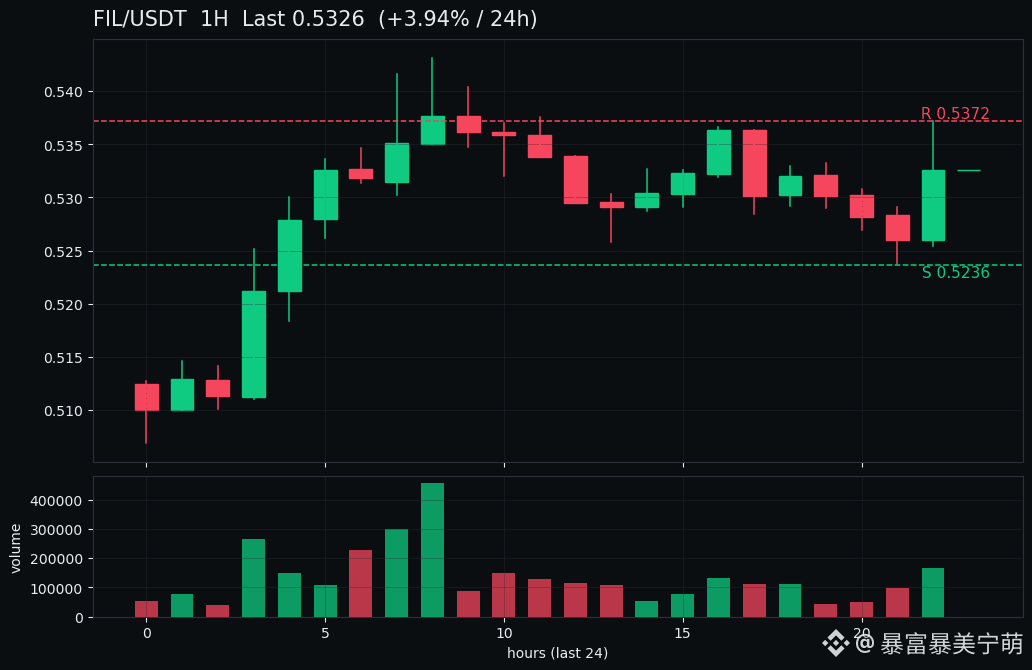
FIL is up 4.34% today at $0.5336, with $46.25 million in trading volume, ranking among the top gainers of major coins. On the news front, Filecoin launched a private file-sharing feature for AI agents a few days ago, marking tangible progress for its ecosystem. However, the news came on November 20, so it should be treated as background rather than a fresh catalyst. The 12-hour support is $0.5236 and resistance is $0.5372, with the price hovering near resistance. The funding rate is -0.0026%, and bearish sentiment has not fully subsided. Whether the price can hold above resistance in the short term is crucial; if it fails, gains could easily be given back, so don't chase the price based on the percentage gain alone. FIL has had plenty of news over the past week, but its price has yet to break into an independent rally. This latest rise looks more like a move prompted by the broader market rebound, with the news itself providing limited impetus. $FIL
FIL is up 4.34% today at $0.5336, with $46.25 million in trading volume, ranking among the top gainers of major coins. On the news front, Filecoin launched a private file-sharing feature for AI agents a few days ago, marking tangible progress for its ecosystem. However, the news came on November 20, so it should be treated as background rather than a fresh catalyst. The 12-hour support is $0.5236 and resistance is $0.5372, with the price hovering near resistance. The funding rate is -0.0026%, and bearish sentiment has not fully subsided. Whether the price can hold above resistance in the short term is crucial; if it fails, gains could easily be given back, so don't chase the price based on the percentage gain alone. FIL has had plenty of news over the past week, but its price has yet to break into an independent rally. This latest rise looks more like a move prompted by the broader market rebound, with the news itself providing limited impetus. $FIL
165
·
--
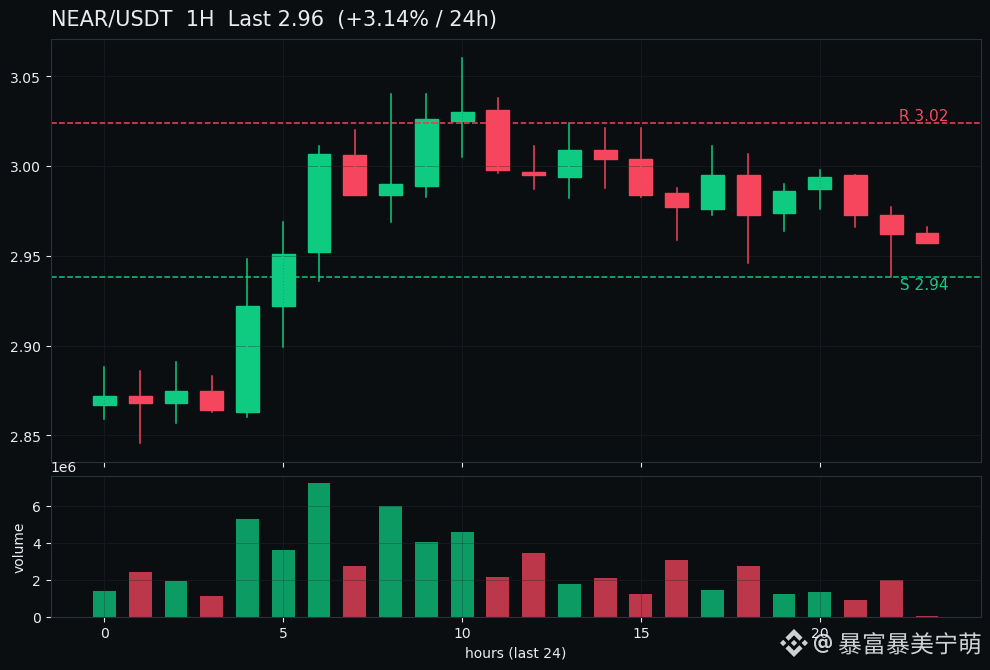
NEAR is up 3.1% today to $2.963, with $330 million in trading volume, ranking near the top among major coins for both volume and gains. There’s a concrete development behind the move: governance approved an issuance-reduction proposal last week, lowering the maximum annual issuance rate over the next two years from 2.5% to 1.6%. Although it won’t take effect until next February, expectations of tighter supply are already in play. Meanwhile, trading volume for Intents cross-chain swaps continues to grow, and the resulting revenue has been used to buy back NEAR since February. Still, NEAR is down nearly 40% over the past 30 days, so this rally looks more like a rebound after being oversold. It has repeatedly met resistance around $3, and while the news is positive, execution will depend on whether validator upgrades proceed on schedule. $NEAR
NEAR is up 3.1% today to $2.963, with $330 million in trading volume, ranking near the top among major coins for both volume and gains. There’s a concrete development behind the move: governance approved an issuance-reduction proposal last week, lowering the maximum annual issuance rate over the next two years from 2.5% to 1.6%. Although it won’t take effect until next February, expectations of tighter supply are already in play. Meanwhile, trading volume for Intents cross-chain swaps continues to grow, and the resulting revenue has been used to buy back NEAR since February. Still, NEAR is down nearly 40% over the past 30 days, so this rally looks more like a rebound after being oversold. It has repeatedly met resistance around $3, and while the news is positive, execution will depend on whether validator upgrades proceed on schedule. $NEAR
86
·
--
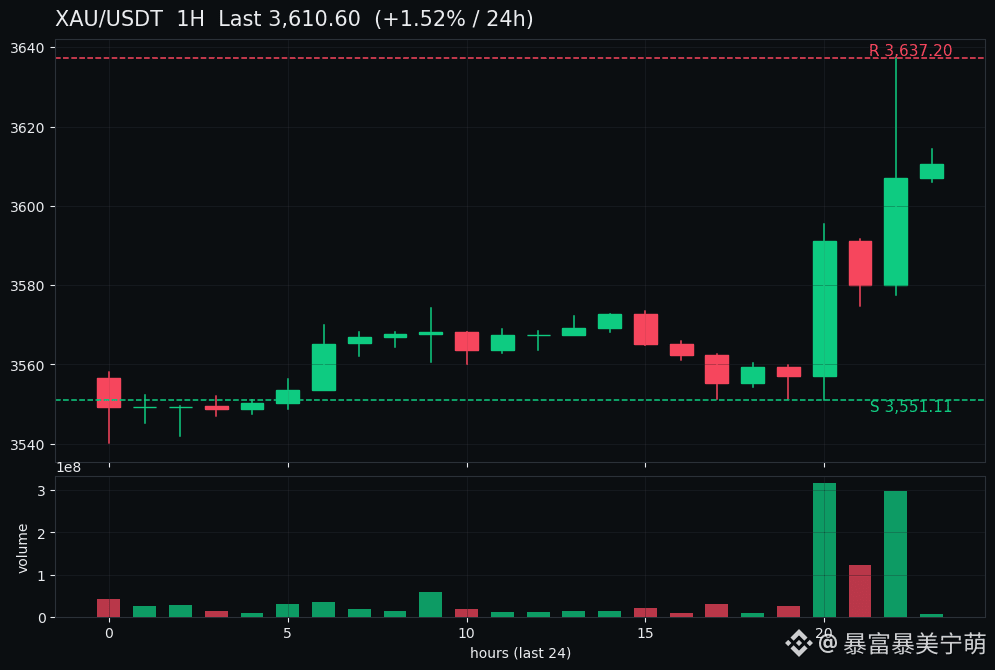
U.S.–Iran tensions escalated over the weekend, sending gold up more than 1% at Monday’s open. XAU rebounded to around $3,610, up 1.29% in 24 hours, with $1.19 billion in trading volume. Gold fell 8.9% over the week, its biggest weekly drop in 14 months, and Goldman Sachs also lowered its end-2027 target to $4,650. Sentiment remains cautious in the short term. Support over the next 12 hours is at $3,551, with resistance at $3,637. If gold can’t hold above resistance, this rebound may be no more than a correction after an oversold decline. Geopolitical news can come and go quickly, so don’t chase prices after a one-day rally. $XAU
U.S.–Iran tensions escalated over the weekend, sending gold up more than 1% at Monday’s open. XAU rebounded to around $3,610, up 1.29% in 24 hours, with $1.19 billion in trading volume. Gold fell 8.9% over the week, its biggest weekly drop in 14 months, and Goldman Sachs also lowered its end-2027 target to $4,650. Sentiment remains cautious in the short term. Support over the next 12 hours is at $3,551, with resistance at $3,637. If gold can’t hold above resistance, this rebound may be no more than a correction after an oversold decline. Geopolitical news can come and go quickly, so don’t chase prices after a one-day rally. $XAU
223
·
--
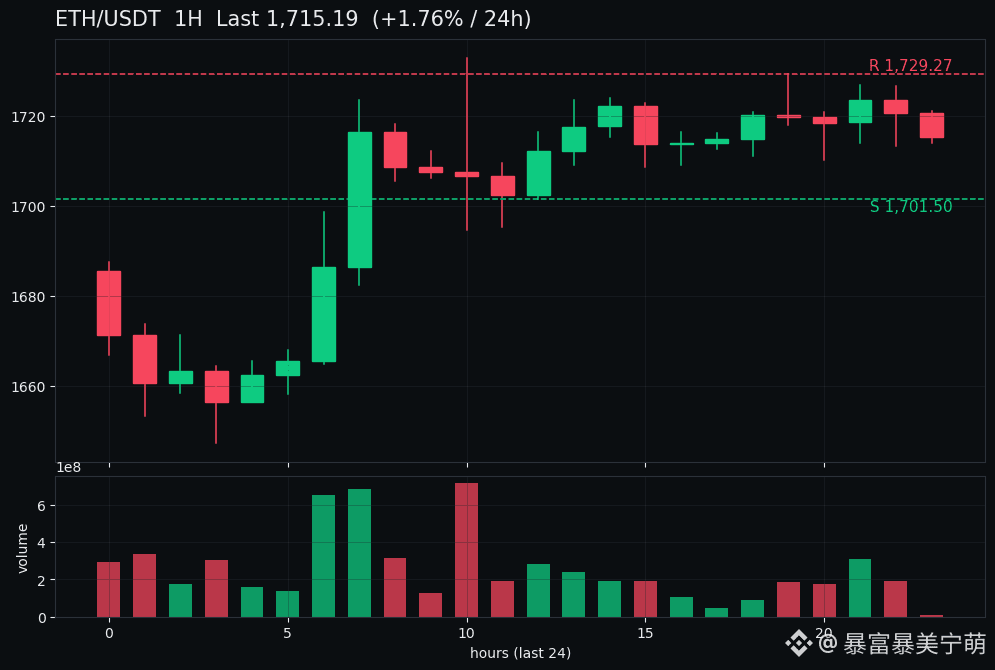
Ethereum is trading at $1,719, up 2.08% over the past 24 hours, but the news backdrop is bearish. A wallet linked to the Ethereum Foundation transferred 2,500 ETH on November 21, worth about $3.88 million. Exchange reserves rose by 210,000 ETH in four days, while spot ETFs saw $216 million in outflows over the past week—signs of notable selling pressure. On the other hand, Schiff said ETH could fall to $1,000 before Monday. It may be an exaggerated call, but it also shows that bearish sentiment is running high. More importantly, ETH has fallen considerably over the past week and recovered from a weekend low of $1,579, but its footing remains shaky. Technically, support is at $1,702 and resistance at $1,729. If it can't hold above that level, it may continue to form a base. In the short term, it's better to watch and wait, then reassess when trading volume returns. $ETH
Ethereum is trading at $1,719, up 2.08% over the past 24 hours, but the news backdrop is bearish. A wallet linked to the Ethereum Foundation transferred 2,500 ETH on November 21, worth about $3.88 million. Exchange reserves rose by 210,000 ETH in four days, while spot ETFs saw $216 million in outflows over the past week—signs of notable selling pressure. On the other hand, Schiff said ETH could fall to $1,000 before Monday. It may be an exaggerated call, but it also shows that bearish sentiment is running high. More importantly, ETH has fallen considerably over the past week and recovered from a weekend low of $1,579, but its footing remains shaky. Technically, support is at $1,702 and resistance at $1,729. If it can't hold above that level, it may continue to form a base. In the short term, it's better to watch and wait, then reassess when trading volume returns. $ETH
91
·
--
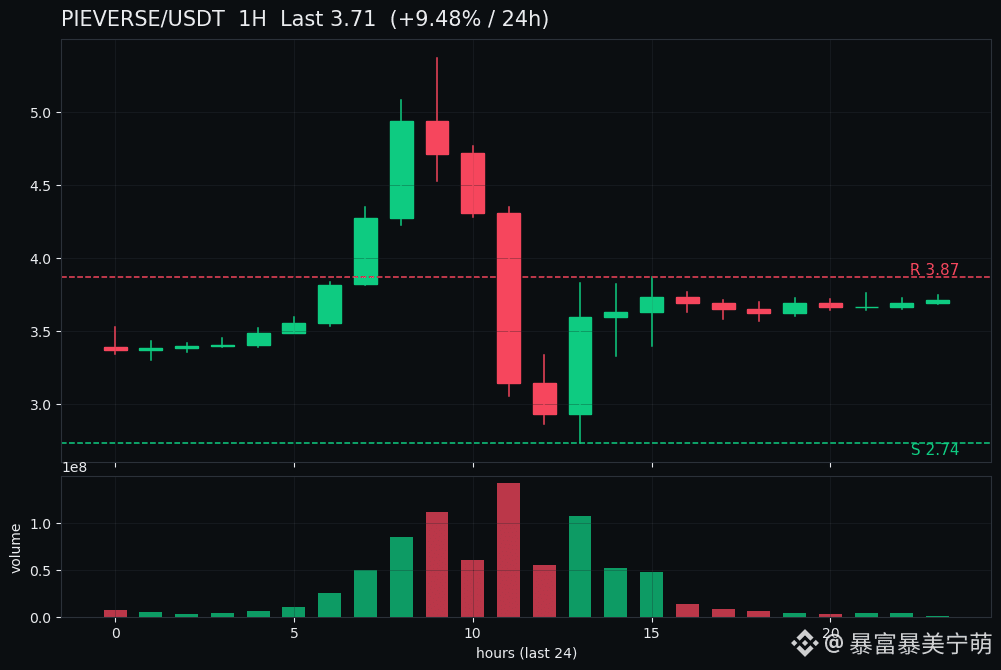
PIEVERSE is trading at $3.69 today, up 8.5% in 24 hours, with a trading volume of $820 million. Price and volume are moving in sync, which looks fairly healthy. There’s also some new news: on November 22, the project expanded privacy protections for its confidential agent feature, covering agent memory, messages, and files. It also partnered with Fourdotmeme to connect its token launch ecosystem. The feature had only recently opened for invite-only beta testing, and interest has remained strong. BNB Chain has also called it out, making it a key driver of the recent rise. One thing to keep in mind, though: 33.4 million tokens will unlock on December 14, with nearly half going to private investors and insiders. The price is also not far from its high, so be cautious about buying in at elevated levels—don’t rush in based on the gains alone. $PIEVERSE
PIEVERSE is trading at $3.69 today, up 8.5% in 24 hours, with a trading volume of $820 million. Price and volume are moving in sync, which looks fairly healthy. There’s also some new news: on November 22, the project expanded privacy protections for its confidential agent feature, covering agent memory, messages, and files. It also partnered with Fourdotmeme to connect its token launch ecosystem. The feature had only recently opened for invite-only beta testing, and interest has remained strong. BNB Chain has also called it out, making it a key driver of the recent rise. One thing to keep in mind, though: 33.4 million tokens will unlock on December 14, with nearly half going to private investors and insiders. The price is also not far from its high, so be cautious about buying in at elevated levels—don’t rush in based on the gains alone. $PIEVERSE
474
·
--
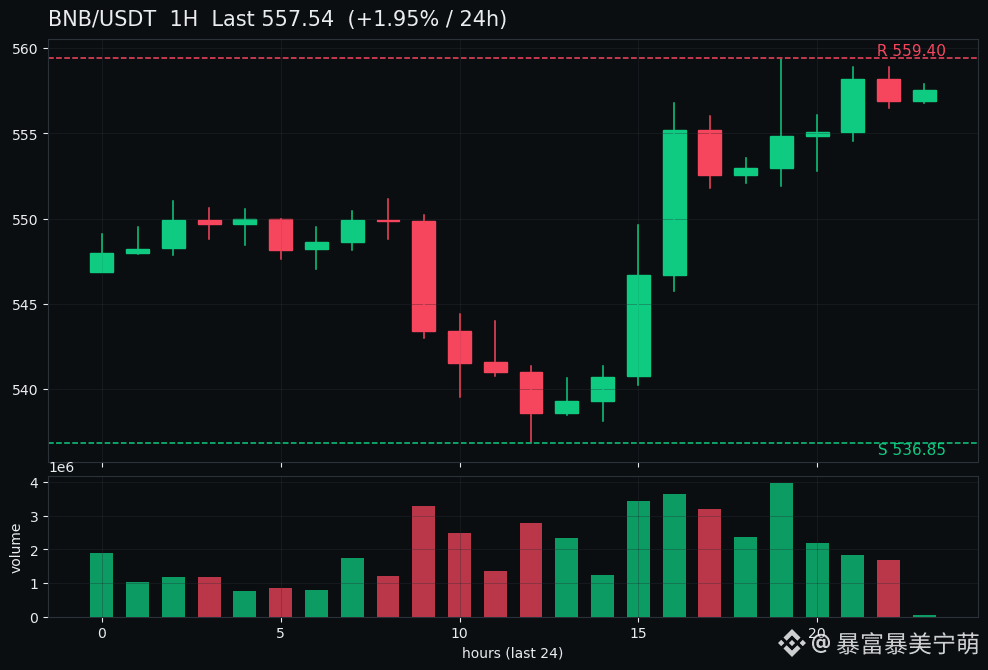
BNB doesn't have any major new updates of its own today; it's just rebounding along with the broader market: current price is $556.8, up 1.98% in 24 hours, with trading volume of $273 million. Bitcoin has moved back above $60,000, rising 1.68%, and market sentiment has eased a bit, so a large-cap coin like BNB is naturally moving up as well. The funding rate is 0, so neither longs nor shorts are crowded, and the trend is mild with no extreme signals. On days without any news catalyst, BNB depends on the broader market; if the market is steady, it stays steady, and if the market wobbles, it wobbles too. Don't expect it to move independently—holding and waiting for the broader market direction is more practical. $BNB
BNB doesn't have any major new updates of its own today; it's just rebounding along with the broader market: current price is $556.8, up 1.98% in 24 hours, with trading volume of $273 million. Bitcoin has moved back above $60,000, rising 1.68%, and market sentiment has eased a bit, so a large-cap coin like BNB is naturally moving up as well. The funding rate is 0, so neither longs nor shorts are crowded, and the trend is mild with no extreme signals. On days without any news catalyst, BNB depends on the broader market; if the market is steady, it stays steady, and if the market wobbles, it wobbles too. Don't expect it to move independently—holding and waiting for the broader market direction is more practical. $BNB
2
·
--
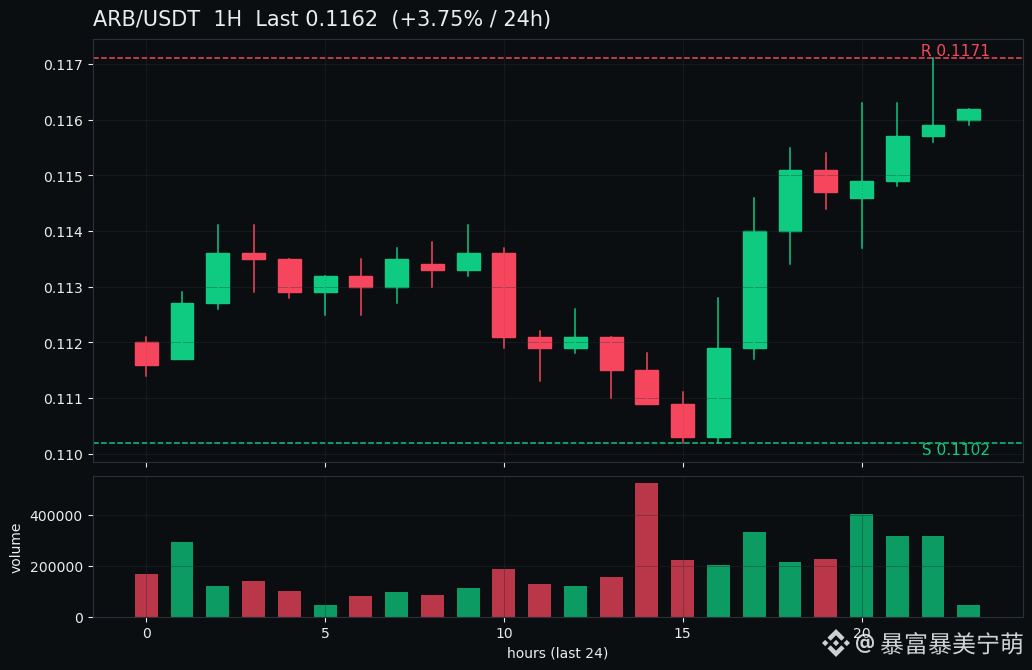
ARB is at $0.1162 today, up 2.47% in 24 hours, with $41.49 million in trading volume. There’s a concrete data point on the news front: according to Token Terminal, the stablecoin supply on Arbitrum One increased by about $327 million over the past week, the largest increase of any chain. Money is flowing onto the chain, but the token price hasn’t kept up—it’s still down 11% over seven days—which suggests the funds are going into on-chain applications rather than directly into buying the token. The 12-hour support is at $0.1102, and resistance is at $0.1171, putting the price right near resistance. If on-chain activity continues to feed through to the token price, there could be considerable upside; the risk is that an unlock of more than 92 million tokens is due on November 16, so supply pressure remains. Don’t chase the price just based on positive news. $ARB
ARB is at $0.1162 today, up 2.47% in 24 hours, with $41.49 million in trading volume. There’s a concrete data point on the news front: according to Token Terminal, the stablecoin supply on Arbitrum One increased by about $327 million over the past week, the largest increase of any chain. Money is flowing onto the chain, but the token price hasn’t kept up—it’s still down 11% over seven days—which suggests the funds are going into on-chain applications rather than directly into buying the token. The 12-hour support is at $0.1102, and resistance is at $0.1171, putting the price right near resistance. If on-chain activity continues to feed through to the token price, there could be considerable upside; the risk is that an unlock of more than 92 million tokens is due on November 16, so supply pressure remains. Don’t chase the price just based on positive news. $ARB
88
·
--
Verified
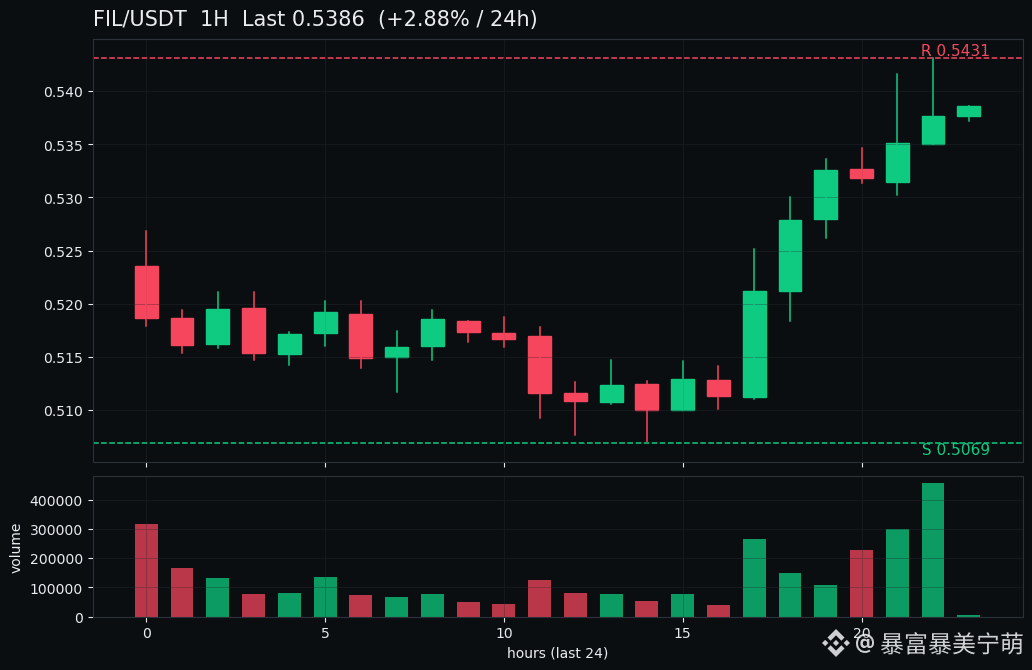
FIL is at $0.5378 today, up 3.4% over 24 hours, with $49.8 million in trading volume, making it one of the top gainers among major coins. There’s a concrete development on the news front: on November 20, Filecoin launched a private file-sharing feature for AI agents. Files are encrypted before being sent, and the feature is designed for transfers between AI agents. Its use case is still fairly narrow, so it’s a step forward for the product. Active payment channels on Filecoin Pay also rose 21.9% over 90 days. However, these positive developments haven’t yet translated into a trend. FIL has fallen considerably over the past week, so for now, this move looks like an oversold rebound. The 12-hour support is $0.5069, and resistance is $0.5431. The price is nearing resistance; it needs to hold above that level for the rally to have room to continue. $FIL
FIL is at $0.5378 today, up 3.4% over 24 hours, with $49.8 million in trading volume, making it one of the top gainers among major coins. There’s a concrete development on the news front: on November 20, Filecoin launched a private file-sharing feature for AI agents. Files are encrypted before being sent, and the feature is designed for transfers between AI agents. Its use case is still fairly narrow, so it’s a step forward for the product. Active payment channels on Filecoin Pay also rose 21.9% over 90 days. However, these positive developments haven’t yet translated into a trend. FIL has fallen considerably over the past week, so for now, this move looks like an oversold rebound. The 12-hour support is $0.5069, and resistance is $0.5431. The price is nearing resistance; it needs to hold above that level for the rally to have room to continue. $FIL
1.4k
·
--
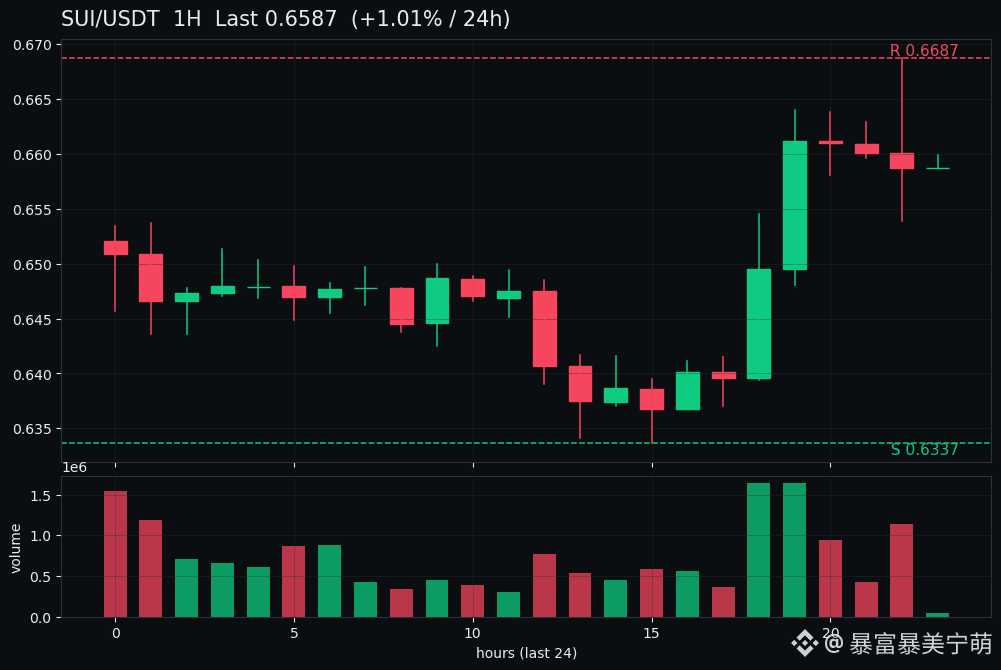
SUI rose 3.79% today to $0.6597, with a trading volume of $130 million, making it relatively active among major cryptocurrencies. On the news front, SuiWire’s upgraded ecosystem tracker launched on November 21, marking a tangible development for the ecosystem over the past couple of days. Hashi’s Bitcoin lending service had previously gone live on the Sui mainnet, and institutional participation is gradually picking up. The 12-hour support level is $0.6337, and resistance is $0.6687, with the price not far from resistance. Positive ecosystem news is a plus, but whether the momentum can last depends on trading volume keeping up—don’t chase the news alone. $SUI
SUI rose 3.79% today to $0.6597, with a trading volume of $130 million, making it relatively active among major cryptocurrencies. On the news front, SuiWire’s upgraded ecosystem tracker launched on November 21, marking a tangible development for the ecosystem over the past couple of days. Hashi’s Bitcoin lending service had previously gone live on the Sui mainnet, and institutional participation is gradually picking up. The 12-hour support level is $0.6337, and resistance is $0.6687, with the price not far from resistance. Positive ecosystem news is a plus, but whether the momentum can last depends on trading volume keeping up—don’t chase the news alone. $SUI
310
·
--
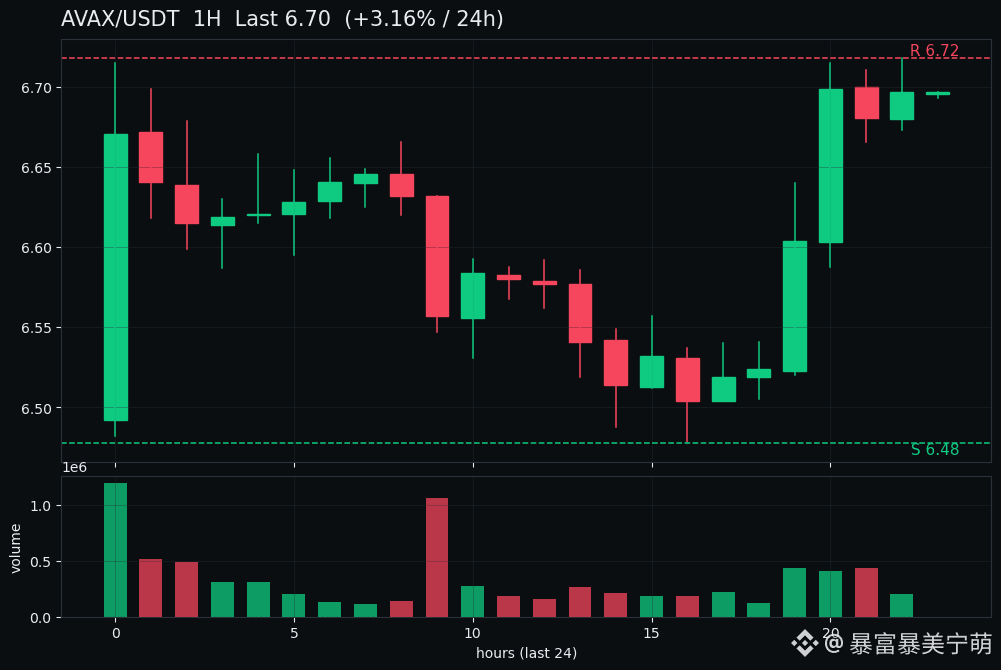
AVAX is at $6.70 today, up 4.25% in 24 hours, with $73 million in trading volume. There’s some news this time around: REX-Osprey’s AVAX staking ETF registration took effect on November 20, and BENQI announced the same day that it will replace the fixed 15-day wait to unstake sAVAX with a queue system, allowing withdrawals in as little as 48 hours. Both are more of a medium- to long-term positive; short-term prices still depend on the broader market. The NYSE’s tokenized securities platform is still moving forward, pending regulatory approval. The 12-hour support is $6.48, and resistance is $6.72. Don’t rush to turn bullish unless it can hold above resistance. One more reminder: AVAX is down nearly 30% over the past month, so this gain is still small. Don’t mistake one or two news items for a reversal. $AVAX
AVAX is at $6.70 today, up 4.25% in 24 hours, with $73 million in trading volume. There’s some news this time around: REX-Osprey’s AVAX staking ETF registration took effect on November 20, and BENQI announced the same day that it will replace the fixed 15-day wait to unstake sAVAX with a queue system, allowing withdrawals in as little as 48 hours. Both are more of a medium- to long-term positive; short-term prices still depend on the broader market. The NYSE’s tokenized securities platform is still moving forward, pending regulatory approval. The 12-hour support is $6.48, and resistance is $6.72. Don’t rush to turn bullish unless it can hold above resistance. One more reminder: AVAX is down nearly 30% over the past month, so this gain is still small. Don’t mistake one or two news items for a reversal. $AVAX
251
Log in to explore more content
Join global crypto users on Binance Square
⚡️ Get latest and useful information about crypto.
💬 Trusted by the world’s largest crypto exchange.
👍 Discover real insights from verified creators.
Email / Phone number
Trending Topics
NVIDIAReinstatesJensenHuangasCEO
23 views
43 Discussing
TradFi News | Nvidia Board Unanimously Reinstates Jensen Huang as CEO; Shares Jump 30% Premarket
Binance News
·5 Likes
·2.9k views
WillMarketsStageAThanksgivingReliefRally?
88,409 views
1,319 Discussing
WillOctCorePCEShiftFedHikeExpectations?
26,248 views
476 Discussing