
智医论币
366 Posts

智医论币
Report
Block User
医学博士|三甲心内科|8年币圈老韭菜两轮牛熊|现货合约双体系
0 Following
174 Followers
158 Liked
Posts
PINNED
·
--

Article
New friends, start here | What we research here, and what you’ll get after subscribingThe real difficulty in the crypto world isn’t discovering which coin is pumping—but making a judgment in advance: whether the project is worth it, whether the current price is expensive, where you can get involved, and how to handle it after things change following your purchase.
What I’ve been doing for the long term is exactly this.
————————
【What must be answered in every piece of research】
Is it really worth it? How much is the token worth approximately? Based on the current price, what should you do? What circumstances would indicate that this assessment was wrong?
Finishing a deep-dive research report doesn’t mean it’s over. Project revenue, product progress, governance proposals, token unlocks, buybacks and burns, and security risks may all continue to change.
New friends, start here | What we research here, and what you’ll get after subscribing
The real difficulty in the crypto world isn’t discovering which coin is pumping—but making a judgment in advance: whether the project is worth it, whether the current price is expensive, where you can get involved, and how to handle it after things change following your purchase.
What I’ve been doing for the long term is exactly this.
————————
【What must be answered in every piece of research】
Is it really worth it? How much is the token worth approximately? Based on the current price, what should you do? What circumstances would indicate that this assessment was wrong?
Finishing a deep-dive research report doesn’t mean it’s over. Project revenue, product progress, governance proposals, token unlocks, buybacks and burns, and security risks may all continue to change.
What I’ve been doing for the long term is exactly this.
————————
【What must be answered in every piece of research】
Is it really worth it? How much is the token worth approximately? Based on the current price, what should you do? What circumstances would indicate that this assessment was wrong?
Finishing a deep-dive research report doesn’t mean it’s over. Project revenue, product progress, governance proposals, token unlocks, buybacks and burns, and security risks may all continue to change.
319
·
--
49 votes in favor, 50 votes against, and 1 person did not vote. The resolution ballot failed.
49 votes in favor, 50 votes against, and 1 person did not vote. The resolution ballot failed.
51
·
--
The Genius Act has already passed; what will truly affect the market tonight is another vote# The “Genius Act” has been passed; what will truly affect the market tonight is another vote
As of 01:57 on September 16, 2026 Beijing time, the circulating question about whether the “U.S. Genius Act can be passed tonight” is actually mixing up two different things.
The GENIUS Act had already become law as early as July 2025. It addresses who issues payment-backed stablecoins, how the reserve assets are managed, and how they accept regulation. At 02:15 this morning Beijing time, what the Senate is truly voting on is the (Digital Asset Market Clarity Act), i.e., the procedural vote for the CLARITY Act. What it aims to solve isn’t whether stablecoins have reserves, but whether digital assets are securities or commodities—how the SEC and the CFTC should be divided and coordinated—and what rules apply to trading, custody, and certain decentralized finance activities.
The Genius Act has already passed; what will truly affect the market tonight is another vote
# The “Genius Act” has been passed; what will truly affect the market tonight is another vote
As of 01:57 on September 16, 2026 Beijing time, the circulating question about whether the “U.S. Genius Act can be passed tonight” is actually mixing up two different things.
The GENIUS Act had already become law as early as July 2025. It addresses who issues payment-backed stablecoins, how the reserve assets are managed, and how they accept regulation. At 02:15 this morning Beijing time, what the Senate is truly voting on is the (Digital Asset Market Clarity Act), i.e., the procedural vote for the CLARITY Act. What it aims to solve isn’t whether stablecoins have reserves, but whether digital assets are securities or commodities—how the SEC and the CFTC should be divided and coordinated—and what rules apply to trading, custody, and certain decentralized finance activities.
As of 01:57 on September 16, 2026 Beijing time, the circulating question about whether the “U.S. Genius Act can be passed tonight” is actually mixing up two different things.
The GENIUS Act had already become law as early as July 2025. It addresses who issues payment-backed stablecoins, how the reserve assets are managed, and how they accept regulation. At 02:15 this morning Beijing time, what the Senate is truly voting on is the (Digital Asset Market Clarity Act), i.e., the procedural vote for the CLARITY Act. What it aims to solve isn’t whether stablecoins have reserves, but whether digital assets are securities or commodities—how the SEC and the CFTC should be divided and coordinated—and what rules apply to trading, custody, and certain decentralized finance activities.
1
4.7k
·
--
Why the consequences are completely different when you lose 10% with a heavy position vs a light position?Seeing a coin drop 10%, some people just feel a little sad, while others start panicking and cutting losses. The difference often isn’t that 10% itself, but how much of the account the money you bought represents. A coin’s price drop only affects that portion of your holdings: if it’s 20% of your account, a 10% drop means the account loses about 2%; if it’s 80%, the same 10% drop means the account loses about 8%. The heavier the position, the more likely a single swing will hurt your account—and the more likely it will push you into emotional decisions.
Before placing an order, I do three checks. First, convert “this position is down 10%” into “how much the whole account will be down,” and don’t just stare at the coin price. Second, ask yourself: if the price keeps falling for a bit, does the remaining cash let me observe calmly, or will I be forced to sell? Third, check whether the other holdings in my account move in the same direction as this one; different names don’t necessarily mean the risk is truly diversified.
Why the consequences are completely different when you lose 10% with a heavy position vs a light position?
Seeing a coin drop 10%, some people just feel a little sad, while others start panicking and cutting losses. The difference often isn’t that 10% itself, but how much of the account the money you bought represents. A coin’s price drop only affects that portion of your holdings: if it’s 20% of your account, a 10% drop means the account loses about 2%; if it’s 80%, the same 10% drop means the account loses about 8%. The heavier the position, the more likely a single swing will hurt your account—and the more likely it will push you into emotional decisions.
Before placing an order, I do three checks. First, convert “this position is down 10%” into “how much the whole account will be down,” and don’t just stare at the coin price. Second, ask yourself: if the price keeps falling for a bit, does the remaining cash let me observe calmly, or will I be forced to sell? Third, check whether the other holdings in my account move in the same direction as this one; different names don’t necessarily mean the risk is truly diversified.
Before placing an order, I do three checks. First, convert “this position is down 10%” into “how much the whole account will be down,” and don’t just stare at the coin price. Second, ask yourself: if the price keeps falling for a bit, does the remaining cash let me observe calmly, or will I be forced to sell? Third, check whether the other holdings in my account move in the same direction as this one; different names don’t necessarily mean the risk is truly diversified.
118
·
--
Ink Integrates With Uniswap: How Much Additional Trading Volume Can This DeFi Mainnet Bring to UNI?Ink recently officially entered Uniswap’s web app, wallet, and API, prompting the market to re-discuss UNI’s room for business expansion. However, before judging the value of this news, we must first correct two concepts that are easy to confuse: Ink’s mainnet is not something that launched only now, and connecting to Uniswap does not mean that all liquidity pools must use UNI.
Ink had already gone live as early as December 2024. It is an Ethereum Layer 2 network based on OP Stack and part of the Superchain ecosystem. Its goal is not to build another general-purpose chain that carries everything, but to become the DeFi gateway that connects centralized users, wallet assets, and on-chain financial applications.
Ink Integrates With Uniswap: How Much Additional Trading Volume Can This DeFi Mainnet Bring to UNI?
Ink recently officially entered Uniswap’s web app, wallet, and API, prompting the market to re-discuss UNI’s room for business expansion. However, before judging the value of this news, we must first correct two concepts that are easy to confuse: Ink’s mainnet is not something that launched only now, and connecting to Uniswap does not mean that all liquidity pools must use UNI.
Ink had already gone live as early as December 2024. It is an Ethereum Layer 2 network based on OP Stack and part of the Superchain ecosystem. Its goal is not to build another general-purpose chain that carries everything, but to become the DeFi gateway that connects centralized users, wallet assets, and on-chain financial applications.
Ink had already gone live as early as December 2024. It is an Ethereum Layer 2 network based on OP Stack and part of the Superchain ecosystem. Its goal is not to build another general-purpose chain that carries everything, but to become the DeFi gateway that connects centralized users, wallet assets, and on-chain financial applications.
2
2.2k
·
--
Vote Approaching: Regulatory Expectations Rising, but Capital and On-Chain Signals Still Not Fully Strengthened2026.9.14 Daily Crypto Market News Analysis
The most important change today is that the U.S. Digital Assets Market Structure Act has finally moved from repeated negotiations to a verifiable voting stage. Republican negotiators in the Senate have released the final draft, saying they have incorporated 126 substantive amendments proposed by Democrats. On September 15, the Senate will first vote on whether to proceed to debate. For ordinary token holders, market discounts caused by rule uncertainty may shift over the next 24 to 72 hours, but this is still not the bill’s passage, nor is it rules already taking effect.
Unfavorable information must also not be ignored: 17 state attorneys general from both parties have publicly urged lawmakers to oppose it. The most likely misjudgment is to treat a procedural pass as the final legislation, or to interpret a single price rebound as confirmation that the market has already accepted the outcome. Even if the first round of voting succeeds, there will still be debate, revisions, and a final vote afterward; if it fails, the issue may return to negotiations again.
Vote Approaching: Regulatory Expectations Rising, but Capital and On-Chain Signals Still Not Fully Strengthened
2026.9.14 Daily Crypto Market News Analysis
The most important change today is that the U.S. Digital Assets Market Structure Act has finally moved from repeated negotiations to a verifiable voting stage. Republican negotiators in the Senate have released the final draft, saying they have incorporated 126 substantive amendments proposed by Democrats. On September 15, the Senate will first vote on whether to proceed to debate. For ordinary token holders, market discounts caused by rule uncertainty may shift over the next 24 to 72 hours, but this is still not the bill’s passage, nor is it rules already taking effect.
Unfavorable information must also not be ignored: 17 state attorneys general from both parties have publicly urged lawmakers to oppose it. The most likely misjudgment is to treat a procedural pass as the final legislation, or to interpret a single price rebound as confirmation that the market has already accepted the outcome. Even if the first round of voting succeeds, there will still be debate, revisions, and a final vote afterward; if it fails, the issue may return to negotiations again.
The most important change today is that the U.S. Digital Assets Market Structure Act has finally moved from repeated negotiations to a verifiable voting stage. Republican negotiators in the Senate have released the final draft, saying they have incorporated 126 substantive amendments proposed by Democrats. On September 15, the Senate will first vote on whether to proceed to debate. For ordinary token holders, market discounts caused by rule uncertainty may shift over the next 24 to 72 hours, but this is still not the bill’s passage, nor is it rules already taking effect.
Unfavorable information must also not be ignored: 17 state attorneys general from both parties have publicly urged lawmakers to oppose it. The most likely misjudgment is to treat a procedural pass as the final legislation, or to interpret a single price rebound as confirmation that the market has already accepted the outcome. Even if the first round of voting succeeds, there will still be debate, revisions, and a final vote afterward; if it fails, the issue may return to negotiations again.
382
·
--
2026.9.14 BTC/ETH Price ForecastLatest assessment: BTC current price is 77,998.9 USD. It is relatively strong over the past 1 hour, and consolidating over the past 4 hours. ETH current price is 2,517.96 USD. In the short term, it is oscillating with a slight bullish bias, and both are in the upper half of their respective ranges.
Most likely path: After BTC holds the $76,022.7 support level, it tests the $79,874.1 resistance. ETH consolidates around $2,518, then probes the $2,666 resistance; support is at $2,405.94.
Conclusion: Over the next 12 to 24 hours, BTC’s primary direction is mildly bullish, with an upside probe; a breakdown below $76,022.7 invalidates this. For ETH, the primary direction is an upward oscillation; a breakdown below $2,405.94 invalidates this.
$BTC $ETH
2026.9.14 BTC/ETH Price Forecast
Latest assessment: BTC current price is 77,998.9 USD. It is relatively strong over the past 1 hour, and consolidating over the past 4 hours. ETH current price is 2,517.96 USD. In the short term, it is oscillating with a slight bullish bias, and both are in the upper half of their respective ranges.
Most likely path: After BTC holds the $76,022.7 support level, it tests the $79,874.1 resistance. ETH consolidates around $2,518, then probes the $2,666 resistance; support is at $2,405.94.
Conclusion: Over the next 12 to 24 hours, BTC’s primary direction is mildly bullish, with an upside probe; a breakdown below $76,022.7 invalidates this. For ETH, the primary direction is an upward oscillation; a breakdown below $2,405.94 invalidates this.
$BTC $ETH
Most likely path: After BTC holds the $76,022.7 support level, it tests the $79,874.1 resistance. ETH consolidates around $2,518, then probes the $2,666 resistance; support is at $2,405.94.
Conclusion: Over the next 12 to 24 hours, BTC’s primary direction is mildly bullish, with an upside probe; a breakdown below $76,022.7 invalidates this. For ETH, the primary direction is an upward oscillation; a breakdown below $2,405.94 invalidates this.
$BTC $ETH
61
·
--
Why one small loss isn’t a big deal, but consecutive losses can quickly damage your account?A single loss of 5% doesn’t seem like much. But once your principal shrinks, the next time you’ll still lose based on the remaining funds. Four consecutive losses of 5% each won’t mean your account is down 20%; it will be down to about 81.5%. To get back to the starting point, you then need the price to rise by about 22.7%. The deeper the loss, the faster the required rebound expands: a 10% loss requires about an 11.1% gain to break even; a 20% loss requires 25%; a 50% loss requires 100% to recover. The real danger isn’t that one judgment is wrong—it’s when you size your bets too heavily each time, and after losing you rush to add more to “win it back,” causing consecutive mistakes to amplify each other.
Before placing an order, do three checks. First, clearly state how much of your account you can afford to lose on this trade—don’t just look at how far the coin price might fall. The larger your position size, the more damage the same price drop does to your account. Second, calculate the balance after three consecutive stop-outs; if the result would make it impossible for you to stay calm and follow your plan, your per-trade risk is too high. Third, after the loss, ask whether the original reason for the buy is still valid and whether your exit price can realistically be filled. Don’t treat a stop-loss as a guarantee, and don’t rely on averaging down to raise the loss cap.
Why one small loss isn’t a big deal, but consecutive losses can quickly damage your account?
A single loss of 5% doesn’t seem like much. But once your principal shrinks, the next time you’ll still lose based on the remaining funds. Four consecutive losses of 5% each won’t mean your account is down 20%; it will be down to about 81.5%. To get back to the starting point, you then need the price to rise by about 22.7%. The deeper the loss, the faster the required rebound expands: a 10% loss requires about an 11.1% gain to break even; a 20% loss requires 25%; a 50% loss requires 100% to recover. The real danger isn’t that one judgment is wrong—it’s when you size your bets too heavily each time, and after losing you rush to add more to “win it back,” causing consecutive mistakes to amplify each other.
Before placing an order, do three checks. First, clearly state how much of your account you can afford to lose on this trade—don’t just look at how far the coin price might fall. The larger your position size, the more damage the same price drop does to your account. Second, calculate the balance after three consecutive stop-outs; if the result would make it impossible for you to stay calm and follow your plan, your per-trade risk is too high. Third, after the loss, ask whether the original reason for the buy is still valid and whether your exit price can realistically be filled. Don’t treat a stop-loss as a guarantee, and don’t rely on averaging down to raise the loss cap.
Before placing an order, do three checks. First, clearly state how much of your account you can afford to lose on this trade—don’t just look at how far the coin price might fall. The larger your position size, the more damage the same price drop does to your account. Second, calculate the balance after three consecutive stop-outs; if the result would make it impossible for you to stay calm and follow your plan, your per-trade risk is too high. Third, after the loss, ask whether the original reason for the buy is still valid and whether your exit price can realistically be filled. Don’t treat a stop-loss as a guarantee, and don’t rely on averaging down to raise the loss cap.
136
·
--
Verified
From Aug 24 to $1.04: how system research tracks FIL event-driven market moves step by step# From Aug 24 to $1.04: how system research tracks Filecoin event-driven market moves step by step
Data as of: 2026-09-14 03:40 (Beijing time)
This research didn’t begin only after FIP-0118 was seen on September 4. On August 24, FIL was still around $0.75, and we had already completed the first round of deep research. What truly attracted us at the time wasn’t “down 99%,” but two structural changes that were approaching: the initial token linear unlocking that has been ongoing for six years will end in October, and Solstice is preparing to connect future block rewards with real paid services and a commitment to burn discipline.
From Aug 24 to $1.04: how system research tracks FIL event-driven market moves step by step
# From Aug 24 to $1.04: how system research tracks Filecoin event-driven market moves step by step
Data as of: 2026-09-14 03:40 (Beijing time)
This research didn’t begin only after FIP-0118 was seen on September 4. On August 24, FIL was still around $0.75, and we had already completed the first round of deep research. What truly attracted us at the time wasn’t “down 99%,” but two structural changes that were approaching: the initial token linear unlocking that has been ongoing for six years will end in October, and Solstice is preparing to connect future block rewards with real paid services and a commitment to burn discipline.
Data as of: 2026-09-14 03:40 (Beijing time)
This research didn’t begin only after FIP-0118 was seen on September 4. On August 24, FIL was still around $0.75, and we had already completed the first round of deep research. What truly attracted us at the time wasn’t “down 99%,” but two structural changes that were approaching: the initial token linear unlocking that has been ongoing for six years will end in October, and Solstice is preparing to connect future block rewards with real paid services and a commitment to burn discipline.
5
1
1.8k
·
--
As of 03:40 Beijing time on September 14, FIL is around $0.98–0.99, up about 23% over the past 24 hours. Intraday highs have reached 1.040. This is already a high-volume breakout, but in the short term the move from 0.80 to 1.04 has entered a clearly overheated phase. Most likely, it will not continue straight-line upside immediately, but instead first sees intense churning in the high range of 0.92–1.04. In the next 24–72 hours, the 50% scenario: high-level consolidation mainly within 0.92–1.04. After a pullback to 0.94–0.96, it then attempts another breakout of 1.00–1.04—this is the relatively healthy path. 30%: continued short-squeeze driven surge with a high-volume breakout and holding above 1.04. The next target is 1.10–1.13; in a strong market, it could test 1.18–1.20. 20%: a rally that peaks and then falls, breaking below 0.92, followed by a pullback to 0.88–0.90. If 0.88 cannot be held either, it may return to 0.83–0.85 to digest this leg of the rise. Key levels: 1.00–1.04 (current breakthrough pressure); 1.10–1.13 (next major congestion zone); 1.18–1.20 (strong-extension target); 0.94–0.96 (first support); 0.91–0.92 (short-term trend line of defense); 0.88–0.90 (core confirmation zone for the validity of the breakout); 0.83–0.85 (an area indicating a clear weakening of the market)
As of 03:40 Beijing time on September 14, FIL is around $0.98–0.99, up about 23% over the past 24 hours. Intraday highs have reached 1.040. This is already a high-volume breakout, but in the short term the move from 0.80 to 1.04 has entered a clearly overheated phase. Most likely, it will not continue straight-line upside immediately, but instead first sees intense churning in the high range of 0.92–1.04. In the next 24–72 hours, the 50% scenario: high-level consolidation mainly within 0.92–1.04. After a pullback to 0.94–0.96, it then attempts another breakout of 1.00–1.04—this is the relatively healthy path. 30%: continued short-squeeze driven surge with a high-volume breakout and holding above 1.04. The next target is 1.10–1.13; in a strong market, it could test 1.18–1.20. 20%: a rally that peaks and then falls, breaking below 0.92, followed by a pullback to 0.88–0.90. If 0.88 cannot be held either, it may return to 0.83–0.85 to digest this leg of the rise. Key levels: 1.00–1.04 (current breakthrough pressure); 1.10–1.13 (next major congestion zone); 1.18–1.20 (strong-extension target); 0.94–0.96 (first support); 0.91–0.92 (short-term trend line of defense); 0.88–0.90 (core confirmation zone for the validity of the breakout); 0.83–0.85 (an area indicating a clear weakening of the market)
1
618
·
--
#FIL/USDT the detonation point, market events, perfect prediction.
#FIL/USDT the detonation point, market events, perfect prediction.

1
739
·
--
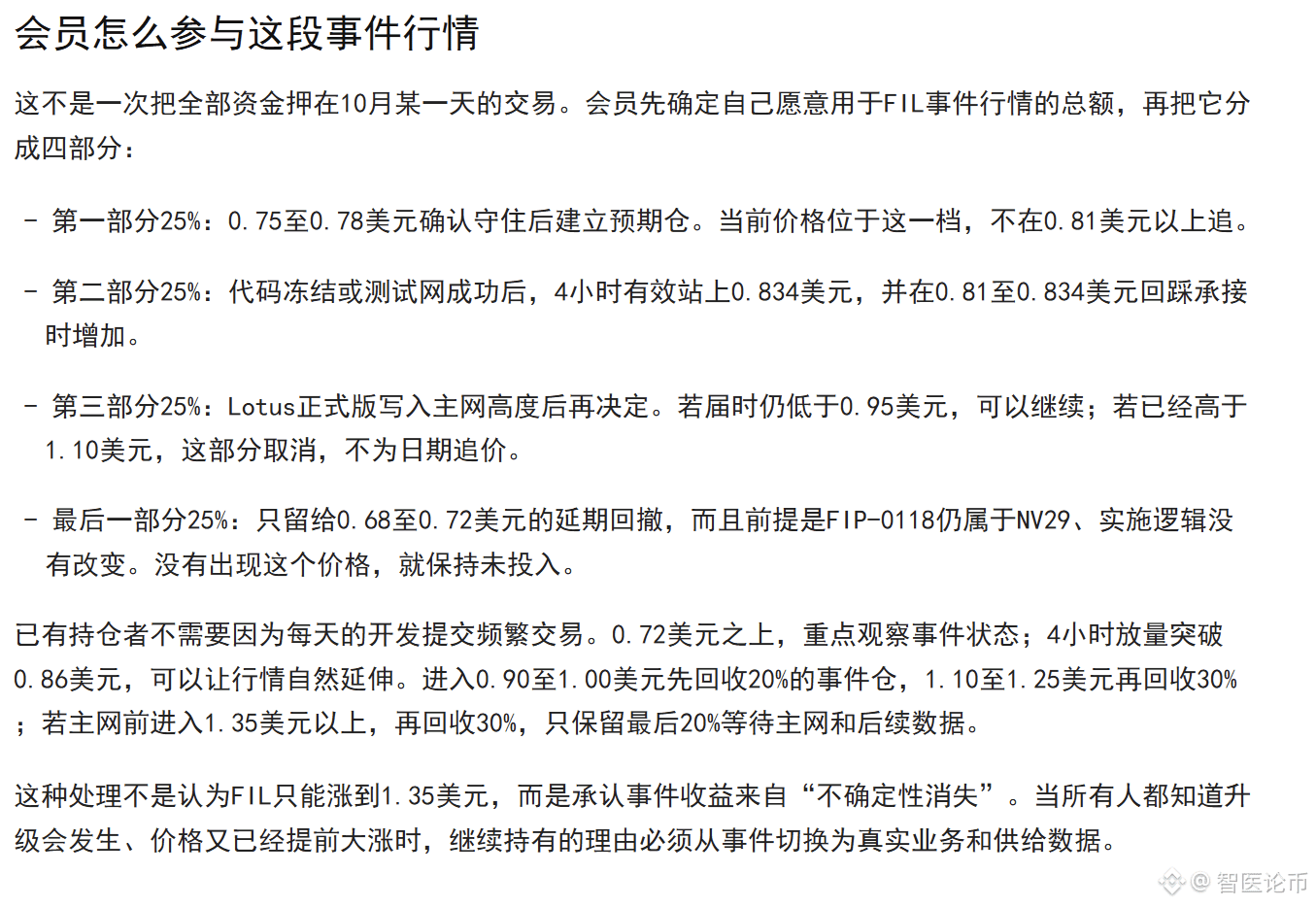
Accurate FIL prediction—write the script in advance. That’s what research is for.
Accurate FIL prediction—write the script in advance. That’s what research is for.


565
·
--
Why contracts you’ve approved can still leave asset risk behind?Many people, after using an exchange or staking app, immediately disconnect their wallet connection, thinking that the permissions disappear as well. In reality, token approvals are on-chain allowance amounts, not temporary logins for a webpage. As long as the allowance has not been used up, and hasn’t been reset by you, the approved address may still be able to call the permissions to transfer the corresponding tokens from your wallet. Even if the balance was zero at the time of approval, tokens of the same kind sent later could fall within the range covered by the old allowance.
When troubleshooting, check on-chain records—don’t rely only on whether the app is still connected. Review the approvals on each chain you’ve used, and verify, item by item, the approved address, the token, and the remaining allowance. Permissions for the same wallet are not shared across different chains. Then prioritize handling infinite allowances, unknown/strange addresses, and apps you no longer use. If you revoke permissions, wait for the transaction to be confirmed, and then check again whether the allowance has already gone to zero.
Why contracts you’ve approved can still leave asset risk behind?
Many people, after using an exchange or staking app, immediately disconnect their wallet connection, thinking that the permissions disappear as well. In reality, token approvals are on-chain allowance amounts, not temporary logins for a webpage. As long as the allowance has not been used up, and hasn’t been reset by you, the approved address may still be able to call the permissions to transfer the corresponding tokens from your wallet. Even if the balance was zero at the time of approval, tokens of the same kind sent later could fall within the range covered by the old allowance.
When troubleshooting, check on-chain records—don’t rely only on whether the app is still connected. Review the approvals on each chain you’ve used, and verify, item by item, the approved address, the token, and the remaining allowance. Permissions for the same wallet are not shared across different chains. Then prioritize handling infinite allowances, unknown/strange addresses, and apps you no longer use. If you revoke permissions, wait for the transaction to be confirmed, and then check again whether the allowance has already gone to zero.
When troubleshooting, check on-chain records—don’t rely only on whether the app is still connected. Review the approvals on each chain you’ve used, and verify, item by item, the approved address, the token, and the remaining allowance. Permissions for the same wallet are not shared across different chains. Then prioritize handling infinite allowances, unknown/strange addresses, and apps you no longer use. If you revoke permissions, wait for the transaction to be confirmed, and then check again whether the allowance has already gone to zero.
74
·
--
INJ First Full Research: The Tech Map Is Expanding, Value Capture Still Needs to Catch UpData and market conditions as of 2026-09-11 22:16 (Beijing time).
Injective is worth tracking as a high-volatility financial infrastructure, but for now INJ is more like a highly elastic option for future adoption—not an undervalued asset supported by current cash flows. The technological and compliance progress is real; however, current fees, TVL, and net supply have not yet proven that value capture can catch up to a roughly $6 valuation. Therefore I give the project a grade of B, the token is neutral, and I will stay in cash—waiting for the valuation to return to the $4.20 to $4.80 observation range before restarting a 20% trial position.
The most important conclusion of this study is not whether there is “anything in the project.” Injective has been running for years: the native order book, derivatives, oracles, auctions, asset issuance, and cross-chain modules are already live on the mainnet, and native EVM is also already live. The real question that needs answering is: can these technical and asset-issuance activities continuously convert into fees, and then cover INJ’s newly issued supply—through buybacks and burn? At the moment, this chain has only completed the first half of that process.
INJ First Full Research: The Tech Map Is Expanding, Value Capture Still Needs to Catch Up
Data and market conditions as of 2026-09-11 22:16 (Beijing time).
Injective is worth tracking as a high-volatility financial infrastructure, but for now INJ is more like a highly elastic option for future adoption—not an undervalued asset supported by current cash flows. The technological and compliance progress is real; however, current fees, TVL, and net supply have not yet proven that value capture can catch up to a roughly $6 valuation. Therefore I give the project a grade of B, the token is neutral, and I will stay in cash—waiting for the valuation to return to the $4.20 to $4.80 observation range before restarting a 20% trial position.
The most important conclusion of this study is not whether there is “anything in the project.” Injective has been running for years: the native order book, derivatives, oracles, auctions, asset issuance, and cross-chain modules are already live on the mainnet, and native EVM is also already live. The real question that needs answering is: can these technical and asset-issuance activities continuously convert into fees, and then cover INJ’s newly issued supply—through buybacks and burn? At the moment, this chain has only completed the first half of that process.
Injective is worth tracking as a high-volatility financial infrastructure, but for now INJ is more like a highly elastic option for future adoption—not an undervalued asset supported by current cash flows. The technological and compliance progress is real; however, current fees, TVL, and net supply have not yet proven that value capture can catch up to a roughly $6 valuation. Therefore I give the project a grade of B, the token is neutral, and I will stay in cash—waiting for the valuation to return to the $4.20 to $4.80 observation range before restarting a 20% trial position.
The most important conclusion of this study is not whether there is “anything in the project.” Injective has been running for years: the native order book, derivatives, oracles, auctions, asset issuance, and cross-chain modules are already live on the mainnet, and native EVM is also already live. The real question that needs answering is: can these technical and asset-issuance activities continuously convert into fees, and then cover INJ’s newly issued supply—through buybacks and burn? At the moment, this chain has only completed the first half of that process.
2
686
·
--
Why Arc Mainnet Could Change UNI Valuation: This Is Not Just Another Ordinary Chain ExpansionCircle plans to launch the Arc public mainnet on September 16, and Uniswap v4 will become one of the first liquidity infrastructure components. At first glance, this is simply Uniswap deploying another new chain; what’s truly worth paying attention to is that Arc may bring Uniswap into markets for stablecoin payments, foreign exchange, institutional settlement, and tokenized assets.
My view is that Arc represents an important business expansion for the Uniswap protocol, while for UNI it is a growth option that could change medium- to long-term valuation. But what it is changing right now is the future market opportunity and the probability of success—not revenue that has already shown up on the balance sheet.
Why Arc Mainnet Could Change UNI Valuation: This Is Not Just Another Ordinary Chain Expansion
Circle plans to launch the Arc public mainnet on September 16, and Uniswap v4 will become one of the first liquidity infrastructure components. At first glance, this is simply Uniswap deploying another new chain; what’s truly worth paying attention to is that Arc may bring Uniswap into markets for stablecoin payments, foreign exchange, institutional settlement, and tokenized assets.
My view is that Arc represents an important business expansion for the Uniswap protocol, while for UNI it is a growth option that could change medium- to long-term valuation. But what it is changing right now is the future market opportunity and the probability of success—not revenue that has already shown up on the balance sheet.
My view is that Arc represents an important business expansion for the Uniswap protocol, while for UNI it is a growth option that could change medium- to long-term valuation. But what it is changing right now is the future market opportunity and the probability of success—not revenue that has already shown up on the balance sheet.
1
1.9k
·
--
2026.9.12 BTC/ETH Price ForecastLatest assessment
BTC is currently at $77,393.8. Over the next 12 to 24 hours, the main trend is likely a strong-biased range movement. ETH is currently at $2,534.22, and the main trend is a strong-biased range.
Likely path
BTC is very likely to be supported at $76,022.7 and repair up to $79,874.1 under pressure; if it breaks below $75,500, the outlook is invalid. ETH is very likely to hold the $2,433.85 support and probe the $2,666 resistance; if it breaks below $2,405.94, the outlook is invalid.
Conclusion
Both in the short term lean toward a rebound, but volume is limited; the upward pace may be relatively restrained. Focus on whether each support can hold.
$BTC $ETH
2026.9.12 BTC/ETH Price Forecast
Latest assessment
BTC is currently at $77,393.8. Over the next 12 to 24 hours, the main trend is likely a strong-biased range movement. ETH is currently at $2,534.22, and the main trend is a strong-biased range.
Likely path
BTC is very likely to be supported at $76,022.7 and repair up to $79,874.1 under pressure; if it breaks below $75,500, the outlook is invalid. ETH is very likely to hold the $2,433.85 support and probe the $2,666 resistance; if it breaks below $2,405.94, the outlook is invalid.
Conclusion
Both in the short term lean toward a rebound, but volume is limited; the upward pace may be relatively restrained. Focus on whether each support can hold.
$BTC $ETH
BTC is currently at $77,393.8. Over the next 12 to 24 hours, the main trend is likely a strong-biased range movement. ETH is currently at $2,534.22, and the main trend is a strong-biased range.
Likely path
BTC is very likely to be supported at $76,022.7 and repair up to $79,874.1 under pressure; if it breaks below $75,500, the outlook is invalid. ETH is very likely to hold the $2,433.85 support and probe the $2,666 resistance; if it breaks below $2,405.94, the outlook is invalid.
Conclusion
Both in the short term lean toward a rebound, but volume is limited; the upward pace may be relatively restrained. Focus on whether each support can hold.
$BTC $ETH
146
·
--
Why is the annualized return so high, but the return you actually get may be low?A reader asked me: the page says it has a very high annualized return—so why, after you put money in for a while, does the account hardly increase, and even sometimes decrease? I usually start by breaking the “annualized return” apart from the “money you can actually get.” It’s more like converting the speed of returns over the period you’re looking at into a yearly number; it’s not a promissory note that gets paid at maturity. If you only invest for a few days, the interest rate drops partway through, and the final result will end up being very different from the figure shown on the page.
Some pages still show an annualized return rate that includes the effect of reinvestment. Only if the rewards can continue to be invested automatically at the set frequency, and the interest rate stays roughly the same, could compounding get close to the displayed value. But rewards typically need to be claimed manually, each claim has a cost, or if you exit the investment partway through, once the reinvestment chain is broken, the actual return will naturally be discounted.
Why is the annualized return so high, but the return you actually get may be low?
A reader asked me: the page says it has a very high annualized return—so why, after you put money in for a while, does the account hardly increase, and even sometimes decrease? I usually start by breaking the “annualized return” apart from the “money you can actually get.” It’s more like converting the speed of returns over the period you’re looking at into a yearly number; it’s not a promissory note that gets paid at maturity. If you only invest for a few days, the interest rate drops partway through, and the final result will end up being very different from the figure shown on the page.
Some pages still show an annualized return rate that includes the effect of reinvestment. Only if the rewards can continue to be invested automatically at the set frequency, and the interest rate stays roughly the same, could compounding get close to the displayed value. But rewards typically need to be claimed manually, each claim has a cost, or if you exit the investment partway through, once the reinvestment chain is broken, the actual return will naturally be discounted.
Some pages still show an annualized return rate that includes the effect of reinvestment. Only if the rewards can continue to be invested automatically at the set frequency, and the interest rate stays roughly the same, could compounding get close to the displayed value. But rewards typically need to be claimed manually, each claim has a cost, or if you exit the investment partway through, once the reinvestment chain is broken, the actual return will naturally be discounted.
66
·
--
Verified
Nearly 100,000 UNI burned per day: has real deflation begun, or is it just a short-term trading volume mirage?UNI has recently regained market attention, not just because of price volatility, but because its value logic is undergoing a substantive change. In the past, UNI was mainly a governance token; now, some protocol revenue can continuously drive UNI to exit the effective supply.
But before judging this, we must first correct a misconception that is spreading: you cannot add together the burn that occurs on the Layer 2 network and, roughly seven days later, the settlement of the same batch of UNI that is bridged to Ethereum and burned at the burn address. Under this incorrect counting method, September 11 would be calculated as 272,000 UNI burned in a single day, leading to the conclusion that the main driver of burns has shifted from the Robinhood Chain to Ethereum. In reality, this is largely a statistical illusion caused by cross-chain settlement delays, and it does not mean that the protocol revenue source has suddenly shifted.
Nearly 100,000 UNI burned per day: has real deflation begun, or is it just a short-term trading volume mirage?
UNI has recently regained market attention, not just because of price volatility, but because its value logic is undergoing a substantive change. In the past, UNI was mainly a governance token; now, some protocol revenue can continuously drive UNI to exit the effective supply.
But before judging this, we must first correct a misconception that is spreading: you cannot add together the burn that occurs on the Layer 2 network and, roughly seven days later, the settlement of the same batch of UNI that is bridged to Ethereum and burned at the burn address. Under this incorrect counting method, September 11 would be calculated as 272,000 UNI burned in a single day, leading to the conclusion that the main driver of burns has shifted from the Robinhood Chain to Ethereum. In reality, this is largely a statistical illusion caused by cross-chain settlement delays, and it does not mean that the protocol revenue source has suddenly shifted.
But before judging this, we must first correct a misconception that is spreading: you cannot add together the burn that occurs on the Layer 2 network and, roughly seven days later, the settlement of the same batch of UNI that is bridged to Ethereum and burned at the burn address. Under this incorrect counting method, September 11 would be calculated as 272,000 UNI burned in a single day, leading to the conclusion that the main driver of burns has shifted from the Robinhood Chain to Ethereum. In reality, this is largely a statistical illusion caused by cross-chain settlement delays, and it does not mean that the protocol revenue source has suddenly shifted.
1
1
3.4k
·
--
Core CPI is hotter than expected—so why did the crypto price fall first and then rise?U.S. August CPI has been released. Headline CPI increased 0.4% month over month and 3.4% year over year, while core CPI rose 0.3% month over month and 2.4% year over year. Previously, my four forecasts correctly hit three; most importantly, the core monthly figure landed in the slightly overheated scenario of 0.3%, which I had flagged in advance as a risk. This outcome was not entirely beyond prediction: before the release, I specifically emphasized that once the actual figure crosses the 0.25% rounding threshold, the reported result would jump from 0.2% to 0.3%. What needs adjustment is the probability assessment. I set 0.2% as the baseline scenario; however, based on the seasonally adjusted indices reported, the core monthly rate this time is about 0.29%—not merely just barely over the boundary.
Core CPI is hotter than expected—so why did the crypto price fall first and then rise?
U.S. August CPI has been released. Headline CPI increased 0.4% month over month and 3.4% year over year, while core CPI rose 0.3% month over month and 2.4% year over year. Previously, my four forecasts correctly hit three; most importantly, the core monthly figure landed in the slightly overheated scenario of 0.3%, which I had flagged in advance as a risk. This outcome was not entirely beyond prediction: before the release, I specifically emphasized that once the actual figure crosses the 0.25% rounding threshold, the reported result would jump from 0.2% to 0.3%. What needs adjustment is the probability assessment. I set 0.2% as the baseline scenario; however, based on the seasonally adjusted indices reported, the core monthly rate this time is about 0.29%—not merely just barely over the boundary.
395
·
--
Why stablecoins seem not to move—and why you can’t ignore redemption risk?Many beginners understand stablecoins as “cash on the blockchain”: the price doesn’t change much most of the time, and the number in their account stays there, so it naturally feels like it only carries custody risk and no asset risk.
When I look at stablecoins, I separate “the price is pegged to a target value” from “the coins you hold can be smoothly exchanged for money.” The former just means that recently, people are still willing to take over in the secondary market at a price close to the peg; the latter is asking a different question: who owes you the obligation to redeem, do you have the explicit right to demand redemption, and can the counterparty pay you the money according to the agreed amount and timeline.
Why stablecoins seem not to move—and why you can’t ignore redemption risk?
Many beginners understand stablecoins as “cash on the blockchain”: the price doesn’t change much most of the time, and the number in their account stays there, so it naturally feels like it only carries custody risk and no asset risk.
When I look at stablecoins, I separate “the price is pegged to a target value” from “the coins you hold can be smoothly exchanged for money.” The former just means that recently, people are still willing to take over in the secondary market at a price close to the peg; the latter is asking a different question: who owes you the obligation to redeem, do you have the explicit right to demand redemption, and can the counterparty pay you the money according to the agreed amount and timeline.
When I look at stablecoins, I separate “the price is pegged to a target value” from “the coins you hold can be smoothly exchanged for money.” The former just means that recently, people are still willing to take over in the secondary market at a price close to the peg; the latter is asking a different question: who owes you the obligation to redeem, do you have the explicit right to demand redemption, and can the counterparty pay you the money according to the agreed amount and timeline.
48
Log in to explore more content
Join global crypto users on Binance Square
⚡️ Get latest and useful information about crypto.
💬 Trusted by the world’s largest crypto exchange.
👍 Discover real insights from verified creators.
Email / Phone number
Trending Topics
FedRateWatch
589,652 views
2,765 Discussing
Share & Win Traffic Reward in our Trending Hashtag Campaign
✨Topic: FOMC September, What's The Fed's Next Move?
👉How to Join:
Publish a short post or article with hashtag #FedRateWatch
Create content based on the below angles:
- August core CPI rose 0.3% month-over-month, and the odds of a 25bp hike this week are now close to 90%. Do you anticipate a rate hike this week? Is it a one-off, or the start of a longer hiking cycle?
- If the hike lands, how does it play out for BTC, tech stocks, and gold? Bullish or bearish?
- How are you planning to trade next? Share your BTC, stocks or gold trade/holdings with our trade sharing widget.
⏰Campaign Period:
- 2026-09-15 11:00 - 2026-09-17 3:00 UTC
🎁Reward:
- Qualified posts that comply with the above guidelines and contain more than 100 words will be reviewed and may receive a random traffic boost of 500 to 3,000 views. You will receive a notification from your feed secretary if your post is selected.
- Get a chance to have your article featured on Binance Square Official
Need ideas for your post? Visit the topic page #FedRateWatch or the Square Guide on How to Post for Better Reach.
Binance Square Official
·388 Likes
·864k views
BitcoinSlidesTo$76000
22,969 views
120 Discussing
BitcoinReboundsTo$79K
62,425 views
402 Discussing