
Cryptocurrency Industry
150 Posts
Cryptocurrency Industry
Report
Block User
I look for crypto opportunities before they become obvious. Market analysis, altcoins & real trade ideas.
Open Trade

ETH Holder
Frequent Trader
6 Years
2 Following
30 Followers
59 Liked
Posts
Portfolio
All
Videos
See translation
Den представила Multi‑Layer Security (MLS) Wallet, который блокирует любые подозрительные переводы тремя независимыми проверками: мобильным приложением подписи, офф‑чейн‑со‑сигнатурой Guardian и смарт‑контрактом on‑chain. По словам сооснователя Джона Эрлица, такие правила могли бы остановить три попытки кражи, включая атаку Drift, где злоумышленники пытались вывести $295 млн. Если бы один из уровней отказал, транзакция не прошла бы, а в случае взлома самого Den‑кошелька последняя проверка on‑chain откатила бы её. Для бизнес‑пользователей это значит, что даже при компрометации инфраструктуры их средства останутся защищёнными.
Источник: Unchained
https://unchainedcrypto.com/dens-jonah-erlich-says-its-onchain-rules-block-rogue-transfers-even-if-den-is-hacked/
Источник: Unchained
https://unchainedcrypto.com/dens-jonah-erlich-says-its-onchain-rules-block-rogue-transfers-even-if-den-is-hacked/
72
See translation
Регуляторы стран ASEAN+3 договорились создать рабочую группу, которая будет исследовать возможность соединения национальных цифровых платёжных сетей и согласования их нормативных подходов. Инициатива возглавит AMRO и будет реализована после встречи заместителей финансовых министерств в Киото. Если такие правила появятся, компании, получившие лицензию в одном из государств‑участников, смогут предлагать услуги в остальных без повторного прохождения полного процесса одобрения. Для криптобизнеса это значит сокращение затрат на комплаенс и более быстрый выход на региональные рынки, где сейчас каждый рынок требует отдельного разрешения.
Источник: Cointelegraph
https://cointelegraph.com/news/asean3-agrees-on-initiative-to-explore-crypto-payments-cooperation?utm_source=rss_feed&utm_medium=rss&utm_campaign=rss_partner_inbound
Источник: Cointelegraph
https://cointelegraph.com/news/asean3-agrees-on-initiative-to-explore-crypto-payments-cooperation?utm_source=rss_feed&utm_medium=rss&utm_campaign=rss_partner_inbound
128
Binance has just received in-principle approval from the central bank of the financial regulator in the newly opened city of Gelephu (Bhutan) and plans to establish an Asian hub in this “unfinished” city. The project will be based in a 4,046-km² zone built around renewable energy and financial innovation, but the city currently has no users and the license has not been formally issued. The choice of Bhutan over Singapore or Hong Kong is explained by its new independent central bank and more flexible regulatory environment, giving Binance a path to regional expansion without needing to obtain separate licenses in every country.
Source: BeInCrypto
https://beincrypto.com/binance-asia-hub-bhutan-gelephu-central-bank/
Source: BeInCrypto
https://beincrypto.com/binance-asia-hub-bhutan-gelephu-central-bank/
1
1
200
The scandalous panic surrounding OKX peaked on Friday, when a post claiming that more than $2 billion had allegedly been lost in a hack surfaced on social media. In reality, it turned out to be fake: OKX CEO Star Xu pointed to public blockchain data showing that known OKX wallets hold tens of billions of dollars, making a $2 billion loss only a small fraction. Xu stressed that the network’s transparency makes it possible to quickly verify such rumors. The incident serves as a reminder of how quickly speculative fears can spread in the wake of a real major theft at Binance, even when they have no factual basis.
Source: BeInCrypto
https://beincrypto.com/okx-ceo-denies-2-billion-hack-rumor/
Source: BeInCrypto
https://beincrypto.com/okx-ceo-denies-2-billion-hack-rumor/
1
1.1k
See translation
Binance получил предварительное одобрение от центрального банка Гелефу и объявил о планах открыть в Гелефу Mindfulness City азиатский хаб. Компания уже запустила в 2025 году национальную систему криптоплатежей для туризма, а теперь хочет развивать полноценную экосистему цифровых активов, создавая рабочие места и обучая местные кадры. Одобрение пока носит лишь предварительный характер – Binance должна выполнить оставшиеся регуляторные требования, но уже сейчас это сигнализирует о растущем интересе горных стран к криптовалютному бизнесу и конкуренции за привлечение глобальных игроков. Такой шаг может укрепить позицию Бутана как нового финансового центра в Южной Азии.
Источник: Cointelegraph
https://cointelegraph.com/news/binance-receives-in-principle-approval-plans-asia-hub-in-bhutan?utm_source=rss_feed&utm_medium=rss&utm_campaign=rss_partner_inbound
Источник: Cointelegraph
https://cointelegraph.com/news/binance-receives-in-principle-approval-plans-asia-hub-in-bhutan?utm_source=rss_feed&utm_medium=rss&utm_campaign=rss_partner_inbound
148
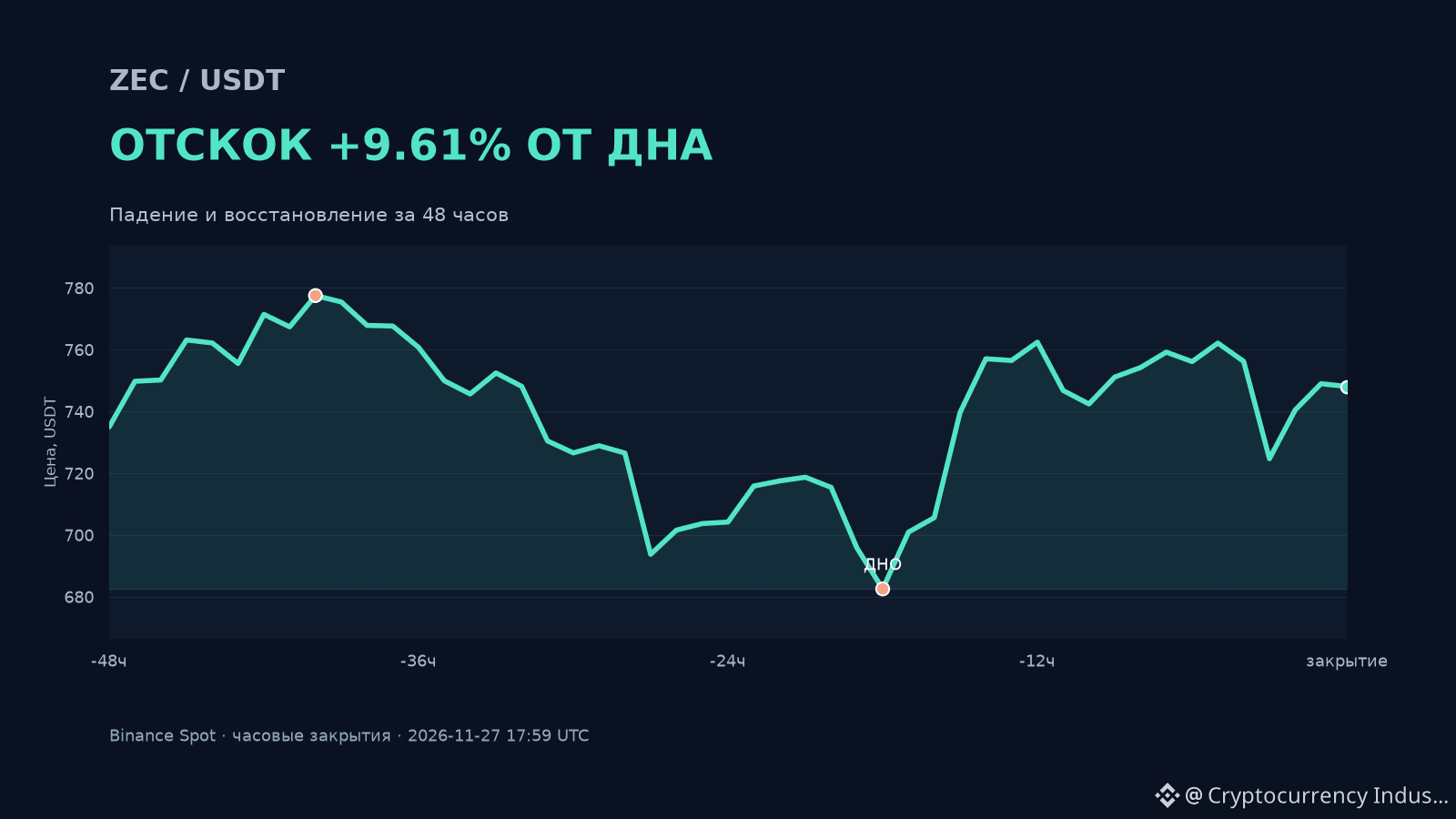
Over the past two days, ZEC went from a sharp drop to an almost complete recovery: after a steep decline of -12.22%, the price rebounded to a level close to its peak at +9.61%.
Over 24 hours, the total gain was +6.23%, while the share of aggressive buying exceeded half of the volume – 50.4%. This means that during the hour when the price “rose,” buyers drove most of the trades, rather than sellers.
Bottom line: despite a dramatic plunge in the hourly candles, ZEC ended the period almost at its previous peak, with active buying supporting the rise.
Before the drop — 777,500 USDT (2026-11-26 01:59 UTC). Lowest hourly close — 682,520 USDT (2026-11-26 23:59 UTC). Last close after the rebound — 748,080 USDT (2026-11-27 17:59 UTC).
Source: Binance Spot, ZEC/USDT; closed hourly candles. Last close: 2026-11-27 17:59 UTC.
443
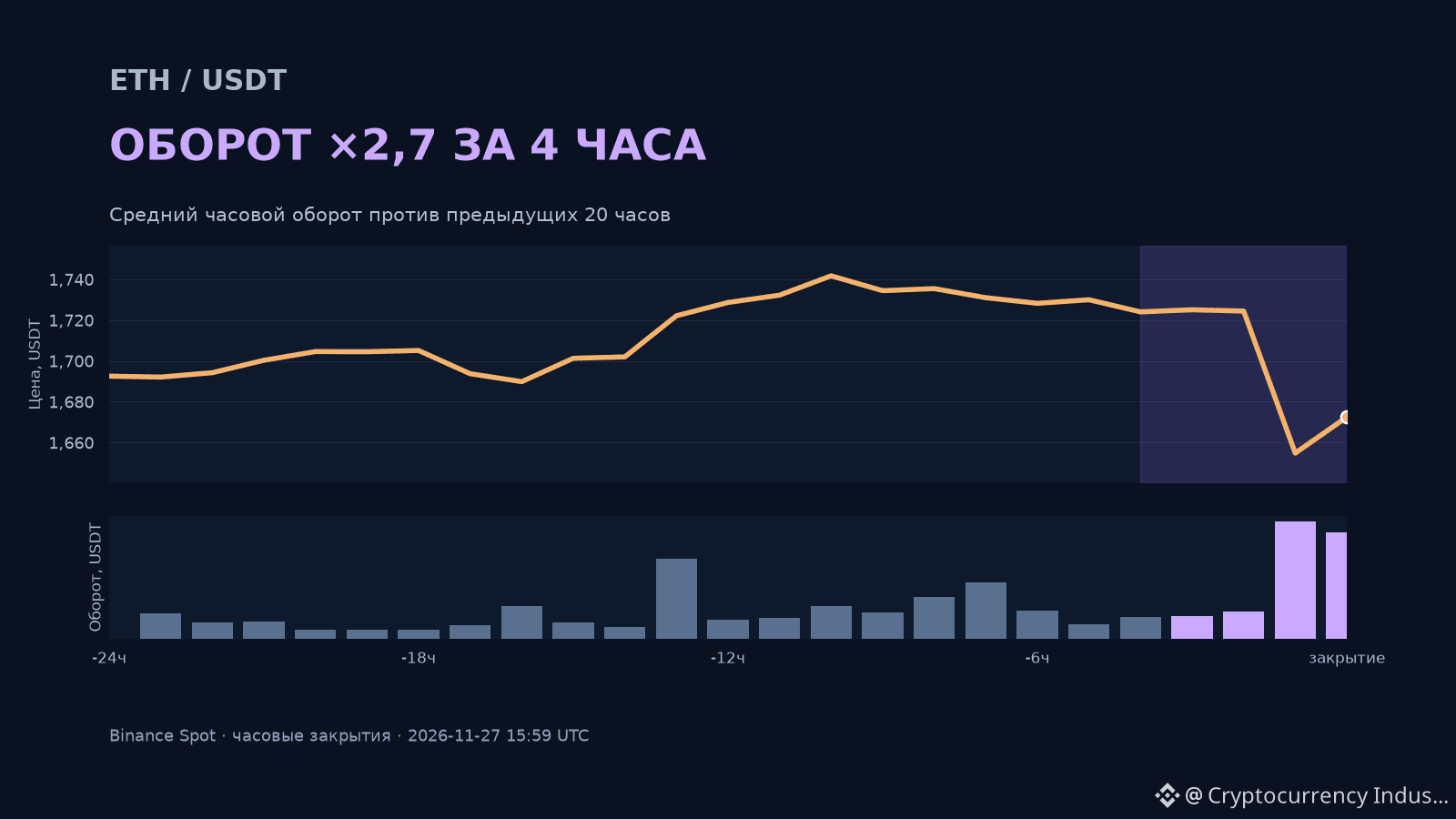
Ethereum (ETH) saw approximately over four hours—over four hours, approximately 35% of its daily trading volume—while its price fell by 2.99%.
Over the same period, the average hourly trading volume increased 2.7-fold compared with the previous twenty hours, while the share of aggressive buying for the day remained below half at 49.0%.
The latest hourly candle closed at 1,672.46 USDT, and the daily decline was 1.19%; volume and price clearly diverged over the short window.
Source: Binance Spot, ETH/USDT; closed hourly candles. Latest close: 2026-11-27 15:59 UTC.
107
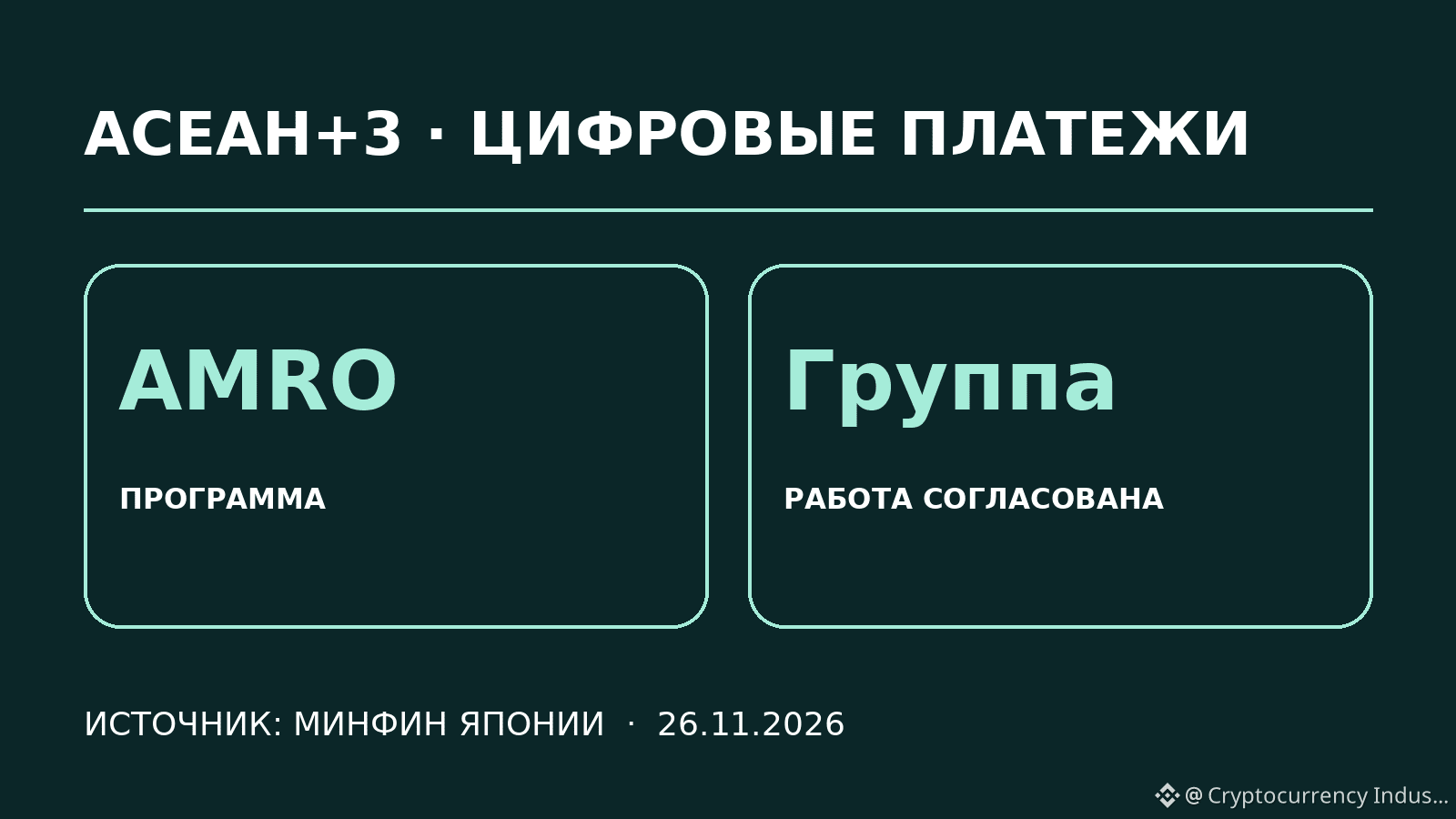
ASEAN+3 has agreed on a cross-border digital payments program and a dedicated working group. The group will focus on cooperation between payment systems in the region.
Japan’s Ministry of Finance announced the decision following the meeting on 26 November 2026. The work will be led by AMRO, the regional macroeconomic research office. The decision concerns the establishment of the program and the working group. The announcement did not specify when the payment service will launch.
Source: https://www.mof.go.jp/english/policy/international_policy/convention/others/20261126.html
94
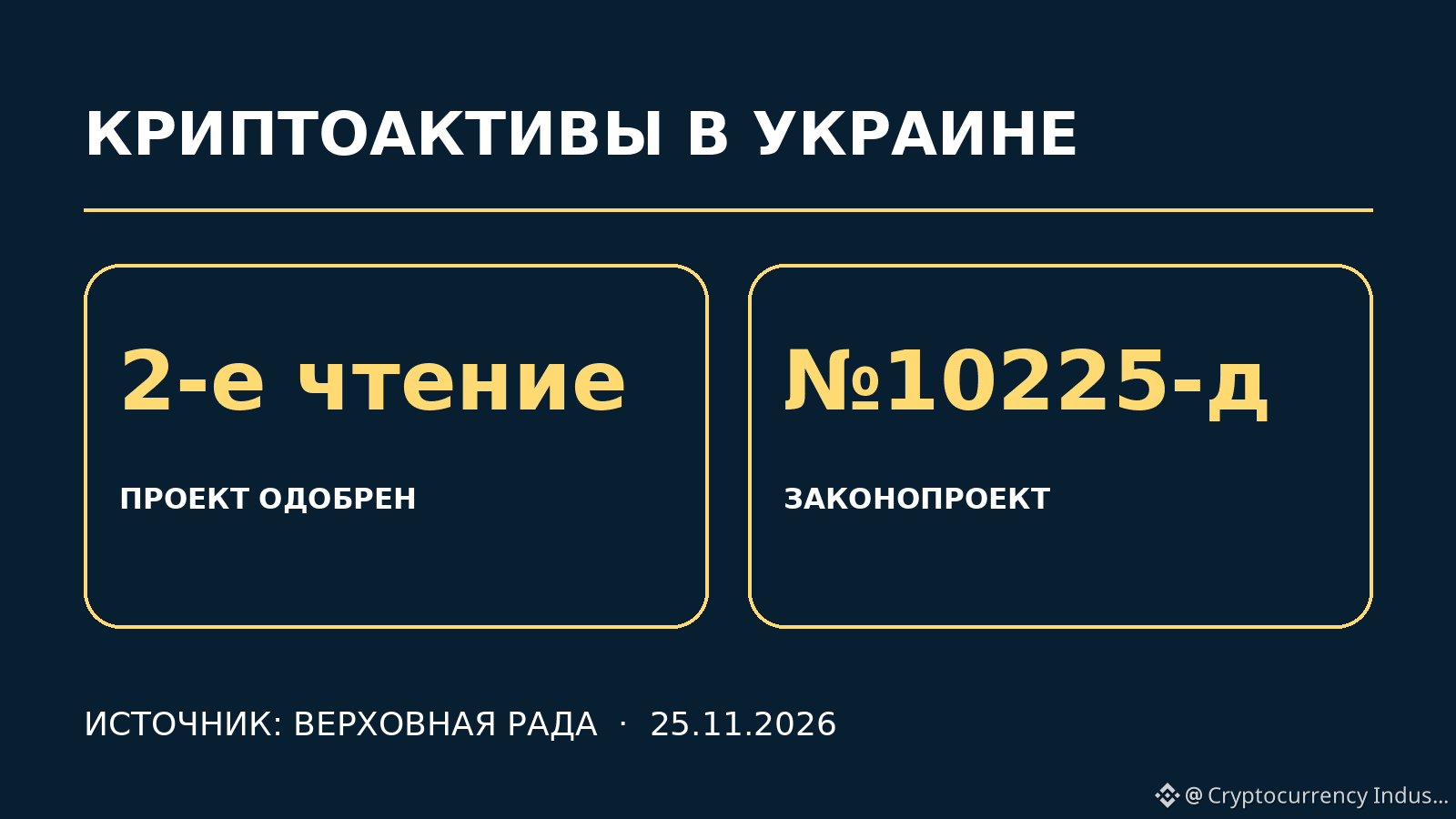
Taxes on crypto transactions: The Verkhovna Rada approved the bill in its second reading. For owners and companies, the rules for taxing transactions and the separation of client and company assets are important.
Parliament adopted draft law No. 10225-д as a whole on 25.11.2026. The press service reported the voting outcome. The date when individual provisions take effect should be checked against the official text of the law.
Source: https://www.rada.gov.ua/news/razom/277050.html
Parliament adopted draft law No. 10225-д as a whole on 25.11.2026. The press service reported the voting outcome. The date when individual provisions take effect should be checked against the official text of the law.
Source: https://www.rada.gov.ua/news/razom/277050.html
77
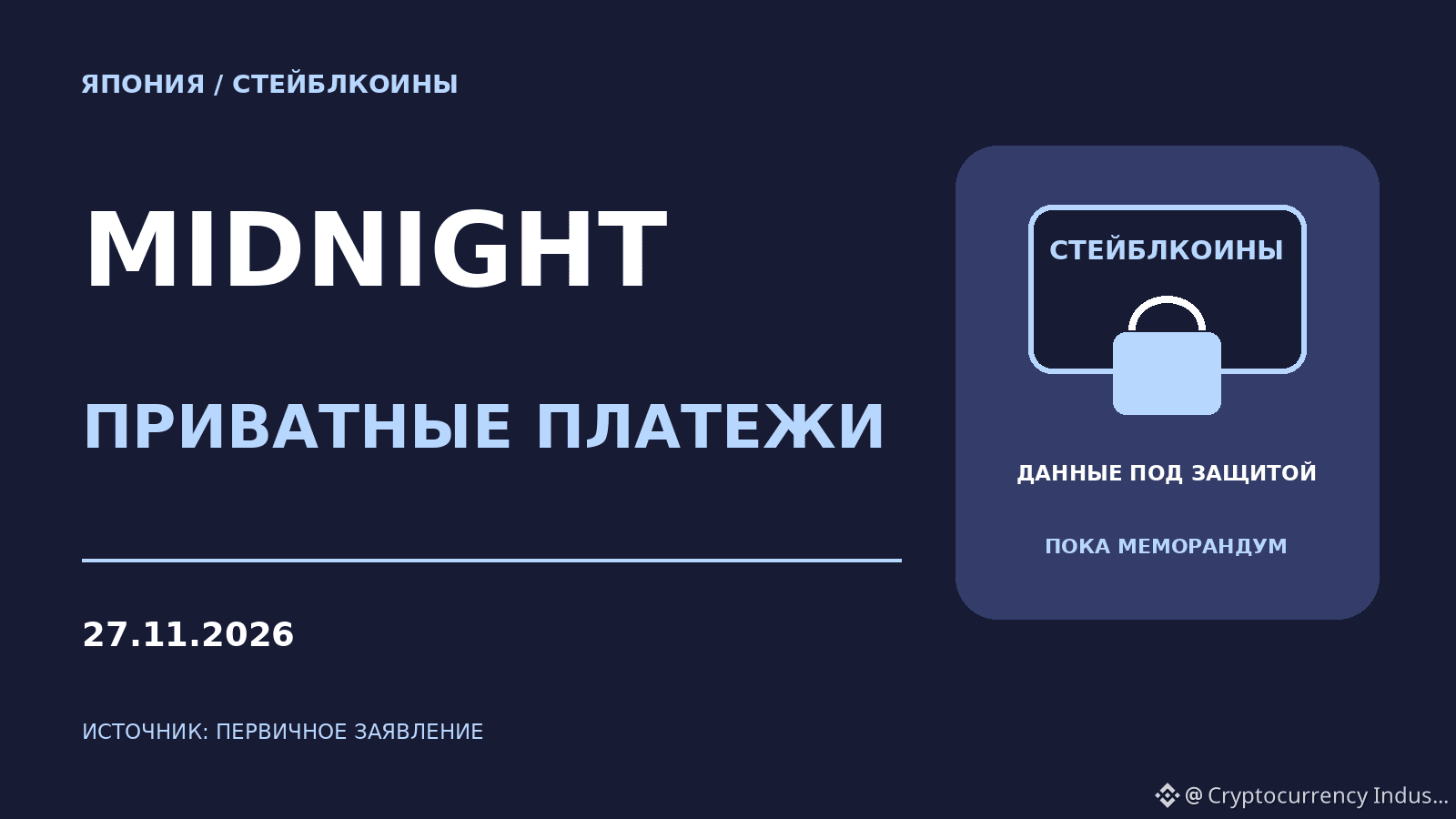
Midnight and Japanese payment companies want to protect merchants’ financial data when they pay with stablecoins. The project focuses on keeping balances and transaction histories private.
On November 27, the Midnight Foundation, WEA JAPAN, and NETSTARS signed a memorandum to study confidential storage of merchants’ balances and transaction records, with automated reconciliation. Areas of focus include Ethereum and Solana.
NETSTARS launched Stablecoin Pay for merchants in July. But the current agreement is a study of new possibilities, not an announcement of a ready-to-use private payment service.
Source: https://prtimes.jp/main/html/rd/p/000000004.000189466.html
87
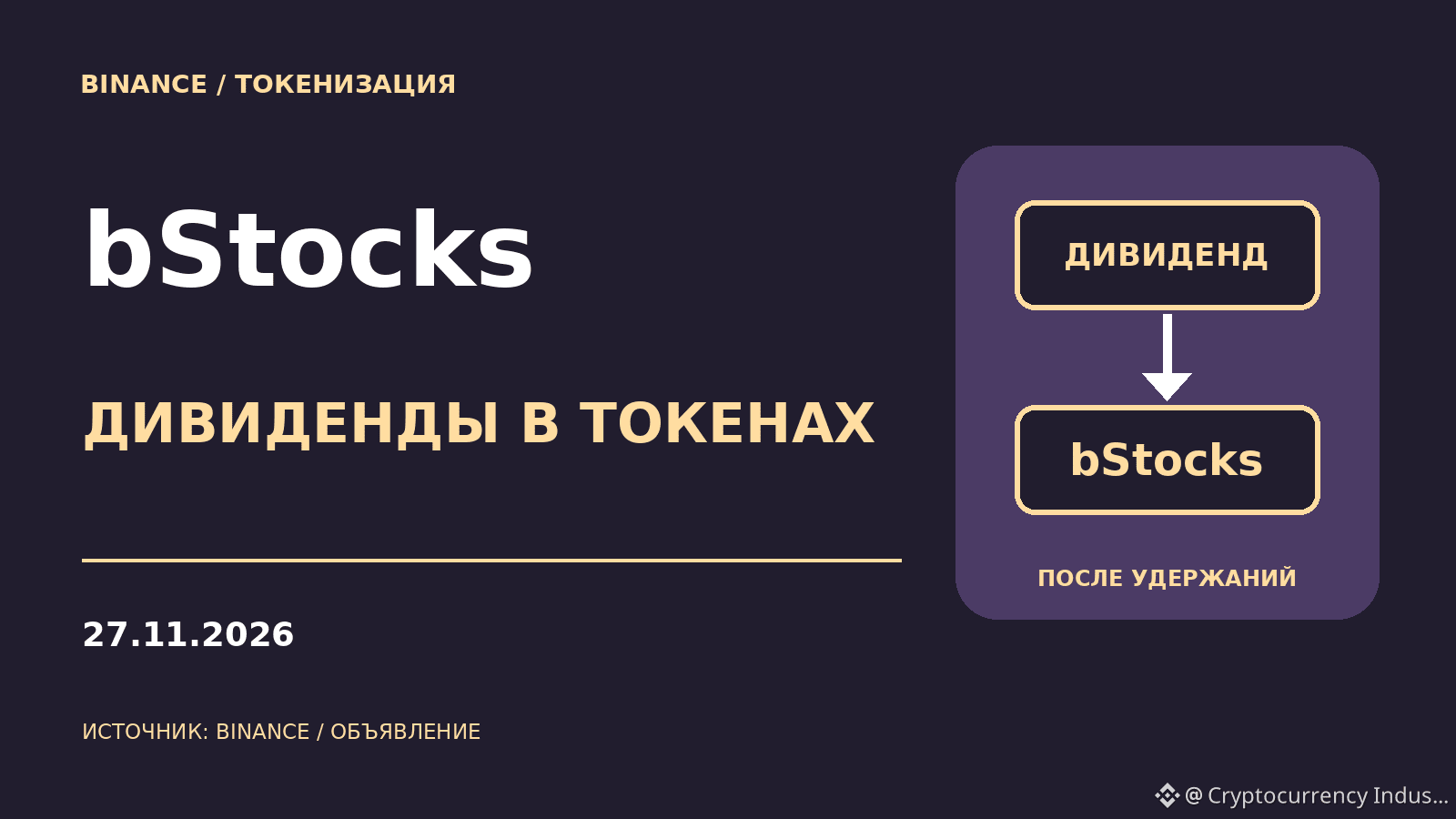
Dividends on stock tokens are not cash credited to your balance. Binance announced the distribution of payments on bStocks linked to WEN, NVDA, QCOM, PYPL, and WDC.
After taxes, fees, and other deductions, the amount will be reinvested. Eligible exchange users will receive additional bStocks, while a multiplier adjustment will apply to on-chain holders.
An important difference from regular stocks: tokens do not provide direct ownership of company shares. Access to the product is restricted based on user eligibility and jurisdiction.
Source: https://www.binance.com/en/support/announcement/detail/2125a821be8f480b99d46c7c82b12958
47
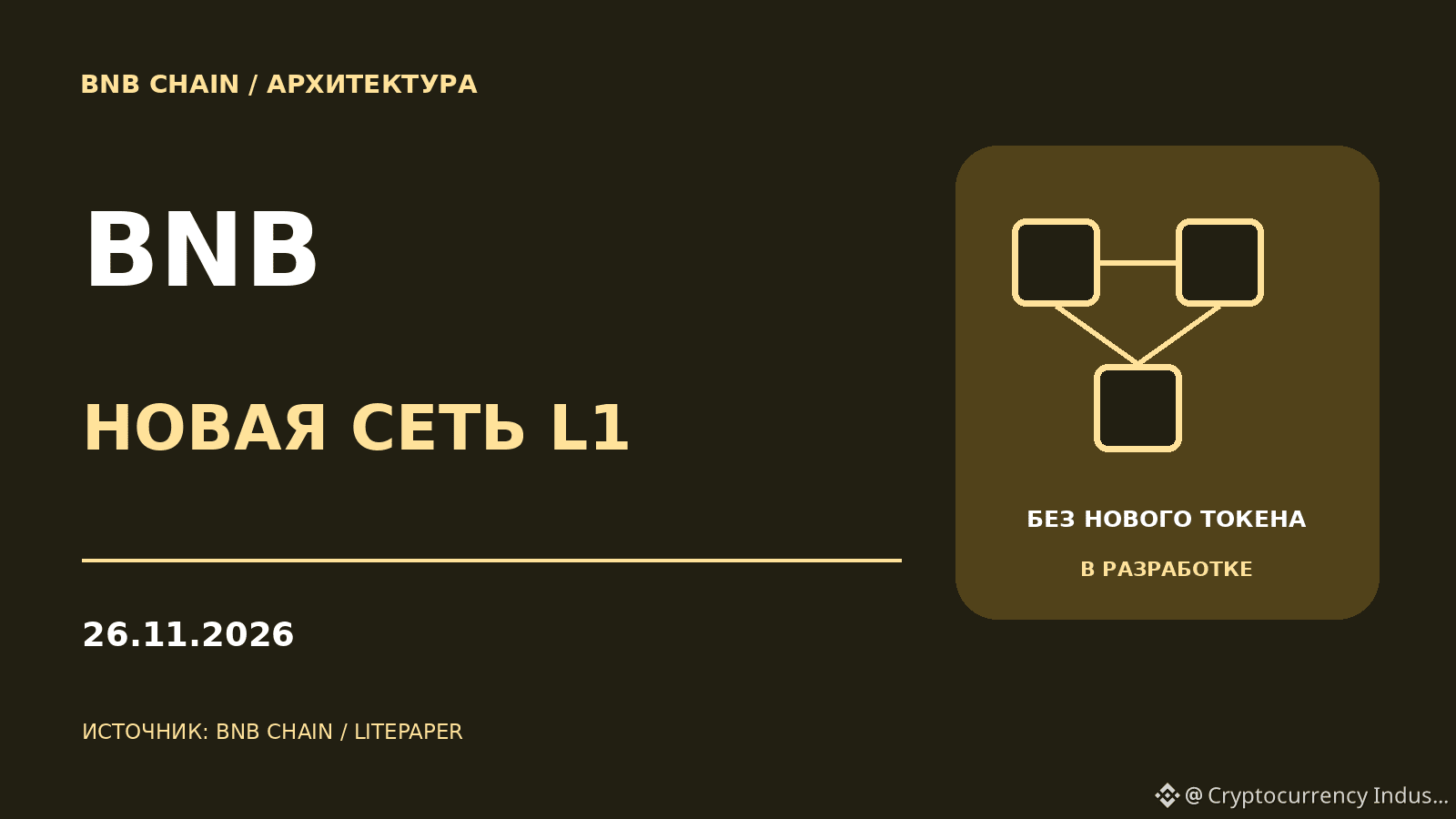
BNB Chain is preparing a separate blockchain for high-speed trading. But there will be no new native token: the network will keep BNB.
On November 26, developers unveiled the L1 architecture. It provides preliminary transaction notifications before a block is finalized. This is not final confirmation of a transaction.
Another detail: applications will be able to pay network fees for users, who will no longer need to buy BNB in advance to pay for gas.
For now, this is a network being designed, not a launched product. The public testnet is still in preparation.
Source: https://www.bnbchain.org/en/blog/introducing-bnb-chains-new-l1-litepaper
309
Verified
Binance announced that it had lifted withdrawal restrictions following the October incident. But that doesn’t mean withdrawals are available on absolutely every network.
On November 26, the exchange announced that recovery work had been completed. Temporary pauses remain on some networks due to maintenance or updates. Binance specifically emphasizes that these are unrelated to the recovery work following the incident.
An important note for users: the exchange warns about scammers offering to speed up withdrawals. Binance employees should never ask for your password, 2FA code, or seed phrase.
Source: https://www.binance.com/en/support/announcement/detail/95c463396a034f1ab3994814225e6d69
3
1.1k
Verified
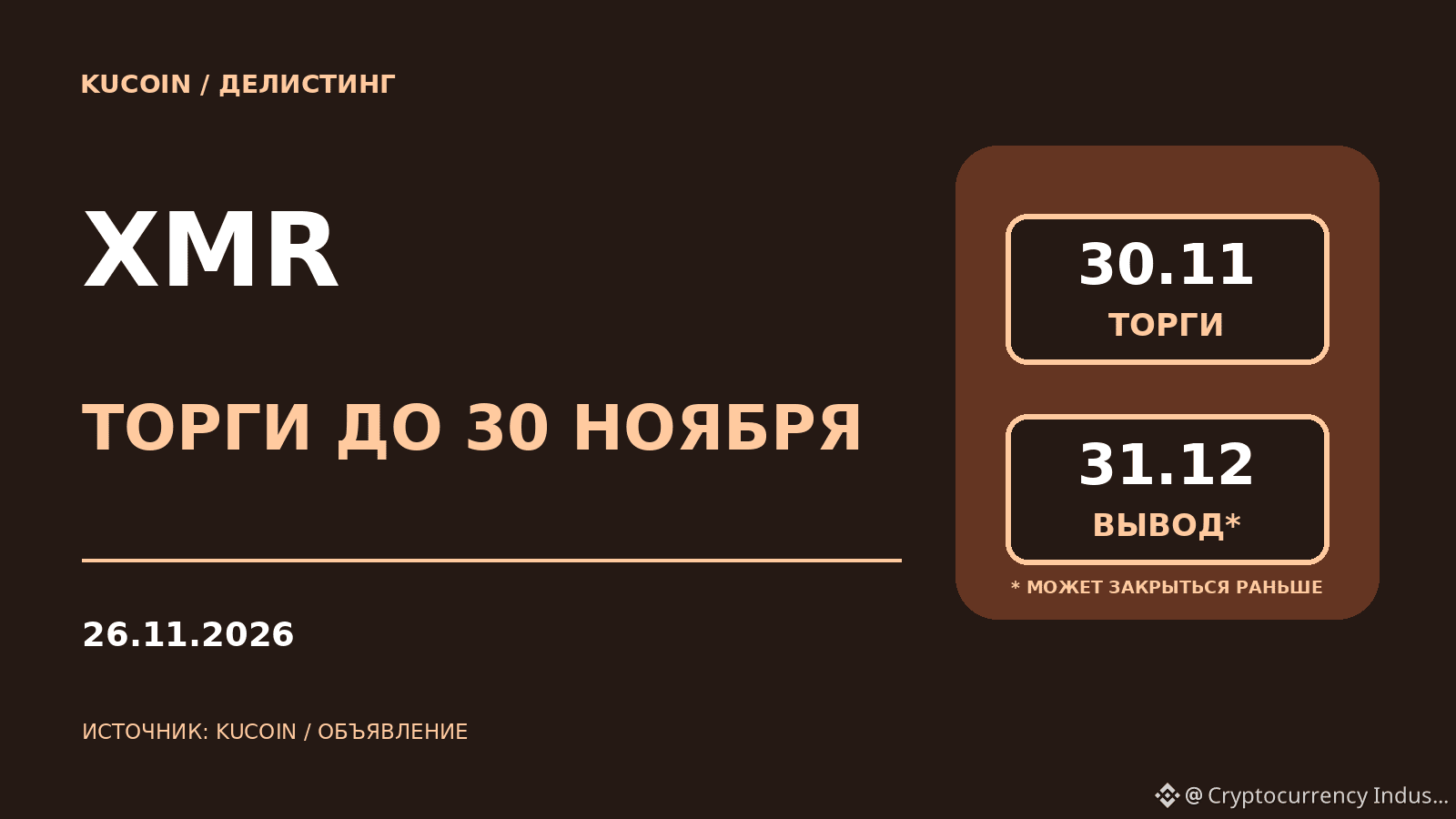
KuCoin is delisting Monero (XMR) from its spot market. Trading will stop on November 30, but withdrawals will remain available for now.
At 08:00 UTC, the exchange will disable four trading pairs: XMR/USDT, XMR/USDC, XMR/ETH, and XMR/BTC. XMR deposits are already closed and will not resume.
For holders, another date matters: withdrawals are scheduled to close on December 31 at 08:00 UTC. However, KuCoin reserves the right to stop them earlier if there are issues with the project. This is a decision by the exchange, not a shutdown of Monero itself.
Source: https://www.kucoin.com/announcement/en-kucoin-will-delist-xmr-on-2026-11-30
594
AllUnity: The service is now available—HT Markets clients can hold euros, Swiss francs, and krona in Hex Trust’s custodial wallet without opening a European bank account.
AllUnity, a BaFin-licensed e-money institution, issues e-money tokens backed 1:1 by reserves held at European banks, and Hex Trust has already demonstrated that transferring funds from Luxembourg to Dubai takes just a few hours.
Access is limited to clients who meet HT Markets’ requirements and have been granted eligible status.
According to an official announcement by AllUnity.
Original source: https://allunity.com/news/hex-trust-and-allunity-connect-businesses-in-the-middle-east-and-east-asia-to-european-currencies
380
AAVE is moving beyond traditional DeFi: its savings app no longer requires an invitation.
On November 25, Aave Labs opened access to its app on iOS and Android. Users from more than 170 countries took part in early access. Funds are allocated to the protocol’s lending markets, with supported assets including USDC, USDT, and GHO.
The company wants to make DeFi a familiar mobile service. But this is not a bank deposit: yields vary, and there is no government-backed insurance for funds. The launch itself does not mean that users are buying the AAVE token.
Source: https://aave.com/blog/aave-app-launch
214
The HKMA has launched a platform in Hong Kong where tokenized bonds can be settled around the clock. But connecting stablecoins is still only in the plans.
On November 25, the Hong Kong Monetary Authority announced the launch of the CMU Digital Asset Platform. The distributed-ledger infrastructure covers the issuance, settlement, and redemption of debt securities. The platform supports round-the-clock settlement in multiple currencies using tokenized money.
The next step is to explore the possibility of connecting regulated stablecoins, tokenized deposits, and other asset classes. This is about plans to expand the platform, not about settlements in USDT or USDC already being available.
Source: https://www.hkma.gov.hk/eng/news-and-media/press-releases/2026/11/20261125-3/
346
BTC and ETH can now be bought directly in the Israeli Discount Bank app. However, purchased coins cannot be withdrawn to a personal wallet.
The bank launched the service on November 26: cryptocurrencies are displayed alongside traditional investments, and there is no need for a separate crypto exchange account. The service is available to adult customers who are residents of Israel and have signed up for the bank’s required services.
The fee for buying or selling through the app is 2% of the transaction amount, excluding any currency conversion fees. Custody is provided by licensed third-party providers.
The main limitation: the system is closed. It is not yet possible to transfer coins to an external wallet or deposit them from one. The bank also warns separately of the risk of losing the entire investment.
Source: https://www.discountbank.co.il/private/savings-investments/capital-market/cryptocurrency_trade/
180
Verified
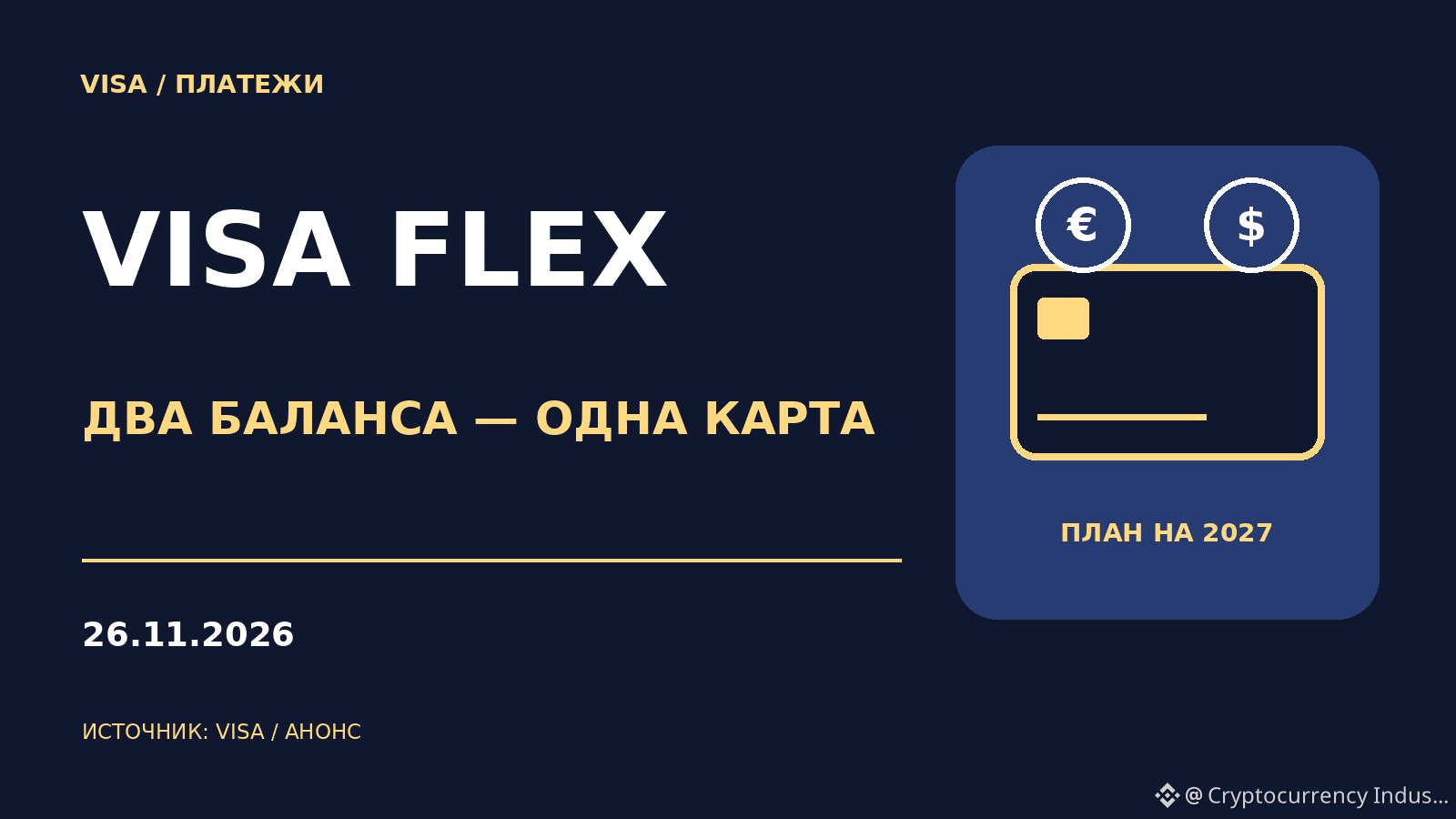
Visa wants to combine traditional money and stablecoins on a single card. Two balances — one familiar way to pay.
Imagine paying for coffee in your local currency, then choosing the right dollar balance when you make a purchase in dollars. All with one card. That’s exactly what Visa and crypto platform NBX plan to add to the Flex Card.
The launch is expected in 2027. The first markets are set to be Norway, Sweden, Denmark, Finland, and Germany. Poland is planned for a later date.
The most interesting thing here isn’t another crypto card, but the ability to use different forms of money without switching cards. For now, this is an announcement, not a live service.
Original source: https://www.visa.co.uk/about-visa/newsroom/press-releases.3484051.html
2
1
1.2k
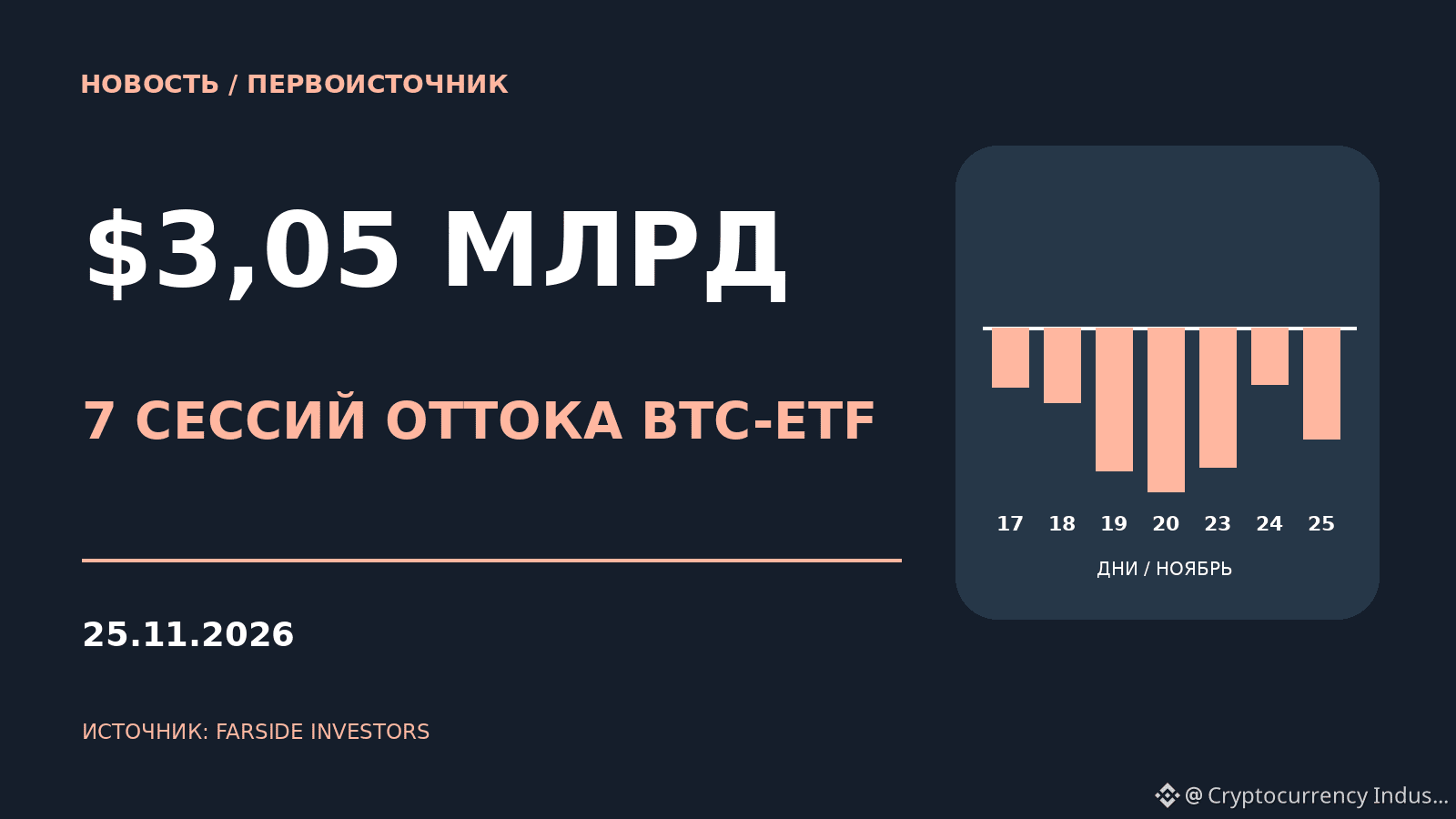
BTC ETFs in the U.S.: seven consecutive sessions and net outflows of $3.052 billion.
According to Farside, from 17.11 to 25.11, net flows moved in the same direction every day. The final session saw $453.0 million.
This is now a streak, not a one-off spike. But net ETF flows are not the same as the volume of specific market orders on crypto exchanges.
Source: https://farside.co.uk/btc/
76
Log in to explore more content
Join global crypto users on Binance Square
⚡️ Get latest and useful information about crypto.
💬 Trusted by the world’s largest crypto exchange.
👍 Discover real insights from verified creators.
Email / Phone number
Trending Topics
EvolveAtBinanceBlockchainWeek
1.7M views
17,379 Discussing
Binance Blockchain Week is officially underway! 🌍
On November 28–29, whether you’re in Bangkok or joining from afar, tune in to the livestreams and join the conversation on Binance Square!
Here’s what’s in store 👇
📺 Watch the main stage live
Tune in throughout both days as industry speakers share their perspectives on this year’s theme, “Evolve” From technological innovation to real-world applications, explore what’s next for crypto.
⚔️ Watch two trading competitions
The Aster Open Qualifier and the Binance Trading Master Tournament will both be streamed live. Tune in to follow the traders in action.
🏆 Watch The Blockchain 100 Awards Ceremony
The Blockchain 100 list was selected by the community. Join us in celebrating the creators and the ideas they share!
💬 Join the community conversation
Use #EvolveAtBinanceBlockchainWeek in a post with a photo to share what you’re looking forward to, your views on the industry, or your favorite moments from the event.
The event page is now live! Subscribe to all livestreams with one click so you don’t miss a moment 👏
Binance Blockchain Week
·412 Likes
·477.2k views
ColdcardFlawLeadsToTheftOfAtLeast1789BTC
29,528 views
345 Discussing
SECIssuesNoActionLetterOnMoleculeModel
4,764 views
64 Discussing