
老八秘制
114 Posts

老八秘制
Report
Block User
嘴强王者
18 Following
372 Followers
1.1K+ Liked
Posts
All
Quotes
Videos
·
--
First, Gate users were hacked; then MEXC users were attacked via KYC. Let me teach you a great method to avoid being attacked by hackers 👍🏻🤓👍🏻
First, Gate users were hacked; then MEXC users were attacked via KYC. Let me teach you a great method to avoid being attacked by hackers 👍🏻🤓👍🏻

1
4
1.7k
·
--
In July, Gate users had $1.7 million stolen
In September, the Bitget exchange was hacked for $387 million
Immediately after that, MSX users reported that their accounts were restricted—more than 200,000 USDT in the account couldn’t be withdrawn
Today, MEXC users (Bitget?) had $340,000 stolen
Who’s next?
In September, the Bitget exchange was hacked for $387 million
Immediately after that, MSX users reported that their accounts were restricted—more than 200,000 USDT in the account couldn’t be withdrawn
Today, MEXC users (Bitget?) had $340,000 stolen
Who’s next?
8
7
2.7k
·
--
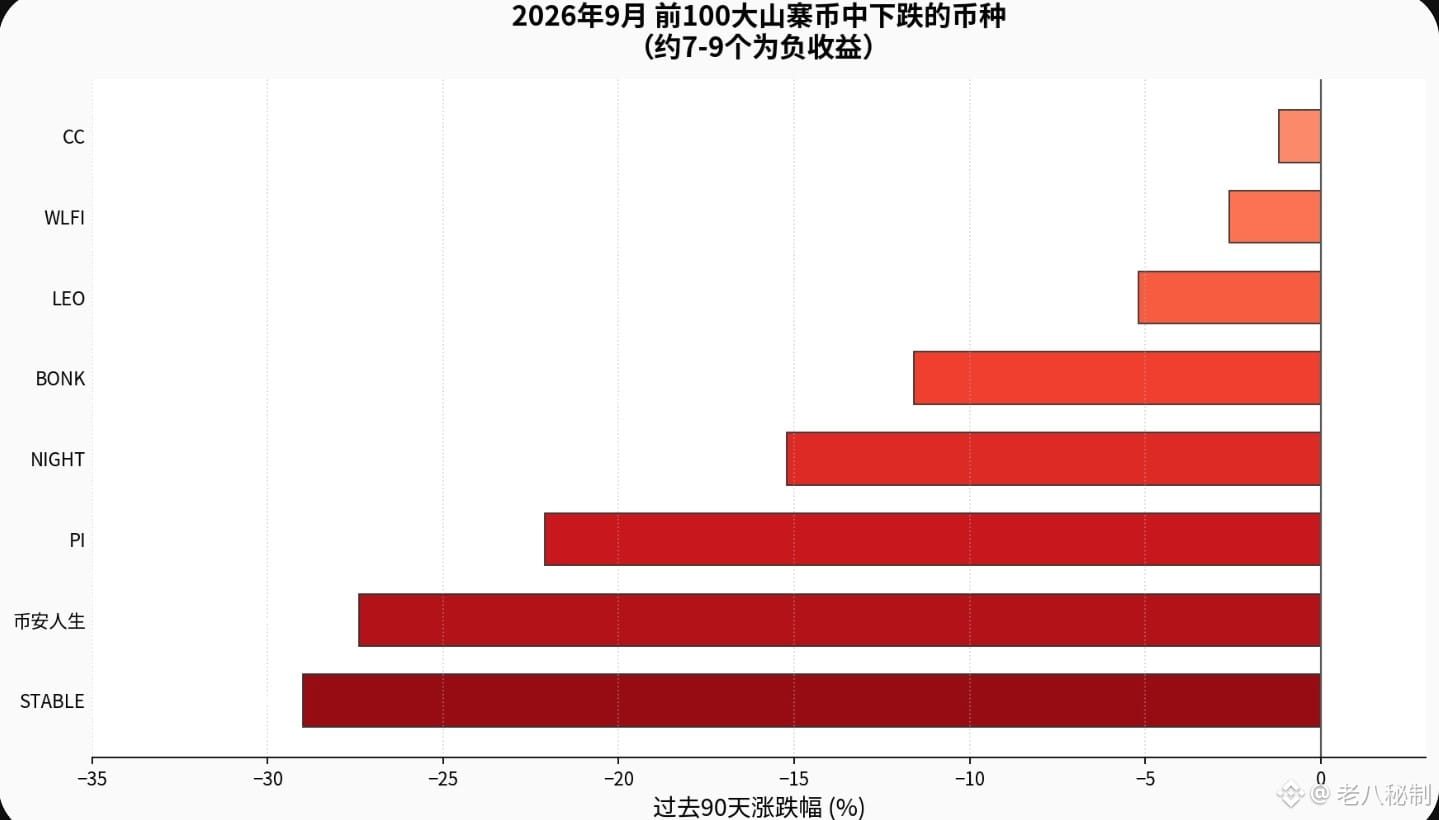
Among the top 100 counterfeit coins from over the past 90 days, about 7–9 are down ⚠️🤣
① STABLE: about -28% ~ -29%
② Binance Life: about -25% ~ -29%
③ Pi Network (PI): about -21% ~ -23%
④ Midnight (NIGHT): about -14% ~ -16%
⑤ BONK: about -11.6%
⑥ UNUS SED LEO (LEO): about -5%
⑦ World Liberty Financial (WLFI): about -2% ~ -3%
⑧ Canton (CC): about -0.4% ~ -2%
① STABLE: about -28% ~ -29%
② Binance Life: about -25% ~ -29%
③ Pi Network (PI): about -21% ~ -23%
④ Midnight (NIGHT): about -14% ~ -16%
⑤ BONK: about -11.6%
⑥ UNUS SED LEO (LEO): about -5%
⑦ World Liberty Financial (WLFI): about -2% ~ -3%
⑧ Canton (CC): about -0.4% ~ -2%
1
1k
·
--
Verified
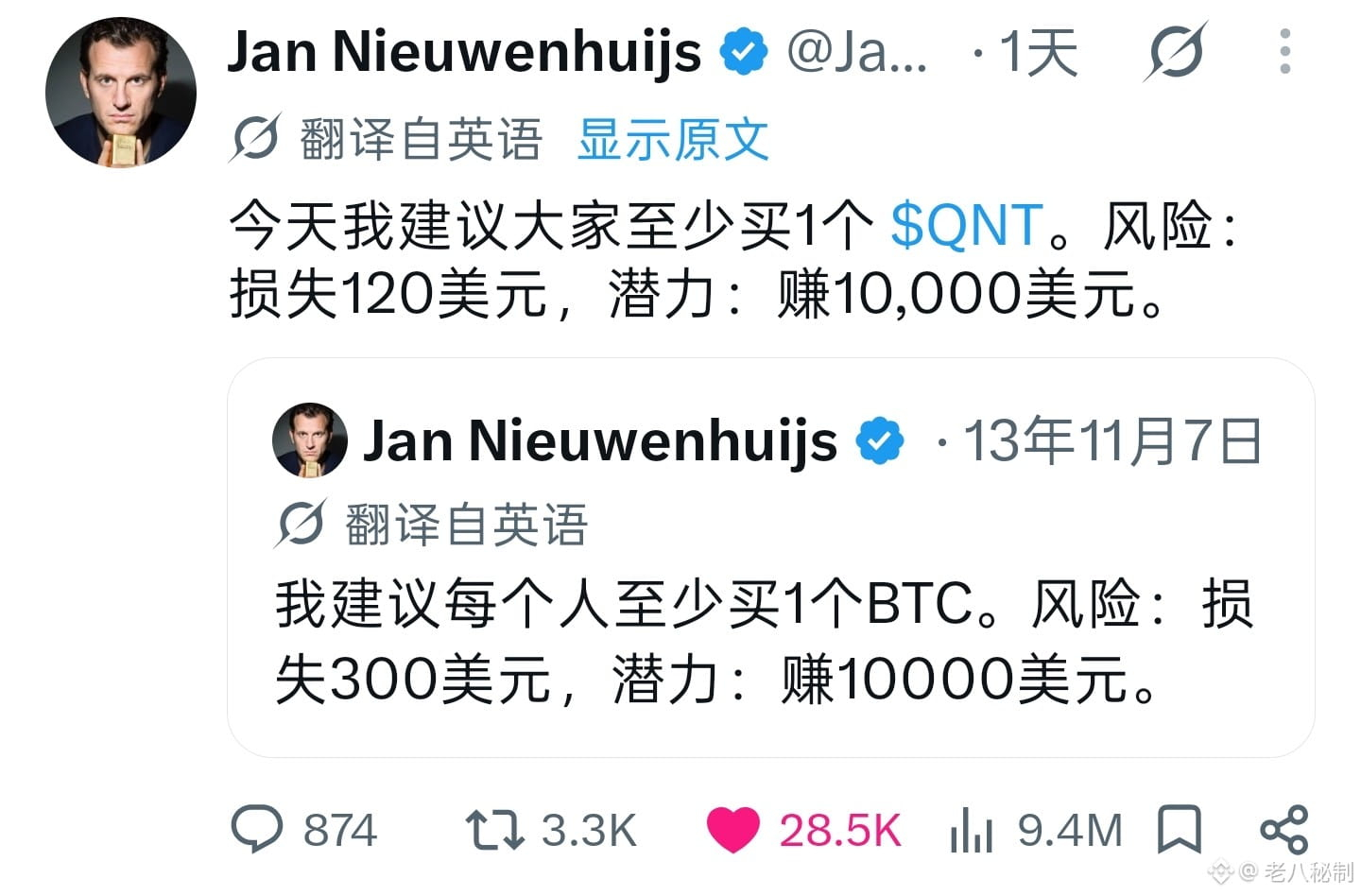
If you’re still asking why $QNT has tripled this week, you’re asking the wrong question.
The real question is: why has the market ignored these positives for so long?
• Quant has been selected to build the next-generation U.S. bank funding network. The Clearing House—owned jointly by 25 major U.S. banks including JPMorgan Chase, Bank of America, Citigroup, HSBC, and others—clears more than $2 trillion per day. It has already chosen Quant to connect its brand-new on-chain money network.
• Quant has gone live with the largest bank in the UK. Banks such as Barclays, HSBC, Lloyds, NatWest, Santander, and more are executing real customer transactions on the infrastructure being built by Quant.
• Quant has integrated with the Murex MX.3 platform. Among the world’s 100 largest banks, 65 use this system. Quant enables them to obtain crypto-ready infrastructure without having to rip everything up and rebuild.
• Oracle has included Quant in its enterprise-grade digital asset technology stack, certifying Overledger to enable cross-ledger and off-chain database transaction orchestration and settlement.
• Quant is helping to shape standards for value flowing across the internet. The SATP protocol has entered the final community review stage in the IETF. The founder previously helped drive the establishment of the ISO Blockchain international standard (ISO/TC 307) and led its interoperability working group.
• Quant has partnered with the Bank for International Settlements, the Bank of England (Rosalind project), the European Central Bank’s digital euro experiments, the Nexi European payments network, LACChain covering 12 Latin American countries, and Dentsu Soken, which has entered Japan’s banking core systems.
• Quant holds multiple patents in the U.S., Europe, Japan, and China, forming a defensive intellectual property moat in the highly challenging area of enterprise-grade multi-ledger technology.
• The supply of $QNT is extremely scarce. The maximum supply is only 14.88 million—one of the tightest supplies among large-cap crypto assets. Once demand spikes, the upside can be very dramatic. A staking mechanism that may go live in 2027 could further lock up a large amount of tokens. A lot of Quant’s work is white-label infrastructure; what’s publicly visible is just the tip of the iceberg. We actually don’t know how many more positives are still being prepared behind the scenes.
1
1k
·
--
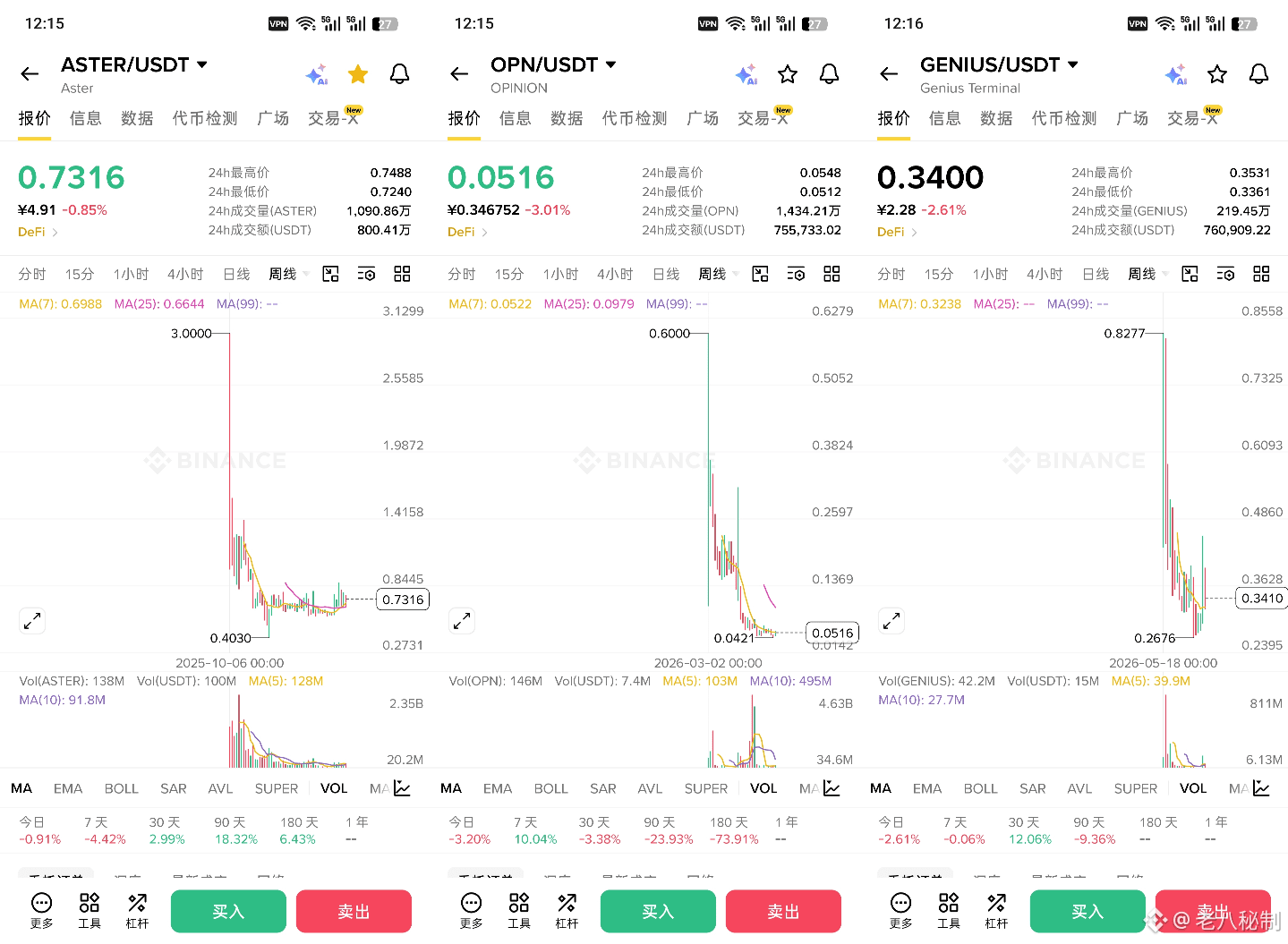
If you bought 10,000 U after the project on which CZ served as an advisor was listed on Binance last year, how much money is left in your account now?
①$ASTER 2.2----0.73 You invested 10,000 U; you would have about 3,318 U left, a loss of about 67%
②$OPN 0.4---0.0515 You invested 10,000 U; you would have about 1,287 U left, a loss of about 87%
③$GENIUS 0.58---0.34 You invested 10,000 U; you would have about 5,862 U left, a loss of about 41%
①$ASTER 2.2----0.73 You invested 10,000 U; you would have about 3,318 U left, a loss of about 67%
②$OPN 0.4---0.0515 You invested 10,000 U; you would have about 1,287 U left, a loss of about 87%
③$GENIUS 0.58---0.34 You invested 10,000 U; you would have about 5,862 U left, a loss of about 41%
8
5
10
2.5k
·
--
The host asks what point is better than Binance $HYPE cz: they don’t need KYC 🤫 May I ask all the teachers $ASTER , do you need KYC?
The host asks what point is better than Binance $HYPE cz: they don’t need KYC 🤫 May I ask all the teachers $ASTER , do you need KYC?
3
3
5
742
·
--
If you bought $HYPE with 10,000 U last year—using $LIT $ASTER —how much would it be in your account by now?
$ASTER (bought around this time last year): About 3,600–3,700 USD left
$HYPE (bought around this time last year): About became 20,500 USD
$LIT (bought near the TGE): About became 14,400–16,200 USD
If you bought ASTER, it really feels like a joke—you not only don’t make money, you actually lose money
4
3
5
1.4k
·
--
Partly True
A new celebrity coin model is coming!
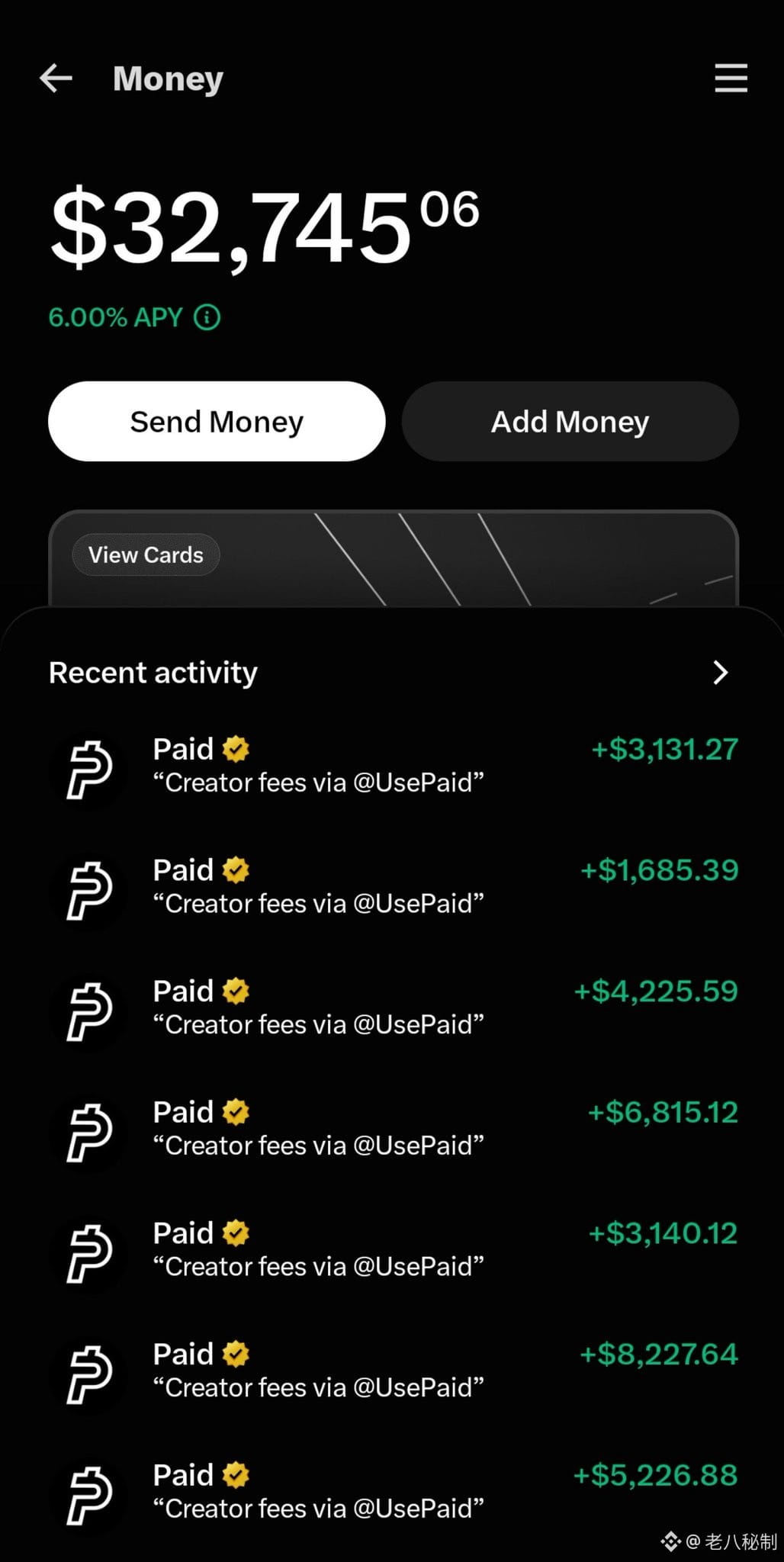
This morning, a bunch of people opened up X Money and suddenly found their accounts boosted by a few thousand or tens of thousands of dollars. The transaction details were all the same line of text: Creator fees via
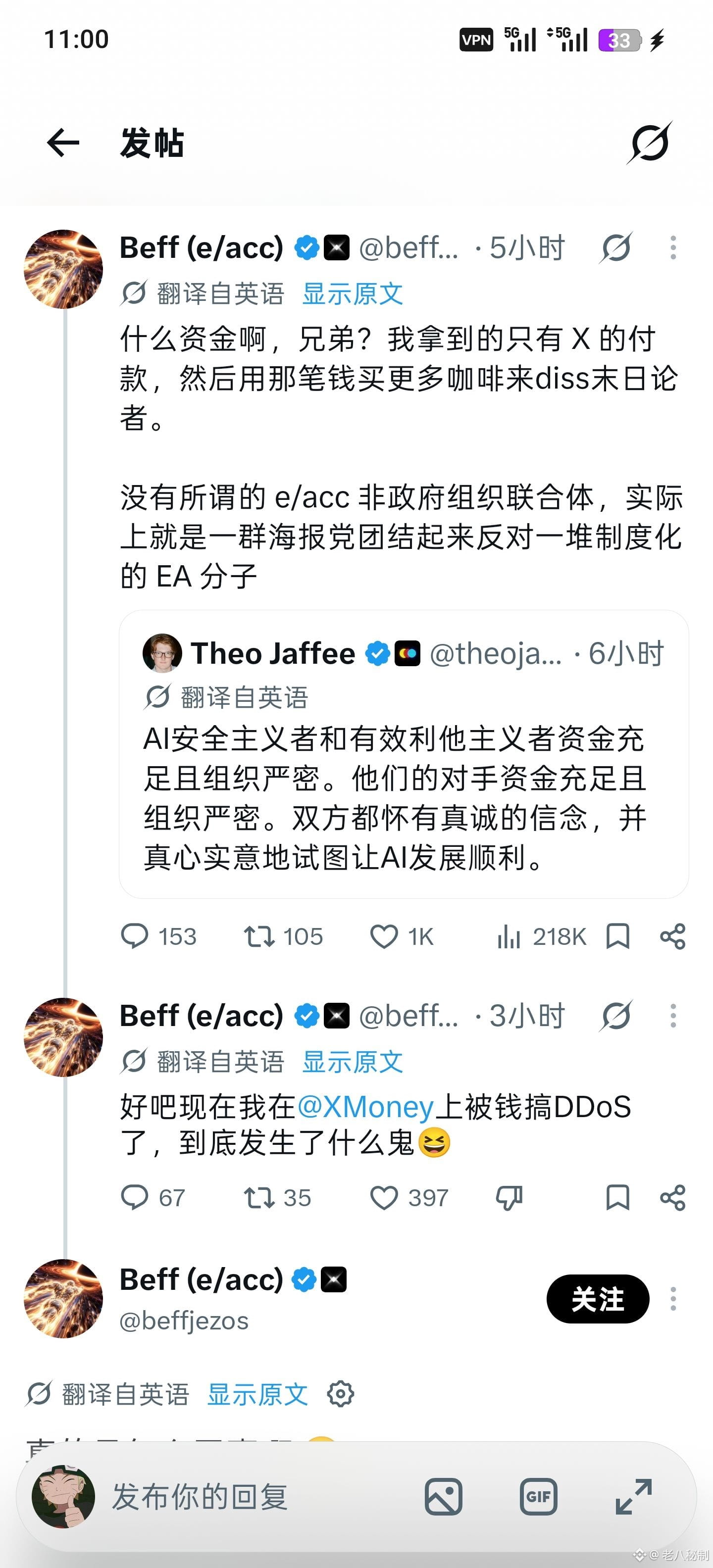
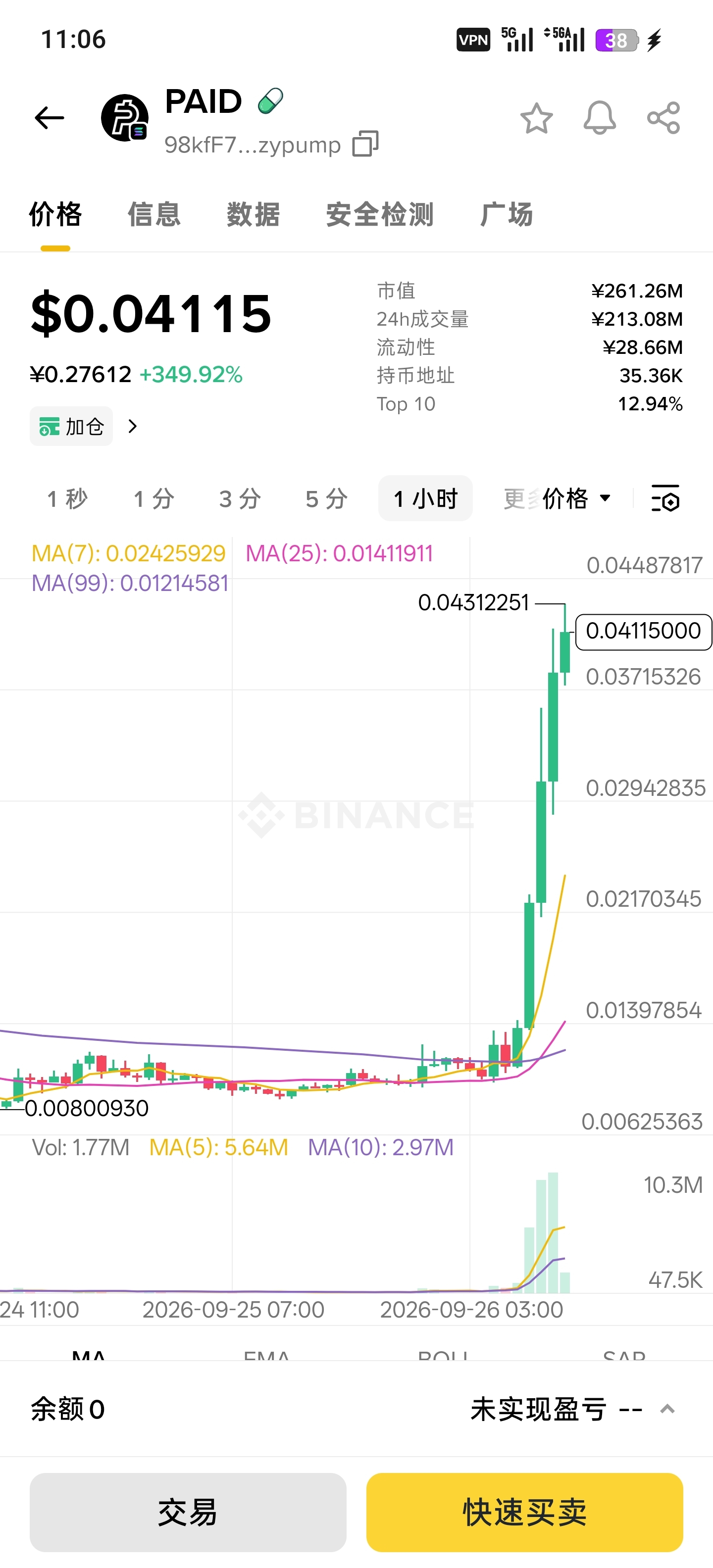
It’s not a system bug, and it’s not someone randomly handing out money. When people issue meme coins, they permanently route the creator’s fees to a specific X account. Once the coin is traded, roughly 80% goes straight into the other person’s X Money—no registration required for the recipient, no authorization needed, and they may not even know about it at all. Within a week, about $1.08 million has flowed into 553 accounts. Some received a few hundred, others received tens of thousands—the largest single payment was nearly $80,000 sent to Musk. Looks like $paid is about to become the new version of the god.
4
3
5
1.8k
·
--
$HYPE Three and a half years ago, when Dragonfly officially announced its investment in Bitget, the market was still telling the story of how “even in a bear market, they dared to make a move.” Jeff posted: “I respect institutions for continuing to bet, but you have to say the ugly truth upfront—Bitget might be the next FTX.” Back then, he wasn’t pointing at slogans, but at details: an order-matching engine that wasn’t honest; orders sitting at the front of the queue yet being filled at a farther price; retail orders being swallowed by internal B-Booking. He said that treating the order book as a façade while building a separate structure behind the scenes is unethical to users and dangerous to the industry as well. On September 24, 2026, Bitget confirmed that unauthorized transfers appeared from its hot wallets, affecting about $351.6 million, and the entire site paused withdrawals. The official statement said cold wallets are secure, and a user protection fund of over $464 million could cover the losses; deposits and trading are still open. Whether the protection fund can be replenished immediately, and when withdrawals will be resumed, depends on what happens next. But for users right now, the most direct feeling is only one sentence: the money temporarily can’t be withdrawn.
A platform that is not honest about its trading structure and profits from information asymmetry for retail—its long-term risks won’t stop at just “whether the product is good to use.” The real test for centralized exchanges is always transparency, risk control, and whether users can take their own money out at any time. Back then, many people found that post unpleasant. Re-reading it today, you finally understand what “sharp foresight” really means 👍🏻
A platform that is not honest about its trading structure and profits from information asymmetry for retail—its long-term risks won’t stop at just “whether the product is good to use.” The real test for centralized exchanges is always transparency, risk control, and whether users can take their own money out at any time. Back then, many people found that post unpleasant. Re-reading it today, you finally understand what “sharp foresight” really means 👍🏻

2
2
4
93
·
--
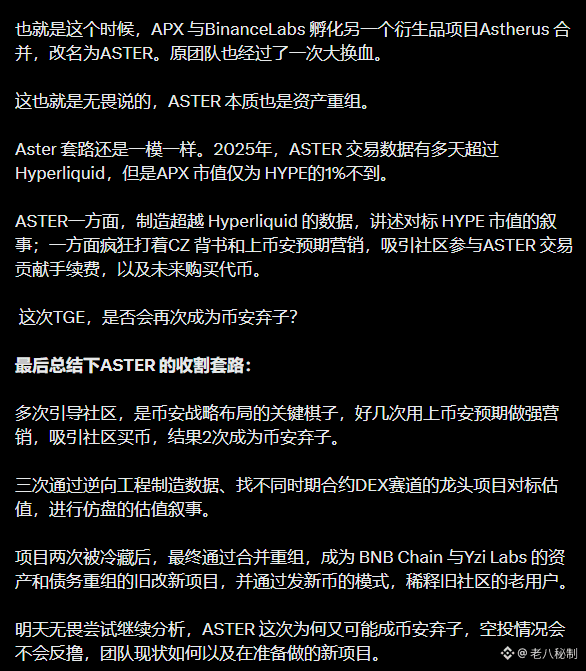
Bearish
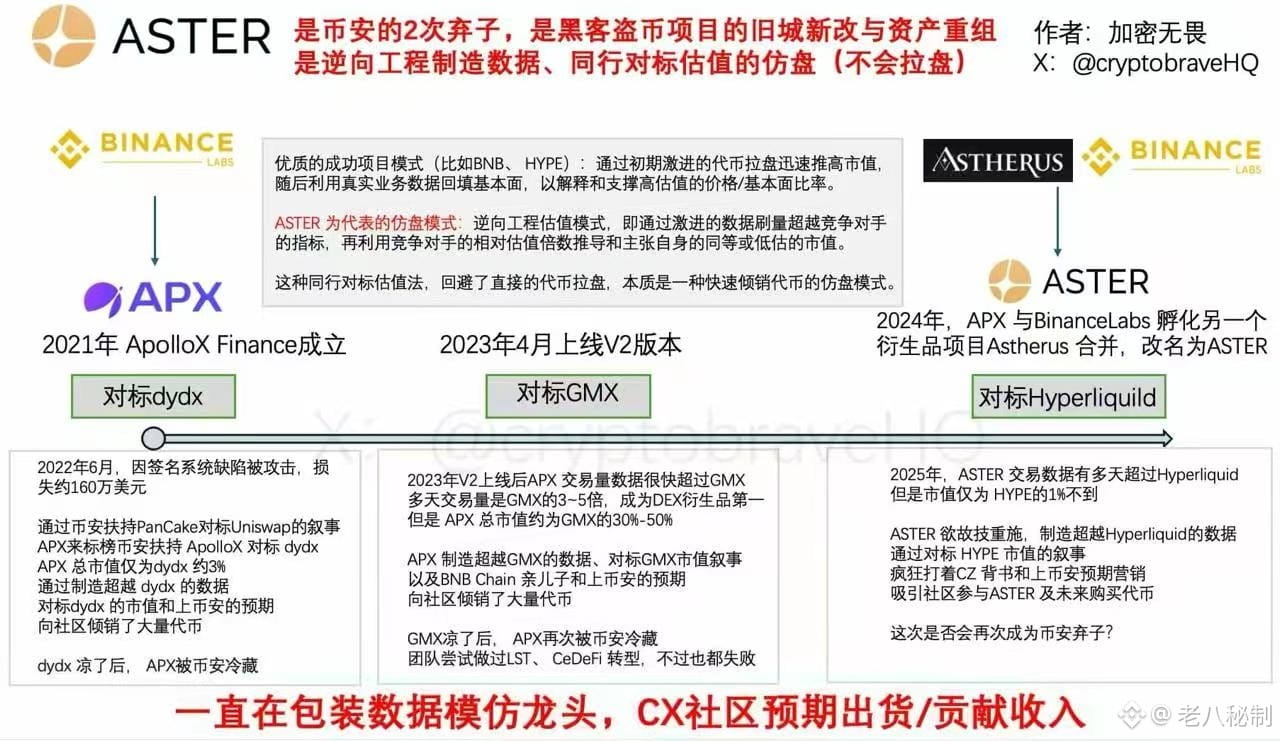
Still clutching $ASTER to death?
Learn the past and present of Master—after watching, you'll understand.
Still clutching $ASTER to death?
Learn the past and present of Master—after watching, you'll understand.
Learn the past and present of Master—after watching, you'll understand.
13
2
13
10.5k
·
--
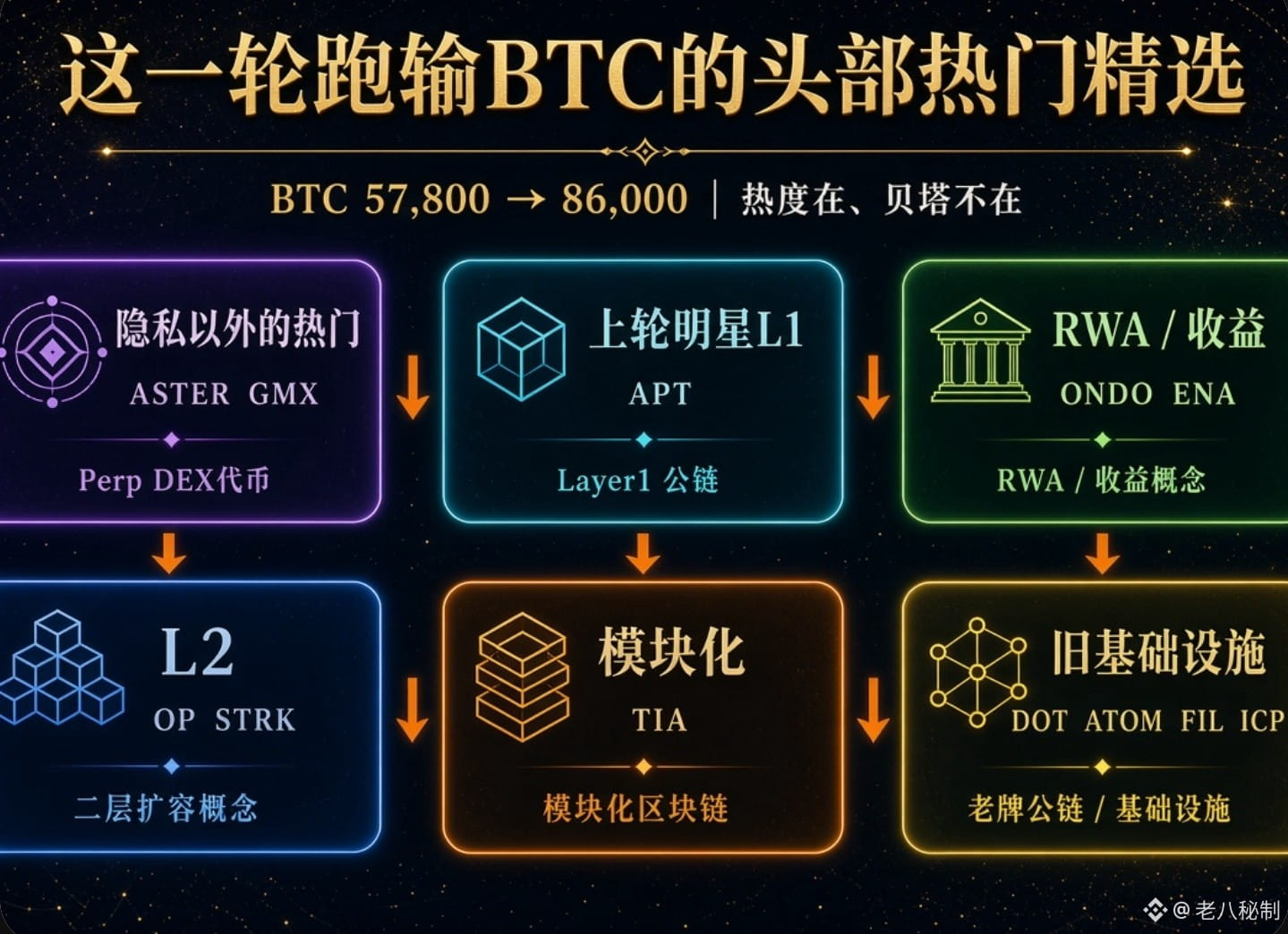
This round’s big bet went from 57,800 to 86,000, about +49%. I checked the top trending ones too.
Many of them are just “have a story, have activities, have hype,” but clearly they underperformed BTC. I filtered by hype and market cap, and compiled the tokens that couldn’t outperform BTC this round, yet keep showing up on the timeline. Then I added a bit of my own bias too.
Perp DEX tokens: ASTER, GMX
Last round’s L1: APT
L2 / modular: OP, STRK, TIA
RWA / yield: ONDO, ENA
Old infrastructure: DOT, ATOM, FIL, ICP
5
3
5
5.7k
·
--
Bullish
Verified
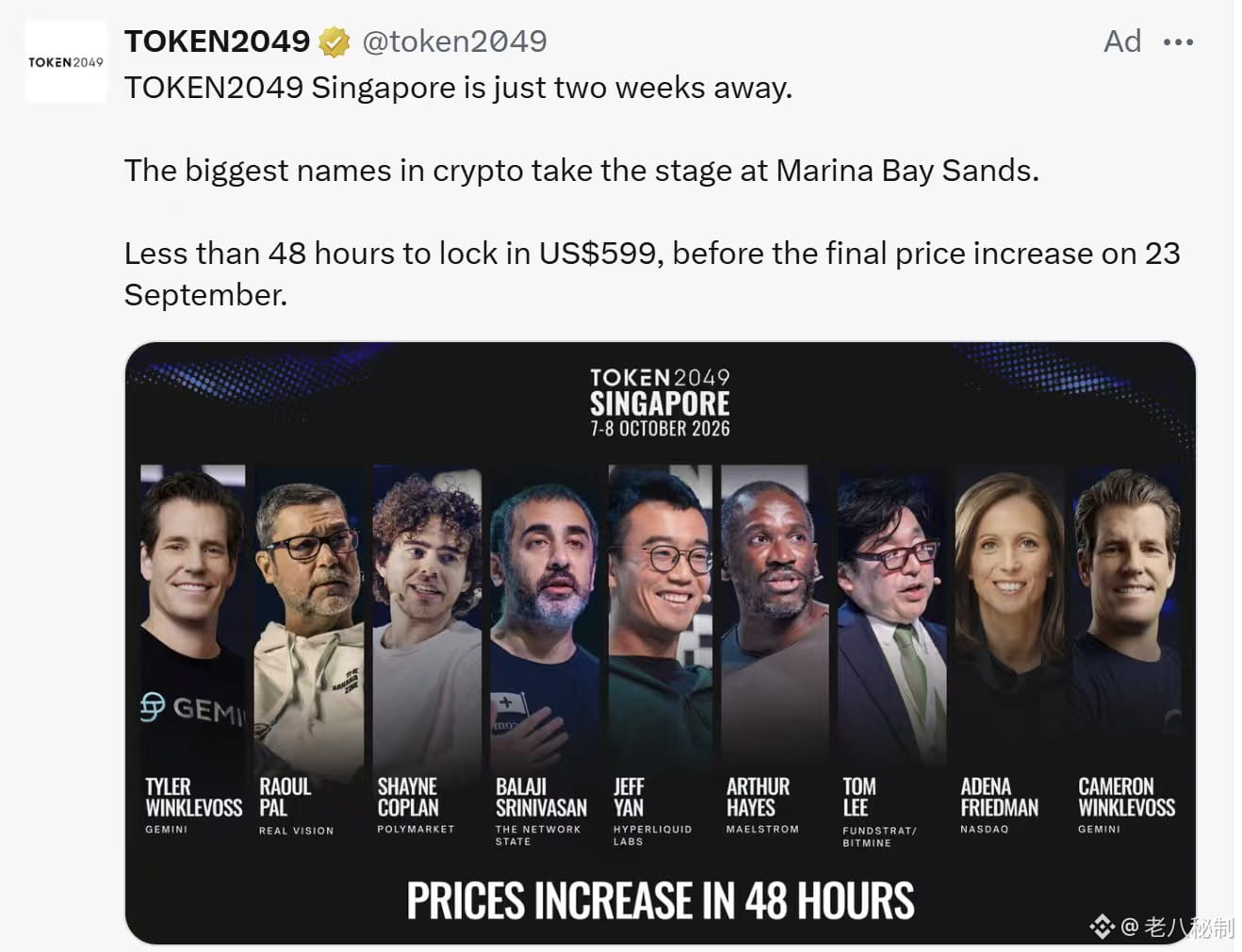
TOKEN2049 Singapore: Take a close look at this poster and you’ll notice one thing:
Standing right in the center is Hyperliquid’s founder, JEFF.
For events at this level in the crypto world, poster placement is usually very particular. Getting put in the C position isn’t because he loves to show up and talk—it’s the opposite. Jeff has always been low-key, his team is small, he hasn’t taken VC funding, and he built the business through the product itself.
Now the world’s largest crypto conference has placed him right in the middle. That says a lot: when it comes to on-chain transactions, the industry can no longer afford to ignore it—$HYPE
5
3
8
8.7k
·
--
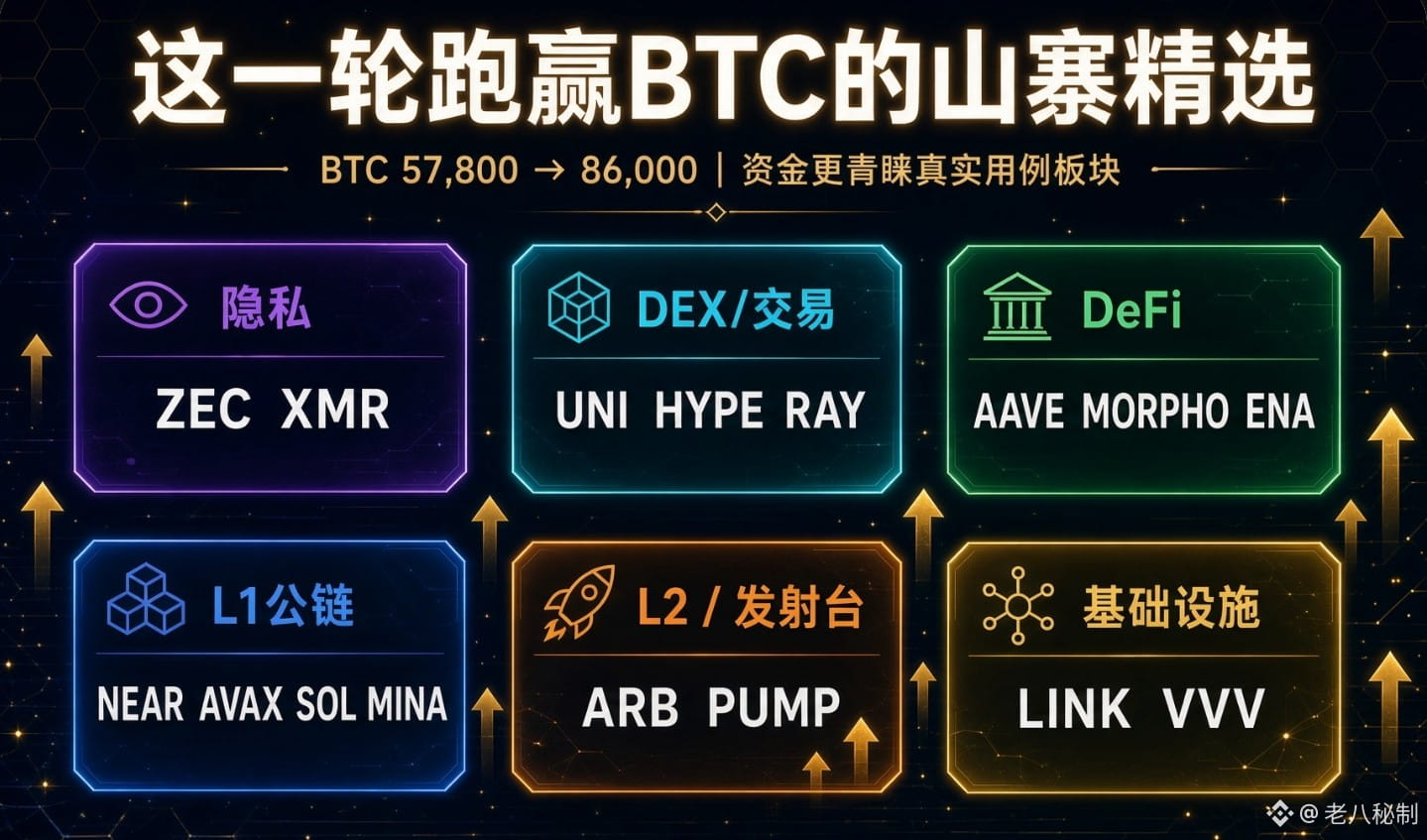
The point of buying a shanzhai (copycat) is to beat the big coin. This round’s big coin rose from 57,800 to 86,000. I simply summarized it and found that this round of capital is more inclined toward sectors with real-world use cases.
I re-screened the major coins by their percentage increase, sorted out the assets that outperformed ETH this round, and added a bit of my personal taste.
Privacy: ZEC, XMR
DEX/Trading: UNI, HYPE, RAY
DeFi: AAVE, MORPHO, ENA
L1: NEAR, AVAX, SOL, MINA
L2 / Launchpad: ARB, PUMP
Infrastructure: LINK, VVV
5
4
7
9.3k
·
--
$ASTER latest insider news⚠️
According to leaked insider information from the ASTER Chinese community
Dual-wheel mode is about to be released
@Aster_DEX @CZ @Leonard_Aster
$ASTER latest insider news⚠️
According to leaked insider information from the ASTER Chinese community
Dual-wheel mode is about to be released
@Aster DEX @CZ @Leonard_Aster
According to leaked insider information from the ASTER Chinese community
Dual-wheel mode is about to be released
@Aster DEX @CZ @Leonard_Aster

15
4
9
5.2k
Log in to explore more content
Join global crypto users on Binance Square
⚡️ Get latest and useful information about crypto.
💬 Trusted by the world’s largest crypto exchange.
👍 Discover real insights from verified creators.
Email / Phone number
Trending Topics
CanMarketsReboundAfterThanksgiving?
24,478 views
552 Discussing
Rate-Hike Bets Linger as US Markets Head Into Thanksgiving Closure
Binance News
·1 Likes
·1.7k views
CouldSpaceX’sOrbitalDataCentersBoostAIChipDemand?
15,552 views
352 Discussing
EvolveAtBinanceBlockchainWeek
669,724 views
7,394 Discussing