

Yukita90
385 Posts

Yukita90
Report
Block User
Follow me and I'll follow back 💲
287 Following
27 Followers
84 Liked
Posts
All
Quotes
·
--
It’s a mockery of #Binance for those who play the Word of the Day every day and get congratulations and they tell you that you won 0 rewards 🎉🎊 what a disappointment for the people who are motivated to take part in these Binance activities 🫥🤐😶🌫️
It’s a mockery of #Binance for those who play the Word of the Day every day and get congratulations and they tell you that you won 0 rewards 🎉🎊 what a disappointment for the people who are motivated to take part in these Binance activities 🫥🤐😶🌫️

25
13
5.2k
·
--
Solana ($SOL) trades around $118 USD, recording a rise close to 5.5%–9.5% over 24 hours and a weekly accumulation of more than 20%.
This bullish streak is mainly due to the following factors:
Contagion effect and liquidations: The broad-based rebound in the cryptocurrency market, led by Bitcoin surpassing $85,000–$86,000 USD, triggered a massive wave of short position liquidations that boosted major altcoins.
Real volume inflows: Trading volume over 24 hours exceeds $4,700–$6,600 million USD—an increase of more than 25% versus the month’s average—confirming strong buyer participation.
Appetite for risk assets (risk-on): The easing in U.S. Treasury bond yields and the drop in oil prices eased inflationary pressures, benefiting higher-volatility assets like SOL.
Key levels to watch:
Resistance: The $119.66–$120.00 USD level is positioned as the crucial technical ceiling. Breaking it with high volume would confirm continuation toward higher zones.
Support: The $115.60 USD area acts as immediate short-term support to maintain the bullish structure.
Solana ($SOL) trades around $118 USD, recording a rise close to 5.5%–9.5% over 24 hours and a weekly accumulation of more than 20%.
This bullish streak is mainly due to the following factors:
Contagion effect and liquidations: The broad-based rebound in the cryptocurrency market, led by Bitcoin surpassing $85,000–$86,000 USD, triggered a massive wave of short position liquidations that boosted major altcoins.
Real volume inflows: Trading volume over 24 hours exceeds $4,700–$6,600 million USD—an increase of more than 25% versus the month’s average—confirming strong buyer participation.
Appetite for risk assets (risk-on): The easing in U.S. Treasury bond yields and the drop in oil prices eased inflationary pressures, benefiting higher-volatility assets like SOL.
Key levels to watch:
Resistance: The $119.66–$120.00 USD level is positioned as the crucial technical ceiling. Breaking it with high volume would confirm continuation toward higher zones.
Support: The $115.60 USD area acts as immediate short-term support to maintain the bullish structure.
This bullish streak is mainly due to the following factors:
Contagion effect and liquidations: The broad-based rebound in the cryptocurrency market, led by Bitcoin surpassing $85,000–$86,000 USD, triggered a massive wave of short position liquidations that boosted major altcoins.
Real volume inflows: Trading volume over 24 hours exceeds $4,700–$6,600 million USD—an increase of more than 25% versus the month’s average—confirming strong buyer participation.
Appetite for risk assets (risk-on): The easing in U.S. Treasury bond yields and the drop in oil prices eased inflationary pressures, benefiting higher-volatility assets like SOL.
Key levels to watch:
Resistance: The $119.66–$120.00 USD level is positioned as the crucial technical ceiling. Breaking it with high volume would confirm continuation toward higher zones.
Support: The $115.60 USD area acts as immediate short-term support to maintain the bullish structure.
2
113
·
--
Toshi ($TOSHI) is a leading memecoin deployed on the Base network (the layer 2 blockchain developed by Coinbase).
Key aspects:
Origin: Its name pays tribute to Satoshi Nakamoto (the creator of Bitcoin) and to Brian Armstrong’s cat (cofounder of Coinbase).
Network: It runs natively on the Base blockchain (ERC-20 standard).
Total supply: Its maximum supply is set at approximately 420.69 billion tokens.
Purpose: It mainly serves as the unofficial mascot of the Base ecosystem to help drive the community culture.
Toshi ($TOSHI) is a leading memecoin deployed on the Base network (the layer 2 blockchain developed by Coinbase).
Key aspects:
Origin: Its name pays tribute to Satoshi Nakamoto (the creator of Bitcoin) and to Brian Armstrong’s cat (cofounder of Coinbase).
Network: It runs natively on the Base blockchain (ERC-20 standard).
Total supply: Its maximum supply is set at approximately 420.69 billion tokens.
Purpose: It mainly serves as the unofficial mascot of the Base ecosystem to help drive the community culture.
Key aspects:
Origin: Its name pays tribute to Satoshi Nakamoto (the creator of Bitcoin) and to Brian Armstrong’s cat (cofounder of Coinbase).
Network: It runs natively on the Base blockchain (ERC-20 standard).
Total supply: Its maximum supply is set at approximately 420.69 billion tokens.
Purpose: It mainly serves as the unofficial mascot of the Base ecosystem to help drive the community culture.
2
190
·
--
Bullish
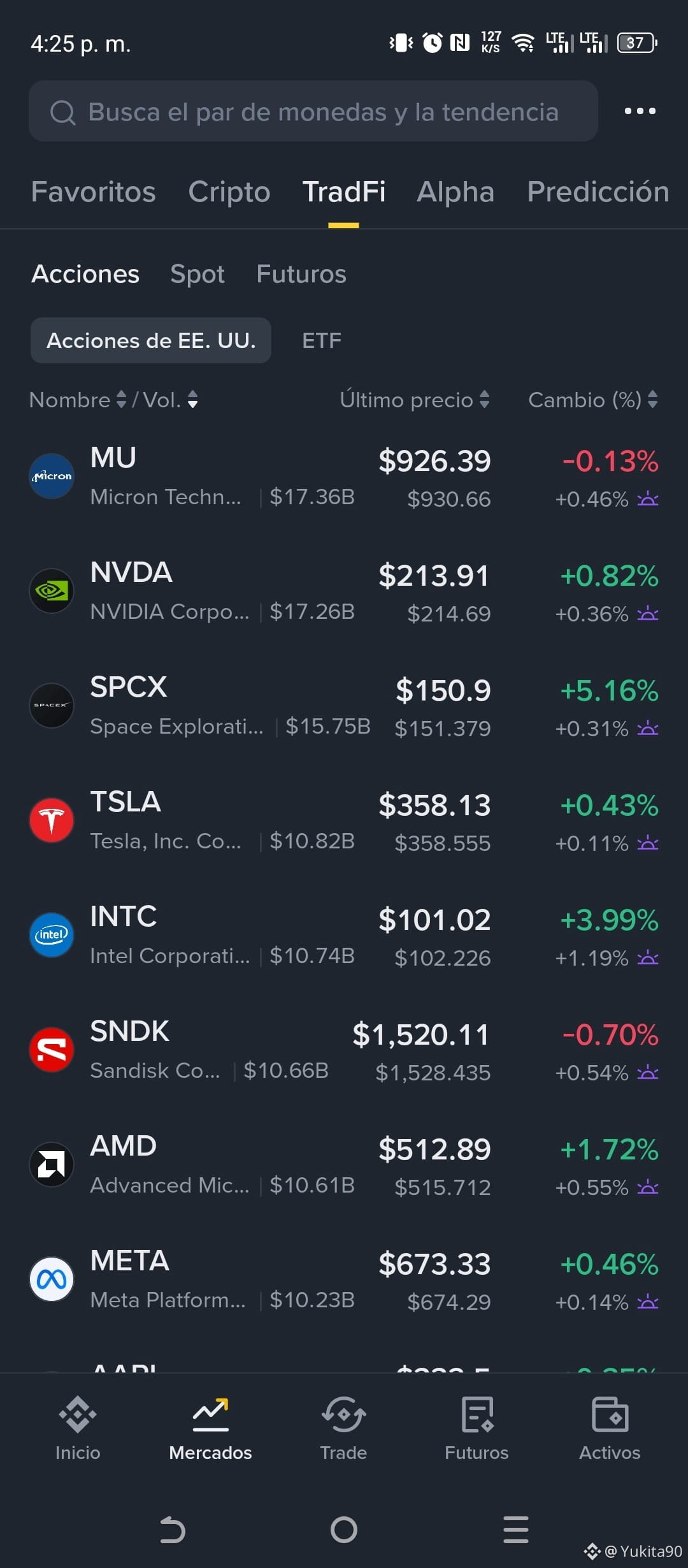
TradFi (abbreviation for Traditional Finance or Traditional Finance) is the conventional financial system made up of centralized, regulated institutions with intermediaries.
It includes banks, stock exchanges, insurance companies, and investment funds, managed under government regulations and central banks. Its main characteristics are:
Intermediation: It requires third parties (such as a bank) to process transactions, grant loans, or authorize payments.
Centralization: Financial entities and government authorities control the system’s assets, records, and rules.
Delegated custody: Users entrust their assets to a banking or financial entity that acts as custodian.
Regulatory framework: It operates under strict compliance laws, KYC (know your customer) requirements, and identity verification.
The term TradFi is frequently used within the crypto environment to distinguish this traditional model from the DeFi ecosystem (Decentralized Finance or Decentralized Finance), which operates through blockchains and smart contracts without centralized intermediaries.
$META
TradFi (abbreviation for Traditional Finance or Traditional Finance) is the conventional financial system made up of centralized, regulated institutions with intermediaries.
It includes banks, stock exchanges, insurance companies, and investment funds, managed under government regulations and central banks. Its main characteristics are:
Intermediation: It requires third parties (such as a bank) to process transactions, grant loans, or authorize payments.
Centralization: Financial entities and government authorities control the system’s assets, records, and rules.
Delegated custody: Users entrust their assets to a banking or financial entity that acts as custodian.
Regulatory framework: It operates under strict compliance laws, KYC (know your customer) requirements, and identity verification.
The term TradFi is frequently used within the crypto environment to distinguish this traditional model from the DeFi ecosystem (Decentralized Finance or Decentralized Finance), which operates through blockchains and smart contracts without centralized intermediaries.
$META
It includes banks, stock exchanges, insurance companies, and investment funds, managed under government regulations and central banks. Its main characteristics are:
Intermediation: It requires third parties (such as a bank) to process transactions, grant loans, or authorize payments.
Centralization: Financial entities and government authorities control the system’s assets, records, and rules.
Delegated custody: Users entrust their assets to a banking or financial entity that acts as custodian.
Regulatory framework: It operates under strict compliance laws, KYC (know your customer) requirements, and identity verification.
The term TradFi is frequently used within the crypto environment to distinguish this traditional model from the DeFi ecosystem (Decentralized Finance or Decentralized Finance), which operates through blockchains and smart contracts without centralized intermediaries.
$META
2
139
·
--
Binance emerged in July 2017 led by the Chinese-Canadian developer Changpeng Zhao (known as “CZ”). The platform combined fast funding via an ICO with a high-frequency order-processing infrastructure to become the world’s largest cryptocurrency exchange in just a few months.
The founder’s background: CZ already had experience in high-frequency trading software for stock exchanges and had worked on cryptocurrency projects such as Blockchain.info and the OKCoin exchange.
Initial funding (ICO): In July 2017, the company raised $15 million through an Initial Coin Offering (ICO), launching its native token, Binance Coin ($BNB), in parallel.
Value proposition: Unlike its competitors, it offered extremely low fees, high transaction execution speed, and a massive catalog of altcoins.
Growth and decentralized headquarters: After government regulations were imposed in China in late 2017, Binance moved its operations and adopted a model with globally decentralized offices, reaching global leadership by trading volume in January 2018.
Binance emerged in July 2017 led by the Chinese-Canadian developer Changpeng Zhao (known as “CZ”). The platform combined fast funding via an ICO with a high-frequency order-processing infrastructure to become the world’s largest cryptocurrency exchange in just a few months.
The founder’s background: CZ already had experience in high-frequency trading software for stock exchanges and had worked on cryptocurrency projects such as Blockchain.info and the OKCoin exchange.
Initial funding (ICO): In July 2017, the company raised $15 million through an Initial Coin Offering (ICO), launching its native token, Binance Coin ($BNB), in parallel.
Value proposition: Unlike its competitors, it offered extremely low fees, high transaction execution speed, and a massive catalog of altcoins.
Growth and decentralized headquarters: After government regulations were imposed in China in late 2017, Binance moved its operations and adopted a model with globally decentralized offices, reaching global leadership by trading volume in January 2018.
The founder’s background: CZ already had experience in high-frequency trading software for stock exchanges and had worked on cryptocurrency projects such as Blockchain.info and the OKCoin exchange.
Initial funding (ICO): In July 2017, the company raised $15 million through an Initial Coin Offering (ICO), launching its native token, Binance Coin ($BNB), in parallel.
Value proposition: Unlike its competitors, it offered extremely low fees, high transaction execution speed, and a massive catalog of altcoins.
Growth and decentralized headquarters: After government regulations were imposed in China in late 2017, Binance moved its operations and adopted a model with globally decentralized offices, reaching global leadership by trading volume in January 2018.
1
77
·
--
{spot}(DOGEUSDT)
Dogecoin ($DOGE) was created in December 2013 by engineers Billy Markus and Jackson Palmer as a satirical parody of cryptocurrency speculation, using the Shiba$ Inu dog meme as its image.
Despite its playful origin, the coin evolved into one of the crypto assets with the highest market capitalization.
Creation and Launch (2013)
Founders: Billy Markus (IBM) and Jackson Palmer (Adobe) developed the coin in just a few days.
Technical base: It was created as a fork of Luckycoin (which in turn derived from Litecoin), using the Scrypt algorithm.
Unlimited design: Unlike Bitcoin's finite supply (21 million), Dogecoin was designed to be inflationary, adding 5 billion new DOGE to circulation each year to encourage practical use over speculation.
Community Culture and Charity Projects (2014–2020)
Online tipping: It became popular on platforms like Reddit and Twitter for rewarding content creators with small amounts.
Crowdfunding: The community funded notable initiatives, including:
$30,000 USD to send the Jamaican bobsleigh team to the 2014 Winter Olympics.
Sponsorship of NASCAR driver Josh Wise in 2014.
Construction of drinking water wells in Kenya (#Doge4Water).
Market Explosion and Elon Musk Support (2021–Present)
2021 frenzy: Driven by coordinated mass purchases on social media and mentions by public figures like Elon Musk, the coin reached its all-time high (ATH) of around $0.73 USD in May 2021.
Commercial integration: Companies like Tesla began accepting DOGE for selected merchandise.
Evolution: It went from being a project abandoned by its original creators to having the Dogecoin Foundation, an entity in charge of maintaining and improving the network's technical development.
Dogecoin ($DOGE) was created in December 2013 by engineers Billy Markus and Jackson Palmer as a satirical parody of cryptocurrency speculation, using the Shiba$ Inu dog meme as its image.
Despite its playful origin, the coin evolved into one of the crypto assets with the highest market capitalization.
Creation and Launch (2013)
Founders: Billy Markus (IBM) and Jackson Palmer (Adobe) developed the coin in just a few days.
Technical base: It was created as a fork of Luckycoin (which in turn derived from Litecoin), using the Scrypt algorithm.
Unlimited design: Unlike Bitcoin's finite supply (21 million), Dogecoin was designed to be inflationary, adding 5 billion new DOGE to circulation each year to encourage practical use over speculation.
Community Culture and Charity Projects (2014–2020)
Online tipping: It became popular on platforms like Reddit and Twitter for rewarding content creators with small amounts.
Crowdfunding: The community funded notable initiatives, including:
$30,000 USD to send the Jamaican bobsleigh team to the 2014 Winter Olympics.
Sponsorship of NASCAR driver Josh Wise in 2014.
Construction of drinking water wells in Kenya (#Doge4Water).
Market Explosion and Elon Musk Support (2021–Present)
2021 frenzy: Driven by coordinated mass purchases on social media and mentions by public figures like Elon Musk, the coin reached its all-time high (ATH) of around $0.73 USD in May 2021.
Commercial integration: Companies like Tesla began accepting DOGE for selected merchandise.
Evolution: It went from being a project abandoned by its original creators to having the Dogecoin Foundation, an entity in charge of maintaining and improving the network's technical development.
Despite its playful origin, the coin evolved into one of the crypto assets with the highest market capitalization.
Creation and Launch (2013)
Founders: Billy Markus (IBM) and Jackson Palmer (Adobe) developed the coin in just a few days.
Technical base: It was created as a fork of Luckycoin (which in turn derived from Litecoin), using the Scrypt algorithm.
Unlimited design: Unlike Bitcoin's finite supply (21 million), Dogecoin was designed to be inflationary, adding 5 billion new DOGE to circulation each year to encourage practical use over speculation.
Community Culture and Charity Projects (2014–2020)
Online tipping: It became popular on platforms like Reddit and Twitter for rewarding content creators with small amounts.
Crowdfunding: The community funded notable initiatives, including:
$30,000 USD to send the Jamaican bobsleigh team to the 2014 Winter Olympics.
Sponsorship of NASCAR driver Josh Wise in 2014.
Construction of drinking water wells in Kenya (#Doge4Water).
Market Explosion and Elon Musk Support (2021–Present)
2021 frenzy: Driven by coordinated mass purchases on social media and mentions by public figures like Elon Musk, the coin reached its all-time high (ATH) of around $0.73 USD in May 2021.
Commercial integration: Companies like Tesla began accepting DOGE for selected merchandise.
Evolution: It went from being a project abandoned by its original creators to having the Dogecoin Foundation, an entity in charge of maintaining and improving the network's technical development.
3
597
·
--
Litecoin ($LTC) is a peer-to-peer cryptocurrency created in 2011 by Charlie Lee as a faster, lighter alternative to Bitcoin.
Often described as "digital silver" compared to the "digital gold" represented by Bitcoin, it stands out for the following key features:
Fast block times: It generates blocks every 2.5 minutes (versus Bitcoin’s 10 minutes), enabling more agile transaction confirmations.
Maximum supply: It has a fixed issuance cap of 84 million LTC (four times higher than Bitcoin’s 21 million limit).
Mining algorithm: It uses the Scrypt proof-of-work (Proof-of-Work) algorithm, designed to be less demanding in energy and more accessible on hardware than Bitcoin’s SHA-256.
Low fees: It keeps transaction costs minimal, making it ideal for everyday payments and microtransactions.
Litecoin ($LTC) is a peer-to-peer cryptocurrency created in 2011 by Charlie Lee as a faster, lighter alternative to Bitcoin.
Often described as "digital silver" compared to the "digital gold" represented by Bitcoin, it stands out for the following key features:
Fast block times: It generates blocks every 2.5 minutes (versus Bitcoin’s 10 minutes), enabling more agile transaction confirmations.
Maximum supply: It has a fixed issuance cap of 84 million LTC (four times higher than Bitcoin’s 21 million limit).
Mining algorithm: It uses the Scrypt proof-of-work (Proof-of-Work) algorithm, designed to be less demanding in energy and more accessible on hardware than Bitcoin’s SHA-256.
Low fees: It keeps transaction costs minimal, making it ideal for everyday payments and microtransactions.
Often described as "digital silver" compared to the "digital gold" represented by Bitcoin, it stands out for the following key features:
Fast block times: It generates blocks every 2.5 minutes (versus Bitcoin’s 10 minutes), enabling more agile transaction confirmations.
Maximum supply: It has a fixed issuance cap of 84 million LTC (four times higher than Bitcoin’s 21 million limit).
Mining algorithm: It uses the Scrypt proof-of-work (Proof-of-Work) algorithm, designed to be less demanding in energy and more accessible on hardware than Bitcoin’s SHA-256.
Low fees: It keeps transaction costs minimal, making it ideal for everyday payments and microtransactions.
2
562
·
--
The world of cryptocurrencies emerged in 2008 after the global financial crisis, when an individual or anonymous group using the pseudonym Satoshi Nakamoto created Bitcoin to provide a decentralized digital monetary system independent of banks.
Origin and background (2008): In response to the 2008 bank collapse and the resulting loss of confidence in the traditional financial system, Satoshi Nakamoto published the Bitcoin whitepaper (Bitcoin: A Peer-to-Peer Electronic Cash System), proposing digital money based on cryptography.
The genesis block (2009): On January 3, 2009, Nakamoto launched the Bitcoin network by mining the first block (Block 0), including in it a famous news reference to the British bank bailout: "The Times 03/Jan/2009 Chancellor on brink of second bailout for banks".
Early transactions (2009-2010): In 2009, the first transfer took place between Nakamoto and the programmer Hal Finney. In May 2010, the first recorded commercial purchase occurred: Laszlo Hanyecz paid 10,000 bitcoins for two pizzas.
The rise of altcoins (2011 onwards): With Bitcoin’s code being open source, other developers began creating alternative coins (altcoins) such as Namecoin and Litecoin to improve aspects like transaction speed.
The decentralized applications revolution (2015): The creation of Ethereum by Vitalik Buterin introduced smart contracts, expanding the use of blockchain technology beyond simple payments to enable decentralized finance (DeFi), non-fungible tokens (NFTs), and Web3 applications.
The world of cryptocurrencies emerged in 2008 after the global financial crisis, when an individual or anonymous group using the pseudonym Satoshi Nakamoto created Bitcoin to provide a decentralized digital monetary system independent of banks.
Origin and background (2008): In response to the 2008 bank collapse and the resulting loss of confidence in the traditional financial system, Satoshi Nakamoto published the Bitcoin whitepaper (Bitcoin: A Peer-to-Peer Electronic Cash System), proposing digital money based on cryptography.
The genesis block (2009): On January 3, 2009, Nakamoto launched the Bitcoin network by mining the first block (Block 0), including in it a famous news reference to the British bank bailout: "The Times 03/Jan/2009 Chancellor on brink of second bailout for banks".
Early transactions (2009-2010): In 2009, the first transfer took place between Nakamoto and the programmer Hal Finney. In May 2010, the first recorded commercial purchase occurred: Laszlo Hanyecz paid 10,000 bitcoins for two pizzas.
The rise of altcoins (2011 onwards): With Bitcoin’s code being open source, other developers began creating alternative coins (altcoins) such as Namecoin and Litecoin to improve aspects like transaction speed.
The decentralized applications revolution (2015): The creation of Ethereum by Vitalik Buterin introduced smart contracts, expanding the use of blockchain technology beyond simple payments to enable decentralized finance (DeFi), non-fungible tokens (NFTs), and Web3 applications.
Origin and background (2008): In response to the 2008 bank collapse and the resulting loss of confidence in the traditional financial system, Satoshi Nakamoto published the Bitcoin whitepaper (Bitcoin: A Peer-to-Peer Electronic Cash System), proposing digital money based on cryptography.
The genesis block (2009): On January 3, 2009, Nakamoto launched the Bitcoin network by mining the first block (Block 0), including in it a famous news reference to the British bank bailout: "The Times 03/Jan/2009 Chancellor on brink of second bailout for banks".
Early transactions (2009-2010): In 2009, the first transfer took place between Nakamoto and the programmer Hal Finney. In May 2010, the first recorded commercial purchase occurred: Laszlo Hanyecz paid 10,000 bitcoins for two pizzas.
The rise of altcoins (2011 onwards): With Bitcoin’s code being open source, other developers began creating alternative coins (altcoins) such as Namecoin and Litecoin to improve aspects like transaction speed.
The decentralized applications revolution (2015): The creation of Ethereum by Vitalik Buterin introduced smart contracts, expanding the use of blockchain technology beyond simple payments to enable decentralized finance (DeFi), non-fungible tokens (NFTs), and Web3 applications.
5
720
·
--
SolanaSolana is a high-speed, low-cost blockchain created in 2017 by Anatoly Yakovenko, a former Qualcomm engineer who aimed to solve the scalability problem of networks like Bitcoin and Ethereum without sacrificing decentralization.
Origins and technical innovation (2017 - 2019)
Whitepaper publication: In November 2017, Yakovenko published the concept of Proof of History (PoH), a consensus mechanism that works as an internal cryptographic clock, allowing nodes to order transactions without needing to communicate with each other in real time.
Solana
Solana is a high-speed, low-cost blockchain created in 2017 by Anatoly Yakovenko, a former Qualcomm engineer who aimed to solve the scalability problem of networks like Bitcoin and Ethereum without sacrificing decentralization.
Origins and technical innovation (2017 - 2019)
Whitepaper publication: In November 2017, Yakovenko published the concept of Proof of History (PoH), a consensus mechanism that works as an internal cryptographic clock, allowing nodes to order transactions without needing to communicate with each other in real time.
Origins and technical innovation (2017 - 2019)
Whitepaper publication: In November 2017, Yakovenko published the concept of Proof of History (PoH), a consensus mechanism that works as an internal cryptographic clock, allowing nodes to order transactions without needing to communicate with each other in real time.
1
102
·
--
Oil influences cryptocurrencies, but indirectly through the global economy and broader financial markets.
Although oil and Bitcoin don’t have a direct one-to-one correlation, crude oil prices affect the crypto market through the following channels:
Inflation and Interest Rates: When oil rises, transportation and production costs increase, driving up global inflation. In response, central banks (such as the Federal Reserve) keep interest rates the same or raise them, which reduces available liquidity and leads investors to pull money from high-risk assets like cryptocurrencies.
Risk Appetite (Risk-On / Risk-Off): During energy crises or geopolitical tensions that push oil higher, investors often sell crypto assets and stocks to seek refuge in cash or bonds.
Transactional Adoption: Countries under sanctions or with economies that are highly dependent on oil have occasionally used stablecoins or cryptocurrencies to settle international commercial transactions.
Oil influences cryptocurrencies, but indirectly through the global economy and broader financial markets.
Although oil and Bitcoin don’t have a direct one-to-one correlation, crude oil prices affect the crypto market through the following channels:
Inflation and Interest Rates: When oil rises, transportation and production costs increase, driving up global inflation. In response, central banks (such as the Federal Reserve) keep interest rates the same or raise them, which reduces available liquidity and leads investors to pull money from high-risk assets like cryptocurrencies.
Risk Appetite (Risk-On / Risk-Off): During energy crises or geopolitical tensions that push oil higher, investors often sell crypto assets and stocks to seek refuge in cash or bonds.
Transactional Adoption: Countries under sanctions or with economies that are highly dependent on oil have occasionally used stablecoins or cryptocurrencies to settle international commercial transactions.
Although oil and Bitcoin don’t have a direct one-to-one correlation, crude oil prices affect the crypto market through the following channels:
Inflation and Interest Rates: When oil rises, transportation and production costs increase, driving up global inflation. In response, central banks (such as the Federal Reserve) keep interest rates the same or raise them, which reduces available liquidity and leads investors to pull money from high-risk assets like cryptocurrencies.
Risk Appetite (Risk-On / Risk-Off): During energy crises or geopolitical tensions that push oil higher, investors often sell crypto assets and stocks to seek refuge in cash or bonds.
Transactional Adoption: Countries under sanctions or with economies that are highly dependent on oil have occasionally used stablecoins or cryptocurrencies to settle international commercial transactions.
2
86
·
--
Stocks with growth potential in the market are categorized according to the investment profile, the strategic sector, and the financial objective.
High-potential sectors:
Technology and Artificial Intelligence: Companies focused on semiconductors, cloud computing, and enterprise software (such as Nvidia, Microsoft, or Micron Technology) are driving growth due to the ongoing demand for AI infrastructure.
Healthcare and Biotechnology: Pharmaceutical companies focused on innovative treatments (such as Eli Lilly) show strong demand for new drugs and high-tech medical products.
Resilient Consumer and Finance: Large-scale banking institutions and consumer chains with subscription or direct discount models (such as JPMorgan Chase or Costco) offer stability across different economic cycles.
Strategies by stock type:
Growth Stocks: Focused on companies with rapid expansion in revenues, though they tend to be more volatile.
Value Stocks: Established companies that trade below their intrinsic value or below what analysts estimate.
Dividend Stocks: Mature companies that distribute profits periodically to their shareholders.
To determine the best options for a portfolio, it helps to clarify:
What is the investment horizon (short, medium, or long term)?
What level of risk or volatility is acceptable?
Are you looking to receive periodic income (dividends) or to grow the initial capital?
{spot}(NVDABUSDT)
Stocks with growth potential in the market are categorized according to the investment profile, the strategic sector, and the financial objective.
High-potential sectors:
Technology and Artificial Intelligence: Companies focused on semiconductors, cloud computing, and enterprise software (such as Nvidia, Microsoft, or Micron Technology) are driving growth due to the ongoing demand for AI infrastructure.
Healthcare and Biotechnology: Pharmaceutical companies focused on innovative treatments (such as Eli Lilly) show strong demand for new drugs and high-tech medical products.
Resilient Consumer and Finance: Large-scale banking institutions and consumer chains with subscription or direct discount models (such as JPMorgan Chase or Costco) offer stability across different economic cycles.
Strategies by stock type:
Growth Stocks: Focused on companies with rapid expansion in revenues, though they tend to be more volatile.
Value Stocks: Established companies that trade below their intrinsic value or below what analysts estimate.
Dividend Stocks: Mature companies that distribute profits periodically to their shareholders.
To determine the best options for a portfolio, it helps to clarify:
What is the investment horizon (short, medium, or long term)?
What level of risk or volatility is acceptable?
Are you looking to receive periodic income (dividends) or to grow the initial capital?
High-potential sectors:
Technology and Artificial Intelligence: Companies focused on semiconductors, cloud computing, and enterprise software (such as Nvidia, Microsoft, or Micron Technology) are driving growth due to the ongoing demand for AI infrastructure.
Healthcare and Biotechnology: Pharmaceutical companies focused on innovative treatments (such as Eli Lilly) show strong demand for new drugs and high-tech medical products.
Resilient Consumer and Finance: Large-scale banking institutions and consumer chains with subscription or direct discount models (such as JPMorgan Chase or Costco) offer stability across different economic cycles.
Strategies by stock type:
Growth Stocks: Focused on companies with rapid expansion in revenues, though they tend to be more volatile.
Value Stocks: Established companies that trade below their intrinsic value or below what analysts estimate.
Dividend Stocks: Mature companies that distribute profits periodically to their shareholders.
To determine the best options for a portfolio, it helps to clarify:
What is the investment horizon (short, medium, or long term)?
What level of risk or volatility is acceptable?
Are you looking to receive periodic income (dividends) or to grow the initial capital?
1
4
97
·
--
Binance Square is Binance’s integrated social platform dedicated to news, market analysis, and discussions about the Web3 world and cryptocurrencies.
Community and Creators: Follow analysts, specialized media, crypto projects, and traders to get real-time market updates and information.
Write to Earn: Content creators can earn income in commissions and rewards based on the engagement and trading volume generated by their posts.
Built-in Tools: Includes live price charts, trading signals, and market sentiment analysis directly within posts.
News and Trends: Brings Web3 ecosystem news, technical analysis, and educational content accessible directly from the Binance app or the web.
Binance Square is Binance’s integrated social platform dedicated to news, market analysis, and discussions about the Web3 world and cryptocurrencies.
Community and Creators: Follow analysts, specialized media, crypto projects, and traders to get real-time market updates and information.
Write to Earn: Content creators can earn income in commissions and rewards based on the engagement and trading volume generated by their posts.
Built-in Tools: Includes live price charts, trading signals, and market sentiment analysis directly within posts.
News and Trends: Brings Web3 ecosystem news, technical analysis, and educational content accessible directly from the Binance app or the web.
Community and Creators: Follow analysts, specialized media, crypto projects, and traders to get real-time market updates and information.
Write to Earn: Content creators can earn income in commissions and rewards based on the engagement and trading volume generated by their posts.
Built-in Tools: Includes live price charts, trading signals, and market sentiment analysis directly within posts.
News and Trends: Brings Web3 ecosystem news, technical analysis, and educational content accessible directly from the Binance app or the web.
3
79


·
--
The story of XRP is one of the most unique in the crypto sector, as it transitioned from a system centered on traditional banking to an active infrastructure for decentralized finance (DeFi) and global payments.
Timeline and evolution
Banking-focused origins (2012): Created by Opencoin (later Ripple Labs) and the XRP Ledger network (XRPL), its original goal was to enable ultra-fast, low-cost cross-border payments. It was designed as an alternative to the traditional SWIFT system, with a capacity of 1,500 transactions per second and settlement in 3 to 5 seconds.
Legal dispute with the SEC (2020 - 2023): In December 2020, the U.S. SEC sued Ripple, accusing it of selling XRP as an unregistered security. In July 2023, a federal judge ruled that the sale of XRP on exchanges to retail investors did not constitute the sale of a security, providing key regulatory clarity within the U.S. market.
Institutional expansion and ETFs (2024 - 2025): After the resolution of its main regulatory hurdles, $XRP saw a significant increase in institutional adoption. The launch and integration of products such as spot XRP ETFs strengthened its liquidity in traditional financial markets.
Integration with DeFi and native yield: Historically, XRP lacked advanced smart contracts. However, the evolution of the XRP Ledger enabled features such as the creation of Automated Market Makers (AMMs), native lending protocols (Lending Protocol), and bridges to issue versions on DeFi networks (such as FXRP).
The story of XRP is one of the most unique in the crypto sector, as it transitioned from a system centered on traditional banking to an active infrastructure for decentralized finance (DeFi) and global payments.
Timeline and evolution
Banking-focused origins (2012): Created by Opencoin (later Ripple Labs) and the XRP Ledger network (XRPL), its original goal was to enable ultra-fast, low-cost cross-border payments. It was designed as an alternative to the traditional SWIFT system, with a capacity of 1,500 transactions per second and settlement in 3 to 5 seconds.
Legal dispute with the SEC (2020 - 2023): In December 2020, the U.S. SEC sued Ripple, accusing it of selling XRP as an unregistered security. In July 2023, a federal judge ruled that the sale of XRP on exchanges to retail investors did not constitute the sale of a security, providing key regulatory clarity within the U.S. market.
Institutional expansion and ETFs (2024 - 2025): After the resolution of its main regulatory hurdles, $XRP saw a significant increase in institutional adoption. The launch and integration of products such as spot XRP ETFs strengthened its liquidity in traditional financial markets.
Integration with DeFi and native yield: Historically, XRP lacked advanced smart contracts. However, the evolution of the XRP Ledger enabled features such as the creation of Automated Market Makers (AMMs), native lending protocols (Lending Protocol), and bridges to issue versions on DeFi networks (such as FXRP).
Timeline and evolution
Banking-focused origins (2012): Created by Opencoin (later Ripple Labs) and the XRP Ledger network (XRPL), its original goal was to enable ultra-fast, low-cost cross-border payments. It was designed as an alternative to the traditional SWIFT system, with a capacity of 1,500 transactions per second and settlement in 3 to 5 seconds.
Legal dispute with the SEC (2020 - 2023): In December 2020, the U.S. SEC sued Ripple, accusing it of selling XRP as an unregistered security. In July 2023, a federal judge ruled that the sale of XRP on exchanges to retail investors did not constitute the sale of a security, providing key regulatory clarity within the U.S. market.
Institutional expansion and ETFs (2024 - 2025): After the resolution of its main regulatory hurdles, $XRP saw a significant increase in institutional adoption. The launch and integration of products such as spot XRP ETFs strengthened its liquidity in traditional financial markets.
Integration with DeFi and native yield: Historically, XRP lacked advanced smart contracts. However, the evolution of the XRP Ledger enabled features such as the creation of Automated Market Makers (AMMs), native lending protocols (Lending Protocol), and bridges to issue versions on DeFi networks (such as FXRP).
2
79
·
--
The trajectory of TON (The Open Network) and its cryptocurrency (initially called Gram and later renamed) is divided into three key stages:
Origin with Telegram (2018–2020): Nikolai and Pavel Durov developed the network under the name Telegram Open Network and created its native token, Gram. After raising $1.7 billion in a private sale, the U.S. SEC sued Telegram for considering Gram an unregistered security, which forced Telegram to cancel the project in May 2020.
Community Renaissance (2020–2023): The open-source community took over the project, renaming it The Open Network ($TON) and changing the token name to Toncoin. The TON Foundation was established to drive development of the Proof-of-Stake network with dynamic sharding architecture.
Current Integration and Reorganization (2024–2026): Telegram officially integrated TON into its ecosystem for ad payments, bots, Web3 games (such as Notcoin), and Mini Apps. Following a community governance vote in 2026, the native token returned to its original name, Gram ($GRAM), while the network remains as the TON Blockchain.
The trajectory of TON (The Open Network) and its cryptocurrency (initially called Gram and later renamed) is divided into three key stages:
Origin with Telegram (2018–2020): Nikolai and Pavel Durov developed the network under the name Telegram Open Network and created its native token, Gram. After raising $1.7 billion in a private sale, the U.S. SEC sued Telegram for considering Gram an unregistered security, which forced Telegram to cancel the project in May 2020.
Community Renaissance (2020–2023): The open-source community took over the project, renaming it The Open Network ($TON) and changing the token name to Toncoin. The TON Foundation was established to drive development of the Proof-of-Stake network with dynamic sharding architecture.
Current Integration and Reorganization (2024–2026): Telegram officially integrated TON into its ecosystem for ad payments, bots, Web3 games (such as Notcoin), and Mini Apps. Following a community governance vote in 2026, the native token returned to its original name, Gram ($GRAM), while the network remains as the TON Blockchain.
Origin with Telegram (2018–2020): Nikolai and Pavel Durov developed the network under the name Telegram Open Network and created its native token, Gram. After raising $1.7 billion in a private sale, the U.S. SEC sued Telegram for considering Gram an unregistered security, which forced Telegram to cancel the project in May 2020.
Community Renaissance (2020–2023): The open-source community took over the project, renaming it The Open Network ($TON) and changing the token name to Toncoin. The TON Foundation was established to drive development of the Proof-of-Stake network with dynamic sharding architecture.
Current Integration and Reorganization (2024–2026): Telegram officially integrated TON into its ecosystem for ad payments, bots, Web3 games (such as Notcoin), and Mini Apps. Following a community governance vote in 2026, the native token returned to its original name, Gram ($GRAM), while the network remains as the TON Blockchain.
2
398
·
--
Memecoins are cryptocurrencies inspired by internet memes, viral trends, or jokes, characterized by high volatility and a strong community component.
History
Origin (2013): They began with Dogecoin ($DOGE), created by Billy Markus and Jackson Palmer as a humorous parody of Bitcoin based on the famous Shiba Inu dog.
Consolidation (2020-2021): Shiba Inu (SHIB) appeared and the phenomenon exploded globally. Supported by retail speculation and media figures such as Elon Musk, they turned meme coins into a multibillion-dollar sector within the crypto market.
Multichain expansion (2023-2024): The ecosystem diversified across low-cost networks such as Solana and Base. Massive viral tokens like PEPE, BONK, and Dogwifhat (WIF) emerged, driven by platforms like pump.fun that allowed tokens to be created in minutes.
Current State
Evolution and Utility: Although most initially lack technical purpose, projects like SHIB or FLOKI have tried to build ecosystems with Web3 games, DeFi platforms, and metaverses.
Politics and Celebrities: The narrative has shifted strongly toward immediate pop culture, politics (themed tokens about public figures), and Artificial Intelligence agents.
Risks and Volatility: They remain highly speculative assets. They face severe risks of total capital loss, market manipulation (pump and dump), and low liquidity in most of their issuances.
Memecoins are cryptocurrencies inspired by internet memes, viral trends, or jokes, characterized by high volatility and a strong community component.
History
Origin (2013): They began with Dogecoin ($DOGE), created by Billy Markus and Jackson Palmer as a humorous parody of Bitcoin based on the famous Shiba Inu dog.
Consolidation (2020-2021): Shiba Inu (SHIB) appeared and the phenomenon exploded globally. Supported by retail speculation and media figures such as Elon Musk, they turned meme coins into a multibillion-dollar sector within the crypto market.
Multichain expansion (2023-2024): The ecosystem diversified across low-cost networks such as Solana and Base. Massive viral tokens like PEPE, BONK, and Dogwifhat (WIF) emerged, driven by platforms like pump.fun that allowed tokens to be created in minutes.
Current State
Evolution and Utility: Although most initially lack technical purpose, projects like SHIB or FLOKI have tried to build ecosystems with Web3 games, DeFi platforms, and metaverses.
Politics and Celebrities: The narrative has shifted strongly toward immediate pop culture, politics (themed tokens about public figures), and Artificial Intelligence agents.
Risks and Volatility: They remain highly speculative assets. They face severe risks of total capital loss, market manipulation (pump and dump), and low liquidity in most of their issuances.
History
Origin (2013): They began with Dogecoin ($DOGE), created by Billy Markus and Jackson Palmer as a humorous parody of Bitcoin based on the famous Shiba Inu dog.
Consolidation (2020-2021): Shiba Inu (SHIB) appeared and the phenomenon exploded globally. Supported by retail speculation and media figures such as Elon Musk, they turned meme coins into a multibillion-dollar sector within the crypto market.
Multichain expansion (2023-2024): The ecosystem diversified across low-cost networks such as Solana and Base. Massive viral tokens like PEPE, BONK, and Dogwifhat (WIF) emerged, driven by platforms like pump.fun that allowed tokens to be created in minutes.
Current State
Evolution and Utility: Although most initially lack technical purpose, projects like SHIB or FLOKI have tried to build ecosystems with Web3 games, DeFi platforms, and metaverses.
Politics and Celebrities: The narrative has shifted strongly toward immediate pop culture, politics (themed tokens about public figures), and Artificial Intelligence agents.
Risks and Volatility: They remain highly speculative assets. They face severe risks of total capital loss, market manipulation (pump and dump), and low liquidity in most of their issuances.
1
464
·
--
$BNB
$BNB


币安Binance华语
·
--
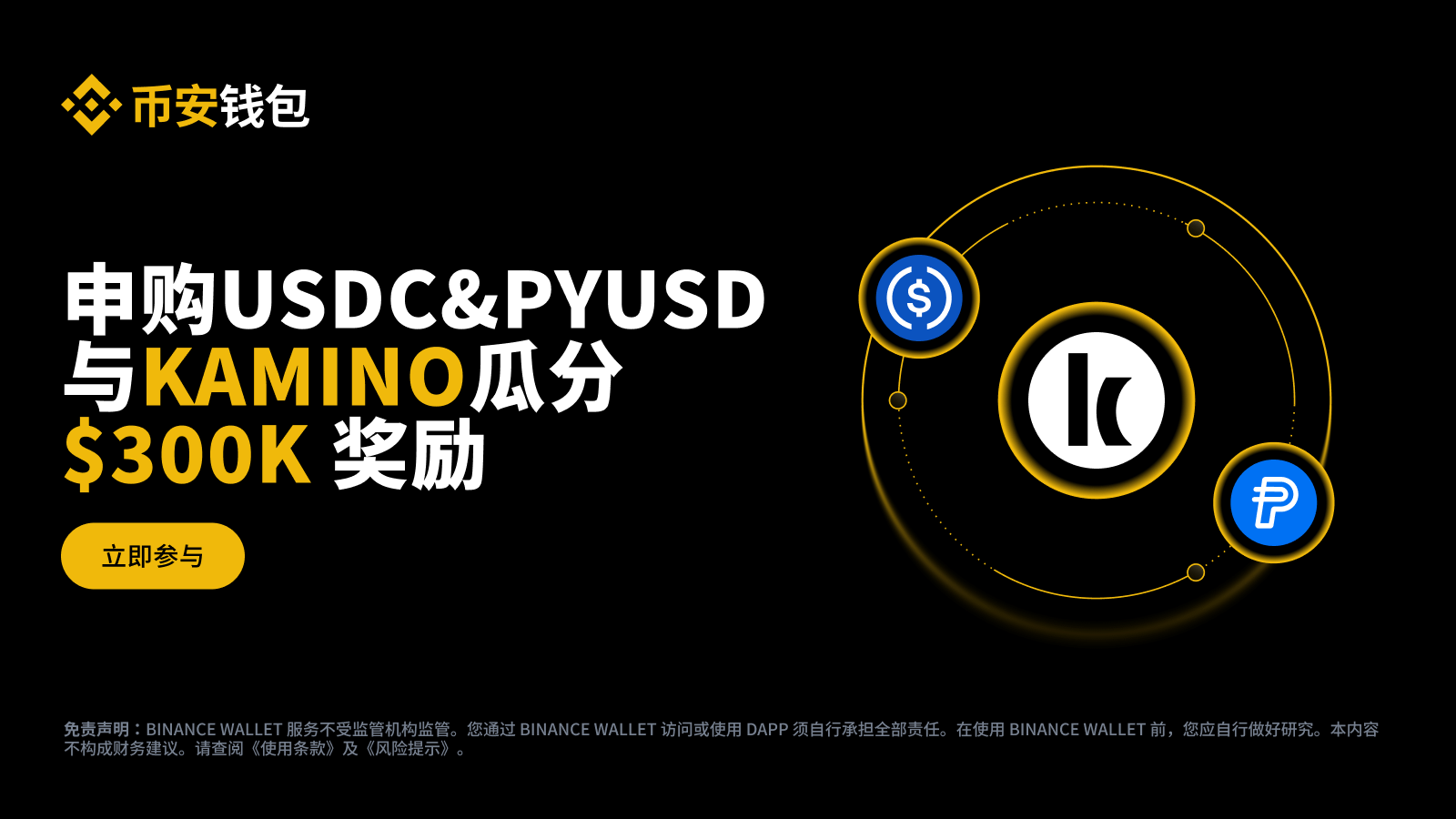
⏳ Alarm set! A $300,000 Kamino equivalent reward is about to land in your wallet~
Starting tomorrow, subscribe for USDC or PYUSD in the DeFi subscription via the #币安 wallet to the Kamino campaign pool to enjoy the following boosted annualized yield rewards—more you save, more you earn; the earlier you store, the sooner you benefit!
📅 Campaign period: 3 Sep 2026, 8:00 AM (UTC+8)
💰 Subscription reward pool—start a 30-day double-yield journey:
▪️ Subscribe USDC in the Kamino RockawayX RWA pool and share a 150,000 USDC reward pool
▪️ Subscribe PYUSD in the Kamino Sentora PYUSD pool and share a 150,000 PYUSD reward pool
Get the base APR plus the campaign boosted APR upon subscription—don’t miss out!
👉点击了解更多 (Open in your mobile browser)
Starting tomorrow, subscribe for USDC or PYUSD in the DeFi subscription via the #币安 wallet to the Kamino campaign pool to enjoy the following boosted annualized yield rewards—more you save, more you earn; the earlier you store, the sooner you benefit!
📅 Campaign period: 3 Sep 2026, 8:00 AM (UTC+8)
💰 Subscription reward pool—start a 30-day double-yield journey:
▪️ Subscribe USDC in the Kamino RockawayX RWA pool and share a 150,000 USDC reward pool
▪️ Subscribe PYUSD in the Kamino Sentora PYUSD pool and share a 150,000 PYUSD reward pool
Get the base APR plus the campaign boosted APR upon subscription—don’t miss out!
👉点击了解更多 (Open in your mobile browser)
1
7
·
--
Stablecoins (or stable cryptocurrencies) are digital assets designed to maintain a constant value, backed by the price of an external asset such as a fiat currency (e.g., the US dollar) or commodities.
Unlike volatile cryptocurrencies such as Bitcoin or Ethereum, their main purpose is to act as a store of value and a fast payment method on the network without experiencing sharp price fluctuations.
Main types of stablecoins
Backed by fiat money (Fiat): Maintain reserves in dollars, euros, or other currencies in bank accounts to ensure 1:1 parity (examples: $USDT, $USDC).
Backed by commodities: Their value is linked to physical goods such as gold or oil (example: PAX Gold).
Backed by other cryptocurrencies: Use smart contracts and overcollateralization in other cryptoassets to support their price (example: DAI).
Algorithmic: They do not have direct physical reserves; they automatically regulate supply and demand through code to try to maintain stability.
Main uses
Transfer funds globally quickly and with low fees.
Protect capital against local inflation or cryptocurrency market volatility.
Operate and interact in decentralized finance (DeFi) applications and exchanges.
Stablecoins (or stable cryptocurrencies) are digital assets designed to maintain a constant value, backed by the price of an external asset such as a fiat currency (e.g., the US dollar) or commodities.
Unlike volatile cryptocurrencies such as Bitcoin or Ethereum, their main purpose is to act as a store of value and a fast payment method on the network without experiencing sharp price fluctuations.
Main types of stablecoins
Backed by fiat money (Fiat): Maintain reserves in dollars, euros, or other currencies in bank accounts to ensure 1:1 parity (examples: $USDT, $USDC).
Backed by commodities: Their value is linked to physical goods such as gold or oil (example: PAX Gold).
Backed by other cryptocurrencies: Use smart contracts and overcollateralization in other cryptoassets to support their price (example: DAI).
Algorithmic: They do not have direct physical reserves; they automatically regulate supply and demand through code to try to maintain stability.
Main uses
Transfer funds globally quickly and with low fees.
Protect capital against local inflation or cryptocurrency market volatility.
Operate and interact in decentralized finance (DeFi) applications and exchanges.
Unlike volatile cryptocurrencies such as Bitcoin or Ethereum, their main purpose is to act as a store of value and a fast payment method on the network without experiencing sharp price fluctuations.
Main types of stablecoins
Backed by fiat money (Fiat): Maintain reserves in dollars, euros, or other currencies in bank accounts to ensure 1:1 parity (examples: $USDT, $USDC).
Backed by commodities: Their value is linked to physical goods such as gold or oil (example: PAX Gold).
Backed by other cryptocurrencies: Use smart contracts and overcollateralization in other cryptoassets to support their price (example: DAI).
Algorithmic: They do not have direct physical reserves; they automatically regulate supply and demand through code to try to maintain stability.
Main uses
Transfer funds globally quickly and with low fees.
Protect capital against local inflation or cryptocurrency market volatility.
Operate and interact in decentralized finance (DeFi) applications and exchanges.
1
119
Log in to explore more content
Join global crypto users on Binance Square
⚡️ Get latest and useful information about crypto.
💬 Trusted by the world’s largest crypto exchange.
👍 Discover real insights from verified creators.
Email / Phone number
Trending Topics
BTCFallsBelow$83000
1,353 views
47 Discussing
🚀 *BTC/USDT — LONG*
💎 75X Cross
📍 *Entry:* 83000 – 82400
🎯 *TP:* 83600 • 84200 • 84800 • 85400
🛑 *SL:* 81388
⚠️ *Risk:* Max 3–5% per trade.
$BTC
jinifer
·2 Likes
·1.5k views
FedProposesPaymentStablecoinRules
10,126 views
252 Discussing
ChinaMayLetAlibabaByteDanceBuyNvidiaChips
12,737 views
312 Discussing