Attention: Binance Operations Support I request an immediate update regarding the status of Stellar (XLM) transfers. As of today, withdrawals on the XLM network remain disabled, with no clear communication or estimated resolution time. This prolonged interruption is affecting our operations and the availability of our funds. We require: * The official technical reason for the network suspension. * The estimated date and time for the permanent reopening of XLM withdrawals. We would appreciate a specific response and a prompt resolution of this issue.
Velo Protocol advances in its cross-border payments lane in Asia
On the operational front of $VELO Protocol, the integration of its PayFi solution is taking shape through debit/credit card infrastructure connected to balances in $USDT /$USDC and settlements on Stellar, while it maintains its plans to expand off-ramp gateways with AI agents by quarter-end.
A peak of 7,934 new wallets created in a single day was recorded. According to Santiment’s analysis, this is due to users rapidly migrating from exchanges to self-custody wallets following recent security breaches at CEXs.
Today's update: Following the launch of the MetaMask and Curve Finance integrations in recent days, volume in StableSwap pools on $USDC on Stellar $XLM shows a steady increase in liquidity, absorbing a large share of low-cost transfers as withdrawals at some exchanges rebalance.
Binance News Update | Binance Reserves $6.34 Billion to Cover Security Incident, With $5 Billion Already Held in the Affected Tokens and $3 Billion Frozen
Binance has reserved more than $6.34 billion of company funds to cover losses from its recent security incident and has begun restoring affected assets to users, the exchange said in an update. The reserve exceeds Binance’s earlier estimate of about $6.3 billion in affected assets, and does not count a further $3 billion already frozen with the help of industry partners.$5 Billion Already Held in the Affected TokensOf the reserve, $5 billion is already held in the exact token assets that were affected, Binance said. The exchange is buying the remaining roughly $1.34 billion through market and over-the-counter (OTC) channels, so that users are repaid in the same tokens they lost. Binance said this step may take longer, because some tokens have low liquidity and OTC trades take time to settle.$3 Billion Frozen and Recovery UnderwayBinance said about $3 billion has been frozen so far and it is working with law enforcement, token issuers, blockchain intelligence firms and industry partners to trace, freeze and recover more. Frozen and protected assets are not included in the reserve figures and remain subject to recovery and verification. The exchange said it will continue using company resources to cover any confirmed shortfall.Public Verification Through Proof of ReservesAll user funds will ultimately be verified publicly through Binance’s Proof of Reserves, the exchange said, adding that it will share further verified updates as recovery progresses. “We will weather this storm,” Binance said. “Thank you for the support.”
This is a general announcement. Products and services referred to here may not be available in your region. Fellow Binancians, Binance's initial investigation suggests that the security incident may involve a compromised DevOps engineer’s laptop, which allowed an attacker to gain access to a service container and submit unauthorized withdrawal transactions. We have found no evidence of any wallet private key leak. We will share a detailed technical post-mortem once the investigation is complete and the facts are fully verified. The estimated total impact sits at around $6.3B. We have worked with blockchain partners to freeze affected assets, with ~$3 billion frozen on-chain so far. Binance will cover all losses from the SAFU fund and the company’s funds. User funds are safe. We will also publish an updated Proof of Reserves once the remediation is complete. As an immediate precaution, Binance has: temporarily suspended withdrawals while security checks are completed;revoked the affected address authorisation;engaged law enforcement and blockchain intelligence partners to trace and recover funds. Our teams are working around the clock to resolve this issue safely and thoroughly. We are working closely with our law enforcement partners to confirm the identity of these criminals and bring them to justice. Please rely only on official Binance channels for updates. Please feel free to contact Binance Customer Support if you have any further questions. Thank you for your support! Binance Team 2026-10-30 Note: This announcement was updated on 2026-10-30 to clarify deposits remain unaffected and continue to operate as normal.
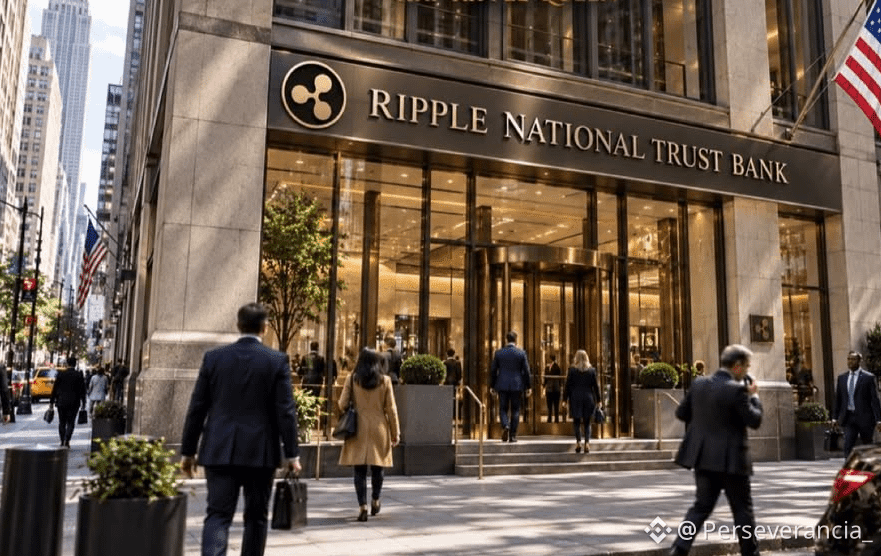
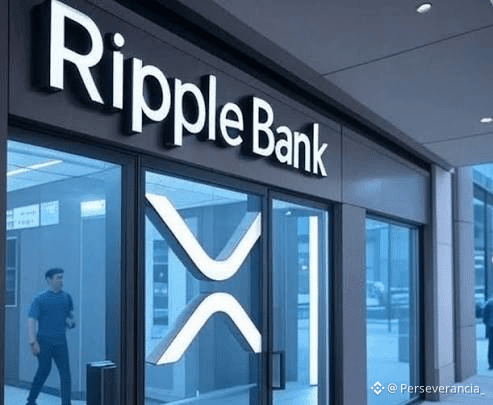
The U.S. Office of the Comptroller of the Currency (OCC) granted final approval for Ripple National Trust Bank (RNTB).
This authorization allows the entity to operate under federal supervision in the United States, with specific objectives within Ripple’s financial and technological ecosystem, such as:
Reserve management: Safely manage and hold the financial reserves backing the RLUSD stablecoin.
Trust services: Act as a trustee and manage institutional collateral for network operations and corporate services.
The deployment of the Soroban smart contract layer on the Stellar network began handling real transaction volumes from microfinance institutions and remittance processors operating under banking licenses in Latin America and Asia.
ASEAN Corridors in Production
Velo Protocol/Lightnet expanded its liquidity routes through the Orbit Plus network to process remittances and cross-border payments in Southeast Asia (Thailand, the Philippines, and Vietnam), taking on collateral and intermediating liquidity in real time.
The Taurus custody and tokenization platform has fully integrated $HBAR into its infrastructure. This means that more than 40 banks and major global institutions already using Taurus (including Deutsche Bank, CACEIS, and State Street) have direct access to the Hedera network for issuing tokenized bonds, custody, and staking from their own systems.
Robinhood enabled more than 2 million users in the U.S. to buy and sell XDC, opening up retail liquidity directly connected to its institutional Trade Finance market.
When #Binance .com? We’re all waiting for you to stop listing trash coins and start listing infrastructure
From Stellar to XDC Network: MoneyGram’s quiet (and brilliant) move into DLT infrastructure
While retail investors remain distracted by daily charts and network rumors, the true giants of global money transfer and remittance processing are executing their long-term infrastructure strategy.
MoneyGram’s latest move to become an Institutional Validator on XDC Network is a clear signal of where global capital flows are headed:
1. Diversifying rails: MoneyGram has already demonstrated the operational value of DLT networks by working on the Stellar network ($XLM ) for remittance settlements and crypto on/off-ramps. Now, by joining as a validator on #XDC , it is aligning directly with the ecosystem focused on Trade Finance (international trade financing) and RWA, sharing network security with consortia such as SBI Holdings and Deutsche Telekom.
2. From use case to infrastructure: Joining as a validator node is not just “using an API”; it means actively taking part in the network’s consensus and security. MoneyGram will not only use the rails to move value, but will also support block validation, strengthening XDC’s institutional decentralization.
📌 3. The corporate vision: Established companies with decades of experience in money orders and transfers are not improvising. They are building a multi-chain architecture: Stellar for last-mile remittance liquidity, and XDC Network for high-volume cross-border efficiency and the ISO 20022 standard.
The pattern is unmistakable: institutional adoption doesn’t come with noisy announcements, but with licenses, validator nodes, and integration into operational code.
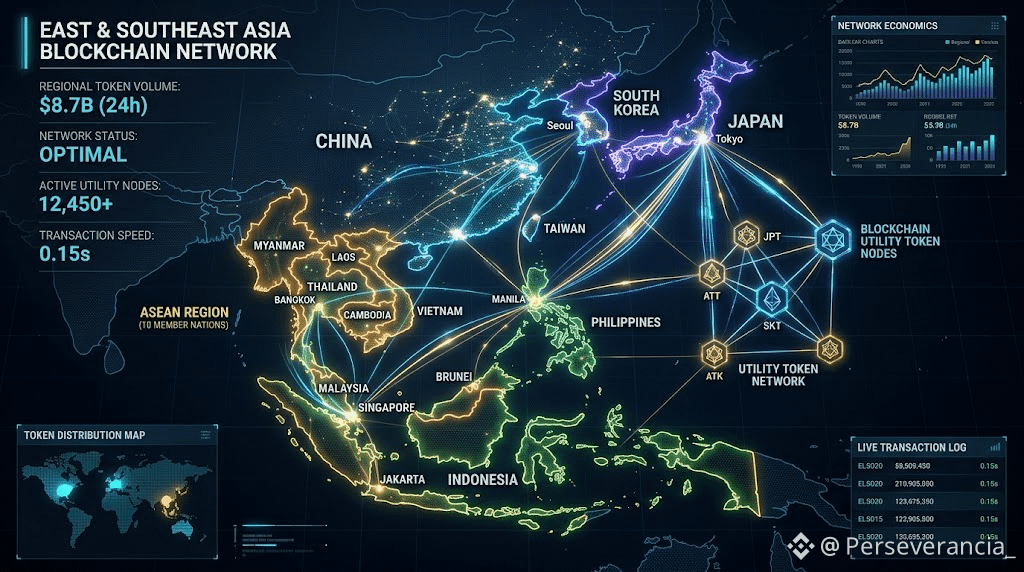
Japan, South Korea, and Southeast Asia are operating Blockchain and Utility Tokens at “half speed”
Asia isn’t waiting for social media to approve the thesis; it’s deploying infrastructure in pilot and controlled-production phases:
Japan (The main banking engine) Project Pax (MUFG, SMBC, Mizuho): Japan’s three megabanks are already testing cross-border stablecoin settlement based on ISO 20022 and connected to the Swift network through the Progmat platform. SBI Holdings integration: SBI has been using Ripple technology (Ripple Payment Solutions) for years for remittance corridors between Japan, the Philippines, and Vietnam.
Southeast Asia and the PayFi Network (Velo Protocol, Lightnet) The ASEAN region: In countries such as Thailand, the Philippines, and Vietnam, traditional banking inclusion is low, but digital payment adoption is widespread. Protocols such as $VELO Protocol and regional business partners are operating payment gateways (such as Orbit Plus) to settle cross-border remittances in seconds, absorbing collateral in real time.
South Korea (The liquidity and institutional testing hub) South Korea maintains one of the world’s highest spot trading volumes for utility tokens ($XRP ,$XLM , HBAR) on platforms such as Upbit and Bithumb, while its technology consortia are testing the tokenization of corporate debt and bank deposits.
What we’re seeing in Asia and in Europe’s restructuring is the gradual advance of the quiet rails. You won’t see headlines in traditional newspapers saying, “Today the world changed its financial system”; what we’re seeing today are banks integrating APIs, Asian consortia running production trials, and standards such as ISO 20022 becoming the only mandatory standard for moving money around the planet.
Ripple isn’t looking to compete with JPMorgan or Santander by opening salary accounts or lending money to end consumers. What it’s building is the technological backbone of banking:
Custody and Financial Institution Status: Through the acquisition of regulated custody companies (such as Metaco/Ripple Custody) and money transmitter licenses in multiple jurisdictions, Ripple technically operates as an institutional financial services provider.
The Operating Core (RLUSD + ODL): With the recent integration of its stablecoin ($RLUSD ) directly into the back-end software (Core Banking) of regulated institutions such as Cross River Bank in the U.S., Ripple effectively acts as an interbank clearing and liquidity network.
The “Bank of Banks” Concept: Rather than being a bank, Ripple aims to be the software banks use to settle their global transactions in real time.
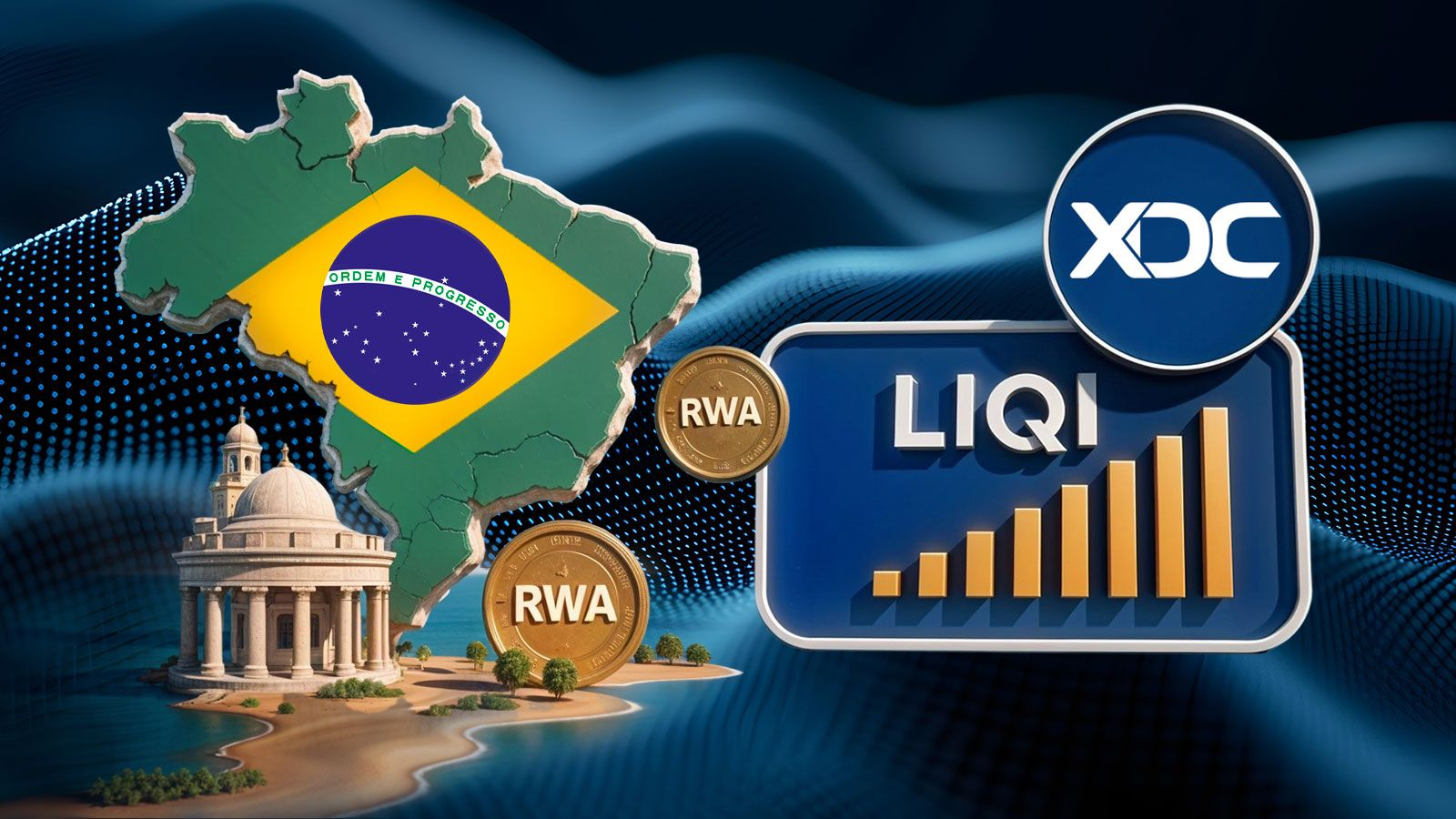
Together with Brazilian fintech Liqi, #XDC expanded its commitment to real-world asset (RWA) tokenization from $500 million to $2 billion by 2028, focusing on regulated credit instruments (receivables and debentures).
Why does it matter? It shows that network demand is driven not by meme speculation or artificial yield, but by the absorption of real credit and liquidity in corporate balance sheets.
A reflection for infrastructure investors: Technological upgrades and the onboarding of real assets onto Layer 1 networks don’t happen overnight, nor do they move the charts with a tweet. Corporate utility is built block by block.
Starfish-Speed Mainnet update and October 14 treasury unlock. The IOTA Foundation published its Q3 report, confirming the activation of Starfish-Speed on the mainnet (which reduces transaction confirmation latency to ~174 ms). In terms of tokenomics, the scheduled token unlock (vesting) allocated to the IOTA DLT Foundation took place on October 14, maintaining the biweekly issuance rate, whose cycle will end in 2027.
Range-bound accumulation ($0.0051–$0.0053) ahead of the Staking rollout. With the issuance of new tokens already completed as of 2025 (eliminating the risk of inflationary unlocks), network data shows the price consolidating in the $0.0051–$0.0053 range as infrastructure is prepared to absorb circulating supply through corporate treasury tools (TOS) and the native staking module in Q4.
Spot listing on Robinhood and tokenization expansion to $2,000M. On October 10, Robinhood enabled spot trading of #XDC for millions of users in the U.S., while the network simultaneously raised its target for tokenizing regulated assets (RWA) with fintech company Liqi from $500 million to $2,000 million. This increased primary liquidity and corporate debt smart contract activity on the Layer 1.
Concentration of fee generation in native DeFi. Despite accumulating more than 71 billion historical transactions on its consensus network, the on-chain fee revenue metric (around $30,200 per day) revealed that 89% of the fees generated by the network come from a single protocol (SaucerSwap V2). This highlights low corporate transaction costs but a high reliance on DeFi liquidity to monetize the protocol.
Seven-year low in exchange reserves and whale accumulation. XRP reserves held on trading platforms fell to their lowest level in seven years (~1.7 billion XRP), while addresses holding between 100,000 and 100 million $XRP increased their holdings by 2.8% in recent weeks. In parallel, on-chain payment activity reached significant milestones, surpassing 13.9 million processed transactions.
In 1875, Samuel Benner designed an economic cycle model based on the periodicity of crises and market peaks. It is surprising to see how accurately his framework anticipated milestones such as the 1929 crash, the 1933 gold confiscation, the end of the gold standard in 1971/72, the dot-com bubble, and the 2008 subprime crisis. Whether regarded as a mathematical rule or a historical frame of reference, the value of the Benner Cycle lies in the lesson in discipline it offers for capital management: markets move through structural phases that call for timeframes suited to them. According to the cycle’s projections, the current period marks the transition between the profit-taking / distribution phase and the beginning of a strategic accumulation phase that would extend to 2034, when the model projects the next major harvest cycle. For those of us focused on infrastructure assets and institutional adoption—such as tokens aligned with global settlement standards like $XRP or $XLM and RWA tokenization—this approach completely changes the perspective: Reduces short-term stress: The fluctuation of a weekly candle becomes less significant when viewed within a multi-year timeframe. Prioritizes mindful accumulation: It allows positions to be built gradually, without the urgency of chasing speculative rallies. Aligns capital with real-world development: Technology adoption and banking integration happen over cycles of years, not months. Recognizing market phases doesn’t guarantee that we can predict the future, but it does offer a navigation map for operating with calm, discipline, and a long-term outlook.