
隔壁老王吧
122 Posts

隔壁老王吧
Report
Block User
囤币党,每日定投,BTC, ADA, Doge
Open Trade

ADA Holder
Frequent Trader
2.7 Years
3 Following
73 Followers
60 Liked
Posts
Portfolio
All
Quotes
·
--
On day 301 of dollar-cost averaging, I no longer find myself guessing every day whether BTC will go up or down.
Why I’m still dollar-cost averaging into BTC: because it’s increasingly becoming a “long-term point of reference”
On day 301 of dollar-cost averaging, my view of BTC is actually simpler than when I started. It’s not about guessing the price direction every day or treating a certain price as a script that must play out. Instead, I’m watching to see whether it can continue to be an asset that people discuss over the long term, repeatedly put to the test, and use as a reference for value across the crypto market.
One reason I’m bullish on BTC is that it has established a relatively clear identity: its issuance rules are easy to understand, its network goals are fairly restrained, and considerable infrastructure has grown up around storage, transfers, custody, and self-custody. Market narratives change and popular projects take turns in the spotlight, but the value of a long-term point of reference often lies not in having the most features, but in people’s willingness to return to the same set of rules for reassurance amid uncertainty.
This sense of being a “point of reference” doesn’t mean the price can only go up. BTC still faces sharp volatility, cyclical valuations, regulatory changes, energy controversies, and the operational risks of self-custody. If your personal cash flow is unstable, even the strongest long-term conviction may be forced to give way. That’s why I stick to a fixed $40 investment: I don’t suddenly increase it out of excitement, and I don’t abandon the whole plan just because of a few days of losses.
I’m not buying an answer for tomorrow. I’m giving time the chance to keep testing this point of reference.
{spot}(BTCUSDT)
On day 301 of dollar-cost averaging, I no longer find myself guessing every day whether BTC will go up or down.
Why I’m still dollar-cost averaging into BTC: because it’s increasingly becoming a “long-term point of reference”
On day 301 of dollar-cost averaging, my view of BTC is actually simpler than when I started. It’s not about guessing the price direction every day or treating a certain price as a script that must play out. Instead, I’m watching to see whether it can continue to be an asset that people discuss over the long term, repeatedly put to the test, and use as a reference for value across the crypto market.
One reason I’m bullish on BTC is that it has established a relatively clear identity: its issuance rules are easy to understand, its network goals are fairly restrained, and considerable infrastructure has grown up around storage, transfers, custody, and self-custody. Market narratives change and popular projects take turns in the spotlight, but the value of a long-term point of reference often lies not in having the most features, but in people’s willingness to return to the same set of rules for reassurance amid uncertainty.
This sense of being a “point of reference” doesn’t mean the price can only go up. BTC still faces sharp volatility, cyclical valuations, regulatory changes, energy controversies, and the operational risks of self-custody. If your personal cash flow is unstable, even the strongest long-term conviction may be forced to give way. That’s why I stick to a fixed $40 investment: I don’t suddenly increase it out of excitement, and I don’t abandon the whole plan just because of a few days of losses.
I’m not buying an answer for tomorrow. I’m giving time the chance to keep testing this point of reference.
1
12
·
--
What draws me most to ADA is actually the less glamorous work of building.
Why am I still willing to dollar-cost average into ADA? Today, I want to share a less exciting reason: it shows me a willingness to make “building for the long term” part of the day-to-day work.
Markets prefer stories that are easy to tell right away. But what really carries a public blockchain far is often not a burst of attention, but the steady improvement of tools, documentation, education, wallet experiences, and collaboration among developers. What attracts me to ADA is the continuity of its technical direction and community involvement over time. When the market cools, this work may not generate much buzz, but it determines whether the next wave of users and developers can find their way with fewer detours.
I don’t assume that something is bound to succeed just because it has been around for a long time. Competition among public blockchains is fierce, and users won’t pay for patience alone. The ecosystem still needs more intuitive products, real-world use cases, and lower barriers for ordinary people to understand and use them. Ultimately, the technology has to lead to something people are willing to keep using; otherwise, it’s just a polished roadmap.
So my dollar-cost averaging strategy isn’t about looking for a new slogan every day. It’s about checking regularly whether the building continues, whether the experience improves, and whether the ecosystem is creating things that keep users around. For me, $40 a day is a way to observe over the long term within clear limits—not a guarantee of results.
Moving slowly isn’t scary. Standing still is.
{spot}(ADAUSDT)
What draws me most to ADA is actually the less glamorous work of building.
Why am I still willing to dollar-cost average into ADA? Today, I want to share a less exciting reason: it shows me a willingness to make “building for the long term” part of the day-to-day work.
Markets prefer stories that are easy to tell right away. But what really carries a public blockchain far is often not a burst of attention, but the steady improvement of tools, documentation, education, wallet experiences, and collaboration among developers. What attracts me to ADA is the continuity of its technical direction and community involvement over time. When the market cools, this work may not generate much buzz, but it determines whether the next wave of users and developers can find their way with fewer detours.
I don’t assume that something is bound to succeed just because it has been around for a long time. Competition among public blockchains is fierce, and users won’t pay for patience alone. The ecosystem still needs more intuitive products, real-world use cases, and lower barriers for ordinary people to understand and use them. Ultimately, the technology has to lead to something people are willing to keep using; otherwise, it’s just a polished roadmap.
So my dollar-cost averaging strategy isn’t about looking for a new slogan every day. It’s about checking regularly whether the building continues, whether the experience improves, and whether the ecosystem is creating things that keep users around. For me, $40 a day is a way to observe over the long term within clear limits—not a guarantee of results.
Moving slowly isn’t scary. Standing still is.
3
1.2k
·
--
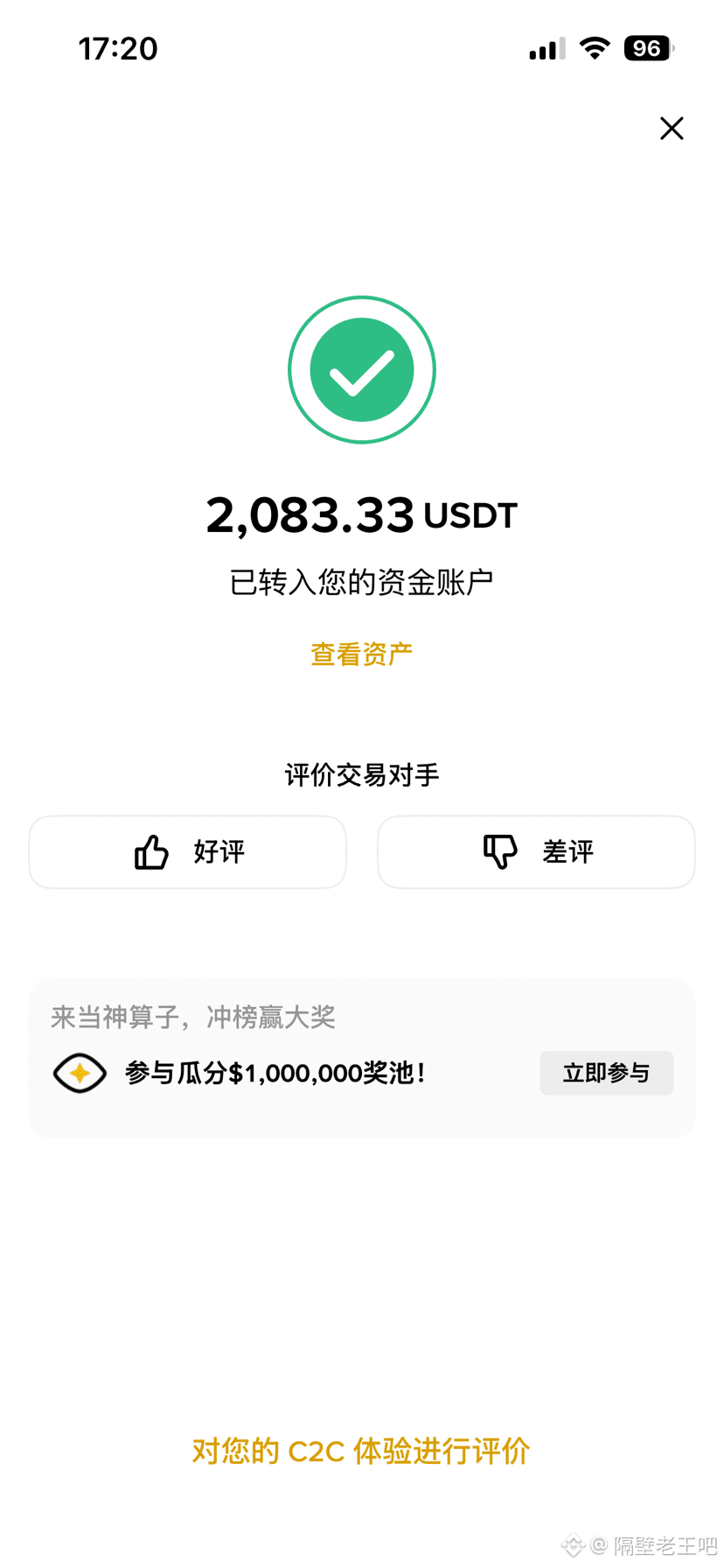
Transferred $3,000 back from Hong Kong,
continue dollar-cost averaging into Bitcoin, Dogecoin, and ADA
also spend $1,000 on a phone,
my phone is already starting to lag.
{spot}(BTCUSDT)
{spot}(DOGEUSDT)
Transferred $3,000 back from Hong Kong,
continue dollar-cost averaging into Bitcoin, Dogecoin, and ADA
also spend $1,000 on a phone,
my phone is already starting to lag.
continue dollar-cost averaging into Bitcoin, Dogecoin, and ADA
also spend $1,000 on a phone,
my phone is already starting to lag.

1
689
·
--
Golden entry point,
Dollar-cost average into Bitcoin and Dogecoin
{spot}(BTCUSDT)
{spot}(DOGEUSDT)
Golden entry point,
Dollar-cost average into Bitcoin and Dogecoin
Dollar-cost average into Bitcoin and Dogecoin
1
357
·
--
Day 287 of dollar-cost averaging, and I’ve been rethinking who assets really belong to.
One important reason I continue to dollar-cost average into BTC is not just its striking hard cap. It’s also that it has kept the question of whether an asset can be independently verified, self-custodied, and transferred across borders firmly on the table.
I used to understand assets mainly through a particular account, company, or regional system. After learning about Bitcoin, I gradually realized that BTC’s appeal also lies in its transparent rules and continuously running network. Ordinary people can verify it using their own node or trusted tools, rather than relying entirely on an institution to tell them what they have in their account. To me, this verifiability and global portability set it apart from many traditional assets.
Of course, being able to self-custody doesn’t mean everyone should do so right away. Seed phrases, hardware wallets, backups, and phishing prevention all involve a learning curve, and mistakes may be irreversible. Price volatility, regulatory changes, and market cycles won’t disappear just because the story sounds compelling. So I continue buying gradually with a fixed amount, without speeding up in response to a day’s price movements, and I don’t invest money I need for living expenses or emergencies.
What I believe in is the long-term option to choose this kind of asset. In an increasingly digital world, people may place greater value on stores of value that are verifiable, portable, and not dependent on a single platform. That view may not play out anytime soon, but it’s worth continuing to observe at a pace I can afford.
True long-term thinking isn’t about watching every candlestick. It’s about sticking to a pace that lets you sleep at night.
{future}(BTCUSDT)
{spot}(BTCUSDT)
Day 287 of dollar-cost averaging, and I’ve been rethinking who assets really belong to.
One important reason I continue to dollar-cost average into BTC is not just its striking hard cap. It’s also that it has kept the question of whether an asset can be independently verified, self-custodied, and transferred across borders firmly on the table.
I used to understand assets mainly through a particular account, company, or regional system. After learning about Bitcoin, I gradually realized that BTC’s appeal also lies in its transparent rules and continuously running network. Ordinary people can verify it using their own node or trusted tools, rather than relying entirely on an institution to tell them what they have in their account. To me, this verifiability and global portability set it apart from many traditional assets.
Of course, being able to self-custody doesn’t mean everyone should do so right away. Seed phrases, hardware wallets, backups, and phishing prevention all involve a learning curve, and mistakes may be irreversible. Price volatility, regulatory changes, and market cycles won’t disappear just because the story sounds compelling. So I continue buying gradually with a fixed amount, without speeding up in response to a day’s price movements, and I don’t invest money I need for living expenses or emergencies.
What I believe in is the long-term option to choose this kind of asset. In an increasingly digital world, people may place greater value on stores of value that are verifiable, portable, and not dependent on a single platform. That view may not play out anytime soon, but it’s worth continuing to observe at a pace I can afford.
True long-term thinking isn’t about watching every candlestick. It’s about sticking to a pace that lets you sleep at night.
137
·
--
Day 286 of investing $40 a day in $BTC
Day 281 of investing $40 a day in $ADA
Day 233 of investing $30 a day in $Doge
Buy slowly, wait patiently.
When ADA breaks above $3, Doge reaches $1, and Bitcoin breaks through $1 million.
{spot}(ADAUSDT)
{spot}(BTCUSDT)
Day 286 of investing $40 a day in $BTC
Day 281 of investing $40 a day in $ADA
Day 233 of investing $30 a day in $Doge
Buy slowly, wait patiently.
When ADA breaks above $3, Doge reaches $1, and Bitcoin breaks through $1 million.
Day 281 of investing $40 a day in $ADA
Day 233 of investing $30 a day in $Doge
Buy slowly, wait patiently.
When ADA breaks above $3, Doge reaches $1, and Bitcoin breaks through $1 million.
2
1
2k
·
--
I lowered my DOGE amount, and it actually became easier to stick with.
Why do I put in $40 a day for BTC and ADA, but only $30 for DOGE? That difference doesn’t mean I have less faith in DOGE. It’s the breathing room I’ve set aside for assets that feel more volatile.
DOGE can easily trigger an impulse: when there’s a lot of buzz, you want to buy more; when things quiet down, you start wondering if you should stop. For me, setting a smaller fixed daily amount helps keep both of those emotions in check. The $30 won’t automatically go up just because there’s suddenly more discussion one day, and it won’t be canceled just because there’s no new story in the short term. It’s more like a slot I’ve set aside in my everyday cash flow in advance: once I’ve bought, I get back to work and daily life.
I’m willing to keep DOGE for the long term because of its distinctive internet culture, its low barrier to sharing, and the potential it continues to offer for social interactions. But potential doesn’t equal real-world adoption, much less guarantee that the price will reflect it. Product integrations, user experience, competition, and market cycles all matter; a shortfall in any one of them could leave expectations unmet.
So I don’t rely on excitement to maintain this part of my portfolio, or on predicting the next hot trend to justify it. A smaller amount lets me observe for longer; clearer rules mean one bout of volatility won’t derail my whole plan. Dollar-cost averaging doesn’t hide risk—it starts by deciding how much I’m willing to spend to stick with a conviction.
A smaller amount isn’t hesitation; it leaves room for the long term.
{future}(BTCUSDT)
{spot}(DOGEUSDT)
I lowered my DOGE amount, and it actually became easier to stick with.
Why do I put in $40 a day for BTC and ADA, but only $30 for DOGE? That difference doesn’t mean I have less faith in DOGE. It’s the breathing room I’ve set aside for assets that feel more volatile.
DOGE can easily trigger an impulse: when there’s a lot of buzz, you want to buy more; when things quiet down, you start wondering if you should stop. For me, setting a smaller fixed daily amount helps keep both of those emotions in check. The $30 won’t automatically go up just because there’s suddenly more discussion one day, and it won’t be canceled just because there’s no new story in the short term. It’s more like a slot I’ve set aside in my everyday cash flow in advance: once I’ve bought, I get back to work and daily life.
I’m willing to keep DOGE for the long term because of its distinctive internet culture, its low barrier to sharing, and the potential it continues to offer for social interactions. But potential doesn’t equal real-world adoption, much less guarantee that the price will reflect it. Product integrations, user experience, competition, and market cycles all matter; a shortfall in any one of them could leave expectations unmet.
So I don’t rely on excitement to maintain this part of my portfolio, or on predicting the next hot trend to justify it. A smaller amount lets me observe for longer; clearer rules mean one bout of volatility won’t derail my whole plan. Dollar-cost averaging doesn’t hide risk—it starts by deciding how much I’m willing to spend to stick with a conviction.
A smaller amount isn’t hesitation; it leaves room for the long term.
543
·
--
I'm bullish on DOGE, not because its story is particularly complicated.
Why I'm still willing to keep an eye on DOGE over the long term
I'm bullish on DOGE not because its story is the most complex, but precisely because it's simple enough. Many crypto projects require you to first understand their technical architecture, ecosystem layers, and adoption pathways. DOGE's first impression, by contrast, is very straightforward: its name is easy to remember, its symbol is distinctive, and its community speaks with one voice. Public awareness doesn't equal value, but on the internet, where attention is scarce, being recognized and discussed by a lot of people is a starting point that's hard to replicate.
Another advantage is its community culture. DOGE began as a joke, but over time it developed a strong sense of participation. Newcomers often don't need to read through a mountain of documentation to understand its spirit and style of expression. This makes it easier for ordinary users to imagine and embrace DOGE in scenarios like small transfers, tipping, and content engagement than many more serious projects.
What I pay more attention to isn't how far a single trending moment might propel it, but whether this awareness can gradually translate into real, accessible use. If wallet experiences, payment infrastructure, and merchant acceptance continue to improve, DOGE's ability to spread could have a chance to develop into a more stable network effect. Adoption related to social platforms is still only a possibility for now; market expectations shouldn't be written up as facts in advance.
Of course, community enthusiasm can fluctuate, competition in the payments sector is fierce, and genuine demand for use and technical maintenance can't be sustained by sentiment alone. So I still keep my investment amount under control when I dollar-cost average, and I don't use short-term prices to prove my judgment right.
I'm willing to give DOGE time, but I won't jump to conclusions about the future.
{spot}(DOGEUSDT)
I'm bullish on DOGE, not because its story is particularly complicated.
Why I'm still willing to keep an eye on DOGE over the long term
I'm bullish on DOGE not because its story is the most complex, but precisely because it's simple enough. Many crypto projects require you to first understand their technical architecture, ecosystem layers, and adoption pathways. DOGE's first impression, by contrast, is very straightforward: its name is easy to remember, its symbol is distinctive, and its community speaks with one voice. Public awareness doesn't equal value, but on the internet, where attention is scarce, being recognized and discussed by a lot of people is a starting point that's hard to replicate.
Another advantage is its community culture. DOGE began as a joke, but over time it developed a strong sense of participation. Newcomers often don't need to read through a mountain of documentation to understand its spirit and style of expression. This makes it easier for ordinary users to imagine and embrace DOGE in scenarios like small transfers, tipping, and content engagement than many more serious projects.
What I pay more attention to isn't how far a single trending moment might propel it, but whether this awareness can gradually translate into real, accessible use. If wallet experiences, payment infrastructure, and merchant acceptance continue to improve, DOGE's ability to spread could have a chance to develop into a more stable network effect. Adoption related to social platforms is still only a possibility for now; market expectations shouldn't be written up as facts in advance.
Of course, community enthusiasm can fluctuate, competition in the payments sector is fierce, and genuine demand for use and technical maintenance can't be sustained by sentiment alone. So I still keep my investment amount under control when I dollar-cost average, and I don't use short-term prices to prove my judgment right.
I'm willing to give DOGE time, but I won't jump to conclusions about the future.
191
·
--
$40 every day, dollar-cost averaging into $BTC — Day 279
$40 every day, dollar-cost averaging into $ADA — Day 274
$30 every day, dollar-cost averaging into $Doge — Day 226
Buy slowly, wait patiently.
ADA breaks through $3, Doge reaches $1, and Bitcoin breaks through $1 million.
{spot}(DOGEUSDT)
{spot}(ADAUSDT)
{spot}(BTCUSDT)
$40 every day, dollar-cost averaging into $BTC — Day 279
$40 every day, dollar-cost averaging into $ADA — Day 274
$30 every day, dollar-cost averaging into $Doge — Day 226
Buy slowly, wait patiently.
ADA breaks through $3, Doge reaches $1, and Bitcoin breaks through $1 million.
$40 every day, dollar-cost averaging into $ADA — Day 274
$30 every day, dollar-cost averaging into $Doge — Day 226
Buy slowly, wait patiently.
ADA breaks through $3, Doge reaches $1, and Bitcoin breaks through $1 million.
71
·
--
ADA doesn’t move fast. Why am I still willing to keep watching?
Today, I want to talk seriously about why I’m still willing to keep a long-term eye on ADA.
What appeals to me isn’t just its price potential, but its deliberate, engineering-focused approach to building. Cardano chose the PoS path and put research, verification, and long-term iteration at the heart of its work from an early stage. That pace may not be flashy in the lively crypto market, but it better matches what I look for in long-term infrastructure. And as its governance gradually gives the community a greater role in discussion and decision-making, ADA is more than just a tradable asset to me—it’s also a long-term experiment in how a network can continue to evolve.
Of course, a clear technical roadmap doesn’t mean the ecosystem will flourish on its own. The developer experience, application activity, user growth, and competition with other blockchains will all ultimately affect whether Cardano can turn its design into everyday use. Governance isn’t finished just because there’s a vote, either; participation, execution, and the coordination of different interests all need time to prove themselves. I don’t shy away from these challenges.
Still, I’m willing to be more patient with a project that takes the approach of “building the foundations slowly, then seeing the ecosystem grow.” When I invest in ADA regularly, I don’t just focus on how much the price has risen on a particular day. I also look at whether its governance is maturing, whether the ecosystem is meeting real needs, and whether long-term development is still moving forward. You can be confident in your outlook, but your actions should still follow a measured pace; investing a fixed amount helps keep my emotions from making decisions for me.
In the short term, people watch the hype. In the long term, they watch whether a blockchain can turn its promises into everyday use.
{spot}(ADAUSDT)
ADA doesn’t move fast. Why am I still willing to keep watching?
Today, I want to talk seriously about why I’m still willing to keep a long-term eye on ADA.
What appeals to me isn’t just its price potential, but its deliberate, engineering-focused approach to building. Cardano chose the PoS path and put research, verification, and long-term iteration at the heart of its work from an early stage. That pace may not be flashy in the lively crypto market, but it better matches what I look for in long-term infrastructure. And as its governance gradually gives the community a greater role in discussion and decision-making, ADA is more than just a tradable asset to me—it’s also a long-term experiment in how a network can continue to evolve.
Of course, a clear technical roadmap doesn’t mean the ecosystem will flourish on its own. The developer experience, application activity, user growth, and competition with other blockchains will all ultimately affect whether Cardano can turn its design into everyday use. Governance isn’t finished just because there’s a vote, either; participation, execution, and the coordination of different interests all need time to prove themselves. I don’t shy away from these challenges.
Still, I’m willing to be more patient with a project that takes the approach of “building the foundations slowly, then seeing the ecosystem grow.” When I invest in ADA regularly, I don’t just focus on how much the price has risen on a particular day. I also look at whether its governance is maturing, whether the ecosystem is meeting real needs, and whether long-term development is still moving forward. You can be confident in your outlook, but your actions should still follow a measured pace; investing a fixed amount helps keep my emotions from making decisions for me.
In the short term, people watch the hype. In the long term, they watch whether a blockchain can turn its promises into everyday use.
304
·
--
This time around with BTC, I’m not trying to predict the price. I’m reviewing my dollar-cost averaging strategy.
Why am I still willing to invest in BTC regularly over the long term?
Not because I can predict its next move, but because BTC has something that’s very hard to replicate quickly: consensus built up over time. Its supply rules are relatively clear, it has a long track record, and its participants are widely distributed. To me, scarcity is just the starting point. What keeps me watching is the network effect that emerges as more people use the same network to understand, store, and transfer value.
That consensus doesn’t mean the price can only go up. BTC will still go through sharp swings, and macro liquidity, regulation, custody security, and market sentiment can all change what it’s like to hold. Network effects aren’t a shield, either. If usability, scaling, or energy concerns don’t get better answers over time, the store-of-value narrative will face competition too.
So my DCA strategy isn’t “buy today, cash out tomorrow.” I put it after my living expenses and use a fixed amount to stay invested for the long term. I don’t increase my buys impulsively when the market is hot, and I don’t overturn my entire thesis over a few red candles when it’s cold. I review things once a month: Is my income stable? Do I have enough emergency savings? Is my allocation still within a range that lets me sleep at night?
I’m bullish on BTC not because I’ve forgotten the risks, but because I believe its scarcity rules, network effects, and long-term consensus are still worth following over time. What can truly carry me through the long haul isn’t a prediction, but a routine that doesn’t disrupt my life.
{spot}(BTCUSDT)
This time around with BTC, I’m not trying to predict the price. I’m reviewing my dollar-cost averaging strategy.
Why am I still willing to invest in BTC regularly over the long term?
Not because I can predict its next move, but because BTC has something that’s very hard to replicate quickly: consensus built up over time. Its supply rules are relatively clear, it has a long track record, and its participants are widely distributed. To me, scarcity is just the starting point. What keeps me watching is the network effect that emerges as more people use the same network to understand, store, and transfer value.
That consensus doesn’t mean the price can only go up. BTC will still go through sharp swings, and macro liquidity, regulation, custody security, and market sentiment can all change what it’s like to hold. Network effects aren’t a shield, either. If usability, scaling, or energy concerns don’t get better answers over time, the store-of-value narrative will face competition too.
So my DCA strategy isn’t “buy today, cash out tomorrow.” I put it after my living expenses and use a fixed amount to stay invested for the long term. I don’t increase my buys impulsively when the market is hot, and I don’t overturn my entire thesis over a few red candles when it’s cold. I review things once a month: Is my income stable? Do I have enough emergency savings? Is my allocation still within a range that lets me sleep at night?
I’m bullish on BTC not because I’ve forgotten the risks, but because I believe its scarcity rules, network effects, and long-term consensus are still worth following over time. What can truly carry me through the long haul isn’t a prediction, but a routine that doesn’t disrupt my life.
136
·
--
$40 a day, investing regularly in $BTC — Day 277
$40 a day, investing regularly in $ADA — Day 272
$30 a day, investing regularly in $Doge — Day 224
Buy slowly, wait patiently.
ADA breaks through $3, Doge reaches $1, and Bitcoin breaks through $1 million.
{spot}(BTCUSDT)
$40 a day, investing regularly in $BTC — Day 277
$40 a day, investing regularly in $ADA — Day 272
$30 a day, investing regularly in $Doge — Day 224
Buy slowly, wait patiently.
ADA breaks through $3, Doge reaches $1, and Bitcoin breaks through $1 million.
$40 a day, investing regularly in $ADA — Day 272
$30 a day, investing regularly in $Doge — Day 224
Buy slowly, wait patiently.
ADA breaks through $3, Doge reaches $1, and Bitcoin breaks through $1 million.
76
·
--
#DOGE What makes DOGE special may not be its technical specifications.
To be honest, I first noticed DOGE not because its technical narrative was especially complex, but because it hardly needed any explanation. A lighthearted symbol and a shared community memory were enough to introduce it to many people who knew little about cryptocurrency. This kind of broad recognition is hard to replicate with short-term marketing, and it’s one reason I’ve kept an eye on DOGE over the long term.
What I’m optimistic about isn’t the idea that it will “suddenly surge one day,” but its qualities when it comes to visibility and ease of use. Its community culture makes DOGE naturally suited to social expression, and the psychological appeal of its low per-coin price can also make it easier for newcomers to try it with small amounts. If crypto payments continue to seek more everyday, lightweight use cases, DOGE’s name recognition and active community may help bring it into the conversation more easily. This is about potential—not adoption that has already materialized, and certainly not confirmation that any platform will support it.
Of course, recognition isn’t the same as real demand. Payment experience, merchant acceptance, network capacity, the regulatory environment, and whether community enthusiasm can translate into sustained use are all challenges it must face. Its meme status can boost visibility, but it can also amplify sentiment and volatility. So my position on DOGE has always been clear: I track it gradually with money I can afford to risk, without adding to my position on a whim when there’s a lot of buzz, and without mistaking a vision for an outcome.
I’m willing to give it time because the value of some networks begins with people being willing to talk about them—and then waits for real-world use cases to answer the remaining questions.
{spot}(DOGEUSDT)
#DOGE What makes DOGE special may not be its technical specifications.
To be honest, I first noticed DOGE not because its technical narrative was especially complex, but because it hardly needed any explanation. A lighthearted symbol and a shared community memory were enough to introduce it to many people who knew little about cryptocurrency. This kind of broad recognition is hard to replicate with short-term marketing, and it’s one reason I’ve kept an eye on DOGE over the long term.
What I’m optimistic about isn’t the idea that it will “suddenly surge one day,” but its qualities when it comes to visibility and ease of use. Its community culture makes DOGE naturally suited to social expression, and the psychological appeal of its low per-coin price can also make it easier for newcomers to try it with small amounts. If crypto payments continue to seek more everyday, lightweight use cases, DOGE’s name recognition and active community may help bring it into the conversation more easily. This is about potential—not adoption that has already materialized, and certainly not confirmation that any platform will support it.
Of course, recognition isn’t the same as real demand. Payment experience, merchant acceptance, network capacity, the regulatory environment, and whether community enthusiasm can translate into sustained use are all challenges it must face. Its meme status can boost visibility, but it can also amplify sentiment and volatility. So my position on DOGE has always been clear: I track it gradually with money I can afford to risk, without adding to my position on a whim when there’s a lot of buzz, and without mistaking a vision for an outcome.
I’m willing to give it time because the value of some networks begins with people being willing to talk about them—and then waits for real-world use cases to answer the remaining questions.
310
·
--
Investing $40 a day in $BTC — Day 276
Investing $40 a day in $ADA — Day 271
Investing $30 a day in $Doge — Day 223
Buy gradually, wait patiently.
ADA breaks above $3, Doge reaches $1, Bitcoin surges past $1 million.
{future}(ADAUSDT)
{spot}(BTCUSDT)
Investing $40 a day in $BTC — Day 276
Investing $40 a day in $ADA — Day 271
Investing $30 a day in $Doge — Day 223
Buy gradually, wait patiently.
ADA breaks above $3, Doge reaches $1, Bitcoin surges past $1 million.
Investing $40 a day in $ADA — Day 271
Investing $30 a day in $Doge — Day 223
Buy gradually, wait patiently.
ADA breaks above $3, Doge reaches $1, Bitcoin surges past $1 million.
65
·
--
Bullish
There are so many public blockchains. Why do I still set aside a fixed budget for #ADA ?
Why am I still willing to dollar-cost average into ADA over the long term? Not because I think it will suddenly become the center of the market tomorrow, but because I identify with its approach of moving more slowly and first building a solid foundation for its technology and governance.
ADA follows a PoS model and has consistently emphasized research, verification, and long-term development. To me, this pace can sometimes seem less exciting, but it offers an alternative to “chasing trends first and filling in the fundamentals later.” For a public blockchain to go the distance, performance isn’t the only thing that matters. Its governance must be sustainable, developers must be willing to stick around, and applications and users must form a genuine cycle. ADA has given me reasons to keep watching it in these areas, at least.
Being optimistic about it doesn’t mean ignoring reality: competition among public blockchains is intense, and ultimately, a technical roadmap has to prove itself through real-world use. Ecosystem growth and user experience can’t remain just plans, either. And the price certainly won’t move according to my schedule just because the ideas are good. So I’m sticking to my approach: putting $40 a day into a fixed budget, not increasing my allocation on impulse because of a day or two of emotion, and not gambling with the cash flow I need for everyday life.
The greatest value of dollar-cost averaging for me is that I can hold while continuing to test my own judgment. If the ecosystem’s progress falls short of expectations, I’ll reassess. If development continues to deliver, I’m willing to give it more time.
Even slow-moving projects have to deliver. Patience never means stopping your observations.
{spot}(ADAUSDT)
There are so many public blockchains. Why do I still set aside a fixed budget for #ADA ?
Why am I still willing to dollar-cost average into ADA over the long term? Not because I think it will suddenly become the center of the market tomorrow, but because I identify with its approach of moving more slowly and first building a solid foundation for its technology and governance.
ADA follows a PoS model and has consistently emphasized research, verification, and long-term development. To me, this pace can sometimes seem less exciting, but it offers an alternative to “chasing trends first and filling in the fundamentals later.” For a public blockchain to go the distance, performance isn’t the only thing that matters. Its governance must be sustainable, developers must be willing to stick around, and applications and users must form a genuine cycle. ADA has given me reasons to keep watching it in these areas, at least.
Being optimistic about it doesn’t mean ignoring reality: competition among public blockchains is intense, and ultimately, a technical roadmap has to prove itself through real-world use. Ecosystem growth and user experience can’t remain just plans, either. And the price certainly won’t move according to my schedule just because the ideas are good. So I’m sticking to my approach: putting $40 a day into a fixed budget, not increasing my allocation on impulse because of a day or two of emotion, and not gambling with the cash flow I need for everyday life.
The greatest value of dollar-cost averaging for me is that I can hold while continuing to test my own judgment. If the ecosystem’s progress falls short of expectations, I’ll reassess. If development continues to deliver, I’m willing to give it more time.
Even slow-moving projects have to deliver. Patience never means stopping your observations.
5
4
3.3k
·
--
Bullish
Investing $40 a day, day 275 of dollar-cost averaging $BTC
Investing $40 a day, day 270 of dollar-cost averaging $ADA
Investing $30 a day, day 222 of dollar-cost averaging $DOGE
Buy little by little, wait patiently.
ADA breaks above $3, Doge reaches $1, and Bitcoin breaks through $1 million.
{spot}(ADAUSDT)
{spot}(DOGEUSDT)
Investing $40 a day, day 275 of dollar-cost averaging $BTC
Investing $40 a day, day 270 of dollar-cost averaging $ADA
Investing $30 a day, day 222 of dollar-cost averaging $DOGE
Buy little by little, wait patiently.
ADA breaks above $3, Doge reaches $1, and Bitcoin breaks through $1 million.
Investing $40 a day, day 270 of dollar-cost averaging $ADA
Investing $30 a day, day 222 of dollar-cost averaging $DOGE
Buy little by little, wait patiently.
ADA breaks above $3, Doge reaches $1, and Bitcoin breaks through $1 million.
69
·
--
Bullish
Day 275 of dollar-cost averaging #BTC : I care less about today’s price movement
Today, I want to talk about why, on day 275 of dollar-cost averaging, I’m still willing to keep BTC in my long-term plan.
What resonates with me most isn’t the price movement on any one day, but the network effects Bitcoin has built up over the years. More and more people know about it, more and more infrastructure is being built around it, and it has gradually developed a kind of global consensus that’s hard to replicate. Its supply cap of 21 million coins makes its scarcity easy to understand. And because it doesn’t rely on a single company to operate, the idea of “a store of value for the digital age” has a unique place.
But I’m optimistic about BTC not because I’m convinced it will rise in a straight line. It remains highly volatile, and the regulatory environment, market liquidity, custody security, and personal cash flow can all affect the experience of holding it. Strong network effects don’t mean competition, technological change, and cyclical risks will disappear. That’s exactly why it suits me better to buy gradually with a fixed amount, rather than suddenly making a large bet when market sentiment is at its hottest.
For me, dollar-cost averaging has another benefit: it shifts my focus from “How much is it worth today?” back to “Do I truly understand what I’m holding?” Before every purchase, I make sure my living expenses and emergency funds won’t be affected. I also review my allocation regularly, rather than mistaking persistence for never making adjustments.
I’m willing to give BTC time, and I’m also willing to leave room to revise my own judgment. Being optimistic isn’t blind faith, and taking a long-term view doesn’t mean having no boundaries.
In a nutshell: true long-term thinking means keeping both conviction and discipline in step.
{spot}(ADAUSDT)
{spot}(BTCUSDT)
Day 275 of dollar-cost averaging #BTC : I care less about today’s price movement
Today, I want to talk about why, on day 275 of dollar-cost averaging, I’m still willing to keep BTC in my long-term plan.
What resonates with me most isn’t the price movement on any one day, but the network effects Bitcoin has built up over the years. More and more people know about it, more and more infrastructure is being built around it, and it has gradually developed a kind of global consensus that’s hard to replicate. Its supply cap of 21 million coins makes its scarcity easy to understand. And because it doesn’t rely on a single company to operate, the idea of “a store of value for the digital age” has a unique place.
But I’m optimistic about BTC not because I’m convinced it will rise in a straight line. It remains highly volatile, and the regulatory environment, market liquidity, custody security, and personal cash flow can all affect the experience of holding it. Strong network effects don’t mean competition, technological change, and cyclical risks will disappear. That’s exactly why it suits me better to buy gradually with a fixed amount, rather than suddenly making a large bet when market sentiment is at its hottest.
For me, dollar-cost averaging has another benefit: it shifts my focus from “How much is it worth today?” back to “Do I truly understand what I’m holding?” Before every purchase, I make sure my living expenses and emergency funds won’t be affected. I also review my allocation regularly, rather than mistaking persistence for never making adjustments.
I’m willing to give BTC time, and I’m also willing to leave room to revise my own judgment. Being optimistic isn’t blind faith, and taking a long-term view doesn’t mean having no boundaries.
In a nutshell: true long-term thinking means keeping both conviction and discipline in step.
151
·
--
Investing $40 every day in $BTC — Day 274
Investing $40 every day in $ADA — Day 269
Investing $30 every day in $Doge — Day 221
Buy slowly, wait patiently.
ADA breaks through $3, Doge reaches $1, and Bitcoin breaks through $1 million.
{spot}(DOGEUSDT)
{spot}(BTCUSDT)
{spot}(ADAUSDT)
Investing $40 every day in $BTC — Day 274
Investing $40 every day in $ADA — Day 269
Investing $30 every day in $Doge — Day 221
Buy slowly, wait patiently.
ADA breaks through $3, Doge reaches $1, and Bitcoin breaks through $1 million.
Investing $40 every day in $ADA — Day 269
Investing $30 every day in $Doge — Day 221
Buy slowly, wait patiently.
ADA breaks through $3, Doge reaches $1, and Bitcoin breaks through $1 million.
1
1.9k
·
--
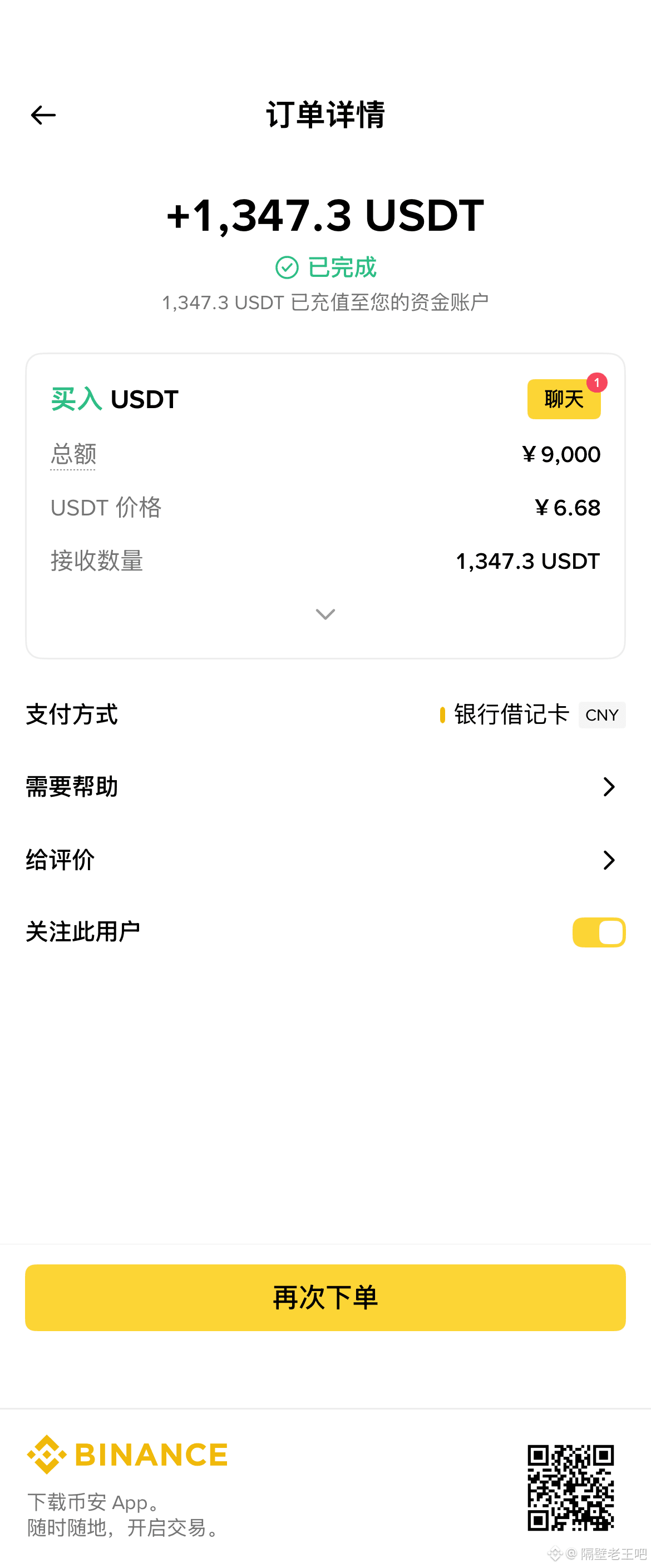
Continue topping up.
Continue investing regularly.
Continue topping up.
Continue investing regularly.
Continue investing regularly.
77
·
--
DOGE may look like a joke, but I’ve always taken dollar-cost averaging seriously.
Why I’m still willing to keep DOGE on my long-term DCA list
What I find most appealing about DOGE has never been the complexity of its tech narrative, but the kind of broad public recognition that’s very hard to replicate. When people first encounter crypto, they may not understand protocols, scaling, or governance, but they can quickly remember that Shiba Inu. It may sound a little “not serious enough,” but the ability to spread is itself part of a network asset: when people know about it, are willing to talk about it, and are willing to try it in small-value transactions, it has fertile ground for expanding its use.
I also value DOGE’s community culture. Unlike some projects, you don’t need to read a lengthy white paper before you can participate. The barrier to entry is relatively straightforward, making it a natural fit for tipping, small transfers, and online social expression. If more payment tools, merchants, and social products make it easier to use in the future, this broad recognition could translate into more genuine demand. Note that I’m talking about a possibility, not a confirmed outcome.
The risks are just as clear: hype can fade, narratives can shift, and stablecoins and other networks are competing in the small-payment space. Real adoption still depends on the payment experience, the regulatory environment, and infrastructure. DOGE’s volatility won’t disappear just because its community is fun. So I still stick to a fixed amount, buying gradually in line with my cash flow, rather than suddenly increasing my position because of a single news story.
I’m optimistic about it not because I know what the next candlestick will look like, but because in the internet age, being remembered and used by the public is rare in itself.
What can endure through market cycles isn’t just code; it might also be a shared memory.
{spot}(BTCUSDT)
{spot}(DOGEUSDT)
DOGE may look like a joke, but I’ve always taken dollar-cost averaging seriously.
Why I’m still willing to keep DOGE on my long-term DCA list
What I find most appealing about DOGE has never been the complexity of its tech narrative, but the kind of broad public recognition that’s very hard to replicate. When people first encounter crypto, they may not understand protocols, scaling, or governance, but they can quickly remember that Shiba Inu. It may sound a little “not serious enough,” but the ability to spread is itself part of a network asset: when people know about it, are willing to talk about it, and are willing to try it in small-value transactions, it has fertile ground for expanding its use.
I also value DOGE’s community culture. Unlike some projects, you don’t need to read a lengthy white paper before you can participate. The barrier to entry is relatively straightforward, making it a natural fit for tipping, small transfers, and online social expression. If more payment tools, merchants, and social products make it easier to use in the future, this broad recognition could translate into more genuine demand. Note that I’m talking about a possibility, not a confirmed outcome.
The risks are just as clear: hype can fade, narratives can shift, and stablecoins and other networks are competing in the small-payment space. Real adoption still depends on the payment experience, the regulatory environment, and infrastructure. DOGE’s volatility won’t disappear just because its community is fun. So I still stick to a fixed amount, buying gradually in line with my cash flow, rather than suddenly increasing my position because of a single news story.
I’m optimistic about it not because I know what the next candlestick will look like, but because in the internet age, being remembered and used by the public is rare in itself.
What can endure through market cycles isn’t just code; it might also be a shared memory.
1
419
Log in to explore more content
Join global crypto users on Binance Square
⚡️ Get latest and useful information about crypto.
💬 Trusted by the world’s largest crypto exchange.
👍 Discover real insights from verified creators.
Email / Phone number
Trending Topics
EvolveAtBinanceBlockchainWeek
889,834 views
11,069 Discussing
Binance Blockchain Week 2026 is coming to Bangkok! 🌍
On November 28–29, industry leaders, builders and community members from around the world will come together.
This year’s theme is Evolve. From technological innovation to real-world applications, we’ll explore the future of blockchain and crypto. Whether you’re joining us in person or following online, your voice is part of the conversation!
Starting today, follow this account and post on Binance Square using #EvolveAtBinanceBlockchainWeek . Include an image and share what you’re looking forward to, your perspectives on the industry, or the ideas and moments that stand out during the event. 🎉🙌
🎁 We’ll select 20 users who post with the hashtag to receive 50 USDT each! The cutoff for draw entries is November 29 at 23:59 (UTC).
Let’s be part of this evolution and explore what’s possible together!
Binance Blockchain Week
·563 Likes
·486.6k views
CanMarketsReboundAfterThanksgiving?
238,661 views
2,190 Discussing
CouldSpaceX’sOrbitalDataCentersBoostAIChipDemand?
115,068 views
1,311 Discussing