
BN吞金兽
38 Posts

BN吞金兽
Report
Block User
10 Following
80 Followers
126 Liked
Posts
·
--
Verified
After contacting @termmax , I finally understood why this niche could gain popularity in the short term.
In the past, when we worked on some fixed-loan lending projects, the two most troublesome issues were:
1. During order posting and waiting to be matched, the capital yields zero return.
2. Large amounts of capital often run into insufficient market liquidity.
After upgrading to #TermMax V2, it feels like we successfully broke the pain points in this space:
1. It supports taking profit and exiting the debt position early, allowing the capital to be cycled repeatedly.
2. Atomic orders improve liquidity depth, so even large traders can get filled.
3. The aggregator automatically matches the best rates across the whole network.
As for the future, we will further open a permissionless marketplace so users’ earnings certainty will be stronger. Overall, this project has the conditions for long-term development and great potential.
If you have long-term money and don’t know how to place it, you can check out this project.
After contacting @TermMax , I finally understood why this niche could gain popularity in the short term.
In the past, when we worked on some fixed-loan lending projects, the two most troublesome issues were:
1. During order posting and waiting to be matched, the capital yields zero return.
2. Large amounts of capital often run into insufficient market liquidity.
After upgrading to #TermMax V2, it feels like we successfully broke the pain points in this space:
1. It supports taking profit and exiting the debt position early, allowing the capital to be cycled repeatedly.
2. Atomic orders improve liquidity depth, so even large traders can get filled.
3. The aggregator automatically matches the best rates across the whole network.
As for the future, we will further open a permissionless marketplace so users’ earnings certainty will be stronger. Overall, this project has the conditions for long-term development and great potential.
If you have long-term money and don’t know how to place it, you can check out this project.
In the past, when we worked on some fixed-loan lending projects, the two most troublesome issues were:
1. During order posting and waiting to be matched, the capital yields zero return.
2. Large amounts of capital often run into insufficient market liquidity.
After upgrading to #TermMax V2, it feels like we successfully broke the pain points in this space:
1. It supports taking profit and exiting the debt position early, allowing the capital to be cycled repeatedly.
2. Atomic orders improve liquidity depth, so even large traders can get filled.
3. The aggregator automatically matches the best rates across the whole network.
As for the future, we will further open a permissionless marketplace so users’ earnings certainty will be stronger. Overall, this project has the conditions for long-term development and great potential.
If you have long-term money and don’t know how to place it, you can check out this project.
123
·
--
Verified
#grvt GRVT:Redesigning perpetual contract funding rates to address traders’ long-standing pain points
Many people who trade perpetual contracts can relate: funding rate differences vary significantly across platforms, and when the market experiences extreme volatility, funding rate swings can get out of control—making it impossible to forecast your position costs. To tackle these common industry issues, GRVT’s new funding rate mechanism optimizes the algorithm at its core, providing traders with a more stable and more flexible solution.
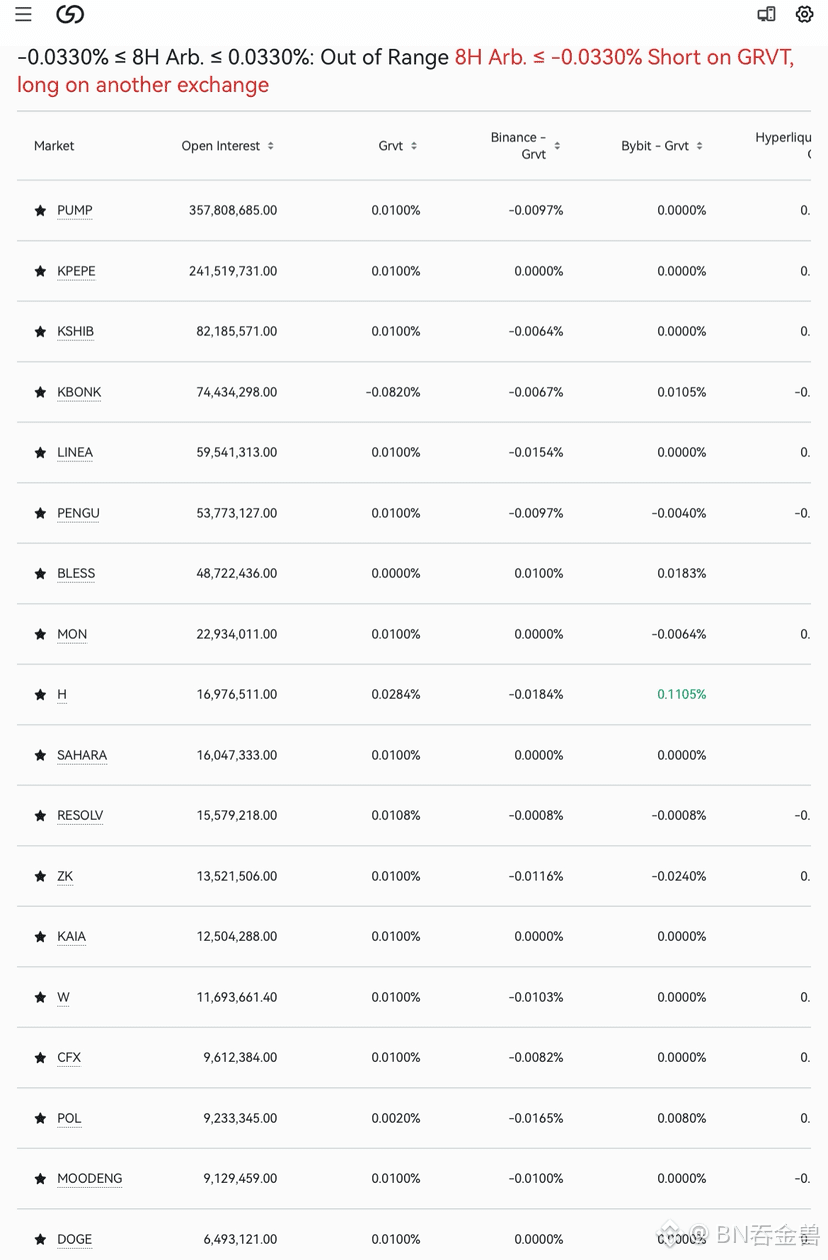
For everyday traders, GRVT’s practical advantages are straightforward. The platform supports three funding settlement cycles—1 hour, 4 hours, and 8 hours. In stable market conditions, it uses the mainstream 8-hour settlement. When the market premium is abnormal, it automatically switches to high-frequency 1-hour settlement to quickly narrow the gap between the contract and spot prices.
The system includes an in-built buffer and adjustment mechanism that anchors the market premium around 0.01%, limiting large short-term funding rate jumps so position costs remain more controllable.
The market data sources also include multiple layers of fallback. If the index data is delayed or interrupted, the system will smoothly switch to an alternative quotation source, preventing any discontinuity in funding rate calculations.
On the page, you can directly see the next estimated funding rate, the settlement countdown, and historical funding payment details. Funding charges are transferred only at the settlement moment. If you close your position mid-cycle, you don’t have to bear the funding cost for that period. Also, fund flows occur only between long and short users; the platform does not charge additional fees in the process.
Compared with leading exchanges like Binance, GRVT delivers rule alignment and an improved user experience.
The funding rate upper and lower bounds are standardized to match those of top platforms, greatly reducing cross-exchange arbitrage price gaps;
At the same time, it optimizes the sampling and calculation logic: for the 4/8-hour cycles, it uses weighted values at period end, aligning more closely with the latest market conditions. For the 1-hour cycle, equal sampling ensures fairness.
In extreme market conditions, it automatically switches to short-cycle settlement—no manual adjustments needed—addressing a weakness of traditional platforms where long-cycle funding content can continuously widen price discrepancies.
In the long run, GRVT will continue refining this funding rate system:
1. Adapt more trading pairs by customizing settlement rules, and open a full funding rate API to enable quantitative traders to build arbitrage strategies
2. Integrate with its own underlying trading architecture to enable margin position yield functionality;
3. In the future, expand to new perpetual contract types such as stocks and RWA, unify standardized funding rate models, and build a derivatives trading environment that is stable, efficient, and with higher capital utilization.@grvt_io
#grvt GRVT:Redesigning perpetual contract funding rates to address traders’ long-standing pain points
Many people who trade perpetual contracts can relate: funding rate differences vary significantly across platforms, and when the market experiences extreme volatility, funding rate swings can get out of control—making it impossible to forecast your position costs. To tackle these common industry issues, GRVT’s new funding rate mechanism optimizes the algorithm at its core, providing traders with a more stable and more flexible solution.
For everyday traders, GRVT’s practical advantages are straightforward. The platform supports three funding settlement cycles—1 hour, 4 hours, and 8 hours. In stable market conditions, it uses the mainstream 8-hour settlement. When the market premium is abnormal, it automatically switches to high-frequency 1-hour settlement to quickly narrow the gap between the contract and spot prices.
The system includes an in-built buffer and adjustment mechanism that anchors the market premium around 0.01%, limiting large short-term funding rate jumps so position costs remain more controllable.
The market data sources also include multiple layers of fallback. If the index data is delayed or interrupted, the system will smoothly switch to an alternative quotation source, preventing any discontinuity in funding rate calculations.
On the page, you can directly see the next estimated funding rate, the settlement countdown, and historical funding payment details. Funding charges are transferred only at the settlement moment. If you close your position mid-cycle, you don’t have to bear the funding cost for that period. Also, fund flows occur only between long and short users; the platform does not charge additional fees in the process.
Compared with leading exchanges like Binance, GRVT delivers rule alignment and an improved user experience.
The funding rate upper and lower bounds are standardized to match those of top platforms, greatly reducing cross-exchange arbitrage price gaps;
At the same time, it optimizes the sampling and calculation logic: for the 4/8-hour cycles, it uses weighted values at period end, aligning more closely with the latest market conditions. For the 1-hour cycle, equal sampling ensures fairness.
In extreme market conditions, it automatically switches to short-cycle settlement—no manual adjustments needed—addressing a weakness of traditional platforms where long-cycle funding content can continuously widen price discrepancies.
In the long run, GRVT will continue refining this funding rate system:
1. Adapt more trading pairs by customizing settlement rules, and open a full funding rate API to enable quantitative traders to build arbitrage strategies
2. Integrate with its own underlying trading architecture to enable margin position yield functionality;
3. In the future, expand to new perpetual contract types such as stocks and RWA, unify standardized funding rate models, and build a derivatives trading environment that is stable, efficient, and with higher capital utilization.@grvt_io
Many people who trade perpetual contracts can relate: funding rate differences vary significantly across platforms, and when the market experiences extreme volatility, funding rate swings can get out of control—making it impossible to forecast your position costs. To tackle these common industry issues, GRVT’s new funding rate mechanism optimizes the algorithm at its core, providing traders with a more stable and more flexible solution.
For everyday traders, GRVT’s practical advantages are straightforward. The platform supports three funding settlement cycles—1 hour, 4 hours, and 8 hours. In stable market conditions, it uses the mainstream 8-hour settlement. When the market premium is abnormal, it automatically switches to high-frequency 1-hour settlement to quickly narrow the gap between the contract and spot prices.
The system includes an in-built buffer and adjustment mechanism that anchors the market premium around 0.01%, limiting large short-term funding rate jumps so position costs remain more controllable.
The market data sources also include multiple layers of fallback. If the index data is delayed or interrupted, the system will smoothly switch to an alternative quotation source, preventing any discontinuity in funding rate calculations.
On the page, you can directly see the next estimated funding rate, the settlement countdown, and historical funding payment details. Funding charges are transferred only at the settlement moment. If you close your position mid-cycle, you don’t have to bear the funding cost for that period. Also, fund flows occur only between long and short users; the platform does not charge additional fees in the process.
Compared with leading exchanges like Binance, GRVT delivers rule alignment and an improved user experience.
The funding rate upper and lower bounds are standardized to match those of top platforms, greatly reducing cross-exchange arbitrage price gaps;
At the same time, it optimizes the sampling and calculation logic: for the 4/8-hour cycles, it uses weighted values at period end, aligning more closely with the latest market conditions. For the 1-hour cycle, equal sampling ensures fairness.
In extreme market conditions, it automatically switches to short-cycle settlement—no manual adjustments needed—addressing a weakness of traditional platforms where long-cycle funding content can continuously widen price discrepancies.
In the long run, GRVT will continue refining this funding rate system:
1. Adapt more trading pairs by customizing settlement rules, and open a full funding rate API to enable quantitative traders to build arbitrage strategies
2. Integrate with its own underlying trading architecture to enable margin position yield functionality;
3. In the future, expand to new perpetual contract types such as stocks and RWA, unify standardized funding rate models, and build a derivatives trading environment that is stable, efficient, and with higher capital utilization.@grvt_io
276
·
--
#grvt I’m really regretting it! Regret not using @grvt_io earlier!
Same kind of trading, why do many users get worse and worse the more they play, while capital utilization never seems to improve?
Very often, it’s not that traders can’t read the market—it's that the platform’s mechanisms themselves are consuming profits.
In traditional trading systems, funds are often split into multiple independent accounts: spot, futures, and wealth management each in their own silo. Every time you switch, you have to transfer, wait, and bear costs. Add to that trading fees, settlement premium, slippage, risk-control restrictions, and opaque data—and before ordinary users even start competing on trading ability, they’ve already been stripped of value by the mechanism itself.
GRVT’s entry point is to rethink “capital efficiency.”
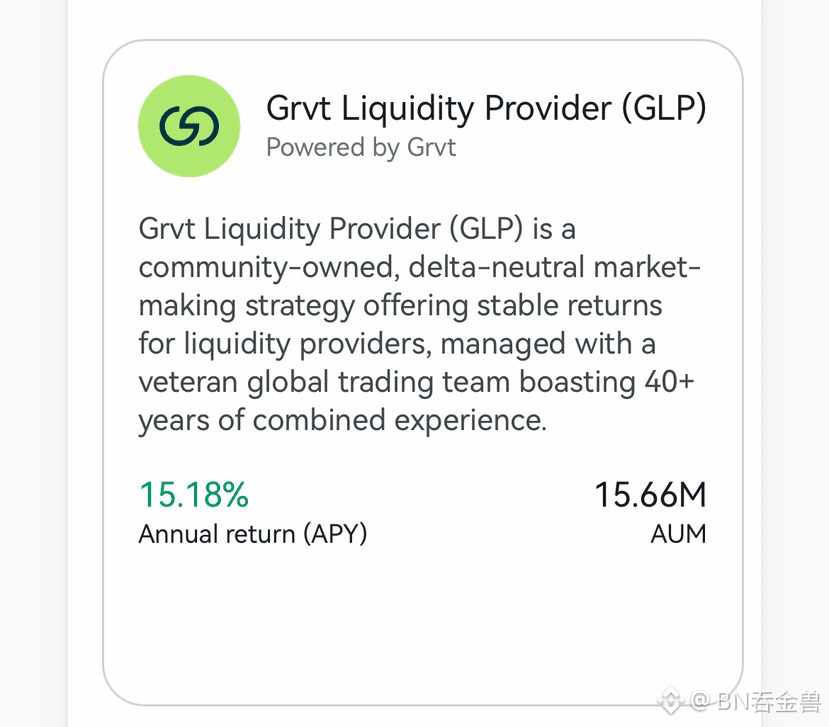
Its unified margin system isn’t just about putting multiple pages together—it allows a single pool of funds to simultaneously support trading, open positions, collateralization, and earning interest.
Users don’t need to keep moving funds back and forth between different products, and they don’t have to leave large amounts of idle assets sitting in accounts.
For high-frequency traders, this means less friction from constant transfers.
For ordinary users, idle capital also has a chance to generate returns, with clearly higher capital utilization efficiency.
Privacy and security are also key focuses. The most common criticism of trading platforms is that users’ assets, positions, profits/losses, and trading history lack transparent protections.
GRVT uses ZK technology to ensure the privacy of trading data, so users don’t have to expose too much sensitive information while completing trades.
Paired with millisecond-level matching capability, the platform aims to combine the speed of centralized exchanges with the transparency and self-sovereignty of the decentralized world.
Compared with other players in the industry, GRVT’s positioning is quite special.
Centralized exchanges usually offer a mature user experience, but issues like the black-box problem, hidden fees, artificial slippage, and position limits always remain.
Traditional DEXs are more transparent, but they often face problems like insufficient liquidity, trading delays or stalling, high fees, and fragmented capital.
GRVT is more like finding a middle path between the two:
On one hand, it preserves high throughput and a smooth trading experience. On the other hand, it puts settlement, asset custody, and trading records back on-chain, making the rules more open.
@grvt_io ’s market-making rebate/commission model is also worth paying attention to!
#grvt I’m really regretting it! Regret not using @grvt_io earlier!
Same kind of trading, why do many users get worse and worse the more they play, while capital utilization never seems to improve?
Very often, it’s not that traders can’t read the market—it's that the platform’s mechanisms themselves are consuming profits.
In traditional trading systems, funds are often split into multiple independent accounts: spot, futures, and wealth management each in their own silo. Every time you switch, you have to transfer, wait, and bear costs. Add to that trading fees, settlement premium, slippage, risk-control restrictions, and opaque data—and before ordinary users even start competing on trading ability, they’ve already been stripped of value by the mechanism itself.
GRVT’s entry point is to rethink “capital efficiency.”
Its unified margin system isn’t just about putting multiple pages together—it allows a single pool of funds to simultaneously support trading, open positions, collateralization, and earning interest.
Users don’t need to keep moving funds back and forth between different products, and they don’t have to leave large amounts of idle assets sitting in accounts.
For high-frequency traders, this means less friction from constant transfers.
For ordinary users, idle capital also has a chance to generate returns, with clearly higher capital utilization efficiency.
Privacy and security are also key focuses. The most common criticism of trading platforms is that users’ assets, positions, profits/losses, and trading history lack transparent protections.
GRVT uses ZK technology to ensure the privacy of trading data, so users don’t have to expose too much sensitive information while completing trades.
Paired with millisecond-level matching capability, the platform aims to combine the speed of centralized exchanges with the transparency and self-sovereignty of the decentralized world.
Compared with other players in the industry, GRVT’s positioning is quite special.
Centralized exchanges usually offer a mature user experience, but issues like the black-box problem, hidden fees, artificial slippage, and position limits always remain.
Traditional DEXs are more transparent, but they often face problems like insufficient liquidity, trading delays or stalling, high fees, and fragmented capital.
GRVT is more like finding a middle path between the two:
On one hand, it preserves high throughput and a smooth trading experience. On the other hand, it puts settlement, asset custody, and trading records back on-chain, making the rules more open.
@grvt_io ’s market-making rebate/commission model is also worth paying attention to!
Same kind of trading, why do many users get worse and worse the more they play, while capital utilization never seems to improve?
Very often, it’s not that traders can’t read the market—it's that the platform’s mechanisms themselves are consuming profits.
In traditional trading systems, funds are often split into multiple independent accounts: spot, futures, and wealth management each in their own silo. Every time you switch, you have to transfer, wait, and bear costs. Add to that trading fees, settlement premium, slippage, risk-control restrictions, and opaque data—and before ordinary users even start competing on trading ability, they’ve already been stripped of value by the mechanism itself.
GRVT’s entry point is to rethink “capital efficiency.”
Its unified margin system isn’t just about putting multiple pages together—it allows a single pool of funds to simultaneously support trading, open positions, collateralization, and earning interest.
Users don’t need to keep moving funds back and forth between different products, and they don’t have to leave large amounts of idle assets sitting in accounts.
For high-frequency traders, this means less friction from constant transfers.
For ordinary users, idle capital also has a chance to generate returns, with clearly higher capital utilization efficiency.
Privacy and security are also key focuses. The most common criticism of trading platforms is that users’ assets, positions, profits/losses, and trading history lack transparent protections.
GRVT uses ZK technology to ensure the privacy of trading data, so users don’t have to expose too much sensitive information while completing trades.
Paired with millisecond-level matching capability, the platform aims to combine the speed of centralized exchanges with the transparency and self-sovereignty of the decentralized world.
Compared with other players in the industry, GRVT’s positioning is quite special.
Centralized exchanges usually offer a mature user experience, but issues like the black-box problem, hidden fees, artificial slippage, and position limits always remain.
Traditional DEXs are more transparent, but they often face problems like insufficient liquidity, trading delays or stalling, high fees, and fragmented capital.
GRVT is more like finding a middle path between the two:
On one hand, it preserves high throughput and a smooth trading experience. On the other hand, it puts settlement, asset custody, and trading records back on-chain, making the rules more open.
@grvt_io ’s market-making rebate/commission model is also worth paying attention to!
82
·
--
#grvt Who’s still passively bearing high liquidation losses when doing contract trading?
Most derivative platforms on the market bury liquidation premiums and hidden fees deep inside—after you close your position, the profits inexplicably shrink.
GRVT uses an on-chain real-time liquidation mechanism. All fees and liquidation prices are公开可溯源 (publicly verifiable and traceable), with absolutely no hidden deductions. Compared with similar competitors, they often rely on centralized liquidation to set prices, leaving users unable to verify profit and loss details.
GRVT combines a unified margin system with a public ledger. Every trade’s profit or loss and every fee are recorded on-chain, so you can fully control where funds flow.
No manual slippage manipulation, no hidden liquidation costs. Ordinary traders can clearly calculate the profit from each trade and avoid the common centralized-platform issue of skimming or clawing back returns.
#grvt @grvt_io
#grvt Who’s still passively bearing high liquidation losses when doing contract trading?
Most derivative platforms on the market bury liquidation premiums and hidden fees deep inside—after you close your position, the profits inexplicably shrink.
GRVT uses an on-chain real-time liquidation mechanism. All fees and liquidation prices are公开可溯源 (publicly verifiable and traceable), with absolutely no hidden deductions. Compared with similar competitors, they often rely on centralized liquidation to set prices, leaving users unable to verify profit and loss details.
GRVT combines a unified margin system with a public ledger. Every trade’s profit or loss and every fee are recorded on-chain, so you can fully control where funds flow.
No manual slippage manipulation, no hidden liquidation costs. Ordinary traders can clearly calculate the profit from each trade and avoid the common centralized-platform issue of skimming or clawing back returns.
#grvt @grvt_io
Most derivative platforms on the market bury liquidation premiums and hidden fees deep inside—after you close your position, the profits inexplicably shrink.
GRVT uses an on-chain real-time liquidation mechanism. All fees and liquidation prices are公开可溯源 (publicly verifiable and traceable), with absolutely no hidden deductions. Compared with similar competitors, they often rely on centralized liquidation to set prices, leaving users unable to verify profit and loss details.
GRVT combines a unified margin system with a public ledger. Every trade’s profit or loss and every fee are recorded on-chain, so you can fully control where funds flow.
No manual slippage manipulation, no hidden liquidation costs. Ordinary traders can clearly calculate the profit from each trade and avoid the common centralized-platform issue of skimming or clawing back returns.
#grvt @grvt_io
114
·
--
Just like doing on-chain contract trading, why are seasoned traders flocking to GRVT?
As an all-in-one brokerage trading platform built on the ZKsync ecosystem, it has introduced an innovative unified margin earnings system. Assets you deposit can be used as trading collateral and can also automatically participate in DeFi interest accrual—throughout the entire process, your funds remain fully utilized with no idle or loss.
Compared with similar competitors, most platforms only lock margin without generating returns. GRVT, however, enables dual appreciation from a single amount of capital. With a dedicated market-making rebate and commission policy, the higher your trading volume, the more generous the rewards. It will further expand into foreign exchange and tokenized U.S. stock categories, covering a wider range of trading tracks, balancing everyday users’ value growth needs with institutional privacy trading requirements.
#grvt @grvt_io
Just like doing on-chain contract trading, why are seasoned traders flocking to GRVT?
As an all-in-one brokerage trading platform built on the ZKsync ecosystem, it has introduced an innovative unified margin earnings system. Assets you deposit can be used as trading collateral and can also automatically participate in DeFi interest accrual—throughout the entire process, your funds remain fully utilized with no idle or loss.
Compared with similar competitors, most platforms only lock margin without generating returns. GRVT, however, enables dual appreciation from a single amount of capital. With a dedicated market-making rebate and commission policy, the higher your trading volume, the more generous the rewards. It will further expand into foreign exchange and tokenized U.S. stock categories, covering a wider range of trading tracks, balancing everyday users’ value growth needs with institutional privacy trading requirements.
#grvt @grvt_io
As an all-in-one brokerage trading platform built on the ZKsync ecosystem, it has introduced an innovative unified margin earnings system. Assets you deposit can be used as trading collateral and can also automatically participate in DeFi interest accrual—throughout the entire process, your funds remain fully utilized with no idle or loss.
Compared with similar competitors, most platforms only lock margin without generating returns. GRVT, however, enables dual appreciation from a single amount of capital. With a dedicated market-making rebate and commission policy, the higher your trading volume, the more generous the rewards. It will further expand into foreign exchange and tokenized U.S. stock categories, covering a wider range of trading tracks, balancing everyday users’ value growth needs with institutional privacy trading requirements.
#grvt @grvt_io
90
·
--
#grvt
Booster new tasks are live—complete the tasks to get 25 tokens!
The launch date is around 7.19, please refer to official announcements for the exact timing!
Still deciding between CEX or DEX trading?
GRVT perfectly solves the dilemma of “either/or.”
It’s a ZK-driven hybrid on-chain trading platform built on ZKsync, combining the speed of centralized platforms with the security of decentralized self-custody. Its core advantage is a unified margin mechanism: funds earn interest automatically while trading, with zero idle capital.
Compared with Hyperliquid and standard DEXs, GRVT uniquely provides on-chain privacy protection to prevent front-running, needle-insertion liquidations, and other sniping attacks. It holds compliant licenses, and its millisecond-level matching depth rivals leading CEXs—balancing both retail and institutional needs, with capital efficiency far surpassing similar platforms.
@grvt_io
#grvt
Booster new tasks are live—complete the tasks to get 25 tokens!
The launch date is around 7.19, please refer to official announcements for the exact timing!
Still deciding between CEX or DEX trading?
GRVT perfectly solves the dilemma of “either/or.”
It’s a ZK-driven hybrid on-chain trading platform built on ZKsync, combining the speed of centralized platforms with the security of decentralized self-custody. Its core advantage is a unified margin mechanism: funds earn interest automatically while trading, with zero idle capital.
Compared with Hyperliquid and standard DEXs, GRVT uniquely provides on-chain privacy protection to prevent front-running, needle-insertion liquidations, and other sniping attacks. It holds compliant licenses, and its millisecond-level matching depth rivals leading CEXs—balancing both retail and institutional needs, with capital efficiency far surpassing similar platforms.
@grvt_io
Booster new tasks are live—complete the tasks to get 25 tokens!
The launch date is around 7.19, please refer to official announcements for the exact timing!
Still deciding between CEX or DEX trading?
GRVT perfectly solves the dilemma of “either/or.”
It’s a ZK-driven hybrid on-chain trading platform built on ZKsync, combining the speed of centralized platforms with the security of decentralized self-custody. Its core advantage is a unified margin mechanism: funds earn interest automatically while trading, with zero idle capital.
Compared with Hyperliquid and standard DEXs, GRVT uniquely provides on-chain privacy protection to prevent front-running, needle-insertion liquidations, and other sniping attacks. It holds compliant licenses, and its millisecond-level matching depth rivals leading CEXs—balancing both retail and institutional needs, with capital efficiency far surpassing similar platforms.
@grvt_io
91
·
--
BTC and ETH prices have significantly dropped. Is cryptocurrency really going to fail?
You will understand after reading this.
Currently, the crypto market is undergoing a deep adjustment phase in the fourth cycle. Let's review history:
- In the 2018 bear market, Bitcoin fell from $20,000 to $3,100 (a drop of 84.5%)
- In the 2022 bear market, it fell from $69,000 to $15,000 (a drop of 78.3%)
The current 40% correction is within the normal range of historical cycles, which is what we refer to as a cyclical correction.
So it's not that cryptocurrency is coming to an end, but rather entering a new phase. A crisis is an opportunity; in this fast-moving asset process, we will have more chances.
The narrative of “digital gold” has not lost its validity. This drop marks a structural transformation of the crypto market from “retail-led” to “institution-led.”
At the same time, the outflow of institutional funds is not bearish but a tactical adjustment.
Giants like BlackRock and MicroStrategy are still continuously increasing their Bitcoin holdings, showing that long-term confidence has not wavered.
Favorable signals:
1. Bitcoin mining difficulty has decreased, and some inefficient miners have exited the market, which means selling pressure will gradually ease.
2. On-chain data shows that the holding ratio of addresses holding Bitcoin for over a year still remains above 70%.
3. The market capitalization of stablecoins like USDT and USDC has continued to grow recently, indicating that investors are reserving cash to wait for bottom-buying opportunities.
At the same time, we should pay attention to the fundamentals and technological development of mainstream assets like Bitcoin and Ethereum, rather than short-term price fluctuations.
4. Lastly, let's talk about CZ's previous speech. At the Davos Forum, he made three core predictions, believing that asset tokenization, payment integration, and AI + crypto will become the core engines of the crypto industry in the 2.0 era.
He revealed that Binance has engaged in asset tokenization discussions with 12 governments, some of which have entered the pilot stage. In the next 3-5 years, asset tokenization will form a trillion-dollar market, sufficiently reflecting confidence in the future market.
Summary:
Historical experience shows that market bottoms are often the best times for long-term investments. #BTC市场影响分析
BTC and ETH prices have significantly dropped. Is cryptocurrency really going to fail?
You will understand after reading this.
Currently, the crypto market is undergoing a deep adjustment phase in the fourth cycle. Let's review history:
- In the 2018 bear market, Bitcoin fell from $20,000 to $3,100 (a drop of 84.5%)
- In the 2022 bear market, it fell from $69,000 to $15,000 (a drop of 78.3%)
The current 40% correction is within the normal range of historical cycles, which is what we refer to as a cyclical correction.
So it's not that cryptocurrency is coming to an end, but rather entering a new phase. A crisis is an opportunity; in this fast-moving asset process, we will have more chances.
The narrative of “digital gold” has not lost its validity. This drop marks a structural transformation of the crypto market from “retail-led” to “institution-led.”
At the same time, the outflow of institutional funds is not bearish but a tactical adjustment.
Giants like BlackRock and MicroStrategy are still continuously increasing their Bitcoin holdings, showing that long-term confidence has not wavered.
Favorable signals:
1. Bitcoin mining difficulty has decreased, and some inefficient miners have exited the market, which means selling pressure will gradually ease.
2. On-chain data shows that the holding ratio of addresses holding Bitcoin for over a year still remains above 70%.
3. The market capitalization of stablecoins like USDT and USDC has continued to grow recently, indicating that investors are reserving cash to wait for bottom-buying opportunities.
At the same time, we should pay attention to the fundamentals and technological development of mainstream assets like Bitcoin and Ethereum, rather than short-term price fluctuations.
4. Lastly, let's talk about CZ's previous speech. At the Davos Forum, he made three core predictions, believing that asset tokenization, payment integration, and AI + crypto will become the core engines of the crypto industry in the 2.0 era.
He revealed that Binance has engaged in asset tokenization discussions with 12 governments, some of which have entered the pilot stage. In the next 3-5 years, asset tokenization will form a trillion-dollar market, sufficiently reflecting confidence in the future market.
Summary:
Historical experience shows that market bottoms are often the best times for long-term investments. #BTC市场影响分析
You will understand after reading this.
Currently, the crypto market is undergoing a deep adjustment phase in the fourth cycle. Let's review history:
- In the 2018 bear market, Bitcoin fell from $20,000 to $3,100 (a drop of 84.5%)
- In the 2022 bear market, it fell from $69,000 to $15,000 (a drop of 78.3%)
The current 40% correction is within the normal range of historical cycles, which is what we refer to as a cyclical correction.
So it's not that cryptocurrency is coming to an end, but rather entering a new phase. A crisis is an opportunity; in this fast-moving asset process, we will have more chances.
The narrative of “digital gold” has not lost its validity. This drop marks a structural transformation of the crypto market from “retail-led” to “institution-led.”
At the same time, the outflow of institutional funds is not bearish but a tactical adjustment.
Giants like BlackRock and MicroStrategy are still continuously increasing their Bitcoin holdings, showing that long-term confidence has not wavered.
Favorable signals:
1. Bitcoin mining difficulty has decreased, and some inefficient miners have exited the market, which means selling pressure will gradually ease.
2. On-chain data shows that the holding ratio of addresses holding Bitcoin for over a year still remains above 70%.
3. The market capitalization of stablecoins like USDT and USDC has continued to grow recently, indicating that investors are reserving cash to wait for bottom-buying opportunities.
At the same time, we should pay attention to the fundamentals and technological development of mainstream assets like Bitcoin and Ethereum, rather than short-term price fluctuations.
4. Lastly, let's talk about CZ's previous speech. At the Davos Forum, he made three core predictions, believing that asset tokenization, payment integration, and AI + crypto will become the core engines of the crypto industry in the 2.0 era.
He revealed that Binance has engaged in asset tokenization discussions with 12 governments, some of which have entered the pilot stage. In the next 3-5 years, asset tokenization will form a trillion-dollar market, sufficiently reflecting confidence in the future market.
Summary:
Historical experience shows that market bottoms are often the best times for long-term investments. #BTC市场影响分析

1
1.2k
·
--
Bearish
ZAMA still has many people holding onto the idea of taking off.
Many people think that if they go up in the meeting, they will take off, but ZAMA is a privacy coin, and up will not list privacy coins.
There are still many top holdings, do you think the project party will pump and sell?
They only start unlocking after a year, and now they don't have much coin in hand; a pump doesn't mean much to them now.
Currently, we can only rely on projects that can deliver on their narratives. The market is also not good, there are not many openings, and with many people in the community and public rounds, no one is selling. Why pump? 🤣🤣
ZAMA still has many people holding onto the idea of taking off.
Many people think that if they go up in the meeting, they will take off, but ZAMA is a privacy coin, and up will not list privacy coins.
There are still many top holdings, do you think the project party will pump and sell?
They only start unlocking after a year, and now they don't have much coin in hand; a pump doesn't mean much to them now.
Currently, we can only rely on projects that can deliver on their narratives. The market is also not good, there are not many openings, and with many people in the community and public rounds, no one is selling. Why pump? 🤣🤣
Many people think that if they go up in the meeting, they will take off, but ZAMA is a privacy coin, and up will not list privacy coins.
There are still many top holdings, do you think the project party will pump and sell?
They only start unlocking after a year, and now they don't have much coin in hand; a pump doesn't mean much to them now.
Currently, we can only rely on projects that can deliver on their narratives. The market is also not good, there are not many openings, and with many people in the community and public rounds, no one is selling. Why pump? 🤣🤣
13
2
11
5.3k
·
--
ZAMA will launch spot trading at 9 PM tonight, with alpha users starting trading at 8 PM.
What are the selling pressures at 8 PM tonight?
1. Binance will have a 2% share of new tokens (equivalent to 220 million tokens)
2. A 12% share for the public round and community round (equivalent to 1.32 billion tokens) will be distributed simultaneously with alpha, meaning they can be sold together.
The overall selling pressure is 14%, which means there will be 1.54 billion tokens available for sale at 8 PM, indicating a very high selling pressure.
ZAMA will launch spot trading at 9 PM tonight, with alpha users starting trading at 8 PM.
What are the selling pressures at 8 PM tonight?
1. Binance will have a 2% share of new tokens (equivalent to 220 million tokens)
2. A 12% share for the public round and community round (equivalent to 1.32 billion tokens) will be distributed simultaneously with alpha, meaning they can be sold together.
The overall selling pressure is 14%, which means there will be 1.54 billion tokens available for sale at 8 PM, indicating a very high selling pressure.
What are the selling pressures at 8 PM tonight?
1. Binance will have a 2% share of new tokens (equivalent to 220 million tokens)
2. A 12% share for the public round and community round (equivalent to 1.32 billion tokens) will be distributed simultaneously with alpha, meaning they can be sold together.
The overall selling pressure is 14%, which means there will be 1.54 billion tokens available for sale at 8 PM, indicating a very high selling pressure.
1
2
1.5k
·
--
Zama token will be launched on alpha trading tomorrow night at 20:00, and it can be sold on Binance at 8 PM tomorrow night.
The founder of Zama mentioned that 12% of the sales share (1.32 billion tokens) for the community and public round will be distributed one hour before the CEX launch, which means it can be sold simultaneously with Binance alpha time, so there might be significant selling pressure; alpha investors should pay attention to the principal.
Supply:
11 billion tokens
Circulating quantity:
20% (2.2 billion tokens)
CEX spot time:
21:00 (UTC+8)
Zama token will be launched on alpha trading tomorrow night at 20:00, and it can be sold on Binance at 8 PM tomorrow night.
The founder of Zama mentioned that 12% of the sales share (1.32 billion tokens) for the community and public round will be distributed one hour before the CEX launch, which means it can be sold simultaneously with Binance alpha time, so there might be significant selling pressure; alpha investors should pay attention to the principal.
Supply:
11 billion tokens
Circulating quantity:
20% (2.2 billion tokens)
CEX spot time:
21:00 (UTC+8)
The founder of Zama mentioned that 12% of the sales share (1.32 billion tokens) for the community and public round will be distributed one hour before the CEX launch, which means it can be sold simultaneously with Binance alpha time, so there might be significant selling pressure; alpha investors should pay attention to the principal.
Supply:
11 billion tokens
Circulating quantity:
20% (2.2 billion tokens)
CEX spot time:
21:00 (UTC+8)
1
1
1.4k
·
--
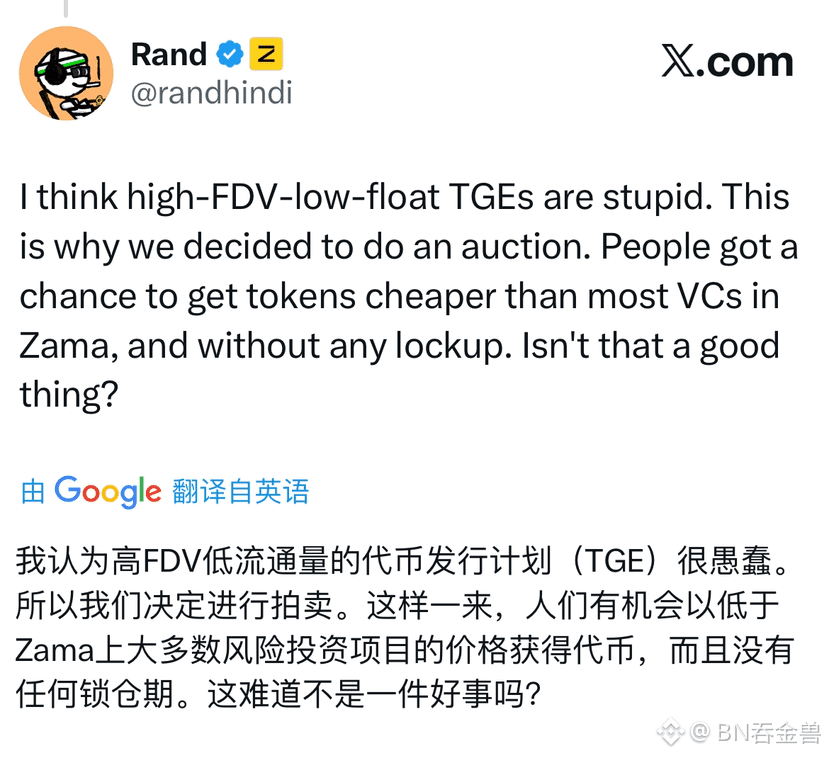
Many people believe that Zama's public round at 0.05 will definitely push the price above 0.05.
1. First, the public round of token issuance occurs on the ETH mainnet.
2. Binance's new token offerings are on the BSC mainnet.
3. Generally, after the opening, there will be price differences between the ETH mainnet and the BSC chain; the token price on the ETH mainnet may be higher, which also protects investors during the new token offerings to prevent losses.
The estimated price of Zama on the BSC chain is around 0.04; most people are currently going long, isn't this just random shorting?
Many people believe that Zama's public round at 0.05 will definitely push the price above 0.05.
1. First, the public round of token issuance occurs on the ETH mainnet.
2. Binance's new token offerings are on the BSC mainnet.
3. Generally, after the opening, there will be price differences between the ETH mainnet and the BSC chain; the token price on the ETH mainnet may be higher, which also protects investors during the new token offerings to prevent losses.
The estimated price of Zama on the BSC chain is around 0.04; most people are currently going long, isn't this just random shorting?
1. First, the public round of token issuance occurs on the ETH mainnet.
2. Binance's new token offerings are on the BSC mainnet.
3. Generally, after the opening, there will be price differences between the ETH mainnet and the BSC chain; the token price on the ETH mainnet may be higher, which also protects investors during the new token offerings to prevent losses.
The estimated price of Zama on the BSC chain is around 0.04; most people are currently going long, isn't this just random shorting?
1
1
4
2.1k
·
--
For a while now, Alpha has become increasingly difficult to farm, and many people have been trapped.
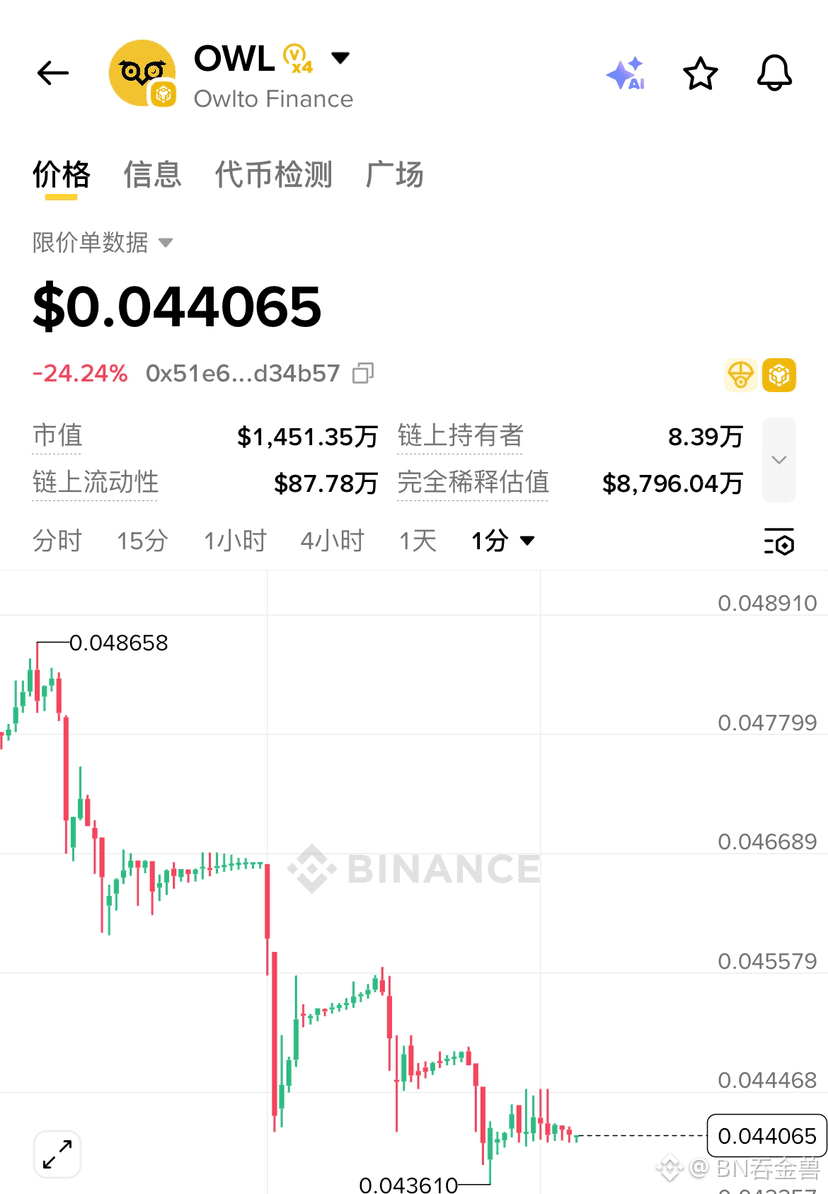
Currently, $OWL is the most vicious coin, basically getting trapped every few minutes. Many people have lost directly from 1000u down to 40u-50u. Be careful; you can avoid being trapped multiple times, but if you make one mistake, you'll lose an airdrop.
I have already stopped trading this coin, $OWL. Everyone, please be cautious!
For those playing with swing trading, be careful as well. The current market value is 14 million, and it can easily drop to 1-2 million. If you get caught once, do not average down; the more you average down, the less your principal will be!
For a while now, Alpha has become increasingly difficult to farm, and many people have been trapped.
Currently, $OWL is the most vicious coin, basically getting trapped every few minutes. Many people have lost directly from 1000u down to 40u-50u. Be careful; you can avoid being trapped multiple times, but if you make one mistake, you'll lose an airdrop.
I have already stopped trading this coin, $OWL. Everyone, please be cautious!
For those playing with swing trading, be careful as well. The current market value is 14 million, and it can easily drop to 1-2 million. If you get caught once, do not average down; the more you average down, the less your principal will be!
Currently, $OWL is the most vicious coin, basically getting trapped every few minutes. Many people have lost directly from 1000u down to 40u-50u. Be careful; you can avoid being trapped multiple times, but if you make one mistake, you'll lose an airdrop.
I have already stopped trading this coin, $OWL. Everyone, please be cautious!
For those playing with swing trading, be careful as well. The current market value is 14 million, and it can easily drop to 1-2 million. If you get caught once, do not average down; the more you average down, the less your principal will be!

3
1
2
2.2k
·
--
ZAMA is expected to launch around Friday, and the TGE opening time should be on Monday, which is February 2nd, so be prepared!
The points are approximately 225, with a cost price of around 0.025 (cost estimated at 80-90u loss, profit is also approximately 80-90u.
Currently, bsc has already deployed the new ZAMAKey!
ZAMA is expected to launch around Friday, and the TGE opening time should be on Monday, which is February 2nd, so be prepared!
The points are approximately 225, with a cost price of around 0.025 (cost estimated at 80-90u loss, profit is also approximately 80-90u.
Currently, bsc has already deployed the new ZAMAKey!
The points are approximately 225, with a cost price of around 0.025 (cost estimated at 80-90u loss, profit is also approximately 80-90u.
Currently, bsc has already deployed the new ZAMAKey!

10
5
21
5.2k
·
--
Breaking news!
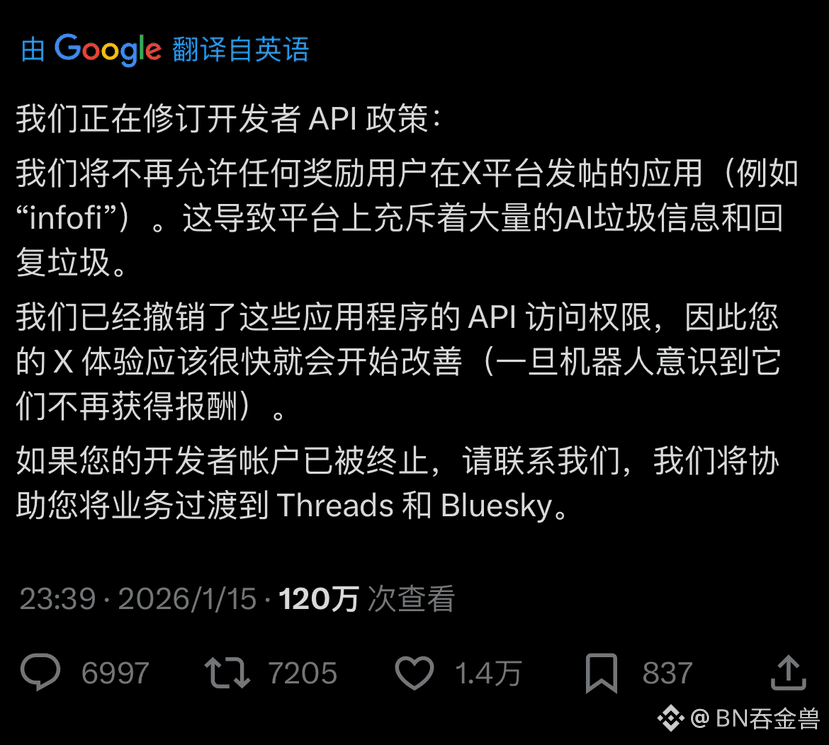
Apps involving cryptocurrency airdrops or points, such as KaitoAI, which everyone refers to as 'Zui Lu', are going to be in trouble!
X has released an official announcement that all projects in the infofi track will be affected!
It has been clearly stated that the API access rights for such apps will be revoked. Without API access, it will be impossible to obtain user post content and rank for rewards.
The goal is to reduce the large amount of low-quality content and responses generated by AI.
Breaking news!
Apps involving cryptocurrency airdrops or points, such as KaitoAI, which everyone refers to as 'Zui Lu', are going to be in trouble!
X has released an official announcement that all projects in the infofi track will be affected!
It has been clearly stated that the API access rights for such apps will be revoked. Without API access, it will be impossible to obtain user post content and rank for rewards.
The goal is to reduce the large amount of low-quality content and responses generated by AI.
Apps involving cryptocurrency airdrops or points, such as KaitoAI, which everyone refers to as 'Zui Lu', are going to be in trouble!
X has released an official announcement that all projects in the infofi track will be affected!
It has been clearly stated that the API access rights for such apps will be revoked. Without API access, it will be impossible to obtain user post content and rank for rewards.
The goal is to reduce the large amount of low-quality content and responses generated by AI.
169
·
--
$LAVA I must say, is this chain usually not used by anyone? With just this many people, it can't hold up. Was the stress test conducted with 100 people transferring money at the same time? 🤣🤣🤣
$LAVA I must say, is this chain usually not used by anyone? With just this many people, it can't hold up. Was the stress test conducted with 100 people transferring money at the same time? 🤣🤣🤣
299
·
--
$LONG The family is shipping out, are you going up to take over?
$LONG The family is shipping out, are you going up to take over?
2
1.5k
·
--
Bearish
$YB alpha share is only 1 percent, the spot airdrop has 3 percent share to dump, plus the Shanghai demon new share
$YB alpha share is only 1 percent, the spot airdrop has 3 percent share to dump, plus the Shanghai demon new share
1
864
Log in to explore more content
Join global crypto users on Binance Square
⚡️ Get latest and useful information about crypto.
💬 Trusted by the world’s largest crypto exchange.
👍 Discover real insights from verified creators.
Email / Phone number
Trending Topics
USAugustPPIRisesLessThanExpected
21,050 views
484 Discussing
🚨 US AUG PPI: Rises LESS Than Expected! Bullish for Crypto? 🚀
PPI +0.4% MoM as expected, but CORE PPI only +0.2% vs +0.3% expected - cooling!
What it means:
• Wholesale inflation softer than feared
• Fed rate hike chance now 62% - but dovish signals coming
• Core PCE revisions expected downward - bullish
• BTC usually pumps on softer PPI
Fed meeting Sep 15-16 - Market now expects pause, not hike?
Is this the green light for Q4 rally?
#Bitcoin #PPI #Fed #CryptoNews #BTC#usaugustppiriseslessthanexpected
True News
·1 Likes
·1.2k views
SECApprovesNasdaqTexasCommodityTrustRule
14,143 views
405 Discussing
ECBRaisesRatesSecondTimeTo2.5%
10,922 views
291 Discussing