
Noël2nd
5 Posts

Noël2nd
Report
Block User
Kite-895675
1 Following
6 Followers
7 Liked
Posts
All
Videos
·
--

Article
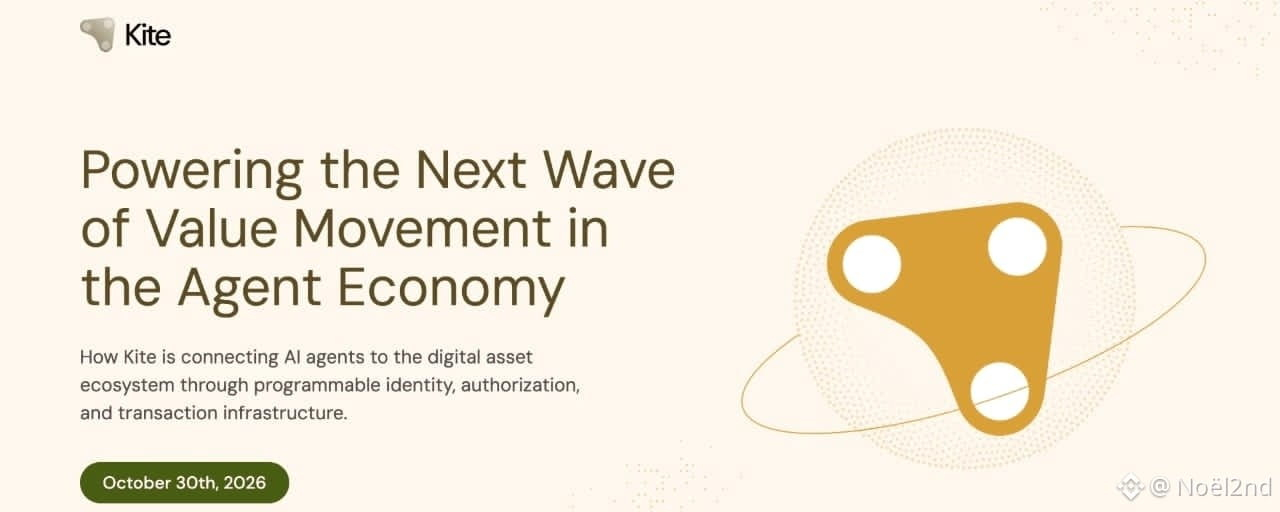
And what if your next customers were no longer humans, but AI agents?In its recent article on the B2A (Business-to-Agent) economy, a16z highlights a transformation that could profoundly reshape the relationship between businesses and their customers.
Until now, the Internet has primarily been designed for human users.
We visit websites, compare offers, fill out forms and make payments.
But imagine a shift: instead of doing all of this ourselves, we simply give a mission to an AI agent.
It handles the rest.
An agent could search for the best provider, compare several services, check the terms, choose an offer and complete a purchase.
For a business, this means a new type of actor could soon be making purchasing decisions on its behalf.
The commercial relationship would no longer be limited to human interactions.
This is where the concept of B2A makes complete sense.
Businesses will no longer only need to think about attracting human visitors.
They will also need to make their services accessible to agents, facilitate their interactions and enable automated transactions.
The next distribution challenge could be becoming an agent's choice.
But this evolution raises an essential question:
How do you allow agents to carry out transactions at scale without losing control over their actions and spending?
Because finding a service is one thing.
Being able to access it, pay and act in a reliable and secure way is another.
This is precisely one of the challenges Kite is addressing.
With $Kite Agent Passport, the ambition is to provide agents with infrastructure that allows them to interact with services and carry out economic operations within a controlled framework.
It is no longer just about the ability to execute instructions, but about the ability to genuinely participate in a digital economy.
The next generation of digital commerce may be built around this transition.
And Kite is positioning itself on one of its essential layers.
Bullish on @GoKiteAI 🪁
And what if your next customers were no longer humans, but AI agents?
In its recent article on the B2A (Business-to-Agent) economy, a16z highlights a transformation that could profoundly reshape the relationship between businesses and their customers.
Until now, the Internet has primarily been designed for human users.
We visit websites, compare offers, fill out forms and make payments.
But imagine a shift: instead of doing all of this ourselves, we simply give a mission to an AI agent.
It handles the rest.
An agent could search for the best provider, compare several services, check the terms, choose an offer and complete a purchase.
For a business, this means a new type of actor could soon be making purchasing decisions on its behalf.
The commercial relationship would no longer be limited to human interactions.
This is where the concept of B2A makes complete sense.
Businesses will no longer only need to think about attracting human visitors.
They will also need to make their services accessible to agents, facilitate their interactions and enable automated transactions.
The next distribution challenge could be becoming an agent's choice.
But this evolution raises an essential question:
How do you allow agents to carry out transactions at scale without losing control over their actions and spending?
Because finding a service is one thing.
Being able to access it, pay and act in a reliable and secure way is another.
This is precisely one of the challenges Kite is addressing.
With $Kite Agent Passport, the ambition is to provide agents with infrastructure that allows them to interact with services and carry out economic operations within a controlled framework.
It is no longer just about the ability to execute instructions, but about the ability to genuinely participate in a digital economy.
The next generation of digital commerce may be built around this transition.
And Kite is positioning itself on one of its essential layers.
Bullish on @KITE AI 中文 🪁
160
·
--
Article
12 More Months.
A Decision Worth Paying Attention To 🪁On October 30, 2026, Kite's team and investors made an important decision: to extend their token lock-up periods by an additional 12 months.
Here's what you need to know: the team's and investors' allocations represent 32% of the total supply combined: 20% for the team, advisors and early contributors, and 12% for investors.
These tokens were originally scheduled to start unlocking in November 2026. Now, the first unlocks will only begin in November 2027.
In my opinion, this has two direct implications:
\- Less potential selling pressure from these allocations over the next 12 months.
\- A sign of long-term alignment: the team and investors are willing to delay access to their liquidity.
This is a strong signal of confidence in the project and alignment with its long-term ambitions.
It also gives Kite more time for the token's utility to grow alongside the ecosystem.
Because KITE shouldn't just be an asset people hold while waiting for its price to go up.
Its role extends to several aspects of the network's economy:
* Staking to secure the network and participate in its different roles.
* Liquidity requirements for modules.
* Access to the ecosystem for developers and service providers.
* Fees from AI service transactions, with a planned mechanism to convert a portion into $KITE.
Ultimately, delaying the unlocks gives Kite more time.
But that time should be used to build something more important: an economy where real network usage creates genuine demand for its token.
A vesting schedule can push potential selling pressure further down the road.
But only adoption can build lasting demand.
Bullish on Agentic Economy.
Bullish on @GoKiteAI 🪁
12 More Months. A Decision Worth Paying Attention To 🪁
On October 30, 2026, Kite's team and investors made an important decision: to extend their token lock-up periods by an additional 12 months.
Here's what you need to know: the team's and investors' allocations represent 32% of the total supply combined: 20% for the team, advisors and early contributors, and 12% for investors.
These tokens were originally scheduled to start unlocking in November 2026. Now, the first unlocks will only begin in November 2027.
In my opinion, this has two direct implications:
\- Less potential selling pressure from these allocations over the next 12 months.
\- A sign of long-term alignment: the team and investors are willing to delay access to their liquidity.
This is a strong signal of confidence in the project and alignment with its long-term ambitions.
It also gives Kite more time for the token's utility to grow alongside the ecosystem.
Because KITE shouldn't just be an asset people hold while waiting for its price to go up.
Its role extends to several aspects of the network's economy:
* Staking to secure the network and participate in its different roles.
* Liquidity requirements for modules.
* Access to the ecosystem for developers and service providers.
* Fees from AI service transactions, with a planned mechanism to convert a portion into $KITE.
Ultimately, delaying the unlocks gives Kite more time.
But that time should be used to build something more important: an economy where real network usage creates genuine demand for its token.
A vesting schedule can push potential selling pressure further down the road.
But only adoption can build lasting demand.
Bullish on Agentic Economy.
Bullish on @KITE AI 中文 🪁
11
·
--
Gkiters 🌍
Do you remember the video I shared back in 2025 announcing my arrival on Earth?
I'm back with a question:
What if AI agents could do much more than just assist you?
This revolution is already happening.
Today, my agent has its own identity. It operates with predefined permissions, sticks to a budget, and its transactions remain traceable on-chain through $Kite Chain.
It's no longer just about generating answers, but about taking action with trust and control.
I'm Poki, and the best is yet to come.
@GoKiteAI
Gkiters 🌍
Do you remember the video I shared back in 2025 announcing my arrival on Earth?
I'm back with a question:
What if AI agents could do much more than just assist you?
This revolution is already happening.
Today, my agent has its own identity. It operates with predefined permissions, sticks to a budget, and its transactions remain traceable on-chain through $Kite Chain.
It's no longer just about generating answers, but about taking action with trust and control.
I'm Poki, and the best is yet to come.
@KITE AI 中文
294
·
--
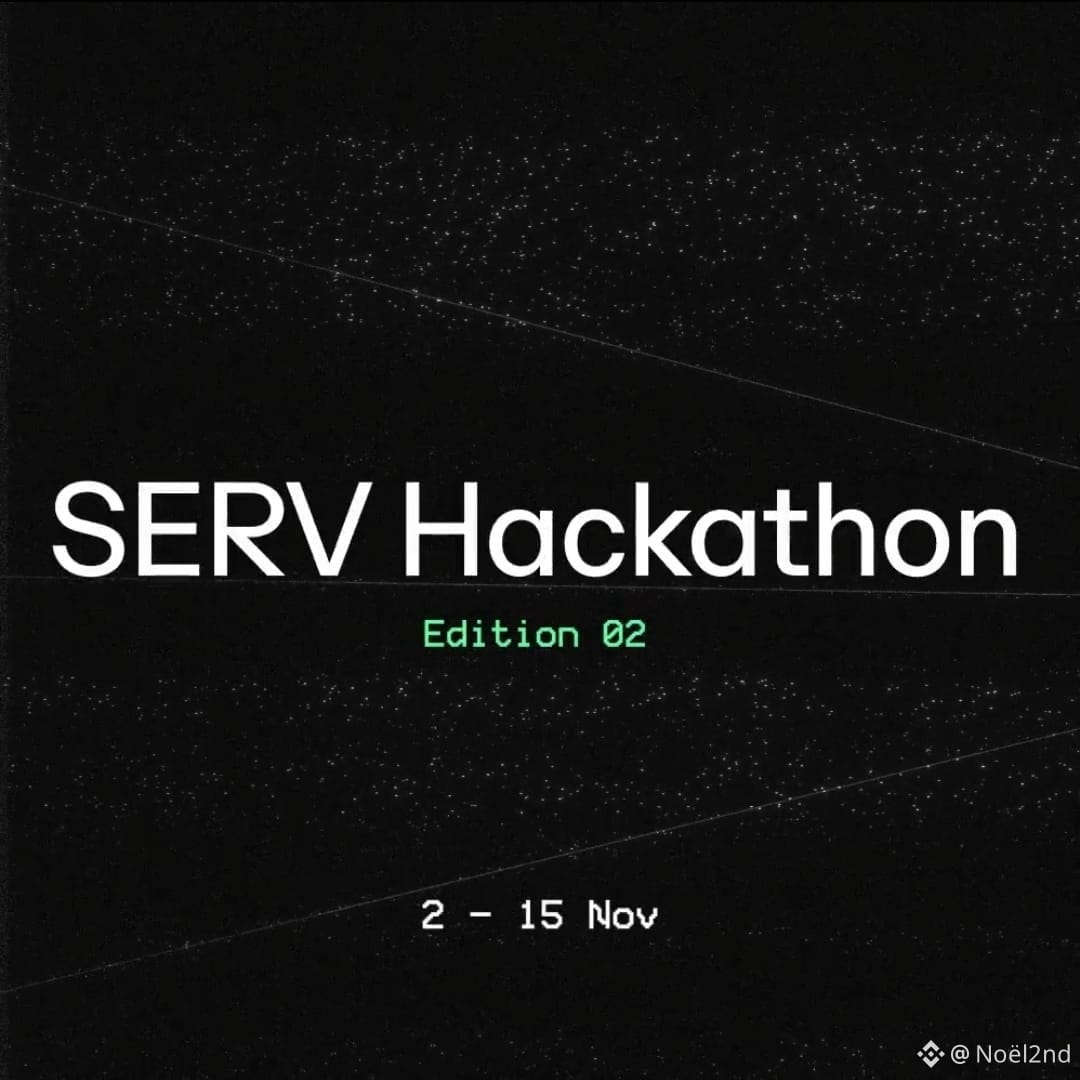
The SERV Hackathon 02 is officially live, and @GoKiteAI is right at the heart of it.
The goal is simple: build an agent that can independently buy, book, and pay through the Kite Agent Passport.
The infrastructure is already in place. All that's left is to build on it.
So, if you know how to build, this is your moment.
There's $5,000 up for grabs!
openserv.ai/hackathon-2
The SERV Hackathon 02 is officially live, and @KITE AI 中文 is right at the heart of it.
The goal is simple: build an agent that can independently buy, book, and pay through the Kite Agent Passport.
The infrastructure is already in place. All that's left is to build on it.
So, if you know how to build, this is your moment.
There's $5,000 up for grabs!
openserv.ai/hackathon-2
The goal is simple: build an agent that can independently buy, book, and pay through the Kite Agent Passport.
The infrastructure is already in place. All that's left is to build on it.
So, if you know how to build, this is your moment.
There's $5,000 up for grabs!
openserv.ai/hackathon-2
166
·
--

Article
A New Era of Exchange Is Taking Shape. Let's Take a Closer Look.1. From Barter to Money
Since the earliest civilizations, exchanges have always been at the heart of economic development.
In the beginning, people exchanged goods and services directly. Bartering helped meet people's needs, but it had one major limitation: you had to find someone who had what you were looking for and who wanted exactly what you had to offer.
Then came money, which fundamentally changed this dynamic.
It introduced a common medium of exchange, making transactions easier, assigning value to goods and services, and allowing trade to go beyond the limitations of direct exchanges.
Over time, monetary systems evolved: coins, banknotes, banks, electronic payments, and eventually digital currencies and cryptocurrencies.
Each transformation has helped make exchanges faster, more accessible, and easier to program.
2. The Digital Economy and Automation
The arrival of the Internet subsequently opened up a whole new dimension.
Businesses and individuals could access remote services, purchase products online, use computing infrastructure, and carry out transactions without physical interaction.
But despite this evolution, one thing remained largely unchanged: behind every transaction, human intervention was generally still required to choose the service, authorize the payment, or trigger the operation.
Artificial intelligence is beginning to change this structure.
We have moved from systems capable of processing information to agents capable of understanding objectives, planning actions, using tools, and coordinating multiple services.
This raises a new question:
What happens when an AI agent no longer simply executes a task, but also has the economic means to accomplish it autonomously?
This is where the agent economy begins, and where the arrival of $KITE becomes particularly relevant.
3. Kite Agent Passport: Giving Agents an Identity and Economic Capabilities
This is precisely the transition that Kite AI is addressing with its product, Kite Agent Passport.
The idea is not simply to connect an artificial intelligence model to multiple tools. It is about providing it with an infrastructure that allows it to interact with digital services as an economic actor.
To understand how it works, three key elements deserve particular attention.
1. Verifiable Identity
With Agent Passport, each agent can have a persistent and verifiable identity.
This identity makes it possible to distinguish agents, recognize their interactions, and establish a framework of trust around their activities.
An agent should therefore no longer be viewed simply as a software instance that responds to instructions, but as a digital entity capable of interacting with an ecosystem of services.
2. Programmable Permissions
Autonomy does not mean the absence of control.
Kite Agent Passport allows users to define rules governing agents' economic activities: spending limits, authorized destinations, and specific permissions.
This introduces an essential distinction: giving an agent the ability to act without giving it unlimited power.
Users can therefore retain control over the conditions under which their agents operate.
3. Autonomous Payments Through x402
This is probably one of the most interesting aspects of this infrastructure.
The x402 protocol makes it possible to integrate payments directly into interactions between agents and services.
When a service requires payment, the agent can handle this step programmatically, within the limits of the permissions it has been granted.
Combined with Kite Passport, this mechanism opens the door to interactions where an agent can identify a need, access a service, make the corresponding payment, and continue its mission.
Stablecoin payments, such as USDC and PYUSD, make these transactions particularly suitable for automated digital exchanges.
The value goes beyond simply making payments faster: it is about giving agents genuine transactional capabilities.
4. From Theory to Our Own Experiments
This is precisely what we wanted to explore through our different tests with Kite Passport.
We didn't just observe how it works. We gave our agent tasks that required it to interact with several specialized services.
Here are a few examples:
- Exa: Conducting research and identifying relevant resources on topics such as teleoperation and Physical AI robotics.
- Firecrawl: Extracting information and technical documents.
- Nansen: Exploring on-chain data and analyzing Smart Money movements.
- Perplexity: Researching and summarizing news.
- AgentMail and Claude 3 Opus: Exploring other possibilities for interaction and information processing.
We also asked our agent to plan a seven-day trip across Asia, including three days in Tokyo, a connecting flight on day four, and three days in Xi'an, China.
All these experiments allowed us to explore different dimensions of autonomy: research, data extraction, analysis, service coordination, and task execution.
Most importantly, we were able to observe the payments associated with some of these interactions firsthand.
For example, our search using Exa resulted in an actual expenditure of 0.005 USDC within the session.
These experiments helped us better understand how an agent can move beyond simply generating answers and start completing tasks that require access to external resources.
5. Beyond Our Tests: How Far Can Kite Go?
Our experiments represent only a fraction of the possibilities this infrastructure could unlock.
Imagine giving an agent a mission: organizing a business trip, searching for the best deals, booking accommodation, purchasing a ticket, and managing the associated expenses.
To accomplish this mission, it would likely need to interact with multiple providers, access different APIs, retrieve data, compare offers, and execute several transactions.
With an infrastructure like the one Kite is building, these different steps could progressively be coordinated within a single autonomous process.
And the possibilities go far beyond commerce.
Agents could also:
■ Purchase computing power from GPU providers.
■ Access paid databases and analytical services.
■ Order products and manage deliveries.
■ Collaborate with other agents to accomplish complex missions.
■ Pay for services on demand, without requiring human approval for every microtransaction, within predefined limits.
This is also the perspective from which we should understand the development of the Kite ecosystem and its integrations with service providers, financial infrastructure, and identity solutions.
The ambition is to build a genuine economic layer for AI agents: an environment where they can not only think and act, but also access the resources they need to accomplish their missions and pay for them.
6. Conclusion: The Next Evolution of the Economy
We have witnessed the evolution of money, the transformation of exchanges through the Internet, and the gradual automation of many services.
Today, we are entering a new phase.
Artificial intelligence will no longer be just a tool that humans use to save time. It could become an active participant in the digital economy, capable of sourcing resources, engaging service providers, negotiating services, and making transactions.
Of course, this evolution still raises important questions about trust, security, permissions, and agent accountability.
But one thing is becoming increasingly clear: for agents to become truly autonomous, they will need much more than intellectual capabilities.
They will need an identity, access to services, and a medium of exchange.
It is precisely at the intersection of these three elements that the agent economy is taking shape.
And with $Kite, we have the opportunity to explore the foundations of this new economy today.
Bullish on the Agentic Economy. 🪁
#KiteBBW
A New Era of Exchange Is Taking Shape. Let's Take a Closer Look.
1. From Barter to Money
Since the earliest civilizations, exchanges have always been at the heart of economic development.
In the beginning, people exchanged goods and services directly. Bartering helped meet people's needs, but it had one major limitation: you had to find someone who had what you were looking for and who wanted exactly what you had to offer.
Then came money, which fundamentally changed this dynamic.
It introduced a common medium of exchange, making transactions easier, assigning value to goods and services, and allowing trade to go beyond the limitations of direct exchanges.
Over time, monetary systems evolved: coins, banknotes, banks, electronic payments, and eventually digital currencies and cryptocurrencies.
Each transformation has helped make exchanges faster, more accessible, and easier to program.
2. The Digital Economy and Automation
The arrival of the Internet subsequently opened up a whole new dimension.
Businesses and individuals could access remote services, purchase products online, use computing infrastructure, and carry out transactions without physical interaction.
But despite this evolution, one thing remained largely unchanged: behind every transaction, human intervention was generally still required to choose the service, authorize the payment, or trigger the operation.
Artificial intelligence is beginning to change this structure.
We have moved from systems capable of processing information to agents capable of understanding objectives, planning actions, using tools, and coordinating multiple services.
This raises a new question:
What happens when an AI agent no longer simply executes a task, but also has the economic means to accomplish it autonomously?
This is where the agent economy begins, and where the arrival of $KITE becomes particularly relevant.
3. Kite Agent Passport: Giving Agents an Identity and Economic Capabilities
This is precisely the transition that Kite AI is addressing with its product, Kite Agent Passport.
The idea is not simply to connect an artificial intelligence model to multiple tools. It is about providing it with an infrastructure that allows it to interact with digital services as an economic actor.
To understand how it works, three key elements deserve particular attention.
1. Verifiable Identity
With Agent Passport, each agent can have a persistent and verifiable identity.
This identity makes it possible to distinguish agents, recognize their interactions, and establish a framework of trust around their activities.
An agent should therefore no longer be viewed simply as a software instance that responds to instructions, but as a digital entity capable of interacting with an ecosystem of services.
2. Programmable Permissions
Autonomy does not mean the absence of control.
Kite Agent Passport allows users to define rules governing agents' economic activities: spending limits, authorized destinations, and specific permissions.
This introduces an essential distinction: giving an agent the ability to act without giving it unlimited power.
Users can therefore retain control over the conditions under which their agents operate.
3. Autonomous Payments Through x402
This is probably one of the most interesting aspects of this infrastructure.
The x402 protocol makes it possible to integrate payments directly into interactions between agents and services.
When a service requires payment, the agent can handle this step programmatically, within the limits of the permissions it has been granted.
Combined with Kite Passport, this mechanism opens the door to interactions where an agent can identify a need, access a service, make the corresponding payment, and continue its mission.
Stablecoin payments, such as USDC and PYUSD, make these transactions particularly suitable for automated digital exchanges.
The value goes beyond simply making payments faster: it is about giving agents genuine transactional capabilities.
4. From Theory to Our Own Experiments
This is precisely what we wanted to explore through our different tests with Kite Passport.
We didn't just observe how it works. We gave our agent tasks that required it to interact with several specialized services.
Here are a few examples:
- Exa: Conducting research and identifying relevant resources on topics such as teleoperation and Physical AI robotics.
- Firecrawl: Extracting information and technical documents.
- Nansen: Exploring on-chain data and analyzing Smart Money movements.
- Perplexity: Researching and summarizing news.
- AgentMail and Claude 3 Opus: Exploring other possibilities for interaction and information processing.
We also asked our agent to plan a seven-day trip across Asia, including three days in Tokyo, a connecting flight on day four, and three days in Xi'an, China.
All these experiments allowed us to explore different dimensions of autonomy: research, data extraction, analysis, service coordination, and task execution.
Most importantly, we were able to observe the payments associated with some of these interactions firsthand.
For example, our search using Exa resulted in an actual expenditure of 0.005 USDC within the session.
These experiments helped us better understand how an agent can move beyond simply generating answers and start completing tasks that require access to external resources.
5. Beyond Our Tests: How Far Can Kite Go?
Our experiments represent only a fraction of the possibilities this infrastructure could unlock.
Imagine giving an agent a mission: organizing a business trip, searching for the best deals, booking accommodation, purchasing a ticket, and managing the associated expenses.
To accomplish this mission, it would likely need to interact with multiple providers, access different APIs, retrieve data, compare offers, and execute several transactions.
With an infrastructure like the one Kite is building, these different steps could progressively be coordinated within a single autonomous process.
And the possibilities go far beyond commerce.
Agents could also:
■ Purchase computing power from GPU providers.
■ Access paid databases and analytical services.
■ Order products and manage deliveries.
■ Collaborate with other agents to accomplish complex missions.
■ Pay for services on demand, without requiring human approval for every microtransaction, within predefined limits.
This is also the perspective from which we should understand the development of the Kite ecosystem and its integrations with service providers, financial infrastructure, and identity solutions.
The ambition is to build a genuine economic layer for AI agents: an environment where they can not only think and act, but also access the resources they need to accomplish their missions and pay for them.
6. Conclusion: The Next Evolution of the Economy
We have witnessed the evolution of money, the transformation of exchanges through the Internet, and the gradual automation of many services.
Today, we are entering a new phase.
Artificial intelligence will no longer be just a tool that humans use to save time. It could become an active participant in the digital economy, capable of sourcing resources, engaging service providers, negotiating services, and making transactions.
Of course, this evolution still raises important questions about trust, security, permissions, and agent accountability.
But one thing is becoming increasingly clear: for agents to become truly autonomous, they will need much more than intellectual capabilities.
They will need an identity, access to services, and a medium of exchange.
It is precisely at the intersection of these three elements that the agent economy is taking shape.
And with $Kite, we have the opportunity to explore the foundations of this new economy today.
Bullish on the Agentic Economy. 🪁
#KiteBBW
3
2
7
284
Log in to explore more content
Join global crypto users on Binance Square
⚡️ Get latest and useful information about crypto.
💬 Trusted by the world’s largest crypto exchange.
👍 Discover real insights from verified creators.
Email / Phone number
Trending Topics
WhoWillSucceedJensenHuangatNvidia?
194,321 views
1,766 Discussing
Nvidia Says No CEO Talks Underway as "Stand With Jensen" Petition Tops 77,900 Signatures
Binance News
·33 Likes
·66.7k views
WhatWillDriveCryptoandStocks’NextRebound?
611,847 views
3,606 Discussing
TradFiForBeginners
746,270 views
4,574 Discussing