
-_____Tuncayy-___
21.3k Posts

-_____Tuncayy-___
Report
Block User
#ETH #BTC #SHIBA #PEPE #SOL #LTC #DOGE
Open Trade
Frequent Trader
5.5 Years
5.1K+ Following
16.6K+ Followers
14.0K+ Liked
Posts
Portfolio
All
Quotes
Live
#shib
Shiba Inu (SHIB) is a decentralized meme coin (a joke cryptocurrency) launched on the Ethereum blockchain in August 2020 by an anonymous person or group called “Ryoshi,” taking its name from the Japanese hunting dog breed Shiba Inu.
@Shibtoken
$SHIB
#shib
Shiba Inu (SHIB) is a decentralized meme coin (a joke cryptocurrency) launched on the Ethereum blockchain in August 2020 by an anonymous person or group called “Ryoshi,” taking its name from the Japanese hunting dog breed Shiba Inu.
@Shiba Inu
$SHIB
Shiba Inu (SHIB) is a decentralized meme coin (a joke cryptocurrency) launched on the Ethereum blockchain in August 2020 by an anonymous person or group called “Ryoshi,” taking its name from the Japanese hunting dog breed Shiba Inu.
@Shiba Inu
$SHIB
162
#SIGNSIGN (SIGN) is a global infrastructure protocol that provides reliable identity verification, information verification, and smart contract-based token distribution using blockchain technology. Focusing on decentralized applications and data security with the Sign Protocol (omni-chain) and TokenTable products, SIGN was established in 2021 and has received funding from investors like Sequoia Capital.
CoinMarketCap
CoinMarketCap
+1
Features and Use Cases of Sign Coin (SIGN)
Sign Protocol (Sign Protocol): Serves as a foundational layer for decentralized applications by providing omni-chain verification infrastructure between blockchains.
#SIGN
SIGN (SIGN) is a global infrastructure protocol that provides reliable identity verification, information verification, and smart contract-based token distribution using blockchain technology. Focusing on decentralized applications and data security with the Sign Protocol (omni-chain) and TokenTable products, SIGN was established in 2021 and has received funding from investors like Sequoia Capital.
CoinMarketCap
CoinMarketCap
+1
Features and Use Cases of Sign Coin (SIGN)
Sign Protocol (Sign Protocol): Serves as a foundational layer for decentralized applications by providing omni-chain verification infrastructure between blockchains.
CoinMarketCap
CoinMarketCap
+1
Features and Use Cases of Sign Coin (SIGN)
Sign Protocol (Sign Protocol): Serves as a foundational layer for decentralized applications by providing omni-chain verification infrastructure between blockchains.
1
24
#signdigitalsovereigninfra $SIGN
SIGN (SIGN) is a global infrastructure protocol that provides reliable identity verification, information validation, and smart contract-based token distribution through blockchain technology. Established in 2021, SIGN focuses on decentralized applications and data security with products like the Sign Protocol (omni-chain) and TokenTable, and has received funding from investors such as Sequoia Capital.
@SignOfficial
#sign
$SIGN
#signdigitalsovereigninfra $SIGN
SIGN (SIGN) is a global infrastructure protocol that provides reliable identity verification, information validation, and smart contract-based token distribution through blockchain technology. Established in 2021, SIGN focuses on decentralized applications and data security with products like the Sign Protocol (omni-chain) and TokenTable, and has received funding from investors such as Sequoia Capital.
@SignOfficial
#sign
$SIGN
SIGN (SIGN) is a global infrastructure protocol that provides reliable identity verification, information validation, and smart contract-based token distribution through blockchain technology. Established in 2021, SIGN focuses on decentralized applications and data security with products like the Sign Protocol (omni-chain) and TokenTable, and has received funding from investors such as Sequoia Capital.
@SignOfficial
#sign
$SIGN
23
What is Fabric Protocol (ROBO) Coin?What is Fabric Protocol (ROBO) Coin?
Fabric Protocol (ROBO) is a protocol aimed at providing robots access to identity and payment infrastructure on the Blockchain.
Robots are no longer just machines that receive commands. They are evolving into a new class of economic actors expected to make decisions in the field, deliver work, and even manage their own costs. Fabric Protocol (ROBO) comes into play at this breaking point, aiming to solve the identity, payment, and coordination needs of robots with a Blockchain-based, verifiable network logic. In the detailed article we have prepared for readers, we will try to understand ROBO. To learn more about the details of the project and what the token does, please refer to our article.
What is Fabric Protocol (ROBO) Coin?
What is Fabric Protocol (ROBO) Coin?
Fabric Protocol (ROBO) is a protocol aimed at providing robots access to identity and payment infrastructure on the Blockchain.
Robots are no longer just machines that receive commands. They are evolving into a new class of economic actors expected to make decisions in the field, deliver work, and even manage their own costs. Fabric Protocol (ROBO) comes into play at this breaking point, aiming to solve the identity, payment, and coordination needs of robots with a Blockchain-based, verifiable network logic. In the detailed article we have prepared for readers, we will try to understand ROBO. To learn more about the details of the project and what the token does, please refer to our article.
Fabric Protocol (ROBO) is a protocol aimed at providing robots access to identity and payment infrastructure on the Blockchain.
Robots are no longer just machines that receive commands. They are evolving into a new class of economic actors expected to make decisions in the field, deliver work, and even manage their own costs. Fabric Protocol (ROBO) comes into play at this breaking point, aiming to solve the identity, payment, and coordination needs of robots with a Blockchain-based, verifiable network logic. In the detailed article we have prepared for readers, we will try to understand ROBO. To learn more about the details of the project and what the token does, please refer to our article.
1
88
#robo $ROBO
The robot economy is now transitioning from theory to a real market narrative. Fabric Protocol is at the center of this narrative. The ROBO token has not yet entered circulation. No price. No chart. But it has been added to the Coinbase roadmap, the airdrop process is active, and investor interest is growing. The market is still waiting. And frankly, this is one of the most critical stages.
Short answer: The ROBO token is the native utility token of the decentralized economic system created by @Fabric Protocol for robots and artificial intelligence agents. Payment, governance, and network security are provided through this token. But the main issue is that machines are starting to produce their own economic value.
@FabricFND
@ROBO
#robo
$ROBO
#robo $ROBO
The robot economy is now transitioning from theory to a real market narrative. Fabric Protocol is at the center of this narrative. The ROBO token has not yet entered circulation. No price. No chart. But it has been added to the Coinbase roadmap, the airdrop process is active, and investor interest is growing. The market is still waiting. And frankly, this is one of the most critical stages.
Short answer: The ROBO token is the native utility token of the decentralized economic system created by @Fabric Protocol for robots and artificial intelligence agents. Payment, governance, and network security are provided through this token. But the main issue is that machines are starting to produce their own economic value.
@Fabric Foundation
@ROBO
#robo
$ROBO
The robot economy is now transitioning from theory to a real market narrative. Fabric Protocol is at the center of this narrative. The ROBO token has not yet entered circulation. No price. No chart. But it has been added to the Coinbase roadmap, the airdrop process is active, and investor interest is growing. The market is still waiting. And frankly, this is one of the most critical stages.
Short answer: The ROBO token is the native utility token of the decentralized economic system created by @Fabric Protocol for robots and artificial intelligence agents. Payment, governance, and network security are provided through this token. But the main issue is that machines are starting to produce their own economic value.
@Fabric Foundation
@ROBO
#robo
$ROBO
1
47
MIRAHow Does Mira (MIRA) Work?
Mira analyzes each claim in the information provided by artificial intelligence by breaking them into parts and working on them individually. The separated parts are then verified. This process occurs roughly in two stages.
Binarization
This is the section where the claims in the information generated by artificial intelligence are separated.
For example, the sentence "Bitcoin is the first cryptocurrency and has a decentralized blockchain" contains two claims. While examining this sentence, Mira separates the claim that Bitcoin is the first cryptocurrency and the claim that the blockchain is decentralized. Thus, it aims to obtain correct results even in situations where the information produced by artificial intelligence is not entirely true or false.
MIRA
How Does Mira (MIRA) Work?
Mira analyzes each claim in the information provided by artificial intelligence by breaking them into parts and working on them individually. The separated parts are then verified. This process occurs roughly in two stages.
Binarization
This is the section where the claims in the information generated by artificial intelligence are separated.
For example, the sentence "Bitcoin is the first cryptocurrency and has a decentralized blockchain" contains two claims. While examining this sentence, Mira separates the claim that Bitcoin is the first cryptocurrency and the claim that the blockchain is decentralized. Thus, it aims to obtain correct results even in situations where the information produced by artificial intelligence is not entirely true or false.
Mira analyzes each claim in the information provided by artificial intelligence by breaking them into parts and working on them individually. The separated parts are then verified. This process occurs roughly in two stages.
Binarization
This is the section where the claims in the information generated by artificial intelligence are separated.
For example, the sentence "Bitcoin is the first cryptocurrency and has a decentralized blockchain" contains two claims. While examining this sentence, Mira separates the claim that Bitcoin is the first cryptocurrency and the claim that the blockchain is decentralized. Thus, it aims to obtain correct results even in situations where the information produced by artificial intelligence is not entirely true or false.
68
#mira $MIRA
@mira_network Mira is a decentralized blockchain infrastructure aimed at verifying artificial intelligence data. MIRA is Mira's own cryptocurrency. MIRA coin is used for purchasing products, as well as in incentive and security mechanisms.
$MIRA
@mira_network
#Mira
#mira $MIRA
@Mira - Trust Layer of AI Mira is a decentralized blockchain infrastructure aimed at verifying artificial intelligence data. MIRA is Mira's own cryptocurrency. MIRA coin is used for purchasing products, as well as in incentive and security mechanisms.
$MIRA
@Mira - Trust Layer of AI
#Mira
@Mira - Trust Layer of AI Mira is a decentralized blockchain infrastructure aimed at verifying artificial intelligence data. MIRA is Mira's own cryptocurrency. MIRA coin is used for purchasing products, as well as in incentive and security mechanisms.
$MIRA
@Mira - Trust Layer of AI
#Mira
4
86
yes
yes


PAREEK 28
·
--
Trade smarter with up to 10% lower fees on Binance Wallet. Click Here
Claim RED Envelope of $SOL 🧧🧧🧧🌹🌹
Claim RED Envelope of $SOL 🧧🧧🧧🌹🌹
1
51
FOGOThe speed, latency, and transaction capacity required by decentralized finance applications are making the limits of current blockchain architectures increasingly visible. Especially real-time financial applications are facing scenarios where even milliseconds are critical. $FOGO o (FOGO) stands out as a performance-oriented approach designed as a DeFi-centric Layer-1 blockchain solution.
Based on the Solana architecture @fogo #Fogo , it aims to offer ultra-low latency and high transaction capacity simultaneously with its multi-local consensus structure and Firedancer-based client. The main vision of the project is to sustainably realize the performance level that has only been possible in centralized systems so far on a decentralized network.
FOGO
The speed, latency, and transaction capacity required by decentralized finance applications are making the limits of current blockchain architectures increasingly visible. Especially real-time financial applications are facing scenarios where even milliseconds are critical. $FOGO o (FOGO) stands out as a performance-oriented approach designed as a DeFi-centric Layer-1 blockchain solution.
Based on the Solana architecture @Fogo Official #Fogo , it aims to offer ultra-low latency and high transaction capacity simultaneously with its multi-local consensus structure and Firedancer-based client. The main vision of the project is to sustainably realize the performance level that has only been possible in centralized systems so far on a decentralized network.
Based on the Solana architecture @Fogo Official #Fogo , it aims to offer ultra-low latency and high transaction capacity simultaneously with its multi-local consensus structure and Firedancer-based client. The main vision of the project is to sustainably realize the performance level that has only been possible in centralized systems so far on a decentralized network.
1
72
Cold wallet
Cold wallet
Crypto Maxx
·
--
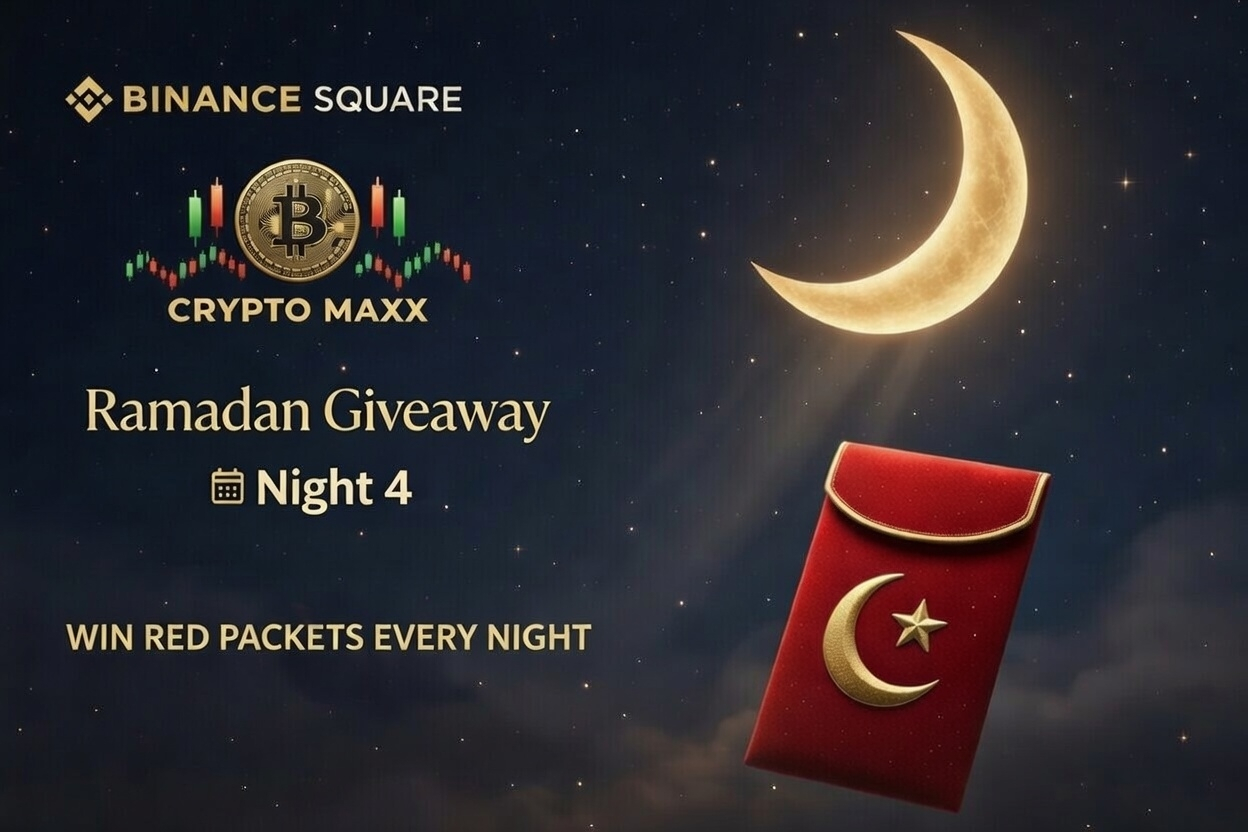
📌 Question of the Fourth Night – Ramadan Contest #CryptoMaxx 🌙✨
🔐 What is the name given to the (Hardware) wallet that is not connected to the internet for storing cryptocurrencies? 🤔
Write the correct answer in the comments 👇
Any correct answer wins immediately 🎉🔥
#RamadanWithCryptoMaxx #RamadanWithBinance
🔐 What is the name given to the (Hardware) wallet that is not connected to the internet for storing cryptocurrencies? 🤔
Write the correct answer in the comments 👇
Any correct answer wins immediately 🎉🔥
#RamadanWithCryptoMaxx #RamadanWithBinance
64
Buddha's Blessing
Buddha's Blessing
港湾comply with divine will
·
--
福生无量
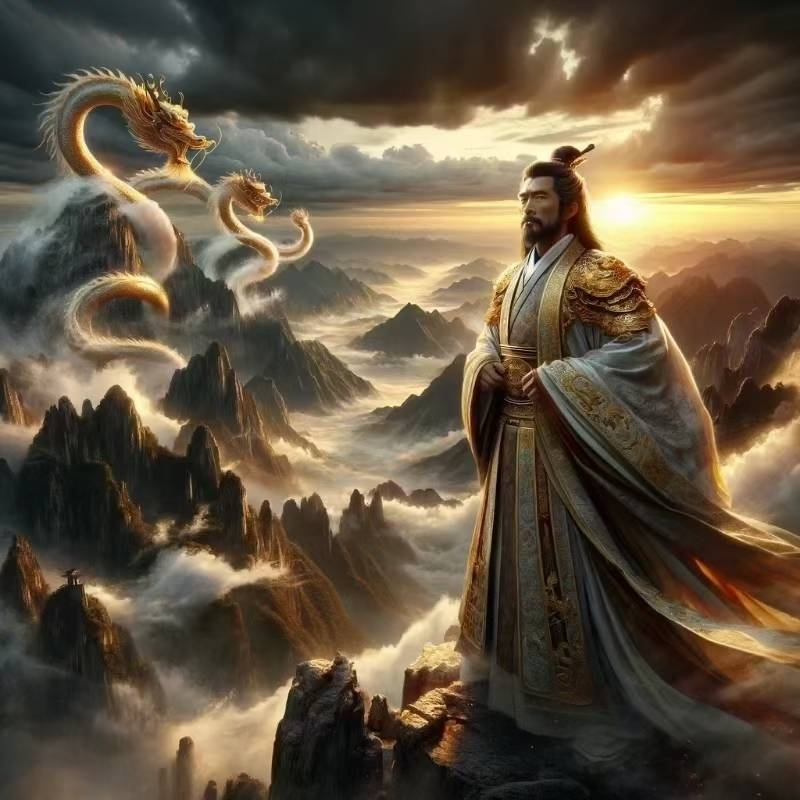
It is not easy for a person to embark on the path of practice without suffering. If a person's life goes smoothly, untouched by others, and they never feel wronged, there is no question of practicing.
True practice is not found in scriptures, nor in meditation, but in the reality of everyday life. When your life requires you to grow, it will never give you a good hand; it may place you in an imperfect family, or make you meet someone who breaks your heart, or arrange repeatedly bad relationships that test your limits.
In fact, these people and events are not here to harm you, but to guide you. They are like a mirror, reflecting your inner vulnerabilities.
True practice is not found in scriptures, nor in meditation, but in the reality of everyday life. When your life requires you to grow, it will never give you a good hand; it may place you in an imperfect family, or make you meet someone who breaks your heart, or arrange repeatedly bad relationships that test your limits.
In fact, these people and events are not here to harm you, but to guide you. They are like a mirror, reflecting your inner vulnerabilities.
34
888
888

风 生 水 起
·
--
$ETH
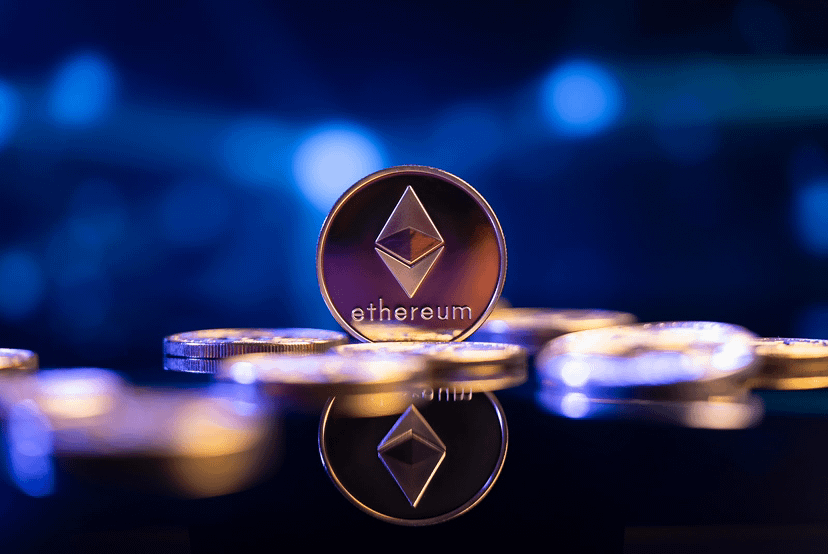
The liquidity over the weekend is not high, and the range of fluctuation has not yet broken out. The current range of 1900-2000 is tightening. Only when it breaks out of this range will there be a new direction. The upper resistance is at 2000-2050, stabilizing at this position towards 2100-2150, while the lower support is at 1925-1905; breaking this position will lead down to 1865-1825. Before a direction emerges, short-term profits can be made within the range of fluctuations ~
#特朗普新全球关税
The liquidity over the weekend is not high, and the range of fluctuation has not yet broken out. The current range of 1900-2000 is tightening. Only when it breaks out of this range will there be a new direction. The upper resistance is at 2000-2050, stabilizing at this position towards 2100-2150, while the lower support is at 1925-1905; breaking this position will lead down to 1865-1825. Before a direction emerges, short-term profits can be made within the range of fluctuations ~
#特朗普新全球关税
42
FOGOWhat is Fogo?
The platform's development vision is based on the idea of "bringing real-time finance to the blockchain." Fogo aims to replicate the high-speed trading experience of traditional markets in a decentralized environment. While doing this, it focuses not only on performance but also on architectural robustness and ease of use. For this reason, the blockchain is designed as a thoughtfully conceived system with a unique validator structure, a multi-local consensus model, integrated price streams, an on-chain DEX, and enterprise-level infrastructure components.
FOGO
What is Fogo?
The platform's development vision is based on the idea of "bringing real-time finance to the blockchain." Fogo aims to replicate the high-speed trading experience of traditional markets in a decentralized environment. While doing this, it focuses not only on performance but also on architectural robustness and ease of use. For this reason, the blockchain is designed as a thoughtfully conceived system with a unique validator structure, a multi-local consensus model, integrated price streams, an on-chain DEX, and enterprise-level infrastructure components.
The platform's development vision is based on the idea of "bringing real-time finance to the blockchain." Fogo aims to replicate the high-speed trading experience of traditional markets in a decentralized environment. While doing this, it focuses not only on performance but also on architectural robustness and ease of use. For this reason, the blockchain is designed as a thoughtfully conceived system with a unique validator structure, a multi-local consensus model, integrated price streams, an on-chain DEX, and enterprise-level infrastructure components.
97
Log in to explore more content
Join global crypto users on Binance Square
⚡️ Get latest and useful information about crypto.
💬 Trusted by the world’s largest crypto exchange.
👍 Discover real insights from verified creators.
Email / Phone number
Trending Topics
AIStocksWhatNext
770,346 views
5,922 Discussing
Share & Win Traffic Reward in our Trending Hashtag Campaign
✨Topic: What Other Investment Opportunities Remain as AI Stocks Keep Rising?
👉How to Join:
Publish a short post or article with hashtag #AIStocksWhatNext
Share whether you’re bullish or bearish, and post your AI stock holdings or trade — using the trade widget may improve your eligibility.
You can also strengthen your post by sharing data or charts, and avoiding AI-generated images.
✍️Create content based on the below angles:
- Nvidia says chip sales will double next year, and top AI companies keep hitting record revenue, the compute spend behind it is just as staggering. Is AI demand really taking off? And how long can it last? AI stocks are up across the board. Is this a real breakout, or just a short-term bounce?
- Industry leaders are calling to slow down AI development, while Trump plans to build an “AI Force”, claiming AI could account for 25% of U.S. GDP in the future. Whose side are you on? Will state-level backing be a long-term win for AI stocks?
- Are you buying AI stocks? Share your AI-related trade/holdings with our trade sharing widget.
⏰Campaign Period:
- 2026-09-22 7:00 - 2026-09-24 4:00 UTC
🎁Reward:
- Qualified posts that comply with the above guidelines and contain more than 100 words will be reviewed and may receive a random traffic boost of 500 to 3,000 views. You will receive a notification from your feed secretary if your post is selected.
- Get a chance to have your article featured on Binance Square Official
Need ideas for your post? Visit the topic page #AIStocksWhatNext or the Square Guide on How to Post for Better Reach.
Binance Square Official
·556 Likes
·1.6M views
BitcoinRejectedAt$87,300Twice
0 views
0 Discussing
BCHJumps28%OnCMEFuturesListing
1,488 views
207 Discussing