

Muse缪思
255 Posts

Muse缪思
Report
Block User
Yo, I'm Muse, a high - energy force of nature. With skills sharper than a laser and a mind as vast as the cosmos, I'm here to turn ideas into re
Open Trade
Frequent Trader
1 Years
66 Following
11.4K Followers
1.8K+ Liked
Posts
Portfolio
All
Quotes
·
--
#币安夏令营 shares, essentially a small ownership stake in a company. If the company makes money, it may pay you dividends.
#币安夏令营 shares, essentially a small ownership stake in a company. If the company makes money, it may pay you dividends.


币安中文社区
·
--
When you reach the fourth level, your skills are really chubby 😄
👹 Day 4: The first Boss battle arrives—learning traditional finance (TradFi)
Cross-domain exploration isn’t that easy; 开始闯关
🔥 Chinese-community challenge|Win 5,000 USDC
1️⃣ Complete the Day 4 game
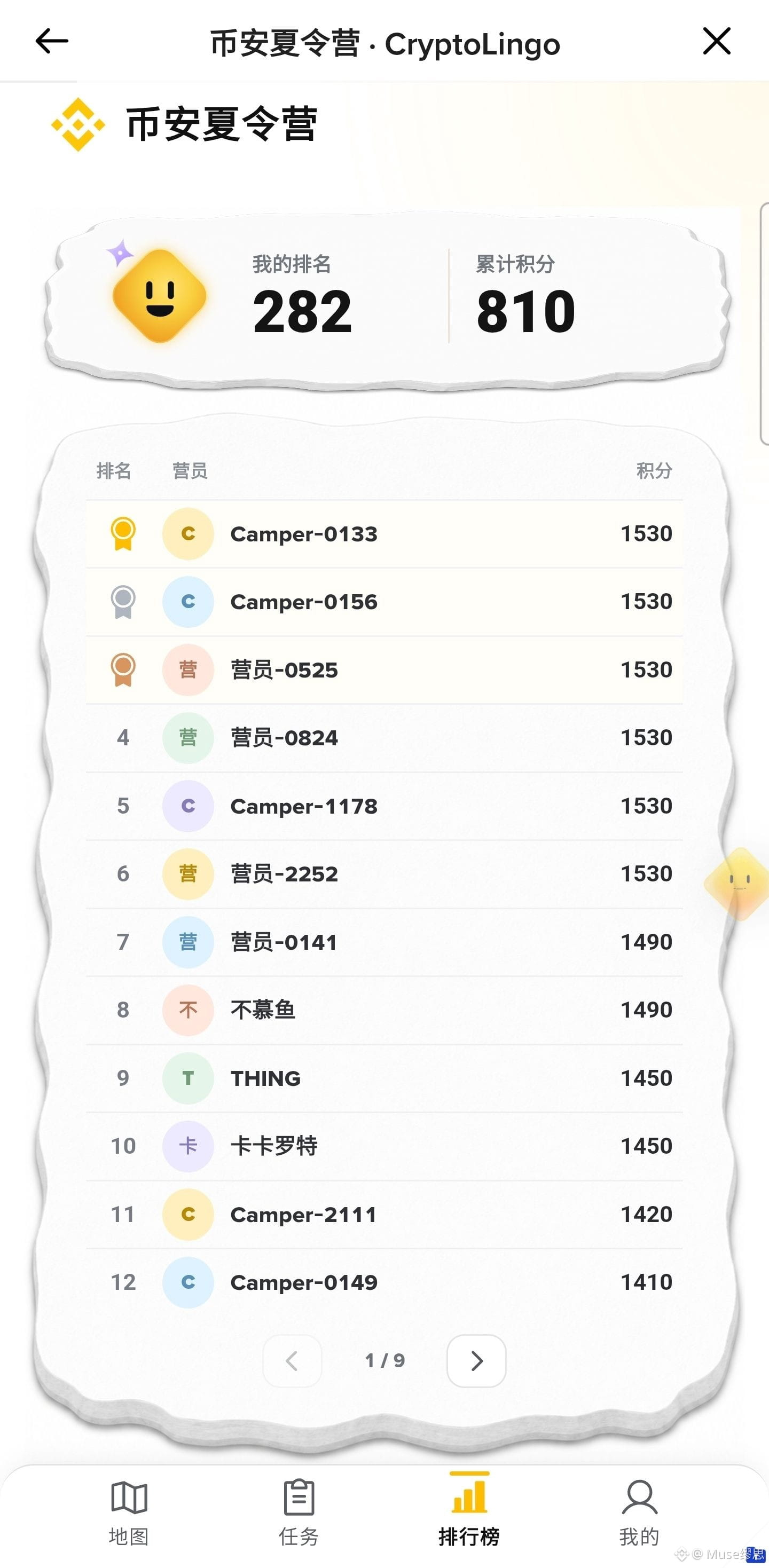
2️⃣ Go to the “Leaderboard” and take a screenshot—your score must be at least 640
3️⃣ Post to X or the Binance Square with #币安夏令营 , and briefly answer: “Through today’s challenge, what new knowledge about traditional finance (TradFi) did you learn?”
4️⃣ Submit the post link: https://app.binance.com/uni-qr/user-survey/aeae776198364e1d90bccb94375abe5d
🎁 Rewards: The first 500 qualified users who complete the Day 1, Day 4, and Day 10 community challenges three times will share 5,000 USDC together.
👹 Day 4: The first Boss battle arrives—learning traditional finance (TradFi)
Cross-domain exploration isn’t that easy; 开始闯关
🔥 Chinese-community challenge|Win 5,000 USDC
1️⃣ Complete the Day 4 game
2️⃣ Go to the “Leaderboard” and take a screenshot—your score must be at least 640
3️⃣ Post to X or the Binance Square with #币安夏令营 , and briefly answer: “Through today’s challenge, what new knowledge about traditional finance (TradFi) did you learn?”
4️⃣ Submit the post link: https://app.binance.com/uni-qr/user-survey/aeae776198364e1d90bccb94375abe5d
🎁 Rewards: The first 500 qualified users who complete the Day 1, Day 4, and Day 10 community challenges three times will share 5,000 USDC together.
88
·
--
#币安夏令营 awesome!
#币安夏令营 awesome!

币安中文社区
·
--
🏕️ Binance Summer Camp DAY 1 Opening! What you’ll learn today: Account Protection
👉 点击开始闯关
🔥 After completing the Day 1 game:
① Tap 【Tasks】 → 【Share the Summer Camp】
② Upload an image to generate an avatar, then post with #币安夏令营 to X or the Community Square
③ Submit the post link: https://app.binance.com/uni-qr/user-survey/cab8e08626774c4d8a8313de3d05e5a1
🎁 For the first 500 qualified users who complete the eligible tasks for Day 1, Day 4, and Day 10—together split 5,000 USDC!
👉 点击开始闯关
🔥 After completing the Day 1 game:
① Tap 【Tasks】 → 【Share the Summer Camp】
② Upload an image to generate an avatar, then post with #币安夏令营 to X or the Community Square
③ Submit the post link: https://app.binance.com/uni-qr/user-survey/cab8e08626774c4d8a8313de3d05e5a1
🎁 For the first 500 qualified users who complete the eligible tasks for Day 1, Day 4, and Day 10—together split 5,000 USDC!
98
·
--
I’ve been having a headache for a long time because there hasn’t been any truly useful investment research and AI on the market. Now GPT fills this gap. In the future, there’s a chance to free up both hands so Binance AI and GPT can team up strongly to create profits, haha.
I’ve been having a headache for a long time because there hasn’t been any truly useful investment research and AI on the market. Now GPT fills this gap. In the future, there’s a chance to free up both hands so Binance AI and GPT can team up strongly to create profits, haha.

币安Binance华语
·
--
One-Week Hot Topics First Look, Binance Quick News!#安友周一观察团 🔥
This week, which market highlight are you most interested in?📊
🙋 Vote and leave your reasons in the comments. Retweet or share other hot topics to be entered into a draw for 5 people to win 30U—topic discussion reward!
A. Financial-version ChatGPT released, targeting investment banks and stock research
B. Anthropic CEO calls for slowing down AI development, plans for a Nasdaq IPO
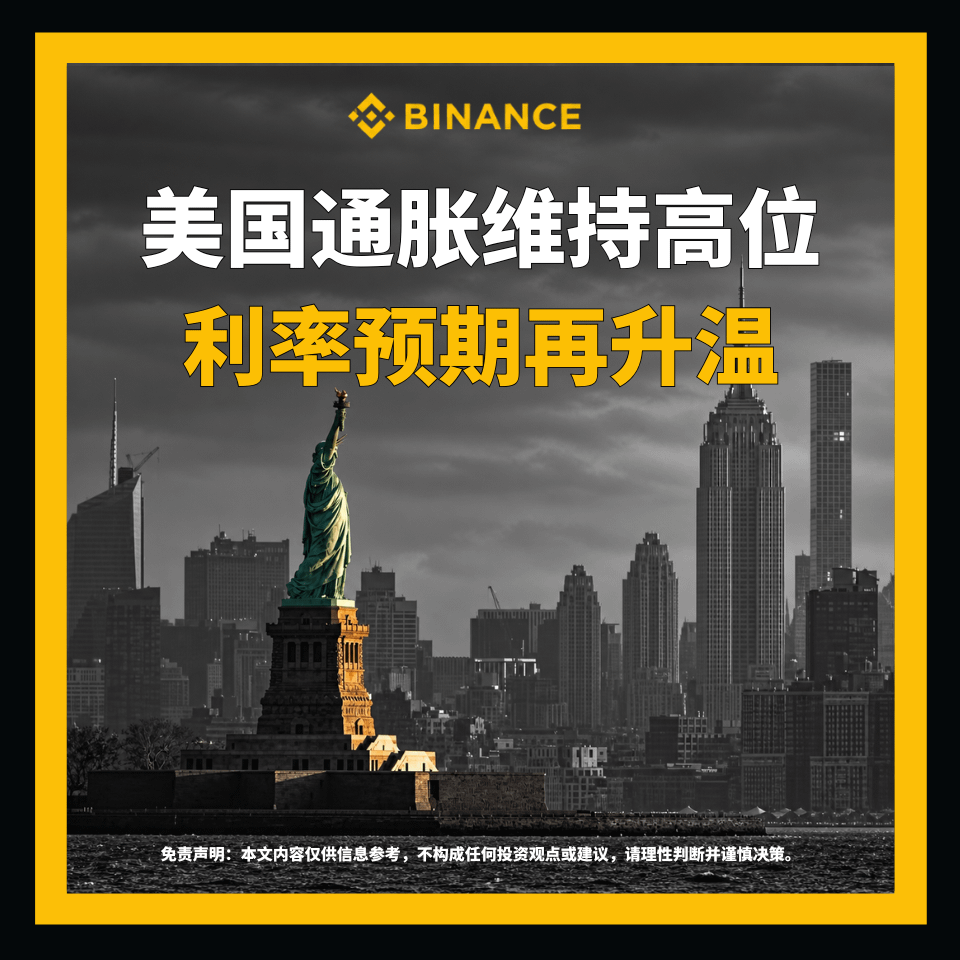
C. US inflation remains high, rate expectations heat up again
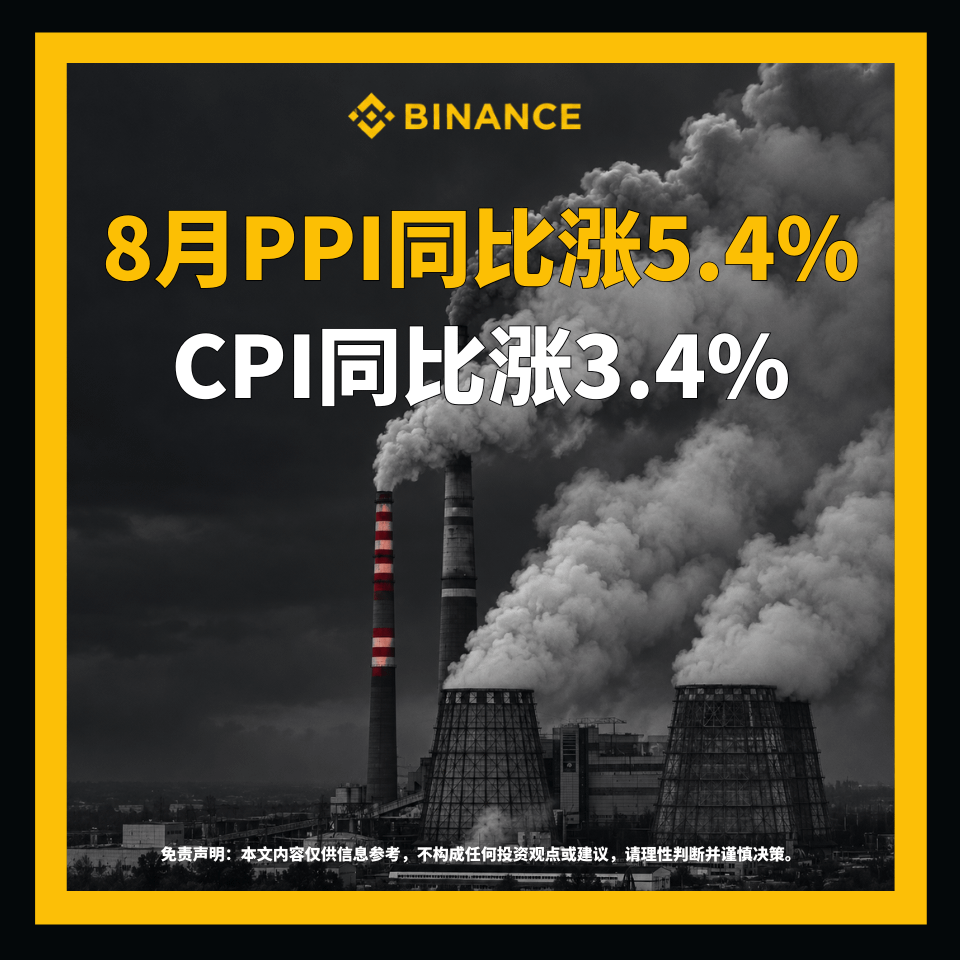
D. August PPI up 5.4% YoY, CPI up 3.4% YoY
This week, which market highlight are you most interested in?📊
🙋 Vote and leave your reasons in the comments. Retweet or share other hot topics to be entered into a draw for 5 people to win 30U—topic discussion reward!
A. Financial-version ChatGPT released, targeting investment banks and stock research
B. Anthropic CEO calls for slowing down AI development, plans for a Nasdaq IPO
C. US inflation remains high, rate expectations heat up again
D. August PPI up 5.4% YoY, CPI up 3.4% YoY


1
82
·
--
$ETH The real moat is not in the chain itself, but in the fact that it holds the settlement power for the US dollars on the chain. For globally circulating stablecoins, more than half choose to issue and settle on Ethereum and its layer-2 networks. Tokenized treasury products also treat this as the default ledger. Every transfer, every redemption, ultimately returns to this chain for confirmation. This position wasn’t voted into existence—it was earned by the block production record of a decade without a fundamental incident. Institutions choose a ledger not for its performance metrics, but for the predictable certainty of who will stand behind it when something goes wrong. Ethereum made this into an industry standard. Layer-2 networks siphon off retail trading volume, leaving the mainnet with business that’s actually more valuable: large-amount settlements, staking credentials, and the final confirmation of cross-chain assets. Competitor chains can copy the code, but they can’t replicate the trust that has accumulated in this settlement network. The scale of on-chain finance is still expanding, and the end point of most of that expansion is written on the same settlement address.
{future}(ETHUSDT)
$ETH The real moat is not in the chain itself, but in the fact that it holds the settlement power for the US dollars on the chain. For globally circulating stablecoins, more than half choose to issue and settle on Ethereum and its layer-2 networks. Tokenized treasury products also treat this as the default ledger. Every transfer, every redemption, ultimately returns to this chain for confirmation. This position wasn’t voted into existence—it was earned by the block production record of a decade without a fundamental incident. Institutions choose a ledger not for its performance metrics, but for the predictable certainty of who will stand behind it when something goes wrong. Ethereum made this into an industry standard. Layer-2 networks siphon off retail trading volume, leaving the mainnet with business that’s actually more valuable: large-amount settlements, staking credentials, and the final confirmation of cross-chain assets. Competitor chains can copy the code, but they can’t replicate the trust that has accumulated in this settlement network. The scale of on-chain finance is still expanding, and the end point of most of that expansion is written on the same settlement address.
1
183
·
--
Before #币安安全星期四 , there was a teacher who posted daily profits. Later, one day in the group he said that he was giving strategies for free inside a certain chat app, and asked us to download it. After I downloaded it, the app kept prompting me to grant permission to access my photo gallery. At the time, with money on my mind and my judgment clouded, I granted the permission. Once I got into the app, it kept loading for a long time. After waiting for a while, the exchange popped up a message saying that more than 100 USD had been transferred out of the wallet. Then I realized that the wallet’s recovery phrase in the photos must have been scanned. Everyone, please don’t download software from unknown sources, and don’t screenshot your recovery phrase.
Before #币安安全星期四 , there was a teacher who posted daily profits. Later, one day in the group he said that he was giving strategies for free inside a certain chat app, and asked us to download it. After I downloaded it, the app kept prompting me to grant permission to access my photo gallery. At the time, with money on my mind and my judgment clouded, I granted the permission. Once I got into the app, it kept loading for a long time. After waiting for a while, the exchange popped up a message saying that more than 100 USD had been transferred out of the wallet. Then I realized that the wallet’s recovery phrase in the photos must have been scanned. Everyone, please don’t download software from unknown sources, and don’t screenshot your recovery phrase.
币安Binance华语
·
--
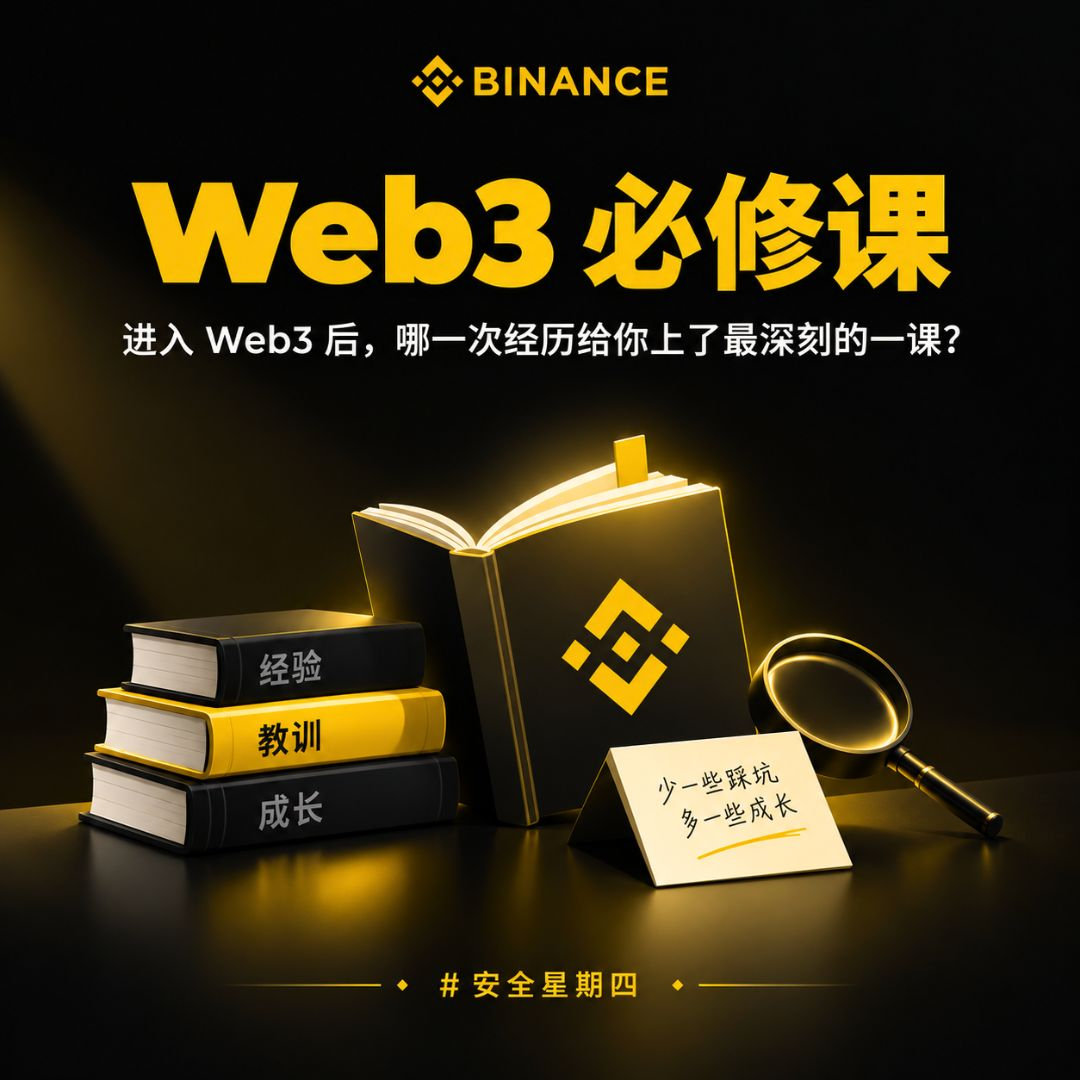
Teachers' Day #币安安全星期四 Special Plan 「Web3 Mandatory Course」
🧑🏫 The real danger and failure are the best teachers on the road to growth
In Web3, what time did you narrowly avoid a scam—or fail—giving you the most unforgettable lesson?
Repost and share your story and experience. 10 outstanding sharers will each receive 100U 🏆
And we also wish every teacher who helped us grow a Happy Teachers' Day 💛
🧑🏫 The real danger and failure are the best teachers on the road to growth
In Web3, what time did you narrowly avoid a scam—or fail—giving you the most unforgettable lesson?
Repost and share your story and experience. 10 outstanding sharers will each receive 100U 🏆
And we also wish every teacher who helped us grow a Happy Teachers' Day 💛
1
82
·
--
When Bitcoin surged sky-high, Ethereum didn’t get a drop of the soup
The most alarming signal in this BTC rally isn’t how much it went up, but where the overflow money went—because the answer is: nowhere.
From mid-August to September 1, the market cap of BTC jumped from about 1.3 trillion to 1.56 trillion. At $79,120 per BTC, an extra $26 billion appeared out of thin air within two weeks—equivalent to recreating two Alibaba companies. In the past, a surge at this scale was often just the starting pistol for rotation: early investors took profits, and the hot money overflowed into ETH and altcoins, propping up a so-called “second-place season.” But this time, <$ETH > market cap only crawled up from 226 billion to 256 billion—an increment of 30 billion, which isn’t even a fraction of BTC’s gain. The overflow ratio barely reaches about a tenth. The market’s stance is crystal clear: it’s willing to lock up funds in BTC and do nothing, rather than move even one step outside the risk curve.
The underlying logic is that the market structure has changed. The main force behind this wave of buying is ETF and institutional allocation demand. They buy BTC as an end point, not a transfer station—once they enter, it becomes a ballast stone. There’s no obligation to rotate. ETH lacks an equivalent narrative anchor, so it can only passively wait for crumbs to fall off the table.
Over two weeks, the roles of these two assets were rewritten: <$BTC > became a money-absorbing black hole, while ETH fell from being the biggest beneficiary to a mere bystander. The failure of the overflow effect might be the true turning point of this cycle.
<{future}(BTCUSDT)>
<{future}(ETHUSDT)>
When Bitcoin surged sky-high, Ethereum didn’t get a drop of the soup
The most alarming signal in this BTC rally isn’t how much it went up, but where the overflow money went—because the answer is: nowhere.
From mid-August to September 1, the market cap of BTC jumped from about 1.3 trillion to 1.56 trillion. At $79,120 per BTC, an extra $26 billion appeared out of thin air within two weeks—equivalent to recreating two Alibaba companies. In the past, a surge at this scale was often just the starting pistol for rotation: early investors took profits, and the hot money overflowed into ETH and altcoins, propping up a so-called “second-place season.” But this time, <$ETH > market cap only crawled up from 226 billion to 256 billion—an increment of 30 billion, which isn’t even a fraction of BTC’s gain. The overflow ratio barely reaches about a tenth. The market’s stance is crystal clear: it’s willing to lock up funds in BTC and do nothing, rather than move even one step outside the risk curve.
The underlying logic is that the market structure has changed. The main force behind this wave of buying is ETF and institutional allocation demand. They buy BTC as an end point, not a transfer station—once they enter, it becomes a ballast stone. There’s no obligation to rotate. ETH lacks an equivalent narrative anchor, so it can only passively wait for crumbs to fall off the table.
Over two weeks, the roles of these two assets were rewritten: <$BTC > became a money-absorbing black hole, while ETH fell from being the biggest beneficiary to a mere bystander. The failure of the overflow effect might be the true turning point of this cycle.
<>
<>
The most alarming signal in this BTC rally isn’t how much it went up, but where the overflow money went—because the answer is: nowhere.
From mid-August to September 1, the market cap of BTC jumped from about 1.3 trillion to 1.56 trillion. At $79,120 per BTC, an extra $26 billion appeared out of thin air within two weeks—equivalent to recreating two Alibaba companies. In the past, a surge at this scale was often just the starting pistol for rotation: early investors took profits, and the hot money overflowed into ETH and altcoins, propping up a so-called “second-place season.” But this time, <$ETH > market cap only crawled up from 226 billion to 256 billion—an increment of 30 billion, which isn’t even a fraction of BTC’s gain. The overflow ratio barely reaches about a tenth. The market’s stance is crystal clear: it’s willing to lock up funds in BTC and do nothing, rather than move even one step outside the risk curve.
The underlying logic is that the market structure has changed. The main force behind this wave of buying is ETF and institutional allocation demand. They buy BTC as an end point, not a transfer station—once they enter, it becomes a ballast stone. There’s no obligation to rotate. ETH lacks an equivalent narrative anchor, so it can only passively wait for crumbs to fall off the table.
Over two weeks, the roles of these two assets were rewritten: <$BTC > became a money-absorbing black hole, while ETH fell from being the biggest beneficiary to a mere bystander. The failure of the overflow effect might be the true turning point of this cycle.
<>
<>
89
·
--
Under Dusk’s compliance-friendly shell, there’s still a gap in engineering delivery
After I got the @Dusk_Foundation testnet nodes running, my first impression was that the documentation doesn’t match the real parameters. The gas estimation deviation in the Citadel protocol is off by nearly 20%. That kind of basic mistake is hard to excuse for a blockchain that’s positioning itself as institution-compliant. The price trend of $DUSK also reflects this expectation gap: the market is willing to buy into the narrative, but the speed of product delivery can’t keep up.
Compared with Oasis, Dusk’s privacy approach is, in theory, closer to the hybrid needs of regulatory audits. The combination of zero-knowledge proofs and Poseidon hashing can indeed be made to make sense. But the engineering implementation is rough: during testnet operation, block synchronization is sometimes fast and sometimes slow, and block production latency is irregular. Oasis’s TEE approach also involves trust assumptions, but at least the developer experience is smooth. On Dusk’s side, debugging contracts produces error messages that are too minimal, and the maturity of the tooling chain is holding back ecosystem cold-start.
Then there’s Concordium—its design separating the identity layer from the ledger layer is cleaner than Dusk’s. Dusk wants to tackle privacy, compliance, and securities tokenization all at once. With a relatively small team, priorities can easily get blurry. The penalty mechanism for staked token unlocks is quite aggressive: it can lock up liquidity over the long term, but if network throughput can’t support real business volume, the practical value of $DUSK will be discounted. Many research reports place Dusk at the front of the compliance RWA race, but I think it’s still too early—Phoenix and Piecrust need to run stable first.
I do agree with Dusk’s long-term logic—there are structural opportunities in the compliance-privacy track. But a blockchain’s usability is itself part of security. In a testnet state moving toward mainnet like this, institutional users won’t accept it. My current stance is to keep observing; lowering expectations makes it easier to actually see its real progress. #dusk
Under Dusk’s compliance-friendly shell, there’s still a gap in engineering delivery
After I got the @Dusk testnet nodes running, my first impression was that the documentation doesn’t match the real parameters. The gas estimation deviation in the Citadel protocol is off by nearly 20%. That kind of basic mistake is hard to excuse for a blockchain that’s positioning itself as institution-compliant. The price trend of $DUSK also reflects this expectation gap: the market is willing to buy into the narrative, but the speed of product delivery can’t keep up.
Compared with Oasis, Dusk’s privacy approach is, in theory, closer to the hybrid needs of regulatory audits. The combination of zero-knowledge proofs and Poseidon hashing can indeed be made to make sense. But the engineering implementation is rough: during testnet operation, block synchronization is sometimes fast and sometimes slow, and block production latency is irregular. Oasis’s TEE approach also involves trust assumptions, but at least the developer experience is smooth. On Dusk’s side, debugging contracts produces error messages that are too minimal, and the maturity of the tooling chain is holding back ecosystem cold-start.
Then there’s Concordium—its design separating the identity layer from the ledger layer is cleaner than Dusk’s. Dusk wants to tackle privacy, compliance, and securities tokenization all at once. With a relatively small team, priorities can easily get blurry. The penalty mechanism for staked token unlocks is quite aggressive: it can lock up liquidity over the long term, but if network throughput can’t support real business volume, the practical value of $DUSK will be discounted. Many research reports place Dusk at the front of the compliance RWA race, but I think it’s still too early—Phoenix and Piecrust need to run stable first.
I do agree with Dusk’s long-term logic—there are structural opportunities in the compliance-privacy track. But a blockchain’s usability is itself part of security. In a testnet state moving toward mainnet like this, institutional users won’t accept it. My current stance is to keep observing; lowering expectations makes it easier to actually see its real progress. #dusk
After I got the @Dusk testnet nodes running, my first impression was that the documentation doesn’t match the real parameters. The gas estimation deviation in the Citadel protocol is off by nearly 20%. That kind of basic mistake is hard to excuse for a blockchain that’s positioning itself as institution-compliant. The price trend of $DUSK also reflects this expectation gap: the market is willing to buy into the narrative, but the speed of product delivery can’t keep up.
Compared with Oasis, Dusk’s privacy approach is, in theory, closer to the hybrid needs of regulatory audits. The combination of zero-knowledge proofs and Poseidon hashing can indeed be made to make sense. But the engineering implementation is rough: during testnet operation, block synchronization is sometimes fast and sometimes slow, and block production latency is irregular. Oasis’s TEE approach also involves trust assumptions, but at least the developer experience is smooth. On Dusk’s side, debugging contracts produces error messages that are too minimal, and the maturity of the tooling chain is holding back ecosystem cold-start.
Then there’s Concordium—its design separating the identity layer from the ledger layer is cleaner than Dusk’s. Dusk wants to tackle privacy, compliance, and securities tokenization all at once. With a relatively small team, priorities can easily get blurry. The penalty mechanism for staked token unlocks is quite aggressive: it can lock up liquidity over the long term, but if network throughput can’t support real business volume, the practical value of $DUSK will be discounted. Many research reports place Dusk at the front of the compliance RWA race, but I think it’s still too early—Phoenix and Piecrust need to run stable first.
I do agree with Dusk’s long-term logic—there are structural opportunities in the compliance-privacy track. But a blockchain’s usability is itself part of security. In a testnet state moving toward mainnet like this, institutional users won’t accept it. My current stance is to keep observing; lowering expectations makes it easier to actually see its real progress. #dusk
1
100
·
--
Dusk’s compliance “hidden card” is solid, but the product experience hasn’t caught up yet
Recently, I redeployed the @Dusk_Foundation testnet node stack to see whether the $DUSK staking logic has changed in the latest version. After running it, I could clearly feel that this project has genuinely accumulated a lot in terms of compliance: the protocol bundles the privacy and auditing requirements for security tokens together, something many established privacy chains can’t do. But the product-side issues still haven’t been fixed. Documentation updates lag by about half a beat, and quite a few configuration options require digging through old Discord messages just to piece everything together.
Comparing Secret Network and Oasis side by side makes it clearer. Secret’s privacy contracts are more general-purpose, and its developer ecosystem is lively. But its support for institutional-level compliance is rather weak—almost entirely dependent on external services to fill the gap. Oasis is more computation-focused, and it doesn’t fully overlap with the financial RWA track Dusk wants to enter. Dusk’s differentiator is that it writes identity and compliance directly into the protocol layer, rather than patching it at the application layer. That makes the design heavier, so the iteration pace tends to be slower. I tried a few different network environments and the node synchronization speed fluctuated a lot. The $DUSK reward mechanism is quite friendly to long-term stakers, but it’s not light enough for users who only want to run lightweight nodes. The wallet experience is also a bit disjointed: the mobile app has noticeably fewer features than the desktop version, and completing a full privacy transaction requires flipping back and forth.
The RWA issuance tools in the official roadmap are still fairly early-stage. The deployment experience isn’t smooth, and many steps require manual configuration. Aleph Zero, which also focuses on compliant privacy, is slightly ahead in terms of developer-tool maturity, but its financial attributes aren’t as pure as Dusk’s. $DUSK’s current market value still doesn’t reflect this chain’s compliance moat. If the product polishing moves faster, there will be much more room for narrative. That said, I won’t dismiss it because of short-term UX issues—there aren’t many mainnets that can land both MiCA compliance and privacy computation at the same time.
Overall, Dusk is a slow-burn project. It’s better to watch actual progress than to react to emotions. Let time validate it. #dusk
Dusk’s compliance “hidden card” is solid, but the product experience hasn’t caught up yet
Recently, I redeployed the @Dusk testnet node stack to see whether the $DUSK staking logic has changed in the latest version. After running it, I could clearly feel that this project has genuinely accumulated a lot in terms of compliance: the protocol bundles the privacy and auditing requirements for security tokens together, something many established privacy chains can’t do. But the product-side issues still haven’t been fixed. Documentation updates lag by about half a beat, and quite a few configuration options require digging through old Discord messages just to piece everything together.
Comparing Secret Network and Oasis side by side makes it clearer. Secret’s privacy contracts are more general-purpose, and its developer ecosystem is lively. But its support for institutional-level compliance is rather weak—almost entirely dependent on external services to fill the gap. Oasis is more computation-focused, and it doesn’t fully overlap with the financial RWA track Dusk wants to enter. Dusk’s differentiator is that it writes identity and compliance directly into the protocol layer, rather than patching it at the application layer. That makes the design heavier, so the iteration pace tends to be slower. I tried a few different network environments and the node synchronization speed fluctuated a lot. The $DUSK reward mechanism is quite friendly to long-term stakers, but it’s not light enough for users who only want to run lightweight nodes. The wallet experience is also a bit disjointed: the mobile app has noticeably fewer features than the desktop version, and completing a full privacy transaction requires flipping back and forth.
The RWA issuance tools in the official roadmap are still fairly early-stage. The deployment experience isn’t smooth, and many steps require manual configuration. Aleph Zero, which also focuses on compliant privacy, is slightly ahead in terms of developer-tool maturity, but its financial attributes aren’t as pure as Dusk’s. $DUSK ’s current market value still doesn’t reflect this chain’s compliance moat. If the product polishing moves faster, there will be much more room for narrative. That said, I won’t dismiss it because of short-term UX issues—there aren’t many mainnets that can land both MiCA compliance and privacy computation at the same time.
Overall, Dusk is a slow-burn project. It’s better to watch actual progress than to react to emotions. Let time validate it. #dusk
Recently, I redeployed the @Dusk testnet node stack to see whether the $DUSK staking logic has changed in the latest version. After running it, I could clearly feel that this project has genuinely accumulated a lot in terms of compliance: the protocol bundles the privacy and auditing requirements for security tokens together, something many established privacy chains can’t do. But the product-side issues still haven’t been fixed. Documentation updates lag by about half a beat, and quite a few configuration options require digging through old Discord messages just to piece everything together.
Comparing Secret Network and Oasis side by side makes it clearer. Secret’s privacy contracts are more general-purpose, and its developer ecosystem is lively. But its support for institutional-level compliance is rather weak—almost entirely dependent on external services to fill the gap. Oasis is more computation-focused, and it doesn’t fully overlap with the financial RWA track Dusk wants to enter. Dusk’s differentiator is that it writes identity and compliance directly into the protocol layer, rather than patching it at the application layer. That makes the design heavier, so the iteration pace tends to be slower. I tried a few different network environments and the node synchronization speed fluctuated a lot. The $DUSK reward mechanism is quite friendly to long-term stakers, but it’s not light enough for users who only want to run lightweight nodes. The wallet experience is also a bit disjointed: the mobile app has noticeably fewer features than the desktop version, and completing a full privacy transaction requires flipping back and forth.
The RWA issuance tools in the official roadmap are still fairly early-stage. The deployment experience isn’t smooth, and many steps require manual configuration. Aleph Zero, which also focuses on compliant privacy, is slightly ahead in terms of developer-tool maturity, but its financial attributes aren’t as pure as Dusk’s. $DUSK ’s current market value still doesn’t reflect this chain’s compliance moat. If the product polishing moves faster, there will be much more room for narrative. That said, I won’t dismiss it because of short-term UX issues—there aren’t many mainnets that can land both MiCA compliance and privacy computation at the same time.
Overall, Dusk is a slow-burn project. It’s better to watch actual progress than to react to emotions. Let time validate it. #dusk
92
·
--
The soft spot in a privacy-compliance chain: Dusk writes regulation into a state machine, but the toolchain is one breath short
I re-ran the testnet for @Dusk_Foundation —not to validate the “privacy + RWA” narrative, but to see exactly where the compliance logic gets stuck when it lands on-chain. The bottleneck is developer experience. Dusk’s contract deployment workflow is much more involved than Polymesh’s. Polymesh has modular, security-token-friendly interfaces that are quicker to get started with, but its privacy layer is basically blank. Dusk puts investor qualification checks using zero-knowledge proofs directly before transaction execution; this design is more thorough than Ondo’s. Ondo relies on off-chain compliance, leaving only a wrapped asset on-chain.
Dusk’s state-machine approach is also somewhat interesting. Instead of doing compliance as a post-hoc screening step, it rejects addresses that don’t meet disclosure requirements right when the transaction is constructed. This is fundamentally different from Secret Network’s general-purpose privacy contracts. Secret is more flexible, but it lacks hard constraints tailored to financial scenarios. Dusk’s problem is that its toolchain is still rough: Rust SDK dependencies aren’t pinned, running the examples requires manually adjusting versions, and the documentation on gas estimation and privacy input encoding is also rather cursory. Block explorers don’t make contract-internal state easy to inspect, and I think that’s unfriendly to institutional developers who want to integrate.
Dusk’s role for network security and governance isn’t particularly complicated, and the staking rewards and fee logic don’t feel especially impressive either. It’s more like a foundational layer still being refined for compliance primitives, rather than a mature product that can immediately carry large-scale RWA issuance. Among competitors, Polymesh wins on developer friendliness, Ondo wins on asset-side resources, and Dusk’s differentiation can only be deep in “verifiable compliance.” If the toolchain and documentation can’t keep up, that advantage will be gradually worn down.
#dusk $DUSK
The soft spot in a privacy-compliance chain: Dusk writes regulation into a state machine, but the toolchain is one breath short
I re-ran the testnet for @Dusk —not to validate the “privacy + RWA” narrative, but to see exactly where the compliance logic gets stuck when it lands on-chain. The bottleneck is developer experience. Dusk’s contract deployment workflow is much more involved than Polymesh’s. Polymesh has modular, security-token-friendly interfaces that are quicker to get started with, but its privacy layer is basically blank. Dusk puts investor qualification checks using zero-knowledge proofs directly before transaction execution; this design is more thorough than Ondo’s. Ondo relies on off-chain compliance, leaving only a wrapped asset on-chain.
Dusk’s state-machine approach is also somewhat interesting. Instead of doing compliance as a post-hoc screening step, it rejects addresses that don’t meet disclosure requirements right when the transaction is constructed. This is fundamentally different from Secret Network’s general-purpose privacy contracts. Secret is more flexible, but it lacks hard constraints tailored to financial scenarios. Dusk’s problem is that its toolchain is still rough: Rust SDK dependencies aren’t pinned, running the examples requires manually adjusting versions, and the documentation on gas estimation and privacy input encoding is also rather cursory. Block explorers don’t make contract-internal state easy to inspect, and I think that’s unfriendly to institutional developers who want to integrate.
Dusk’s role for network security and governance isn’t particularly complicated, and the staking rewards and fee logic don’t feel especially impressive either. It’s more like a foundational layer still being refined for compliance primitives, rather than a mature product that can immediately carry large-scale RWA issuance. Among competitors, Polymesh wins on developer friendliness, Ondo wins on asset-side resources, and Dusk’s differentiation can only be deep in “verifiable compliance.” If the toolchain and documentation can’t keep up, that advantage will be gradually worn down.
#dusk $DUSK
I re-ran the testnet for @Dusk —not to validate the “privacy + RWA” narrative, but to see exactly where the compliance logic gets stuck when it lands on-chain. The bottleneck is developer experience. Dusk’s contract deployment workflow is much more involved than Polymesh’s. Polymesh has modular, security-token-friendly interfaces that are quicker to get started with, but its privacy layer is basically blank. Dusk puts investor qualification checks using zero-knowledge proofs directly before transaction execution; this design is more thorough than Ondo’s. Ondo relies on off-chain compliance, leaving only a wrapped asset on-chain.
Dusk’s state-machine approach is also somewhat interesting. Instead of doing compliance as a post-hoc screening step, it rejects addresses that don’t meet disclosure requirements right when the transaction is constructed. This is fundamentally different from Secret Network’s general-purpose privacy contracts. Secret is more flexible, but it lacks hard constraints tailored to financial scenarios. Dusk’s problem is that its toolchain is still rough: Rust SDK dependencies aren’t pinned, running the examples requires manually adjusting versions, and the documentation on gas estimation and privacy input encoding is also rather cursory. Block explorers don’t make contract-internal state easy to inspect, and I think that’s unfriendly to institutional developers who want to integrate.
Dusk’s role for network security and governance isn’t particularly complicated, and the staking rewards and fee logic don’t feel especially impressive either. It’s more like a foundational layer still being refined for compliance primitives, rather than a mature product that can immediately carry large-scale RWA issuance. Among competitors, Polymesh wins on developer friendliness, Ondo wins on asset-side resources, and Dusk’s differentiation can only be deep in “verifiable compliance.” If the toolchain and documentation can’t keep up, that advantage will be gradually worn down.
#dusk $DUSK
102
·
--
Treating Dusk as a privacy-version Ethereum is a misjudgment—it’s stuck on the slope of productization.
If we take @Dusk_Foundation as a general privacy chain, we’d misinterpret it, because its core actions are in regulated finance. When running test contracts, you can feel that at the protocol layer Dusk tightly binds identity constraints and privacy boundaries—it’s not a bolt-on KYC after the fact. This design fits security tokenization more naturally, but the developer experience is clearly a bit rigid. The contract debugging feedback from the Rusk VM is closer to the underlying layer than on Secret Network: fewer error messages, and locating issues requires flipping through state transitions back and forth. Value capture for DUSK tokens also can’t avoid the adoption speed of this compliance-linked chain.
Dusk’s privacy model and Aleph Zero took two different paths. Aleph Zero makes zero-knowledge proofs an optional layer, so ordinary transfers remain efficient; Dusk, by contrast, writes privacy into the execution environment, with all state opaque by default, and only authorized parties can “unseal” it under compliant conditions. The advantage is that institutions find it easier to accept; the downside is that ordinary users’ on-chain habits need to be rebuilt. The consumption curve between DUSK’s gas and staking isn’t linear. Under short-term pressure on the testnet, I observed packaging delays and fee-estimation deviations—details like this get magnified in real, formal financial scenarios.
Compared with Secret Network, Dusk is more oriented toward asset issuers and regulated secondary markets, but its ecosystem tooling is noticeably weaker. Secret’s private-contract ecosystem already has some application depth, while Dusk is still in the stage of translating underlying compliance capabilities outward. From my perspective, Dusk doesn’t lack a technical narrative—it lacks middleware that lets developers quickly validate privacy-asset scenarios. If, going forward, the SDKs and documentation don’t lower the integration cost, it will be difficult for the compliance narrative of the $DUSK token to turn into on-chain liquidity.
Dusk’s direction is vertical enough within the privacy-chain space, but its productization level isn’t yet sufficient to open a safety margin. #dusk
Treating Dusk as a privacy-version Ethereum is a misjudgment—it’s stuck on the slope of productization.
If we take @Dusk as a general privacy chain, we’d misinterpret it, because its core actions are in regulated finance. When running test contracts, you can feel that at the protocol layer Dusk tightly binds identity constraints and privacy boundaries—it’s not a bolt-on KYC after the fact. This design fits security tokenization more naturally, but the developer experience is clearly a bit rigid. The contract debugging feedback from the Rusk VM is closer to the underlying layer than on Secret Network: fewer error messages, and locating issues requires flipping through state transitions back and forth. Value capture for DUSK tokens also can’t avoid the adoption speed of this compliance-linked chain.
Dusk’s privacy model and Aleph Zero took two different paths. Aleph Zero makes zero-knowledge proofs an optional layer, so ordinary transfers remain efficient; Dusk, by contrast, writes privacy into the execution environment, with all state opaque by default, and only authorized parties can “unseal” it under compliant conditions. The advantage is that institutions find it easier to accept; the downside is that ordinary users’ on-chain habits need to be rebuilt. The consumption curve between DUSK’s gas and staking isn’t linear. Under short-term pressure on the testnet, I observed packaging delays and fee-estimation deviations—details like this get magnified in real, formal financial scenarios.
Compared with Secret Network, Dusk is more oriented toward asset issuers and regulated secondary markets, but its ecosystem tooling is noticeably weaker. Secret’s private-contract ecosystem already has some application depth, while Dusk is still in the stage of translating underlying compliance capabilities outward. From my perspective, Dusk doesn’t lack a technical narrative—it lacks middleware that lets developers quickly validate privacy-asset scenarios. If, going forward, the SDKs and documentation don’t lower the integration cost, it will be difficult for the compliance narrative of the $DUSK token to turn into on-chain liquidity.
Dusk’s direction is vertical enough within the privacy-chain space, but its productization level isn’t yet sufficient to open a safety margin. #dusk
If we take @Dusk as a general privacy chain, we’d misinterpret it, because its core actions are in regulated finance. When running test contracts, you can feel that at the protocol layer Dusk tightly binds identity constraints and privacy boundaries—it’s not a bolt-on KYC after the fact. This design fits security tokenization more naturally, but the developer experience is clearly a bit rigid. The contract debugging feedback from the Rusk VM is closer to the underlying layer than on Secret Network: fewer error messages, and locating issues requires flipping through state transitions back and forth. Value capture for DUSK tokens also can’t avoid the adoption speed of this compliance-linked chain.
Dusk’s privacy model and Aleph Zero took two different paths. Aleph Zero makes zero-knowledge proofs an optional layer, so ordinary transfers remain efficient; Dusk, by contrast, writes privacy into the execution environment, with all state opaque by default, and only authorized parties can “unseal” it under compliant conditions. The advantage is that institutions find it easier to accept; the downside is that ordinary users’ on-chain habits need to be rebuilt. The consumption curve between DUSK’s gas and staking isn’t linear. Under short-term pressure on the testnet, I observed packaging delays and fee-estimation deviations—details like this get magnified in real, formal financial scenarios.
Compared with Secret Network, Dusk is more oriented toward asset issuers and regulated secondary markets, but its ecosystem tooling is noticeably weaker. Secret’s private-contract ecosystem already has some application depth, while Dusk is still in the stage of translating underlying compliance capabilities outward. From my perspective, Dusk doesn’t lack a technical narrative—it lacks middleware that lets developers quickly validate privacy-asset scenarios. If, going forward, the SDKs and documentation don’t lower the integration cost, it will be difficult for the compliance narrative of the $DUSK token to turn into on-chain liquidity.
Dusk’s direction is vertical enough within the privacy-chain space, but its productization level isn’t yet sufficient to open a safety margin. #dusk
109
·
--
The awkwardness of a privacy-compliance chain: Dusk’s financial narrative gets stuck at the experience layer
I put the document of @Dusk_Foundation and other similar L1 chains side by side—the route is actually clearer: use zero-knowledge proofs for the compliant asset layer. But when I truly tried using it, that clarity didn’t carry over to the product side. Dusk’s technical foundation isn’t weak—both its consensus and privacy models are independently designed, making it hard for people outside the developer community to directly perceive the differences. After going through the testnet applications, my feeling is that the toolchain is still at the stage of protocol demos; there’s still a stretch to go before it’s truly usable.
Compared with Secret Network, I can actually play with Secret’s privacy DeFi, but on Dusk’s side there are still too few interactive scenarios. $DUSK currently revolves mostly around staking and gas transfers, with low participation in governance. This kind of structure leads to token demand being more basic, lacking on-chain activity to support it. In the wallet, aside from transfers and staking, there’s basically nothing else you can do—so I’m a bit skeptical about the ecosystem’s activity.
Oasis leans more toward privacy computation, while Dusk leans more toward financial assets. I think that direction is fine, but the product pace is indeed slow. I noticed that similar projects like Concordium have an identity layer—Dusk wants to do programmable privacy, and the idea is more flexible. But the completion level in the wallet and browser side lags behind. Users don’t need to understand zero-knowledge proofs; they just want to open their wallet and complete compliant asset operations. I feel the same. This gap in experience makes me discount its institutional narrative, because institutions are more sensitive to how convenient the tools are.
Dusk is aiming to serve the needs of institutional-grade assets being put on-chain, and that will require extremely demanding user experience. Right now, I see $DUSK liquidity being fragmented, and the cross-chain entry points aren’t smooth enough. If Dusk can turn the asset issuance process into a standardized product, I think it would be closer to what institutions need than Secret. But if it keeps staying at the protocol-narrative level, market patience will gradually be drained. The key is whether its next step is to fill in the application layer, or to continue talking about technology.
Keeping it calm, I still believe Dusk is worth watching—but it’s not suitable for short-term emotional pricing. The path of compliant privacy chains is slow to warm up. Dusk’s direction isn’t bad; what’s missing is layer by layer filling in the experience. @#dusk
The awkwardness of a privacy-compliance chain: Dusk’s financial narrative gets stuck at the experience layer
I put the document of @Dusk and other similar L1 chains side by side—the route is actually clearer: use zero-knowledge proofs for the compliant asset layer. But when I truly tried using it, that clarity didn’t carry over to the product side. Dusk’s technical foundation isn’t weak—both its consensus and privacy models are independently designed, making it hard for people outside the developer community to directly perceive the differences. After going through the testnet applications, my feeling is that the toolchain is still at the stage of protocol demos; there’s still a stretch to go before it’s truly usable.
Compared with Secret Network, I can actually play with Secret’s privacy DeFi, but on Dusk’s side there are still too few interactive scenarios. $DUSK currently revolves mostly around staking and gas transfers, with low participation in governance. This kind of structure leads to token demand being more basic, lacking on-chain activity to support it. In the wallet, aside from transfers and staking, there’s basically nothing else you can do—so I’m a bit skeptical about the ecosystem’s activity.
Oasis leans more toward privacy computation, while Dusk leans more toward financial assets. I think that direction is fine, but the product pace is indeed slow. I noticed that similar projects like Concordium have an identity layer—Dusk wants to do programmable privacy, and the idea is more flexible. But the completion level in the wallet and browser side lags behind. Users don’t need to understand zero-knowledge proofs; they just want to open their wallet and complete compliant asset operations. I feel the same. This gap in experience makes me discount its institutional narrative, because institutions are more sensitive to how convenient the tools are.
Dusk is aiming to serve the needs of institutional-grade assets being put on-chain, and that will require extremely demanding user experience. Right now, I see $DUSK liquidity being fragmented, and the cross-chain entry points aren’t smooth enough. If Dusk can turn the asset issuance process into a standardized product, I think it would be closer to what institutions need than Secret. But if it keeps staying at the protocol-narrative level, market patience will gradually be drained. The key is whether its next step is to fill in the application layer, or to continue talking about technology.
Keeping it calm, I still believe Dusk is worth watching—but it’s not suitable for short-term emotional pricing. The path of compliant privacy chains is slow to warm up. Dusk’s direction isn’t bad; what’s missing is layer by layer filling in the experience. @#dusk
I put the document of @Dusk and other similar L1 chains side by side—the route is actually clearer: use zero-knowledge proofs for the compliant asset layer. But when I truly tried using it, that clarity didn’t carry over to the product side. Dusk’s technical foundation isn’t weak—both its consensus and privacy models are independently designed, making it hard for people outside the developer community to directly perceive the differences. After going through the testnet applications, my feeling is that the toolchain is still at the stage of protocol demos; there’s still a stretch to go before it’s truly usable.
Compared with Secret Network, I can actually play with Secret’s privacy DeFi, but on Dusk’s side there are still too few interactive scenarios. $DUSK currently revolves mostly around staking and gas transfers, with low participation in governance. This kind of structure leads to token demand being more basic, lacking on-chain activity to support it. In the wallet, aside from transfers and staking, there’s basically nothing else you can do—so I’m a bit skeptical about the ecosystem’s activity.
Oasis leans more toward privacy computation, while Dusk leans more toward financial assets. I think that direction is fine, but the product pace is indeed slow. I noticed that similar projects like Concordium have an identity layer—Dusk wants to do programmable privacy, and the idea is more flexible. But the completion level in the wallet and browser side lags behind. Users don’t need to understand zero-knowledge proofs; they just want to open their wallet and complete compliant asset operations. I feel the same. This gap in experience makes me discount its institutional narrative, because institutions are more sensitive to how convenient the tools are.
Dusk is aiming to serve the needs of institutional-grade assets being put on-chain, and that will require extremely demanding user experience. Right now, I see $DUSK liquidity being fragmented, and the cross-chain entry points aren’t smooth enough. If Dusk can turn the asset issuance process into a standardized product, I think it would be closer to what institutions need than Secret. But if it keeps staying at the protocol-narrative level, market patience will gradually be drained. The key is whether its next step is to fill in the application layer, or to continue talking about technology.
Keeping it calm, I still believe Dusk is worth watching—but it’s not suitable for short-term emotional pricing. The path of compliant privacy chains is slow to warm up. Dusk’s direction isn’t bad; what’s missing is layer by layer filling in the experience. @#dusk
1
1
99
·
--
Dusk testnet ran for a round, and there’s still one step left to fully meet compliance and privacy accounting
I’ve always felt uneasy about Dusk’s positioning—not because it’s bad, but because it tries to do both privacy and compliance at the same time. After running the testnet nodes, I also dug into the tokenization module, and that awkwardness became even more obvious. $DUSK is designed in the ecosystem for payments and staking, but what I care about is how to handle the visibility when issuing on-chain assets.
@Dusk_Foundation uses zero-knowledge proofs to hide transaction amounts while still leaving an audit entry point for regulators. This approach is more flexible than Polymesh’s hard-coded identity, and closer to asset settlement than Oasis’s privacy computation. The problem lies at the tooling level. Developers have to piece together privacy contracts and compliance interfaces themselves. Many examples in the documentation don’t run; I tried three times before I could actually issue the test tokens. The protocol capabilities are there, but productization still has a way to go.
Now performance. I agree that Dusk’s consensus doesn’t aim for high TPS—settlement chains don’t need throughput comparable to general-purpose chains. But node synchronization isn’t friendly enough to small-to-mid VPS setups: memory usage is high, and occasionally blocks drop. Compared with Iron Fish, Dusk understands better what financial scenarios require; compared with Polymesh, Dusk’s privacy granularity is finer. But these advantages are still stuck in the whitepaper and test environment.
The switching between privacy and audit depends on a semi-trusted auditing role. Once it becomes centralized, privacy turns into a prop. Dusk hasn’t provided a sufficiently clear decentralization plan—this is what makes me hesitate more than even the proof system itself. $DUSK ’s capture path is also too narrow. The network effects brought by tokenized assets haven’t translated into price logic yet; on-chain issuance volume can’t take off, so demand doesn’t hold up.
The narrative of “compliance with privacy” isn’t new. What’s new is that Dusk dares to bind tokenization directly into the protocol layer. If the mainnet later turns the audit interface and privacy proofs into default templates, the development barrier will drop significantly. The issue now isn’t that the direction is wrong—it’s that the delivery timeline is slow, and it’s easy for the narrative to burn out.
#dusk
Dusk testnet ran for a round, and there’s still one step left to fully meet compliance and privacy accounting
I’ve always felt uneasy about Dusk’s positioning—not because it’s bad, but because it tries to do both privacy and compliance at the same time. After running the testnet nodes, I also dug into the tokenization module, and that awkwardness became even more obvious. $DUSK is designed in the ecosystem for payments and staking, but what I care about is how to handle the visibility when issuing on-chain assets.
@Dusk uses zero-knowledge proofs to hide transaction amounts while still leaving an audit entry point for regulators. This approach is more flexible than Polymesh’s hard-coded identity, and closer to asset settlement than Oasis’s privacy computation. The problem lies at the tooling level. Developers have to piece together privacy contracts and compliance interfaces themselves. Many examples in the documentation don’t run; I tried three times before I could actually issue the test tokens. The protocol capabilities are there, but productization still has a way to go.
Now performance. I agree that Dusk’s consensus doesn’t aim for high TPS—settlement chains don’t need throughput comparable to general-purpose chains. But node synchronization isn’t friendly enough to small-to-mid VPS setups: memory usage is high, and occasionally blocks drop. Compared with Iron Fish, Dusk understands better what financial scenarios require; compared with Polymesh, Dusk’s privacy granularity is finer. But these advantages are still stuck in the whitepaper and test environment.
The switching between privacy and audit depends on a semi-trusted auditing role. Once it becomes centralized, privacy turns into a prop. Dusk hasn’t provided a sufficiently clear decentralization plan—this is what makes me hesitate more than even the proof system itself. $DUSK ’s capture path is also too narrow. The network effects brought by tokenized assets haven’t translated into price logic yet; on-chain issuance volume can’t take off, so demand doesn’t hold up.
The narrative of “compliance with privacy” isn’t new. What’s new is that Dusk dares to bind tokenization directly into the protocol layer. If the mainnet later turns the audit interface and privacy proofs into default templates, the development barrier will drop significantly. The issue now isn’t that the direction is wrong—it’s that the delivery timeline is slow, and it’s easy for the narrative to burn out.
#dusk
I’ve always felt uneasy about Dusk’s positioning—not because it’s bad, but because it tries to do both privacy and compliance at the same time. After running the testnet nodes, I also dug into the tokenization module, and that awkwardness became even more obvious. $DUSK is designed in the ecosystem for payments and staking, but what I care about is how to handle the visibility when issuing on-chain assets.
@Dusk uses zero-knowledge proofs to hide transaction amounts while still leaving an audit entry point for regulators. This approach is more flexible than Polymesh’s hard-coded identity, and closer to asset settlement than Oasis’s privacy computation. The problem lies at the tooling level. Developers have to piece together privacy contracts and compliance interfaces themselves. Many examples in the documentation don’t run; I tried three times before I could actually issue the test tokens. The protocol capabilities are there, but productization still has a way to go.
Now performance. I agree that Dusk’s consensus doesn’t aim for high TPS—settlement chains don’t need throughput comparable to general-purpose chains. But node synchronization isn’t friendly enough to small-to-mid VPS setups: memory usage is high, and occasionally blocks drop. Compared with Iron Fish, Dusk understands better what financial scenarios require; compared with Polymesh, Dusk’s privacy granularity is finer. But these advantages are still stuck in the whitepaper and test environment.
The switching between privacy and audit depends on a semi-trusted auditing role. Once it becomes centralized, privacy turns into a prop. Dusk hasn’t provided a sufficiently clear decentralization plan—this is what makes me hesitate more than even the proof system itself. $DUSK ’s capture path is also too narrow. The network effects brought by tokenized assets haven’t translated into price logic yet; on-chain issuance volume can’t take off, so demand doesn’t hold up.
The narrative of “compliance with privacy” isn’t new. What’s new is that Dusk dares to bind tokenization directly into the protocol layer. If the mainnet later turns the audit interface and privacy proofs into default templates, the development barrier will drop significantly. The issue now isn’t that the direction is wrong—it’s that the delivery timeline is slow, and it’s easy for the narrative to burn out.
#dusk
90
·
--
To be honest, the more I look at @termmax , the more uncomfortable it feels. Not because it doesn’t make money, but because it makes too much money from liquidations.
I dug into its recent liquidation modules and found something that goes against conventional sense: a large portion of token demand doesn’t come from real borrowing or trading, but from liquidation penalties. In Termmax’s liquidation penalties, some of the funds go directly into protocol revenue, which is then used for buybacks and distributed to stakers. The more intense the liquidations, the stronger the token buy pressure. Last week, during that sharp drop, Termmax’s liquidation volume surged to a historical high—yet the community was cheering like crazy, saying, “The buybacks are back.” At the time, I couldn’t shake an uneasy feeling: users’ “bodies” are being turned into token fuel.
The data suggests this dependency is already substantial. Over the past month, the proportion of protocol revenue related to liquidations is, by my rough calculation, close to seventy percent, while the share from borrowing interest and fees is comparatively thin. In other words, Termmax looks like it’s offering fixed-term lending on the surface, but in reality it’s living off liquidation profits from users’ high leverage. What’s even more uncomfortable is that liquidators, oracles, and even ordinary token holders all have incentives to encourage liquidations—because the more liquidations there are, the more everyone gets. The risk-control mechanism becomes a kind of alternative printing press.
I think we have to pause here and ask: liquidations should be a safety net, not a business model. If the token’s value comes back mainly because users are losing money, then this flywheel won’t keep turning for long. In the short term, buybacks pump up the price; in the long run, real borrowing users will be harvested repeatedly and eventually leave—until all that’s left is a liquidation game. If Termmax wants to go far, it needs to re-anchor token demand to real usage and fees, not to be fed by liquidation corpses. #termmax
To be honest, the more I look at @TermMax , the more uncomfortable it feels. Not because it doesn’t make money, but because it makes too much money from liquidations.
I dug into its recent liquidation modules and found something that goes against conventional sense: a large portion of token demand doesn’t come from real borrowing or trading, but from liquidation penalties. In Termmax’s liquidation penalties, some of the funds go directly into protocol revenue, which is then used for buybacks and distributed to stakers. The more intense the liquidations, the stronger the token buy pressure. Last week, during that sharp drop, Termmax’s liquidation volume surged to a historical high—yet the community was cheering like crazy, saying, “The buybacks are back.” At the time, I couldn’t shake an uneasy feeling: users’ “bodies” are being turned into token fuel.
The data suggests this dependency is already substantial. Over the past month, the proportion of protocol revenue related to liquidations is, by my rough calculation, close to seventy percent, while the share from borrowing interest and fees is comparatively thin. In other words, Termmax looks like it’s offering fixed-term lending on the surface, but in reality it’s living off liquidation profits from users’ high leverage. What’s even more uncomfortable is that liquidators, oracles, and even ordinary token holders all have incentives to encourage liquidations—because the more liquidations there are, the more everyone gets. The risk-control mechanism becomes a kind of alternative printing press.
I think we have to pause here and ask: liquidations should be a safety net, not a business model. If the token’s value comes back mainly because users are losing money, then this flywheel won’t keep turning for long. In the short term, buybacks pump up the price; in the long run, real borrowing users will be harvested repeatedly and eventually leave—until all that’s left is a liquidation game. If Termmax wants to go far, it needs to re-anchor token demand to real usage and fees, not to be fed by liquidation corpses. #termmax
I dug into its recent liquidation modules and found something that goes against conventional sense: a large portion of token demand doesn’t come from real borrowing or trading, but from liquidation penalties. In Termmax’s liquidation penalties, some of the funds go directly into protocol revenue, which is then used for buybacks and distributed to stakers. The more intense the liquidations, the stronger the token buy pressure. Last week, during that sharp drop, Termmax’s liquidation volume surged to a historical high—yet the community was cheering like crazy, saying, “The buybacks are back.” At the time, I couldn’t shake an uneasy feeling: users’ “bodies” are being turned into token fuel.
The data suggests this dependency is already substantial. Over the past month, the proportion of protocol revenue related to liquidations is, by my rough calculation, close to seventy percent, while the share from borrowing interest and fees is comparatively thin. In other words, Termmax looks like it’s offering fixed-term lending on the surface, but in reality it’s living off liquidation profits from users’ high leverage. What’s even more uncomfortable is that liquidators, oracles, and even ordinary token holders all have incentives to encourage liquidations—because the more liquidations there are, the more everyone gets. The risk-control mechanism becomes a kind of alternative printing press.
I think we have to pause here and ask: liquidations should be a safety net, not a business model. If the token’s value comes back mainly because users are losing money, then this flywheel won’t keep turning for long. In the short term, buybacks pump up the price; in the long run, real borrowing users will be harvested repeatedly and eventually leave—until all that’s left is a liquidation game. If Termmax wants to go far, it needs to re-anchor token demand to real usage and fees, not to be fed by liquidation corpses. #termmax
82
·
--
A crossroads of privacy compliance: where exactly is Dusk’s financial narrative stuck?
I went back through the @Dusk_Foundation testnet and documentation again, and the most direct takeaway is that the direction—putting privacy and compliance into the same ledger—is right. Unlike Secret’s approach of building general-purpose privacy first and then moving toward finance, Dusk focuses from the ground up on tokenized securities and regulated assets only. Its scope is narrower, and the difficulty of cold-starting is higher.
At the product level, the most obvious problem is a closed toolchain. Dusk’s privacy logic relies on PLONK. Its proof verification speed and proof size are more suitable for on-chain settlement than Oasis’s setup, but the documentation completeness, wallet interactions, and block explorer usability are still at the testnet level. Node synchronization demands fairly strong hardware requirements. For $DUSK , current consumption is basically centered around staking and fees, and in the ecosystem there aren’t yet more stringent payment or governance use cases. Honestly, that makes me hesitate to treat it as a mainnet that’s truly ready.
Comparing it with Concordium makes things clearer. Concordium is also building a compliance-focused financial chain, but its identity layer is enforced via on-chain modules, which leads to a smoother developer experience—the tradeoff being weaker privacy capabilities. Dusk goes the other way: stronger privacy protection, but slower adoption for developers and institutions. Its advantage is that regulatory logic was considered early; its drawback is that there’s almost no middleware for institutional asset migration, and tokenized assets that are genuinely running on the mainnet are still quite sparse.
Dusk isn’t a project that can prove breakout potential in the short term. Its value will come once the on-chain securitization narrative is truly activated. I’ll keep watching the real progress of institutional-type applications on its mainnet, not short-term price fluctuations. #dusk
A crossroads of privacy compliance: where exactly is Dusk’s financial narrative stuck?
I went back through the @Dusk testnet and documentation again, and the most direct takeaway is that the direction—putting privacy and compliance into the same ledger—is right. Unlike Secret’s approach of building general-purpose privacy first and then moving toward finance, Dusk focuses from the ground up on tokenized securities and regulated assets only. Its scope is narrower, and the difficulty of cold-starting is higher.
At the product level, the most obvious problem is a closed toolchain. Dusk’s privacy logic relies on PLONK. Its proof verification speed and proof size are more suitable for on-chain settlement than Oasis’s setup, but the documentation completeness, wallet interactions, and block explorer usability are still at the testnet level. Node synchronization demands fairly strong hardware requirements. For $DUSK , current consumption is basically centered around staking and fees, and in the ecosystem there aren’t yet more stringent payment or governance use cases. Honestly, that makes me hesitate to treat it as a mainnet that’s truly ready.
Comparing it with Concordium makes things clearer. Concordium is also building a compliance-focused financial chain, but its identity layer is enforced via on-chain modules, which leads to a smoother developer experience—the tradeoff being weaker privacy capabilities. Dusk goes the other way: stronger privacy protection, but slower adoption for developers and institutions. Its advantage is that regulatory logic was considered early; its drawback is that there’s almost no middleware for institutional asset migration, and tokenized assets that are genuinely running on the mainnet are still quite sparse.
Dusk isn’t a project that can prove breakout potential in the short term. Its value will come once the on-chain securitization narrative is truly activated. I’ll keep watching the real progress of institutional-type applications on its mainnet, not short-term price fluctuations. #dusk
I went back through the @Dusk testnet and documentation again, and the most direct takeaway is that the direction—putting privacy and compliance into the same ledger—is right. Unlike Secret’s approach of building general-purpose privacy first and then moving toward finance, Dusk focuses from the ground up on tokenized securities and regulated assets only. Its scope is narrower, and the difficulty of cold-starting is higher.
At the product level, the most obvious problem is a closed toolchain. Dusk’s privacy logic relies on PLONK. Its proof verification speed and proof size are more suitable for on-chain settlement than Oasis’s setup, but the documentation completeness, wallet interactions, and block explorer usability are still at the testnet level. Node synchronization demands fairly strong hardware requirements. For $DUSK , current consumption is basically centered around staking and fees, and in the ecosystem there aren’t yet more stringent payment or governance use cases. Honestly, that makes me hesitate to treat it as a mainnet that’s truly ready.
Comparing it with Concordium makes things clearer. Concordium is also building a compliance-focused financial chain, but its identity layer is enforced via on-chain modules, which leads to a smoother developer experience—the tradeoff being weaker privacy capabilities. Dusk goes the other way: stronger privacy protection, but slower adoption for developers and institutions. Its advantage is that regulatory logic was considered early; its drawback is that there’s almost no middleware for institutional asset migration, and tokenized assets that are genuinely running on the mainnet are still quite sparse.
Dusk isn’t a project that can prove breakout potential in the short term. Its value will come once the on-chain securitization narrative is truly activated. I’ll keep watching the real progress of institutional-type applications on its mainnet, not short-term price fluctuations. #dusk
74
·
--
The illusion of fixed-rate liquidation was triggered early once on @termmax
I ran several stress tests on TermMax’s liquidation parameters and found that the concentration of liquidations at maturity is far higher than in floating-rate protocols. TermMax delays liquidation to the maturity window—its capital utilization looks good day to day—but if collateral prices swing violently, liquidators have to handle a large number of positions simultaneously at maturity. On-chain congestion and slippage then eat into the expected profits. This is completely different from Aave’s block-by-block liquidation.
TermMax’s $TERM token also plays a subtle role in liquidation incentives. The protocol documentation states that liquidators receive additional rewards, but in practice those rewards are sometimes lower than the gas costs. Liquidation competition is intense on L2, and it’s hard for ordinary addresses to secure liquidations. Morpho hands liquidation rights directly to the underlying pool, removing the middle layer; TermMax’s incentive design for this layer instead adds uncertainty.
That said, where TermMax is stronger than Compound-style systems is that it separates fixed-rate and floating-rate exposures. Its liquidation conditions are tied to the remaining time until maturity, not just the health factor. This can reduce mistimed liquidations caused by short-term price spikes, but it demands higher oracle pricing update frequency. I used a testnet to simulate a rapid drop: price deviations two hours before maturity can push some positions into a state where they can’t be liquidated, and by the time the oracle corrects, bad debt has already formed.
So I don’t think TermMax’s liquidation mechanism is a flaw—it simply shifts risk from the time axis. Floating protocols liquidate daily; TermMax liquidates at maturity. The books look smoother, but the tail is steeper. For $TERM holders, whether governance can dynamically adjust liquidation bonuses and oracle redundancy is more tangible than simply looking at TVL. This discussion about the liquidation mechanism hasn’t been priced in adequately yet.
#termmax
The illusion of fixed-rate liquidation was triggered early once on @TermMax
I ran several stress tests on TermMax’s liquidation parameters and found that the concentration of liquidations at maturity is far higher than in floating-rate protocols. TermMax delays liquidation to the maturity window—its capital utilization looks good day to day—but if collateral prices swing violently, liquidators have to handle a large number of positions simultaneously at maturity. On-chain congestion and slippage then eat into the expected profits. This is completely different from Aave’s block-by-block liquidation.
TermMax’s $TERM token also plays a subtle role in liquidation incentives. The protocol documentation states that liquidators receive additional rewards, but in practice those rewards are sometimes lower than the gas costs. Liquidation competition is intense on L2, and it’s hard for ordinary addresses to secure liquidations. Morpho hands liquidation rights directly to the underlying pool, removing the middle layer; TermMax’s incentive design for this layer instead adds uncertainty.
That said, where TermMax is stronger than Compound-style systems is that it separates fixed-rate and floating-rate exposures. Its liquidation conditions are tied to the remaining time until maturity, not just the health factor. This can reduce mistimed liquidations caused by short-term price spikes, but it demands higher oracle pricing update frequency. I used a testnet to simulate a rapid drop: price deviations two hours before maturity can push some positions into a state where they can’t be liquidated, and by the time the oracle corrects, bad debt has already formed.
So I don’t think TermMax’s liquidation mechanism is a flaw—it simply shifts risk from the time axis. Floating protocols liquidate daily; TermMax liquidates at maturity. The books look smoother, but the tail is steeper. For $TERM holders, whether governance can dynamically adjust liquidation bonuses and oracle redundancy is more tangible than simply looking at TVL. This discussion about the liquidation mechanism hasn’t been priced in adequately yet.
#termmax
I ran several stress tests on TermMax’s liquidation parameters and found that the concentration of liquidations at maturity is far higher than in floating-rate protocols. TermMax delays liquidation to the maturity window—its capital utilization looks good day to day—but if collateral prices swing violently, liquidators have to handle a large number of positions simultaneously at maturity. On-chain congestion and slippage then eat into the expected profits. This is completely different from Aave’s block-by-block liquidation.
TermMax’s $TERM token also plays a subtle role in liquidation incentives. The protocol documentation states that liquidators receive additional rewards, but in practice those rewards are sometimes lower than the gas costs. Liquidation competition is intense on L2, and it’s hard for ordinary addresses to secure liquidations. Morpho hands liquidation rights directly to the underlying pool, removing the middle layer; TermMax’s incentive design for this layer instead adds uncertainty.
That said, where TermMax is stronger than Compound-style systems is that it separates fixed-rate and floating-rate exposures. Its liquidation conditions are tied to the remaining time until maturity, not just the health factor. This can reduce mistimed liquidations caused by short-term price spikes, but it demands higher oracle pricing update frequency. I used a testnet to simulate a rapid drop: price deviations two hours before maturity can push some positions into a state where they can’t be liquidated, and by the time the oracle corrects, bad debt has already formed.
So I don’t think TermMax’s liquidation mechanism is a flaw—it simply shifts risk from the time axis. Floating protocols liquidate daily; TermMax liquidates at maturity. The books look smoother, but the tail is steeper. For $TERM holders, whether governance can dynamically adjust liquidation bonuses and oracle redundancy is more tangible than simply looking at TVL. This discussion about the liquidation mechanism hasn’t been priced in adequately yet.
#termmax
1
95
·
--
A Breakdown of the Privacy-Compliance Chain Experience: Where exactly is <0-9>$DUSK getting stuck?
I went back through the testnet and documentation for @Dusk_Foundation , focusing on the actual interactions in the compliance and privacy layer. $DUSK isn’t a particularly new idea, but putting zero-knowledge proofs into the regulated asset issuance flow is more pragmatic than just building a privacy coin. The deployment threshold for nodes isn’t high, and once it’s running, the hardware load is lighter than expected.
The problem is at the product layer. The state transitions of privacy transactions that are visible on a block explorer are limited. Audit events can only be viewed in broad strokes, so validating the compliance logic gets stuck. The wallet and staking entry points are split, and claiming rewards requires jumping through several pages. Compared with Polymesh, Dusk’s identity and asset modules are coupled more directly, but the privacy solution is almost nonexistent—on-chain traceability is too strong. Dusk wants to deliver both privacy and compliance; the price is increased complexity. The testnet stage is acceptable, but once it goes live, continuing to stack features will drive away node operators.
Ondo puts its effort into off-chain asset packaging and distribution, and doesn’t touch privacy on-chain. The experience is smooth, but it’s weaker in terms of trust-minimization. Secret Network’s privacy contracts are flexible, but it lacks an institutional-grade compliance framework. Dusk sits in the middle: it’s not as seamless as Ondo, and it doesn’t turn compliance identity into an explicit module like Polymesh. The RWA narrative is hot, but there aren’t many projects that can truly handle the privacy-versus-compliance conflict at the protocol level. There’s room here—provided the developer tooling keeps up.
What concerns me most is the gap between how quickly the documentation is updated and the actual software versions. RPC sometimes returns empty blocks, and testnet stability is only average. Privacy proofs can take longer to generate on high-latency nodes—possibly because the parameter settings are a bit conservative. Dusk’s staking rewards require long-term uptime, but it doesn’t penalize short-term disconnects as harshly as some competing products.
Dusk is heading in the right direction, but the product layer still needs a major simplification. If it turns the asset-issuance templates and privacy switches into a visual configuration, it would be much closer to a usable state. #dusk
A Breakdown of the Privacy-Compliance Chain Experience: Where exactly is <0-9>$DUSK getting stuck?
I went back through the testnet and documentation for @Dusk , focusing on the actual interactions in the compliance and privacy layer. $DUSK isn’t a particularly new idea, but putting zero-knowledge proofs into the regulated asset issuance flow is more pragmatic than just building a privacy coin. The deployment threshold for nodes isn’t high, and once it’s running, the hardware load is lighter than expected.
The problem is at the product layer. The state transitions of privacy transactions that are visible on a block explorer are limited. Audit events can only be viewed in broad strokes, so validating the compliance logic gets stuck. The wallet and staking entry points are split, and claiming rewards requires jumping through several pages. Compared with Polymesh, Dusk’s identity and asset modules are coupled more directly, but the privacy solution is almost nonexistent—on-chain traceability is too strong. Dusk wants to deliver both privacy and compliance; the price is increased complexity. The testnet stage is acceptable, but once it goes live, continuing to stack features will drive away node operators.
Ondo puts its effort into off-chain asset packaging and distribution, and doesn’t touch privacy on-chain. The experience is smooth, but it’s weaker in terms of trust-minimization. Secret Network’s privacy contracts are flexible, but it lacks an institutional-grade compliance framework. Dusk sits in the middle: it’s not as seamless as Ondo, and it doesn’t turn compliance identity into an explicit module like Polymesh. The RWA narrative is hot, but there aren’t many projects that can truly handle the privacy-versus-compliance conflict at the protocol level. There’s room here—provided the developer tooling keeps up.
What concerns me most is the gap between how quickly the documentation is updated and the actual software versions. RPC sometimes returns empty blocks, and testnet stability is only average. Privacy proofs can take longer to generate on high-latency nodes—possibly because the parameter settings are a bit conservative. Dusk’s staking rewards require long-term uptime, but it doesn’t penalize short-term disconnects as harshly as some competing products.
Dusk is heading in the right direction, but the product layer still needs a major simplification. If it turns the asset-issuance templates and privacy switches into a visual configuration, it would be much closer to a usable state. #dusk
I went back through the testnet and documentation for @Dusk , focusing on the actual interactions in the compliance and privacy layer. $DUSK isn’t a particularly new idea, but putting zero-knowledge proofs into the regulated asset issuance flow is more pragmatic than just building a privacy coin. The deployment threshold for nodes isn’t high, and once it’s running, the hardware load is lighter than expected.
The problem is at the product layer. The state transitions of privacy transactions that are visible on a block explorer are limited. Audit events can only be viewed in broad strokes, so validating the compliance logic gets stuck. The wallet and staking entry points are split, and claiming rewards requires jumping through several pages. Compared with Polymesh, Dusk’s identity and asset modules are coupled more directly, but the privacy solution is almost nonexistent—on-chain traceability is too strong. Dusk wants to deliver both privacy and compliance; the price is increased complexity. The testnet stage is acceptable, but once it goes live, continuing to stack features will drive away node operators.
Ondo puts its effort into off-chain asset packaging and distribution, and doesn’t touch privacy on-chain. The experience is smooth, but it’s weaker in terms of trust-minimization. Secret Network’s privacy contracts are flexible, but it lacks an institutional-grade compliance framework. Dusk sits in the middle: it’s not as seamless as Ondo, and it doesn’t turn compliance identity into an explicit module like Polymesh. The RWA narrative is hot, but there aren’t many projects that can truly handle the privacy-versus-compliance conflict at the protocol level. There’s room here—provided the developer tooling keeps up.
What concerns me most is the gap between how quickly the documentation is updated and the actual software versions. RPC sometimes returns empty blocks, and testnet stability is only average. Privacy proofs can take longer to generate on high-latency nodes—possibly because the parameter settings are a bit conservative. Dusk’s staking rewards require long-term uptime, but it doesn’t penalize short-term disconnects as harshly as some competing products.
Dusk is heading in the right direction, but the product layer still needs a major simplification. If it turns the asset-issuance templates and privacy switches into a visual configuration, it would be much closer to a usable state. #dusk
1
1
92
·
--
Settlement is the litmus test of a lending protocol—the “mirror” that exposes whether it’s legit or not. @termmax turned in a slightly different kind of answer.
When it comes to checking how reliable a lending agreement is, I usually look straight at its settlement design. Even if the interest-rate marketing looks gorgeous, once extreme market conditions hit, everything quickly falls apart. The recent buzz around TermMax has mostly been centered on TMX’s TGE, scheduled for August 25, with a total supply of 1 billion tokens and an initial circulating amount of about 20%. But what I want to talk about is the underrated part of its product: physical-delivery settlement.
Traditional protocols are simple and brutal. On Aave, if the collateralization ratio drops below the threshold, the liquidator immediately dumps and liquidates to realize value. Even a short-lived price “needle” can wipe out your principal. I’ve seen cases like this way too often. TermMax takes another route: when volatility gets extreme or liquidity is insufficient, the collateral is physically delivered directly to the lender as compensation, instead of forcibly selling it on the market. This design is especially critical for illiquid assets and RWA collateral—because TermMax already supports tokenized stock from Ondo as collateral, and those assets basically can’t survive instantaneous, dump-style liquidations.
I’ve borrowed a fixed-rate USDC loan on TermMax, using ETH as collateral. The biggest experiential difference from Aave is that I know exactly when the debt is due and what the cost is—the liquidation line is crystal clear. If the loan reaches maturity, I can do a one-click Rollover to roll it into the next market. I can even roll it into Morpho’s floating-rate market to keep the position alive. That kind of capability is scarce in the lending space. Compared with Pendle’s approach, where you need to break down principal and yield-bearing certificates yourself, TermMax wraps leverage into GT and FT tokens—making the operational path much shorter and saving on Gas.
Of course, it’s not without flaws. A fixed term means you’ll have to handle the position if you don’t repay at maturity, and flexibility is naturally weaker than perpetual floating-rate products. Before maturity, if you want to adjust costs, you also need to take on the risk of FT price volatility. Physical delivery protects the lender, but for the borrower the experience is essentially getting the collateral transferred—so there can be a noticeable psychological gap. V2 addresses liquidity fragmentation, but in a multi-chain environment, order-matching depth still varies.
In TMX’s tokenomics, liquidation fees go into the treasury to support stakers. Whether this mechanism can truly hold under pressure when bad debt actually materializes depends on how robust the system is in real scenarios. Settlement design is the protocol’s bottom-line engineering—definitely worth keeping a close eye on.
#TermMax
Settlement is the litmus test of a lending protocol—the “mirror” that exposes whether it’s legit or not. @TermMax turned in a slightly different kind of answer.
When it comes to checking how reliable a lending agreement is, I usually look straight at its settlement design. Even if the interest-rate marketing looks gorgeous, once extreme market conditions hit, everything quickly falls apart. The recent buzz around TermMax has mostly been centered on TMX’s TGE, scheduled for August 25, with a total supply of 1 billion tokens and an initial circulating amount of about 20%. But what I want to talk about is the underrated part of its product: physical-delivery settlement.
Traditional protocols are simple and brutal. On Aave, if the collateralization ratio drops below the threshold, the liquidator immediately dumps and liquidates to realize value. Even a short-lived price “needle” can wipe out your principal. I’ve seen cases like this way too often. TermMax takes another route: when volatility gets extreme or liquidity is insufficient, the collateral is physically delivered directly to the lender as compensation, instead of forcibly selling it on the market. This design is especially critical for illiquid assets and RWA collateral—because TermMax already supports tokenized stock from Ondo as collateral, and those assets basically can’t survive instantaneous, dump-style liquidations.
I’ve borrowed a fixed-rate USDC loan on TermMax, using ETH as collateral. The biggest experiential difference from Aave is that I know exactly when the debt is due and what the cost is—the liquidation line is crystal clear. If the loan reaches maturity, I can do a one-click Rollover to roll it into the next market. I can even roll it into Morpho’s floating-rate market to keep the position alive. That kind of capability is scarce in the lending space. Compared with Pendle’s approach, where you need to break down principal and yield-bearing certificates yourself, TermMax wraps leverage into GT and FT tokens—making the operational path much shorter and saving on Gas.
Of course, it’s not without flaws. A fixed term means you’ll have to handle the position if you don’t repay at maturity, and flexibility is naturally weaker than perpetual floating-rate products. Before maturity, if you want to adjust costs, you also need to take on the risk of FT price volatility. Physical delivery protects the lender, but for the borrower the experience is essentially getting the collateral transferred—so there can be a noticeable psychological gap. V2 addresses liquidity fragmentation, but in a multi-chain environment, order-matching depth still varies.
In TMX’s tokenomics, liquidation fees go into the treasury to support stakers. Whether this mechanism can truly hold under pressure when bad debt actually materializes depends on how robust the system is in real scenarios. Settlement design is the protocol’s bottom-line engineering—definitely worth keeping a close eye on.
#TermMax
When it comes to checking how reliable a lending agreement is, I usually look straight at its settlement design. Even if the interest-rate marketing looks gorgeous, once extreme market conditions hit, everything quickly falls apart. The recent buzz around TermMax has mostly been centered on TMX’s TGE, scheduled for August 25, with a total supply of 1 billion tokens and an initial circulating amount of about 20%. But what I want to talk about is the underrated part of its product: physical-delivery settlement.
Traditional protocols are simple and brutal. On Aave, if the collateralization ratio drops below the threshold, the liquidator immediately dumps and liquidates to realize value. Even a short-lived price “needle” can wipe out your principal. I’ve seen cases like this way too often. TermMax takes another route: when volatility gets extreme or liquidity is insufficient, the collateral is physically delivered directly to the lender as compensation, instead of forcibly selling it on the market. This design is especially critical for illiquid assets and RWA collateral—because TermMax already supports tokenized stock from Ondo as collateral, and those assets basically can’t survive instantaneous, dump-style liquidations.
I’ve borrowed a fixed-rate USDC loan on TermMax, using ETH as collateral. The biggest experiential difference from Aave is that I know exactly when the debt is due and what the cost is—the liquidation line is crystal clear. If the loan reaches maturity, I can do a one-click Rollover to roll it into the next market. I can even roll it into Morpho’s floating-rate market to keep the position alive. That kind of capability is scarce in the lending space. Compared with Pendle’s approach, where you need to break down principal and yield-bearing certificates yourself, TermMax wraps leverage into GT and FT tokens—making the operational path much shorter and saving on Gas.
Of course, it’s not without flaws. A fixed term means you’ll have to handle the position if you don’t repay at maturity, and flexibility is naturally weaker than perpetual floating-rate products. Before maturity, if you want to adjust costs, you also need to take on the risk of FT price volatility. Physical delivery protects the lender, but for the borrower the experience is essentially getting the collateral transferred—so there can be a noticeable psychological gap. V2 addresses liquidity fragmentation, but in a multi-chain environment, order-matching depth still varies.
In TMX’s tokenomics, liquidation fees go into the treasury to support stakers. Whether this mechanism can truly hold under pressure when bad debt actually materializes depends on how robust the system is in real scenarios. Settlement design is the protocol’s bottom-line engineering—definitely worth keeping a close eye on.
#TermMax
81
·
--
I borrowed a few pieces of fixed-rate paper, and TermMax’s depth is like a gambling table that hasn’t opened yet
Recently I tried fixed-rate lending/borrowing on @termmax . The product logic isn’t complicated: place orders to be matched, and settle at maturity. But the order book depth is just average. I placed a 3-month lending order, and after a few hours it didn’t get filled—I had to cancel and switch to the market price. Liquidity like this isn’t uncommon in on-chain lending, but TermMax trying to offer fixed rates via a term-order-book with thin depth is a fatal weakness.
Compared with Notional, Notional’s liquidity pool makes entry and exit more direct. Even though you still pay some slippage, at least you don’t have to wait on the counterparty. TermMax’s order book is friendlier to professional market makers; retail users get put at a disadvantage. Over on Pendle, principal and yield are split. Market depth and trading volume are clearly on a higher level—TermMax still lacks that kind of derivatives layer.
On the token side, after $TERM launched, volatility wasn’t small. I took a bit for an incentive test—subsidies can cover part of the gas costs, but real returns still depend on actual filled trades. One detail: the liquidation threshold is set conservatively, and the collateralization requirement is high. That reduces the probability of bad debt, but it also lowers capital efficiency. Fixed-rate on-chain has never really taken off; TermMax’s direction isn’t wrong, but the execution pace still needs to be observed.
The gas and operations for maturity settlement turned out to be smoother than I expected. I didn’t run into any chain congestion, and redemptions were timely. The problem is that there are still too few available maturity dates and assets. If you want to roll positions, you don’t have many tools. In the end, this kind of protocol is all about market-maker rebates and lock-in incentives. If TermMax relies only on token subsidies, it will be hard to sustain depth.
In the short term, I won’t add more or clear anything out. I’ll keep watching whether the order book gets thicker.
#TermMax
I borrowed a few pieces of fixed-rate paper, and TermMax’s depth is like a gambling table that hasn’t opened yet
Recently I tried fixed-rate lending/borrowing on @TermMax . The product logic isn’t complicated: place orders to be matched, and settle at maturity. But the order book depth is just average. I placed a 3-month lending order, and after a few hours it didn’t get filled—I had to cancel and switch to the market price. Liquidity like this isn’t uncommon in on-chain lending, but TermMax trying to offer fixed rates via a term-order-book with thin depth is a fatal weakness.
Compared with Notional, Notional’s liquidity pool makes entry and exit more direct. Even though you still pay some slippage, at least you don’t have to wait on the counterparty. TermMax’s order book is friendlier to professional market makers; retail users get put at a disadvantage. Over on Pendle, principal and yield are split. Market depth and trading volume are clearly on a higher level—TermMax still lacks that kind of derivatives layer.
On the token side, after $TERM launched, volatility wasn’t small. I took a bit for an incentive test—subsidies can cover part of the gas costs, but real returns still depend on actual filled trades. One detail: the liquidation threshold is set conservatively, and the collateralization requirement is high. That reduces the probability of bad debt, but it also lowers capital efficiency. Fixed-rate on-chain has never really taken off; TermMax’s direction isn’t wrong, but the execution pace still needs to be observed.
The gas and operations for maturity settlement turned out to be smoother than I expected. I didn’t run into any chain congestion, and redemptions were timely. The problem is that there are still too few available maturity dates and assets. If you want to roll positions, you don’t have many tools. In the end, this kind of protocol is all about market-maker rebates and lock-in incentives. If TermMax relies only on token subsidies, it will be hard to sustain depth.
In the short term, I won’t add more or clear anything out. I’ll keep watching whether the order book gets thicker.
#TermMax
Recently I tried fixed-rate lending/borrowing on @TermMax . The product logic isn’t complicated: place orders to be matched, and settle at maturity. But the order book depth is just average. I placed a 3-month lending order, and after a few hours it didn’t get filled—I had to cancel and switch to the market price. Liquidity like this isn’t uncommon in on-chain lending, but TermMax trying to offer fixed rates via a term-order-book with thin depth is a fatal weakness.
Compared with Notional, Notional’s liquidity pool makes entry and exit more direct. Even though you still pay some slippage, at least you don’t have to wait on the counterparty. TermMax’s order book is friendlier to professional market makers; retail users get put at a disadvantage. Over on Pendle, principal and yield are split. Market depth and trading volume are clearly on a higher level—TermMax still lacks that kind of derivatives layer.
On the token side, after $TERM launched, volatility wasn’t small. I took a bit for an incentive test—subsidies can cover part of the gas costs, but real returns still depend on actual filled trades. One detail: the liquidation threshold is set conservatively, and the collateralization requirement is high. That reduces the probability of bad debt, but it also lowers capital efficiency. Fixed-rate on-chain has never really taken off; TermMax’s direction isn’t wrong, but the execution pace still needs to be observed.
The gas and operations for maturity settlement turned out to be smoother than I expected. I didn’t run into any chain congestion, and redemptions were timely. The problem is that there are still too few available maturity dates and assets. If you want to roll positions, you don’t have many tools. In the end, this kind of protocol is all about market-maker rebates and lock-in incentives. If TermMax relies only on token subsidies, it will be hard to sustain depth.
In the short term, I won’t add more or clear anything out. I’ll keep watching whether the order book gets thicker.
#TermMax
79
·
--
Usability pitfalls of a compliance-and-privacy chain: Dusk gets stuck between the story and the SDK
This round on Dusk’s mainnet puts the focus on compliant tokenized assets. I redeployed the contract interaction flow. As $DUSK serves as the fee and staking asset, block-production stability is fine, and transaction confirmations match my expectations. But everything changes once it reaches the privacy-asset module. Dusk ties KYC and ZK circuits together—the direction is right, but the toolchain isn’t friendly. The documentation examples won’t run, you have to fill in the type definitions yourself, and compilation errors mostly point to the underlying circuit rather than the business logic. In the mainnet stage, this doesn’t look like something that can support institution-grade issuance products.
Compared with Polymesh, its identity layer and compliance module are more direct. It has clear constraints for nodes handling securities-like assets—the trade-off is that privacy is nearly zero. @Dusk_Foundation takes a different route: it uses privacy-protected amounts and the relationship with holdings, and then embeds compliance into the verification logic. The theory fits institutions’ concerns about on-chain leakage better, but the productization level isn’t sufficient. Ondo chooses to start with liquidity; compliance is handled via whitelisting and custody. The user experience is indeed smooth—yet when you analyze on-chain address associations, the holding exposure is very thorough. Dusk’s differentiation is in its long-term narrative, and what it lacks right now is an SDK that lets ordinary developers implement it directly.
Even the governance parameters make me uncomfortable. Dusk’s privacy pool needs to work alongside auditor nodes—compliance is stronger, but the level of trust-minimization drops. If on-chain assets ultimately depend on only a few auditor nodes, the boundary with a permissioned consortium chain becomes blurry. $DUSK staking rewards can still cover some of the node costs for now, but if long-term incentives aren’t adjusted, smaller validators may exit.
Privacy-compliance chains aren’t short on stories. They’re short on turning those stories into usable modules. Dusk today feels more like it’s proving feasibility than providing usability. #dusk
Usability pitfalls of a compliance-and-privacy chain: Dusk gets stuck between the story and the SDK
This round on Dusk’s mainnet puts the focus on compliant tokenized assets. I redeployed the contract interaction flow. As $DUSK serves as the fee and staking asset, block-production stability is fine, and transaction confirmations match my expectations. But everything changes once it reaches the privacy-asset module. Dusk ties KYC and ZK circuits together—the direction is right, but the toolchain isn’t friendly. The documentation examples won’t run, you have to fill in the type definitions yourself, and compilation errors mostly point to the underlying circuit rather than the business logic. In the mainnet stage, this doesn’t look like something that can support institution-grade issuance products.
Compared with Polymesh, its identity layer and compliance module are more direct. It has clear constraints for nodes handling securities-like assets—the trade-off is that privacy is nearly zero. @Dusk takes a different route: it uses privacy-protected amounts and the relationship with holdings, and then embeds compliance into the verification logic. The theory fits institutions’ concerns about on-chain leakage better, but the productization level isn’t sufficient. Ondo chooses to start with liquidity; compliance is handled via whitelisting and custody. The user experience is indeed smooth—yet when you analyze on-chain address associations, the holding exposure is very thorough. Dusk’s differentiation is in its long-term narrative, and what it lacks right now is an SDK that lets ordinary developers implement it directly.
Even the governance parameters make me uncomfortable. Dusk’s privacy pool needs to work alongside auditor nodes—compliance is stronger, but the level of trust-minimization drops. If on-chain assets ultimately depend on only a few auditor nodes, the boundary with a permissioned consortium chain becomes blurry. $DUSK staking rewards can still cover some of the node costs for now, but if long-term incentives aren’t adjusted, smaller validators may exit.
Privacy-compliance chains aren’t short on stories. They’re short on turning those stories into usable modules. Dusk today feels more like it’s proving feasibility than providing usability. #dusk
This round on Dusk’s mainnet puts the focus on compliant tokenized assets. I redeployed the contract interaction flow. As $DUSK serves as the fee and staking asset, block-production stability is fine, and transaction confirmations match my expectations. But everything changes once it reaches the privacy-asset module. Dusk ties KYC and ZK circuits together—the direction is right, but the toolchain isn’t friendly. The documentation examples won’t run, you have to fill in the type definitions yourself, and compilation errors mostly point to the underlying circuit rather than the business logic. In the mainnet stage, this doesn’t look like something that can support institution-grade issuance products.
Compared with Polymesh, its identity layer and compliance module are more direct. It has clear constraints for nodes handling securities-like assets—the trade-off is that privacy is nearly zero. @Dusk takes a different route: it uses privacy-protected amounts and the relationship with holdings, and then embeds compliance into the verification logic. The theory fits institutions’ concerns about on-chain leakage better, but the productization level isn’t sufficient. Ondo chooses to start with liquidity; compliance is handled via whitelisting and custody. The user experience is indeed smooth—yet when you analyze on-chain address associations, the holding exposure is very thorough. Dusk’s differentiation is in its long-term narrative, and what it lacks right now is an SDK that lets ordinary developers implement it directly.
Even the governance parameters make me uncomfortable. Dusk’s privacy pool needs to work alongside auditor nodes—compliance is stronger, but the level of trust-minimization drops. If on-chain assets ultimately depend on only a few auditor nodes, the boundary with a permissioned consortium chain becomes blurry. $DUSK staking rewards can still cover some of the node costs for now, but if long-term incentives aren’t adjusted, smaller validators may exit.
Privacy-compliance chains aren’t short on stories. They’re short on turning those stories into usable modules. Dusk today feels more like it’s proving feasibility than providing usability. #dusk
89
·
--
The Asymmetric Game of Fixed Rates: Why TermMax Is Poised to Seize Liquidity?
DeFi’s fixed-income track has always been a tough bone to chew. Pendle has broken the current narrative by stripping out yield and capturing the monopoly on it, but I’ve recently started paying attention to TermMax. Bringing the traditional bond market’s pricing logic directly onto Ethereum is a hard-core idea worth scrutinizing. I went in and ran through the basic supply-and-borrow flow—the TermMax front-end experience is deliberately restrained. Toss in some USDC for Lend testing, and the certainty of locking a term in exchange for a fixed APR is exactly what large capital demands. However, TermMax’s current liquidity depth doesn’t yet seem to support institutional-grade entry.
What truly gives TermMax differentiated competitive power is its range order model. I tried configuring a Lending Range Order, defining the interest-rate curve according to my own preferences for the rates at which my funds would be willing to execute. After collateralizing the asset, the system mints a GT debt position; then it provides liquidity by selling FT to obtain the cash. The underlying logic heavily depends on the discount/arbitrage interplay between these two token models in the AMM pool. Even though the project hasn’t issued a governance token yet, just by looking at the efficiency of FT and GT circulating in the secondary market, you can already test the protocol’s real stress resistance.
Compared with Pendle, TermMax’s friction costs are actually somewhat high. Pendle users are already accustomed to a smooth exit anytime, whereas with TermMax, if you withdraw before maturity, you inevitably have to face slippage losses caused by selling FT early. I felt this especially strongly when I ran that one-click leveraged looping strategy—while the collateral-and-borrow operations indeed maximize capital utilization, this extremely stretched leverage structure also amplifies liquidation risk. For TermMax to truly establish itself, the key still lies in the precision of the liquidation engine under extreme market conditions.
After reviewing everything over the past few days, I feel TermMax’s structure is rigorous enough—it’s essentially a protocol waiting for the wind to turn. Retail users are probably mostly here to interact and farm for potential token airdrops in the future. The ones who can really play TermMax well are the arbitrageurs who are extremely sensitive to the interest-rate curve. In the next validation cycle, I’ll focus on its TVL growth rate across multi-chain environments. If it can successfully complete the loop on the secondary liquidity of debt tokens, @termmax really might have a chance to reshape the fixed-income market.
#termmax
The Asymmetric Game of Fixed Rates: Why TermMax Is Poised to Seize Liquidity?
DeFi’s fixed-income track has always been a tough bone to chew. Pendle has broken the current narrative by stripping out yield and capturing the monopoly on it, but I’ve recently started paying attention to TermMax. Bringing the traditional bond market’s pricing logic directly onto Ethereum is a hard-core idea worth scrutinizing. I went in and ran through the basic supply-and-borrow flow—the TermMax front-end experience is deliberately restrained. Toss in some USDC for Lend testing, and the certainty of locking a term in exchange for a fixed APR is exactly what large capital demands. However, TermMax’s current liquidity depth doesn’t yet seem to support institutional-grade entry.
What truly gives TermMax differentiated competitive power is its range order model. I tried configuring a Lending Range Order, defining the interest-rate curve according to my own preferences for the rates at which my funds would be willing to execute. After collateralizing the asset, the system mints a GT debt position; then it provides liquidity by selling FT to obtain the cash. The underlying logic heavily depends on the discount/arbitrage interplay between these two token models in the AMM pool. Even though the project hasn’t issued a governance token yet, just by looking at the efficiency of FT and GT circulating in the secondary market, you can already test the protocol’s real stress resistance.
Compared with Pendle, TermMax’s friction costs are actually somewhat high. Pendle users are already accustomed to a smooth exit anytime, whereas with TermMax, if you withdraw before maturity, you inevitably have to face slippage losses caused by selling FT early. I felt this especially strongly when I ran that one-click leveraged looping strategy—while the collateral-and-borrow operations indeed maximize capital utilization, this extremely stretched leverage structure also amplifies liquidation risk. For TermMax to truly establish itself, the key still lies in the precision of the liquidation engine under extreme market conditions.
After reviewing everything over the past few days, I feel TermMax’s structure is rigorous enough—it’s essentially a protocol waiting for the wind to turn. Retail users are probably mostly here to interact and farm for potential token airdrops in the future. The ones who can really play TermMax well are the arbitrageurs who are extremely sensitive to the interest-rate curve. In the next validation cycle, I’ll focus on its TVL growth rate across multi-chain environments. If it can successfully complete the loop on the secondary liquidity of debt tokens, @TermMax really might have a chance to reshape the fixed-income market.
#termmax
DeFi’s fixed-income track has always been a tough bone to chew. Pendle has broken the current narrative by stripping out yield and capturing the monopoly on it, but I’ve recently started paying attention to TermMax. Bringing the traditional bond market’s pricing logic directly onto Ethereum is a hard-core idea worth scrutinizing. I went in and ran through the basic supply-and-borrow flow—the TermMax front-end experience is deliberately restrained. Toss in some USDC for Lend testing, and the certainty of locking a term in exchange for a fixed APR is exactly what large capital demands. However, TermMax’s current liquidity depth doesn’t yet seem to support institutional-grade entry.
What truly gives TermMax differentiated competitive power is its range order model. I tried configuring a Lending Range Order, defining the interest-rate curve according to my own preferences for the rates at which my funds would be willing to execute. After collateralizing the asset, the system mints a GT debt position; then it provides liquidity by selling FT to obtain the cash. The underlying logic heavily depends on the discount/arbitrage interplay between these two token models in the AMM pool. Even though the project hasn’t issued a governance token yet, just by looking at the efficiency of FT and GT circulating in the secondary market, you can already test the protocol’s real stress resistance.
Compared with Pendle, TermMax’s friction costs are actually somewhat high. Pendle users are already accustomed to a smooth exit anytime, whereas with TermMax, if you withdraw before maturity, you inevitably have to face slippage losses caused by selling FT early. I felt this especially strongly when I ran that one-click leveraged looping strategy—while the collateral-and-borrow operations indeed maximize capital utilization, this extremely stretched leverage structure also amplifies liquidation risk. For TermMax to truly establish itself, the key still lies in the precision of the liquidation engine under extreme market conditions.
After reviewing everything over the past few days, I feel TermMax’s structure is rigorous enough—it’s essentially a protocol waiting for the wind to turn. Retail users are probably mostly here to interact and farm for potential token airdrops in the future. The ones who can really play TermMax well are the arbitrageurs who are extremely sensitive to the interest-rate curve. In the next validation cycle, I’ll focus on its TVL growth rate across multi-chain environments. If it can successfully complete the loop on the secondary liquidity of debt tokens, @TermMax really might have a chance to reshape the fixed-income market.
#termmax
173
Log in to explore more content
Join global crypto users on Binance Square
⚡️ Get latest and useful information about crypto.
💬 Trusted by the world’s largest crypto exchange.
👍 Discover real insights from verified creators.
Email / Phone number