
adamfahir
7 Posts

adamfahir
Report
Block User
Open Trade
4.8 Months
0 Following
16 Followers
22 Liked
Posts
Portfolio
All
Videos
·
--
Article
casa blancaBasically, trading is the process of buying and selling financial assets (like stocks, currencies, or commodities) with the goal of profiting from price fluctuations. Unlike long-term investing that can last for years, trading often focuses on capitalizing on price movements over shorter time frames (hours, days, or weeks).
2. Types of Financial Markets
casa blanca
Basically, trading is the process of buying and selling financial assets (like stocks, currencies, or commodities) with the goal of profiting from price fluctuations. Unlike long-term investing that can last for years, trading often focuses on capitalizing on price movements over shorter time frames (hours, days, or weeks).
2. Types of Financial Markets
2. Types of Financial Markets
1
88
·
--

Article
casa blancaTrading in financial markets is a strategy aimed at profiting through the buying and selling of assets (like stocks, currencies, or cryptocurrencies). Its benefits vary based on individual goals and experience, with some of the most notable being:
1. Generating financial returns
• Capital growth: Trading offers the chance to rake in profits that sometimes surpass traditional savings account returns, especially when smartly exploiting market volatility.
casa blanca
Trading in financial markets is a strategy aimed at profiting through the buying and selling of assets (like stocks, currencies, or cryptocurrencies). Its benefits vary based on individual goals and experience, with some of the most notable being:
1. Generating financial returns
• Capital growth: Trading offers the chance to rake in profits that sometimes surpass traditional savings account returns, especially when smartly exploiting market volatility.
1. Generating financial returns
• Capital growth: Trading offers the chance to rake in profits that sometimes surpass traditional savings account returns, especially when smartly exploiting market volatility.
1
86
·
--
casaTrading is basically the act of buying and selling financial assets (stocks, currencies, gold, etc.) over short or medium timeframes to capitalize on price volatility and make a profit.
Here’s a comprehensive breakdown on how to start from scratch:
1. Understanding the basics of the market
Before you put down a single dime, you need to know what you're trading:
• Stocks: Shares in companies (like Apple or Tesla).
casa
Trading is basically the act of buying and selling financial assets (stocks, currencies, gold, etc.) over short or medium timeframes to capitalize on price volatility and make a profit.
Here’s a comprehensive breakdown on how to start from scratch:
1. Understanding the basics of the market
Before you put down a single dime, you need to know what you're trading:
• Stocks: Shares in companies (like Apple or Tesla).
Here’s a comprehensive breakdown on how to start from scratch:
1. Understanding the basics of the market
Before you put down a single dime, you need to know what you're trading:
• Stocks: Shares in companies (like Apple or Tesla).
1
35
·
--
Trading World: Your Gateway to Understanding Financial Markets
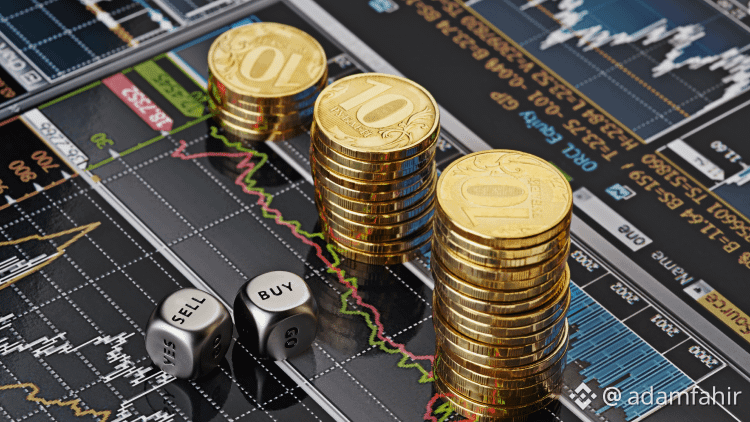
Trading isn't just for the guys in suits on Wall Street anymore; thanks to technology, it's open to anyone with an internet connection and a passion for learning. But what is trading, really? And how can you dive into this space smartly?
1. What is Trading?
Simply put, trading is the process of buying and selling financial assets (like stocks, currencies, or commodities) with the aim of making a profit from their price fluctuations. Traders rely on specific strategies to predict the upcoming price movement, whether that’s in minutes or days.
2. Common Types of Financial Markets
There are various arenas where you can trade, the most notable being:
• Stock Market: Buying shares in global companies like Apple or Tesla.
• Forex Market: Trading foreign currencies against each other (like the pair \bm{EUR/USD}).
• Cryptocurrencies: A modern market characterized by high volatility, such as Bitcoin and Ethereum.
• Commodities: Trading in gold, oil, or silver.#BTCDropsBelow$77K $BTC
{future}(BTCUSDT)
Trading World: Your Gateway to Understanding Financial Markets
Trading isn't just for the guys in suits on Wall Street anymore; thanks to technology, it's open to anyone with an internet connection and a passion for learning. But what is trading, really? And how can you dive into this space smartly?
1. What is Trading?
Simply put, trading is the process of buying and selling financial assets (like stocks, currencies, or commodities) with the aim of making a profit from their price fluctuations. Traders rely on specific strategies to predict the upcoming price movement, whether that’s in minutes or days.
2. Common Types of Financial Markets
There are various arenas where you can trade, the most notable being:
• Stock Market: Buying shares in global companies like Apple or Tesla.
• Forex Market: Trading foreign currencies against each other (like the pair \bm{EUR/USD}).
• Cryptocurrencies: A modern market characterized by high volatility, such as Bitcoin and Ethereum.
• Commodities: Trading in gold, oil, or silver.#BTCDropsBelow$77K $BTC
Trading isn't just for the guys in suits on Wall Street anymore; thanks to technology, it's open to anyone with an internet connection and a passion for learning. But what is trading, really? And how can you dive into this space smartly?
1. What is Trading?
Simply put, trading is the process of buying and selling financial assets (like stocks, currencies, or commodities) with the aim of making a profit from their price fluctuations. Traders rely on specific strategies to predict the upcoming price movement, whether that’s in minutes or days.
2. Common Types of Financial Markets
There are various arenas where you can trade, the most notable being:
• Stock Market: Buying shares in global companies like Apple or Tesla.
• Forex Market: Trading foreign currencies against each other (like the pair \bm{EUR/USD}).
• Cryptocurrencies: A modern market characterized by high volatility, such as Bitcoin and Ethereum.
• Commodities: Trading in gold, oil, or silver.#BTCDropsBelow$77K $BTC
1
1
104
·
--

Article
casa blancaTrading in financial markets today is the face of the modern digital era, shifting from closed stock exchange halls to the screens of smartphones in everyone's hands. The initial allure of this field lies in the concept of "financial freedom"; it offers traders unparalleled flexibility in managing their time and space, opening up avenues for returns that can exceed traditional investments, especially with the presence of "leverage" that multiplies the buying power of modest capital. This high liquidity and the ability to enter and exit trades in fractions of a second have made trading a haven for those with broad trading ambitions who wish to diversify their income sources away from typical jobs.
casa blanca
Trading in financial markets today is the face of the modern digital era, shifting from closed stock exchange halls to the screens of smartphones in everyone's hands. The initial allure of this field lies in the concept of "financial freedom"; it offers traders unparalleled flexibility in managing their time and space, opening up avenues for returns that can exceed traditional investments, especially with the presence of "leverage" that multiplies the buying power of modest capital. This high liquidity and the ability to enter and exit trades in fractions of a second have made trading a haven for those with broad trading ambitions who wish to diversify their income sources away from typical jobs.
7
69
·
--
Trading is a world full of opportunities, but it's also packed with risks that can be devastating if not handled with care. It's not a "get-rich-quick scheme" as often portrayed on social media; rather, it's a skill and a science that requires time and patience.
Here's an objective look at trading:
1. The Upside (Opportunities)
• Financial and location freedom: It gives you the ability to work from anywhere at any time.
• High returns: If you master your strategies, trading can yield returns that far surpass traditional investment methods.
• Easy access: Nowadays, thanks to modern apps, anyone can start with small amounts.
#ArthurHayes’LatestSpeech
Trading is a world full of opportunities, but it's also packed with risks that can be devastating if not handled with care. It's not a "get-rich-quick scheme" as often portrayed on social media; rather, it's a skill and a science that requires time and patience.
Here's an objective look at trading:
1. The Upside (Opportunities)
• Financial and location freedom: It gives you the ability to work from anywhere at any time.
• High returns: If you master your strategies, trading can yield returns that far surpass traditional investment methods.
• Easy access: Nowadays, thanks to modern apps, anyone can start with small amounts.
#ArthurHayes’LatestSpeech
Here's an objective look at trading:
1. The Upside (Opportunities)
• Financial and location freedom: It gives you the ability to work from anywhere at any time.
• High returns: If you master your strategies, trading can yield returns that far surpass traditional investment methods.
• Easy access: Nowadays, thanks to modern apps, anyone can start with small amounts.
#ArthurHayes’LatestSpeech
10
417
Log in to explore more content
Join global crypto users on Binance Square
⚡️ Get latest and useful information about crypto.
💬 Trusted by the world’s largest crypto exchange.
👍 Discover real insights from verified creators.
Email / Phone number
Trending Topics
BitcoinHits$85K
1,528 views
88 Discussing
Roughly $5B in visible $BTC short liquidations stacked between $83K–$85K. In an uptrend, that's fuel.
When shorts liquidate, they're forced to market-buy. That buying pressure drives price higher, triggering the next layer of liquidations above — a cascade of demand feeding itself.
We saw this exact dynamic on the run from $67K to $80K. The setup looks identical now. Expect the next leg to follow the same playbook: liquidation-driven momentum, systematic buying pressure, and continuation until the fuel runs out.
This is how bull markets accelerate. The chart is setting up clean, and the mechanics are in place. Watch for the break above $83K — that's where the cascade starts.
QuantFreedom
·4 Likes
·2.5k views
ECBStartsBlockchainEuroSettlement
1,548 views
180 Discussing
SouthAfricaProposesCryptoExchangeControls
11,001 views
412 Discussing