
祺小岚
3.4k Posts

祺小岚
币安死忠粉,加密货币参与者,拿到过大结果,热衷于写文章,币安平台实时关注者,喜欢交易,欢迎大家关注我一起分享赚钱经验!
Open Trade
Frequent Trader
11.8 Months
67 Following
10.8K+ Followers
5.3K+ Liked
Posts
Portfolio
All
Quotes
Videos
Live
#baby $BABY Fellow everyone, over the past couple of days I’ve been going head-to-head with this project, poring over the Babylon and Aave v4 native Bitcoin lending proposal over and over again. Honestly, at first I really thought it was just some kind of wrapped-up gimmick. To get to the bottom of it, I even took a small notebook and started making notes. Today, I’m going to open up and talk from the heart about a few hard-core details I dug out.
First, the capital utilization is genuinely top-notch. Previously, many BTCfi projects would set up their own independent liquidity pools, and the liquidity was fragmented beyond belief. But this time, they used Aave v4’s Hub-Spoke architecture. In plain terms, the vaultBTC is directly plugged into Aave’s main base—so everyone shares the same pool of capital. As for how interest is calculated? It’s anchored to the main pool’s pricing, and then fine-tuned according to each party’s risk level. It’s flexible.
Second, when it comes to asset custody, this is the lifeblood for people in our crypto circle. Normally, we’re most afraid of third-party custodians running away, right? In this mechanism, the “big pancake” is locked tightly in a Taproot script. Getting it back requires meeting on-chain conditions plus a zero-knowledge proof. I specifically looked into it: the underlying BaBe cryptography scheme is a collaboration between the team and UC Berkeley, and it’s said to be aimed at the top academic conference CCS in 2026. The technical foundation is solid—definitely not something “drawn up” with empty promises.
Next, let’s talk about collateral and liquidation—this part is the most striking to me. You don’t even need to swap the “big pancake” into another token first. The generated vaultBTC is a strictly transfer-restricted certificate that can only be moved within Aave’s core contracts, making it much more reliable than traditional WBTC collateral. What if there’s a liquidation? Liquidators directly take WBTC plus a premium to step in, and arbitrageurs later go back on-chain to swap for the real “big pancake.” It all relies on genuine market incentives—no centralized big shot is lurking in the background to provide a bailout.
To summarize my personal take: the technical highlights really are impressive—no fluff. But when I was organizing the timeline, I found a small snag. Back in December they teased that it would be live by April this year, but now it’s August, everyone! Progress is still stuck at the Temp Check stage in May. After that, they still need to go through the ARFC review and an on-chain vote. The thing is a good thing, but the pace of “doing things slowly” is indeed a bit too sluggish. Everyone, keep an eye on it yourself—don’t blindly FOMO. DYOR!
#baby $BABY
@BabylonLabs_io
First, the capital utilization is genuinely top-notch. Previously, many BTCfi projects would set up their own independent liquidity pools, and the liquidity was fragmented beyond belief. But this time, they used Aave v4’s Hub-Spoke architecture. In plain terms, the vaultBTC is directly plugged into Aave’s main base—so everyone shares the same pool of capital. As for how interest is calculated? It’s anchored to the main pool’s pricing, and then fine-tuned according to each party’s risk level. It’s flexible.
Second, when it comes to asset custody, this is the lifeblood for people in our crypto circle. Normally, we’re most afraid of third-party custodians running away, right? In this mechanism, the “big pancake” is locked tightly in a Taproot script. Getting it back requires meeting on-chain conditions plus a zero-knowledge proof. I specifically looked into it: the underlying BaBe cryptography scheme is a collaboration between the team and UC Berkeley, and it’s said to be aimed at the top academic conference CCS in 2026. The technical foundation is solid—definitely not something “drawn up” with empty promises.
Next, let’s talk about collateral and liquidation—this part is the most striking to me. You don’t even need to swap the “big pancake” into another token first. The generated vaultBTC is a strictly transfer-restricted certificate that can only be moved within Aave’s core contracts, making it much more reliable than traditional WBTC collateral. What if there’s a liquidation? Liquidators directly take WBTC plus a premium to step in, and arbitrageurs later go back on-chain to swap for the real “big pancake.” It all relies on genuine market incentives—no centralized big shot is lurking in the background to provide a bailout.
To summarize my personal take: the technical highlights really are impressive—no fluff. But when I was organizing the timeline, I found a small snag. Back in December they teased that it would be live by April this year, but now it’s August, everyone! Progress is still stuck at the Temp Check stage in May. After that, they still need to go through the ARFC review and an on-chain vote. The thing is a good thing, but the pace of “doing things slowly” is indeed a bit too sluggish. Everyone, keep an eye on it yourself—don’t blindly FOMO. DYOR!
#baby $BABY
@BabylonLabs_io


#baby $BABY Recently, everyone in the circle has been discussing the very interesting mechanism on the testnet of @BabylonLabs_io : a single big Bitcoin transaction can now conveniently carry up to 10 HTLC outputs. I saw that a lot of people in the forum’s first reaction was: “Wow, this cuts the gas fee by a tenth right away!” That is indeed true. After all, it saves the cost of broadcasting over and over again, and what gets saved is real money. But if you only focus on “saving money,” then you’re really missing the bigger picture, and you’re completely underestimating the core trick behind this design.
We need to understand a fundamental logic: this kind of batch packaging is absolutely not about mixing everyone’s funds into the same pool and creating shared risk. In reality, these 10 outputs are 10 completely isolated “private safes.” To put it another way, it’s like a delivery driver, in order to save on fuel, putting the valuables from 10 households into one truck. The shipping cost is indeed shared by everyone, but the processes of unpacking, checking goods, and insurance claims still have to be handled one household at a time according to the rules. It is impossible that because you used the same vehicle, the coverage and risk would all be lumped together.
What’s hidden in this is Babylon’s very smart security philosophy: efficiency can be a group effort, but the security isolation of assets must be pursued to the end.
On the surface, it looks like things have been “packaged together,” but the off-chain heavy lifting has not been reduced at all. The node (VP) still has to honestly collect everyone’s signatures before submitting them to Ethereum. Most importantly, even if the node suddenly goes down one day, or even maliciously goes on strike and refuses to cooperate, ordinary users can still rely on the keys and credentials they hold in hand, and complete a hardcore self-rescue through the original mechanism.
So when the mainnet really starts running at scale, while everyone else is calculating how much they saved on fees, I would instead focus on three truly hardcore indicators that test $BABY ’s quality:
First, the actual distribution of this batching scale in real-world environments;
Second, the final success rate of signatures;
Third, and most importantly, the time difference for ordinary users to take over assets independently when an extreme node outage occurs.
These three points are the core factors that determine whether this system will become a bottleneck at critical moments.
In the end, technological upgrades can indeed lower the threshold and cost, but in the crypto world, when it comes to the security of assets tied to one’s livelihood, there will never be such a thing as a “group-buy price”
We need to understand a fundamental logic: this kind of batch packaging is absolutely not about mixing everyone’s funds into the same pool and creating shared risk. In reality, these 10 outputs are 10 completely isolated “private safes.” To put it another way, it’s like a delivery driver, in order to save on fuel, putting the valuables from 10 households into one truck. The shipping cost is indeed shared by everyone, but the processes of unpacking, checking goods, and insurance claims still have to be handled one household at a time according to the rules. It is impossible that because you used the same vehicle, the coverage and risk would all be lumped together.
What’s hidden in this is Babylon’s very smart security philosophy: efficiency can be a group effort, but the security isolation of assets must be pursued to the end.
On the surface, it looks like things have been “packaged together,” but the off-chain heavy lifting has not been reduced at all. The node (VP) still has to honestly collect everyone’s signatures before submitting them to Ethereum. Most importantly, even if the node suddenly goes down one day, or even maliciously goes on strike and refuses to cooperate, ordinary users can still rely on the keys and credentials they hold in hand, and complete a hardcore self-rescue through the original mechanism.
So when the mainnet really starts running at scale, while everyone else is calculating how much they saved on fees, I would instead focus on three truly hardcore indicators that test $BABY ’s quality:
First, the actual distribution of this batching scale in real-world environments;
Second, the final success rate of signatures;
Third, and most importantly, the time difference for ordinary users to take over assets independently when an extreme node outage occurs.
These three points are the core factors that determine whether this system will become a bottleneck at critical moments.
In the end, technological upgrades can indeed lower the threshold and cost, but in the crypto world, when it comes to the security of assets tied to one’s livelihood, there will never be such a thing as a “group-buy price”


#baby After reading @BabylonLabs_io 's whitepaper, to be honest, the plan for “cold start” in it really made me say, wow. The document openly says: they will use targeted $BABY rewards to incentivize early DeFi partners.
Did the old hands in the market feel their DNA trigger instantly when they heard this? We know this playbook all too well: use tokens as bait and throw subsidies around like crazy. All kinds of “mercenary capital,” smelling high APY, rush in, and TVL gets pumped to the sky in no time. Once the surface-level prosperity is created, they use Twitter shilling to get retail investors in the secondary market to take the bag. But once the subsidies run dry and the high yields stop, this money leaves faster than rabbits, and in the end it usually turns into a mess.
Babylon's official plan is pretty rational: first use token inflation to build up the ecosystem, and once the treasury is running steadily, switch to a real protocol-fee model. But this is the famous “death jump” in crypto! Ask yourself honestly: how many people come to staking for “trustless Bitcoin-native security”? Most are still here for the annualized yield. Once users get used to free money or even net-positive returns, if you start charging fees or stop paying out, why would they not leave?
Hidden in this is a very fragile economic chain: the token's long-term value has to be supported by real revenue from the protocol, but early revenue has to be bought with token emissions. If, before inflationary subsidies stop, no strong real moat has been built, it will spiral into a death loop of “printing tokens to buy data -> inflated valuation -> continued inflation -> value dilution -> collapse.”
To be fair, I very much recognize Babylon's technical direction in the BTCFi sector; they are indeed doing real work. But technical excellence and tokenomics working properly are completely different things. Will it end up like Uniswap, with real users accumulated through strong product value, or like Yam back then, just a flash of brilliance sustained by subsidies? That depends on the management team's control and the pace of tapering off.
Same old advice: DYOR. Don't get hyped just because you see the words “high rewards.” Before you jump in, ask yourself: if no tokens were issued tomorrow, would you still use this product? For this kind of “subsidize first, charge later” approach, do you think it's an entry opportunity or a slow-acting poison?@BabylonLabs_io
Did the old hands in the market feel their DNA trigger instantly when they heard this? We know this playbook all too well: use tokens as bait and throw subsidies around like crazy. All kinds of “mercenary capital,” smelling high APY, rush in, and TVL gets pumped to the sky in no time. Once the surface-level prosperity is created, they use Twitter shilling to get retail investors in the secondary market to take the bag. But once the subsidies run dry and the high yields stop, this money leaves faster than rabbits, and in the end it usually turns into a mess.
Babylon's official plan is pretty rational: first use token inflation to build up the ecosystem, and once the treasury is running steadily, switch to a real protocol-fee model. But this is the famous “death jump” in crypto! Ask yourself honestly: how many people come to staking for “trustless Bitcoin-native security”? Most are still here for the annualized yield. Once users get used to free money or even net-positive returns, if you start charging fees or stop paying out, why would they not leave?
Hidden in this is a very fragile economic chain: the token's long-term value has to be supported by real revenue from the protocol, but early revenue has to be bought with token emissions. If, before inflationary subsidies stop, no strong real moat has been built, it will spiral into a death loop of “printing tokens to buy data -> inflated valuation -> continued inflation -> value dilution -> collapse.”
To be fair, I very much recognize Babylon's technical direction in the BTCFi sector; they are indeed doing real work. But technical excellence and tokenomics working properly are completely different things. Will it end up like Uniswap, with real users accumulated through strong product value, or like Yam back then, just a flash of brilliance sustained by subsidies? That depends on the management team's control and the pace of tapering off.
Same old advice: DYOR. Don't get hyped just because you see the words “high rewards.” Before you jump in, ask yourself: if no tokens were issued tomorrow, would you still use this product? For this kind of “subsidize first, charge later” approach, do you think it's an entry opportunity or a slow-acting poison?@BabylonLabs_io


#baby $BABY brothers, recently I’ve been digging into the staking rules for $BABY , and I found something pretty interesting. Everyone might be blindly watching that high return rate, but I’m more of a cautious type—I looked first at its “escape route.” Officially, they compressed the unbonding period to about 2 days. Long-time players know that on traditional PoS chains, tokens are often locked for 21 days or more. Compared to 21 days, these two days are basically a liquidity bonus—but the underlying logic behind it isn’t that simple.
Why are they willing to let people get their funds back so quickly? Aren’t they afraid nodes will misbehave and run away? That’s where the cleverness of @BabylonLabs_io comes in. It didn’t choose to be tough and hold on—rather, it directly hugged Bitcoin’s leg. Babylon periodically and firmly anchors the chain’s “progress checkpoints” onto the Bitcoin network. If hackers want to roll back and tamper with history, sure—go ahead, but you’d first have to attack and compromise the BTC network. With Bitcoin’s seemingly invincible timestamp armor, long-range attacks essentially become a joke. That’s why the system dares to significantly shorten the punishment waiting period for malicious nodes.
But hold your excitement—let me pour two cups of cold water based on real hands-on experience, because this is one of the biggest traps people overlook when playing with staking:
First, that “about 2 days” is only the ideal daily scenario. When you initiate a withdrawal, in practice you still need to go through on-chain queueing, wait for the Epoch to settle, and then the delay before it takes effect. If you run into an extreme waterfall market where everyone stampedes to escape, how long will that line get? And if, during congestion, the front-end page still only shows a dumb “about two days” message without any real-time queue status, it will absolutely affect your decision on when to top out.
Second, don’t mix up BABY token staking with BTC (Bitcoin) staking. They are completely different in terms of underlying networks, delegation mechanisms, and risk exposure. If you take the fast unbonding expectation of BABY and force it into a BTC-based capital plan, you’ll definitely end up taking a big loss.
In the end, fast unbonding is a double-edged sword. Your funds become more flexible, but the network also needs enough time to catch and punish those nodes doing bad things. So when we look at #baby ’s ecosystem infrastructure going forward, don’t just stare at the “48 hours” from the brochures—check the real on-chain queue congestion data more often. True liquidity has never been about the days on paper; it’s whether, during a big drop, your assets can get back to your wallet on time. @BabylonLabs_io
Why are they willing to let people get their funds back so quickly? Aren’t they afraid nodes will misbehave and run away? That’s where the cleverness of @BabylonLabs_io comes in. It didn’t choose to be tough and hold on—rather, it directly hugged Bitcoin’s leg. Babylon periodically and firmly anchors the chain’s “progress checkpoints” onto the Bitcoin network. If hackers want to roll back and tamper with history, sure—go ahead, but you’d first have to attack and compromise the BTC network. With Bitcoin’s seemingly invincible timestamp armor, long-range attacks essentially become a joke. That’s why the system dares to significantly shorten the punishment waiting period for malicious nodes.
But hold your excitement—let me pour two cups of cold water based on real hands-on experience, because this is one of the biggest traps people overlook when playing with staking:
First, that “about 2 days” is only the ideal daily scenario. When you initiate a withdrawal, in practice you still need to go through on-chain queueing, wait for the Epoch to settle, and then the delay before it takes effect. If you run into an extreme waterfall market where everyone stampedes to escape, how long will that line get? And if, during congestion, the front-end page still only shows a dumb “about two days” message without any real-time queue status, it will absolutely affect your decision on when to top out.
Second, don’t mix up BABY token staking with BTC (Bitcoin) staking. They are completely different in terms of underlying networks, delegation mechanisms, and risk exposure. If you take the fast unbonding expectation of BABY and force it into a BTC-based capital plan, you’ll definitely end up taking a big loss.
In the end, fast unbonding is a double-edged sword. Your funds become more flexible, but the network also needs enough time to catch and punish those nodes doing bad things. So when we look at #baby ’s ecosystem infrastructure going forward, don’t just stare at the “48 hours” from the brochures—check the real on-chain queue congestion data more often. True liquidity has never been about the days on paper; it’s whether, during a big drop, your assets can get back to your wallet on time. @BabylonLabs_io


#baby $BABY Recently, while scrolling through the forum, I noticed everyone is watching how many BTC-equivalent “pies” Babylon is locking up, and everyone is hyping how amazing the capital volume is. To be honest, as an old “leek” who’s been through a few bull-bear cycles, compared with TVL, what I care about more is whether the coin I put in is truly safe.
Over the weekend, I stayed up late and tore Babylon’s whitepaper apart to take a look. I found that rather than calling it a technological revolution, it’s more like a set of super “interlocking patch(es)” designed to bridge the “gap” between Bitcoin and the PoS mechanism.
We all know that this old-school Bitcoin system can’t do “Slashing” (penalties) as-is. So how does Babylon handle it? They use a one-time signature. Put simply: as long as a node dares to commit double-signing at the same time, your private key will be exposed instantly, and the protocol forcibly confiscates your assets. This move is indeed ruthless, but the logic has a blind spot: what if the misbehaving node doesn’t double-sign, but instead simply pulls the network cable and goes offline, or deliberately delays block production? The whitepaper’s coverage of these scenarios is quite vague. Personally, from a hands-on perspective, I think this is a non-trivial risk.
Next is the issue of capital control. Funds move in and out via a committee threshold signature—basically, a handful of keys have to be combined to open the safe. They’ve done enough to prevent single-point failure, but what I fear most in my day-to-day trading is this kind of “black box.” How exactly are these gatekeepers selected? Who sets the threshold parameters? If we hit an extreme blow-up market, will these people collude or collectively go offline? This governance mechanism part is still a huge question mark. If I really put my entire net worth into it, I’d honestly feel a bit uneasy.
Finally, there’s a particularly nasty “unlock period” trap. Don’t think that once you click “withdraw staked assets,” you’re completely safe! During the long unbonding/waiting period, if your node misbehaves and gets penalized/slashed, your coins are still dragged into it and get cut along with them. Many beginners don’t understand this layer of logic. They think redemption during the process automatically means the funds are absolutely safe. This kind of misconception will eventually cost people dearly.
In short: Babylon’s safety moat isn’t a solid block of steel—it’s more like Lego bricks stacked together through a lot of cryptography and assumptions about human behavior. While everyone rushes to “front-mine,” keep an extra eye on things. For investing, don’t just chase yield—protecting your principal is the real king!
$BABY @BabylonLabs_io #baby
Over the weekend, I stayed up late and tore Babylon’s whitepaper apart to take a look. I found that rather than calling it a technological revolution, it’s more like a set of super “interlocking patch(es)” designed to bridge the “gap” between Bitcoin and the PoS mechanism.
We all know that this old-school Bitcoin system can’t do “Slashing” (penalties) as-is. So how does Babylon handle it? They use a one-time signature. Put simply: as long as a node dares to commit double-signing at the same time, your private key will be exposed instantly, and the protocol forcibly confiscates your assets. This move is indeed ruthless, but the logic has a blind spot: what if the misbehaving node doesn’t double-sign, but instead simply pulls the network cable and goes offline, or deliberately delays block production? The whitepaper’s coverage of these scenarios is quite vague. Personally, from a hands-on perspective, I think this is a non-trivial risk.
Next is the issue of capital control. Funds move in and out via a committee threshold signature—basically, a handful of keys have to be combined to open the safe. They’ve done enough to prevent single-point failure, but what I fear most in my day-to-day trading is this kind of “black box.” How exactly are these gatekeepers selected? Who sets the threshold parameters? If we hit an extreme blow-up market, will these people collude or collectively go offline? This governance mechanism part is still a huge question mark. If I really put my entire net worth into it, I’d honestly feel a bit uneasy.
Finally, there’s a particularly nasty “unlock period” trap. Don’t think that once you click “withdraw staked assets,” you’re completely safe! During the long unbonding/waiting period, if your node misbehaves and gets penalized/slashed, your coins are still dragged into it and get cut along with them. Many beginners don’t understand this layer of logic. They think redemption during the process automatically means the funds are absolutely safe. This kind of misconception will eventually cost people dearly.
In short: Babylon’s safety moat isn’t a solid block of steel—it’s more like Lego bricks stacked together through a lot of cryptography and assumptions about human behavior. While everyone rushes to “front-mine,” keep an extra eye on things. For investing, don’t just chase yield—protecting your principal is the real king!
$BABY @BabylonLabs_io #baby



#baby $BABY This morning while brushing my teeth, a thought suddenly flashed through my mind. You old-school “hodlers” always call the big pie “cyber gold,” betting the farm that holding it will appreciate. But after doing a deep dive experience of @BabylonLabs_io recently, I feel like this old almanac has to be flipped for good. The big pie is evolving from a “dust-collecting brick” into a “hen that lays golden eggs.”
Think about it: if you lock real gold and silver in an insurance vault, it won’t grow any “babies” unless you take the risk of lending it out while the custodians might run away. The old big pie was the same—sitting in your wallet is just a string of static code. But Babylon pulled an extremely hardcore move: it turned the big pie into “rental deposit” using Taproot time locks. Your coins sit safely in their own UTXOs, with nothing moved an inch, but its “security consensus” has been leased out to other PoS chains to act as security guard. They pay you rental fees like clockwork every epoch—$BABY . The principal is absolutely safe, and it keeps generating yield. This is what a true “productive asset” looks like.
Even more amazing is the TBV mechanism, which essentially kicks off the “one BTC, many uses” mode. You lock the big pie on the mainnet, and with a ZK proof, you can instantly use it as collateral in Aave V4 to borrow USDC and go work on arbitrage elsewhere—while the mainnet big pie continues earning interest. This is way more reliable than WBTC, fully cutting off middlemen profiting from the spread and the trust crisis caused by custodial blowups.
A while back, I ran a live test with 0.05 testnet big pie from my Ledger. Watching the dashboard spit out 0.2 $BABY every epoch gave me that coin-denominated “passively earning” kind of thrill—nothing compares to staring at charts and trading swings every day. This is an absolute “dimensionality reduction” attack from the perspective of underlying assets.
Of course, there’s no free lunch. The 50-hour unbonding period and the slashing/penalty mechanisms for node misbehavior are friction costs you must bear to rent it out. But compared to the old, dry “dead hoarding,” getting a steady stream of external cash flow while still having absolute control of the private key is a truly epic leap.
Compared with the overused “BTCFi” label, doesn’t the phrase “productive BTC” sound like it has more vision? Brothers, what do you think? Drop your thoughts in the comments!
#baby
Think about it: if you lock real gold and silver in an insurance vault, it won’t grow any “babies” unless you take the risk of lending it out while the custodians might run away. The old big pie was the same—sitting in your wallet is just a string of static code. But Babylon pulled an extremely hardcore move: it turned the big pie into “rental deposit” using Taproot time locks. Your coins sit safely in their own UTXOs, with nothing moved an inch, but its “security consensus” has been leased out to other PoS chains to act as security guard. They pay you rental fees like clockwork every epoch—$BABY . The principal is absolutely safe, and it keeps generating yield. This is what a true “productive asset” looks like.
Even more amazing is the TBV mechanism, which essentially kicks off the “one BTC, many uses” mode. You lock the big pie on the mainnet, and with a ZK proof, you can instantly use it as collateral in Aave V4 to borrow USDC and go work on arbitrage elsewhere—while the mainnet big pie continues earning interest. This is way more reliable than WBTC, fully cutting off middlemen profiting from the spread and the trust crisis caused by custodial blowups.
A while back, I ran a live test with 0.05 testnet big pie from my Ledger. Watching the dashboard spit out 0.2 $BABY every epoch gave me that coin-denominated “passively earning” kind of thrill—nothing compares to staring at charts and trading swings every day. This is an absolute “dimensionality reduction” attack from the perspective of underlying assets.
Of course, there’s no free lunch. The 50-hour unbonding period and the slashing/penalty mechanisms for node misbehavior are friction costs you must bear to rent it out. But compared to the old, dry “dead hoarding,” getting a steady stream of external cash flow while still having absolute control of the private key is a truly epic leap.
Compared with the overused “BTCFi” label, doesn’t the phrase “productive BTC” sound like it has more vision? Brothers, what do you think? Drop your thoughts in the comments!
#baby

#baby $BABY Brothers, last night I was just adjusting a few interaction scripts running on bare-metal servers when I accidentally came across a message about TBV (Go to Trust Vault) mainnet testing—@BabylonLabs_io . I instantly wasn’t sleepy anymore.
I’ve seen plenty of those “yield-generating” products out there. Basically, they either make you deposit your coins into a shared liquidity pool, or route everything through a cross-chain bridge. But Babylon this time is playing it completely differently. After reading the official docs, I found it didn’t do any bridging, and it didn’t package anything like wrapped BTC (wBTC) for trusted custody institutions. Your BTC just stays locked tightly in Bitcoin’s mainnet-exclusive, dedicated UTXOs. Ethereum on the other side only tracks state. This vault concept—never handing over the lifeline, keeping physical isolation—really hits the spot for someone like me who prioritizes “survival.”
But! Don’t FOMO yet. I’ve been closely watching its EOTS key-management part. The cryptographic logic is indeed hardcore: if nodes dare to double-sign at the same block height, and reuse a nonce, the private key gets exposed. The slashing mechanism can then take you out instantly. But people like us who spend years battling node errors know this too well—what if it’s a bug in the node software, or a freak double-sign caused by server issues? This mechanism has no empathy. It can’t tell whether you’re malicious on purpose or it’s just a program failure. Once it cuts, real money is gone. My confidence is shaky—until I’ve seen a huge amount of real stress-test data.
According to the roadmap, the mainnet will go live in Q4 this year. Staking has already shot past 57,000 BTC. It’s all hype right now, but pay attention: integrating new applications isn’t plug-and-play. You’ll need custom contracts one by one and go through a rather tedious governance process. When it eventually reaches large-scale, high-concurrency operation, can this system—extremely dependent on pre-signing and EOTS—hold up?
The idea of building a trustless channel without changing the underlying BTC protocol is absolutely on a different level. But the downside is clear: if any one of the underlying components fails, the cost is catastrophic. I plan to keep observing for now and let the stubborn ones go step into the traps first. Brothers, with this “no changes to consensus” approach—do you really think it can survive the mainnet’s brutal testing? Drop your thoughts in the comments.
@BabylonLabs_io
I’ve seen plenty of those “yield-generating” products out there. Basically, they either make you deposit your coins into a shared liquidity pool, or route everything through a cross-chain bridge. But Babylon this time is playing it completely differently. After reading the official docs, I found it didn’t do any bridging, and it didn’t package anything like wrapped BTC (wBTC) for trusted custody institutions. Your BTC just stays locked tightly in Bitcoin’s mainnet-exclusive, dedicated UTXOs. Ethereum on the other side only tracks state. This vault concept—never handing over the lifeline, keeping physical isolation—really hits the spot for someone like me who prioritizes “survival.”
But! Don’t FOMO yet. I’ve been closely watching its EOTS key-management part. The cryptographic logic is indeed hardcore: if nodes dare to double-sign at the same block height, and reuse a nonce, the private key gets exposed. The slashing mechanism can then take you out instantly. But people like us who spend years battling node errors know this too well—what if it’s a bug in the node software, or a freak double-sign caused by server issues? This mechanism has no empathy. It can’t tell whether you’re malicious on purpose or it’s just a program failure. Once it cuts, real money is gone. My confidence is shaky—until I’ve seen a huge amount of real stress-test data.
According to the roadmap, the mainnet will go live in Q4 this year. Staking has already shot past 57,000 BTC. It’s all hype right now, but pay attention: integrating new applications isn’t plug-and-play. You’ll need custom contracts one by one and go through a rather tedious governance process. When it eventually reaches large-scale, high-concurrency operation, can this system—extremely dependent on pre-signing and EOTS—hold up?
The idea of building a trustless channel without changing the underlying BTC protocol is absolutely on a different level. But the downside is clear: if any one of the underlying components fails, the cost is catastrophic. I plan to keep observing for now and let the stubborn ones go step into the traps first. Brothers, with this “no changes to consensus” approach—do you really think it can survive the mainnet’s brutal testing? Drop your thoughts in the comments.
@BabylonLabs_io


#baby $BABY Friends, over the past couple of days I’ve been going through the partnership announcements of @BabylonLabs_io , and the more I read, the more I find it interesting. Look at the partners: Aave v4 does lending, Ledger handles signing, GoMining plays with mining yield, Aegis sets fixed rates. The logos on the poster are packed full—at first glance it looks like the whole ecosystem has already been laid out.
But we, as retail users who constantly dig around on-chain, definitely shouldn’t let these marketing gimmicks fool our eyes. If you go through the verbs in those official statements carefully, they’re all “plan,” “evaluate,” “wait for testing.” GoMining’s “goal of 1,000 big pies” hasn’t shown any real liquidity entering the market yet; Aegis’s lending also has to wait until the fourth quarter of this year. What people can experience right now is still just Aave v4 circulating on the testnet with test coins.
This is actually the most common playbook for project teams—mix “intent,” “in testing,” and “already live” all on one poster so people can fantasize about a business empire. But in reality, those hard technical problems—oracle feeds, signing mechanisms, liquidation windows, and the like—may be what the team is still working overtime to code.
What we care about is the long-term value of $BABY . In the end, it comes down to cash flow. Even if the token model sounds beautiful (for Gas, governance, and buyback-and-burn), once the mainnet goes live and nobody is borrowing, and fees are basically near zero, then all that value capture becomes nothing but an empty story floating in the air.
Personally, I’ve summarized a “three-step verification method” specifically to cure this kind of bait-and-switch:
See whether the testnet can smoothly run the full closed loop of “deposit–borrow–repay–redeem”;
After the mainnet launches, keep watching whether there are truly real-money “big pie” locks coming in;
Observe whether the partners can bring sustained active borrowers and real fees.
Bottom line: what the ecosystem lacks the least is the next marketing poster. What we truly need is a publicly transparent progress tracker! Don’t just show logos—make everything transparent: the exact mainnet timeline, the actual amount locked, the total fees generated, and the fund flow back involving $BABY . Only when these fields are no longer blank can this business logic truly land.
Brothers, do you think the current partnership progress matches expectations? Drop your thoughts in the comments! #baby
But we, as retail users who constantly dig around on-chain, definitely shouldn’t let these marketing gimmicks fool our eyes. If you go through the verbs in those official statements carefully, they’re all “plan,” “evaluate,” “wait for testing.” GoMining’s “goal of 1,000 big pies” hasn’t shown any real liquidity entering the market yet; Aegis’s lending also has to wait until the fourth quarter of this year. What people can experience right now is still just Aave v4 circulating on the testnet with test coins.
This is actually the most common playbook for project teams—mix “intent,” “in testing,” and “already live” all on one poster so people can fantasize about a business empire. But in reality, those hard technical problems—oracle feeds, signing mechanisms, liquidation windows, and the like—may be what the team is still working overtime to code.
What we care about is the long-term value of $BABY . In the end, it comes down to cash flow. Even if the token model sounds beautiful (for Gas, governance, and buyback-and-burn), once the mainnet goes live and nobody is borrowing, and fees are basically near zero, then all that value capture becomes nothing but an empty story floating in the air.
Personally, I’ve summarized a “three-step verification method” specifically to cure this kind of bait-and-switch:
See whether the testnet can smoothly run the full closed loop of “deposit–borrow–repay–redeem”;
After the mainnet launches, keep watching whether there are truly real-money “big pie” locks coming in;
Observe whether the partners can bring sustained active borrowers and real fees.
Bottom line: what the ecosystem lacks the least is the next marketing poster. What we truly need is a publicly transparent progress tracker! Don’t just show logos—make everything transparent: the exact mainnet timeline, the actual amount locked, the total fees generated, and the fund flow back involving $BABY . Only when these fields are no longer blank can this business logic truly land.
Brothers, do you think the current partnership progress matches expectations? Drop your thoughts in the comments! #baby



#baby $BABY Brothers, have you been following that proposal in the Babylon community about adjusting the inflation rate recently? Honestly, when I saw that they want to bring inflation down to 5.5%, my first reaction was: as retail holders holding $BABY , won’t this kind of rapid deflation directly kill off the enthusiasm of the node operators and those big staking guys? After all, in crypto, if there’s no meat on the bones, who would be willing to put in the effort?
But if I calm down and look at it from another angle, it’s definitely not sustainable to keep pumping out tokens at a crazy pace. If inflation is too high, with so many new coin units being dumped into the market every day, wouldn’t the coins we hold slowly get diluted into water? Babylon has pretty big ambitions. Its core idea is to take Bitcoin’s absolute security and bring it over, acting as “bodyguards” for more Web3 on-chain applications. For a task this epic, relying on the early days’ “high inflation, throw money at it” approach simply isn’t realistic.
With that hesitation in mind, I spent the last couple of days digging through a lot of hard-core资料 about mainnet upgrades, and I also lurked and watched the community’s two camps fiercely debate. In the end, I quietly cast my vote “for” this proposal.
Why? Because I figured out this isn’t some simple playbook of “issue fewer coins to pump the price.” It’s a project dynamically finding balance across different stages of development. The 5.5% inflation figure is really interesting. It can both leave reasonable “oil and water” for ecosystem builders and the staking guys, and also apply a brake—balancing the network’s long-term security needs. A lot of newbies only look at token economics and fixate on the APY in front of them, but for something like Babylon—a foundational protocol—those initial parameters shouldn’t be set in stone. They need to evolve as the real ecosystem matures.
After this vote, I’ve also truly experienced what $BABY ’s deeper value is. It’s not just a hype asset you watch every day on the charts—it’s “a say” in deciding where the network goes next.
Fellas in the square, if you run into a governance vote like this, would you care more about the immediate high staking yields, or would you be willing to compromise for the ecosystem’s long-term takeoff? Drop your real thoughts in the comments! @BabylonLabs_io
But if I calm down and look at it from another angle, it’s definitely not sustainable to keep pumping out tokens at a crazy pace. If inflation is too high, with so many new coin units being dumped into the market every day, wouldn’t the coins we hold slowly get diluted into water? Babylon has pretty big ambitions. Its core idea is to take Bitcoin’s absolute security and bring it over, acting as “bodyguards” for more Web3 on-chain applications. For a task this epic, relying on the early days’ “high inflation, throw money at it” approach simply isn’t realistic.
With that hesitation in mind, I spent the last couple of days digging through a lot of hard-core资料 about mainnet upgrades, and I also lurked and watched the community’s two camps fiercely debate. In the end, I quietly cast my vote “for” this proposal.
Why? Because I figured out this isn’t some simple playbook of “issue fewer coins to pump the price.” It’s a project dynamically finding balance across different stages of development. The 5.5% inflation figure is really interesting. It can both leave reasonable “oil and water” for ecosystem builders and the staking guys, and also apply a brake—balancing the network’s long-term security needs. A lot of newbies only look at token economics and fixate on the APY in front of them, but for something like Babylon—a foundational protocol—those initial parameters shouldn’t be set in stone. They need to evolve as the real ecosystem matures.
After this vote, I’ve also truly experienced what $BABY ’s deeper value is. It’s not just a hype asset you watch every day on the charts—it’s “a say” in deciding where the network goes next.
Fellas in the square, if you run into a governance vote like this, would you care more about the immediate high staking yields, or would you be willing to compromise for the ecosystem’s long-term takeoff? Drop your real thoughts in the comments! @BabylonLabs_io


Last night, I grabbed late-night snacks at a roadside stall with Lao Li, who does development. While this guy was gnawing on grilled lamb chops, he complained that today’s cross-chain bridges are like paper-thin. I seized the moment to bring up Babylon (@BabylonLabs_io )—the BTC staking protocol I’ve been obsessing over recently. After hearing my long-winded explanation, he snorted and said, “People in your circle don’t do anything more than turn ‘please don’t let the project rug pull’ into ‘bet on the smart contract having no bugs.’ The playbook gets updated, but the essence is the same.”
I almost choked on my beer, but when I thought about it carefully, Babylon’s “updated playbook” really does have something to it. Its biggest highlight is the Trustless Vault: the big BTC never leaves a single layer of the network—it obediently stays in your own UTXO.
How does it do that? The key is a time lock combined with EOTS (extractable one-time signatures). Its anti-malicious mechanism is pretty hardcore: if any node dares to pull tricks (say, malicious double-signing), EOTS will trace the culprit by following the trail and reveal his private key, triggering a chain-reaction liquidation that immediately sends the staked BTC to a burn address. It’s like taking what used to be the pathetic “please, institution, do your job” mindset of WBTC and turning it into a hard constraint—“code is written into the rules; cheating means death.” This is a leap from trusting custodians to trusting cryptography.
But I’m not going to blindly hype it—does this system have zero flaws? Not exactly. Peel back the layers and you’ll find that in the unbinding step, you still can’t get around the multi-sig intervention of the covenant committee. As long as signing still depends on “people,” that semi-centralized tail hasn’t been fully cut off. And because Bitcoin’s scripting language is extremely clunky, stitching together such complex conditional logic means security audits are definitely a non-trivial risk.
Let’s also talk about the market picture from the past couple of days—$BABY . The movement looks way too familiar: a classic low-volume shakeout with high volatility. If it rises, it gets smashed hard; if it falls, someone comes in to buy the dip. In plain terms, retail investors’ emotional swings matter far more than the actual capital’s chess match.
When the night ended and the alcohol wore off, Lao Li lit a cigarette and murmured, “Your decentralized protocol isn’t just like young people’s views on marriage nowadays, is it? Instead of blindly saying ‘I trust you,’ you’d better write the conditions for getting cheated and losing everything into the contract up front.” I was stunned for two seconds—this sounds even clearer than any research report. #BTC #BABY
I almost choked on my beer, but when I thought about it carefully, Babylon’s “updated playbook” really does have something to it. Its biggest highlight is the Trustless Vault: the big BTC never leaves a single layer of the network—it obediently stays in your own UTXO.
How does it do that? The key is a time lock combined with EOTS (extractable one-time signatures). Its anti-malicious mechanism is pretty hardcore: if any node dares to pull tricks (say, malicious double-signing), EOTS will trace the culprit by following the trail and reveal his private key, triggering a chain-reaction liquidation that immediately sends the staked BTC to a burn address. It’s like taking what used to be the pathetic “please, institution, do your job” mindset of WBTC and turning it into a hard constraint—“code is written into the rules; cheating means death.” This is a leap from trusting custodians to trusting cryptography.
But I’m not going to blindly hype it—does this system have zero flaws? Not exactly. Peel back the layers and you’ll find that in the unbinding step, you still can’t get around the multi-sig intervention of the covenant committee. As long as signing still depends on “people,” that semi-centralized tail hasn’t been fully cut off. And because Bitcoin’s scripting language is extremely clunky, stitching together such complex conditional logic means security audits are definitely a non-trivial risk.
Let’s also talk about the market picture from the past couple of days—$BABY . The movement looks way too familiar: a classic low-volume shakeout with high volatility. If it rises, it gets smashed hard; if it falls, someone comes in to buy the dip. In plain terms, retail investors’ emotional swings matter far more than the actual capital’s chess match.
When the night ended and the alcohol wore off, Lao Li lit a cigarette and murmured, “Your decentralized protocol isn’t just like young people’s views on marriage nowadays, is it? Instead of blindly saying ‘I trust you,’ you’d better write the conditions for getting cheated and losing everything into the contract up front.” I was stunned for two seconds—this sounds even clearer than any research report. #BTC #BABY


#baby $BABY guys, let me say something from the bottom of my heart. After messing around in the crypto space for so long and seeing all kinds of wildly overhyped whitepapers, I’ve found the standard for evaluating projects is actually very simple and brutally straightforward. I don’t want to dig into those obscure, hard-to-understand technical terms. I only care about one core question: what real pain point did you actually solve for me?
Take the Trustless Bitcoin Vaults (TBV) I’ve been watching for a while, for example. The angle it takes is really sharp. For the BTC hoarders among us who just hold bag after bag, what’s the most painful part? It’s seeing money in your account, but when you truly need liquidity, you either have to painfully cut and sell, or you have to do cross-chain wrapping (like all sorts of Wrapped assets that often end up causing trust crises), or you need to transfer your coins to a centralized institution to stake and borrow U. The moment you hand over the private key—who wouldn’t feel uneasy?
TBV’s solution is very direct: lock your BTC directly in the Bitcoin mainnet Taproot vault, and then, through a set of verifiable state mechanisms, connect seamlessly to Ethereum’s Aave v4 for borrowing. What does that mean? Your coins are still yours—no cross-chain, no wrapping, and no custody provider. But you still get real, usable liquidity. This really nails the credit risk of third-party institutions running away.
But brothers, don’t rush to hype it up—let’s be objective. No financial innovation can go against common sense. Decentralization doesn’t mean there’s no risk. You’ve eliminated custody risk, but you haven’t removed financial risk by a single cent. If you borrow, you still have to pay interest; when the market goes against you, your health factor should turn red just the same. And if there’s a delay in oracle pricing or some weird issue with the smart contract, your position gets liquidated—no question.
Finally, let me share a piece of experience: if you don’t have a mandatory need for money right now, the most steady survival wisdom in this space is to simply toss your BTC into a cold wallet and let it gather dust. Let the shots fly first—once real demand shows up, it won’t be too late to get on board.
@BabylonLabs_io $BABY #baby
Take the Trustless Bitcoin Vaults (TBV) I’ve been watching for a while, for example. The angle it takes is really sharp. For the BTC hoarders among us who just hold bag after bag, what’s the most painful part? It’s seeing money in your account, but when you truly need liquidity, you either have to painfully cut and sell, or you have to do cross-chain wrapping (like all sorts of Wrapped assets that often end up causing trust crises), or you need to transfer your coins to a centralized institution to stake and borrow U. The moment you hand over the private key—who wouldn’t feel uneasy?
TBV’s solution is very direct: lock your BTC directly in the Bitcoin mainnet Taproot vault, and then, through a set of verifiable state mechanisms, connect seamlessly to Ethereum’s Aave v4 for borrowing. What does that mean? Your coins are still yours—no cross-chain, no wrapping, and no custody provider. But you still get real, usable liquidity. This really nails the credit risk of third-party institutions running away.
But brothers, don’t rush to hype it up—let’s be objective. No financial innovation can go against common sense. Decentralization doesn’t mean there’s no risk. You’ve eliminated custody risk, but you haven’t removed financial risk by a single cent. If you borrow, you still have to pay interest; when the market goes against you, your health factor should turn red just the same. And if there’s a delay in oracle pricing or some weird issue with the smart contract, your position gets liquidated—no question.
Finally, let me share a piece of experience: if you don’t have a mandatory need for money right now, the most steady survival wisdom in this space is to simply toss your BTC into a cold wallet and let it gather dust. Let the shots fly first—once real demand shows up, it won’t be too late to get on board.
@BabylonLabs_io $BABY #baby


#baby Rather than letting myself be harvested by macro sentiment and staring at the K-line, I’d rather dive into GitHub and dissect the code logic. Recently, while reviewing Section 5.1 of the Babylon whitepaper—its “security model”—I saw an almost painfully glaring class stratification: in this Bitcoin staking feast, whales and retail users are simply not eating at the same table. On the technical side, Babylon leverages EOTS (Extractable One-Time Signatures) and the Covenant Committee to build staking on top of Bitcoin’s native UTXO architecture. Compared with the kind of disasters traditional cross-chain bridges like Ronin have suffered—often losing over $600 million—this really does represent substantive technical iteration. But the devil is always in the cold details: whales with massive capital can participate as multisig members, directly moving into a trust-minimized treasury to personally oversee the underlying collateral and mitigate risks; meanwhile, the whitepaper’s subtext for retail users is—please trust the “conscience” of large lenders and liquidators. It’s like everyone pools money to co-found a startup, yet the keys to the treasury are all hanging from the belts of a few major shareholders. Looking back at the dark history of crypto, from Mt. Gox to FTX, before a collapse, which industry giant wasn’t smiling and assuring you your assets were absolutely safe? With the additional $BABY governance mechanism, this monopoly of power becomes even more concrete. Following the governance logic in Chapter 10 of the whitepaper, liquidation authority and seats on the Security Committee are tightly bound to the depth of $BABY ’s holdings. Big capital can fully handpick itself into the power center through massive token allocations, forming a perfect loop of data and interests. Retail users not only have no real voting power; they also lose the ability to independently verify where the underlying assets ultimately go. Here, $BABY isn’t democratic votes at all—it’s an “anti-trust-means-nothing” VIP card exclusive to the big players. No such card? Sorry—you’re left with nothing but forced blind faith in privileged elites. I once rented dual-lane, top-tier EPYC bare-metal servers to stress-test the underlying nodes, and I’ve written countless high-frequency interaction scripts. In this world, one truth has always governed me: “safety first.” Babylon’s designed architecture is logically self-consistent, but it very plainly pins retail users into the position of “second-class citizens.” The risk of wrongdoing at the system level hasn’t been entirely eliminated by code—it has merely shifted from multisig arrangements in cross-chain bridges to large institutions holding heavy positions. @BabylonLabs_io



#baby $BABY Don’t hide behind “black swans”—LST trust collapses and Babylon’s mathematical uprising
Ditch the fantasies! The so-called “multisig” moat in the LST protocol is often just a hacker-exclusive cash withdrawal machine. Over the past three years, cross-chain bridge vulnerabilities and leaked multisig private keys teamed up to evaporate more than $2 billion in retail investors’ assets. Insiders love to dress this up as unpredictable “black swan” events, but it’s nothing more than structural cancer in a centralized intermediary layer. As long as the lifeblood of the fund pool still depends on a few “signers” or fragile “bridge contracts” to approve and release, instant zeroing out is only a matter of time.
A dimension-reduction strike: from “passive defense” to “active certainty”
Real DeFi shouldn’t be built on fragile human-trust assumptions—it should fully submit to rigorous mathematics. The ultimate solution offered by Babylon’s trustless Bitcoin vault (TBV) is brutally simple: eliminate intermediaries entirely. Bitcoin stays on the mainnet throughout, locked tightly in Taproot scripts that are jointly signed by depositors.
Dual-core drive: the technical engine powering a hundred-billion TVL
This extreme security mechanism hinges on the precise interlocking of two hardcore infrastructure pillars:
• BitVM3’s off-chain game: Cleverly separates heavy smart contract logic into off-chain execution through circuit obfuscation, so the Bitcoin mainnet only needs to handle minimal fraud proofs. This allows external protocols to easily recognize UTXO states while preserving the purity of BTC’s native scripts.
• BABE protocol’s verification revolution: A killer move unveiled by Stanford professor David Tse in early 2026. It reduces the originally bulky multi-pairing computations of Groth16 zero-knowledge proofs to a single elliptic-curve scalar multiplication. Verification cost drops by three orders of magnitude (over a thousand times), completely removing the economic barrier for high-frequency verification of BTC-locked states on external networks.
Conclusion
As of May 2026, more than 56,000 BTC (worth over $5.6 billion) have cast their “vote with their feet,” thriving safely within this pure mathematical fortress. Babylon not only runs a trustless architecture—it has also established a new consensus across the network: the foundation of decentralized finance must be pure mathematical determinism.
If one day cold mathematical proofs fully replace human multisig, what value will remain for those security audit firms that charge just to stamp “multisig logic”?
@BabylonLabs_io #baby $BABY
Ditch the fantasies! The so-called “multisig” moat in the LST protocol is often just a hacker-exclusive cash withdrawal machine. Over the past three years, cross-chain bridge vulnerabilities and leaked multisig private keys teamed up to evaporate more than $2 billion in retail investors’ assets. Insiders love to dress this up as unpredictable “black swan” events, but it’s nothing more than structural cancer in a centralized intermediary layer. As long as the lifeblood of the fund pool still depends on a few “signers” or fragile “bridge contracts” to approve and release, instant zeroing out is only a matter of time.
A dimension-reduction strike: from “passive defense” to “active certainty”
Real DeFi shouldn’t be built on fragile human-trust assumptions—it should fully submit to rigorous mathematics. The ultimate solution offered by Babylon’s trustless Bitcoin vault (TBV) is brutally simple: eliminate intermediaries entirely. Bitcoin stays on the mainnet throughout, locked tightly in Taproot scripts that are jointly signed by depositors.
Dual-core drive: the technical engine powering a hundred-billion TVL
This extreme security mechanism hinges on the precise interlocking of two hardcore infrastructure pillars:
• BitVM3’s off-chain game: Cleverly separates heavy smart contract logic into off-chain execution through circuit obfuscation, so the Bitcoin mainnet only needs to handle minimal fraud proofs. This allows external protocols to easily recognize UTXO states while preserving the purity of BTC’s native scripts.
• BABE protocol’s verification revolution: A killer move unveiled by Stanford professor David Tse in early 2026. It reduces the originally bulky multi-pairing computations of Groth16 zero-knowledge proofs to a single elliptic-curve scalar multiplication. Verification cost drops by three orders of magnitude (over a thousand times), completely removing the economic barrier for high-frequency verification of BTC-locked states on external networks.
Conclusion
As of May 2026, more than 56,000 BTC (worth over $5.6 billion) have cast their “vote with their feet,” thriving safely within this pure mathematical fortress. Babylon not only runs a trustless architecture—it has also established a new consensus across the network: the foundation of decentralized finance must be pure mathematical determinism.
If one day cold mathematical proofs fully replace human multisig, what value will remain for those security audit firms that charge just to stamp “multisig logic”?
@BabylonLabs_io #baby $BABY


#baby $BABY Babylon’s $5B TVL mirage: Why can’t Bitcoin’s “second landlord” ever find tenants?
Babylon has secured nearly $96 million in funding, with the halo of an a16z-led round and a Stanford professor spotlight, and it has hard-forged over $5 billion in TVL. The market hails it as a Bitcoin-yield savior—but at its core, it’s only selling “second landlord” security for BTC. It tries to package and lease idle Bitcoin consensus hash power to PoS chains; the logic looks almost perfect, but reality is painfully harsh: the house is built—so where are the tenants?
Open up its so-called “Bitcoin supercharging network,” and you’re met with grand narratives but no sign of major L1 chains. The Aave partnership the official keeps touting drags on with testnets and delays further on the mainnet, now pushed to the second quarter of 2026. Compared laterally with Ethereum’s EigenLayer AVS modules—which at least have dozens of deployed actively validating services—Babylon’s demand side is still effectively bare. Large PoS ecosystems have already formed value-and-market-cap barriers; they will never outsource core security. Meanwhile, new bottom-layer chains simply can’t afford the expensive “security fee” paid with native tokens.
More fatal is the business-logic paradox of “renting security.” The lifeblood of a blockchain is the absolute independence of consensus. If a PoS chain hands over its network’s vital organs to Babylon, it’s like building a tower on quicksand. Imagine if the rental contract expires, or if Babylon’s multisig treasury exposes a smart-contract vulnerability—those PoS chains’ defenses would instantly collapse, leaving them directly exposed to the catastrophe of a 51% attack. Which responsible public chain would dare to entrust its foundational defenses to a third-party rental agreement?
Strip away the beautiful clothing of $5 billion TVL and you find only mercenaries rushing in on airdrop expectations and short-term high yields. Once the token issuance ends and the yield rate collapses, this liquidity—lacking loyalty—will scatter like birds and beasts. Without real PoS chains continuously paying the bill, the so-called shared security market is destined to be a false proposition.
Endorsements from top-tier capital can only prop up early valuations; they can’t cover the absence of a closed-loop business model. However clever the story is, without serious tenants moving in and generating positive cash flow, Babylon is at most an aircastle. For a narrative-driven asset without substance, the optimal strategy is to put down faith and refuse to be fooled—no rabbits, no hunting.
#baby $BABY
@BabylonLabs_io
Babylon has secured nearly $96 million in funding, with the halo of an a16z-led round and a Stanford professor spotlight, and it has hard-forged over $5 billion in TVL. The market hails it as a Bitcoin-yield savior—but at its core, it’s only selling “second landlord” security for BTC. It tries to package and lease idle Bitcoin consensus hash power to PoS chains; the logic looks almost perfect, but reality is painfully harsh: the house is built—so where are the tenants?
Open up its so-called “Bitcoin supercharging network,” and you’re met with grand narratives but no sign of major L1 chains. The Aave partnership the official keeps touting drags on with testnets and delays further on the mainnet, now pushed to the second quarter of 2026. Compared laterally with Ethereum’s EigenLayer AVS modules—which at least have dozens of deployed actively validating services—Babylon’s demand side is still effectively bare. Large PoS ecosystems have already formed value-and-market-cap barriers; they will never outsource core security. Meanwhile, new bottom-layer chains simply can’t afford the expensive “security fee” paid with native tokens.
More fatal is the business-logic paradox of “renting security.” The lifeblood of a blockchain is the absolute independence of consensus. If a PoS chain hands over its network’s vital organs to Babylon, it’s like building a tower on quicksand. Imagine if the rental contract expires, or if Babylon’s multisig treasury exposes a smart-contract vulnerability—those PoS chains’ defenses would instantly collapse, leaving them directly exposed to the catastrophe of a 51% attack. Which responsible public chain would dare to entrust its foundational defenses to a third-party rental agreement?
Strip away the beautiful clothing of $5 billion TVL and you find only mercenaries rushing in on airdrop expectations and short-term high yields. Once the token issuance ends and the yield rate collapses, this liquidity—lacking loyalty—will scatter like birds and beasts. Without real PoS chains continuously paying the bill, the so-called shared security market is destined to be a false proposition.
Endorsements from top-tier capital can only prop up early valuations; they can’t cover the absence of a closed-loop business model. However clever the story is, without serious tenants moving in and generating positive cash flow, Babylon is at most an aircastle. For a narrative-driven asset without substance, the optimal strategy is to put down faith and refuse to be fooled—no rabbits, no hunting.
#baby $BABY
@BabylonLabs_io


#newt $NEWT Don’t be misled by the hype around Newton’s mainnet launch. Everyone is praising the smooth “delegated authorization” brought by EIP-7702, while selectively ignoring the deadly warning sign that sends chills down your spine — the Polymarket frontend hijack incident in June this year.
It was a classic asymmetrical strike. In just 17 minutes, $3.1 million was wiped out. The hacker didn’t need to crack private keys at all; they used an AI agent to construct extremely complex underlying logic at millisecond speed. The victim simply habitually signed a Blind Signing request that could not be parsed, and the funds were instantly “legally” transferred. This is not a simple code vulnerability; it is a complete collapse of Web3’s old trust paradigm in the face of AI’s high-frequency execution.
Newton ($NEWT )’s technical foundation is sound: **TEE (Trusted Execution Environment) combined with ZKP (Zero-Knowledge Proofs)** establishes AI’s on-chain legitimacy, and PoRW also gives machines economic independence. But when the mainnet beta goes live in Q3 2026, the Achilles’ heel of its architecture becomes fully exposed — the system’s “brake pads” simply cannot match AI’s “engine.”
Look at this hopeless timing mismatch: AI agents can do harm at the execution layer in milliseconds, while Newton’s reliance on the RedStone oracle for price feeds operates on a minute-level delay. By the time multi-party consensus is finally reached and the system triggers an emergency freeze, the hacker has already used cross-chain bridges to launder the funds through mixers. Even more ironically, the existing circuit-breaker mechanisms either rely on core developers’ multisig wallets (extremely centralized) or DAO voting (extremely inefficient). A defensive setup based on a single oracle plus CEX data sources may seem peaceful in a bull market, but in a hacker’s eyes it is an unguarded treasury.
As of July, $NEWT has plunged more than 94%. This is by no means FUD, but the most truthful pricing by the secondary market of this structurally lethal risk.
The grand narrative of “machine citizens” is certainly alluring, but please stay clear-headed: before the system can achieve atomic asset rollback, and before a millisecond-level decentralized automatic circuit-breaker is implemented, absolutely do not expose large amounts of funds to this unprotected agent network.
The ultimate path toward machine autonomy is undoubtedly the right one, but this stepping stone to cyberpunk should not be paid for with our hard-earned money.@NewtonProtocol
It was a classic asymmetrical strike. In just 17 minutes, $3.1 million was wiped out. The hacker didn’t need to crack private keys at all; they used an AI agent to construct extremely complex underlying logic at millisecond speed. The victim simply habitually signed a Blind Signing request that could not be parsed, and the funds were instantly “legally” transferred. This is not a simple code vulnerability; it is a complete collapse of Web3’s old trust paradigm in the face of AI’s high-frequency execution.
Newton ($NEWT )’s technical foundation is sound: **TEE (Trusted Execution Environment) combined with ZKP (Zero-Knowledge Proofs)** establishes AI’s on-chain legitimacy, and PoRW also gives machines economic independence. But when the mainnet beta goes live in Q3 2026, the Achilles’ heel of its architecture becomes fully exposed — the system’s “brake pads” simply cannot match AI’s “engine.”
Look at this hopeless timing mismatch: AI agents can do harm at the execution layer in milliseconds, while Newton’s reliance on the RedStone oracle for price feeds operates on a minute-level delay. By the time multi-party consensus is finally reached and the system triggers an emergency freeze, the hacker has already used cross-chain bridges to launder the funds through mixers. Even more ironically, the existing circuit-breaker mechanisms either rely on core developers’ multisig wallets (extremely centralized) or DAO voting (extremely inefficient). A defensive setup based on a single oracle plus CEX data sources may seem peaceful in a bull market, but in a hacker’s eyes it is an unguarded treasury.
As of July, $NEWT has plunged more than 94%. This is by no means FUD, but the most truthful pricing by the secondary market of this structurally lethal risk.
The grand narrative of “machine citizens” is certainly alluring, but please stay clear-headed: before the system can achieve atomic asset rollback, and before a millisecond-level decentralized automatic circuit-breaker is implemented, absolutely do not expose large amounts of funds to this unprotected agent network.
The ultimate path toward machine autonomy is undoubtedly the right one, but this stepping stone to cyberpunk should not be paid for with our hard-earned money.@NewtonProtocol

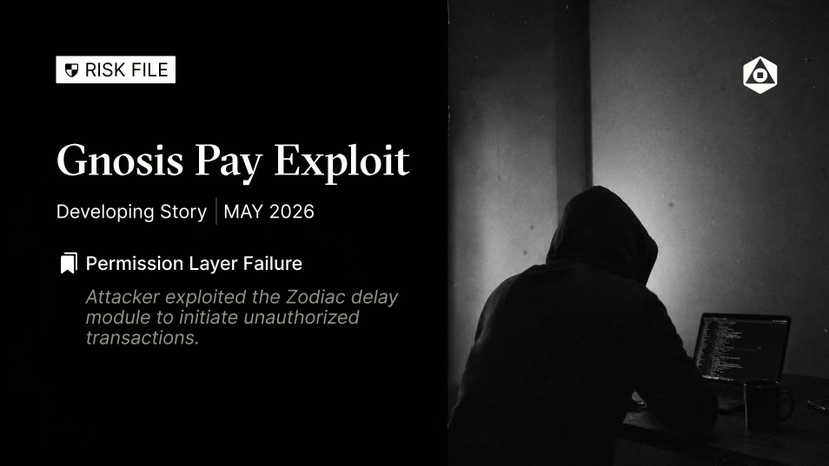
#newt $NEWT The Deadlock of On-Chain AI Agents: Is Newton Protocol the Breakthrough—or an Expensive Toy?
After more than a decade of working on low-level development, I’ve always believed that letting AI Agents directly take over wallets is extremely counterintuitive. The solutions out there are either foolish or flawed: either they run on centralized servers and bet the project team won’t do anything malicious, or they brute-force on-chain computation and get bitten back by Gas fees. Newton Protocol ($NEWT ) tries to replace the “human blind box” with “technical trust.” The idea is certainly right—but after I dug through its underlying logic as a developer, I found some hard flaws that can’t be ignored.
An Overly Perfect Architectural Fantasy
At its core, Newton is a three-part system: limited autonomy, verifiable completeness, and trust accumulation. It throws AI computation into a TEE (Trusted Execution Environment), compresses the computation results with ZKPs (zero-knowledge proofs), and then relies on EigenLayer AVS nodes to sample-verify. Operators stake NEWT, and if they misbehave they’re immediately slashed. This kind of closed loop that relies on game theory plus strong cryptographic constraints is indeed better than those outfits that only “promise safety” through hype.
The Harsh Reality of the Technical Foundation
The ideal is great—until it meets the real EVM execution environment, and its flaws are exposed immediately:
A Deadly Replay Attack Vulnerability: This is the design that makes me the most uneasy. Newton uses session keys to manage permissions, but the state machine design has gaps. If an attacker intercepts a ZK proof that’s about to expire, and because the system lacks a strict Nullifier (revocation marker) mechanism or robust on-chain timestamp validation, a malicious node can submit the same proof an infinite number of times before it expires—draining users’ authorization limits. Cryptography can only prove the computation was correct, but the current system can’t verify whether that proof is being abused.
Conclusion
Verifiable automation is absolutely the necessary path for combining Web3 with AI—but the current form Newton Protocol shows looks more like an advanced, cutting-edge hacker experiment. Until the costs of ZK verification truly drop and the underlying state-transition vulnerabilities are completely patched, going all-in on it is extremely dangerous. Technology doesn’t lie. I’ll keep watching its real on-chain call data—no false optimism, no letting the rabbit run before checking the evidence.
#NEWT #Web3 #ZKML @NewtonProtocol
After more than a decade of working on low-level development, I’ve always believed that letting AI Agents directly take over wallets is extremely counterintuitive. The solutions out there are either foolish or flawed: either they run on centralized servers and bet the project team won’t do anything malicious, or they brute-force on-chain computation and get bitten back by Gas fees. Newton Protocol ($NEWT ) tries to replace the “human blind box” with “technical trust.” The idea is certainly right—but after I dug through its underlying logic as a developer, I found some hard flaws that can’t be ignored.
An Overly Perfect Architectural Fantasy
At its core, Newton is a three-part system: limited autonomy, verifiable completeness, and trust accumulation. It throws AI computation into a TEE (Trusted Execution Environment), compresses the computation results with ZKPs (zero-knowledge proofs), and then relies on EigenLayer AVS nodes to sample-verify. Operators stake NEWT, and if they misbehave they’re immediately slashed. This kind of closed loop that relies on game theory plus strong cryptographic constraints is indeed better than those outfits that only “promise safety” through hype.
The Harsh Reality of the Technical Foundation
The ideal is great—until it meets the real EVM execution environment, and its flaws are exposed immediately:
A Deadly Replay Attack Vulnerability: This is the design that makes me the most uneasy. Newton uses session keys to manage permissions, but the state machine design has gaps. If an attacker intercepts a ZK proof that’s about to expire, and because the system lacks a strict Nullifier (revocation marker) mechanism or robust on-chain timestamp validation, a malicious node can submit the same proof an infinite number of times before it expires—draining users’ authorization limits. Cryptography can only prove the computation was correct, but the current system can’t verify whether that proof is being abused.
Conclusion
Verifiable automation is absolutely the necessary path for combining Web3 with AI—but the current form Newton Protocol shows looks more like an advanced, cutting-edge hacker experiment. Until the costs of ZK verification truly drop and the underlying state-transition vulnerabilities are completely patched, going all-in on it is extremely dangerous. Technology doesn’t lie. I’ll keep watching its real on-chain call data—no false optimism, no letting the rabbit run before checking the evidence.
#NEWT #Web3 #ZKML @NewtonProtocol
#newt Don't let the macro narrative of “institutional entry” fool people. When the market was trading the stablecoin payment and RWA narrative of $NEWT , I checked its token model and codebase right away. Its circulating supply is currently under 300 million, yet its FDV is as high as $48 million. Without hard-core technical backing, this is simply a bloodsucker.
Payment compliance is absolutely not as simple as writing a few lines of Solidity allowlists. Enterprise-grade cross-border settlement demands extremely high determinism. I’ve run node tests for EVM high-frequency interactions on bare-metal servers, and I know that if risk control misjudges and funds get stuck on-chain, the cost is never just a transaction error—it also comes with expensive settlement delays and credit default risks. This leads to the core proposition of the Newton protocol: is its “compliance is code” truly a precise moat, or just a cumbersome toll booth?
From a technical architecture perspective, Newton tries to use EigenLayer’s AVS network together with TEE to intercept strategies before transactions. This is better than traditional centralized APIs. But compared with mainstream proving protocols, it must prove with real data: its zero-knowledge proofs and selective disclosure mechanisms can complete sanctions screening at extremely low latency, and they absolutely do not leak privacy.
On-chain reality is harsh. Cross-border payment rules are intricate. If every transfer must penetrate multiple layers of node validation, the skyrocketing computational friction would be fatal. I evaluated the project mainly by its “false-positive rate”: illicit funds must be intercepted precisely, but legitimate payments must not be over-scrutinized to the point of getting stuck.
In short, $NEWT ’s direction of building a programmable compliance middleware is right. But it must produce real high-concurrency case studies and prove that this ruleset mesh can both prevent risks and still be smooth enough. Otherwise, the so-called sense of security will only become a new stumbling block for institutions “entering the game.” @NewtonProtocol
Payment compliance is absolutely not as simple as writing a few lines of Solidity allowlists. Enterprise-grade cross-border settlement demands extremely high determinism. I’ve run node tests for EVM high-frequency interactions on bare-metal servers, and I know that if risk control misjudges and funds get stuck on-chain, the cost is never just a transaction error—it also comes with expensive settlement delays and credit default risks. This leads to the core proposition of the Newton protocol: is its “compliance is code” truly a precise moat, or just a cumbersome toll booth?
From a technical architecture perspective, Newton tries to use EigenLayer’s AVS network together with TEE to intercept strategies before transactions. This is better than traditional centralized APIs. But compared with mainstream proving protocols, it must prove with real data: its zero-knowledge proofs and selective disclosure mechanisms can complete sanctions screening at extremely low latency, and they absolutely do not leak privacy.
On-chain reality is harsh. Cross-border payment rules are intricate. If every transfer must penetrate multiple layers of node validation, the skyrocketing computational friction would be fatal. I evaluated the project mainly by its “false-positive rate”: illicit funds must be intercepted precisely, but legitimate payments must not be over-scrutinized to the point of getting stuck.
In short, $NEWT ’s direction of building a programmable compliance middleware is right. But it must produce real high-concurrency case studies and prove that this ruleset mesh can both prevent risks and still be smooth enough. Otherwise, the so-called sense of security will only become a new stumbling block for institutions “entering the game.” @NewtonProtocol


Log in to explore more content