
Loko dobiticon
11 Posts

Loko dobiticon
Report
Block User
Open Trade
Occasional Trader
2.1 Years
2 Following
21 Followers
18 Liked
Posts
Portfolio
All
Videos
·
--
Major Technological Trends
Today’s market is marked by significant innovation and the pursuit of practical, real-world applications:
Tokenization of Real-World Assets (RWA): The practice of representing physical assets—such as real estate, government bonds, and commodities—in digital form on the blockchain, increasing liquidity and access to investments.
Convergence with Artificial Intelligence (AI): Projects that combine blockchain and decentralized AI are gaining momentum to process data and power autonomous ecosystems.
Institutional Adoption and Regulation: The consolidation of regulated financial products (such as exchange-traded funds, or ETFs) attracts significant corporate capital while also bringing greater legal maturity and compliance requirements.
Risks, Volatility, and Security
Despite the opportunities for innovation, navigating the crypto world calls for extra caution. Price volatility is a defining feature, capable of generating both substantial profits and steep losses over short periods of time.
In addition, the sector faces ongoing challenges related to digital security. Major cyberattacks targeting exchanges and protocols are a constant reminder that inadequate asset custody and flaws in smart contracts pose real risks to investors. Protecting private keys, using two-factor authentication (2FA), and prioritizing established platforms are essential self-protection measures.
Conclusion
The world of cryptocurrencies is no longer a distant promise; it has become an expanding technological layer in the global economy. Whether driven by the pursuit of financial autonomy, portfolio diversification, or the development of new software applications, the sector continues to rewrite the rules of money—while requiring that enthusiasm always be accompanied by financial education, critical analysis, and rigorous risk management.
57
·
--

Article
about the world of cryptoThe Cryptocurrency Universe: From Technological Innovation to Current Challenges
The cryptocurrency ecosystem has changed radically since Bitcoin was created in 2008. What began as a digital experiment aimed at financial decentralization now moves billions of dollars worldwide, attracts the attention of major institutions, and reshapes how society views fundamental concepts such as money, ownership, and trust.
How Does the Technology Work?
about the world of crypto
The Cryptocurrency Universe: From Technological Innovation to Current Challenges
The cryptocurrency ecosystem has changed radically since Bitcoin was created in 2008. What began as a digital experiment aimed at financial decentralization now moves billions of dollars worldwide, attracts the attention of major institutions, and reshapes how society views fundamental concepts such as money, ownership, and trust.
How Does the Technology Work?
147
·
--
Bearish
Key points on the political and economic developments:
Historic Republican Defeat: The result represents a major setback for President Donald Trump. Analyses and statements indicate that the rising cost of living, inflation (which reached 3.7% in the American fall), soaring fuel prices, and the costs of the conflict with Iran contributed to voter dissatisfaction.
Historic Milestones: The election brought several unprecedented milestones, including the election of the first Indigenous woman in the country's history to the Senate (Peggy Flanagan), as well as historic results in traditionally conservative states.
Impact on the Trump Administration: With Congress under Democratic control starting in January, the president will face limits on his ability to pass budgets and legislation, and is expected to turn to frequent use of veto powers and executive orders.
Foreign Policy and International Relations: The new congressional majority has pledged to use budgetary control to pressure the administration to limit the costs of military involvement and redirect foreign policy. In Brazil, Congress is already monitoring the new parliamentary makeup to assess its impact on trade tariffs applied to Brazilian products.
$dolar

464
·
--
Bearish
$BTC so🚀 The Crypto Titans Showdown: Bitcoin vs. Solana
The cryptocurrency market is fascinating precisely because it encompasses completely different propositions that serve distinct purposes. When we look at the two giants—Bitcoin (BTC) and Solana (SOL)—we’re talking about two philosophies shaping the future of money and technology.
Let’s understand the role of each one? 👇
🪙 1. Bitcoin (BTC) – Digital Gold
What it is: The world’s first and most valuable cryptocurrency, created as a decentralized store of value and a shield against inflation.
Main strength: Maximum security, programmed scarcity (only 21 million BTC will ever exist), and strong institutional adoption.
Long-term outlook: It is often seen as “digital gold,” ideal for preserving wealth with a long-term perspective.
⚡ 2. Solana (SOL) – The High-Performance Network
What it is: An ultra-fast, low-cost blockchain designed for creating decentralized applications (dApps), decentralized finance (DeFi), and fast-moving token ecosystems.
Main strength: Impressive scalability, the ability to process thousands of transactions per second, and fees of just a few cents per transaction.
Long-term outlook: It is the engine behind dynamic ecosystems, particularly strong in the world of rapid innovation, developers, and everyday applications.
Which one should you choose? 🤔
The answer depends on your goal:
If you’re looking for a store of value and stability, Bitcoin is the traditional safe haven.
If you’re looking for speed, technological utility, and exposure to a high-performance ecosystem, Solana stands out for its agility.
What about you? Do you prefer the stability of digital gold or the speed of the Solana network? Let us know in the comments! 👇
#Cryptocurrency #Bitcoin #Solana #Investments #Technology #Web3 #MercadoFinanceiro $BTC $SOL
136
·
--
Mercado Bitcoin identified a security incident today, but stated that customer funds are safe. In addition, the market is still reacting to the recent hack suffered by Binance, which moved billions of dollars.$BTC $ETH $USDC
Mercado Bitcoin identified a security incident today, but stated that customer funds are safe. In addition, the market is still reacting to the recent hack suffered by Binance, which moved billions of dollars.$BTC $ETH $USDC
121
·
--
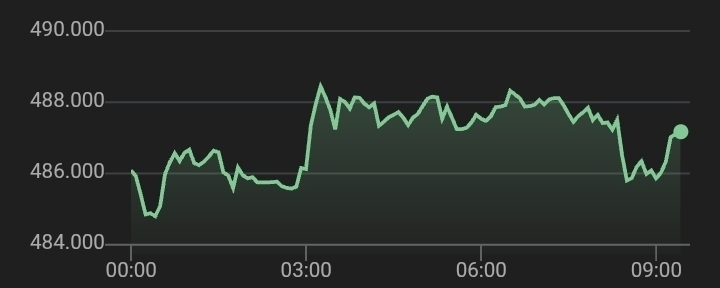
Article
cryptocurrency overviewCryptocurrencies represent a revolution in the global financial system, operating as decentralized forms of digital money. Unlike traditional currencies, they are not issued by central banks or governments, using blockchain technology to ensure the security and transparent recording of transactions.
This innovation enables direct transfers between individuals anywhere in the world, reducing costs and intermediaries. In addition, many cryptocurrencies also function as investment assets, attracting attention for their potential to appreciate in value over time.$AAPLB $BTC $GOOGLB
cryptocurrency overview
Cryptocurrencies represent a revolution in the global financial system, operating as decentralized forms of digital money. Unlike traditional currencies, they are not issued by central banks or governments, using blockchain technology to ensure the security and transparent recording of transactions.
This innovation enables direct transfers between individuals anywhere in the world, reducing costs and intermediaries. In addition, many cryptocurrencies also function as investment assets, attracting attention for their potential to appreciate in value over time.$AAPLB $BTC $GOOGLB
This innovation enables direct transfers between individuals anywhere in the world, reducing costs and intermediaries. In addition, many cryptocurrencies also function as investment assets, attracting attention for their potential to appreciate in value over time.$AAPLB $BTC $GOOGLB
107
·
--
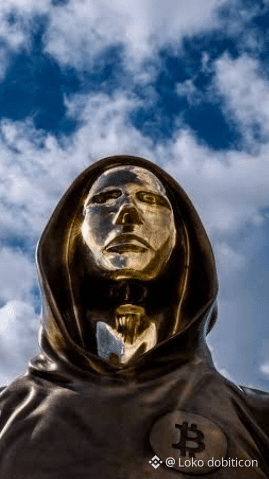
$BTC
Bitcoin is a decentralized digital currency, which means it is not controlled by any government or central bank.
It works through a technology called blockchain, which is like a public ledger that records all transactions securely and transparently.
One of its main features is that its supply is limited to 21 million units, making it scarce.
380
·
--
Bullish
which crypto can I safely buy and have an income $BTC #notcoin
which crypto can I safely buy and have an income $BTC #notcoin
9
13
Log in to explore more content
Join global crypto users on Binance Square
⚡️ Get latest and useful information about crypto.
💬 Trusted by the world’s largest crypto exchange.
👍 Discover real insights from verified creators.
Email / Phone number
Trending Topics
JobsReportRaisesHikeOdds
222,916 views
1,818 Discussing
TradFi News | US Adds 165,000 Jobs in October, More Than Double the 65,000 Forecast, as Unemployment Falls to 4.1%
Binance News
·30 Likes
·21.1k views
CPITestsDecemberRateOutlook
12,504 views
181 Discussing
BitcoinRebounds$75KAsChipsLead
19,377 views
210 Discussing