
尘缘一斩缘
2.5k Posts

尘缘一斩缘
心急是伤身又耗运的负能量。凡事总想立刻见效,遇挫折便焦虑内耗。长久紧绷的心,很难接住生活的好运。放平心态慢慢沉淀,命运自有安排。
Open Trade

BNB Holder
High-Frequency Trader
2.4 Years
120 Following
2.1K+ Followers
2.8K+ Liked
Posts
Portfolio
All
Quotes
#dusk $DUSK @Dusk Today, it turns out there was no score release? I don’t know what’s going on. Everyone should hedge—hedge, hedge.
If you ask me to make a judgment about Dusk right now, I actually wouldn’t start by asking whether it can be made.
What I want to know is:
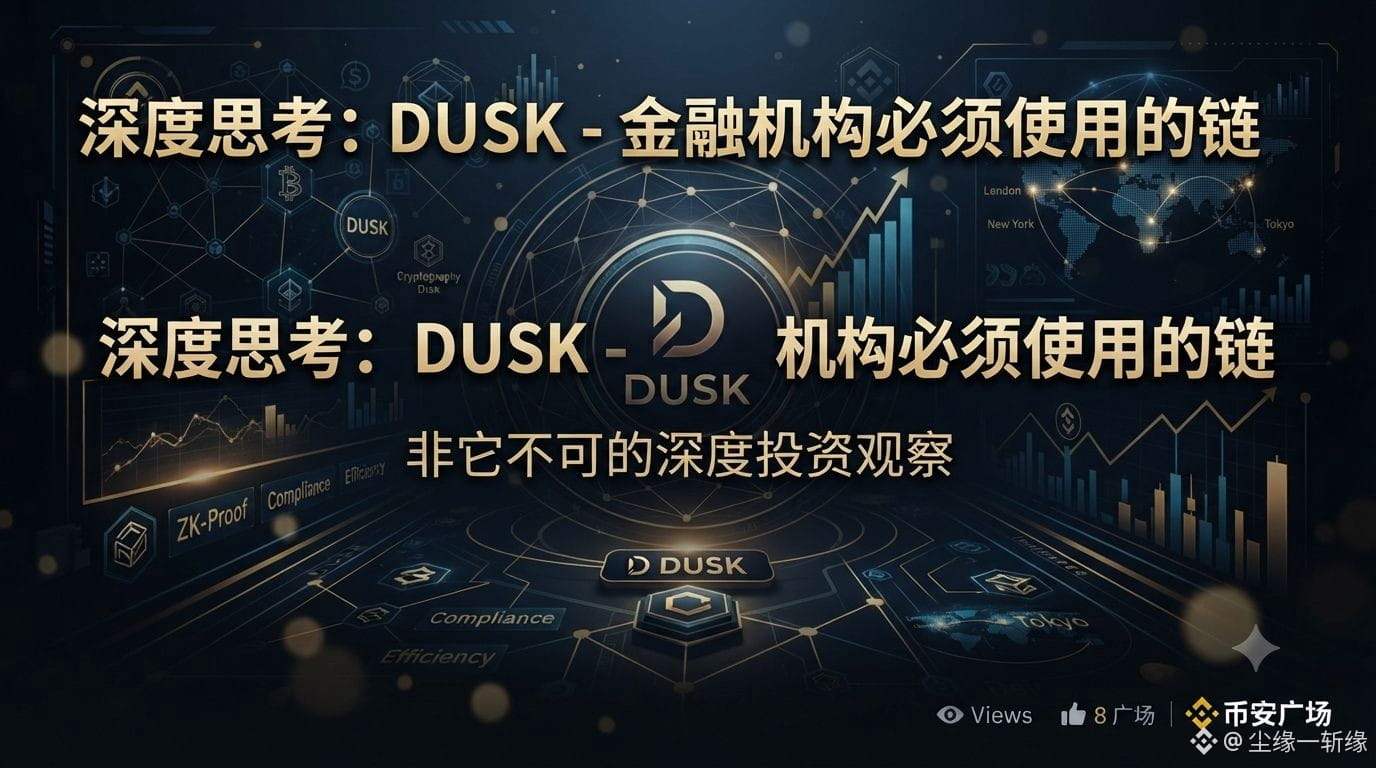
Will it ultimately become a “chain that financial institutions can use,” or a “chain that financial institutions must use”?
These two statements look like they differ by just a few words, but the actual difference is huge.
The former means Dusk’s technology, compliance, and infrastructure are solid, and institutions are willing to adopt it for some business.
But if there are other solutions in the market, institutions can simply switch to another chain—then Dusk always needs to keep proving itself.
The latter is completely different.
Once certain securities issuance, trading, or settlement processes form a dependency on Dusk, the migration cost starts to rise, and the network truly gains its own moat.
So after researching for so many days, I’m actually not that worried about whether Dusk’s technology is advanced enough.
Technology answers “can I do it.”
The real thing that determines a project’s ceiling is “why does someone have to use me.”
That’s also what I think is most worth observing about Dusk right now.
Not how many more partners can be added, and not what feature it will launch next.
But whether, in the future, there will be a certain financial business where:
Once you leave Dusk, costs, efficiency, or compliance handling will clearly get worse.
If such a scenario emerges, I’ll reassess its valuation.
If it never happens, even a complete architecture might just be an infrastructure that’s very nicely built.
So after studying it these few days, my view of Dusk has become simpler and simpler:
I’m not in a rush to prove it will succeed, and I’m not in a rush to prove it will fail.
I’m just waiting for that real moment when it’s “indispensable.”
Because by then, what Dusk is talking about won’t be a story anymore.
It will be a need.
If you ask me to make a judgment about Dusk right now, I actually wouldn’t start by asking whether it can be made.
What I want to know is:
Will it ultimately become a “chain that financial institutions can use,” or a “chain that financial institutions must use”?
These two statements look like they differ by just a few words, but the actual difference is huge.
The former means Dusk’s technology, compliance, and infrastructure are solid, and institutions are willing to adopt it for some business.
But if there are other solutions in the market, institutions can simply switch to another chain—then Dusk always needs to keep proving itself.
The latter is completely different.
Once certain securities issuance, trading, or settlement processes form a dependency on Dusk, the migration cost starts to rise, and the network truly gains its own moat.
So after researching for so many days, I’m actually not that worried about whether Dusk’s technology is advanced enough.
Technology answers “can I do it.”
The real thing that determines a project’s ceiling is “why does someone have to use me.”
That’s also what I think is most worth observing about Dusk right now.
Not how many more partners can be added, and not what feature it will launch next.
But whether, in the future, there will be a certain financial business where:
Once you leave Dusk, costs, efficiency, or compliance handling will clearly get worse.
If such a scenario emerges, I’ll reassess its valuation.
If it never happens, even a complete architecture might just be an infrastructure that’s very nicely built.
So after studying it these few days, my view of Dusk has become simpler and simpler:
I’m not in a rush to prove it will succeed, and I’m not in a rush to prove it will fail.
I’m just waiting for that real moment when it’s “indispensable.”
Because by then, what Dusk is talking about won’t be a story anymore.
It will be a need.
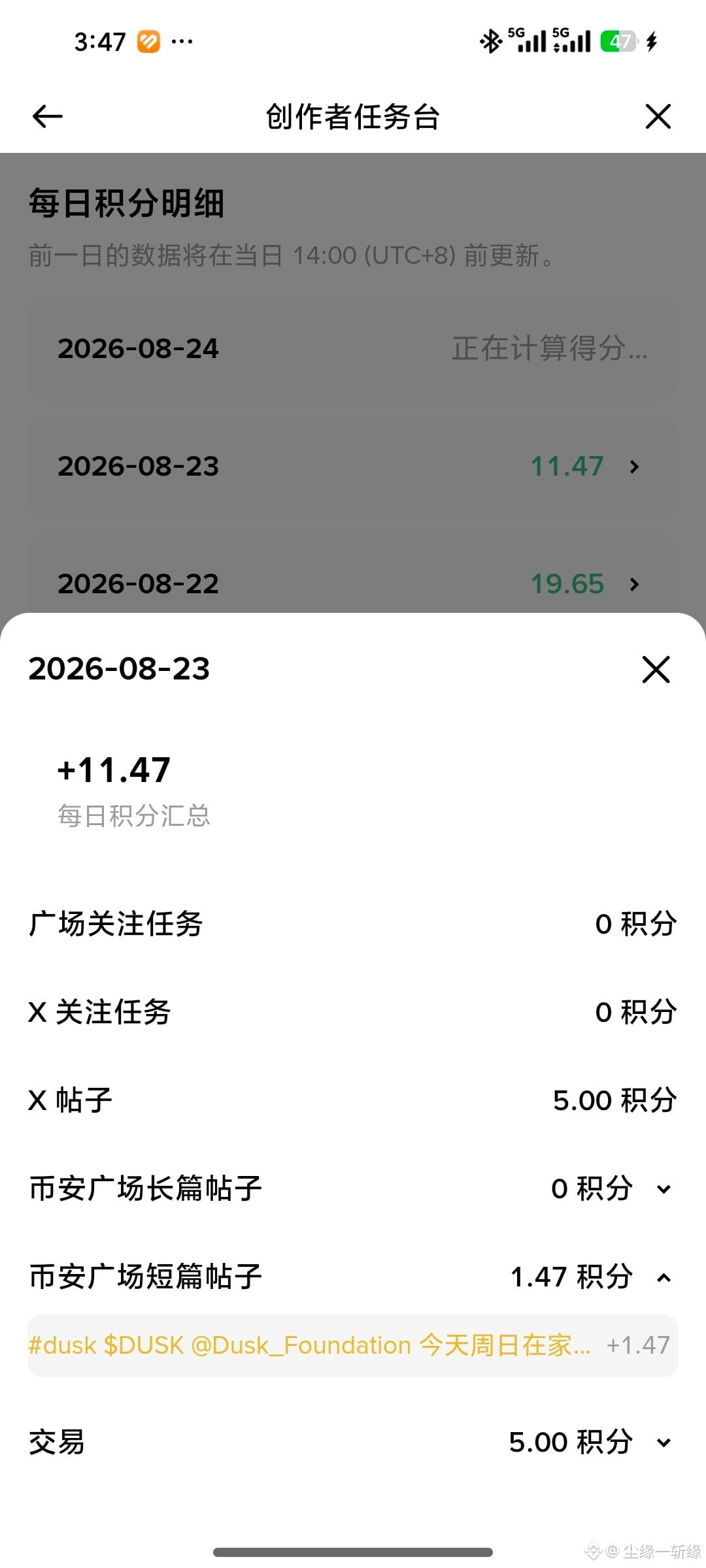
#dusk $DUSK @Dusk Creator task time is taking too long. How can there be that many viewpoints to keep writing? I don’t know if it’s because I’m using a new AI that’s bad or what. Today I only got 1.4 points—so upsetting.
In the past few days, I’ve been cross-checking Dusk’s materials against the order book, and I get a pretty direct impression:
The market’s current valuation looks more like it’s trading a “shady coin with a compliance narrative” than trading foundational infrastructure that could be used by financial institutions long-term.
These two logics are very far apart.
The first focuses on sentiment, narrative rotation, and short-term catalysts; the second looks at whether real business has started to accumulate—whether there’s usage that won’t be easily replaced. Based on the publicly visible information so far, this latter track is still at a very early stage.
So whenever the price hits a broader market correction, it’s not surprising that it weakens easily. It hasn’t yet dug itself out of the “theme coin” category.
My current judgment is also pretty simple: before there is sustained, verifiable on-chain financial activity, it will be difficult for it to escape the state of being priced as a theme coin. Having a complete architecture is just an entry ticket—it’s not pricing power.
In the past few days, I’ve been cross-checking Dusk’s materials against the order book, and I get a pretty direct impression:
The market’s current valuation looks more like it’s trading a “shady coin with a compliance narrative” than trading foundational infrastructure that could be used by financial institutions long-term.
These two logics are very far apart.
The first focuses on sentiment, narrative rotation, and short-term catalysts; the second looks at whether real business has started to accumulate—whether there’s usage that won’t be easily replaced. Based on the publicly visible information so far, this latter track is still at a very early stage.
So whenever the price hits a broader market correction, it’s not surprising that it weakens easily. It hasn’t yet dug itself out of the “theme coin” category.
My current judgment is also pretty simple: before there is sustained, verifiable on-chain financial activity, it will be difficult for it to escape the state of being priced as a theme coin. Having a complete architecture is just an entry ticket—it’s not pricing power.
#dusk $DUSK @Dusk Have you done hedging for big groups? I’ll hedge some first. The new AI isn’t good to use for debugging right now. Now I’m writing with two or three AIs together—it’s so annoying.
Recently I’ve been rewatching Dusk, and I suddenly thought of an issue I hadn’t paid much attention to before:
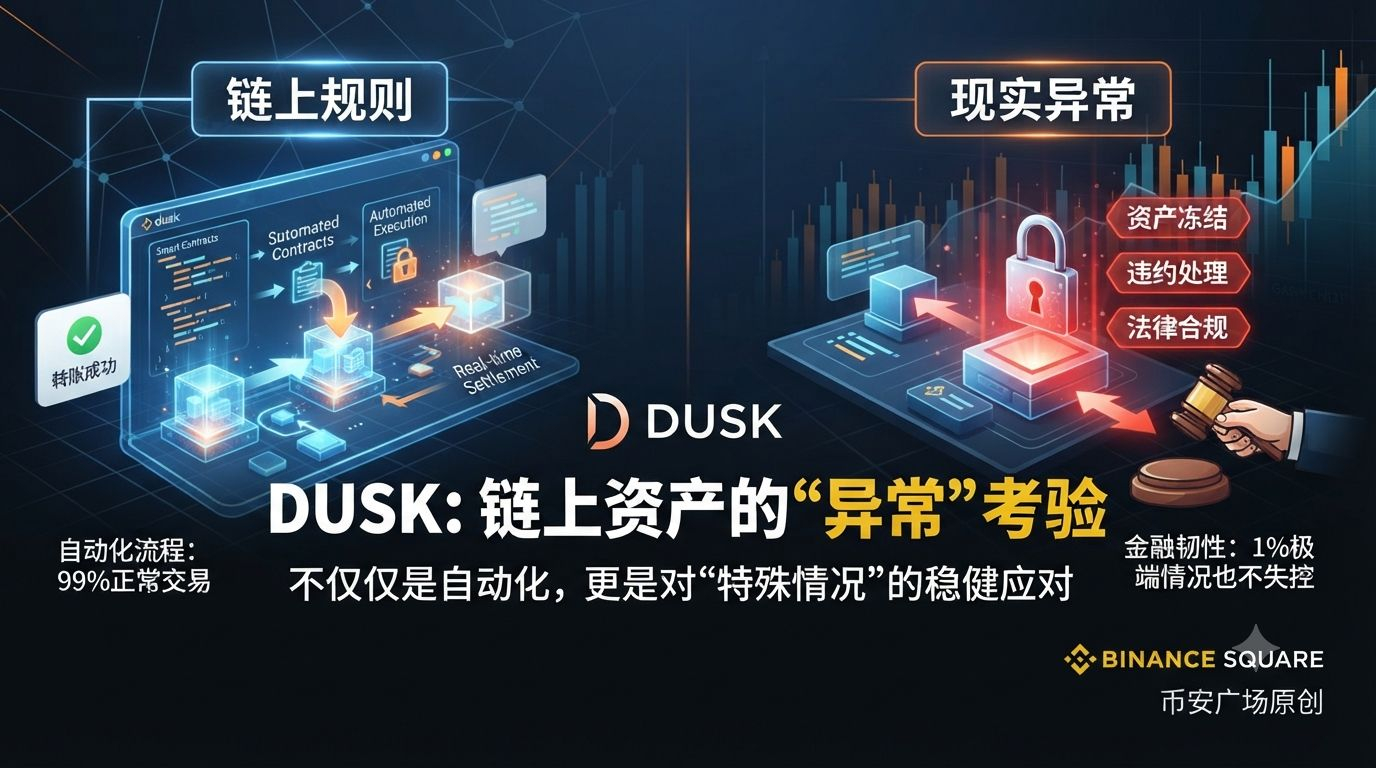
The truly difficult part of financial assets might not be “normal trading,” but what to do after something goes wrong.
Plain Token transfers are actually simple: if the conditions are met, transfer; if not, don’t.
But securities-like assets are completely different.
What if the issuer defaults?
What if a certain investor suddenly loses the eligibility to hold?
If an asset needs to be temporarily frozen— or even if the court requires restrictions on transferring—how should that be handled?
In real-world finance, all these situations come with an entire set of manual processes and legal responsibility to back them up.
But once more and more of an asset’s rules are written on-chain, the problem becomes:
When the on-chain rules meet special circumstances in the real world, who gets to decide?
I think this is exactly the place projects like Dusk will need to prove themselves in the future.
Because automating transfers and settlement in normal conditions doesn’t mean the system is already suitable for financial markets.
What’s really hard about financial infrastructure is that 99% of the time it runs according to the rules, and even the remaining 1% of abnormal cases can’t spiral out of control.
If there’s a conflict between real-world law and on-chain rules, can it handle it?
If there’s an error in the rules themselves, is there a safe correction mechanism?
If an asset is frozen or needs to be forcibly executed, can the on-chain part stay synchronized with the real world?
If these problems are solved well, then on-chain assets aren’t just an “automatically running Token,” but a real asset system with financial characteristics.
So when I look at Dusk now, I also have another observation point:
I actually want to see how it handles abnormal situations, not just what it can do in normal times.
The real test for financial infrastructure usually isn’t the smooth sailing scenario.
It’s whether, when things go wrong, it can still reliably catch everything.
Recently I’ve been rewatching Dusk, and I suddenly thought of an issue I hadn’t paid much attention to before:
The truly difficult part of financial assets might not be “normal trading,” but what to do after something goes wrong.
Plain Token transfers are actually simple: if the conditions are met, transfer; if not, don’t.
But securities-like assets are completely different.
What if the issuer defaults?
What if a certain investor suddenly loses the eligibility to hold?
If an asset needs to be temporarily frozen— or even if the court requires restrictions on transferring—how should that be handled?
In real-world finance, all these situations come with an entire set of manual processes and legal responsibility to back them up.
But once more and more of an asset’s rules are written on-chain, the problem becomes:
When the on-chain rules meet special circumstances in the real world, who gets to decide?
I think this is exactly the place projects like Dusk will need to prove themselves in the future.
Because automating transfers and settlement in normal conditions doesn’t mean the system is already suitable for financial markets.
What’s really hard about financial infrastructure is that 99% of the time it runs according to the rules, and even the remaining 1% of abnormal cases can’t spiral out of control.
If there’s a conflict between real-world law and on-chain rules, can it handle it?
If there’s an error in the rules themselves, is there a safe correction mechanism?
If an asset is frozen or needs to be forcibly executed, can the on-chain part stay synchronized with the real world?
If these problems are solved well, then on-chain assets aren’t just an “automatically running Token,” but a real asset system with financial characteristics.
So when I look at Dusk now, I also have another observation point:
I actually want to see how it handles abnormal situations, not just what it can do in normal times.
The real test for financial infrastructure usually isn’t the smooth sailing scenario.
It’s whether, when things go wrong, it can still reliably catch everything.
#dusk $DUSK @Dusk Today is Sunday, so I'm resting at home. I almost forgot to post a tweet—turns out the truly qualified “diligent worker” has no weekends.
Recently, I’ve been looking over Dusk’s materials again, and I found a term worth pondering:
Native Issuance.
Previously, when I saw RWA, my first reaction was always “tokenizing real-world assets.”
But if you think about it carefully, these two things aren’t actually the same.
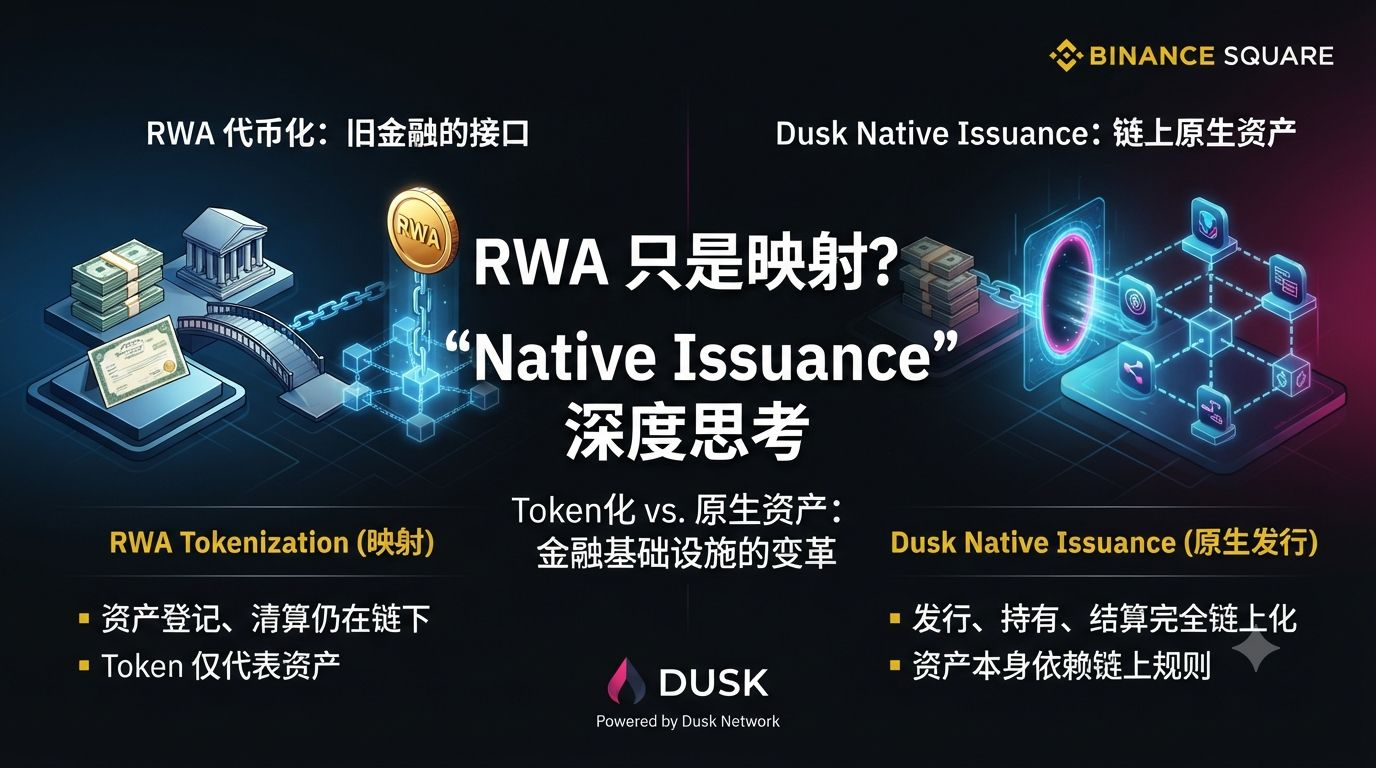
If a bond on-chain is only represented by a single token, while the real asset registration, ownership changes, and settlement are still handled in the traditional system, then the blockchain is more like an interface added to the old financial system.
A token merely “represents” the asset; it doesn’t mean the asset itself has truly moved onto the chain.
Dusk is aiming for a more aggressive route.
It tries to put as many of the processes as possible—issuance, holding, transfer, compliance restrictions, and even settlement—into one unified set of on-chain rules.
That’s also what makes me feel Dusk is somewhat different from many RWA projects.
But there’s a problem here that I’m particularly concerned about:
on-chain native issuance sounds more complete, but it also means the separation from traditional financial infrastructure becomes deeper.
Previously, if the chain was only doing a layer of mapping, and something went wrong, you could still fall back to the traditional system.
If the asset itself depends on on-chain rules to operate, then issues like permissions, error recovery, asset restoration, and legal attestation can’t simply be pushed back off-chain anymore.
So when I look at Dusk now, I actually feel the most interesting part isn’t “yet another RWA project moved onto the chain.”
Instead, it’s that it’s trying to answer a more fundamental question:
in the future, will securities only be tokenized, or can they become native on-chain assets starting right from issuance?
The former is traditional finance integrating with blockchain.
The latter is the only thing that could truly constitute a change in financial infrastructure.
Where Dusk is at right now—and how far it goes next—still needs to be observed.
Recently, I’ve been looking over Dusk’s materials again, and I found a term worth pondering:
Native Issuance.
Previously, when I saw RWA, my first reaction was always “tokenizing real-world assets.”
But if you think about it carefully, these two things aren’t actually the same.
If a bond on-chain is only represented by a single token, while the real asset registration, ownership changes, and settlement are still handled in the traditional system, then the blockchain is more like an interface added to the old financial system.
A token merely “represents” the asset; it doesn’t mean the asset itself has truly moved onto the chain.
Dusk is aiming for a more aggressive route.
It tries to put as many of the processes as possible—issuance, holding, transfer, compliance restrictions, and even settlement—into one unified set of on-chain rules.
That’s also what makes me feel Dusk is somewhat different from many RWA projects.
But there’s a problem here that I’m particularly concerned about:
on-chain native issuance sounds more complete, but it also means the separation from traditional financial infrastructure becomes deeper.
Previously, if the chain was only doing a layer of mapping, and something went wrong, you could still fall back to the traditional system.
If the asset itself depends on on-chain rules to operate, then issues like permissions, error recovery, asset restoration, and legal attestation can’t simply be pushed back off-chain anymore.
So when I look at Dusk now, I actually feel the most interesting part isn’t “yet another RWA project moved onto the chain.”
Instead, it’s that it’s trying to answer a more fundamental question:
in the future, will securities only be tokenized, or can they become native on-chain assets starting right from issuance?
The former is traditional finance integrating with blockchain.
The latter is the only thing that could truly constitute a change in financial infrastructure.
Where Dusk is at right now—and how far it goes next—still needs to be observed.
30D trade $DUSK 494.5 USDT
#dusk $DUSK @Dusk Recently, while rewatching Dusk, I suddenly thought of a question:
Could RWA’s real endpoint not be “moving assets on-chain,” but rather the on-chain records becoming the asset itself as the only valid state?
Nowadays, most RWA projects are more like adding a blockchain alongside the traditional financial system.
Issuance is on-chain, and queries are on-chain—but the thing that truly has authority may still be in offline systems.
For example, consider a security:
Who owns it? Can it be transferred? When are dividends distributed? Does it satisfy investment eligibility requirements?
If, in the end, all of these statuses are still determined by an off-chain database, then blockchain is more like a synchronization tool rather than a foundational financial infrastructure.
This is also the part of Dusk that I’m paying more attention to after rewatching it.
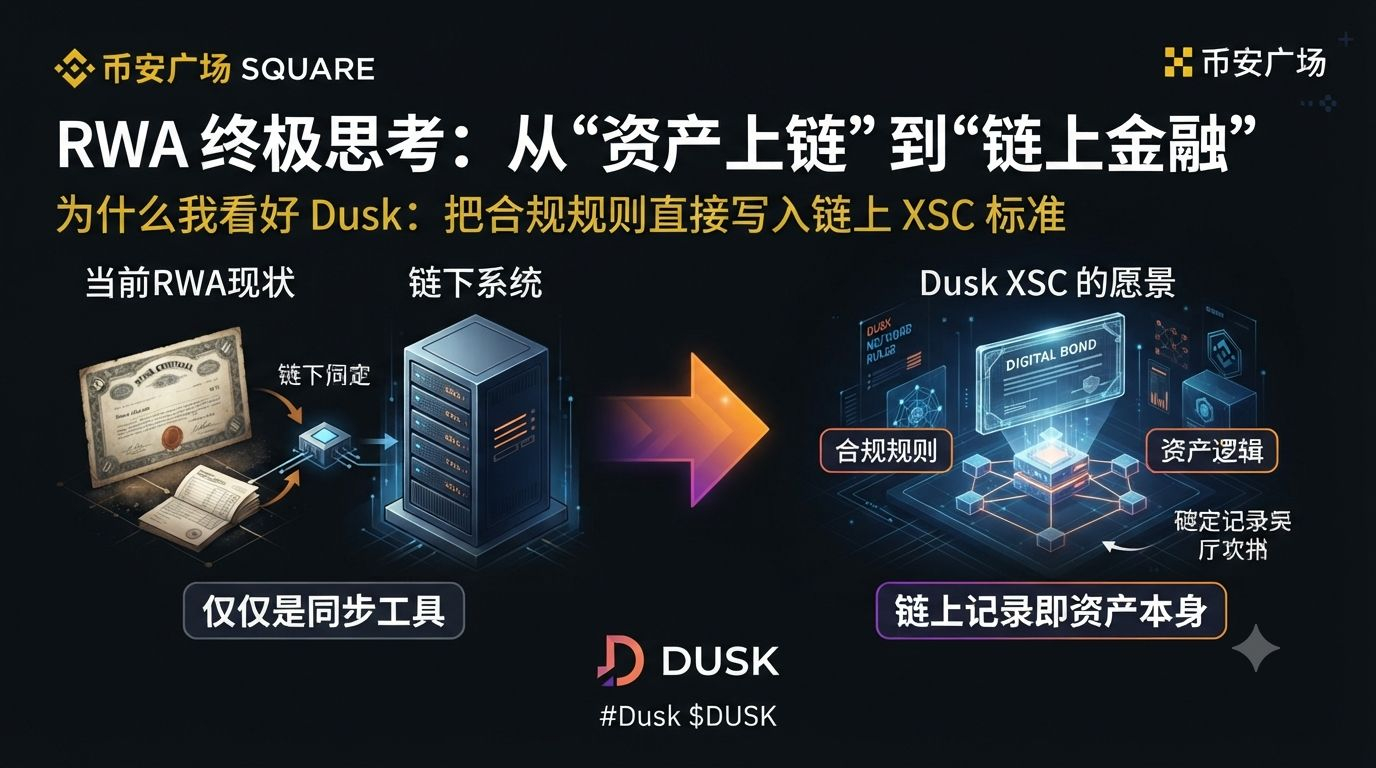
Dusk’s XSC design isn’t simply turning securities into tokens—it’s an attempt to encode the rules of the asset directly into the chain itself.
Holder restrictions, transfer conditions, and compliance requirements can all become part of how the asset operates.
The biggest difference from ordinary tokens is:
Typical tokens record “who transferred to whom.”
But financial assets need to record “who is eligible to hold them, and under what conditions that eligibility can change.”
Of course, the biggest challenge on this path isn’t technical.
It’s whether institutions are willing to gradually migrate the backend systems they formed over decades onto the chain.
So now when I look at Dusk, I don’t care as much about how many more partnerships it adds.
I’d rather look for one signal:
Has any institution started to genuinely treat on-chain state as the primary basis, instead of a backup for the off-chain system?
If that happens, RWA could truly move from “on-chain assets” into genuine on-chain finance.
Could RWA’s real endpoint not be “moving assets on-chain,” but rather the on-chain records becoming the asset itself as the only valid state?
Nowadays, most RWA projects are more like adding a blockchain alongside the traditional financial system.
Issuance is on-chain, and queries are on-chain—but the thing that truly has authority may still be in offline systems.
For example, consider a security:
Who owns it? Can it be transferred? When are dividends distributed? Does it satisfy investment eligibility requirements?
If, in the end, all of these statuses are still determined by an off-chain database, then blockchain is more like a synchronization tool rather than a foundational financial infrastructure.
This is also the part of Dusk that I’m paying more attention to after rewatching it.
Dusk’s XSC design isn’t simply turning securities into tokens—it’s an attempt to encode the rules of the asset directly into the chain itself.
Holder restrictions, transfer conditions, and compliance requirements can all become part of how the asset operates.
The biggest difference from ordinary tokens is:
Typical tokens record “who transferred to whom.”
But financial assets need to record “who is eligible to hold them, and under what conditions that eligibility can change.”
Of course, the biggest challenge on this path isn’t technical.
It’s whether institutions are willing to gradually migrate the backend systems they formed over decades onto the chain.
So now when I look at Dusk, I don’t care as much about how many more partnerships it adds.
I’d rather look for one signal:
Has any institution started to genuinely treat on-chain state as the primary basis, instead of a backup for the off-chain system?
If that happens, RWA could truly move from “on-chain assets” into genuine on-chain finance.
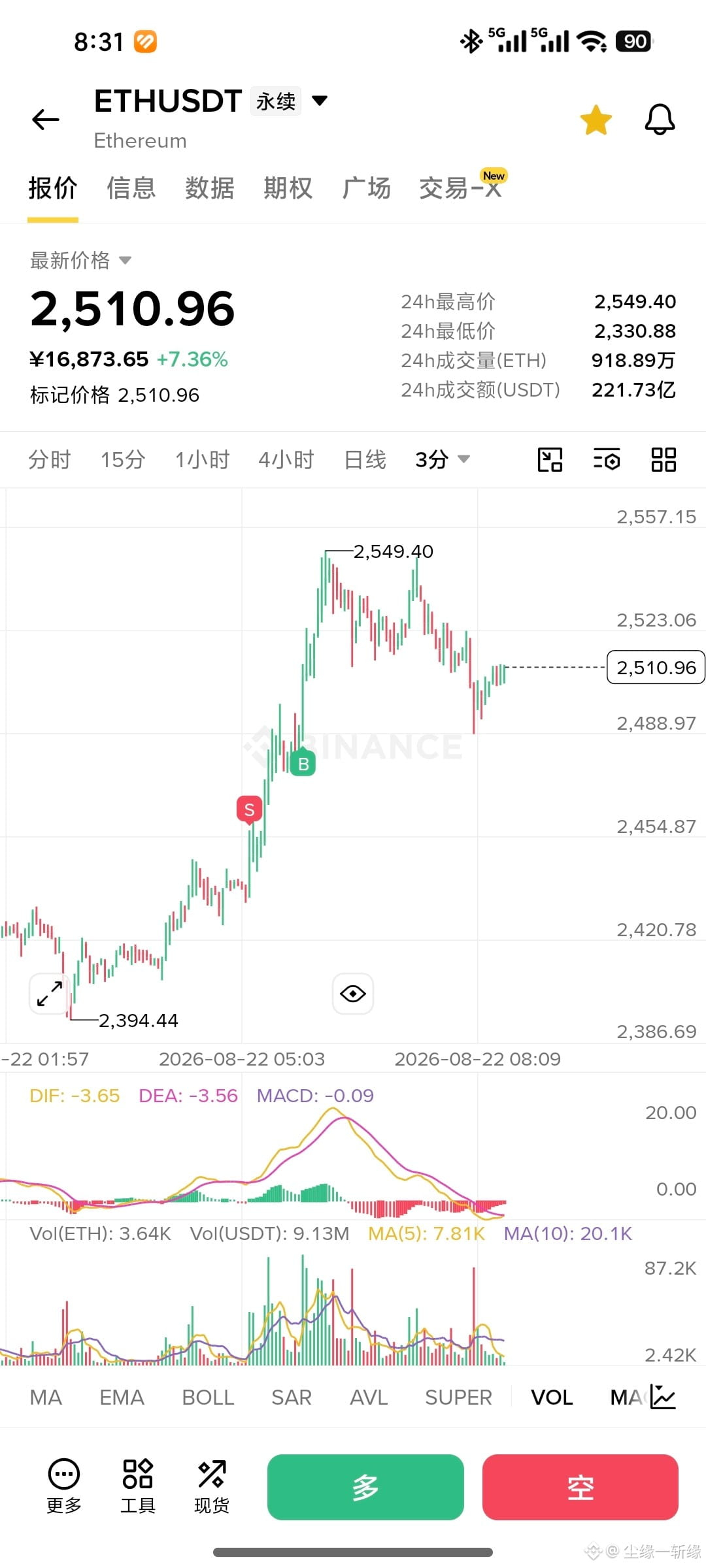
Yesterday I watched this $ETH —it's been rising pretty sharply. I thought it would pull back around the prior high, so I opened a short position briefly. I placed my stop loss just a little above the previous high. I really didn’t expect it—this morning I just got stopped out. Honestly, don’t go against the trend. The rally is too aggressive. I figure even if there’s a bigger pullback, there will still be plenty of people who end up getting left behind and buying in.
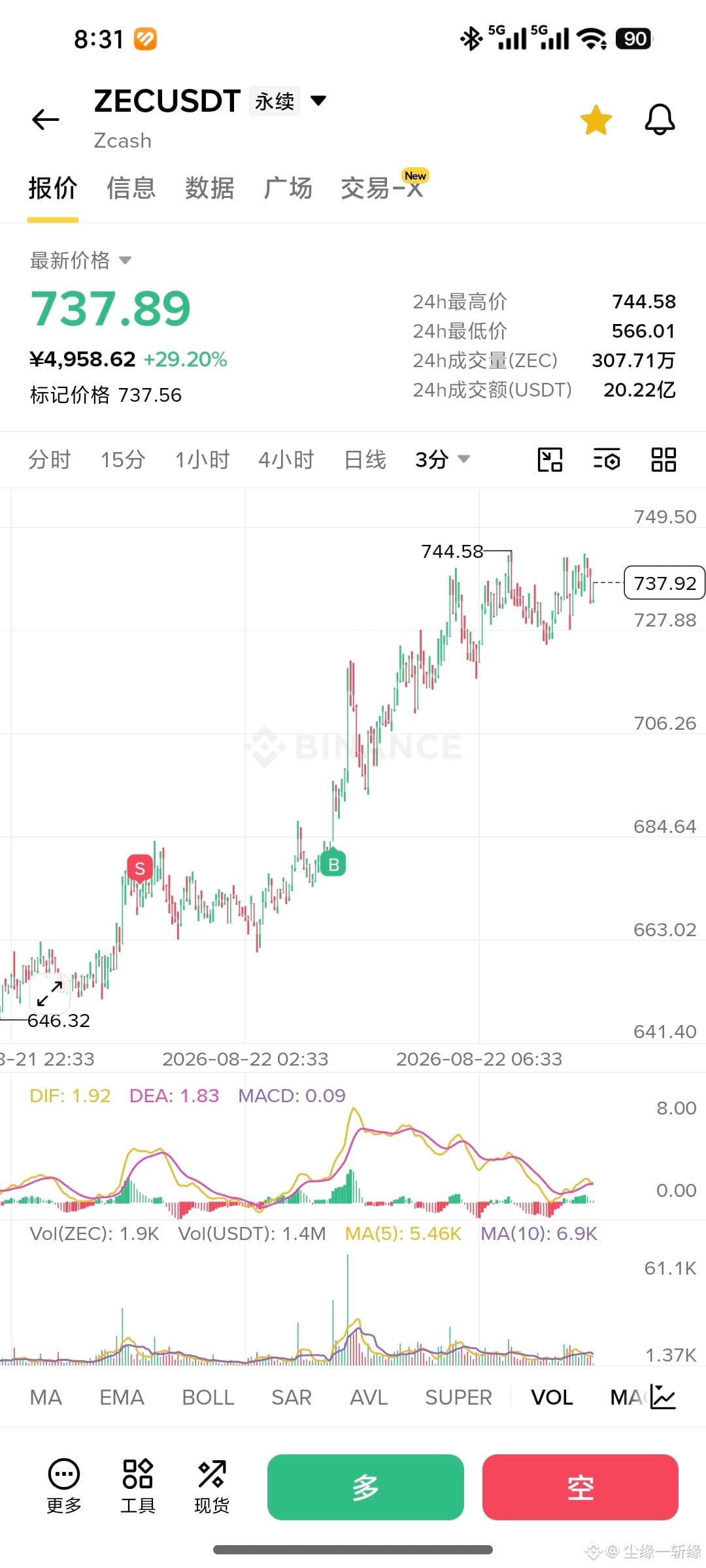
Also, $ZEC —yesterday I opened a short as well. This morning I also got stopped out after taking the position. It’s almost breaking the new high.
I’m just puzzled: is there anything unusually major that’s driving the news? It’s moved too outrageously. I’m still thinking about opening a short. In a bit, I’m going to open a short position at the previous high 82000 on $BTC .
Also, $ZEC —yesterday I opened a short as well. This morning I also got stopped out after taking the position. It’s almost breaking the new high.
I’m just puzzled: is there anything unusually major that’s driving the news? It’s moved too outrageously. I’m still thinking about opening a short. In a bit, I’m going to open a short position at the previous high 82000 on $BTC .
#dusk $DUSK @Dusk Lately, as I’ve been looking into RWA, I’ve increasingly felt that people treat “putting things on-chain” like an endpoint.
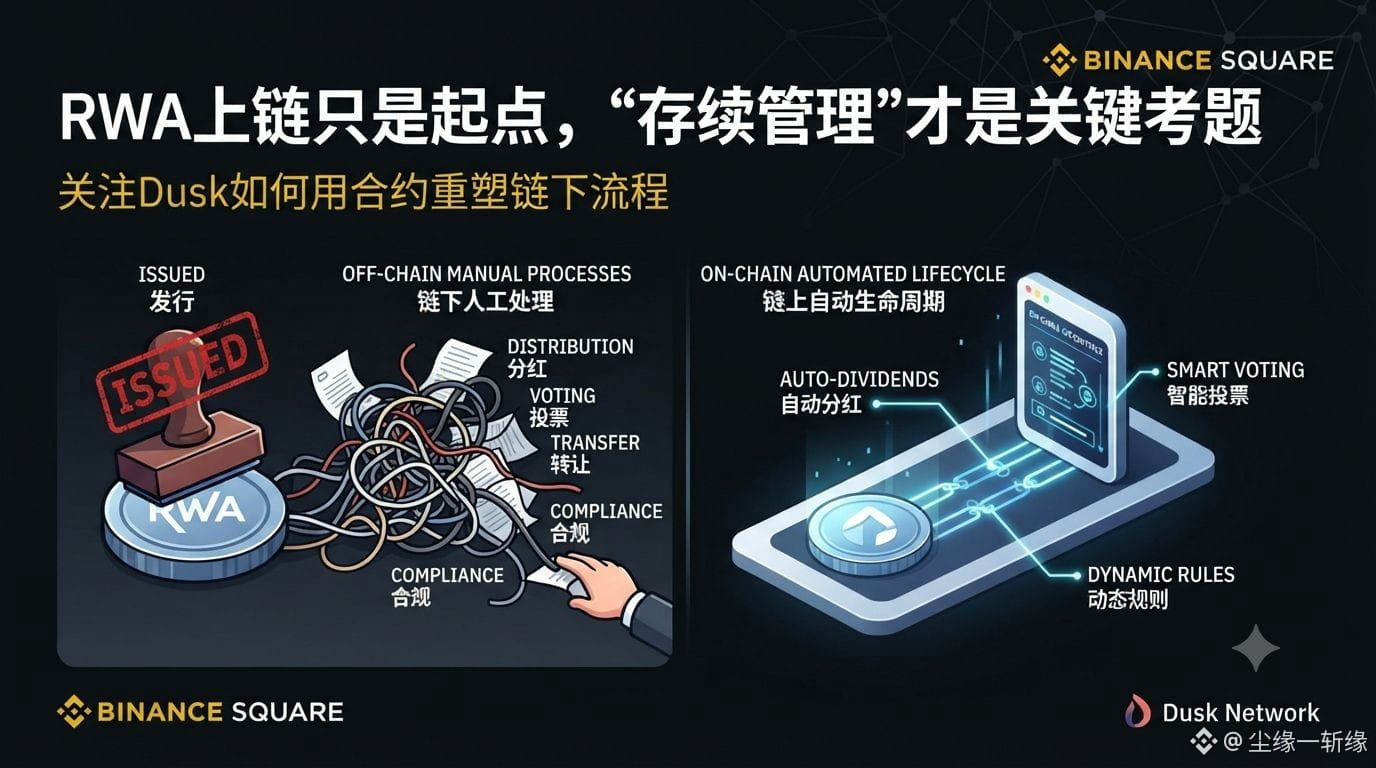
In fact, for institutions, issuance is only the very first step. The truly long process is the various operations during the asset’s lifecycle: how dividends are distributed, how votes are counted, how transfer restrictions are dynamically adjusted, how information disclosure is triggered according to the rules, and what happens when something goes wrong—how enforcement is carried out.
In traditional finance, these are already backed by mature processes and clearly defined responsible parties. After moving to the chain, if most of these actions are still handled manually off-chain, then the chain is only adding a registry layer—it hasn’t truly taken over the asset’s lifecycle.
Dusk, in its design, attempts to encode some rules into smart contracts, so that certain operations can be automated or semi-automated on-chain. The direction is correct, and it’s closer to real needs than merely issuing a “compliant token.”
But what I care about more now is another question: will institutions actually dare to hand these “not very visible day-to-day, but crucial when something goes wrong” processes over to an on-chain system to run long-term? Once issues involve dividend errors, voting disputes, or restrictions failing, the liability and remediation costs will be far higher than those of ordinary token transfers.
So for now, when it comes to Dusk, I’m not mainly fixated on which additional issuance case it has. Instead, I want to observe something more mundane: whether an asset that’s already on-chain gradually reduces its reliance on off-chain processes in ongoing management.
If, years from now, the day-to-day operations of these assets still largely remain off-chain, then the significance of putting them on-chain in the first place will be greatly weakened.
In fact, for institutions, issuance is only the very first step. The truly long process is the various operations during the asset’s lifecycle: how dividends are distributed, how votes are counted, how transfer restrictions are dynamically adjusted, how information disclosure is triggered according to the rules, and what happens when something goes wrong—how enforcement is carried out.
In traditional finance, these are already backed by mature processes and clearly defined responsible parties. After moving to the chain, if most of these actions are still handled manually off-chain, then the chain is only adding a registry layer—it hasn’t truly taken over the asset’s lifecycle.
Dusk, in its design, attempts to encode some rules into smart contracts, so that certain operations can be automated or semi-automated on-chain. The direction is correct, and it’s closer to real needs than merely issuing a “compliant token.”
But what I care about more now is another question: will institutions actually dare to hand these “not very visible day-to-day, but crucial when something goes wrong” processes over to an on-chain system to run long-term? Once issues involve dividend errors, voting disputes, or restrictions failing, the liability and remediation costs will be far higher than those of ordinary token transfers.
So for now, when it comes to Dusk, I’m not mainly fixated on which additional issuance case it has. Instead, I want to observe something more mundane: whether an asset that’s already on-chain gradually reduces its reliance on off-chain processes in ongoing management.
If, years from now, the day-to-day operations of these assets still largely remain off-chain, then the significance of putting them on-chain in the first place will be greatly weakened.
#termmax @TermMax This task deducted 2 Alpha points. The airdrop score isn’t enough anymore to fight for.
If the creator team can’t get in on this round, it’ll be for nothing.
So these past few days I’ve been training a new AI, trying to see if we can make it feel a little less “machine-like.”
On day five, instead, I feel like what TermMax truly wants to do may not be just fixed interest rates.
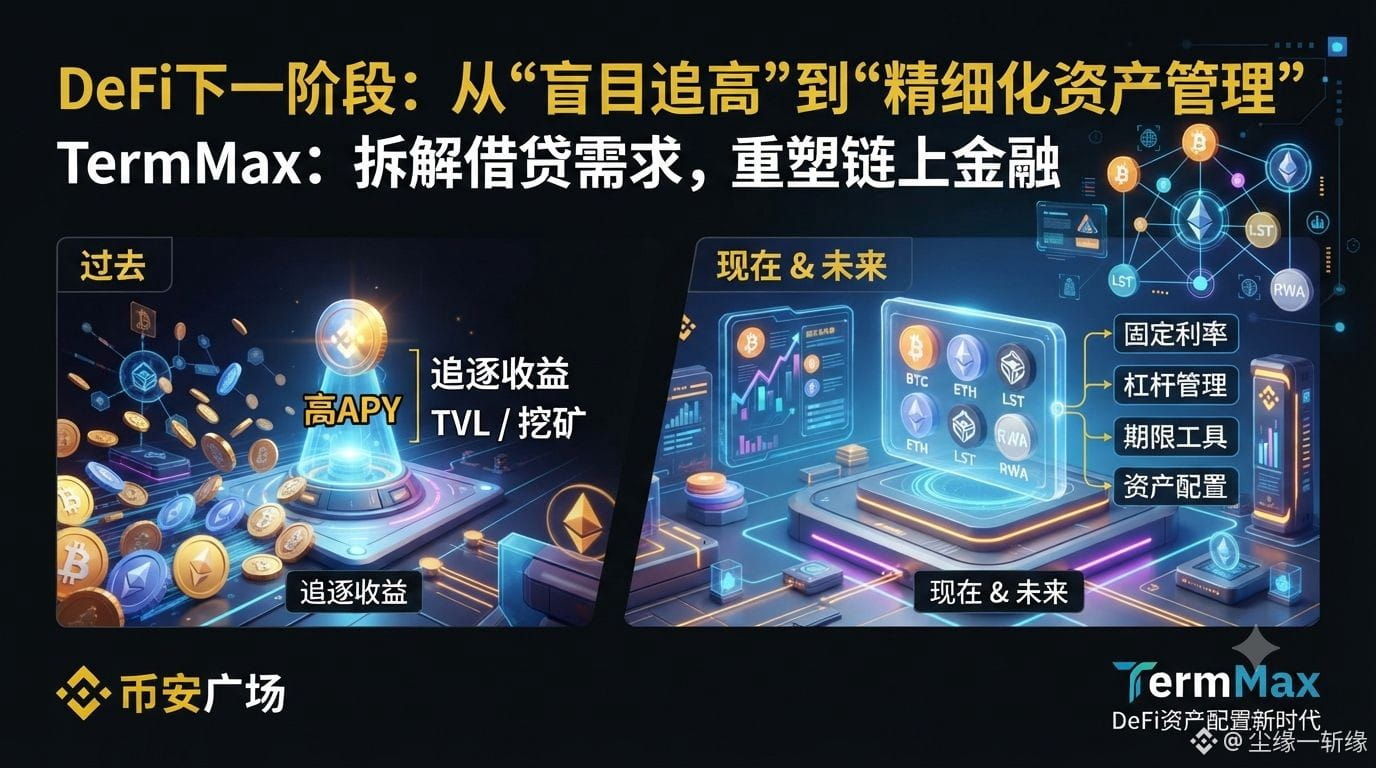
In the past few years, the logic of DeFi was pretty simple: wherever the APY is highest, capital flows there. Everyone got used to watching returns, TVL, and yield farming.
But now there are more and more assets going on-chain—$BTC , $ETH , LST, RWA—so the problem is changing. With so many assets, how do we allocate and manage them more effectively?
In traditional finance, no one would throw all their money into stocks. Bonds, money market funds, tools with different maturities—those are the standard setup.
Most on-chain products today are still at the “single yield instrument” stage.
What’s interesting about TermMax is that it splits different needs within lending. If you want to lock in returns, you can go with a fixed-rate approach; if you want to improve capital efficiency, you can manage your own leveraged positions. It isn’t trying to recreate just another high-APY pool—it’s attempting to make on-chain financial options more granular.
Of course, the early protocol will have all the usual issues: whether users can stick around consistently, whether the market depth is sufficient, and whether these products can break out of the circle of a small number of DeFi players—time will tell.
My own conclusion is pretty straightforward:
The next phase of competition in DeFi probably won’t really be about who offers the higher yield, but about who can help users manage their on-chain assets more clearly.
Whether TermMax is the final answer is still hard to say. But at least the direction it’s taking is more interesting than just competing on APY.
If the creator team can’t get in on this round, it’ll be for nothing.
So these past few days I’ve been training a new AI, trying to see if we can make it feel a little less “machine-like.”
On day five, instead, I feel like what TermMax truly wants to do may not be just fixed interest rates.
In the past few years, the logic of DeFi was pretty simple: wherever the APY is highest, capital flows there. Everyone got used to watching returns, TVL, and yield farming.
But now there are more and more assets going on-chain—$BTC , $ETH , LST, RWA—so the problem is changing. With so many assets, how do we allocate and manage them more effectively?
In traditional finance, no one would throw all their money into stocks. Bonds, money market funds, tools with different maturities—those are the standard setup.
Most on-chain products today are still at the “single yield instrument” stage.
What’s interesting about TermMax is that it splits different needs within lending. If you want to lock in returns, you can go with a fixed-rate approach; if you want to improve capital efficiency, you can manage your own leveraged positions. It isn’t trying to recreate just another high-APY pool—it’s attempting to make on-chain financial options more granular.
Of course, the early protocol will have all the usual issues: whether users can stick around consistently, whether the market depth is sufficient, and whether these products can break out of the circle of a small number of DeFi players—time will tell.
My own conclusion is pretty straightforward:
The next phase of competition in DeFi probably won’t really be about who offers the higher yield, but about who can help users manage their on-chain assets more clearly.
Whether TermMax is the final answer is still hard to say. But at least the direction it’s taking is more interesting than just competing on APY.
Then cancel the comment bonus—let’s treat everyone equally.


币安广场
·
--
The Square does not encourage obtaining traffic and rewards by posting meaningless comments. We hope everyone discusses things genuinely.
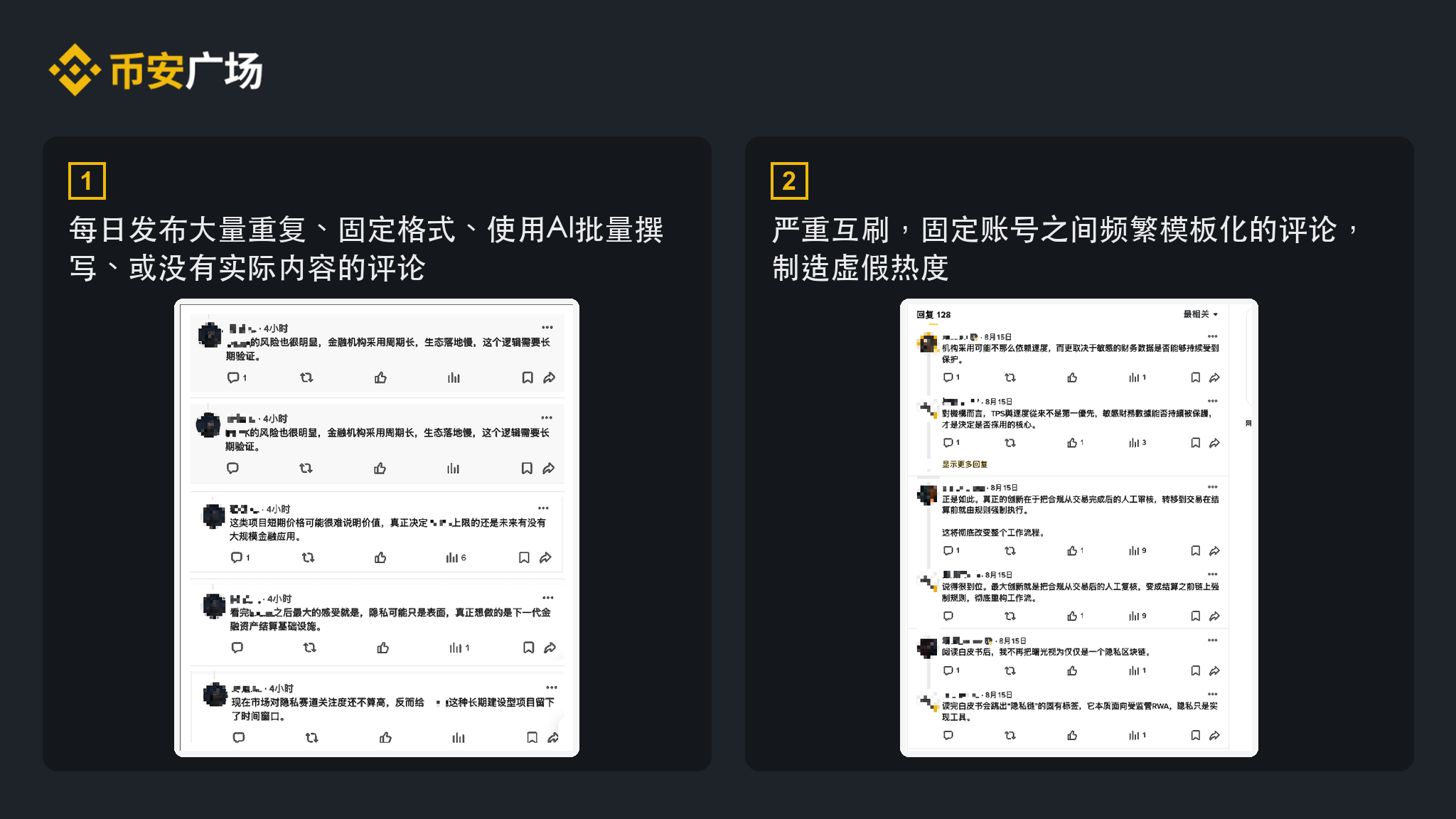
- Posting large numbers of repetitive, fixed-format comments, using AI in bulk to write comments, or comments with no real content—especially when the posting frequency is far beyond normal user behavior—violates platform rules. Those involved will be subject to serious penalties, including having their eligibility to participate in platform monetization revoked and being banned from posting.
- Severe mutual-upvoting/engagement rings: frequent template-like comments exchanged between fixed accounts to create false “trending” and earn points or rewards is not encouraged by the platform. This behavior affects creators’ account health and traffic. In serious cases, eligibility to participate in platform monetization will be revoked.
In response to the above, the Square has conducted a review of the creator task desk for BABY. The results are as follows:
- 27 accounts whose number of comments far exceeds normal user engagement will have their award eligibility revoked and will be dealt with for violations.
- 265 accounts detected for mutual-upvoting behavior will receive warnings and the cases will be recorded.
Binance Square values community engagement. At present, the platform has added detection for behaviors such as spamming with meaningless comments, mutual-upvoting within small circles using comments, and frequently prompting others to leave comments. We hope everyone will gain traffic through genuine content and real engagement, and win event rewards. From the time this announcement is published, the detection will take effect for all future functions and events (including online creator task desk activities). Users whose behavior matches the above will have their reward eligibility revoked.
Thank you to every user who creates thoughtfully. And please help maintain community fairness together.
At the same time, feel free to leave comments in the comment section to share your feedback and suggestions about the creator task desk and the Square. We will select 3 users from the comments to receive reward red packets. We look forward to hearing your real voice—let’s make the community even better together.
- Posting large numbers of repetitive, fixed-format comments, using AI in bulk to write comments, or comments with no real content—especially when the posting frequency is far beyond normal user behavior—violates platform rules. Those involved will be subject to serious penalties, including having their eligibility to participate in platform monetization revoked and being banned from posting.
- Severe mutual-upvoting/engagement rings: frequent template-like comments exchanged between fixed accounts to create false “trending” and earn points or rewards is not encouraged by the platform. This behavior affects creators’ account health and traffic. In serious cases, eligibility to participate in platform monetization will be revoked.
In response to the above, the Square has conducted a review of the creator task desk for BABY. The results are as follows:
- 27 accounts whose number of comments far exceeds normal user engagement will have their award eligibility revoked and will be dealt with for violations.
- 265 accounts detected for mutual-upvoting behavior will receive warnings and the cases will be recorded.
Binance Square values community engagement. At present, the platform has added detection for behaviors such as spamming with meaningless comments, mutual-upvoting within small circles using comments, and frequently prompting others to leave comments. We hope everyone will gain traffic through genuine content and real engagement, and win event rewards. From the time this announcement is published, the detection will take effect for all future functions and events (including online creator task desk activities). Users whose behavior matches the above will have their reward eligibility revoked.
Thank you to every user who creates thoughtfully. And please help maintain community fairness together.
At the same time, feel free to leave comments in the comment section to share your feedback and suggestions about the creator task desk and the Square. We will select 3 users from the comments to receive reward red packets. We look forward to hearing your real voice—let’s make the community even better together.
#dusk $DUSK @Dusk Lately when I look at RWA, I’m increasingly convinced that people are oversimplifying what it means to “tokenize assets on-chain.”
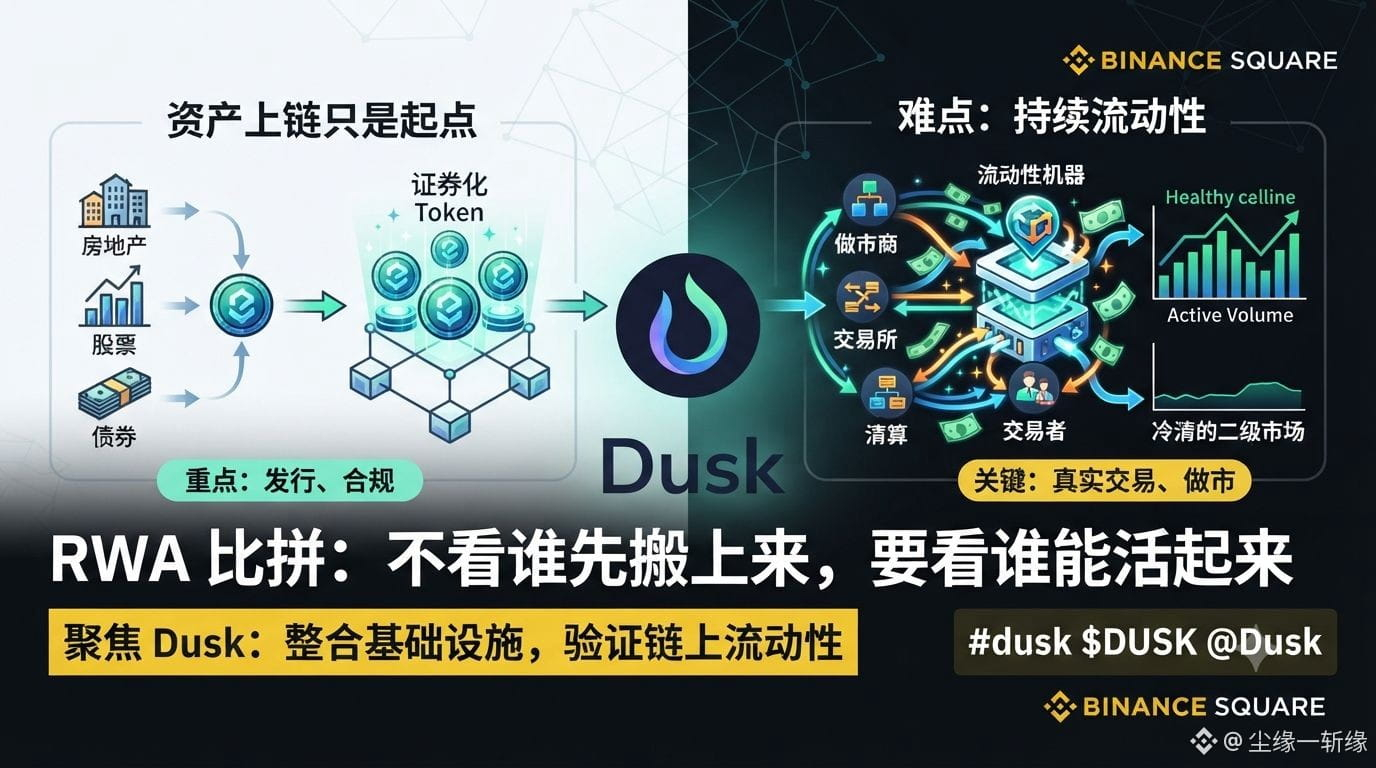
Many discussions still focus on: can we turn securities and bonds into tokens, can we meet compliance requirements, and whether licensed institutions are involved. These are all important—but the real difficulty may come afterward. Once the assets are on-chain, who will provide ongoing buy-side and sell-side activity?
In traditional finance, stocks and bonds trade smoothly not because of the assets themselves, but because an entire liquidity machine sits behind them: exchanges, market makers, brokers, clearing and settlement.
After RWA tokenizes assets, this machine doesn’t automatically appear on-chain.
As a result, you can often see issuance on-chain, but the secondary market is frequently quiet, trading volumes are sparse, and price discovery is weak.
When I revisit Dusk, what I care about most is exactly this.
It tries to consolidate issuance, credential verification, trading, and settlement into a single underlying infrastructure as much as possible, reducing the friction of repeatedly shuttling between different systems in traditional finance.
The direction is solid—arguably even closer to the real need than simply issuing a compliant token.
But the problem is also right here:
Architecturally, it has already covered many of the issues that regulated assets require for on-chain circulation. Still, whether there will be enough people willing to continuously provide liquidity—to act as market makers and traders in this environment—needs time to prove itself.
Assets can “exist” on-chain, but they may not truly “come to life.”
So when I look at Dusk recently, I’m not obsessing over which additional partner was added. Instead, I want to watch a dumber indicator:
For these security-like assets on-chain, do we see continuous, real trading gradually emerging—not just excitement at the time of issuance.
In the end, RWA may not be won by whoever gets the assets onboard first, but by whoever can make these assets actually flow.
Whether Dusk can take that next step matters more to me than yet another partnership announcement.
Many discussions still focus on: can we turn securities and bonds into tokens, can we meet compliance requirements, and whether licensed institutions are involved. These are all important—but the real difficulty may come afterward. Once the assets are on-chain, who will provide ongoing buy-side and sell-side activity?
In traditional finance, stocks and bonds trade smoothly not because of the assets themselves, but because an entire liquidity machine sits behind them: exchanges, market makers, brokers, clearing and settlement.
After RWA tokenizes assets, this machine doesn’t automatically appear on-chain.
As a result, you can often see issuance on-chain, but the secondary market is frequently quiet, trading volumes are sparse, and price discovery is weak.
When I revisit Dusk, what I care about most is exactly this.
It tries to consolidate issuance, credential verification, trading, and settlement into a single underlying infrastructure as much as possible, reducing the friction of repeatedly shuttling between different systems in traditional finance.
The direction is solid—arguably even closer to the real need than simply issuing a compliant token.
But the problem is also right here:
Architecturally, it has already covered many of the issues that regulated assets require for on-chain circulation. Still, whether there will be enough people willing to continuously provide liquidity—to act as market makers and traders in this environment—needs time to prove itself.
Assets can “exist” on-chain, but they may not truly “come to life.”
So when I look at Dusk recently, I’m not obsessing over which additional partner was added. Instead, I want to watch a dumber indicator:
For these security-like assets on-chain, do we see continuous, real trading gradually emerging—not just excitement at the time of issuance.
In the end, RWA may not be won by whoever gets the assets onboard first, but by whoever can make these assets actually flow.
Whether Dusk can take that next step matters more to me than yet another partnership announcement.
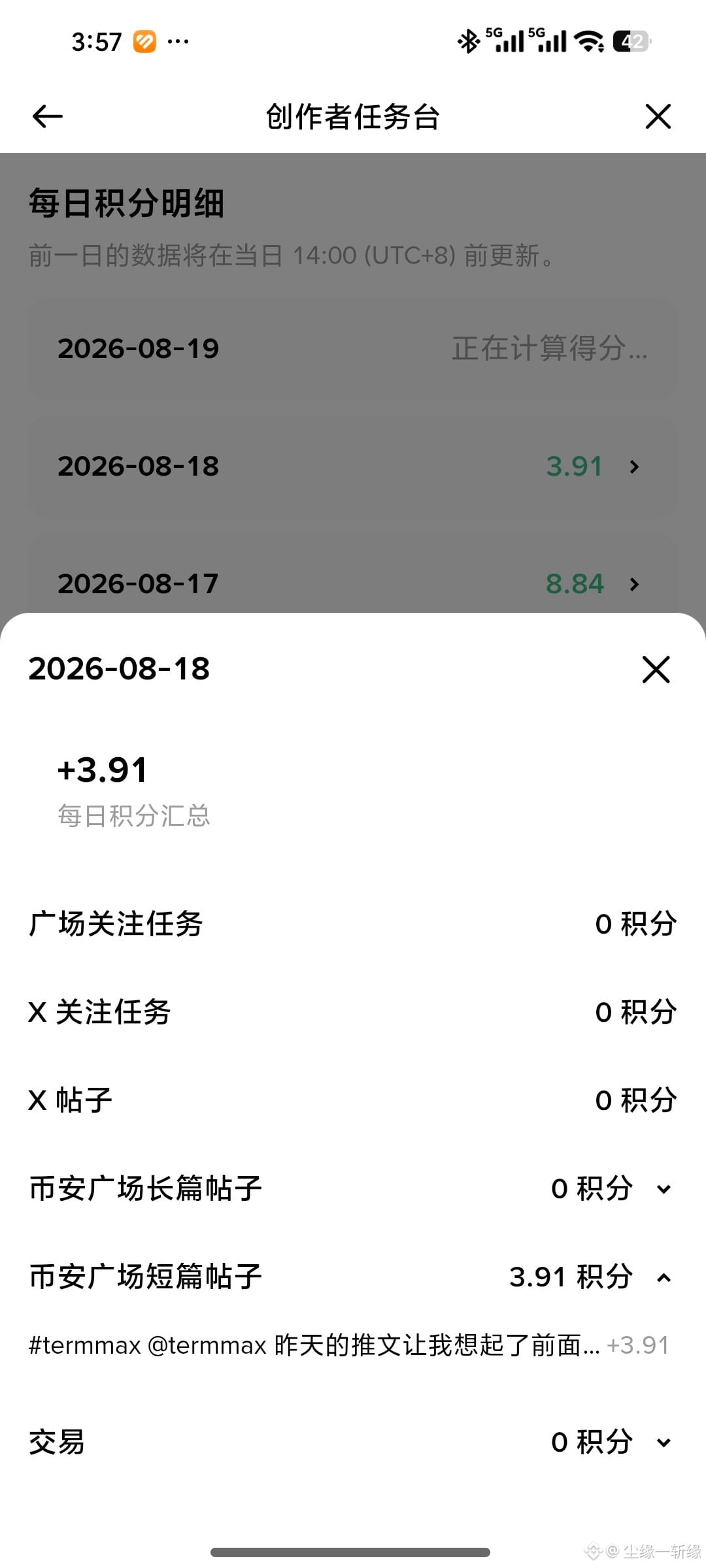
#termmax @TermMax It’s so painful. The first two days only had 3-something points, and I still ended up using the so-called “evil cultivator” method. Honestly, before entering the crypto world, I thought my biggest advantage was that I could endure hardship. After entering, I found out that this bunch… they’re able to eat shit—no, they’re queuing up to eat it.
Lately I’ve been reading lending agreements and noticed a counterintuitive phenomenon:
Everyone says they like fixed-rate interest, but when it comes to actually borrowing money, they may not necessarily be willing to lock the rate for the long term.
Floating rates are annoying, but at least they leave you a way out. If conditions change, you can repay early, or wait until rates drop before taking action. Once fixed rates are locked, the funds get nailed to a schedule.
Especially in a market like crypto—when BTC makes a big move, many people’s first instinct is to adjust positions rather than pre-lock the cost of capital for the coming months.
So I actually suspect the reason fixed-rate lending hasn’t really taken off isn’t so much technical—it’s that “flexibility” itself is a kind of value.
What’s interesting about TermMax is that it doesn’t treat fixed rates as the only answer. It breaks down interest rates and terms more granularly: lenders can lock in returns, and borrowers can match to the cost and timeline they can accept, instead of locking everything with a one-size-fits-all decision.
But there’s a bigger issue here: fixed returns solve certainty—so who solves liquidity?
If fixed-rate positions in the market aren’t easy to trade or transfer, then users who want to exit midstream could still get stuck. No matter how elegant the mechanism is, in the end it still comes down to the depth of the secondary market.
My current stance is pretty simple: the direction is fine, and the mechanism is more complete than early fixed-rate protocols—but what’s really worth watching isn’t whether it can offer fixed rates. It’s whether there are people willing to keep taking these fixed-income assets.
If that step doesn’t work out, then no matter how good fixed-rate products are, they might only end up being something that looks beautiful on paper.
Lately I’ve been reading lending agreements and noticed a counterintuitive phenomenon:
Everyone says they like fixed-rate interest, but when it comes to actually borrowing money, they may not necessarily be willing to lock the rate for the long term.
Floating rates are annoying, but at least they leave you a way out. If conditions change, you can repay early, or wait until rates drop before taking action. Once fixed rates are locked, the funds get nailed to a schedule.
Especially in a market like crypto—when BTC makes a big move, many people’s first instinct is to adjust positions rather than pre-lock the cost of capital for the coming months.
So I actually suspect the reason fixed-rate lending hasn’t really taken off isn’t so much technical—it’s that “flexibility” itself is a kind of value.
What’s interesting about TermMax is that it doesn’t treat fixed rates as the only answer. It breaks down interest rates and terms more granularly: lenders can lock in returns, and borrowers can match to the cost and timeline they can accept, instead of locking everything with a one-size-fits-all decision.
But there’s a bigger issue here: fixed returns solve certainty—so who solves liquidity?
If fixed-rate positions in the market aren’t easy to trade or transfer, then users who want to exit midstream could still get stuck. No matter how elegant the mechanism is, in the end it still comes down to the depth of the secondary market.
My current stance is pretty simple: the direction is fine, and the mechanism is more complete than early fixed-rate protocols—but what’s really worth watching isn’t whether it can offer fixed rates. It’s whether there are people willing to keep taking these fixed-income assets.
If that step doesn’t work out, then no matter how good fixed-rate products are, they might only end up being something that looks beautiful on paper.
30D trade $DUSK 109.7 USDT
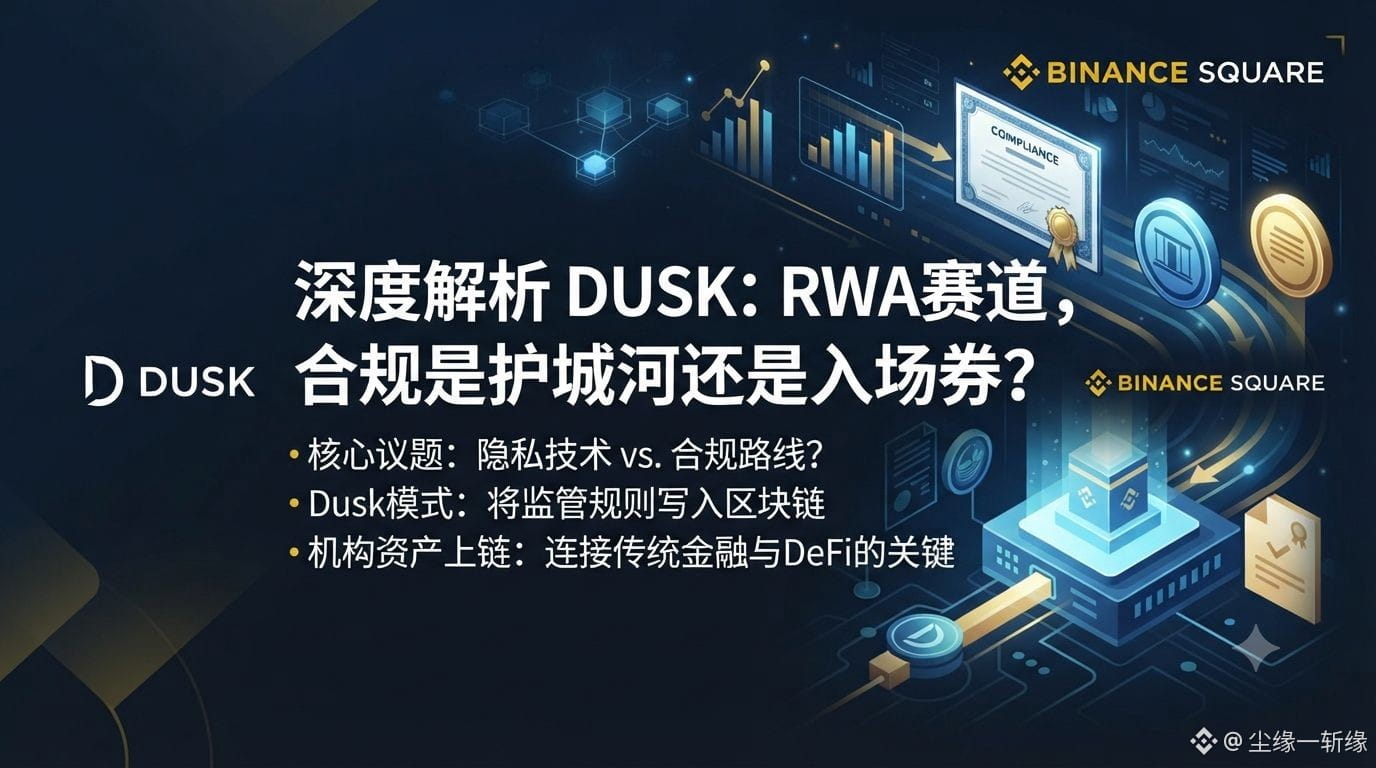
#dusk $DUSK @Dusk In these days of researching Dusk, I keep thinking about a question:
What is Dusk’s real moat—privacy technology, or a compliance pathway?
Many RWA projects talk about “on-chain institutional assets,” but when it comes time to actually implement it, a very real issue appears:
Financial institutions don’t lack blockchain technology—they’re unwilling to change the existing regulatory framework.
So Dusk chose a rather special route:
Not to challenge regulation, but to try to encode regulatory rules into the blockchain.
That’s also what most distinguishes it from a typical public chain.
Traditional on-chain assets are more like an “open marketplace.”
Anyone can create, trade, and transfer them.
But securities-type assets are different.
Behind stocks, bonds, and fund shares are requirements such as investor eligibility, trading restrictions, and information disclosure.
If those rules can’t be enforced on-chain, then what people call RWA is often just converting the asset into a different representation.
Dusk’s idea is to make the securities contract itself inherently carry financial rules.
When issuing assets, you can define who is eligible to buy; when trading assets, you can impose transfer conditions; after holding, you can implement rights such as dividends and voting.
This logic is much closer to traditional finance than to simply issuing tokens.
But the deeper I research, the more I find myself focused on another question:
Is compliance a double-edged sword?
The European MiCA environment certainly gives Dusk an opportunity.
But financial markets are global.
If a solution is accepted in Europe, can it still be replicated in the United States, Singapore, or other regions?
Also, the biggest hurdle for institutions may not be technical.
Whether financial institutions are willing to migrate core business onto the chain still needs time to be proven.
So I think Dusk right now is more like validating a direction:
Will future financial assets really need a “regulated blockchain infrastructure”?
If the answer is yes, Dusk’s positioning will be very valuable.
But if traditional finance ultimately chooses to reform within the existing system—rather than migrate to public chains—then this route will also face challenges.
At present, the biggest highlight of Dusk isn’t that it’s already succeeded, but that it’s validating a problem that many RWA projects haven’t truly solved yet:
How can blockchain enter finance, rather than simply moving finance onto the blockchain.
What is Dusk’s real moat—privacy technology, or a compliance pathway?
Many RWA projects talk about “on-chain institutional assets,” but when it comes time to actually implement it, a very real issue appears:
Financial institutions don’t lack blockchain technology—they’re unwilling to change the existing regulatory framework.
So Dusk chose a rather special route:
Not to challenge regulation, but to try to encode regulatory rules into the blockchain.
That’s also what most distinguishes it from a typical public chain.
Traditional on-chain assets are more like an “open marketplace.”
Anyone can create, trade, and transfer them.
But securities-type assets are different.
Behind stocks, bonds, and fund shares are requirements such as investor eligibility, trading restrictions, and information disclosure.
If those rules can’t be enforced on-chain, then what people call RWA is often just converting the asset into a different representation.
Dusk’s idea is to make the securities contract itself inherently carry financial rules.
When issuing assets, you can define who is eligible to buy; when trading assets, you can impose transfer conditions; after holding, you can implement rights such as dividends and voting.
This logic is much closer to traditional finance than to simply issuing tokens.
But the deeper I research, the more I find myself focused on another question:
Is compliance a double-edged sword?
The European MiCA environment certainly gives Dusk an opportunity.
But financial markets are global.
If a solution is accepted in Europe, can it still be replicated in the United States, Singapore, or other regions?
Also, the biggest hurdle for institutions may not be technical.
Whether financial institutions are willing to migrate core business onto the chain still needs time to be proven.
So I think Dusk right now is more like validating a direction:
Will future financial assets really need a “regulated blockchain infrastructure”?
If the answer is yes, Dusk’s positioning will be very valuable.
But if traditional finance ultimately chooses to reform within the existing system—rather than migrate to public chains—then this route will also face challenges.
At present, the biggest highlight of Dusk isn’t that it’s already succeeded, but that it’s validating a problem that many RWA projects haven’t truly solved yet:
How can blockchain enter finance, rather than simply moving finance onto the blockchain.
#termmax @TermMax To write this TermMax, I’ve spent these days repeatedly looking up information, and the AI tools I usually use have all been banned—so infuriating.😡
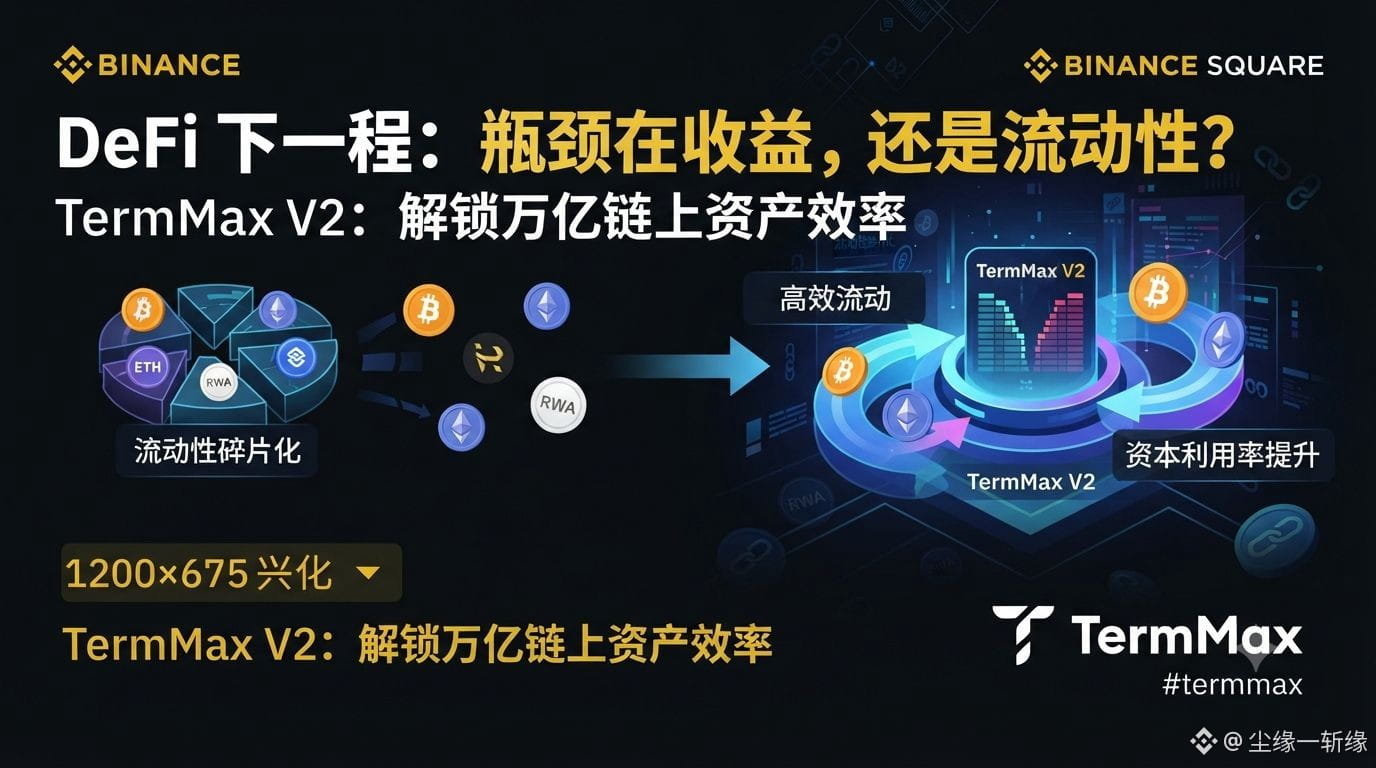
While researching TermMax these days, I feel many people might be focusing on the wrong key point.
Everyone’s discussing its fixed interest rate, TGE, and airdrops, but I’m actually more concerned about another question:
In the future, will DeFi’s biggest bottleneck be not returns, but liquidity?
Ever since BTC started coming on-chain, and then with the growth of ETH staking, LSTs, and RWA, there are more and more assets on-chain.
But the problem is becoming clearer too:
Capital is spread across different chains, different protocols, and different pools.
The same asset might earn yield in Protocol A, get borrowed in Protocol B, and be traded in Protocol C.
For users, there are more and more choices;
For protocols, liquidity is becoming increasingly fragmented.
The area that TermMax has made me pay more attention to is its V2 approach to handling liquidity.
It’s not just about setting up a simple lending pool—it tries to use order and market mechanisms so that the same liquidity can serve more scenarios.
In simple terms, it’s about reducing idle capital and making on-chain capital utilization more efficient.
This is also a problem DeFi has never fully solved.
Over the past few years, we’ve addressed the question of whether assets can be brought on-chain.
The next stage may need to address:
How can on-chain assets be made more efficiently liquid?
Of course, TermMax is still in its early days.
Whether there is enough demand in the fixed-income market, whether trading depth can grow, and whether the user base can keep increasing—these are all questions that need to be validated later.
But in terms of the track direction, I think it’s worth watching.
Because as more core assets like BTC and ETH continue to move on-chain, the future will need not just more protocols, but more efficient ways for capital to flow.
The next competitive point in DeFi might not be who offers the highest yield, but who can make capital efficiency the highest.
While researching TermMax these days, I feel many people might be focusing on the wrong key point.
Everyone’s discussing its fixed interest rate, TGE, and airdrops, but I’m actually more concerned about another question:
In the future, will DeFi’s biggest bottleneck be not returns, but liquidity?
Ever since BTC started coming on-chain, and then with the growth of ETH staking, LSTs, and RWA, there are more and more assets on-chain.
But the problem is becoming clearer too:
Capital is spread across different chains, different protocols, and different pools.
The same asset might earn yield in Protocol A, get borrowed in Protocol B, and be traded in Protocol C.
For users, there are more and more choices;
For protocols, liquidity is becoming increasingly fragmented.
The area that TermMax has made me pay more attention to is its V2 approach to handling liquidity.
It’s not just about setting up a simple lending pool—it tries to use order and market mechanisms so that the same liquidity can serve more scenarios.
In simple terms, it’s about reducing idle capital and making on-chain capital utilization more efficient.
This is also a problem DeFi has never fully solved.
Over the past few years, we’ve addressed the question of whether assets can be brought on-chain.
The next stage may need to address:
How can on-chain assets be made more efficiently liquid?
Of course, TermMax is still in its early days.
Whether there is enough demand in the fixed-income market, whether trading depth can grow, and whether the user base can keep increasing—these are all questions that need to be validated later.
But in terms of the track direction, I think it’s worth watching.
Because as more core assets like BTC and ETH continue to move on-chain, the future will need not just more protocols, but more efficient ways for capital to flow.
The next competitive point in DeFi might not be who offers the highest yield, but who can make capital efficiency the highest.
30D trade $DUSK 87.8 USDT
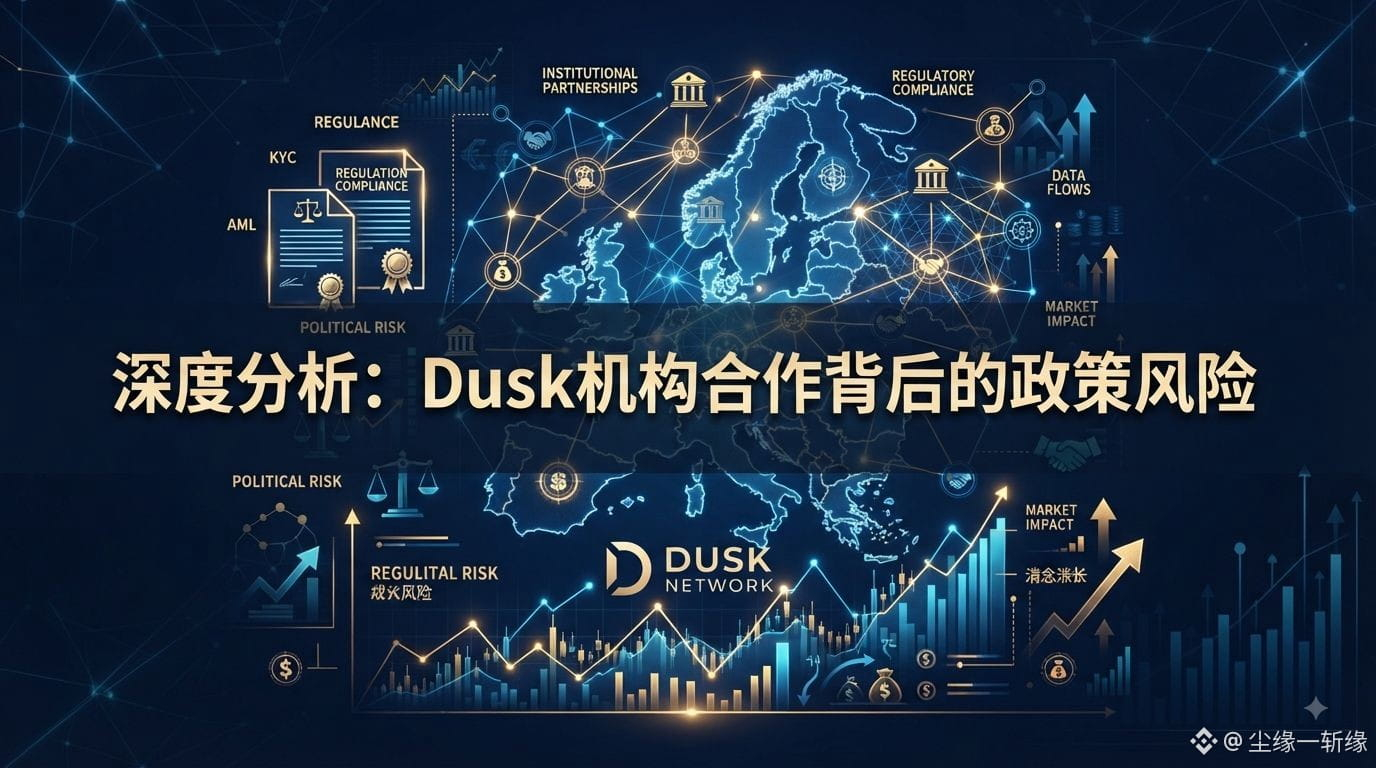
#dusk $DUSK @Dusk Everyone is talking about how Dusk’s institutional partners emphasize being "regulated" and "licensed," but very few people look up which legal framework actually issued those licenses.
NPEX, 21X, and Dusk rely on the EU DLT Pilot Regime—the regulatory sandbox that only took effect in March 2023. In essence, it provides a temporary exemption pathway for "new technologies that haven’t figured out how to be regulated yet," allowing operators, within a certain scale, to bypass the full compliance requirements of CSDR and MiFID II. The key word is "temporary": the mechanism has a defined evaluation period, after which it must either become standard regulation or be tightened—possibly even shut down.
How small is the scale? As of January 2026, across the entire EU, there are only three institutions that have obtained trading or settlement licenses through this mechanism: CSD Prague, 21X, and 360X. NPEX follows a different route (compliant securities trading venues under MiCA), while 21X is the only one that holds both trading and settlement full licenses. What Dusk is calling its "institutional-level RWA infrastructure" is built on just a few regulatory pilot samples across the EU—it is not a fully proven, mature system.
Even more noteworthy is that industry reports indicate that, currently, most "tokenized" European securities are actually transferred point-to-point between the issuer and the holder, and are not genuinely listed for trading on those licensed venues—liquidity falls far short of what’s being marketed.
This has nothing to do with Dusk’s own technology. It’s because the regulatory environment it has aligned with is still in the testing stage. After the sandbox expires, if the EU tightens the rules and requires DLT infrastructure to revert to the traditional CSD custody model, the assets, contracts, and even Dusk’s private transaction design on NPEX and 21X may need to be reconfigured—something Dusk cannot decide on its own.
My view: Dusk’s choice of partners and technical route seems fine, but the "institutional trust" narrative it tells is currently built on a temporary framework that even the EU is still figuring out and could adjust at any time. This risk isn’t a technical risk covered in white papers—it’s a policy risk, and almost nobody mentions it in the analysis.
If, after the DLT Pilot Regime expires, the rules are tightened, do you think Dusk’s current compliance advantages will gain value or turn into a burden?
NPEX, 21X, and Dusk rely on the EU DLT Pilot Regime—the regulatory sandbox that only took effect in March 2023. In essence, it provides a temporary exemption pathway for "new technologies that haven’t figured out how to be regulated yet," allowing operators, within a certain scale, to bypass the full compliance requirements of CSDR and MiFID II. The key word is "temporary": the mechanism has a defined evaluation period, after which it must either become standard regulation or be tightened—possibly even shut down.
How small is the scale? As of January 2026, across the entire EU, there are only three institutions that have obtained trading or settlement licenses through this mechanism: CSD Prague, 21X, and 360X. NPEX follows a different route (compliant securities trading venues under MiCA), while 21X is the only one that holds both trading and settlement full licenses. What Dusk is calling its "institutional-level RWA infrastructure" is built on just a few regulatory pilot samples across the EU—it is not a fully proven, mature system.
Even more noteworthy is that industry reports indicate that, currently, most "tokenized" European securities are actually transferred point-to-point between the issuer and the holder, and are not genuinely listed for trading on those licensed venues—liquidity falls far short of what’s being marketed.
This has nothing to do with Dusk’s own technology. It’s because the regulatory environment it has aligned with is still in the testing stage. After the sandbox expires, if the EU tightens the rules and requires DLT infrastructure to revert to the traditional CSD custody model, the assets, contracts, and even Dusk’s private transaction design on NPEX and 21X may need to be reconfigured—something Dusk cannot decide on its own.
My view: Dusk’s choice of partners and technical route seems fine, but the "institutional trust" narrative it tells is currently built on a temporary framework that even the EU is still figuring out and could adjust at any time. This risk isn’t a technical risk covered in white papers—it’s a policy risk, and almost nobody mentions it in the analysis.
If, after the DLT Pilot Regime expires, the rules are tightened, do you think Dusk’s current compliance advantages will gain value or turn into a burden?
#termmax @TermMax Yesterday’s tweets reminded me of a previous promotional task I did: there were two projects at the same time. I posted a tweet for one project, and after I hit send, I realized I’d posted the wrong thread—the tweets meant for Project A ended up going to Project B. No choice but to rewrite and repost the tweets for Project A. Why am I bringing this up? Because yesterday, lots of people replied to my tweet as if it were about Project A, not realizing their replies were essentially going to Project B’s tweet. I looked at it for a while—turns out I hadn’t posted the wrong thing.
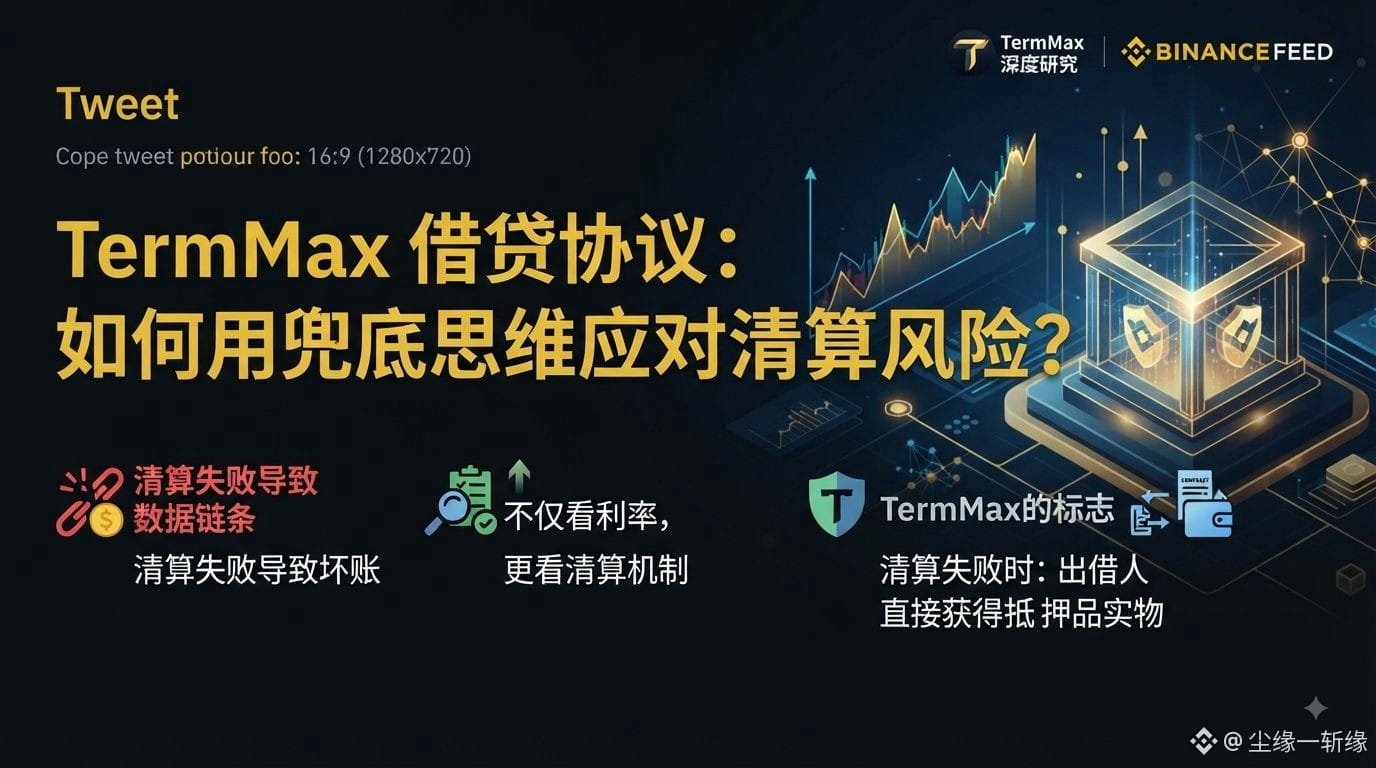
Over the past couple of days, I’ve been looking into the liquidation mechanism in lending agreements and noticed an easily overlooked point: many users choose an agreement based mostly on the interest rate, and very few think about whether the liquidation step is actually reliable.
I’ve seen this situation more than once—when the market is highly volatile, the liquidity of a certain collateral asset suddenly dries up. Liquidation can’t proceed, and ultimately lenders can’t get their principal back. The platform also has no good options; it can only wait or take the loss itself. These incidents usually aren’t a problem with the interest-rate design, but a design flaw in the liquidation mechanism. Yet when people study agreements, most of them basically don’t look at this part.
Following this line of thinking, I’ve been researching TermMax these past few days, and I found that its design approach here is quite different from most lending protocols. First, it isolates the market: each lending market is independent. If a specific collateral asset has a problem, the risk won’t propagate to other markets. This isn’t entirely new, but it’s a necessary baseline. What really made me pay extra attention is the liquidation design—if there isn’t enough liquidity in the market to complete normal liquidation, the lender will directly receive the corresponding proportion of the collateral asset in kind, rather than forcing the protocol to match orders in a bad way and create bad debt, or having liquidation fail altogether and leaving the lender to absorb the loss themselves.
At its core, this design means they’ve already thought through the worst-case scenario—“liquidation failure”—instead of assuming liquidation will always execute smoothly.
Of course, this doesn’t mean there’s no risk. Oracle dependency, and the collateral asset’s own liquidity depth—these old issues still exist. In-kind settlement only reduces losses to a relatively controllable range; it doesn’t eliminate risk. Also, the protocol’s current TVL isn’t that large yet. No matter how comprehensive the mechanism design is, it still ultimately needs to be validated by real lending demand and real trading depth.
My own view is that this kind of design may not attract attention in the short term as much as high-leverage products do.
Over the past couple of days, I’ve been looking into the liquidation mechanism in lending agreements and noticed an easily overlooked point: many users choose an agreement based mostly on the interest rate, and very few think about whether the liquidation step is actually reliable.
I’ve seen this situation more than once—when the market is highly volatile, the liquidity of a certain collateral asset suddenly dries up. Liquidation can’t proceed, and ultimately lenders can’t get their principal back. The platform also has no good options; it can only wait or take the loss itself. These incidents usually aren’t a problem with the interest-rate design, but a design flaw in the liquidation mechanism. Yet when people study agreements, most of them basically don’t look at this part.
Following this line of thinking, I’ve been researching TermMax these past few days, and I found that its design approach here is quite different from most lending protocols. First, it isolates the market: each lending market is independent. If a specific collateral asset has a problem, the risk won’t propagate to other markets. This isn’t entirely new, but it’s a necessary baseline. What really made me pay extra attention is the liquidation design—if there isn’t enough liquidity in the market to complete normal liquidation, the lender will directly receive the corresponding proportion of the collateral asset in kind, rather than forcing the protocol to match orders in a bad way and create bad debt, or having liquidation fail altogether and leaving the lender to absorb the loss themselves.
At its core, this design means they’ve already thought through the worst-case scenario—“liquidation failure”—instead of assuming liquidation will always execute smoothly.
Of course, this doesn’t mean there’s no risk. Oracle dependency, and the collateral asset’s own liquidity depth—these old issues still exist. In-kind settlement only reduces losses to a relatively controllable range; it doesn’t eliminate risk. Also, the protocol’s current TVL isn’t that large yet. No matter how comprehensive the mechanism design is, it still ultimately needs to be validated by real lending demand and real trading depth.
My own view is that this kind of design may not attract attention in the short term as much as high-leverage products do.
Verified
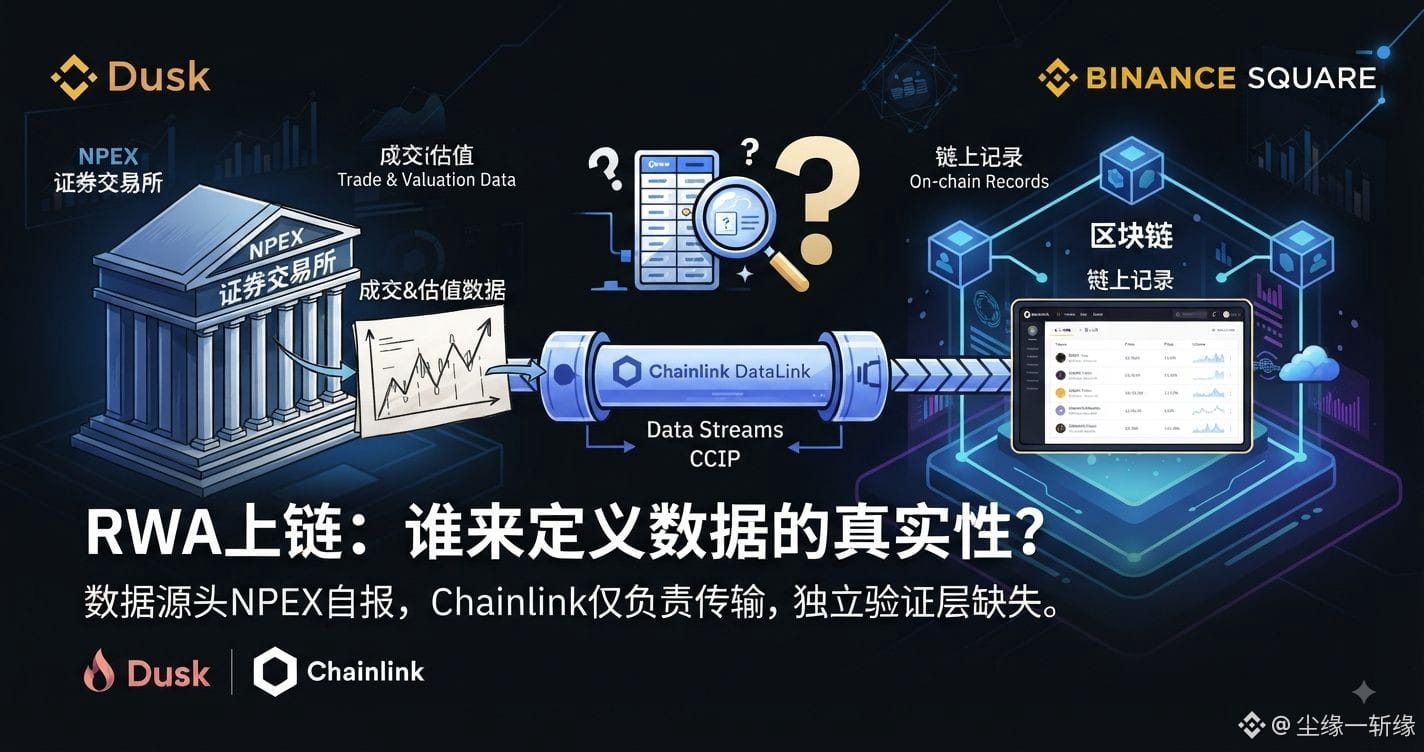
One of the most commonly overlooked steps in RWA on-chain is this: who exactly has authority over the on-chain displayed prices, trading volumes, and valuations?
On November 13, 2025, Dusk, NPEX, and Chainlink announced a partnership. NPEX’s security market data is put on-chain via Chainlink DataLink; Data Streams handles real-time price updates; and CCIP takes care of cross-chain settlement. On the surface, this seems to solve RWA’s old problem: once the on-chain assets are detached from the exchange, they become a string of numbers nobody verifies.
But on closer inspection, there’s an awkward issue: the DataLink data is still sourced from NPEX’s own self-reported trades and valuations. What Chainlink does is reliably “move” these data on-chain and keep them synchronized across chains—but it does not verify whether the numbers NPEX reports are actually accurate. In other words, the issuer and the data publisher are the same entity. In traditional finance, this corresponds to “marking your own assets.” Normally, that would require independent third-party audits to intervene. On-chain oracles can’t solve the trust problem; they only address transmission and synchronization.
For comparison, in the same period, Dusk also reached an integration cooperation with 21X (another licensed European DLT exchange). This suggests Dusk hasn’t put all its eggs in the NPEX basket. However, 21X is also a licensed European institution. At present, all of Dusk’s real-asset partners are still concentrated in the same regulatory jurisdiction and the same type of trading venue, so the level of diversification is lower than it may appear.
My view is that Chainlink’s involvement makes Dusk’s infrastructure more complete, but it doesn’t answer RWA’s most fundamental question: on-chain compliance isn’t the same thing as data trustworthiness. Data trustworthiness requires a verification layer that is independent of the issuer—and that layer doesn’t exist yet.
If a valuation dispute arises in the future between NPEX or 21X, do you think on-chain records can truly help investors—or will they simply relocate the trust problem from traditional finance to somewhere else?
#dusk $DUSK @Dusk
On November 13, 2025, Dusk, NPEX, and Chainlink announced a partnership. NPEX’s security market data is put on-chain via Chainlink DataLink; Data Streams handles real-time price updates; and CCIP takes care of cross-chain settlement. On the surface, this seems to solve RWA’s old problem: once the on-chain assets are detached from the exchange, they become a string of numbers nobody verifies.
But on closer inspection, there’s an awkward issue: the DataLink data is still sourced from NPEX’s own self-reported trades and valuations. What Chainlink does is reliably “move” these data on-chain and keep them synchronized across chains—but it does not verify whether the numbers NPEX reports are actually accurate. In other words, the issuer and the data publisher are the same entity. In traditional finance, this corresponds to “marking your own assets.” Normally, that would require independent third-party audits to intervene. On-chain oracles can’t solve the trust problem; they only address transmission and synchronization.
For comparison, in the same period, Dusk also reached an integration cooperation with 21X (another licensed European DLT exchange). This suggests Dusk hasn’t put all its eggs in the NPEX basket. However, 21X is also a licensed European institution. At present, all of Dusk’s real-asset partners are still concentrated in the same regulatory jurisdiction and the same type of trading venue, so the level of diversification is lower than it may appear.
My view is that Chainlink’s involvement makes Dusk’s infrastructure more complete, but it doesn’t answer RWA’s most fundamental question: on-chain compliance isn’t the same thing as data trustworthiness. Data trustworthiness requires a verification layer that is independent of the issuer—and that layer doesn’t exist yet.
If a valuation dispute arises in the future between NPEX or 21X, do you think on-chain records can truly help investors—or will they simply relocate the trust problem from traditional finance to somewhere else?
#dusk $DUSK @Dusk
When I was doing DeFi before, I fell into a fairly common pitfall.
I saw that a certain platform had a good yield, so I deposited funds to earn some returns, but not long after, the interest rate dropped and my original return expectations changed accordingly.
Later, I realized that many DeFi users face similar issues: people focus on the highest APY, but rarely think through—whether this yield is stable, and whether the underlying risks can be calculated.
That’s also what I’ve been paying attention to in my recent research on TermMax.
In the past few years, the DeFi lending market has developed quickly, but most products still use a floating interest rate model, meaning that when the market changes, both borrowing costs and capital yields will fluctuate. What TermMax aims to solve is to make on-chain yields and lending more certain.
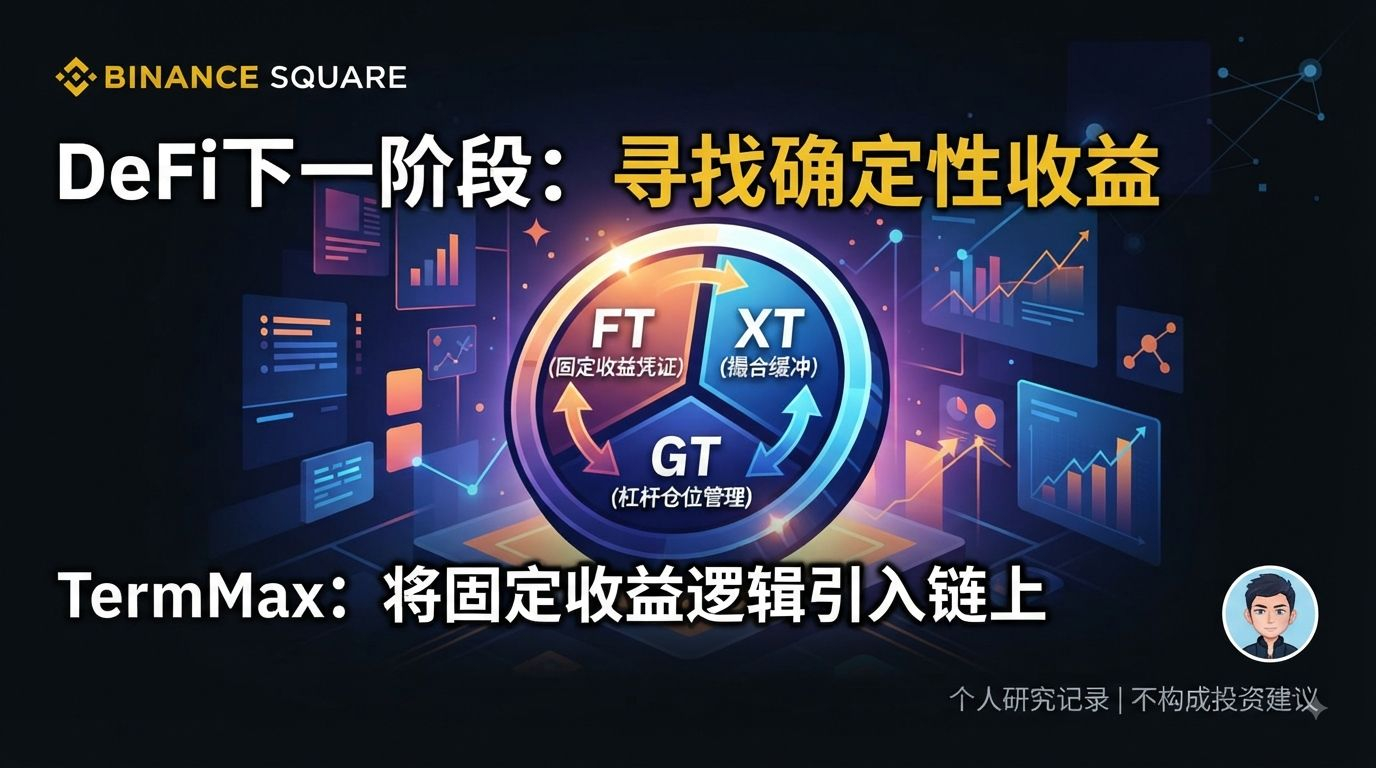
It tries to bring the fixed-income logic from traditional finance into DeFi. By using three types of tokens—FT, XT, and GT—it separates and manages debt, liquidity matching, and collateral positions, enabling users to plan their funding costs and return expectations in advance.
In simple terms, FT is more like a fixed-income certificate: the lender is repaid the principal at face value upon maturity. XT is an intermediate instrument used for market matching, representing a buffer layer for the liquidity-matching process between borrowers and lenders. GT is the certificate used by borrowers to manage collateral and leverage positions. When I first saw this breakdown, it felt a bit convoluted—I only got my head around it after reading the documentation repeatedly and cross-checking.
I think the reason TermMax is worth paying attention to isn’t that it creates a brand-new product, but that it targets a problem that has existed in DeFi for the long term: in the past, DeFi solved the question of “whether there’s yield.” In the future, it may need to solve “whether the yield is certain.”
I’ve personally experienced this—after chasing a high APY and getting burned, I’m now more willing to pay extra cost for “certainty,” even if the yield numbers aren’t as flashy.
TermMax also faces challenges. The development of fixed-income markets isn’t just a technical issue—it also requires real demand and sufficient market liquidity. Are there enough borrowers? Is there enough trading depth? Would ordinary users be willing to accept a new financial product?
So far, it looks like the TVL and protocol revenue are still not very large, and commercial validation is clearly still in the early stages.
My view is: the direction TermMax represents is worth studying. It’s trying to fill in the missing pieces of DeFi fixed-income, but the ultimate value still depends on the final outcome. #termmax @TermMax
I saw that a certain platform had a good yield, so I deposited funds to earn some returns, but not long after, the interest rate dropped and my original return expectations changed accordingly.
Later, I realized that many DeFi users face similar issues: people focus on the highest APY, but rarely think through—whether this yield is stable, and whether the underlying risks can be calculated.
That’s also what I’ve been paying attention to in my recent research on TermMax.
In the past few years, the DeFi lending market has developed quickly, but most products still use a floating interest rate model, meaning that when the market changes, both borrowing costs and capital yields will fluctuate. What TermMax aims to solve is to make on-chain yields and lending more certain.
It tries to bring the fixed-income logic from traditional finance into DeFi. By using three types of tokens—FT, XT, and GT—it separates and manages debt, liquidity matching, and collateral positions, enabling users to plan their funding costs and return expectations in advance.
In simple terms, FT is more like a fixed-income certificate: the lender is repaid the principal at face value upon maturity. XT is an intermediate instrument used for market matching, representing a buffer layer for the liquidity-matching process between borrowers and lenders. GT is the certificate used by borrowers to manage collateral and leverage positions. When I first saw this breakdown, it felt a bit convoluted—I only got my head around it after reading the documentation repeatedly and cross-checking.
I think the reason TermMax is worth paying attention to isn’t that it creates a brand-new product, but that it targets a problem that has existed in DeFi for the long term: in the past, DeFi solved the question of “whether there’s yield.” In the future, it may need to solve “whether the yield is certain.”
I’ve personally experienced this—after chasing a high APY and getting burned, I’m now more willing to pay extra cost for “certainty,” even if the yield numbers aren’t as flashy.
TermMax also faces challenges. The development of fixed-income markets isn’t just a technical issue—it also requires real demand and sufficient market liquidity. Are there enough borrowers? Is there enough trading depth? Would ordinary users be willing to accept a new financial product?
So far, it looks like the TVL and protocol revenue are still not very large, and commercial validation is clearly still in the early stages.
My view is: the direction TermMax represents is worth studying. It’s trying to fill in the missing pieces of DeFi fixed-income, but the ultimate value still depends on the final outcome. #termmax @TermMax
Many people understand Dusk, and the first reaction is always “a privacy chain.”
But after re-examining it, I found that this positioning may underestimate it.
What Dusk truly wants to solve is not simply hiding transfers. Instead, it tackles a more practical issue that arises once financial assets are put on-chain in the future:
Are securities, bonds, and similar assets really suitable for a fully transparent blockchain?
In traditional finance, institutions don’t公開 their holdings, trading strategies, or lists of investors in full.
But many public chains pursue data transparency, letting everyone view everything.
That’s fine for ordinary transfers, but for financial assets, it could become the biggest obstacle to institutions entering the chain.
For example, a fund issues an on-chain bond:
Regulators need to know whether investors are qualified and whether trades comply with regulations.
But the fund also doesn’t want competitors to see its fund flows and customer information.
This is the direction Dusk explores:
not completely public, and not completely anonymous—finding a balance between verification and privacy.
Dusk has two core designs.
First is the Phoenix privacy transaction model.
Using zero-knowledge proofs, the network can confirm that transactions follow the rules without publicly disclosing transaction details.
In simple terms:
You can prove “I meet the purchase conditions” without telling others “who you are” or “how much you bought.”
Second is XSC (Confidential Security Contract).
It’s designed for securities assets, allowing financial rules such as whitelists, transfer restrictions, dividends, and voting to be written on-chain.
The biggest difference from ordinary Tokens is this:
Ordinary Tokens solve “asset transfer.”
But Dusk wants to solve the entire lifecycle of assets—issuance, trading, and regulatory oversight.
I think the interesting part about Dusk is that it doesn’t fantasize about a blockchain replacing regulation.
Instead, it tries to turn financial rules into executable logic on-chain.
Of course, technology is only the first step.
Whether RWA can truly take off in the future depends not just on ZK technology, but on whether institutions are willing to entrust real assets to on-chain systems.
The hardest thing to change in finance has never been code—it’s trust.
If RWA develops at large scale in the future, what do you think will be the biggest competitive advantage?
#dusk $DUSK @Dusk
But after re-examining it, I found that this positioning may underestimate it.
What Dusk truly wants to solve is not simply hiding transfers. Instead, it tackles a more practical issue that arises once financial assets are put on-chain in the future:
Are securities, bonds, and similar assets really suitable for a fully transparent blockchain?
In traditional finance, institutions don’t公開 their holdings, trading strategies, or lists of investors in full.
But many public chains pursue data transparency, letting everyone view everything.
That’s fine for ordinary transfers, but for financial assets, it could become the biggest obstacle to institutions entering the chain.
For example, a fund issues an on-chain bond:
Regulators need to know whether investors are qualified and whether trades comply with regulations.
But the fund also doesn’t want competitors to see its fund flows and customer information.
This is the direction Dusk explores:
not completely public, and not completely anonymous—finding a balance between verification and privacy.
Dusk has two core designs.
First is the Phoenix privacy transaction model.
Using zero-knowledge proofs, the network can confirm that transactions follow the rules without publicly disclosing transaction details.
In simple terms:
You can prove “I meet the purchase conditions” without telling others “who you are” or “how much you bought.”
Second is XSC (Confidential Security Contract).
It’s designed for securities assets, allowing financial rules such as whitelists, transfer restrictions, dividends, and voting to be written on-chain.
The biggest difference from ordinary Tokens is this:
Ordinary Tokens solve “asset transfer.”
But Dusk wants to solve the entire lifecycle of assets—issuance, trading, and regulatory oversight.
I think the interesting part about Dusk is that it doesn’t fantasize about a blockchain replacing regulation.
Instead, it tries to turn financial rules into executable logic on-chain.
Of course, technology is only the first step.
Whether RWA can truly take off in the future depends not just on ZK technology, but on whether institutions are willing to entrust real assets to on-chain systems.
The hardest thing to change in finance has never been code—it’s trust.
If RWA develops at large scale in the future, what do you think will be the biggest competitive advantage?
#dusk $DUSK @Dusk
A、交易效率
50%
B、隐私和合规能力
50%
C、机构资源和监管认可?
0%
10 votes • Voting closed
Dusk mainnet launched on January 7, 2025. The official line says they’ve spent six years polishing it. I usually don’t take claims like that at face value, but when I look at the NPEX case, my mind changed.
NPEX is a regulated European securities exchange. The more than $300M in managed assets are migrating to Dusk. This isn’t a testnet demo—licensed institutions are moving real securities onto a public blockchain. Most RWA projects still sit at the stage of “we’ll cooperate in the future,” while Dusk is already running real assets.
What’s really interesting is that Dusk didn’t force privacy and transparency to be a binary choice. Instead, at the protocol level, it uses two separate ledgers: Moonlight is fully public and follows traditional public-chain logic; Phoenix hides trading details. Institutions can choose based on the scenario. Retail trading uses the public ledger for easier auditing; large-scale or sensitive trading uses the shielded ledger. This is much closer to the “graded disclosure” logic in traditional finance than a simple slogan of “support privacy.”
Another point that’s less often mentioned is DuskEVM. Built on OP Stack and compatible with Solidity, it means DeFi and stablecoin protocol designs on Ethereum can theoretically migrate and inherit Dusk’s privacy capabilities. The privacy transaction module, Hedger, uses homomorphic encryption plus zero-knowledge proofs. That’s a different approach from most privacy chains that only obscure addresses.
But this isn’t a sure win. Dusk’s compliance edge is tied to MiCA—the EU’s crypto-asset regulatory framework. NPEX is also a European exchange. The regulatory logic in the United States and Asia is different. Copying this playbook to other jurisdictions would require renegotiation one by one, and it might not even succeed. Privacy protocols like Tornado Cash were directly sanctioned, and regulators remain sensitive to “on-chain privacy.” Dusk is betting that this approach can be accepted—and so far, it’s only been validated once in Europe.
My take: Dusk has found the first truly legitimate, regulated institution that’s put real assets on-chain—more convincing than any whitepaper. But NPEX is just one example. Whether the same model can be replicated in the United States or Singapore is the dividing line between a regional experiment and real foundational infrastructure.
If the NPEX model is to be replicated to the United States, do you think the biggest obstacle is regulatory licensing, or the institutional trust in the idea of “holding real securities on-chain”? #dusk $DUSK @Dusk
NPEX is a regulated European securities exchange. The more than $300M in managed assets are migrating to Dusk. This isn’t a testnet demo—licensed institutions are moving real securities onto a public blockchain. Most RWA projects still sit at the stage of “we’ll cooperate in the future,” while Dusk is already running real assets.
What’s really interesting is that Dusk didn’t force privacy and transparency to be a binary choice. Instead, at the protocol level, it uses two separate ledgers: Moonlight is fully public and follows traditional public-chain logic; Phoenix hides trading details. Institutions can choose based on the scenario. Retail trading uses the public ledger for easier auditing; large-scale or sensitive trading uses the shielded ledger. This is much closer to the “graded disclosure” logic in traditional finance than a simple slogan of “support privacy.”
Another point that’s less often mentioned is DuskEVM. Built on OP Stack and compatible with Solidity, it means DeFi and stablecoin protocol designs on Ethereum can theoretically migrate and inherit Dusk’s privacy capabilities. The privacy transaction module, Hedger, uses homomorphic encryption plus zero-knowledge proofs. That’s a different approach from most privacy chains that only obscure addresses.
But this isn’t a sure win. Dusk’s compliance edge is tied to MiCA—the EU’s crypto-asset regulatory framework. NPEX is also a European exchange. The regulatory logic in the United States and Asia is different. Copying this playbook to other jurisdictions would require renegotiation one by one, and it might not even succeed. Privacy protocols like Tornado Cash were directly sanctioned, and regulators remain sensitive to “on-chain privacy.” Dusk is betting that this approach can be accepted—and so far, it’s only been validated once in Europe.
My take: Dusk has found the first truly legitimate, regulated institution that’s put real assets on-chain—more convincing than any whitepaper. But NPEX is just one example. Whether the same model can be replicated in the United States or Singapore is the dividing line between a regional experiment and real foundational infrastructure.
If the NPEX model is to be replicated to the United States, do you think the biggest obstacle is regulatory licensing, or the institutional trust in the idea of “holding real securities on-chain”? #dusk $DUSK @Dusk
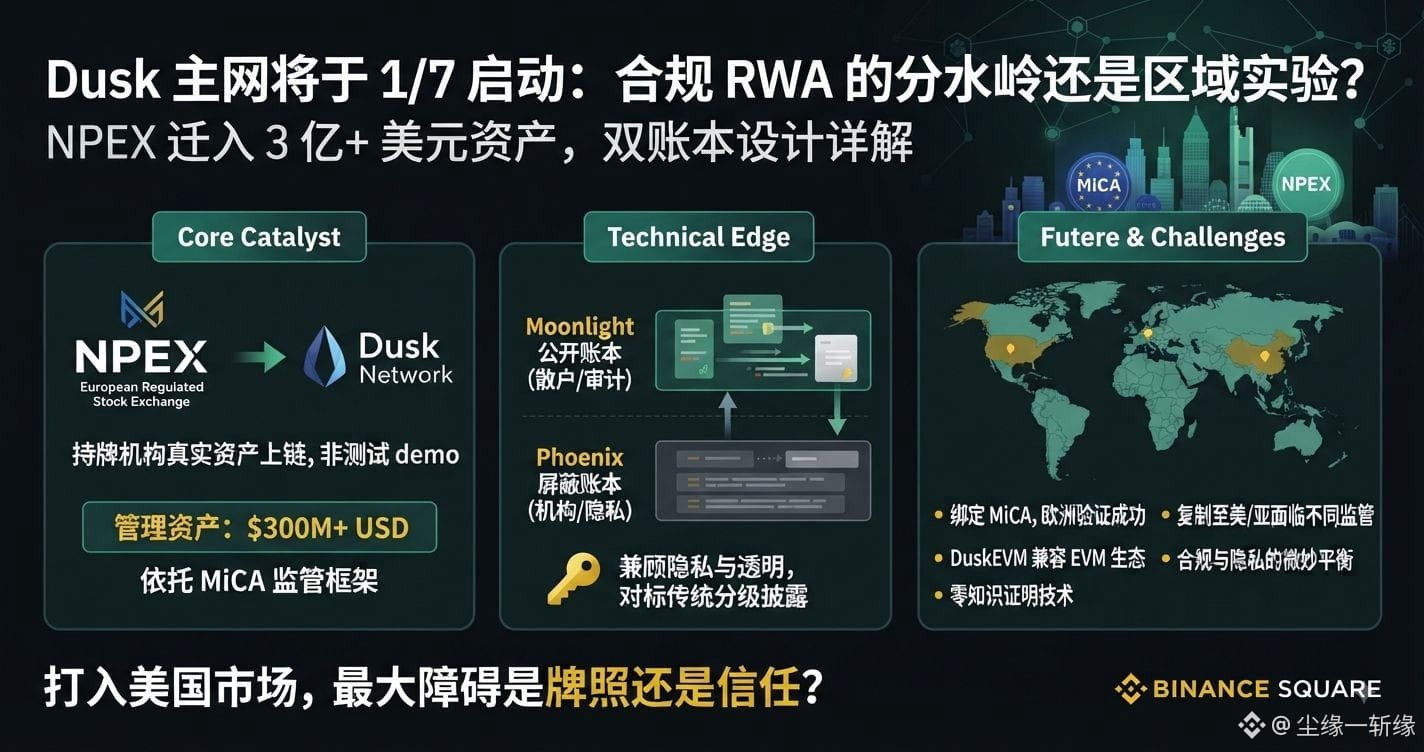
Financial institutions moving onto the blockchain: the biggest obstacle isn’t regulation, but “information going bare”
Yesterday I saw Dusk’s Hedger design, and I thought this direction is pretty interesting.
Many people understand blockchain privacy as:
“Hide the addresses.”
But the privacy that financial markets truly need isn’t anonymity.
It’s:
I can prove that I’m compliant, but I don’t have to disclose all information publicly.
Let me give an example.
A fund wants to issue bonds on-chain.
In a public-chain model:
Investors’ addresses, transaction amounts, and position changes are all公开.
Ordinary users don’t care.
For institutions, however:
Exposing trading strategies is itself a huge risk.
What if everything were fully anonymous?
Then regulation can’t verify:
Whether the investors are qualified?
Whether the source of funds meets the requirements?
Whether the transactions are违规?
So when bringing finance on-chain, you need to resolve a contradiction:
the transparency of an open chain vs. the need to protect information in financial markets.
What Dusk’s Hedger explores is a different route.
It’s not just hiding transactions.
Instead, it uses homomorphic encryption and zero-knowledge proofs so that the chain can verify that transactions are correct while hiding sensitive data.
For example, with Dusk:
Regulatory agencies need to know:
“Is this investor eligible to buy?”
The system can prove the answer is correct.
But it doesn’t need to reveal:
Who the investor is? How much they bought?
This is what’s called selective disclosure.
Disclose when it should be disclosed,
and keep protecting what shouldn’t be.
Dusk also has another noteworthy aspect:
It doesn’t build just one privacy chain.
Instead, it designs different execution environments.
DuskDS is responsible for settlement and data infrastructure;
DuskEVM lets developers use familiar EVM tools;
Hedger adds privacy capabilities to EVM applications. DOCS +1
I think this is more aligned with institutional needs than doing anonymous transactions alone.
Because the financial world isn’t “non-transparent.”
It’s that different people need to see different information.
Traders see the transaction outcomes;
regulators see compliance proofs;
institutions protect trade secrets.
This may be the privacy model that blockchain truly needs to enter traditional finance.
Technology is only the first step.
Dusk’s biggest challenge in the future won’t be whether the cryptography is advanced enough.
It will be whether there are enough real-world assets willing to come onto the chain.
If RWA explodes in the future,
what do you think institutions will need the most: #dusk $DUSK @Dusk
Yesterday I saw Dusk’s Hedger design, and I thought this direction is pretty interesting.
Many people understand blockchain privacy as:
“Hide the addresses.”
But the privacy that financial markets truly need isn’t anonymity.
It’s:
I can prove that I’m compliant, but I don’t have to disclose all information publicly.
Let me give an example.
A fund wants to issue bonds on-chain.
In a public-chain model:
Investors’ addresses, transaction amounts, and position changes are all公开.
Ordinary users don’t care.
For institutions, however:
Exposing trading strategies is itself a huge risk.
What if everything were fully anonymous?
Then regulation can’t verify:
Whether the investors are qualified?
Whether the source of funds meets the requirements?
Whether the transactions are违规?
So when bringing finance on-chain, you need to resolve a contradiction:
the transparency of an open chain vs. the need to protect information in financial markets.
What Dusk’s Hedger explores is a different route.
It’s not just hiding transactions.
Instead, it uses homomorphic encryption and zero-knowledge proofs so that the chain can verify that transactions are correct while hiding sensitive data.
For example, with Dusk:
Regulatory agencies need to know:
“Is this investor eligible to buy?”
The system can prove the answer is correct.
But it doesn’t need to reveal:
Who the investor is? How much they bought?
This is what’s called selective disclosure.
Disclose when it should be disclosed,
and keep protecting what shouldn’t be.
Dusk also has another noteworthy aspect:
It doesn’t build just one privacy chain.
Instead, it designs different execution environments.
DuskDS is responsible for settlement and data infrastructure;
DuskEVM lets developers use familiar EVM tools;
Hedger adds privacy capabilities to EVM applications. DOCS +1
I think this is more aligned with institutional needs than doing anonymous transactions alone.
Because the financial world isn’t “non-transparent.”
It’s that different people need to see different information.
Traders see the transaction outcomes;
regulators see compliance proofs;
institutions protect trade secrets.
This may be the privacy model that blockchain truly needs to enter traditional finance.
Technology is only the first step.
Dusk’s biggest challenge in the future won’t be whether the cryptography is advanced enough.
It will be whether there are enough real-world assets willing to come onto the chain.
If RWA explodes in the future,
what do you think institutions will need the most: #dusk $DUSK @Dusk
更高透明度
33%
更强隐私保护
67%
3 votes • Voting closed
Log in to explore more content