

一心yixin
122 Posts

一心yixin
Report
Block User
Open Trade

BNB Holder
Frequent Trader
5.6 Years
23 Following
54 Followers
34 Liked
Posts
Portfolio
All
Quotes
·
--
My view is very direct: @BabylonLabs_io This time, what is truly worth breaking down isn’t the TBV locked-in amount, but that Genesis chain built with CosmosSDK. As the control plane of the BSN, it’s meant to handle the dirty work for $BTC involving tasks without smart contracts—tracking state, distributing $BABY, coordinating security in batches for consumption chains, and even using Bitcoin timestamps to fend off long-range attacks. This isn’t just one chain; it’s the foundational infrastructure for reconfiguring the liquidity of the big pie. #baby
My view is very direct: @BabylonLabs_io This time, what is truly worth breaking down isn’t the TBV locked-in amount, but that Genesis chain built with CosmosSDK. As the control plane of the BSN, it’s meant to handle the dirty work for $BTC involving tasks without smart contracts—tracking state, distributing $BABY , coordinating security in batches for consumption chains, and even using Bitcoin timestamps to fend off long-range attacks. This isn’t just one chain; it’s the foundational infrastructure for reconfiguring the liquidity of the big pie. #baby

124
·
--
My judgment is: @BabylonLabs_io 's compression scheme has lowered the verification threshold by a thousand-fold. For teams building Bitcoin-native Rollups, this is a huge leap forward. But for $BABY, since it relies on the interaction between two parties and Cut-and-Choose, small individual investors really don't need to run it themselves. The terminal client just can't handle it; small-sum users will inevitably end up going through an aggregator to generate bulk proofs. Between rigorous engineering and user-transparent deployment, there's still an entire layer of engineering friction. #baby
My judgment is: @BabylonLabs_io 's compression scheme has lowered the verification threshold by a thousand-fold. For teams building Bitcoin-native Rollups, this is a huge leap forward. But for $BABY , since it relies on the interaction between two parties and Cut-and-Choose, small individual investors really don't need to run it themselves. The terminal client just can't handle it; small-sum users will inevitably end up going through an aggregator to generate bulk proofs. Between rigorous engineering and user-transparent deployment, there's still an entire layer of engineering friction. #baby

110
·
--
First, let me state the conclusion: @BabylonLabs_io’s TBV decides whether it’s a feature or underlying technology only with its second application. The controversy around $BABY is right here: so far, we’ve only seen Aave v4 test borrowings, and the vault-binding use-case structure hasn’t been reused by external teams yet. I’ll wait for a closed loop of a standalone new application to verify general applicability, instead of treating the roadmap as a win prematurely. #baby
First, let me state the conclusion: @BabylonLabs_io’s TBV decides whether it’s a feature or underlying technology only with its second application. The controversy around $BABY is right here: so far, we’ve only seen Aave v4 test borrowings, and the vault-binding use-case structure hasn’t been reused by external teams yet. I’ll wait for a closed loop of a standalone new application to verify general applicability, instead of treating the roadmap as a win prematurely. #baby

81
·
--
Let me state the conclusion first: the TBV structure behind $BABY is what truly brings the controversy back from how much profit there is to who controls the principal. @BabylonLabs_io did not make BTC leave the main network for safety; liquidations rely on game-theoretic oversight, not oracles. Once this mental threshold is crossed, the user’s outcome becomes clear: your chips are in your hands from start to finish. #baby
Let me state the conclusion first: the TBV structure behind $BABY is what truly brings the controversy back from how much profit there is to who controls the principal. @BabylonLabs_io did not make BTC leave the main network for safety; liquidations rely on game-theoretic oversight, not oracles. Once this mental threshold is crossed, the user’s outcome becomes clear: your chips are in your hands from start to finish. #baby

1
111
·
--
From on-chain fund flows, structures like @grvt_io’s hybrid design aim to address the pain points of asset fragmentation. The controversy is that if on-chain confirmation and matching efficiency become mismatched, the user experience will noticeably decline. At present, the project team’s liquidity planning is not a major problem, but the expected time for institutional entry and the accumulation of network scale may be longer than most people anticipate. My view is that: the product logic is sound, but it has not yet been proven by trading volume and user outcomes. At this stage, it feels more like a structural probing of trading infrastructure. #grvt
From on-chain fund flows, structures like @grvt_io’s hybrid design aim to address the pain points of asset fragmentation. The controversy is that if on-chain confirmation and matching efficiency become mismatched, the user experience will noticeably decline. At present, the project team’s liquidity planning is not a major problem, but the expected time for institutional entry and the accumulation of network scale may be longer than most people anticipate. My view is that: the product logic is sound, but it has not yet been proven by trading volume and user outcomes. At this stage, it feels more like a structural probing of trading infrastructure. #grvt

53
·
--
When you click to buy, the “Trade Executed” pop-up appears in less than a second, but the final confirmations for funds transfers and margin freezing still have to wait for quite a while. In that time gap, you’re essentially just trusting the frontend notification.
Zero-knowledge proofs can provide verification of boundaries, but you must know exactly what you’re checking—not let go just because you see “verification passed.” The Chinese hot list for the same topic you see on the web interface is often not equivalent to the English list returned by older APIs; the visible ranking itself has been filtered. Off-chain matching is extremely fast, while on-chain settlement depends on block confirmations—within those few-second windows, responsibility doesn’t automatically become clear. If you only watch the interface prompts and ignore on-chain positions and margin records, you might never notice settlement delays. Therefore, after every transaction, I will verify that position changes, margin movements, and settlement records are consistent @grvt_io #grvt
When you click to buy, the “Trade Executed” pop-up appears in less than a second, but the final confirmations for funds transfers and margin freezing still have to wait for quite a while. In that time gap, you’re essentially just trusting the frontend notification.
Zero-knowledge proofs can provide verification of boundaries, but you must know exactly what you’re checking—not let go just because you see “verification passed.” The Chinese hot list for the same topic you see on the web interface is often not equivalent to the English list returned by older APIs; the visible ranking itself has been filtered. Off-chain matching is extremely fast, while on-chain settlement depends on block confirmations—within those few-second windows, responsibility doesn’t automatically become clear. If you only watch the interface prompts and ignore on-chain positions and margin records, you might never notice settlement delays. Therefore, after every transaction, I will verify that position changes, margin movements, and settlement records are consistent @grvt_io #grvt
Zero-knowledge proofs can provide verification of boundaries, but you must know exactly what you’re checking—not let go just because you see “verification passed.” The Chinese hot list for the same topic you see on the web interface is often not equivalent to the English list returned by older APIs; the visible ranking itself has been filtered. Off-chain matching is extremely fast, while on-chain settlement depends on block confirmations—within those few-second windows, responsibility doesn’t automatically become clear. If you only watch the interface prompts and ignore on-chain positions and margin records, you might never notice settlement delays. Therefore, after every transaction, I will verify that position changes, margin movements, and settlement records are consistent @grvt_io #grvt

82
·
--
After seeing a trade executed, the interface pops up with “Executed.” But the final settling of funds and positions often takes several seconds—or even longer. During that waiting period, matching, settlement, and proof generation happen rapidly off-chain, yet the page you’re looking at only shows a simple message.
Zero-knowledge proofs certainly can define verification boundaries for each step. But if you only watch the three words “confirmed,” you’re effectively handing over the right to verify. Even if the circuit is meticulously designed, there is still a risk that the constraints are too loose. And when I flipped through Chinese materials in the early morning, I found that the community’s concerns don’t fully overlap with the conclusions distilled from the English interface. So it’s worth checking for yourself after every transaction: verify position changes, margin movements, and whether the settlement records correspond one-to-one. This is the clumsy method I use to sense the authenticity of self-custody—and I often complete it right on the interface of @grvt_io as well #grvt
After seeing a trade executed, the interface pops up with “Executed.” But the final settling of funds and positions often takes several seconds—or even longer. During that waiting period, matching, settlement, and proof generation happen rapidly off-chain, yet the page you’re looking at only shows a simple message.
Zero-knowledge proofs certainly can define verification boundaries for each step. But if you only watch the three words “confirmed,” you’re effectively handing over the right to verify. Even if the circuit is meticulously designed, there is still a risk that the constraints are too loose. And when I flipped through Chinese materials in the early morning, I found that the community’s concerns don’t fully overlap with the conclusions distilled from the English interface. So it’s worth checking for yourself after every transaction: verify position changes, margin movements, and whether the settlement records correspond one-to-one. This is the clumsy method I use to sense the authenticity of self-custody—and I often complete it right on the interface of @grvt_io as well #grvt
Zero-knowledge proofs certainly can define verification boundaries for each step. But if you only watch the three words “confirmed,” you’re effectively handing over the right to verify. Even if the circuit is meticulously designed, there is still a risk that the constraints are too loose. And when I flipped through Chinese materials in the early morning, I found that the community’s concerns don’t fully overlap with the conclusions distilled from the English interface. So it’s worth checking for yourself after every transaction: verify position changes, margin movements, and whether the settlement records correspond one-to-one. This is the clumsy method I use to sense the authenticity of self-custody—and I often complete it right on the interface of @grvt_io as well #grvt

1
58
·
--
The future of digital finance doesn’t depend on the labels of centralization or decentralization, but on who can deliver efficiency and verifiable trust together. This makes me rethink the certainty promised by privacy technology. When a proof only tells you that “it has been completed,” without letting you know who it was for, under what conditions it addressed which concern, privacy-first becomes a stranded vessel without an anchor.
The moment a system shows “settled” yet users still can’t determine the status of the funds or who is responsible, the value of the proof’s experience hasn’t truly taken root. Only when people clearly understand what exact question this proof is answering does its credibility truly seep into common sense. Perhaps this is the question @grvt_io must face after efficiency. #grvt
The future of digital finance doesn’t depend on the labels of centralization or decentralization, but on who can deliver efficiency and verifiable trust together. This makes me rethink the certainty promised by privacy technology. When a proof only tells you that “it has been completed,” without letting you know who it was for, under what conditions it addressed which concern, privacy-first becomes a stranded vessel without an anchor.
The moment a system shows “settled” yet users still can’t determine the status of the funds or who is responsible, the value of the proof’s experience hasn’t truly taken root. Only when people clearly understand what exact question this proof is answering does its credibility truly seep into common sense. Perhaps this is the question @grvt_io must face after efficiency. #grvt
The moment a system shows “settled” yet users still can’t determine the status of the funds or who is responsible, the value of the proof’s experience hasn’t truly taken root. Only when people clearly understand what exact question this proof is answering does its credibility truly seep into common sense. Perhaps this is the question @grvt_io must face after efficiency. #grvt

66
·
--
People often mistakenly believe that once a system says “proven,” everything is under control—when in reality, the proof itself doesn’t explain what exactly it proves. It’s like receiving a text that only says “transaction valid” without being able to see the flow of funds or where responsibility lies; this kind of ambiguity actually leaves your sense of security hanging in the air.
When a privacy-first environment hides sensitive data inside mathematical proofs, users are no longer looking at a transparent ledger, but at a narrative that needs to be re-identified. Knowing which question the proof answers is far more likely to translate technical credibility into everyday reassurance than a simple “settled.” That still-unspecified space is precisely what @grvt_io is filling in its design with #grvt.
People often mistakenly believe that once a system says “proven,” everything is under control—when in reality, the proof itself doesn’t explain what exactly it proves. It’s like receiving a text that only says “transaction valid” without being able to see the flow of funds or where responsibility lies; this kind of ambiguity actually leaves your sense of security hanging in the air.
When a privacy-first environment hides sensitive data inside mathematical proofs, users are no longer looking at a transparent ledger, but at a narrative that needs to be re-identified. Knowing which question the proof answers is far more likely to translate technical credibility into everyday reassurance than a simple “settled.” That still-unspecified space is precisely what @grvt_io is filling in its design with #grvt.
When a privacy-first environment hides sensitive data inside mathematical proofs, users are no longer looking at a transparent ledger, but at a narrative that needs to be re-identified. Knowing which question the proof answers is far more likely to translate technical credibility into everyday reassurance than a simple “settled.” That still-unspecified space is precisely what @grvt_io is filling in its design with #grvt.

99
·
--
Article
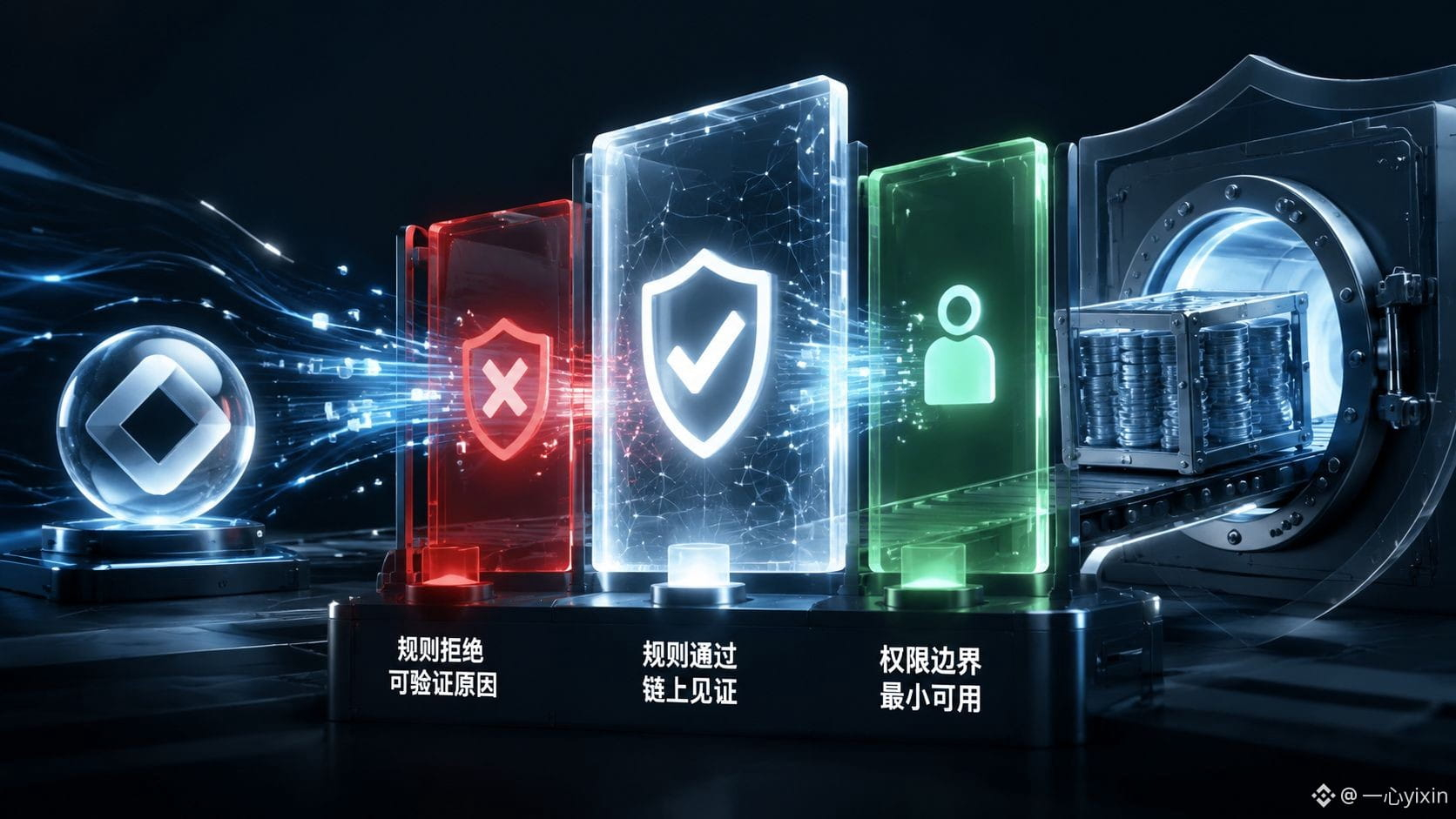
The rules can be audited—and so must the people who change themYou hand money over to an AI agent—what you fear most is that it will waste it. But once everything can be programmed into rules, another problem emerges: who can change those rules? Public strategies don’t mean safety; centralized update permissions are the real backdoor.
After reading the Newton Protocol website, today Awais, who is ranked No. 2, noticed a clear temperature gap. The homepage talks about a digital workforce—like an AI agent doing on-chain chores for you. But the feature list underneath is more like something written for compliance teams and institutional vaults: investor eligibility, sanctions screening, velocity limits, and jurisdictional rules.
The rules can be audited—and so must the people who change them
You hand money over to an AI agent—what you fear most is that it will waste it. But once everything can be programmed into rules, another problem emerges: who can change those rules? Public strategies don’t mean safety; centralized update permissions are the real backdoor.
After reading the Newton Protocol website, today Awais, who is ranked No. 2, noticed a clear temperature gap. The homepage talks about a digital workforce—like an AI agent doing on-chain chores for you. But the feature list underneath is more like something written for compliance teams and institutional vaults: investor eligibility, sanctions screening, velocity limits, and jurisdictional rules.
After reading the Newton Protocol website, today Awais, who is ranked No. 2, noticed a clear temperature gap. The homepage talks about a digital workforce—like an AI agent doing on-chain chores for you. But the feature list underneath is more like something written for compliance teams and institutional vaults: investor eligibility, sanctions screening, velocity limits, and jurisdictional rules.
41
·
--
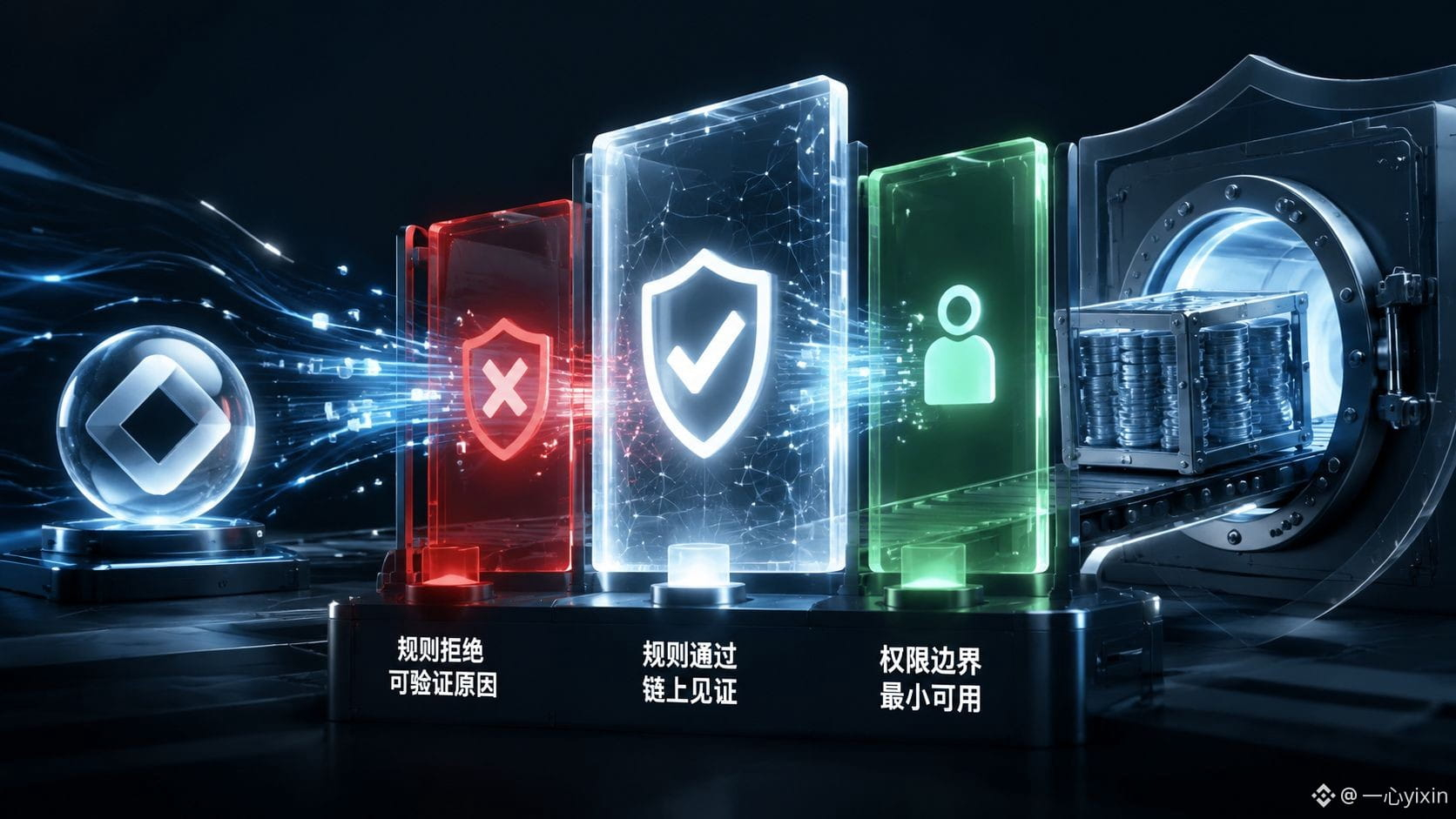
You think an AI agent can spend money on its own—then when you check the website you find out the first things to roll out are investor eligibility, sanctions screening, and velocity limits. Today Awais makes this temperature difference very clear: the digital workforce is the entry point, but the compliance engine is what institutions will pay for first. Newton Protocol lets transactions pass policy first on Newton Mainnet Beta, but new risks have emerged too: who can change the policy provider? $NEWT needs to check the update records. #Newt @NewtonProtocol
You think an AI agent can spend money on its own—then when you check the website you find out the first things to roll out are investor eligibility, sanctions screening, and velocity limits. Today Awais makes this temperature difference very clear: the digital workforce is the entry point, but the compliance engine is what institutions will pay for first. Newton Protocol lets transactions pass policy first on Newton Mainnet Beta, but new risks have emerged too: who can change the policy provider? $NEWT needs to check the update records. #Newt @NewtonProtocol
56
·
--
In encrypted trading, we are often forced to make an either-or choice between fast execution and data privacy. But these two needs should actually be able to be satisfied at the same time. Some platforms use a zero-knowledge architecture to encrypt order details, yet provide publicly verifiable settlement credentials on-chain—so that both speed and privacy are present.
However, technical verifiability does not automatically mean users can understand what has actually been verified. If the proven state still doesn’t allow you to determine fund attribution and the next step, then a privacy-first promise hangs only at the code level. This is exactly the knot that @grvt_io is unraveling—a #grvt experience that makes proofs readable.
In encrypted trading, we are often forced to make an either-or choice between fast execution and data privacy. But these two needs should actually be able to be satisfied at the same time. Some platforms use a zero-knowledge architecture to encrypt order details, yet provide publicly verifiable settlement credentials on-chain—so that both speed and privacy are present.
However, technical verifiability does not automatically mean users can understand what has actually been verified. If the proven state still doesn’t allow you to determine fund attribution and the next step, then a privacy-first promise hangs only at the code level. This is exactly the knot that @grvt_io is unraveling—a #grvt experience that makes proofs readable.
However, technical verifiability does not automatically mean users can understand what has actually been verified. If the proven state still doesn’t allow you to determine fund attribution and the next step, then a privacy-first promise hangs only at the code level. This is exactly the knot that @grvt_io is unraveling—a #grvt experience that makes proofs readable.

75
·
--
When you send a message, the system says it has been delivered, yet the read receipt still doesn’t pop up after a long while. In that blank span of a few seconds, all you can rely on is your trust in the system to confirm that everything is fine. The system says it’s done, but you haven’t seen the result with your own eyes. The gap between a tiny “report completed” and a verifiable truth is precisely that lingering, unresolved feeling.
Off-chain matching makes orders show as executed immediately, with an experience as smooth as a centralized exchange. But only the on-chain settlement proof truly transfers ownership of the assets to you. @grvt_io is turning this moment of hesitation into something you can verify. #grvt
When you send a message, the system says it has been delivered, yet the read receipt still doesn’t pop up after a long while. In that blank span of a few seconds, all you can rely on is your trust in the system to confirm that everything is fine. The system says it’s done, but you haven’t seen the result with your own eyes. The gap between a tiny “report completed” and a verifiable truth is precisely that lingering, unresolved feeling.
Off-chain matching makes orders show as executed immediately, with an experience as smooth as a centralized exchange. But only the on-chain settlement proof truly transfers ownership of the assets to you. @grvt_io is turning this moment of hesitation into something you can verify. #grvt
Off-chain matching makes orders show as executed immediately, with an experience as smooth as a centralized exchange. But only the on-chain settlement proof truly transfers ownership of the assets to you. @grvt_io is turning this moment of hesitation into something you can verify. #grvt

60
·
--

Article
Auditable strategies—but what about the people who change the rules?You hand the money over to an AI to manage. What you’re afraid of isn’t that it isn’t smart enough—it’s that, in the dead of night, the strategy file gets quietly altered by some administrator by changing a single line of the stop-loss. This concern is very realistic. We’ve seen DeFi treasuries where the rules are written beautifully, and when something really goes wrong, it’s never the code’s fault—it’s because the human who modified the rules left no trace.
Today, on the trending list, someone said that most conversations about AI in crypto focus on smarter models. Newton Protocol asks a different question: how can autonomous AI safely interact with blockchains without asking users to trust a black box? What Newton Protocol is doing is turning AI strategy into a native on-chain participant, rather than a black box that requires you to hand over your private key. It builds a secure rollup dedicated to carrying AI-driven transaction strategies, and lets developers deploy their AI agents on it.
Auditable strategies—but what about the people who change the rules?
You hand the money over to an AI to manage. What you’re afraid of isn’t that it isn’t smart enough—it’s that, in the dead of night, the strategy file gets quietly altered by some administrator by changing a single line of the stop-loss. This concern is very realistic. We’ve seen DeFi treasuries where the rules are written beautifully, and when something really goes wrong, it’s never the code’s fault—it’s because the human who modified the rules left no trace.
Today, on the trending list, someone said that most conversations about AI in crypto focus on smarter models. Newton Protocol asks a different question: how can autonomous AI safely interact with blockchains without asking users to trust a black box? What Newton Protocol is doing is turning AI strategy into a native on-chain participant, rather than a black box that requires you to hand over your private key. It builds a secure rollup dedicated to carrying AI-driven transaction strategies, and lets developers deploy their AI agents on it.
Today, on the trending list, someone said that most conversations about AI in crypto focus on smarter models. Newton Protocol asks a different question: how can autonomous AI safely interact with blockchains without asking users to trust a black box? What Newton Protocol is doing is turning AI strategy into a native on-chain participant, rather than a black box that requires you to hand over your private key. It builds a secure rollup dedicated to carrying AI-driven transaction strategies, and lets developers deploy their AI agents on it.
1
1
62
·
--
You let AI manage your money, handing all take-profit and stop-loss rules over to code—but who exactly is updating the strategy rules at all times? Most people talk about AI by saying it’s smarter than models. But what Newton Protocol is asking is a different question: how can autonomous AI interact with blockchain without making you trust a black box? Now in the Newton Mainnet Beta, every transaction of $NEWT is required to pass a Rego policy check before it’s allowed through. If the rule source is concentrated in the hands of just a few people, then even a beautiful audit is useless. Today, why not check the policy provider address on the Mainnet Beta and see whether the update records are public. @NewtonProtocol #Newt
You let AI manage your money, handing all take-profit and stop-loss rules over to code—but who exactly is updating the strategy rules at all times? Most people talk about AI by saying it’s smarter than models. But what Newton Protocol is asking is a different question: how can autonomous AI interact with blockchain without making you trust a black box? Now in the Newton Mainnet Beta, every transaction of $NEWT is required to pass a Rego policy check before it’s allowed through. If the rule source is concentrated in the hands of just a few people, then even a beautiful audit is useless. Today, why not check the policy provider address on the Mainnet Beta and see whether the update records are public. @NewtonProtocol #Newt

1
1
75
·
--

Article
Trust isn’t an either/or—policy centralization is the new soft spotYou’ve probably seen that everywhere-shared comparison graphic. On the left, the traditional vault automation is labeled “requires human oversight.” On the right, @NewtonProtocol Newton Protocol touts itself as trustless. Put side by side, it feels like one is the Stone Age and the other is some god-level, no-trust miracle. But the longer you stare at the chart, the more you start to question it: if execution is automated, does that really mean nobody is in charge? The truth is that automation doesn’t eliminate human checking—it just moves human review from the moment of the transaction to the step where the rules are written.
On today’s trending charts, MiS DAISY called this out. When she looked at the NEWT vs Traditional comparison table she shared, she felt the “trustless” column was marked far too bluntly. Under traditional approaches, policies are manually reviewed before transactions. With Newton, Rego rules are executed by machines. On the surface, it looks like one option needs humans and the other doesn’t—but Newton’s rules don’t just fall from the sky. Once policy providers are concentrated in a small number of addresses, the so-called “no trust” turns into trusting only the rules written by those few people.
Trust isn’t an either/or—policy centralization is the new soft spot
You’ve probably seen that everywhere-shared comparison graphic. On the left, the traditional vault automation is labeled “requires human oversight.” On the right, @NewtonProtocol Newton Protocol touts itself as trustless. Put side by side, it feels like one is the Stone Age and the other is some god-level, no-trust miracle. But the longer you stare at the chart, the more you start to question it: if execution is automated, does that really mean nobody is in charge? The truth is that automation doesn’t eliminate human checking—it just moves human review from the moment of the transaction to the step where the rules are written.
On today’s trending charts, MiS DAISY called this out. When she looked at the NEWT vs Traditional comparison table she shared, she felt the “trustless” column was marked far too bluntly. Under traditional approaches, policies are manually reviewed before transactions. With Newton, Rego rules are executed by machines. On the surface, it looks like one option needs humans and the other doesn’t—but Newton’s rules don’t just fall from the sky. Once policy providers are concentrated in a small number of addresses, the so-called “no trust” turns into trusting only the rules written by those few people.
On today’s trending charts, MiS DAISY called this out. When she looked at the NEWT vs Traditional comparison table she shared, she felt the “trustless” column was marked far too bluntly. Under traditional approaches, policies are manually reviewed before transactions. With Newton, Rego rules are executed by machines. On the surface, it looks like one option needs humans and the other doesn’t—but Newton’s rules don’t just fall from the sky. Once policy providers are concentrated in a small number of addresses, the so-called “no trust” turns into trusting only the rules written by those few people.
54
·
--
Seeing that NEWT comparison chart: on the left, traditional automation “requires human oversight”; on the right, with “trustless” claimed—but MiS DAISY spots the trick at a glance. Automation doesn’t completely remove people; it just pushes human involvement further back. What Newton Protocol is doing isn’t truly trustless—it’s writing rule checks into the transaction path. The real risk has shifted from execution to the rule makers themselves. On @NewtonProtocol Newton Mainnet Beta, every validated transaction (e.g., $NEWT ) must include an attestation to prove it—but who will write that Rego rule instead becomes a new single point of failure. #Newt
Seeing that NEWT comparison chart: on the left, traditional automation “requires human oversight”; on the right, with “trustless” claimed—but MiS DAISY spots the trick at a glance. Automation doesn’t completely remove people; it just pushes human involvement further back. What Newton Protocol is doing isn’t truly trustless—it’s writing rule checks into the transaction path. The real risk has shifted from execution to the rule makers themselves. On @NewtonProtocol Newton Mainnet Beta, every validated transaction (e.g., $NEWT ) must include an attestation to prove it—but who will write that Rego rule instead becomes a new single point of failure. #Newt

73
·
--

Article
The issue is fatal when you know who holds the proofsBefore making a large transfer, you check the address whitelist, limits, and time window—everything passes. Yet on-chain contracts may still pretend they don’t understand. ZainAli655 pierced this today: “Passing every check is meaningless if a smart contract cannot verify that those checks truly happened.” This isn’t a code vulnerability at all—it’s an old DeFi default trust gap: off-chain decision-making with on-chain execution, and the middle step of proof gets skipped.
Today, this HOT-list item from a disputer has a very high density of allegations. When a transaction satisfies identity, risk-control, and eligibility rules off-chain, the Newton Protocol’s operator network produces a cryptographic attestation based on BLS aggregated signatures and an economic bond. Before contract execution, it verifies this proof—rather than rerunning the rules. In other words, on-chain only authenticates the proof, not the repeated decision-making, keeping verification cost at a constant size.
The issue is fatal when you know who holds the proofs
Before making a large transfer, you check the address whitelist, limits, and time window—everything passes. Yet on-chain contracts may still pretend they don’t understand. ZainAli655 pierced this today: “Passing every check is meaningless if a smart contract cannot verify that those checks truly happened.” This isn’t a code vulnerability at all—it’s an old DeFi default trust gap: off-chain decision-making with on-chain execution, and the middle step of proof gets skipped.
Today, this HOT-list item from a disputer has a very high density of allegations. When a transaction satisfies identity, risk-control, and eligibility rules off-chain, the Newton Protocol’s operator network produces a cryptographic attestation based on BLS aggregated signatures and an economic bond. Before contract execution, it verifies this proof—rather than rerunning the rules. In other words, on-chain only authenticates the proof, not the repeated decision-making, keeping verification cost at a constant size.
Today, this HOT-list item from a disputer has a very high density of allegations. When a transaction satisfies identity, risk-control, and eligibility rules off-chain, the Newton Protocol’s operator network produces a cryptographic attestation based on BLS aggregated signatures and an economic bond. Before contract execution, it verifies this proof—rather than rerunning the rules. In other words, on-chain only authenticates the proof, not the repeated decision-making, keeping verification cost at a constant size.
55
·
--
Passing through permission checks is one thing; whether the smart contract actually acknowledges it is another. Today, someone dug up a controversy: all off-chain rules are green, but the on-chain contract can’t verify that the check truly happened. @NewtonProtocol’s solution is that for every transaction that passes inspection, it generates a cryptographic proof. On the Newton Mainnet Beta, operator network for $NEWT is already producing such attestations—so the rules are no longer just paper exercises. #Newt
Passing through permission checks is one thing; whether the smart contract actually acknowledges it is another. Today, someone dug up a controversy: all off-chain rules are green, but the on-chain contract can’t verify that the check truly happened. @NewtonProtocol’s solution is that for every transaction that passes inspection, it generates a cryptographic proof. On the Newton Mainnet Beta, operator network for $NEWT is already producing such attestations—so the rules are no longer just paper exercises. #Newt

1
85
·
--

Article
Who checks off the risk control menu is the new riskWho checks off the risk control menu—it's more important than the menu itself. When users see a vault labeled “anti-money laundering,” “price checks,” and “risk identification,” their first reaction will be that all the security components are already enabled. But in reality, the people managing these toggles might only be curator.
Today I went through the rank 3 trending topic and checked @NewtonProtocol’s policy-pack repo. I found that checks like Chainalysis, Hexagate, RedStone, vaults.fyi, Credora, and Webacy are not automatically soldered into the vault—they’re optional components in the dashboard. The RedStone price input only truly got connected a few days ago.
Who checks off the risk control menu is the new risk
Who checks off the risk control menu—it's more important than the menu itself. When users see a vault labeled “anti-money laundering,” “price checks,” and “risk identification,” their first reaction will be that all the security components are already enabled. But in reality, the people managing these toggles might only be curator.
Today I went through the rank 3 trending topic and checked @NewtonProtocol’s policy-pack repo. I found that checks like Chainalysis, Hexagate, RedStone, vaults.fyi, Credora, and Webacy are not automatically soldered into the vault—they’re optional components in the dashboard. The RedStone price input only truly got connected a few days ago.
Today I went through the rank 3 trending topic and checked @NewtonProtocol’s policy-pack repo. I found that checks like Chainalysis, Hexagate, RedStone, vaults.fyi, Credora, and Webacy are not automatically soldered into the vault—they’re optional components in the dashboard. The RedStone price input only truly got connected a few days ago.
2
67
Log in to explore more content
Join global crypto users on Binance Square
⚡️ Get latest and useful information about crypto.
💬 Trusted by the world’s largest crypto exchange.
👍 Discover real insights from verified creators.
Email / Phone number