

AlexZhang
89 Posts

AlexZhang
主业套利,副业接针,专注年化10%以上的无风险套利,爱好套利的朋友,尽管来交流
Open Trade
Frequent Trader
6 Years
59 Following
263 Followers
194 Liked
2 Badges
Posts
Portfolio
All
Quotes

财经有李
·
--
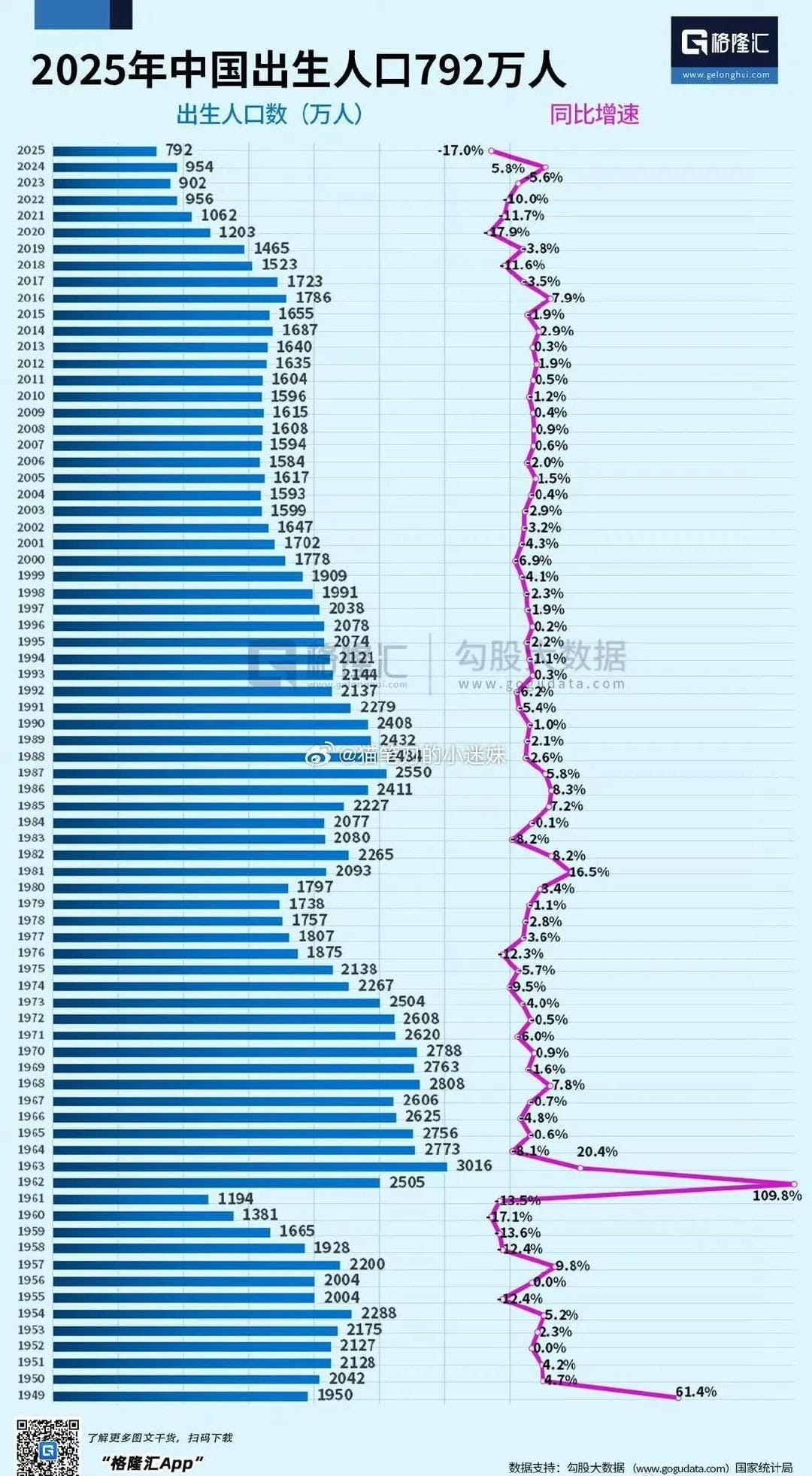
In one year, 7.92 million people are born. Do you know what this means?
Even if all 7.92 million people pay the highest social security (which is actually impossible), it barely maintains the pensions of current retirees within the system.
Let's do some calculations:
- By the end of 2024, the total number of retirees in the country will be about 140 million, among which the retirees from government and public institutions will still be between 22-25 million.
- The upper limit for basic pension insurance contributions for employees is generally 300% of the local average salary, with personal contributions at 8% and employer contributions at 16-20%. Different cities have different maximum monthly contribution bases, roughly translating to a total annual contribution of about 100,000 to 200,000 yuan for individuals and units combined (cities like Beijing, Shanghai, Guangzhou, and Shenzhen may be higher, but the national average is far below this).
- Assuming an extremely optimistic scenario: each person contributes a total of 150,000 to 200,000 yuan per year → 7.92 million newborns' total contribution after reaching adulthood is approximately 120 to 160 billion yuan per year.
- Pension expenditures for retirees within the system (government and public institutions):
- The average monthly pension is about 6,000 to 6,500 yuan (far higher than the 3,200 to 3,300 yuan for enterprise employees).
- 22 million people × average annual of 70,000 to 80,000 yuan ≈ 1.5 to 1.8 trillion yuan per year.
For retirement, one still needs to be self-reliant.
Even if all 7.92 million people pay the highest social security (which is actually impossible), it barely maintains the pensions of current retirees within the system.
Let's do some calculations:
- By the end of 2024, the total number of retirees in the country will be about 140 million, among which the retirees from government and public institutions will still be between 22-25 million.
- The upper limit for basic pension insurance contributions for employees is generally 300% of the local average salary, with personal contributions at 8% and employer contributions at 16-20%. Different cities have different maximum monthly contribution bases, roughly translating to a total annual contribution of about 100,000 to 200,000 yuan for individuals and units combined (cities like Beijing, Shanghai, Guangzhou, and Shenzhen may be higher, but the national average is far below this).
- Assuming an extremely optimistic scenario: each person contributes a total of 150,000 to 200,000 yuan per year → 7.92 million newborns' total contribution after reaching adulthood is approximately 120 to 160 billion yuan per year.
- Pension expenditures for retirees within the system (government and public institutions):
- The average monthly pension is about 6,000 to 6,500 yuan (far higher than the 3,200 to 3,300 yuan for enterprise employees).
- 22 million people × average annual of 70,000 to 80,000 yuan ≈ 1.5 to 1.8 trillion yuan per year.
For retirement, one still needs to be self-reliant.
财经有李
·
--
In one year, 7.92 million people are born. Do you know what this means?
Even if all 7.92 million people pay the highest social security (which is actually impossible), it barely maintains the pensions of current retirees within the system.
Let's do some calculations:
- By the end of 2024, the total number of retirees in the country will be about 140 million, among which the retirees from government and public institutions will still be between 22-25 million.
- The upper limit for basic pension insurance contributions for employees is generally 300% of the local average salary, with personal contributions at 8% and employer contributions at 16-20%. Different cities have different maximum monthly contribution bases, roughly translating to a total annual contribution of about 100,000 to 200,000 yuan for individuals and units combined (cities like Beijing, Shanghai, Guangzhou, and Shenzhen may be higher, but the national average is far below this).
- Assuming an extremely optimistic scenario: each person contributes a total of 150,000 to 200,000 yuan per year → 7.92 million newborns' total contribution after reaching adulthood is approximately 120 to 160 billion yuan per year.
- Pension expenditures for retirees within the system (government and public institutions):
- The average monthly pension is about 6,000 to 6,500 yuan (far higher than the 3,200 to 3,300 yuan for enterprise employees).
- 22 million people × average annual of 70,000 to 80,000 yuan ≈ 1.5 to 1.8 trillion yuan per year.
For retirement, one still needs to be self-reliant.
Even if all 7.92 million people pay the highest social security (which is actually impossible), it barely maintains the pensions of current retirees within the system.
Let's do some calculations:
- By the end of 2024, the total number of retirees in the country will be about 140 million, among which the retirees from government and public institutions will still be between 22-25 million.
- The upper limit for basic pension insurance contributions for employees is generally 300% of the local average salary, with personal contributions at 8% and employer contributions at 16-20%. Different cities have different maximum monthly contribution bases, roughly translating to a total annual contribution of about 100,000 to 200,000 yuan for individuals and units combined (cities like Beijing, Shanghai, Guangzhou, and Shenzhen may be higher, but the national average is far below this).
- Assuming an extremely optimistic scenario: each person contributes a total of 150,000 to 200,000 yuan per year → 7.92 million newborns' total contribution after reaching adulthood is approximately 120 to 160 billion yuan per year.
- Pension expenditures for retirees within the system (government and public institutions):
- The average monthly pension is about 6,000 to 6,500 yuan (far higher than the 3,200 to 3,300 yuan for enterprise employees).
- 22 million people × average annual of 70,000 to 80,000 yuan ≈ 1.5 to 1.8 trillion yuan per year.
For retirement, one still needs to be self-reliant.

芊羽Wing
·
--
What is a Sandwich Attack and MEV Protection?
Recently, Alpha and Chinese meme coins have become popular again, with many friends participating in primary market activities and Alpha trading. I've received numerous reports from friends being sandwiched. Let me explain what a sandwich attack is, how to avoid it, and what MEV protection means.
A sandwich attack (also known as a 'sandwich attack' or 'sandwiching') is a common form of MEV (Maximal Extractable Value) attack. In simple terms, it's a clever arbitrage strategy that exploits transaction ordering.
What is a sandwich attack?
When making large transactions on decentralized exchanges (DEXs), such as PancakeSwap, your transaction first enters the public "mempool" and waits to be packaged into a block. (Commonly referred to as [confirmation], the blockchain needs to mine and broadcast your transaction for confirmation.)
A sandwich attack (also known as a 'sandwich attack' or 'sandwiching') is a common form of MEV (Maximal Extractable Value) attack. In simple terms, it's a clever arbitrage strategy that exploits transaction ordering.
What is a sandwich attack?
When making large transactions on decentralized exchanges (DEXs), such as PancakeSwap, your transaction first enters the public "mempool" and waits to be packaged into a block. (Commonly referred to as [confirmation], the blockchain needs to mine and broadcast your transaction for confirmation.)


Richard Teng
·
--
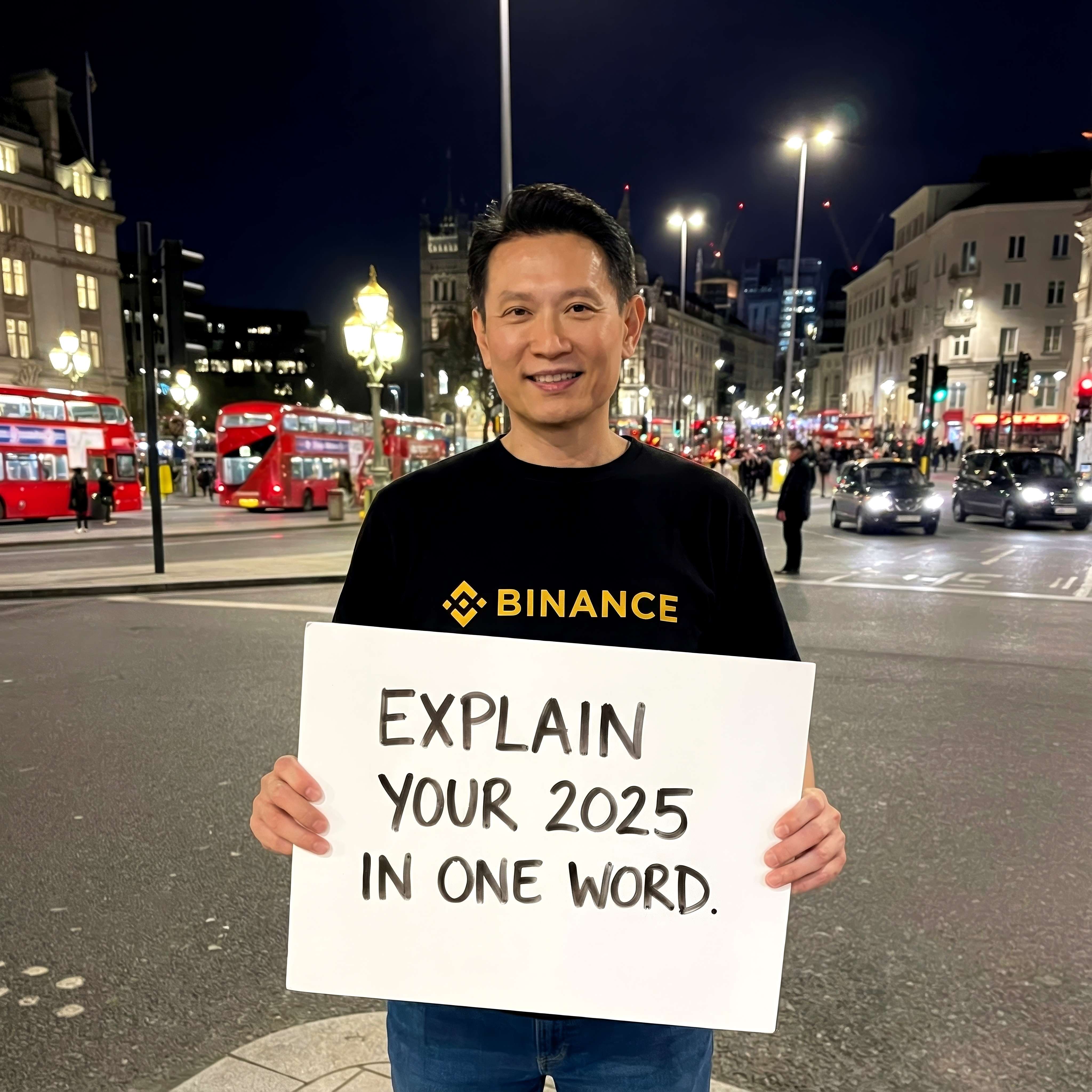
Explain.



Square-Creator-de4fbfde4
·
--
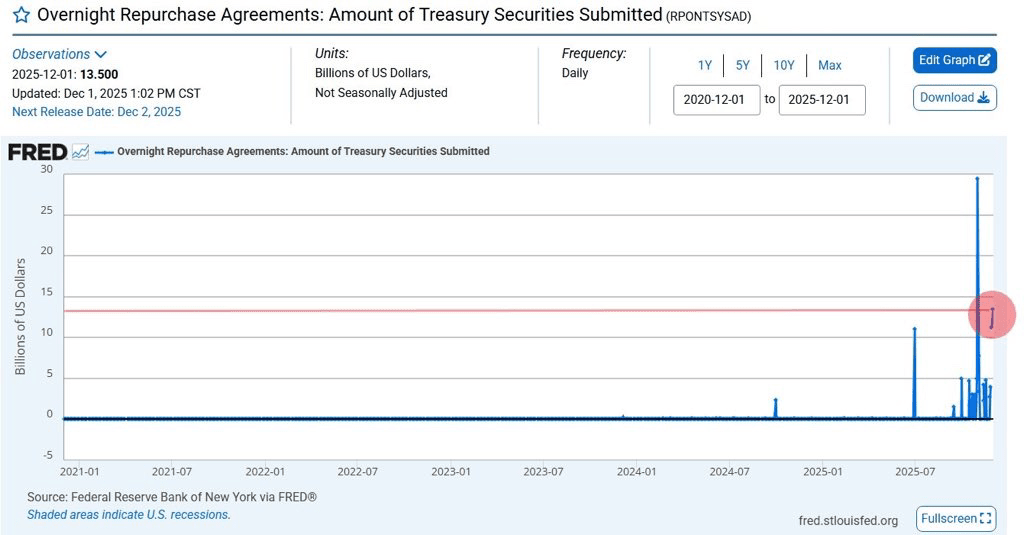
As soon as the market landed, there was a surge in sentiment because today is indeed the day the Federal Reserve officially ends its balance sheet reduction. During the day, the Federal Reserve injected $13.5 billion into the banking system through overnight repurchases, marking the second-largest single-day liquidity injection since the pandemic.
However, these overnight repurchases are not an easing measure but rather a response to the system being drained too quickly, forcing the Federal Reserve to step in for a 'liquidity injection,' which is a one-time, passive liquidity fill. The core variable that truly determines whether the short end will continue to tighten is still the SLR, which has not been relaxed. Banks still cannot expand their balance sheets, cannot significantly absorb U.S. Treasuries, and are unable to handle the shocks brought by fiscal replenishments.
Overall, this round of upward movement is more of a sentiment reaction to the end of balance sheet reduction rather than an improvement in system liquidity due to the $13.5 billion repurchase funds. Whether the short end of the dollar can truly ease depends not on the overnight repurchases but on whether the SLR will be adjusted. If the SLR continues to maintain its current hard constraints, then this passive liquidity filling will repeatedly occur, and the market will oscillate between being drained and being replenished, without forming sustained monetary easing. $ETH $BTC $SOL #BinanceBlockchainWeek #加密市场回调
However, these overnight repurchases are not an easing measure but rather a response to the system being drained too quickly, forcing the Federal Reserve to step in for a 'liquidity injection,' which is a one-time, passive liquidity fill. The core variable that truly determines whether the short end will continue to tighten is still the SLR, which has not been relaxed. Banks still cannot expand their balance sheets, cannot significantly absorb U.S. Treasuries, and are unable to handle the shocks brought by fiscal replenishments.
Overall, this round of upward movement is more of a sentiment reaction to the end of balance sheet reduction rather than an improvement in system liquidity due to the $13.5 billion repurchase funds. Whether the short end of the dollar can truly ease depends not on the overnight repurchases but on whether the SLR will be adjusted. If the SLR continues to maintain its current hard constraints, then this passive liquidity filling will repeatedly occur, and the market will oscillate between being drained and being replenished, without forming sustained monetary easing. $ETH $BTC $SOL #BinanceBlockchainWeek #加密市场回调

Cathy姐玩游戏
·
--
Watching the half-hour gameplay demonstration of miHoYo's new game Vansapura is quite enjoyable.
In addition to the city skyline where you can see the kitchen set of Shanghai, the street scenes are all reminiscent of Singapore. Following the game character in outdoor parkour gives a sense of being on the upper deck of a double-decker bus touring Singapore.
Image 2: The Pan Island Expressway heading west towards MacRitchie Reservoir near the turn at Bef Thomson Flyover.
Image 3: The drop-off point for private cars near the entrance to the Orchid Garden at the Singapore Botanic Gardens—now that a new road has been built, this parking spot has been removed. The red ambulance next to it is also a local version from the Singapore Civil Defence Force.
Image 4: The narrow lane leading from Buona Vista to the football field near Tanglin School.
Image 5: The terraced house in Chinatown.
Image 6 and 7: The sloped overbridges in both the commercial and residential areas, even the nearby covered bus stop follows the sloped design, and the driving lane markings on the road are also sloped.
Image 8: A covered, non-air-conditioned hawker center coffee shop.
Image 9: St. Andrew’s Cathedral next to City Hall.
The Singapore Tourism Board should really award miHoYo a “National Heritage Promotion Award”!
#mihoyo
#vansapura
#hoyoverse
In addition to the city skyline where you can see the kitchen set of Shanghai, the street scenes are all reminiscent of Singapore. Following the game character in outdoor parkour gives a sense of being on the upper deck of a double-decker bus touring Singapore.
Image 2: The Pan Island Expressway heading west towards MacRitchie Reservoir near the turn at Bef Thomson Flyover.
Image 3: The drop-off point for private cars near the entrance to the Orchid Garden at the Singapore Botanic Gardens—now that a new road has been built, this parking spot has been removed. The red ambulance next to it is also a local version from the Singapore Civil Defence Force.
Image 4: The narrow lane leading from Buona Vista to the football field near Tanglin School.
Image 5: The terraced house in Chinatown.
Image 6 and 7: The sloped overbridges in both the commercial and residential areas, even the nearby covered bus stop follows the sloped design, and the driving lane markings on the road are also sloped.
Image 8: A covered, non-air-conditioned hawker center coffee shop.
Image 9: St. Andrew’s Cathedral next to City Hall.
The Singapore Tourism Board should really award miHoYo a “National Heritage Promotion Award”!
#mihoyo
#vansapura
#hoyoverse


Max峻佑先生
·
--
🔮【$FIL Future Year Full Perspective: Is the Storage Leader About to Take Off? I'll Analyze It All for You!】
✅ Core Advantages Overview:
1️⃣ True leader in the storage track, position stable, has left AR further behind
2️⃣ Over 3.7 million holding addresses, strong community foundation
3️⃣ Total supply constant at 2 billion, final 60 million unlocking in the next 11 months (project/investor portion)
4️⃣ Current circulation 793 million, staking 110 million, burning 41 million, actual circulation about 793 million
5️⃣ Nodes stable around 1130, healthy network
🏦 Institutional Trends:
· Grayscale holds 2.21 million coins, and FIL accounts for 13.4% in its AI fund, continuously increasing positions
· More institutional funds are quietly laying the groundwork
⚡ Ecological Status:
· Project party continues construction (and selling coins)
· Early storage was 95% junk data, now real storage ratio is rising
· Miner profits are squeezed, after a wave of exits, have stabilized for nearly half a year
· Coin price has gradually stabilized in the 2-3U range from severe inflation
🚀 Key Outlook for 2025-2026:
· AI explosion imminent, storage demand surges, hard disk orders have been booked until 2026
· Massive influx of funds must flow to core infrastructures like FIL
· Initial price surge was due to institutional accumulation, subsequent suppression is for consolidation + price pressure, facilitating real demand side entry
💎 My Judgment:
In 11 months, daily new FIL will only be 60,000 coins/day, while global liquidity will loosen next year, it can't be a bear market!
FIL below 2U? It might be the last chance to get on board.
📌 Summary: Storage leader + AI wave + Deflation expectations + Institutional accumulation = Countdown to FIL explosion!
#加密市场回调
✅ Core Advantages Overview:
1️⃣ True leader in the storage track, position stable, has left AR further behind
2️⃣ Over 3.7 million holding addresses, strong community foundation
3️⃣ Total supply constant at 2 billion, final 60 million unlocking in the next 11 months (project/investor portion)
4️⃣ Current circulation 793 million, staking 110 million, burning 41 million, actual circulation about 793 million
5️⃣ Nodes stable around 1130, healthy network
🏦 Institutional Trends:
· Grayscale holds 2.21 million coins, and FIL accounts for 13.4% in its AI fund, continuously increasing positions
· More institutional funds are quietly laying the groundwork
⚡ Ecological Status:
· Project party continues construction (and selling coins)
· Early storage was 95% junk data, now real storage ratio is rising
· Miner profits are squeezed, after a wave of exits, have stabilized for nearly half a year
· Coin price has gradually stabilized in the 2-3U range from severe inflation
🚀 Key Outlook for 2025-2026:
· AI explosion imminent, storage demand surges, hard disk orders have been booked until 2026
· Massive influx of funds must flow to core infrastructures like FIL
· Initial price surge was due to institutional accumulation, subsequent suppression is for consolidation + price pressure, facilitating real demand side entry
💎 My Judgment:
In 11 months, daily new FIL will only be 60,000 coins/day, while global liquidity will loosen next year, it can't be a bear market!
FIL below 2U? It might be the last chance to get on board.
📌 Summary: Storage leader + AI wave + Deflation expectations + Institutional accumulation = Countdown to FIL explosion!
#加密市场回调



金泽BTC
·
--
Buffett has retired, and the US stock market needs a new investment guru to emerge. So who will be the next investment god?

Quoted content has been removed

仓又涨
·
--
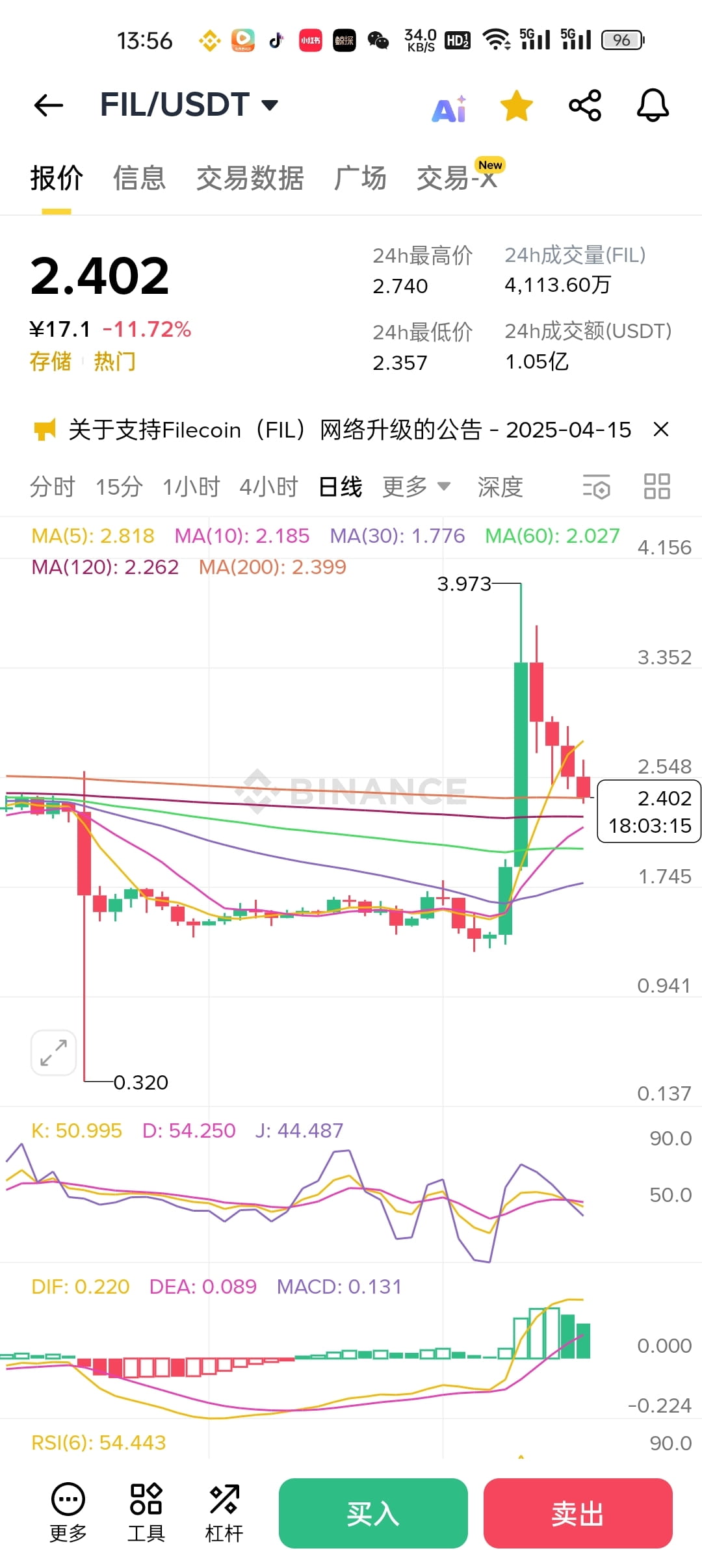
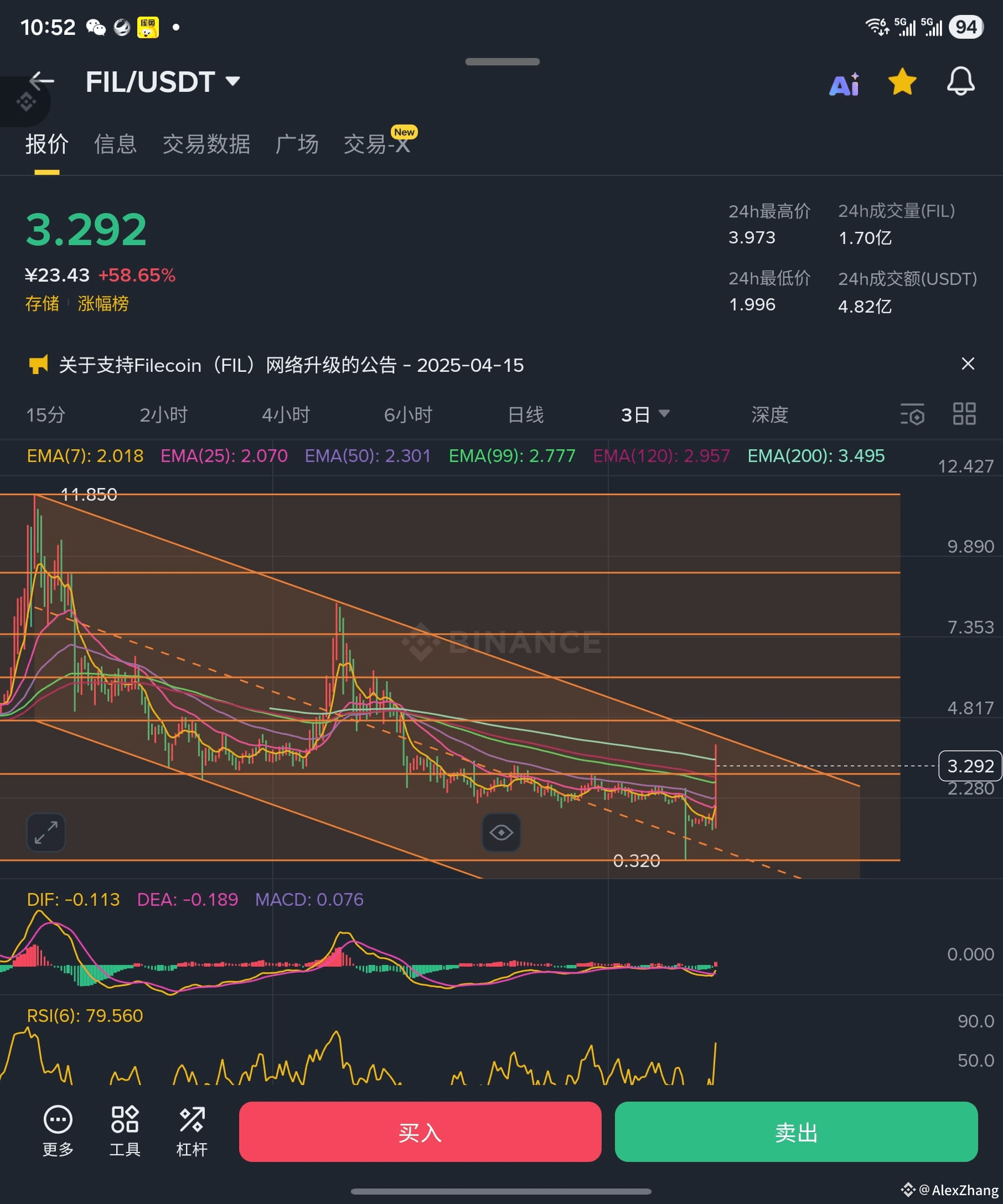
Bullish$FIL Extreme test, the bears are struggling to continue, the bulls are defending the 200 bull-bear line. As long as the 200-day moving average is not broken, the bullish arrangement is still in place, and the bulls will continue to launch attacks. If you are bullish on FIL, this price is the most suitable for entry.

X金泉
·
--
Heavenly King: Heavenly Death
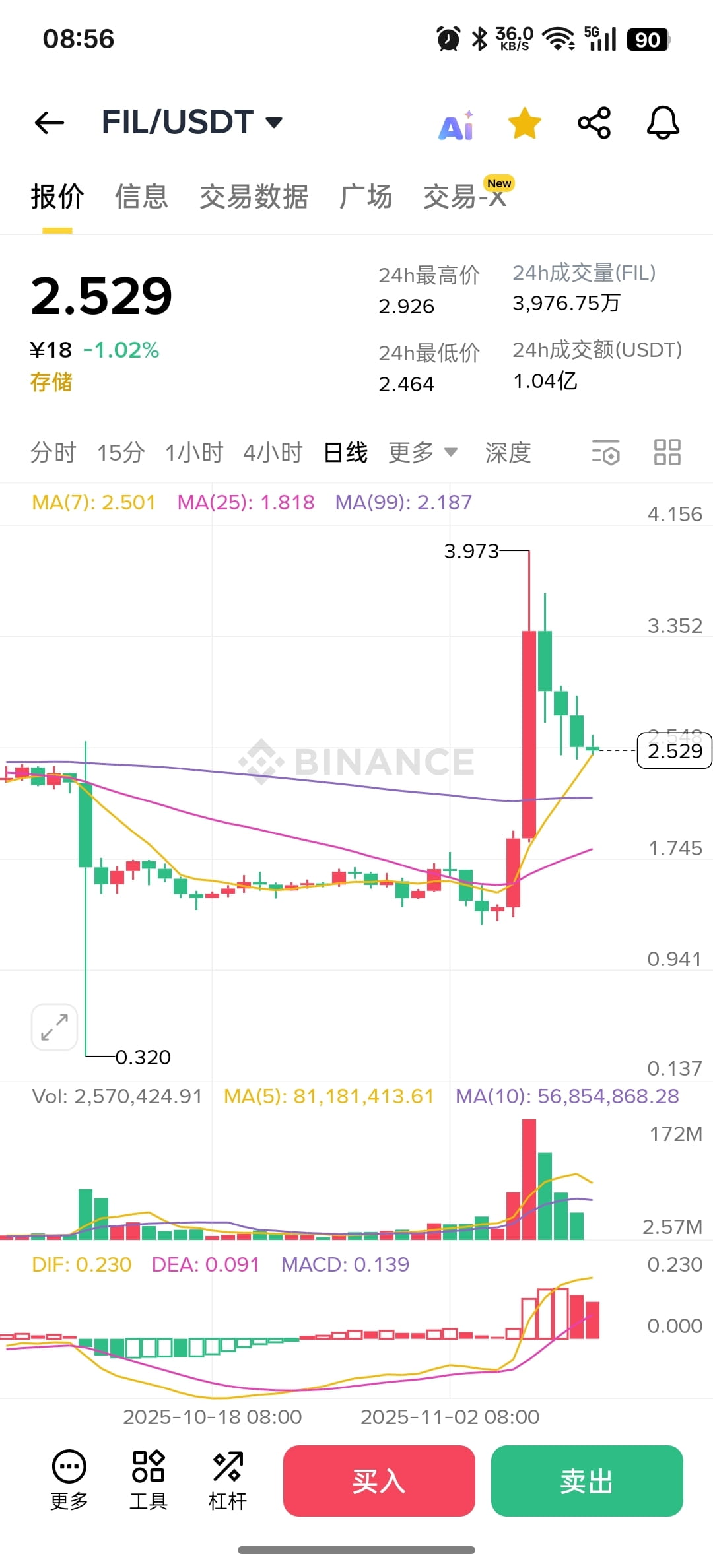
$FIL again "plunged": just as it surged high, it crashed, and retail investors were trapped the moment they entered the market?
Just touched nearly 4 dollars for FIL, but within two days it fell back to 2.5 dollars—this wave of "surge and drop" caught those chasing the rise off guard.
Within 24 hours, it plummeted nearly 34% from a high of 3.926, yet the trading volume surged to 39.76 million, with a transaction amount breaking 100 million USDT. On one side, there was heavy selling pressure, while on the other, the MA moving average just turned and was beaten back to its original form, even the MACD’s red bars didn’t have time to elongate.
Someone joked: "Just thinking about 'bull return', and then turned around to get pressed down and rubbed on the ground"—this wave of movement is reminiscent of the "flash market" in the crypto market: rising quickly, falling even harder, leaving retail investors only the test of speed in "catching the falling knife". #Strategy增持比特币

今生的任务
·
--
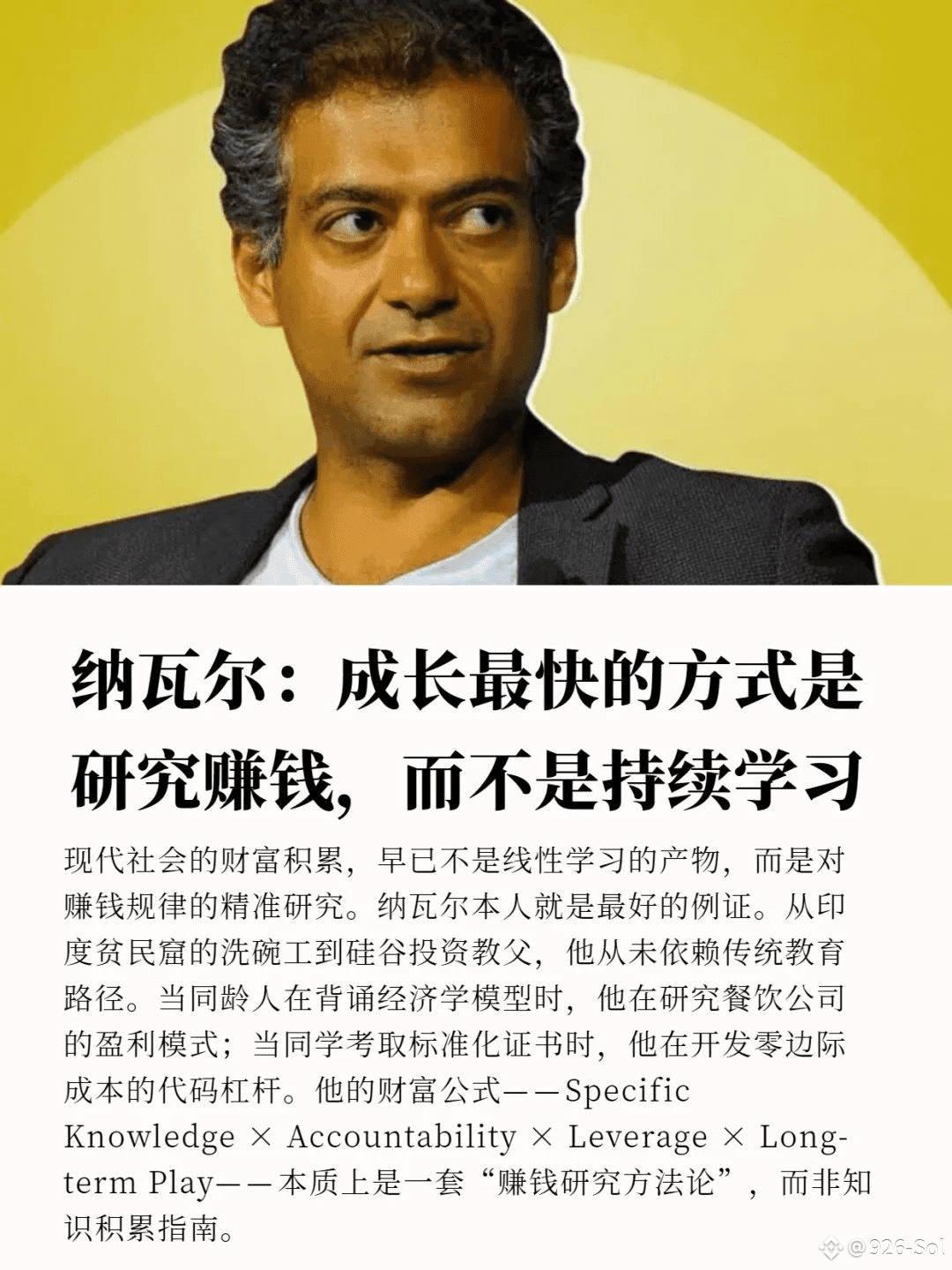
Since I came to the crypto world, I don't enjoy my meals anymore. I haven't slept well for a few days since I arrived; I wake up and just stare at the numbers. Then I see a bunch of people in the square saying how much money they've made. It feels like they're picking up money.

小宸owo
·
--
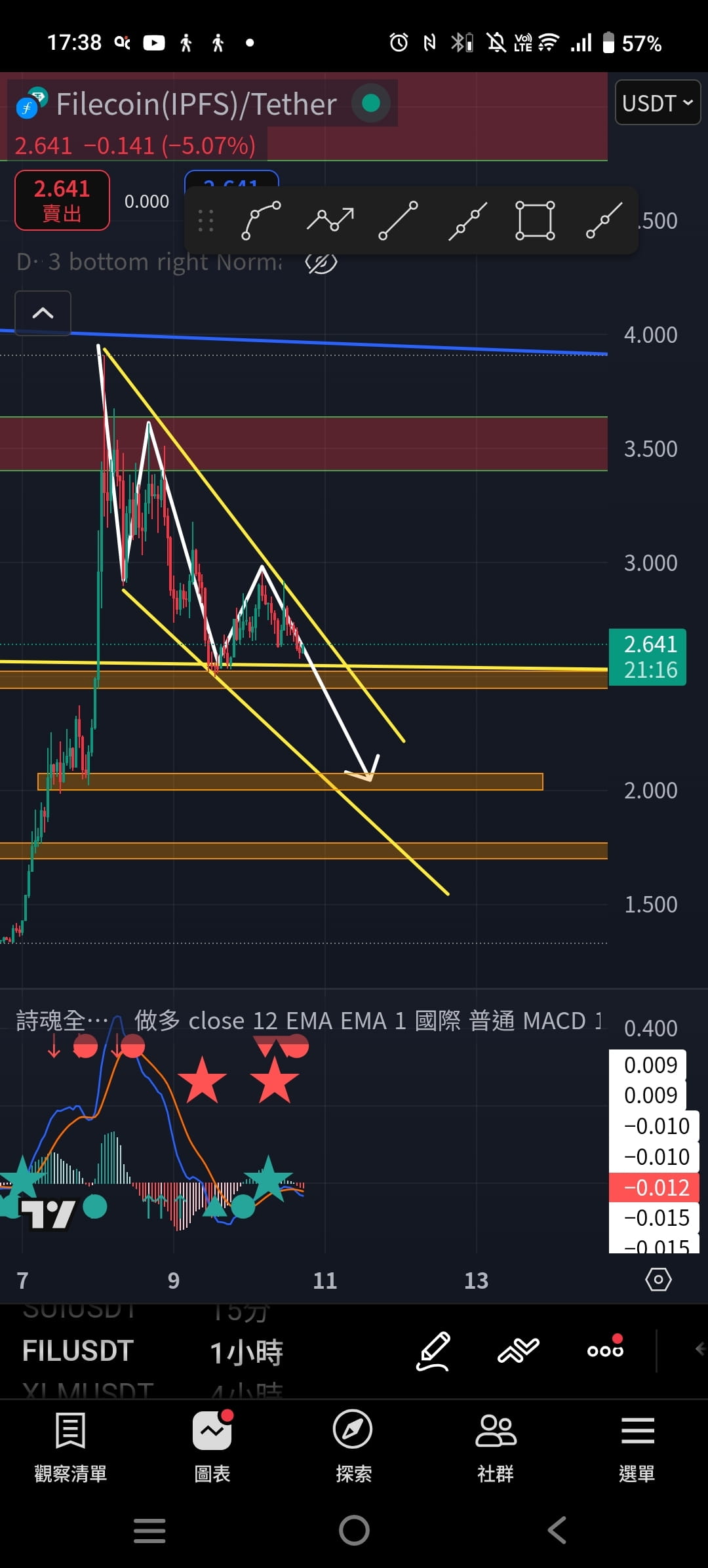
Bullish$FIL The current form is a descending wedge. If it breaks below 2.47, I will start buying the spot again at dips. 2.062 and 1.763 are good entry points for spot purchases. If there is a down spike with high volume, it is a good bullish signal. Those who like to trade contracts can pay attention to the price behavior at these two levels for a rebound.
炎炎之日
·
--
Crazy! Grayscale buying FIL at $90 and getting stuck, actually sweeping up 1.75 million pieces to reduce the average cost to $11, and ETH's upgrade is also pushing for $10,000?
Who would have thought that the giant whale Grayscale would 'add positions after getting stuck'? After being stuck at the high of $90 for FIL, it not only didn't cut losses, but instead aggressively bottom-fished in the bear market: 32 increases in 2023, swallowing 1.75 million FIL, reducing the average holding cost to $11! Now holding over 2 million pieces, accounting for 1% of the circulating supply, this operation has shocked retail investors who 'lie flat' at single-digit FIL prices—turns out the giant whale never guesses the low point when bottom fishing, just waits for certainty.
At that time, FIL dropped from its high to single digits, stagnating for more than a year, community faith collapsed, and cutting losses became the norm. But Grayscale went against the trend: not betting on 'when it hits the bottom', just waiting for 'bottom confirmation'—when assets do not make new lows and enter a range, it adds positions in batches. This contrasts sharply with retail investors who 'chase up and kill down, wanting to catch the very bottom', and hides the giant whale's right-side trading logic: not greedy for short-term fluctuations, only making money from trends.
The more explosive opportunities are ahead: ETH will welcome an 'epic upgrade' on December 3, with speed increased by 500% and gas fees cut in half, completely solving the 'expensive congestion' pain point, leading to a qualitative change in on-chain experience. It should be noted that FIL was wildly traded just by one speed upgrade, and ETH's upgrade impact is far greater than the former.
Trump's son has publicly expressed optimism, stating ETH's end-of-year target is $8,000-$10,000, and market expectations are high. Looking back at the crypto market, the combination of 'whale layout + core upgrade + celebrity endorsement' often gives rise to big trends.
Now, don't hesitate; retail investors always regret after the price rises, while smart money is already following Grayscale's lead. Keep a close eye on FIL, which Grayscale heavily invests in, and also seize the ETH upgrade dividends. Top-tier altcoins can be prearranged around the 'upgrade industrial chain'—big opportunities in crypto are always reserved for those who understand whale operations and take action early. @Square-Creator-5ab361917

Log in to explore more content