
今日AI头条
1.5k Posts

今日AI头条
Report
Block User
🔰掌握一手AI资讯,实时预警币价动态

BNB Holder
Frequent Trader
5.5 Years
10 Following
139 Followers
97 Liked
Posts
·
--
See translation
Anthropic发布AI撰写的「VP≠VNP」论文及Lean形式化,称尚未经人类数学家核验
Anthropic 11 月 23 日在其 GitHub 仓库 formal-math 中发布 vp-vnp 目录,内含论文《VP ≠ VNP over every field》及相应的 Lean 4 形式化证明,论文作者标注为 Claude(Anthropic)。仓库介绍称,该结果由内部研究用 Claude 模型发现,论文和形式化均由人工智能模型撰写,尚无人类数学家核验过这一证明。仓库并将该工作定位为研究材料,表示不会维护,也不接受外部贡献。
根据仓库说明,该论文声称:在任意域上,计算哈密顿回路多项式的电路,以及在特征不为 2 时计算矩阵积和式的电路,对所有足够大的 m,门数都需超过 \( m^{c(\log m)^{1/3}} \),近似电路同样如此。由此得到代数复杂度类 VP 是 VNP 的真子集,且 VNP 不包含于 VP 的闭包中。仓库明确表示,这一结果并不解决 P 与 NP 问题。仓库还提醒,Lean 会核验形式化文件中的证明步骤,但不会自动核验这些陈述是否与论文主张完全一致。
$ANT
你怎么看?👇
83
·
--
Dario Amodei sells about 3.38 million shares in Anthropic IPO, cashing out approximately $280 million
On November 24, according to the latest SEC Form 4 filing disclosed on the 23rd, Anthropic (ANT) CEO Dario Amodei sold 3,378,378 shares of Class A stock to underwriters in the company’s IPO on November 20 at $83 per share, for a total of approximately $280.4 million. The sale was part of the IPO, not a sell-off on the secondary market.
The sale accounted for only about 1.4% of his holdings. After the transaction, Amodei still directly holds approximately 202.8 million shares and another 35.93 million shares through a trust, worth about $20 billion at the IPO price. Anthropic’s other six co-founders also each sold the same number of shares in the IPO.
$ANT
What do you think? 👇
369
·
--
Jensen Huang: If I were NVIDIA CEO again, I’d do better
On November 24, Jensen Huang said, “If I were NVIDIA CEO again, I’d do better.”
An earlier video shared by employees showed Huang returning to NVIDIA headquarters, where he was warmly welcomed by employees. Huang said, “Thank you to the employees for giving me a ‘second chance.’” He would become a better CEO.
$NVDA
What do you think?👇
70
·
--
Anthropic stock options begin trading, with brisk activity
On November 24, Anthropic stock options officially began trading on Monday, with brisk activity, giving investors a new way to bet on the company’s future prospects.
Data from options analytics firm Mercury Alerts show that about 160,000 Anthropic options contracts changed hands in the first hour of trading, placing them among the 25 most actively traded underlyings in Monday’s options market. By noon Eastern Time (17:00 GMT), about 270,000 contracts had changed hands.
Mercury Alerts founder Harmeet Goindi said: “Anthropic options saw heavy but balanced trading early in the session: the volume of calls and puts was split evenly, and buying and selling pressure was roughly balanced.” He noted that early options trading showed no clear directional bias.
Based on the current trading pace, Mercury Alerts data indicate that Anthropic options could see a full-day volume of 550,000 contracts. While substantial, that would still be well below the record 1.8 million contracts traded on the first day of SpaceX options trading in June.
Interactive Brokers Chief Strategist Steve Sosnick said: “We haven’t seen the frenzied speculation in deep out-of-the-money call strikes that we saw when SpaceX options first launched. That may be because Anthropic lacks the ‘Musk effect’—almost anything associated with Elon Musk, SpaceX’s CEO, can spark a frenzy of enthusiasm in the market.”
$ANT
What do you think? 👇
SPCX+3.02%
IBKRUS+7.93%
154
·
--
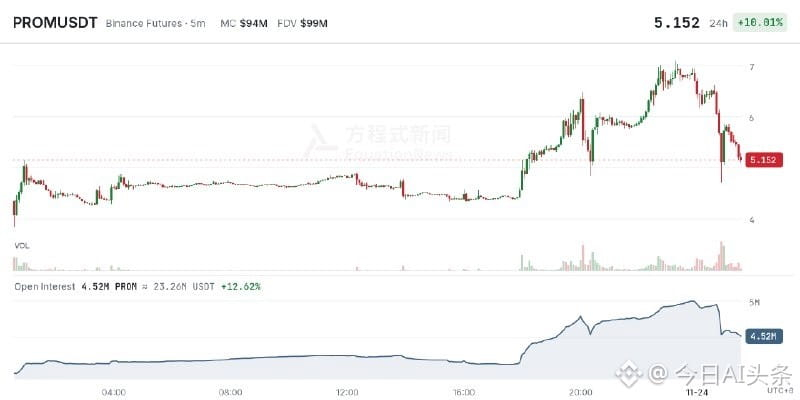
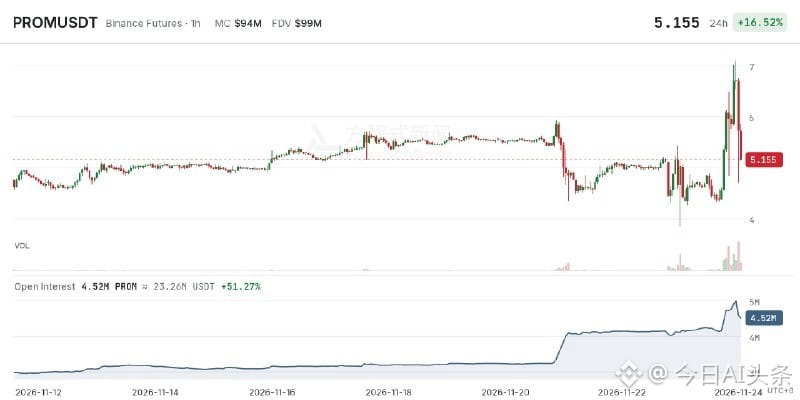
🔴 Price and OI anomaly #PROM
🇨🇳 PROMUSDT Longs unwinding: Binance open interest -8.2%, price down 19.8% in the past 1 hour, open interest $23.3M, OI/market cap 24.8%, 24h +8.9%
🇺🇸 PROMUSDT Longs unwinding: Binance OI -8.2%, price -19.8% in the past 1 hour, OI $23.3M, OI/market cap 24.8%, 24h +8.9%
💵 24h Vol $208M · Funding -0.0080%/4h
💰 MC: PROM $94M
🕒 2026-11-24 01:31:07 (UTC+8)
19
·
--
Musk admits his own AI is falling behind; renting out computing power is more profitable
The New York Times, citing several people familiar with the matter, reports that Elon Musk’s SpaceX (SPCX.O) is facing a dilemma in developing its AI business: its homegrown AI product Grok is lagging behind competitors, while renting computing power to companies such as Anthropic (ANT.O) is proving more profitable.
According to the report, the computing-power rental agreements SpaceX has reached with Anthropic and Google (GOOG.O) are worth approximately $3.1 billion and $800 million per month, respectively, and Anthropic has become the largest customer of SpaceX’s AI business, SpaceXSI. SpaceXSI currently contributes more than half of the company’s revenue, but the contracts allow either party to terminate them with 90 days’ advance notice.
People familiar with the matter say Musk is dissatisfied with the progress of his company’s AI development. He has repeatedly asked engineers to demonstrate the value generated by GPU resources and stressed that the revenue generated by each GPU matters more than model performance test scores. As pressure to turn a profit has increased following SpaceX’s public listing, the company has scaled back some AI projects, including shutting down its AI virtual-companion project, reallocating research and development resources for DigitalOptimus, and disbanding the roughly 60-person GrokImagine team.
Morningstar analyst Nicholas Owens noted that SpaceX currently earns far more from renting out computing power than from its Grok business, and it remains unclear whether its homegrown AI products can deliver higher returns.
$ANT
What do you think? 👇
890
·
--
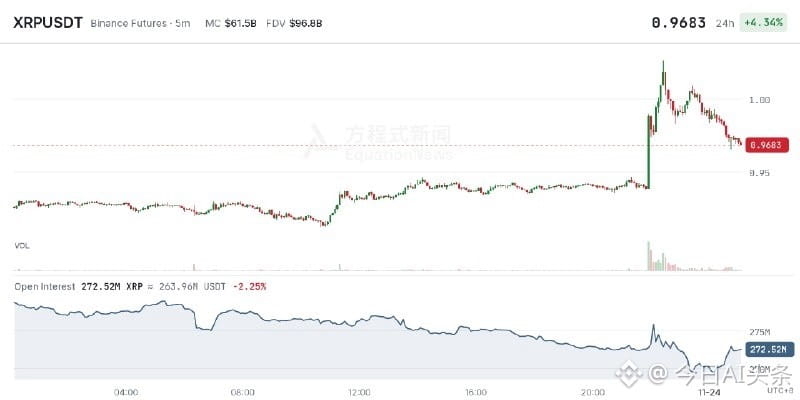
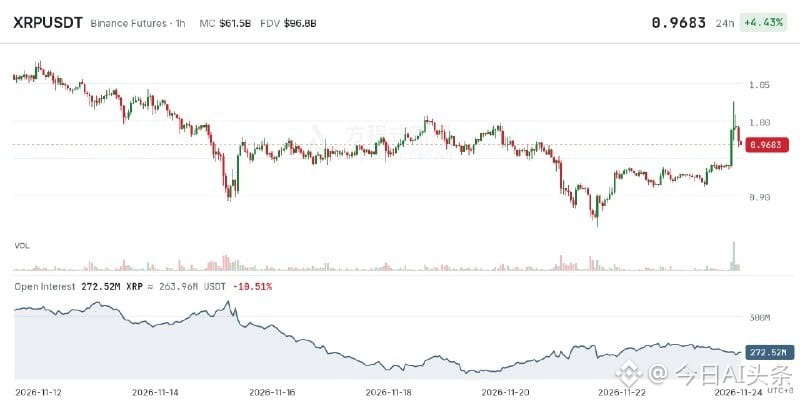
🔴 Price and OI Anomaly #XRP
🇨🇳 XRPUSDT Shorts entering: Binance open interest +1.1%, price down 2.2% in the past 1 hour, open interest $264.0M, OI/market cap 0.4%, 24h +4.4%
🇺🇸 XRPUSDT Shorts building: Binance OI +1.1%, price -2.2% in the past 1 hour, OI $264.0M, OI/market cap 0.4%, 24h +4.4%
💵 24h Vol $796M · Funding +0.0025%/8h
💰 MC: XRP $61.5B
🕒 2026-11-24 01:07:07 (UTC+8)
2
·
--
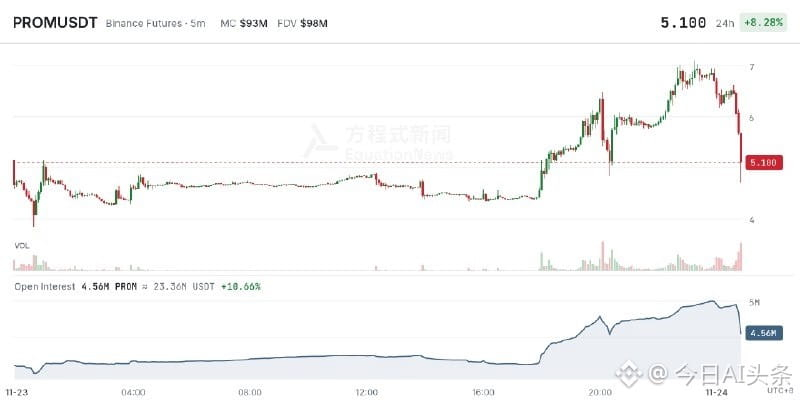
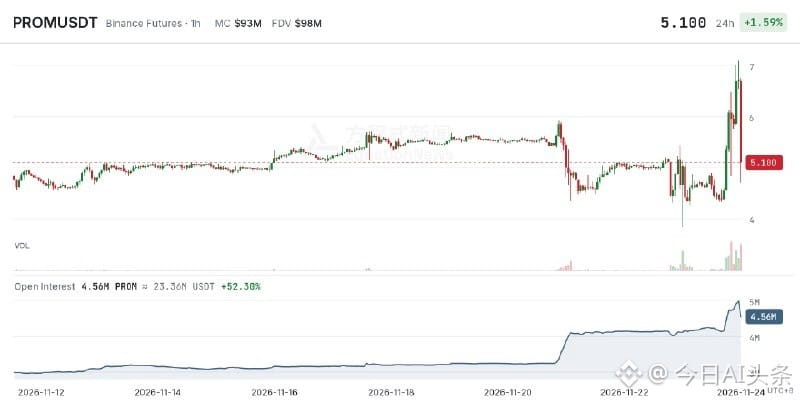
🔴 Price and OI Anomalies #PROM
🇨🇳 PROMUSDT longs unwinding: Binance open interest -8.8%, price fell 25.3% in the past 1 hour, open interest $23.4M, OI/market cap 25.1%, 24h +9.6%
🇺🇸 PROMUSDT Longs unwinding: Binance OI -8.8%, price -25.3% in the past 1 hour, OI $23.4M, OI/market cap 25.1%, 24h +9.6%
💵 24h Vol $195M · Funding -0.0015%/4h
💰 MC: PROM $93M
🕒 2026-11-24 00:53:07 (UTC+8)
14
·
--
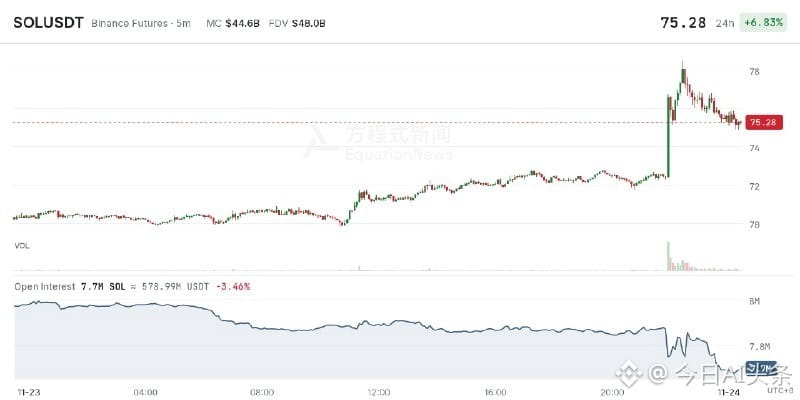
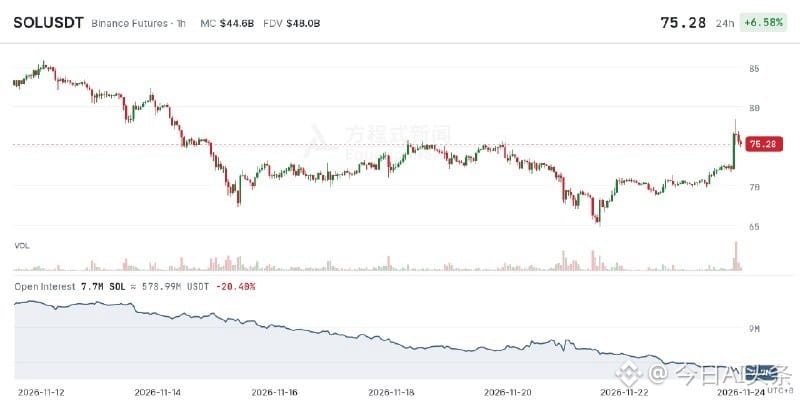
🔴 Price & OI Anomaly #SOL
🇨🇳 SOLUSDT Longs closing: Binance open interest -0.8%, price fell 2.0% in the past 1 hour, open interest $579.0M, OI/market cap 1.3%, 24h +6.8%
🇺🇸 SOLUSDT Longs unwinding: Binance OI -0.8%, price -2.0% in the past 1 hour, OI $579.0M, OI/market cap 1.3%, 24h +6.8%
💵 24h Vol $1.8B · Funding +0.0029%/8h
💰 MC: SOL $44.6B
🕒 2026-11-24 00:27:07 (UTC+8)
3
·
--
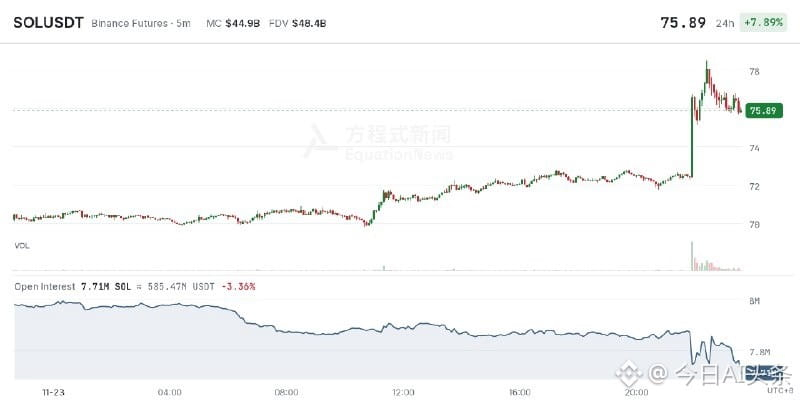
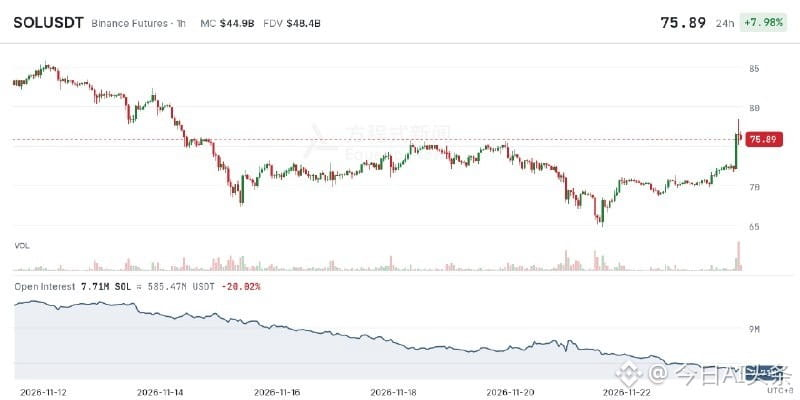
🔴 Price & OI movements #SOL
🇨🇳 SOLUSDT Longs unwinding: Binance open interest -1.0%, price down 2.1% in the past 1 hour, open interest $585.5M, OI/market cap 1.3%, 24h +7.9%
🇺🇸 SOLUSDT Longs unwinding: Binance OI -1.0%, price -2.1% in the past 1 hour, OI $585.5M, OI/market cap 1.3%, 24h +7.9%
💵 24h Vol $1.7B · Funding +0.0020%/8h
💰 MC: SOL $44.9B
🕒 2026-11-23 23:38:07 (UTC+8)
7
·
--
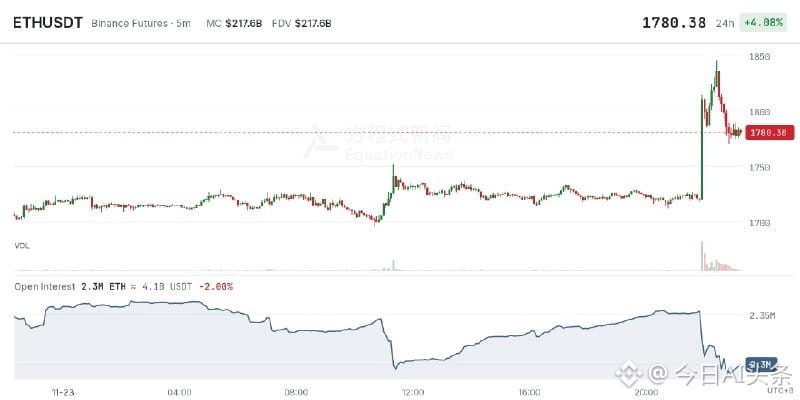
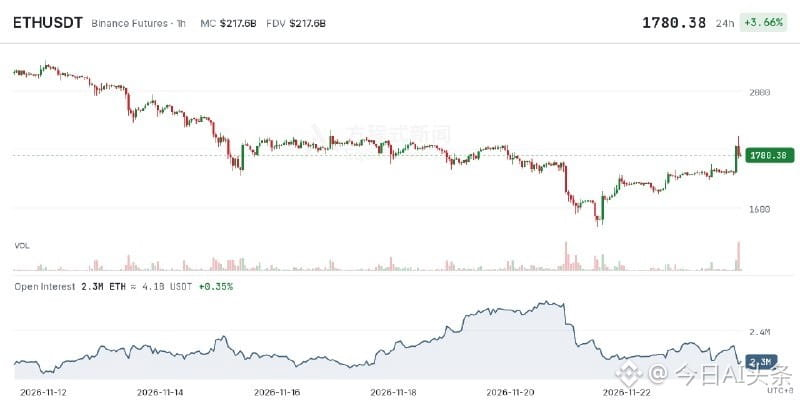
🔴 Price & OI Moves #ETH
🇨🇳 ETHUSDT longs unwinding: Binance open interest -0.8%, price down 2.1% in the past 1 hour, open interest $4095.6M, OI/market cap 1.9%, 24h +4.1%
🇺🇸 ETHUSDT Longs unwinding: Binance OI -0.8%, price -2.1% in the past 1 hour, OI $4095.6M, OI/market cap 1.9%, 24h +4.1%
💵 24h Vol $9.0B · Funding +0.0021%/8h
💰 MC: ETH $217.7B
🕒 2026-11-23 23:18:07 (UTC+8)
6
·
--
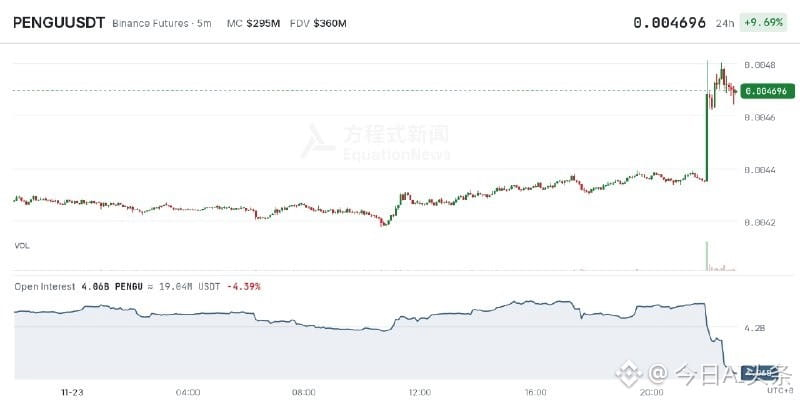
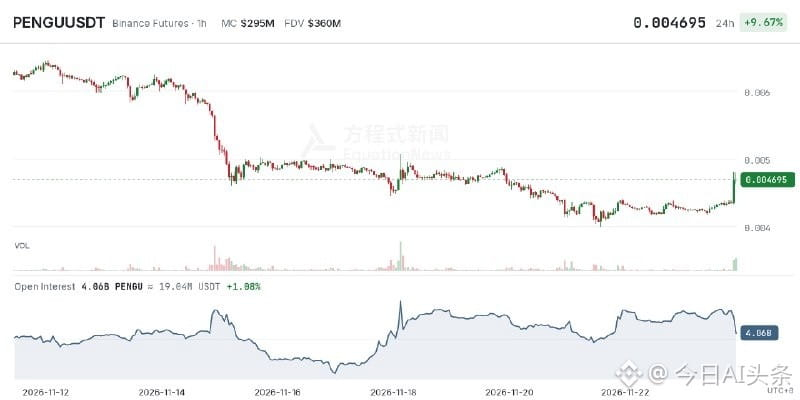
🟢 Price & OI Anomaly #PENGU
🇨🇳 PENGUUSDT Short covering: Binance open interest -5.0%, price rose 6.6% in the past 1 hour, open interest $19.0M, OI/market cap 6.5%, 24h +9.5%
🇺🇸 PENGUUSDT Short covering: Binance OI -5.0%, price +6.6% in the past 1 hour, OI $19.0M, OI/market cap 6.5%, 24h +9.5%
💵 24h Vol $29M · Funding +0.0050%/4h
💰 MC: PENGU $295M
🕒 2026-11-23 22:56:07 (UTC+8)
6
·
--
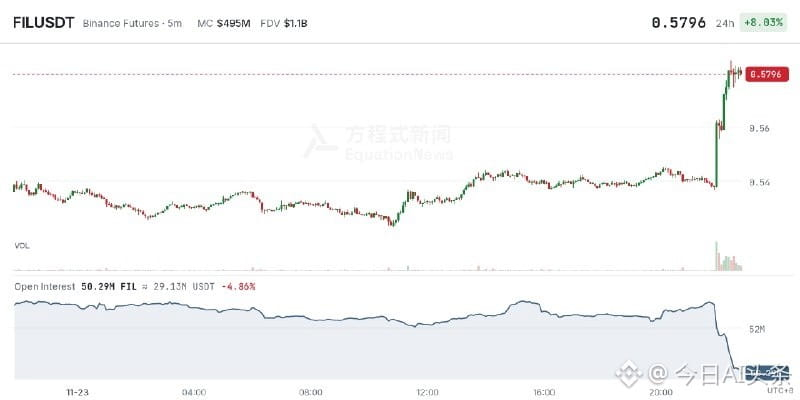
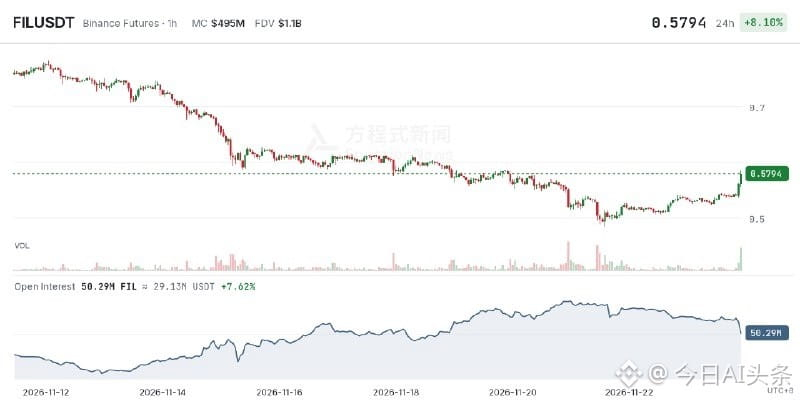
🟢 Price & OI Anomaly #FIL
🇨🇳 FILUSDT short covering: Binance open interest -5.0%, price up 7.6% in the past 1 hour, open interest $29.1M, OI/market cap 5.9%, 24h +7.9%
🇺🇸 FILUSDT Short covering: Binance OI -5.0%, price +7.6% in the past 1 hour, OI $29.1M, OI/market cap 5.9%, 24h +7.9%
💵 24h Vol $52M · Funding +0.0054%/8h
💰 MC: FIL $495M
🕒 2026-11-23 22:48:07 (UTC+8)
10
·
--
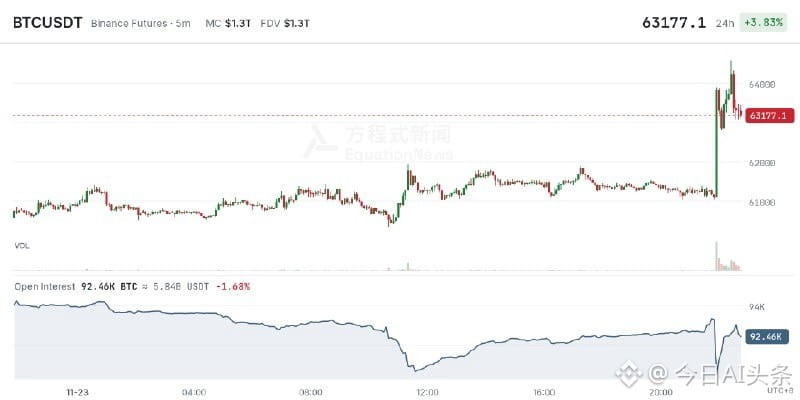
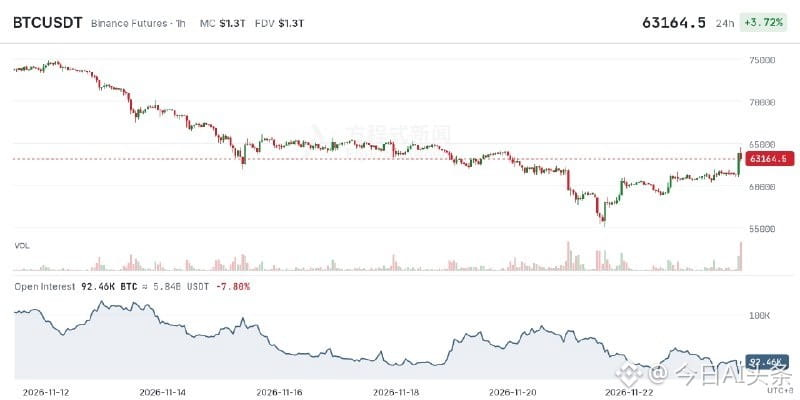
🟢 Price and OI Anomaly #BTC
🇨🇳 BTCUSDT Short covering: Binance open interest -0.8%, price up 3.1% in the past 1 hour, open interest $5.8424B, OI/market cap 0.5%, 24h +3.8%
🇺🇸 BTCUSDT Short covering: Binance OI -0.8%, price +3.1% in the past 1 hour, OI $5842.4M, OI/market cap 0.5%, 24h +3.8%
💵 24h Vol $15.4B · Funding +0.0063%/8h
💰 MC: BTC $1.3T
🕒 2026-11-23 22:47:07 (UTC+8)
1
·
--
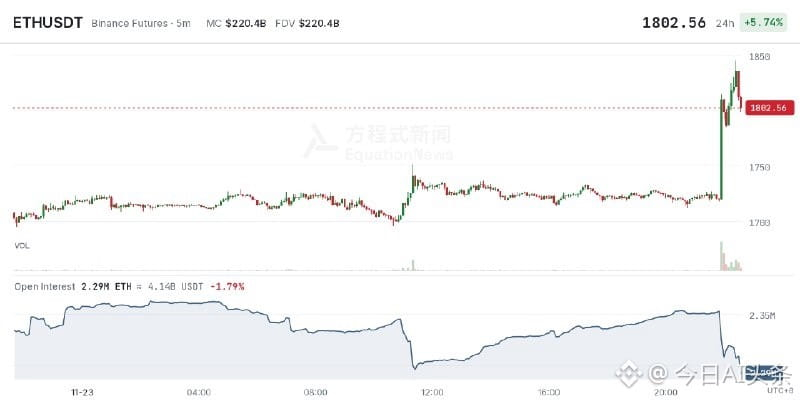
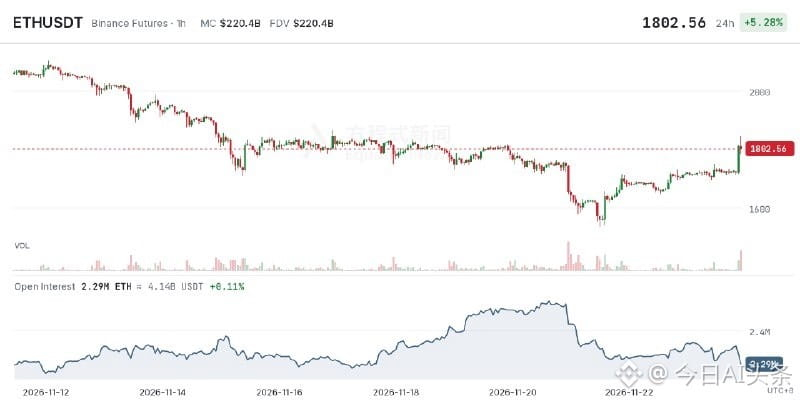
🟢 Price & OI Movement #ETH
🇨🇳 ETHUSDT Short covering: Binance open interest -2.5%, price up 4.8% in the past 1 hour, open interest $4,137.4M, OI/market cap 1.9%, 24h +6.0%
🇺🇸 ETHUSDT Short covering: Binance OI -2.5%, price +4.8% in the past 1 hour, OI $4137.4M, OI/market cap 1.9%, 24h +6.0%
💵 24h Vol $8.2B · Funding +0.0032%/8h
💰 MC: ETH $220.5B
🕒 2026-11-23 22:36:08 (UTC+8)
·
--
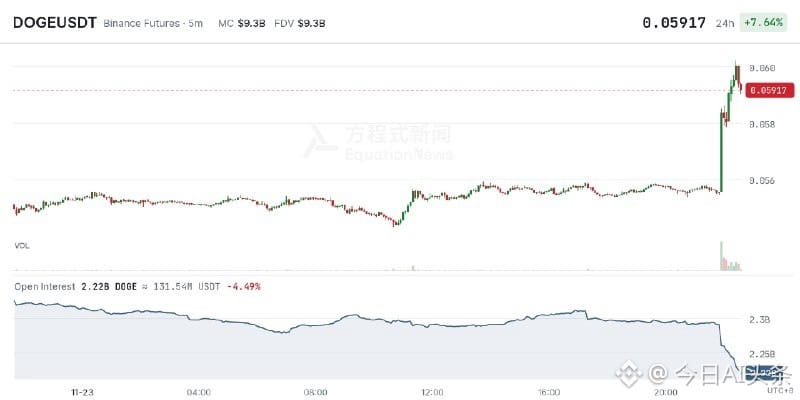
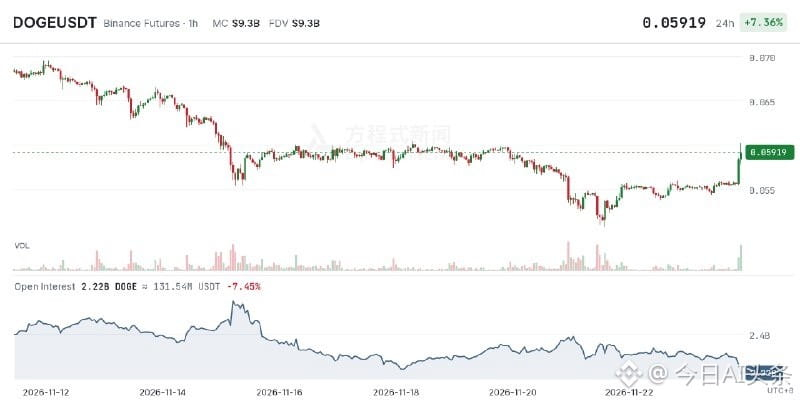
🟢 Price & OI Anomaly #DOGE
🇨🇳 DOGEUSDT Short covering: Binance open interest -3.2%, price up 6.5% in the past 1 hour, open interest $131.5M, OI/market cap 1.4%, 24h +7.8%
🇺🇸 DOGEUSDT Short covering: Binance OI -3.2%, price +6.5% in the past 1 hour, OI $131.5M, OI/market cap 1.4%, 24h +7.8%
💵 24h Vol $242M · Funding +0.0077%/8h
💰 MC: DOGE $9.3B
🕒 2026-11-23 22:36:08 (UTC+8)
·
--
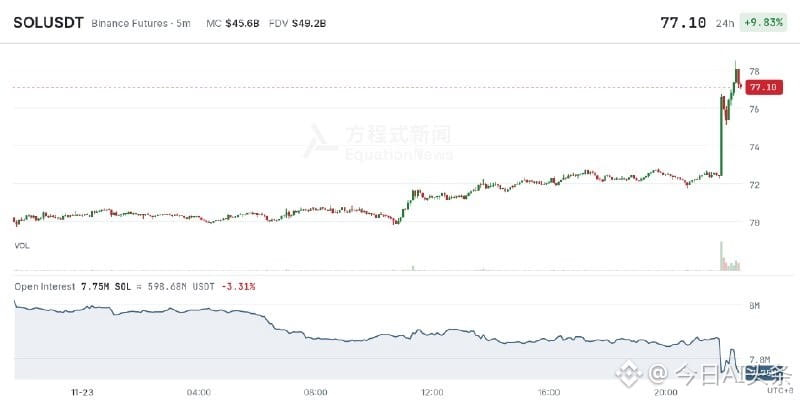
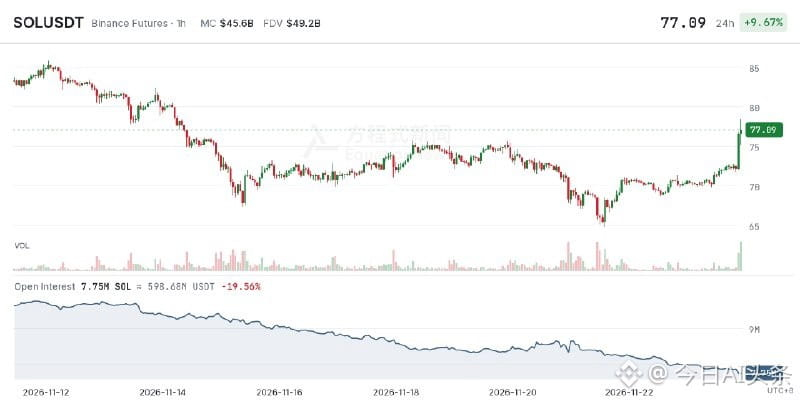
🟢 Price & OI Anomaly #SOL
🇨🇳 SOLUSDT short covering: Binance open interest -1.5%, price up 6.7% in the past 1 hour, open interest $598.7M, OI/market cap 1.3%, 24h +10.2%
🇺🇸 SOLUSDT Short covering: Binance OI -1.5%, price +6.7% in the past 1 hour, OI $598.7M, OI/market cap 1.3%, 24h +10.2%
💵 24h Vol $1.5B · Funding -0.0030%/8h
💰 MC: SOL $45.6B
🕒 2026-11-23 22:35:08 (UTC+8)
1
9
·
--
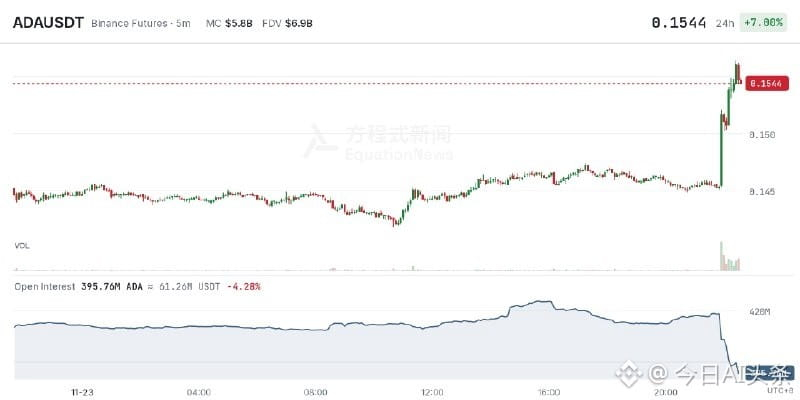
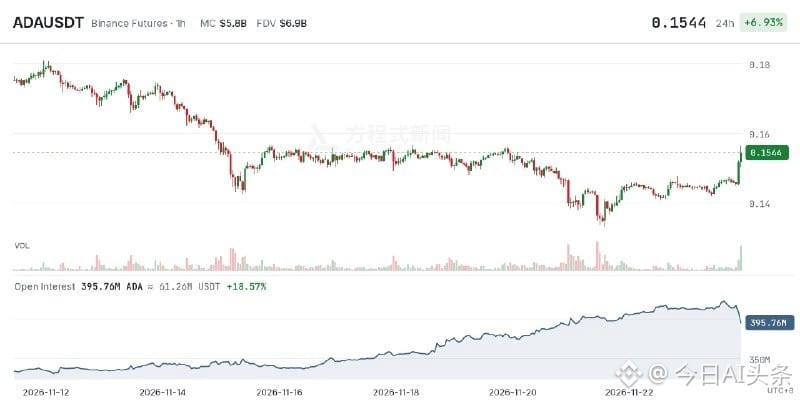
🟢 Price and OI Anomaly #ADA
🇨🇳 ADAUSDT Short covering: Binance open interest -5.2%, price up 6.4% in the past 1 hour, open interest $61.3M, OI/market cap 1.1%, 24h +7.4%
🇺🇸 ADAUSDT Short covering: Binance OI -5.2%, price +6.4% in the past 1 hour, OI $61.3M, OI/market cap 1.1%, 24h +7.4%
💵 24h Vol $119M · Funding -0.0039%/8h
💰 MC: ADA $5.8B
🕒 2026-11-23 22:35:08 (UTC+8)
2
·
--
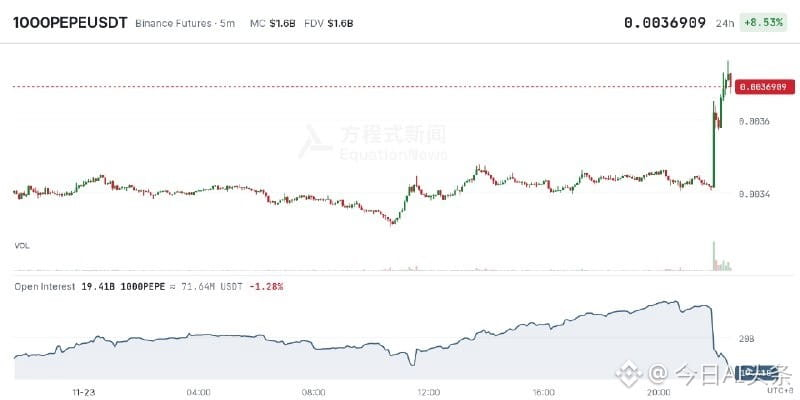
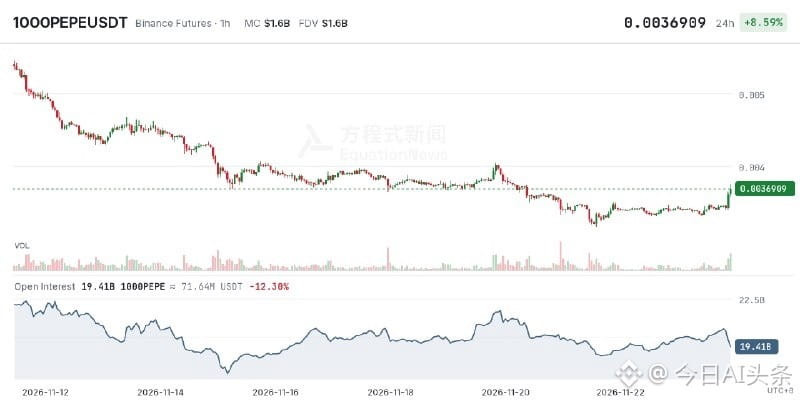
🟢 Price & OI movements #PEPE
🇨🇳 1000PEPEUSDT short covering: Binance open interest -5.4%, price up 7.7% over the past 1 hour, open interest $71.6M, OI/market cap 4.6%, 24h +8.9%
🇺🇸 1000PEPEUSDT Short covering: Binance OI -5.4%, price +7.7% in the past 1 hour, OI $71.6M, OI/market cap 4.6%, 24h +8.9%
💵 24h Vol $200M · Funding -0.0134%/8h
💰 MC: PEPE $1.6B
🕒 2026-11-23 22:31:07 (UTC+8)
51
·
--
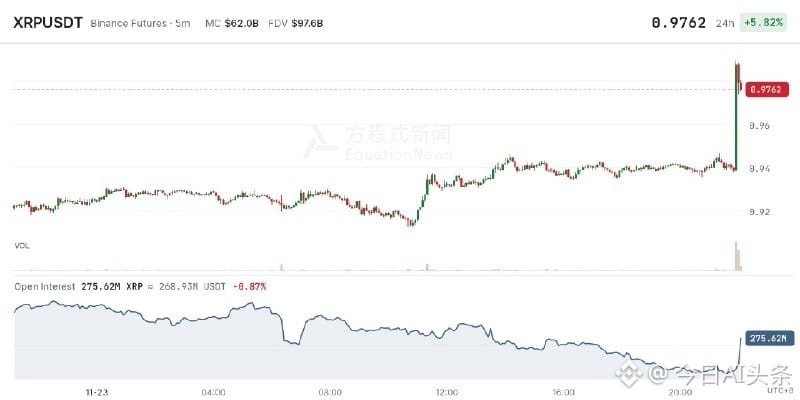
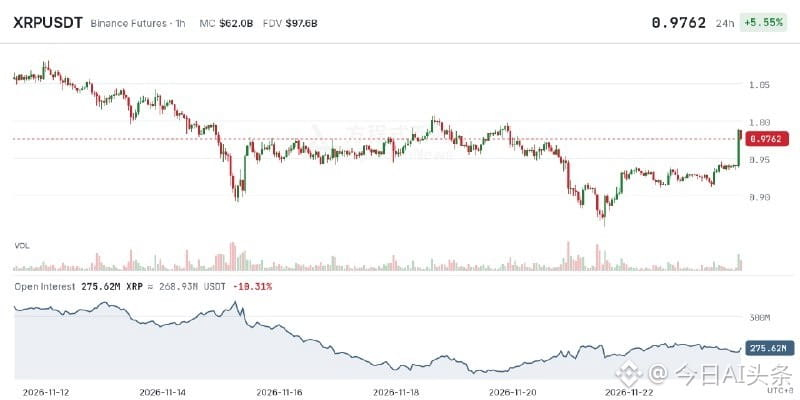
🟢 Price & OI anomaly #XRP
🇨🇳 XRPUSDT Longs entering: Binance open interest +1.1%, price up 3.7% in the past 1 hour, open interest $268.9M, OI/market cap 0.4%, 24h +5.9%
🇺🇸 XRPUSDT Longs building: Binance OI +1.1%, price +3.7% in the past 1 hour, OI $268.9M, OI/market cap 0.4%, 24h +5.9%
💵 24h Vol $514M · Funding -0.0009%/8h
💰 MC: XRP $62.0B
🕒 2026-11-23 22:07:08 (UTC+8)
12
Log in to explore more content
Join global crypto users on Binance Square
⚡️ Get latest and useful information about crypto.
💬 Trusted by the world’s largest crypto exchange.
👍 Discover real insights from verified creators.
Email / Phone number
Trending Topics
NVIDIAReinstatesJensenHuangasCEO
153,779 views
1,103 Discussing
TradFi News | Nvidia Board Unanimously Reinstates Jensen Huang as CEO; Shares Jump 30% Premarket
Binance News
·44 Likes
·46.1k views
USAddsMegaspeedToEntityList
362 views
20 Discussing
GrayscaleLaunches2xLeveragedZcashETF
230 views
19 Discussing