
全视
179 Posts

全视
Report
Block User
203 Following
284 Followers
443 Liked
Posts
All
Quotes
·
--
Recently, many wallets have been stolen. Don’t use a phone with your wallet on it to scan a power bank, or the money in your wallet could be stolen. #钱包 $ETH
{future}(ETHUSDT)
Recently, many wallets have been stolen. Don’t use a phone with your wallet on it to scan a power bank, or the money in your wallet could be stolen. #钱包 $ETH

2
603
·
--
Will the U.S. flight ban lead to another 9/11-scale disaster and a crash?
Will the U.S. flight ban lead to another 9/11-scale disaster and a crash?
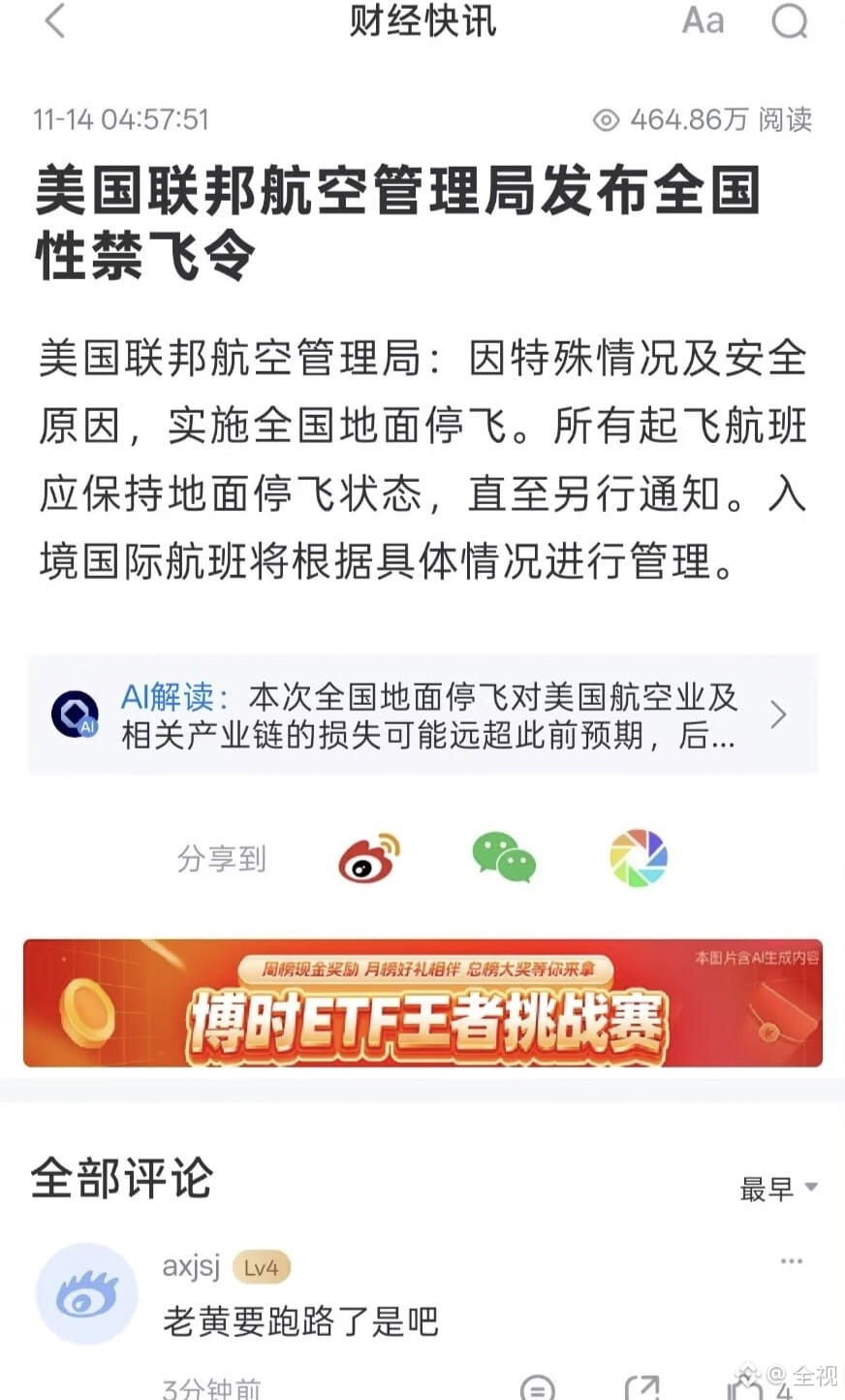
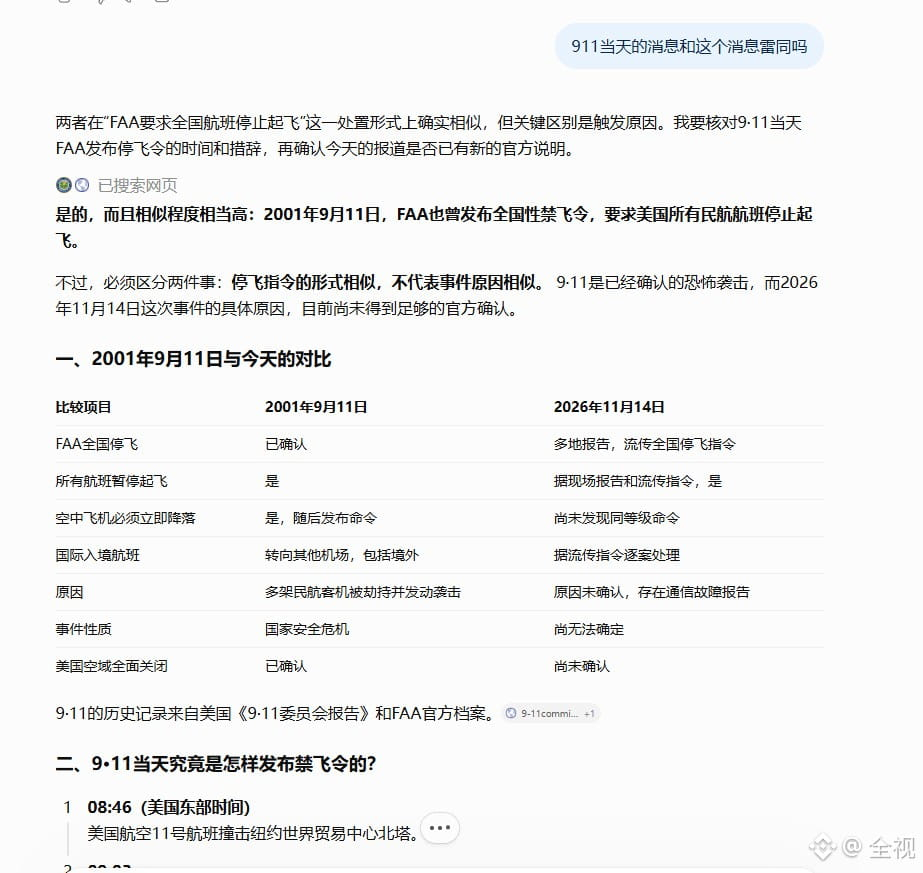
1
275
·
--
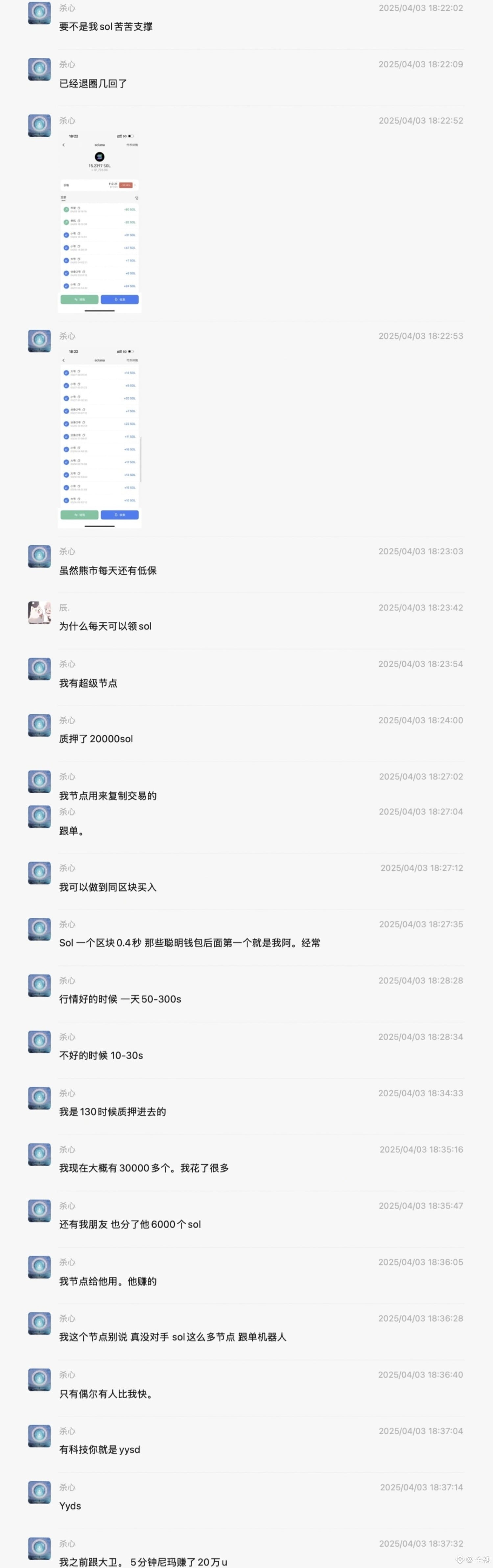
In theory, this strategy can still make money, but it’s no longer a sure-fire business. The barriers to entry are extremely high and the risks are enormous; ordinary people who simply copy it are almost certain to lose money. Only a handful of top players with comparable infrastructure and source-code expertise can still generate consistent positive returns.
His key advantage isn’t the bot code. It’s his own validator nodes and a low-latency, direct connection to the block leader, which lets him see transactions before the vast majority of searchers and copy-trade them with a same-block backrun. These days, all the major players use Jito Bundle for transaction bundling. Node access, dedicated lines, and server hardware are hard requirements; ordinary commercial RPC services simply can’t compete for same-block opportunities.
Staking rewards are a safety net: even if copy-trading loses money for a while, the inflationary rewards from staking can offset some of those losses.
He also has his own filtering strategies to screen out decoy wallets, honeypot contracts, and high-risk rug-pull tokens.
These days, a large number of institutions, quant teams, and highly staked validators are running similar strategies. Bots compete for the same opportunity by bidding up priority fees (tips), and for many trades, profits vanish or turn into losses after tips and gas fees are deducted. A large chunk of the profits gets eaten up by tips. Many meme contracts have built-in anti-sniping logic, while project teams deliberately create fake decoy “smart wallets” to lure copy-trading bots in before pulling liquidity and disappearing. Many historical “smart wallets” are themselves part of the setup. With the launch of the Jito BAM block market and pre-confirmation mechanisms, block-ordering rules have changed, diluting the advantage that came purely from having a better node connection. Strategies now demand more sophisticated code and timing control, and outdated bots become ineffective very quickly. What’s more, if SOL takes a sharp one-way drop, unrealized losses on the staked principal can easily wipe out all the profits, even if copy-trading arbitrage is profitable.
For ordinary people using only public RPC services, it’s basically impossible to buy in the same block. Most end up buying at the top a block later. Over the long term, they lose more often than they win. The software is just a tool; without an underlying connectivity advantage, you can’t replicate this strategy.$SOL
{future}(SOLUSDT)
#质押
In theory, this strategy can still make money, but it’s no longer a sure-fire business. The barriers to entry are extremely high and the risks are enormous; ordinary people who simply copy it are almost certain to lose money. Only a handful of top players with comparable infrastructure and source-code expertise can still generate consistent positive returns.
His key advantage isn’t the bot code. It’s his own validator nodes and a low-latency, direct connection to the block leader, which lets him see transactions before the vast majority of searchers and copy-trade them with a same-block backrun. These days, all the major players use Jito Bundle for transaction bundling. Node access, dedicated lines, and server hardware are hard requirements; ordinary commercial RPC services simply can’t compete for same-block opportunities.
Staking rewards are a safety net: even if copy-trading loses money for a while, the inflationary rewards from staking can offset some of those losses.
He also has his own filtering strategies to screen out decoy wallets, honeypot contracts, and high-risk rug-pull tokens.
These days, a large number of institutions, quant teams, and highly staked validators are running similar strategies. Bots compete for the same opportunity by bidding up priority fees (tips), and for many trades, profits vanish or turn into losses after tips and gas fees are deducted. A large chunk of the profits gets eaten up by tips. Many meme contracts have built-in anti-sniping logic, while project teams deliberately create fake decoy “smart wallets” to lure copy-trading bots in before pulling liquidity and disappearing. Many historical “smart wallets” are themselves part of the setup. With the launch of the Jito BAM block market and pre-confirmation mechanisms, block-ordering rules have changed, diluting the advantage that came purely from having a better node connection. Strategies now demand more sophisticated code and timing control, and outdated bots become ineffective very quickly. What’s more, if SOL takes a sharp one-way drop, unrealized losses on the staked principal can easily wipe out all the profits, even if copy-trading arbitrage is profitable.
For ordinary people using only public RPC services, it’s basically impossible to buy in the same block. Most end up buying at the top a block later. Over the long term, they lose more often than they win. The software is just a tool; without an underlying connectivity advantage, you can’t replicate this strategy.$SOL
#质押
His key advantage isn’t the bot code. It’s his own validator nodes and a low-latency, direct connection to the block leader, which lets him see transactions before the vast majority of searchers and copy-trade them with a same-block backrun. These days, all the major players use Jito Bundle for transaction bundling. Node access, dedicated lines, and server hardware are hard requirements; ordinary commercial RPC services simply can’t compete for same-block opportunities.
Staking rewards are a safety net: even if copy-trading loses money for a while, the inflationary rewards from staking can offset some of those losses.
He also has his own filtering strategies to screen out decoy wallets, honeypot contracts, and high-risk rug-pull tokens.
These days, a large number of institutions, quant teams, and highly staked validators are running similar strategies. Bots compete for the same opportunity by bidding up priority fees (tips), and for many trades, profits vanish or turn into losses after tips and gas fees are deducted. A large chunk of the profits gets eaten up by tips. Many meme contracts have built-in anti-sniping logic, while project teams deliberately create fake decoy “smart wallets” to lure copy-trading bots in before pulling liquidity and disappearing. Many historical “smart wallets” are themselves part of the setup. With the launch of the Jito BAM block market and pre-confirmation mechanisms, block-ordering rules have changed, diluting the advantage that came purely from having a better node connection. Strategies now demand more sophisticated code and timing control, and outdated bots become ineffective very quickly. What’s more, if SOL takes a sharp one-way drop, unrealized losses on the staked principal can easily wipe out all the profits, even if copy-trading arbitrage is profitable.
For ordinary people using only public RPC services, it’s basically impossible to buy in the same block. Most end up buying at the top a block later. Over the long term, they lose more often than they win. The software is just a tool; without an underlying connectivity advantage, you can’t replicate this strategy.$SOL
#质押
1
2
·
--
Partly True
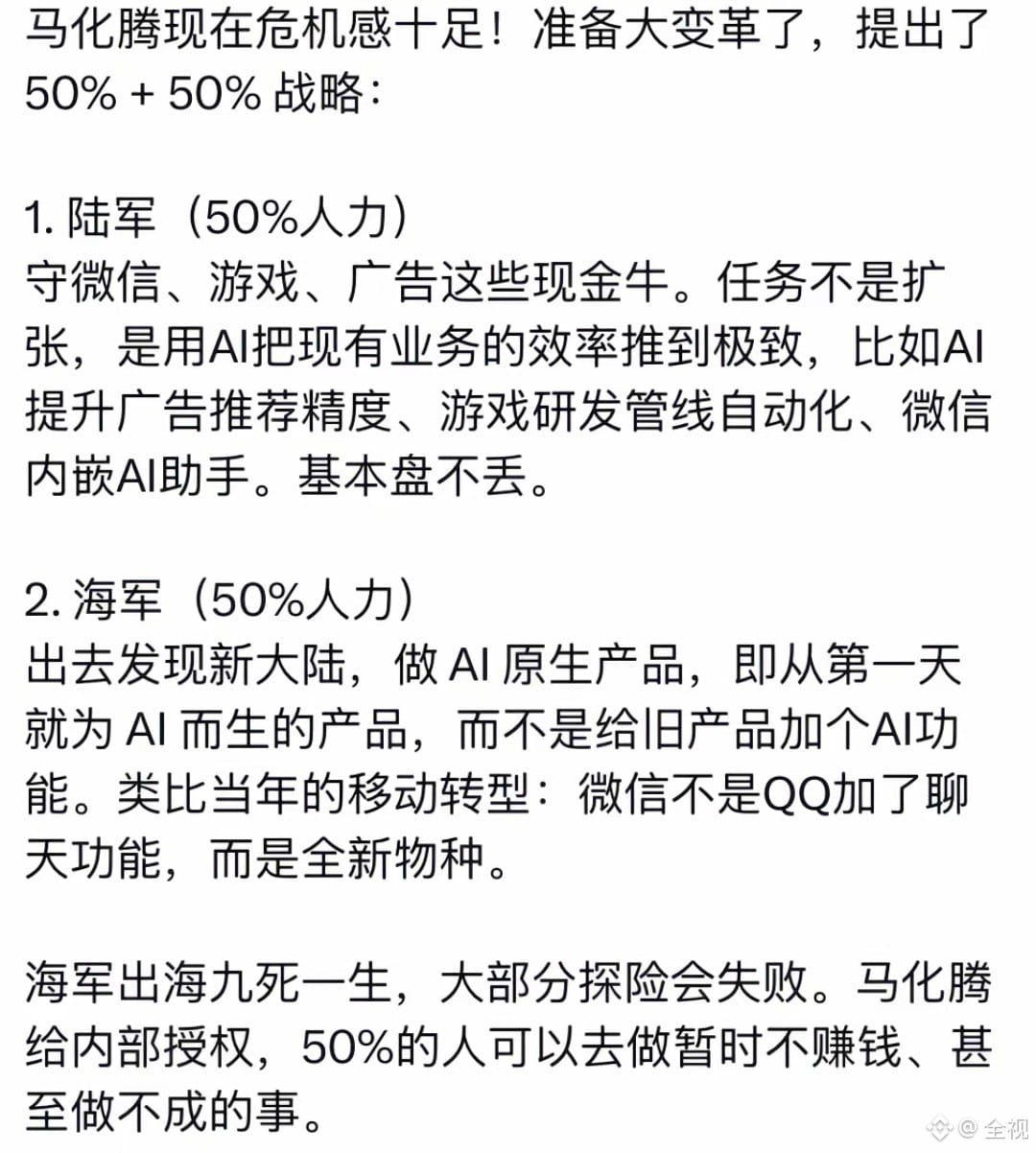
Can Tencent CEO Ma Huateng’s strategic approach trigger a surge in Tencent’s share price? Tencent is now left with only QQ, WeChat, and games, while ByteDance’s businesses are all growing rapidly. ByteDance is now incredibly powerful. Douyin has the largest number of short-video users in China, leading by a huge margin. It has over 1 billion users, more than 600 million ahead of the second-place platform. And now Hongguo has emerged as well. Ma Huateng is extremely anxious. $TENCENT
{future}(TENCENTUSDT)
Can Tencent CEO Ma Huateng’s strategic approach trigger a surge in Tencent’s share price? Tencent is now left with only QQ, WeChat, and games, while ByteDance’s businesses are all growing rapidly. ByteDance is now incredibly powerful. Douyin has the largest number of short-video users in China, leading by a huge margin. It has over 1 billion users, more than 600 million ahead of the second-place platform. And now Hongguo has emerged as well. Ma Huateng is extremely anxious. $TENCENT
1
1.3k
·
--
Jensen Huang was forced out as Nvidia CEO by the board. This is a campaign by Anglo-Saxon whites to push out Chinese people, and a technology war over the fate of nations and the world’s AI computing power. It’s not just the AI field: America’s super-rich have never let people of Asian descent in, which is why Zhao Changpeng was pushed aside by Americans when he became Asia’s richest person. Americans have always wanted to oust Jensen Huang; this time, his affair is just an excuse to kick him out. $NVDA
{future}(NVDAUSDT)
Jensen Huang was forced out as Nvidia CEO by the board. This is a campaign by Anglo-Saxon whites to push out Chinese people, and a technology war over the fate of nations and the world’s AI computing power. It’s not just the AI field: America’s super-rich have never let people of Asian descent in, which is why Zhao Changpeng was pushed aside by Americans when he became Asia’s richest person. Americans have always wanted to oust Jensen Huang; this time, his affair is just an excuse to kick him out. $NVDA
1
133
·
--
[https://www.binance.com/zh-CN/copy-trading/lead-details/5300879343007747584?timeRange=30D](https://www.binance.com/zh-CN/copy-trading/lead-details/5300879343007747584?timeRange=30D)
https://www.binance.com/zh-CN/copy-trading/lead-details/5300879343007747584?timeRange=30D
1
·
--
The essence of the crypto industry is not speculation, but a new type of production relations suited to the intelligent era, emerging once productive forces reach a certain level:
1. Core elements of new quality productive forces: AI, computing power, and data are at their core. These elements are inherently decentralized, replicable, and able to cross geographic boundaries, creating a fundamental contradiction with the centralized production relations of the industrial era.
2. Limitations of existing production relations: Industrial-era production relations are centered on sovereign currency issuance, employment relationships bound by company contracts, and hierarchical organizational structures. They cannot accommodate the productive characteristics of distributed AI model deployment, distributed computing-power allocation, and cross-chain data flows.
3. Contradictions and transformation: When productive forces reach a stage of decentralized collaboration, production relations that remain within a centralized management framework inevitably create friction, ultimately giving rise to new production relations—the crypto industry is a product of this transformation.
Three core transformations ahead:
1. Restructuring the monetary system
The essence of stablecoins is not the coins themselves, but the globalization of payment channels. Traditional cross-border payments rely on the SWIFT system, pass through multiple intermediaries, take days, and incur high fees. Stablecoins, by contrast, reduce the process to on-chain transfers, bringing costs close to zero. In essence, they rewrite the efficiency of value flows. After Hong Kong’s stablecoin ordinance took effect in 2026, the regulatory authority received 36 license applications from institutions.
2. The transformation of employment relationships
Traditional employment relationships bind workers to companies, effectively buying out their time. The Web3 labor market, by contrast, is taking on a new form: remote roles are growing rapidly, with nearly 100,000 new positions added in 2025, up 47% year over year. Marketing, business development, community management, and other non-technical roles are among the fastest-growing categories. This means talent is no longer exclusive to a particular company; organizations are becoming smaller while collaboration networks grow larger, requiring new principles to support effective governance.
3. Innovation in organizational structures
Traditional companies have a three-tier, centralized decision-making structure consisting of shareholders, management, and employees. In the crypto industry, organizational structures operate through smart contracts, with no board of directors or CEO: rules are written into code, and decisions are made through token voting. Although this model faces issues such as low efficiency and low voter turnout, it demonstrates that organizations can still function without centralized hierarchies. It is an evolution in organizational form made possible by AI execution and lower on-chain coordination costs.$ZEC
{future}(ZECUSDT)
$AKE
{future}(AKEUSDT)
The essence of the crypto industry is not speculation, but a new type of production relations suited to the intelligent era, emerging once productive forces reach a certain level:
1. Core elements of new quality productive forces: AI, computing power, and data are at their core. These elements are inherently decentralized, replicable, and able to cross geographic boundaries, creating a fundamental contradiction with the centralized production relations of the industrial era.
2. Limitations of existing production relations: Industrial-era production relations are centered on sovereign currency issuance, employment relationships bound by company contracts, and hierarchical organizational structures. They cannot accommodate the productive characteristics of distributed AI model deployment, distributed computing-power allocation, and cross-chain data flows.
3. Contradictions and transformation: When productive forces reach a stage of decentralized collaboration, production relations that remain within a centralized management framework inevitably create friction, ultimately giving rise to new production relations—the crypto industry is a product of this transformation.
Three core transformations ahead:
1. Restructuring the monetary system
The essence of stablecoins is not the coins themselves, but the globalization of payment channels. Traditional cross-border payments rely on the SWIFT system, pass through multiple intermediaries, take days, and incur high fees. Stablecoins, by contrast, reduce the process to on-chain transfers, bringing costs close to zero. In essence, they rewrite the efficiency of value flows. After Hong Kong’s stablecoin ordinance took effect in 2026, the regulatory authority received 36 license applications from institutions.
2. The transformation of employment relationships
Traditional employment relationships bind workers to companies, effectively buying out their time. The Web3 labor market, by contrast, is taking on a new form: remote roles are growing rapidly, with nearly 100,000 new positions added in 2025, up 47% year over year. Marketing, business development, community management, and other non-technical roles are among the fastest-growing categories. This means talent is no longer exclusive to a particular company; organizations are becoming smaller while collaboration networks grow larger, requiring new principles to support effective governance.
3. Innovation in organizational structures
Traditional companies have a three-tier, centralized decision-making structure consisting of shareholders, management, and employees. In the crypto industry, organizational structures operate through smart contracts, with no board of directors or CEO: rules are written into code, and decisions are made through token voting. Although this model faces issues such as low efficiency and low voter turnout, it demonstrates that organizations can still function without centralized hierarchies. It is an evolution in organizational form made possible by AI execution and lower on-chain coordination costs.$ZEC
$AKE
1. Core elements of new quality productive forces: AI, computing power, and data are at their core. These elements are inherently decentralized, replicable, and able to cross geographic boundaries, creating a fundamental contradiction with the centralized production relations of the industrial era.
2. Limitations of existing production relations: Industrial-era production relations are centered on sovereign currency issuance, employment relationships bound by company contracts, and hierarchical organizational structures. They cannot accommodate the productive characteristics of distributed AI model deployment, distributed computing-power allocation, and cross-chain data flows.
3. Contradictions and transformation: When productive forces reach a stage of decentralized collaboration, production relations that remain within a centralized management framework inevitably create friction, ultimately giving rise to new production relations—the crypto industry is a product of this transformation.
Three core transformations ahead:
1. Restructuring the monetary system
The essence of stablecoins is not the coins themselves, but the globalization of payment channels. Traditional cross-border payments rely on the SWIFT system, pass through multiple intermediaries, take days, and incur high fees. Stablecoins, by contrast, reduce the process to on-chain transfers, bringing costs close to zero. In essence, they rewrite the efficiency of value flows. After Hong Kong’s stablecoin ordinance took effect in 2026, the regulatory authority received 36 license applications from institutions.
2. The transformation of employment relationships
Traditional employment relationships bind workers to companies, effectively buying out their time. The Web3 labor market, by contrast, is taking on a new form: remote roles are growing rapidly, with nearly 100,000 new positions added in 2025, up 47% year over year. Marketing, business development, community management, and other non-technical roles are among the fastest-growing categories. This means talent is no longer exclusive to a particular company; organizations are becoming smaller while collaboration networks grow larger, requiring new principles to support effective governance.
3. Innovation in organizational structures
Traditional companies have a three-tier, centralized decision-making structure consisting of shareholders, management, and employees. In the crypto industry, organizational structures operate through smart contracts, with no board of directors or CEO: rules are written into code, and decisions are made through token voting. Although this model faces issues such as low efficiency and low voter turnout, it demonstrates that organizations can still function without centralized hierarchies. It is an evolution in organizational form made possible by AI execution and lower on-chain coordination costs.$ZEC
$AKE
1
845
·
--
$ZEC Bitcoin may be vulnerable to quantum attacks, but ZEC is much harder to attack.
This isn’t because its cryptography is stronger, but because of differences in its structural design:
Bitcoin: Once an address has spent funds, its public key is permanently exposed on the blockchain (especially with old P2PK addresses), giving quantum attackers time to work on cracking it.
Zcash fully shielded transactions: The sender’s and recipient’s public keys aren’t made public on the ledger, so quantum attackers have no target to work with and the exposure window is shorter.
Zcash’s shielded pool has an advantage—but only if transactions are fully shielded and no metadata is leaked. Use a transparent address, and that advantage disappears.
Zcash is indeed moving faster than Bitcoin on post-quantum upgrades.
Zcash:
July 28, 2026 Ironwood upgrade: Implements the first step toward “quantum recoverability”—funds can be frozen or recovered even if elliptic-curve cryptography is broken. Within two weeks of mainnet launch, at least 1.8 million ZEC will be quantum-recoverable.
Second step: Integrate ML-KEM (FIPS 203) key exchange.
January 2027 target: Launch post-quantum signatures (WOTS hash-based signatures) to protect transparent addresses (about 70% of ZEC is held at transparent addresses).
Bitcoin:
Post-quantum signature proposals such as BIP-360 are still under discussion.
Upgrades involve a vast ecosystem of competing interests, making consensus difficult and progress slow.
So, in terms of the “speed and determination of the transition to post-quantum security,” Zcash is indeed more proactive than Bitcoin.
$ZEC Bitcoin may be vulnerable to quantum attacks, but ZEC is much harder to attack.
This isn’t because its cryptography is stronger, but because of differences in its structural design:
Bitcoin: Once an address has spent funds, its public key is permanently exposed on the blockchain (especially with old P2PK addresses), giving quantum attackers time to work on cracking it.
Zcash fully shielded transactions: The sender’s and recipient’s public keys aren’t made public on the ledger, so quantum attackers have no target to work with and the exposure window is shorter.
Zcash’s shielded pool has an advantage—but only if transactions are fully shielded and no metadata is leaked. Use a transparent address, and that advantage disappears.
Zcash is indeed moving faster than Bitcoin on post-quantum upgrades.
Zcash:
July 28, 2026 Ironwood upgrade: Implements the first step toward “quantum recoverability”—funds can be frozen or recovered even if elliptic-curve cryptography is broken. Within two weeks of mainnet launch, at least 1.8 million ZEC will be quantum-recoverable.
Second step: Integrate ML-KEM (FIPS 203) key exchange.
January 2027 target: Launch post-quantum signatures (WOTS hash-based signatures) to protect transparent addresses (about 70% of ZEC is held at transparent addresses).
Bitcoin:
Post-quantum signature proposals such as BIP-360 are still under discussion.
Upgrades involve a vast ecosystem of competing interests, making consensus difficult and progress slow.
So, in terms of the “speed and determination of the transition to post-quantum security,” Zcash is indeed more proactive than Bitcoin.
This isn’t because its cryptography is stronger, but because of differences in its structural design:
Bitcoin: Once an address has spent funds, its public key is permanently exposed on the blockchain (especially with old P2PK addresses), giving quantum attackers time to work on cracking it.
Zcash fully shielded transactions: The sender’s and recipient’s public keys aren’t made public on the ledger, so quantum attackers have no target to work with and the exposure window is shorter.
Zcash’s shielded pool has an advantage—but only if transactions are fully shielded and no metadata is leaked. Use a transparent address, and that advantage disappears.
Zcash is indeed moving faster than Bitcoin on post-quantum upgrades.
Zcash:
July 28, 2026 Ironwood upgrade: Implements the first step toward “quantum recoverability”—funds can be frozen or recovered even if elliptic-curve cryptography is broken. Within two weeks of mainnet launch, at least 1.8 million ZEC will be quantum-recoverable.
Second step: Integrate ML-KEM (FIPS 203) key exchange.
January 2027 target: Launch post-quantum signatures (WOTS hash-based signatures) to protect transparent addresses (about 70% of ZEC is held at transparent addresses).
Bitcoin:
Post-quantum signature proposals such as BIP-360 are still under discussion.
Upgrades involve a vast ecosystem of competing interests, making consensus difficult and progress slow.
So, in terms of the “speed and determination of the transition to post-quantum security,” Zcash is indeed more proactive than Bitcoin.
2
481
·
--
🟢 Staying flat and not trading is a decision
🟠 A rank-and-yank system requires “having losers every year,” which means “making profits every month.” This pressure will push you to trade when there are no opportunities.
🟢 Evaluation periods must be measured in years
🟠 Using a short evaluation period to judge something that plays out over the long term will inevitably cut off what is working.
🟠 A trend-following strategy may take 3–6 months to demonstrate its edge (a 35% win rate, but a 3:1 risk-reward ratio).
🟢 First work out how many trades and how much time your strategy needs to produce a statistically valid conclusion. Don’t evaluate it before then.
🟢 Don’t be fooled by metrics that can be manipulated
🟠 Employees game KPIs because KPIs can be gamed.
🟠 You can boost your win rate to 90% by holding losing positions and not using stop-losses
You can keep drawdowns very low by never closing positions and refusing to recognize losses
You can make your equity curve look like a straight line by selling options
You can make the Sharpe ratio look better by adjusting the statistical period
🔴 All of these metrics can be “optimized” to look great.
🟢 Unrealized gains aren’t profits
🟢 Enron’s abuse of mark-to-market accounting was essentially this: counting things that haven’t happened yet as if they already had.
🟠 Adding to positions with unrealized gains, treating paper gains as capital, and treating “peak unrealized profit” as “money I’ve made” are all illusions. Before you close the position, that money is only temporarily in your account, placed there by the market—and it can be taken back at any time.
🟢 Welch’s 20-70-10 system worked in the 1980s because GE was a diversified industrial conglomerate, with highly standardized roles and divisible output.
🟠 By the 2010s, at Microsoft, work involved highly collaborative software engineering, and output couldn’t be attributed to individuals. Put the same system in the wrong context, and it becomes a machine for internal conflict.
🟢 A mean-reversion strategy that works in a range-bound market will suffer consecutive stop-outs in a trending market
Selling options, which works in a low-volatility environment, can lead to a blowup in a high-volatility environment
The strategy itself hasn’t changed; the environment has
🔴 So “this strategy returned 500% annualized over the past month” isn’t credible. The key question is: What kind of market was it this month? And what about the future? $SNDK
{future}(SNDKUSDT)
🟢 Staying flat and not trading is a decision
🟠 A rank-and-yank system requires “having losers every year,” which means “making profits every month.” This pressure will push you to trade when there are no opportunities.
🟢 Evaluation periods must be measured in years
🟠 Using a short evaluation period to judge something that plays out over the long term will inevitably cut off what is working.
🟠 A trend-following strategy may take 3–6 months to demonstrate its edge (a 35% win rate, but a 3:1 risk-reward ratio).
🟢 First work out how many trades and how much time your strategy needs to produce a statistically valid conclusion. Don’t evaluate it before then.
🟢 Don’t be fooled by metrics that can be manipulated
🟠 Employees game KPIs because KPIs can be gamed.
🟠 You can boost your win rate to 90% by holding losing positions and not using stop-losses
You can keep drawdowns very low by never closing positions and refusing to recognize losses
You can make your equity curve look like a straight line by selling options
You can make the Sharpe ratio look better by adjusting the statistical period
🔴 All of these metrics can be “optimized” to look great.
🟢 Unrealized gains aren’t profits
🟢 Enron’s abuse of mark-to-market accounting was essentially this: counting things that haven’t happened yet as if they already had.
🟠 Adding to positions with unrealized gains, treating paper gains as capital, and treating “peak unrealized profit” as “money I’ve made” are all illusions. Before you close the position, that money is only temporarily in your account, placed there by the market—and it can be taken back at any time.
🟢 Welch’s 20-70-10 system worked in the 1980s because GE was a diversified industrial conglomerate, with highly standardized roles and divisible output.
🟠 By the 2010s, at Microsoft, work involved highly collaborative software engineering, and output couldn’t be attributed to individuals. Put the same system in the wrong context, and it becomes a machine for internal conflict.
🟢 A mean-reversion strategy that works in a range-bound market will suffer consecutive stop-outs in a trending market
Selling options, which works in a low-volatility environment, can lead to a blowup in a high-volatility environment
The strategy itself hasn’t changed; the environment has
🔴 So “this strategy returned 500% annualized over the past month” isn’t credible. The key question is: What kind of market was it this month? And what about the future? $SNDK
🟠 A rank-and-yank system requires “having losers every year,” which means “making profits every month.” This pressure will push you to trade when there are no opportunities.
🟢 Evaluation periods must be measured in years
🟠 Using a short evaluation period to judge something that plays out over the long term will inevitably cut off what is working.
🟠 A trend-following strategy may take 3–6 months to demonstrate its edge (a 35% win rate, but a 3:1 risk-reward ratio).
🟢 First work out how many trades and how much time your strategy needs to produce a statistically valid conclusion. Don’t evaluate it before then.
🟢 Don’t be fooled by metrics that can be manipulated
🟠 Employees game KPIs because KPIs can be gamed.
🟠 You can boost your win rate to 90% by holding losing positions and not using stop-losses
You can keep drawdowns very low by never closing positions and refusing to recognize losses
You can make your equity curve look like a straight line by selling options
You can make the Sharpe ratio look better by adjusting the statistical period
🔴 All of these metrics can be “optimized” to look great.
🟢 Unrealized gains aren’t profits
🟢 Enron’s abuse of mark-to-market accounting was essentially this: counting things that haven’t happened yet as if they already had.
🟠 Adding to positions with unrealized gains, treating paper gains as capital, and treating “peak unrealized profit” as “money I’ve made” are all illusions. Before you close the position, that money is only temporarily in your account, placed there by the market—and it can be taken back at any time.
🟢 Welch’s 20-70-10 system worked in the 1980s because GE was a diversified industrial conglomerate, with highly standardized roles and divisible output.
🟠 By the 2010s, at Microsoft, work involved highly collaborative software engineering, and output couldn’t be attributed to individuals. Put the same system in the wrong context, and it becomes a machine for internal conflict.
🟢 A mean-reversion strategy that works in a range-bound market will suffer consecutive stop-outs in a trending market
Selling options, which works in a low-volatility environment, can lead to a blowup in a high-volatility environment
The strategy itself hasn’t changed; the environment has
🔴 So “this strategy returned 500% annualized over the past month” isn’t credible. The key question is: What kind of market was it this month? And what about the future? $SNDK
1
722
·
--
Range-bound market = near-equilibrium linear regime = mean reversion
Prigogine’s minimum entropy production theorem: In the near-equilibrium linear regime, a system naturally returns to a steady state with minimum entropy production; disturbances are pulled back in. When there is no one-sided drive from incremental capital, prices are continually pulled back toward the mean. After a big rise, some people sell; after a big drop, some people buy. This is the path of least resistance. That’s why breakout traders repeatedly get burned in range-bound markets, while people who sell high and buy low within the range do just fine.
Trend = dissipative structure = momentum
When capital flows are strong enough to cross a threshold, positive feedback kicks in. Prices break away from their former mean and form a self-sustaining ordered structure: moving averages align bullishly, pullbacks hold above previous lows, and volume confirms the move. This structure can only be maintained by sustained trading volume and new capital. So the most effective indicator of a trend losing steam is whether the energy flow is weakening: increasingly more capital is needed to push prices higher, and pullbacks are getting deeper. When the heater is turned off, Bénard convection cells break down. Whether the market is range-bound or trending depends on whether there is a sustained flow of energy. First identify the market regime, then choose a strategy.
Breakout point = bifurcation point; the fact that events before a bifurcation point are unpredictable is a clear conclusion of physics
In dissipative structure theory, the system’s future before a bifurcation point is mathematically unpredictable: multiple solutions are simultaneously valid, and which one is selected depends on tiny fluctuations.
Before a key level has been taken out, guessing the direction is invalid according to physical theory. Statistically, “buying the bottom and selling the top” underperforms “following the breakout” over the long run: the former guesses which branch will be taken before the bifurcation point, while the latter enters after the branch has been determined. The approach that truly fits this framework is: don’t bet before the bifurcation; follow after it occurs. In other words, wait for the structure to emerge before entering (the key level is taken out, the retest holds, and the structure is confirmed).
Entropy flow formula dS = dSe + dSi: To keep yourself as a local system orderly (with stable returns and a sustainable mindset), you must continuously export entropy to the environment. In trading, this means fees, spreads, slippage, funding rates, and attention. The higher your trading frequency, the more each entry and exit releases entropy. $AGT
{future}(AGTUSDT)
Range-bound market = near-equilibrium linear regime = mean reversion
Prigogine’s minimum entropy production theorem: In the near-equilibrium linear regime, a system naturally returns to a steady state with minimum entropy production; disturbances are pulled back in. When there is no one-sided drive from incremental capital, prices are continually pulled back toward the mean. After a big rise, some people sell; after a big drop, some people buy. This is the path of least resistance. That’s why breakout traders repeatedly get burned in range-bound markets, while people who sell high and buy low within the range do just fine.
Trend = dissipative structure = momentum
When capital flows are strong enough to cross a threshold, positive feedback kicks in. Prices break away from their former mean and form a self-sustaining ordered structure: moving averages align bullishly, pullbacks hold above previous lows, and volume confirms the move. This structure can only be maintained by sustained trading volume and new capital. So the most effective indicator of a trend losing steam is whether the energy flow is weakening: increasingly more capital is needed to push prices higher, and pullbacks are getting deeper. When the heater is turned off, Bénard convection cells break down. Whether the market is range-bound or trending depends on whether there is a sustained flow of energy. First identify the market regime, then choose a strategy.
Breakout point = bifurcation point; the fact that events before a bifurcation point are unpredictable is a clear conclusion of physics
In dissipative structure theory, the system’s future before a bifurcation point is mathematically unpredictable: multiple solutions are simultaneously valid, and which one is selected depends on tiny fluctuations.
Before a key level has been taken out, guessing the direction is invalid according to physical theory. Statistically, “buying the bottom and selling the top” underperforms “following the breakout” over the long run: the former guesses which branch will be taken before the bifurcation point, while the latter enters after the branch has been determined. The approach that truly fits this framework is: don’t bet before the bifurcation; follow after it occurs. In other words, wait for the structure to emerge before entering (the key level is taken out, the retest holds, and the structure is confirmed).
Entropy flow formula dS = dSe + dSi: To keep yourself as a local system orderly (with stable returns and a sustainable mindset), you must continuously export entropy to the environment. In trading, this means fees, spreads, slippage, funding rates, and attention. The higher your trading frequency, the more each entry and exit releases entropy. $AGT
Prigogine’s minimum entropy production theorem: In the near-equilibrium linear regime, a system naturally returns to a steady state with minimum entropy production; disturbances are pulled back in. When there is no one-sided drive from incremental capital, prices are continually pulled back toward the mean. After a big rise, some people sell; after a big drop, some people buy. This is the path of least resistance. That’s why breakout traders repeatedly get burned in range-bound markets, while people who sell high and buy low within the range do just fine.
Trend = dissipative structure = momentum
When capital flows are strong enough to cross a threshold, positive feedback kicks in. Prices break away from their former mean and form a self-sustaining ordered structure: moving averages align bullishly, pullbacks hold above previous lows, and volume confirms the move. This structure can only be maintained by sustained trading volume and new capital. So the most effective indicator of a trend losing steam is whether the energy flow is weakening: increasingly more capital is needed to push prices higher, and pullbacks are getting deeper. When the heater is turned off, Bénard convection cells break down. Whether the market is range-bound or trending depends on whether there is a sustained flow of energy. First identify the market regime, then choose a strategy.
Breakout point = bifurcation point; the fact that events before a bifurcation point are unpredictable is a clear conclusion of physics
In dissipative structure theory, the system’s future before a bifurcation point is mathematically unpredictable: multiple solutions are simultaneously valid, and which one is selected depends on tiny fluctuations.
Before a key level has been taken out, guessing the direction is invalid according to physical theory. Statistically, “buying the bottom and selling the top” underperforms “following the breakout” over the long run: the former guesses which branch will be taken before the bifurcation point, while the latter enters after the branch has been determined. The approach that truly fits this framework is: don’t bet before the bifurcation; follow after it occurs. In other words, wait for the structure to emerge before entering (the key level is taken out, the retest holds, and the structure is confirmed).
Entropy flow formula dS = dSe + dSi: To keep yourself as a local system orderly (with stable returns and a sustainable mindset), you must continuously export entropy to the environment. In trading, this means fees, spreads, slippage, funding rates, and attention. The higher your trading frequency, the more each entry and exit releases entropy. $AGT
1
293
·
--
Why don’t hackers use Tornado Cash anymore? Tornado Cash is a mixer that operates only on Ethereum and handles only ETH and ERC-20 tokens—it mixes funds on the same chain, but doesn’t support cross-chain transfers, so funds can’t be moved to the Bitcoin network.
It was also sanctioned by the U.S. OFAC in August 2022 (policy has shifted since then, but funds associated with it are still flagged, frozen, or rejected by major platforms). Using it means putting yourself directly in the line of fire for compliance enforcement.
“Some stolen coins have been sitting in Tornado for ages without moving”—that’s precisely because it’s not easy to use: withdrawing from Tornado requires a relayer, and analysis linking deposit and withdrawal times and amounts, relayers being monitored, and withdrawals potentially exposing identities all make withdrawing too risky. Better to lie low for now.
THORChain’s advantages are that it’s cross-chain, requires no KYC, and can’t be frozen. The standardized process used by hackers (the Lazarus playbook) is to quickly convert all assets to ETH → split them across thousands of addresses → use a censorship-resistant protocol (THORChain) to convert them into native BTC → then move them into a mixer. The $1.5 billion stolen from Bybit in February 2025 was moved this way, via THORChain and MayaSwap.
The industry calls it “a major migration in hackers’ money-laundering routes”: from Tornado Cash to THORChain. $ETH
{future}(ETHUSDT)
$ZEC
{future}(ZECUSDT)
Why don’t hackers use Tornado Cash anymore? Tornado Cash is a mixer that operates only on Ethereum and handles only ETH and ERC-20 tokens—it mixes funds on the same chain, but doesn’t support cross-chain transfers, so funds can’t be moved to the Bitcoin network.
It was also sanctioned by the U.S. OFAC in August 2022 (policy has shifted since then, but funds associated with it are still flagged, frozen, or rejected by major platforms). Using it means putting yourself directly in the line of fire for compliance enforcement.
“Some stolen coins have been sitting in Tornado for ages without moving”—that’s precisely because it’s not easy to use: withdrawing from Tornado requires a relayer, and analysis linking deposit and withdrawal times and amounts, relayers being monitored, and withdrawals potentially exposing identities all make withdrawing too risky. Better to lie low for now.
THORChain’s advantages are that it’s cross-chain, requires no KYC, and can’t be frozen. The standardized process used by hackers (the Lazarus playbook) is to quickly convert all assets to ETH → split them across thousands of addresses → use a censorship-resistant protocol (THORChain) to convert them into native BTC → then move them into a mixer. The $1.5 billion stolen from Bybit in February 2025 was moved this way, via THORChain and MayaSwap.
The industry calls it “a major migration in hackers’ money-laundering routes”: from Tornado Cash to THORChain. $ETH
$ZEC
It was also sanctioned by the U.S. OFAC in August 2022 (policy has shifted since then, but funds associated with it are still flagged, frozen, or rejected by major platforms). Using it means putting yourself directly in the line of fire for compliance enforcement.
“Some stolen coins have been sitting in Tornado for ages without moving”—that’s precisely because it’s not easy to use: withdrawing from Tornado requires a relayer, and analysis linking deposit and withdrawal times and amounts, relayers being monitored, and withdrawals potentially exposing identities all make withdrawing too risky. Better to lie low for now.
THORChain’s advantages are that it’s cross-chain, requires no KYC, and can’t be frozen. The standardized process used by hackers (the Lazarus playbook) is to quickly convert all assets to ETH → split them across thousands of addresses → use a censorship-resistant protocol (THORChain) to convert them into native BTC → then move them into a mixer. The $1.5 billion stolen from Bybit in February 2025 was moved this way, via THORChain and MayaSwap.
The industry calls it “a major migration in hackers’ money-laundering routes”: from Tornado Cash to THORChain. $ETH
$ZEC
1
552
·
--
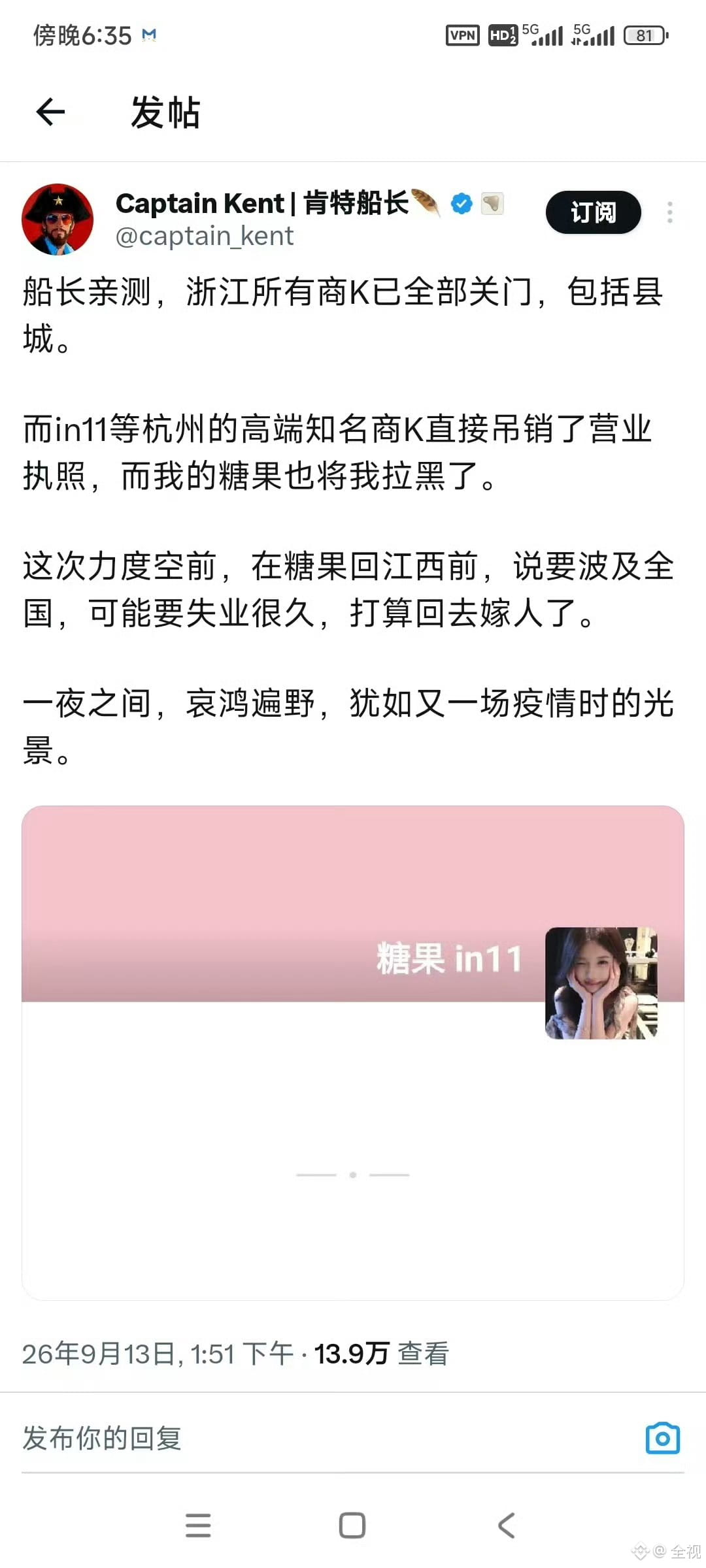
Everything that people in the crypto world like to share and hype for promotion will eventually be shut down by regulators.
At one time, everyone was shouting "Hong Kong Stock Connect crypto" and "everything gets tokenized on-chain," and then they weren’t allowed to play in Hong Kong stocks.
They shouted "U-cards freely enter and exit, instantly turn into fiat," and the card providers directly cut off card usage.
They shouted "AI quant is invincible, automation lets you just lie back and profit," and OpenAI banned accounts.
The louder the promotion, the faster they die:
MEMEs, airdrops, DeFi, prediction markets—each was once hyped as "the next era," and each was later locked down globally, with anti-money-laundering measures and KYC sealing them shut.
The more they brag, the sooner regulators and platforms will target the very people they’re most proud of.#加密蟑螂 $牛来
{future}(牛来USDT)
Everything that people in the crypto world like to share and hype for promotion will eventually be shut down by regulators.
At one time, everyone was shouting "Hong Kong Stock Connect crypto" and "everything gets tokenized on-chain," and then they weren’t allowed to play in Hong Kong stocks.
They shouted "U-cards freely enter and exit, instantly turn into fiat," and the card providers directly cut off card usage.
They shouted "AI quant is invincible, automation lets you just lie back and profit," and OpenAI banned accounts.
The louder the promotion, the faster they die:
MEMEs, airdrops, DeFi, prediction markets—each was once hyped as "the next era," and each was later locked down globally, with anti-money-laundering measures and KYC sealing them shut.
The more they brag, the sooner regulators and platforms will target the very people they’re most proud of.#加密蟑螂 $牛来
At one time, everyone was shouting "Hong Kong Stock Connect crypto" and "everything gets tokenized on-chain," and then they weren’t allowed to play in Hong Kong stocks.
They shouted "U-cards freely enter and exit, instantly turn into fiat," and the card providers directly cut off card usage.
They shouted "AI quant is invincible, automation lets you just lie back and profit," and OpenAI banned accounts.
The louder the promotion, the faster they die:
MEMEs, airdrops, DeFi, prediction markets—each was once hyped as "the next era," and each was later locked down globally, with anti-money-laundering measures and KYC sealing them shut.
The more they brag, the sooner regulators and platforms will target the very people they’re most proud of.#加密蟑螂 $牛来


2
1.8k
·
--
$牛来 那种到处宣扬女性解放的,指不定在家要老婆洗内裤;那种到处宣扬大男人主义的,指不定在家跪搓衣板。
孙割以前建议大家把90年之前出生的人都拉黑,结果自己去舔30年生的巴菲特、88年出生的景甜;他让年轻人别买房,然后让女朋友买房;他让年轻人别结婚,结果自己急着带女明星见父母谈婚事;他让年轻人别买车,结果自己连私人机都买了。
信男朋友嘴上说的,婚恋完蛋;信男上司嘴上说的,工作完蛋;信男性导师指导人生,一辈子稀巴烂。cr金钱姐姐
外人见到的孙宇晨,往往是谦逊有礼、说话真诚的。「在冬天孙宇晨也穿着西装,梳着油头,显得体面又妥帖。」不少人回忆,「这让穿着厚重羽绒服的记者有些相形见绌」。「他不像互联网圈的人,反而像金融圈的。」 办公室里孙宇晨似乎换了一个人,时刻展现着暴躁。「c你妈、你他妈的」是他的口头禅。一名波场前员工说,孙宇晨经常骂人,「你们他的的一天到晚就知道要预算,你们mb一毛不赚就只会花钱」。 摘自 36 氪《区块链病人》,骂人的脏字老舅给补全了一下。
$牛来 那种到处宣扬女性解放的,指不定在家要老婆洗内裤;那种到处宣扬大男人主义的,指不定在家跪搓衣板。
孙割以前建议大家把90年之前出生的人都拉黑,结果自己去舔30年生的巴菲特、88年出生的景甜;他让年轻人别买房,然后让女朋友买房;他让年轻人别结婚,结果自己急着带女明星见父母谈婚事;他让年轻人别买车,结果自己连私人机都买了。
信男朋友嘴上说的,婚恋完蛋;信男上司嘴上说的,工作完蛋;信男性导师指导人生,一辈子稀巴烂。cr金钱姐姐
外人见到的孙宇晨,往往是谦逊有礼、说话真诚的。「在冬天孙宇晨也穿着西装,梳着油头,显得体面又妥帖。」不少人回忆,「这让穿着厚重羽绒服的记者有些相形见绌」。「他不像互联网圈的人,反而像金融圈的。」 办公室里孙宇晨似乎换了一个人,时刻展现着暴躁。「c你妈、你他妈的」是他的口头禅。一名波场前员工说,孙宇晨经常骂人,「你们他的的一天到晚就知道要预算,你们mb一毛不赚就只会花钱」。 摘自 36 氪《区块链病人》,骂人的脏字老舅给补全了一下。
孙割以前建议大家把90年之前出生的人都拉黑,结果自己去舔30年生的巴菲特、88年出生的景甜;他让年轻人别买房,然后让女朋友买房;他让年轻人别结婚,结果自己急着带女明星见父母谈婚事;他让年轻人别买车,结果自己连私人机都买了。
信男朋友嘴上说的,婚恋完蛋;信男上司嘴上说的,工作完蛋;信男性导师指导人生,一辈子稀巴烂。cr金钱姐姐
外人见到的孙宇晨,往往是谦逊有礼、说话真诚的。「在冬天孙宇晨也穿着西装,梳着油头,显得体面又妥帖。」不少人回忆,「这让穿着厚重羽绒服的记者有些相形见绌」。「他不像互联网圈的人,反而像金融圈的。」 办公室里孙宇晨似乎换了一个人,时刻展现着暴躁。「c你妈、你他妈的」是他的口头禅。一名波场前员工说,孙宇晨经常骂人,「你们他的的一天到晚就知道要预算,你们mb一毛不赚就只会花钱」。 摘自 36 氪《区块链病人》,骂人的脏字老舅给补全了一下。
1
56
·
--
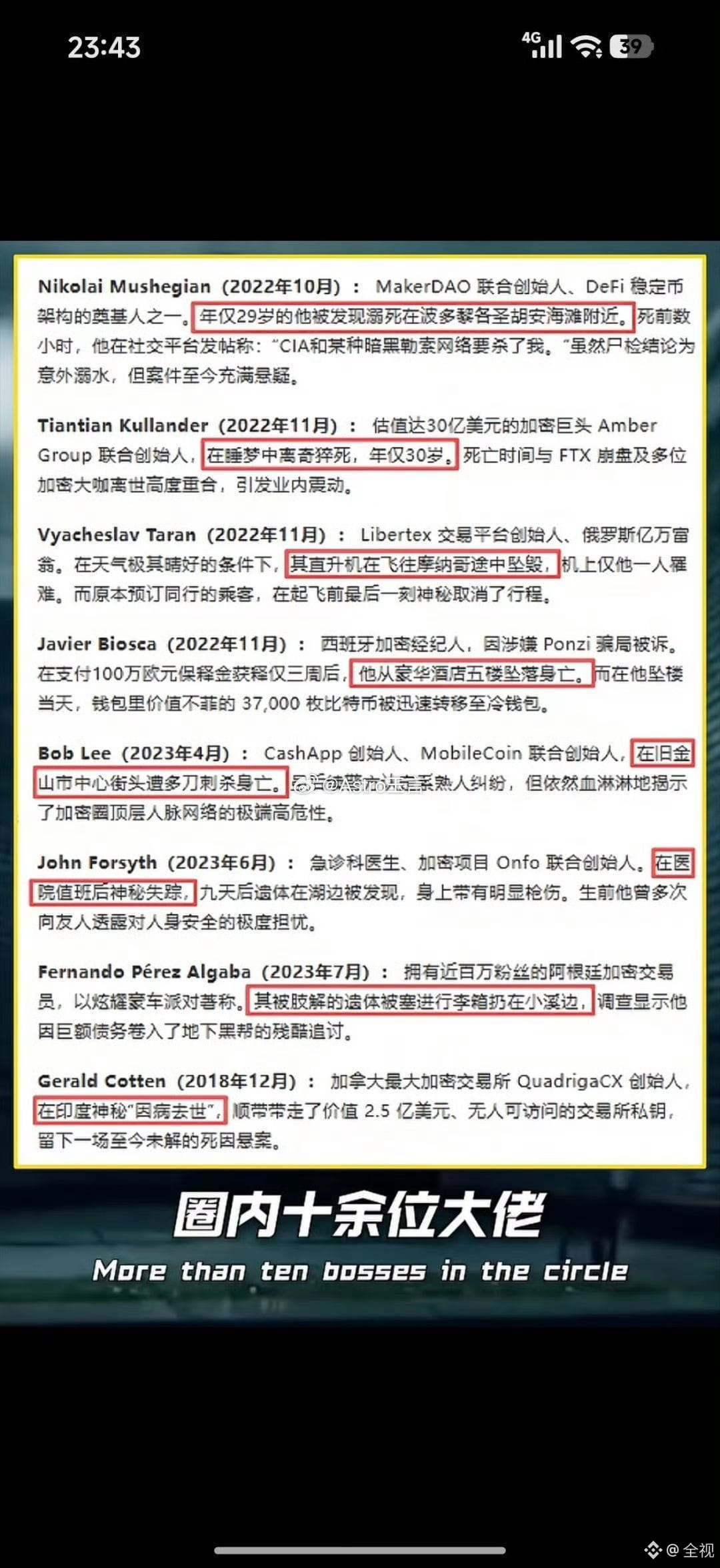
$ETH cryptocurrency millionaires assassination list, they have already killed more than a dozen
$ETH cryptocurrency millionaires assassination list, they have already killed more than a dozen
1
485
·
--
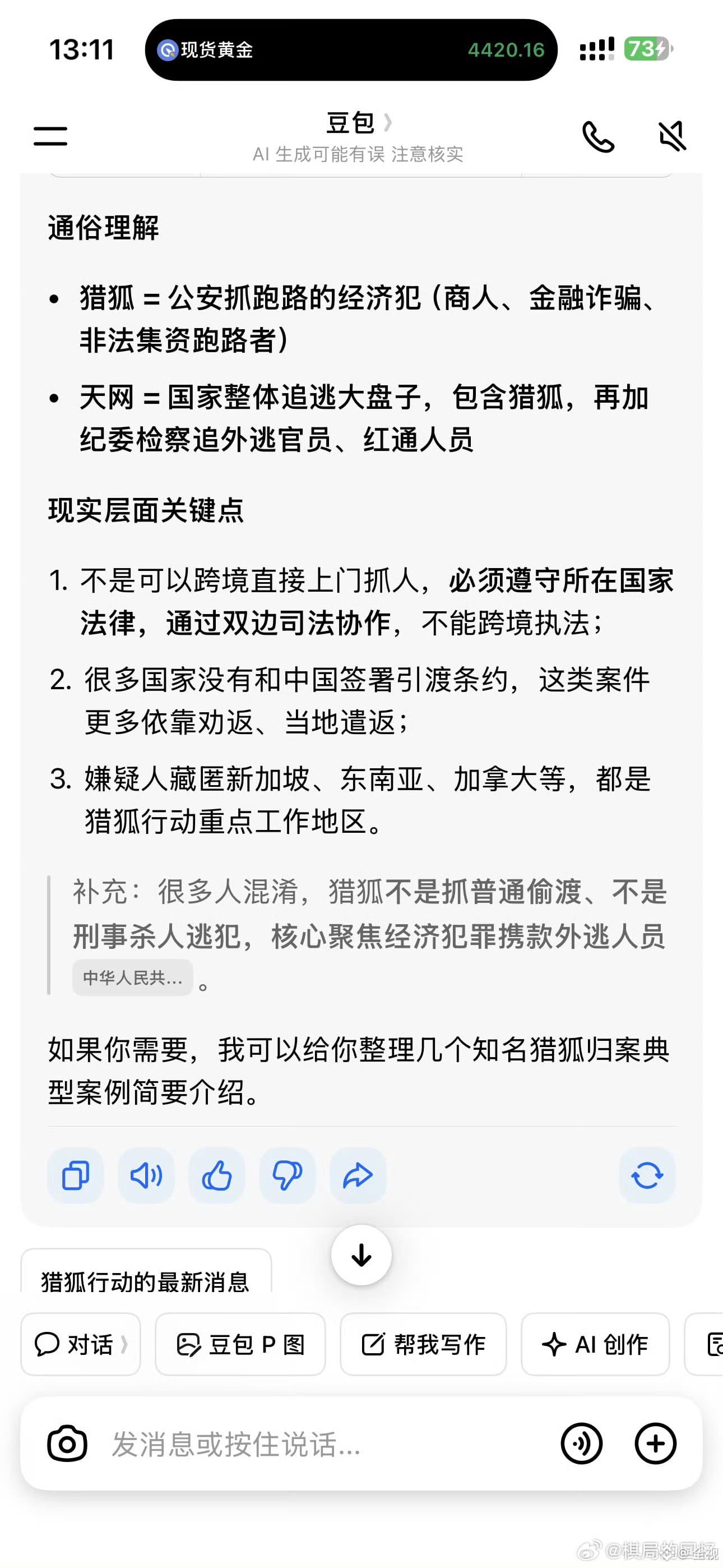
$牛来 said that Sun Ge has included him on the hunter list; once Sun Ge gets arrested, the bull market is definitely going to come.
$牛来 said that Sun Ge has included him on the hunter list; once Sun Ge gets arrested, the bull market is definitely going to come.

1
817
·
--
$ETH Sun Yuchen's goose-like voice and eunuch-like tone came from this—don't urinate standing up
$ETH Sun Yuchen's goose-like voice and eunuch-like tone came from this—don't urinate standing up

1
262
·
--
$ETH Latest webpage to steal mobile phone wallets mnemonic words—all support Apple iOS 26.2 (iOS 26.3 = released February 11, 2026, which is the official version, build number 23D127 .
Current latest official version = iOS 26.6.1, released August 17, 2026), and once you open the webpage, it can steal your U
$ETH Latest webpage to steal mobile phone wallets mnemonic words—all support Apple iOS 26.2 (iOS 26.3 = released February 11, 2026, which is the official version, build number 23D127 .
Current latest official version = iOS 26.6.1, released August 17, 2026), and once you open the webpage, it can steal your U
Current latest official version = iOS 26.6.1, released August 17, 2026), and once you open the webpage, it can steal your U
1
337
·
--
$ETH Latest web page steals mobile phone wallet mnemonic phrases all support iOS 26.2 now. Staying on the webpage for 15 seconds is enough.
$ETH Latest web page steals mobile phone wallet mnemonic phrases all support iOS 26.2 now. Staying on the webpage for 15 seconds is enough.
1
241
·
--
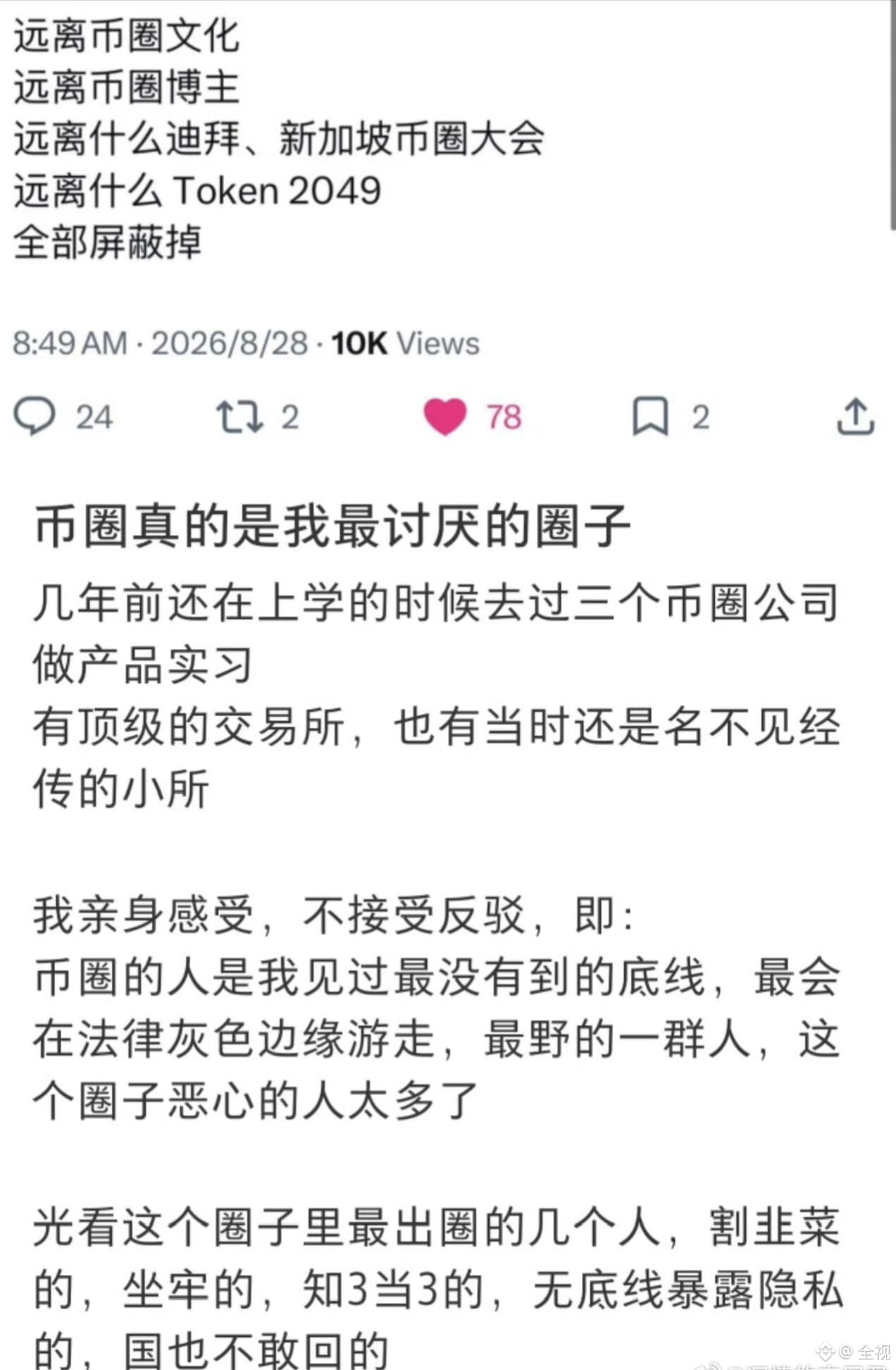
$牛来 It’s good that CZ called a stop to Sun’s wrongdoing in time.
Otherwise, if you let Sun keep stirring things up like this,
what would the top bigwigs in Zhongnanhai think?
Would they want to take a closer look into Sun’s rise—the story of how he made his fortune and where his wealth came from?
As long as Sun himself is the only one who dies, it’s fine.
Don’t drag the industry down with him.
$牛来 It’s good that CZ called a stop to Sun’s wrongdoing in time.
Otherwise, if you let Sun keep stirring things up like this,
what would the top bigwigs in Zhongnanhai think?
Would they want to take a closer look into Sun’s rise—the story of how he made his fortune and where his wealth came from?
As long as Sun himself is the only one who dies, it’s fine.
Don’t drag the industry down with him.
Otherwise, if you let Sun keep stirring things up like this,
what would the top bigwigs in Zhongnanhai think?
Would they want to take a closer look into Sun’s rise—the story of how he made his fortune and where his wealth came from?
As long as Sun himself is the only one who dies, it’s fine.
Don’t drag the industry down with him.
1
255
·
--
$ETH Sun Yuchen can’t hold up chronic bleeding, let alone an acute bank run.
I. Apparent funding shortfall ≈ $2.6 billion (range $1.5–$3.5B)
On the HTX chain, visible assets over 12 months fell 43% (from $7.4B to $4.25B)—already in the form of a “chronic bank run”
About 4 billion WLFI tokens fully frozen
Identifiable liquidity “firefighting” funds of roughly $1.2–$1.5B
60 billion TRX nominally equals $2B, but the reflexivity locks it up and it’s not usable
II. How it got locked down
In April 2026, Sun sued WLFI for fraud; in May, WLFI countersued him for shorting and for borrowing HTX to misappropriate user tokens for cashing out
UK (May) → EU (July) → Binance cut off access (Aug 23). Sanctions cascade, accelerating the bank run
In June, WLFI blacklisted HTX addresses; users’ wealth management products and spot WLFI were all frozen, and HTX suspended withdrawals
On Aug 27, Sun published a post and sued Jing Tian
III. Three different ways to calculate the shortfall
Metric A (balance sheet): HTX reportedly stated PoR liabilities of about $6.9B; on-chain visible assets at DeFiLlama are $4.25B → apparent shortfall of about $2.6B
Metric B (bank-run perspective): what gets run first is USDT + BTC + ETH (about $3.8B in hard liabilities). If TRX/stUSDT makes up the bulk of assets, then real hard-asset coverage is far lower than what it looks like
Metric C (personal firefighting capacity): WLFI is fully frozen; TUSD $456M was globally frozen by a Dubai court; Trump ecosystem unrealized loss is over $100M. What’s actually movable is only $1.2–$1.5B in liquid assets. Selling TRX to save HTX would simultaneously destroy both PoR coverage and Sun’s own net worth
IV. Fatal point: sanctions cascade (cut off in sequence: UK → EU → Binance)
Biggest single-point risk: if Tether freezes HTX addresses, the 1.77B USDT “lifeline” would be cut off instantly
After the court dismissed the forced arbitration on Aug 20, the “misappropriating user tokens by borrowing HTX” accusations would be backed by publicly gathered evidence; once proven, the bank run would trigger an official withdrawal directive
Subjective probability (12 months): keep running 55–65% / suspend withdrawals 20–30% / external rescue 10–15%
Time window:
Forbes super-Billions era: Wang Jianlin (8/6–9) → WLFI lawsuit milestone (8/20) → Binance cutoff (8/23) → Lu Ke-wen’s long article (8/24, writing “he doesn’t have money like you imagine”) → Jing Tian’s “nuclear bomb” (8/27) → 8/29 “Sun Yuchen, not as well-off as you imagine.”
Treat the crisis like traffic management—objectively it precisely completed an agenda substitution: turning “how much money he really has” into “his emotional story.”
VI. The required discount that must be applied
HTX reserves have no independent audit; PoR is a self-reported Merkle tree that only discloses ratios
The $8.5B net worth figure is Forbes’s definition; Bloomberg has already stopped updating his net worth
$ETH Sun Yuchen can’t hold up chronic bleeding, let alone an acute bank run.
I. Apparent funding shortfall ≈ $2.6 billion (range $1.5–$3.5B)
On the HTX chain, visible assets over 12 months fell 43% (from $7.4B to $4.25B)—already in the form of a “chronic bank run”
About 4 billion WLFI tokens fully frozen
Identifiable liquidity “firefighting” funds of roughly $1.2–$1.5B
60 billion TRX nominally equals $2B, but the reflexivity locks it up and it’s not usable
II. How it got locked down
In April 2026, Sun sued WLFI for fraud; in May, WLFI countersued him for shorting and for borrowing HTX to misappropriate user tokens for cashing out
UK (May) → EU (July) → Binance cut off access (Aug 23). Sanctions cascade, accelerating the bank run
In June, WLFI blacklisted HTX addresses; users’ wealth management products and spot WLFI were all frozen, and HTX suspended withdrawals
On Aug 27, Sun published a post and sued Jing Tian
III. Three different ways to calculate the shortfall
Metric A (balance sheet): HTX reportedly stated PoR liabilities of about $6.9B; on-chain visible assets at DeFiLlama are $4.25B → apparent shortfall of about $2.6B
Metric B (bank-run perspective): what gets run first is USDT + BTC + ETH (about $3.8B in hard liabilities). If TRX/stUSDT makes up the bulk of assets, then real hard-asset coverage is far lower than what it looks like
Metric C (personal firefighting capacity): WLFI is fully frozen; TUSD $456M was globally frozen by a Dubai court; Trump ecosystem unrealized loss is over $100M. What’s actually movable is only $1.2–$1.5B in liquid assets. Selling TRX to save HTX would simultaneously destroy both PoR coverage and Sun’s own net worth
IV. Fatal point: sanctions cascade (cut off in sequence: UK → EU → Binance)
Biggest single-point risk: if Tether freezes HTX addresses, the 1.77B USDT “lifeline” would be cut off instantly
After the court dismissed the forced arbitration on Aug 20, the “misappropriating user tokens by borrowing HTX” accusations would be backed by publicly gathered evidence; once proven, the bank run would trigger an official withdrawal directive
Subjective probability (12 months): keep running 55–65% / suspend withdrawals 20–30% / external rescue 10–15%
Time window:
Forbes super-Billions era: Wang Jianlin (8/6–9) → WLFI lawsuit milestone (8/20) → Binance cutoff (8/23) → Lu Ke-wen’s long article (8/24, writing “he doesn’t have money like you imagine”) → Jing Tian’s “nuclear bomb” (8/27) → 8/29 “Sun Yuchen, not as well-off as you imagine.”
Treat the crisis like traffic management—objectively it precisely completed an agenda substitution: turning “how much money he really has” into “his emotional story.”
VI. The required discount that must be applied
HTX reserves have no independent audit; PoR is a self-reported Merkle tree that only discloses ratios
The $8.5B net worth figure is Forbes’s definition; Bloomberg has already stopped updating his net worth
I. Apparent funding shortfall ≈ $2.6 billion (range $1.5–$3.5B)
On the HTX chain, visible assets over 12 months fell 43% (from $7.4B to $4.25B)—already in the form of a “chronic bank run”
About 4 billion WLFI tokens fully frozen
Identifiable liquidity “firefighting” funds of roughly $1.2–$1.5B
60 billion TRX nominally equals $2B, but the reflexivity locks it up and it’s not usable
II. How it got locked down
In April 2026, Sun sued WLFI for fraud; in May, WLFI countersued him for shorting and for borrowing HTX to misappropriate user tokens for cashing out
UK (May) → EU (July) → Binance cut off access (Aug 23). Sanctions cascade, accelerating the bank run
In June, WLFI blacklisted HTX addresses; users’ wealth management products and spot WLFI were all frozen, and HTX suspended withdrawals
On Aug 27, Sun published a post and sued Jing Tian
III. Three different ways to calculate the shortfall
Metric A (balance sheet): HTX reportedly stated PoR liabilities of about $6.9B; on-chain visible assets at DeFiLlama are $4.25B → apparent shortfall of about $2.6B
Metric B (bank-run perspective): what gets run first is USDT + BTC + ETH (about $3.8B in hard liabilities). If TRX/stUSDT makes up the bulk of assets, then real hard-asset coverage is far lower than what it looks like
Metric C (personal firefighting capacity): WLFI is fully frozen; TUSD $456M was globally frozen by a Dubai court; Trump ecosystem unrealized loss is over $100M. What’s actually movable is only $1.2–$1.5B in liquid assets. Selling TRX to save HTX would simultaneously destroy both PoR coverage and Sun’s own net worth
IV. Fatal point: sanctions cascade (cut off in sequence: UK → EU → Binance)
Biggest single-point risk: if Tether freezes HTX addresses, the 1.77B USDT “lifeline” would be cut off instantly
After the court dismissed the forced arbitration on Aug 20, the “misappropriating user tokens by borrowing HTX” accusations would be backed by publicly gathered evidence; once proven, the bank run would trigger an official withdrawal directive
Subjective probability (12 months): keep running 55–65% / suspend withdrawals 20–30% / external rescue 10–15%
Time window:
Forbes super-Billions era: Wang Jianlin (8/6–9) → WLFI lawsuit milestone (8/20) → Binance cutoff (8/23) → Lu Ke-wen’s long article (8/24, writing “he doesn’t have money like you imagine”) → Jing Tian’s “nuclear bomb” (8/27) → 8/29 “Sun Yuchen, not as well-off as you imagine.”
Treat the crisis like traffic management—objectively it precisely completed an agenda substitution: turning “how much money he really has” into “his emotional story.”
VI. The required discount that must be applied
HTX reserves have no independent audit; PoR is a self-reported Merkle tree that only discloses ratios
The $8.5B net worth figure is Forbes’s definition; Bloomberg has already stopped updating his net worth
1
542
Log in to explore more content
Join global crypto users on Binance Square
⚡️ Get latest and useful information about crypto.
💬 Trusted by the world’s largest crypto exchange.
👍 Discover real insights from verified creators.
Email / Phone number
Trending Topics
CryptoSelloffTriggersMultipleWhaleLiquidations
853 views
64 Discussing
Crypto Liquidations Top $2B in 24 Hours as 329,000 Traders Are Wiped Out
Binance News
·5 Likes
·1.7k views
USSpotXRPETFsSeeLargestWeeklyOutflowIn8Months
43,148 views
510 Discussing
WillFOMCMinutesReinforceRateHikeExpectations?
224 views
15 Discussing