
他生我夢
5 Following
82 Followers
8 Liked
Posts
All
Quotes
PINNED

黑猫SabTheTrader
·
--
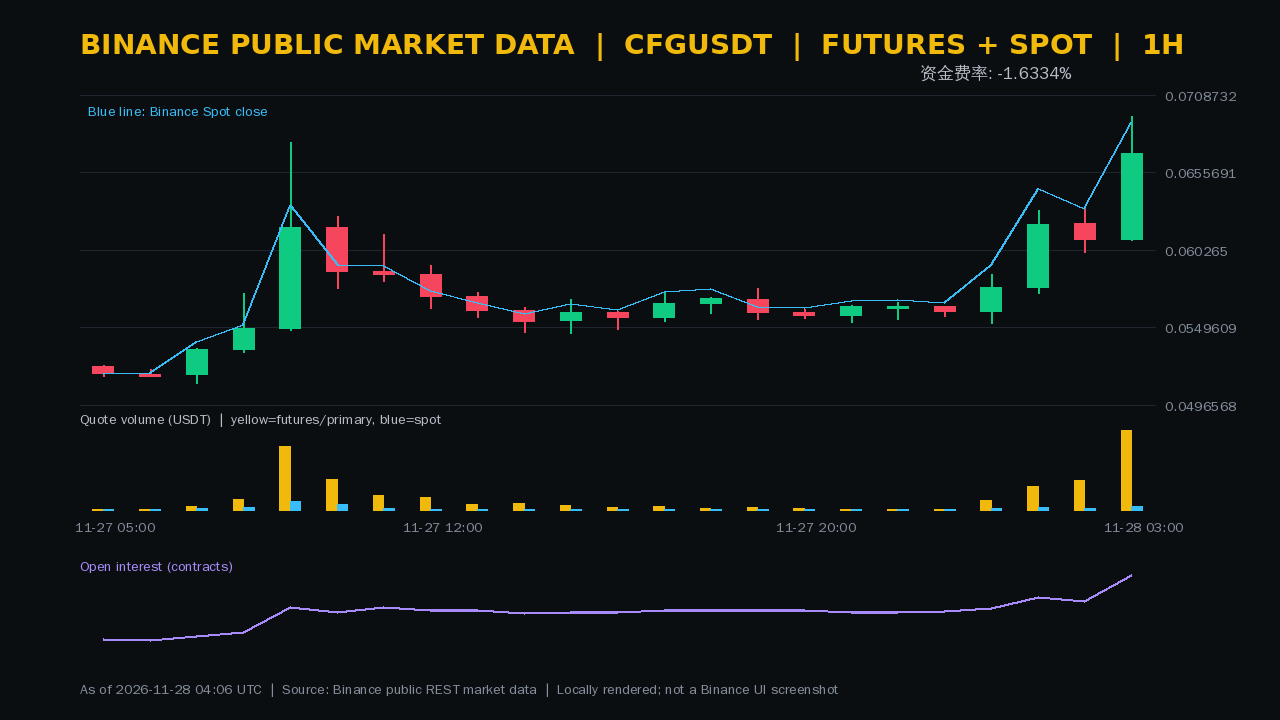
The funding rate has settled at -1.628%, but the perpetual contract’s discount hasn’t disappeared.
At 12:00 Beijing time, Binance $CFG perpetual actually settled at a funding rate of -1.628%, meaning shorts paid longs. About 6 minutes later, the perpetual’s mark price was still about 3.12% below the index. Settlement transfers fees between longs and shorts; it doesn’t directly pull the contract price back to the index.
This doesn’t contradict the market’s rise. Over the 4 full hours up to noon, the perpetual rose 19.22%, while open interest measured in contracts increased 58.29%. This stretch of rising price and open interest on the chart shows that more contracts remained in the market as prices rose. Position data doesn’t show which side initiated trades, and it isn’t enough to conclude that shorts were liquidated.
📌 Before the next settlement, first watch how the discount narrows. If the mark price catches up with the index, that would indicate relative strength on the contract side. If the index itself falls, the price gap would also narrow, but for a different reason. The funding rate on the chart is an indicative value captured at the time of the screenshot, not the result of the next settlement.
* NFA, DYOR
黑猫SabTheTrader
·
--
#寻找两百个不同的币安人生 看到这个征文大赛,作为I人的我在每一次选择分享自己的故事时,都会有点不知所措。怎么说呢,一来是担心分享自己的故事会不小心传播了不好的能量出来,二来确实习惯了在人前都是积极的阳光形象。但是如果大家能在我的故事里,获取到些许前进的能量,我觉得那就达成了此次我分享的意义了。
我是2019年疫情开始的时候选择创业的,当时国内的疫情并没有很严重,但是已经有一次lock down,整体氛围还是积极向上的。Lock down的期间,我跟着先生买了BNB,对币圈也感到了好奇,但是没有深入学习,只是玩玩。当时的价格 $BNB 是8、9U。接着我们就放着没有管了。
时间到了2022年,创业失败,先生跟我把当时买的BNB卖了,发完了员工的遣散费后,就结束了公司。我们俩当时都感叹“好在当时有在低位买到了BNB”,这笔钱刚刚好够发遣散费给到初创时与我们并肩作战的员工。
接着,我们俩就背着200万的债务,继续两个人慢慢地把余下的尾货清掉,开始了我们的交易之路。为什么是进入交易圈呢?因为我们已经被实业整的伤痕累累,心太累太累了。
现在进圈已经3年了,我们俩还是一路扛着压力,一路跟圈内大佬学习交易的思路,传统的交易我们也在继续努力学习。持续努力、持续学习,相信一切都会变好的。✨
事实上,我们也在慢慢变好,没有暴富爽文情节,但我们找到了自己的节奏,一切都在往好的方向发展。今年7月份我的情绪也比刚破产的时候好了很多,感恩宇宙的眷顾,因此在Web3也交到了很多能量很好的朋友,真的很感恩。🍀
最近做得最漂亮的交易是 $PALU 。$币安人生 也进场了,但是进的位置没有很好,但也一直拿着。
以上就是我的币安人生啦,不知道你的是怎样的呢?
Log in to explore more content