
财哥引财
4.4k Posts

财哥引财
X:@n8lbz1
公众号:扶摇的交易笔记
合约要稳,切莫扛单。现货要稳,切莫贪心。 币圈就是一场巨大的游戏,让我帮你,从boss手里抢一块蛋糕。
1 Following
3.1K+ Followers
3.5K+ Liked
Posts
All
Quotes
Videos
PINNED
Binance has now launched a new feature — you can directly message and chat within the platform.
If you’d like to connect or ask for advice, you can scan the QR code below to add us.
If you’d like to connect or ask for advice, you can scan the QR code below to add us.

PINNED
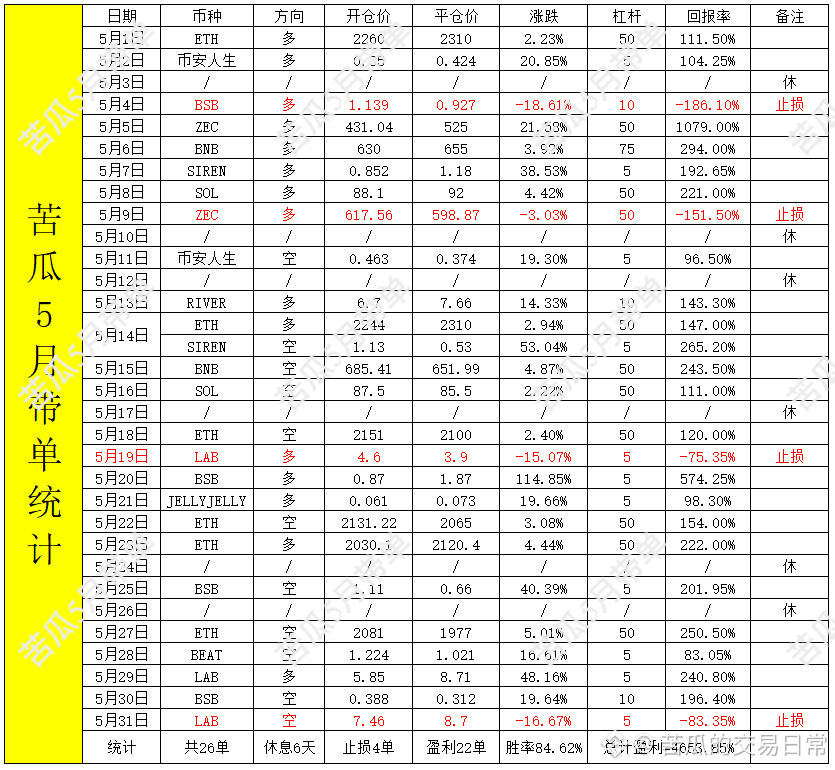
May is already over, and June continues to work hard!
No matter how strong the market is or isn’t, opportunities are always there in the market. The key isn’t waiting for a big surge every day, but decisively taking action in the position that belongs to you—and patiently waiting when you shouldn’t act.
Many people see the numbers inside and think they’re exaggerated, but trading has never been about making money from one or two all-in plays. It’s about accumulating through trade by trade.
If your capital is only 1000 U, you don’t need to take risky oversized positions. Take 200 U to 300 U each time, follow the plan, strictly place stop losses, take the profits you should, and keep your losses within control. After a month, you can still see good results.
Many people lose money not because there are no opportunities, but because they take a little profit and run, and when they lose a little they just hold on. The real gap is never about forecasting ability—it’s about execution discipline.
June has already begun, and new opportunities are on the way. When the market moves, we follow the trend; when the market is not favorable, we wait patiently.
The market opens every day, but the profit that belongs to you only belongs to those who have a plan and follow discipline.
June, keep going. Hope that when you review at the end of the month, the numbers on the board will look even better than in May.
#韩国加密市场转为折价 $LAB
No matter how strong the market is or isn’t, opportunities are always there in the market. The key isn’t waiting for a big surge every day, but decisively taking action in the position that belongs to you—and patiently waiting when you shouldn’t act.
Many people see the numbers inside and think they’re exaggerated, but trading has never been about making money from one or two all-in plays. It’s about accumulating through trade by trade.
If your capital is only 1000 U, you don’t need to take risky oversized positions. Take 200 U to 300 U each time, follow the plan, strictly place stop losses, take the profits you should, and keep your losses within control. After a month, you can still see good results.
Many people lose money not because there are no opportunities, but because they take a little profit and run, and when they lose a little they just hold on. The real gap is never about forecasting ability—it’s about execution discipline.
June has already begun, and new opportunities are on the way. When the market moves, we follow the trend; when the market is not favorable, we wait patiently.
The market opens every day, but the profit that belongs to you only belongs to those who have a plan and follow discipline.
June, keep going. Hope that when you review at the end of the month, the numbers on the board will look even better than in May.
#韩国加密市场转为折价 $LAB

Not much principal in the crypto market? Here’s the strongest survival strategy!
With only 1000U, is there a chance? Yes—the key is method, position sizing, and pacing.
1) Use 1000U for futures: pick popular coins, watch for news, study the technical charts, strictly take profit and set stop-loss. Aim to turn 1000 into 2000.
2) Turn 2000U over again → 4000.
3) With 4000U, go all in on the last round → 8000.
Pass all three stages, and your principal grows to nearly three times.
Remember: at most three times—don’t get greedy. If you win, withdraw.
After tripling, focus on accumulating, learning, and planning:
1) Research the market: don’t blindly follow trading calls. Opportunities are hidden in fundamentals, the team, sentiment, and technical pathways.
2) Diversify investments: after your principal reaches 8000U, allocate into quality coins. Make small, diversified bets across AI, gaming-related chains, and L2 public chains—first protect the principal.
3) Time is your friend: holding high-quality coins longer is steadier than staring at charts every day. If it drops, hold; if it rises, don’t panic.
4) Know how to use leverage: use small positions, set stop-losses, and know when to enter and when to retreat. If used poorly it’s a noose; if used right it’s a tool to amplify returns.
Even small capital can start—what matters is stability, patience, and understanding the rhythm.
With the right trading mindset, 1000U can also multiply by several times. The real hard truth: don’t become the one left holding the bag.
With only 1000U, is there a chance? Yes—the key is method, position sizing, and pacing.
1) Use 1000U for futures: pick popular coins, watch for news, study the technical charts, strictly take profit and set stop-loss. Aim to turn 1000 into 2000.
2) Turn 2000U over again → 4000.
3) With 4000U, go all in on the last round → 8000.
Pass all three stages, and your principal grows to nearly three times.
Remember: at most three times—don’t get greedy. If you win, withdraw.
After tripling, focus on accumulating, learning, and planning:
1) Research the market: don’t blindly follow trading calls. Opportunities are hidden in fundamentals, the team, sentiment, and technical pathways.
2) Diversify investments: after your principal reaches 8000U, allocate into quality coins. Make small, diversified bets across AI, gaming-related chains, and L2 public chains—first protect the principal.
3) Time is your friend: holding high-quality coins longer is steadier than staring at charts every day. If it drops, hold; if it rises, don’t panic.
4) Know how to use leverage: use small positions, set stop-losses, and know when to enter and when to retreat. If used poorly it’s a noose; if used right it’s a tool to amplify returns.
Even small capital can start—what matters is stability, patience, and understanding the rhythm.
With the right trading mindset, 1000U can also multiply by several times. The real hard truth: don’t become the one left holding the bag.
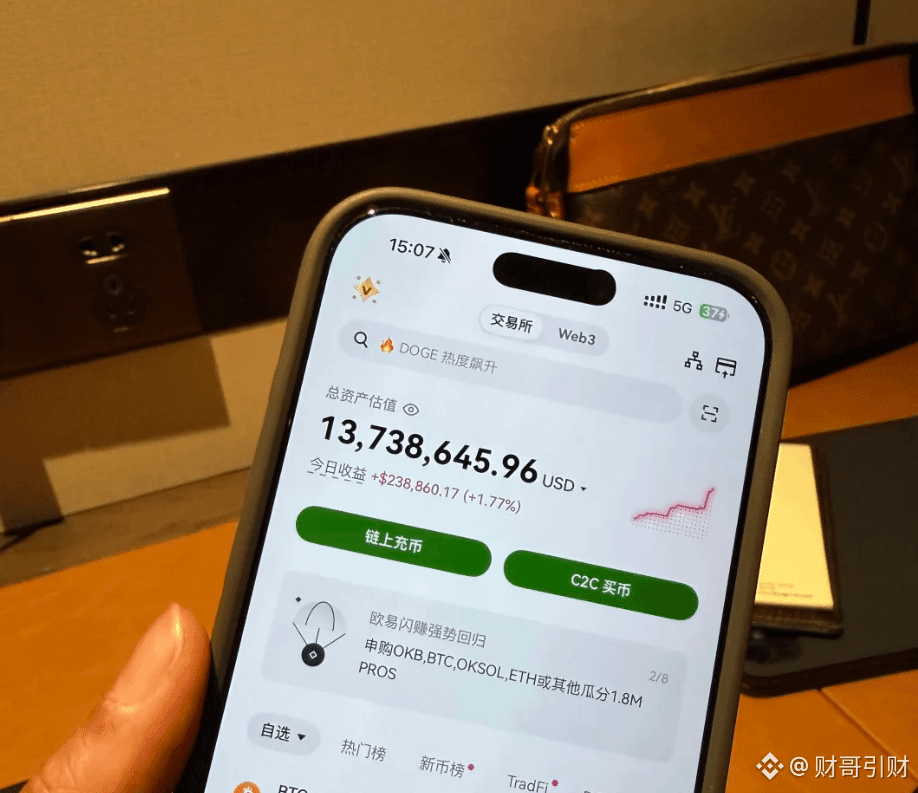

Last year, I taught my fans to roll from 1000U to 8000U using leverage. It only took two months.
One long-time fan-account was left with just 1000U and asked me if there’s still a chance to turn things around. I replied with one sentence: "Follow me—don’t be greedy. Trade only the set, planned trades."
1) Starting phase: In the first week, don’t open any positions. Observe the market first and look for a "valuable opportunity." The first trade only moved 300U with 5x leverage, executed precisely at an insertion point where sentiment was extremely weak. It yielded 18%—not because the profit matters, but because it paved the way for what came next.
2) Mid-term phase: After the account reached 3000U, I taught him to break down the market structure, control drawdowns, and build and take profits in batches. Use 30% of the position for the main impulse wave, and 20% for adding at lower levels. Never go all-in, and never stubbornly hold through a loss. By riding the momentum of ETH, $SOL , and OP, we won four rounds in a row, stabilizing until 5000U.
3) Late phase: Use a "sprint mode" to lay out breakouts on the bigger timeframe. Position sizing, take-profit/stop-loss, and exit points are all set in advance. When BTC broke out and ETH followed with a catch-up rally, we pushed through with a single trade to reach 8000U.
From 1000U to 8000U isn’t a miracle—it’s the result of discipline.
The core is one set: position timing + sentiment structure + technical confirmation—three in one.
Want to know the specific strategy, how to control risk, how to spot fake breakouts, and when to stop?
I don’t teach myths—I only talk about real trades.
If you still don’t know how to choose coins, how to enter, and how to take profit or cut losses—follow me. Let’s lay it out together!
One long-time fan-account was left with just 1000U and asked me if there’s still a chance to turn things around. I replied with one sentence: "Follow me—don’t be greedy. Trade only the set, planned trades."
1) Starting phase: In the first week, don’t open any positions. Observe the market first and look for a "valuable opportunity." The first trade only moved 300U with 5x leverage, executed precisely at an insertion point where sentiment was extremely weak. It yielded 18%—not because the profit matters, but because it paved the way for what came next.
2) Mid-term phase: After the account reached 3000U, I taught him to break down the market structure, control drawdowns, and build and take profits in batches. Use 30% of the position for the main impulse wave, and 20% for adding at lower levels. Never go all-in, and never stubbornly hold through a loss. By riding the momentum of ETH, $SOL , and OP, we won four rounds in a row, stabilizing until 5000U.
3) Late phase: Use a "sprint mode" to lay out breakouts on the bigger timeframe. Position sizing, take-profit/stop-loss, and exit points are all set in advance. When BTC broke out and ETH followed with a catch-up rally, we pushed through with a single trade to reach 8000U.
From 1000U to 8000U isn’t a miracle—it’s the result of discipline.
The core is one set: position timing + sentiment structure + technical confirmation—three in one.
Want to know the specific strategy, how to control risk, how to spot fake breakouts, and when to stop?
I don’t teach myths—I only talk about real trades.
If you still don’t know how to choose coins, how to enter, and how to take profit or cut losses—follow me. Let’s lay it out together!
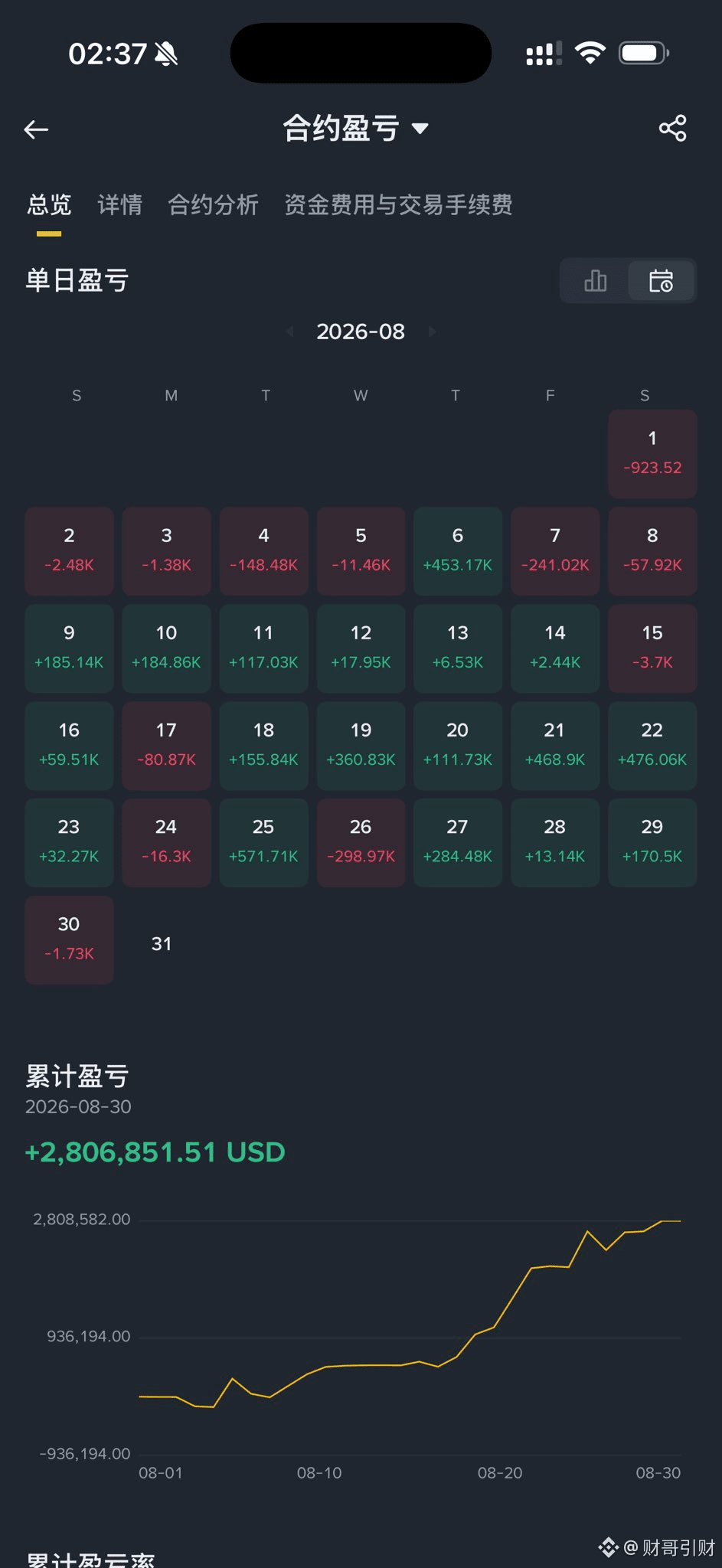

To be honest, Caige previously never thought that with a small amount like 800U, one day it could grow to over 400,000.
It’s not luck, and it’s not some magical operation—it's just that you磨出来 the position sizing and timing little by little.
1、300U→3200U: Only place a trade when the trend is clear. Keep position size under 30%, set the stop loss in advance, and if there’s any profit, withdraw it first—don’t “stay to the death.”
2、3200U→38,000U: Only trade pullbacks; don’t chase. Once the trend has shown itself, scale in with small positions in batches. Add only with profits—don’t touch the principal.
3、38,000U→410,000U: Split positions into layers: a core position, a defensive position, and an opportunity position. Don’t chase when price is rising—move only during pullbacks. When profit reaches 20%~30%, reduce the position first to lock in certainty.
When the account grows fastest, you’re actually the least excited.
Don’t think about how much money to make first—make sure you’re not eliminated by the market.
The crypto market has never lacked opportunities; what it lacks is someone to give you a hand when the opportunity appears.
It’s not luck, and it’s not some magical operation—it's just that you磨出来 the position sizing and timing little by little.
1、300U→3200U: Only place a trade when the trend is clear. Keep position size under 30%, set the stop loss in advance, and if there’s any profit, withdraw it first—don’t “stay to the death.”
2、3200U→38,000U: Only trade pullbacks; don’t chase. Once the trend has shown itself, scale in with small positions in batches. Add only with profits—don’t touch the principal.
3、38,000U→410,000U: Split positions into layers: a core position, a defensive position, and an opportunity position. Don’t chase when price is rising—move only during pullbacks. When profit reaches 20%~30%, reduce the position first to lock in certainty.
When the account grows fastest, you’re actually the least excited.
Don’t think about how much money to make first—make sure you’re not eliminated by the market.
The crypto market has never lacked opportunities; what it lacks is someone to give you a hand when the opportunity appears.
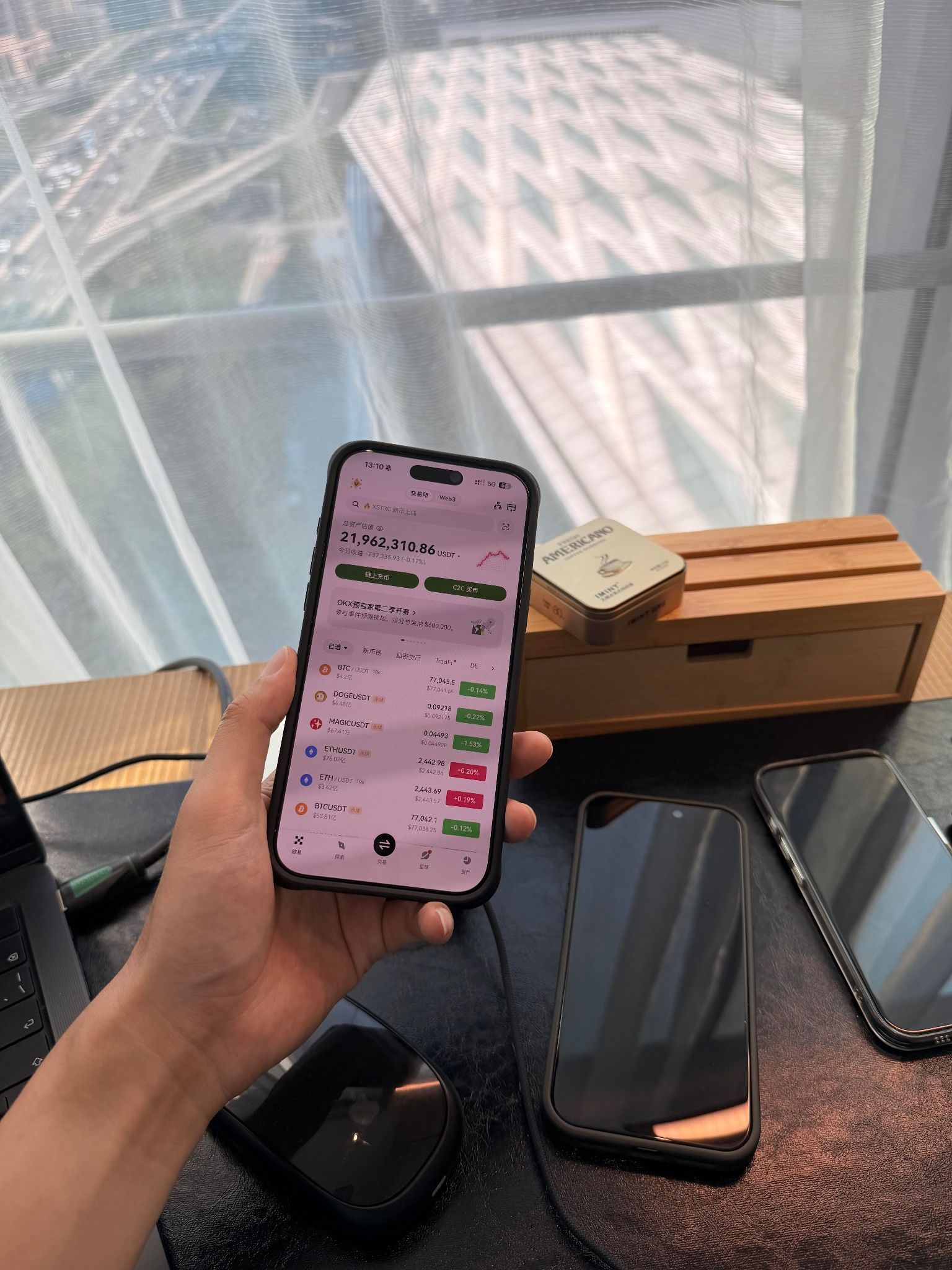

Thirteen years in the coin world: the bull-bear cycle goes round and round—huge surges, brutal crashes. I’ve seen it all.
Some people get rich overnight, while others go to zero overnight.
Let me tell you a real story: a longtime old friend of mine went all-in on a fake project during the 2018 bear market. He had 3 million turn into 200,000. He held on all the way until 2021, when it came back to 2 million.
He sold half. The remaining half then dropped again in 2022, down to 300,000.
He asked me what to do. I told him: “You made it through the grind, but you lost half your hair.”
My biggest takeaway from these thirteen years isn’t that the technicals are so amazing—it’s one word: endure.
In a bull market, don’t think you’re a genius. In a bear market, don’t think the world is ending.
When the tide comes in, you’re here. When the tide goes out, you’re still here—that’s enough.
These days, I check the market twice a day, set stop-loss, take a bite when the opportunity comes, and leave when it’s gone—no chasing.
The more relaxed you are, the more money finds you.
As long as you don’t get liquidated, and you don’t leave the table, your bowl of fortune will come to you sooner or later.
If you’re tired of repeatedly losing money and want to make a steady comeback, come find me anytime. We’ll execute the plan together.
Some people get rich overnight, while others go to zero overnight.
Let me tell you a real story: a longtime old friend of mine went all-in on a fake project during the 2018 bear market. He had 3 million turn into 200,000. He held on all the way until 2021, when it came back to 2 million.
He sold half. The remaining half then dropped again in 2022, down to 300,000.
He asked me what to do. I told him: “You made it through the grind, but you lost half your hair.”
My biggest takeaway from these thirteen years isn’t that the technicals are so amazing—it’s one word: endure.
In a bull market, don’t think you’re a genius. In a bear market, don’t think the world is ending.
When the tide comes in, you’re here. When the tide goes out, you’re still here—that’s enough.
These days, I check the market twice a day, set stop-loss, take a bite when the opportunity comes, and leave when it’s gone—no chasing.
The more relaxed you are, the more money finds you.
As long as you don’t get liquidated, and you don’t leave the table, your bowl of fortune will come to you sooner or later.
If you’re tired of repeatedly losing money and want to make a steady comeback, come find me anytime. We’ll execute the plan together.
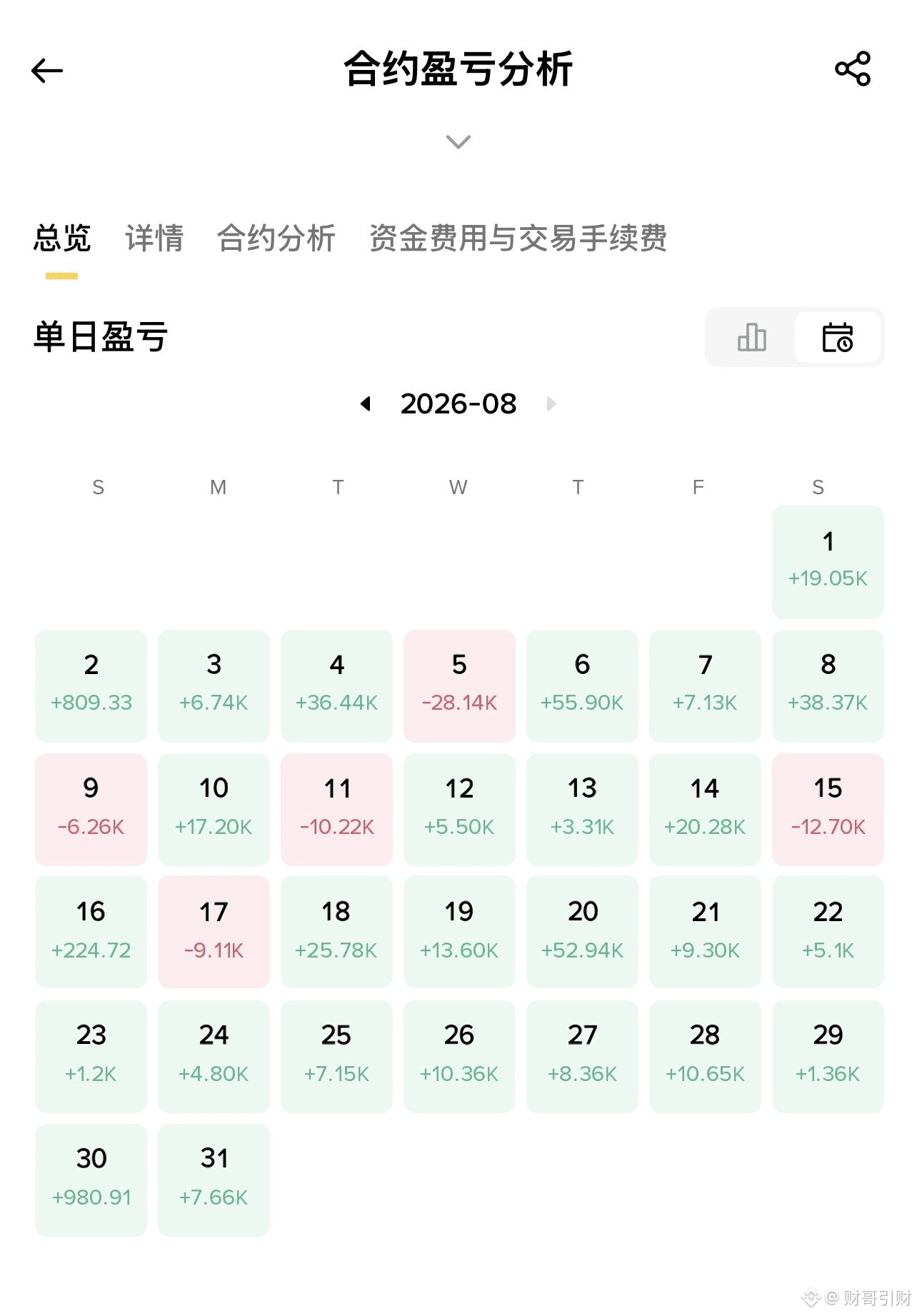

From 3000U to 62,000, I took 7 weeks
No liquidation. No gambling my life.
It’s not that I’m that amazing—it's that I finally figured out one thing:
In the crypto market, you can’t survive on luck.
To be honest, back then I was about to break too.
I kept losing from the highs all the way down until I had only 3000U left—I didn’t even dare to look at my account.
But I wouldn’t give up.
I knew this market could turn around; it was just that before, everything was too chaotic, too wild, and too rushed.
Later, I only did two things:
First, trade along with the swings—don’t guess the market, and don’t catch falling knives.
Second, strictly control drawdown. No oversized positions, no greed for “one more.” Make a bit of profit and get out.
A lot of people die unfairly.
Even if you get the direction right, you can still get shaken out.
Cutting losses becomes impossible, and holding winners becomes impossible.
In the end, it’s emotions that are driving the trading.
My rolling-over strategy took me three years to grind out.
From 2022 until now, it’s been proven again and again.
This cycle was also pretty solid with a few brothers:
500U → 18,000, 45 days
800U → 34,000, focused on shorting rhythm
10,000 → 186,000, 14 trades in total—clean and decisive
It’s not that the method is super magical.
It’s that we finally learned how:
Come in steadily and survive.
Crypto isn’t that it can’t be profitable—most people just take the wrong route.
You don’t need to get rich overnight.
Roll forward step by step—compounding is the real wealth.
Because I’ve stepped into so many traps myself, I’m even more willing to light a lamp for you. The market is quietly brewing—don’t keep searching alone in the dark night.
No liquidation. No gambling my life.
It’s not that I’m that amazing—it's that I finally figured out one thing:
In the crypto market, you can’t survive on luck.
To be honest, back then I was about to break too.
I kept losing from the highs all the way down until I had only 3000U left—I didn’t even dare to look at my account.
But I wouldn’t give up.
I knew this market could turn around; it was just that before, everything was too chaotic, too wild, and too rushed.
Later, I only did two things:
First, trade along with the swings—don’t guess the market, and don’t catch falling knives.
Second, strictly control drawdown. No oversized positions, no greed for “one more.” Make a bit of profit and get out.
A lot of people die unfairly.
Even if you get the direction right, you can still get shaken out.
Cutting losses becomes impossible, and holding winners becomes impossible.
In the end, it’s emotions that are driving the trading.
My rolling-over strategy took me three years to grind out.
From 2022 until now, it’s been proven again and again.
This cycle was also pretty solid with a few brothers:
500U → 18,000, 45 days
800U → 34,000, focused on shorting rhythm
10,000 → 186,000, 14 trades in total—clean and decisive
It’s not that the method is super magical.
It’s that we finally learned how:
Come in steadily and survive.
Crypto isn’t that it can’t be profitable—most people just take the wrong route.
You don’t need to get rich overnight.
Roll forward step by step—compounding is the real wealth.
Because I’ve stepped into so many traps myself, I’m even more willing to light a lamp for you. The market is quietly brewing—don’t keep searching alone in the dark night.
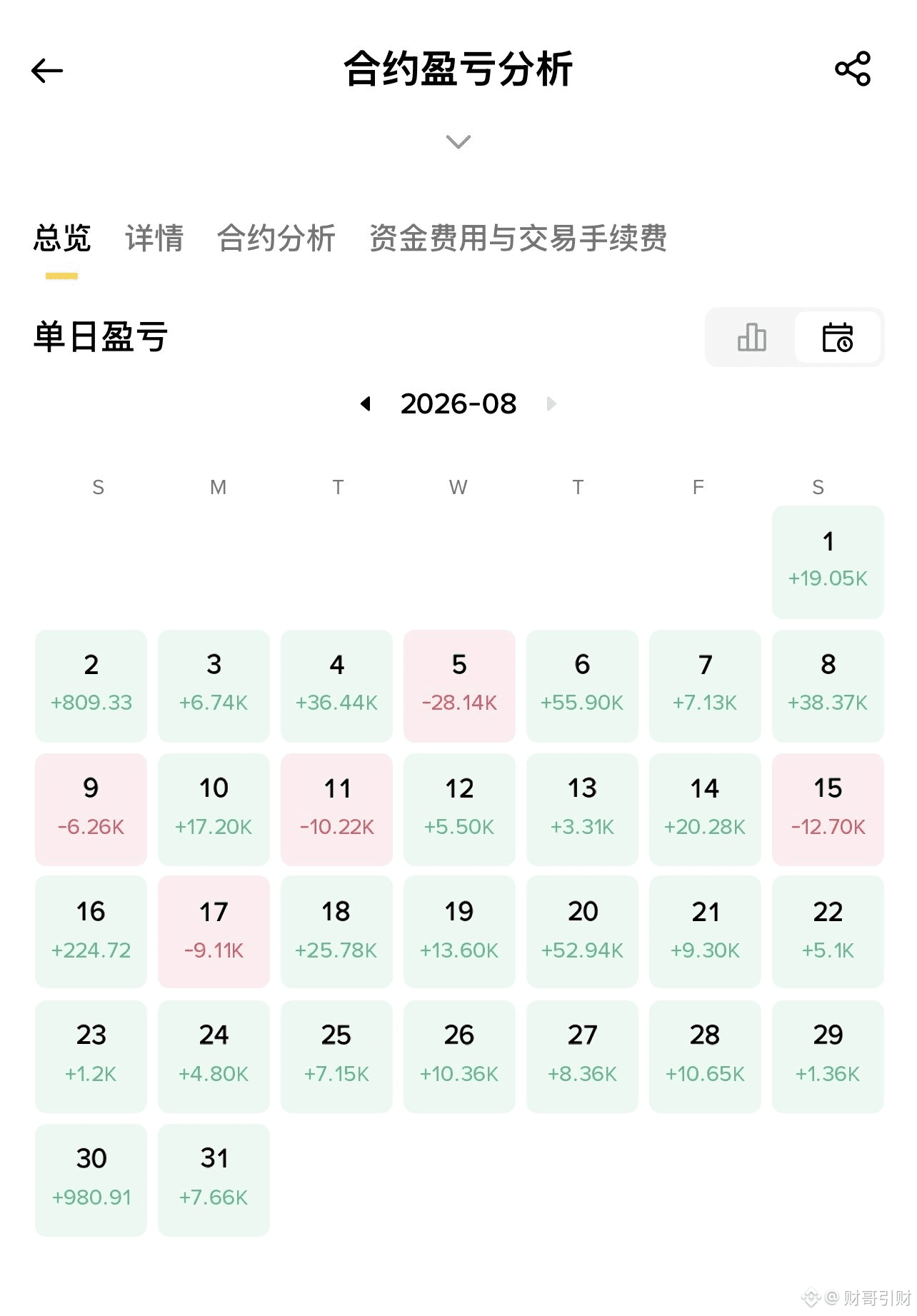

The strongest steady strategy for 1000U with a small bankroll—without much capital, you can still slowly turn things around.
Many people think that if they have little money, there’s no chance. So they rush in with a mind full of going all-in to gamble for a win. But the truth is the exact opposite:
The less capital you have, the less you can afford to gamble blindly. Lose once, and you might not even have the entry ticket to recover.
If you want 1000U to steadily grow, the core idea is simple: treat your principal as the “seed” you keep, not as the all-in chips on the table.
First step: break up the capital. Split the 1000U into 5 parts—each 200U. Every time, only use 20% of one part, meaning you enter with just 40U.
Set a strict stop-loss at 3%; for any single trade, you can lose at most 1.2U. If you lose, don’t feel bad at all. Don’t let your mindset break. Even if you make mistakes for dozens of trades in a row.
This way, the principal can stay firmly in your hands, and you’ll always have another opportunity to test.
Second step: wait for signals—no exceptions. If you don’t get an entry signal that meets the standard, you don’t open even half a position. Each day, just watch two core data points:
the exchange’s real balance flow, and
the stablecoin deposit address changing.
Only when both conditions are met do you take action. If they don’t match, shut down your computer and rest. Don’t guess directions, don’t chase temporary hot trends, and don’t bet on inside rumors.
Third step: compound using only profits. Take the money you earn separately as the bankroll to roll forward. The initial 1000U principal stays untouched from start to finish.
If you do the trade wrong, you only lose the profit you made before. If you do it right, the profit doubles and you roll it forward. As you get deeper into the later stages, you may even be able to withdraw the entire initial principal, and what’s left is money earned from the market that will keep running on your behalf.
This strategy isn’t exciting at all—some might even call it a bit boring—but it’s truly effective. The growth speed isn’t fast, but it keeps every step’s profits tightly in your hands.
Small bankrolls aren’t unable to turn around. The prerequisite is that you first delete the two words “all-in” from your mind completely.
Keep them, and all your actions become gambling. Remove them, and you can finally say you’re truly trading. Think it through before you act, and the road will be steady.
You don’t lack opportunities—you lack the courage to take that one step.
Stop hesitating. Sync up with the rhythm of turning things around—start with Financial Brother.
Many people think that if they have little money, there’s no chance. So they rush in with a mind full of going all-in to gamble for a win. But the truth is the exact opposite:
The less capital you have, the less you can afford to gamble blindly. Lose once, and you might not even have the entry ticket to recover.
If you want 1000U to steadily grow, the core idea is simple: treat your principal as the “seed” you keep, not as the all-in chips on the table.
First step: break up the capital. Split the 1000U into 5 parts—each 200U. Every time, only use 20% of one part, meaning you enter with just 40U.
Set a strict stop-loss at 3%; for any single trade, you can lose at most 1.2U. If you lose, don’t feel bad at all. Don’t let your mindset break. Even if you make mistakes for dozens of trades in a row.
This way, the principal can stay firmly in your hands, and you’ll always have another opportunity to test.
Second step: wait for signals—no exceptions. If you don’t get an entry signal that meets the standard, you don’t open even half a position. Each day, just watch two core data points:
the exchange’s real balance flow, and
the stablecoin deposit address changing.
Only when both conditions are met do you take action. If they don’t match, shut down your computer and rest. Don’t guess directions, don’t chase temporary hot trends, and don’t bet on inside rumors.
Third step: compound using only profits. Take the money you earn separately as the bankroll to roll forward. The initial 1000U principal stays untouched from start to finish.
If you do the trade wrong, you only lose the profit you made before. If you do it right, the profit doubles and you roll it forward. As you get deeper into the later stages, you may even be able to withdraw the entire initial principal, and what’s left is money earned from the market that will keep running on your behalf.
This strategy isn’t exciting at all—some might even call it a bit boring—but it’s truly effective. The growth speed isn’t fast, but it keeps every step’s profits tightly in your hands.
Small bankrolls aren’t unable to turn around. The prerequisite is that you first delete the two words “all-in” from your mind completely.
Keep them, and all your actions become gambling. Remove them, and you can finally say you’re truly trading. Think it through before you act, and the road will be steady.
You don’t lack opportunities—you lack the courage to take that one step.
Stop hesitating. Sync up with the rhythm of turning things around—start with Financial Brother.
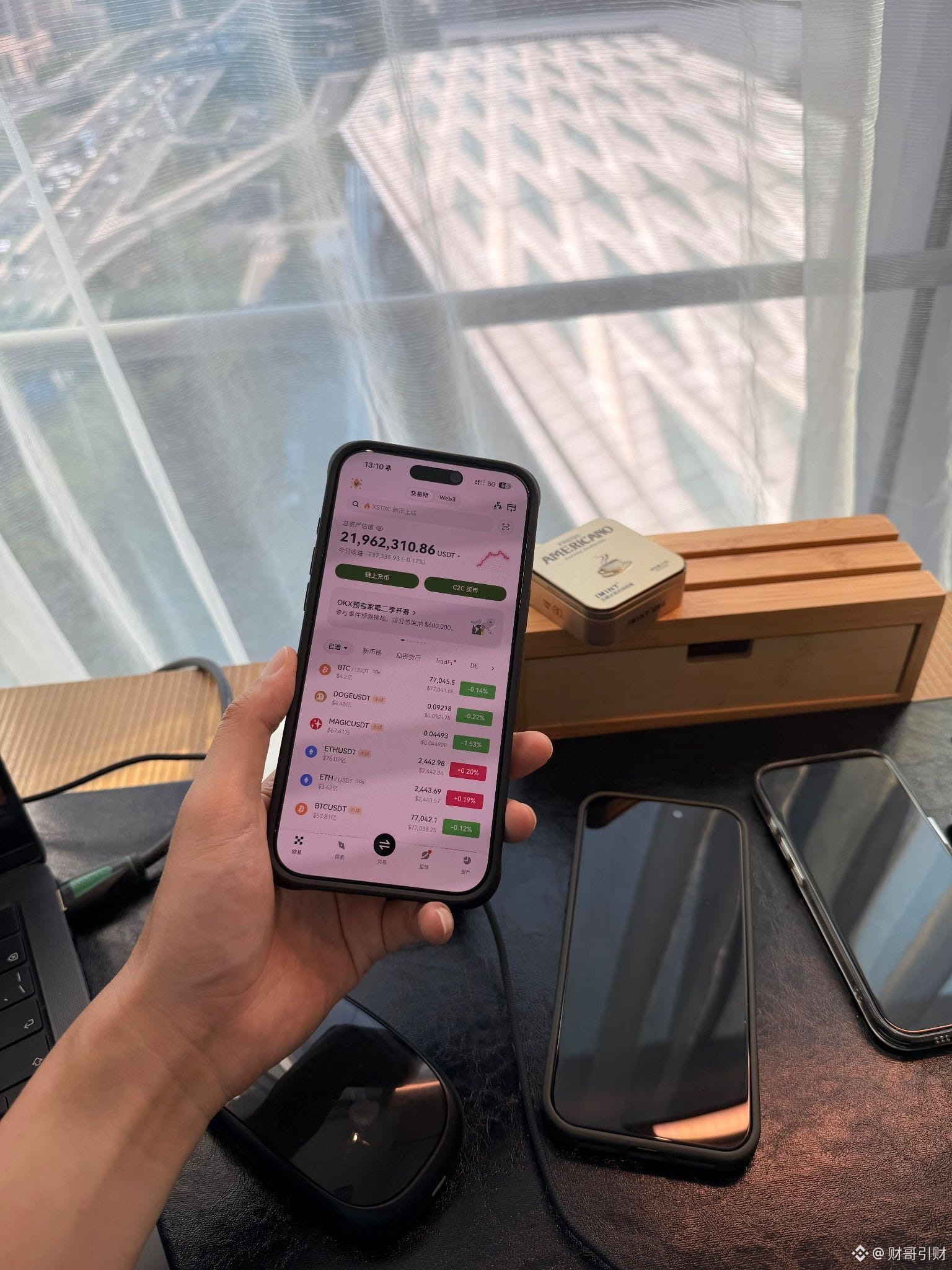

Think 500U principal is too small to ever turn things around? That statement may not be entirely right.
The biggest advantage of a small amount of capital isn’t that you can make money fast—it’s that your position is flexible and the pressure is low. What you really need to do isn’t to hit a sudden jackpot, but to first run the trading rhythm smoothly.
I’d suggest a “three-step method”:
Step one: use 100U out of the 500U to trial and learn.
Don’t go all-in. Only trade the trends you can understand. If you grow the 100U to 200U, take some profits off the table first, so you get used to the idea of “take profit when you win,” instead of getting inflated after a small gain.
Step two: move from 200U steadily to 400U.
This is the stage where it’s easiest to make mistakes. You make a little profit and then increase your position size, chase price higher, and open trades too frequently—then you eventually give it all back. Keep your position light, use stop-losses, and if your direction isn’t clear, wait.
Step three: grow from 400U to 800U.
When you can consistently follow the rules from the first two steps, account growth is simply the result. What truly matters is that you’ve formed your own set of trading rhythm.
After your principal breaks 1,000, then consider how to allocate funds: part of it for trend-based planning, keep the contract positions still light, use strict stop-losses, and never “gamble” on leverage.
Remember: 500U isn’t scary. What’s scary is rushing to double, going heavy and going all-in, and making profit but not taking it.
If small capital wants to become big, you’re not competing on who’s willing to gamble—you’re competing on who can control risk and protect profits, so the account can grow step by step.
In this market cycle, whether you can turn things around and recover your losses depends entirely on you. Come and set up the plan with me early, and you can get out of the low point sooner.
The biggest advantage of a small amount of capital isn’t that you can make money fast—it’s that your position is flexible and the pressure is low. What you really need to do isn’t to hit a sudden jackpot, but to first run the trading rhythm smoothly.
I’d suggest a “three-step method”:
Step one: use 100U out of the 500U to trial and learn.
Don’t go all-in. Only trade the trends you can understand. If you grow the 100U to 200U, take some profits off the table first, so you get used to the idea of “take profit when you win,” instead of getting inflated after a small gain.
Step two: move from 200U steadily to 400U.
This is the stage where it’s easiest to make mistakes. You make a little profit and then increase your position size, chase price higher, and open trades too frequently—then you eventually give it all back. Keep your position light, use stop-losses, and if your direction isn’t clear, wait.
Step three: grow from 400U to 800U.
When you can consistently follow the rules from the first two steps, account growth is simply the result. What truly matters is that you’ve formed your own set of trading rhythm.
After your principal breaks 1,000, then consider how to allocate funds: part of it for trend-based planning, keep the contract positions still light, use strict stop-losses, and never “gamble” on leverage.
Remember: 500U isn’t scary. What’s scary is rushing to double, going heavy and going all-in, and making profit but not taking it.
If small capital wants to become big, you’re not competing on who’s willing to gamble—you’re competing on who can control risk and protect profits, so the account can grow step by step.
In this market cycle, whether you can turn things around and recover your losses depends entirely on you. Come and set up the plan with me early, and you can get out of the low point sooner.
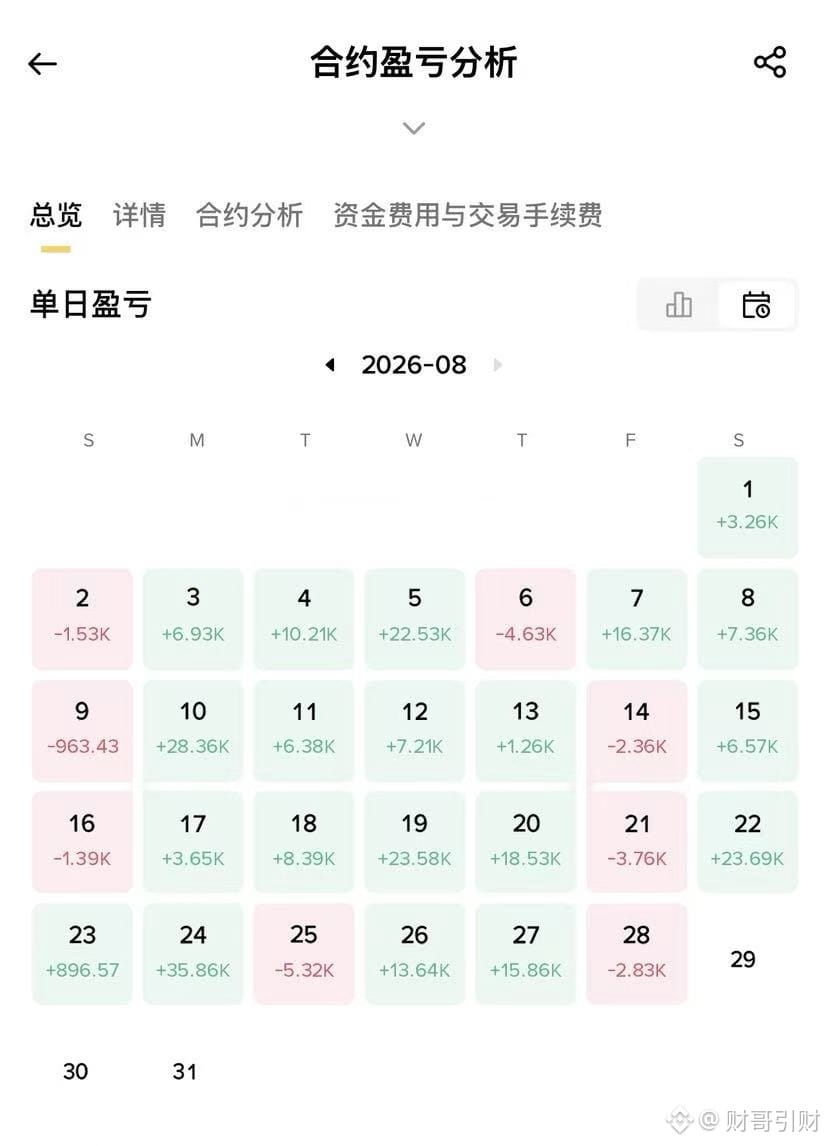

Ten years ago, my ex’s一句—“A man without financial backing—how can he talk about the future?”—pierced my heart like a needle. Ever since, every time I see the account numbers, there’s a stubborn urge in me to never give up.
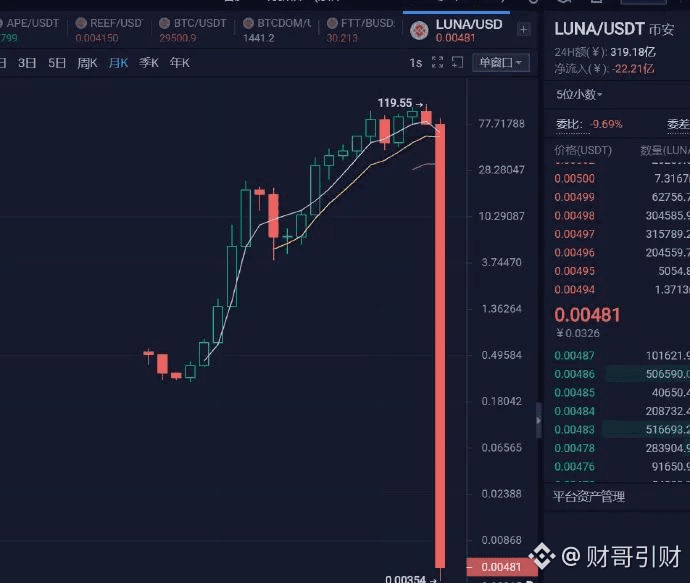
In April 2022, when LUNA fell from $119 all the way down, I used my $30,000 principal to short around the $100 level.
That night the account rose to 800,000, I stared at the screen and cried—finally proving that I’m not the kind of person who has no future just because he has no “backing.”
But greed arrived. I didn’t take profits—instead, I poured all the money I’d earned back into the market to bottom-fish.
Until LUNA hit zero, I threw my phone onto the couch. In that moment, I didn’t even have the energy to cry.
For the next month, I shut myself in my room until one day I saw myself in the mirror and suddenly realized: either keep sinking, or start over.
I sold the watch and collectibles my mom had given me, and scraped together the last twenty thousand.
This time, I didn’t think about getting rich overnight—I just waited for a chance that was certain.
When TRB was around $10, I repeatedly verified four rules: the weekly trend, trading volume, on-chain fund flows, and the behavior of the main players. Only after confirming did I enter.
Later, it dropped 30%. I stayed up late every day to review, drew charts, and studied the price action—and I didn’t waver for 128 days.
When TRB broke above $100, some people urged me to take profits quickly. But I saw that the money flow was still there. I kept waiting until the day it hit $380, and then I closed my position calmly.
At that moment, the account number finally helped me let go of an obsession from years ago.
Now, I still keep the habit of reviewing every day—recording my trading rules, controlling my position size. Before every move, I remind myself: discipline is always more important than impulse.
During late-night reviews, I always tell my past self:
Thank you for not giving up.
Everything that tried to crush you will ultimately make you stronger.
Back then, I crashed around in the dark. Now the light is in my hands—it keeps shining. Will you walk with me?
In April 2022, when LUNA fell from $119 all the way down, I used my $30,000 principal to short around the $100 level.
That night the account rose to 800,000, I stared at the screen and cried—finally proving that I’m not the kind of person who has no future just because he has no “backing.”
But greed arrived. I didn’t take profits—instead, I poured all the money I’d earned back into the market to bottom-fish.
Until LUNA hit zero, I threw my phone onto the couch. In that moment, I didn’t even have the energy to cry.
For the next month, I shut myself in my room until one day I saw myself in the mirror and suddenly realized: either keep sinking, or start over.
I sold the watch and collectibles my mom had given me, and scraped together the last twenty thousand.
This time, I didn’t think about getting rich overnight—I just waited for a chance that was certain.
When TRB was around $10, I repeatedly verified four rules: the weekly trend, trading volume, on-chain fund flows, and the behavior of the main players. Only after confirming did I enter.
Later, it dropped 30%. I stayed up late every day to review, drew charts, and studied the price action—and I didn’t waver for 128 days.
When TRB broke above $100, some people urged me to take profits quickly. But I saw that the money flow was still there. I kept waiting until the day it hit $380, and then I closed my position calmly.
At that moment, the account number finally helped me let go of an obsession from years ago.
Now, I still keep the habit of reviewing every day—recording my trading rules, controlling my position size. Before every move, I remind myself: discipline is always more important than impulse.
During late-night reviews, I always tell my past self:
Thank you for not giving up.
Everything that tried to crush you will ultimately make you stronger.
Back then, I crashed around in the dark. Now the light is in my hands—it keeps shining. Will you walk with me?
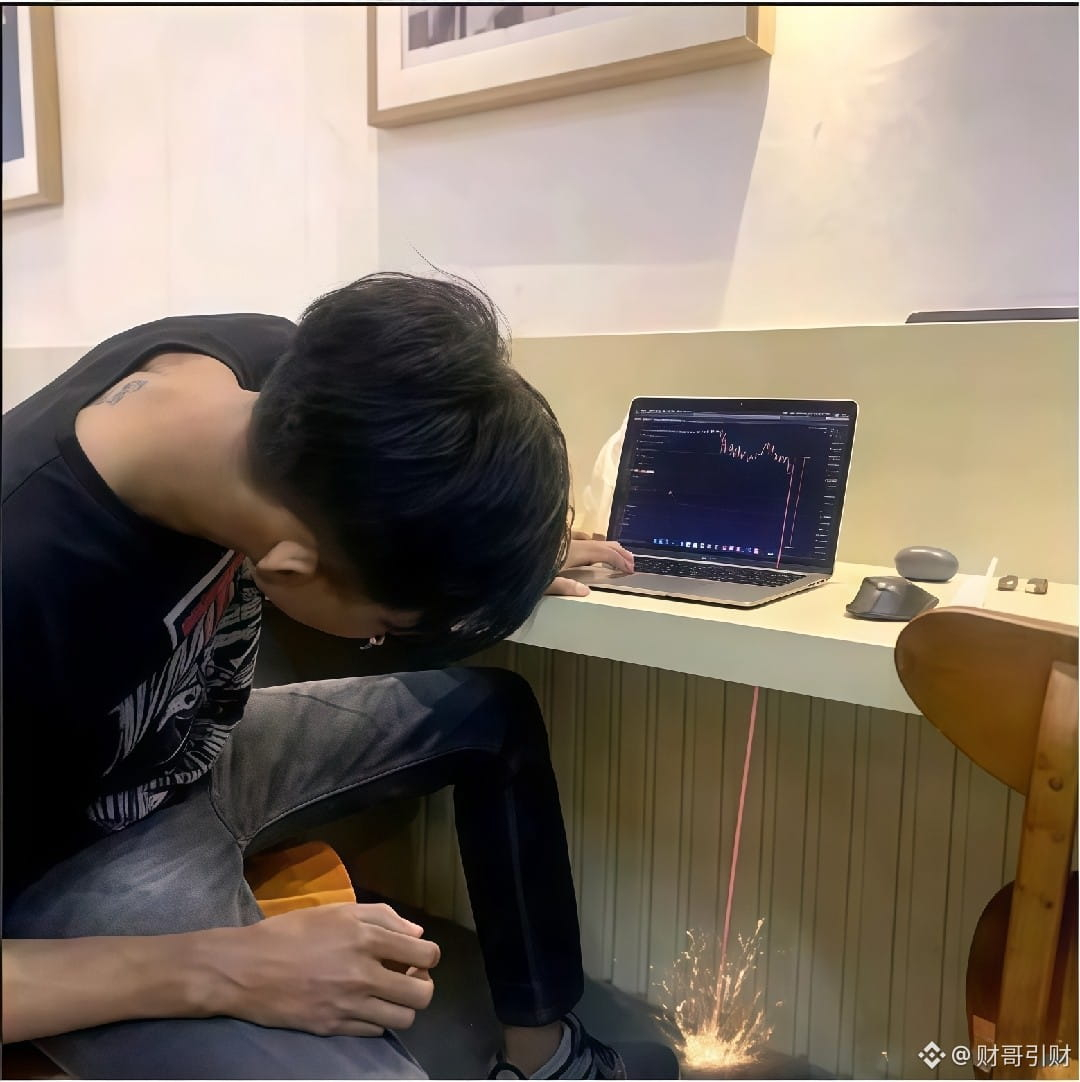
Brothers, after years of hard work in the crypto market, Brother Cai finally understood this: the hardest part of trading was never just making money—it’s whether, once you’ve made a profit, you dare to actually take it out.
Many people aren’t incapable of choosing coins, and they’re not unable to find entry points. The real problem is that after they start profiting, they can’t bear to sell. They always think, “If it goes up just a bit more…” Then when the market pulls back, all the unrealized gains in their accounts get handed back to the market.
I used to make the same mistake.
I once grew my account to 600,000 USDT, and all I could think about was pushing it to 1,000,000 before stopping. Then came a pullback—most of the profit was immediately given back. After that, I finally realized: the numbers on your screen aren’t truly secured until they’re actually cashed out. Until then, they’re just unrealized gains.
Later, I set a strict rule for myself:
When the account doubles, withdraw 30% of the profit; when it triples, cash out half immediately. The remaining funds continue to participate in the market, but never allow all the profits to be exposed to the market again.
Because in trading, what you’re ultimately competing on isn’t who can catch an entire segment of the market—it’s who can truly keep the money they’ve earned.
Many people lose, not because they lost to the market, but because they lose to greed—“it can still go up a bit more.”
If you dare to enter the market and make money, you must also dare to exit and protect your capital.
The market will always offer the next opportunity—but the prerequisite is that you’ve already taken the profits from the last round and put them in your own hands.
If someone charges in recklessly, they’ll end up crashing sooner or later. Only with someone to guide you can you move more steadily.
If you really want to change, why not start planning with me early?
Many people aren’t incapable of choosing coins, and they’re not unable to find entry points. The real problem is that after they start profiting, they can’t bear to sell. They always think, “If it goes up just a bit more…” Then when the market pulls back, all the unrealized gains in their accounts get handed back to the market.
I used to make the same mistake.
I once grew my account to 600,000 USDT, and all I could think about was pushing it to 1,000,000 before stopping. Then came a pullback—most of the profit was immediately given back. After that, I finally realized: the numbers on your screen aren’t truly secured until they’re actually cashed out. Until then, they’re just unrealized gains.
Later, I set a strict rule for myself:
When the account doubles, withdraw 30% of the profit; when it triples, cash out half immediately. The remaining funds continue to participate in the market, but never allow all the profits to be exposed to the market again.
Because in trading, what you’re ultimately competing on isn’t who can catch an entire segment of the market—it’s who can truly keep the money they’ve earned.
Many people lose, not because they lost to the market, but because they lose to greed—“it can still go up a bit more.”
If you dare to enter the market and make money, you must also dare to exit and protect your capital.
The market will always offer the next opportunity—but the prerequisite is that you’ve already taken the profits from the last round and put them in your own hands.
If someone charges in recklessly, they’ll end up crashing sooner or later. Only with someone to guide you can you move more steadily.
If you really want to change, why not start planning with me early?
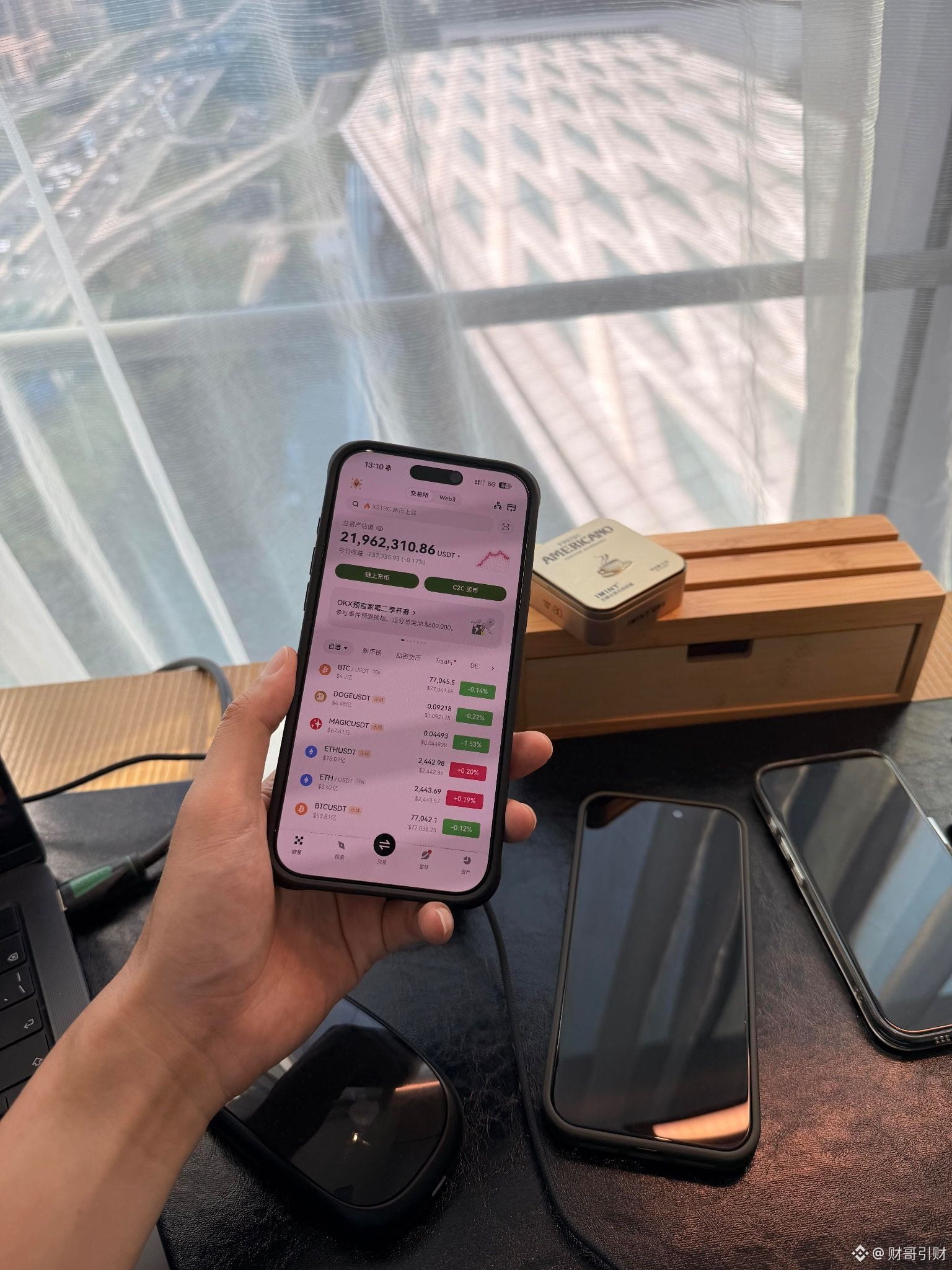

Retail investors lose money—ultimately it comes down to two words: emotions. When it’s time to buy, you’re afraid; when it’s time to sell, you get greedy. Over the years, from small capital to where I am today, I’ve never relied on any magical indicators. What I’ve relied on is constantly reminding myself of these five sentences again and again.
First, don’t chase after price spikes; don’t buy at the top. Don’t catch falling knives when the market is dropping hard. And don’t fiddle around during consolidation or sideways movement. Many people lose money because they get stuck in chop. When the market has no clear direction, the more you trade, the more easily you get worn down. It’s never too late to follow once the trend truly shows itself.
Second, buy the dips (the bearish candles), don’t buy the rallies (the bullish ones). Sell rallies, don’t sell dips. In an uptrend, people get excited and chase higher. In a downtrend, people panic and cut losses. But real opportunities often hide when emotions are calm.
Third, after a high-level sideways range, be cautious if it then surges. After a low-level sideways range, a breakout with volume is what’s worth paying attention to. A sudden acceleration at a high level is often a signal that risk is being released. Don’t always try to eat up the very last stretch of the move.
Fourth, during a consolidation phase, patience is more important than judgment. Don’t rush to guess the direction. Let the market choose its own path. Following is always simpler than predicting. Don’t be the one eating the first bite—and don’t be the one jumping onto the very last baton.
Fifth, panic at the end of a pullback is the ultimate test of human nature. Many people don’t actually misread the direction—they just fall at the final step. When price drops, they panic and cut their position, only to find that a rebound happens right after they sell. Trading is never just about nerve; it’s about discipline.
These five sentences sound simple, yet there are very few who can truly do it. Because the market’s biggest enemy is never the chart—it’s greed, fear, and impulsiveness.
Only those who can control their own emotions have the right to wait for the next opportunity. Trading doesn’t require you to act every day. Participate only when you understand the setup; when you don’t, just wait calmly.
The market is still brewing. Follow me and let’s set up the next explosive run together!
First, don’t chase after price spikes; don’t buy at the top. Don’t catch falling knives when the market is dropping hard. And don’t fiddle around during consolidation or sideways movement. Many people lose money because they get stuck in chop. When the market has no clear direction, the more you trade, the more easily you get worn down. It’s never too late to follow once the trend truly shows itself.
Second, buy the dips (the bearish candles), don’t buy the rallies (the bullish ones). Sell rallies, don’t sell dips. In an uptrend, people get excited and chase higher. In a downtrend, people panic and cut losses. But real opportunities often hide when emotions are calm.
Third, after a high-level sideways range, be cautious if it then surges. After a low-level sideways range, a breakout with volume is what’s worth paying attention to. A sudden acceleration at a high level is often a signal that risk is being released. Don’t always try to eat up the very last stretch of the move.
Fourth, during a consolidation phase, patience is more important than judgment. Don’t rush to guess the direction. Let the market choose its own path. Following is always simpler than predicting. Don’t be the one eating the first bite—and don’t be the one jumping onto the very last baton.
Fifth, panic at the end of a pullback is the ultimate test of human nature. Many people don’t actually misread the direction—they just fall at the final step. When price drops, they panic and cut their position, only to find that a rebound happens right after they sell. Trading is never just about nerve; it’s about discipline.
These five sentences sound simple, yet there are very few who can truly do it. Because the market’s biggest enemy is never the chart—it’s greed, fear, and impulsiveness.
Only those who can control their own emotions have the right to wait for the next opportunity. Trading doesn’t require you to act every day. Participate only when you understand the setup; when you don’t, just wait calmly.
The market is still brewing. Follow me and let’s set up the next explosive run together!

Many people who just entered the crypto world have the first thought of changing their lives by riding a surge in the market. But if you truly want to go long-term, the first step isn’t to look for opportunities—it’s to stop trading like it’s gambling.
I also built my way up from a few thousand USDT. What really got me to where I am today wasn’t hitting one lucky trade; it was dividing trading into three stages.
First stage: control your position to stay alive. Split your capital into 5 parts. Enter rationally each time, and decide in advance the reason for the buy, your stop-loss, and your take-profit. Don’t chase pumps. Don’t hold losses. Don’t force trades against the trend. With a small account, the biggest advantage is that after making a mistake, you still have the chance to start over.
Second stage: amplify profits by trading with the trend. Once your account stabilizes, don’t rely on frequent operations to make money. Instead, patiently wait for the trend. After confirming the direction, add to your position in batches. Don’t guess the top. Don’t try to pick the bottom. Only take the portion you can clearly understand.
Third stage: take profits and withdraw funds. After you make money, periodically extract part of it, keeping the real profits in your own hands. Making money isn’t the finish line—protecting your gains is what earns you the right to scale up further.
Most people who get liquidated do so for three underlying reasons: position size gets out of control, there’s no stop-loss, and after becoming profitable they can’t withstand the drawdown.
The crypto market never lacks opportunities. What it lacks are people who can execute the rules all the way through.
Taking it slow is fine. First, stay alive—then profits have the chance to compound and grow bigger.
A correct approach + stable execution is far better than you being busy on your own. If you want to turn things around, let’s go together!
I also built my way up from a few thousand USDT. What really got me to where I am today wasn’t hitting one lucky trade; it was dividing trading into three stages.
First stage: control your position to stay alive. Split your capital into 5 parts. Enter rationally each time, and decide in advance the reason for the buy, your stop-loss, and your take-profit. Don’t chase pumps. Don’t hold losses. Don’t force trades against the trend. With a small account, the biggest advantage is that after making a mistake, you still have the chance to start over.
Second stage: amplify profits by trading with the trend. Once your account stabilizes, don’t rely on frequent operations to make money. Instead, patiently wait for the trend. After confirming the direction, add to your position in batches. Don’t guess the top. Don’t try to pick the bottom. Only take the portion you can clearly understand.
Third stage: take profits and withdraw funds. After you make money, periodically extract part of it, keeping the real profits in your own hands. Making money isn’t the finish line—protecting your gains is what earns you the right to scale up further.
Most people who get liquidated do so for three underlying reasons: position size gets out of control, there’s no stop-loss, and after becoming profitable they can’t withstand the drawdown.
The crypto market never lacks opportunities. What it lacks are people who can execute the rules all the way through.
Taking it slow is fine. First, stay alive—then profits have the chance to compound and grow bigger.
A correct approach + stable execution is far better than you being busy on your own. If you want to turn things around, let’s go together!
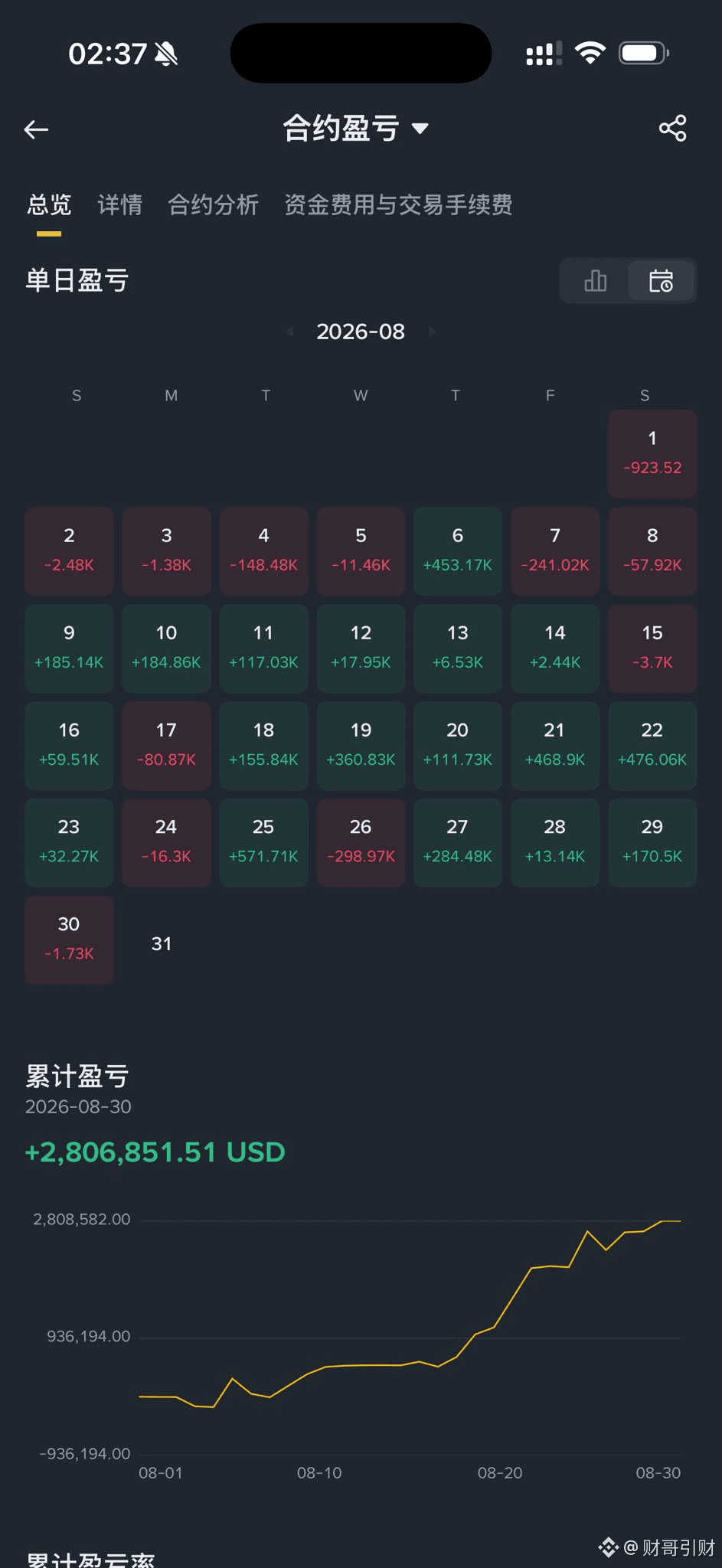

From 5,000U to 140,000U—it's not luck, but a stable trading logic.
Many people enter the crypto market thinking they’ll get rich overnight, only to be harvested by the market because they chase hot trends wildly and go all-in.
I started with 5,000U, and I rely on three things:
First, choose the right direction—don’t touch trash coins.
With a small capital, you can’t gamble randomly either. Focus only on mainstream coins and high-quality projects with liquidity and a clear rationale.
Opportunities always exist, but not every coin is worth betting on.
Second, manage position sizing and let compounding roll.
Rolling positions isn’t a one-time all-in. It’s about accumulating every profit you make.
When you reach your target profit, lock it in and wait for the next opportunity.
Small gains add up continuously, and over the long run, it becomes the power of compounding.
Third, learn to stay in cash and wait for high-certainty setups.
Many people lose money not because they can’t buy, but because they don’t know when they should stop.
If you can’t read the market, don’t trade it. If the opportunity hasn’t appeared, wait.
Real money-makers aren’t trading every day—they only take the opportunities they truly understand.
From 5,000U to 140,000U, it’s not about some so-called get-rich secret, but about:
Choosing the right track, controlling position size, and maintaining discipline.
In the crypto world, it’s not about who rushes fastest—it’s about who can stay consistent and keep going long-term.
The market is still brewing. Follow me as we position ourselves for the setup—let’s plan the next coin that could explode upward together!
Many people enter the crypto market thinking they’ll get rich overnight, only to be harvested by the market because they chase hot trends wildly and go all-in.
I started with 5,000U, and I rely on three things:
First, choose the right direction—don’t touch trash coins.
With a small capital, you can’t gamble randomly either. Focus only on mainstream coins and high-quality projects with liquidity and a clear rationale.
Opportunities always exist, but not every coin is worth betting on.
Second, manage position sizing and let compounding roll.
Rolling positions isn’t a one-time all-in. It’s about accumulating every profit you make.
When you reach your target profit, lock it in and wait for the next opportunity.
Small gains add up continuously, and over the long run, it becomes the power of compounding.
Third, learn to stay in cash and wait for high-certainty setups.
Many people lose money not because they can’t buy, but because they don’t know when they should stop.
If you can’t read the market, don’t trade it. If the opportunity hasn’t appeared, wait.
Real money-makers aren’t trading every day—they only take the opportunities they truly understand.
From 5,000U to 140,000U, it’s not about some so-called get-rich secret, but about:
Choosing the right track, controlling position size, and maintaining discipline.
In the crypto world, it’s not about who rushes fastest—it’s about who can stay consistent and keep going long-term.
The market is still brewing. Follow me as we position ourselves for the setup—let’s plan the next coin that could explode upward together!
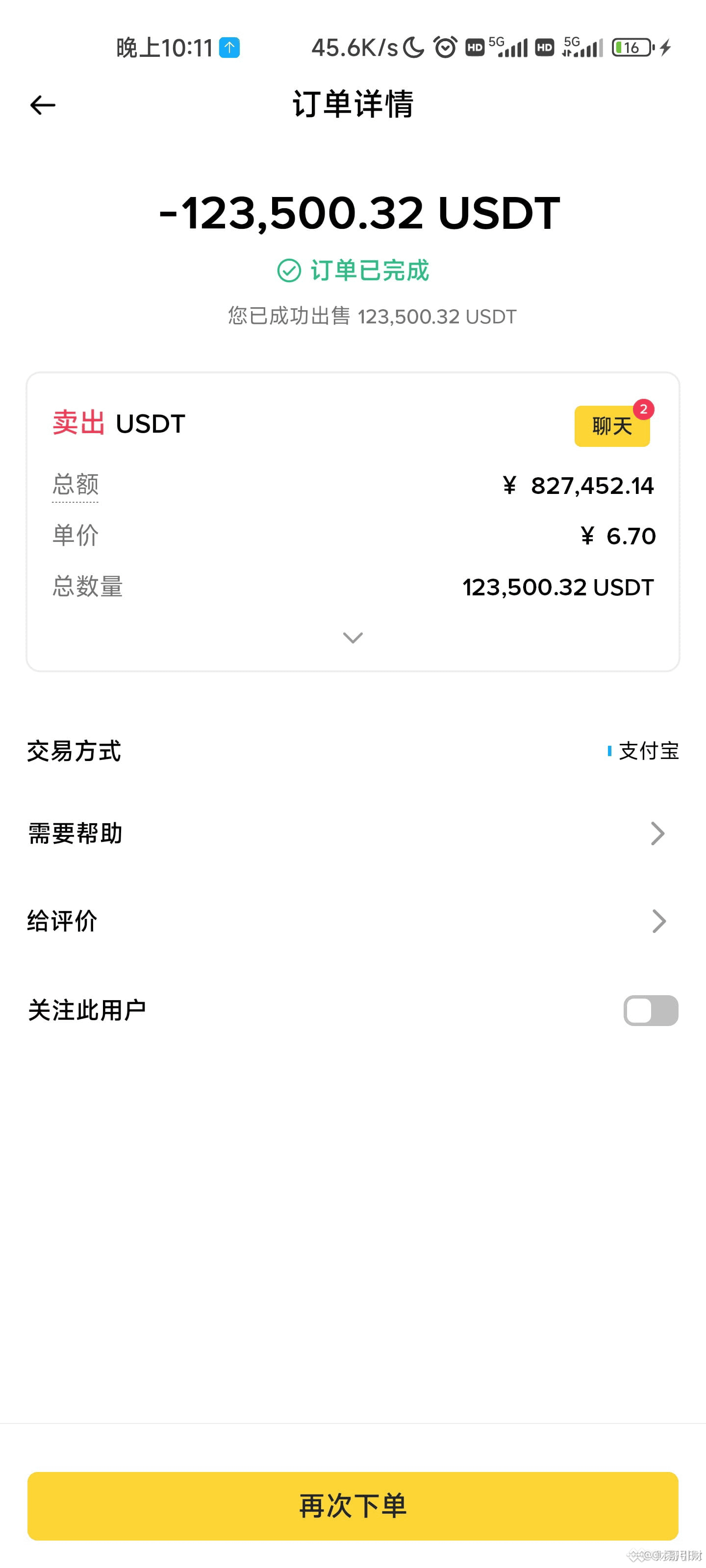

At midnight, WeChat popped up a message from Aduo:
Bro, I just finished balancing the books. The money I made in the crypto market is just enough to cover this year’s salary!
Aduo has been my old follower. Born in 1997, he’s a CNC machine operator. He earns 12,000 yuan a month, and his rotating shifts leave him constantly with dark circles.
The last time I saw his朋友圈 post—was right after he got off the night shift.
Back then, his “reckless moves”
When he added me last December, he was full of anxiety: “Living expenses are almost gone again.” At that time, he was chasing highs and cutting lows, watching the K-line charts through the night on weekends, and he couldn’t focus at work.
I didn’t talk about complicated indicators. I only gave him a “minimalist trading checklist” with three rules:
Do only 1–2 trades per day. Set the time window for after work, 19:00–19:30. If you miss it, wait until the next day. Never stay up late to stare at the charts;
Before every trade, write your stop-loss price in the notes. As soon as the price hits that number, close the software immediately—don’t touch it again that day;
Your position size can use at most 10% of your principal. Even if you profit, adding to the position can’t exceed half of the profit from this trade. Never get greedy.
When Aduo first read it, he said: “Bro, if I do it like this, what’s the difference from slowly saving money? I want to make back what I lost before faster.”
I did the math for him: “Last month you lost 600 from random buying. If you did it by this method, even if you make less, at least you won’t keep losing.
Get ‘not losing’ stable first—nothing else matters more.”
From “desperately trying to make money” to “holding steady to wait.”
He followed it half-believing:
In the first week, he earned 38U, and he didn’t do his usual habit of refreshing charts at midnight. After washing up, he only looked at the market for half an hour and then went to sleep. The next day at work, his energy was noticeably better;
In the second week, he mistimed it and lost 72U. He didn’t add more like he used to. He closed the software according to the checklist. That evening, he even went out to eat a bowl of noodles with his coworkers outside the factory;
In the third week, the market was on his side. He made 245U. He was so excited he took screenshots and marked them. I didn’t praise him; I just told him to print the checklist and post it right in front of his dorm room desk.
After that, he built a routine: wash up after the night shift, check the charts for 30 minutes, and then shut down.
If you’re doing crypto as a side hustle, don’t bet it all on one trade. Find the right rhythm and don’t be greedy. Go slower. Steady steps will take you farther.
When one person charges blindly, sooner or later they crash. With someone to guide you, you can move more steadily.
If you really want to change, it’s better to start planning with me sooner.
Bro, I just finished balancing the books. The money I made in the crypto market is just enough to cover this year’s salary!
Aduo has been my old follower. Born in 1997, he’s a CNC machine operator. He earns 12,000 yuan a month, and his rotating shifts leave him constantly with dark circles.
The last time I saw his朋友圈 post—was right after he got off the night shift.
Back then, his “reckless moves”
When he added me last December, he was full of anxiety: “Living expenses are almost gone again.” At that time, he was chasing highs and cutting lows, watching the K-line charts through the night on weekends, and he couldn’t focus at work.
I didn’t talk about complicated indicators. I only gave him a “minimalist trading checklist” with three rules:
Do only 1–2 trades per day. Set the time window for after work, 19:00–19:30. If you miss it, wait until the next day. Never stay up late to stare at the charts;
Before every trade, write your stop-loss price in the notes. As soon as the price hits that number, close the software immediately—don’t touch it again that day;
Your position size can use at most 10% of your principal. Even if you profit, adding to the position can’t exceed half of the profit from this trade. Never get greedy.
When Aduo first read it, he said: “Bro, if I do it like this, what’s the difference from slowly saving money? I want to make back what I lost before faster.”
I did the math for him: “Last month you lost 600 from random buying. If you did it by this method, even if you make less, at least you won’t keep losing.
Get ‘not losing’ stable first—nothing else matters more.”
From “desperately trying to make money” to “holding steady to wait.”
He followed it half-believing:
In the first week, he earned 38U, and he didn’t do his usual habit of refreshing charts at midnight. After washing up, he only looked at the market for half an hour and then went to sleep. The next day at work, his energy was noticeably better;
In the second week, he mistimed it and lost 72U. He didn’t add more like he used to. He closed the software according to the checklist. That evening, he even went out to eat a bowl of noodles with his coworkers outside the factory;
In the third week, the market was on his side. He made 245U. He was so excited he took screenshots and marked them. I didn’t praise him; I just told him to print the checklist and post it right in front of his dorm room desk.
After that, he built a routine: wash up after the night shift, check the charts for 30 minutes, and then shut down.
If you’re doing crypto as a side hustle, don’t bet it all on one trade. Find the right rhythm and don’t be greedy. Go slower. Steady steps will take you farther.
When one person charges blindly, sooner or later they crash. With someone to guide you, you can move more steadily.
If you really want to change, it’s better to start planning with me sooner.
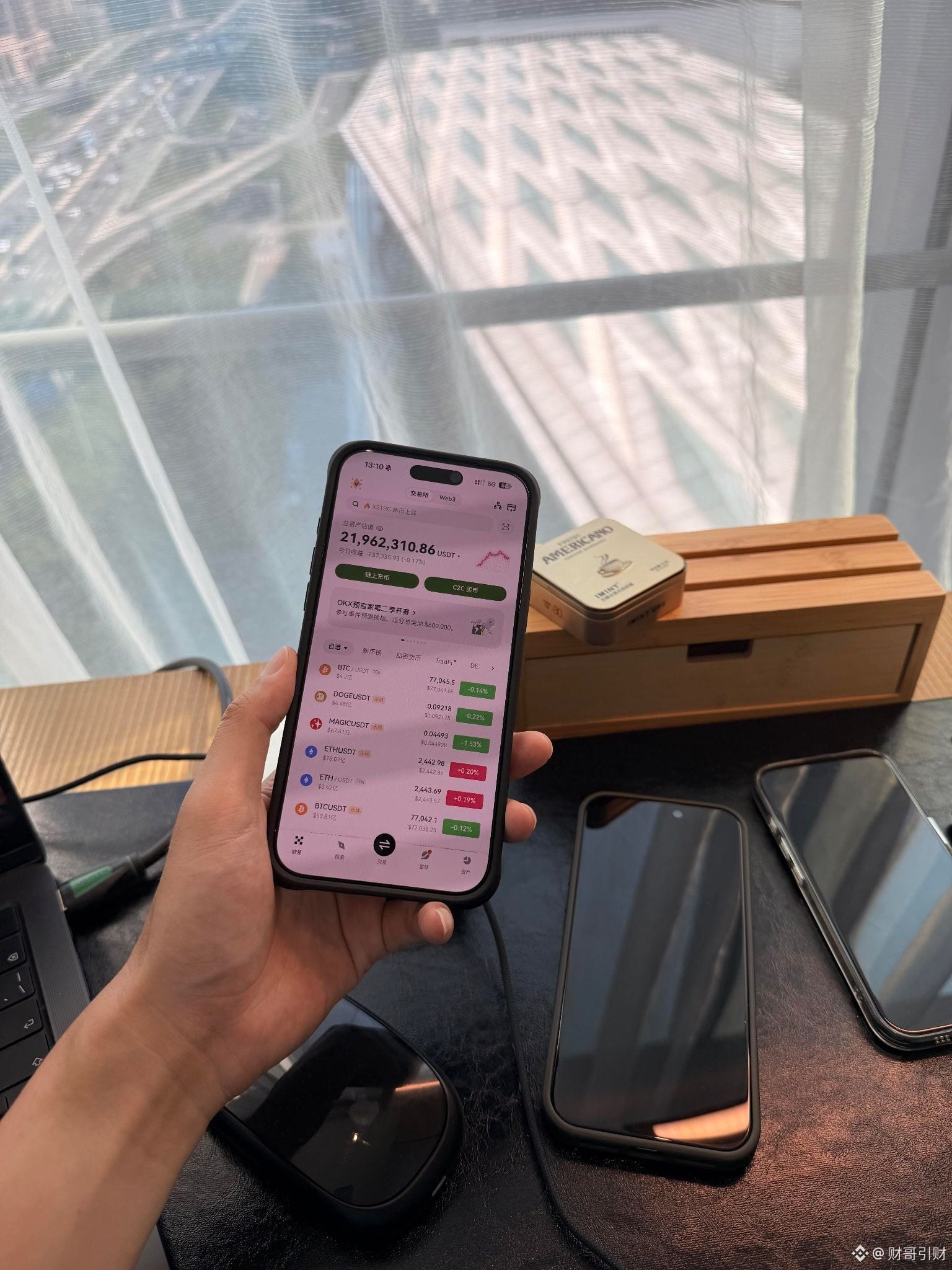

有人总问我:“就一两千美元,放在币圈能干嘛?”
说实话,要赚快钱很难,但想活下来、跟着牛市喝口汤,靠心法真能做到。
我跟圈里兄弟先把底交代了:这笔小资金的生存之道就这么几条:
先认 “小”,别做 “百倍梦”$BTW
你得先想明白,这千把美元在币圈就是 “小浪花”。别天天刷着群里“土狗翻十倍”的消息看得心痒。
我之前有个兄弟,拿着 800 美元追新币,三天就亏了 600,心态直接崩了。
咱们这点资金量,目标得实在:不亏本金,牛市能跟上 BTC 的涨幅,年化比存在银行高,就是赢。$SNDK
资金分三份,别把鸡蛋放一个筐
400 美元老老实实买 BTC/ETH,这是 “保命钱”——熊市跌得再狠也能扛住,牛市还能带头涨;
500 美元选你看得懂的赛道龙头,比如 AI 币看落地场景、新公链看生态;买了就别天天盯着,拿住至少三个月;
剩下的 100-200 美元当 “机动钱”——就等 BTC 突然跌 10% 以上补仓,或者碰到特别确定的机会再动,平时别动。
少盯盘,多 “磨” 眼光
别一天 12 小时盯着 K 线,越盯越焦虑,手痒乱操作。我十年经验告诉你,小资金最大的优势不是盯盘速度,而是能沉下心去研究。
每天花 1 小时看项目白皮书,比如看某个 DeFi 币的机制是不是真能解决问题——比看 100 张 K 线图有用得多。
之前帮一个朋友分析,他拿着 300 美元买了个 AI 赛道币,研究透了逻辑,拿了半年翻了 3 倍。
最关键的:外面得有钱赚$ETH
别把这千把美元当 “救命钱”!白天送外卖、晚上做兼职,多赚点现金流比什么都强。
这个市场,光靠一个人很难走下去。
现在,我这里有条修好的路,你走不走?
说实话,要赚快钱很难,但想活下来、跟着牛市喝口汤,靠心法真能做到。
我跟圈里兄弟先把底交代了:这笔小资金的生存之道就这么几条:
先认 “小”,别做 “百倍梦”$BTW
你得先想明白,这千把美元在币圈就是 “小浪花”。别天天刷着群里“土狗翻十倍”的消息看得心痒。
我之前有个兄弟,拿着 800 美元追新币,三天就亏了 600,心态直接崩了。
咱们这点资金量,目标得实在:不亏本金,牛市能跟上 BTC 的涨幅,年化比存在银行高,就是赢。$SNDK
资金分三份,别把鸡蛋放一个筐
400 美元老老实实买 BTC/ETH,这是 “保命钱”——熊市跌得再狠也能扛住,牛市还能带头涨;
500 美元选你看得懂的赛道龙头,比如 AI 币看落地场景、新公链看生态;买了就别天天盯着,拿住至少三个月;
剩下的 100-200 美元当 “机动钱”——就等 BTC 突然跌 10% 以上补仓,或者碰到特别确定的机会再动,平时别动。
少盯盘,多 “磨” 眼光
别一天 12 小时盯着 K 线,越盯越焦虑,手痒乱操作。我十年经验告诉你,小资金最大的优势不是盯盘速度,而是能沉下心去研究。
每天花 1 小时看项目白皮书,比如看某个 DeFi 币的机制是不是真能解决问题——比看 100 张 K 线图有用得多。
之前帮一个朋友分析,他拿着 300 美元买了个 AI 赛道币,研究透了逻辑,拿了半年翻了 3 倍。
最关键的:外面得有钱赚$ETH
别把这千把美元当 “救命钱”!白天送外卖、晚上做兼职,多赚点现金流比什么都强。
这个市场,光靠一个人很难走下去。
现在,我这里有条修好的路,你走不走?


I’ve been doing crypto futures for two years, and I finally found a “dumb method” with a 95% win rate—I'm still heartbroken about the detours I took before.
Back then, I made trading more exhausting than going to work: I stared at MACD, RSI, and a bunch of other indicators, only to get more confused, yet I still placed orders based on my gut; $ZORA
I traded too often—about a dozen times a day—my mindset collapsed countless times, and I lost more than half my account. I stayed up all night watching the charts until dawn, and ended up with my body falling apart while I still didn’t make any money.
Until last year, I met a “lazy trader,” and I finally understood that making money in futures doesn’t require brute force: with an ultra-simple strategy, a stable win rate of 95%+, you only need to check the market for 10 minutes a day.
Why is the “dumb method” more reliable? Many people in the crypto market lose because they’re “too smart”—trying to catch tops and bottoms, constantly switching coin pairs and changing strategies, getting led astray by emotions, and then getting slapped by whipsaws.
Whereas the “dumb method” only focuses on the core signals: don’t guess direction or trend—wait for clear confirmation. Use just one moving average, and no more all-night chart-watching.$ETH
Here’s a beginner-friendly step-by-step plan after sharing real practice for half a year:
Step 1: Only watch the EMA moving averages. In your charting software, leave only EMA21 and EMA55, delete everything else. EMA21 shows the short-term trend; EMA55 shows the mid-to-long term. Golden cross = go long; death cross = go short.
Step 2: Enter only at key levels on the 4-hour candles. Don’t look at smaller timeframes—only watch the 4-hour candles: EMA21 crossing above EMA55 + a bullish (green) candle → open long; crossing below + a bearish (red) candle → open short. During sideways/choppy periods, don’t touch it.
Step 3: Always include a stop loss. Set the stop loss at the high/low of the previous 4-hour candle (for short positions, use the high point; for long positions, use the low point). Never let any single trade risk more than 5% of the principal. No “holding on for dear life.”$BTW
Step 4: Add to the position by “rolling in” (increase gradually). Use 5% of your funds for the first position. When you make 5% profit, add 5% more; when you make another 5%, add again—keep adding until the EMA crossover gives a reversal exit signal. Lock in profits and maximize returns.
Final reminder: Don’t chase profits per trade—missing a bad setup is better than making a wrong one. Trade at most 1–2 times per day. Use the strategy and stick to it.
The crypto market has never been short of opportunities—what’s missing is someone to help you when opportunities appear.
Back then, I made trading more exhausting than going to work: I stared at MACD, RSI, and a bunch of other indicators, only to get more confused, yet I still placed orders based on my gut; $ZORA
I traded too often—about a dozen times a day—my mindset collapsed countless times, and I lost more than half my account. I stayed up all night watching the charts until dawn, and ended up with my body falling apart while I still didn’t make any money.
Until last year, I met a “lazy trader,” and I finally understood that making money in futures doesn’t require brute force: with an ultra-simple strategy, a stable win rate of 95%+, you only need to check the market for 10 minutes a day.
Why is the “dumb method” more reliable? Many people in the crypto market lose because they’re “too smart”—trying to catch tops and bottoms, constantly switching coin pairs and changing strategies, getting led astray by emotions, and then getting slapped by whipsaws.
Whereas the “dumb method” only focuses on the core signals: don’t guess direction or trend—wait for clear confirmation. Use just one moving average, and no more all-night chart-watching.$ETH
Here’s a beginner-friendly step-by-step plan after sharing real practice for half a year:
Step 1: Only watch the EMA moving averages. In your charting software, leave only EMA21 and EMA55, delete everything else. EMA21 shows the short-term trend; EMA55 shows the mid-to-long term. Golden cross = go long; death cross = go short.
Step 2: Enter only at key levels on the 4-hour candles. Don’t look at smaller timeframes—only watch the 4-hour candles: EMA21 crossing above EMA55 + a bullish (green) candle → open long; crossing below + a bearish (red) candle → open short. During sideways/choppy periods, don’t touch it.
Step 3: Always include a stop loss. Set the stop loss at the high/low of the previous 4-hour candle (for short positions, use the high point; for long positions, use the low point). Never let any single trade risk more than 5% of the principal. No “holding on for dear life.”$BTW
Step 4: Add to the position by “rolling in” (increase gradually). Use 5% of your funds for the first position. When you make 5% profit, add 5% more; when you make another 5%, add again—keep adding until the EMA crossover gives a reversal exit signal. Lock in profits and maximize returns.
Final reminder: Don’t chase profits per trade—missing a bad setup is better than making a wrong one. Trade at most 1–2 times per day. Use the strategy and stick to it.
The crypto market has never been short of opportunities—what’s missing is someone to help you when opportunities appear.
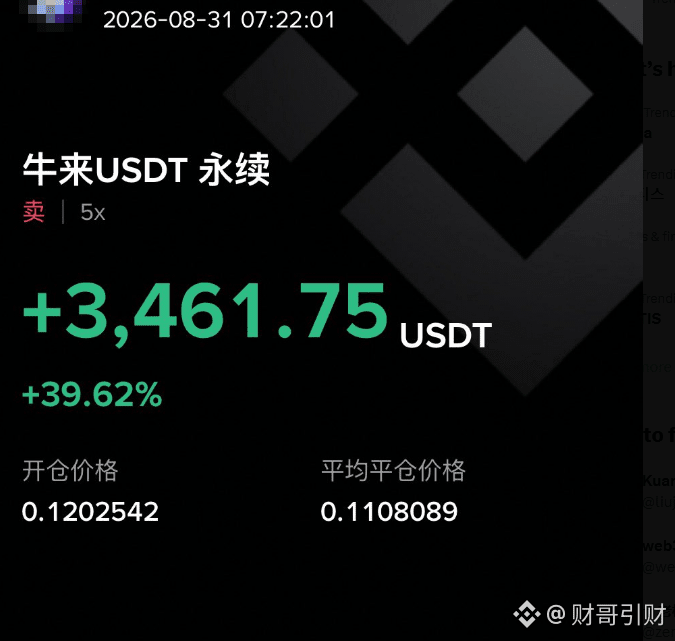

Not much capital—so you also need to learn how to stay steady.
Many people trading have the biggest problem not that they have little capital, but that they are too impatient. $BTC
To grow quickly with small capital, you don’t rely on full-position gambling; you rely on:
Position control + timing + strict execution.
There was an investor who started with a small capital base, and through continuous learning and adjustments to their trading approach, slowly built their own rhythm.
Their core method is very simple:
Step 1: Manage positions in batches to control risk $ETH
Don’t put all your money in at once.
Plan your allocation in advance, dividing your capital into several portions:
Test with a small position; add only if there’s an opportunity; keep reserve funds to handle volatility.
The first principle of trading is:
Survive first, then think about profit.
Step 2: Wait for high-probability opportunities
The market fluctuates every day, but there aren’t good opportunities every day.
Don’t chase just because it’s going up; don’t panic just because it’s going down.
Act only when the trend is clear and the signals are unambiguous.
Doing fewer ineffective trades is often more important than trading frequently.
Step 3: Let profits grow while controlling losses promptly
After you’re profitable, you can gradually increase your position size according to plan.
But remember this: $SNDK
Profit can be expanded—risk must never get out of control.
Set stop-losses to prevent one mistake from ruining your entire account.
Step 4: Know when to take profit—don’t be greedy for the last leg
Many people don’t fail because they can’t make money; they fail because they don’t take it.
When the market is favorable, stay calm. When you hit your target, protect your profits in time.
Truly stable traders pursue long-term growth, not a one-time surge.
If you also want to take fewer detours and稳住 your turnaround,
reach out to me anytime—we’ll put the method into practice together.
Many people trading have the biggest problem not that they have little capital, but that they are too impatient. $BTC
To grow quickly with small capital, you don’t rely on full-position gambling; you rely on:
Position control + timing + strict execution.
There was an investor who started with a small capital base, and through continuous learning and adjustments to their trading approach, slowly built their own rhythm.
Their core method is very simple:
Step 1: Manage positions in batches to control risk $ETH
Don’t put all your money in at once.
Plan your allocation in advance, dividing your capital into several portions:
Test with a small position; add only if there’s an opportunity; keep reserve funds to handle volatility.
The first principle of trading is:
Survive first, then think about profit.
Step 2: Wait for high-probability opportunities
The market fluctuates every day, but there aren’t good opportunities every day.
Don’t chase just because it’s going up; don’t panic just because it’s going down.
Act only when the trend is clear and the signals are unambiguous.
Doing fewer ineffective trades is often more important than trading frequently.
Step 3: Let profits grow while controlling losses promptly
After you’re profitable, you can gradually increase your position size according to plan.
But remember this: $SNDK
Profit can be expanded—risk must never get out of control.
Set stop-losses to prevent one mistake from ruining your entire account.
Step 4: Know when to take profit—don’t be greedy for the last leg
Many people don’t fail because they can’t make money; they fail because they don’t take it.
When the market is favorable, stay calm. When you hit your target, protect your profits in time.
Truly stable traders pursue long-term growth, not a one-time surge.
If you also want to take fewer detours and稳住 your turnaround,
reach out to me anytime—we’ll put the method into practice together.
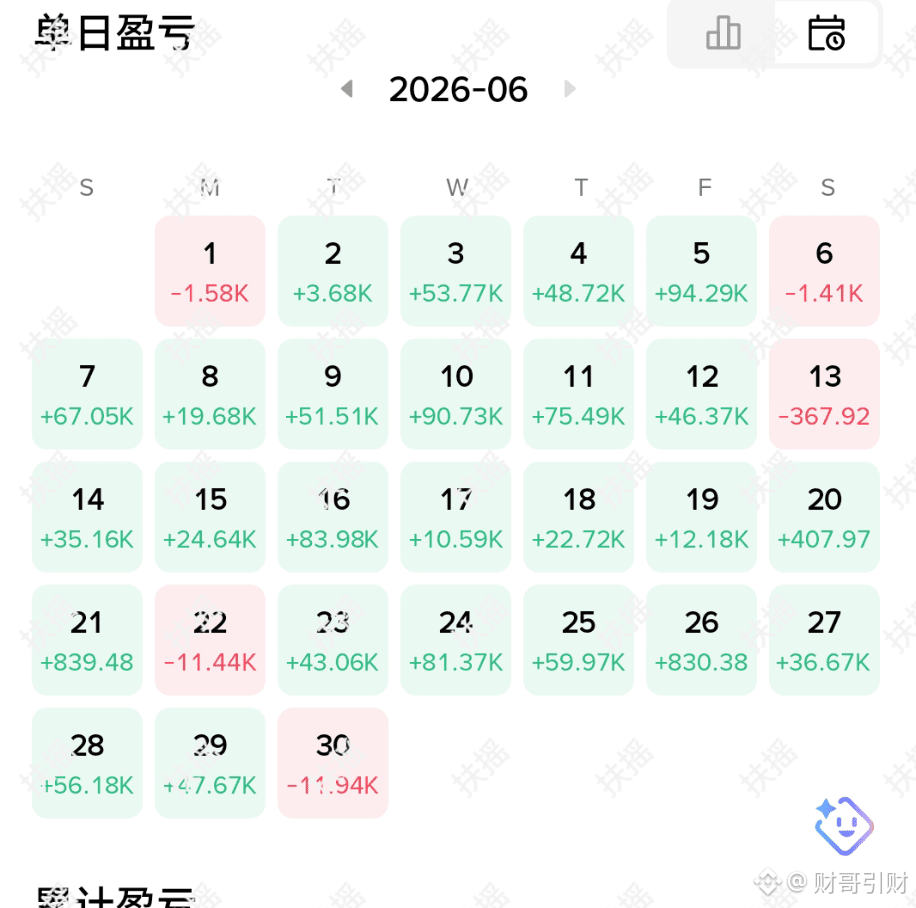

How does 1000U turn into 10WUs? It’s not luck—it’s about rhythm.
Many people think doubling comes from catching a sudden surge. In reality, most people lose because they lack trading discipline.
$ETH
Back then, my 1000U was the last bit of capital left after liquidation.
After that, I didn’t keep gambling. Instead, I spent time reviewing and breaking down every loss:
I found I wasn’t losing because I couldn’t judge direction, but because my timing was chaotic—chasing rallies, holding losses, and trading too frequently.
Later, I adjusted my approach again:
✅ Only trade the market setups I can understand
✅ For unclear conditions, I’d rather stay out and wait
✅ For every trade, strictly control risk; if I’m wrong, cut losses immediately
✅ After confirming the trend, gradually add to positions
In the first month, I only made a few high-quality trades, and the account grew steadily;$SNDK
In the second month, I kept controlling the pace and amplified my profits;
In the third month, I seized a wave of high-certainty conditions to break through the capital threshold.
A real turnaround isn’t from a single knockout hit—it’s from:
rhythm + position sizing + execution.
The market offers opportunities every day, but not every opportunity is worth taking action on.
Pros make money from certainty; retail traders lose money from impulse.
$BTC
First learn to control yourself, then you can control your account.
Follow CaiGe—no promises of instant wealth, but steady profits for you are absolutely achievable!
Hesitation means missing opportunities—act decisively and go for it!
Many people think doubling comes from catching a sudden surge. In reality, most people lose because they lack trading discipline.
$ETH
Back then, my 1000U was the last bit of capital left after liquidation.
After that, I didn’t keep gambling. Instead, I spent time reviewing and breaking down every loss:
I found I wasn’t losing because I couldn’t judge direction, but because my timing was chaotic—chasing rallies, holding losses, and trading too frequently.
Later, I adjusted my approach again:
✅ Only trade the market setups I can understand
✅ For unclear conditions, I’d rather stay out and wait
✅ For every trade, strictly control risk; if I’m wrong, cut losses immediately
✅ After confirming the trend, gradually add to positions
In the first month, I only made a few high-quality trades, and the account grew steadily;$SNDK
In the second month, I kept controlling the pace and amplified my profits;
In the third month, I seized a wave of high-certainty conditions to break through the capital threshold.
A real turnaround isn’t from a single knockout hit—it’s from:
rhythm + position sizing + execution.
The market offers opportunities every day, but not every opportunity is worth taking action on.
Pros make money from certainty; retail traders lose money from impulse.
$BTC
First learn to control yourself, then you can control your account.
Follow CaiGe—no promises of instant wealth, but steady profits for you are absolutely achievable!
Hesitation means missing opportunities—act decisively and go for it!
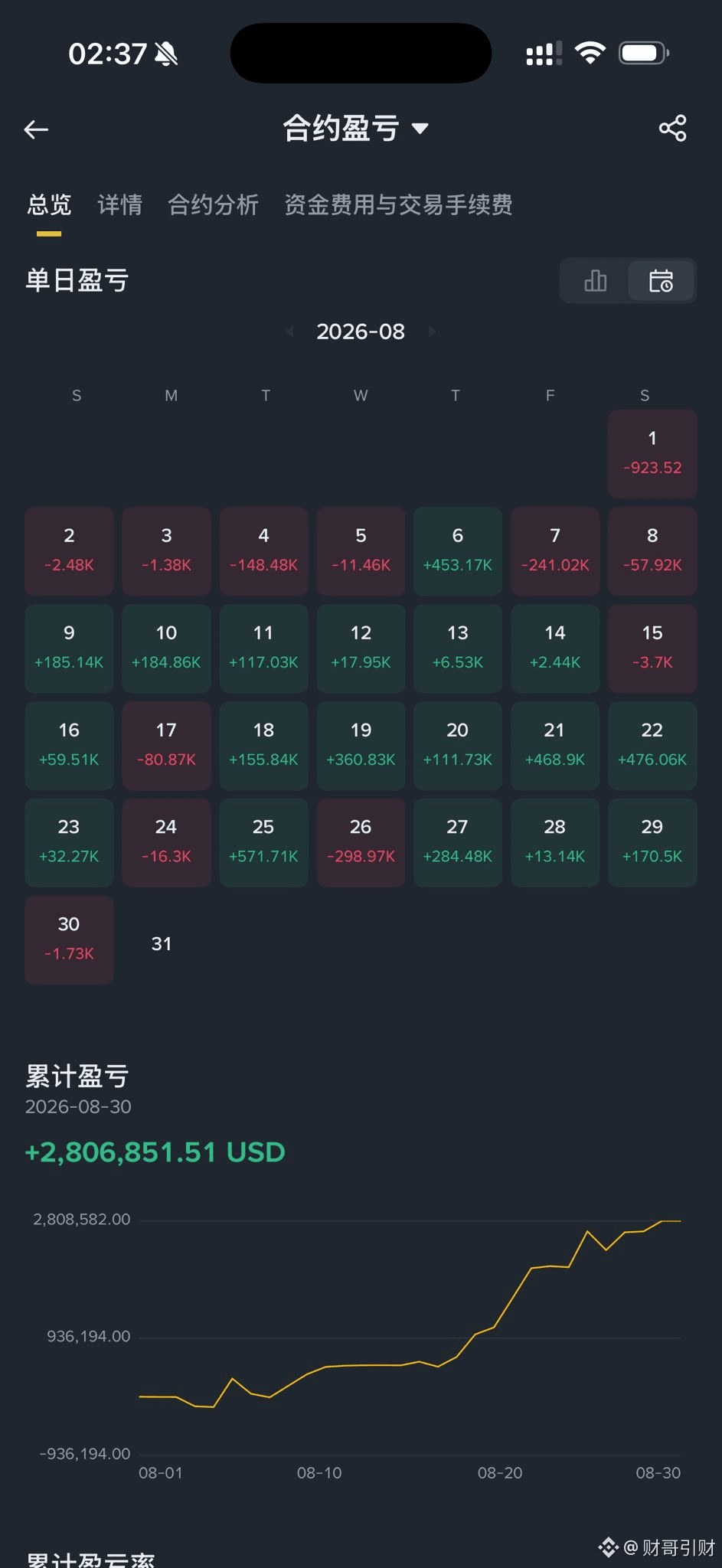

I took a follower and started from 2800U. After a few months, the account gradually rolled up to 36,000U.
At first, he was also very anxious, always thinking about catching a big move. But I kept telling him: the biggest fear for small capital isn’t making profits slowly—it’s making one heavy bet and wiping out all the earlier gains.
Don’t go all-in. Enter in batches. When the signal is unclear, use only a small position to probe; once the price holds the key support and the volume/market activity follows through, then add positions in 2–3 more entries. Confirm first, then scale up the position.
Only add to winning trades. Never average down on losing trades. If a loss hits the stop-loss level, exit—don’t rely on adding more to spread out the cost. After profits reach the target, roll over some of the gains to the next trade, and keep the principal as stable as possible.
Trade the trend only—don’t guess the top or bottom. I asked him to focus mainly on the 4-hour trend. If the trend is up, look for long opportunities. Don’t short lightly until the trend clearly hasn’t broken down. If the trend weakens, promptly reduce the position size.
After months, going from 2800U to 36,000U didn’t come from some so-called “get-rich password,” but from executing every single trade according to the rules.
For small capital to grow big, the most important thing isn’t daring to gamble—it’s being able to wait, being able to cut losses, and being able to let profits keep compounding.
The crypto market never lacks opportunities—what’s missing is someone to pull you when the opportunity appears 👉财哥在线布局
At first, he was also very anxious, always thinking about catching a big move. But I kept telling him: the biggest fear for small capital isn’t making profits slowly—it’s making one heavy bet and wiping out all the earlier gains.
Don’t go all-in. Enter in batches. When the signal is unclear, use only a small position to probe; once the price holds the key support and the volume/market activity follows through, then add positions in 2–3 more entries. Confirm first, then scale up the position.
Only add to winning trades. Never average down on losing trades. If a loss hits the stop-loss level, exit—don’t rely on adding more to spread out the cost. After profits reach the target, roll over some of the gains to the next trade, and keep the principal as stable as possible.
Trade the trend only—don’t guess the top or bottom. I asked him to focus mainly on the 4-hour trend. If the trend is up, look for long opportunities. Don’t short lightly until the trend clearly hasn’t broken down. If the trend weakens, promptly reduce the position size.
After months, going from 2800U to 36,000U didn’t come from some so-called “get-rich password,” but from executing every single trade according to the rules.
For small capital to grow big, the most important thing isn’t daring to gamble—it’s being able to wait, being able to cut losses, and being able to let profits keep compounding.
The crypto market never lacks opportunities—what’s missing is someone to pull you when the opportunity appears 👉财哥在线布局

Log in to explore more content