

Merri Ferrarotti x3o7f
9 Posts
Merri Ferrarotti x3o7f
Report
Block User
BP-6723D2AC778B
Open Trade
Frequent Trader
3.7 Years
11 Following
12 Followers
8 Liked
Posts
Portfolio
All
Quotes
Article
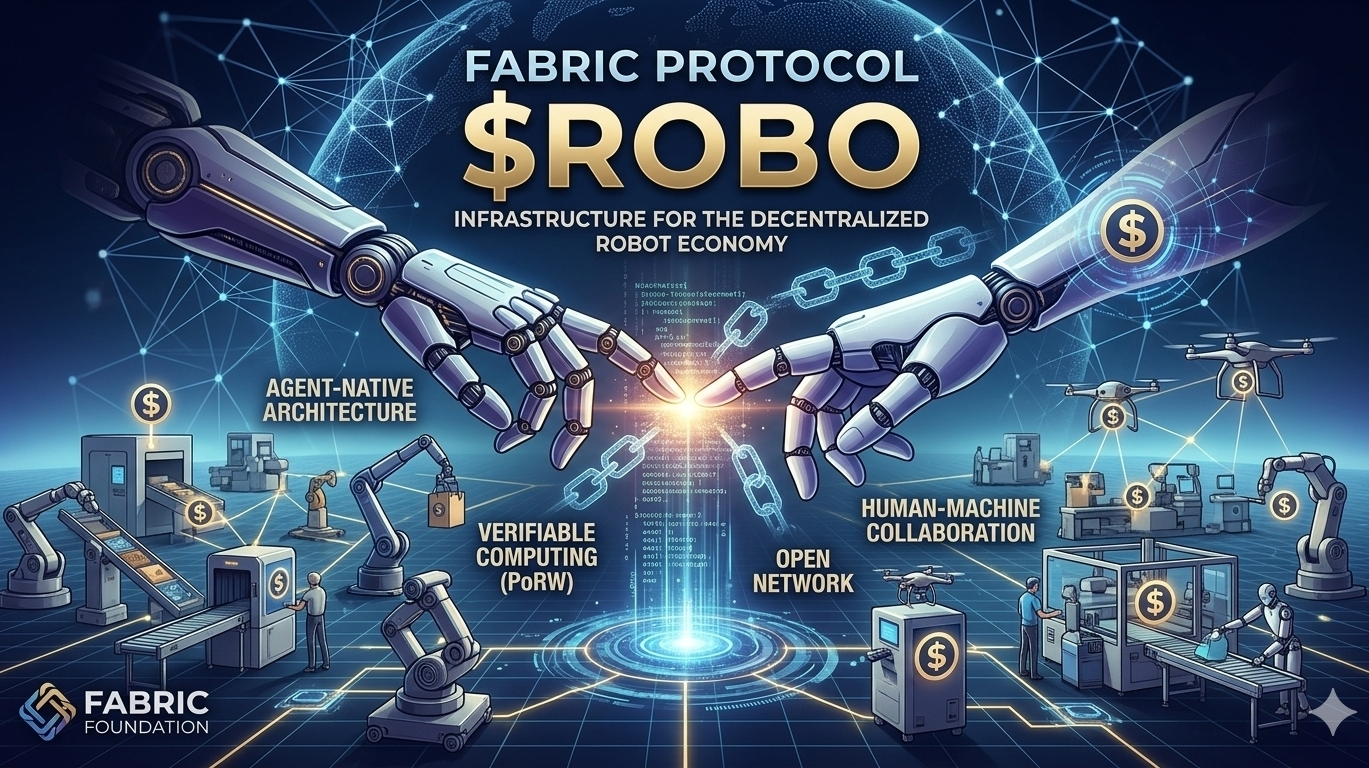
The three pillars of Fabric protocolThe Three Pillars of Fabric Protocol
1. Verifiable Computing (PoRW)
Trust is the biggest hurdle for autonomous machines. How do you know a robot actually performed a task correctly? Fabric uses Verifiable Computing to generate mathematical proofs of a robot's actions.
Proof of Robotic Work (PoRW): Instead of just saying a task is done, the robot provides a "Verification Certificate" (using technologies like zk-SNARKs).
Safety & Compliance: If a robot’s software is tampered with or it attempts to violate safety protocols, the mathematical proof will fail, and the network can instantly disconnect the machine before harm is done.
2. Agent-Native Architecture
Most robots today are "cloud-controlled," meaning they are just extensions of a central server. Fabric treats every machine as an Agent-Native participant. This allows for massive scaling and real-time decision-making with zero latency. It’s the difference between a puppet on a string and a worker with their own brain.
3. Collaborative Evolution
Fabric enables a "Skill App Store" for robots. Through the public ledger, robots can share datasets and learned skills. If a robot in a factory in Ibadan learns a more efficient way to sort packages, that "skill" can be verified and shared across the network, allowing the entire global fleet to evolve simultaneously.
@FabricFND #ROBO #FabricProtocol #ROBO #
The three pillars of Fabric protocol
The Three Pillars of Fabric Protocol
1. Verifiable Computing (PoRW)
Trust is the biggest hurdle for autonomous machines. How do you know a robot actually performed a task correctly? Fabric uses Verifiable Computing to generate mathematical proofs of a robot's actions.
Proof of Robotic Work (PoRW): Instead of just saying a task is done, the robot provides a "Verification Certificate" (using technologies like zk-SNARKs).
Safety & Compliance: If a robot’s software is tampered with or it attempts to violate safety protocols, the mathematical proof will fail, and the network can instantly disconnect the machine before harm is done.
2. Agent-Native Architecture
Most robots today are "cloud-controlled," meaning they are just extensions of a central server. Fabric treats every machine as an Agent-Native participant. This allows for massive scaling and real-time decision-making with zero latency. It’s the difference between a puppet on a string and a worker with their own brain.
3. Collaborative Evolution
Fabric enables a "Skill App Store" for robots. Through the public ledger, robots can share datasets and learned skills. If a robot in a factory in Ibadan learns a more efficient way to sort packages, that "skill" can be verified and shared across the network, allowing the entire global fleet to evolve simultaneously.
@Fabric Foundation #ROBO #FabricProtocol #ROBO #
1. Verifiable Computing (PoRW)
Trust is the biggest hurdle for autonomous machines. How do you know a robot actually performed a task correctly? Fabric uses Verifiable Computing to generate mathematical proofs of a robot's actions.
Proof of Robotic Work (PoRW): Instead of just saying a task is done, the robot provides a "Verification Certificate" (using technologies like zk-SNARKs).
Safety & Compliance: If a robot’s software is tampered with or it attempts to violate safety protocols, the mathematical proof will fail, and the network can instantly disconnect the machine before harm is done.
2. Agent-Native Architecture
Most robots today are "cloud-controlled," meaning they are just extensions of a central server. Fabric treats every machine as an Agent-Native participant. This allows for massive scaling and real-time decision-making with zero latency. It’s the difference between a puppet on a string and a worker with their own brain.
3. Collaborative Evolution
Fabric enables a "Skill App Store" for robots. Through the public ledger, robots can share datasets and learned skills. If a robot in a factory in Ibadan learns a more efficient way to sort packages, that "skill" can be verified and shared across the network, allowing the entire global fleet to evolve simultaneously.
@Fabric Foundation #ROBO #FabricProtocol #ROBO #
3
40
#robo $ROBO Fabric Foundation
Fabric Protocol is a global open network supported by the non-profit Fabric Foundation, enabling the construction, governance, and collaborative evolution of general-purpose robots through verifiable computing and agent-native infrastructure. The protocol coordinates data, computation, and regulation via a public ledger, combining modular infrastructure to facilitate safe human-machine collaboration.
The Vision: A Decentralized "Robot Economy"
The current state of robotics is highly fragmented. Major manufacturers build "black box" systems that don't talk to each other, creating silos where data and skills are trapped. Fabric Protocol disrupts this by creating a global open network where robots from different brands can coordinate, share skills, and conduct business.
At its core, Fabric isn't about making hardware; it’s about the agent-native infrastructure that allows robots to function as independent economic actors. This means a robot on the Fabric network can have its own on-chain identity, its own wallet, and the ability to pay for its own repairs or charging without human intervention.ROBO FabricProtocol Robotics AIotocol@FabricFND
#robo $ROBO Fabric Foundation
Fabric Protocol is a global open network supported by the non-profit Fabric Foundation, enabling the construction, governance, and collaborative evolution of general-purpose robots through verifiable computing and agent-native infrastructure. The protocol coordinates data, computation, and regulation via a public ledger, combining modular infrastructure to facilitate safe human-machine collaboration.
The Vision: A Decentralized "Robot Economy"
The current state of robotics is highly fragmented. Major manufacturers build "black box" systems that don't talk to each other, creating silos where data and skills are trapped. Fabric Protocol disrupts this by creating a global open network where robots from different brands can coordinate, share skills, and conduct business.
At its core, Fabric isn't about making hardware; it’s about the agent-native infrastructure that allows robots to function as independent economic actors. This means a robot on the Fabric network can have its own on-chain identity, its own wallet, and the ability to pay for its own repairs or charging without human intervention.ROBO FabricProtocol Robotics AIotocol@Fabric Foundation
Fabric Protocol is a global open network supported by the non-profit Fabric Foundation, enabling the construction, governance, and collaborative evolution of general-purpose robots through verifiable computing and agent-native infrastructure. The protocol coordinates data, computation, and regulation via a public ledger, combining modular infrastructure to facilitate safe human-machine collaboration.
The Vision: A Decentralized "Robot Economy"
The current state of robotics is highly fragmented. Major manufacturers build "black box" systems that don't talk to each other, creating silos where data and skills are trapped. Fabric Protocol disrupts this by creating a global open network where robots from different brands can coordinate, share skills, and conduct business.
At its core, Fabric isn't about making hardware; it’s about the agent-native infrastructure that allows robots to function as independent economic actors. This means a robot on the Fabric network can have its own on-chain identity, its own wallet, and the ability to pay for its own repairs or charging without human intervention.ROBO FabricProtocol Robotics AIotocol@Fabric Foundation
2
5
Article
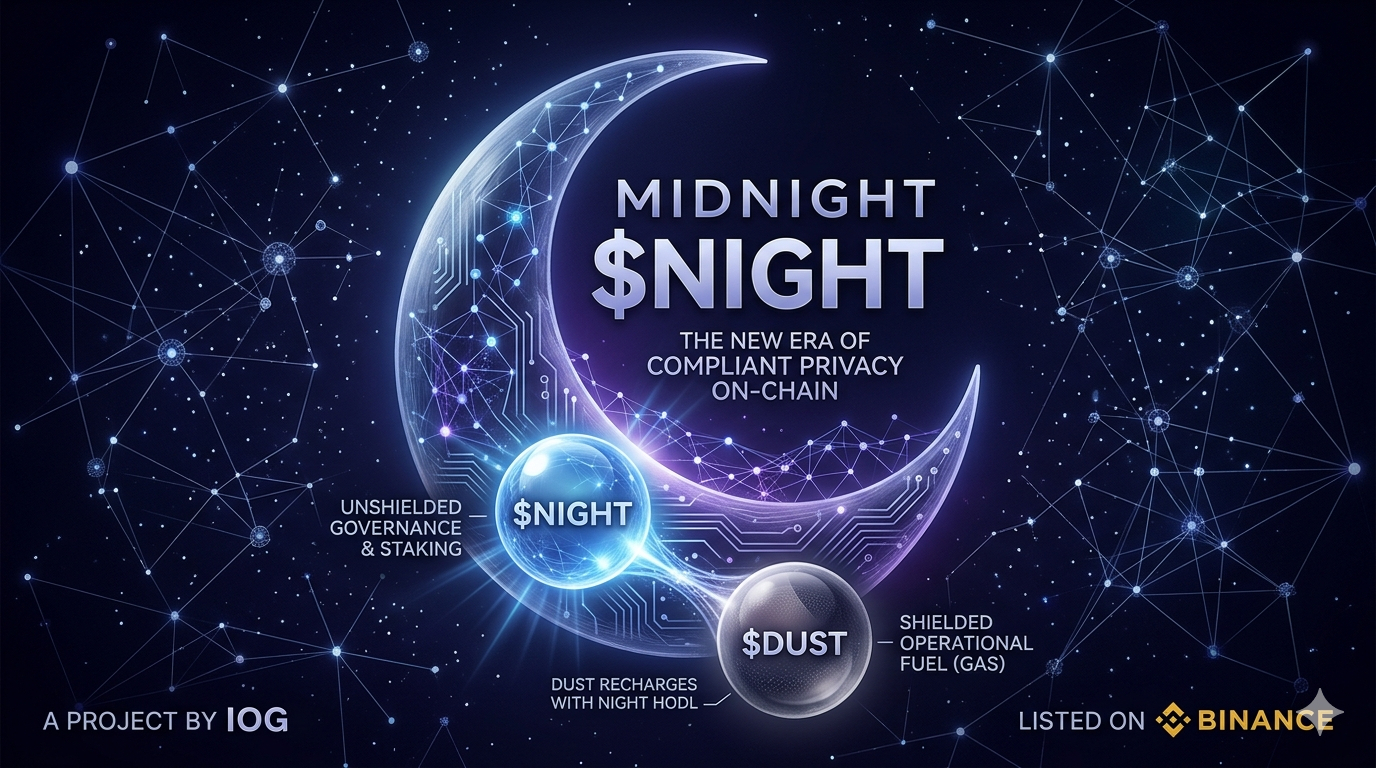
What is #NIGHT PROJECT ALL ABOUT?$NIGHT is a "privacy-first" blockchain developed by IOG (the engineering team behind Cardano), led by Charles Hoskinson. In a world where most blockchains are either completely public (like Bitcoin) or completely hidden (like Monero), Midnight attempts to find the "Goldilocks" zone.
It uses Zero-Knowledge (ZK) smart contracts to allow for selective disclosure. This means developers can build apps where users can prove they have the right credentials or enough funds without revealing their actual sensitive data.
The listing on March 11, 2026, was a watershed moment for the project. As the first Cardano-native asset to land a Binance spot listing, it opened the floodgates for liquidity.
Airdrop Hype: Binance distributed 240 million NIGHT (1% of the total supply) to BNB holders right before trading opened.
Price Volatility: Following the listing, the price saw a "buy the rumor, sell the news" effect. After an initial surge toward $0.055, it has settled into a consolidation phase around the $0.048 - $0.052 range as the market absorbs the airdrop sell-pressure.
Supply Metrics: The total supply is capped at 24 billion tokens, with about 16.6 billion currently in circulation. #night #MidnightNetwork #night #MidnightNetwork #NIGHT #CryptoInnovation #DeFiCommun @MidnightNetwork
What is #NIGHT PROJECT ALL ABOUT?
$NIGHT is a "privacy-first" blockchain developed by IOG (the engineering team behind Cardano), led by Charles Hoskinson. In a world where most blockchains are either completely public (like Bitcoin) or completely hidden (like Monero), Midnight attempts to find the "Goldilocks" zone.
It uses Zero-Knowledge (ZK) smart contracts to allow for selective disclosure. This means developers can build apps where users can prove they have the right credentials or enough funds without revealing their actual sensitive data.
The listing on March 11, 2026, was a watershed moment for the project. As the first Cardano-native asset to land a Binance spot listing, it opened the floodgates for liquidity.
Airdrop Hype: Binance distributed 240 million NIGHT (1% of the total supply) to BNB holders right before trading opened.
Price Volatility: Following the listing, the price saw a "buy the rumor, sell the news" effect. After an initial surge toward $0.055, it has settled into a consolidation phase around the $0.048 - $0.052 range as the market absorbs the airdrop sell-pressure.
Supply Metrics: The total supply is capped at 24 billion tokens, with about 16.6 billion currently in circulation. #night #MidnightNetwork #night #MidnightNetwork #NIGHT #CryptoInnovation #DeFiCommun @MidnightNetwork
It uses Zero-Knowledge (ZK) smart contracts to allow for selective disclosure. This means developers can build apps where users can prove they have the right credentials or enough funds without revealing their actual sensitive data.
The listing on March 11, 2026, was a watershed moment for the project. As the first Cardano-native asset to land a Binance spot listing, it opened the floodgates for liquidity.
Airdrop Hype: Binance distributed 240 million NIGHT (1% of the total supply) to BNB holders right before trading opened.
Price Volatility: Following the listing, the price saw a "buy the rumor, sell the news" effect. After an initial surge toward $0.055, it has settled into a consolidation phase around the $0.048 - $0.052 range as the market absorbs the airdrop sell-pressure.
Supply Metrics: The total supply is capped at 24 billion tokens, with about 16.6 billion currently in circulation. #night #MidnightNetwork #night #MidnightNetwork #NIGHT #CryptoInnovation #DeFiCommun @MidnightNetwork
1
2
21
#night $NIGHT Midnight is a "privacy-first" blockchain developed by IOG (the engineering team behind Cardano), led by Charles Hoskinson. In a world where most blockchains are either completely public (like Bitcoin) or completely hidden (like Monero), Midnight attempts to find the "Goldilocks" zone.
It uses Zero-Knowledge (ZK) smart contracts to allow for selective disclosure. This means developers can build apps where users can prove they have the right credentials or enough funds without revealing their actual sensitive data.
The listing on March 11, 2026, was a watershed moment for the project. As the first Cardano-native asset to land a Binance spot listing, it opened the floodgates for liquidity.
Airdrop Hype: Binance distributed 240 million NIGHT (1% of the total supply) to BNB holders right before trading opened.
Price Volatility: Following the listing, the price saw a "buy the rumor, sell the news" effect. After an initial surge toward $0.055, it has settled into a consolidation phase around the $0.048 - $0.052 range as the market absorbs the airdrop sell-pressure.
Supply Metrics: The total supply is capped at 24 billion tokens, with about 16.6 billion currently in circulation.
#night $NIGHT Midnight is a "privacy-first" blockchain developed by IOG (the engineering team behind Cardano), led by Charles Hoskinson. In a world where most blockchains are either completely public (like Bitcoin) or completely hidden (like Monero), Midnight attempts to find the "Goldilocks" zone.
It uses Zero-Knowledge (ZK) smart contracts to allow for selective disclosure. This means developers can build apps where users can prove they have the right credentials or enough funds without revealing their actual sensitive data.
The listing on March 11, 2026, was a watershed moment for the project. As the first Cardano-native asset to land a Binance spot listing, it opened the floodgates for liquidity.
Airdrop Hype: Binance distributed 240 million NIGHT (1% of the total supply) to BNB holders right before trading opened.
Price Volatility: Following the listing, the price saw a "buy the rumor, sell the news" effect. After an initial surge toward $0.055, it has settled into a consolidation phase around the $0.048 - $0.052 range as the market absorbs the airdrop sell-pressure.
Supply Metrics: The total supply is capped at 24 billion tokens, with about 16.6 billion currently in circulation.
It uses Zero-Knowledge (ZK) smart contracts to allow for selective disclosure. This means developers can build apps where users can prove they have the right credentials or enough funds without revealing their actual sensitive data.
The listing on March 11, 2026, was a watershed moment for the project. As the first Cardano-native asset to land a Binance spot listing, it opened the floodgates for liquidity.
Airdrop Hype: Binance distributed 240 million NIGHT (1% of the total supply) to BNB holders right before trading opened.
Price Volatility: Following the listing, the price saw a "buy the rumor, sell the news" effect. After an initial surge toward $0.055, it has settled into a consolidation phase around the $0.048 - $0.052 range as the market absorbs the airdrop sell-pressure.
Supply Metrics: The total supply is capped at 24 billion tokens, with about 16.6 billion currently in circulation.
1
1
Attention
Attention

Alphaverses
·
--
BREAKING: $ESP
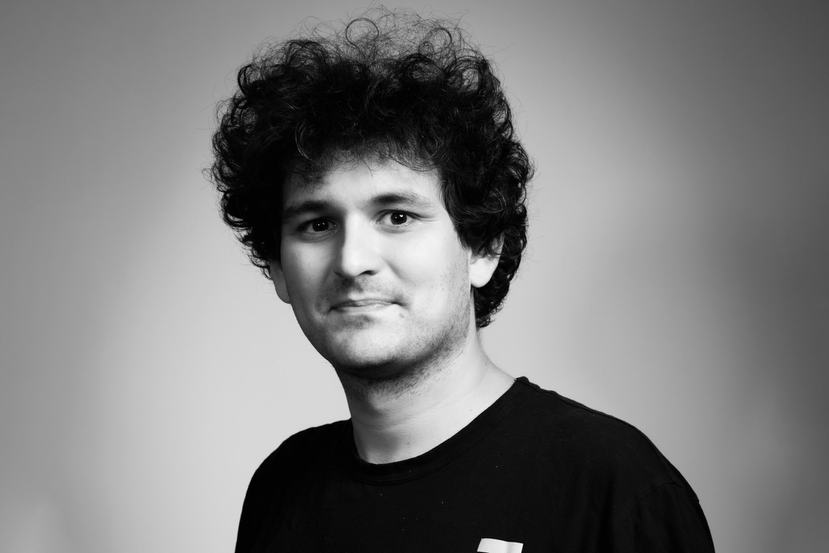
🇺🇸 The White House confirmed President Trump will not pardon Sam Bankman-Fried.$DENT $ENSO
🇺🇸 The White House confirmed President Trump will not pardon Sam Bankman-Fried.$DENT $ENSO

2
Let go
Let go

MHS_Square
·
--
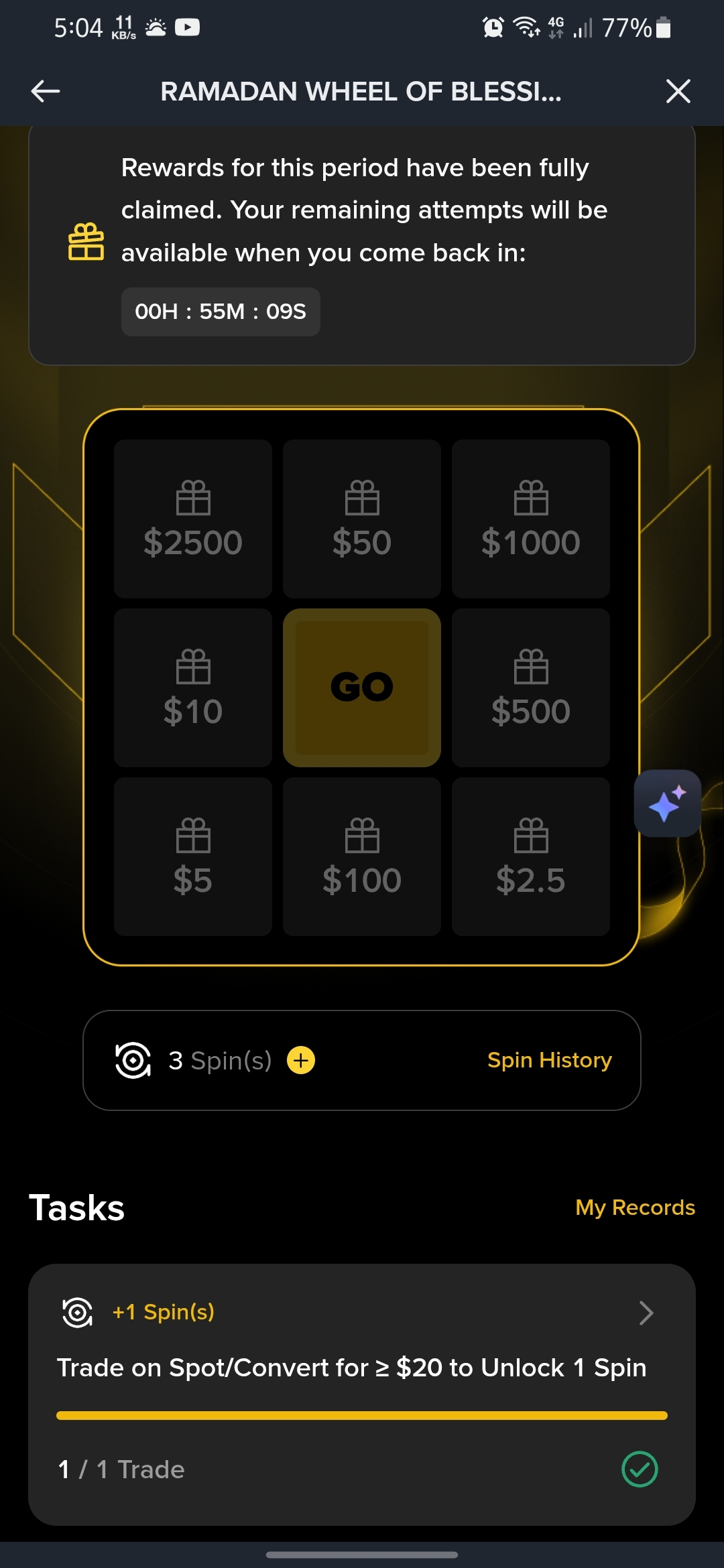
Ramadan Spin, never appeared. just said Fully claimed 🤣🤣😆
#ShareYourTrades $USD1
#ShareYourTrades $USD1
Kllerc
Kllerc

Token Talks
·
--
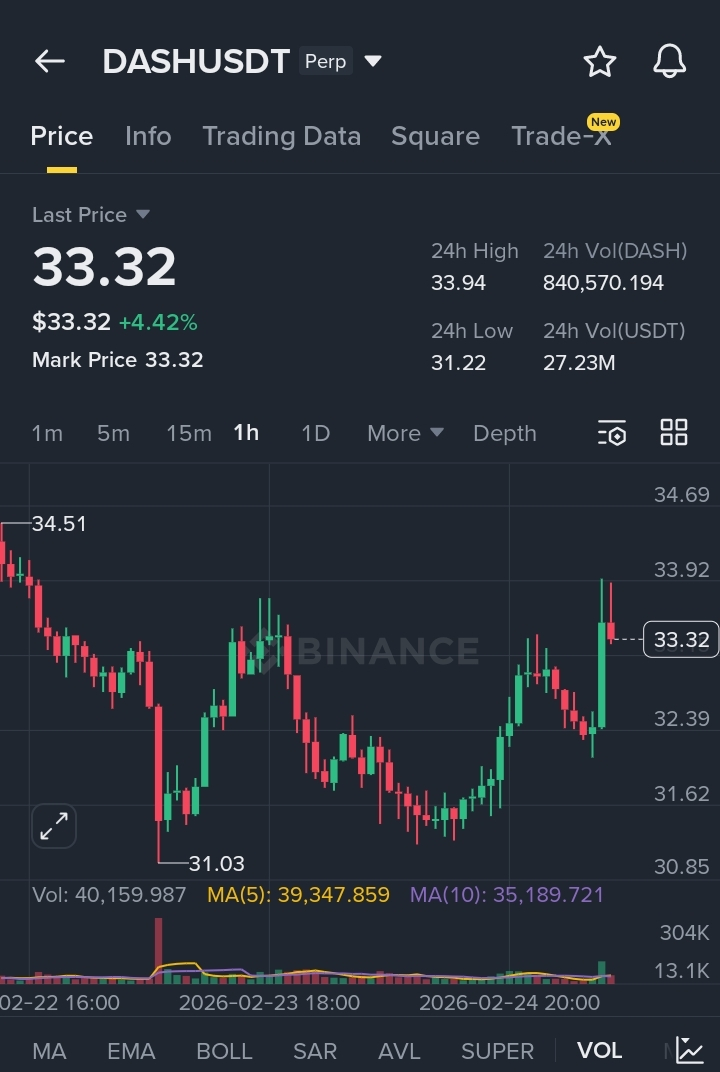
Bearish$DASH just pushed aggressively into the 33.80–34.00 resistance zone after bouncing from 31.03. We’re now near previous supply (34.51 high), and rejection wicks are forming on 1H.
This looks like a liquidity sweep before potential pullback unless 34.00–34.50 breaks cleanly.
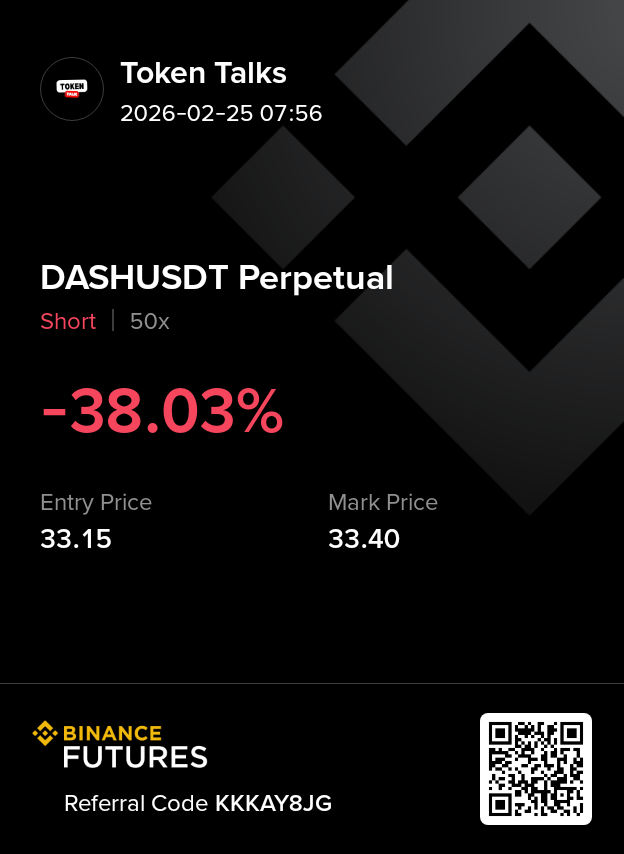
I have Done DCA in this trade. and now my new entry is this, you are also advised to follow this if you entered with me.
Short DASH
Entry Zone: 33.32 – 34.00
Stop Loss: 34.60
TP1: 32.40
TP2: 31.60
Or from 100% to 500%
Do your own research.
Short #DASH Here 👇👇👇
This looks like a liquidity sweep before potential pullback unless 34.00–34.50 breaks cleanly.
I have Done DCA in this trade. and now my new entry is this, you are also advised to follow this if you entered with me.
Short DASH
Entry Zone: 33.32 – 34.00
Stop Loss: 34.60
TP1: 32.40
TP2: 31.60
Or from 100% to 500%
Do your own research.
Short #DASH Here 👇👇👇
2
Andy59841
Andy59841
安迪Andy5984
·
--
🤮Fallen before dawn, the profits have basically all been given back, but it doesn't affect my ability to give red envelopes! Happy New Year!🎉🧧🧧🧧🎁🎁🎁🎁🎁🎁🧧🧧BIG RED BOX
1
Log in to explore more content
Join global crypto users on Binance Square
⚡️ Get latest and useful information about crypto.
💬 Trusted by the world’s largest crypto exchange.
👍 Discover real insights from verified creators.
Email / Phone number
Trending Topics
BitwiseFilesFinalNEARSpotETFProspectus
17,732 views
545 Discussing
#bitwisefilesfinalnearspotetfprospectus 🚀
Can the NEAR token reach $562?$NEAR
Bitwise is preparing a spot NEAR ETF, listed under the ticker NRR on NYSE Arca. The manager was already discussing targets of $155, or even $562 by 2030.$RESOLV $DASH
Rajo C
·5 Likes
·3.3k views
BitgetHackerMoves$83MStolenXRP
16,172 views
103 Discussing
SOLSpotETFWeeklyInflow$188M
7,514 views
74 Discussing