

春风啊你可否慢点
21 Posts

春风啊你可否慢点
Report
Block User
一个炒币十年的中年人
44 Following
1.2K+ Followers
240 Liked
Posts
·
--
Partly True
Article
One of the most worth-buying coins right now#比特币升至8.5万美元附近 #NEAR跌至约4.70美元较日高跌逾14% #以太坊三季度涨70.9% #美财政部允许各州提前提交稳定币认证 #pons引爆牛市
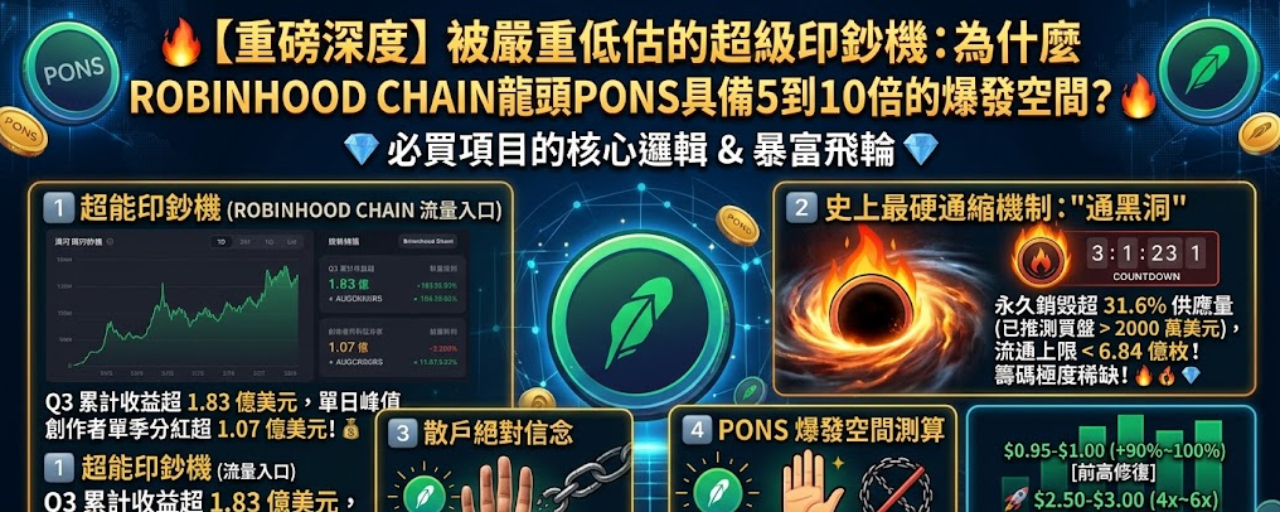
🔥【Major In-Depth】A severely underestimated super money-printing machine: Why does leading Robinhood Chain project PONS have 5 to 10 times the upside explosive potential?
In the crypto market, the only iron rule for judging whether a protocol has 100x potential is whether it possesses the strongest profit-generating flywheel and monopoly-level trading.
As Robinhood Chain’s absolute bottom-layer traffic gateway and a top-tier token issuance leader, PONS is replicating—and surpassing—the meteoric wealth-building trend of pump.fun on Solana. Right now, the token price is building deep support and accumulating momentum in the $0.50 - $0.55 range. Combined with its unparalleled tokenomics and buyback mechanism backed by real money, a massive opportunity for the next main wave breakout is taking shape here.
One of the most worth-buying coins right now
#比特币升至8.5万美元附近 #NEAR跌至约4.70美元较日高跌逾14% #以太坊三季度涨70.9% #美财政部允许各州提前提交稳定币认证 #pons引爆牛市
🔥【Major In-Depth】A severely underestimated super money-printing machine: Why does leading Robinhood Chain project PONS have 5 to 10 times the upside explosive potential?
In the crypto market, the only iron rule for judging whether a protocol has 100x potential is whether it possesses the strongest profit-generating flywheel and monopoly-level trading.
As Robinhood Chain’s absolute bottom-layer traffic gateway and a top-tier token issuance leader, PONS is replicating—and surpassing—the meteoric wealth-building trend of pump.fun on Solana. Right now, the token price is building deep support and accumulating momentum in the $0.50 - $0.55 range. Combined with its unparalleled tokenomics and buyback mechanism backed by real money, a massive opportunity for the next main wave breakout is taking shape here.
🔥【Major In-Depth】A severely underestimated super money-printing machine: Why does leading Robinhood Chain project PONS have 5 to 10 times the upside explosive potential?
In the crypto market, the only iron rule for judging whether a protocol has 100x potential is whether it possesses the strongest profit-generating flywheel and monopoly-level trading.
As Robinhood Chain’s absolute bottom-layer traffic gateway and a top-tier token issuance leader, PONS is replicating—and surpassing—the meteoric wealth-building trend of pump.fun on Solana. Right now, the token price is building deep support and accumulating momentum in the $0.50 - $0.55 range. Combined with its unparalleled tokenomics and buyback mechanism backed by real money, a massive opportunity for the next main wave breakout is taking shape here.
1
1
613
·
--
Bearish
Most trading in the market is actually driven by hormones and intuition. Many people gamble their luck into huge paper gains, but in the end it’s always the same outcome—very few are truly able to withdraw money and exit safely.
The strict demands of the contract market mean that a trader’s survival cycle is often inversely proportional to their order frequency. This line is harsh, but it’s an iron rule hammered out with real gold and silver. Someone who trades ten times within a month is unlikely to last more than a month doing only two or three trades. High-frequency trading amplifies not only your risk exposure, but also the emotional tug-of-war, driving your tolerance to the breaking point. The so-called “excellent opportunities” we see—once you peel off the packaging—are often tainted by FOMO (fear of missing out).
#永续 #山寨 #hype #隐私AI代币空头行情 People attribute failure to “not enough capital” or “not controlling leverage properly,” but that’s only half the truth. The selection of the underlying asset is the real bottom line that determines life or death.
I’ve seen memes born from obvious large capital exiting positions—leverage kept extremely low, thinking the cushion was thick enough to stay safe. What happened? Sure, some people did capture profits, but many large players were directly buried by liquidity. The reason is this: in pools where the chips are highly concentrated and the order book is extremely shallow, if you’re not positioned within the core interest circle, then all your technical analysis and on-chain tracking are meaningless. In such generally deep pools, big capital isn’t a hunter—it’s simply a “moving target” that enters and provides liquidity.
In the absence of absolute information advantages, the real top-tier risk control is to restrain your urge to trade and watch more, act less.
In this circle, losing a million might take just one night, but earning back a million requires a deep cycle and extremely strong discipline. Profits and losses come from the same root—so rather than betting on extreme moves that can double in one night but could send you off the trading table at any moment, make “staying alive” the only criterion for trading.
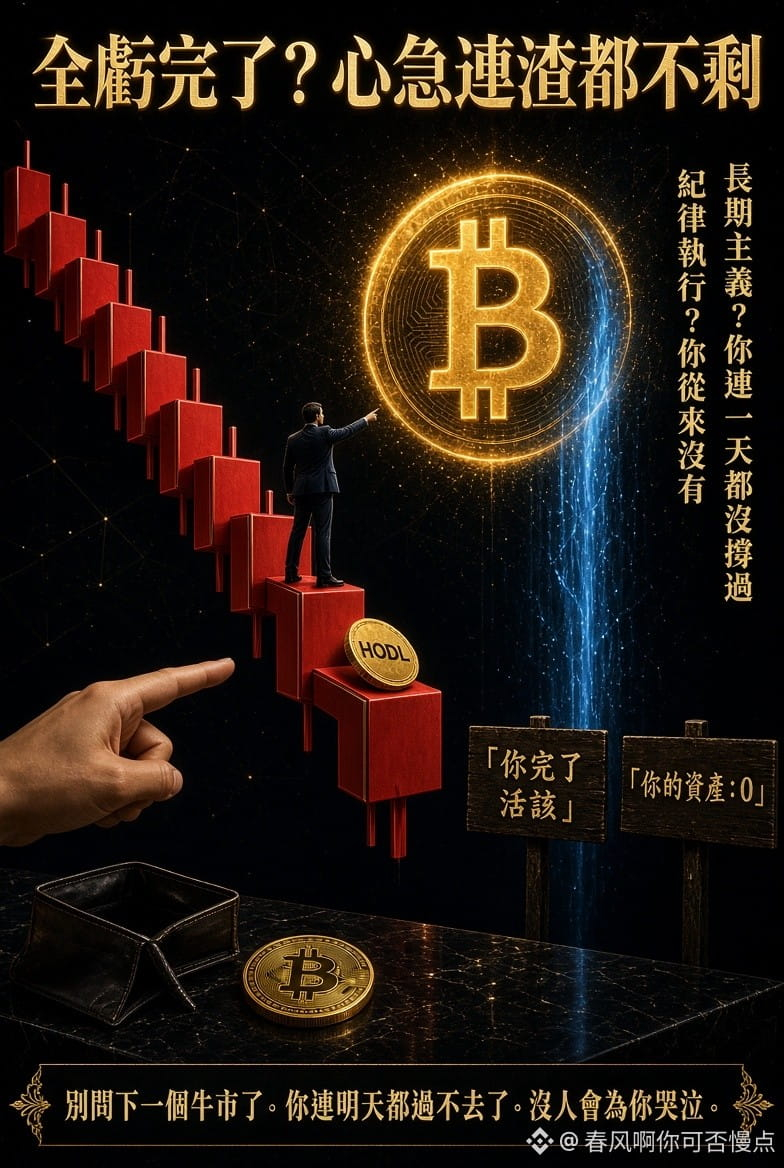
Trading has never been about who can explode harder in one night. It’s about who can hold their line. The biggest bonus is always getting to the next bull market alive.
Most trading in the market is actually driven by hormones and intuition. Many people gamble their luck into huge paper gains, but in the end it’s always the same outcome—very few are truly able to withdraw money and exit safely.
The strict demands of the contract market mean that a trader’s survival cycle is often inversely proportional to their order frequency. This line is harsh, but it’s an iron rule hammered out with real gold and silver. Someone who trades ten times within a month is unlikely to last more than a month doing only two or three trades. High-frequency trading amplifies not only your risk exposure, but also the emotional tug-of-war, driving your tolerance to the breaking point. The so-called “excellent opportunities” we see—once you peel off the packaging—are often tainted by FOMO (fear of missing out).
#永续 #山寨 #hype #隐私AI代币空头行情 People attribute failure to “not enough capital” or “not controlling leverage properly,” but that’s only half the truth. The selection of the underlying asset is the real bottom line that determines life or death.
I’ve seen memes born from obvious large capital exiting positions—leverage kept extremely low, thinking the cushion was thick enough to stay safe. What happened? Sure, some people did capture profits, but many large players were directly buried by liquidity. The reason is this: in pools where the chips are highly concentrated and the order book is extremely shallow, if you’re not positioned within the core interest circle, then all your technical analysis and on-chain tracking are meaningless. In such generally deep pools, big capital isn’t a hunter—it’s simply a “moving target” that enters and provides liquidity.
In the absence of absolute information advantages, the real top-tier risk control is to restrain your urge to trade and watch more, act less.
In this circle, losing a million might take just one night, but earning back a million requires a deep cycle and extremely strong discipline. Profits and losses come from the same root—so rather than betting on extreme moves that can double in one night but could send you off the trading table at any moment, make “staying alive” the only criterion for trading.
Trading has never been about who can explode harder in one night. It’s about who can hold their line. The biggest bonus is always getting to the next bull market alive.
The strict demands of the contract market mean that a trader’s survival cycle is often inversely proportional to their order frequency. This line is harsh, but it’s an iron rule hammered out with real gold and silver. Someone who trades ten times within a month is unlikely to last more than a month doing only two or three trades. High-frequency trading amplifies not only your risk exposure, but also the emotional tug-of-war, driving your tolerance to the breaking point. The so-called “excellent opportunities” we see—once you peel off the packaging—are often tainted by FOMO (fear of missing out).
#永续 #山寨 #hype #隐私AI代币空头行情 People attribute failure to “not enough capital” or “not controlling leverage properly,” but that’s only half the truth. The selection of the underlying asset is the real bottom line that determines life or death.
I’ve seen memes born from obvious large capital exiting positions—leverage kept extremely low, thinking the cushion was thick enough to stay safe. What happened? Sure, some people did capture profits, but many large players were directly buried by liquidity. The reason is this: in pools where the chips are highly concentrated and the order book is extremely shallow, if you’re not positioned within the core interest circle, then all your technical analysis and on-chain tracking are meaningless. In such generally deep pools, big capital isn’t a hunter—it’s simply a “moving target” that enters and provides liquidity.
In the absence of absolute information advantages, the real top-tier risk control is to restrain your urge to trade and watch more, act less.
In this circle, losing a million might take just one night, but earning back a million requires a deep cycle and extremely strong discipline. Profits and losses come from the same root—so rather than betting on extreme moves that can double in one night but could send you off the trading table at any moment, make “staying alive” the only criterion for trading.
Trading has never been about who can explode harder in one night. It’s about who can hold their line. The biggest bonus is always getting to the next bull market alive.
279
·
--
Bearish
High-frequency trading—many people actually can’t even beat the spot market; a slower pace is the best choice. Go ahead and short it boldly. #hype
{future}(HYPEUSDT)
High-frequency trading—many people actually can’t even beat the spot market; a slower pace is the best choice. Go ahead and short it boldly. #hype
1
155
·
--
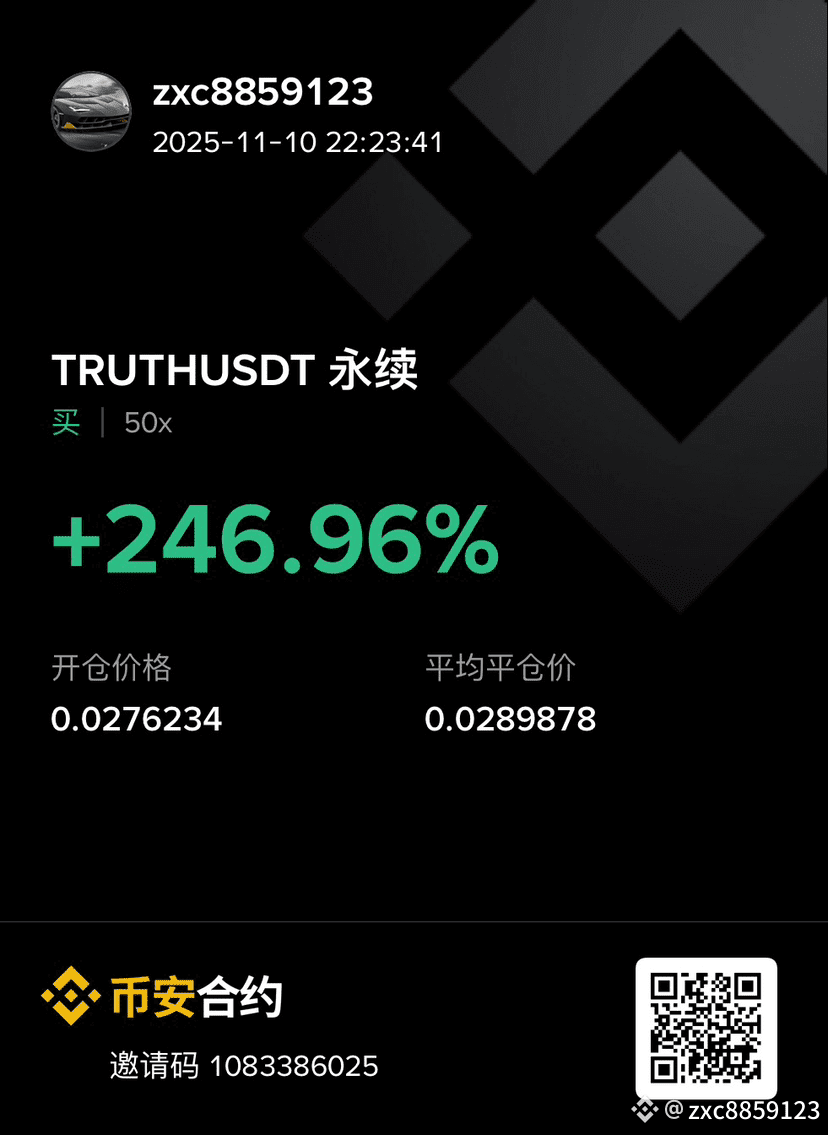
1
1.1k
·
--
Perseverance is right, keep going and it will rise.
Perseverance is right, keep going and it will rise.
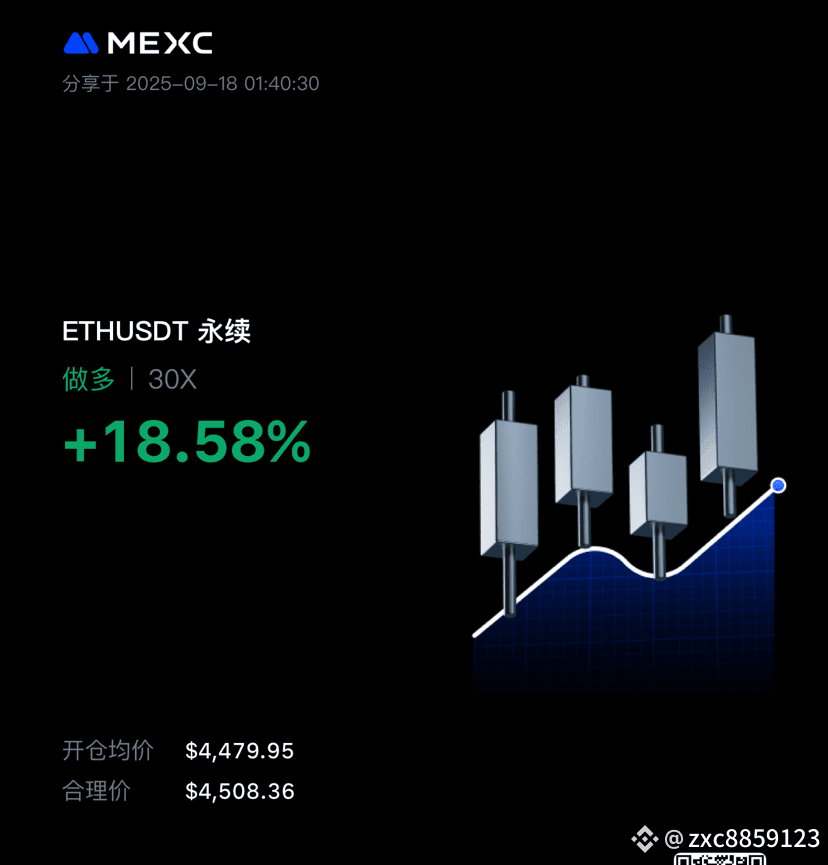
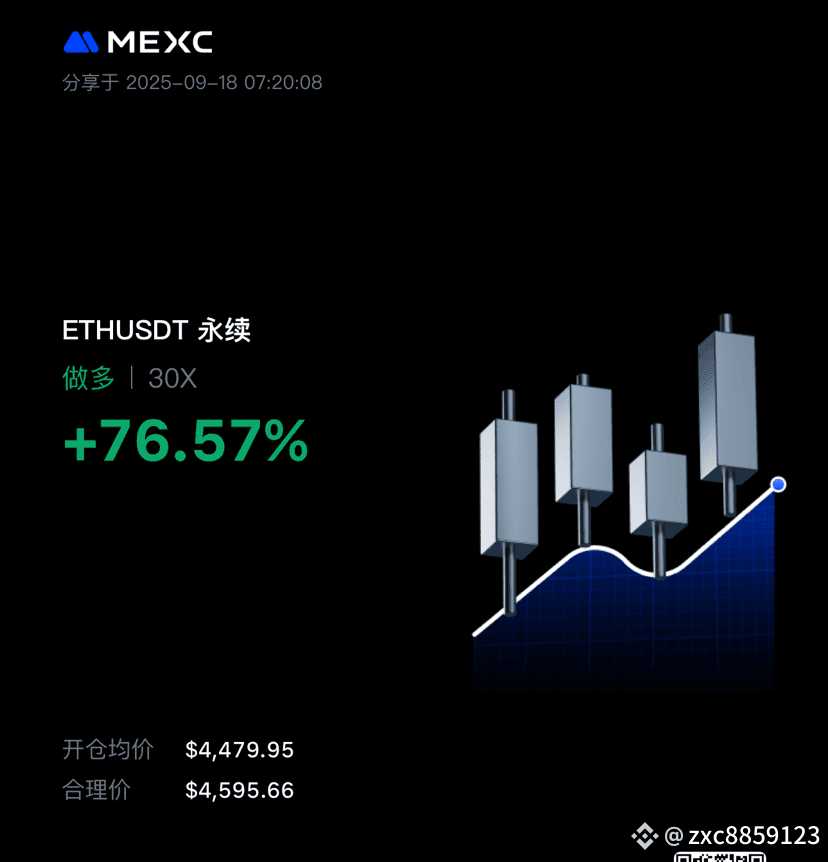
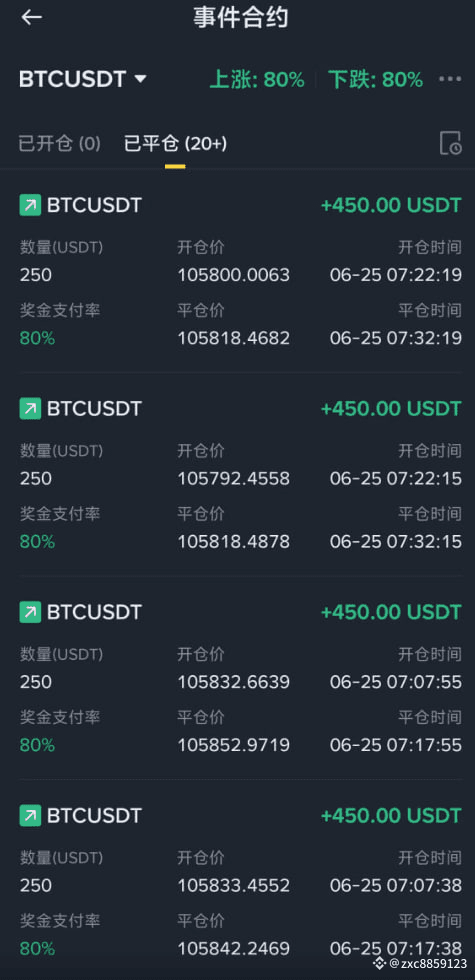
1
66
Log in to explore more content
Join global crypto users on Binance Square
⚡️ Get latest and useful information about crypto.
💬 Trusted by the world’s largest crypto exchange.
👍 Discover real insights from verified creators.
Email / Phone number