

cold_writes
196 Posts

cold_writes
Report
Block User
processing...
10 Following
38 Followers
323 Liked
Posts
All
Quotes
PINNED
·
--
Bullish
This past week is one of my favourite weeks of the year
token2049 hashtags everywhere in the community.
Founders connected, geniuses connected, Dubai was the place to be.
Guess what project stood out from the crowd?
Fluence Network!!!
Fluence brought the heat to the desert and represented DePIN in style.
Did you miss any updates from Fluence?
Walk with me 👇
(April 28th) Staking Summit : Fluence was at the staking summit where we learnt about how Fluence leverages on Web3,
to scale excellent deployments with the staking community.
(May 1st) DePIN Day, Dubai :
The program had a stacked panel from different projects,
where the importance of strong and proper token economics in DePIN was hammered on.
Hack Seasons Conference (2nd May)
At Mpost's Hack Seasons Conference, Fluence's co-founder,
Mr Tom explained how DePIN serves as the connection between raw compute and real outcomes in AI.
"AI doesn't scale on hype. It scales on revenue"
Co-founder, Mr Evgeny also highlighted the importance of trust for Web3 AI adoption,
which is why Fluence is built from scratch to prioritize trust and readiness for Web3 AI workloads.
Dear Anon, why aren't you still bullish on $FLT?
Stack your bags up now and support the decentralized revolution.
This past week is one of my favourite weeks of the year
token2049 hashtags everywhere in the community.
Founders connected, geniuses connected, Dubai was the place to be.
Guess what project stood out from the crowd?
Fluence Network!!!
Fluence brought the heat to the desert and represented DePIN in style.
Did you miss any updates from Fluence?
Walk with me 👇
(April 28th) Staking Summit : Fluence was at the staking summit where we learnt about how Fluence leverages on Web3,
to scale excellent deployments with the staking community.
(May 1st) DePIN Day, Dubai :
The program had a stacked panel from different projects,
where the importance of strong and proper token economics in DePIN was hammered on.
Hack Seasons Conference (2nd May)
At Mpost's Hack Seasons Conference, Fluence's co-founder,
Mr Tom explained how DePIN serves as the connection between raw compute and real outcomes in AI.
"AI doesn't scale on hype. It scales on revenue"
Co-founder, Mr Evgeny also highlighted the importance of trust for Web3 AI adoption,
which is why Fluence is built from scratch to prioritize trust and readiness for Web3 AI workloads.
Dear Anon, why aren't you still bullish on $FLT?
Stack your bags up now and support the decentralized revolution.
token2049 hashtags everywhere in the community.
Founders connected, geniuses connected, Dubai was the place to be.
Guess what project stood out from the crowd?
Fluence Network!!!
Fluence brought the heat to the desert and represented DePIN in style.
Did you miss any updates from Fluence?
Walk with me 👇
(April 28th) Staking Summit : Fluence was at the staking summit where we learnt about how Fluence leverages on Web3,
to scale excellent deployments with the staking community.
(May 1st) DePIN Day, Dubai :
The program had a stacked panel from different projects,
where the importance of strong and proper token economics in DePIN was hammered on.
Hack Seasons Conference (2nd May)
At Mpost's Hack Seasons Conference, Fluence's co-founder,
Mr Tom explained how DePIN serves as the connection between raw compute and real outcomes in AI.
"AI doesn't scale on hype. It scales on revenue"
Co-founder, Mr Evgeny also highlighted the importance of trust for Web3 AI adoption,
which is why Fluence is built from scratch to prioritize trust and readiness for Web3 AI workloads.
Dear Anon, why aren't you still bullish on $FLT?
Stack your bags up now and support the decentralized revolution.

6
6
10
226
·
--
Decentralized Cloud - Censorship ResistanceOne advantage of traditional cloud providers is control.
One disadvantage is also control.
When an application runs on a centralized cloud, the provider ultimately decides what can and cannot operate on its infrastructure.
Accounts can be suspended, services can be restricted, and access can be removed because the infrastructure belongs to a single company.
For most applications, this is not a problem. But for projects that need long term neutrality, relying on one provider creates a dependency.
@fluence Network is designed differently. Compute is provided by a network of independent operators rather than a single company.
Because there is no central owner controlling the entire network, no single entity can unilaterally switch everything off.
This doesn't mean applications become unstoppable or immune to every problem. It simply means control is distributed instead of concentrated.
The difference is straightforward.
With a traditional cloud, access depends on the decisions of one provider.
With a decentralized network, access depends on the participation of many independent operators.
As more of the internet moves onto cloud infrastructure, the ability to remain neutral and independent could become a feature in its own right.
Decentralized Cloud - Censorship Resistance
One advantage of traditional cloud providers is control.
One disadvantage is also control.
When an application runs on a centralized cloud, the provider ultimately decides what can and cannot operate on its infrastructure.
Accounts can be suspended, services can be restricted, and access can be removed because the infrastructure belongs to a single company.
For most applications, this is not a problem. But for projects that need long term neutrality, relying on one provider creates a dependency.
@Fluence Network is designed differently. Compute is provided by a network of independent operators rather than a single company.
Because there is no central owner controlling the entire network, no single entity can unilaterally switch everything off.
This doesn't mean applications become unstoppable or immune to every problem. It simply means control is distributed instead of concentrated.
The difference is straightforward.
With a traditional cloud, access depends on the decisions of one provider.
With a decentralized network, access depends on the participation of many independent operators.
As more of the internet moves onto cloud infrastructure, the ability to remain neutral and independent could become a feature in its own right.
One disadvantage is also control.
When an application runs on a centralized cloud, the provider ultimately decides what can and cannot operate on its infrastructure.
Accounts can be suspended, services can be restricted, and access can be removed because the infrastructure belongs to a single company.
For most applications, this is not a problem. But for projects that need long term neutrality, relying on one provider creates a dependency.
@Fluence Network is designed differently. Compute is provided by a network of independent operators rather than a single company.
Because there is no central owner controlling the entire network, no single entity can unilaterally switch everything off.
This doesn't mean applications become unstoppable or immune to every problem. It simply means control is distributed instead of concentrated.
The difference is straightforward.
With a traditional cloud, access depends on the decisions of one provider.
With a decentralized network, access depends on the participation of many independent operators.
As more of the internet moves onto cloud infrastructure, the ability to remain neutral and independent could become a feature in its own right.
222
·
--
Avoiding Vendor Lock-inOne of the least discussed costs in cloud computing is vendor lock in.
At first, moving to a cloud provider is easy. The provider offers storage, databases, networking, and developer tools all in one place.
But over time, applications become deeply connected to those services. The more a business builds around a specific cloud, the harder and more expensive it becomes to leave.
This creates a powerful advantage for large cloud providers. Even if a better or cheaper option appears, switching can require significant time, money, and engineering effort.
@fluence Network takes a different approach. Instead of building around infrastructure owned by a single company, applications run on a network of independent providers.
The goal is to reduce dependence on any one operator and give developers more flexibility over where their workloads run.
The difference is ownership.
In a traditional cloud, the provider owns the infrastructure, controls the services, and defines the rules.
In a decentralized network, infrastructure is supplied by many participants, making it harder for any single entity to dictate pricing, access, or platform decisions.
As cloud spending continues to grow, avoiding lock in may become less about saving money and more about preserving choice.
Avoiding Vendor Lock-in
One of the least discussed costs in cloud computing is vendor lock in.
At first, moving to a cloud provider is easy. The provider offers storage, databases, networking, and developer tools all in one place.
But over time, applications become deeply connected to those services. The more a business builds around a specific cloud, the harder and more expensive it becomes to leave.
This creates a powerful advantage for large cloud providers. Even if a better or cheaper option appears, switching can require significant time, money, and engineering effort.
@Fluence Network takes a different approach. Instead of building around infrastructure owned by a single company, applications run on a network of independent providers.
The goal is to reduce dependence on any one operator and give developers more flexibility over where their workloads run.
The difference is ownership.
In a traditional cloud, the provider owns the infrastructure, controls the services, and defines the rules.
In a decentralized network, infrastructure is supplied by many participants, making it harder for any single entity to dictate pricing, access, or platform decisions.
As cloud spending continues to grow, avoiding lock in may become less about saving money and more about preserving choice.
At first, moving to a cloud provider is easy. The provider offers storage, databases, networking, and developer tools all in one place.
But over time, applications become deeply connected to those services. The more a business builds around a specific cloud, the harder and more expensive it becomes to leave.
This creates a powerful advantage for large cloud providers. Even if a better or cheaper option appears, switching can require significant time, money, and engineering effort.
@Fluence Network takes a different approach. Instead of building around infrastructure owned by a single company, applications run on a network of independent providers.
The goal is to reduce dependence on any one operator and give developers more flexibility over where their workloads run.
The difference is ownership.
In a traditional cloud, the provider owns the infrastructure, controls the services, and defines the rules.
In a decentralized network, infrastructure is supplied by many participants, making it harder for any single entity to dictate pricing, access, or platform decisions.
As cloud spending continues to grow, avoiding lock in may become less about saving money and more about preserving choice.
355
·
--
What Cloud Can we really Trust?One of the biggest challenges in cloud computing is trust.
When an application runs on a traditional cloud provider, users have to trust that the computation was performed correctly.
The provider owns the infrastructure, controls the servers, and manages the execution environment. Most of the time this works well, but verification is often replaced by trust.
@fluence Network is built around a different idea: don't just trust the result, verify it.
In a decentralized network, compute can be checked and validated by the network itself rather than relying entirely on the word of a single provider.
This becomes increasingly important as more critical workloads move online, especially AI applications, financial systems, and automated services where mistakes can be costly.
The difference may seem small, but it changes the relationship between users and infrastructure.
With a centralized cloud, the question is: "Do I trust the provider?"
With verifiable infrastructure, the question becomes: "Can the result be proven?"
As digital systems become more complex, the ability to verify what happened may become just as important as the ability to run the computation in the first place.
What Cloud Can we really Trust?
One of the biggest challenges in cloud computing is trust.
When an application runs on a traditional cloud provider, users have to trust that the computation was performed correctly.
The provider owns the infrastructure, controls the servers, and manages the execution environment. Most of the time this works well, but verification is often replaced by trust.
@Fluence Network is built around a different idea: don't just trust the result, verify it.
In a decentralized network, compute can be checked and validated by the network itself rather than relying entirely on the word of a single provider.
This becomes increasingly important as more critical workloads move online, especially AI applications, financial systems, and automated services where mistakes can be costly.
The difference may seem small, but it changes the relationship between users and infrastructure.
With a centralized cloud, the question is: "Do I trust the provider?"
With verifiable infrastructure, the question becomes: "Can the result be proven?"
As digital systems become more complex, the ability to verify what happened may become just as important as the ability to run the computation in the first place.
When an application runs on a traditional cloud provider, users have to trust that the computation was performed correctly.
The provider owns the infrastructure, controls the servers, and manages the execution environment. Most of the time this works well, but verification is often replaced by trust.
@Fluence Network is built around a different idea: don't just trust the result, verify it.
In a decentralized network, compute can be checked and validated by the network itself rather than relying entirely on the word of a single provider.
This becomes increasingly important as more critical workloads move online, especially AI applications, financial systems, and automated services where mistakes can be costly.
The difference may seem small, but it changes the relationship between users and infrastructure.
With a centralized cloud, the question is: "Do I trust the provider?"
With verifiable infrastructure, the question becomes: "Can the result be proven?"
As digital systems become more complex, the ability to verify what happened may become just as important as the ability to run the computation in the first place.
326
·
--
Can big tech clouds secure your data?Data security has become one of the most delicate and biggest concerns in cloud computing.
When businesses use traditional cloud providers, their applications, databases, and sensitive information are often stored within infrastructure controlled by a single company.
These providers invest heavily in security, but they also become attractive targets because so much data is concentrated in one place.
The challenge isn't that centralized clouds are insecure. The challenge is that concentration creates risk.
A misconfiguration, breach, insider threat, or service compromise can potentially affect large amounts of data at once.
@fluence Network approaches the problem from a different direction. Instead of placing trust in a single infrastructure provider, compute is distributed across independent operators.
This reduces dependence on one company to secure the entire system.
In a centralized cloud, security largely comes from trusting the provider.
In a decentralized network, security comes from reducing how much power and control any single participant has over the infrastructure.
Can big tech clouds secure your data?
Data security has become one of the most delicate and biggest concerns in cloud computing.
When businesses use traditional cloud providers, their applications, databases, and sensitive information are often stored within infrastructure controlled by a single company.
These providers invest heavily in security, but they also become attractive targets because so much data is concentrated in one place.
The challenge isn't that centralized clouds are insecure. The challenge is that concentration creates risk.
A misconfiguration, breach, insider threat, or service compromise can potentially affect large amounts of data at once.
@Fluence Network approaches the problem from a different direction. Instead of placing trust in a single infrastructure provider, compute is distributed across independent operators.
This reduces dependence on one company to secure the entire system.
In a centralized cloud, security largely comes from trusting the provider.
In a decentralized network, security comes from reducing how much power and control any single participant has over the infrastructure.
When businesses use traditional cloud providers, their applications, databases, and sensitive information are often stored within infrastructure controlled by a single company.
These providers invest heavily in security, but they also become attractive targets because so much data is concentrated in one place.
The challenge isn't that centralized clouds are insecure. The challenge is that concentration creates risk.
A misconfiguration, breach, insider threat, or service compromise can potentially affect large amounts of data at once.
@Fluence Network approaches the problem from a different direction. Instead of placing trust in a single infrastructure provider, compute is distributed across independent operators.
This reduces dependence on one company to secure the entire system.
In a centralized cloud, security largely comes from trusting the provider.
In a decentralized network, security comes from reducing how much power and control any single participant has over the infrastructure.
207
·
--
The Cloud with zero OutageCloud outages are rare, but when they happen, they can affect thousands of applications at once.
The reason is simple. Most traditional cloud infrastructure is built around centralized control.
Even though providers like AWS and Azure operate massive global networks, critical services still depend on shared systems.
When one of those systems fails, the impact can spread across large parts of the network.
Over the years, both AWS and Azure have experienced outages that temporarily disrupted websites, applications, databases, and other online services used by millions of people.
The scale of these platforms makes reliability extremely high, but it also means failures can have wide reaching consequences when they occur.
@fluence Network takes a different approach. Instead of relying on infrastructure owned and operated by a single provider, it distributes workloads across independent operators.
There is no central company controlling every machine in the network.
The idea is that if one operator goes offline, the network itself continues running. A local failure remains local instead of becoming a platform wide outage.
Resilience comes from distribution rather than concentration.
The broader question is whether future cloud infrastructure should optimize for the reliability of a single provider or the resilience of a network that has no single point of failure.
The Cloud with zero Outage
Cloud outages are rare, but when they happen, they can affect thousands of applications at once.
The reason is simple. Most traditional cloud infrastructure is built around centralized control.
Even though providers like AWS and Azure operate massive global networks, critical services still depend on shared systems.
When one of those systems fails, the impact can spread across large parts of the network.
Over the years, both AWS and Azure have experienced outages that temporarily disrupted websites, applications, databases, and other online services used by millions of people.
The scale of these platforms makes reliability extremely high, but it also means failures can have wide reaching consequences when they occur.
@Fluence Network takes a different approach. Instead of relying on infrastructure owned and operated by a single provider, it distributes workloads across independent operators.
There is no central company controlling every machine in the network.
The idea is that if one operator goes offline, the network itself continues running. A local failure remains local instead of becoming a platform wide outage.
Resilience comes from distribution rather than concentration.
The broader question is whether future cloud infrastructure should optimize for the reliability of a single provider or the resilience of a network that has no single point of failure.
The reason is simple. Most traditional cloud infrastructure is built around centralized control.
Even though providers like AWS and Azure operate massive global networks, critical services still depend on shared systems.
When one of those systems fails, the impact can spread across large parts of the network.
Over the years, both AWS and Azure have experienced outages that temporarily disrupted websites, applications, databases, and other online services used by millions of people.
The scale of these platforms makes reliability extremely high, but it also means failures can have wide reaching consequences when they occur.
@Fluence Network takes a different approach. Instead of relying on infrastructure owned and operated by a single provider, it distributes workloads across independent operators.
There is no central company controlling every machine in the network.
The idea is that if one operator goes offline, the network itself continues running. A local failure remains local instead of becoming a platform wide outage.
Resilience comes from distribution rather than concentration.
The broader question is whether future cloud infrastructure should optimize for the reliability of a single provider or the resilience of a network that has no single point of failure.
149
·
--
Say NO to Egress FeesCentralized cloud providers charge not just for compute, but for moving data out of their systems.
This is called egress. It is often where costs become unpredictable. Storing and processing data inside the cloud can look affordable at first, but once data starts flowing between services or leaving the network, pricing increases quickly.
The result is lock in. The more data you move, the harder it becomes to leave.
@fluence Network approaches this differently because it is not built around a single closed infrastructure. In centralized clouds, data movement crosses internal billing boundaries controlled by one provider.
In Fluence’s model, compute is distributed across independent operators, so the system is not designed around one central gate where data exit costs can be imposed.
In simple terms, big clouds make money when your data moves out.
Fluence removes that single controlled exit point, so pricing pressure shifts away from “where your data goes” and toward “who is actually doing the compute and for how much.”
The tradeoff is structure versus simplicity. Centralized clouds are simple to understand but expensive at scale.
Distributed systems can reduce artificial transfer costs, but they rely on coordination between many independent nodes instead of one controlled network.
Say NO to Egress Fees
Centralized cloud providers charge not just for compute, but for moving data out of their systems.
This is called egress. It is often where costs become unpredictable. Storing and processing data inside the cloud can look affordable at first, but once data starts flowing between services or leaving the network, pricing increases quickly.
The result is lock in. The more data you move, the harder it becomes to leave.
@Fluence Network approaches this differently because it is not built around a single closed infrastructure. In centralized clouds, data movement crosses internal billing boundaries controlled by one provider.
In Fluence’s model, compute is distributed across independent operators, so the system is not designed around one central gate where data exit costs can be imposed.
In simple terms, big clouds make money when your data moves out.
Fluence removes that single controlled exit point, so pricing pressure shifts away from “where your data goes” and toward “who is actually doing the compute and for how much.”
The tradeoff is structure versus simplicity. Centralized clouds are simple to understand but expensive at scale.
Distributed systems can reduce artificial transfer costs, but they rely on coordination between many independent nodes instead of one controlled network.
This is called egress. It is often where costs become unpredictable. Storing and processing data inside the cloud can look affordable at first, but once data starts flowing between services or leaving the network, pricing increases quickly.
The result is lock in. The more data you move, the harder it becomes to leave.
@Fluence Network approaches this differently because it is not built around a single closed infrastructure. In centralized clouds, data movement crosses internal billing boundaries controlled by one provider.
In Fluence’s model, compute is distributed across independent operators, so the system is not designed around one central gate where data exit costs can be imposed.
In simple terms, big clouds make money when your data moves out.
Fluence removes that single controlled exit point, so pricing pressure shifts away from “where your data goes” and toward “who is actually doing the compute and for how much.”
The tradeoff is structure versus simplicity. Centralized clouds are simple to understand but expensive at scale.
Distributed systems can reduce artificial transfer costs, but they rely on coordination between many independent nodes instead of one controlled network.
427
·
--
Best pricing model for cloud computeCentralized cloud infrastructure prices compute through fixed abstractions. Users pay for virtualized resources layered on top of massive internal economies of scale.
The result is stable pricing structures, but not necessarily efficient pricing relative to real supply and demand at the edge.
Cost reductions happen internally, not transparently.
@fluence replaces that model with a distributed supply market. Compute is sourced from independent operators competing to provide resources.
Pricing emerges from competition rather than internal allocation.
This shifts cost formation closer to marginal supply, where idle hardware and regional price differences can be directly expressed in the market.
Compared to AWS or similar hyperscale clouds, the key difference is opacity versus exposure.
Centralized pricing hides infrastructure variance behind standardized tiers. Fluence exposes it, allowing pricing to reflect real-time availability and operator economics.
The constraint is stability. Centralized clouds optimize for predictable billing and guaranteed capacity.
Decentralized pricing must match that reliability without reintroducing hidden central coordination.
Best pricing model for cloud compute
Centralized cloud infrastructure prices compute through fixed abstractions. Users pay for virtualized resources layered on top of massive internal economies of scale.
The result is stable pricing structures, but not necessarily efficient pricing relative to real supply and demand at the edge.
Cost reductions happen internally, not transparently.
@Fluence replaces that model with a distributed supply market. Compute is sourced from independent operators competing to provide resources.
Pricing emerges from competition rather than internal allocation.
This shifts cost formation closer to marginal supply, where idle hardware and regional price differences can be directly expressed in the market.
Compared to AWS or similar hyperscale clouds, the key difference is opacity versus exposure.
Centralized pricing hides infrastructure variance behind standardized tiers. Fluence exposes it, allowing pricing to reflect real-time availability and operator economics.
The constraint is stability. Centralized clouds optimize for predictable billing and guaranteed capacity.
Decentralized pricing must match that reliability without reintroducing hidden central coordination.
The result is stable pricing structures, but not necessarily efficient pricing relative to real supply and demand at the edge.
Cost reductions happen internally, not transparently.
@Fluence replaces that model with a distributed supply market. Compute is sourced from independent operators competing to provide resources.
Pricing emerges from competition rather than internal allocation.
This shifts cost formation closer to marginal supply, where idle hardware and regional price differences can be directly expressed in the market.
Compared to AWS or similar hyperscale clouds, the key difference is opacity versus exposure.
Centralized pricing hides infrastructure variance behind standardized tiers. Fluence exposes it, allowing pricing to reflect real-time availability and operator economics.
The constraint is stability. Centralized clouds optimize for predictable billing and guaranteed capacity.
Decentralized pricing must match that reliability without reintroducing hidden central coordination.
92
·
--
Privacy better with Decentralized or Centralized Cloud?Centralized cloud providers handle privacy through trust. Users assume data is protected because infrastructure is controlled by a single entity with legal and technical safeguards.
This creates a clear accountability model, but it also concentrates risk. If the provider is compromised or compelled, the entire data layer is exposed.
@fluence Network removes that single point of control. Compute runs across independent nodes rather than a unified infrastructure owner.
This reduces the surface area of institutional trust, since no single operator has full visibility or authority over all execution.
Compared to centralized clouds, privacy shifts from policy-based protection to architectural distribution.
Instead of trusting one entity to secure everything, trust is minimized by spreading execution across multiple independent participants.
The limitation is that decentralization alone does not guarantee confidentiality. Without strong execution isolation and verification, distributed systems can still leak metadata or rely on external assumptions.
Privacy better with Decentralized or Centralized Cloud?
Centralized cloud providers handle privacy through trust. Users assume data is protected because infrastructure is controlled by a single entity with legal and technical safeguards.
This creates a clear accountability model, but it also concentrates risk. If the provider is compromised or compelled, the entire data layer is exposed.
@Fluence Network removes that single point of control. Compute runs across independent nodes rather than a unified infrastructure owner.
This reduces the surface area of institutional trust, since no single operator has full visibility or authority over all execution.
Compared to centralized clouds, privacy shifts from policy-based protection to architectural distribution.
Instead of trusting one entity to secure everything, trust is minimized by spreading execution across multiple independent participants.
The limitation is that decentralization alone does not guarantee confidentiality. Without strong execution isolation and verification, distributed systems can still leak metadata or rely on external assumptions.
This creates a clear accountability model, but it also concentrates risk. If the provider is compromised or compelled, the entire data layer is exposed.
@Fluence Network removes that single point of control. Compute runs across independent nodes rather than a unified infrastructure owner.
This reduces the surface area of institutional trust, since no single operator has full visibility or authority over all execution.
Compared to centralized clouds, privacy shifts from policy-based protection to architectural distribution.
Instead of trusting one entity to secure everything, trust is minimized by spreading execution across multiple independent participants.
The limitation is that decentralization alone does not guarantee confidentiality. Without strong execution isolation and verification, distributed systems can still leak metadata or rely on external assumptions.
128
·
--
Verified
Article
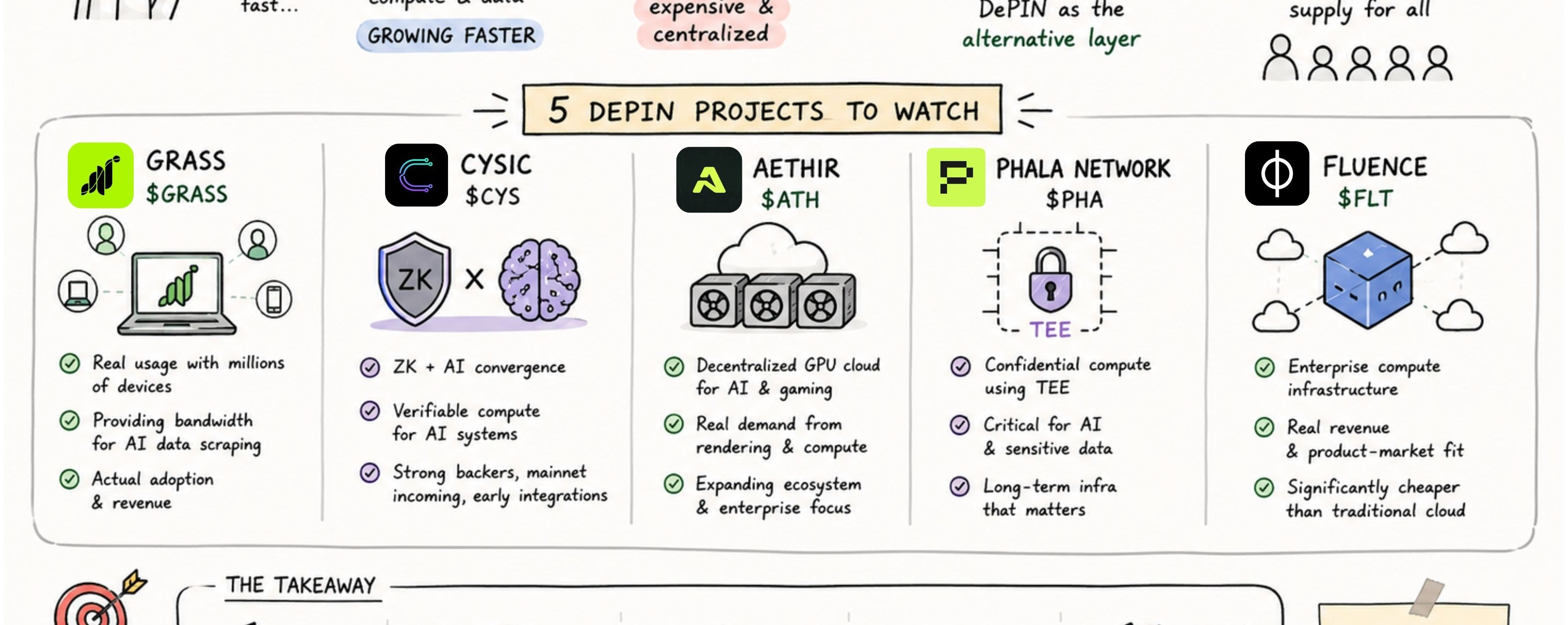
TOP 5 DEPIN PROJECTS TO WATCH OUT FOR !!!AI keeps running into the same bottleneck.
Demand for compute and data is growing exponentially, but the infrastructure powering it remains expensive and concentrated in the hands of a few providers.
That gap is creating an opportunity for DePIN networks to offer an alternative, distributing supply across global contributors while reducing costs.
What's interesting isn't just the narrative. It's whether these networks can turn growing AI demand into sustainable usage and, eventually, value capture.
Grass is attacking the data layer, with millions of devices already contributing bandwidth for AI data collection. Unlike many projects still selling a vision, usage is already happening.
Cysic sits at the intersection of AI and zero knowledge proofs, focusing on verifiable compute.
As AI systems become more autonomous, proving that outputs were generated correctly could become just as important as generating them in the first place.
Aethir is targeting one of the most obvious shortages in the market, GPU access. Instead of building new demand, it's trying to serve demand that already exists across AI and gaming workloads.
Phala approaches the problem from a different angle. As AI starts processing more sensitive information,
confidential compute becomes increasingly important. Privacy isn't the most exciting narrative today, but it could become a requirement tomorrow.
Then there's @fluence which is focused on enterprise compute and infrastructure efficiency. Rather than competing on hype, it's competing on economics, offering a lower cost alternative to traditional cloud providers while positioning itself for the growing AI compute market.
The bigger question isn't whether AI demand will grow. It already is. The question is which infrastructure networks can scale alongside it and convert that growth into durable adoption.
That's where the real opportunity, and the real risk, exists.
TOP 5 DEPIN PROJECTS TO WATCH OUT FOR !!!
AI keeps running into the same bottleneck.
Demand for compute and data is growing exponentially, but the infrastructure powering it remains expensive and concentrated in the hands of a few providers.
That gap is creating an opportunity for DePIN networks to offer an alternative, distributing supply across global contributors while reducing costs.
What's interesting isn't just the narrative. It's whether these networks can turn growing AI demand into sustainable usage and, eventually, value capture.
Grass is attacking the data layer, with millions of devices already contributing bandwidth for AI data collection. Unlike many projects still selling a vision, usage is already happening.
Cysic sits at the intersection of AI and zero knowledge proofs, focusing on verifiable compute.
As AI systems become more autonomous, proving that outputs were generated correctly could become just as important as generating them in the first place.
Aethir is targeting one of the most obvious shortages in the market, GPU access. Instead of building new demand, it's trying to serve demand that already exists across AI and gaming workloads.
Phala approaches the problem from a different angle. As AI starts processing more sensitive information,
confidential compute becomes increasingly important. Privacy isn't the most exciting narrative today, but it could become a requirement tomorrow.
Then there's @Fluence which is focused on enterprise compute and infrastructure efficiency. Rather than competing on hype, it's competing on economics, offering a lower cost alternative to traditional cloud providers while positioning itself for the growing AI compute market.
The bigger question isn't whether AI demand will grow. It already is. The question is which infrastructure networks can scale alongside it and convert that growth into durable adoption.
That's where the real opportunity, and the real risk, exists.
Demand for compute and data is growing exponentially, but the infrastructure powering it remains expensive and concentrated in the hands of a few providers.
That gap is creating an opportunity for DePIN networks to offer an alternative, distributing supply across global contributors while reducing costs.
What's interesting isn't just the narrative. It's whether these networks can turn growing AI demand into sustainable usage and, eventually, value capture.
Grass is attacking the data layer, with millions of devices already contributing bandwidth for AI data collection. Unlike many projects still selling a vision, usage is already happening.
Cysic sits at the intersection of AI and zero knowledge proofs, focusing on verifiable compute.
As AI systems become more autonomous, proving that outputs were generated correctly could become just as important as generating them in the first place.
Aethir is targeting one of the most obvious shortages in the market, GPU access. Instead of building new demand, it's trying to serve demand that already exists across AI and gaming workloads.
Phala approaches the problem from a different angle. As AI starts processing more sensitive information,
confidential compute becomes increasingly important. Privacy isn't the most exciting narrative today, but it could become a requirement tomorrow.
Then there's @Fluence which is focused on enterprise compute and infrastructure efficiency. Rather than competing on hype, it's competing on economics, offering a lower cost alternative to traditional cloud providers while positioning itself for the growing AI compute market.
The bigger question isn't whether AI demand will grow. It already is. The question is which infrastructure networks can scale alongside it and convert that growth into durable adoption.
That's where the real opportunity, and the real risk, exists.
684
·
--
Article
Fluence DAO migrationGovernance is one of those things most protocols treat as infrastructure until the infrastructure disappears.
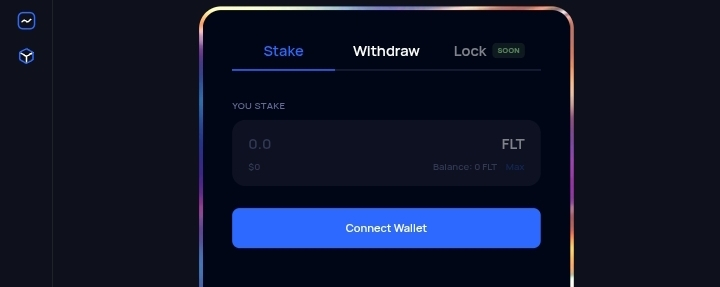
With Tally shutting down, @fluence is moving DAO governance into its native Token App,
giving the community a dedicated place to vote, create proposals, and track governance activity without relying on a third party platform.
On the surface, it looks like a simple migration. In practice, it's another step toward owning more of the stack.
As Fluence continues simplifying its architecture around Ethereum and AI infrastructure, governance is following the same path.
Instead of depending on external tooling, core DAO functions now live closer to the ecosystem itself,
making participation more direct and reducing reliance on services outside Fluence's control.
The result is a governance system that's easier to access, easier to maintain, and more resilient to changes happening elsewhere in the ecosystem.
Fluence DAO migration
Governance is one of those things most protocols treat as infrastructure until the infrastructure disappears.
With Tally shutting down, @Fluence is moving DAO governance into its native Token App,
giving the community a dedicated place to vote, create proposals, and track governance activity without relying on a third party platform.
On the surface, it looks like a simple migration. In practice, it's another step toward owning more of the stack.
As Fluence continues simplifying its architecture around Ethereum and AI infrastructure, governance is following the same path.
Instead of depending on external tooling, core DAO functions now live closer to the ecosystem itself,
making participation more direct and reducing reliance on services outside Fluence's control.
The result is a governance system that's easier to access, easier to maintain, and more resilient to changes happening elsewhere in the ecosystem.
With Tally shutting down, @Fluence is moving DAO governance into its native Token App,
giving the community a dedicated place to vote, create proposals, and track governance activity without relying on a third party platform.
On the surface, it looks like a simple migration. In practice, it's another step toward owning more of the stack.
As Fluence continues simplifying its architecture around Ethereum and AI infrastructure, governance is following the same path.
Instead of depending on external tooling, core DAO functions now live closer to the ecosystem itself,
making participation more direct and reducing reliance on services outside Fluence's control.
The result is a governance system that's easier to access, easier to maintain, and more resilient to changes happening elsewhere in the ecosystem.
89
·
--

Article
Storage and Public IP@fluence just removed a core limitation that kept it in “experimental infra” territory, stateless compute.
Persistent storage volumes and public IP management push it into real production use.
Before this, workloads tied to a VM died with it. Now, storage is decoupled. Disks persist independently, can be attached or detached, resized, and moved across instances. That changes the class of applications you can run. Databases, indexers, backend services, anything stateful becomes viable because data survives reboots, migrations, and failures.
The architecture shift is simple but critical, compute becomes replaceable, storage becomes durable.
On the networking side, public IPs are now directly managed from the console. Instead of rebuilding deployments to expose services, you assign stable endpoints to workloads. That removes friction in maintaining APIs, services, and externally accessible systems.
Combined, these two features close a gap between decentralized compute and traditional cloud expectations. You can now run long-lived environments, maintain identity at the network layer, and keep state intact without workarounds.
This is not a cosmetic update, it’s infrastructure maturity, making Fluence usable for systems that require continuity, not just execution.
Storage and Public IP
@Fluence just removed a core limitation that kept it in “experimental infra” territory, stateless compute.
Persistent storage volumes and public IP management push it into real production use.
Before this, workloads tied to a VM died with it. Now, storage is decoupled. Disks persist independently, can be attached or detached, resized, and moved across instances. That changes the class of applications you can run. Databases, indexers, backend services, anything stateful becomes viable because data survives reboots, migrations, and failures.
The architecture shift is simple but critical, compute becomes replaceable, storage becomes durable.
On the networking side, public IPs are now directly managed from the console. Instead of rebuilding deployments to expose services, you assign stable endpoints to workloads. That removes friction in maintaining APIs, services, and externally accessible systems.
Combined, these two features close a gap between decentralized compute and traditional cloud expectations. You can now run long-lived environments, maintain identity at the network layer, and keep state intact without workarounds.
This is not a cosmetic update, it’s infrastructure maturity, making Fluence usable for systems that require continuity, not just execution.
Persistent storage volumes and public IP management push it into real production use.
Before this, workloads tied to a VM died with it. Now, storage is decoupled. Disks persist independently, can be attached or detached, resized, and moved across instances. That changes the class of applications you can run. Databases, indexers, backend services, anything stateful becomes viable because data survives reboots, migrations, and failures.
The architecture shift is simple but critical, compute becomes replaceable, storage becomes durable.
On the networking side, public IPs are now directly managed from the console. Instead of rebuilding deployments to expose services, you assign stable endpoints to workloads. That removes friction in maintaining APIs, services, and externally accessible systems.
Combined, these two features close a gap between decentralized compute and traditional cloud expectations. You can now run long-lived environments, maintain identity at the network layer, and keep state intact without workarounds.
This is not a cosmetic update, it’s infrastructure maturity, making Fluence usable for systems that require continuity, not just execution.
1
1
111
·
--

Article
FLUENCE DAO Q1 REPORT@fluence DAO’s Q1 2026 report exposes the mechanical side of the pivot, where capital actually moved, what got shut down,
and how the system is being restructured around Ethereum.
The DAO spent 400,000 FLT and 1.2 million USD during the quarter, while still holding a large treasury, over 357 million FLT alongside stablecoin reserves.
Liquidity operations increased FLT exposure, adding 6 million FLT while reducing USD, implying active buy pressure from the market rather than passive allocation.
The rollup shutdown wasn’t just a product decision, funds were actively pulled out and redistributed.
Over 57 million FLT and user balances were migrated into contracts for claiming, while unused allocations like USDC for free credits were returned.
Even operational ETH used for gas was withdrawn, indicating a full unwind, not partial deprecation.
On staking, Fluence abandoned custom experimentation and switched to audited, battle-tested contracts originally used by Synthetix. 400,000 FLT was allocated for April rewards, targeting around 12% APR based on previous TVL.
Control of the staking system now sits directly with the DAO, making future incentives governance-driven.
Cloudless Labs accounted for the largest expense, charging 1.2 million USD for development and growth, aligning with prior agreements rather than unexpected outflows.
Supply dynamics also shifted significantly. Vesting completed for insiders, pushing a large portion of tokens into unlocked supply. Circulating supply now sits around 27.8%, with a much larger portion unlocked but not yet active. The expectation is simple, more of that supply will move into staking now that everything lives on Ethereum and participation friction is reduced.
The report isn’t just financial tracking, it confirms the earlier narrative, less experimental infrastructure, more standardization, and tighter alignment with where liquidity and usage actually exist.
FLUENCE DAO Q1 REPORT
@Fluence DAO’s Q1 2026 report exposes the mechanical side of the pivot, where capital actually moved, what got shut down,
and how the system is being restructured around Ethereum.
The DAO spent 400,000 FLT and 1.2 million USD during the quarter, while still holding a large treasury, over 357 million FLT alongside stablecoin reserves.
Liquidity operations increased FLT exposure, adding 6 million FLT while reducing USD, implying active buy pressure from the market rather than passive allocation.
The rollup shutdown wasn’t just a product decision, funds were actively pulled out and redistributed.
Over 57 million FLT and user balances were migrated into contracts for claiming, while unused allocations like USDC for free credits were returned.
Even operational ETH used for gas was withdrawn, indicating a full unwind, not partial deprecation.
On staking, Fluence abandoned custom experimentation and switched to audited, battle-tested contracts originally used by Synthetix. 400,000 FLT was allocated for April rewards, targeting around 12% APR based on previous TVL.
Control of the staking system now sits directly with the DAO, making future incentives governance-driven.
Cloudless Labs accounted for the largest expense, charging 1.2 million USD for development and growth, aligning with prior agreements rather than unexpected outflows.
Supply dynamics also shifted significantly. Vesting completed for insiders, pushing a large portion of tokens into unlocked supply. Circulating supply now sits around 27.8%, with a much larger portion unlocked but not yet active. The expectation is simple, more of that supply will move into staking now that everything lives on Ethereum and participation friction is reduced.
The report isn’t just financial tracking, it confirms the earlier narrative, less experimental infrastructure, more standardization, and tighter alignment with where liquidity and usage actually exist.
and how the system is being restructured around Ethereum.
The DAO spent 400,000 FLT and 1.2 million USD during the quarter, while still holding a large treasury, over 357 million FLT alongside stablecoin reserves.
Liquidity operations increased FLT exposure, adding 6 million FLT while reducing USD, implying active buy pressure from the market rather than passive allocation.
The rollup shutdown wasn’t just a product decision, funds were actively pulled out and redistributed.
Over 57 million FLT and user balances were migrated into contracts for claiming, while unused allocations like USDC for free credits were returned.
Even operational ETH used for gas was withdrawn, indicating a full unwind, not partial deprecation.
On staking, Fluence abandoned custom experimentation and switched to audited, battle-tested contracts originally used by Synthetix. 400,000 FLT was allocated for April rewards, targeting around 12% APR based on previous TVL.
Control of the staking system now sits directly with the DAO, making future incentives governance-driven.
Cloudless Labs accounted for the largest expense, charging 1.2 million USD for development and growth, aligning with prior agreements rather than unexpected outflows.
Supply dynamics also shifted significantly. Vesting completed for insiders, pushing a large portion of tokens into unlocked supply. Circulating supply now sits around 27.8%, with a much larger portion unlocked but not yet active. The expectation is simple, more of that supply will move into staking now that everything lives on Ethereum and participation friction is reduced.
The report isn’t just financial tracking, it confirms the earlier narrative, less experimental infrastructure, more standardization, and tighter alignment with where liquidity and usage actually exist.
3
525
·
--
Article
Fluence Refocuses on AI and GPU Infrastructure@fluence is shifting fully toward AI driven compute demand, prioritizing GPU infrastructure over its previous rollup based architecture.
Core changes:
Fluence Rollup is being sunset
assets are migrating to Ethereum L1
FLT staking moves to Ethereum
provider incentives program concludes
The platform already operates 1,400+ GPUs across 32 regions and 71 data centers, with demand now heavily concentrated on GPU usage rather than general compute.
Fluence maintains its position on open, vendor independent infrastructure, but is narrowing focus to where decentralization is effective.
decentralized compute remains the foundation
GPU access and AI workloads become the primary use case
This aligns with rapid growth in AI demand and the need for a neutral compute layer.
Migration Details
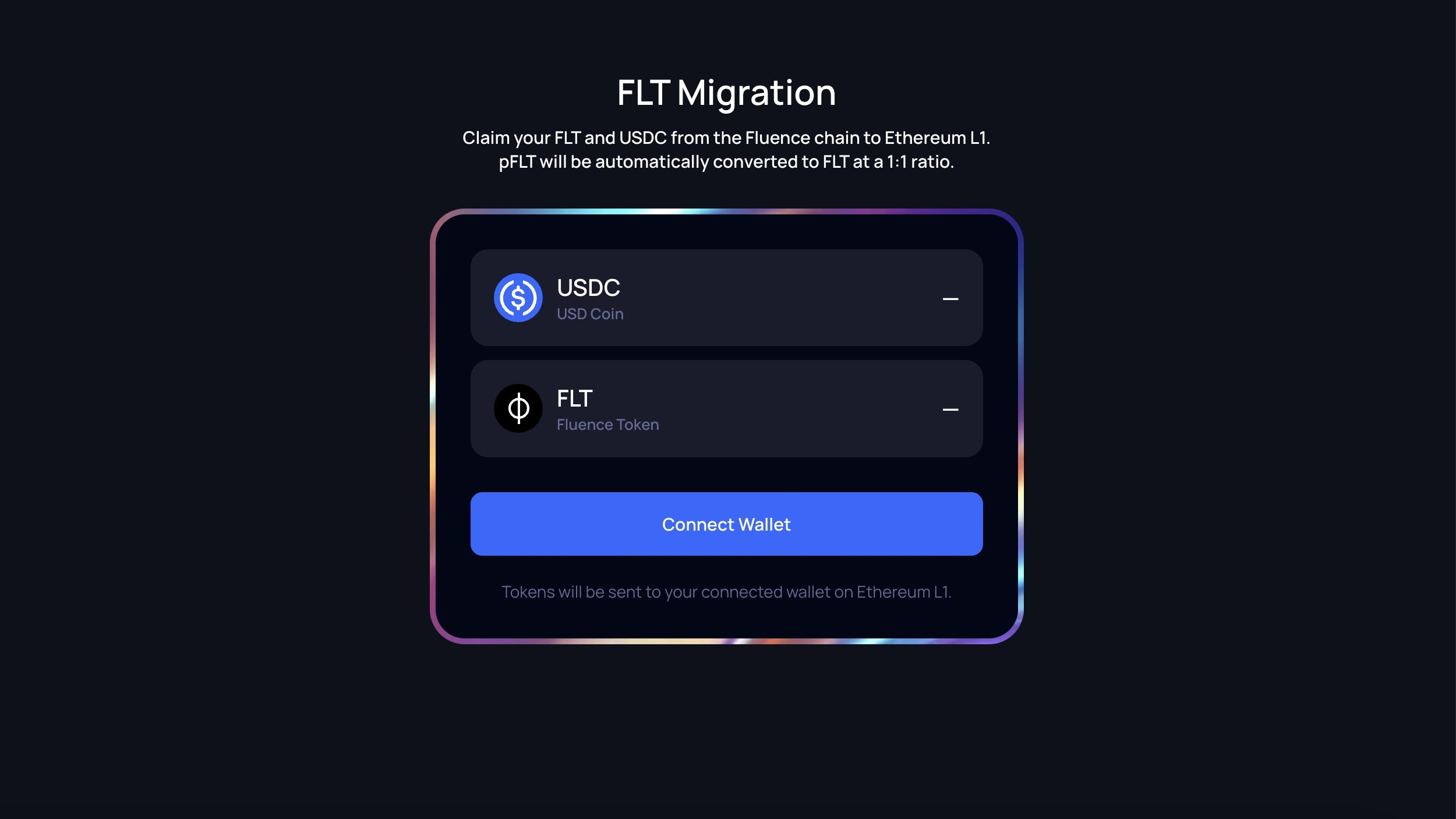
migration date: April 1, 2026, 08:00 UTC
completion expected by 10:00 UTC
pFLT converts to FLT on Ethereum at 1:1
users only need to claim tokens post migration
migration window remains open until April 1, 2027
Result:
Fluence moves from broad infrastructure ambitions to a focused position as a decentralized GPU and AI compute marketplace.
Fluence Refocuses on AI and GPU Infrastructure
@Fluence is shifting fully toward AI driven compute demand, prioritizing GPU infrastructure over its previous rollup based architecture.
Core changes:
Fluence Rollup is being sunset
assets are migrating to Ethereum L1
FLT staking moves to Ethereum
provider incentives program concludes
The platform already operates 1,400+ GPUs across 32 regions and 71 data centers, with demand now heavily concentrated on GPU usage rather than general compute.
Fluence maintains its position on open, vendor independent infrastructure, but is narrowing focus to where decentralization is effective.
decentralized compute remains the foundation
GPU access and AI workloads become the primary use case
This aligns with rapid growth in AI demand and the need for a neutral compute layer.
Migration Details
migration date: April 1, 2026, 08:00 UTC
completion expected by 10:00 UTC
pFLT converts to FLT on Ethereum at 1:1
users only need to claim tokens post migration
migration window remains open until April 1, 2027
Result:
Fluence moves from broad infrastructure ambitions to a focused position as a decentralized GPU and AI compute marketplace.
Core changes:
Fluence Rollup is being sunset
assets are migrating to Ethereum L1
FLT staking moves to Ethereum
provider incentives program concludes
The platform already operates 1,400+ GPUs across 32 regions and 71 data centers, with demand now heavily concentrated on GPU usage rather than general compute.
Fluence maintains its position on open, vendor independent infrastructure, but is narrowing focus to where decentralization is effective.
decentralized compute remains the foundation
GPU access and AI workloads become the primary use case
This aligns with rapid growth in AI demand and the need for a neutral compute layer.
Migration Details
migration date: April 1, 2026, 08:00 UTC
completion expected by 10:00 UTC
pFLT converts to FLT on Ethereum at 1:1
users only need to claim tokens post migration
migration window remains open until April 1, 2027
Result:
Fluence moves from broad infrastructure ambitions to a focused position as a decentralized GPU and AI compute marketplace.
1
130
·
--
Article
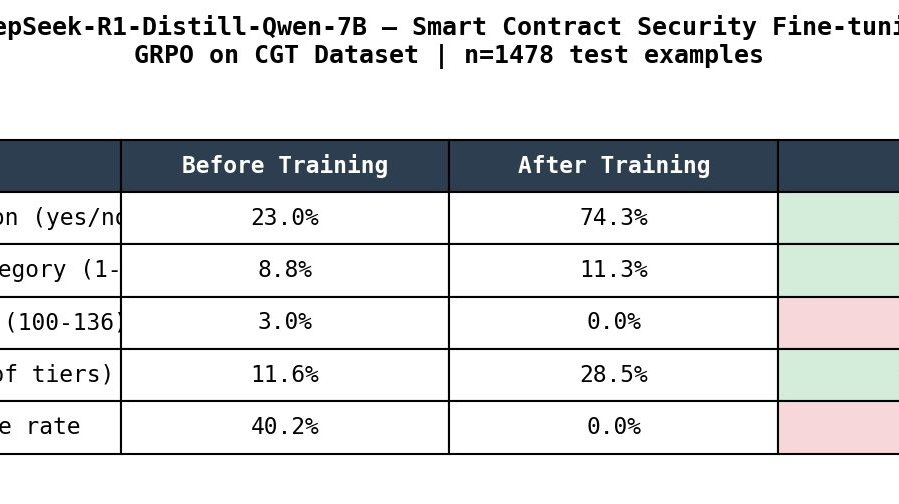
Low Cost AI for Smart Contract SecurityA DeepSeek-R1 variant was fine tuned for smart contract vulnerability detection using GRPO and LoRA on a single A100 80GB. The result is a task specific model optimized for screening, not full audits.
Key outcomes:
strong improvement in vulnerable vs clean classification
reliable structured outputs, better integration into pipelines
weak performance in deep vulnerability reasoning, SWC identification remains limited
The model learned formatting faster than security understanding. Usability improved before trustworthiness.
Role of Decentralized Compute
@fluence enabled the entire training run at a cost of $30.97.
This is the shift:
GPU access without centralized cloud pricing
on demand compute sourced from distributed providers
low cost experimentation with specialized models
Outcome
Instead of expensive general models, developers can iterate on cheap, targeted systems for specific tasks like first pass contract screening.
Fluence reduces compute cost.
Lower compute cost enables rapid, niche AI development.
Low Cost AI for Smart Contract Security
A DeepSeek-R1 variant was fine tuned for smart contract vulnerability detection using GRPO and LoRA on a single A100 80GB. The result is a task specific model optimized for screening, not full audits.
Key outcomes:
strong improvement in vulnerable vs clean classification
reliable structured outputs, better integration into pipelines
weak performance in deep vulnerability reasoning, SWC identification remains limited
The model learned formatting faster than security understanding. Usability improved before trustworthiness.
Role of Decentralized Compute
@Fluence enabled the entire training run at a cost of $30.97.
This is the shift:
GPU access without centralized cloud pricing
on demand compute sourced from distributed providers
low cost experimentation with specialized models
Outcome
Instead of expensive general models, developers can iterate on cheap, targeted systems for specific tasks like first pass contract screening.
Fluence reduces compute cost.
Lower compute cost enables rapid, niche AI development.
Key outcomes:
strong improvement in vulnerable vs clean classification
reliable structured outputs, better integration into pipelines
weak performance in deep vulnerability reasoning, SWC identification remains limited
The model learned formatting faster than security understanding. Usability improved before trustworthiness.
Role of Decentralized Compute
@Fluence enabled the entire training run at a cost of $30.97.
This is the shift:
GPU access without centralized cloud pricing
on demand compute sourced from distributed providers
low cost experimentation with specialized models
Outcome
Instead of expensive general models, developers can iterate on cheap, targeted systems for specific tasks like first pass contract screening.
Fluence reduces compute cost.
Lower compute cost enables rapid, niche AI development.
1
2
67
·
--
Article
Privacy as the Missing Layer in Web3Stablecoins, DeFi, and real world assets are moving on chain, but transparency creates a structural barrier.
Financial systems require confidentiality. Without it, institutional participation remains limited.
Public blockchains solve for trust through verification. They do not solve for privacy. Every transaction, balance, and strategy is exposed.
Privacy is harder because it must preserve two opposing properties:
verifiability of execution
confidentiality of data
Most systems achieve one by sacrificing the other.
Trusted Execution Environments
TEE introduces a hardware based approach to this problem. Code runs inside secure enclaves where:
data remains encrypted in use
execution is isolated from the host system
outputs can be attested as valid without revealing inputs
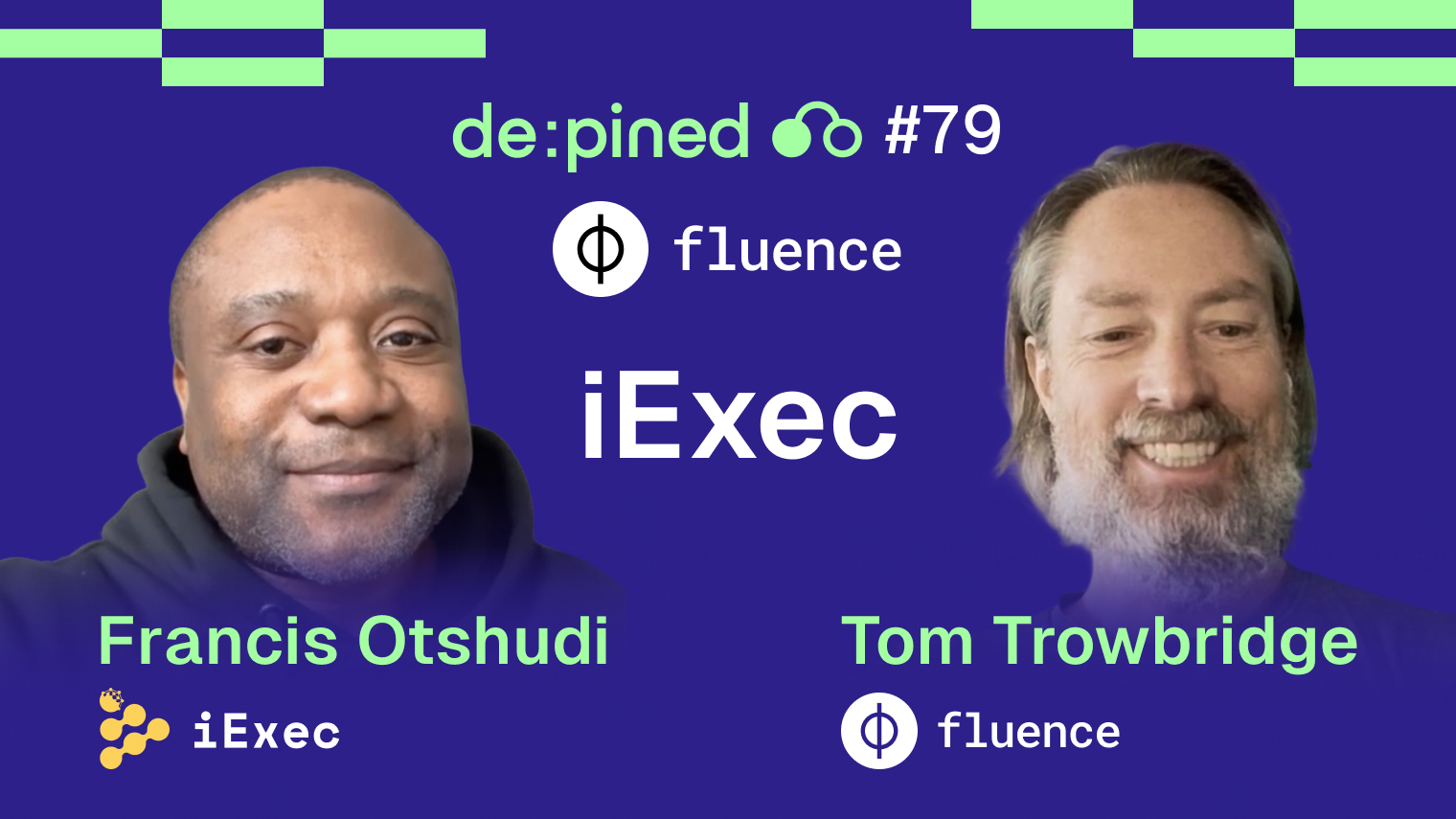
iExec builds on this by combining TEE with decentralized infrastructure.
This allows smart contract logic or off chain computation to process sensitive data while keeping it hidden, yet still provably correct.
From Transparent DeFi to Confidential Finance
Current DeFi exposes:
trading strategies
wallet balances
transaction flows
This is incompatible with institutional requirements.
With confidential execution:
stablecoin transfers can hide amounts and participants
DeFi strategies can execute without being front run
compliance mechanisms like KYC can be verified without exposing identity data
The system moves from full transparency to selective disclosure.
From Protocols to Products
Early Web3 focused on base protocols. The shift now is toward usable systems:
confidential stablecoins
private lending and trading
enterprise grade data handling
Privacy infrastructure is the enabling layer that makes these viable, not just theoretical.
Structural Outcome
Trust brought computation on chain.
Privacy determines who can use it.
TEE based systems extend blockchain utility from open participation to regulated, institutional environments without breaking decentralization.
Without confidentiality, Web3 remains retail facing.
With it, it becomes financially interoperable at scale.
Privacy as the Missing Layer in Web3
Stablecoins, DeFi, and real world assets are moving on chain, but transparency creates a structural barrier.
Financial systems require confidentiality. Without it, institutional participation remains limited.
Public blockchains solve for trust through verification. They do not solve for privacy. Every transaction, balance, and strategy is exposed.
Privacy is harder because it must preserve two opposing properties:
verifiability of execution
confidentiality of data
Most systems achieve one by sacrificing the other.
Trusted Execution Environments
TEE introduces a hardware based approach to this problem. Code runs inside secure enclaves where:
data remains encrypted in use
execution is isolated from the host system
outputs can be attested as valid without revealing inputs
iExec builds on this by combining TEE with decentralized infrastructure.
This allows smart contract logic or off chain computation to process sensitive data while keeping it hidden, yet still provably correct.
From Transparent DeFi to Confidential Finance
Current DeFi exposes:
trading strategies
wallet balances
transaction flows
This is incompatible with institutional requirements.
With confidential execution:
stablecoin transfers can hide amounts and participants
DeFi strategies can execute without being front run
compliance mechanisms like KYC can be verified without exposing identity data
The system moves from full transparency to selective disclosure.
From Protocols to Products
Early Web3 focused on base protocols. The shift now is toward usable systems:
confidential stablecoins
private lending and trading
enterprise grade data handling
Privacy infrastructure is the enabling layer that makes these viable, not just theoretical.
Structural Outcome
Trust brought computation on chain.
Privacy determines who can use it.
TEE based systems extend blockchain utility from open participation to regulated, institutional environments without breaking decentralization.
Without confidentiality, Web3 remains retail facing.
With it, it becomes financially interoperable at scale.
Financial systems require confidentiality. Without it, institutional participation remains limited.
Public blockchains solve for trust through verification. They do not solve for privacy. Every transaction, balance, and strategy is exposed.
Privacy is harder because it must preserve two opposing properties:
verifiability of execution
confidentiality of data
Most systems achieve one by sacrificing the other.
Trusted Execution Environments
TEE introduces a hardware based approach to this problem. Code runs inside secure enclaves where:
data remains encrypted in use
execution is isolated from the host system
outputs can be attested as valid without revealing inputs
iExec builds on this by combining TEE with decentralized infrastructure.
This allows smart contract logic or off chain computation to process sensitive data while keeping it hidden, yet still provably correct.
From Transparent DeFi to Confidential Finance
Current DeFi exposes:
trading strategies
wallet balances
transaction flows
This is incompatible with institutional requirements.
With confidential execution:
stablecoin transfers can hide amounts and participants
DeFi strategies can execute without being front run
compliance mechanisms like KYC can be verified without exposing identity data
The system moves from full transparency to selective disclosure.
From Protocols to Products
Early Web3 focused on base protocols. The shift now is toward usable systems:
confidential stablecoins
private lending and trading
enterprise grade data handling
Privacy infrastructure is the enabling layer that makes these viable, not just theoretical.
Structural Outcome
Trust brought computation on chain.
Privacy determines who can use it.
TEE based systems extend blockchain utility from open participation to regulated, institutional environments without breaking decentralization.
Without confidentiality, Web3 remains retail facing.
With it, it becomes financially interoperable at scale.
71
·
--

Article
GPU NODES NOTICEFluence Network have a limited allocation of NVIDIA B200 SXM GPU nodes available,
from March 15 for the decentralized compute community.
B200 is built for large-scale training, high-throughput inference,
and HPC — delivering higher memory bandwidth and throughput for next-gen AI workloads.
🌏 Region: Asia
📄 Available contracts: 12 & 24 month
📝 Priority allocation & better pricing to longer commits
contact @fluence if interested
#NVIDIAB200 #GPU
GPU NODES NOTICE
Fluence Network have a limited allocation of NVIDIA B200 SXM GPU nodes available,
from March 15 for the decentralized compute community.
B200 is built for large-scale training, high-throughput inference,
and HPC — delivering higher memory bandwidth and throughput for next-gen AI workloads.
🌏 Region: Asia
📄 Available contracts: 12 & 24 month
📝 Priority allocation & better pricing to longer commits
contact @Fluence if interested
#NVIDIAB200 #GPU
from March 15 for the decentralized compute community.
B200 is built for large-scale training, high-throughput inference,
and HPC — delivering higher memory bandwidth and throughput for next-gen AI workloads.
🌏 Region: Asia
📄 Available contracts: 12 & 24 month
📝 Priority allocation & better pricing to longer commits
contact @Fluence if interested
#NVIDIAB200 #GPU
3
40
·
--

Article
TOP TOKENS OF THE WEEKthe crypto market is showing a neutral to cautiously optimistic outlook,
with a total market cap at approximately $3.2 trillion.
amidst the recent red candles in the chart, some tokens have still, stayed resilient and performed excellently.
here are the 5 of them
1. Dogecoin $DOGE
DOGE is widely used for small online transactions, social media tipping (on platforms like Reddit), and as a currency for niche merchants.
It continues to benefit from retail community support and optimism surrounding potential mainstream payment integrations.
2. XRP $XRP
XRP serves as a bridge currency for the Ripple Payments network,
providing On-Demand Liquidity (ODL) to financial institutions for fast, low-cost international transfers.
XRP remains highly valuable as institutional interest grows and,
regulatory clarity improves following the 2025 legal developments.
I have also noticed a strong institutional signal following JPMorgan's GTreasury move on the XRP Ledger in early January 2026.
3. Sui $SUI
Sui is a high performance L1 Infrastructure that powers dapps in DeFi, gaming, and finance,
using its "parallel execution" model, which allows for near-instant transaction finality.
It has gained traction as a high-performance alternative to Ethereum,
recently entering the top 15 cryptocurrencies by market cap.
4. Pepe $PEPE
As of 2026, PEPE remains a "no-tax" community-driven memecoin.
Its value is derived entirely from cultural relevance and viral marketing cycles.
5. Fluence Network $FLT
All the above protocols and networks run with the aid of a similar tech; conpute.
even better when the compute is decentralized, cheap and doesn't experience downtimes.
does this look unachievable? well, that's what Fluence is building. totally achievable.
after ending the 2025 year with a GPU launch, Fluence will now be powering and scaling heavy machine workloads.
it is gaining traction in the AI and GPU economy narrative of 2026,
due to its ability to handle AI inference and model serving at up to 85% lower costs than centralized clouds.
share your opinions in the comment section guys
TOP TOKENS OF THE WEEK
the crypto market is showing a neutral to cautiously optimistic outlook,
with a total market cap at approximately $3.2 trillion.
amidst the recent red candles in the chart, some tokens have still, stayed resilient and performed excellently.
here are the 5 of them
1. Dogecoin $DOGE
DOGE is widely used for small online transactions, social media tipping (on platforms like Reddit), and as a currency for niche merchants.
It continues to benefit from retail community support and optimism surrounding potential mainstream payment integrations.
2. XRP $XRP
XRP serves as a bridge currency for the Ripple Payments network,
providing On-Demand Liquidity (ODL) to financial institutions for fast, low-cost international transfers.
XRP remains highly valuable as institutional interest grows and,
regulatory clarity improves following the 2025 legal developments.
I have also noticed a strong institutional signal following JPMorgan's GTreasury move on the XRP Ledger in early January 2026.
3. Sui $SUI
Sui is a high performance L1 Infrastructure that powers dapps in DeFi, gaming, and finance,
using its "parallel execution" model, which allows for near-instant transaction finality.
It has gained traction as a high-performance alternative to Ethereum,
recently entering the top 15 cryptocurrencies by market cap.
4. Pepe $PEPE
As of 2026, PEPE remains a "no-tax" community-driven memecoin.
Its value is derived entirely from cultural relevance and viral marketing cycles.
5. Fluence Network $FLT
All the above protocols and networks run with the aid of a similar tech; conpute.
even better when the compute is decentralized, cheap and doesn't experience downtimes.
does this look unachievable? well, that's what Fluence is building. totally achievable.
after ending the 2025 year with a GPU launch, Fluence will now be powering and scaling heavy machine workloads.
it is gaining traction in the AI and GPU economy narrative of 2026,
due to its ability to handle AI inference and model serving at up to 85% lower costs than centralized clouds.
share your opinions in the comment section guys
with a total market cap at approximately $3.2 trillion.
amidst the recent red candles in the chart, some tokens have still, stayed resilient and performed excellently.
here are the 5 of them
1. Dogecoin $DOGE
DOGE is widely used for small online transactions, social media tipping (on platforms like Reddit), and as a currency for niche merchants.
It continues to benefit from retail community support and optimism surrounding potential mainstream payment integrations.
2. XRP $XRP
XRP serves as a bridge currency for the Ripple Payments network,
providing On-Demand Liquidity (ODL) to financial institutions for fast, low-cost international transfers.
XRP remains highly valuable as institutional interest grows and,
regulatory clarity improves following the 2025 legal developments.
I have also noticed a strong institutional signal following JPMorgan's GTreasury move on the XRP Ledger in early January 2026.
3. Sui $SUI
Sui is a high performance L1 Infrastructure that powers dapps in DeFi, gaming, and finance,
using its "parallel execution" model, which allows for near-instant transaction finality.
It has gained traction as a high-performance alternative to Ethereum,
recently entering the top 15 cryptocurrencies by market cap.
4. Pepe $PEPE
As of 2026, PEPE remains a "no-tax" community-driven memecoin.
Its value is derived entirely from cultural relevance and viral marketing cycles.
5. Fluence Network $FLT
All the above protocols and networks run with the aid of a similar tech; conpute.
even better when the compute is decentralized, cheap and doesn't experience downtimes.
does this look unachievable? well, that's what Fluence is building. totally achievable.
after ending the 2025 year with a GPU launch, Fluence will now be powering and scaling heavy machine workloads.
it is gaining traction in the AI and GPU economy narrative of 2026,
due to its ability to handle AI inference and model serving at up to 85% lower costs than centralized clouds.
share your opinions in the comment section guys
1
116
·
--
Fluence strengthens application reliability by removing reliance on fixed data centers and proprietary platforms
Fluence strengthens application reliability by removing reliance on fixed data centers and proprietary platforms
cold_writes
·
--
Fluence reduces infrastructure dependence by shifting backend processes to a peer operated compute layer
3
82
·
--
Fluence reduces infrastructure dependence by shifting backend processes to a peer operated compute layer
Fluence reduces infrastructure dependence by shifting backend processes to a peer operated compute layer
cold_writes
·
--
Fluence supports AI, analytics, and automation by offering an open network where computation is auditable
1
1
21
Log in to explore more content
Join global crypto users on Binance Square
⚡️ Get latest and useful information about crypto.
💬 Trusted by the world’s largest crypto exchange.
👍 Discover real insights from verified creators.
Email / Phone number