

Green Lee
542 Posts

Green Lee
Report
Block User
上山路很难,但是山上的风景一定很美!
Open Trade

SLVon Holder
Frequent Trader
1.3 Years
23 Following
1.6K+ Followers
688 Liked
Posts
Portfolio
All
Quotes
Live
·
--
After reading Dusk’s DIP process, I still couldn’t find that “the final say” person
The pie has dropped a bit, but BTC still has a future!
I went through Dusk’s DIP documentation, and I really have to admire how neatly it’s laid out. From motivation to testing, from compatibility to security impact—everything is covered in meticulous detail. At the very least, it shows the team has real reverence for technical evolution; it doesn’t feel like a last-minute, seat-of-the-pants crew. But after finishing it, I asked an invisible question to the air: once this process runs, who ultimately calls the shots?
The phrase “community reaches consensus” in the document is like the line in a meeting room—“Let’s discuss it again.” It sounds democratic, but you never know who signs off on the final decision after the meeting ends. Is it the core developer responsible for merging the code? They’re focused on code quality and engineering risk; they might think on-chain voting is just outsiders giving instructions to insiders. Or is it handed to the node operators? That actually fits the spirit of blockchain—yet the voices of major stakeholders naturally outweigh small holders, and in the end it’s a battle between hash power and capital. As for the holder votes from $DUSK —sounds the most Web3, but when it comes to a security vulnerability like AEGIS that requires an immediate response, by the time the voting results come out, the hackers may already have withdrawn and gone through a few rounds.
To put it plainly, this isn’t a matter of not trusting someone. You need to put the authority to define what counts as “urgent,” the authority to decide trade-offs for “compatibility,” and the decision path for “rollback” out in the open. Governance transparency doesn’t mean you’re done just by posting draft proposals. It means letting everyone see clearly: from idea to mainnet, at each detour along the way—what group is holding the steering wheel, and what their rationale and motivations are. This has nothing to do with whether the code is open or closed. It’s the open sourcing of a power map.
So don’t rush to chant slogans about decentralized governance. First, turn the early DIP discussion threads, the key points of contention, and a detailed set of minutes covering the final decisions—whether each proposal was accepted or rejected—into a publicly searchable page. Only when, one day, I can follow the links and see exactly how a critical patch was refined out of disputes—and who pressed the merge button at the last moment—I’ll believe this governance model is truly evolving, not just a perfectly formatted process manual. Is it really? @Dusk_Foundation $DUSK #dusk
After reading Dusk’s DIP process, I still couldn’t find that “the final say” person
The pie has dropped a bit, but BTC still has a future!
I went through Dusk’s DIP documentation, and I really have to admire how neatly it’s laid out. From motivation to testing, from compatibility to security impact—everything is covered in meticulous detail. At the very least, it shows the team has real reverence for technical evolution; it doesn’t feel like a last-minute, seat-of-the-pants crew. But after finishing it, I asked an invisible question to the air: once this process runs, who ultimately calls the shots?
The phrase “community reaches consensus” in the document is like the line in a meeting room—“Let’s discuss it again.” It sounds democratic, but you never know who signs off on the final decision after the meeting ends. Is it the core developer responsible for merging the code? They’re focused on code quality and engineering risk; they might think on-chain voting is just outsiders giving instructions to insiders. Or is it handed to the node operators? That actually fits the spirit of blockchain—yet the voices of major stakeholders naturally outweigh small holders, and in the end it’s a battle between hash power and capital. As for the holder votes from $DUSK —sounds the most Web3, but when it comes to a security vulnerability like AEGIS that requires an immediate response, by the time the voting results come out, the hackers may already have withdrawn and gone through a few rounds.
To put it plainly, this isn’t a matter of not trusting someone. You need to put the authority to define what counts as “urgent,” the authority to decide trade-offs for “compatibility,” and the decision path for “rollback” out in the open. Governance transparency doesn’t mean you’re done just by posting draft proposals. It means letting everyone see clearly: from idea to mainnet, at each detour along the way—what group is holding the steering wheel, and what their rationale and motivations are. This has nothing to do with whether the code is open or closed. It’s the open sourcing of a power map.
So don’t rush to chant slogans about decentralized governance. First, turn the early DIP discussion threads, the key points of contention, and a detailed set of minutes covering the final decisions—whether each proposal was accepted or rejected—into a publicly searchable page. Only when, one day, I can follow the links and see exactly how a critical patch was refined out of disputes—and who pressed the merge button at the last moment—I’ll believe this governance model is truly evolving, not just a perfectly formatted process manual. Is it really? @Dusk $DUSK #dusk
The pie has dropped a bit, but BTC still has a future!
I went through Dusk’s DIP documentation, and I really have to admire how neatly it’s laid out. From motivation to testing, from compatibility to security impact—everything is covered in meticulous detail. At the very least, it shows the team has real reverence for technical evolution; it doesn’t feel like a last-minute, seat-of-the-pants crew. But after finishing it, I asked an invisible question to the air: once this process runs, who ultimately calls the shots?
The phrase “community reaches consensus” in the document is like the line in a meeting room—“Let’s discuss it again.” It sounds democratic, but you never know who signs off on the final decision after the meeting ends. Is it the core developer responsible for merging the code? They’re focused on code quality and engineering risk; they might think on-chain voting is just outsiders giving instructions to insiders. Or is it handed to the node operators? That actually fits the spirit of blockchain—yet the voices of major stakeholders naturally outweigh small holders, and in the end it’s a battle between hash power and capital. As for the holder votes from $DUSK —sounds the most Web3, but when it comes to a security vulnerability like AEGIS that requires an immediate response, by the time the voting results come out, the hackers may already have withdrawn and gone through a few rounds.
To put it plainly, this isn’t a matter of not trusting someone. You need to put the authority to define what counts as “urgent,” the authority to decide trade-offs for “compatibility,” and the decision path for “rollback” out in the open. Governance transparency doesn’t mean you’re done just by posting draft proposals. It means letting everyone see clearly: from idea to mainnet, at each detour along the way—what group is holding the steering wheel, and what their rationale and motivations are. This has nothing to do with whether the code is open or closed. It’s the open sourcing of a power map.
So don’t rush to chant slogans about decentralized governance. First, turn the early DIP discussion threads, the key points of contention, and a detailed set of minutes covering the final decisions—whether each proposal was accepted or rejected—into a publicly searchable page. Only when, one day, I can follow the links and see exactly how a critical patch was refined out of disputes—and who pressed the merge button at the last moment—I’ll believe this governance model is truly evolving, not just a perfectly formatted process manual. Is it really? @Dusk $DUSK #dusk
147
·
--
Brothers, let’s talk about a life-saving topic today—don’t think it’s too hard to understand.
The big pie is up to over 80,000. And BTC is truly strong!
There’s a common issue in the crypto space: the moment people hear a transaction hash, they can’t wait to pop champagne. But let me say something that might sting—on a chain like Dusk that aims for compliant finance, between Confirmed (confirmation) and Finalized (finality), there’s actually a “time gap” you need to look at closely with a magnifying glass.
I went back through the fundamentals of Succinct Attestation and found the design to be rather counterintuitive. It’s not the kind of brutal logic where, once a block appears, it’s basically a done deal. Instead, it goes up a very steady three-step staircase: the Provisioner first brings the candidate block up, then a randomly selected committee rolls up their sleeves to run Validation, and that’s not the end—you have to wait for another group of judges to hammer it in with Ratification. Only when the third step’s hammer actually lands does the ledger count as “written as proof.” The first two steps—no matter how you slice it—are still just “drafts.”
You might not feel the difference in everyday transfers, but think it through carefully: what if this were securities settlement on Dusk Trade, or a large incoming payment to some institution? If you record the accounting based only on something like Contract Executed, once later you get a Block Reverted (remember, this is not a contract error—this is a “time reversal” at the consensus layer), how do you balance the books on the finance side? The records can’t be pulled back. The documents intentionally distinguish contract revert from block revert: the former is a conflict in code logic, while the latter means the entire block is “shot down” by consensus. Treating two different failure modes as one is basically planting a landmine for yourself.
So you see, even if the spec is written in black and white, it doesn’t matter if the integration partner is cutting corners. What I care about has never been how many seconds it takes on average to produce a block with $DUSK . I’m watching those folks building applications—have they truly treated finalized as an unbreakable rule, and will they actually follow through without crossing the line? If something goes wrong, is there an auditable replay tool set that can let the business ledger “take regret medicine” together with the chain?
Real settlement finality is never that single moment when nodes close the door and make the decision. It must start from the finalized event, then safely traverse the archival nodes, clear the hurdles of reconnect-and-rescan, and finally land solidly in the business database. If any part of the chain races ahead, the whole thing is basically ruined. @Dusk_Foundation $DUSK #dusk
Brothers, let’s talk about a life-saving topic today—don’t think it’s too hard to understand.
The big pie is up to over 80,000. And BTC is truly strong!
There’s a common issue in the crypto space: the moment people hear a transaction hash, they can’t wait to pop champagne. But let me say something that might sting—on a chain like Dusk that aims for compliant finance, between Confirmed (confirmation) and Finalized (finality), there’s actually a “time gap” you need to look at closely with a magnifying glass.
I went back through the fundamentals of Succinct Attestation and found the design to be rather counterintuitive. It’s not the kind of brutal logic where, once a block appears, it’s basically a done deal. Instead, it goes up a very steady three-step staircase: the Provisioner first brings the candidate block up, then a randomly selected committee rolls up their sleeves to run Validation, and that’s not the end—you have to wait for another group of judges to hammer it in with Ratification. Only when the third step’s hammer actually lands does the ledger count as “written as proof.” The first two steps—no matter how you slice it—are still just “drafts.”
You might not feel the difference in everyday transfers, but think it through carefully: what if this were securities settlement on Dusk Trade, or a large incoming payment to some institution? If you record the accounting based only on something like Contract Executed, once later you get a Block Reverted (remember, this is not a contract error—this is a “time reversal” at the consensus layer), how do you balance the books on the finance side? The records can’t be pulled back. The documents intentionally distinguish contract revert from block revert: the former is a conflict in code logic, while the latter means the entire block is “shot down” by consensus. Treating two different failure modes as one is basically planting a landmine for yourself.
So you see, even if the spec is written in black and white, it doesn’t matter if the integration partner is cutting corners. What I care about has never been how many seconds it takes on average to produce a block with $DUSK . I’m watching those folks building applications—have they truly treated finalized as an unbreakable rule, and will they actually follow through without crossing the line? If something goes wrong, is there an auditable replay tool set that can let the business ledger “take regret medicine” together with the chain?
Real settlement finality is never that single moment when nodes close the door and make the decision. It must start from the finalized event, then safely traverse the archival nodes, clear the hurdles of reconnect-and-rescan, and finally land solidly in the business database. If any part of the chain races ahead, the whole thing is basically ruined. @Dusk $DUSK #dusk
The big pie is up to over 80,000. And BTC is truly strong!
There’s a common issue in the crypto space: the moment people hear a transaction hash, they can’t wait to pop champagne. But let me say something that might sting—on a chain like Dusk that aims for compliant finance, between Confirmed (confirmation) and Finalized (finality), there’s actually a “time gap” you need to look at closely with a magnifying glass.
I went back through the fundamentals of Succinct Attestation and found the design to be rather counterintuitive. It’s not the kind of brutal logic where, once a block appears, it’s basically a done deal. Instead, it goes up a very steady three-step staircase: the Provisioner first brings the candidate block up, then a randomly selected committee rolls up their sleeves to run Validation, and that’s not the end—you have to wait for another group of judges to hammer it in with Ratification. Only when the third step’s hammer actually lands does the ledger count as “written as proof.” The first two steps—no matter how you slice it—are still just “drafts.”
You might not feel the difference in everyday transfers, but think it through carefully: what if this were securities settlement on Dusk Trade, or a large incoming payment to some institution? If you record the accounting based only on something like Contract Executed, once later you get a Block Reverted (remember, this is not a contract error—this is a “time reversal” at the consensus layer), how do you balance the books on the finance side? The records can’t be pulled back. The documents intentionally distinguish contract revert from block revert: the former is a conflict in code logic, while the latter means the entire block is “shot down” by consensus. Treating two different failure modes as one is basically planting a landmine for yourself.
So you see, even if the spec is written in black and white, it doesn’t matter if the integration partner is cutting corners. What I care about has never been how many seconds it takes on average to produce a block with $DUSK . I’m watching those folks building applications—have they truly treated finalized as an unbreakable rule, and will they actually follow through without crossing the line? If something goes wrong, is there an auditable replay tool set that can let the business ledger “take regret medicine” together with the chain?
Real settlement finality is never that single moment when nodes close the door and make the decision. It must start from the finalized event, then safely traverse the archival nodes, clear the hurdles of reconnect-and-rescan, and finally land solidly in the business database. If any part of the chain races ahead, the whole thing is basically ruined. @Dusk $DUSK #dusk
81
·
--
When it comes to blockchain performance, out of ten people, nine immediately think of TPS. The remaining one might look at latency instead. But with the Dusk project, once you pull up its whitepaper and go through it carefully, you’ll find something more worth watching than transaction speed: how nodes “talk” to each other.
That’s all well and good for the big pie—BTC dropped not that much!
I’m not saying TPS doesn’t matter, but “faster computation” and “faster transmission” are completely different things. No matter how powerful your execution layer is or how clever your consensus design is, if messages get stuck in the node network—proposals can’t reach validators, and validation results can’t make it back to the ratification committee—then the whole three-phase process just has to wait. If blocks arrive a few seconds late, the experience suffers a bit; if it’s worse, different nodes may even see different candidate blocks, and the stale block rate climbs right up.
Dusk chose the Kadcast approach. It’s not the gossip-style broadcast where everything just gets forwarded to everyone. Instead, it builds a structured overlay on top of the Kademlia DHT: the XOR distance between node IDs determines routing, and messages unfold step by step like a tree. Sounds academic, right? But the core logic can be summed up in one sentence: every message takes only the route it should take—no detours.
The whitepaper cites research showing that Kadcast can save 25% to 50% of bandwidth compared to Gossip. For example, if it used to consume 100 units of bandwidth, it’s now roughly 50 to 75. But those numbers can’t be directly translated into “node costs cut in half.” Machine specs don’t change, proof computation doesn’t change, storage overhead doesn’t change—the only thing that changes is the transmission cost in the network layer. Still, for people running nodes, what does “half the bandwidth” really mean? It means you can connect more nodes under the same bandwidth conditions, or that with the same network size, you’re less likely to get throttled by bandwidth fees.
There’s a detail that really illustrates the point. In the node documentation, 9000/udp is marked as a required port for Kadcast. If the Provisioner wants to participate in consensus, it must be able to reach that channel. In contrast, 8080/tcp is optional—it’s only needed if you require the query interface. In other words, Kadcast isn’t a decorative item on an architecture diagram—it directly sets the threshold for whether a node can participate in consensus.
Anyone familiar with BTC’s peer-to-peer broadcasting knows that how messages travel through the node network has never been a small matter. @Dusk_Foundation $DUSK #dusk
When it comes to blockchain performance, out of ten people, nine immediately think of TPS. The remaining one might look at latency instead. But with the Dusk project, once you pull up its whitepaper and go through it carefully, you’ll find something more worth watching than transaction speed: how nodes “talk” to each other.
That’s all well and good for the big pie—BTC dropped not that much!
I’m not saying TPS doesn’t matter, but “faster computation” and “faster transmission” are completely different things. No matter how powerful your execution layer is or how clever your consensus design is, if messages get stuck in the node network—proposals can’t reach validators, and validation results can’t make it back to the ratification committee—then the whole three-phase process just has to wait. If blocks arrive a few seconds late, the experience suffers a bit; if it’s worse, different nodes may even see different candidate blocks, and the stale block rate climbs right up.
Dusk chose the Kadcast approach. It’s not the gossip-style broadcast where everything just gets forwarded to everyone. Instead, it builds a structured overlay on top of the Kademlia DHT: the XOR distance between node IDs determines routing, and messages unfold step by step like a tree. Sounds academic, right? But the core logic can be summed up in one sentence: every message takes only the route it should take—no detours.
The whitepaper cites research showing that Kadcast can save 25% to 50% of bandwidth compared to Gossip. For example, if it used to consume 100 units of bandwidth, it’s now roughly 50 to 75. But those numbers can’t be directly translated into “node costs cut in half.” Machine specs don’t change, proof computation doesn’t change, storage overhead doesn’t change—the only thing that changes is the transmission cost in the network layer. Still, for people running nodes, what does “half the bandwidth” really mean? It means you can connect more nodes under the same bandwidth conditions, or that with the same network size, you’re less likely to get throttled by bandwidth fees.
There’s a detail that really illustrates the point. In the node documentation, 9000/udp is marked as a required port for Kadcast. If the Provisioner wants to participate in consensus, it must be able to reach that channel. In contrast, 8080/tcp is optional—it’s only needed if you require the query interface. In other words, Kadcast isn’t a decorative item on an architecture diagram—it directly sets the threshold for whether a node can participate in consensus.
Anyone familiar with BTC’s peer-to-peer broadcasting knows that how messages travel through the node network has never been a small matter. @Dusk $DUSK #dusk
That’s all well and good for the big pie—BTC dropped not that much!
I’m not saying TPS doesn’t matter, but “faster computation” and “faster transmission” are completely different things. No matter how powerful your execution layer is or how clever your consensus design is, if messages get stuck in the node network—proposals can’t reach validators, and validation results can’t make it back to the ratification committee—then the whole three-phase process just has to wait. If blocks arrive a few seconds late, the experience suffers a bit; if it’s worse, different nodes may even see different candidate blocks, and the stale block rate climbs right up.
Dusk chose the Kadcast approach. It’s not the gossip-style broadcast where everything just gets forwarded to everyone. Instead, it builds a structured overlay on top of the Kademlia DHT: the XOR distance between node IDs determines routing, and messages unfold step by step like a tree. Sounds academic, right? But the core logic can be summed up in one sentence: every message takes only the route it should take—no detours.
The whitepaper cites research showing that Kadcast can save 25% to 50% of bandwidth compared to Gossip. For example, if it used to consume 100 units of bandwidth, it’s now roughly 50 to 75. But those numbers can’t be directly translated into “node costs cut in half.” Machine specs don’t change, proof computation doesn’t change, storage overhead doesn’t change—the only thing that changes is the transmission cost in the network layer. Still, for people running nodes, what does “half the bandwidth” really mean? It means you can connect more nodes under the same bandwidth conditions, or that with the same network size, you’re less likely to get throttled by bandwidth fees.
There’s a detail that really illustrates the point. In the node documentation, 9000/udp is marked as a required port for Kadcast. If the Provisioner wants to participate in consensus, it must be able to reach that channel. In contrast, 8080/tcp is optional—it’s only needed if you require the query interface. In other words, Kadcast isn’t a decorative item on an architecture diagram—it directly sets the threshold for whether a node can participate in consensus.
Anyone familiar with BTC’s peer-to-peer broadcasting knows that how messages travel through the node network has never been a small matter. @Dusk $DUSK #dusk
170
·
--
I翻了 three months’ RWA whitepapers and found that most projects get one thing wrong
The big idea is impressive—BTC is still fine!
Package stocks, bonds, and funds into tokens, list them, and then call it “on-chain assets”—sure, anyone can do that. The real problem is what happens after tokenization. Who will trade? Where does the price come from? How is identity verified? How is settlement handled? When regulators ask to audit, will you show the books?
I flipped through the documents from Ondo, Centrifuge, and Maple again and again, and found that most projects’ answers boil down to two words: “we’ll talk again.”
Dusk’s approach is a bit different. It has a proper partnership with the Dutch licensed exchange NPEX—note: a “licensed” one. Everything is covered with full EU licenses: an MTF, a Broker, and an ECSP. This isn’t the kind of shell that’s registered in some island jurisdiction and just writes Swiss law as the governing law. NPEX plans to move tokenized securities worth over €300 million onto the Dusk chain. That number isn’t the largest in the RWA space, but the difference is—ever since issuance, the compliance logic is embedded in the protocol itself, not added retroactively as paperwork.
Even more aggressive is 21X. It obtained the EU’s first DLT-TSS license, with Dusk as its trading participant. Quantoz’s EURQ is a MiCA-compliant digital euro running on the Dusk chain. Mainnet goes live on January 7, 2026, and DuskEVM will run in parallel. For privacy, it uses ZK for selective transparency—regulators can audit, while the chain does not expose everything publicly.
Put plainly: the American model builds scaffolding outside regulatory oversight—one day when the winds pick up, everything can collapse. Dusk’s model builds the building within the framework. It may be slower, but the foundation is solid.
Europe’s RWA market has €40 trillion just sitting there. Once MiCA is implemented, compliance channels are fully opened. Dusk is one of the few infrastructures that has managed to bring together everything from licensing and exchanges to the settlement layer. Cold starts really are slower—tokenized securities naturally come with more barriers, so they don’t ramp up as fast as something like USDY. But “slow” also has its upside: the money that comes in is genuinely institutional, and the underlying base is stable.
Even among RWA, one path is walking a tightrope, and the other is taking the main road. When you think regulators tighten up, which route do you think can actually work? @Dusk_Foundation $DUSK #dusk
I翻了 three months’ RWA whitepapers and found that most projects get one thing wrong
The big idea is impressive—BTC is still fine!
Package stocks, bonds, and funds into tokens, list them, and then call it “on-chain assets”—sure, anyone can do that. The real problem is what happens after tokenization. Who will trade? Where does the price come from? How is identity verified? How is settlement handled? When regulators ask to audit, will you show the books?
I flipped through the documents from Ondo, Centrifuge, and Maple again and again, and found that most projects’ answers boil down to two words: “we’ll talk again.”
Dusk’s approach is a bit different. It has a proper partnership with the Dutch licensed exchange NPEX—note: a “licensed” one. Everything is covered with full EU licenses: an MTF, a Broker, and an ECSP. This isn’t the kind of shell that’s registered in some island jurisdiction and just writes Swiss law as the governing law. NPEX plans to move tokenized securities worth over €300 million onto the Dusk chain. That number isn’t the largest in the RWA space, but the difference is—ever since issuance, the compliance logic is embedded in the protocol itself, not added retroactively as paperwork.
Even more aggressive is 21X. It obtained the EU’s first DLT-TSS license, with Dusk as its trading participant. Quantoz’s EURQ is a MiCA-compliant digital euro running on the Dusk chain. Mainnet goes live on January 7, 2026, and DuskEVM will run in parallel. For privacy, it uses ZK for selective transparency—regulators can audit, while the chain does not expose everything publicly.
Put plainly: the American model builds scaffolding outside regulatory oversight—one day when the winds pick up, everything can collapse. Dusk’s model builds the building within the framework. It may be slower, but the foundation is solid.
Europe’s RWA market has €40 trillion just sitting there. Once MiCA is implemented, compliance channels are fully opened. Dusk is one of the few infrastructures that has managed to bring together everything from licensing and exchanges to the settlement layer. Cold starts really are slower—tokenized securities naturally come with more barriers, so they don’t ramp up as fast as something like USDY. But “slow” also has its upside: the money that comes in is genuinely institutional, and the underlying base is stable.
Even among RWA, one path is walking a tightrope, and the other is taking the main road. When you think regulators tighten up, which route do you think can actually work? @Dusk $DUSK #dusk
The big idea is impressive—BTC is still fine!
Package stocks, bonds, and funds into tokens, list them, and then call it “on-chain assets”—sure, anyone can do that. The real problem is what happens after tokenization. Who will trade? Where does the price come from? How is identity verified? How is settlement handled? When regulators ask to audit, will you show the books?
I flipped through the documents from Ondo, Centrifuge, and Maple again and again, and found that most projects’ answers boil down to two words: “we’ll talk again.”
Dusk’s approach is a bit different. It has a proper partnership with the Dutch licensed exchange NPEX—note: a “licensed” one. Everything is covered with full EU licenses: an MTF, a Broker, and an ECSP. This isn’t the kind of shell that’s registered in some island jurisdiction and just writes Swiss law as the governing law. NPEX plans to move tokenized securities worth over €300 million onto the Dusk chain. That number isn’t the largest in the RWA space, but the difference is—ever since issuance, the compliance logic is embedded in the protocol itself, not added retroactively as paperwork.
Even more aggressive is 21X. It obtained the EU’s first DLT-TSS license, with Dusk as its trading participant. Quantoz’s EURQ is a MiCA-compliant digital euro running on the Dusk chain. Mainnet goes live on January 7, 2026, and DuskEVM will run in parallel. For privacy, it uses ZK for selective transparency—regulators can audit, while the chain does not expose everything publicly.
Put plainly: the American model builds scaffolding outside regulatory oversight—one day when the winds pick up, everything can collapse. Dusk’s model builds the building within the framework. It may be slower, but the foundation is solid.
Europe’s RWA market has €40 trillion just sitting there. Once MiCA is implemented, compliance channels are fully opened. Dusk is one of the few infrastructures that has managed to bring together everything from licensing and exchanges to the settlement layer. Cold starts really are slower—tokenized securities naturally come with more barriers, so they don’t ramp up as fast as something like USDY. But “slow” also has its upside: the money that comes in is genuinely institutional, and the underlying base is stable.
Even among RWA, one path is walking a tightrope, and the other is taking the main road. When you think regulators tighten up, which route do you think can actually work? @Dusk $DUSK #dusk
131
·
--
I argued with someone for the whole night about “can the privacy chain pass regulation?” This morning, I dug through the code and found that Dusk had already put the answer in there.
Nice big bet—BTC is up really well!
Last night, I ended up talking with a compliance-minded friend until 2 a.m. He insisted on one point—“That combination of ZK and UTXO is impossible for auditing firms to do their work; regulators won’t recognize it.” I fired back with Phoenix’s selective disclosure. He then blurted out, “Can the code export an Excel file with one click?” and hung up.
That line left me speechless for a while.
But this morning, when I went through the documentation, I noticed a detail I hadn’t paid much attention to before: Phoenix’s View Key mechanism—your key is split into two parts: one for viewing and one for spending. The viewing part can be handed to a third party to scan and identify the transactions that belong to you, while the spending part is always held by you. What does that mean? An auditor can obtain the View Key to verify whether you performed any违规 operations or made any over-transfers, but they can’t move a single cent of your funds. The “verifiability” compliance needs and the “untouchability” asset safety requires are solved by splitting them with one key.
My friend’s “one-click export to Excel” is definitely a real requirement. Regulators don’t debate cryptographic ideals with you; they want something they can print and archive. What’s interesting about Phoenix’s design is that it doesn’t treat “privacy” and “auditability” as opposites. Instead, it bridges the gap with the View Key: you can show what needs to be shown, and what shouldn’t be taken can’t be taken. It’s also worth mentioning the Nullifier mechanism—each private transaction publishes a unique destruction identifier, rather than directly revealing which note was spent. Auditors can verify that “this transaction truly occurred and there was no double-spend,” but they can’t see who transferred how much to whom.
Of course, you can’t make the accounting too perfect here. Once the View Key is delegated to a third party, they can see your incoming payment records—which is, in itself, a layer of trust cost. Who you share it with, how they store it afterward, and whether it might leak—that’s not something the protocol can control.
But at least the direction is right: privacy doesn’t have to be against regulation. The real question was never “can it be compliant,” but “what is the cost of being compliant.” Phoenix’s answer is—what the cost can be is a read-only, non-writing key, not the whole account laid bare.
@Dusk_Foundation $DUSK #dusk
I argued with someone for the whole night about “can the privacy chain pass regulation?” This morning, I dug through the code and found that Dusk had already put the answer in there.
Nice big bet—BTC is up really well!
Last night, I ended up talking with a compliance-minded friend until 2 a.m. He insisted on one point—“That combination of ZK and UTXO is impossible for auditing firms to do their work; regulators won’t recognize it.” I fired back with Phoenix’s selective disclosure. He then blurted out, “Can the code export an Excel file with one click?” and hung up.
That line left me speechless for a while.
But this morning, when I went through the documentation, I noticed a detail I hadn’t paid much attention to before: Phoenix’s View Key mechanism—your key is split into two parts: one for viewing and one for spending. The viewing part can be handed to a third party to scan and identify the transactions that belong to you, while the spending part is always held by you. What does that mean? An auditor can obtain the View Key to verify whether you performed any违规 operations or made any over-transfers, but they can’t move a single cent of your funds. The “verifiability” compliance needs and the “untouchability” asset safety requires are solved by splitting them with one key.
My friend’s “one-click export to Excel” is definitely a real requirement. Regulators don’t debate cryptographic ideals with you; they want something they can print and archive. What’s interesting about Phoenix’s design is that it doesn’t treat “privacy” and “auditability” as opposites. Instead, it bridges the gap with the View Key: you can show what needs to be shown, and what shouldn’t be taken can’t be taken. It’s also worth mentioning the Nullifier mechanism—each private transaction publishes a unique destruction identifier, rather than directly revealing which note was spent. Auditors can verify that “this transaction truly occurred and there was no double-spend,” but they can’t see who transferred how much to whom.
Of course, you can’t make the accounting too perfect here. Once the View Key is delegated to a third party, they can see your incoming payment records—which is, in itself, a layer of trust cost. Who you share it with, how they store it afterward, and whether it might leak—that’s not something the protocol can control.
But at least the direction is right: privacy doesn’t have to be against regulation. The real question was never “can it be compliant,” but “what is the cost of being compliant.” Phoenix’s answer is—what the cost can be is a read-only, non-writing key, not the whole account laid bare.
@Dusk $DUSK #dusk
Nice big bet—BTC is up really well!
Last night, I ended up talking with a compliance-minded friend until 2 a.m. He insisted on one point—“That combination of ZK and UTXO is impossible for auditing firms to do their work; regulators won’t recognize it.” I fired back with Phoenix’s selective disclosure. He then blurted out, “Can the code export an Excel file with one click?” and hung up.
That line left me speechless for a while.
But this morning, when I went through the documentation, I noticed a detail I hadn’t paid much attention to before: Phoenix’s View Key mechanism—your key is split into two parts: one for viewing and one for spending. The viewing part can be handed to a third party to scan and identify the transactions that belong to you, while the spending part is always held by you. What does that mean? An auditor can obtain the View Key to verify whether you performed any违规 operations or made any over-transfers, but they can’t move a single cent of your funds. The “verifiability” compliance needs and the “untouchability” asset safety requires are solved by splitting them with one key.
My friend’s “one-click export to Excel” is definitely a real requirement. Regulators don’t debate cryptographic ideals with you; they want something they can print and archive. What’s interesting about Phoenix’s design is that it doesn’t treat “privacy” and “auditability” as opposites. Instead, it bridges the gap with the View Key: you can show what needs to be shown, and what shouldn’t be taken can’t be taken. It’s also worth mentioning the Nullifier mechanism—each private transaction publishes a unique destruction identifier, rather than directly revealing which note was spent. Auditors can verify that “this transaction truly occurred and there was no double-spend,” but they can’t see who transferred how much to whom.
Of course, you can’t make the accounting too perfect here. Once the View Key is delegated to a third party, they can see your incoming payment records—which is, in itself, a layer of trust cost. Who you share it with, how they store it afterward, and whether it might leak—that’s not something the protocol can control.
But at least the direction is right: privacy doesn’t have to be against regulation. The real question was never “can it be compliant,” but “what is the cost of being compliant.” Phoenix’s answer is—what the cost can be is a read-only, non-writing key, not the whole account laid bare.
@Dusk $DUSK #dusk
198
·
--
Don’t just look at that APR number—what TermMax V2 is really changing is how liquidity gets consumed by you
Is the big coin okay? BTC is really pumping!
I’ve always had a bias: when people say “fixed rate,” I assume the project team just sets a few tiers by gut feeling, and users pick one that looks good and sign. Later, after flipping back and forth through the TermMax Range Order documentation and the V2 updates, I realized I was wildly wrong—what’s actually worth understanding isn’t those two words, “fixed,” but exactly how the interest rate is produced by the market.
TermMax’s logic is pretty straightforward: a market first determines the debt asset, the collateral asset, and the maturity date. Market makers or curators insert range orders into it, expressing an APR willingness to borrow or lend under different capital sizes using a segmented curve. In a single market, multiple curves can coexist at the same time, and the party taking the order fills based on the available liquidity at that moment.
What’s the biggest difference from a typical AMM? A normal AMM describes the relationship between coin price and liquidity, while TermMax describes the relationship between interest rate and the amount that can be transacted. When you consume a slice of liquidity, the following APR moves up or down along the pre-set curve. The “fixed interest rate” you see isn’t that this trade won’t drift anymore—it’s not that the entire market is forever pinned to one single number.
V2 pushes it one step further. The official says the interface will, within the same market, look for the curator’s range orders and the user’s limit orders at the same time—combining available sources into a single quote—so that you can sign once and execute the trade in one go. Markets and treasuries across different chains can also be placed side-by-side on the same screen.
My first reaction was: so do I just need to focus on the APR at the top of the page?
But thinking a bit more, no. A pretty quote doesn’t mean all of your amount can be filled at that interest rate—the thin depth will push execution to the next segment of the curve. Limit orders can specify a minimum lending interest rate or a maximum borrowing interest rate, but you still might keep waiting and never match with a counterparty. Even if you place them on the same page across chains, it doesn’t automatically merge funds and risk—different networks’ Gas, assets, and contracts still need to be checked separately.
So when I look at TermMax V2 now, I don’t interpret the “unified interface” as eliminating complexity. What it really does is first organize scattered orders for you, making the interest rate, depth, and maturity date easier to compare side by side at a single table.
@termmax #TermMax
Don’t just look at that APR number—what TermMax V2 is really changing is how liquidity gets consumed by you
Is the big coin okay? BTC is really pumping!
I’ve always had a bias: when people say “fixed rate,” I assume the project team just sets a few tiers by gut feeling, and users pick one that looks good and sign. Later, after flipping back and forth through the TermMax Range Order documentation and the V2 updates, I realized I was wildly wrong—what’s actually worth understanding isn’t those two words, “fixed,” but exactly how the interest rate is produced by the market.
TermMax’s logic is pretty straightforward: a market first determines the debt asset, the collateral asset, and the maturity date. Market makers or curators insert range orders into it, expressing an APR willingness to borrow or lend under different capital sizes using a segmented curve. In a single market, multiple curves can coexist at the same time, and the party taking the order fills based on the available liquidity at that moment.
What’s the biggest difference from a typical AMM? A normal AMM describes the relationship between coin price and liquidity, while TermMax describes the relationship between interest rate and the amount that can be transacted. When you consume a slice of liquidity, the following APR moves up or down along the pre-set curve. The “fixed interest rate” you see isn’t that this trade won’t drift anymore—it’s not that the entire market is forever pinned to one single number.
V2 pushes it one step further. The official says the interface will, within the same market, look for the curator’s range orders and the user’s limit orders at the same time—combining available sources into a single quote—so that you can sign once and execute the trade in one go. Markets and treasuries across different chains can also be placed side-by-side on the same screen.
My first reaction was: so do I just need to focus on the APR at the top of the page?
But thinking a bit more, no. A pretty quote doesn’t mean all of your amount can be filled at that interest rate—the thin depth will push execution to the next segment of the curve. Limit orders can specify a minimum lending interest rate or a maximum borrowing interest rate, but you still might keep waiting and never match with a counterparty. Even if you place them on the same page across chains, it doesn’t automatically merge funds and risk—different networks’ Gas, assets, and contracts still need to be checked separately.
So when I look at TermMax V2 now, I don’t interpret the “unified interface” as eliminating complexity. What it really does is first organize scattered orders for you, making the interest rate, depth, and maturity date easier to compare side by side at a single table.
@TermMax #TermMax
Is the big coin okay? BTC is really pumping!
I’ve always had a bias: when people say “fixed rate,” I assume the project team just sets a few tiers by gut feeling, and users pick one that looks good and sign. Later, after flipping back and forth through the TermMax Range Order documentation and the V2 updates, I realized I was wildly wrong—what’s actually worth understanding isn’t those two words, “fixed,” but exactly how the interest rate is produced by the market.
TermMax’s logic is pretty straightforward: a market first determines the debt asset, the collateral asset, and the maturity date. Market makers or curators insert range orders into it, expressing an APR willingness to borrow or lend under different capital sizes using a segmented curve. In a single market, multiple curves can coexist at the same time, and the party taking the order fills based on the available liquidity at that moment.
What’s the biggest difference from a typical AMM? A normal AMM describes the relationship between coin price and liquidity, while TermMax describes the relationship between interest rate and the amount that can be transacted. When you consume a slice of liquidity, the following APR moves up or down along the pre-set curve. The “fixed interest rate” you see isn’t that this trade won’t drift anymore—it’s not that the entire market is forever pinned to one single number.
V2 pushes it one step further. The official says the interface will, within the same market, look for the curator’s range orders and the user’s limit orders at the same time—combining available sources into a single quote—so that you can sign once and execute the trade in one go. Markets and treasuries across different chains can also be placed side-by-side on the same screen.
My first reaction was: so do I just need to focus on the APR at the top of the page?
But thinking a bit more, no. A pretty quote doesn’t mean all of your amount can be filled at that interest rate—the thin depth will push execution to the next segment of the curve. Limit orders can specify a minimum lending interest rate or a maximum borrowing interest rate, but you still might keep waiting and never match with a counterparty. Even if you place them on the same page across chains, it doesn’t automatically merge funds and risk—different networks’ Gas, assets, and contracts still need to be checked separately.
So when I look at TermMax V2 now, I don’t interpret the “unified interface” as eliminating complexity. What it really does is first organize scattered orders for you, making the interest rate, depth, and maturity date easier to compare side by side at a single table.
@TermMax #TermMax
69
·
--
Everyone is watching DUSK’s candlestick chart, but nobody cares about that “cold bench” that can catch a trillion dollars.
The big bull has started to rise—BTC really is something!
Seriously, every time I open CoinGecko to take a glance at DUSK’s market cap, then I go back and look at their GitHub for those foundational logs about Zedger, I get the feeling I’m watching an art film that’s “well-received but not commercially successful.” You say it has no strength—well, it has made clear exactly how “auto-execution of position limits,” the feature that compliance departments hate the most, actually works. You say it has strength, but the liquidity is so thin it’s like spring’s first ice—drop in a slightly larger order and you can smash a crater.
Recently, I chatted with an old friend who works in IT architecture for traditional securities firms. He took a look at DUSK’s privacy-compliance model and said something bluntly true: those old money types on Wall Street don’t want to put things on-chain; they just don’t dare to shower in a transparent glass room wearing a suit.
Zedger’s most “savage” move is that it doesn’t go around hyping the vague, far-fetched “decentralized revolution.” Instead, it quietly packages all the dirty, tiring work in the securities lifecycle—things like precise token drops during dividends, and anonymous validation of voting rights. What’s that called? It’s handing a silenced gun to barbarians in suits.
But the awkward part is that, in the secondary market, infrastructure projects like this are rarely favored. The story isn’t “earthy” enough, not gritty or fiery enough. The market prefers seeing a memecoin dog flip and rise, or getting 100x leverage, or buying today and getting listed tomorrow on Binance. A “compliance infrastructure guy” like DUSK is at a natural disadvantage when it comes to sentiment. Funds run to chase those hot topics that turn over every few minutes—who has the patience to listen to you explain how UTXO and account systems can be crossbred?
To speak from the heart: with the current price sitting here, it’s exactly like that dead calm before a storm. I won’t tell people to bottom-fish—because the liquidity here really isn’t enough to fill the gap. But I do suggest everyone keep DUSK tucked away in the deeper part of your watchlist and “grow it.” What it has never lacked is technical validation; what it lacks is an official government memo specifically stating that “a certain country’s exchange uses its settlement layer.”
Once that crack is torn open, the market will only then realize: oh—this project wasn’t drawing cakes on the side back then; it was really in the kitchen, making the noodles properly. @Dusk_Foundation $DUSK #dusk
Everyone is watching DUSK’s candlestick chart, but nobody cares about that “cold bench” that can catch a trillion dollars.
The big bull has started to rise—BTC really is something!
Seriously, every time I open CoinGecko to take a glance at DUSK’s market cap, then I go back and look at their GitHub for those foundational logs about Zedger, I get the feeling I’m watching an art film that’s “well-received but not commercially successful.” You say it has no strength—well, it has made clear exactly how “auto-execution of position limits,” the feature that compliance departments hate the most, actually works. You say it has strength, but the liquidity is so thin it’s like spring’s first ice—drop in a slightly larger order and you can smash a crater.
Recently, I chatted with an old friend who works in IT architecture for traditional securities firms. He took a look at DUSK’s privacy-compliance model and said something bluntly true: those old money types on Wall Street don’t want to put things on-chain; they just don’t dare to shower in a transparent glass room wearing a suit.
Zedger’s most “savage” move is that it doesn’t go around hyping the vague, far-fetched “decentralized revolution.” Instead, it quietly packages all the dirty, tiring work in the securities lifecycle—things like precise token drops during dividends, and anonymous validation of voting rights. What’s that called? It’s handing a silenced gun to barbarians in suits.
But the awkward part is that, in the secondary market, infrastructure projects like this are rarely favored. The story isn’t “earthy” enough, not gritty or fiery enough. The market prefers seeing a memecoin dog flip and rise, or getting 100x leverage, or buying today and getting listed tomorrow on Binance. A “compliance infrastructure guy” like DUSK is at a natural disadvantage when it comes to sentiment. Funds run to chase those hot topics that turn over every few minutes—who has the patience to listen to you explain how UTXO and account systems can be crossbred?
To speak from the heart: with the current price sitting here, it’s exactly like that dead calm before a storm. I won’t tell people to bottom-fish—because the liquidity here really isn’t enough to fill the gap. But I do suggest everyone keep DUSK tucked away in the deeper part of your watchlist and “grow it.” What it has never lacked is technical validation; what it lacks is an official government memo specifically stating that “a certain country’s exchange uses its settlement layer.”
Once that crack is torn open, the market will only then realize: oh—this project wasn’t drawing cakes on the side back then; it was really in the kitchen, making the noodles properly. @Dusk $DUSK #dusk
The big bull has started to rise—BTC really is something!
Seriously, every time I open CoinGecko to take a glance at DUSK’s market cap, then I go back and look at their GitHub for those foundational logs about Zedger, I get the feeling I’m watching an art film that’s “well-received but not commercially successful.” You say it has no strength—well, it has made clear exactly how “auto-execution of position limits,” the feature that compliance departments hate the most, actually works. You say it has strength, but the liquidity is so thin it’s like spring’s first ice—drop in a slightly larger order and you can smash a crater.
Recently, I chatted with an old friend who works in IT architecture for traditional securities firms. He took a look at DUSK’s privacy-compliance model and said something bluntly true: those old money types on Wall Street don’t want to put things on-chain; they just don’t dare to shower in a transparent glass room wearing a suit.
Zedger’s most “savage” move is that it doesn’t go around hyping the vague, far-fetched “decentralized revolution.” Instead, it quietly packages all the dirty, tiring work in the securities lifecycle—things like precise token drops during dividends, and anonymous validation of voting rights. What’s that called? It’s handing a silenced gun to barbarians in suits.
But the awkward part is that, in the secondary market, infrastructure projects like this are rarely favored. The story isn’t “earthy” enough, not gritty or fiery enough. The market prefers seeing a memecoin dog flip and rise, or getting 100x leverage, or buying today and getting listed tomorrow on Binance. A “compliance infrastructure guy” like DUSK is at a natural disadvantage when it comes to sentiment. Funds run to chase those hot topics that turn over every few minutes—who has the patience to listen to you explain how UTXO and account systems can be crossbred?
To speak from the heart: with the current price sitting here, it’s exactly like that dead calm before a storm. I won’t tell people to bottom-fish—because the liquidity here really isn’t enough to fill the gap. But I do suggest everyone keep DUSK tucked away in the deeper part of your watchlist and “grow it.” What it has never lacked is technical validation; what it lacks is an official government memo specifically stating that “a certain country’s exchange uses its settlement layer.”
Once that crack is torn open, the market will only then realize: oh—this project wasn’t drawing cakes on the side back then; it was really in the kitchen, making the noodles properly. @Dusk $DUSK #dusk
1
1
344
·
--
Honestly, the first word that popped into my head when I saw TermMax V2’s “deploy floating-yield layer before matched capital” was “a bunch of gimmicks.” Morpho and Aave, too—sounds like they’re just piling on concepts.
But I’ve got a habit: whenever I see something new, I want to throw some money into it and try. 800 U—not too much, not too little. Enough to step into a pit and still see how deep the water really is.
After depositing, I went off to do other things. The next day I came back and checked—wow. Out of the 800 U, only 500 U got matched and used by the borrowers. The remaining 300 U wasn’t minted into debt. Back in the V1 era, those 300 U would be pure idle—sleeping in the contract, no yield, basically no different from letting your money sit in a wallet.
But V2 didn’t let it stay idle. I opened the vault configuration and saw that Curator (the Keyrock episode from this morning) assigned those 300 U some work to do: 62% into the Morpho USDC pool, and 38% into Aave V3. Morpho’s APY is 5.1%, Aave’s is 3.2%. Weighted together, it comes out to roughly 4.5%. With 300 U running for 24 hours, I got back 0.037 U.
0.037 U isn’t enough to buy a bottle of water. But the point is—this money was supposed to be zero in the first place.
What actually makes it interesting isn’t the number itself, but where that 0.037 U comes from. It doesn’t come from borrower interest. Curator can’t skim it off (they only take a tiny slice from the Morpho referral/commission split, and the configuration is transparent and checkable). And the TermMax protocol also doesn’t take a cut. It’s simply generated by the on-chain floating-yield layer, and when it’s distributed across the FT buyers, it shows up as a small additional discount—deeper by a bit.
Compare it and you’ll get it: FT discount is the fixed spread you and the borrower game out; Curator takes performance fees from the middle. The party opening a GT position is paying the cost side. The XT seller profits from decay, but liquidity is as thin as paper. Only this idle layer has yield sourced from Morpho and Aave’s external floating returns, so retail participants as the FT side basically get the lion’s share.
Someone said, “Why not just deposit directly in Aave?” Bro, Aave’s pure floating 3.2% gets smashed in your face whenever utilization gets used against you. TermMax is like an “8.1% fixed FT yield + 4.5% floating hidden subsidy from the idle layer”—the core earnings are locked, and the floating part is just an add-on. Even if the add-on is small, it’s still a hundred times better than leaving U to rot in your wallet.
Of course, let me be honest: Curator’s switching has a 1–2 minute delay. In extreme markets, if Morpho’s yield rate gets smashed to 0, this enhancement layer’s boost effectively goes to zero. Don’t treat it as principal protection—just consider it an unexpected bonus.
@termmax #TermMax
Honestly, the first word that popped into my head when I saw TermMax V2’s “deploy floating-yield layer before matched capital” was “a bunch of gimmicks.” Morpho and Aave, too—sounds like they’re just piling on concepts.
But I’ve got a habit: whenever I see something new, I want to throw some money into it and try. 800 U—not too much, not too little. Enough to step into a pit and still see how deep the water really is.
After depositing, I went off to do other things. The next day I came back and checked—wow. Out of the 800 U, only 500 U got matched and used by the borrowers. The remaining 300 U wasn’t minted into debt. Back in the V1 era, those 300 U would be pure idle—sleeping in the contract, no yield, basically no different from letting your money sit in a wallet.
But V2 didn’t let it stay idle. I opened the vault configuration and saw that Curator (the Keyrock episode from this morning) assigned those 300 U some work to do: 62% into the Morpho USDC pool, and 38% into Aave V3. Morpho’s APY is 5.1%, Aave’s is 3.2%. Weighted together, it comes out to roughly 4.5%. With 300 U running for 24 hours, I got back 0.037 U.
0.037 U isn’t enough to buy a bottle of water. But the point is—this money was supposed to be zero in the first place.
What actually makes it interesting isn’t the number itself, but where that 0.037 U comes from. It doesn’t come from borrower interest. Curator can’t skim it off (they only take a tiny slice from the Morpho referral/commission split, and the configuration is transparent and checkable). And the TermMax protocol also doesn’t take a cut. It’s simply generated by the on-chain floating-yield layer, and when it’s distributed across the FT buyers, it shows up as a small additional discount—deeper by a bit.
Compare it and you’ll get it: FT discount is the fixed spread you and the borrower game out; Curator takes performance fees from the middle. The party opening a GT position is paying the cost side. The XT seller profits from decay, but liquidity is as thin as paper. Only this idle layer has yield sourced from Morpho and Aave’s external floating returns, so retail participants as the FT side basically get the lion’s share.
Someone said, “Why not just deposit directly in Aave?” Bro, Aave’s pure floating 3.2% gets smashed in your face whenever utilization gets used against you. TermMax is like an “8.1% fixed FT yield + 4.5% floating hidden subsidy from the idle layer”—the core earnings are locked, and the floating part is just an add-on. Even if the add-on is small, it’s still a hundred times better than leaving U to rot in your wallet.
Of course, let me be honest: Curator’s switching has a 1–2 minute delay. In extreme markets, if Morpho’s yield rate gets smashed to 0, this enhancement layer’s boost effectively goes to zero. Don’t treat it as principal protection—just consider it an unexpected bonus.
@TermMax #TermMax
But I’ve got a habit: whenever I see something new, I want to throw some money into it and try. 800 U—not too much, not too little. Enough to step into a pit and still see how deep the water really is.
After depositing, I went off to do other things. The next day I came back and checked—wow. Out of the 800 U, only 500 U got matched and used by the borrowers. The remaining 300 U wasn’t minted into debt. Back in the V1 era, those 300 U would be pure idle—sleeping in the contract, no yield, basically no different from letting your money sit in a wallet.
But V2 didn’t let it stay idle. I opened the vault configuration and saw that Curator (the Keyrock episode from this morning) assigned those 300 U some work to do: 62% into the Morpho USDC pool, and 38% into Aave V3. Morpho’s APY is 5.1%, Aave’s is 3.2%. Weighted together, it comes out to roughly 4.5%. With 300 U running for 24 hours, I got back 0.037 U.
0.037 U isn’t enough to buy a bottle of water. But the point is—this money was supposed to be zero in the first place.
What actually makes it interesting isn’t the number itself, but where that 0.037 U comes from. It doesn’t come from borrower interest. Curator can’t skim it off (they only take a tiny slice from the Morpho referral/commission split, and the configuration is transparent and checkable). And the TermMax protocol also doesn’t take a cut. It’s simply generated by the on-chain floating-yield layer, and when it’s distributed across the FT buyers, it shows up as a small additional discount—deeper by a bit.
Compare it and you’ll get it: FT discount is the fixed spread you and the borrower game out; Curator takes performance fees from the middle. The party opening a GT position is paying the cost side. The XT seller profits from decay, but liquidity is as thin as paper. Only this idle layer has yield sourced from Morpho and Aave’s external floating returns, so retail participants as the FT side basically get the lion’s share.
Someone said, “Why not just deposit directly in Aave?” Bro, Aave’s pure floating 3.2% gets smashed in your face whenever utilization gets used against you. TermMax is like an “8.1% fixed FT yield + 4.5% floating hidden subsidy from the idle layer”—the core earnings are locked, and the floating part is just an add-on. Even if the add-on is small, it’s still a hundred times better than leaving U to rot in your wallet.
Of course, let me be honest: Curator’s switching has a 1–2 minute delay. In extreme markets, if Morpho’s yield rate gets smashed to 0, this enhancement layer’s boost effectively goes to zero. Don’t treat it as principal protection—just consider it an unexpected bonus.
@TermMax #TermMax
1
107
·
--
This RWA track is hot this year. bStocks reached a market size of over $600 million in less than two months after going live—essentially stepping on Kraken’s xStocks. At first glance, Binance’s move really is aggressive—U.S.-stock tokenization, 1:1 pegging, 24/7 trading, and you can get in for just $5 to buy Tesla. Retail users can directly use U to buy Apple and the experience feels smooth in a way that doesn’t feel like a typical crypto product.
The big cake is still pretty good—BTC has started rising!
The logic bStocks is playing is, in essence, taking the traffic entry points of traditional finance and moving them onto the chain. What it solves is the “whether it exists” problem—so crypto users don’t need a U.S. stock account to benefit from the upside of tech stocks. Proof of reserves is openly verifiable, settlement happens in seconds, and automatic dividend reinvestment is available—so for retail users, it really does feel attractive. But the issue lies exactly in those two words: “transparent.” Think about it: an institution holding a position worth tens of millions of dollars, with everyone watching them enter and exit on-chain—trading strategies, cost basis, take-profit and stop-loss are all laid bare in the sunlight. In traditional finance, that’s called “running naked.” Which fund manager would dare play like that?
Dusk is taking a completely different route.
It uses ZK technology to strike a subtle balance—trades are not visible to the public, but regulatory nodes can still penetrate and verify. In plain terms: “hide what should be hidden, disclose what must be disclosed.” After the mainnet went live on January 7, DuskEVM is directly compatible with Solidity, so developers don’t have to learn a new language to get started. Even more aggressively, they have deep integration with the Dutch regulated exchange NPEX—more than €300 million worth of tokenized securities are already running on-chain. EU licenses such as MTF, Broker, and ECSP are all in place; the entire chain—from trading and settlement to custody—is handled by legitimate players.
So these two aren’t competitors at all—they’re more like sequential roles.
bStocks is responsible for laying down the road for traffic and user awareness, letting the market run first; Dusk then provides institutions with a compliant “privacy armor” so they dare to move real money into it. One builds the path, the other reinforces the wall.
Of course, the mainnet has only been running for just over half a year. Whether the developer ecosystem can really take off, and whether the privacy-and-compliance combo will be accepted by the market—those are still open questions. But this direction is worth watching. If RWA is truly going to land, it won’t be enough to rely on traffic alone; institutions need to feel like it’s compliant, safe, and has a solid foundation. Privacy + compliance may be the line that breaks the deadlock. @Dusk_Foundation $DUSK #dusk
This RWA track is hot this year. bStocks reached a market size of over $600 million in less than two months after going live—essentially stepping on Kraken’s xStocks. At first glance, Binance’s move really is aggressive—U.S.-stock tokenization, 1:1 pegging, 24/7 trading, and you can get in for just $5 to buy Tesla. Retail users can directly use U to buy Apple and the experience feels smooth in a way that doesn’t feel like a typical crypto product.
The big cake is still pretty good—BTC has started rising!
The logic bStocks is playing is, in essence, taking the traffic entry points of traditional finance and moving them onto the chain. What it solves is the “whether it exists” problem—so crypto users don’t need a U.S. stock account to benefit from the upside of tech stocks. Proof of reserves is openly verifiable, settlement happens in seconds, and automatic dividend reinvestment is available—so for retail users, it really does feel attractive. But the issue lies exactly in those two words: “transparent.” Think about it: an institution holding a position worth tens of millions of dollars, with everyone watching them enter and exit on-chain—trading strategies, cost basis, take-profit and stop-loss are all laid bare in the sunlight. In traditional finance, that’s called “running naked.” Which fund manager would dare play like that?
Dusk is taking a completely different route.
It uses ZK technology to strike a subtle balance—trades are not visible to the public, but regulatory nodes can still penetrate and verify. In plain terms: “hide what should be hidden, disclose what must be disclosed.” After the mainnet went live on January 7, DuskEVM is directly compatible with Solidity, so developers don’t have to learn a new language to get started. Even more aggressively, they have deep integration with the Dutch regulated exchange NPEX—more than €300 million worth of tokenized securities are already running on-chain. EU licenses such as MTF, Broker, and ECSP are all in place; the entire chain—from trading and settlement to custody—is handled by legitimate players.
So these two aren’t competitors at all—they’re more like sequential roles.
bStocks is responsible for laying down the road for traffic and user awareness, letting the market run first; Dusk then provides institutions with a compliant “privacy armor” so they dare to move real money into it. One builds the path, the other reinforces the wall.
Of course, the mainnet has only been running for just over half a year. Whether the developer ecosystem can really take off, and whether the privacy-and-compliance combo will be accepted by the market—those are still open questions. But this direction is worth watching. If RWA is truly going to land, it won’t be enough to rely on traffic alone; institutions need to feel like it’s compliant, safe, and has a solid foundation. Privacy + compliance may be the line that breaks the deadlock. @Dusk $DUSK #dusk
The big cake is still pretty good—BTC has started rising!
The logic bStocks is playing is, in essence, taking the traffic entry points of traditional finance and moving them onto the chain. What it solves is the “whether it exists” problem—so crypto users don’t need a U.S. stock account to benefit from the upside of tech stocks. Proof of reserves is openly verifiable, settlement happens in seconds, and automatic dividend reinvestment is available—so for retail users, it really does feel attractive. But the issue lies exactly in those two words: “transparent.” Think about it: an institution holding a position worth tens of millions of dollars, with everyone watching them enter and exit on-chain—trading strategies, cost basis, take-profit and stop-loss are all laid bare in the sunlight. In traditional finance, that’s called “running naked.” Which fund manager would dare play like that?
Dusk is taking a completely different route.
It uses ZK technology to strike a subtle balance—trades are not visible to the public, but regulatory nodes can still penetrate and verify. In plain terms: “hide what should be hidden, disclose what must be disclosed.” After the mainnet went live on January 7, DuskEVM is directly compatible with Solidity, so developers don’t have to learn a new language to get started. Even more aggressively, they have deep integration with the Dutch regulated exchange NPEX—more than €300 million worth of tokenized securities are already running on-chain. EU licenses such as MTF, Broker, and ECSP are all in place; the entire chain—from trading and settlement to custody—is handled by legitimate players.
So these two aren’t competitors at all—they’re more like sequential roles.
bStocks is responsible for laying down the road for traffic and user awareness, letting the market run first; Dusk then provides institutions with a compliant “privacy armor” so they dare to move real money into it. One builds the path, the other reinforces the wall.
Of course, the mainnet has only been running for just over half a year. Whether the developer ecosystem can really take off, and whether the privacy-and-compliance combo will be accepted by the market—those are still open questions. But this direction is worth watching. If RWA is truly going to land, it won’t be enough to rely on traffic alone; institutions need to feel like it’s compliant, safe, and has a solid foundation. Privacy + compliance may be the line that breaks the deadlock. @Dusk $DUSK #dusk
145
·
--
To be honest, when I woke up and saw that round of financing for TermMax, I didn’t feel much at first. Now in this market, any infrastructure project can easily scrape together a multi-million-dollar round—$6.8 million? That’s peanuts.
How is the big dream project? Why is BTC going up so slowly?
But once you think about it carefully, the lead investor being Cumberland DRW changes the flavor.
If you’ve been in this industry long enough, you have to understand one logic: the money from market makers is never given for free—it carries the “resource-stock” attribute. What is Cumberland connected to behind the scenes? It’s a liquidity entry point for traditional Tier 1 institutions—guys who monitor traditional assets every day, want to get into crypto, but think the slippage is too high. If they personally step in to lead the round, I don’t think it’s just to earn the small amount of token-unlocking money. It feels more like buying a “VIP entrance ticket” into a fixed-interest-rate track.
Why do I say that? Look at TermMax’s mainnet running for a year: TVL reached 90 million, spanning 10 chains, and daily active users exceeded 170,000. Those numbers are impressive even in a bear market—but what I care about more is the “turnover test” after the TGE. The brothers who farm those points during the points period—are they truly real users or just locusts? After August 25th, within a week or so, they mostly show their true colors.
Back to the product itself. This fixed interest rate thing—I’ve always believed in DeFi it’s a “must-have within must-haves.” If you let an institution hold tens of millions of dollars in Aave to earn floating interest every year, can they really sleep at night? For those finance elites who need capital planning, locking in the yield in advance matters more than gaining a couple extra percentage points.
But the problem is also clear: Pendle really has grabbed user mindshare tightly. If TermMax wants to seize some of that opportunity, telling stories alone won’t be enough. It depends on whether Cumberland can directly connect market-making depth to TermMax’s pools. If they can, this isn’t just a simple investment relationship—it’s a bundled “full family bucket” at the business level: liquidity, institutional channels, and risk-control models all provided together. The leverage effect of that $6.8 million would be multiplied many times over.
So my strategy is very simple: during the first three days after the launch, I’m not going to join the commotion. Once gas fees come down and the first wave of selling pressure has been digested, I’ll check whether the protocol’s real revenue can actually cover the incentive costs.
There are plenty of projects that can hype up big dreams, but only those that can tie market makers onto the battlefield and successfully run the real-yield engine are worth my heavy bet.
#termmax @termmax
To be honest, when I woke up and saw that round of financing for TermMax, I didn’t feel much at first. Now in this market, any infrastructure project can easily scrape together a multi-million-dollar round—$6.8 million? That’s peanuts.
How is the big dream project? Why is BTC going up so slowly?
But once you think about it carefully, the lead investor being Cumberland DRW changes the flavor.
If you’ve been in this industry long enough, you have to understand one logic: the money from market makers is never given for free—it carries the “resource-stock” attribute. What is Cumberland connected to behind the scenes? It’s a liquidity entry point for traditional Tier 1 institutions—guys who monitor traditional assets every day, want to get into crypto, but think the slippage is too high. If they personally step in to lead the round, I don’t think it’s just to earn the small amount of token-unlocking money. It feels more like buying a “VIP entrance ticket” into a fixed-interest-rate track.
Why do I say that? Look at TermMax’s mainnet running for a year: TVL reached 90 million, spanning 10 chains, and daily active users exceeded 170,000. Those numbers are impressive even in a bear market—but what I care about more is the “turnover test” after the TGE. The brothers who farm those points during the points period—are they truly real users or just locusts? After August 25th, within a week or so, they mostly show their true colors.
Back to the product itself. This fixed interest rate thing—I’ve always believed in DeFi it’s a “must-have within must-haves.” If you let an institution hold tens of millions of dollars in Aave to earn floating interest every year, can they really sleep at night? For those finance elites who need capital planning, locking in the yield in advance matters more than gaining a couple extra percentage points.
But the problem is also clear: Pendle really has grabbed user mindshare tightly. If TermMax wants to seize some of that opportunity, telling stories alone won’t be enough. It depends on whether Cumberland can directly connect market-making depth to TermMax’s pools. If they can, this isn’t just a simple investment relationship—it’s a bundled “full family bucket” at the business level: liquidity, institutional channels, and risk-control models all provided together. The leverage effect of that $6.8 million would be multiplied many times over.
So my strategy is very simple: during the first three days after the launch, I’m not going to join the commotion. Once gas fees come down and the first wave of selling pressure has been digested, I’ll check whether the protocol’s real revenue can actually cover the incentive costs.
There are plenty of projects that can hype up big dreams, but only those that can tie market makers onto the battlefield and successfully run the real-yield engine are worth my heavy bet.
#termmax @TermMax
How is the big dream project? Why is BTC going up so slowly?
But once you think about it carefully, the lead investor being Cumberland DRW changes the flavor.
If you’ve been in this industry long enough, you have to understand one logic: the money from market makers is never given for free—it carries the “resource-stock” attribute. What is Cumberland connected to behind the scenes? It’s a liquidity entry point for traditional Tier 1 institutions—guys who monitor traditional assets every day, want to get into crypto, but think the slippage is too high. If they personally step in to lead the round, I don’t think it’s just to earn the small amount of token-unlocking money. It feels more like buying a “VIP entrance ticket” into a fixed-interest-rate track.
Why do I say that? Look at TermMax’s mainnet running for a year: TVL reached 90 million, spanning 10 chains, and daily active users exceeded 170,000. Those numbers are impressive even in a bear market—but what I care about more is the “turnover test” after the TGE. The brothers who farm those points during the points period—are they truly real users or just locusts? After August 25th, within a week or so, they mostly show their true colors.
Back to the product itself. This fixed interest rate thing—I’ve always believed in DeFi it’s a “must-have within must-haves.” If you let an institution hold tens of millions of dollars in Aave to earn floating interest every year, can they really sleep at night? For those finance elites who need capital planning, locking in the yield in advance matters more than gaining a couple extra percentage points.
But the problem is also clear: Pendle really has grabbed user mindshare tightly. If TermMax wants to seize some of that opportunity, telling stories alone won’t be enough. It depends on whether Cumberland can directly connect market-making depth to TermMax’s pools. If they can, this isn’t just a simple investment relationship—it’s a bundled “full family bucket” at the business level: liquidity, institutional channels, and risk-control models all provided together. The leverage effect of that $6.8 million would be multiplied many times over.
So my strategy is very simple: during the first three days after the launch, I’m not going to join the commotion. Once gas fees come down and the first wave of selling pressure has been digested, I’ll check whether the protocol’s real revenue can actually cover the incentive costs.
There are plenty of projects that can hype up big dreams, but only those that can tie market makers onto the battlefield and successfully run the real-yield engine are worth my heavy bet.
#termmax @TermMax
1
349
·
--
Those old addresses on-chain that haven’t moved for three or five years suddenly woke up. And I’m thinking—does Dusk belong to that kind of thing too?
The big pie is up. There’s hope for BTC!
Yesterday I took a look at trading volume and almost thought the exchanges were on holiday. Over at the BTC spot market, the whole day barely saw single-digit levels of fluctuation—who would’ve believed that half a year ago? The people in the group who used to call trades stopped calling and switched to posting cat images instead. Honestly, I don’t mind this kind of atmosphere. There are always different ways to play—hot chaos, or cool perspectives.
Recently I’ve developed a habit: I keep a close eye on those dormant giant-whale addresses that have been asleep for a long time. It’s not that I’m wondering whether they’re going to dump the market. I want to figure out one thing—when someone truly treats money as money, where exactly are they moving it. On-chain data won’t lie. Emotions can fade, scripts can stop, but once a private key moves, it’s real money casting votes.
Then I came across something interesting. There’s an address whose last interaction was in 2021. Yesterday, it suddenly sent a small test transaction into a certain compliant custody contract. Tracing the chain down, the endpoint is tied to the settlement layer that involves Dusk and NPEX.
I can’t say who’s behind it, and I won’t guess their intention. But the thing itself really caught my attention—while the market is cold enough that even market makers have gone flat, those old funds that haven’t moved in years are quietly testing the interfaces of the infrastructure. So what are they testing? It can’t just be luck-testing, right?
I’ve watched the Dusk project from start to finish, and I’ve always felt it doesn’t belong to the type that’s all talk and noise. What it does is simply too costly to execute. Moving compliant securities assets on-chain isn’t glamorous—it’s all dirty work and tedious labor. But precisely because it’s like this, when the tide goes out, that’s when you realize: while others are taking down their ladders, it’s building steps. All of it—boarding the digital euro EURQ, rolling out institutional custody, and connecting developer infrastructure—seems aimed at being ready to catch the next wave of real, legitimate capital.
Of course, until the mainnet actually runs, all of this is still fancy blueprints. I won’t jump to conclusions. I just think that when those old addresses decide to act at this point in time, it’s worth pondering.
What about you—have you found any other fun things on-chain lately? @Dusk_Foundation $DUSK #dusk
Those old addresses on-chain that haven’t moved for three or five years suddenly woke up. And I’m thinking—does Dusk belong to that kind of thing too?
The big pie is up. There’s hope for BTC!
Yesterday I took a look at trading volume and almost thought the exchanges were on holiday. Over at the BTC spot market, the whole day barely saw single-digit levels of fluctuation—who would’ve believed that half a year ago? The people in the group who used to call trades stopped calling and switched to posting cat images instead. Honestly, I don’t mind this kind of atmosphere. There are always different ways to play—hot chaos, or cool perspectives.
Recently I’ve developed a habit: I keep a close eye on those dormant giant-whale addresses that have been asleep for a long time. It’s not that I’m wondering whether they’re going to dump the market. I want to figure out one thing—when someone truly treats money as money, where exactly are they moving it. On-chain data won’t lie. Emotions can fade, scripts can stop, but once a private key moves, it’s real money casting votes.
Then I came across something interesting. There’s an address whose last interaction was in 2021. Yesterday, it suddenly sent a small test transaction into a certain compliant custody contract. Tracing the chain down, the endpoint is tied to the settlement layer that involves Dusk and NPEX.
I can’t say who’s behind it, and I won’t guess their intention. But the thing itself really caught my attention—while the market is cold enough that even market makers have gone flat, those old funds that haven’t moved in years are quietly testing the interfaces of the infrastructure. So what are they testing? It can’t just be luck-testing, right?
I’ve watched the Dusk project from start to finish, and I’ve always felt it doesn’t belong to the type that’s all talk and noise. What it does is simply too costly to execute. Moving compliant securities assets on-chain isn’t glamorous—it’s all dirty work and tedious labor. But precisely because it’s like this, when the tide goes out, that’s when you realize: while others are taking down their ladders, it’s building steps. All of it—boarding the digital euro EURQ, rolling out institutional custody, and connecting developer infrastructure—seems aimed at being ready to catch the next wave of real, legitimate capital.
Of course, until the mainnet actually runs, all of this is still fancy blueprints. I won’t jump to conclusions. I just think that when those old addresses decide to act at this point in time, it’s worth pondering.
What about you—have you found any other fun things on-chain lately? @Dusk $DUSK #dusk
The big pie is up. There’s hope for BTC!
Yesterday I took a look at trading volume and almost thought the exchanges were on holiday. Over at the BTC spot market, the whole day barely saw single-digit levels of fluctuation—who would’ve believed that half a year ago? The people in the group who used to call trades stopped calling and switched to posting cat images instead. Honestly, I don’t mind this kind of atmosphere. There are always different ways to play—hot chaos, or cool perspectives.
Recently I’ve developed a habit: I keep a close eye on those dormant giant-whale addresses that have been asleep for a long time. It’s not that I’m wondering whether they’re going to dump the market. I want to figure out one thing—when someone truly treats money as money, where exactly are they moving it. On-chain data won’t lie. Emotions can fade, scripts can stop, but once a private key moves, it’s real money casting votes.
Then I came across something interesting. There’s an address whose last interaction was in 2021. Yesterday, it suddenly sent a small test transaction into a certain compliant custody contract. Tracing the chain down, the endpoint is tied to the settlement layer that involves Dusk and NPEX.
I can’t say who’s behind it, and I won’t guess their intention. But the thing itself really caught my attention—while the market is cold enough that even market makers have gone flat, those old funds that haven’t moved in years are quietly testing the interfaces of the infrastructure. So what are they testing? It can’t just be luck-testing, right?
I’ve watched the Dusk project from start to finish, and I’ve always felt it doesn’t belong to the type that’s all talk and noise. What it does is simply too costly to execute. Moving compliant securities assets on-chain isn’t glamorous—it’s all dirty work and tedious labor. But precisely because it’s like this, when the tide goes out, that’s when you realize: while others are taking down their ladders, it’s building steps. All of it—boarding the digital euro EURQ, rolling out institutional custody, and connecting developer infrastructure—seems aimed at being ready to catch the next wave of real, legitimate capital.
Of course, until the mainnet actually runs, all of this is still fancy blueprints. I won’t jump to conclusions. I just think that when those old addresses decide to act at this point in time, it’s worth pondering.
What about you—have you found any other fun things on-chain lately? @Dusk $DUSK #dusk
152
·
--
Wow, TermMax’s latest move—it's playing with on-chain debt issuance.
When many people first see TermMax, they think it’s a fixed-rate lending/borrowing setup, with steadier yields. But if you break down the whole FT/GT/XT stack, you realize it’s not like that at all.
What’s next for the “big cake”? Where will it be at next stage—can BTC still keep going up!
It doesn’t just layer solid fixed-income over the floating-rate pools at places like Aave or Morpho. Instead, it literally splits the promissory note into two parts. FT is like a zero-coupon bond: bought at a discount, redeemed at face value at maturity, and the return is locked in. GT is an ERC-721 NFT that bundles collateral and debt together—one position, one token. The idea is a bit similar to how Pendle separates yield rights, but TermMax splits the debt itself, making lending and borrowing the first time they’re cleanly disentangled on-chain.
And then there’s the Range Order—this turns out to be more interesting than you’d expect. It’s not a mixed-pool logic where the interest rate jumps based on some utilization level. Instead, it lets market participants draw a pricing curve themselves. You can set an interest-rate range, say 5% to 7%. Capital flows within that range, and the interest rate changes dynamically with the matching volume. It’s more like an on-chain interest-rate discovery mechanism than a fixed quote. For borrowers, you can see how your cost gets filled up step by step. For lenders, you can place orders according to your own expected yield.
What makes me feel this team really thought things through is Physical Delivery. Most protocols clear by selling collateral—but when the market really crashes, who steps in to take the collateral? TermMax turns liquidation into a physical delivery: if the borrower can’t repay, the collateral is transferred directly to the lender. This move is a lifesaver for RWA or assets with poor liquidity. Even if lenders may not want all that stuff, it’s still far better than letting the market blow a big hole.
So when you look at TermMax now, it’s not as simple as just issuing a fixed-income product. It’s exploring how to make the on-chain fixed-income market more structured, so that interest rates can be expressed and traded more clearly. If this direction works out, then DeFi can be said to have truly pushed one more step into the traditional finance term-structure market. @termmax #TermMax
Wow, TermMax’s latest move—it's playing with on-chain debt issuance.
When many people first see TermMax, they think it’s a fixed-rate lending/borrowing setup, with steadier yields. But if you break down the whole FT/GT/XT stack, you realize it’s not like that at all.
What’s next for the “big cake”? Where will it be at next stage—can BTC still keep going up!
It doesn’t just layer solid fixed-income over the floating-rate pools at places like Aave or Morpho. Instead, it literally splits the promissory note into two parts. FT is like a zero-coupon bond: bought at a discount, redeemed at face value at maturity, and the return is locked in. GT is an ERC-721 NFT that bundles collateral and debt together—one position, one token. The idea is a bit similar to how Pendle separates yield rights, but TermMax splits the debt itself, making lending and borrowing the first time they’re cleanly disentangled on-chain.
And then there’s the Range Order—this turns out to be more interesting than you’d expect. It’s not a mixed-pool logic where the interest rate jumps based on some utilization level. Instead, it lets market participants draw a pricing curve themselves. You can set an interest-rate range, say 5% to 7%. Capital flows within that range, and the interest rate changes dynamically with the matching volume. It’s more like an on-chain interest-rate discovery mechanism than a fixed quote. For borrowers, you can see how your cost gets filled up step by step. For lenders, you can place orders according to your own expected yield.
What makes me feel this team really thought things through is Physical Delivery. Most protocols clear by selling collateral—but when the market really crashes, who steps in to take the collateral? TermMax turns liquidation into a physical delivery: if the borrower can’t repay, the collateral is transferred directly to the lender. This move is a lifesaver for RWA or assets with poor liquidity. Even if lenders may not want all that stuff, it’s still far better than letting the market blow a big hole.
So when you look at TermMax now, it’s not as simple as just issuing a fixed-income product. It’s exploring how to make the on-chain fixed-income market more structured, so that interest rates can be expressed and traded more clearly. If this direction works out, then DeFi can be said to have truly pushed one more step into the traditional finance term-structure market. @TermMax #TermMax
When many people first see TermMax, they think it’s a fixed-rate lending/borrowing setup, with steadier yields. But if you break down the whole FT/GT/XT stack, you realize it’s not like that at all.
What’s next for the “big cake”? Where will it be at next stage—can BTC still keep going up!
It doesn’t just layer solid fixed-income over the floating-rate pools at places like Aave or Morpho. Instead, it literally splits the promissory note into two parts. FT is like a zero-coupon bond: bought at a discount, redeemed at face value at maturity, and the return is locked in. GT is an ERC-721 NFT that bundles collateral and debt together—one position, one token. The idea is a bit similar to how Pendle separates yield rights, but TermMax splits the debt itself, making lending and borrowing the first time they’re cleanly disentangled on-chain.
And then there’s the Range Order—this turns out to be more interesting than you’d expect. It’s not a mixed-pool logic where the interest rate jumps based on some utilization level. Instead, it lets market participants draw a pricing curve themselves. You can set an interest-rate range, say 5% to 7%. Capital flows within that range, and the interest rate changes dynamically with the matching volume. It’s more like an on-chain interest-rate discovery mechanism than a fixed quote. For borrowers, you can see how your cost gets filled up step by step. For lenders, you can place orders according to your own expected yield.
What makes me feel this team really thought things through is Physical Delivery. Most protocols clear by selling collateral—but when the market really crashes, who steps in to take the collateral? TermMax turns liquidation into a physical delivery: if the borrower can’t repay, the collateral is transferred directly to the lender. This move is a lifesaver for RWA or assets with poor liquidity. Even if lenders may not want all that stuff, it’s still far better than letting the market blow a big hole.
So when you look at TermMax now, it’s not as simple as just issuing a fixed-income product. It’s exploring how to make the on-chain fixed-income market more structured, so that interest rates can be expressed and traded more clearly. If this direction works out, then DeFi can be said to have truly pushed one more step into the traditional finance term-structure market. @TermMax #TermMax
93
·
--
From Monero to Dusk: My Self-Resolution About “Privacy Purism”
When the big pie started rising, BTC hurry up to hit 80,000!
I just cut over to check out Dusk, and honestly, people were like… I was confused.
I’m used to XMR’s hardcore attitude of “try checking it”: the three-piece set—ring signatures, stealth addresses, and RingCT—smears everyone’s face, and transaction records disappear like they never existed. The moment I saw Dusk’s design of “default encryption but with an audit slot,” my first reaction was: is this what you call privacy?
It took me a few days of thinking to finally get the flavor of it—I’d been trapped too long in that black-or-white kind of mindset.
In Dusk’s XSC contracts, there’s a built-in auditor role. Day to day, everyone plays their own game; zero-knowledge proofs protect the validity, and nobody can see the exact amounts or addresses. But once a predefined compliance condition is triggered—say, the transaction exceeds a threshold, or it involves interaction with specific addresses—the auditor’s key can turn. In plain terms, when you open an account, you’ve already signed the agreement: in special cases, the bank has the right to check transaction history—this isn’t like smashing a safe lock.
It reminded me of when I used to mix in the coin-swirling circle years ago. I always felt that “decentralization” meant even if the King of Heaven himself came, nobody could control me. But after rolling around in the market for a long time, I realized institutional money simply doesn’t dare step into that kind of “black-hole environment.” If they want privacy, they still need an exit they can show to regulators.
Dusk’s solution isn’t so much a “privacy chain” as it is a compliance channel built for big capital.
Of course, that thorn is still there—what actually constrains the boundary of permissions? No matter how clearly the contract is written, will the people executing it actually behave? The project says the power is on-chain, but who can guarantee anything beyond the code.
So to put it simply: Dusk and Monero are not even in the same lane. If you’re chasing total anonymity, Monero is a belief. But if you want to bring institutions in without having them go naked, Dusk’s “conditional privacy” might be that compromise answer in the real world. It’s just whether this compromise is a bridge to the future—or a ticket that leads back to the old road. We’ll have to keep watching. @Dusk_Foundation $DUSK #dusk
From Monero to Dusk: My Self-Resolution About “Privacy Purism”
When the big pie started rising, BTC hurry up to hit 80,000!
I just cut over to check out Dusk, and honestly, people were like… I was confused.
I’m used to XMR’s hardcore attitude of “try checking it”: the three-piece set—ring signatures, stealth addresses, and RingCT—smears everyone’s face, and transaction records disappear like they never existed. The moment I saw Dusk’s design of “default encryption but with an audit slot,” my first reaction was: is this what you call privacy?
It took me a few days of thinking to finally get the flavor of it—I’d been trapped too long in that black-or-white kind of mindset.
In Dusk’s XSC contracts, there’s a built-in auditor role. Day to day, everyone plays their own game; zero-knowledge proofs protect the validity, and nobody can see the exact amounts or addresses. But once a predefined compliance condition is triggered—say, the transaction exceeds a threshold, or it involves interaction with specific addresses—the auditor’s key can turn. In plain terms, when you open an account, you’ve already signed the agreement: in special cases, the bank has the right to check transaction history—this isn’t like smashing a safe lock.
It reminded me of when I used to mix in the coin-swirling circle years ago. I always felt that “decentralization” meant even if the King of Heaven himself came, nobody could control me. But after rolling around in the market for a long time, I realized institutional money simply doesn’t dare step into that kind of “black-hole environment.” If they want privacy, they still need an exit they can show to regulators.
Dusk’s solution isn’t so much a “privacy chain” as it is a compliance channel built for big capital.
Of course, that thorn is still there—what actually constrains the boundary of permissions? No matter how clearly the contract is written, will the people executing it actually behave? The project says the power is on-chain, but who can guarantee anything beyond the code.
So to put it simply: Dusk and Monero are not even in the same lane. If you’re chasing total anonymity, Monero is a belief. But if you want to bring institutions in without having them go naked, Dusk’s “conditional privacy” might be that compromise answer in the real world. It’s just whether this compromise is a bridge to the future—or a ticket that leads back to the old road. We’ll have to keep watching. @Dusk $DUSK #dusk
When the big pie started rising, BTC hurry up to hit 80,000!
I just cut over to check out Dusk, and honestly, people were like… I was confused.
I’m used to XMR’s hardcore attitude of “try checking it”: the three-piece set—ring signatures, stealth addresses, and RingCT—smears everyone’s face, and transaction records disappear like they never existed. The moment I saw Dusk’s design of “default encryption but with an audit slot,” my first reaction was: is this what you call privacy?
It took me a few days of thinking to finally get the flavor of it—I’d been trapped too long in that black-or-white kind of mindset.
In Dusk’s XSC contracts, there’s a built-in auditor role. Day to day, everyone plays their own game; zero-knowledge proofs protect the validity, and nobody can see the exact amounts or addresses. But once a predefined compliance condition is triggered—say, the transaction exceeds a threshold, or it involves interaction with specific addresses—the auditor’s key can turn. In plain terms, when you open an account, you’ve already signed the agreement: in special cases, the bank has the right to check transaction history—this isn’t like smashing a safe lock.
It reminded me of when I used to mix in the coin-swirling circle years ago. I always felt that “decentralization” meant even if the King of Heaven himself came, nobody could control me. But after rolling around in the market for a long time, I realized institutional money simply doesn’t dare step into that kind of “black-hole environment.” If they want privacy, they still need an exit they can show to regulators.
Dusk’s solution isn’t so much a “privacy chain” as it is a compliance channel built for big capital.
Of course, that thorn is still there—what actually constrains the boundary of permissions? No matter how clearly the contract is written, will the people executing it actually behave? The project says the power is on-chain, but who can guarantee anything beyond the code.
So to put it simply: Dusk and Monero are not even in the same lane. If you’re chasing total anonymity, Monero is a belief. But if you want to bring institutions in without having them go naked, Dusk’s “conditional privacy” might be that compromise answer in the real world. It’s just whether this compromise is a bridge to the future—or a ticket that leads back to the old road. We’ll have to keep watching. @Dusk $DUSK #dusk
171
·
--
Lending in DeFi—of the ten people, nine are watching the interest rate. A fixed APY of 5%? Sure. That one at 3%? Forget it. Everyone’s comparing and bargaining like shoppers picking cabbage at a market.
And the big pie is up—BTC is going crazy!
But have you thought about this: if you lend out your money and they can’t repay it at maturity, what then?
I’m too familiar with the floating-pool game. Whether it’s Aave or Compound—what happens when bad debt arrives? You grind it down with time, cover it with reserves, and if things get really bad, governance votes decide who takes the hit. As a lender, you don’t know from start to finish how large your actual risk exposure is. Today they tell you everything is normal; tomorrow they might tell you, “Sorry—we’re handling it.”
This isn’t fearmongering. DeFiSafety gave TermMax a security score of 93, but scoring is scoring—the mechanism is the mechanism. I don’t look at how a protocol performs in good weather—during a bull market, anyone can make money, and even crappy projects can have TVL. I look at what it does when bad weather hits.
What really makes TermMax stand out is that it spells out from start to finish what happens if it can’t repay at maturity.
If they miss the repayment at maturity, first comes a two-hour liquidation window. Liquidators come in to handle the collateral: a 5% reward goes to the liquidators, and 5% goes into the protocol treasury. This time is there for the market to self-repair—whatever can be liquidated is liquidated.
Still a shortfall after two hours? Fine—then Physical Delivery kicks in. The remaining underlying assets in the redemption pool plus the collateral are distributed directly according to the holders’ FT shares. You thought you’d get your USDC back at maturity—but in the end, you might receive a pile of the collateral in kind.
What’s ruthless about this design is that it doesn’t pretend. It doesn’t tell you, “Don’t worry, we have insurance.” It doesn’t tell you, “The DAO will handle it.” The rules are written in advance. How many shares you have is exactly how much you get. There’s no discretion.
Someone says, “Isn’t this just shifting losses onto users?” I think that reverses it. Telling you exactly what you might lose and how much you might lose is ten thousand times more honest than vague language like “everything is safe.” Do you know who you’re lending your money to? What the collateral is? And if something goes wrong at maturity, what you can get back—those details matter far more than two decimal places in the APY.
Return rate is a number in good weather; liquidation rules are the life jacket in a storm.
@termmax #TermMax
Lending in DeFi—of the ten people, nine are watching the interest rate. A fixed APY of 5%? Sure. That one at 3%? Forget it. Everyone’s comparing and bargaining like shoppers picking cabbage at a market.
And the big pie is up—BTC is going crazy!
But have you thought about this: if you lend out your money and they can’t repay it at maturity, what then?
I’m too familiar with the floating-pool game. Whether it’s Aave or Compound—what happens when bad debt arrives? You grind it down with time, cover it with reserves, and if things get really bad, governance votes decide who takes the hit. As a lender, you don’t know from start to finish how large your actual risk exposure is. Today they tell you everything is normal; tomorrow they might tell you, “Sorry—we’re handling it.”
This isn’t fearmongering. DeFiSafety gave TermMax a security score of 93, but scoring is scoring—the mechanism is the mechanism. I don’t look at how a protocol performs in good weather—during a bull market, anyone can make money, and even crappy projects can have TVL. I look at what it does when bad weather hits.
What really makes TermMax stand out is that it spells out from start to finish what happens if it can’t repay at maturity.
If they miss the repayment at maturity, first comes a two-hour liquidation window. Liquidators come in to handle the collateral: a 5% reward goes to the liquidators, and 5% goes into the protocol treasury. This time is there for the market to self-repair—whatever can be liquidated is liquidated.
Still a shortfall after two hours? Fine—then Physical Delivery kicks in. The remaining underlying assets in the redemption pool plus the collateral are distributed directly according to the holders’ FT shares. You thought you’d get your USDC back at maturity—but in the end, you might receive a pile of the collateral in kind.
What’s ruthless about this design is that it doesn’t pretend. It doesn’t tell you, “Don’t worry, we have insurance.” It doesn’t tell you, “The DAO will handle it.” The rules are written in advance. How many shares you have is exactly how much you get. There’s no discretion.
Someone says, “Isn’t this just shifting losses onto users?” I think that reverses it. Telling you exactly what you might lose and how much you might lose is ten thousand times more honest than vague language like “everything is safe.” Do you know who you’re lending your money to? What the collateral is? And if something goes wrong at maturity, what you can get back—those details matter far more than two decimal places in the APY.
Return rate is a number in good weather; liquidation rules are the life jacket in a storm.
@TermMax #TermMax
And the big pie is up—BTC is going crazy!
But have you thought about this: if you lend out your money and they can’t repay it at maturity, what then?
I’m too familiar with the floating-pool game. Whether it’s Aave or Compound—what happens when bad debt arrives? You grind it down with time, cover it with reserves, and if things get really bad, governance votes decide who takes the hit. As a lender, you don’t know from start to finish how large your actual risk exposure is. Today they tell you everything is normal; tomorrow they might tell you, “Sorry—we’re handling it.”
This isn’t fearmongering. DeFiSafety gave TermMax a security score of 93, but scoring is scoring—the mechanism is the mechanism. I don’t look at how a protocol performs in good weather—during a bull market, anyone can make money, and even crappy projects can have TVL. I look at what it does when bad weather hits.
What really makes TermMax stand out is that it spells out from start to finish what happens if it can’t repay at maturity.
If they miss the repayment at maturity, first comes a two-hour liquidation window. Liquidators come in to handle the collateral: a 5% reward goes to the liquidators, and 5% goes into the protocol treasury. This time is there for the market to self-repair—whatever can be liquidated is liquidated.
Still a shortfall after two hours? Fine—then Physical Delivery kicks in. The remaining underlying assets in the redemption pool plus the collateral are distributed directly according to the holders’ FT shares. You thought you’d get your USDC back at maturity—but in the end, you might receive a pile of the collateral in kind.
What’s ruthless about this design is that it doesn’t pretend. It doesn’t tell you, “Don’t worry, we have insurance.” It doesn’t tell you, “The DAO will handle it.” The rules are written in advance. How many shares you have is exactly how much you get. There’s no discretion.
Someone says, “Isn’t this just shifting losses onto users?” I think that reverses it. Telling you exactly what you might lose and how much you might lose is ten thousand times more honest than vague language like “everything is safe.” Do you know who you’re lending your money to? What the collateral is? And if something goes wrong at maturity, what you can get back—those details matter far more than two decimal places in the APY.
Return rate is a number in good weather; liquidation rules are the life jacket in a storm.
@TermMax #TermMax
82
·
--
Just after running the node, that feeling of getting disconnected and reconnecting—honestly, it’s quite a thrilling kind of awful.
The big cake is around 63,000, and BTC will go up!
When many people talk about PoS, they immediately start talking about staking numbers. But after tinkering with it myself for a while, the thing that hit me hardest wasn’t that at all—it was the other detail: whether the node is stable and whether messages get through. Those are the make-or-break points.
Recently I stumbled upon a draft whitepaper by @Dusk, and the Succinct Attestation mentioned in it had me staring at it for several rounds.
It uses committee-based, permissionless consensus. It’s not a case of whoever has more money gets to decide; instead, it filters the block producers and voting committees through deterministic elections. There’s an interesting detail here: communication overhead gets reduced, and finality is actually reached faster. But for a chain that handles securities settlement, the words “finality” really are not to be taken lightly. For RWA assets, if there’s any chance that blocks can be rolled back, that’s a do-or-die problem.
Still, questions kept popping into my head.
On the staking threshold: the document says the minimum is 1000 DUSK. But when I think about decentralization and how “well-distributed” it is, it’s not about how many node addresses are listed across the whole network. It’s about whether the committee is dispersed enough, and whether the slashing/penalty mechanism is harsh enough. Dusk uses a soft slashing approach—not burning coins, but it will pause eligibility and deduct effective stake. I think this playbook is more refined than directly burning—make nodes behave, but still give them some room to recover and keep running.
On the messaging layer, it builds directed propagation using Kadcast—supposedly balancing efficiency and node privacy. Sounds impressive, but after spending enough time in this space, I still keep an eye on the gap between lab data and mainnet stability.
The more I think about it, the more I agree with this saying: a truly reliable financial-grade public chain must learn to tolerate node jitter. You can’t expect every device to stay online forever. But if some subset of nodes goes offline temporarily, the ledger should still keep progressing—maybe at a slower pace—and the confirmation results must be predictable. From what I’ve seen so far, the design of Succinct Attestation is indeed moving in that direction. @Dusk_Foundation $DUSK #dusk
Just after running the node, that feeling of getting disconnected and reconnecting—honestly, it’s quite a thrilling kind of awful.
The big cake is around 63,000, and BTC will go up!
When many people talk about PoS, they immediately start talking about staking numbers. But after tinkering with it myself for a while, the thing that hit me hardest wasn’t that at all—it was the other detail: whether the node is stable and whether messages get through. Those are the make-or-break points.
Recently I stumbled upon a draft whitepaper by @Dusk, and the Succinct Attestation mentioned in it had me staring at it for several rounds.
It uses committee-based, permissionless consensus. It’s not a case of whoever has more money gets to decide; instead, it filters the block producers and voting committees through deterministic elections. There’s an interesting detail here: communication overhead gets reduced, and finality is actually reached faster. But for a chain that handles securities settlement, the words “finality” really are not to be taken lightly. For RWA assets, if there’s any chance that blocks can be rolled back, that’s a do-or-die problem.
Still, questions kept popping into my head.
On the staking threshold: the document says the minimum is 1000 DUSK. But when I think about decentralization and how “well-distributed” it is, it’s not about how many node addresses are listed across the whole network. It’s about whether the committee is dispersed enough, and whether the slashing/penalty mechanism is harsh enough. Dusk uses a soft slashing approach—not burning coins, but it will pause eligibility and deduct effective stake. I think this playbook is more refined than directly burning—make nodes behave, but still give them some room to recover and keep running.
On the messaging layer, it builds directed propagation using Kadcast—supposedly balancing efficiency and node privacy. Sounds impressive, but after spending enough time in this space, I still keep an eye on the gap between lab data and mainnet stability.
The more I think about it, the more I agree with this saying: a truly reliable financial-grade public chain must learn to tolerate node jitter. You can’t expect every device to stay online forever. But if some subset of nodes goes offline temporarily, the ledger should still keep progressing—maybe at a slower pace—and the confirmation results must be predictable. From what I’ve seen so far, the design of Succinct Attestation is indeed moving in that direction. @Dusk $DUSK #dusk
The big cake is around 63,000, and BTC will go up!
When many people talk about PoS, they immediately start talking about staking numbers. But after tinkering with it myself for a while, the thing that hit me hardest wasn’t that at all—it was the other detail: whether the node is stable and whether messages get through. Those are the make-or-break points.
Recently I stumbled upon a draft whitepaper by @Dusk, and the Succinct Attestation mentioned in it had me staring at it for several rounds.
It uses committee-based, permissionless consensus. It’s not a case of whoever has more money gets to decide; instead, it filters the block producers and voting committees through deterministic elections. There’s an interesting detail here: communication overhead gets reduced, and finality is actually reached faster. But for a chain that handles securities settlement, the words “finality” really are not to be taken lightly. For RWA assets, if there’s any chance that blocks can be rolled back, that’s a do-or-die problem.
Still, questions kept popping into my head.
On the staking threshold: the document says the minimum is 1000 DUSK. But when I think about decentralization and how “well-distributed” it is, it’s not about how many node addresses are listed across the whole network. It’s about whether the committee is dispersed enough, and whether the slashing/penalty mechanism is harsh enough. Dusk uses a soft slashing approach—not burning coins, but it will pause eligibility and deduct effective stake. I think this playbook is more refined than directly burning—make nodes behave, but still give them some room to recover and keep running.
On the messaging layer, it builds directed propagation using Kadcast—supposedly balancing efficiency and node privacy. Sounds impressive, but after spending enough time in this space, I still keep an eye on the gap between lab data and mainnet stability.
The more I think about it, the more I agree with this saying: a truly reliable financial-grade public chain must learn to tolerate node jitter. You can’t expect every device to stay online forever. But if some subset of nodes goes offline temporarily, the ledger should still keep progressing—maybe at a slower pace—and the confirmation results must be predictable. From what I’ve seen so far, the design of Succinct Attestation is indeed moving in that direction. @Dusk $DUSK #dusk
1
1
81
·
--
After looking at Dusk’s architecture diagram, I only then realized that I’d been looking at everything the wrong way before.
I flipped through the Dusk documentation until 2 a.m.—not because I was intimidated by those cryptography buzzwords. Honestly, I’ve grown tired of hearing the term “zero-knowledge proofs.” What really got me sitting up straight was the layer from Citadel.
The big picture is still pretty solid—BTC is still okay!
I used to think Dusk was just a privacy chain, competing with other ZK projects for the same slice of the pie. But if you break it into its three layers: DuskDS handles consensus, settlement, and data availability; DuskEVM runs EVM execution; Citadel manages identity and selective disclosure. The question is: why pull identity out as its own separate layer?
Most public chains would be happy to abstract “identity” down to just a wallet address and be done with it—nobody cares whether you’re an institution or a retail user. But Citadel is designed so you can prove that “I’m a qualified investor” or “I meet a certain country’s residency requirement,” without putting your ID photo on-chain. It sounds like a small detail, but for regulated securities issuance, this is the line between whether you can legally get on the road.
Next, let’s talk about the Succinct Attestation consensus. The official docs spell it out clearly: Proposal → Validation → Ratification—three stages. What I care about is the “deterministic finality” after Ratification—this isn’t “it’s pretty much final,” it’s “once it’s set, it’s set.” Traditional finance fears not slowness, but the fact that after a trade is done, it might still get rolled back. If this works as intended, then T+2 turning into T+0 won’t just be a slogan.
Then look at the NPEX line. The Netherlands-regulated MTF, together with Dusk, moves the issuance, trading, and settlement of regulated securities onto the chain. Quantoz’s EURQ covers the euro payment leg; the official definition is an Electronic Money Token, designed according to MiCA requirements. All three parties are Dutch companies, with a unified regulatory framework. This isn’t just cobbling together a random partner—it’s coding up every piece of the financial infrastructure, one by one.
So my current feeling is that the real thing worth watching in project $DUSK isn’t “how strong its privacy tech is”—this space doesn’t lack strong performers. It’s whether it can string together identity, assets, transactions, and settlement into a single financial process that institutions can actually use.
@Dusk_Foundation #dusk
After looking at Dusk’s architecture diagram, I only then realized that I’d been looking at everything the wrong way before.
I flipped through the Dusk documentation until 2 a.m.—not because I was intimidated by those cryptography buzzwords. Honestly, I’ve grown tired of hearing the term “zero-knowledge proofs.” What really got me sitting up straight was the layer from Citadel.
The big picture is still pretty solid—BTC is still okay!
I used to think Dusk was just a privacy chain, competing with other ZK projects for the same slice of the pie. But if you break it into its three layers: DuskDS handles consensus, settlement, and data availability; DuskEVM runs EVM execution; Citadel manages identity and selective disclosure. The question is: why pull identity out as its own separate layer?
Most public chains would be happy to abstract “identity” down to just a wallet address and be done with it—nobody cares whether you’re an institution or a retail user. But Citadel is designed so you can prove that “I’m a qualified investor” or “I meet a certain country’s residency requirement,” without putting your ID photo on-chain. It sounds like a small detail, but for regulated securities issuance, this is the line between whether you can legally get on the road.
Next, let’s talk about the Succinct Attestation consensus. The official docs spell it out clearly: Proposal → Validation → Ratification—three stages. What I care about is the “deterministic finality” after Ratification—this isn’t “it’s pretty much final,” it’s “once it’s set, it’s set.” Traditional finance fears not slowness, but the fact that after a trade is done, it might still get rolled back. If this works as intended, then T+2 turning into T+0 won’t just be a slogan.
Then look at the NPEX line. The Netherlands-regulated MTF, together with Dusk, moves the issuance, trading, and settlement of regulated securities onto the chain. Quantoz’s EURQ covers the euro payment leg; the official definition is an Electronic Money Token, designed according to MiCA requirements. All three parties are Dutch companies, with a unified regulatory framework. This isn’t just cobbling together a random partner—it’s coding up every piece of the financial infrastructure, one by one.
So my current feeling is that the real thing worth watching in project $DUSK isn’t “how strong its privacy tech is”—this space doesn’t lack strong performers. It’s whether it can string together identity, assets, transactions, and settlement into a single financial process that institutions can actually use.
@Dusk #dusk
I flipped through the Dusk documentation until 2 a.m.—not because I was intimidated by those cryptography buzzwords. Honestly, I’ve grown tired of hearing the term “zero-knowledge proofs.” What really got me sitting up straight was the layer from Citadel.
The big picture is still pretty solid—BTC is still okay!
I used to think Dusk was just a privacy chain, competing with other ZK projects for the same slice of the pie. But if you break it into its three layers: DuskDS handles consensus, settlement, and data availability; DuskEVM runs EVM execution; Citadel manages identity and selective disclosure. The question is: why pull identity out as its own separate layer?
Most public chains would be happy to abstract “identity” down to just a wallet address and be done with it—nobody cares whether you’re an institution or a retail user. But Citadel is designed so you can prove that “I’m a qualified investor” or “I meet a certain country’s residency requirement,” without putting your ID photo on-chain. It sounds like a small detail, but for regulated securities issuance, this is the line between whether you can legally get on the road.
Next, let’s talk about the Succinct Attestation consensus. The official docs spell it out clearly: Proposal → Validation → Ratification—three stages. What I care about is the “deterministic finality” after Ratification—this isn’t “it’s pretty much final,” it’s “once it’s set, it’s set.” Traditional finance fears not slowness, but the fact that after a trade is done, it might still get rolled back. If this works as intended, then T+2 turning into T+0 won’t just be a slogan.
Then look at the NPEX line. The Netherlands-regulated MTF, together with Dusk, moves the issuance, trading, and settlement of regulated securities onto the chain. Quantoz’s EURQ covers the euro payment leg; the official definition is an Electronic Money Token, designed according to MiCA requirements. All three parties are Dutch companies, with a unified regulatory framework. This isn’t just cobbling together a random partner—it’s coding up every piece of the financial infrastructure, one by one.
So my current feeling is that the real thing worth watching in project $DUSK isn’t “how strong its privacy tech is”—this space doesn’t lack strong performers. It’s whether it can string together identity, assets, transactions, and settlement into a single financial process that institutions can actually use.
@Dusk #dusk
148
·
--
After reading @Dusk’s whitepaper, honestly, it’s a bit mind-blowing—and also a bit confusing.
How’s the big dream? Does BTC still have a future?
Their XSC standard is all about “wanting everything”—it’s privacy *and* compliance. It sounds perfect, but once you think it through, it’s not that simple. The whitepaper hints at the technical details in a fairly subtle way, and whenever it matters most, it just says “for details, refer to another paper.” The key parts are brushed over.
Anyone who’s worked in finance knows the most tangled part is never whether the technology can be made to work—it’s who actually controls the permissions. Dusk’s whitepaper mentions a role called the Auditor, saying that transaction data is encrypted to the auditor’s public key to enable regulatory traceability. But the question is: who is this auditor? Is it the project team? A specific third party? Or the regulator itself?
The logic differences here are huge. If the auditing keys are held by the project team, what’s the difference from the traditional centralized custody model? Institutional clients deposit their assets, and then your counterparties and position sizes are visible to the project team—who can look whenever they want. That isn’t privacy; that’s one-way transparency.
The whitepaper also says the auditor can use an “m-of-n” multisig setup, managed with threshold cryptography. The idea is right—distribute power. But in practice, who holds the key shares? How do you ensure the audit process can’t be abused? The whitepaper doesn’t really spell out these operational details.
Another interesting point: later, Dusk upgraded the Moonlight trading model, claiming it can identify the sender identity of Phoenix trades so the receiver can see it. That turns pure anonymity into “controllable privacy”—you can know who the money came from, but bystanders can’t. This is actually the state that compliance-focused finance really needs: transparency between counterparties, but the market display doesn’t leak business secrets.
Bottom line: whether XSC can truly work doesn’t depend on how hardcore the ZK proofs are—it depends on where this “key” is actually attached to which wall. If the key management design isn’t rigorous enough, privacy and compliance turn into a vicious cycle where they drag each other down, instead of complementing each other.
As for the collaboration with NPEX’s €300 million tokenized securities, it’s kind of put this issue on the table. @Dusk_Foundation $DUSK #dusk
After reading @Dusk’s whitepaper, honestly, it’s a bit mind-blowing—and also a bit confusing.
How’s the big dream? Does BTC still have a future?
Their XSC standard is all about “wanting everything”—it’s privacy *and* compliance. It sounds perfect, but once you think it through, it’s not that simple. The whitepaper hints at the technical details in a fairly subtle way, and whenever it matters most, it just says “for details, refer to another paper.” The key parts are brushed over.
Anyone who’s worked in finance knows the most tangled part is never whether the technology can be made to work—it’s who actually controls the permissions. Dusk’s whitepaper mentions a role called the Auditor, saying that transaction data is encrypted to the auditor’s public key to enable regulatory traceability. But the question is: who is this auditor? Is it the project team? A specific third party? Or the regulator itself?
The logic differences here are huge. If the auditing keys are held by the project team, what’s the difference from the traditional centralized custody model? Institutional clients deposit their assets, and then your counterparties and position sizes are visible to the project team—who can look whenever they want. That isn’t privacy; that’s one-way transparency.
The whitepaper also says the auditor can use an “m-of-n” multisig setup, managed with threshold cryptography. The idea is right—distribute power. But in practice, who holds the key shares? How do you ensure the audit process can’t be abused? The whitepaper doesn’t really spell out these operational details.
Another interesting point: later, Dusk upgraded the Moonlight trading model, claiming it can identify the sender identity of Phoenix trades so the receiver can see it. That turns pure anonymity into “controllable privacy”—you can know who the money came from, but bystanders can’t. This is actually the state that compliance-focused finance really needs: transparency between counterparties, but the market display doesn’t leak business secrets.
Bottom line: whether XSC can truly work doesn’t depend on how hardcore the ZK proofs are—it depends on where this “key” is actually attached to which wall. If the key management design isn’t rigorous enough, privacy and compliance turn into a vicious cycle where they drag each other down, instead of complementing each other.
As for the collaboration with NPEX’s €300 million tokenized securities, it’s kind of put this issue on the table. @Dusk $DUSK #dusk
How’s the big dream? Does BTC still have a future?
Their XSC standard is all about “wanting everything”—it’s privacy *and* compliance. It sounds perfect, but once you think it through, it’s not that simple. The whitepaper hints at the technical details in a fairly subtle way, and whenever it matters most, it just says “for details, refer to another paper.” The key parts are brushed over.
Anyone who’s worked in finance knows the most tangled part is never whether the technology can be made to work—it’s who actually controls the permissions. Dusk’s whitepaper mentions a role called the Auditor, saying that transaction data is encrypted to the auditor’s public key to enable regulatory traceability. But the question is: who is this auditor? Is it the project team? A specific third party? Or the regulator itself?
The logic differences here are huge. If the auditing keys are held by the project team, what’s the difference from the traditional centralized custody model? Institutional clients deposit their assets, and then your counterparties and position sizes are visible to the project team—who can look whenever they want. That isn’t privacy; that’s one-way transparency.
The whitepaper also says the auditor can use an “m-of-n” multisig setup, managed with threshold cryptography. The idea is right—distribute power. But in practice, who holds the key shares? How do you ensure the audit process can’t be abused? The whitepaper doesn’t really spell out these operational details.
Another interesting point: later, Dusk upgraded the Moonlight trading model, claiming it can identify the sender identity of Phoenix trades so the receiver can see it. That turns pure anonymity into “controllable privacy”—you can know who the money came from, but bystanders can’t. This is actually the state that compliance-focused finance really needs: transparency between counterparties, but the market display doesn’t leak business secrets.
Bottom line: whether XSC can truly work doesn’t depend on how hardcore the ZK proofs are—it depends on where this “key” is actually attached to which wall. If the key management design isn’t rigorous enough, privacy and compliance turn into a vicious cycle where they drag each other down, instead of complementing each other.
As for the collaboration with NPEX’s €300 million tokenized securities, it’s kind of put this issue on the table. @Dusk $DUSK #dusk
85
·
--
Before staking $DUSK, I suggest you first figure out these 3 numbers
I’ve seen quite a few people sharing screenshots of their Dusk staking. Their total balances are loaded with zeros, and it looks pretty intimidating. But let me pour some cold water—are you sure all those coins are really “working”?
Is the dream number okay? BTC is really solid!
Let me tell you a real story. A guy in my group, not long ago, added another 4,000 DUSK into an already activated stake. He was happily waiting for his rewards to double. Then he came to ask me, “Why didn’t the rewards increase that much?” I checked—turns out, of the 4,000, only 3,600 became effective immediately. The remaining 400 were sitting in the locked stake, doing nothing. In other words, he thought he was running full throttle, but in reality he was only pressing about 90% of the pedal.
This is totally different from how LP works on the ETH side. In Dusk, you have to treat “total balance” and “effective balance” as two different things. Especially when you add more often, the gap between the numbers on your screen and the amount actually participating in consensus can be huge. The more you keep adding, the wider the split.
There’s another trap: the coins you stake won’t start working right away. One epoch is 2,160 blocks—roughly 6 to 12 hours. You have to wait until the boundary of the next epoch before your coins can be included in the pool eligible to be selected as a Provisioner. During that time window, your coins are just standing there.
So my suggestion is: don’t start by obsessing over the annualized return math. First, get these three things straight—when your coins start working, how many are actually working, and how many are locked and not doing anything. If Dusk’s official team put these three fields right at the very top of the staking page, they could save a bunch of people from coming to ask, “Why isn’t my reward right?”
That said, Dusk’s mechanism is actually quite thoughtful. After you解除/unstake, there’s no protocol-level waiting period—you can move your funds right away. But reward extraction is a separate wallet action; don’t treat them as the same thing. Rewards aren’t a fixed interest rate either—they’re directly tied to your proportion of effective staking and your level of participation in consensus. Volatility is normal.
Finally, a down-to-earth piece of advice: when staking Dusk, don’t spend your energy calculating annualized returns. Get the two accounts straight first: how many coins are actually working and when they start working. That’s more important than anything else. @Dusk_Foundation $DUSK #dusk
Before staking $DUSK , I suggest you first figure out these 3 numbers
I’ve seen quite a few people sharing screenshots of their Dusk staking. Their total balances are loaded with zeros, and it looks pretty intimidating. But let me pour some cold water—are you sure all those coins are really “working”?
Is the dream number okay? BTC is really solid!
Let me tell you a real story. A guy in my group, not long ago, added another 4,000 DUSK into an already activated stake. He was happily waiting for his rewards to double. Then he came to ask me, “Why didn’t the rewards increase that much?” I checked—turns out, of the 4,000, only 3,600 became effective immediately. The remaining 400 were sitting in the locked stake, doing nothing. In other words, he thought he was running full throttle, but in reality he was only pressing about 90% of the pedal.
This is totally different from how LP works on the ETH side. In Dusk, you have to treat “total balance” and “effective balance” as two different things. Especially when you add more often, the gap between the numbers on your screen and the amount actually participating in consensus can be huge. The more you keep adding, the wider the split.
There’s another trap: the coins you stake won’t start working right away. One epoch is 2,160 blocks—roughly 6 to 12 hours. You have to wait until the boundary of the next epoch before your coins can be included in the pool eligible to be selected as a Provisioner. During that time window, your coins are just standing there.
So my suggestion is: don’t start by obsessing over the annualized return math. First, get these three things straight—when your coins start working, how many are actually working, and how many are locked and not doing anything. If Dusk’s official team put these three fields right at the very top of the staking page, they could save a bunch of people from coming to ask, “Why isn’t my reward right?”
That said, Dusk’s mechanism is actually quite thoughtful. After you解除/unstake, there’s no protocol-level waiting period—you can move your funds right away. But reward extraction is a separate wallet action; don’t treat them as the same thing. Rewards aren’t a fixed interest rate either—they’re directly tied to your proportion of effective staking and your level of participation in consensus. Volatility is normal.
Finally, a down-to-earth piece of advice: when staking Dusk, don’t spend your energy calculating annualized returns. Get the two accounts straight first: how many coins are actually working and when they start working. That’s more important than anything else. @Dusk $DUSK #dusk
I’ve seen quite a few people sharing screenshots of their Dusk staking. Their total balances are loaded with zeros, and it looks pretty intimidating. But let me pour some cold water—are you sure all those coins are really “working”?
Is the dream number okay? BTC is really solid!
Let me tell you a real story. A guy in my group, not long ago, added another 4,000 DUSK into an already activated stake. He was happily waiting for his rewards to double. Then he came to ask me, “Why didn’t the rewards increase that much?” I checked—turns out, of the 4,000, only 3,600 became effective immediately. The remaining 400 were sitting in the locked stake, doing nothing. In other words, he thought he was running full throttle, but in reality he was only pressing about 90% of the pedal.
This is totally different from how LP works on the ETH side. In Dusk, you have to treat “total balance” and “effective balance” as two different things. Especially when you add more often, the gap between the numbers on your screen and the amount actually participating in consensus can be huge. The more you keep adding, the wider the split.
There’s another trap: the coins you stake won’t start working right away. One epoch is 2,160 blocks—roughly 6 to 12 hours. You have to wait until the boundary of the next epoch before your coins can be included in the pool eligible to be selected as a Provisioner. During that time window, your coins are just standing there.
So my suggestion is: don’t start by obsessing over the annualized return math. First, get these three things straight—when your coins start working, how many are actually working, and how many are locked and not doing anything. If Dusk’s official team put these three fields right at the very top of the staking page, they could save a bunch of people from coming to ask, “Why isn’t my reward right?”
That said, Dusk’s mechanism is actually quite thoughtful. After you解除/unstake, there’s no protocol-level waiting period—you can move your funds right away. But reward extraction is a separate wallet action; don’t treat them as the same thing. Rewards aren’t a fixed interest rate either—they’re directly tied to your proportion of effective staking and your level of participation in consensus. Volatility is normal.
Finally, a down-to-earth piece of advice: when staking Dusk, don’t spend your energy calculating annualized returns. Get the two accounts straight first: how many coins are actually working and when they start working. That’s more important than anything else. @Dusk $DUSK #dusk
171
·
--
My cousin issued a bond in the Netherlands without going through an investment bank—I scoured the on-chain data and I’m impressed
BTC is still at 64,000, and the big cake is still holding steady!
Last quarter, my cousin pulled off something unbelievable—he worked in finance at a mid-sized Dutch company and issued a €3 million supply-chain bond, and he didn’t find any investment bank to underwrite it. He used @Dusk’s on-chain tokenization, connected with the NPEX exchange, and settlement was cut from T+3 down to T+0. My first reaction was the same as most people’s: is this compliant? Regulators in Europe are definitely not to be messed with.
After digging through the technical docs, I finally figured it out. Dusk’s SBA consensus ties validation authority directly to off-chain identity—if you want to be a validator, you first have to pass KYC; if something goes wrong, regulators can directly find the person. That’s completely different from anonymous PoS, where when things blow up, people just shrug and leave. At the same time, it has a dual-VM architecture: Piecrust runs zero-knowledge contracts. Privacy protection is taken all the way up, though the ecosystem is still early-stage; DuskEVM is compatible with Ethereum. Solidity developers can just plug in and use it—so far, the testnet has already deployed 17 DeFi projects.
But don’t just look at the hype—I also pointed out the risks to my cousin. Running privacy on the EVM needs extra precompiles, and gas fees are about 30% higher than regular Ethereum. Small retail users will definitely feel the pain. Also, SBA validator requirements are pretty high—not only do you need to hold enough tokens, you also need to compete on reputation. Early on, it’s easy to end up with a situation where a few big nodes effectively call the shots. This isn’t something technology can fix; it’s a game-structure problem.
Compared with traditional bond issuance, Dusk cuts发行 costs by nearly half. NPEX’s disclosed data shows an average savings of 45%. But having said that, even though the EU’s MiCA encourages on-chain compliance, the exact details are still a battlefield, and the regulatory sandbox isn’t rolled out globally yet. Quantoz’s EURQ is already integrated—between stablecoins plus privacy contracts, that combo does seem to make cross-border payments look possible.
My cousin said next time he’ll issue bonds down this same road. I quietly checked the on-chain data—so far, total value locked is only $280 million, and the liquidity premium hasn’t really kicked in. The tool is indeed a good tool, but whether it can work at scale still depends on whether ecosystem players have real money continuing to pour in. Will the traditional investment bankers just sit there and watch their slice of the pie get cut away? I personally don’t really believe it. @Dusk_Foundation $DUSK #dusk
My cousin issued a bond in the Netherlands without going through an investment bank—I scoured the on-chain data and I’m impressed
BTC is still at 64,000, and the big cake is still holding steady!
Last quarter, my cousin pulled off something unbelievable—he worked in finance at a mid-sized Dutch company and issued a €3 million supply-chain bond, and he didn’t find any investment bank to underwrite it. He used @Dusk’s on-chain tokenization, connected with the NPEX exchange, and settlement was cut from T+3 down to T+0. My first reaction was the same as most people’s: is this compliant? Regulators in Europe are definitely not to be messed with.
After digging through the technical docs, I finally figured it out. Dusk’s SBA consensus ties validation authority directly to off-chain identity—if you want to be a validator, you first have to pass KYC; if something goes wrong, regulators can directly find the person. That’s completely different from anonymous PoS, where when things blow up, people just shrug and leave. At the same time, it has a dual-VM architecture: Piecrust runs zero-knowledge contracts. Privacy protection is taken all the way up, though the ecosystem is still early-stage; DuskEVM is compatible with Ethereum. Solidity developers can just plug in and use it—so far, the testnet has already deployed 17 DeFi projects.
But don’t just look at the hype—I also pointed out the risks to my cousin. Running privacy on the EVM needs extra precompiles, and gas fees are about 30% higher than regular Ethereum. Small retail users will definitely feel the pain. Also, SBA validator requirements are pretty high—not only do you need to hold enough tokens, you also need to compete on reputation. Early on, it’s easy to end up with a situation where a few big nodes effectively call the shots. This isn’t something technology can fix; it’s a game-structure problem.
Compared with traditional bond issuance, Dusk cuts发行 costs by nearly half. NPEX’s disclosed data shows an average savings of 45%. But having said that, even though the EU’s MiCA encourages on-chain compliance, the exact details are still a battlefield, and the regulatory sandbox isn’t rolled out globally yet. Quantoz’s EURQ is already integrated—between stablecoins plus privacy contracts, that combo does seem to make cross-border payments look possible.
My cousin said next time he’ll issue bonds down this same road. I quietly checked the on-chain data—so far, total value locked is only $280 million, and the liquidity premium hasn’t really kicked in. The tool is indeed a good tool, but whether it can work at scale still depends on whether ecosystem players have real money continuing to pour in. Will the traditional investment bankers just sit there and watch their slice of the pie get cut away? I personally don’t really believe it. @Dusk $DUSK #dusk
BTC is still at 64,000, and the big cake is still holding steady!
Last quarter, my cousin pulled off something unbelievable—he worked in finance at a mid-sized Dutch company and issued a €3 million supply-chain bond, and he didn’t find any investment bank to underwrite it. He used @Dusk’s on-chain tokenization, connected with the NPEX exchange, and settlement was cut from T+3 down to T+0. My first reaction was the same as most people’s: is this compliant? Regulators in Europe are definitely not to be messed with.
After digging through the technical docs, I finally figured it out. Dusk’s SBA consensus ties validation authority directly to off-chain identity—if you want to be a validator, you first have to pass KYC; if something goes wrong, regulators can directly find the person. That’s completely different from anonymous PoS, where when things blow up, people just shrug and leave. At the same time, it has a dual-VM architecture: Piecrust runs zero-knowledge contracts. Privacy protection is taken all the way up, though the ecosystem is still early-stage; DuskEVM is compatible with Ethereum. Solidity developers can just plug in and use it—so far, the testnet has already deployed 17 DeFi projects.
But don’t just look at the hype—I also pointed out the risks to my cousin. Running privacy on the EVM needs extra precompiles, and gas fees are about 30% higher than regular Ethereum. Small retail users will definitely feel the pain. Also, SBA validator requirements are pretty high—not only do you need to hold enough tokens, you also need to compete on reputation. Early on, it’s easy to end up with a situation where a few big nodes effectively call the shots. This isn’t something technology can fix; it’s a game-structure problem.
Compared with traditional bond issuance, Dusk cuts发行 costs by nearly half. NPEX’s disclosed data shows an average savings of 45%. But having said that, even though the EU’s MiCA encourages on-chain compliance, the exact details are still a battlefield, and the regulatory sandbox isn’t rolled out globally yet. Quantoz’s EURQ is already integrated—between stablecoins plus privacy contracts, that combo does seem to make cross-border payments look possible.
My cousin said next time he’ll issue bonds down this same road. I quietly checked the on-chain data—so far, total value locked is only $280 million, and the liquidity premium hasn’t really kicked in. The tool is indeed a good tool, but whether it can work at scale still depends on whether ecosystem players have real money continuing to pour in. Will the traditional investment bankers just sit there and watch their slice of the pie get cut away? I personally don’t really believe it. @Dusk $DUSK #dusk
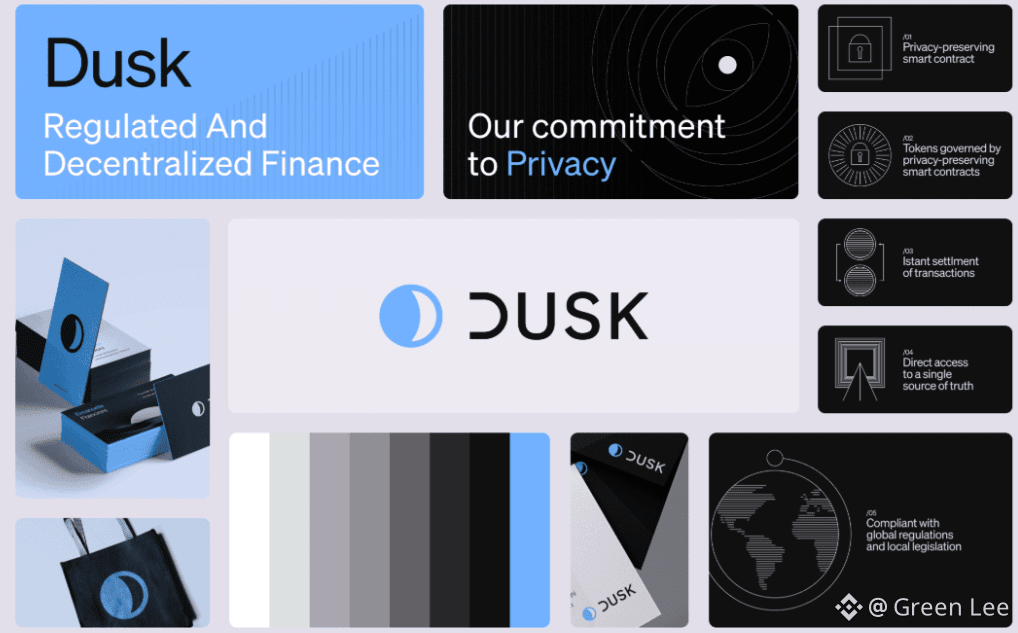
151
·
--
When BTC was hovering around the 63,000 mark, the group chat went quiet instead. The people calling trades disappeared. Builders started to show up. When the tide goes out, who’s swimming naked becomes obvious.
The big cake is up to 64,000, and BTC is still bullish!
Recently, I’ve spent most of my effort comparing two paths—Babylon’s TBV and Hashi on Sui. Not a trading mindset—I genuinely want to know: when the next stress test arrives, which system will be the first to have a bug.
I took the Babylon route earliest. Their logic is very pure—BTC is locked in Taproot scripts on the Bitcoin mainnet. Each Vault corresponds to an independent UTXO. No shared liquidity pool, no re-staking. You borrow stablecoins on Aave v4, relying on cryptographic proofs—not anyone’s permission. The project team can’t touch your coins, and that’s reassuring. So far, Babylon has locked over 56,000 BTC, and TVL has exceeded $5 billion. Even Aave founder Stani publicly endorsed it, saying it’s the first truly meaningful new Spoke implementation for Aave V4.
But the issue is there too—since each UTXO is independent, security is secure, but what about liquidity efficiency? It’s like locking each coin in its own separate safe: it works, but moving it around is a hassle.
Hashi takes a different route. Led by Mysten Labs, it went live on the testnet on July 22. You deposit BTC, validators use MPC with a Guardian Layer 2-of-2 multisig to guard it, and then mint hBTC on Sui that can be freely composed. Institutions like this approach—BitGo, Cumberland, Ledger, FalconX, and more than 25 partners have already joined. High performance, lots of玩法, with the goal directly targeting that 1 trillion dollars’ worth of dormant BTC.
But there’s always a hurdle in my mind—MPC plus multisig: the more steps there are, the more potential nodes where something can go wrong. It’s not technical distrust, it’s instinct.
Two approaches are on the table: one goes all-in on native-ness, the other embraces composability. There’s no absolute right or wrong—maybe in the future they’ll converge. But what I want to know is this: when the next brutal sell-off hits, BTC injects pins, and the liquidation chain is run end-to-end—will TBV’s pure cryptographic proofs be more resilient, or will Hashi’s institutional-grade risk controls be tougher to break? @babylonlabs_io $BABY #baby
When BTC was hovering around the 63,000 mark, the group chat went quiet instead. The people calling trades disappeared. Builders started to show up. When the tide goes out, who’s swimming naked becomes obvious.
The big cake is up to 64,000, and BTC is still bullish!
Recently, I’ve spent most of my effort comparing two paths—Babylon’s TBV and Hashi on Sui. Not a trading mindset—I genuinely want to know: when the next stress test arrives, which system will be the first to have a bug.
I took the Babylon route earliest. Their logic is very pure—BTC is locked in Taproot scripts on the Bitcoin mainnet. Each Vault corresponds to an independent UTXO. No shared liquidity pool, no re-staking. You borrow stablecoins on Aave v4, relying on cryptographic proofs—not anyone’s permission. The project team can’t touch your coins, and that’s reassuring. So far, Babylon has locked over 56,000 BTC, and TVL has exceeded $5 billion. Even Aave founder Stani publicly endorsed it, saying it’s the first truly meaningful new Spoke implementation for Aave V4.
But the issue is there too—since each UTXO is independent, security is secure, but what about liquidity efficiency? It’s like locking each coin in its own separate safe: it works, but moving it around is a hassle.
Hashi takes a different route. Led by Mysten Labs, it went live on the testnet on July 22. You deposit BTC, validators use MPC with a Guardian Layer 2-of-2 multisig to guard it, and then mint hBTC on Sui that can be freely composed. Institutions like this approach—BitGo, Cumberland, Ledger, FalconX, and more than 25 partners have already joined. High performance, lots of玩法, with the goal directly targeting that 1 trillion dollars’ worth of dormant BTC.
But there’s always a hurdle in my mind—MPC plus multisig: the more steps there are, the more potential nodes where something can go wrong. It’s not technical distrust, it’s instinct.
Two approaches are on the table: one goes all-in on native-ness, the other embraces composability. There’s no absolute right or wrong—maybe in the future they’ll converge. But what I want to know is this: when the next brutal sell-off hits, BTC injects pins, and the liquidation chain is run end-to-end—will TBV’s pure cryptographic proofs be more resilient, or will Hashi’s institutional-grade risk controls be tougher to break? @BabylonLabs_io $BABY #baby
The big cake is up to 64,000, and BTC is still bullish!
Recently, I’ve spent most of my effort comparing two paths—Babylon’s TBV and Hashi on Sui. Not a trading mindset—I genuinely want to know: when the next stress test arrives, which system will be the first to have a bug.
I took the Babylon route earliest. Their logic is very pure—BTC is locked in Taproot scripts on the Bitcoin mainnet. Each Vault corresponds to an independent UTXO. No shared liquidity pool, no re-staking. You borrow stablecoins on Aave v4, relying on cryptographic proofs—not anyone’s permission. The project team can’t touch your coins, and that’s reassuring. So far, Babylon has locked over 56,000 BTC, and TVL has exceeded $5 billion. Even Aave founder Stani publicly endorsed it, saying it’s the first truly meaningful new Spoke implementation for Aave V4.
But the issue is there too—since each UTXO is independent, security is secure, but what about liquidity efficiency? It’s like locking each coin in its own separate safe: it works, but moving it around is a hassle.
Hashi takes a different route. Led by Mysten Labs, it went live on the testnet on July 22. You deposit BTC, validators use MPC with a Guardian Layer 2-of-2 multisig to guard it, and then mint hBTC on Sui that can be freely composed. Institutions like this approach—BitGo, Cumberland, Ledger, FalconX, and more than 25 partners have already joined. High performance, lots of玩法, with the goal directly targeting that 1 trillion dollars’ worth of dormant BTC.
But there’s always a hurdle in my mind—MPC plus multisig: the more steps there are, the more potential nodes where something can go wrong. It’s not technical distrust, it’s instinct.
Two approaches are on the table: one goes all-in on native-ness, the other embraces composability. There’s no absolute right or wrong—maybe in the future they’ll converge. But what I want to know is this: when the next brutal sell-off hits, BTC injects pins, and the liquidation chain is run end-to-end—will TBV’s pure cryptographic proofs be more resilient, or will Hashi’s institutional-grade risk controls be tougher to break? @BabylonLabs_io $BABY #baby
122
Log in to explore more content
Join global crypto users on Binance Square
⚡️ Get latest and useful information about crypto.
💬 Trusted by the world’s largest crypto exchange.
👍 Discover real insights from verified creators.
Email / Phone number