
Shandra Blore XtC2
2.3k Posts

Shandra Blore XtC2
0 Following
23 Followers
74 Liked
Posts
Last night everyone in the square was watching the 206,000 initial claims and 1.779 million continuing claims data. Some thought it was a sign of an impending rate cut, while others saw that the job market is actually frozen—neither hiring nor firing. With data like this and sentiment at 78, $BTC was churning around 62k, while $ZEC spot was quietly carving out an independent move. How many people are watching the same narrative behind all this? Which side do you trust more? Not investment advice. $BTC $HEMI $ZEC #%E7%BE%8E%E5%9B%BD%E5%88%9D%

See translation
今天不想追已经刷烂的叙事了,换个角度先盯 $TRUMP 和 $ORDI ,顺带看一眼 $WLD 。不看谁喊得响,先看量价有没有跟上、持仓结构是否干净。热点轮太快时,宁可少动,把观察做扎实。仅个人记录,不构成投资建议。 #%E7%BE%8E%E5%9B%BD%E5%88%9D% 补充:若热点不扩散,宁肯少做。

See translation
今天不想追已经刷烂的叙事了,换个角度先盯 $WLD 和 $TRUMP ,顺带看一眼 $ORDI 。不看谁喊得响,先看量价有没有跟上、持仓结构是否干净。热点轮太快时,宁可少动,把观察做扎实。仅个人记录,不构成投资建议。 #%E7%BE%8E%E5%9B%BD%E5%88%9D%

Market sentiment reading has reached 78. Everyone is busy watching the macro picture, but in the corners these three trends are quite interesting: $UNI +8% is rising, $1000CATUSDT is moving nowhere, and $SKHY has no clear direction either. In the same market, three completely different rhythms show that the chip structure is really very fragmented. What do you think of this divergence? Not investment advice. $1000CATUSDT #%E7%BE%8E%E5%9B%BD%E5%88%9D%

See translation
【$BNB 讨论聚焦】我把广场里和 $BNB 相关的讨论单拎出来看。当前情绪在 78 附近,核心争议是:市场分歧依旧,等待信号对齐。我更关注 $BNB 的量能延续和关键位承接,确认后再参与。我会继续观察成交量与持续性,确认后再行动。仅个人记录,你觉得今天最该纠正的是哪一步?评论区留关键词。仅个人记录,不构成投资建议。 $MAGMA $AAVEUSDT #%E7%BE%8E%E5%9B%BD%E5%88%9D%

[Discussion Focus on $SOL ] I pulled out the discussions in the square that are related to $SOL . Current sentiment is around 78, and the core disagreement is: market divergence still remains, waiting for signals to align. I’m more focused on the continuation of $SOL ’s volume and support at key levels, and will participate after confirmation. I will continue to observe trading volume and sustainability, and act after confirmation. Personal note only: do you pay more attention to sentiment or structure? Personal note only, not investment advice. $ETH $AUSDT #%E7%BE%8E%E5%9B%BD%E5%88%9D%

The fear and greed index is stuck at 78. The label in the material says "extreme fear," but the summary line keeps flashing "greed." This contradiction itself shows one thing: the market has not formed a unified sentiment at all; everyone is following their own script. Tonight’s initial jobless claims are 206,000, and continuing claims are 1.779 million. For personal records only, not investment advice. $ETH $0GUSDT $AKE #%E7%BE%8E%E5%9B%BD%E5%88%9D%

Someone in the square sidebar is using $2ZUSDT for data backtesting comparisons, putting it together with $PAL's on-chain activity during the same period. Combining the two, it's not that either one can single-handedly drive the market; it feels more like the market is testing the capacity of two different directions. Sentiment is at 78, with many people discussing it but few able to act on it. I only look at volume, not direction. Not investment advice. $ETH $2ZUSDT $AKE #%E7%BE%8E%E5%9B%BD%E5%88%9D%

Recently the fear and greed index has climbed to 78, and hot posts are talking about the U.S. initial jobless claims at 206,000 — on the surface the data looks okay, but many people are already imagining a rate-cut storyline. $1MBABYDOGEUSDT $MSTRBUSDT These kinds of tickers are seeing a lot of discussion right now, but I’m more focused on not rushing in before the market has a consensus. What do you think about this wave of sentiment? Personal record only, not investment advice. $ETH $1MBABYDOGEUSDT #%E7%BE%8E%E5%9B%BD%E5%88%9D%E5%85%88

I took a look at the Astra post OpenAI dropped in the Square, and the debate was pretty intense. A lot of people are saying AI can finally "get work done" on its own now, finding vulnerabilities and handling complex tasks by itself. But looking back at the chain, $AKE is up 11%, $BTR ran up to +29% in a day and then got dumped back to -31%, and $FOREST is also still swinging around. Everyone loves the AI narrative, but prices have already baked in the expectations. Whoever jumps in today to take over the baton may become someone else’s fuel tomorrow. When will the market start paying for truly usable AI infrastructure instead of speculating on concepts? This cycle is moving fast. Not investment advice. $BTR $1INCHUSDT #%E7%BE%8E%E5%9B%BD%E5%88%9D%E7%BE%8E

Recently, while scrolling through the plaza, I saw $1000SATSUSDT and $MAIGAAI being talked about again in connection with AI, which made me stop and think about something pretty important that just happened recently—OpenAI released GPT-6Astra, and they disclosed one thing themselves: this model has already crossed their own safety framework’s "Critical" threshold, and can independently discover and exploit software vulnerabilities without needing humans to guide it step by step. To be honest, my first reaction to the announcement was not excitement, but a chill down my spine. In the past, finding vulnerabilities was the kind of thing security engineers stayed up all night doing by combing through code; now an AI can be dropped into an environment, search on its own, and even write exploit code. This is no longer just a "smarter chatbot"—it is a fundamental shift in tool-level logic. The mood on the plaza is easy to feel directly. The fear and greed index has already reached 78, putting the market overall in the greedy zone, and interest in AI-related topics continues to heat up. The GPT-6Astra topic itself has more than 200,000 plays and over 1,600 people participating in discussion. Meanwhile, the discussion around Nvidia’s $12.9 billion acquisition of HuggingFace has also drawn 440 viewers. Behind these numbers is capital and attention rapidly gathering toward AI infrastructure and AI agents. But I noticed a very interesting divide. Some people see Astra’s ability to find vulnerabilities autonomously and immediately think, "Can this make me money?" Others start seriously thinking about the long-term impact on on-chain tooling as AI shifts from "answering questions" to "doing work for you." The former chases short-term narratives; the latter looks at structural change. Projects like $HEMI that focus on AI infra should, in theory, be direct beneficiaries of this trend—the stronger AI gets, the greater the demand for underlying infrastructure. But the problem is that the AI tooling sector is too crowded; narratives come fast and fade just as quickly. Everyone claims to be an AI agent or AI infra these days, but who will actually emerge as a winner is really hard to say. Another signal I’m seeing is that the market has already started pricing in AI ahead of time. When the fear and greed index is high and people chase hot themes, the risk-reward ratio is actually not ideal. This is not to say AI has no opportunities, but rather that when everyone knows it is the hot topic, the real alpha is no longer obvious. Coming back to Astra itself, its ability to autonomously find vulnerabilities may have a deeper impact on crypto security than most people realize. Smart contract audits and vulnerability discovery—once core capabilities of specialized security firms—are now starting to be handled by AI on its own. What impact this will have on the existing security services landscape is worth tracking closely. My view is simple: AI moving from chatting to doing work means the tool layer is indeed being reshuffled, and that trend is certain. But which specific project will capture the biggest share is hard to say in the short term. Narratives, technology, capital conditions, and community activity are all changing rapidly. Not investment advice. $ETH $1000SATSUSDT #%E7%BE%8E%E5%9B%BD%E5%88%9D%

The 206,000 initial jobless claims number from last night caused quite a stir in the Square. Some people took it as a signal of a coming rate cut, while others pointed at the Fear & Greed Index at 78 and urged calm. After looking at it for a while, I feel the data itself is not the key issue; what really matters is the emotion driving the market forward. That’s worth breaking down.
【The "zombie state" behind the data】
206,000 does sound higher than the previous few days, but in historical terms it is still at a low level. Continuing claims at 1.779 million edged up slightly, but not by much. Put together, these figures are not evidence of an "unemployment wave" or a "rate-cut tailwind". They look more like a stalemate — companies don’t dare lay off, and they don’t dare hire either. Over the past two years, labor shortages have worn everyone down. Now firms would rather hold the line than easily expand headcount, and with policy uncertainty still hanging over the market, the door to new hiring is effectively shut. This frozen state of neither hiring nor firing is exactly the soft-landing deadlock that the Fed finds most troublesome.
A friend in the Square said the market has already taken the easing-liquidity script all the way to its climax. I agree with that. The Fed hasn’t really said anything yet, but capital has already rushed ahead on its own.
【The emotional anchor of $BTC 】
Fear & Greed at 78 is labeled "extreme fear," and that label itself shows the market is engaged in self-conflict. Prices are moving up, yet sentiment is leaning toward fear — a classic sign of bullish nerves. Some are drawing exit lines, some are counting take-profit levels, and others are still asking, "Is there a second wave coming?" My observation is that BTC is now more like an emotion thermometer than a purely technical asset. Whenever macro data comes out, it is the first asset to be priced. This time the data did not trigger a crash, which suggests off-exchange funds are still watching and waiting for a clearer signal.
【The divergence between $SOL and $BNB 】
These two actually represent two different narratives. $SOL is beta for on-chain ecosystems, with high volatility and amplified sentiment; $BNB follows the logic of a platform coin, tied more tightly to Binance’s own ecosystem. Many people in the Square use $SOL for short-term trading and $BNB as a core holding, which shows the market has already split internally — some are still chasing elasticity, while others are starting to favor certainty. This isn’t about right or wrong; it’s about different capital personalities.
【AI narrative is also splitting】
The discussion around OpenAI’s release of GPT-6 Astra was not small. Some see AI moving from "answering questions" to "doing the work for you," while others feel uneasy about its ability to discover vulnerabilities on its own. For the crypto market, this narrative is a double-edged sword — compute demand is bullish, but AI substitution may not be good news for retail sentiment. The discussion about this in the Square was even hotter than the macro data, which shows that capital currently lacks a clearer anchor and can only keep switching between these two directions.
【My view】
Data never lies, but the people interpreting it do. The 206,000 number itself is not bad; what’s bad is that the market has turned it into a single narrative to speculate on. When rate expectations, employment data, and AI progress are all pressing at the same time, liquidity doesn’t automatically loosen — it only makes disagreement more intense. What I can do now is sort out my positions and understand the logic behind each one, rather than letting a short post in the Square drag my emotions around.
Not investment advice. The market will always surprise you — as long as you don’t throw yourself in as raw material.
#%E7%BE%8E%E5%9B%BD%E5%88%9D%
【The "zombie state" behind the data】
206,000 does sound higher than the previous few days, but in historical terms it is still at a low level. Continuing claims at 1.779 million edged up slightly, but not by much. Put together, these figures are not evidence of an "unemployment wave" or a "rate-cut tailwind". They look more like a stalemate — companies don’t dare lay off, and they don’t dare hire either. Over the past two years, labor shortages have worn everyone down. Now firms would rather hold the line than easily expand headcount, and with policy uncertainty still hanging over the market, the door to new hiring is effectively shut. This frozen state of neither hiring nor firing is exactly the soft-landing deadlock that the Fed finds most troublesome.
A friend in the Square said the market has already taken the easing-liquidity script all the way to its climax. I agree with that. The Fed hasn’t really said anything yet, but capital has already rushed ahead on its own.
【The emotional anchor of $BTC 】
Fear & Greed at 78 is labeled "extreme fear," and that label itself shows the market is engaged in self-conflict. Prices are moving up, yet sentiment is leaning toward fear — a classic sign of bullish nerves. Some are drawing exit lines, some are counting take-profit levels, and others are still asking, "Is there a second wave coming?" My observation is that BTC is now more like an emotion thermometer than a purely technical asset. Whenever macro data comes out, it is the first asset to be priced. This time the data did not trigger a crash, which suggests off-exchange funds are still watching and waiting for a clearer signal.
【The divergence between $SOL and $BNB 】
These two actually represent two different narratives. $SOL is beta for on-chain ecosystems, with high volatility and amplified sentiment; $BNB follows the logic of a platform coin, tied more tightly to Binance’s own ecosystem. Many people in the Square use $SOL for short-term trading and $BNB as a core holding, which shows the market has already split internally — some are still chasing elasticity, while others are starting to favor certainty. This isn’t about right or wrong; it’s about different capital personalities.
【AI narrative is also splitting】
The discussion around OpenAI’s release of GPT-6 Astra was not small. Some see AI moving from "answering questions" to "doing the work for you," while others feel uneasy about its ability to discover vulnerabilities on its own. For the crypto market, this narrative is a double-edged sword — compute demand is bullish, but AI substitution may not be good news for retail sentiment. The discussion about this in the Square was even hotter than the macro data, which shows that capital currently lacks a clearer anchor and can only keep switching between these two directions.
【My view】
Data never lies, but the people interpreting it do. The 206,000 number itself is not bad; what’s bad is that the market has turned it into a single narrative to speculate on. When rate expectations, employment data, and AI progress are all pressing at the same time, liquidity doesn’t automatically loosen — it only makes disagreement more intense. What I can do now is sort out my positions and understand the logic behind each one, rather than letting a short post in the Square drag my emotions around.
Not investment advice. The market will always surprise you — as long as you don’t throw yourself in as raw material.
#%E7%BE%8E%E5%9B%BD%E5%88%9D%

OpenAI has just released news about GPT-6 Astra, and the crypto market’s reaction is quite interesting, worth unpacking carefully. First, let’s talk about the product itself. Astra is not just a simple model iteration; OpenAI is emphasizing "autonomous work" — across browsers, across software, multi-step task execution, and even finding vulnerabilities on its own. This means AI is truly moving from a "conversational tool" into the threshold of a "workflow agent." If this narrative holds, it represents a fundamental logic upgrade for the entire AI sector, and any capital paying attention to this direction should take it seriously. But the crypto market’s reaction has precisely exposed a deep contradiction in the current market. On the day the news came out, there were plenty of people on the timeline discussing AI-related altcoins, with names like $1000CHEEMSUSDT, $MU , and $HEMI being mentioned repeatedly. However, the actual price action told a completely different story. The $HEMI contract even dropped 21% after the news landed, while the other two altcoins also performed flatly, with none of them managing to carve out a truly independent rally. Capital did not pour into the AI narrative as expected, and the buzz on social media stood in sharp contrast to the actual charts. This divergence is worth thinking about. Some people believe the AI narrative will be the core theme over the next few months, that Astra merely lit the fuse, and that there is still plenty of room for speculation; in their view, the current pullback is actually an opportunity to time entries better. Others point out that over the past two years, AI concepts have been repeatedly pumped: each time the news comes out, prices rise for a bit and then quickly fade, and in the end only a few leading projects truly establish a trend, while most altcoins are just heat-seeking cannon fodder. Both sides have a point, but each is only seeing one side of the story. Looking at the broader macro environment outside crypto, the fear and greed index is currently at 78, in the extreme greed zone. In the U.S. stock market, initial jobless claims remain near historical lows, the Federal Reserve has not made a clear stance, and the market has already been filling in the script of easier liquidity through imagination alone, pushing the narrative to a climax. Treasury yields are also moving higher. In this kind of macro backdrop, crypto capital’s risk appetite is actually cautious — no one wants to go heavy into a small coin in an uncertain environment. So, back to the original question: do these kinds of small coins still have stories left to tell? My view is yes, but it depends on the situation. The AI narrative itself is real, and Astra’s capability boundary is still expanding; this direction is not going to disappear overnight. But the trading logic for AI altcoins in crypto is not the same as the trading logic for AI-related stocks in the U.S. stock market. U.S. stocks can lift an entire sector on the back of a single product update, while crypto altcoins are more short-term, sentiment-driven games of momentum, and once the news lands, the sustainability of capital inflows is often weak. The projects that truly have a story to tell are those with actual product delivery and on-chain data support, not coins that are merely riding the AI label. The divergence on the timeline essentially reflects a clash between two trading mindsets: one is narrative-driven, believing the hype will keep fermenting; the other is capital-driven, looking only at whether money is actually flowing in. Neither mindset is wrong; the key is which one you belong to, and what kind of volatility you can bear from it. Not investment advice, just chatting — make your own judgment. #%E7%BE%8E%E5%9B%BD%E5%88%9D%

Just saw people on the square talking about OpenAI's new model, saying AI has started working on its own. Will this kind of narrative bring up some niche coins? I'm looking at $1000CATUSDT $GMEBUSDT $HEMI these few, not sure what everyone thinks. Which direction do you think this kind of narrative will rotate to next? Not financial advice. $ETH #%E7%BE%8E%E5%9B%BD%E5%88%9D%E5%88%%

Just after scanning a few hot posts on the forum, I found that what everyone is talking about is quite disconnected from the actual market. In Zhou Dongye’s post, he wrote that initial jobless claims were 206,000 and continuing claims were 1.779 million, saying companies would rather stubbornly hold on than lay off workers or hire new ones. This kind of "zombie-like" state is making on-site funds increasingly optimistic, and people are directly imagining a loosening scenario. On-chain-bullqueen Yueyue, on the other hand, reminded everyone that small funds entering the market should not rush; split it into four parts and practice with 100 U each, because what gets lost is mentality, not principal. I shifted my attention from the macro picture to a few futures I was watching on the chart myself: $MAGMA fell by more than 30% today, $HEMI also couldn’t hold up and kept dropping, and only $UNI is still holding the spot sentiment around +8%. On one side, people are using old logic to call for rate-cut expectations and volatility; on the other side, these coins are voting with real money through declines. Putting these two things side by side is more honest than any single hot post. I’m not sure how long this divergence can last, but data is more reliable than narrative. This post is for observation only and does not constitute investment advice. #%E7%BE%8E%E5%9B%BD%E5%88%9D%
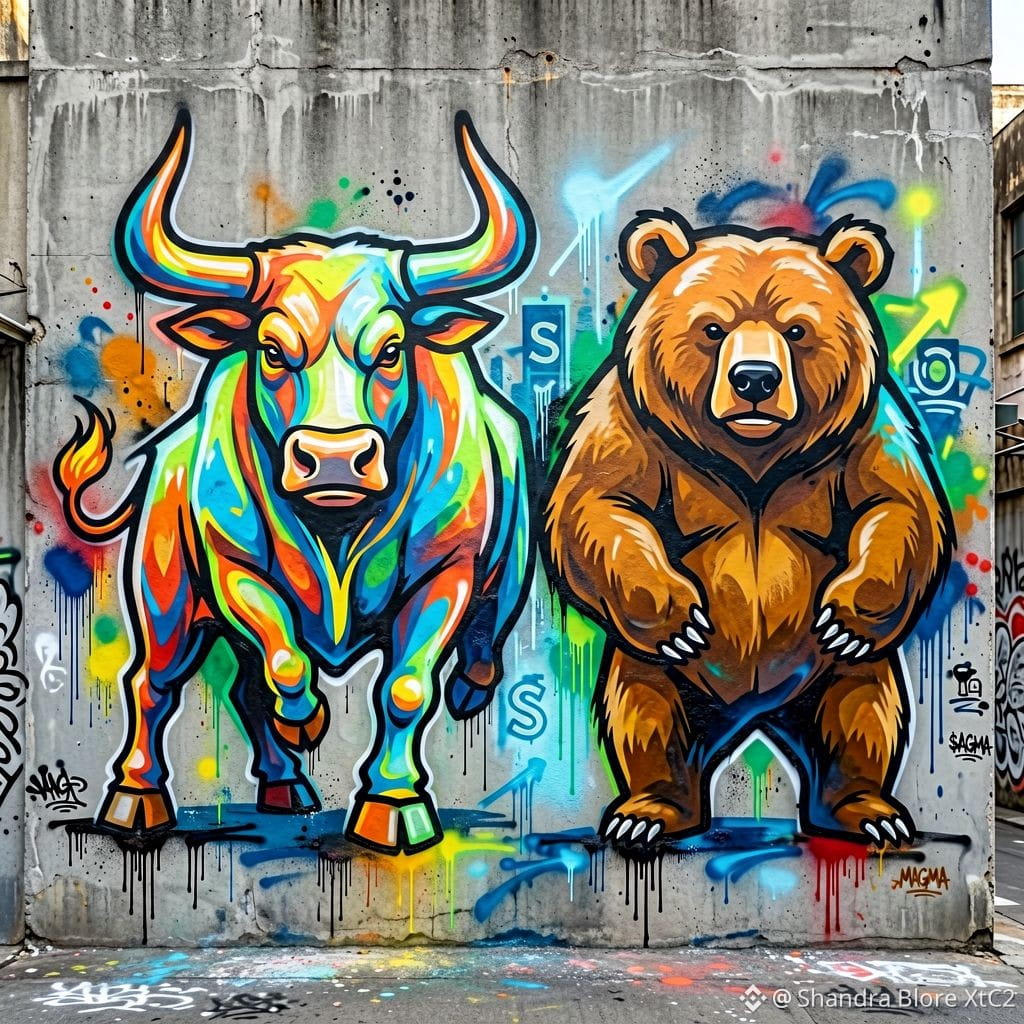
I don’t want to chase another narrative I’ve already burned through today. Let’s change perspective and first focus on $TRUMP and $ORDI , and take a quick look at $WLD as well. Don’t go by who shouts the loudest—first check whether volume and price have followed through, and whether the positioning structure is clean. When the spotlight moves too fast, it’s better to make fewer moves and keep the observation solid. Personal notes only, not investment advice. #%E7%BE%8E%E5%9B%BD%E5%88%9D%

Just finished checking the radar. Both $BTC and $ETH are stuck at 35 points, and there still hasn’t been a valid collection signal. It’ll be more reliable to wait for a second confirmation from volume-price and position data. I also glanced at $SOL ; its score is as low as theirs, and it’s still in a wait-and-see phase in the short term. What level of volume do you think counts as a valid entry for this move? This does not constitute investment advice.

OpenAI released GPT-6 Astra late at night, and it can directly operate computers to get work done. Someone already did the math, saying, "Even master’s students have to do jobs for middle schoolers." At the same time, the square’s emotional index is stuck at 78, and posts discussing new SEC regulations that could bring crypto companies back are also heating up. I looked at $EDGE —this round of futures has risen quite a bit, and $AKE and $0GUSDT have recently also seen funds coming in to test the waters. In this window where an AI narrative meets a regulatory easing, which track do you think is more promising? Not investment advice. $EDGE $0GUSDT $AKE #Didn’t expect it to actually arrive—this time it didn’t get delayed. OpenAI released a new generation of flagships late at night.

Saw signals about the Surf pool in the information feed: candidate numbers $BTC surged to 202, and $ETH and ZEC are also all above 100 points. It feels like the main storyline’s attention is clearly stronger than that kind of state with a score in the 40s like $SOL . Right now they’re just making small tests; we’ll observe first. This does not constitute investment advice.

Today the busiest topic in the square is still that new SEC rule, which says it wants to bring crypto companies back to the United States. It has surged to more than 80,000 discussions, and the comments are pretty heated—some people think it’s positive news, while others worry about the compliance costs. I looked around: the sentiment index has reached 78, in the greed zone. In the short term, it probably won’t cool off directly, but you should watch for take-profit/realization. On the contracts side: $AKE +2.8%, $BTR +10.3%. As for spot, $SKHYNIX also has some movement, with funds shifting toward smaller-cap assets. The NVIDIA deal—its $12.9 billion acquisition of HuggingFace—mostly adds momentum to the AI space. Its direct connection to crypto is actually limited. Honestly, this round isn’t a broad-market uptrend; rotation is fast, and chasing gains could leave you stuck. I personally plan to wait for a pullback to reassess—no rush. What do you all think about the actual market impact of this SEC news? Note: This post is only a personal observation record and does not constitute investment advice. #sec%E6%96%B0%E8%A7%84%E6%8B%

Log in to explore more content