
梧渡
648 Posts

梧渡
 Square Verified
Report
Block User
3.6K+ Following
32.7K+ Followers
6.7K+ Liked
Posts
Portfolio
All
Quotes
Live
PINNED
·
--
$JOSE.
The first token on every new platform is a little special.
There’s no one before it to look to for reference—everyone is watching to see how it turns out.
$JOSE is the first token on @OnePumpcc.
For too many tokens, launch day is the peak: creators sell out and leave, and the community is left holding the bag. The platform behind $JOSE turns that around, rewarding creators who stick around and bring their tokens to life.
Here are a few public stats so far: 99% of liquidity permanently locked, 5,000+ trades in 7 days, and 660 holders.
Tokens launched here are automatically listed on Canton exchanges, and trading competitions kick off at the same time, with rewards for the top traders by volume.

27
1
4
59
PINNED
·
--
Partly True
$JOSE.
The first coin on every new platform is a little special.
It has no predecessors to look to for guidance. Everyone is watching to see what it can become.
$JOSE is the first token on @OnePumpcc.
For too many coins, launch day is the peak: creators sell out and leave, and the community is left holding the bag. The platform $JOSE is on takes the opposite approach, rewarding creators who stick around and build their coins.
Here are some of the publicly available stats so far: 99% of liquidity permanently locked, 5,000+ transactions in 7 days since launch, and 660 holders.
Coins launched here are automatically listed on exchanges across Canton, and trading competitions kick off at the same time. Win rewards by ranking among the top traders by volume.

1.1k
1
49
1.1k
·
--
Jose🧧🧧
Jose🧧🧧
梧渡
·
--
$JOSE.
The first token on every new platform is a little special.
There’s no one before it to look to for reference—everyone is watching to see how it turns out.
$JOSE is the first token on @OnePumpcc.
For too many tokens, launch day is the peak: creators sell out and leave, and the community is left holding the bag. The platform behind $JOSE turns that around, rewarding creators who stick around and bring their tokens to life.
Here are a few public stats so far: 99% of liquidity permanently locked, 5,000+ trades in 7 days, and 660 holders.
Tokens launched here are automatically listed on Canton exchanges, and trading competitions kick off at the same time, with rewards for the top traders by volume.

54
·
--
Jose🧧
Jose🧧
梧渡
·
--
$JOSE.
The first coin on every new platform is a little special.
It has no predecessors to look to for guidance. Everyone is watching to see what it can become.
$JOSE is the first token on @OnePumpcc.
For too many coins, launch day is the peak: creators sell out and leave, and the community is left holding the bag. The platform $JOSE is on takes the opposite approach, rewarding creators who stick around and build their coins.
Here are some of the publicly available stats so far: 99% of liquidity permanently locked, 5,000+ transactions in 7 days since launch, and 660 holders.
Coins launched here are automatically listed on exchanges across Canton, and trading competitions kick off at the same time. Win rewards by ranking among the top traders by volume.

1
53
·
--
BNB Price Action Analysis for Today
Current price: approximately $733.5, up 0.66% over 24 hours (about +$4.80). 24-hour range: $709.0–$734.5. Overall, the price traded in a narrow range and posted a modest gain.
Based on market data and BNB’s fundamentals, today’s price action can be attributed to the following three factors:
Reason 1: A technical rebound driven by an oversold recovery
On the hourly RSI, BNB briefly fell into deeply oversold territory between 19 and 28 over the past 24 hours, hitting a low of 19.43—a typical sign of short-term selling pressure being exhausted. The RSI then rebounded quickly to around 53, while the price recovered from its $709 low to around $733. This rally was essentially a technical recovery following oversold conditions, rather than a trend breakout.
The Bollinger Bands’ middle line is around $723.5. The price has moved above it and is approaching the upper band at $733.8, indicating that short-term momentum is recovering;
However, with the price near the upper band, room for a further short-term rise is limited, consistent with the characterization of a “range-bound market with a bullish bias.”
Reason 2: Support from the BNB Chain ecosystem and the platform’s fundamentals
BNB’s pricing has always been closely tied to activity on the Binance platform and the BNB Chain ecosystem. Its value is generally supported by:
Deflationary expectations stemming from platform trading volume and fee burns (the BNB auto-burn mechanism);
Demand for on-chain gas driven by activity in DeFi, meme coins, and new projects on BNB Chain;
Progress in areas such as regulatory compliance and product development, which boosts holder confidence.
When broader market sentiment stabilizes, BNB often attracts relatively steady inflows due to its dual characteristics as both an “exchange token and a public blockchain.” This is also an important reason it tends to hold up well and post modest gains in a ranging market.
Reason 3: Beta-driven movement in tandem with the broader market
BNB rose just 0.66% today, and its 24-hour price range was limited, suggesting that its movement largely reflected fluctuations in major cryptocurrencies (BTC/ETH) rather than an independent trend. In the absence of major BNB-specific positive catalysts:
Overall sentiment in the crypto market is neutral, with trading driven mainly by existing capital;
As a highly liquid major asset, BNB typically has smaller price swings than smaller, more volatile coins, displaying a pattern of “rising and falling in tandem, with more limited moves.”
Small
1
137
·
--
Study
Study
梧渡
·
--
I've been looking at various token-locking tools on BNB Chain, and recently I came across Flap's Token Locker. After taking a closer look, I found that it has some standout features compared with many similar tools on the market. Here's what I think.
For project teams and token holders, the core requirements for token locking really come down to two things: transparent release rules and trustworthy contracts, while still allowing for flexibility. Flap's newly launched Locker addresses both of these needs.
It offers two unlocking options to suit different needs. The first is a one-time unlock: set a date, and the tokens are released in full when that date arrives. This works well for straightforward team token lockups. The second is vesting-based unlocking, which lets you customize the initial unlock date, the percentage released in each round, and the interval between rounds. This is the familiar vesting model, well suited to long-term token allocation plans and distributions for team members and investors. Every release is publicly recorded on-chain and can be tracked by anyone, helping reduce uncertainty and distrust.
Beyond the basic locking features, the accompanying lookup tools are very useful. We can check at any time how many tokens have been unlocked, how many have been claimed, and how many are still waiting to be released. The full release history and upcoming unlock dates are also clearly displayed. You can lock either Flap's native token or other tokens on BNB Chain. Another flexible feature is that ownership of the locked tokens can be transferred, and the locking rights can also be relinquished, making it easier to manage assets later on.
The most distinctive feature—and what I think is the biggest highlight—is that eligible Flap tokens can continue earning and receiving dividends while locked. With most token-locking tools on the market, once tokens are deposited into a locking contract, all returns are suspended, leaving the assets effectively “frozen and idle.” This mechanism lets locked tokens keep generating returns, making better use of capital.
1
45
·
--
I've been looking at various token-locking tools on BNB Chain, and recently I came across Flap's Token Locker. After taking a closer look, I found that it has some standout features compared with many similar tools on the market. Here's what I think.
For project teams and token holders, the core requirements for token locking really come down to two things: transparent release rules and trustworthy contracts, while still allowing for flexibility. Flap's newly launched Locker addresses both of these needs.
It offers two unlocking options to suit different needs. The first is a one-time unlock: set a date, and the tokens are released in full when that date arrives. This works well for straightforward team token lockups. The second is vesting-based unlocking, which lets you customize the initial unlock date, the percentage released in each round, and the interval between rounds. This is the familiar vesting model, well suited to long-term token allocation plans and distributions for team members and investors. Every release is publicly recorded on-chain and can be tracked by anyone, helping reduce uncertainty and distrust.
Beyond the basic locking features, the accompanying lookup tools are very useful. We can check at any time how many tokens have been unlocked, how many have been claimed, and how many are still waiting to be released. The full release history and upcoming unlock dates are also clearly displayed. You can lock either Flap's native token or other tokens on BNB Chain. Another flexible feature is that ownership of the locked tokens can be transferred, and the locking rights can also be relinquished, making it easier to manage assets later on.
The most distinctive feature—and what I think is the biggest highlight—is that eligible Flap tokens can continue earning and receiving dividends while locked. With most token-locking tools on the market, once tokens are deposited into a locking contract, all returns are suspended, leaving the assets effectively “frozen and idle.” This mechanism lets locked tokens keep generating returns, making better use of capital.
1
2
2
113
·
--
RWA total scale surpasses $37 billion, traditional financial giants accelerate tokenization
Real-world asset tokenization (RWA) has become the most certain narrative in the 2026 crypto industry. As of August, after excluding stablecoins, the total on-chain RWA scale reached $37.29 billion, maintaining rapid growth; the total market value of stablecoins rose to about $300 billion, entering a high phase of platforms aimed at penetrating global payment networks.
Several key developments in August are worth noting:
BlackRock launched two new tokenized money market funds, BSTBL and BRSRV, investing in cash, short-term U.S. Treasuries, and Treasury repurchase agreements. Its BUIDL fund’s total assets have exceeded $2.8 billion, with cumulative dividend distributions of over $100 million, deployed across 8 public chains.
Standard Chartered-supported Anchorpoint officially launched the first phase issuance of Hong Kong-compliant stablecoin HKDAP; OSL serves as the primary distributor. It also simultaneously rolled out AgentPay, a stablecoin payment infrastructure for AI agents, prioritizing cross-border payments, RWA settlement, and trade financing scenarios.
The New York Stock Exchange is developing a tokenized securities on-chain settlement platform, aiming to enable 7×24 hour trading, instant settlement, and stablecoin fund flows.
Wells Fargo plans to launch tokenized deposit services in autumn 2026.
Mastercard completed its acquisition of BVNK, and both Visa and Mastercard have expanded stablecoin settlement networks through partnerships or acquisitions.
Tether provides real-estate tokenization technology support to Saudi institutional investors via its asset tokenization platform Hadron, and grew its XAUT gold token size to about $2.6 billion—making it one of the largest gold tokenization asset issuers globally.
The industry generally believes that the second half of 2026 will be a “singularity” moment for the on-chain financial system: capital-side tokenization (stablecoins, deposits, CBDCs) and asset-side tokenization (stocks, funds, bonds) will converge on-chain to form a commercial closed loop. However, RWA rollout still faces core bottlenecks such as the mismatch between traditional finance operating hours and on-chain 24/7 trading, as well as the linkage between on-chain ownership and physical delivery.$AAPLB
1
208
·
--
Lucky vibes everyone! Keep an eye on the big guy, there's more action coming up and you'll want to be the first to jump in on it @Square-Creator-90d4947b794c
Lucky vibes everyone! Keep an eye on the big guy, there's more action coming up and you'll want to be the first to jump in on it @Crypto 学长
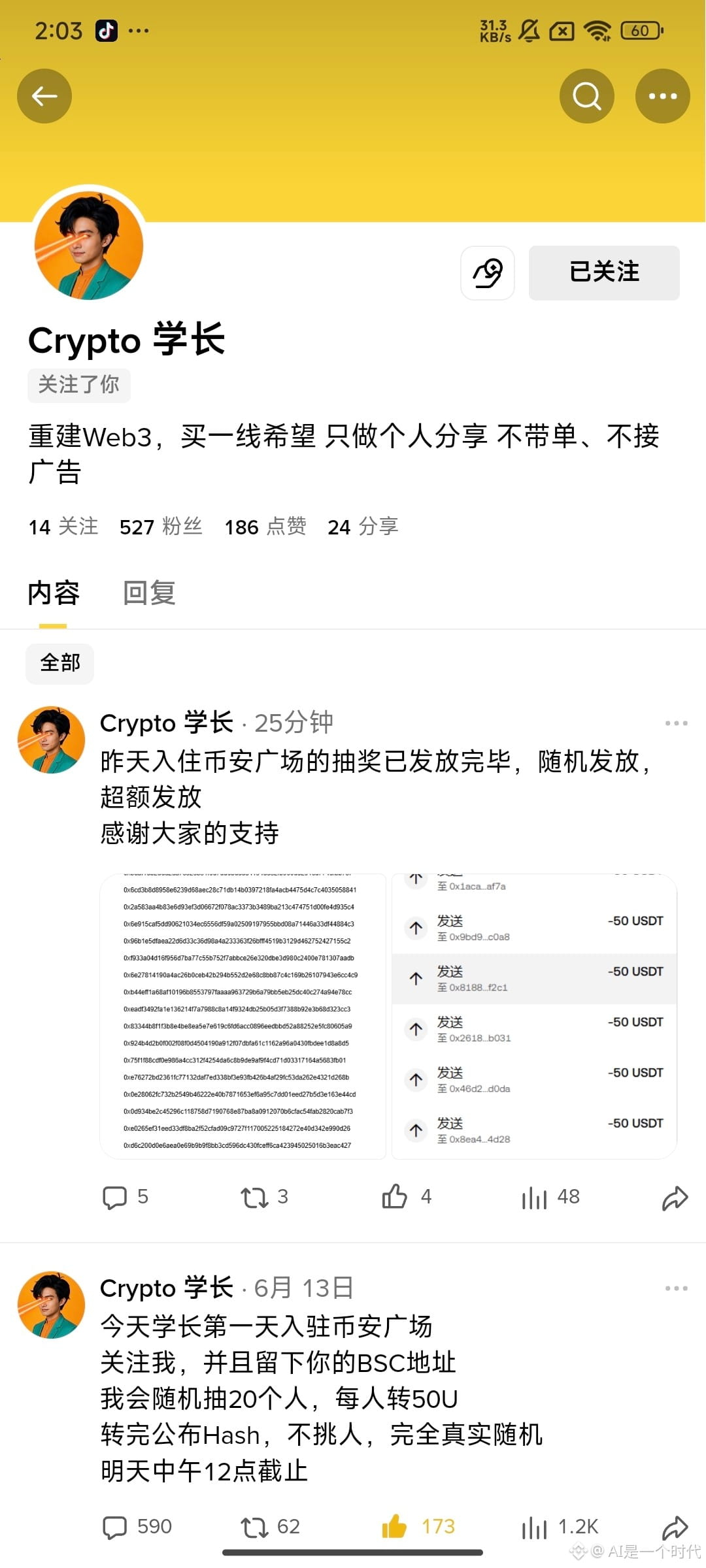
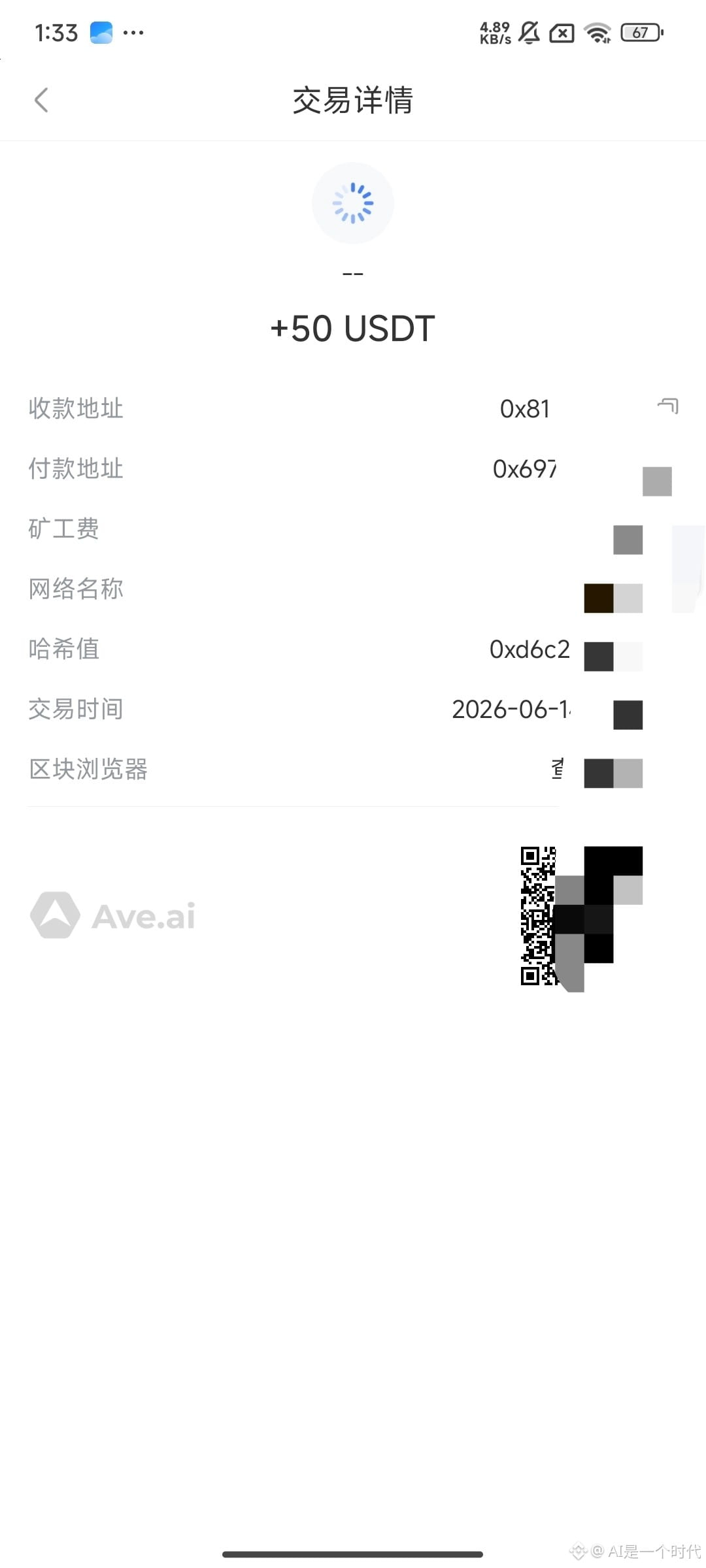
135
·
--
When community building returns to the mainstream, the restless hearts can finally chill.
When community building returns to the mainstream, the restless hearts can finally chill.
147

·
--
In the past few days, a giant whale has been frantically buying over 70,000 ETH, with an average cost of only $2072. Now, they are up over 4 million! This is quite interesting, and I've thought about it a bit, so let me share my views with you.
First of all, this big shot is definitely not here to play short-term—being able to put so much money into ETH means they are looking long-term. The ETH ecosystem is becoming increasingly stable, with Layer 2 exploding and expectations of ETF approvals. Perhaps they are betting on a big market trend over the next six months to a year. A 4 million profit is astronomical for us, but for this level of capital, it might just be the beginning.
I checked the real-time data; the current ETH price is around $2121, which is slightly higher than their cost. Technical indicators show that the RSI has reached 74.61, which is in the overbought range, and there may be some correction pressure in the short term. The Bollinger Bands indicate that the upper band is around $2139, which is also a resistance level.
So what will this big shot do next? I guess it’s highly likely they will hold it long-term, and they might even stake the coins to earn interest. The current staking yield for ETH is about 4%-5%, just from interest, that's quite a bit of money each month. Moreover, with such a large position, if they suddenly decide to dump, it will definitely crash the price, which won’t be beneficial for themselves either.
For us ordinary investors, this situation provides two insights: first, large funds are indeed optimistic about ETH's future, which is a positive signal; but on the other hand, we shouldn’t blindly follow the trend, as their cost is lower than the current price, and they can withstand volatility, while we may suffer if we chase the highs. In the short term, we can pay attention to the resistance level at 2139; if it breaks through, there might be a wave of market action, but we also need to be cautious of a correction after the RSI is overbought.
In short, there are no absolute rules in the crypto world; the actions of whales are merely a reference. The key is to assess your own risk tolerance—don’t be envious of others making money, controlling your position is the way to go! $ETH {future}(ETHUSDT)
In the past few days, a giant whale has been frantically buying over 70,000 ETH, with an average cost of only $2072. Now, they are up over 4 million! This is quite interesting, and I've thought about it a bit, so let me share my views with you.
First of all, this big shot is definitely not here to play short-term—being able to put so much money into ETH means they are looking long-term. The ETH ecosystem is becoming increasingly stable, with Layer 2 exploding and expectations of ETF approvals. Perhaps they are betting on a big market trend over the next six months to a year. A 4 million profit is astronomical for us, but for this level of capital, it might just be the beginning.
I checked the real-time data; the current ETH price is around $2121, which is slightly higher than their cost. Technical indicators show that the RSI has reached 74.61, which is in the overbought range, and there may be some correction pressure in the short term. The Bollinger Bands indicate that the upper band is around $2139, which is also a resistance level.
So what will this big shot do next? I guess it’s highly likely they will hold it long-term, and they might even stake the coins to earn interest. The current staking yield for ETH is about 4%-5%, just from interest, that's quite a bit of money each month. Moreover, with such a large position, if they suddenly decide to dump, it will definitely crash the price, which won’t be beneficial for themselves either.
For us ordinary investors, this situation provides two insights: first, large funds are indeed optimistic about ETH's future, which is a positive signal; but on the other hand, we shouldn’t blindly follow the trend, as their cost is lower than the current price, and they can withstand volatility, while we may suffer if we chase the highs. In the short term, we can pay attention to the resistance level at 2139; if it breaks through, there might be a wave of market action, but we also need to be cautious of a correction after the RSI is overbought.
In short, there are no absolute rules in the crypto world; the actions of whales are merely a reference. The key is to assess your own risk tolerance—don’t be envious of others making money, controlling your position is the way to go! $ETH
1
9
574
·
--
If the US CPI data at 8:30 exceeds expectations (above 2.4%), the short-term trend of ETH may not be so good! Let me say a few words in plain language:
🔥 Immediate reaction: Once the data is released, the market will likely panic. As a risk asset, ETH is very likely to fall along with US stocks. Historical data shows that during such times a drop of 2%-5% is not unexpected—after all, when interest rate hike expectations rise, funds are more willing to cling to the US dollar rather than rush into cryptocurrencies.
💸 Strong dollar suppression: CPI is high → The dollar index is likely to rise → ETH prices will be pushed down. In the past month, these two have shown a strong negative correlation, and if the dollar index breaks 105, ETH may test the support level of $2200.
⛓️ On-chain activity cooling: When panic emotions arise, everyone's willingness to trade and stake may decrease. With less on-chain trading volume, demand cannot keep up, making it harder to support prices.
🛑 Beware of stop-loss orders: Currently, ETH is hovering around $2350. If the data bombs and breaks the key support at $2300, a wave of stop-loss orders may be triggered in the range of $2250–$2280, accelerating the decline.
📌 But don't be too pessimistic! If the data is only slightly above expectations (like 2.41%), the market may quickly digest the bad news, and after the drop, there might be a rebound. The key will depend on how the Federal Reserve communicates next.~
$ETH
{future}(ETHUSDT)
If the US CPI data at 8:30 exceeds expectations (above 2.4%), the short-term trend of ETH may not be so good! Let me say a few words in plain language:
🔥 Immediate reaction: Once the data is released, the market will likely panic. As a risk asset, ETH is very likely to fall along with US stocks. Historical data shows that during such times a drop of 2%-5% is not unexpected—after all, when interest rate hike expectations rise, funds are more willing to cling to the US dollar rather than rush into cryptocurrencies.
💸 Strong dollar suppression: CPI is high → The dollar index is likely to rise → ETH prices will be pushed down. In the past month, these two have shown a strong negative correlation, and if the dollar index breaks 105, ETH may test the support level of $2200.
⛓️ On-chain activity cooling: When panic emotions arise, everyone's willingness to trade and stake may decrease. With less on-chain trading volume, demand cannot keep up, making it harder to support prices.
🛑 Beware of stop-loss orders: Currently, ETH is hovering around $2350. If the data bombs and breaks the key support at $2300, a wave of stop-loss orders may be triggered in the range of $2250–$2280, accelerating the decline.
📌 But don't be too pessimistic! If the data is only slightly above expectations (like 2.41%), the market may quickly digest the bad news, and after the drop, there might be a rebound. The key will depend on how the Federal Reserve communicates next.~
$ETH
1
1
7
344
·
--
The Federal Reserve's decision not to raise interest rates in March is basically secured, with the probability soaring to 96.3%! What impact does this have on the Bitcoin and Ethereum we hold? Let me chat with you about it~💰
In the short term, this is definitely good news! The market no longer has to worry about a sudden increase in funding costs, and risk appetite has returned quickly. Bitcoin surged directly to 48,000 at the beginning of this week, and Ethereum has stabilized above 3,200, indicating that funds are starting to flow in. However, the price volatility has actually decreased, as everyone is waiting for the final confirmation from the Federal Reserve, so this week is likely to be stagnant and fluctuating, with no significant ups and downs.
In the long term, it gets even more interesting—there are increasingly obvious signs of a “decoupling” between the crypto market and Federal Reserve policies! Over the past month, even when the Federal Reserve makes hawkish statements, the drop in Bitcoin and Ethereum has not exceeded 5%, far less sensitive than in the past two years. What does this indicate? It shows that the market is starting to pay more attention to the fundamentals of crypto itself, such as the staking demand after the Ethereum upgrade and the growth of Bitcoin ETF holdings, which reflect intrinsic value.
However, we should also stay vigilant. If the dot plot and balance sheet reduction plan after Wednesday's Federal Reserve meeting are more hawkish than expected, there may still be pressure in the latter half of the week. But currently, the probability is very low, so there’s no need to worry too much.
In short, an unchanged interest rate is a high-probability event, which is a short-term boost and a long-term benefit for the crypto space. Hold on to your coins steadily, and focus on the policy statements after the meeting; it shouldn't be too stimulating this week
#加密市场回调 $BTC
{future}(BTCUSDT)
The Federal Reserve's decision not to raise interest rates in March is basically secured, with the probability soaring to 96.3%! What impact does this have on the Bitcoin and Ethereum we hold? Let me chat with you about it~💰
In the short term, this is definitely good news! The market no longer has to worry about a sudden increase in funding costs, and risk appetite has returned quickly. Bitcoin surged directly to 48,000 at the beginning of this week, and Ethereum has stabilized above 3,200, indicating that funds are starting to flow in. However, the price volatility has actually decreased, as everyone is waiting for the final confirmation from the Federal Reserve, so this week is likely to be stagnant and fluctuating, with no significant ups and downs.
In the long term, it gets even more interesting—there are increasingly obvious signs of a “decoupling” between the crypto market and Federal Reserve policies! Over the past month, even when the Federal Reserve makes hawkish statements, the drop in Bitcoin and Ethereum has not exceeded 5%, far less sensitive than in the past two years. What does this indicate? It shows that the market is starting to pay more attention to the fundamentals of crypto itself, such as the staking demand after the Ethereum upgrade and the growth of Bitcoin ETF holdings, which reflect intrinsic value.
However, we should also stay vigilant. If the dot plot and balance sheet reduction plan after Wednesday's Federal Reserve meeting are more hawkish than expected, there may still be pressure in the latter half of the week. But currently, the probability is very low, so there’s no need to worry too much.
In short, an unchanged interest rate is a high-probability event, which is a short-term boost and a long-term benefit for the crypto space. Hold on to your coins steadily, and focus on the policy statements after the meeting; it shouldn't be too stimulating this week
#加密市场回调 $BTC
9
835
·
--
Talking about Utexo, I think that over the next three months, USDT on the Lightning Network may see a small surge. In simple terms, it means that 'faster and cheaper' is about to become a reality.
Recently, Utexo has packaged the Bitcoin network, Lightning Network, and RGB protocol into a single API interface, allowing payment operators to integrate it with one click. This means that the settlement speed of USDT on the Bitcoin network will significantly increase, almost achieving instant arrival. For users and merchants, the most direct feeling is that transfers are faster and transaction fees are lower— the Lightning Network is known for its second-level transactions and low costs, and now with the improvement in USDT settlement efficiency, its appeal is naturally stronger.
In the short term, adoption rates may 'rise sharply'. Payment operators may have hesitated in the past due to technical barriers or settlement delays, but now with a unified API, integration is simpler and settlement is more immediate, making it likely they will be willing to try. Merchants are also more willing to accept USDT payments, especially in small and frequent scenarios— for example, buying a cup of coffee or making small cross-border transfers. With increased speed, the experience improves, leading to more users.
Transaction volumes are likely to 'rise with the tide'. With enhanced settlement capabilities, capital turnover will be faster, merchants are willing to take on larger orders, and users will feel more at ease using it. If Utexo can attract some institutions to enter the market, transaction volumes may surge even further. However, it also depends on actual operation— whether the technology is stable and whether the market is receptive, as these factors will affect the increase.
In summary, USDT on the Lightning Network may be more active over the next three months, but how much it can thrive will depend on whether Utexo's plan is implemented smoothly and whether the market is willing to accept it. Let's wait and see! $BTC
{future}(BTCUSDT)
Talking about Utexo, I think that over the next three months, USDT on the Lightning Network may see a small surge. In simple terms, it means that 'faster and cheaper' is about to become a reality.
Recently, Utexo has packaged the Bitcoin network, Lightning Network, and RGB protocol into a single API interface, allowing payment operators to integrate it with one click. This means that the settlement speed of USDT on the Bitcoin network will significantly increase, almost achieving instant arrival. For users and merchants, the most direct feeling is that transfers are faster and transaction fees are lower— the Lightning Network is known for its second-level transactions and low costs, and now with the improvement in USDT settlement efficiency, its appeal is naturally stronger.
In the short term, adoption rates may 'rise sharply'. Payment operators may have hesitated in the past due to technical barriers or settlement delays, but now with a unified API, integration is simpler and settlement is more immediate, making it likely they will be willing to try. Merchants are also more willing to accept USDT payments, especially in small and frequent scenarios— for example, buying a cup of coffee or making small cross-border transfers. With increased speed, the experience improves, leading to more users.
Transaction volumes are likely to 'rise with the tide'. With enhanced settlement capabilities, capital turnover will be faster, merchants are willing to take on larger orders, and users will feel more at ease using it. If Utexo can attract some institutions to enter the market, transaction volumes may surge even further. However, it also depends on actual operation— whether the technology is stable and whether the market is receptive, as these factors will affect the increase.
In summary, USDT on the Lightning Network may be more active over the next three months, but how much it can thrive will depend on whether Utexo's plan is implemented smoothly and whether the market is willing to accept it. Let's wait and see! $BTC
1
9
341

·
--
Recently, Coinbase's Bitcoin premium index turning positive is quite interesting; it feels like institutional funds in the U.S. are becoming active again. Let me briefly share my thoughts:
First of all, this premium index is like a thermometer, specifically measuring the "enthusiasm" of U.S. institutions towards Bitcoin. In the past week, it turned positive for 3 days, indicating that American buyers are willing to pay a higher price for BTC, which is usually not a retail behavior, but rather driven by institutions behind the scenes.
In the short term (1-2 weeks), this influx of institutional funds should provide support for Bitcoin's price. Historical data shows that in similar situations, BTC often experiences a slight increase of 2%-5%. Market liquidity is also improving; Coinbase's trading volume has recently increased by over 20%, and the bid-ask spread has narrowed, indicating that the market's absorption capacity is strengthening.
However, we must remain clear-headed: ⚠️
Currently, Bitcoin's price has already risen by 15% compared to last month. If institutions feel the price is too high, the inflow may slow, making it easy to see a "buy the expectation, sell the news" correction.
The Fed's meeting in March is a variable. If hawkish signals are strong, a stronger dollar may suppress Bitcoin's gains.
We need to observe whether the premium can continue to stay positive. If it is just a flash in the pan, institutions may shift to a wait-and-see mode again.
Personally, I feel that in the next week or two, Bitcoin is likely to oscillate upwards, with a potential increase of 3%-6%. But definitely don't go all in; after all, market sentiment changes quickly, and institutional funds are not a monolith. It is advisable to operate in batches, set appropriate profit-taking and stop-loss levels, and preserving profits is key.
#X移除加密禁令
1
5
177
·
--
Let's talk about MSTR: it's like the 'super lever' of Bitcoin.
A friend asked me if he should invest in MSTR stock, and I said he needs to understand what game it’s playing first.
In simple terms, MSTR currently holds 717,000 Bitcoin but also owes $8.2 billion in debt. It's like a person who took a huge loan to go all in on Bitcoin, playing a game of extreme risk.
How sensitive is its stock price to Bitcoin fluctuations over the next 6 months?
Let’s put it this way, extremely sensitive, like a leverage balloon tied to BTC.
When it goes up, it's even more exhilarating: if Bitcoin rises by 10%, the value of the coins it holds increases by $3.7 billion. When the market gets excited, its stock price may rise even faster than Bitcoin’s (possibly exceeding 10%) because everyone thinks it’s using leverage well and making more profit.
When it goes down, the pain is greater: but if Bitcoin drops by 10%, it’s disastrous. Not only does its asset value shrink, but the $8.2 billion debt remains unchanged. What’s even scarier is that part of the debt is collateralized by Bitcoin itself. If the price drops to a certain extent, banks will urge it to top up its margin, possibly forcing it to sell its coins at a loss, creating a 'drop → sell-off → further drop' death spiral. At that point, the stock price drop could far exceed Bitcoin's own.
In summary:
In the short term, MSTR's stock price is basically a 'mood amplifier' for Bitcoin. In a bull market, it's the vanguard; in a bear market, it might be the first to suffer.
In the next six months, the outcome of this high-stakes gamble still depends entirely on Bitcoin's performance. This thing fluctuates a lot, so friends with weak hearts should tread carefully.
$BTC
{future}(BTCUSDT)
Let's talk about MSTR: it's like the 'super lever' of Bitcoin.
A friend asked me if he should invest in MSTR stock, and I said he needs to understand what game it’s playing first.
In simple terms, MSTR currently holds 717,000 Bitcoin but also owes $8.2 billion in debt. It's like a person who took a huge loan to go all in on Bitcoin, playing a game of extreme risk.
How sensitive is its stock price to Bitcoin fluctuations over the next 6 months?
Let’s put it this way, extremely sensitive, like a leverage balloon tied to BTC.
When it goes up, it's even more exhilarating: if Bitcoin rises by 10%, the value of the coins it holds increases by $3.7 billion. When the market gets excited, its stock price may rise even faster than Bitcoin’s (possibly exceeding 10%) because everyone thinks it’s using leverage well and making more profit.
When it goes down, the pain is greater: but if Bitcoin drops by 10%, it’s disastrous. Not only does its asset value shrink, but the $8.2 billion debt remains unchanged. What’s even scarier is that part of the debt is collateralized by Bitcoin itself. If the price drops to a certain extent, banks will urge it to top up its margin, possibly forcing it to sell its coins at a loss, creating a 'drop → sell-off → further drop' death spiral. At that point, the stock price drop could far exceed Bitcoin's own.
In summary:
In the short term, MSTR's stock price is basically a 'mood amplifier' for Bitcoin. In a bull market, it's the vanguard; in a bear market, it might be the first to suffer.
In the next six months, the outcome of this high-stakes gamble still depends entirely on Bitcoin's performance. This thing fluctuates a lot, so friends with weak hearts should tread carefully.
$BTC
1
4
576
Log in to explore more content
Join global crypto users on Binance Square
⚡️ Get latest and useful information about crypto.
💬 Trusted by the world’s largest crypto exchange.
👍 Discover real insights from verified creators.
Email / Phone number
Trending Topics
CanBTCReboundAfterFallingBelow60K?
0 views
324 Discussing
Bitcoin News | Bitcoin Falls Below $60,000 for the First Time Since July as IBIT Posts Record $541 Million Outflow
Binance News
·29 Likes
·41.9k views
GlobalStocksFaceLongestLosingStreakSince2023
0 views
392 Discussing
AnthropicPlungesTowardIPOPriceonDay2
0 views
113 Discussing