
HIBA TRADERR
36 Posts

HIBA TRADERR
Report
Block User
134 Following
43 Followers
35 Liked
Posts
·
--
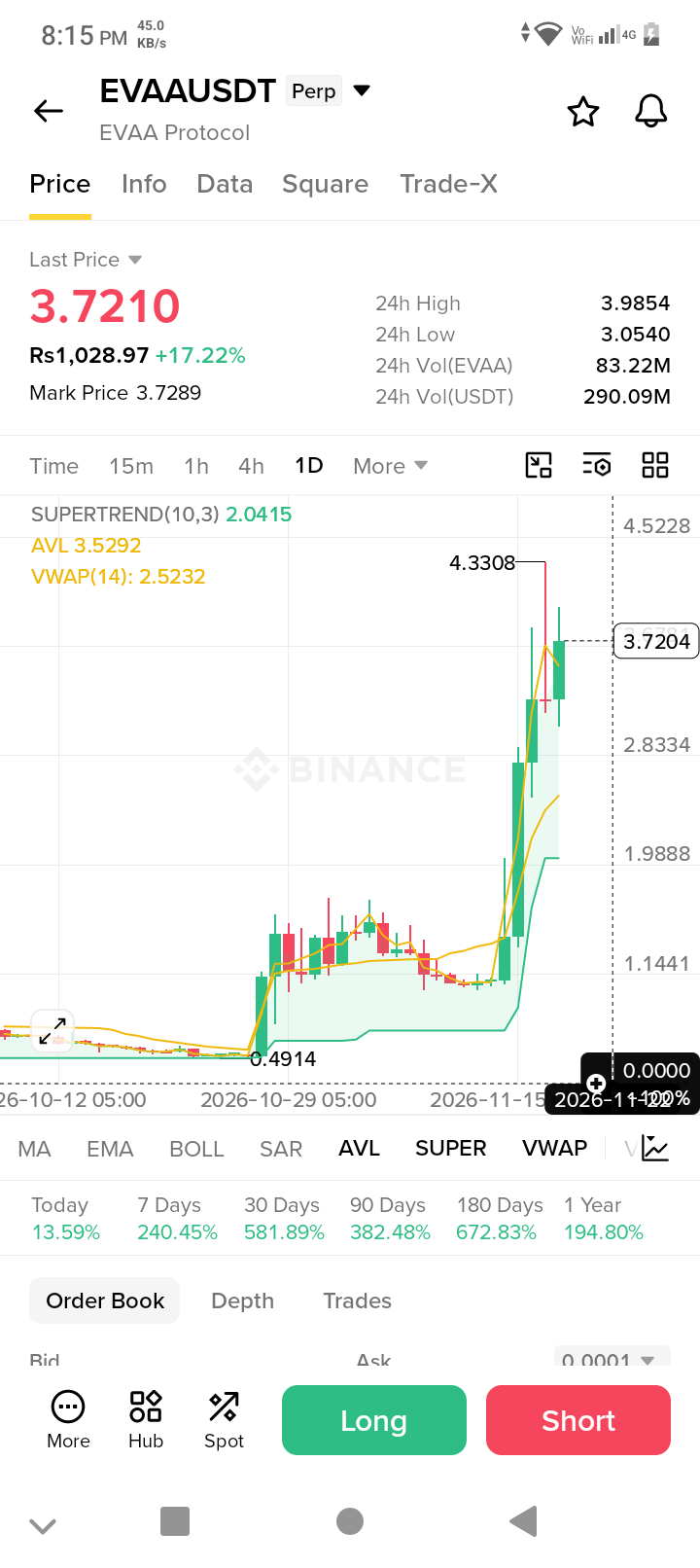
$EVAA Evaa touch soon $.5 mark my words open big Long here thanks me later ..
$PIPPIN $MMT
$EVAA Evaa touch soon $.5 mark my words open big Long here thanks me later ..
$PIPPIN $MMT
$PIPPIN $MMT
3
4
1.9k
·
--
$SOL open big long here
now at 75
tp126
$HUMA # $SOL
{spot}(SOLUSDT)
$SOL open big long here
now at 75
tp126
$HUMA # $SOL
now at 75
tp126
$HUMA # $SOL
33
·
--
$EVAA
> 🔥 EVAAUSDT Perp - Short Trade in Profit 🔥
>
> Entry: 3.5459
> Current Price: 3.1891
> PNL: +0.32 USDT (+44.75%)
> Leverage: Cross 4x
> #EVAA #Crypto #Futures #ShortTrade
$EVAA #$ICP #BinanceSquareFamily
$EVAA
> 🔥 EVAAUSDT Perp - Short Trade in Profit 🔥
>
> Entry: 3.5459
> Current Price: 3.1891
> PNL: +0.32 USDT (+44.75%)
> Leverage: Cross 4x
> #EVAA #Crypto #Futures #ShortTrade
$EVAA #$ICP #BinanceSquareFamily
> 🔥 EVAAUSDT Perp - Short Trade in Profit 🔥
>
> Entry: 3.5459
> Current Price: 3.1891
> PNL: +0.32 USDT (+44.75%)
> Leverage: Cross 4x
> #EVAA #Crypto #Futures #ShortTrade
$EVAA #$ICP #BinanceSquareFamily
2
3
979
·
--
zec open big Long here tp$1500 $EVAA
{future}(EVAAUSDT)
$HUMA
{future}(HUMAUSDT)
$ZEC
{future}(ZECUSDT)
zec open big Long here tp$1500 $EVAA
$HUMA
$ZEC
$HUMA
$ZEC
3
3
1.3k
·
--
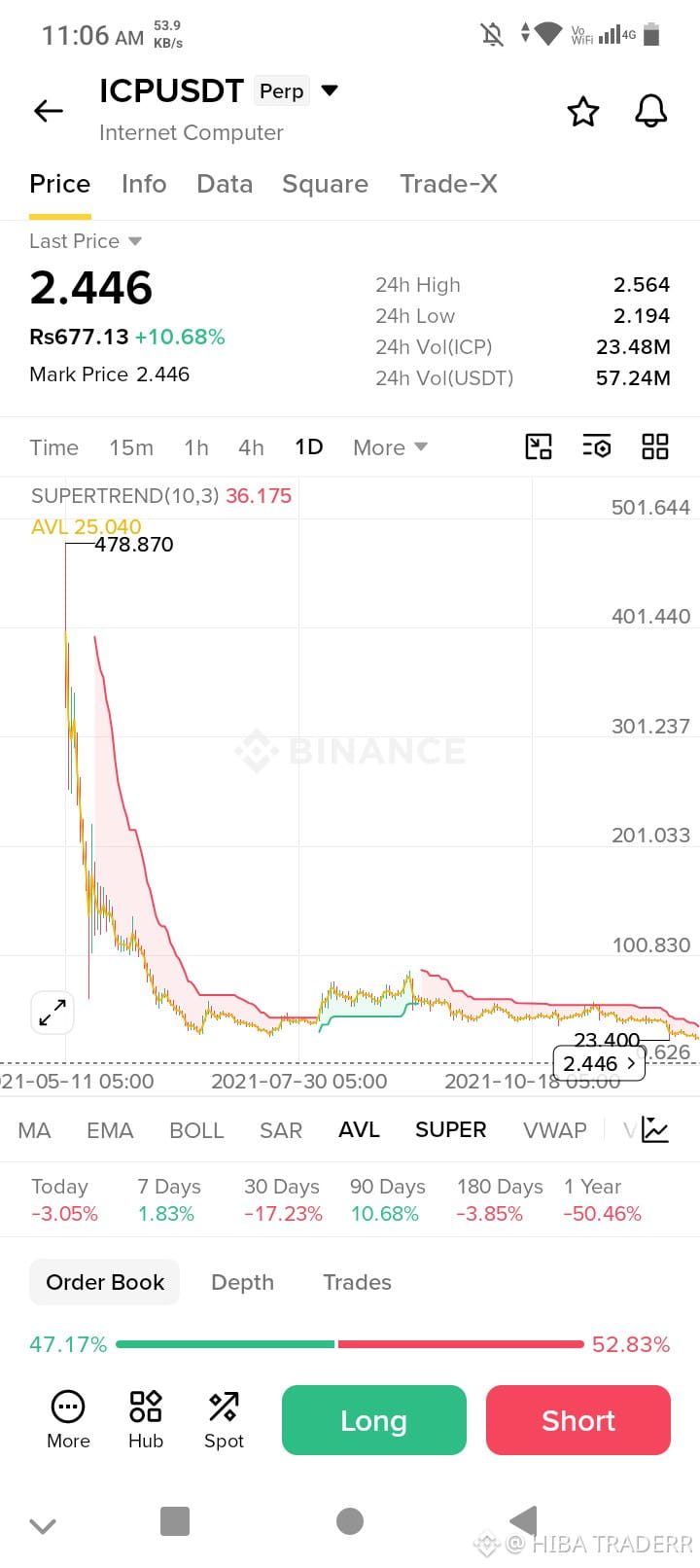
$ICP From $478.87 To Just $2.446! Is A Legendary Comeback Loading?😱
🎯 Speculative Target: $485 👀💥💹
#BinanceSquareTalks #InternetComputer #BinanceSquareFamily
{spot}(ICPUSDT)
$ICP From $478.87 To Just $2.446! Is A Legendary Comeback Loading?😱
🎯 Speculative Target: $485 👀💥💹
#BinanceSquareTalks #InternetComputer #BinanceSquareFamily
🎯 Speculative Target: $485 👀💥💹
#BinanceSquareTalks #InternetComputer #BinanceSquareFamily
11
·
--
$EVAA now I shorted it at above $3 and my target is $2.2
{future}(CRCLUSDT)
$EVAA now I shorted it at above $3 and my target is $2.2
1
11
·
--
*$QNT / USDT - LONG SETUP 🚀*
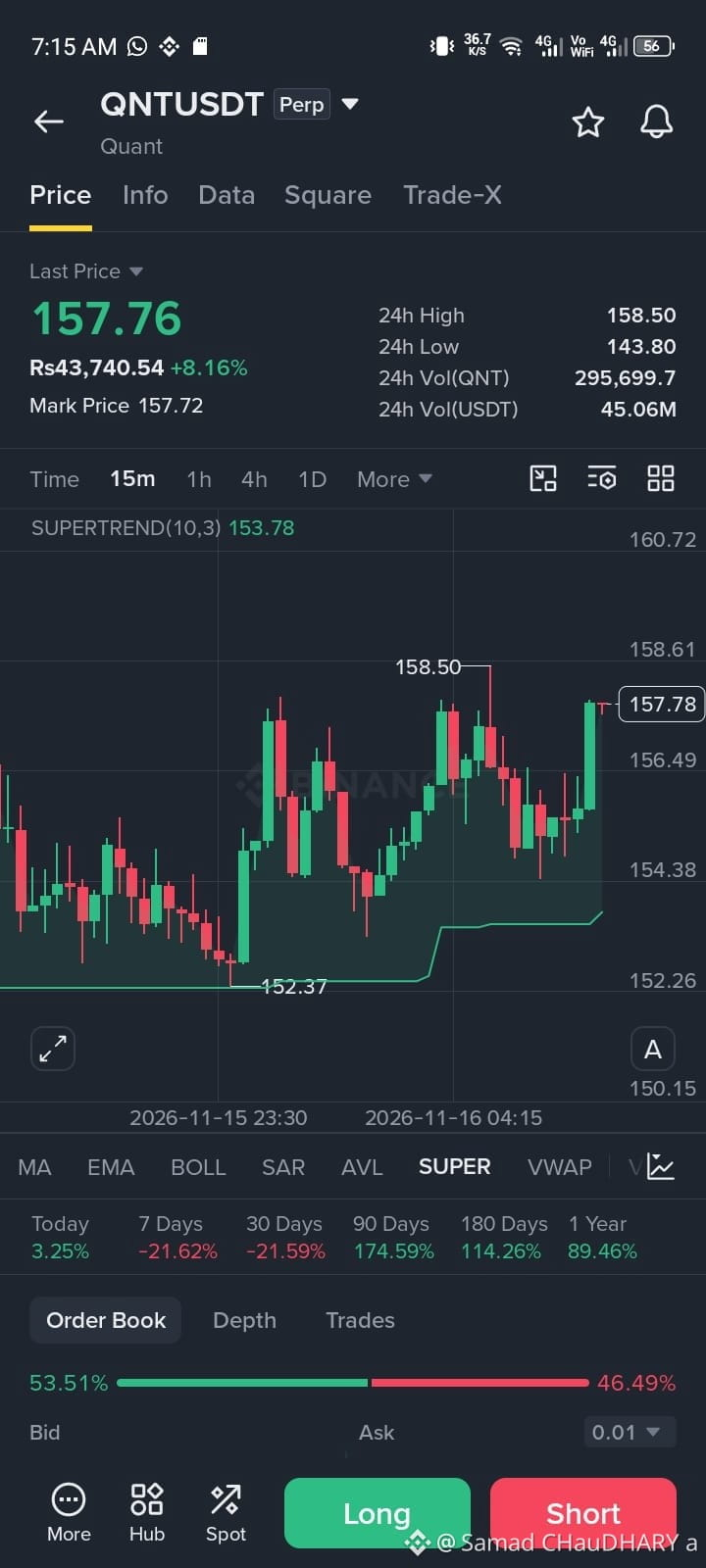
$QNT bounced strongly from 152.37 and is now trading at 157.76. Supertrend (10,3) has flipped bullish at 153.78. Buyers are in control.
*Setup:*
*Entry:* 154.00 - 158.00 (CMP / On Dip)
*Stop Loss:* 148.50
*Target 1:* 170.00
*Target 2:* 185.00
*Target 3:* 200.00 🎯
*$QNT / USDT - LONG SETUP 🚀*
$QNT bounced strongly from 152.37 and is now trading at 157.76. Supertrend (10,3) has flipped bullish at 153.78. Buyers are in control.
*Setup:*
*Entry:* 154.00 - 158.00 (CMP / On Dip)
*Stop Loss:* 148.50
*Target 1:* 170.00
*Target 2:* 185.00
*Target 3:* 200.00 🎯
$QNT bounced strongly from 152.37 and is now trading at 157.76. Supertrend (10,3) has flipped bullish at 153.78. Buyers are in control.
*Setup:*
*Entry:* 154.00 - 158.00 (CMP / On Dip)
*Stop Loss:* 148.50
*Target 1:* 170.00
*Target 2:* 185.00
*Target 3:* 200.00 🎯
1
138
·
--
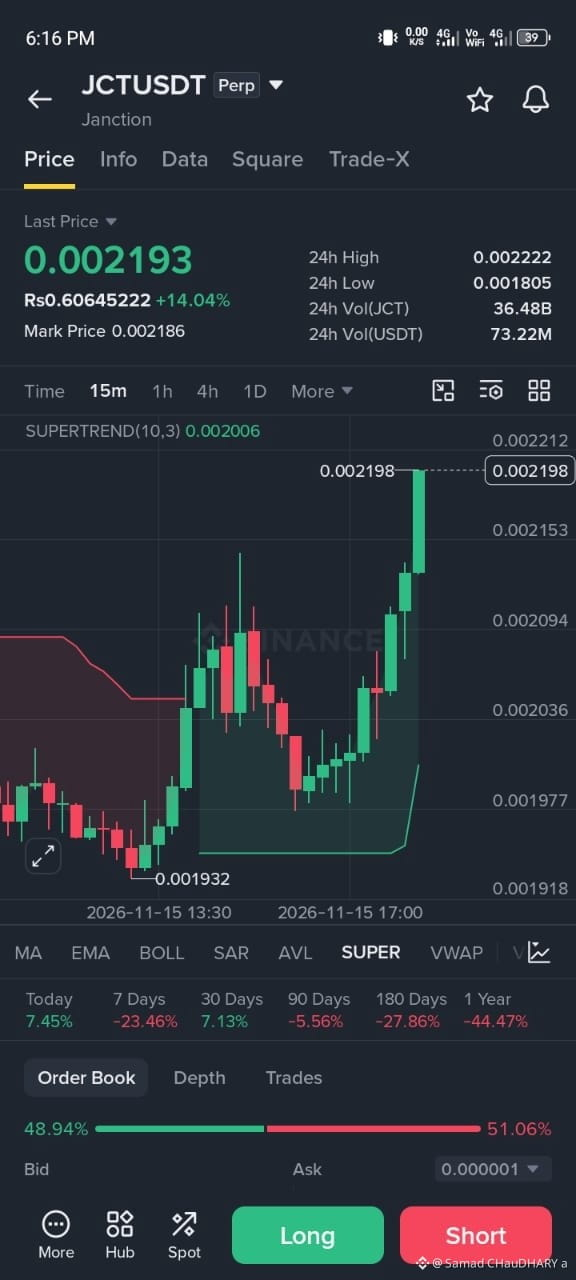
JCT preparing something big I'm watching closely use tight stop lose and join this move stop lose 0.0020
Tp 0.0025 0.00300 0.0035
JCT preparing something big I'm watching closely use tight stop lose and join this move stop lose 0.0020
Tp 0.0025 0.00300 0.0035
Tp 0.0025 0.00300 0.0035
3
1
745
·
--
$BTC
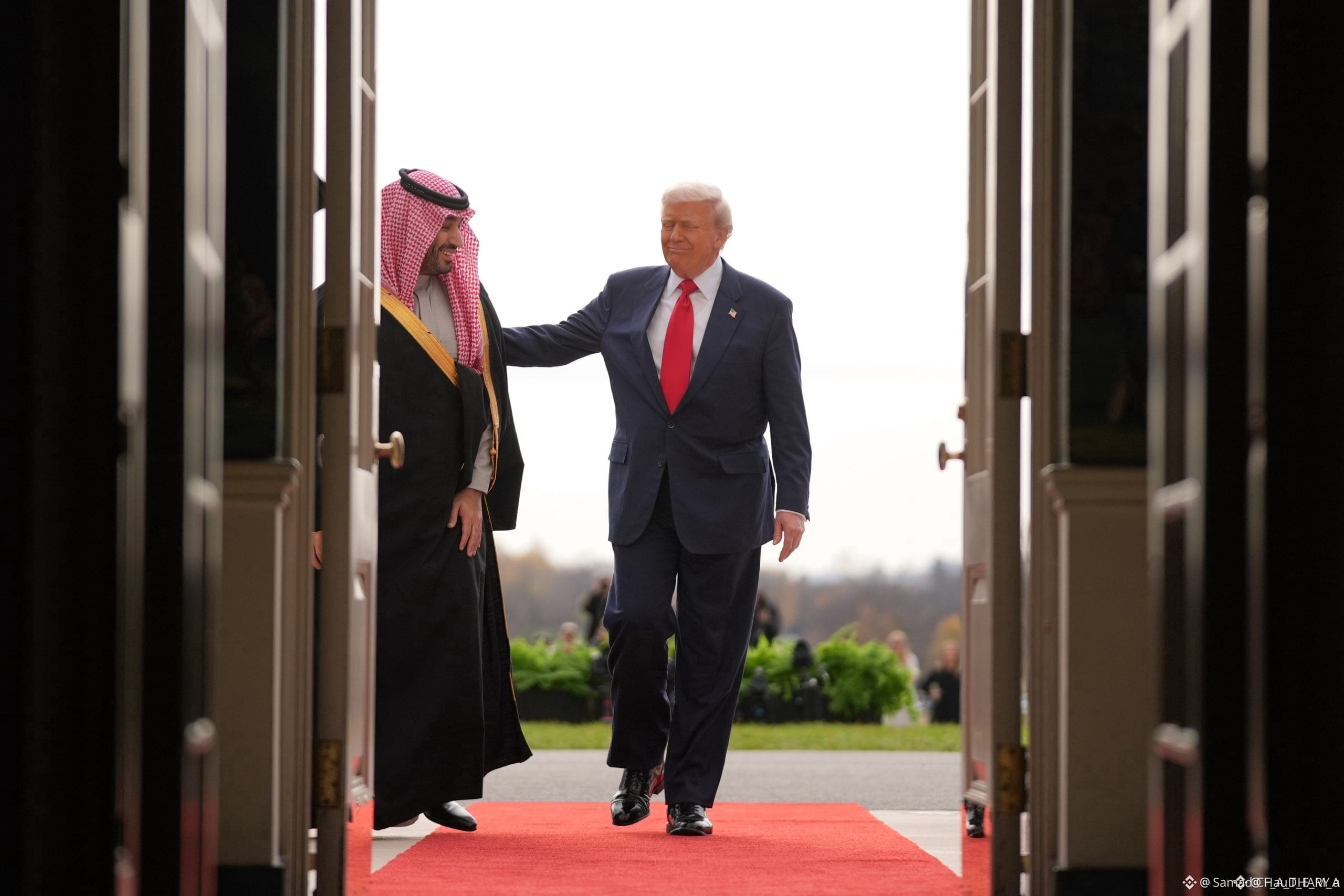
*Saudi Arabia is unhappy with the US over air defence.*
Saudi Arabia is under attack from Houthi drones and missiles from Yemen. Last week an attack on King Khalid Airport in Riyadh killed 13 people and injured more than 300.
Saudi media says there have been about 12 attacks on Riyadh this month alone.
*What the reports say:*
- Saudi officials have started an investigation into why their air defences failed. The Houthis fired drones first, then cruise and ballistic missiles that flew over 1,000km.
- Analysts say Saudi Arabia is very big and has too many airports, oil sites and pipelines to protect at once. There are not enough Patriot and THAAD batteries to cover everything.
- The US Army has a Patriot PAC-3 battery at Prince Sultan Air Base. That base is protected, but Riyadh and Dammam airports are not covered by the US system.
- US fighter jets at Prince Sultan are now patrolling the Persian Gulf and the Strait of Hormuz because of the war with Iran, not doing combat air patrols over Saudi cities.
- Saudi Arabia wants America to do more. So far the US has only given intelligence, target information and planning help, but has not carried out its own strikes on the Houthis.
President Trump said on Saturday he is looking at US strikes against the Houthis and said on Monday: "You'll find out soon" when asked if the US will defend Saudi Arabia.
King Khalid Airport is closed until Oct 18. Flights are being diverted to Jeddah.
1
81
·
--
$TRUMP
Donald Trump has made a deal to buy millions of tonnes of diesel from Russia. He says it will bring fuel prices down in America. Diesel in the US is very expensive right now.
The UK Government says it does not support the deal.
Defence Secretary Wes Streeting told the BBC on Sunday:
> "We don't support that decision. We are strengthening sanctions against Russia."
He said the US is doing it because of the mid-term elections in November and because people are struggling with the cost of living. He said Britain and its allies should be putting more pressure on Russia, not less.
*What about Ukraine?*
President Zelensky said the deal will give Russia money to buy more weapons.
Trump said Ukraine should replace Zelensky with someone who is more willing to make peace with Russia.
Streeting defended Zelensky. He said:
> "We stand with Ukraine. We stand with President Zelenskyy."
He said only Ukrainians should decide who their leader is.
*The Conservatives also disagree with Trump.*
Shadow Chancellor Andrew Griffith said Trump is "wrong" about Zelensky and that the diesel deal "sends out all the wrong messages".
There is now a clear split between Washington and London. The US wants cheaper fuel. The UK says it is focused on sanctions and warns that NATO must be ready in case Russia attacks by 2030.
2
734
·
--
#bedrock $BR
Nobody would fly a jet through a storm without a copilot.
So why are we trying to navigate Bitcoin Capital on our own?
A few years back, managing Bitcoin was simple.
Buy BTC.
Hold BTC.
Wait.
Today?
Bitcoin Capital is spreading across:
🏦 Lending Markets
🌎 RWA Opportunities
💳 Credit Markets
📈 Yield Strategies
🔗 Multiple Chains
And the complexity just keeps growing.
The rise of Bitcoin Treasury companies like Strategy, Metaplanet, Semler Scientific, and Twenty One Capital proves one thing:
The future isn’t just about owning Bitcoin.
It’s about managing Bitcoin Capital properly.
That’s why Bedrock 2.0 caught my attention.
Not because it’s another yield protocol.
But because it’s building an Intelligent Yield Engine for Bitcoin Capital.
At its heart is uniBTC — a unified entry point designed to connect Bitcoin capital across multiple opportunities through one capital layer.
Because the challenge ahead isn’t finding more opportunities.
It’s navigating them.
That’s where Intelligent Routing comes in.
And that’s where BRClaw steps up.
Think of it as an AI Copilot for Bitcoin Capital.
🧠 Analyses opportunities
🧠 Evaluates risk
🧠 Compares strategies
🧠 Supports smarter allocation decisions
As Bitcoin Capital grows larger and more fragmented, decision-making becomes the real bottleneck.
Not access.
Not yield.
Decision-making.
Meanwhile, Bedrock’s Modular Vault Framework opens the door to:
🏦 Institutional-Grade Vaults
🌎 RWA Strategies
💳 Lending & Credit Markets
📈 Advanced Yield Opportunities
The future winner in BTCFi might not be the investor who finds the highest APY.
It might be the investor who makes the best decisions.
#Bedrock @Bedrock $BR
⚠️ The next Bitcoin race may not be about who owns the most Bitcoin. It may be about who navigates Bitcoin Capital the smartest.
#@Bedrock

2
2
75
·
--
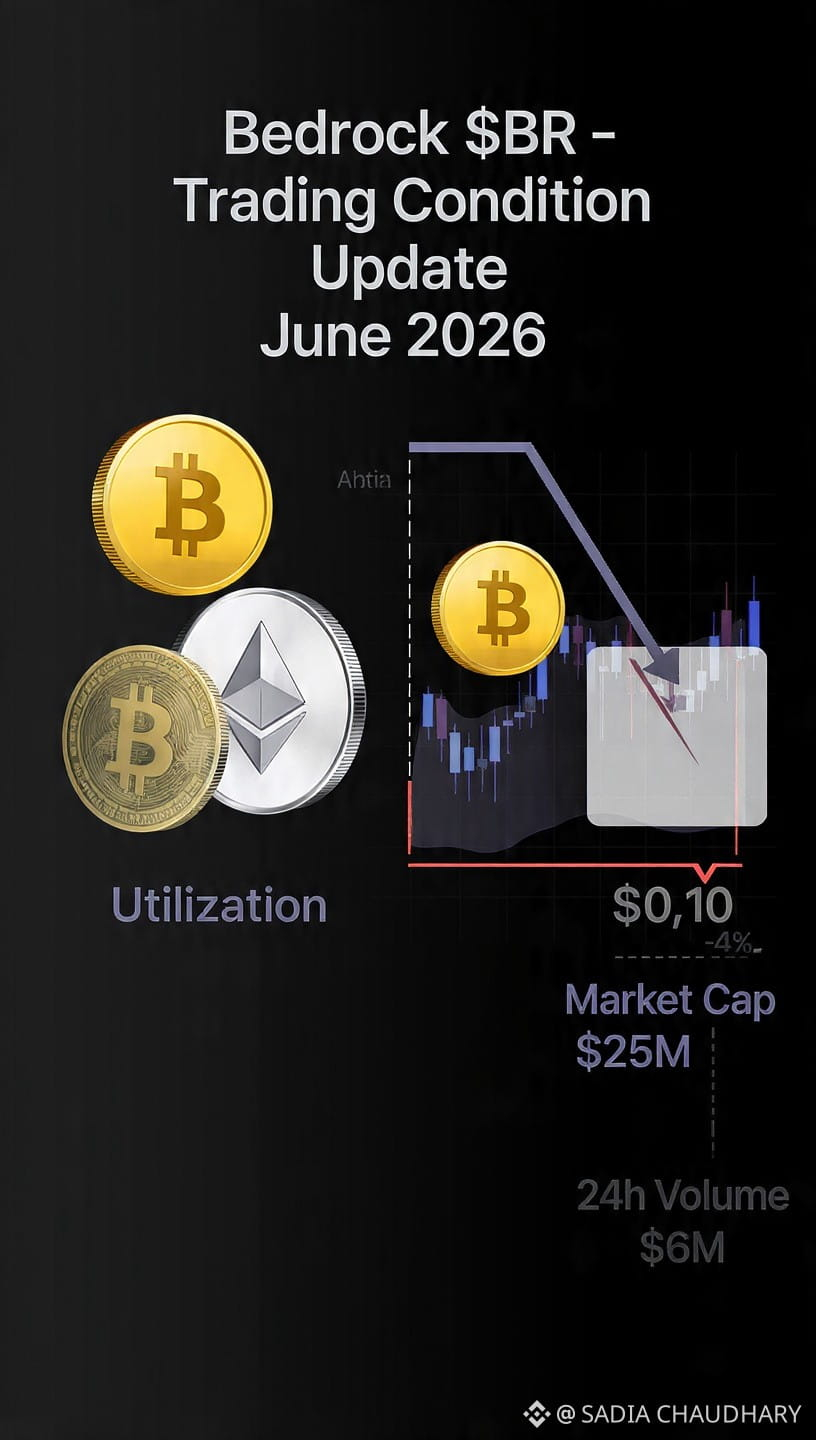
#bedrock $BR #Bedrock’s price is sitting around $0.10 today, and it’s been a bit rough lately. Over the last 24 hours it’s dropped about 4%, trading between $0.097 and $0.108 on Bybit. The market cap’s roughly $25m, with about $6m changing hands in a day. It’s ranked just outside the top 600 on CoinGecko, so not huge liquidity but enough to trade.
The past week hasn’t been kind either - down around 6% while the rest of the crypto market stayed flat. It’s still well off its all-time high of $0.25, more than 50% below it. Volume does spike now and then, but generally it feels quiet.
Concept-wise Bedrock still makes sense. Instead of letting BTC and ETH just sit there as “trophies”, it tries to put them to work through BTCFi and restaking. That’s the “utilization over exposure” story you mentioned. But price hasn’t caught up yet. Right now it looks like it’s consolidating around the 10 cent mark. If Bitcoin narratives pick up again and volume returns, that’s when it could move.
As always though, crypto’s volatile. This isn’t financial advice - just what the charts are showing. Do your own checks before putting money in.
@Bedrock
152
·
--
@Bedrock
locking some BR for veBR last week felt straightforward. the dashboard looked clean. reserves verified. mint confirmed.
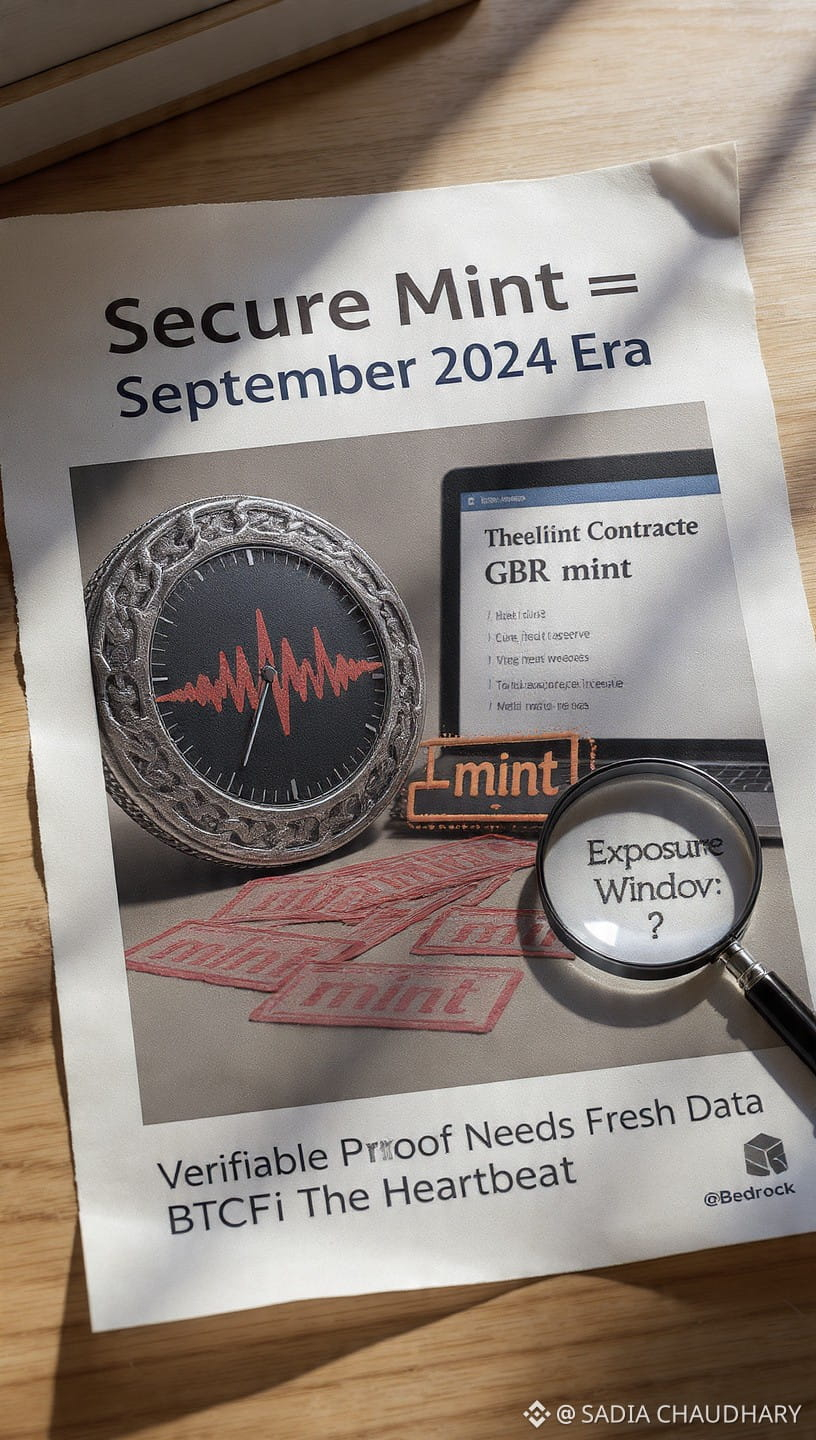
then i started reading how the Secure Mint actually works or, wait, more specifically how the oracle update behind it works. Chainlink DONs publish reserve data on a heartbeat schedule. not per block. the mint contract checks the most recent published figure. if several large mints hit between heartbeat updates, each one clears against the same reserve reading. 🔍
the integration is real. i'm not dismissing it having on-chain reserve verification embedded inside the mint transaction is genuinely better than anything the september 2024 exploit era had. that's a meaningful upgrade.
but luna looked fine too, until redemption velocity outpaced the mechanism designed to protect it.
there is a version of this where i'm wrong. if chainlink's heartbeat interval on bedrock's reserve feed is tight enough under one minute the exposure window is negligible. that data would change my reading entirely.
bedrock hasn't published the feed's update parameters publicly. its absence means the strongest security claim in BTCFi 2.0 is currently operating on assumed freshness which is a strange place to be for a protocol whose entire value proposition is replacing idle bitcoin with verifiable, on-chain proof.
#bedrock $BR
74
·
--
##bedrock $BR @Bedrock
locking some BR for veBR last week felt straightforward. the dashboard looked clean. reserves verified. mint confirmed.
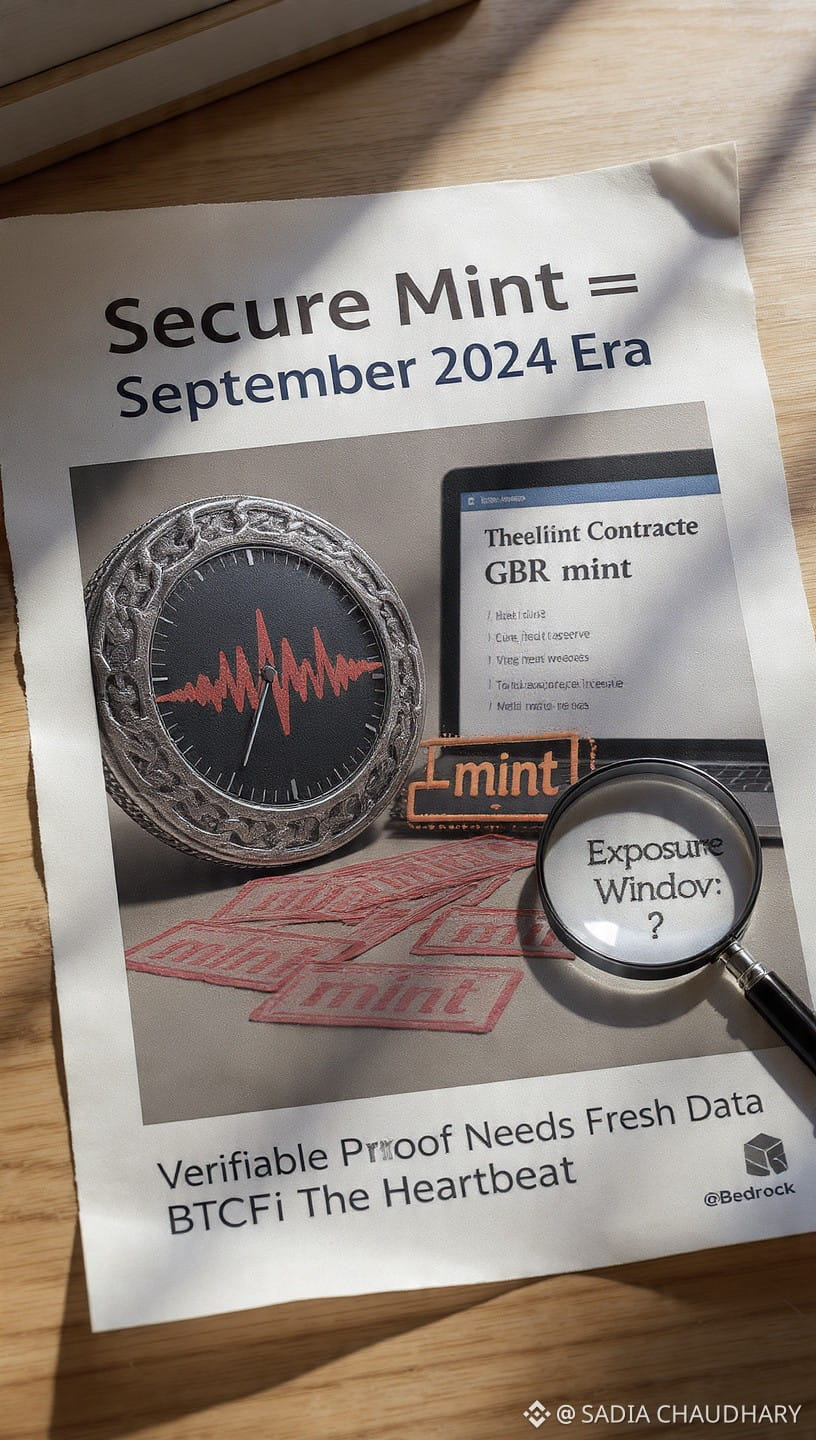
then i started reading how the Secure Mint actually works or, wait, more specifically how the oracle update behind it works. Chainlink DONs publish reserve data on a heartbeat schedule. not per block. the mint contract checks the most recent published figure. if several large mints hit between heartbeat updates, each one clears against the same reserve reading. 🔍
the integration is real. i'm not dismissing it having on-chain reserve verification embedded inside the mint transaction is genuinely better than anything the september 2024 exploit era had. that's a meaningful upgrade.
but luna looked fine too, until redemption velocity outpaced the mechanism designed to protect it.
there is a version of this where i'm wrong. if chainlink's heartbeat interval on bedrock's reserve feed is tight enough under one minute the exposure window is negligible. that data would change my reading entirely.
bedrock hasn't published the feed's update parameters publicly. its absence means the strongest security claim in BTCFi 2.0 is currently operating on assumed freshness which is a strange place to be for a protocol whose entire value proposition is replacing idle bitcoin with verifiable, on-chain proof.
#bedrock $BR
1
85
·
--
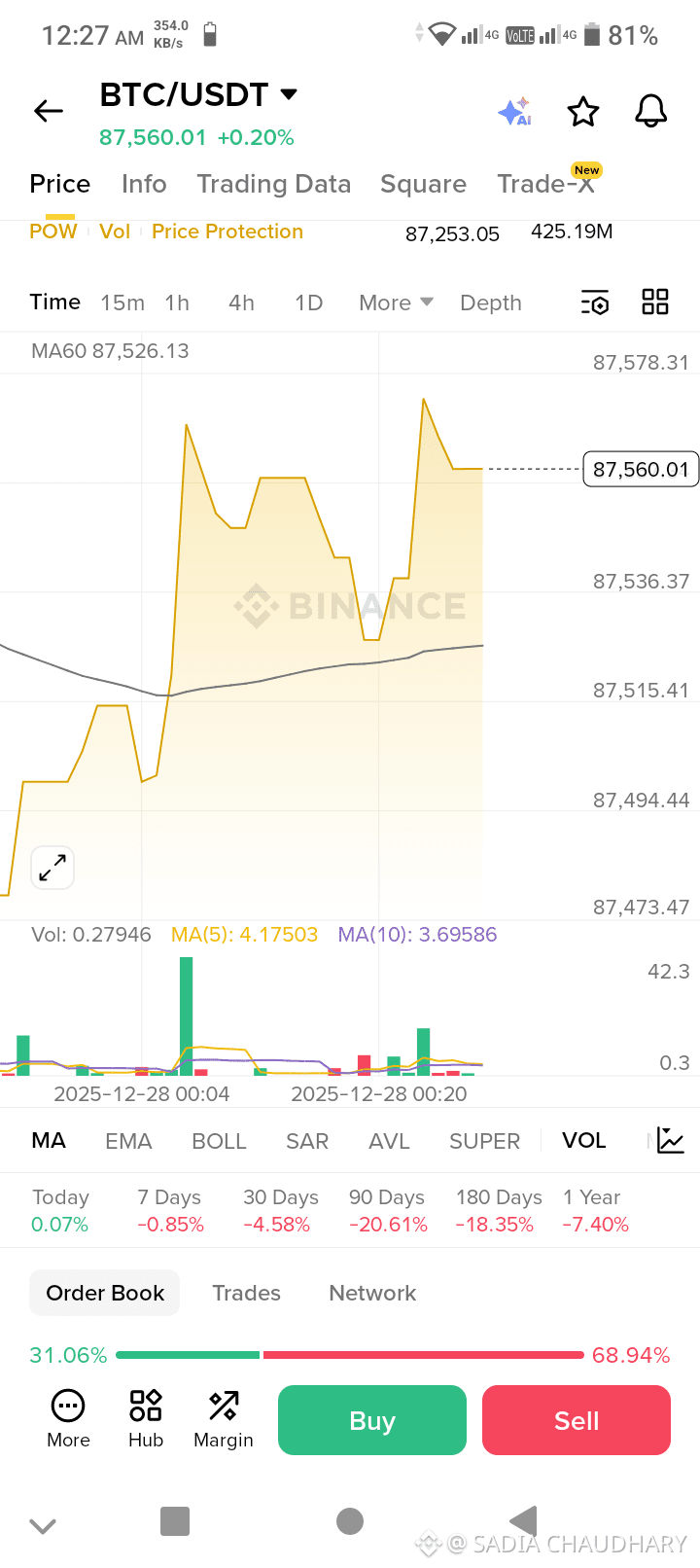
Here's the latest on BTC USDT:
- *Current Price*: $87,526
- *Market Cap*: $1.75 trillion
- *24-hour Change*: +0.10%
- *7-day Change*: -0.77%
- *1-year Change*: -8.63% ¹ ² ³
*Price Predictions:*
- *Dec 28, 2025*: $88,375
- *Dec 29, 2025*: $90,321
- *Jan 01, 2026*: $95,541
- *2026 High*: $95,133
*Technical Analysis:*
- *RSI (14)*: 42.97 (Neutral)
- *50-Day SMA*: $92,133 (Sell)
- *200-Day SMA*: $100,750 (Sell)
Keep in mind that cryptocurrency markets are highly volatile, and predictions are subject to change.
Would you like to know more about BTC USDT's price trends or technical indicators?
$BTC
10
207
Log in to explore more content
Join global crypto users on Binance Square
⚡️ Get latest and useful information about crypto.
💬 Trusted by the world’s largest crypto exchange.
👍 Discover real insights from verified creators.
Email / Phone number
Trending Topics
NvidiaBeatsEstimatesWith$130BQ4Outlook
35,522 views
241 Discussing
Nvidia Beats With $115.8 Billion in Revenue, Guides to $130 Billion and Adds $150 Billion Buyback
Binance News
·71 Likes
·48k views
AnthropicIPOPriceCouldExceed$80
38,597 views
211 Discussing
RussiaCentralBankAddsAlfaBankToCryptoExchangeRegister
1,282 views
24 Discussing