

babulivo
154 Posts

babulivo
Report
Block User
49 Following
52 Followers
212 Liked
Posts
All
Quotes
·
--
Investment Strategy: Three Layers of the Portfolio
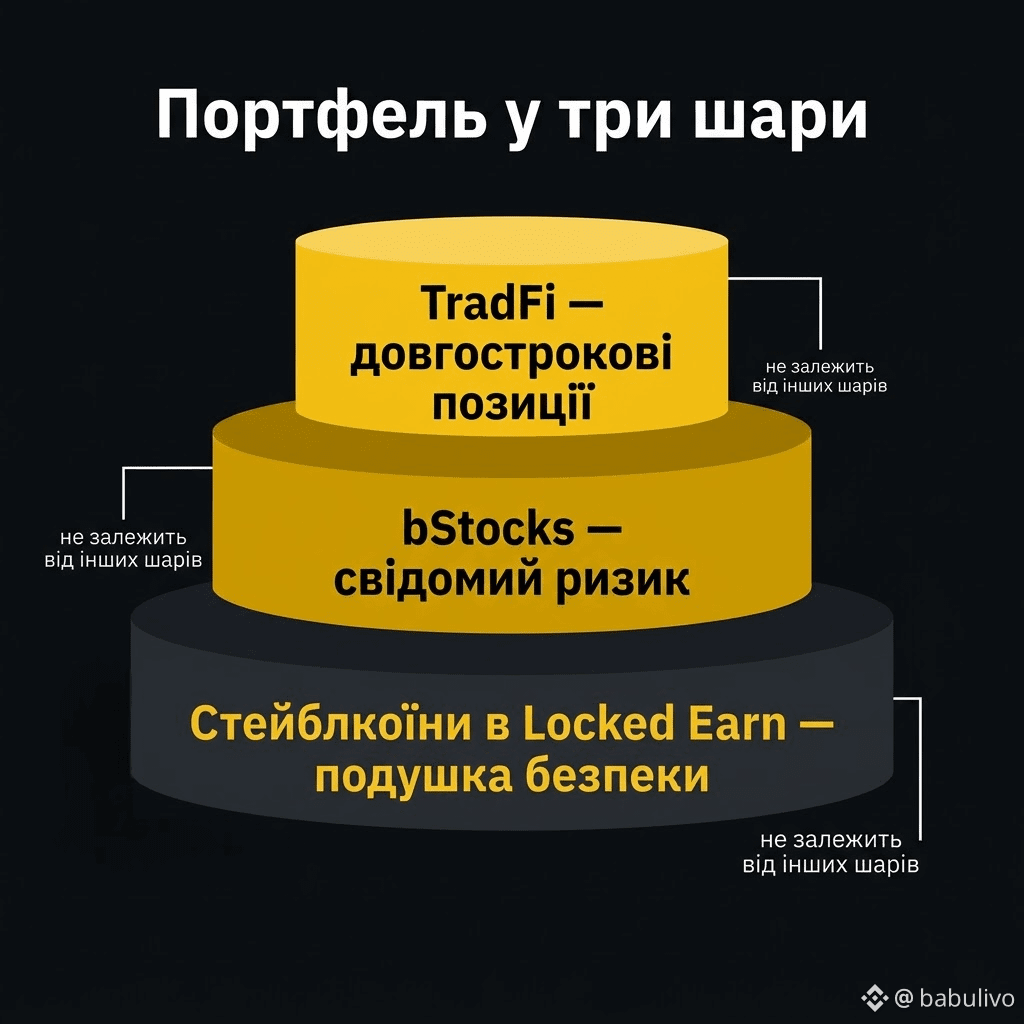
I started looking at my portfolio not as a single list of assets, but as three layers with different purposes.
> First layer: stablecoins in Locked Earn—as a safety net that simply grows slowly in the background.
> Second layer: bStocks with a few volatile names, where I consciously take risk for the potential of price movement.
> Third layer: TradFi positions for the long term, which don’t require daily attention.
Each layer has its role, and none interferes with the others: the safety net doesn’t depend on how the volatile part behaves.
What does your allocation usually look like? Do you have a deliberate structure, or is everything in one bucket?
Investment Strategy: Three Layers of the Portfolio
I started looking at my portfolio not as a single list of assets, but as three layers with different purposes.
> First layer: stablecoins in Locked Earn—as a safety net that simply grows slowly in the background.
> Second layer: bStocks with a few volatile names, where I consciously take risk for the potential of price movement.
> Third layer: TradFi positions for the long term, which don’t require daily attention.
Each layer has its role, and none interferes with the others: the safety net doesn’t depend on how the volatile part behaves.
What does your allocation usually look like? Do you have a deliberate structure, or is everything in one bucket?
I started looking at my portfolio not as a single list of assets, but as three layers with different purposes.
> First layer: stablecoins in Locked Earn—as a safety net that simply grows slowly in the background.
> Second layer: bStocks with a few volatile names, where I consciously take risk for the potential of price movement.
> Third layer: TradFi positions for the long term, which don’t require daily attention.
Each layer has its role, and none interferes with the others: the safety net doesn’t depend on how the volatile part behaves.
What does your allocation usually look like? Do you have a deliberate structure, or is everything in one bucket?
3
321
·
--
Experience using: a parallel test of three products
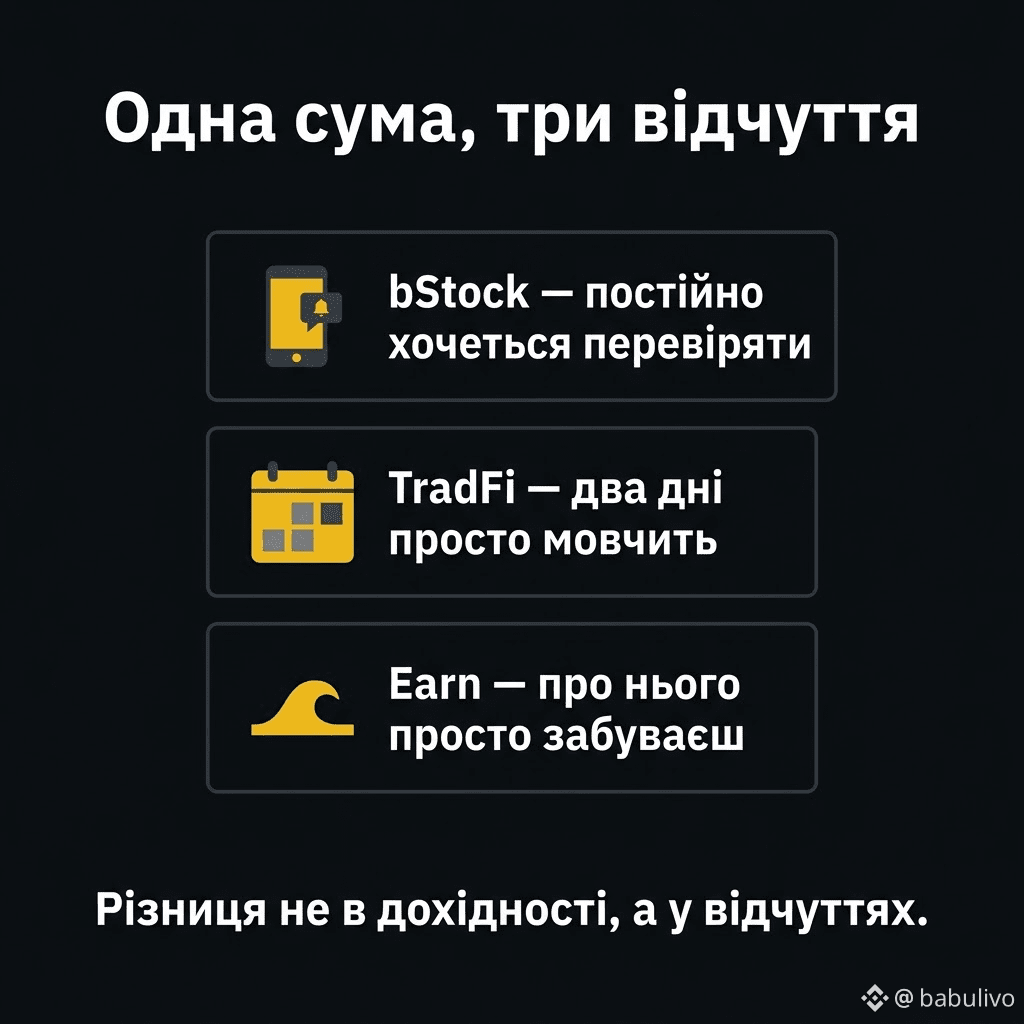
I decided to test it on myself: I invested the same amount in parallel in bStock Apple, TradFi Apple, and Simple Earn on USDT, and checked how things felt differently after just a week.
bStock: you could enter and exit at any moment, including Saturday evening. The TradFi position over the same week simply "stayed silent" for two days in a row while the market was closed. Earn on USDT—absolutely no emotions, just a steady small increase every day, with no need to check anything.
What surprised me most wasn’t the profitability, but the difference in feelings: bStock makes you want to constantly check the chart, while Earn is the complete opposite—you just forget about it.
Which of the three types of assets makes you want to keep looking at the app the most?
Experience using: a parallel test of three products
I decided to test it on myself: I invested the same amount in parallel in bStock Apple, TradFi Apple, and Simple Earn on USDT, and checked how things felt differently after just a week.
bStock: you could enter and exit at any moment, including Saturday evening. The TradFi position over the same week simply "stayed silent" for two days in a row while the market was closed. Earn on USDT—absolutely no emotions, just a steady small increase every day, with no need to check anything.
What surprised me most wasn’t the profitability, but the difference in feelings: bStock makes you want to constantly check the chart, while Earn is the complete opposite—you just forget about it.
Which of the three types of assets makes you want to keep looking at the app the most?
I decided to test it on myself: I invested the same amount in parallel in bStock Apple, TradFi Apple, and Simple Earn on USDT, and checked how things felt differently after just a week.
bStock: you could enter and exit at any moment, including Saturday evening. The TradFi position over the same week simply "stayed silent" for two days in a row while the market was closed. Earn on USDT—absolutely no emotions, just a steady small increase every day, with no need to check anything.
What surprised me most wasn’t the profitability, but the difference in feelings: bStock makes you want to constantly check the chart, while Earn is the complete opposite—you just forget about it.
Which of the three types of assets makes you want to keep looking at the app the most?
3
5
809
·
--
Tech stocks have been moving very strongly lately; sometimes they move by 5–10% in a day.
The classic stock market doesn’t operate on weekends. So any movement that accumulated over two days is released all at once on Monday.
bStocks trades 24/7, so this waiting period just doesn’t exist. The price moves continuously, without pauses on weekends.
Have you ever seen that a stock changed its price dramatically specifically on Monday morning?
Tech stocks have been moving very strongly lately; sometimes they move by 5–10% in a day.
The classic stock market doesn’t operate on weekends. So any movement that accumulated over two days is released all at once on Monday.
bStocks trades 24/7, so this waiting period just doesn’t exist. The price moves continuously, without pauses on weekends.
Have you ever seen that a stock changed its price dramatically specifically on Monday morning?
The classic stock market doesn’t operate on weekends. So any movement that accumulated over two days is released all at once on Monday.
bStocks trades 24/7, so this waiting period just doesn’t exist. The price moves continuously, without pauses on weekends.
Have you ever seen that a stock changed its price dramatically specifically on Monday morning?

1
3
·
--
Practical case: $500 for three products
Let’s imagine a specific scenario: you have $500 and want to try bStocks, TradFi, and Earn at once, not just pick one.
For example: $200 in bStock for a volatile stock like Nvidia or Tesla, where you want to catch price movement. $200 in TradFi for something more stable and long-term, with no need to constantly check the chart. And $100 in Flexible Earn on a stablecoin, like an emergency cushion you can withdraw instantly if you need the money somewhere.
None of the three parts depends on the others: a volatile position won’t affect your safety cushion, and the cushion won’t interfere with the riskier part working.
Would you distribute $500 the same way, or would you do it differently?
Practical case: $500 for three products
Let’s imagine a specific scenario: you have $500 and want to try bStocks, TradFi, and Earn at once, not just pick one.
For example: $200 in bStock for a volatile stock like Nvidia or Tesla, where you want to catch price movement. $200 in TradFi for something more stable and long-term, with no need to constantly check the chart. And $100 in Flexible Earn on a stablecoin, like an emergency cushion you can withdraw instantly if you need the money somewhere.
None of the three parts depends on the others: a volatile position won’t affect your safety cushion, and the cushion won’t interfere with the riskier part working.
Would you distribute $500 the same way, or would you do it differently?
Let’s imagine a specific scenario: you have $500 and want to try bStocks, TradFi, and Earn at once, not just pick one.
For example: $200 in bStock for a volatile stock like Nvidia or Tesla, where you want to catch price movement. $200 in TradFi for something more stable and long-term, with no need to constantly check the chart. And $100 in Flexible Earn on a stablecoin, like an emergency cushion you can withdraw instantly if you need the money somewhere.
None of the three parts depends on the others: a volatile position won’t affect your safety cushion, and the cushion won’t interfere with the riskier part working.
Would you distribute $500 the same way, or would you do it differently?

2
104
·
--
I saw a high APR on Dual Investment and at first thought it was just a "better staking." Turns out, no :)
This is a product where you essentially sell an option. If your price prediction matches, you get a high yield in the asset you deposited. If not, you’re settled in another asset—often at a price that’s worse for you than the current market price.
So the high percentage isn’t a gift; it’s payment for the risk you take on. Simple staking and Dual Investment look similar in the interface, but they’re completely different mechanics with different risk profiles.
Many people go there just for the APR number, without even reading what "settlement in another asset" actually means.
Have you checked this point before entering Dual Investment?
I saw a high APR on Dual Investment and at first thought it was just a "better staking." Turns out, no :)
This is a product where you essentially sell an option. If your price prediction matches, you get a high yield in the asset you deposited. If not, you’re settled in another asset—often at a price that’s worse for you than the current market price.
So the high percentage isn’t a gift; it’s payment for the risk you take on. Simple staking and Dual Investment look similar in the interface, but they’re completely different mechanics with different risk profiles.
Many people go there just for the APR number, without even reading what "settlement in another asset" actually means.
Have you checked this point before entering Dual Investment?
This is a product where you essentially sell an option. If your price prediction matches, you get a high yield in the asset you deposited. If not, you’re settled in another asset—often at a price that’s worse for you than the current market price.
So the high percentage isn’t a gift; it’s payment for the risk you take on. Simple staking and Dual Investment look similar in the interface, but they’re completely different mechanics with different risk profiles.
Many people go there just for the APR number, without even reading what "settlement in another asset" actually means.
Have you checked this point before entering Dual Investment?
2
125
·
--
when will Trump and his family launch some new project already so we can go to ATX and I can at least get out to BU?
when will Trump and his family launch some new project already so we can go to ATX and I can at least get out to BU?
3
149
·
--
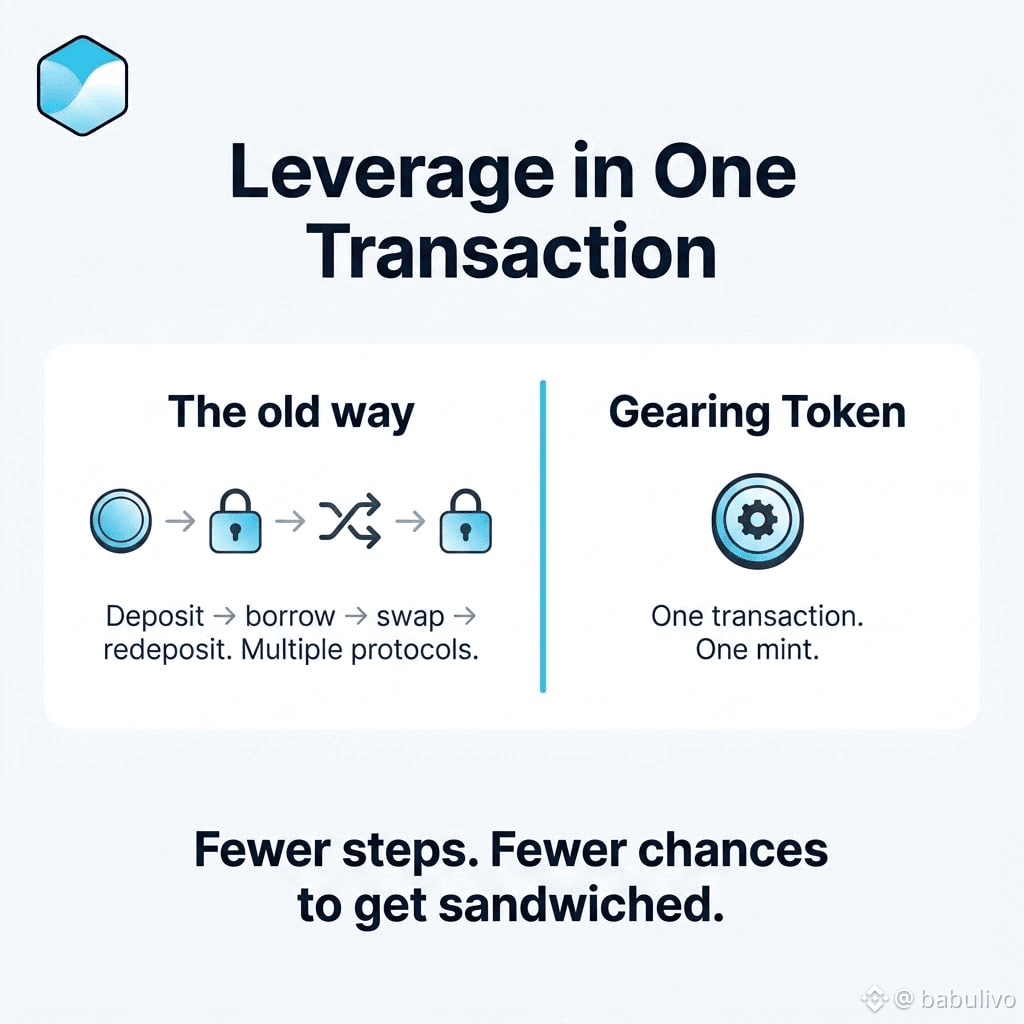
Normally getting leveraged exposure in DeFi means a whole sequence of manual steps : deposit collateral, borrow against it, swap the borrowed asset, redeposit, sometimes across two or three different protocols just to get one leveraged position open.
TermMax packages that entire sequence into something called a Gearing Token. One transaction, and the leverage process that would've taken multiple steps (and multiple chances to mess something up or get sandwiched) just happens as a single token mint.
Feels like the kind of thing that quietly removes a ton of the operational risk people don't talk about. Every extra manual step in a leverage loop is another spot where slippage or a failed transaction can wreck the position before it's even open.
Anyone here actually built a leverage position the old manual way across multiple protocols before? Curious how much of a pain it actually was compared to this.
#termmax @termmax
Normally getting leveraged exposure in DeFi means a whole sequence of manual steps : deposit collateral, borrow against it, swap the borrowed asset, redeposit, sometimes across two or three different protocols just to get one leveraged position open.
TermMax packages that entire sequence into something called a Gearing Token. One transaction, and the leverage process that would've taken multiple steps (and multiple chances to mess something up or get sandwiched) just happens as a single token mint.
Feels like the kind of thing that quietly removes a ton of the operational risk people don't talk about. Every extra manual step in a leverage loop is another spot where slippage or a failed transaction can wreck the position before it's even open.
Anyone here actually built a leverage position the old manual way across multiple protocols before? Curious how much of a pain it actually was compared to this.
#termmax @TermMax
TermMax packages that entire sequence into something called a Gearing Token. One transaction, and the leverage process that would've taken multiple steps (and multiple chances to mess something up or get sandwiched) just happens as a single token mint.
Feels like the kind of thing that quietly removes a ton of the operational risk people don't talk about. Every extra manual step in a leverage loop is another spot where slippage or a failed transaction can wreck the position before it's even open.
Anyone here actually built a leverage position the old manual way across multiple protocols before? Curious how much of a pain it actually was compared to this.
#termmax @TermMax
19
13
115
·
--
Verified
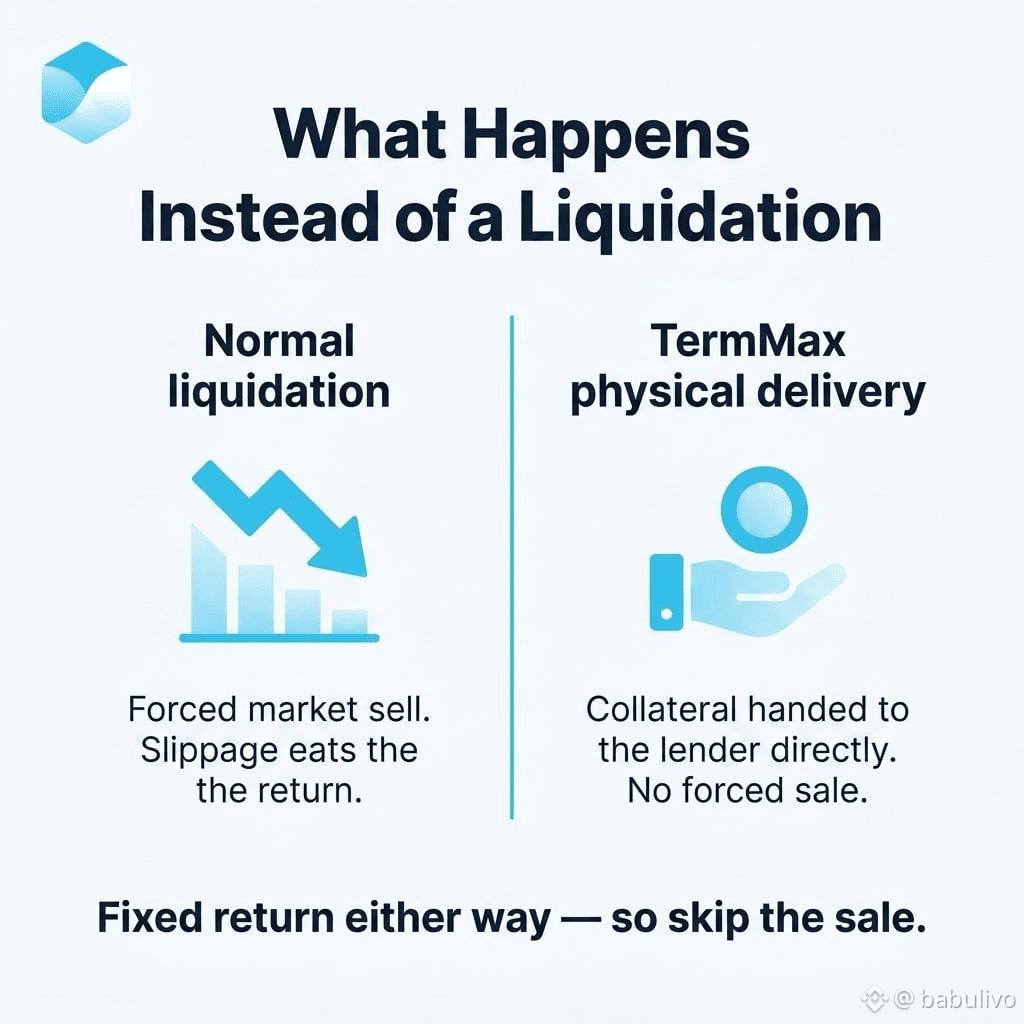
normally when a lending protocol runs into extreme volatility or thin liquidity, you know what happens : forced liquidation, collateral gets dumped on the open market, lender eats whatever slippage that creates
TermMax has this physical delivery mechanism I didn't know about until digging into the docs. instead of forcing a liquidation sale during bad conditions, the protocol just delivers the collateral itself directly to the lender as compensation. no forced market sell, no extra slippage from dumping into a thin order book
makes sense once you think about it -> the lender was promised a fixed return either way, so why route through a liquidation sale at all if you can just hand over the asset directly?
feels like a detail most people never think about until the exact moment they'd actually need it to work
anyone actually had this trigger for them, or is this more of a "good to know it exists" kind of feature?
#termmax @termmax
normally when a lending protocol runs into extreme volatility or thin liquidity, you know what happens : forced liquidation, collateral gets dumped on the open market, lender eats whatever slippage that creates
TermMax has this physical delivery mechanism I didn't know about until digging into the docs. instead of forcing a liquidation sale during bad conditions, the protocol just delivers the collateral itself directly to the lender as compensation. no forced market sell, no extra slippage from dumping into a thin order book
makes sense once you think about it -> the lender was promised a fixed return either way, so why route through a liquidation sale at all if you can just hand over the asset directly?
feels like a detail most people never think about until the exact moment they'd actually need it to work
anyone actually had this trigger for them, or is this more of a "good to know it exists" kind of feature?
#termmax @TermMax
TermMax has this physical delivery mechanism I didn't know about until digging into the docs. instead of forcing a liquidation sale during bad conditions, the protocol just delivers the collateral itself directly to the lender as compensation. no forced market sell, no extra slippage from dumping into a thin order book
makes sense once you think about it -> the lender was promised a fixed return either way, so why route through a liquidation sale at all if you can just hand over the asset directly?
feels like a detail most people never think about until the exact moment they'd actually need it to work
anyone actually had this trigger for them, or is this more of a "good to know it exists" kind of feature?
#termmax @TermMax
12
11
91
·
--
Verified
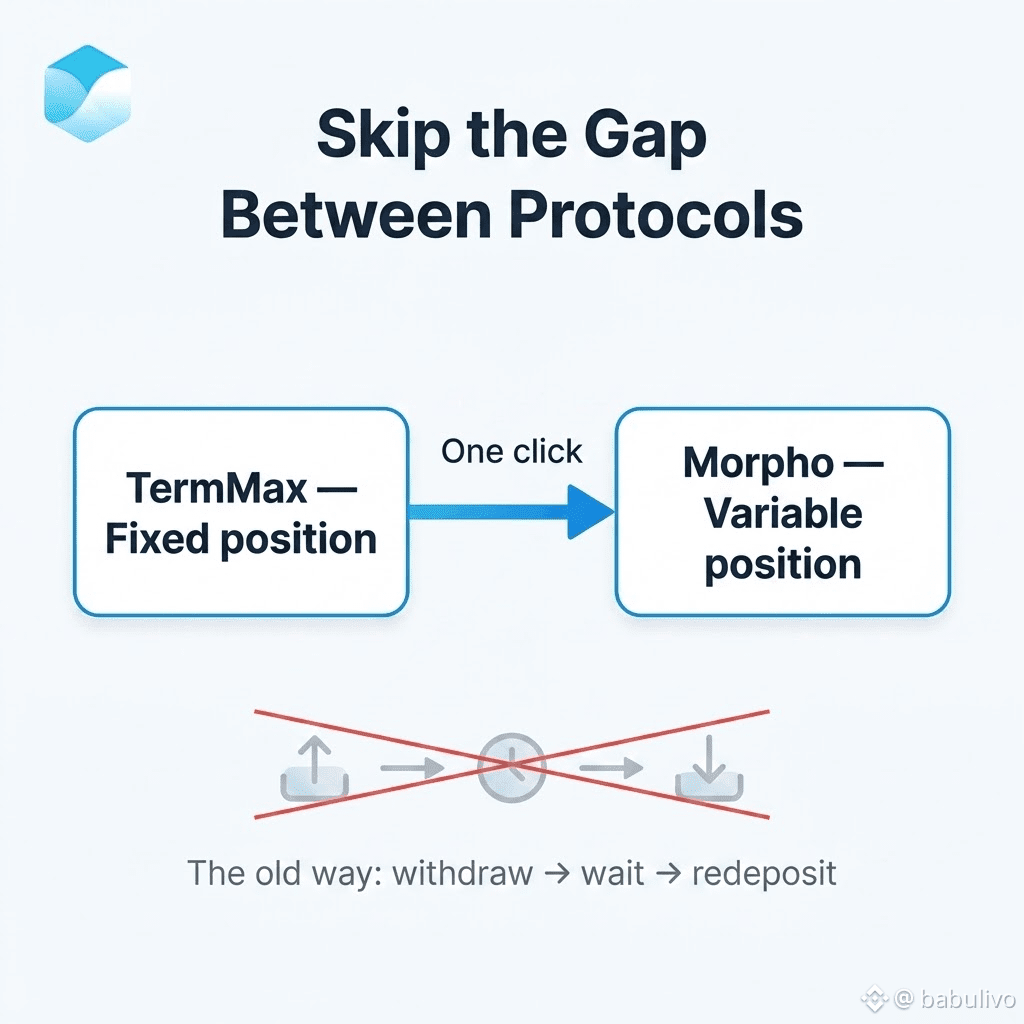
normally rolling a position from one protocol to another means: withdraw, wait, bridge maybe, deposit again, hope nothing breaks in between. that's just how DeFi has worked for years
TermMax skips all of it for this specific move. you can roll a fixed position on TermMax straight into a variable position on Morpho, one click, no manual withdraw/redeposit cycle in between. or exit before maturity if you want out early instead
feels like a small UX detail until you remember how much slippage/gas/downtime usually happens in that gap between protocols. this just removes the gap
anyone actually used this rollover yet, or still doing it the old manual way?
#termmax @termmax
normally rolling a position from one protocol to another means: withdraw, wait, bridge maybe, deposit again, hope nothing breaks in between. that's just how DeFi has worked for years
TermMax skips all of it for this specific move. you can roll a fixed position on TermMax straight into a variable position on Morpho, one click, no manual withdraw/redeposit cycle in between. or exit before maturity if you want out early instead
feels like a small UX detail until you remember how much slippage/gas/downtime usually happens in that gap between protocols. this just removes the gap
anyone actually used this rollover yet, or still doing it the old manual way?
#termmax @TermMax
TermMax skips all of it for this specific move. you can roll a fixed position on TermMax straight into a variable position on Morpho, one click, no manual withdraw/redeposit cycle in between. or exit before maturity if you want out early instead
feels like a small UX detail until you remember how much slippage/gas/downtime usually happens in that gap between protocols. this just removes the gap
anyone actually used this rollover yet, or still doing it the old manual way?
#termmax @TermMax
8
8
89
·
--
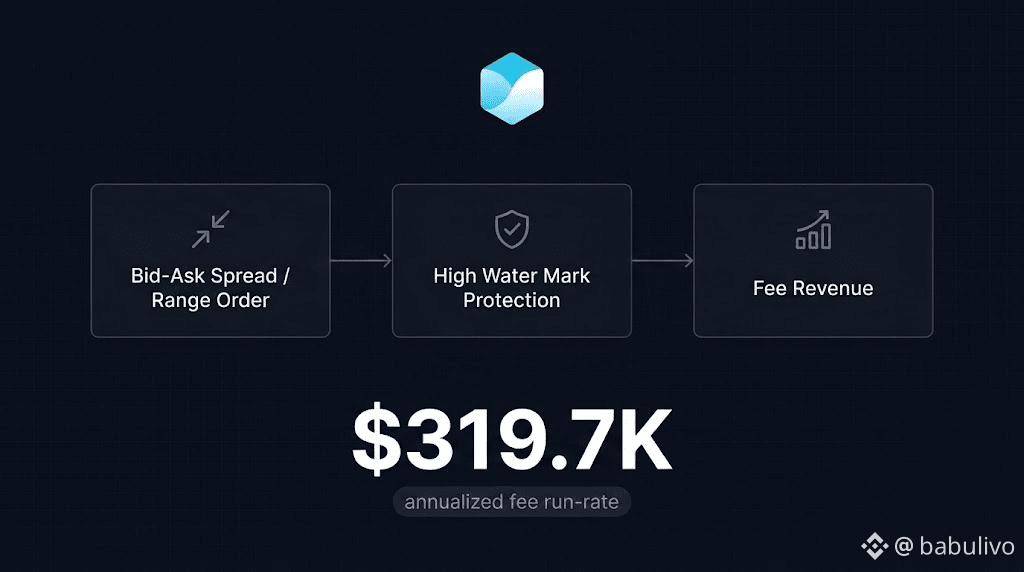
TermMax's curator model isn't just "someone manages a vault" : curators actively set bid-ask spreads on fixed-term loans via Range Orders, basically acting as bond traders pricing different maturities.
That's a market-making role bolted onto risk management, which I haven't seen combined this directly anywhere else.
The part I actually like: performance fees only kick in above a High Water Mark, curators can't collect on gains until they've offset prior losses first. No free rides on volatility.
At a $319.7K annualized fee run-rate on just $34M TVL, the take-rate here is doing more work per dollar than most protocols 10x its size. Curious if that ratio holds once TVL scales past the current concentration on Ethereum.
#termmax @termmax
TermMax's curator model isn't just "someone manages a vault" : curators actively set bid-ask spreads on fixed-term loans via Range Orders, basically acting as bond traders pricing different maturities.
That's a market-making role bolted onto risk management, which I haven't seen combined this directly anywhere else.
The part I actually like: performance fees only kick in above a High Water Mark, curators can't collect on gains until they've offset prior losses first. No free rides on volatility.
At a $319.7K annualized fee run-rate on just $34M TVL, the take-rate here is doing more work per dollar than most protocols 10x its size. Curious if that ratio holds once TVL scales past the current concentration on Ethereum.
#termmax @TermMax
That's a market-making role bolted onto risk management, which I haven't seen combined this directly anywhere else.
The part I actually like: performance fees only kick in above a High Water Mark, curators can't collect on gains until they've offset prior losses first. No free rides on volatility.
At a $319.7K annualized fee run-rate on just $34M TVL, the take-rate here is doing more work per dollar than most protocols 10x its size. Curious if that ratio holds once TVL scales past the current concentration on Ethereum.
#termmax @TermMax
2
7
58
·
--
Verified
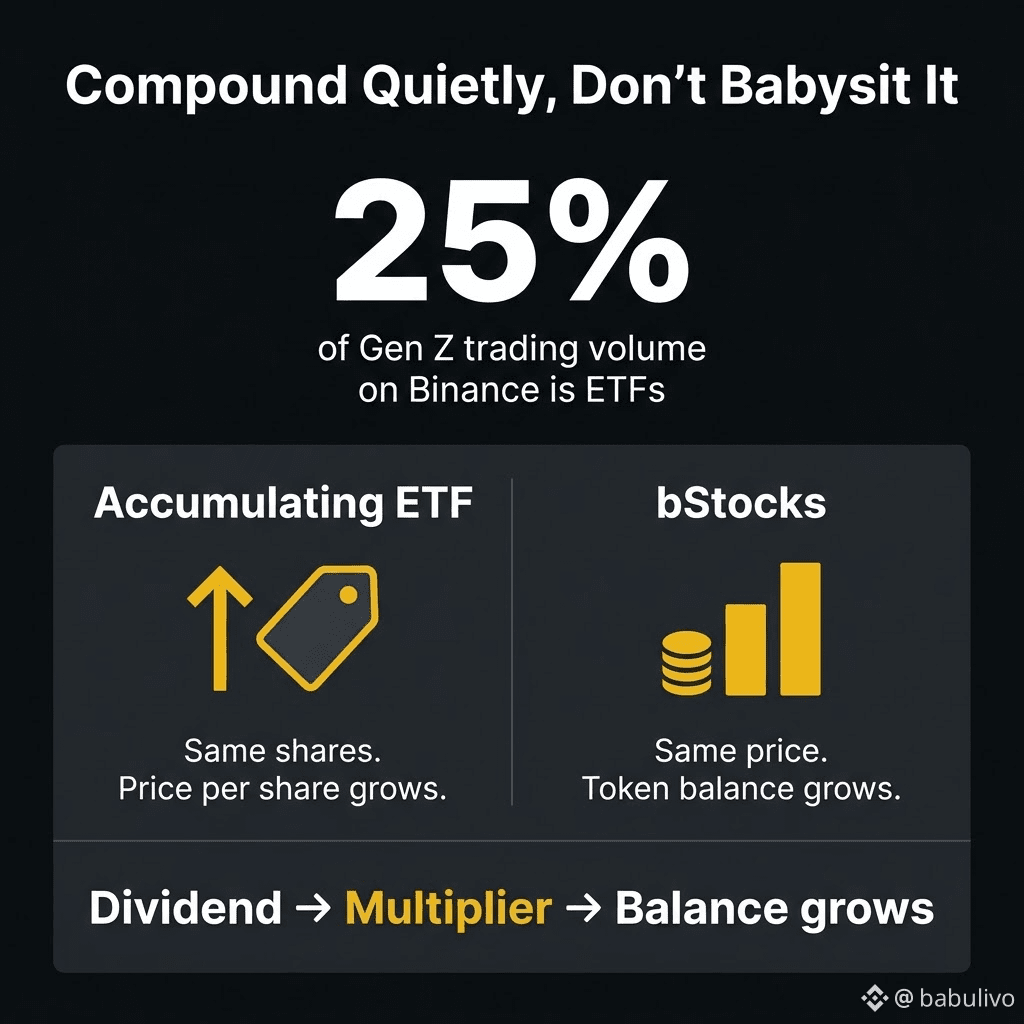
25% of Gen Z's trading volume on Binance right now is ETFs. not single stocks, ETFs
and once you look at how bStocks handles dividends on something like SPY [ $SPYB ], it kind of makes sense why. accumulating ETFs in TradFi never pay cash either, the fund reinvests internally and price per share goes up instead
bStocks does the same idea differently: instead of price moving, your token balance grows through the multiplier. no dividend to claim, no active management, it just compounds on its own
makes me wonder if that Gen Z shift toward ETFs isn't really about chasing 10x anymore, it's more like building something that just compounds quietly on its own, no active management needed. can't say for sure that's the reason, but it lines up with how a lot of people my age talk about not counting on much long-term support elsewhere
is that the actual mindset, or is one stat making me overthink this?
#bstockscis @BinanceCIS
25% of Gen Z's trading volume on Binance right now is ETFs. not single stocks, ETFs
and once you look at how bStocks handles dividends on something like SPY [ $SPYB ], it kind of makes sense why. accumulating ETFs in TradFi never pay cash either, the fund reinvests internally and price per share goes up instead
bStocks does the same idea differently: instead of price moving, your token balance grows through the multiplier. no dividend to claim, no active management, it just compounds on its own
makes me wonder if that Gen Z shift toward ETFs isn't really about chasing 10x anymore, it's more like building something that just compounds quietly on its own, no active management needed. can't say for sure that's the reason, but it lines up with how a lot of people my age talk about not counting on much long-term support elsewhere
is that the actual mindset, or is one stat making me overthink this?
#bstockscis @BinanceCIS
and once you look at how bStocks handles dividends on something like SPY [ $SPYB ], it kind of makes sense why. accumulating ETFs in TradFi never pay cash either, the fund reinvests internally and price per share goes up instead
bStocks does the same idea differently: instead of price moving, your token balance grows through the multiplier. no dividend to claim, no active management, it just compounds on its own
makes me wonder if that Gen Z shift toward ETFs isn't really about chasing 10x anymore, it's more like building something that just compounds quietly on its own, no active management needed. can't say for sure that's the reason, but it lines up with how a lot of people my age talk about not counting on much long-term support elsewhere
is that the actual mindset, or is one stat making me overthink this?
#bstockscis @BinanceCIS
5
9
70
·
--
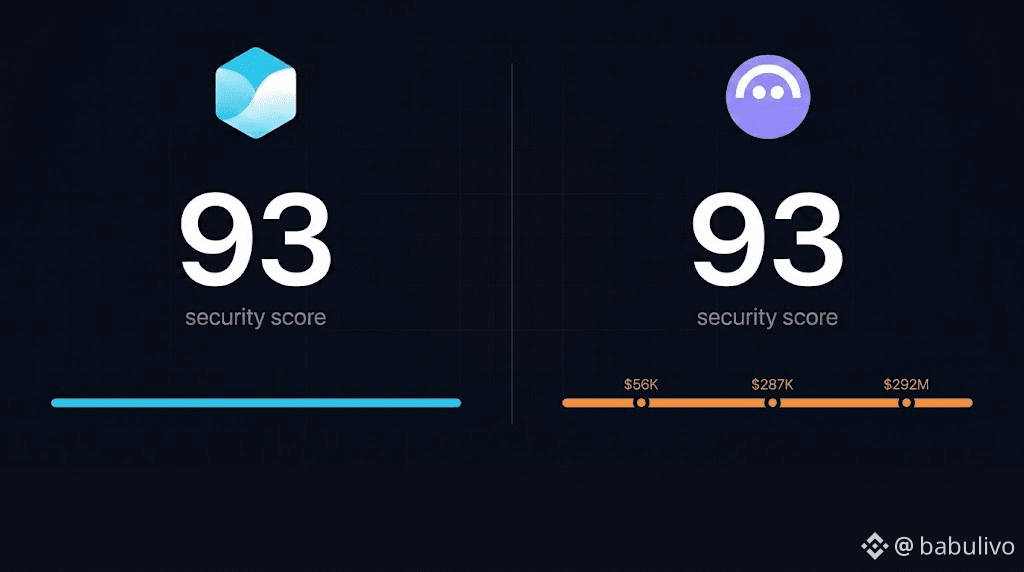
93% security score, same bracket as Aave, but the track records aren't identical.
TermMax: zero incidents since April 2025 launch.
Aave: core contracts never directly exploited, but periphery and integrations have bled hundreds of millions : $56K via an unaudited ParaSwap adapter, $292M exposure through the rsETH/Kelp bridge collapse in April.
Same score doesn't mean same history. Newer isn't automatically less trustworthy.
#termmax @termmax
93% security score, same bracket as Aave, but the track records aren't identical.
TermMax: zero incidents since April 2025 launch.
Aave: core contracts never directly exploited, but periphery and integrations have bled hundreds of millions : $56K via an unaudited ParaSwap adapter, $292M exposure through the rsETH/Kelp bridge collapse in April.
Same score doesn't mean same history. Newer isn't automatically less trustworthy.
#termmax @TermMax
TermMax: zero incidents since April 2025 launch.
Aave: core contracts never directly exploited, but periphery and integrations have bled hundreds of millions : $56K via an unaudited ParaSwap adapter, $292M exposure through the rsETH/Kelp bridge collapse in April.
Same score doesn't mean same history. Newer isn't automatically less trustworthy.
#termmax @TermMax
5
108
·
--
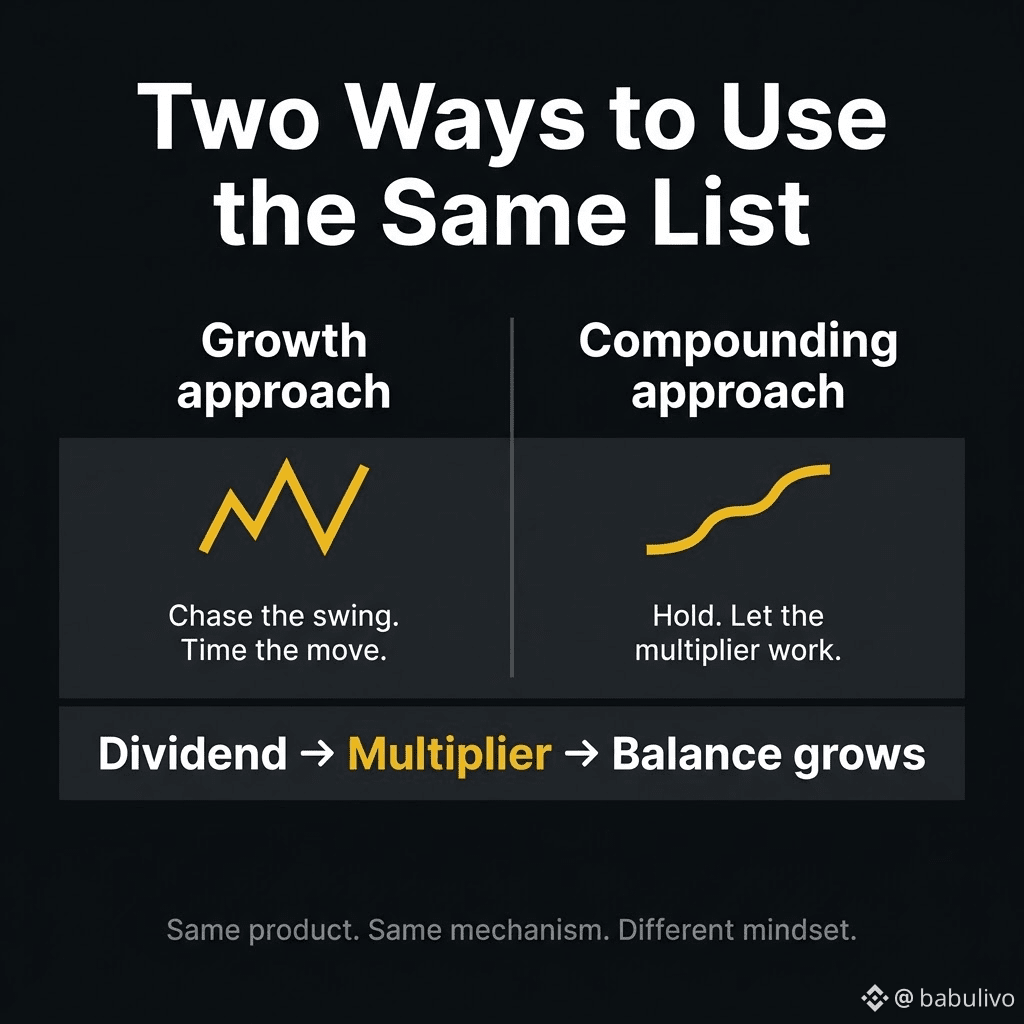
people usually think of bStocks as the "buy Tesla, buy Nvidia, chase the next 10x" product, and sure, that's most of the volume. but there's a second way to use the same list that barely gets talked about
some of the tickers on there like IBM [ $IBMB ], for example, aren't growth plays. they're steady dividend payers. and because of how the multiplier mechanism works, that dividend doesn't sit there waiting for you to claim it, it just accrues straight into your bStock balance automatically. no transfer, no manual reinvestment, it compounds in the background whether you're watching or not
so you end up with two completely different strategies living on the exact same list : one is "buy the volatile name, try to time the swing." the other is "buy the boring name, do nothing, let the multiplier quietly stack shares for you."
same product, same mechanism, opposite mindset
which camp are you actually in : chasing the swings, or letting something boring sit and compound?
i'm chasing the swings btw :)
#bstockscis @BinanceCIS
people usually think of bStocks as the "buy Tesla, buy Nvidia, chase the next 10x" product, and sure, that's most of the volume. but there's a second way to use the same list that barely gets talked about
some of the tickers on there like IBM [ $IBMB ], for example, aren't growth plays. they're steady dividend payers. and because of how the multiplier mechanism works, that dividend doesn't sit there waiting for you to claim it, it just accrues straight into your bStock balance automatically. no transfer, no manual reinvestment, it compounds in the background whether you're watching or not
so you end up with two completely different strategies living on the exact same list : one is "buy the volatile name, try to time the swing." the other is "buy the boring name, do nothing, let the multiplier quietly stack shares for you."
same product, same mechanism, opposite mindset
which camp are you actually in : chasing the swings, or letting something boring sit and compound?
i'm chasing the swings btw :)
#bstockscis @BinanceCIS
some of the tickers on there like IBM [ $IBMB ], for example, aren't growth plays. they're steady dividend payers. and because of how the multiplier mechanism works, that dividend doesn't sit there waiting for you to claim it, it just accrues straight into your bStock balance automatically. no transfer, no manual reinvestment, it compounds in the background whether you're watching or not
so you end up with two completely different strategies living on the exact same list : one is "buy the volatile name, try to time the swing." the other is "buy the boring name, do nothing, let the multiplier quietly stack shares for you."
same product, same mechanism, opposite mindset
which camp are you actually in : chasing the swings, or letting something boring sit and compound?
i'm chasing the swings btw :)
#bstockscis @BinanceCIS
3
5
71
·
--
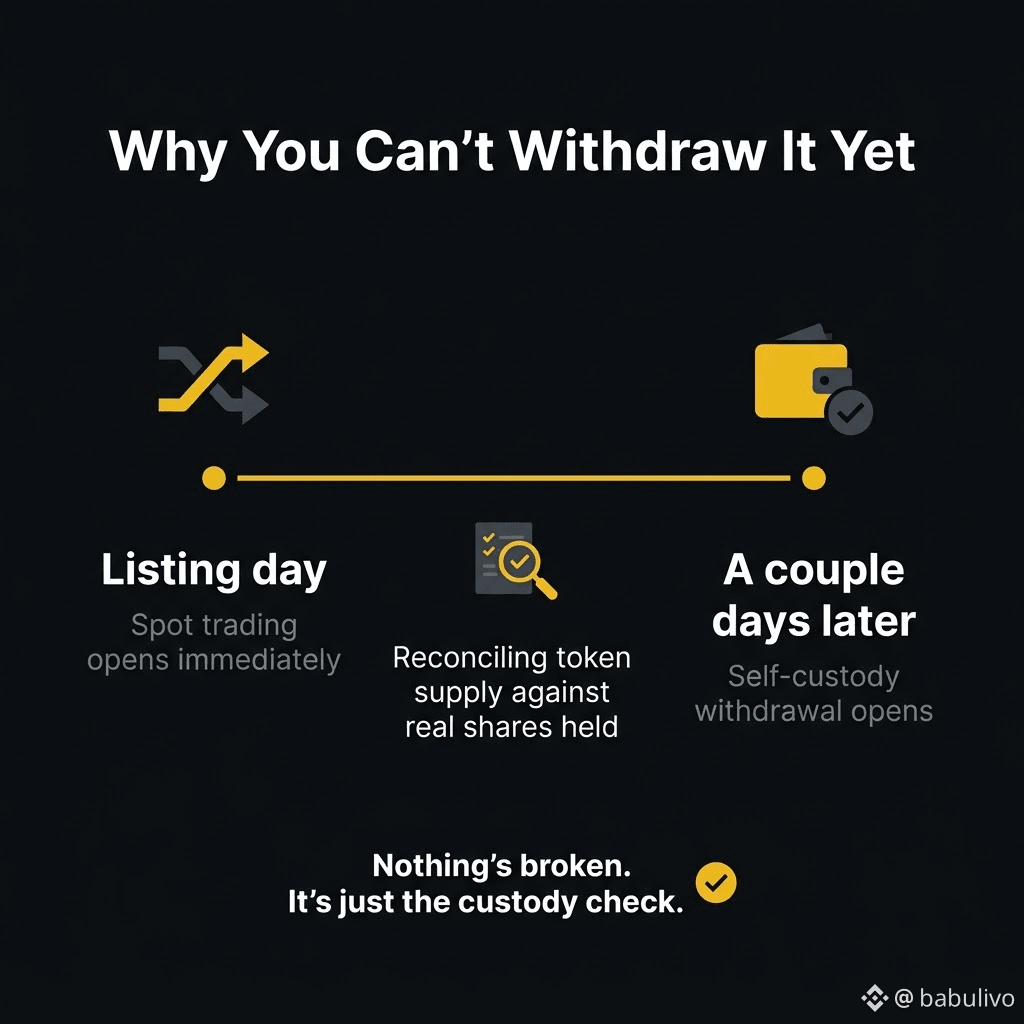
saw someone in a group chat panicking because they bought a fresh bStock listing and couldn't withdraw it to their wallet yet, thought something was broken
nothing's broken, it's just how the rollout works. when a new bStock lists, spot trading opens immediately, but self-custody withdrawal to your own wallet opens a couple days later. for example, trading started on the 27th and withdrawals didn't open until the 29th
makes sense once you think about why. every token has to be backed 1:1 by a real share held with the custodian first, and that reconciliation between "how many tokens exist" and "how many real shares are actually held" needs to actually happen before anyone's allowed to move tokens off-platform. trading against existing liquidity is fine in the meantime, self-custody isn't, until that's confirmed
good thing to know before you panic-refresh your wallet after buying something on day one
did the delay ever throw you off, or is this common knowledge by now and I'm just late to it?
#bstockscis @BinanceCIS
saw someone in a group chat panicking because they bought a fresh bStock listing and couldn't withdraw it to their wallet yet, thought something was broken
nothing's broken, it's just how the rollout works. when a new bStock lists, spot trading opens immediately, but self-custody withdrawal to your own wallet opens a couple days later. for example, trading started on the 27th and withdrawals didn't open until the 29th
makes sense once you think about why. every token has to be backed 1:1 by a real share held with the custodian first, and that reconciliation between "how many tokens exist" and "how many real shares are actually held" needs to actually happen before anyone's allowed to move tokens off-platform. trading against existing liquidity is fine in the meantime, self-custody isn't, until that's confirmed
good thing to know before you panic-refresh your wallet after buying something on day one
did the delay ever throw you off, or is this common knowledge by now and I'm just late to it?
#bstockscis @BinanceCIS
nothing's broken, it's just how the rollout works. when a new bStock lists, spot trading opens immediately, but self-custody withdrawal to your own wallet opens a couple days later. for example, trading started on the 27th and withdrawals didn't open until the 29th
makes sense once you think about why. every token has to be backed 1:1 by a real share held with the custodian first, and that reconciliation between "how many tokens exist" and "how many real shares are actually held" needs to actually happen before anyone's allowed to move tokens off-platform. trading against existing liquidity is fine in the meantime, self-custody isn't, until that's confirmed
good thing to know before you panic-refresh your wallet after buying something on day one
did the delay ever throw you off, or is this common knowledge by now and I'm just late to it?
#bstockscis @BinanceCIS
2
78
·
--
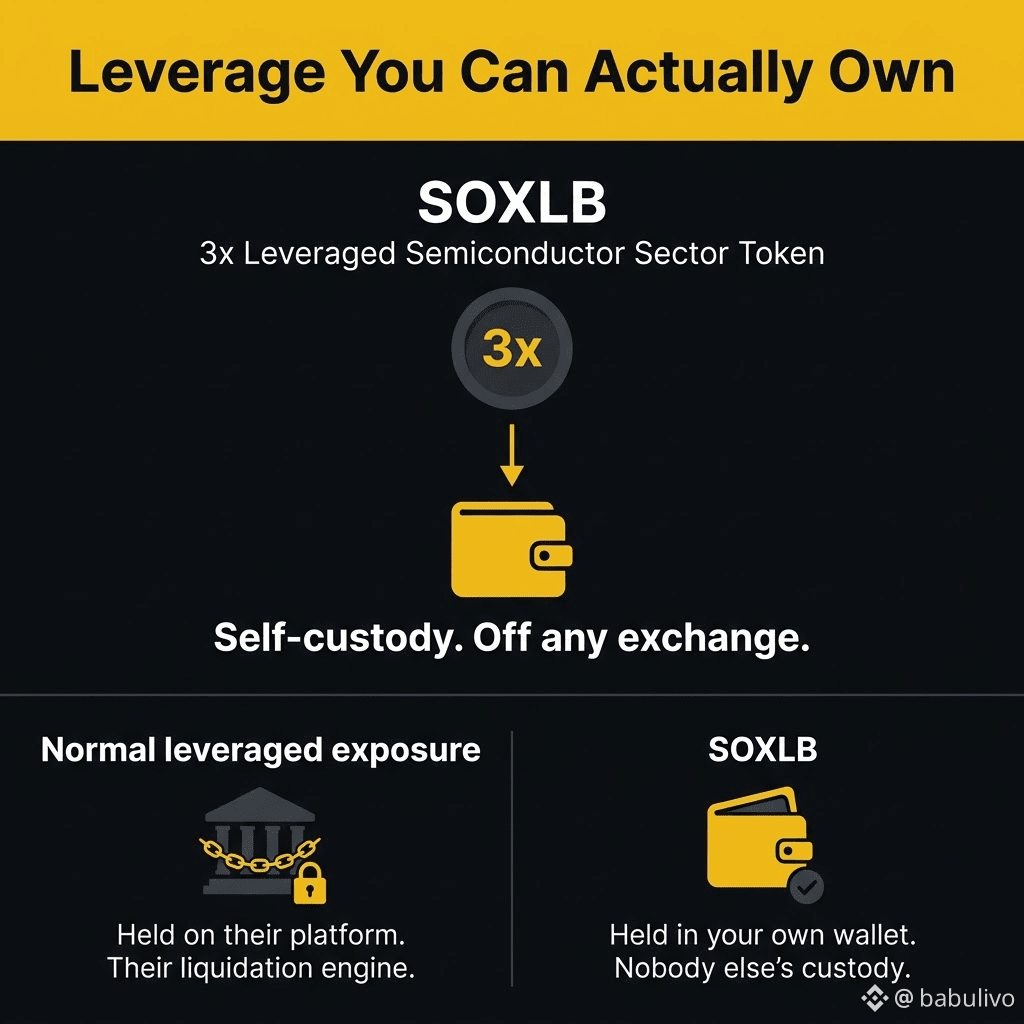
most people scrolling the bStocks list are looking for Apple or Tesla and skip right past $SOXLB , which is honestly the more interesting listing if you actually read what it is
it's not just a semiconductor stock. it's a 3x leveraged token tracking the whole chip sector : Nvidia, AMD, Micron, that whole basket, amplified. on a regular brokerage account, getting that kind of leverage means options, futures, or a margin account with actual approval requirements
here it's just a BEP-20 token. so you can withdraw a literal 3x leveraged position to your own cold wallet. no CEX holding your position, no perp-DEX tracking your margin, no liquidation engine watching you 24/7 in someone else's hands. the leverage is baked into the token itself, sitting in your own custody
that's not really a thing anywhere else. leveraged exposure usually means someone else is holding your position hostage on their platform. this is leverage you can just... own
would you actually hold something like this, or does 3x leverage on an entire sector sound like a fast way to get zeroed?
#bstockscis @BinanceCIS
most people scrolling the bStocks list are looking for Apple or Tesla and skip right past $SOXLB , which is honestly the more interesting listing if you actually read what it is
it's not just a semiconductor stock. it's a 3x leveraged token tracking the whole chip sector : Nvidia, AMD, Micron, that whole basket, amplified. on a regular brokerage account, getting that kind of leverage means options, futures, or a margin account with actual approval requirements
here it's just a BEP-20 token. so you can withdraw a literal 3x leveraged position to your own cold wallet. no CEX holding your position, no perp-DEX tracking your margin, no liquidation engine watching you 24/7 in someone else's hands. the leverage is baked into the token itself, sitting in your own custody
that's not really a thing anywhere else. leveraged exposure usually means someone else is holding your position hostage on their platform. this is leverage you can just... own
would you actually hold something like this, or does 3x leverage on an entire sector sound like a fast way to get zeroed?
#bstockscis @BinanceCIS
it's not just a semiconductor stock. it's a 3x leveraged token tracking the whole chip sector : Nvidia, AMD, Micron, that whole basket, amplified. on a regular brokerage account, getting that kind of leverage means options, futures, or a margin account with actual approval requirements
here it's just a BEP-20 token. so you can withdraw a literal 3x leveraged position to your own cold wallet. no CEX holding your position, no perp-DEX tracking your margin, no liquidation engine watching you 24/7 in someone else's hands. the leverage is baked into the token itself, sitting in your own custody
that's not really a thing anywhere else. leveraged exposure usually means someone else is holding your position hostage on their platform. this is leverage you can just... own
would you actually hold something like this, or does 3x leverage on an entire sector sound like a fast way to get zeroed?
#bstockscis @BinanceCIS
3
79
·
--
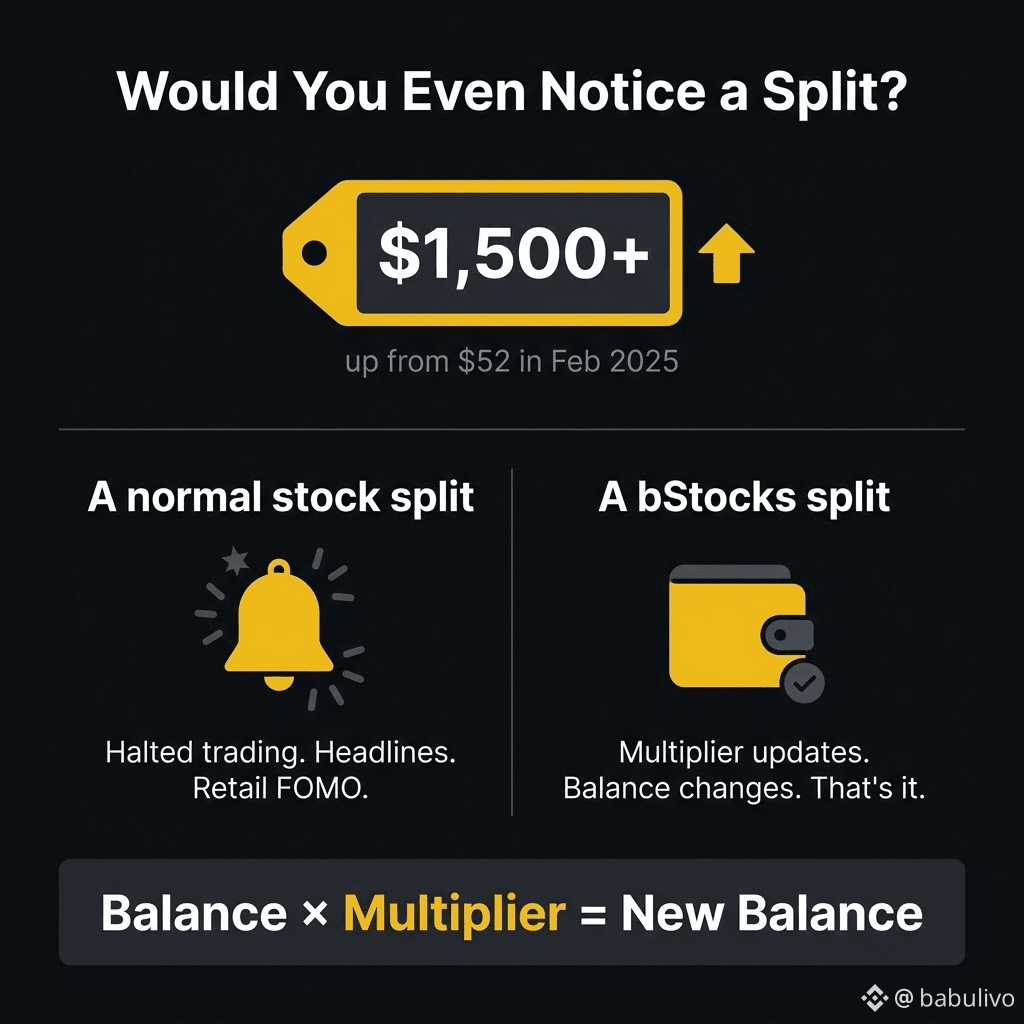
wow. SanDisk is trading north of $1,500 a share right now. up more than 3,000% since it spun off from Western Digital at $52 in February 2025. and it's never once split its stock
Motley Fool put out a piece this week basically saying SanDisk checks every box for a split candidate - quadruple-digit price, huge retail interest, zero splits in its history as a standalone company. nothing confirmed, just the obvious speculation everyone's having
here's the part I actually care about: if SanDisk does split, what does a $SNDKB holder even see happen? based on how the multiplier mechanism works, probably nothing. no new tokens landing in your wallet, no transaction to point to. the split just gets absorbed and your existing balance quietly reflects it
which is kind of wild given how much attention split announcements usually get on a normal stock : halted trading, headlines, retail FOMO buying in anticipation. on bStocks it might just be a non-event you'd only notice by checking your balance
curious if people would even want a heads up before that happens, or if it not mattering is the whole point...
#bstockscis @BinanceCIS
wow. SanDisk is trading north of $1,500 a share right now. up more than 3,000% since it spun off from Western Digital at $52 in February 2025. and it's never once split its stock
Motley Fool put out a piece this week basically saying SanDisk checks every box for a split candidate - quadruple-digit price, huge retail interest, zero splits in its history as a standalone company. nothing confirmed, just the obvious speculation everyone's having
here's the part I actually care about: if SanDisk does split, what does a $SNDKB holder even see happen? based on how the multiplier mechanism works, probably nothing. no new tokens landing in your wallet, no transaction to point to. the split just gets absorbed and your existing balance quietly reflects it
which is kind of wild given how much attention split announcements usually get on a normal stock : halted trading, headlines, retail FOMO buying in anticipation. on bStocks it might just be a non-event you'd only notice by checking your balance
curious if people would even want a heads up before that happens, or if it not mattering is the whole point...
#bstockscis @BinanceCIS
Motley Fool put out a piece this week basically saying SanDisk checks every box for a split candidate - quadruple-digit price, huge retail interest, zero splits in its history as a standalone company. nothing confirmed, just the obvious speculation everyone's having
here's the part I actually care about: if SanDisk does split, what does a $SNDKB holder even see happen? based on how the multiplier mechanism works, probably nothing. no new tokens landing in your wallet, no transaction to point to. the split just gets absorbed and your existing balance quietly reflects it
which is kind of wild given how much attention split announcements usually get on a normal stock : halted trading, headlines, retail FOMO buying in anticipation. on bStocks it might just be a non-event you'd only notice by checking your balance
curious if people would even want a heads up before that happens, or if it not mattering is the whole point...
#bstockscis @BinanceCIS
1
138
·
--
this is a name literally nobody in this whole campaign has mentioned once, and I get why. I only found it by accident lol
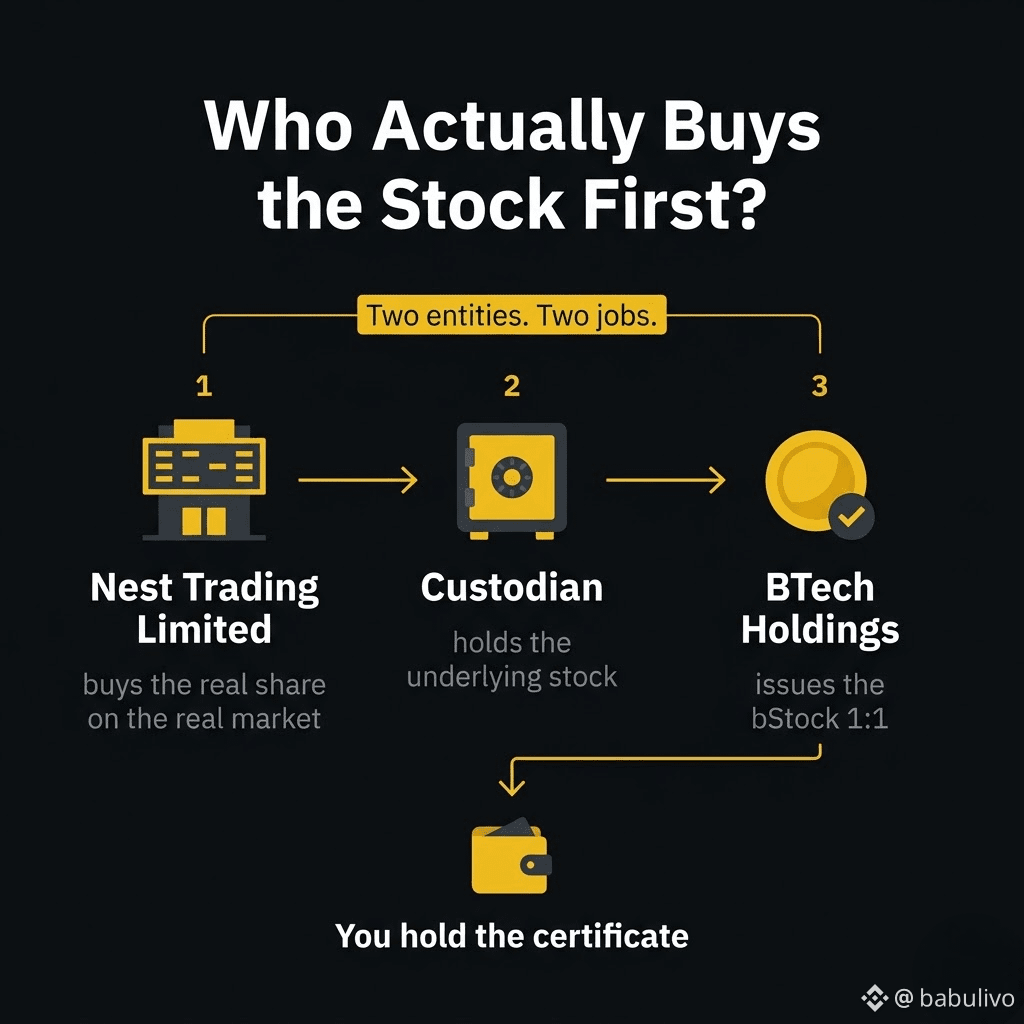
before a bStock exists, someone has to actually go buy the real share first. that someone is a broker-dealer called Nest Trading Limited. it buys Nvidia [ $NVDAB ], Tesla [ $TSLAB ], whatever the underlying is, on the actual market, holds it with a custodian, and only then does BTech Holdings issue the token against it
two completely separate entities doing two completely separate jobs. one is out there executing a real trade on a real exchange, the other one is the name that shows up when you check what "issues" your bStock
anyone here actually knew this names before now?
#bstockscis @BinanceCIS
this is a name literally nobody in this whole campaign has mentioned once, and I get why. I only found it by accident lol
before a bStock exists, someone has to actually go buy the real share first. that someone is a broker-dealer called Nest Trading Limited. it buys Nvidia [ $NVDAB ], Tesla [ $TSLAB ], whatever the underlying is, on the actual market, holds it with a custodian, and only then does BTech Holdings issue the token against it
two completely separate entities doing two completely separate jobs. one is out there executing a real trade on a real exchange, the other one is the name that shows up when you check what "issues" your bStock
anyone here actually knew this names before now?
#bstockscis @BinanceCIS
before a bStock exists, someone has to actually go buy the real share first. that someone is a broker-dealer called Nest Trading Limited. it buys Nvidia [ $NVDAB ], Tesla [ $TSLAB ], whatever the underlying is, on the actual market, holds it with a custodian, and only then does BTech Holdings issue the token against it
two completely separate entities doing two completely separate jobs. one is out there executing a real trade on a real exchange, the other one is the name that shows up when you check what "issues" your bStock
anyone here actually knew this names before now?
#bstockscis @BinanceCIS
1
88
·
--
ok, following up on the dividend thing from before, because turns out it's not just dividends
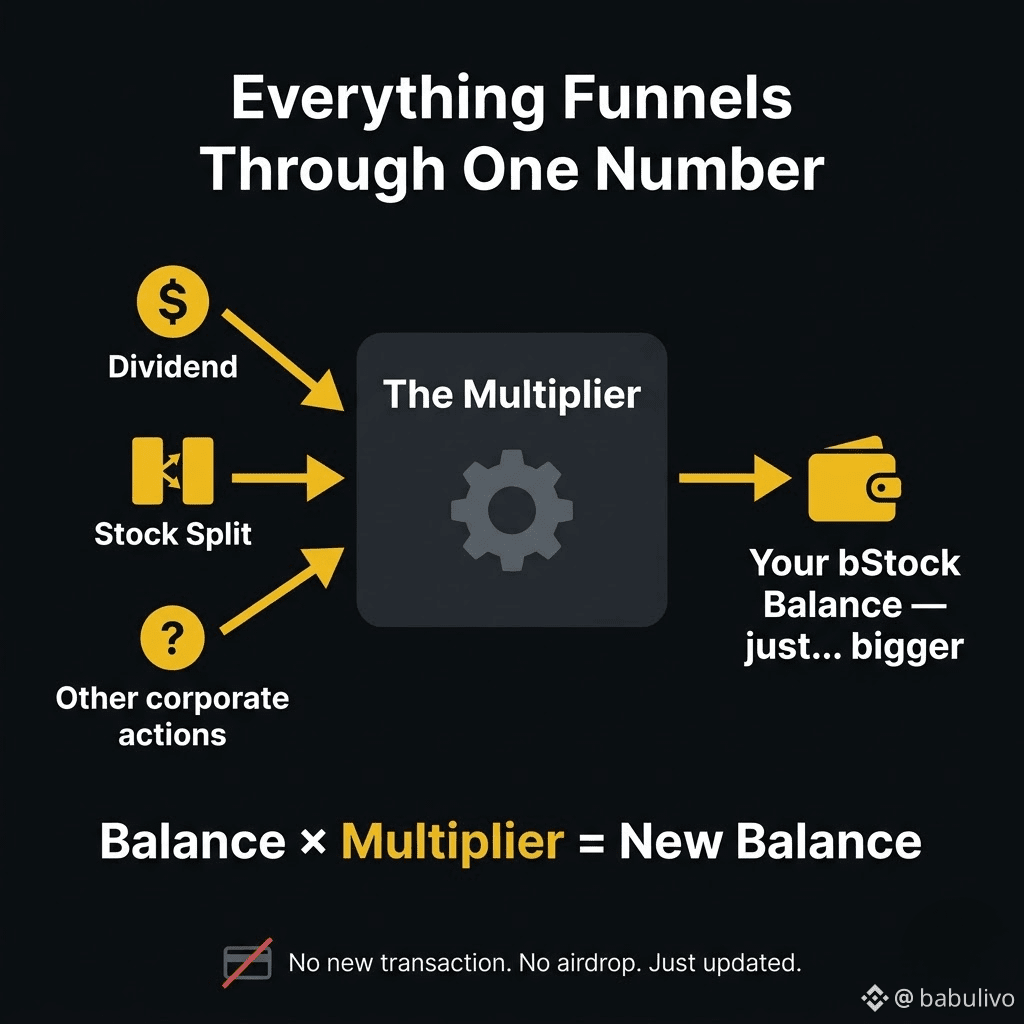
stock splits work through the exact same mechanism. if Tesla [ $TSLAB ] ever does a 2-for-1 split, you don't get airdropped extra tokens and you don't see a new transaction either. the multiplier just adjusts and your existing balance reflects the split automatically
so basically every corporate action : dividends, splits, whatever, funnels through this one invisible number instead of triggering separate events onchain. kind of elegant once you see it, but also means you'll never "see" a split happen, it just already happened by the time you check
makes me wonder what other corporate actions get quietly folded into this before people even notice?
#bstockscis @BinanceCIS
ok, following up on the dividend thing from before, because turns out it's not just dividends
stock splits work through the exact same mechanism. if Tesla [ $TSLAB ] ever does a 2-for-1 split, you don't get airdropped extra tokens and you don't see a new transaction either. the multiplier just adjusts and your existing balance reflects the split automatically
so basically every corporate action : dividends, splits, whatever, funnels through this one invisible number instead of triggering separate events onchain. kind of elegant once you see it, but also means you'll never "see" a split happen, it just already happened by the time you check
makes me wonder what other corporate actions get quietly folded into this before people even notice?
#bstockscis @BinanceCIS
stock splits work through the exact same mechanism. if Tesla [ $TSLAB ] ever does a 2-for-1 split, you don't get airdropped extra tokens and you don't see a new transaction either. the multiplier just adjusts and your existing balance reflects the split automatically
so basically every corporate action : dividends, splits, whatever, funnels through this one invisible number instead of triggering separate events onchain. kind of elegant once you see it, but also means you'll never "see" a split happen, it just already happened by the time you check
makes me wonder what other corporate actions get quietly folded into this before people even notice?
#bstockscis @BinanceCIS
89
·
--
honestly asking, not trying to sell anyone on anything... did you actually buy real or tokenized stocks before, like with your own money, not for promo or something?
because right now stocks are genuinely more volatile and more interesting to watch than most of crypto lol. Tesla [ $TSLAB ] or Nvidia [ $NVDAB ] moving 10% in a day hits different than watching $BTC do nothing for a week
but let's be real, a lot of people got wrecked in the bear market and there's just... no capital left for a second asset class lol. crypto ate all the deposit
the fact, that around 4 in 10 of bStocks users never touched TradFi before, makes me wonder how much of that is genuine curiosity about stocks vs just another try to catch the moonshot after the bear market...
#bstockscis @BinanceCIS
honestly asking, not trying to sell anyone on anything... did you actually buy real or tokenized stocks before, like with your own money, not for promo or something?
because right now stocks are genuinely more volatile and more interesting to watch than most of crypto lol. Tesla [ $TSLAB ] or Nvidia [ $NVDAB ] moving 10% in a day hits different than watching $BTC do nothing for a week
but let's be real, a lot of people got wrecked in the bear market and there's just... no capital left for a second asset class lol. crypto ate all the deposit
the fact, that around 4 in 10 of bStocks users never touched TradFi before, makes me wonder how much of that is genuine curiosity about stocks vs just another try to catch the moonshot after the bear market...
#bstockscis @BinanceCIS
because right now stocks are genuinely more volatile and more interesting to watch than most of crypto lol. Tesla [ $TSLAB ] or Nvidia [ $NVDAB ] moving 10% in a day hits different than watching $BTC do nothing for a week
but let's be real, a lot of people got wrecked in the bear market and there's just... no capital left for a second asset class lol. crypto ate all the deposit
the fact, that around 4 in 10 of bStocks users never touched TradFi before, makes me wonder how much of that is genuine curiosity about stocks vs just another try to catch the moonshot after the bear market...
#bstockscis @BinanceCIS
buy mostly spot
100%
trade mostly futures
0%
promo only or not interested
0%
2 votes • Voting closed
232
·
--
wait, how do dividends even work if you're holding a token instead of the actual stock?
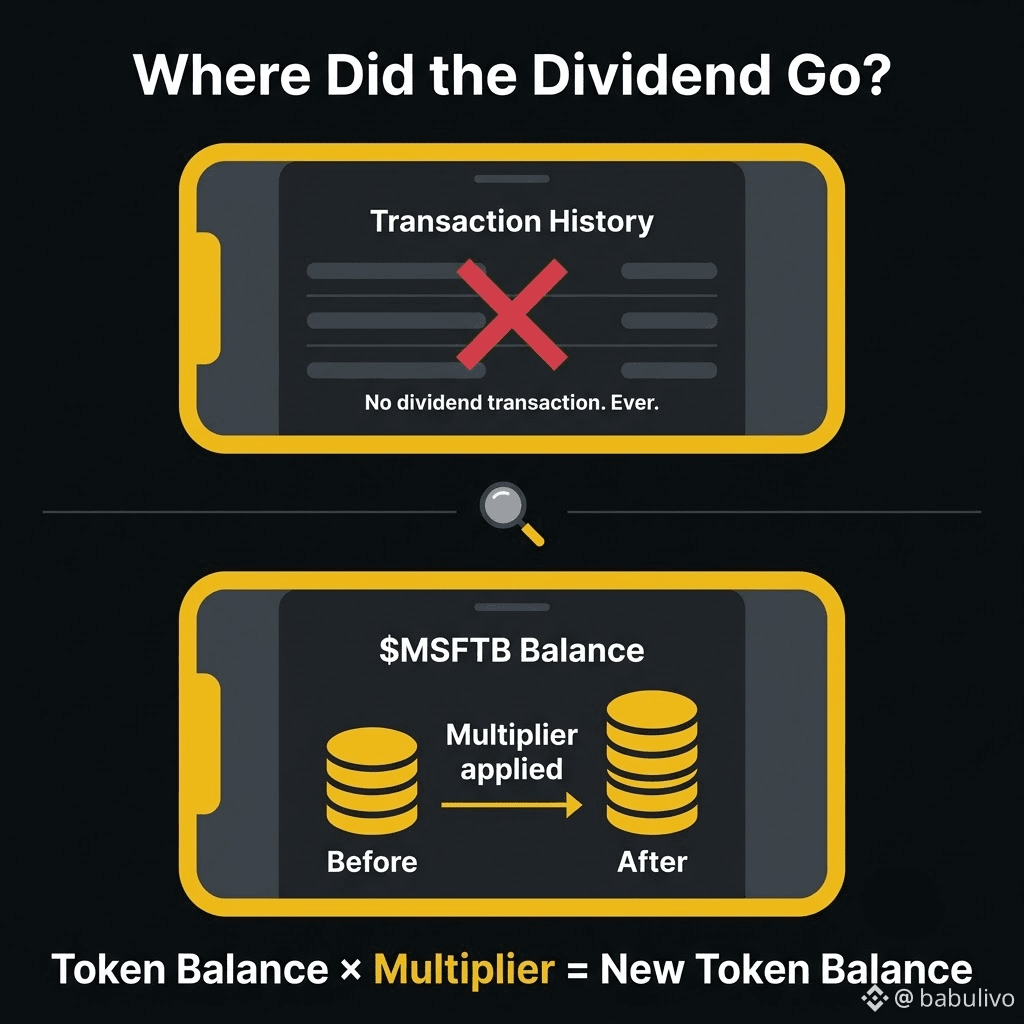
spent way too long down this rabbit hole last night... turns out bStocks don't send you a dividend as a transaction at all. Microsoft pays $0.91 per share quarterly, the network doesn't move that cash to you as a USDC transfer, for example. instead, your total bStock token balance itself increases automatically, through a "multiplier" applied to your holdings, and that's what reflects the dividend
so if you're holding $MSFTB and a dividend hits, nothing shows up in your transaction history. no incoming transfer, no notification you'd recognize as "a dividend." you just check your wallet later and your bStock balance is simply bigger than it was - that's the payout, sitting right there as more tokens
makes sense once you get it, but I get why people scroll their history looking for a payment that was never going to be there in the first place
did anyone else assume this worked like a regular USDC transfer or something before checking?
#bstockscis @BinanceCIS
wait, how do dividends even work if you're holding a token instead of the actual stock?
spent way too long down this rabbit hole last night... turns out bStocks don't send you a dividend as a transaction at all. Microsoft pays $0.91 per share quarterly, the network doesn't move that cash to you as a USDC transfer, for example. instead, your total bStock token balance itself increases automatically, through a "multiplier" applied to your holdings, and that's what reflects the dividend
so if you're holding $MSFTB and a dividend hits, nothing shows up in your transaction history. no incoming transfer, no notification you'd recognize as "a dividend." you just check your wallet later and your bStock balance is simply bigger than it was - that's the payout, sitting right there as more tokens
makes sense once you get it, but I get why people scroll their history looking for a payment that was never going to be there in the first place
did anyone else assume this worked like a regular USDC transfer or something before checking?
#bstockscis @BinanceCIS
spent way too long down this rabbit hole last night... turns out bStocks don't send you a dividend as a transaction at all. Microsoft pays $0.91 per share quarterly, the network doesn't move that cash to you as a USDC transfer, for example. instead, your total bStock token balance itself increases automatically, through a "multiplier" applied to your holdings, and that's what reflects the dividend
so if you're holding $MSFTB and a dividend hits, nothing shows up in your transaction history. no incoming transfer, no notification you'd recognize as "a dividend." you just check your wallet later and your bStock balance is simply bigger than it was - that's the payout, sitting right there as more tokens
makes sense once you get it, but I get why people scroll their history looking for a payment that was never going to be there in the first place
did anyone else assume this worked like a regular USDC transfer or something before checking?
#bstockscis @BinanceCIS
1
108
Log in to explore more content
Join global crypto users on Binance Square
⚡️ Get latest and useful information about crypto.
💬 Trusted by the world’s largest crypto exchange.
👍 Discover real insights from verified creators.
Email / Phone number
Trending Topics
ZcashETFPostsFirstWeeklyOutflow$93.6M
41,243 views
134 Discussing
ZCASH ETF UPDATE
Zcash’s ETF has recorded its first weekly net outflow since launching in August.
Investors withdrew $93.6M as $ZEC fell toward $1,300. Grayscale’s ZCSH had attracted $98.2M two weeks earlier, but no daily net inflows have been recorded since September 22, according to SoSoValue.
ZEC was around $1,308 on October 3, down about 17.5% for the week and roughly 23% from its recent $1,690 peak.
$ZEC
Vicky-143
·3 Likes
·4.1k views
GreekPoliceBustCryptoScamRingArrest17
100,670 views
794 Discussing
BitcoinRejectedAt$87K
133,799 views
192 Discussing