


Anonymous-User-43excel
不做投资建议,只做观察。DYOR!
31 Following
535 Followers
172 Liked
Posts
All
Quotes
PINNED

七月QY
·
--
How Pyth and Chainlink differ in their businesses today
Pyth primarily does two things. First, it lets exchanges and market makers report their own quotes directly, making it fast and especially well suited to perpetual contracts. According to official figures, Pyth prices were used for 94% of RWA perpetual contracts in the third quarter. Second, it sells market data to traditional institutions. This is currently its main source of revenue; most of the previously reported $11 million came from this business.
Chainlink was one of the first oracle providers, and its network and nodes are more mature. Its main role is to bring off-chain asset prices—such as token prices, stock prices, and fund net asset values—on-chain for protocols such as lending and derivatives to use when determining liquidation timing.
The two have different underlying models: Pyth relies on centralized institutions to report data proactively, while Chainlink relies on nodes to fetch it. This means they focus on different areas, and each shines in its own niche.
LINK has expanded into cross-chain communication through CCIP, proof of reserves, and compliance—services that banks and institutions urgently need.
Thanks to its proactive reporting model, PYTH can update data in milliseconds. It is better suited to high-frequency needs and sells real-time market data to clients such as trading firms, brokerages, and financial institutions.
If the amount of assets brought on-chain grows by 10 or 20 times in the future, services like these will be essential. They may not make big money right away, but they are definitely hot topics for speculation in terms of narrative and hype.
大晖哥Whdysseus
·
--
Huang Qifan explains finance and real estate in just a few sentences
I came across a few clips of Huang Qifan speaking. Every word rang true, so I’ve put them together to share with everyone.
1. What is the essence of finance? Managing money for those who have it and raising funds for those who need it. Put simply, finance is an intermediary that channels money from where there’s a surplus to where it’s needed.
2. Credit, leverage, and risk: it all comes down to balance. Credit is the foundation, leverage is a tool, and risk is the bottom line. If these three fall out of balance, trouble is only a matter of time.
3. Developers must use their own funds to buy land. They shouldn’t borrow money to speculate on land. If borrowing to acquire land is allowed, land will no longer be used to build homes—it’ll be used for speculation.
4. The land cost per square meter of floor area shouldn’t exceed one-third of the home price. Higher land prices drive up home prices, and higher home prices then push land prices up further. If the source of the problem isn’t controlled, regulation will achieve nothing.
5. Real estate investment should be kept at around 25% of fixed-asset investment. Below that level, supply is insufficient; above it, bubbles build up. 25% is a rule-of-thumb warning line.
6. The root cause of every financial crisis is excessive leverage. Whether it’s the subprime crisis, a property bubble, or a debt blowup, when you trace it back, it all comes down to leverage spiraling out of control.
In a nutshell: Finance should serve the real economy, leverage needs limits, and land shouldn’t be treated as a financial asset for speculation.

豆逼
·
--
The more taxes you pay, the more confident you can be
Just how formidable is ByteDance?
1. Short-video sector (No. 1 globally and domestically)
1. Douyin (China)
The undisputed leader in China’s broader short-video market, with the highest user time spent across the internet (more than WeChat) and a penetration rate of 46.8%, far ahead of Kuaishou and WeChat Channels. It also spans livestreaming, e-commerce, local services, and short dramas, making it a super-platform used nationwide.
2. TikTok (Douyin overseas)
The global short-video powerhouse, available in more than 150 countries, with over 2 billion monthly active users worldwide. It regularly ranks first in app downloads across the U.S., Europe, and many Southeast Asian countries, with no rival in overseas short video.
3. Jianying (CapCut, a video editing tool)
彬哥BNB
·
--
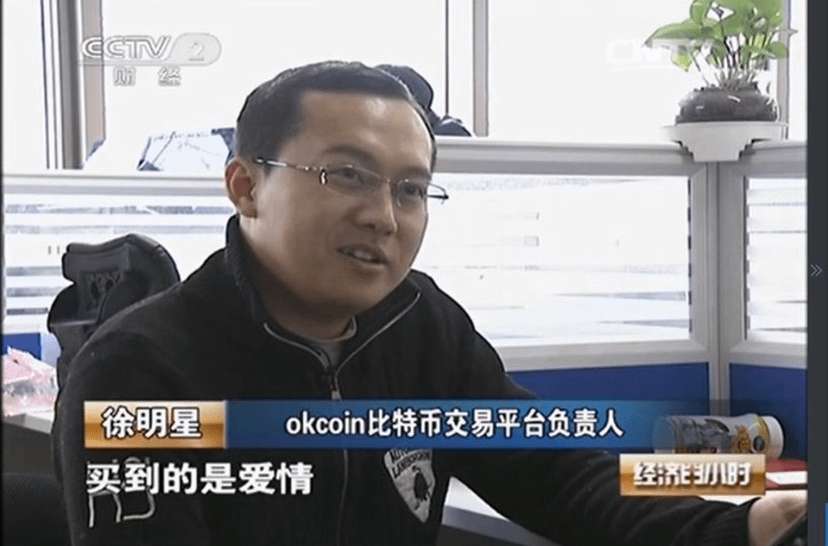
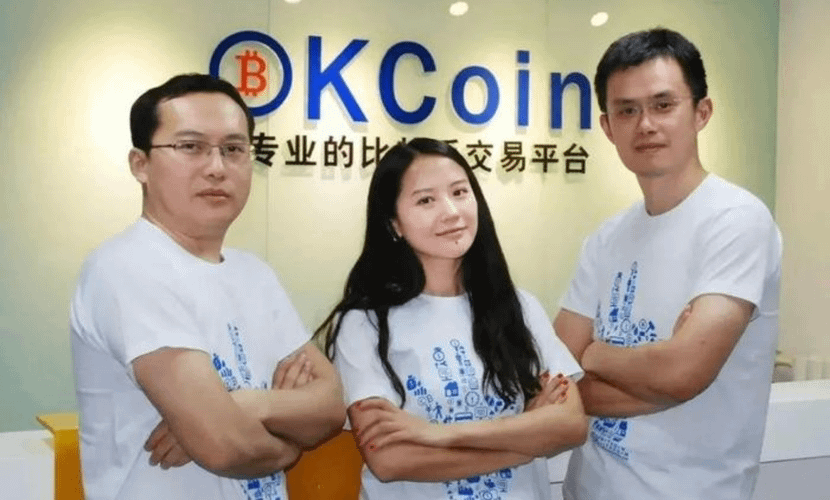
BullishHe bought $20 worth of Bitcoin and went on to build a crypto empire.
Xu Mingxing first noticed Bitcoin, reportedly, while watching the TV series *The Good Wife*.
Others heard a line of dialogue.
He saw an entirely new world.
He began studying how Bitcoin worked and bought his first BTC when the price was still under $20.
What truly changed his life wasn’t just that he “bought early.”
In 2013, Bitcoin prices surged, but the trading platforms at the time offered a terrible experience.
Customer support was hard to reach, systems lagged, and trades were clunky…
His choice was simple:
If no one else could do it well, he’d do it himself.
And so OKCoin was born.
From studying physics and working in tech, to getting into Bitcoin and founding a crypto exchange, Xu Mingxing’s story brings to mind a saying:
What often sets people apart isn’t the opportunity itself, but whether they take the time to understand it when it comes along.
In 2011, many people thought BTC was a scam;
In 2013, many thought exchanges were just a niche business.
Looking back more than a decade later, it all seems “obvious.”
But the question is—
When the next opportunity like Bitcoin comes along, will we really recognize it?
Sometimes, the first step toward changing your destiny might really be a $20 experiment.
$BTC $BNB $DOGE
LINK信仰者
·
--
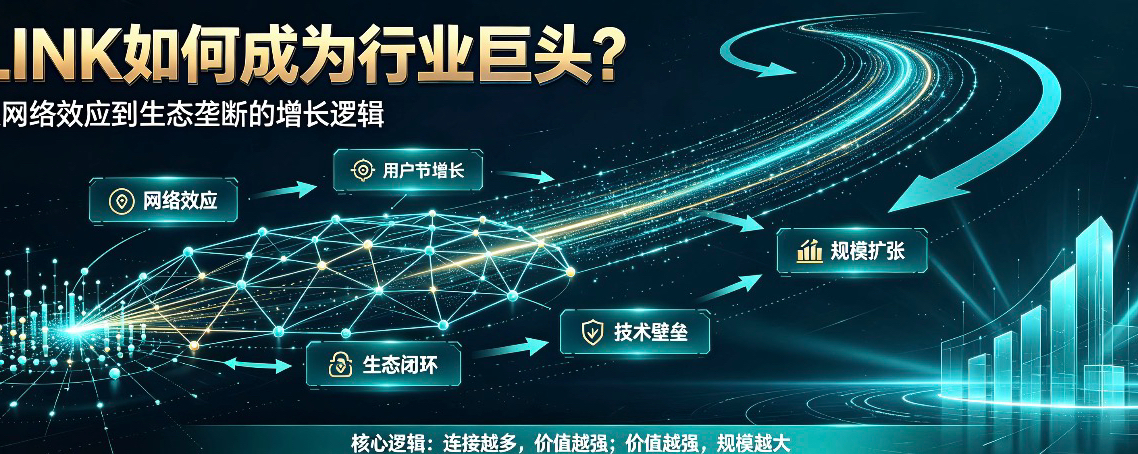
How can LINK become an industry giant?
How can LINK become an industry giant?
Many people still view LINK through a fairly simple lens: Chainlink is the leading oracle provider, has many partners, and boasts strong technical capabilities, so LINK should rise in value in the future.
But I believe these reasons still don’t fully explain LINK’s true long-term value.
If we take a broader perspective, we’ll find an even more thought-provoking question:
Chainlink’s ambition may not simply be to become the leading oracle provider, but to serve as the infrastructure connecting the entire on-chain financial world with the traditional financial system.


投机实验室
·
--
After reading the New York Times’ latest interview with CZ, and then watching this documentary, you’ll get a clear understanding of the growth story of Zhao Changpeng and Binance.
This should be the best documentary episode about Zhao Changpeng.
The production took 200 hours—his experiences before founding Binance, the opportunity that led to creating Binance, his preparations for prison, a panoramic view of life in prison, and the inner turmoil—all of it is in this film!!
This should be the best documentary episode about Zhao Changpeng.
The production took 200 hours—his experiences before founding Binance, the opportunity that led to creating Binance, his preparations for prison, a panoramic view of life in prison, and the inner turmoil—all of it is in this film!!

大象哥哥
·
--
Justin Sun’s real first pot of gold came from XRP.
In late 2013, he joined Ripple Labs, becoming the first employee in Greater China, and publicly claimed to be the Chief Representative for China.
His job was very simple: to promote XRP to banks, payment institutions, and investors.
During that period, he accumulated the first truly meaningful capital of his life, and also made connections with the insiders that would later prove crucial to him.
With his Ripple China experience on his resume, he realized that in order to sell the coins, it was necessary to pump the price so that the “grass” would take the bags.
By 2017, when Ethereum had already gone mainstream, he decided to get personally involved in cutting the grass.
After directly copying the ETH code and launching TRX, he began to use his strengths in packaging and persuading.
He told everyone to lock the coins in a safe and not sell, and he even gathered a group of tall, attractive models to hold signs and walk the runway to promote TRX. When the “grass” saw the pretty models, they couldn’t even move.
At the same time, he pumped the price himself while secretly offloading. When someone noticed, he claimed that he was only moving wallets and that he hadn’t sold.
The most ironic part is that when TRX skyrocketed to its peak, he told the grass that everything was only just beginning.
He encouraged retail investors to keep holding. People who chased the price and bought at the top believed Sun’s words, and held on tightly waiting for him to pump.
As you can imagine, what they waited for wasn’t a rise, but a crash.
Today, I see many newcomers believing in Sun’s “academy.” In essence, it’s no different from the early believers in Sun the Cutter. I’ve already seen how it ends for them. In the future, what awaits them is most likely a huge loss when they exit the market.

flyawei
·
--
Damn, this $ATOM episode is way too hardcore.
Around 9/23, Neutron governance was breached, and roughly $9.4 million from the ecosystem side got pulled into the incident. Cosmos Hub validators simply paused the chain for nearly 25 hours—after the restart at 12:00 UTC, the very first block transferred 1.227 million ATOM (about $2.1 million) out of the attacker’s wallet. The official line is that the Hub itself wasn’t breached; the “dirty coins” came from Neutron.
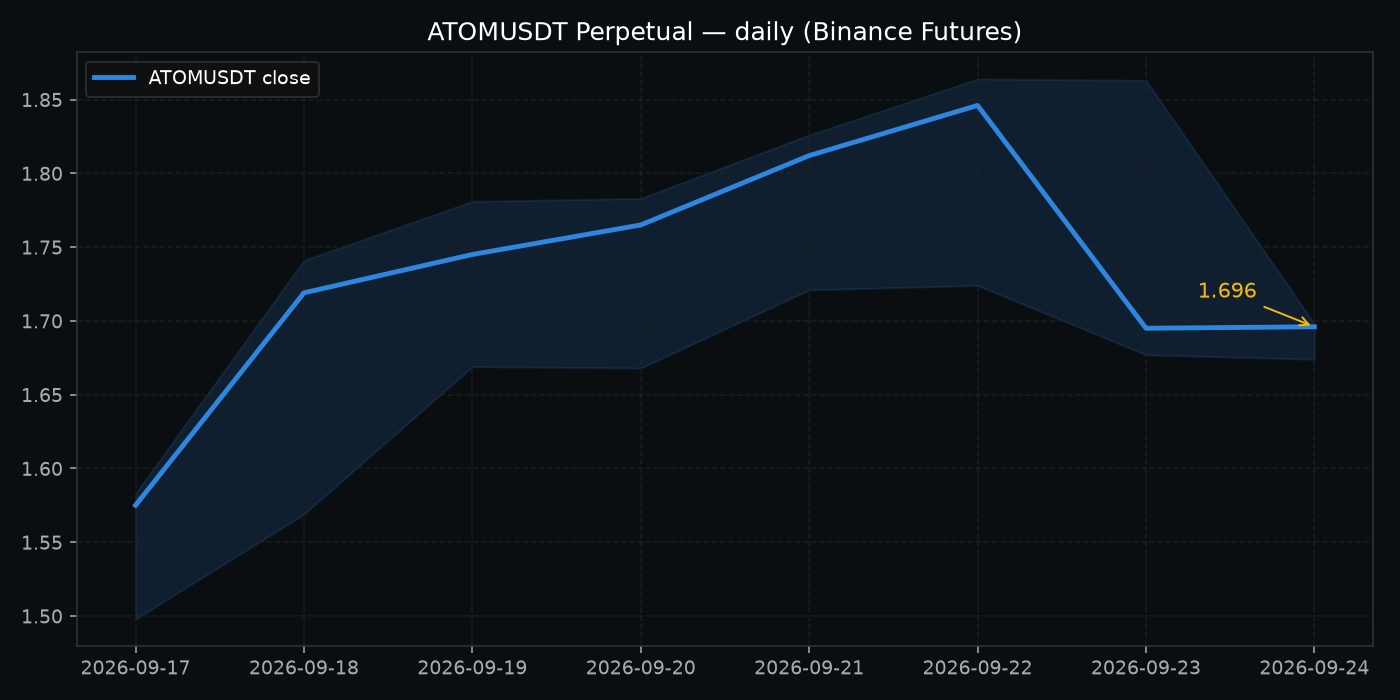
Perpetual price is around 1.70, opening around 1.82, high about 1.86 and low about 1.67, with a 24h change of roughly -6.8%. Volume is about $26.8M, with nearly 160k trades. Open interest is about 11.72M ATOM (≈$19.88M), and the funding rate is about -0.0075%.
Over the week, it moved from about 1.52 to 1.70—about +12%.
My take: there’s definitely controversy around stopping the chain to save funds, but the validators’ coordinated speed this time was faster than the market expected—at least it didn’t let that slice of ATOM escape smoothly. Next, we’ll see whether Neutron can still recover the remaining ATOM, and whether $ATOM sentiment can stabilize.



汉卿 hanqing 互粉版
·
--
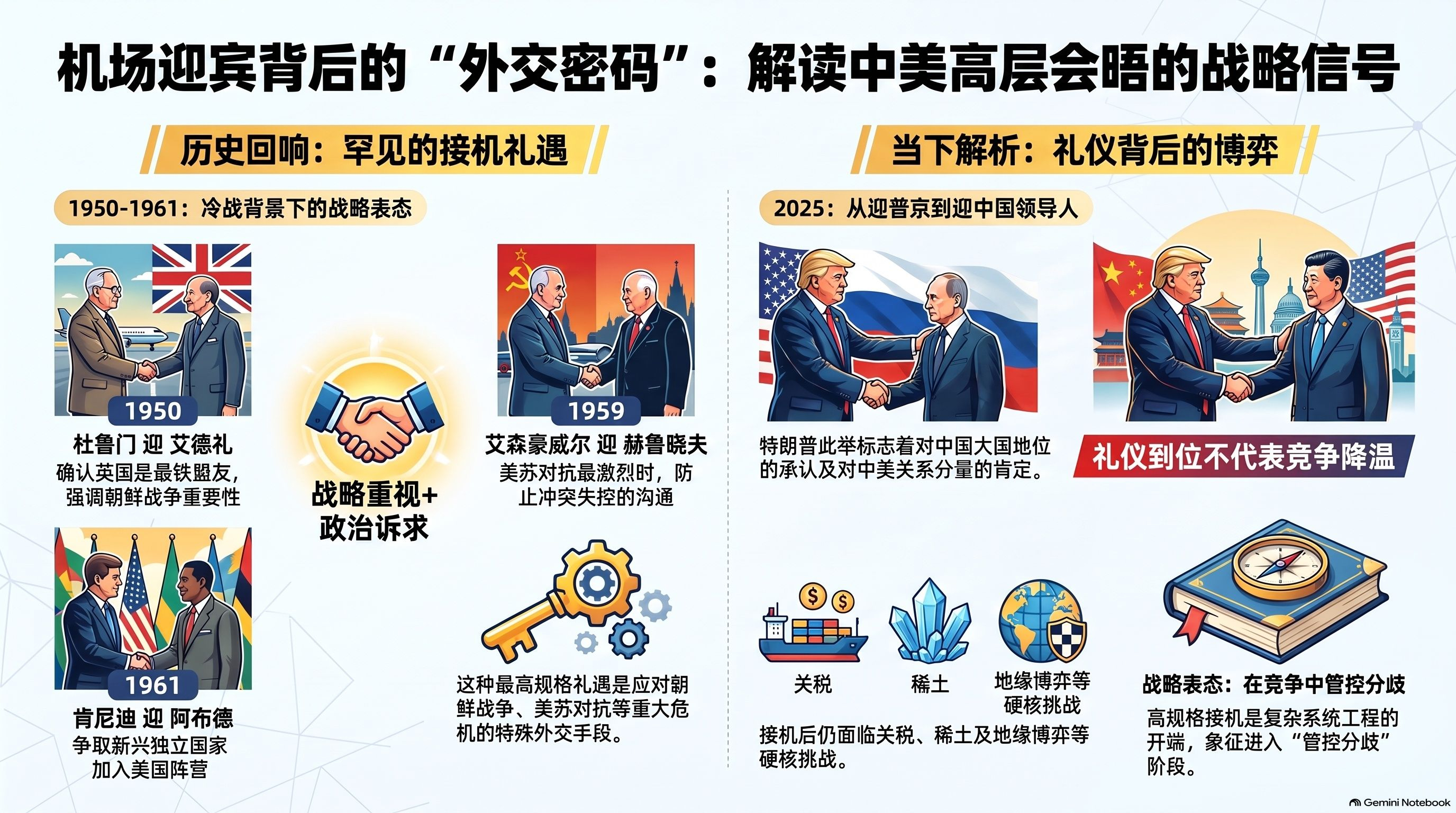
A summit that draws worldwide attention: Trump greeted the visiting leader at the airport—what diplomatic code is hidden in it? 🛬
Do you know? After World War II, it is rare indeed for a US president to personally go to the airport to welcome a foreign leader. Every time, it sends a heavy signal.
📌 In 1950, Truman welcomed British Prime Minister Clement Attlee—while the Korean War was in full swing, the US wanted the world to know: this war is crucial, and Britain is my staunchest ally.
📌 In 1957, Eisenhower welcomed South Vietnamese leader Ngô Đình Diệm—on the Cold War chessboard, openly giving a platform to the government in the South.
📌 In 1959, Eisenhower welcomed Khrushchev—when US-Soviet confrontation was at its fiercest, using face-to-face communication to prevent the situation from spiraling out of control.
📌 In 1961, Kennedy welcomed Sudanese President Abboud—sending a message to newly independent states: welcome to join the US camp.
The pattern is clear: airport greetings = strategic emphasis + political demands.
Now look at today:
🔹 In August 2025, Trump will welcome Putin in Alaska—his goal is to provide some resolution for the Russia-Ukraine conflict as soon as possible.
🔹 This time, he personally greeted China’s leadership—the weight is completely different. US-China relations have become the top priority in America’s global strategy. Economics, technology, security, and geopolitics are all intertwined across the board. This deep bow is an acknowledgment of China’s status as a major power, and also a statement on "managing differences in competition".
But don’t be too optimistic yet. Being at the airport doesn’t mean the temperature will cool. US-China relations are a three-dimensional and complex systems project—tariffs, rare earths, critical minerals, and geopolitical maneuvering. Each is a tough battle.
With the formalities done properly, the game is only just beginning. What can be negotiated next remains to be seen.🤝
#中美关系 #川习会 #International Observation
#FollowBack# #FollowAndReply#

B黑夜里的神话
·
--
Reasons Why ZEC Has Recently Gone Crazy Upward
News (Key Catalysts)
1. Grayscale ZEC spot ETF launches; institutional capital moves in
ZEC becomes the world’s first privacy coin spot ETF. With compliant channels opened, large institutions can legally buy ZEC. Previously, institutions that wanted to buy had no proper way to do so. After the ETF launched, incremental funds directly surged in—this is the biggest positive catalyst of this round. Europe also simultaneously launched ETP products, further expanding the capital entry points.
2. Privacy narrative explodes
In the AI era, topics like data surveillance and financial privacy are being repeatedly hyped. The market believes: since Bitcoin’s transactions are fully public, ZEC can choose to completely hide both transfer addresses and amounts. Financial privacy will become a long-term necessity. The entire privacy sector rotates upward, and ZEC is the sector’s leading bellwether.
3. Network upgrade is a tailwind
After completing the Ironwood vulnerability fix, the security concerns related to the zero-knowledge proofs were resolved, eliminating the market’s biggest security worries. In addition, the community passed the NU7 upgrade with high votes. In the future, block production time will be shortened, improving ecosystem expectations.
4. Short-squeeze pressure (a squeeze行情)
In the early stage, many traders were bearish and opened short positions. Once the price starts moving, shorts keep getting liquidated and forced to buy back ZEC to close their positions, pushing the price higher. The more it rises, the more liquidations occur, creating a positive feedback loop that accelerates the rally. There have been multiple instances of daily short liquidations in the tens of millions of dollars scale. #大零币达世币持续刷新历史新高 #ZECUSDT
GiGiZ 發財豬
·
--
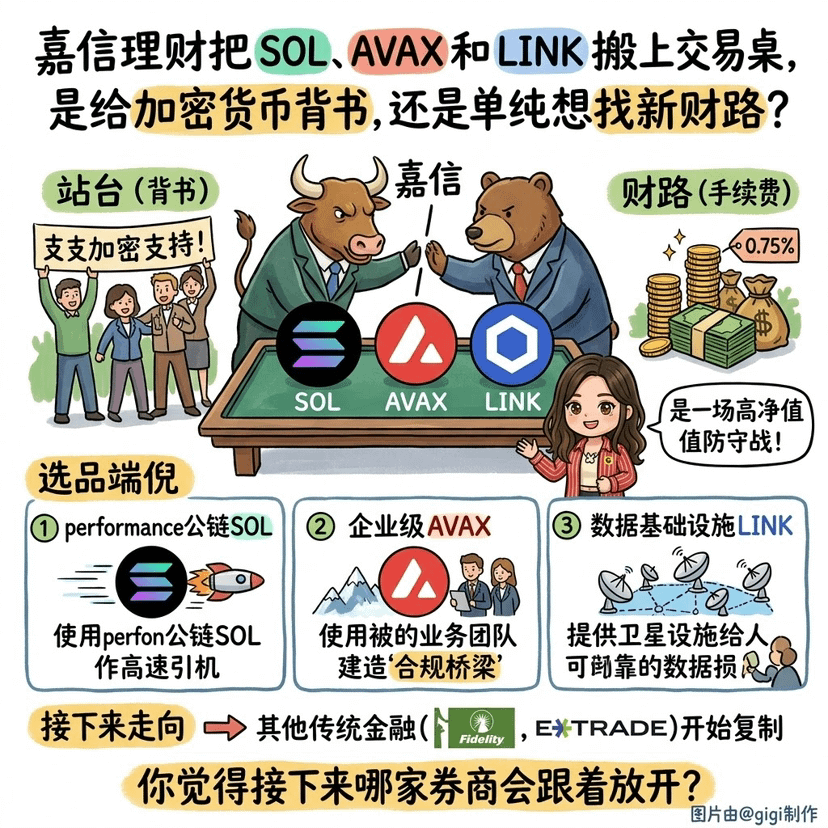
#嘉信理财拟新增SOLAVAXLINK交易
Traditional giant Charles Schwab brings SOL, AVAX, and LINK to the trading table— is this an endorsement of cryptocurrencies, or just a bid for a new revenue stream?
As a heavyweight managing over $13 trillion in assets and nearly 40 million accounts, after Schwab opened spot trading for $BTC and $ETH in May, it is now preparing to expand buy-and-sell access for these three tokens.
But from another angle, this looks like a defensive move.
Schwab charges a 0.75% fee per trade. Compared with E*TRADE’s 0.5% and Fidelity’s 1%, the pricing is pretty straightforward. They’re not chasing decentralized-belief for its own sake; they’re aiming to stop high-net-worth clients from routing funds—meant for allocating blockchain and oracle assets—to other platforms.
Even the token selection gives it away. They didn’t choose “air coins” driven purely by hype. Instead, they picked high-performance public chain SOL, enterprise-grade AVAX, and LINK as data infrastructure. This suggests that within traditional institutions’ compliance logic, what can be included in allocation frameworks must have real use cases and clear positioning.
What happens next?
▶️ Channel building is a long-term project
The news may push token prices higher in the short term, but the real “road building” is about gradually releasing liquidity— it won’t trigger a wild bull run overnight.
▶️ Brokers will accelerate the bandwagon
This move will pressure competitors to expand their token shelf space.
▶️ Institutional access will further squeeze the premium of traditional compliant exchanges, lowering the funding threshold.
The boundary between traditional finance and the crypto world is blurring faster. Which broker do you think will be next to open the doors?
DYOR

黄粱一梦
·
--
Past, present, and the future—we will never leave this crypto circle, and we will never sell my faith. I still believe in the bull market; I still acknowledge that my vision is not good enough; I still lack wisdom.
But I believe $BTC , I believe in the consensus of countless people behind this crypto world, I believe in every iteration and struggle of the entire ecosystem, I believe in the developers, preachers, and ordinary holders who are still building through each bitter winter, and I believe that ultimately there will be rebounds and new highs. Time will prove BTC, and it will also prove that this circle deserves all the persistence.#比特币现货ETF结束9日净流入
But I believe $BTC , I believe in the consensus of countless people behind this crypto world, I believe in every iteration and struggle of the entire ecosystem, I believe in the developers, preachers, and ordinary holders who are still building through each bitter winter, and I believe that ultimately there will be rebounds and new highs. Time will prove BTC, and it will also prove that this circle deserves all the persistence.#比特币现货ETF结束9日净流入


OpenSea Official
·
--
My Girlfriend Jing Tian, Purely Fiction — Is the 30 Million Betrothal Gift Real?
On August 27, a crypto-industry celebrity, Sun Yuchen, published a long post titled (My Girlfriend, Jing Tian). From meeting her to discussing marriage, the details were packed in to the max, leaving netizens stunned.
Then everyone turned to the very last line of the article and found a sentence that read: Purely fictional.
Well, who’s ever seen any nonfiction literature that ends with a note saying "Purely fictional"? This move might be unprecedented in literary history—you think it’s a memoir, but it turns out to be a sci-fi novel. The problem is: on the very same day this "fictional novel" was posted, the other party went to court to sue, demanding that Jing Tian return more than 30 million in betrothal gifts, and also applied for property preservation.


镰刀判官
·
--
Facing the global debt crisis!
The Americans press down one gourd and then raise another!
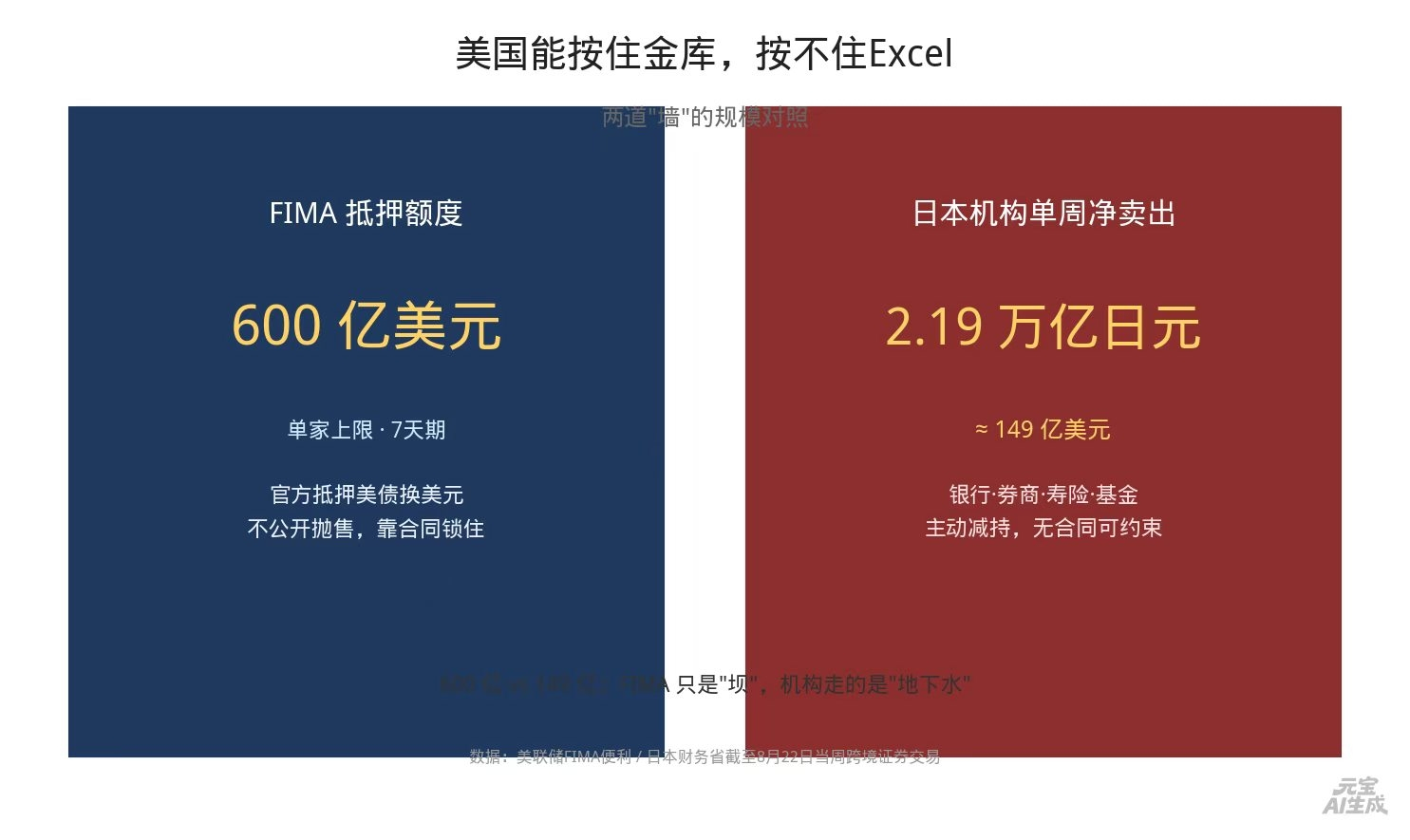
Bessent uses the FIMA repurchase facility to keep Tokyo officials from dumping U.S. Treasuries.
The U.S. thought it had welded the gates of the “financial Pearl Harbor.”
But in the week of August 22, the Bank of Japan, brokers, life insurers, and funds collectively net sold overseas securities of JPY 2.19 trillion— the largest liquidation since early April.
Officials are pinned inside the collateral pool, while Japanese institutions themselves haul U.S. Treasuries to swap for domestic currency.
Why roll into Japanese debt? Because the 10-year JGB yield has climbed to 2.945%, with the 30-year hitting a new high.
That hand which used to ship money abroad in the zero-interest-rate era now flips back and pulls funds home:
Domestic bond yields can cover FX hedging—once you run the numbers in Excel, holding U.S. Treasuries becomes a negative contribution.
This isn’t an “forced sell” driven by exchange rates; it’s an “active withdrawal” calculated from the yield spread.
Bessent’s contract was signed with the Ministry of Finance—he can’t sign it with Nomura’s risk control, nor with the First Life Asset-Liability Committee.
Even worse is Japan’s own fiscal tightening:
In fiscal year 2027, Japan’s debt principal and interest payments total JPY 36.64 trillion, with interest payments at JPY 16.59 trillion (up 27% year over year). Assuming rates rise to 3.8%.
The government needs to raise rates to stabilize the yen → institutions love Japanese debt even more → the government’s own interest bill explodes;
The government dares not raise rates → the yen falls further → the FIMA额度 is burned up, and it still has to beg the U.S.
That dam built by the U.S. blocks allies’ treasuries, but it can’t block allies’ actuaries’ calculations.
Three dates nailed down the turning point:
9/3—MoF weekly cross-border data: see whether selling pressure is a pulse or a trend
9/8—monthly data: break down who is selling and what they’re selling
9/17-18—BoJ meeting: probability of rate hikes is about 80%; when yields rise by 25 bps, the attractiveness of absorbing in domestic currency jumps another level
The label “Japan as a long-term capital exporter” is officially flipped over:
Institutions sell U.S. Treasuries, go back to buy Japanese debt, and—on the side—boost U.S. long-end yields again.
The U.S. can hold down Japan’s government, but it can’t hold down Japan’s institutions’ Excel.
If things go badly, it may actually be Japan that brings down the U.S. this time!
A genuinely U.S.-style version: Chu perishes when the Three Households betray the Qin—$EWJ
#日本加息

MarsBit News
·
--
Uniswap trading volume surges on Robinhood, UNI breaks through $5.2
Mars Finance news: On August 30, according to market information, UNI broke through $5.24, with the 24-hour gain widening to 18.9%. The biggest catalyst for this round of UNI’s rally was the surge in real trading volume on Robinhood Chain, which has made Uniswap the leading DEX for tokenized stock RWA on Robinhood. The daily trading volume of tokenized stocks reached about $130 million, increasing nearly 10-fold over the month. In addition, since the v4 version fee switch went live on Robinhood on July 27, this chain has become the major contributor to Uniswap’s protocol fees. Currently, Robinhood’s 24-hour protocol fees are about $11.29 million, with Uniswap and issuing platform Pons contributing roughly $4.3 million each. Uniswap ranks first among all protocols. Under the v4 version fee switch rules, Uniswap protocol fees in the $4.3 million range will provide continuous burns to UNI of around 200,000–300,000 per day. Based on the current price, this is equivalent to about 57,000 UNI burned per day.
老渔夫
·
--
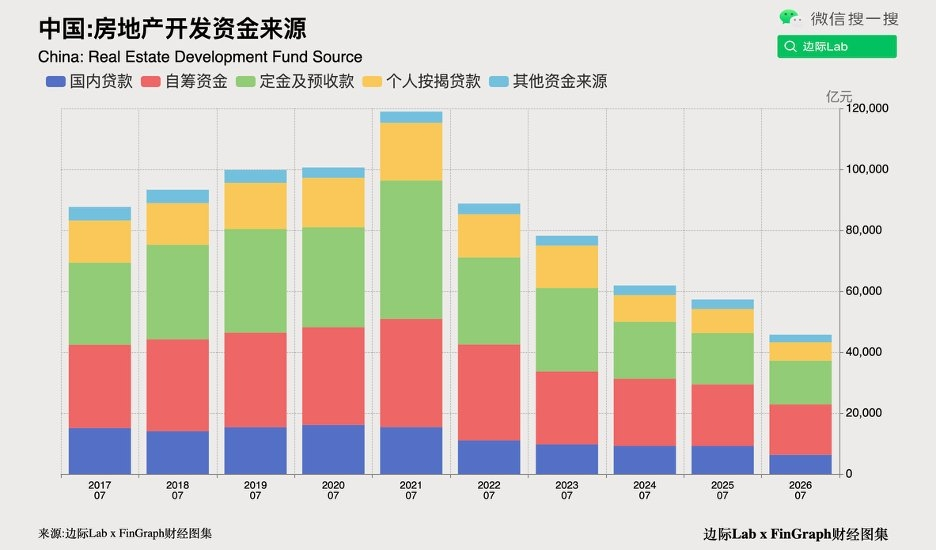
China’s real estate credit rules have been changed again—this time the move is significant. The People’s Bank of China and the National Financial Regulatory Administration have acted together. The core is two lines: one regulates homebuyers, and the other regulates developers.
For homebuyers: mortgage loans for pre-sold homes will only be released after completion and filing for the property (previously, it was enough to top out the main structure). The loan term has been extended to 40 years, and the maximum allowable ratio of monthly mortgage payments to income has been raised from 55% to 60%. In plain terms, it reduces your risk of ending up with a bad project and monthly payment burdens—but the trade-off is that you have to wait longer to get the loan.
For developers: it’s even tougher. Previously, funding was based on the real estate group’s overall qualifications. Now it’s changed to project-by-project approval: one project is reviewed by one project-specific lead approving bank, and funds are subject to closed-loop management. Pre-sale project loans are capped at five years, while loans for completed homes are 7 years. Moreover, in principle, repayment of principal only starts after completion filing. This effectively blocks the old path for developers to shuffle pre-sale proceeds across different projects.
With this package of measures, future new projects will rely more on developers’ own capital and bank development loans. Real estate firms with lower financing costs and strong project management capabilities will live more comfortably, while smaller developers and highly leveraged players basically have no chance. Industry reshuffling will accelerate, and resources will be further concentrated in the leading players.
Honestly, the policy logic is very clear: ensure delivery of projects, reduce leverage, and squeeze out excess bubbles. But for homebuyers, you need patience to wait for completion; for developers, you need real cash and strong management capability. The golden era of the pre-sale system has come to an end. Next, it will be a matter of who can last until the end.

摸鱼局长
·
--
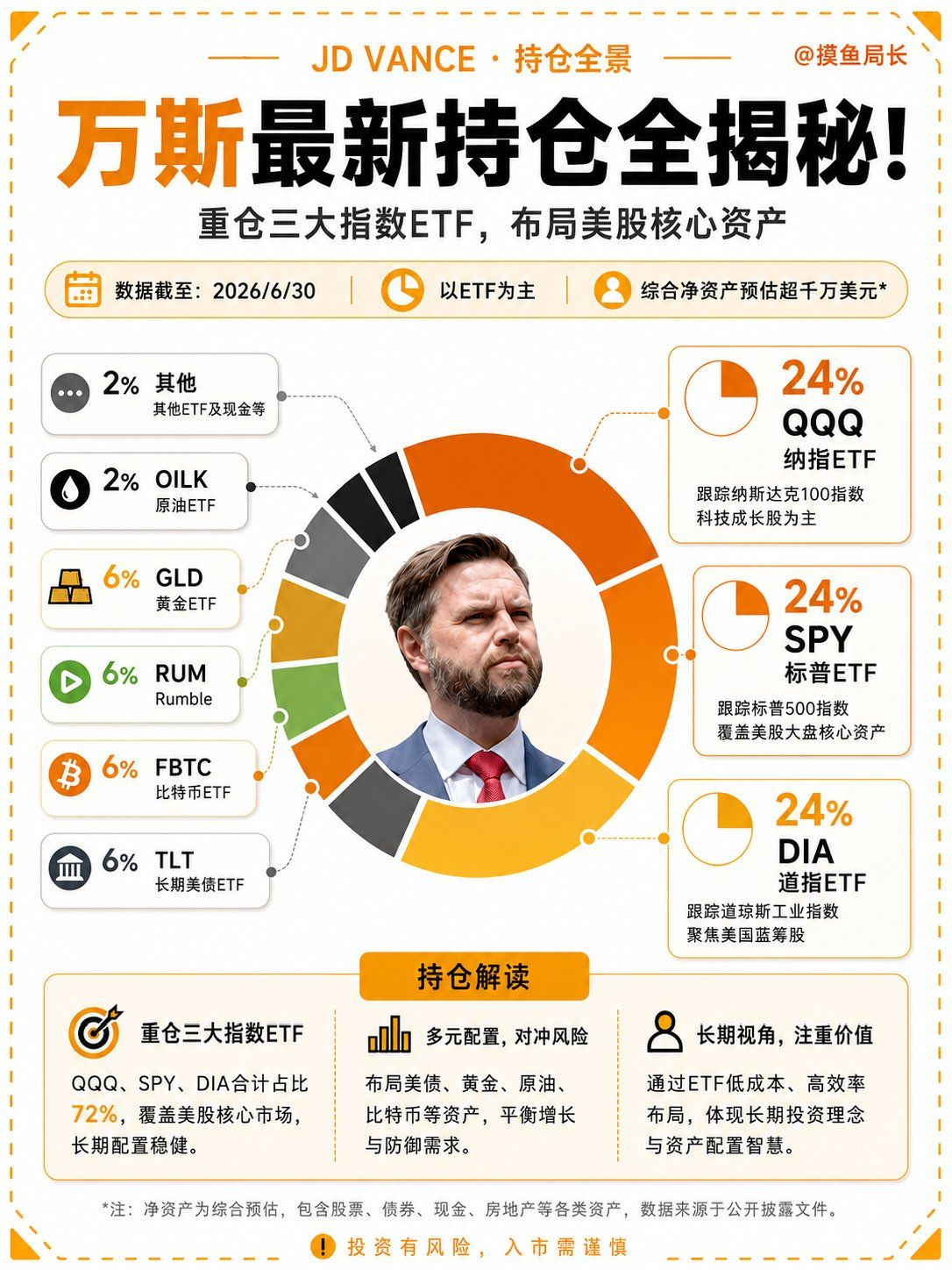
The latest holdings of U.S. Vice President Vance—actually quite suitable for ordinary people to study
At first glance, it looks like there are plenty of assets, but once you break it down, the logic is very simple:
QQQ 24%
SPY 24%
DIA 24%
These three broad-market index ETFs together make up 72%
The remaining allocation is split among long-term U.S. Treasuries, gold, Bitcoin, Rumble, crude oil, and other assets
I think this portfolio has 3 noteworthy points:
① The core allocation is highly concentrated
QQQ handles tech growth, SPY covers the S&P 500, and DIA leans more toward traditional blue chips. These three ETFs basically form the “base” of the entire portfolio
② Small allocations serve different functions
Gold and U.S. Treasuries are more defensive, while Bitcoin and Rumble provide higher upside/elasticity; crude oil adds exposure to another asset class
③ What truly affects portfolio performance is still the 72% core allocation
Many people, when they see the holdings, will focus on the more attention-grabbing parts like Bitcoin and individual stocks first. But based on position sizing, the index ETFs are what ultimately determine overall returns
For ordinary investors, you may not need to copy his exact proportions, but this way of thinking is worth considering:
Put most of your allocation into core assets you believe in for the long term, and then use smaller allocations to participate in other opportunities
In the end, what investment success often comes down to is the position structure, discipline, and holding period
What do you think of this setup of “72% broad-market ETFs + 28% other assets”?


Binance News
·
--
Uniswap Destroys $300,000 Worth of UNI in 10 Days
Messari said in a post that Uniswap destroyed UNI tokens worth more than $300,000 within the past 10 days. According to a report by Foresight News, its annualized burn rate is currently $160 million.
天择
·
--
Bullish#越南试点加密资产市场
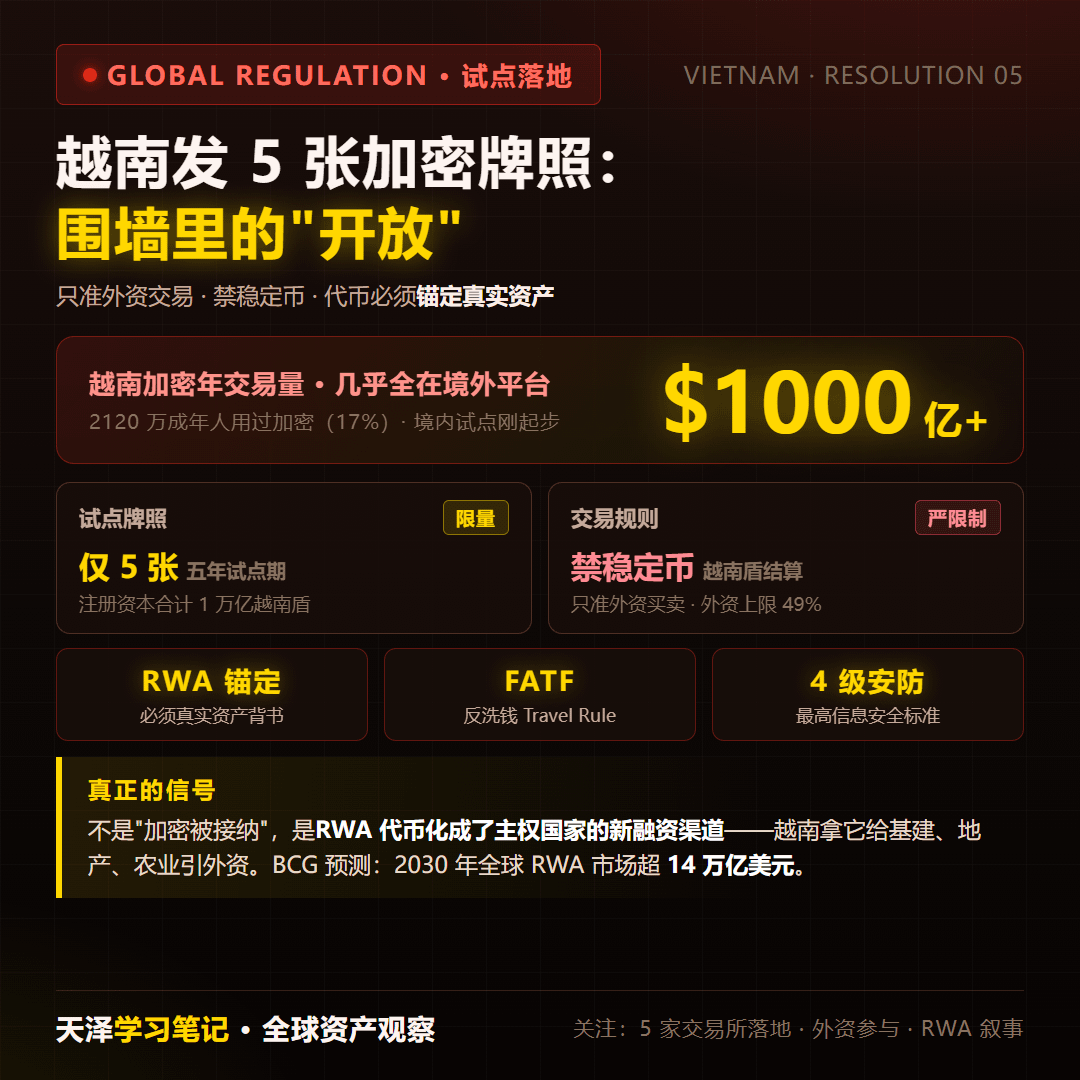
Vietnam has issued encrypted license plates; one time 5 licenses, a five-year pilot.
First, look at the numbers: Vietnam has 21.2 million adults who have used cryptocurrencies, accounting for 17% of the adult population. Annual trading volume is over $100 billion—yet almost all of it is on overseas platforms.
Now Vietnam wants to build a licensed, domestic market, and the rules are as follows:
▪️ Only 5 licenses will be issued in the pilot; total registered capital is 1 trillion VND (about $400 million) ▪️ Settlement is allowed only in VND; stablecoins (USDT) are directly banned
▪️ Only Vietnamese companies can issue tokens, and they must be backed by real assets (real estate, infrastructure, agricultural products, etc.), not “air”
▪️ In the initial stage, only foreign investors may trade; the cap on foreign ownership is 49%—keeping domestic retail users out first
It looks open on the surface, but it’s an “open” inside walls.
The real signal isn’t “Vietnam embracing crypto,” but RWA (tokenization of real-world assets) becoming a new financing tool for sovereign countries. Vietnam isn’t short on projects—real estate, infrastructure, and agriculture all want money from around the world, and tokenization is their new channel. BCG predicts the global RWA market will exceed $1.4 trillion by 2030.
For crypto traders’ perspective:
$100 billion is still mainly overseas. Vietnamese people have already been trading on platforms like Binance—domestic issuance of 5 licenses won’t divert much in the short term. But this is the first sign of an “official diversion”; the long-term trend still needs close watching.
Stablecoins continue to be pushed to the margins by regulation. Vietnam bans USDT domestically, and Hong Kong is also tightening. Within the compliance framework, stablecoins’ space is getting narrower. Overseas markets keep playing as usual, but there’s no place for them in the “compliant narrative.”
RWA may be one of the next main storylines. Hong Kong and Vietnam are both betting on “putting real assets on-chain.” This aligns with the direction in which governments are willing to grant legitimacy. The narrative space for “air coins” will gradually be squeezed out by things that have “asset backing.”
Next to watch: when the five exchanges officially launch, how foreign capital participates, and whether there are new compliant listings in the RWA direction.
This “openness” inside the walls—do you think it’s a positive development, or just another tightening spell?
$BTC $ETH
Log in to explore more content