

阿墨交易笔记
2.4k Posts
阿墨交易笔记
Report
Block User
实时策略公众号:加密探长,币圈资深导师,区块链行情分析、合约策略分享,加密市场底层逻辑深度剖析
2 Following
1.0K+ Followers
906 Liked
Posts
All
Quotes
Videos
PINNED
·
--
With years of deep engagement in spot trading within the crypto space, I've developed a unique mobile locking strategy. I'm skilled in analyzing high and low support and resistance levels, expertly reading daily pullbacks, and predicting trends at weekly tops and monthly beginnings. By combining technical analysis with news-driven trading, I execute bids in both directions while maintaining strict risk management and position control. I'm here for 24/7 real-time trading connections, ensuring operations are steady, precise, and never sluggish. If you're looking to grasp market cycles and engage in stable arbitrage, feel free to reach out (煮页)
$ETH $RE $BICO
With years of deep engagement in spot trading within the crypto space, I've developed a unique mobile locking strategy. I'm skilled in analyzing high and low support and resistance levels, expertly reading daily pullbacks, and predicting trends at weekly tops and monthly beginnings. By combining technical analysis with news-driven trading, I execute bids in both directions while maintaining strict risk management and position control. I'm here for 24/7 real-time trading connections, ensuring operations are steady, precise, and never sluggish. If you're looking to grasp market cycles and engage in stable arbitrage, feel free to reach out (煮页)
$ETH $RE $BICO
$ETH $RE $BICO
2
227
PINNED
·
--
Letting go of the obsession with single trade profits and losses is the first step in leveling up your trading game! The crypto market is always in flux, with bulls and bears battling it out, and price swings cycling continuously. Top-tier trading logic relies on understanding market structure and cycle rhythms to trade with the trend. Adjust your trading strategy based on market size, continuously optimize your trading system, and you’ll be able to stand strong in the market for the long haul.
$BTC $ETH $ZEC
Letting go of the obsession with single trade profits and losses is the first step in leveling up your trading game! The crypto market is always in flux, with bulls and bears battling it out, and price swings cycling continuously. Top-tier trading logic relies on understanding market structure and cycle rhythms to trade with the trend. Adjust your trading strategy based on market size, continuously optimize your trading system, and you’ll be able to stand strong in the market for the long haul.
$BTC $ETH $ZEC
$BTC $ETH $ZEC
1
1
373
·
--
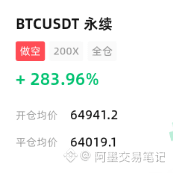
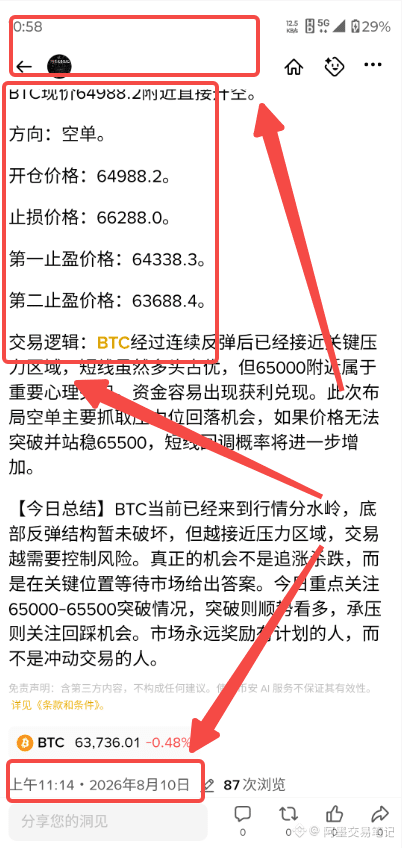
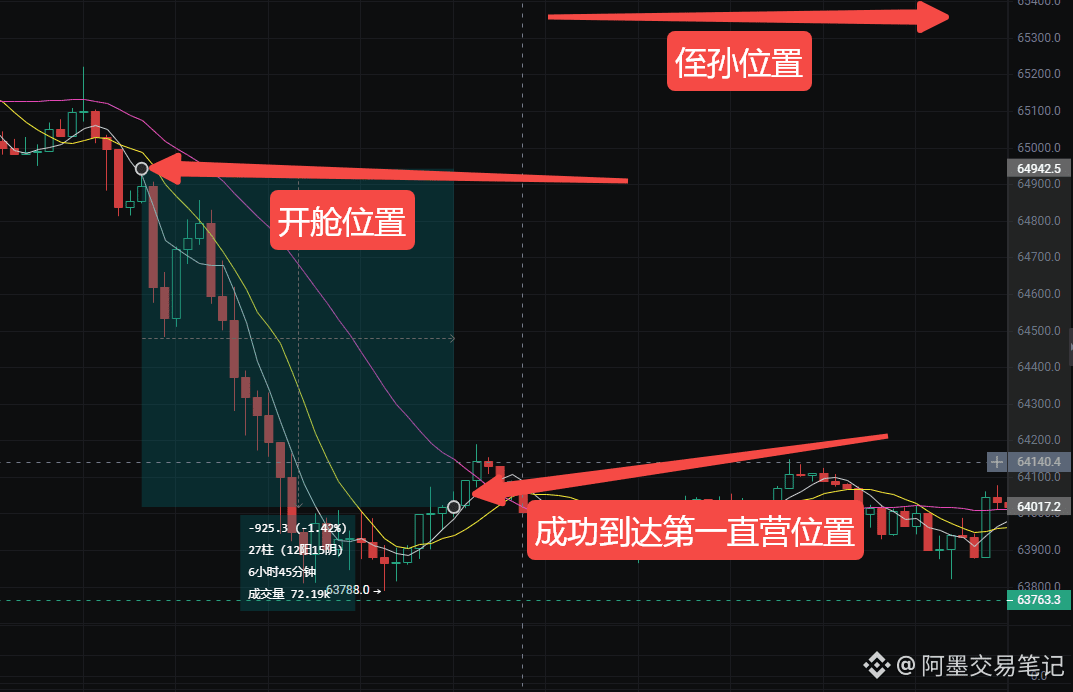
BTC successfully took 283 points!!!!After the confirmation of the high-level resistance, we laid out the plan accordingly; the short-sellers’ rhythm was precisely realized, and the market pullback fully matched expectations!Profit was safely secured in hand. Trading is about judgment and execution—next round of opportunities is still waiting!$BTC $ETH $SOL #BTC #ETH #DOGE #AKE #ACE
BTC successfully took 283 points!!!!After the confirmation of the high-level resistance, we laid out the plan accordingly; the short-sellers’ rhythm was precisely realized, and the market pullback fully matched expectations!Profit was safely secured in hand. Trading is about judgment and execution—next round of opportunities is still waiting!$BTC $ETH $SOL #BTC #ETH #DOGE #AKE #ACE
阿墨交易笔记
·
--
BTC Attempts to Break the 65,000 Mark! The Bull-Bear Battle Enters a Critical Stage—The Next Wave of Market Action May Choose a Direction
BTC’s current price is around 64,988.2. According to the K-line trend, BTC has recently gone through a clear low-level correction phase: after dipping and bottoming around 62,228, it continued rebounding. It has now reclaimed the level above 64,000 and is gradually pushing toward the 65,000 resistance zone. Market sentiment has started to warm up, but as the price nears the previous resistance area, the battle between bulls and bears is intensifying, and the short-term market has entered a critical standoff. Judging from the daily, 4-hour, and 1-hour chart structure, although BTC’s short-term rebound trend remains intact, the 65,000–65,500 area presents clear overhead pressure. Today, the focus is more on the opportunity to watch for a pullback after the price tests higher.
148
·
--
Article
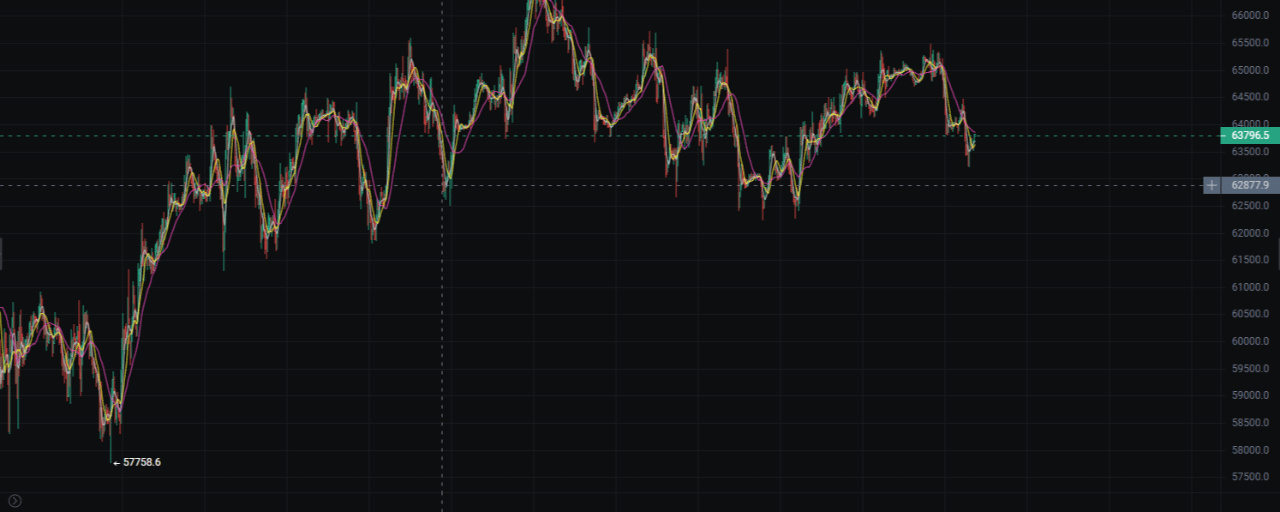
A Sign of Bearish Pressure and Pullback Has Appeared at High Levels for BTC! Will the Bears Start Another Round of Selling Near $63,800?Based on the K-line走势, BTC has recently rebounded from the $57,758 low. After pushing up to around $66,924, it showed a clear pullback. Currently, the price is trading around $63,835. From the chart, it can be seen that the earlier uptrend faced strong pressure in the $65,000–$67,000 range: multiple attempts to surge failed to achieve an effective breakout, and short-term capital has started to take profits and exit. The current price has fallen below support of the short-term moving average, indicating the market has entered a correction phase. Today, focus on whether support around $63,800 can hold. If the rebound cannot reclaim the $64,500 area, the bears still have further room to release downside momentum.
A Sign of Bearish Pressure and Pullback Has Appeared at High Levels for BTC! Will the Bears Start Another Round of Selling Near $63,800?
Based on the K-line走势, BTC has recently rebounded from the $57,758 low. After pushing up to around $66,924, it showed a clear pullback. Currently, the price is trading around $63,835. From the chart, it can be seen that the earlier uptrend faced strong pressure in the $65,000–$67,000 range: multiple attempts to surge failed to achieve an effective breakout, and short-term capital has started to take profits and exit. The current price has fallen below support of the short-term moving average, indicating the market has entered a correction phase. Today, focus on whether support around $63,800 can hold. If the rebound cannot reclaim the $64,500 area, the bears still have further room to release downside momentum.
158
·
--
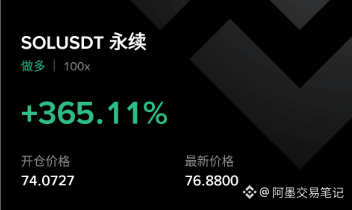
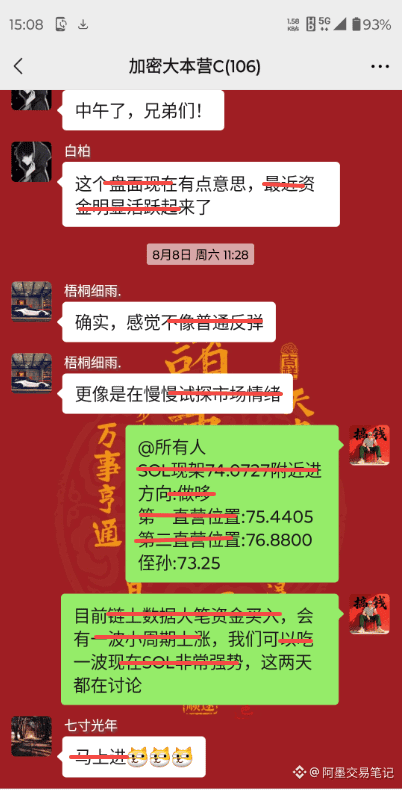
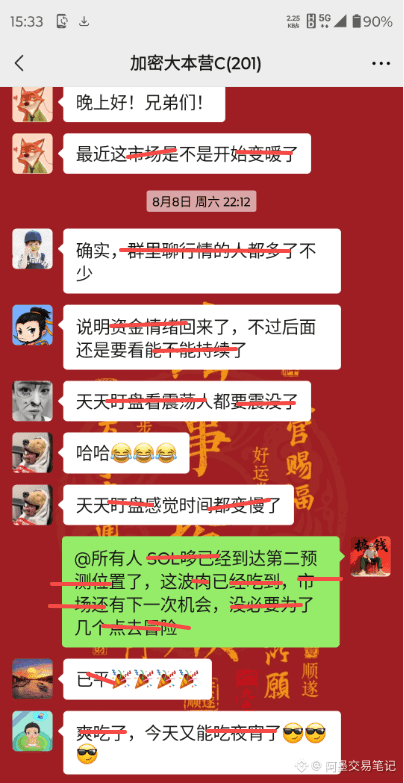
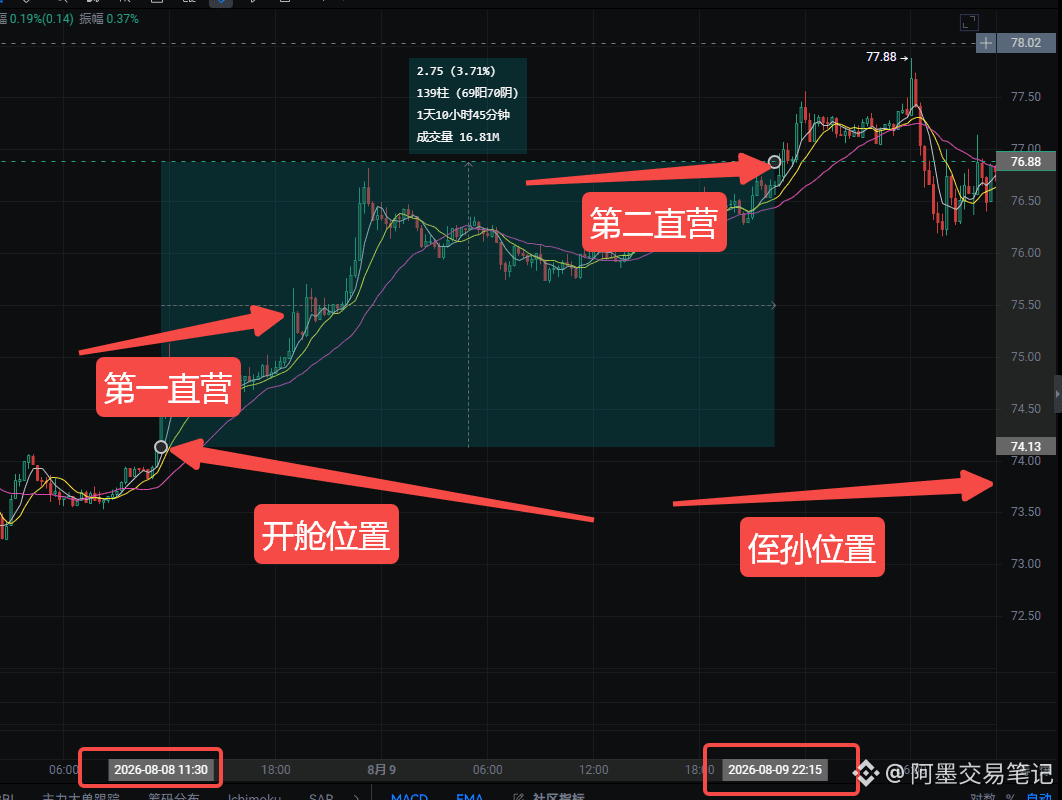
SOL long 365 points successfully secured!🔥 This upward run perfectly played out and delivered as expected. After the trend is confirmed, we follow the momentum—bullish power keeps releasing, and the market movement matches our forecast! Profit is steadily secured in our pockets. Trading relies on judgment and execution. The next opportunity—stay locked in!🚀$SOL $TUT $ETH #BTC #DOGE #AKE #ACE #beat
SOL long 365 points successfully secured!🔥 This upward run perfectly played out and delivered as expected. After the trend is confirmed, we follow the momentum—bullish power keeps releasing, and the market movement matches our forecast! Profit is steadily secured in our pockets. Trading relies on judgment and execution. The next opportunity—stay locked in!🚀$SOL $TUT $ETH #BTC #DOGE #AKE #ACE #beat
38
·
--
🚨Big Whale Shorting XYZ100! Markets.xyz users open a $22.4 million short position in a single transaction, making them the largest holder right now.
According to on-chain monitoring, the Markets.xyz user “Jasper3611” opened 750 XYZ100 short positions within the past 9 hours, with a position value of about $22.4 million.
Data shows that since May 14, 2026, this account has accumulated profits of $2.7198 million and total trading volume exceeding $610 million.
Currently, this account holds the largest XYZ100 short position, accounting for roughly 9.8% of the market’s open interest.
In plain terms👇 this trader is betting on XYZ100’s decline with tens of millions in capital, and their trading performance over the past few months has also been quite impressive.
Large funds entering short positions typically focus on:
📌 Changes in market trends
📌 Key price pressure levels
📌 Liquidity and capital sentiment
However, a whale’s holdings don’t guarantee that the market will move in his direction—especially in high-leverage markets, any trend reversal can trigger massive volatility.
Right now, the market is paying close attention to:
🔥 Whether the XYZ100 price will undergo further pullback
🔥 Whether this account continues to add to its short position
🔥 The battle between long and short funding
One-sentence summary: Markets.xyz user “Jasper3611” opened a $22.4 million XYZ100 short, is currently the largest holder, has earned over $2.7 million in profits so far, and the whale’s moves are becoming a key focus for the market.🐋📉$TUT
{future}(TUTUSDT)
🚨Big Whale Shorting XYZ100! Markets.xyz users open a $22.4 million short position in a single transaction, making them the largest holder right now.
According to on-chain monitoring, the Markets.xyz user “Jasper3611” opened 750 XYZ100 short positions within the past 9 hours, with a position value of about $22.4 million.
Data shows that since May 14, 2026, this account has accumulated profits of $2.7198 million and total trading volume exceeding $610 million.
Currently, this account holds the largest XYZ100 short position, accounting for roughly 9.8% of the market’s open interest.
In plain terms👇 this trader is betting on XYZ100’s decline with tens of millions in capital, and their trading performance over the past few months has also been quite impressive.
Large funds entering short positions typically focus on:
📌 Changes in market trends
📌 Key price pressure levels
📌 Liquidity and capital sentiment
However, a whale’s holdings don’t guarantee that the market will move in his direction—especially in high-leverage markets, any trend reversal can trigger massive volatility.
Right now, the market is paying close attention to:
🔥 Whether the XYZ100 price will undergo further pullback
🔥 Whether this account continues to add to its short position
🔥 The battle between long and short funding
One-sentence summary: Markets.xyz user “Jasper3611” opened a $22.4 million XYZ100 short, is currently the largest holder, has earned over $2.7 million in profits so far, and the whale’s moves are becoming a key focus for the market.🐋📉$TUT
According to on-chain monitoring, the Markets.xyz user “Jasper3611” opened 750 XYZ100 short positions within the past 9 hours, with a position value of about $22.4 million.
Data shows that since May 14, 2026, this account has accumulated profits of $2.7198 million and total trading volume exceeding $610 million.
Currently, this account holds the largest XYZ100 short position, accounting for roughly 9.8% of the market’s open interest.
In plain terms👇 this trader is betting on XYZ100’s decline with tens of millions in capital, and their trading performance over the past few months has also been quite impressive.
Large funds entering short positions typically focus on:
📌 Changes in market trends
📌 Key price pressure levels
📌 Liquidity and capital sentiment
However, a whale’s holdings don’t guarantee that the market will move in his direction—especially in high-leverage markets, any trend reversal can trigger massive volatility.
Right now, the market is paying close attention to:
🔥 Whether the XYZ100 price will undergo further pullback
🔥 Whether this account continues to add to its short position
🔥 The battle between long and short funding
One-sentence summary: Markets.xyz user “Jasper3611” opened a $22.4 million XYZ100 short, is currently the largest holder, has earned over $2.7 million in profits so far, and the whale’s moves are becoming a key focus for the market.🐋📉$TUT

259
·
--
🚨BTC sees a large transfer! FalconX transfers 120 BTC to Coinbase, worth about $7.82 million.
According to on-chain monitoring, FalconX transferred 120 BTC to Coinbase 24 minutes ago; its current value is about $7.82 million.
In plain terms👇 nearly $8 million worth of Bitcoin is flowing into an exchange, and the market is starting to watch what this money will be used for next.
Large BTC inflows to exchanges often may involve:
📌 Institutional rebalancing
📌 Changes in asset custody
📌 Market-making needs
📌 Preparing for potential selling
However, note that depositing to an exchange doesn’t necessarily mean it will be sold. The movement of on-chain funds is only one market-observation signal—the real drivers of price action are the subsequent trades and the overall flow of capital.
What to watch right now:
🔥 Whether Coinbase shows continuous BTC inflows
🔥 Whether whales and institutions adjust their positions in sync
🔥 Whether key BTC support levels can stay stable
One-sentence summary: FalconX transferred 120 BTC to Coinbase, worth about $7.82 million. Institutional fund movements are worth watching, but whether selling pressure will form still needs confirmation from subsequent on-chain changes.🐋₿📉
🚨BTC sees a large transfer! FalconX transfers 120 BTC to Coinbase, worth about $7.82 million.
According to on-chain monitoring, FalconX transferred 120 BTC to Coinbase 24 minutes ago; its current value is about $7.82 million.
In plain terms👇 nearly $8 million worth of Bitcoin is flowing into an exchange, and the market is starting to watch what this money will be used for next.
Large BTC inflows to exchanges often may involve:
📌 Institutional rebalancing
📌 Changes in asset custody
📌 Market-making needs
📌 Preparing for potential selling
However, note that depositing to an exchange doesn’t necessarily mean it will be sold. The movement of on-chain funds is only one market-observation signal—the real drivers of price action are the subsequent trades and the overall flow of capital.
What to watch right now:
🔥 Whether Coinbase shows continuous BTC inflows
🔥 Whether whales and institutions adjust their positions in sync
🔥 Whether key BTC support levels can stay stable
One-sentence summary: FalconX transferred 120 BTC to Coinbase, worth about $7.82 million. Institutional fund movements are worth watching, but whether selling pressure will form still needs confirmation from subsequent on-chain changes.🐋₿📉
According to on-chain monitoring, FalconX transferred 120 BTC to Coinbase 24 minutes ago; its current value is about $7.82 million.
In plain terms👇 nearly $8 million worth of Bitcoin is flowing into an exchange, and the market is starting to watch what this money will be used for next.
Large BTC inflows to exchanges often may involve:
📌 Institutional rebalancing
📌 Changes in asset custody
📌 Market-making needs
📌 Preparing for potential selling
However, note that depositing to an exchange doesn’t necessarily mean it will be sold. The movement of on-chain funds is only one market-observation signal—the real drivers of price action are the subsequent trades and the overall flow of capital.
What to watch right now:
🔥 Whether Coinbase shows continuous BTC inflows
🔥 Whether whales and institutions adjust their positions in sync
🔥 Whether key BTC support levels can stay stable
One-sentence summary: FalconX transferred 120 BTC to Coinbase, worth about $7.82 million. Institutional fund movements are worth watching, but whether selling pressure will form still needs confirmation from subsequent on-chain changes.🐋₿📉
37
·
--

Article
TrueFi (TRU) Comprehensive Overview: Exploring a New Financial Infrastructure for Unsecured DeFi LendingTrueFi (TRU) is an unsecured, collateral-free lending protocol focused on the DeFi space. Its goal is to bring the credit lending model from traditional finance into the blockchain world, enabling users to complete borrowing without over-collateralized assets, while also creating stable yield opportunities for capital providers.
In short:
What TrueFi aims to solve is the problem of over-reliance on collateral in DeFi lending—helping blockchain finance gradually shift from “you need assets to borrow” to “borrow based on credit.”
Today, most DeFi lending protocols—such as the collateralized lending model—generally require users to first deposit crypto assets with a higher value as collateral before they can borrow funds. While this approach is relatively safe, it limits capital utilization efficiency and cannot fully meet the demand from enterprises and institutional users for credit-based loans.
TrueFi (TRU) Comprehensive Overview: Exploring a New Financial Infrastructure for Unsecured DeFi Lending
TrueFi (TRU) is an unsecured, collateral-free lending protocol focused on the DeFi space. Its goal is to bring the credit lending model from traditional finance into the blockchain world, enabling users to complete borrowing without over-collateralized assets, while also creating stable yield opportunities for capital providers.
In short:
What TrueFi aims to solve is the problem of over-reliance on collateral in DeFi lending—helping blockchain finance gradually shift from “you need assets to borrow” to “borrow based on credit.”
Today, most DeFi lending protocols—such as the collateralized lending model—generally require users to first deposit crypto assets with a higher value as collateral before they can borrow funds. While this approach is relatively safe, it limits capital utilization efficiency and cannot fully meet the demand from enterprises and institutional users for credit-based loans.
In short:
What TrueFi aims to solve is the problem of over-reliance on collateral in DeFi lending—helping blockchain finance gradually shift from “you need assets to borrow” to “borrow based on credit.”
Today, most DeFi lending protocols—such as the collateralized lending model—generally require users to first deposit crypto assets with a higher value as collateral before they can borrow funds. While this approach is relatively safe, it limits capital utilization efficiency and cannot fully meet the demand from enterprises and institutional users for credit-based loans.
13
·
--

Article
From Measuring Land to Measuring Wealth OpportunitiesMany retail investors face a common problem when they first enter the market: they feel that if they study the price action deeply enough and look at the indicators closely enough, they can work out how to make money. But once you’ve gone through a few rounds of market cycles, you realize the least rational thing about the market is that it never follows the path of your calculations. This fan submission today is a typical example. At 33, he’s a surveying and mapping engineer who has spent years traveling around for urban construction and road planning projects—most of the time at worksites or on business trips. His job is stable and his income is decent, but the issue is very real: time is becoming more and more expensive, while income growth is slowing down. At an industry exchange event, he encountered new technologies like drones, digital maps, and smart cities. That was also the first time he learned about how blockchain can be applied in the data space. At first, he wasn’t thinking about making money at all—he just felt it might affect the future. So during his spare time, he started researching the BTC, ETH, and digital asset markets. When the market was sluggish, he didn’t rush to chase hype. Instead, he split some of his idle funds and gradually built positions in the mainstream assets he truly understood. The process was actually slow. At the beginning, his account showed almost no obvious changes. But as later cycles kicked in, the positions he’d accumulated patiently started to generate returns—his first real moment of realization: for ordinary people who want to change their income structure, they don’t necessarily have to quit their job to start a business. They can slowly build a second kind of capability alongside their current life. What really caused him to suffer later was the contracts. What is an engineer usually best at? Calculating parameters, reading data, making forecasts, and controlling errors. So when he first came into contact with futures/contract trading, he naturally thought this could also be solved through models and probabilities. His early judgments went relatively smoothly. He slowly increased his position size, and his confidence grew along with it. Until one time, the market suddenly broke out. The pressure level he had expected was immediately pierced by a strong move. At first, he still thought it was just a temporary breakout and expected the price to come back. But it didn’t. Instead, it kept running. With a heavy position, his account saw a noticeable drawdown in a short time. What really bothered him then wasn’t just the loss—it was realizing that the “precise calculation” he was most familiar with is simply not a magic key when placed in the market. After that, he set himself a few simple rules: no single trade position can be too heavy; if the direction is wrong, admit it and take the loss without enlarging risk just because the previous trade made money; when things are uncertain, it’s better to stay out of the market and wait for opportunities. Especially for stop-loss—this sounds the simplest, but in practice it’s the hardest. Because setting a stop-loss means admitting you were wrong, and many people don’t lose money because they were wrong in the first judgment; they lose because after being wrong, they stubbornly hold on, and eventually turn a small loss into a big one. Even now, he’s still doing his engineering job, and investing is only his second growth line in life. He’s actually less anxious than before, because he’s started to understand: trading isn’t meant to replace a job, and it isn’t something you can change your life with in a single trade. It’s about slowly building a system you can execute long-term. In the end, the biggest difference between the market and engineering is this: engineering has standard answers, but the market doesn’t. You can analyze probabilities, but you must leave room for surprises; you can judge trends, but you must accept the possibility of being wrong; you can wait for opportunities, but you can’t force trades just because you’re itching to act. For ordinary people, real “turnaround” has never been about suddenly catching one massive pump. It’s about changing from “trying to flip your situation in one move” to “knowing how to live through the long run.” If you’re also researching trading, cycles, and capital management, and you want to exchange practical ideas together, feel free to chat with us. Market opportunities have always been there. The key is when the next opportunity arrives, the capital and mindset you have in hand must still be there.
From Measuring Land to Measuring Wealth Opportunities
Many retail investors face a common problem when they first enter the market: they feel that if they study the price action deeply enough and look at the indicators closely enough, they can work out how to make money. But once you’ve gone through a few rounds of market cycles, you realize the least rational thing about the market is that it never follows the path of your calculations. This fan submission today is a typical example. At 33, he’s a surveying and mapping engineer who has spent years traveling around for urban construction and road planning projects—most of the time at worksites or on business trips. His job is stable and his income is decent, but the issue is very real: time is becoming more and more expensive, while income growth is slowing down. At an industry exchange event, he encountered new technologies like drones, digital maps, and smart cities. That was also the first time he learned about how blockchain can be applied in the data space. At first, he wasn’t thinking about making money at all—he just felt it might affect the future. So during his spare time, he started researching the BTC, ETH, and digital asset markets. When the market was sluggish, he didn’t rush to chase hype. Instead, he split some of his idle funds and gradually built positions in the mainstream assets he truly understood. The process was actually slow. At the beginning, his account showed almost no obvious changes. But as later cycles kicked in, the positions he’d accumulated patiently started to generate returns—his first real moment of realization: for ordinary people who want to change their income structure, they don’t necessarily have to quit their job to start a business. They can slowly build a second kind of capability alongside their current life. What really caused him to suffer later was the contracts. What is an engineer usually best at? Calculating parameters, reading data, making forecasts, and controlling errors. So when he first came into contact with futures/contract trading, he naturally thought this could also be solved through models and probabilities. His early judgments went relatively smoothly. He slowly increased his position size, and his confidence grew along with it. Until one time, the market suddenly broke out. The pressure level he had expected was immediately pierced by a strong move. At first, he still thought it was just a temporary breakout and expected the price to come back. But it didn’t. Instead, it kept running. With a heavy position, his account saw a noticeable drawdown in a short time. What really bothered him then wasn’t just the loss—it was realizing that the “precise calculation” he was most familiar with is simply not a magic key when placed in the market. After that, he set himself a few simple rules: no single trade position can be too heavy; if the direction is wrong, admit it and take the loss without enlarging risk just because the previous trade made money; when things are uncertain, it’s better to stay out of the market and wait for opportunities. Especially for stop-loss—this sounds the simplest, but in practice it’s the hardest. Because setting a stop-loss means admitting you were wrong, and many people don’t lose money because they were wrong in the first judgment; they lose because after being wrong, they stubbornly hold on, and eventually turn a small loss into a big one. Even now, he’s still doing his engineering job, and investing is only his second growth line in life. He’s actually less anxious than before, because he’s started to understand: trading isn’t meant to replace a job, and it isn’t something you can change your life with in a single trade. It’s about slowly building a system you can execute long-term. In the end, the biggest difference between the market and engineering is this: engineering has standard answers, but the market doesn’t. You can analyze probabilities, but you must leave room for surprises; you can judge trends, but you must accept the possibility of being wrong; you can wait for opportunities, but you can’t force trades just because you’re itching to act. For ordinary people, real “turnaround” has never been about suddenly catching one massive pump. It’s about changing from “trying to flip your situation in one move” to “knowing how to live through the long run.” If you’re also researching trading, cycles, and capital management, and you want to exchange practical ideas together, feel free to chat with us. Market opportunities have always been there. The key is when the next opportunity arrives, the capital and mindset you have in hand must still be there.
79
·
--
The first time I truly understood in the crypto market what “not to chase the market” means was because of a RUNE trade. At that time, I had just gone through a profitable run—several consecutive trades had ended in profit, and my whole mindset was in a great place. When you’re riding the wind, you’re most likely to let your guard down. You start to feel like your judgment is getting more and more accurate. Back then, RUNE suddenly surged rapidly; the market buzz was extremely high. I saw a lot of people starting to enter, and my heart began to race too. I felt that if I didn’t jump in now, there definitely wouldn’t be another chance later. So I didn’t wait for the price to pull back, and I didn’t consider risk levels—I just charged in.
At first, the price kept rising. I saw profit in my account, and it even gave me a false sense of security, like I had caught the next big wave. But not long after, the market started to weaken, and the price dropped quickly. I could have exited according to my plan, but I couldn’t bear to give up the profit, so I kept telling myself to wait a little longer. In the end, I turned from being in profit to being in a loss. That one stayed with me for a long time.
Later, I finally realized that the biggest enemy in trading isn’t the market—it’s your own greed. After years of trading, I’ve summed up a few iron rules: First, always leave room in your position size. Don’t let a single trade decide the fate of your account. Second, set your stop-loss in advance. Don’t regret it only after losses have grown too large. Third, don’t constantly guess the direction unless the trend has changed. Fourth, catching dips requires patience—real opportunities aren’t about buying how much it dropped. Fifth, avoid chasing price. The more people go crazy, the more you need to stay calm. Sixth, pay attention to the relationship between volume and price—there must be capital support behind the price. Seventh, control your emotions. When you’re making money, don’t get inflated; when you’re losing money, don’t rush to get even. Eighth, learn to wait. Not trading when there’s no opportunity is also a skill.
In the past, I thought trading was about finding profit. Now I believe trading is first and foremost about protecting your principal. If you’re trying to make a living off trading, you don’t need to catch the market every day—you just need your account to stay healthy over the long term. The market will always have opportunities, but only those who stay alive can wait for the next one.
The first time I truly understood in the crypto market what “not to chase the market” means was because of a RUNE trade. At that time, I had just gone through a profitable run—several consecutive trades had ended in profit, and my whole mindset was in a great place. When you’re riding the wind, you’re most likely to let your guard down. You start to feel like your judgment is getting more and more accurate. Back then, RUNE suddenly surged rapidly; the market buzz was extremely high. I saw a lot of people starting to enter, and my heart began to race too. I felt that if I didn’t jump in now, there definitely wouldn’t be another chance later. So I didn’t wait for the price to pull back, and I didn’t consider risk levels—I just charged in.
At first, the price kept rising. I saw profit in my account, and it even gave me a false sense of security, like I had caught the next big wave. But not long after, the market started to weaken, and the price dropped quickly. I could have exited according to my plan, but I couldn’t bear to give up the profit, so I kept telling myself to wait a little longer. In the end, I turned from being in profit to being in a loss. That one stayed with me for a long time.
Later, I finally realized that the biggest enemy in trading isn’t the market—it’s your own greed. After years of trading, I’ve summed up a few iron rules: First, always leave room in your position size. Don’t let a single trade decide the fate of your account. Second, set your stop-loss in advance. Don’t regret it only after losses have grown too large. Third, don’t constantly guess the direction unless the trend has changed. Fourth, catching dips requires patience—real opportunities aren’t about buying how much it dropped. Fifth, avoid chasing price. The more people go crazy, the more you need to stay calm. Sixth, pay attention to the relationship between volume and price—there must be capital support behind the price. Seventh, control your emotions. When you’re making money, don’t get inflated; when you’re losing money, don’t rush to get even. Eighth, learn to wait. Not trading when there’s no opportunity is also a skill.
In the past, I thought trading was about finding profit. Now I believe trading is first and foremost about protecting your principal. If you’re trying to make a living off trading, you don’t need to catch the market every day—you just need your account to stay healthy over the long term. The market will always have opportunities, but only those who stay alive can wait for the next one.
At first, the price kept rising. I saw profit in my account, and it even gave me a false sense of security, like I had caught the next big wave. But not long after, the market started to weaken, and the price dropped quickly. I could have exited according to my plan, but I couldn’t bear to give up the profit, so I kept telling myself to wait a little longer. In the end, I turned from being in profit to being in a loss. That one stayed with me for a long time.
Later, I finally realized that the biggest enemy in trading isn’t the market—it’s your own greed. After years of trading, I’ve summed up a few iron rules: First, always leave room in your position size. Don’t let a single trade decide the fate of your account. Second, set your stop-loss in advance. Don’t regret it only after losses have grown too large. Third, don’t constantly guess the direction unless the trend has changed. Fourth, catching dips requires patience—real opportunities aren’t about buying how much it dropped. Fifth, avoid chasing price. The more people go crazy, the more you need to stay calm. Sixth, pay attention to the relationship between volume and price—there must be capital support behind the price. Seventh, control your emotions. When you’re making money, don’t get inflated; when you’re losing money, don’t rush to get even. Eighth, learn to wait. Not trading when there’s no opportunity is also a skill.
In the past, I thought trading was about finding profit. Now I believe trading is first and foremost about protecting your principal. If you’re trying to make a living off trading, you don’t need to catch the market every day—you just need your account to stay healthy over the long term. The market will always have opportunities, but only those who stay alive can wait for the next one.

163
·
--
🚨Massive USDT Burn in the USDT! Tether Treasury Burns 1.75 Billion USDT on the Ethereum Network, worth approximately $1.75 billion.
According to on-chain monitoring, the Tether Treasury address on the Ethereum network carried out a large-scale USDT burn operation, totaling 1.75 billion USDT, worth about $1.75 billion.
In plain terms, it means the portion of USDT supply circulating in the market has been intentionally reduced.
Stablecoin burns are typically related to the following situations:
📌 Cross-chain fund transfers
📌 User redemption demand
📌 Changes to circulating supply
📌 Stablecoin inventory management
It’s important to note that burning USDT does not equal funds leaving the market, and it also can’t be simply interpreted as a bearish or bullish signal. The key is to watch whether there are new minting actions afterward and how the fund flows change.
As stablecoins are an important liquidity source in the crypto market, changes in their supply often influence market sentiment.
One-sentence summary: Tether Treasury burned 1.75 billion USDT on the Ethereum chain (about $1.75 billion). The market is focused on the timing of stablecoin supply adjustments—future minting activity and fund flow movements will be key signals to watch.💰📊
🚨Massive USDT Burn in the USDT! Tether Treasury Burns 1.75 Billion USDT on the Ethereum Network, worth approximately $1.75 billion.
According to on-chain monitoring, the Tether Treasury address on the Ethereum network carried out a large-scale USDT burn operation, totaling 1.75 billion USDT, worth about $1.75 billion.
In plain terms, it means the portion of USDT supply circulating in the market has been intentionally reduced.
Stablecoin burns are typically related to the following situations:
📌 Cross-chain fund transfers
📌 User redemption demand
📌 Changes to circulating supply
📌 Stablecoin inventory management
It’s important to note that burning USDT does not equal funds leaving the market, and it also can’t be simply interpreted as a bearish or bullish signal. The key is to watch whether there are new minting actions afterward and how the fund flows change.
As stablecoins are an important liquidity source in the crypto market, changes in their supply often influence market sentiment.
One-sentence summary: Tether Treasury burned 1.75 billion USDT on the Ethereum chain (about $1.75 billion). The market is focused on the timing of stablecoin supply adjustments—future minting activity and fund flow movements will be key signals to watch.💰📊
According to on-chain monitoring, the Tether Treasury address on the Ethereum network carried out a large-scale USDT burn operation, totaling 1.75 billion USDT, worth about $1.75 billion.
In plain terms, it means the portion of USDT supply circulating in the market has been intentionally reduced.
Stablecoin burns are typically related to the following situations:
📌 Cross-chain fund transfers
📌 User redemption demand
📌 Changes to circulating supply
📌 Stablecoin inventory management
It’s important to note that burning USDT does not equal funds leaving the market, and it also can’t be simply interpreted as a bearish or bullish signal. The key is to watch whether there are new minting actions afterward and how the fund flows change.
As stablecoins are an important liquidity source in the crypto market, changes in their supply often influence market sentiment.
One-sentence summary: Tether Treasury burned 1.75 billion USDT on the Ethereum chain (about $1.75 billion). The market is focused on the timing of stablecoin supply adjustments—future minting activity and fund flow movements will be key signals to watch.💰📊

39
·
--
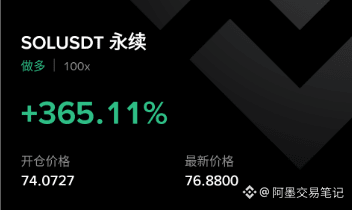
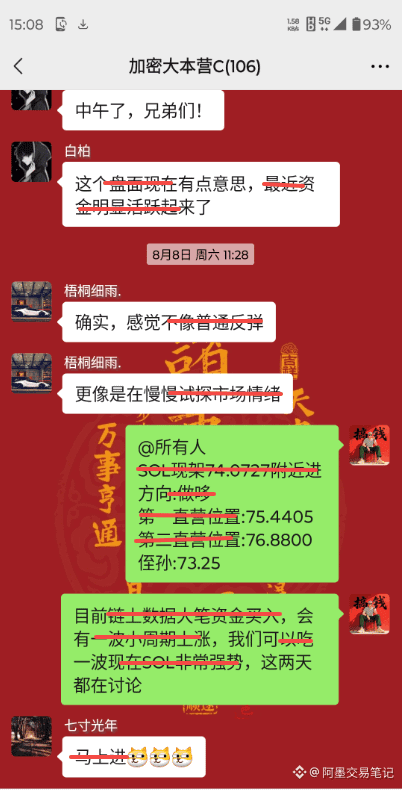
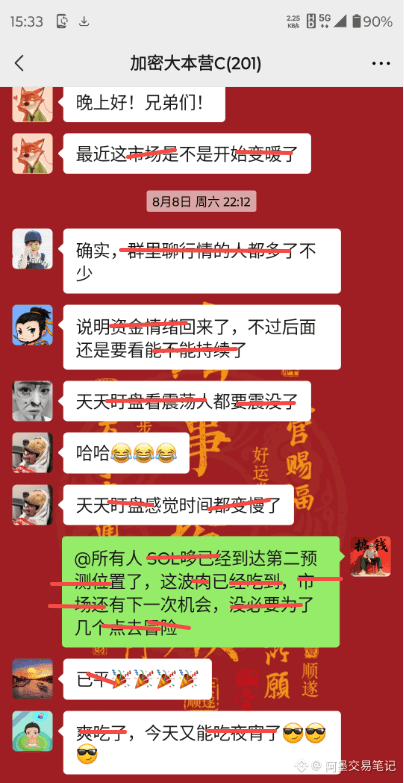
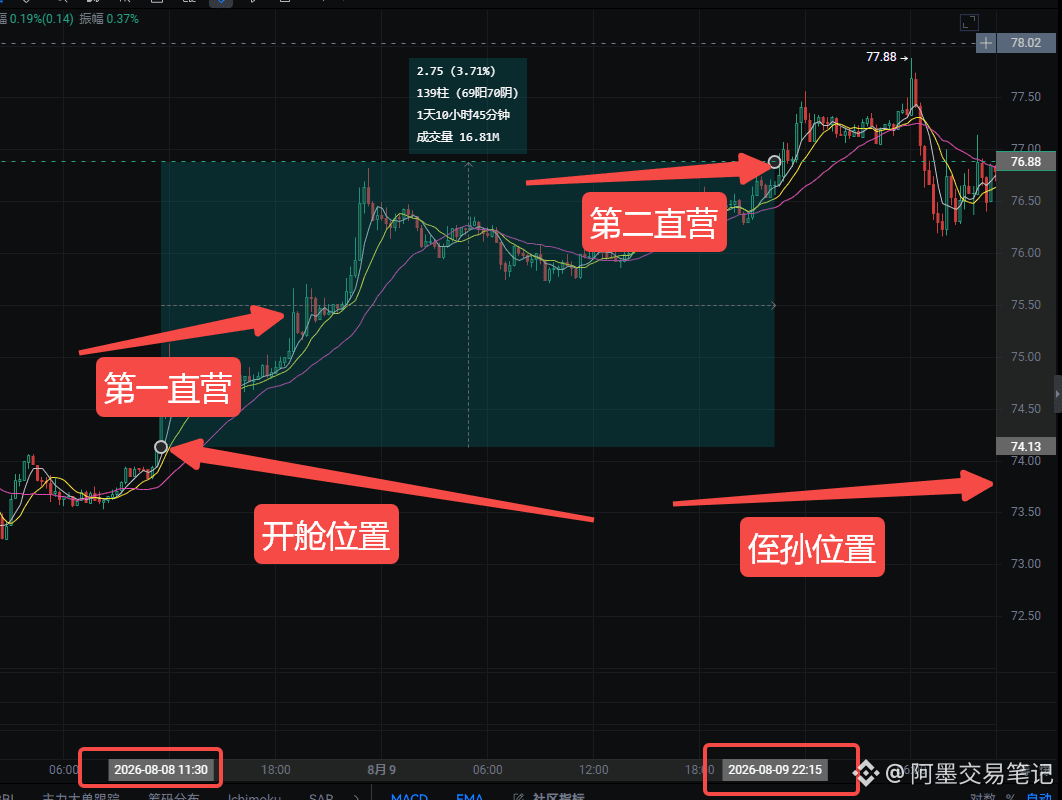
SOL long 365 points successfully secured!🔥 This upward rally rhythm was precisely played out and cashed in. After trend confirmation, we followed the flow for positioning. The bullish strength is gradually being released, and the market perfectly played out as expected! Profit is safely in hand. Keep an eye on the next opportunity as well!$SOL $ETH $BTC #ACE #AKE #bank #B2 #BTC
SOL long 365 points successfully secured!🔥 This upward rally rhythm was precisely played out and cashed in. After trend confirmation, we followed the flow for positioning. The bullish strength is gradually being released, and the market perfectly played out as expected! Profit is safely in hand. Keep an eye on the next opportunity as well!$SOL $ETH $BTC #ACE #AKE #bank #B2 #BTC
2
241
·
--
🚨 Giant whale goes long SOL! The $37.93M TWAP order is fully filled, with 20x leverage and a concentrated position of 500,000 SOL.
According to on-chain monitoring, a certain address’ TWAP order worth $37.93M has been completely filled and it has now opened a 20x leveraged long position on SOL.
This address is going long on a total of 500,000 SOL, with an entry price of $76.368. It is currently up by about $160,000.
In plain terms: 👇 One giant whale is using big money to bet on a short-term SOL rebound.
Large TWAP orders built in batches usually mean the fund wants to reduce market impact by spreading the entry over time, rather than dumping all at once.
What to watch in this move:
🔥 After the 500,000 SOL long position, will it continue adding more
🔥 Will the leveraged position size keep expanding
🔥 Can SOL hold above the key price zones
However, high-leverage trading also comes with high risk. 20x leverage means even small price fluctuations can cause large changes in funds.
One-sentence summary: A certain whale has completed a $37.93M SOL TWAP entry and opened a 20x leveraged long on 500,000 SOL. It’s currently up about $160,000, and on-chain big-money activity is worth watching closely.🐋🚀
🚨 Giant whale goes long SOL! The $37.93M TWAP order is fully filled, with 20x leverage and a concentrated position of 500,000 SOL.
According to on-chain monitoring, a certain address’ TWAP order worth $37.93M has been completely filled and it has now opened a 20x leveraged long position on SOL.
This address is going long on a total of 500,000 SOL, with an entry price of $76.368. It is currently up by about $160,000.
In plain terms: 👇 One giant whale is using big money to bet on a short-term SOL rebound.
Large TWAP orders built in batches usually mean the fund wants to reduce market impact by spreading the entry over time, rather than dumping all at once.
What to watch in this move:
🔥 After the 500,000 SOL long position, will it continue adding more
🔥 Will the leveraged position size keep expanding
🔥 Can SOL hold above the key price zones
However, high-leverage trading also comes with high risk. 20x leverage means even small price fluctuations can cause large changes in funds.
One-sentence summary: A certain whale has completed a $37.93M SOL TWAP entry and opened a 20x leveraged long on 500,000 SOL. It’s currently up about $160,000, and on-chain big-money activity is worth watching closely.🐋🚀
According to on-chain monitoring, a certain address’ TWAP order worth $37.93M has been completely filled and it has now opened a 20x leveraged long position on SOL.
This address is going long on a total of 500,000 SOL, with an entry price of $76.368. It is currently up by about $160,000.
In plain terms: 👇 One giant whale is using big money to bet on a short-term SOL rebound.
Large TWAP orders built in batches usually mean the fund wants to reduce market impact by spreading the entry over time, rather than dumping all at once.
What to watch in this move:
🔥 After the 500,000 SOL long position, will it continue adding more
🔥 Will the leveraged position size keep expanding
🔥 Can SOL hold above the key price zones
However, high-leverage trading also comes with high risk. 20x leverage means even small price fluctuations can cause large changes in funds.
One-sentence summary: A certain whale has completed a $37.93M SOL TWAP entry and opened a 20x leveraged long on 500,000 SOL. It’s currently up about $160,000, and on-chain big-money activity is worth watching closely.🐋🚀

93
·
--
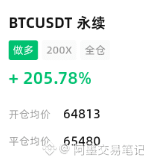
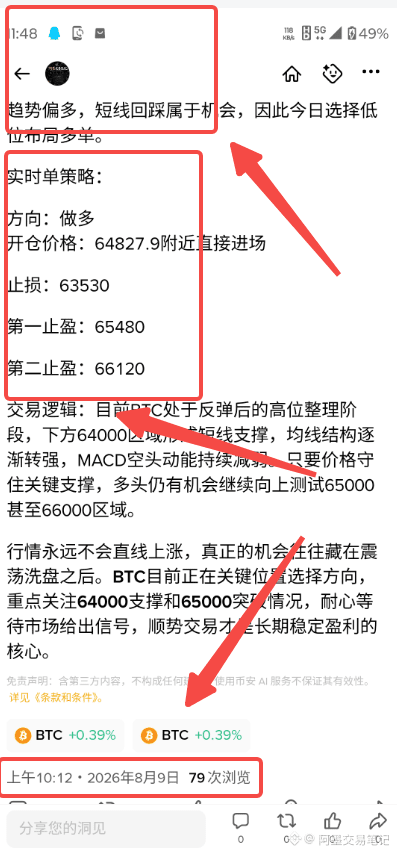
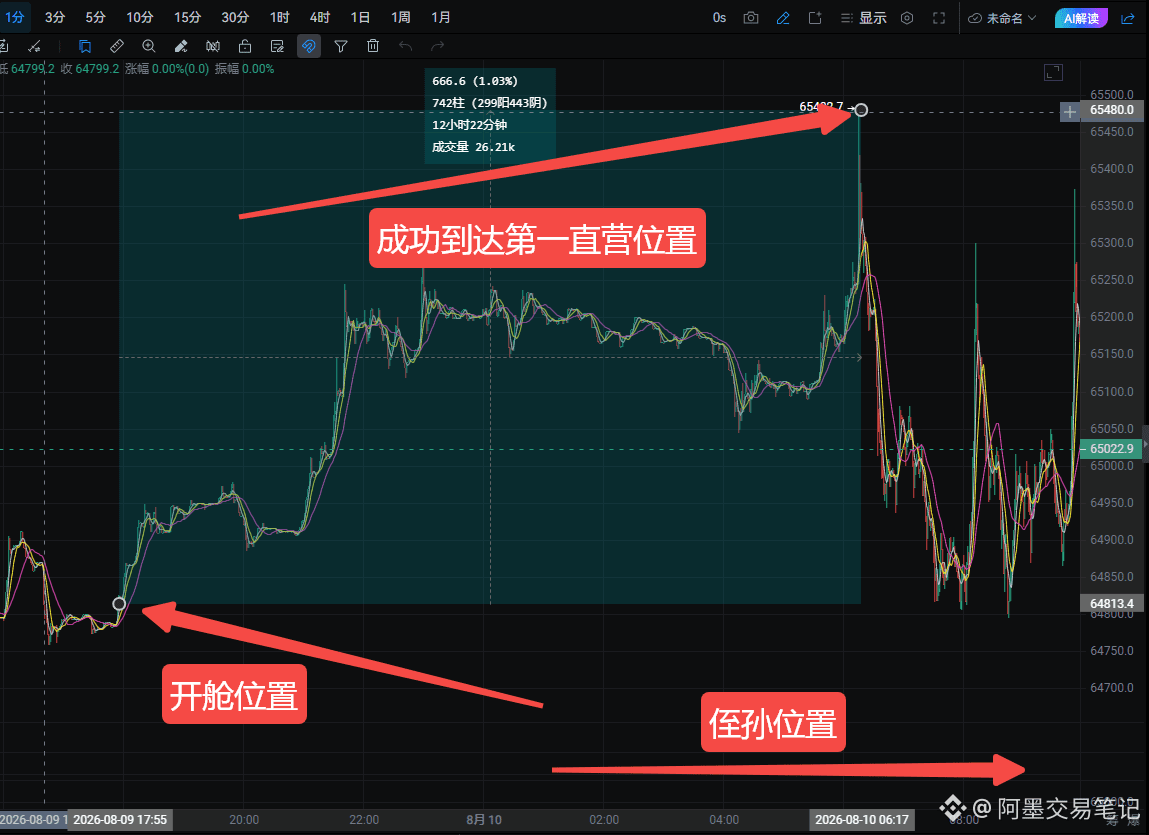
BTC successfully reached the first direct-operated outlet, successfully secured 200 points!!!!!!This wave of rhythm was perfect and well executed! Follow the key BTC position changes in advance. Once opportunity signals appear on the chart, move decisively to set up the trade. Then the price action proceeded smoothly, and the first target was successfully achieved. Opportunity always belongs to those who are prepared in advance. Keep looking for the next market opportunity—want to sync my thoughts? Message me. $BTC $TUT $ETH #AKE #ACE #solana #DOGE #beat
BTC successfully reached the first direct-operated outlet, successfully secured 200 points!!!!!!This wave of rhythm was perfect and well executed! Follow the key BTC position changes in advance. Once opportunity signals appear on the chart, move decisively to set up the trade. Then the price action proceeded smoothly, and the first target was successfully achieved. Opportunity always belongs to those who are prepared in advance. Keep looking for the next market opportunity—want to sync my thoughts? Message me. $BTC $TUT $ETH #AKE #ACE #solana #DOGE #beat
阿墨交易笔记
·
--
64827 marks the buildup—can BTC bulls break through the 65,000 level again? Intraday pullback setups are now appearing!
Based on BTC’s current candlestick走势, the price is trading around 64,827.9. Recently, after a round of rapid rebound, the market has entered a consolidation and ranging phase. From the overall structure, BTC has not shown any obvious breakout or breakdown; instead, at higher levels it is undergoing a redistribution of positions, with both bulls and bears repeatedly fighting over the 64,000–65,000 range. Although there is some near-term pressure, the bids on the downside are relatively strong. For today, the key focus is on long opportunities after a pullback.
Daily timeframe analysis: trend repair, and moving-average support is gradually forming
From the daily chart structure, after BTC previously bottomed out around 62,228, it rebounded quickly and has since reclaimed multiple key resistance levels in succession. The current price has moved back above 64,000, indicating that market buying sentiment is recovering. In terms of moving averages, MA5 and MA10 have gradually turned upward; short-term moving averages are beginning to form support. As long as the price has not broken below the short-term trend line, the overall situation still falls within a rebound and repair phase.
Daily timeframe analysis: trend repair, and moving-average support is gradually forming
From the daily chart structure, after BTC previously bottomed out around 62,228, it rebounded quickly and has since reclaimed multiple key resistance levels in succession. The current price has moved back above 64,000, indicating that market buying sentiment is recovering. In terms of moving averages, MA5 and MA10 have gradually turned upward; short-term moving averages are beginning to form support. As long as the price has not broken below the short-term trend line, the overall situation still falls within a rebound and repair phase.
104
·
--
Article
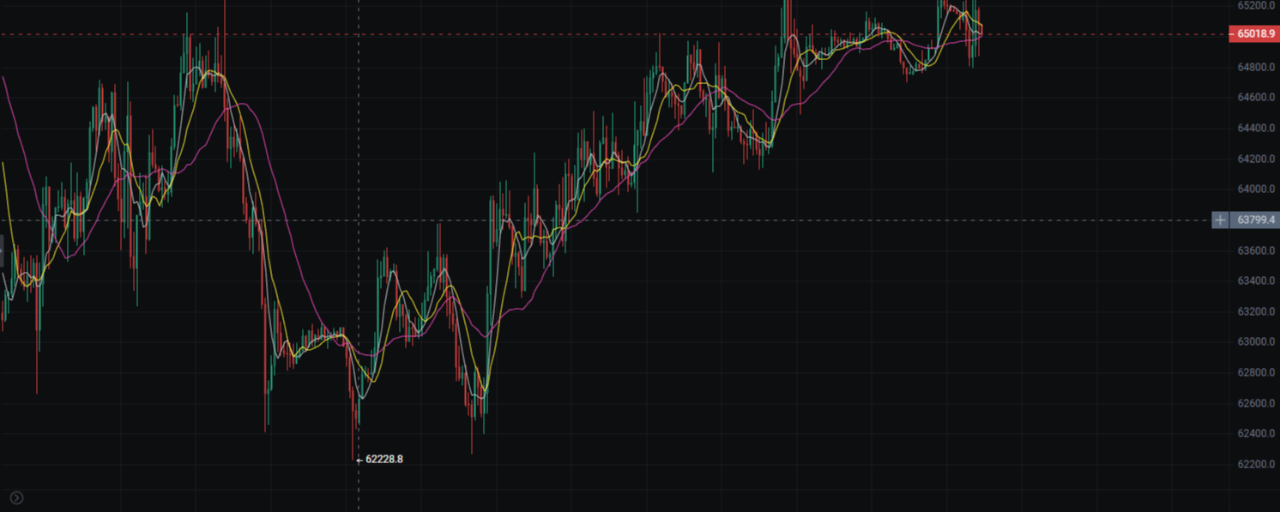
BTC Attempts to Break the 65,000 Mark! The Bull-Bear Battle Enters a Critical Stage—The Next Wave of Market Action May Choose a DirectionBTC’s current price is around 64,988.2. According to the K-line trend, BTC has recently gone through a clear low-level correction phase: after dipping and bottoming around 62,228, it continued rebounding. It has now reclaimed the level above 64,000 and is gradually pushing toward the 65,000 resistance zone. Market sentiment has started to warm up, but as the price nears the previous resistance area, the battle between bulls and bears is intensifying, and the short-term market has entered a critical standoff. Judging from the daily, 4-hour, and 1-hour chart structure, although BTC’s short-term rebound trend remains intact, the 65,000–65,500 area presents clear overhead pressure. Today, the focus is more on the opportunity to watch for a pullback after the price tests higher.
BTC Attempts to Break the 65,000 Mark! The Bull-Bear Battle Enters a Critical Stage—The Next Wave of Market Action May Choose a Direction
BTC’s current price is around 64,988.2. According to the K-line trend, BTC has recently gone through a clear low-level correction phase: after dipping and bottoming around 62,228, it continued rebounding. It has now reclaimed the level above 64,000 and is gradually pushing toward the 65,000 resistance zone. Market sentiment has started to warm up, but as the price nears the previous resistance area, the battle between bulls and bears is intensifying, and the short-term market has entered a critical standoff. Judging from the daily, 4-hour, and 1-hour chart structure, although BTC’s short-term rebound trend remains intact, the 65,000–65,500 area presents clear overhead pressure. Today, the focus is more on the opportunity to watch for a pullback after the price tests higher.
1
101
·
--
🚨TUT sees a large on-chain movement! 160 million tokens flow into Bitget, and market attention is drawn by the liquidity market-making funds being reallocated.
According to on-chain monitoring, the recent large transfers of TUT mainly come from market makers and controlling addresses, with funds being moved across multiple CEXs.
Over the past day and more, around 160 million TUT were transferred from exchanges to Bitget, accounting for about 20% of TUT’s total circulating supply.
In plain terms: this large-scale transfer looks more like wallet-to-wallet fund scheduling among market participants, rather than simple retail buying and selling.
When large token amounts move between different exchanges, it often involves:
📌 Market maker liquidity adjustments
📌 Order book/depth maintenance
📌 Switching market strategies
📌 Reallocating fund positions
Key points to watch now:
🔥 Whether Bitget’s subsequent trading volume changes
🔥 Whether TUT shows signs of continued inflows to exchanges
🔥 Whether large addresses take further action
On-chain fund movements are often early signals of shifts in market sentiment, but a single transfer cannot directly determine whether the price will rise or fall.
In one sentence: Over the past day or more, TUT experienced a 160 million token large transfer, representing 20% of the total supply; it currently leans more toward market making and controlling fund reallocation, and the subsequent exchange inflow/outflow will be the key observation point.📊🐋
🚨TUT sees a large on-chain movement! 160 million tokens flow into Bitget, and market attention is drawn by the liquidity market-making funds being reallocated.
According to on-chain monitoring, the recent large transfers of TUT mainly come from market makers and controlling addresses, with funds being moved across multiple CEXs.
Over the past day and more, around 160 million TUT were transferred from exchanges to Bitget, accounting for about 20% of TUT’s total circulating supply.
In plain terms: this large-scale transfer looks more like wallet-to-wallet fund scheduling among market participants, rather than simple retail buying and selling.
When large token amounts move between different exchanges, it often involves:
📌 Market maker liquidity adjustments
📌 Order book/depth maintenance
📌 Switching market strategies
📌 Reallocating fund positions
Key points to watch now:
🔥 Whether Bitget’s subsequent trading volume changes
🔥 Whether TUT shows signs of continued inflows to exchanges
🔥 Whether large addresses take further action
On-chain fund movements are often early signals of shifts in market sentiment, but a single transfer cannot directly determine whether the price will rise or fall.
In one sentence: Over the past day or more, TUT experienced a 160 million token large transfer, representing 20% of the total supply; it currently leans more toward market making and controlling fund reallocation, and the subsequent exchange inflow/outflow will be the key observation point.📊🐋
According to on-chain monitoring, the recent large transfers of TUT mainly come from market makers and controlling addresses, with funds being moved across multiple CEXs.
Over the past day and more, around 160 million TUT were transferred from exchanges to Bitget, accounting for about 20% of TUT’s total circulating supply.
In plain terms: this large-scale transfer looks more like wallet-to-wallet fund scheduling among market participants, rather than simple retail buying and selling.
When large token amounts move between different exchanges, it often involves:
📌 Market maker liquidity adjustments
📌 Order book/depth maintenance
📌 Switching market strategies
📌 Reallocating fund positions
Key points to watch now:
🔥 Whether Bitget’s subsequent trading volume changes
🔥 Whether TUT shows signs of continued inflows to exchanges
🔥 Whether large addresses take further action
On-chain fund movements are often early signals of shifts in market sentiment, but a single transfer cannot directly determine whether the price will rise or fall.
In one sentence: Over the past day or more, TUT experienced a 160 million token large transfer, representing 20% of the total supply; it currently leans more toward market making and controlling fund reallocation, and the subsequent exchange inflow/outflow will be the key observation point.📊🐋
199

·
--

Article
IoTeX (IOTX) Complete Introduction: A New Infrastructure Project Connecting Blockchain and the Internet of ThingsIoTeX (IOTX) is a blockchain infrastructure network focused on the Internet of Things (IoT). Its goal is to connect real-world devices with the digital economy ecosystem through blockchain technology, building a more secure, open, privacy-preserving machine economy system.
Unlike traditional blockchain projects, IoTeX is not simply intended to process financial transactions. Instead, it aims to address key challenges in the IoT era, such as data security, device identity authentication, privacy protection, and trusted interactions between devices. As intelligent devices, autonomous driving, smart home systems, industrial equipment, and AI hardware continue to evolve, the number of globally connected devices is growing rapidly. How to manage the data generated by these devices has become an important requirement—this is the core direction of IoTeX’s strategy.
IoTeX (IOTX) Complete Introduction: A New Infrastructure Project Connecting Blockchain and the Internet of Things
IoTeX (IOTX) is a blockchain infrastructure network focused on the Internet of Things (IoT). Its goal is to connect real-world devices with the digital economy ecosystem through blockchain technology, building a more secure, open, privacy-preserving machine economy system.
Unlike traditional blockchain projects, IoTeX is not simply intended to process financial transactions. Instead, it aims to address key challenges in the IoT era, such as data security, device identity authentication, privacy protection, and trusted interactions between devices. As intelligent devices, autonomous driving, smart home systems, industrial equipment, and AI hardware continue to evolve, the number of globally connected devices is growing rapidly. How to manage the data generated by these devices has become an important requirement—this is the core direction of IoTeX’s strategy.
Unlike traditional blockchain projects, IoTeX is not simply intended to process financial transactions. Instead, it aims to address key challenges in the IoT era, such as data security, device identity authentication, privacy protection, and trusted interactions between devices. As intelligent devices, autonomous driving, smart home systems, industrial equipment, and AI hardware continue to evolve, the number of globally connected devices is growing rapidly. How to manage the data generated by these devices has become an important requirement—this is the core direction of IoTeX’s strategy.
58
·
--
🚨LPL prediction hype is heating up! In the IG vs. LNG incident, the market is giving IG a high-win-rate expectation.
According to Polymarket’s prediction data, in the “LPL Stage 3: IG vs. LNG” prediction event, IG’s probability of defeating LNG is currently reported at 85%.
At 3:00 PM today, LPL Stage 3 will see a BO3 showdown between IG and LNG.
Judging by their recent form, the two teams’ trajectories have clearly diverged:
🔥 IG previously beat LNG, but then lost to NIP 1–2
🔥 After LNG lost to IG 0–2, they then fell to WBG 0–2, and are now on a three-game losing streak
Put simply: the market is “voting with money”—IG’s recent performance and form are viewed more favorably, while LNG desperately needs a win to stop the slump.
As blockchain prediction platforms like Polymarket gain more attention, esports events are becoming a new arena for capital.
However, predicted probabilities don’t guarantee the final result. In a BO3 format, on-the-spot form, BP strategy, and player performance can all influence the direction of the match.
One-sentence summary: In pre-match predictions for IG vs. LNG, IG’s win rate is currently at 85%, and the market expects IG to keep its advantage—but esports is full of variables, and the final outcome still depends on what happens on the stage.🎮🔥
🚨LPL prediction hype is heating up! In the IG vs. LNG incident, the market is giving IG a high-win-rate expectation.
According to Polymarket’s prediction data, in the “LPL Stage 3: IG vs. LNG” prediction event, IG’s probability of defeating LNG is currently reported at 85%.
At 3:00 PM today, LPL Stage 3 will see a BO3 showdown between IG and LNG.
Judging by their recent form, the two teams’ trajectories have clearly diverged:
🔥 IG previously beat LNG, but then lost to NIP 1–2
🔥 After LNG lost to IG 0–2, they then fell to WBG 0–2, and are now on a three-game losing streak
Put simply: the market is “voting with money”—IG’s recent performance and form are viewed more favorably, while LNG desperately needs a win to stop the slump.
As blockchain prediction platforms like Polymarket gain more attention, esports events are becoming a new arena for capital.
However, predicted probabilities don’t guarantee the final result. In a BO3 format, on-the-spot form, BP strategy, and player performance can all influence the direction of the match.
One-sentence summary: In pre-match predictions for IG vs. LNG, IG’s win rate is currently at 85%, and the market expects IG to keep its advantage—but esports is full of variables, and the final outcome still depends on what happens on the stage.🎮🔥
According to Polymarket’s prediction data, in the “LPL Stage 3: IG vs. LNG” prediction event, IG’s probability of defeating LNG is currently reported at 85%.
At 3:00 PM today, LPL Stage 3 will see a BO3 showdown between IG and LNG.
Judging by their recent form, the two teams’ trajectories have clearly diverged:
🔥 IG previously beat LNG, but then lost to NIP 1–2
🔥 After LNG lost to IG 0–2, they then fell to WBG 0–2, and are now on a three-game losing streak
Put simply: the market is “voting with money”—IG’s recent performance and form are viewed more favorably, while LNG desperately needs a win to stop the slump.
As blockchain prediction platforms like Polymarket gain more attention, esports events are becoming a new arena for capital.
However, predicted probabilities don’t guarantee the final result. In a BO3 format, on-the-spot form, BP strategy, and player performance can all influence the direction of the match.
One-sentence summary: In pre-match predictions for IG vs. LNG, IG’s win rate is currently at 85%, and the market expects IG to keep its advantage—but esports is full of variables, and the final outcome still depends on what happens on the stage.🎮🔥

21
·
--

Article
《She Studied Risk for 8 Years, Yet Realized the True Risk in Trading》Many people think that insurance professionals understand risk better than anyone, but this fan’s story teaches me a simple truth: knowing risk and truly executing risk are separated by a long stretch of distance. Today I’m sharing a fan’s submission. She’s 35 years old and an insurance consultant. From helping others plan life protection to later beginning to study investing, she gradually walked into a path of wealth growth that belongs to her alone. She has been in the insurance industry for over 8 years, spending every day dealing with all kinds of family and business clients. Some worry about their children’s education, some plan for retirement, and some consider asset allocation. Long-term communication with different clients has formed a habit in her: researching why other people make money—and why they can’t keep their money safe. When she first started in insurance, it wasn’t easy. Her income relied mainly on performance, and the pressure was huge. But over the years, relying on professionalism and client accumulation, she slowly built the foundation for her own business.
Her first exposure to the crypto market came when she was helping a business client plan assets. During the conversation, the other party mentioned BTC and digital asset allocation. At the beginning, she was actually quite cautious. In the insurance industry, people talk about risk every day, so her first reaction was: is the volatility in this market too high? But later she realized that more and more entrepreneurs and young startups were starting to pay attention to digital assets. So she didn’t rush to invest. Instead, she learned first—from the logic behind BTC’s development, to market cycles, to the characteristics of different assets—building her understanding step by step.
Her first big “breakthrough” came from two stages. Outside the crypto world, it was the roughly 500,000 yuan she had accumulated from years of insurance work. Through long-term service to clients, she not only gained income, but also deepened her understanding of wealth management. Inside the crypto world, she started paying attention during a period when the market was sluggish, looking for opportunities without blindly chasing upward moves. She studied the cycle and then allocated some mainstream assets in batches. Later, as the market turned upward, she achieved her first time with over one million in gains. At that moment, she felt like she had opened up a whole new perspective on wealth. Before, she helped others plan their future—now she was learning how to plan her own assets.
But many people go through a stage where, after they start making money, it’s easy to overestimate their own abilities. She did too. Because she had spent a long time working in insurance, she felt that by studying risk every day, she should understand better than ordinary investors about controlling it. So she began trying futures and contract trading.
At first, she was extremely cautious: testing with small positions and strictly controlling capital. Several trades in a row produced decent results. Slowly, her confidence grew. And then, seeing people around her amplify profits quickly through leverage, she started to increase her position size. Until one time, the market reversed quickly. The price didn’t move as expected. She knew she should execute a stop-loss, but in her heart she thought, “Wait a bit more—it might come back.” As the market volatility continued to expand, her account saw a clear shrinkage.
The biggest blow wasn’t how much she lost—it was that she realized: understanding risk doesn’t necessarily mean you can execute risk. Many traders fail not because they can’t analyze, but because when facing losses, they get defeated by their own emotions.
Later, she adjusted her trading approach again—splitting her investments into long-term allocation and opportunity positions. Before every trade, she considers the worst-case scenario and plans an exit in advance. She no longer increases risk just because of short-term profits. She said that, looking at the market now, the biggest difference from before is that she no longer thinks about proving herself. Instead, she thinks about how to stay in the game for the long term.
Today, she still runs her insurance business, while treating investing as a second growth curve. Life isn’t as anxious as it used to be, and she no longer expects that one market cycle can change her life. In the future, she hopes to build her own wealth management content brand—to share the years of experience she gained from working with clients and studying risk with more ordinary people. In fact, most ordinary people enter the market not because they want to get rich overnight, but because they want to have one more option for their future.
Different professions don’t necessarily mean different opportunities. What truly determines the gap is whether you have the ability to keep learning and improving your understanding. The market always rewards those who are well prepared, but the ones who can go far are definitely those who know how to manage risk, control emotions, and wait for opportunities.
If you also want to improve your trading understanding and learn more about market logic and risk management, we can exchange ideas together. There’s no shortcut to wealth growth, but improving your understanding is always the beginning of ordinary people changing themselves.
《She Studied Risk for 8 Years, Yet Realized the True Risk in Trading》
Many people think that insurance professionals understand risk better than anyone, but this fan’s story teaches me a simple truth: knowing risk and truly executing risk are separated by a long stretch of distance. Today I’m sharing a fan’s submission. She’s 35 years old and an insurance consultant. From helping others plan life protection to later beginning to study investing, she gradually walked into a path of wealth growth that belongs to her alone. She has been in the insurance industry for over 8 years, spending every day dealing with all kinds of family and business clients. Some worry about their children’s education, some plan for retirement, and some consider asset allocation. Long-term communication with different clients has formed a habit in her: researching why other people make money—and why they can’t keep their money safe. When she first started in insurance, it wasn’t easy. Her income relied mainly on performance, and the pressure was huge. But over the years, relying on professionalism and client accumulation, she slowly built the foundation for her own business.
Her first exposure to the crypto market came when she was helping a business client plan assets. During the conversation, the other party mentioned BTC and digital asset allocation. At the beginning, she was actually quite cautious. In the insurance industry, people talk about risk every day, so her first reaction was: is the volatility in this market too high? But later she realized that more and more entrepreneurs and young startups were starting to pay attention to digital assets. So she didn’t rush to invest. Instead, she learned first—from the logic behind BTC’s development, to market cycles, to the characteristics of different assets—building her understanding step by step.
Her first big “breakthrough” came from two stages. Outside the crypto world, it was the roughly 500,000 yuan she had accumulated from years of insurance work. Through long-term service to clients, she not only gained income, but also deepened her understanding of wealth management. Inside the crypto world, she started paying attention during a period when the market was sluggish, looking for opportunities without blindly chasing upward moves. She studied the cycle and then allocated some mainstream assets in batches. Later, as the market turned upward, she achieved her first time with over one million in gains. At that moment, she felt like she had opened up a whole new perspective on wealth. Before, she helped others plan their future—now she was learning how to plan her own assets.
But many people go through a stage where, after they start making money, it’s easy to overestimate their own abilities. She did too. Because she had spent a long time working in insurance, she felt that by studying risk every day, she should understand better than ordinary investors about controlling it. So she began trying futures and contract trading.
At first, she was extremely cautious: testing with small positions and strictly controlling capital. Several trades in a row produced decent results. Slowly, her confidence grew. And then, seeing people around her amplify profits quickly through leverage, she started to increase her position size. Until one time, the market reversed quickly. The price didn’t move as expected. She knew she should execute a stop-loss, but in her heart she thought, “Wait a bit more—it might come back.” As the market volatility continued to expand, her account saw a clear shrinkage.
The biggest blow wasn’t how much she lost—it was that she realized: understanding risk doesn’t necessarily mean you can execute risk. Many traders fail not because they can’t analyze, but because when facing losses, they get defeated by their own emotions.
Later, she adjusted her trading approach again—splitting her investments into long-term allocation and opportunity positions. Before every trade, she considers the worst-case scenario and plans an exit in advance. She no longer increases risk just because of short-term profits. She said that, looking at the market now, the biggest difference from before is that she no longer thinks about proving herself. Instead, she thinks about how to stay in the game for the long term.
Today, she still runs her insurance business, while treating investing as a second growth curve. Life isn’t as anxious as it used to be, and she no longer expects that one market cycle can change her life. In the future, she hopes to build her own wealth management content brand—to share the years of experience she gained from working with clients and studying risk with more ordinary people. In fact, most ordinary people enter the market not because they want to get rich overnight, but because they want to have one more option for their future.
Different professions don’t necessarily mean different opportunities. What truly determines the gap is whether you have the ability to keep learning and improving your understanding. The market always rewards those who are well prepared, but the ones who can go far are definitely those who know how to manage risk, control emotions, and wait for opportunities.
If you also want to improve your trading understanding and learn more about market logic and risk management, we can exchange ideas together. There’s no shortcut to wealth growth, but improving your understanding is always the beginning of ordinary people changing themselves.
Her first exposure to the crypto market came when she was helping a business client plan assets. During the conversation, the other party mentioned BTC and digital asset allocation. At the beginning, she was actually quite cautious. In the insurance industry, people talk about risk every day, so her first reaction was: is the volatility in this market too high? But later she realized that more and more entrepreneurs and young startups were starting to pay attention to digital assets. So she didn’t rush to invest. Instead, she learned first—from the logic behind BTC’s development, to market cycles, to the characteristics of different assets—building her understanding step by step.
Her first big “breakthrough” came from two stages. Outside the crypto world, it was the roughly 500,000 yuan she had accumulated from years of insurance work. Through long-term service to clients, she not only gained income, but also deepened her understanding of wealth management. Inside the crypto world, she started paying attention during a period when the market was sluggish, looking for opportunities without blindly chasing upward moves. She studied the cycle and then allocated some mainstream assets in batches. Later, as the market turned upward, she achieved her first time with over one million in gains. At that moment, she felt like she had opened up a whole new perspective on wealth. Before, she helped others plan their future—now she was learning how to plan her own assets.
But many people go through a stage where, after they start making money, it’s easy to overestimate their own abilities. She did too. Because she had spent a long time working in insurance, she felt that by studying risk every day, she should understand better than ordinary investors about controlling it. So she began trying futures and contract trading.
At first, she was extremely cautious: testing with small positions and strictly controlling capital. Several trades in a row produced decent results. Slowly, her confidence grew. And then, seeing people around her amplify profits quickly through leverage, she started to increase her position size. Until one time, the market reversed quickly. The price didn’t move as expected. She knew she should execute a stop-loss, but in her heart she thought, “Wait a bit more—it might come back.” As the market volatility continued to expand, her account saw a clear shrinkage.
The biggest blow wasn’t how much she lost—it was that she realized: understanding risk doesn’t necessarily mean you can execute risk. Many traders fail not because they can’t analyze, but because when facing losses, they get defeated by their own emotions.
Later, she adjusted her trading approach again—splitting her investments into long-term allocation and opportunity positions. Before every trade, she considers the worst-case scenario and plans an exit in advance. She no longer increases risk just because of short-term profits. She said that, looking at the market now, the biggest difference from before is that she no longer thinks about proving herself. Instead, she thinks about how to stay in the game for the long term.
Today, she still runs her insurance business, while treating investing as a second growth curve. Life isn’t as anxious as it used to be, and she no longer expects that one market cycle can change her life. In the future, she hopes to build her own wealth management content brand—to share the years of experience she gained from working with clients and studying risk with more ordinary people. In fact, most ordinary people enter the market not because they want to get rich overnight, but because they want to have one more option for their future.
Different professions don’t necessarily mean different opportunities. What truly determines the gap is whether you have the ability to keep learning and improving your understanding. The market always rewards those who are well prepared, but the ones who can go far are definitely those who know how to manage risk, control emotions, and wait for opportunities.
If you also want to improve your trading understanding and learn more about market logic and risk management, we can exchange ideas together. There’s no shortcut to wealth growth, but improving your understanding is always the beginning of ordinary people changing themselves.
41
Log in to explore more content
Join global crypto users on Binance Square
⚡️ Get latest and useful information about crypto.
💬 Trusted by the world’s largest crypto exchange.
👍 Discover real insights from verified creators.
Email / Phone number
Trending Topics
CircleMints500MUSDCOnSolana
4 views
24 Discussing
#CircleMints500MUSDCOnSolana
🚨 JUST IN: Circle Mints $500M USDC on Solana.
💰 $500 MILLION in fresh USDC liquidity has been minted on Solana.
Why it matters 👇
• More stablecoin liquidity entering the Solana ecosystem
• Potentially deeper DEX liquidity
• More capital available for DeFi and payments
• Solana’s stablecoin supply is already near record levels
🔥 Is this fresh liquidity preparing for the **next crypto move**?
Bullish for SOL? 👀
#Circle #USDC #Solana $SOL
Faizan Crypto Learner
·0 Likes
·23 views
PolymarketBankFailureBetsDrawFDICConcern
7,795 views
313 Discussing
BlackRockBuildsTokenizedPortfoliosForOndo
5,877 views
220 Discussing