Binance Square
Uzair Farooq91
9 Posts

Uzair Farooq91

13 Following
27 Followers
16 Liked
Posts
·
--
Bullish
🚨 U.S. Government Moves $1.9M Worth of $BTC — Is a Sale Coming? The U.S. government has reportedly moved 24.408 $BTC worth approximately $1.91 million, linked to Bitcoin seized from FTX/Alameda Research. The transfer has caught the crypto market’s attention as $BTC continues trading around the $80K level. ⚠️ However, there is an important detail: the movement does NOT confirm that the Bitcoin was sold. Blockchain analysts have reported the transfer, but no confirmed sale or liquidation has been announced. Still, the move is raising questions: 🔹 Is the government preparing to liquidate more seized BTC? 🔹 Could another large transfer put short-term pressure on Bitcoin? 🔹 Or is this simply a custody/asset-management transaction? With BTC recently breaking above $80,000, every major government-wallet movement is being closely watched by traders. One transfer doesn't prove market manipulation — but the market is definitely watching. 👀 #bitcoin oin #BTC #CryptoNewss #BitcoinNews #FTX {spot}(BTCUSDT)
🚨 U.S. Government Moves $1.9M Worth of $BTC — Is a Sale Coming?

The U.S. government has reportedly moved 24.408 $BTC worth approximately $1.91 million, linked to Bitcoin seized from FTX/Alameda Research.

The transfer has caught the crypto market’s attention as $BTC continues trading around the $80K level.

⚠️ However, there is an important detail: the movement does NOT confirm that the Bitcoin was sold. Blockchain analysts have reported the transfer, but no confirmed sale or liquidation has been announced.

Still, the move is raising questions:

🔹 Is the government preparing to liquidate more seized BTC?
🔹 Could another large transfer put short-term pressure on Bitcoin?
🔹 Or is this simply a custody/asset-management transaction?

With BTC recently breaking above $80,000, every major government-wallet movement is being closely watched by traders.

One transfer doesn't prove market manipulation — but the market is definitely watching. 👀

#bitcoin oin #BTC #CryptoNewss #BitcoinNews #FTX
Bitcoin Takes a Step Toward a Quantum-Resistant Future#antiquantumbitcointransactionminedonmainnet Bitcoin has reached an important milestone in its long-term security journey: a quantum-resistant transaction has been successfully mined on the Bitcoin mainnet. According to reports, the transaction was carried out on August 26, 2026, using researcher Avihu Levy’s Quantum-Safe Bitcoin (QSB) approach. Remarkably, the transaction did not require a Bitcoin soft fork, hard fork, or changes to the network’s existing consensus rules. Why Is This Important? Bitcoin currently relies on cryptographic technology that could theoretically become vulnerable to sufficiently powerful quantum computers. In particular, quantum algorithms such as Shor’s algorithm could eventually threaten the elliptic-curve cryptography used by Bitcoin. The QSB approach attempts to address this future risk by using hash-based spending conditions rather than relying solely on traditional digital signatures. The goal is to create a way for Bitcoin users to protect funds from potential quantum attacks without immediately changing Bitcoin’s underlying consensus rules. The Mainnet Test The reported transaction involved 10,000 satoshis and was processed through MARA Foundation’s Slipstream service. Because of its non-standard transaction format, it generally could not travel through Bitcoin's normal public mempool. The test reportedly required several hours of GPU computation and cost approximately $150–$200. This demonstration is significant because it shows that quantum-resistant transaction techniques can potentially operate on Bitcoin's existing mainnet infrastructure without requiring an immediate network-wide upgrade. But Bitcoin Is Not Fully Quantum-Safe Yet This milestone should not be misunderstood as Bitcoin having completely solved the quantum-computing problem. The QSB technique requires users to actively move their funds into protected arrangements. It also does not automatically protect coins whose public keys have already been exposed. In other words, this is a demonstration of a possible defense mechanism—not a permanent quantum-proof upgrade for every BTC address. StarkWare CEO Eli Ben-Sasson has continued to support developing a protocol-level solution, potentially through a Bitcoin soft fork, for broader long-term protection. A Bigger Conversation for Bitcoin The development highlights an increasingly important question for Bitcoin: How should the network migrate to post-quantum cryptography before quantum computers become powerful enough to threaten existing cryptographic systems? The recent transaction demonstrates that researchers are already experimenting with practical solutions on Bitcoin's real mainnet. However, a complete transition would require careful research, testing, community agreement, and potentially changes to Bitcoin's protocol. For now, the successful transaction represents an important proof of concept—and a reminder that Bitcoin's long-term security will depend not only on today's cryptography, but also on its ability to adapt to tomorrow's technology. The quantum threat may still be years away, but the race to prepare Bitcoin has already begun. 🚀🔐 #bitcoin #BTC #BTC走势分析 #AntiQuantumBitcoinTransactionMinedOnMainnet

Bitcoin Takes a Step Toward a Quantum-Resistant Future

#antiquantumbitcointransactionminedonmainnet
Bitcoin has reached an important milestone in its long-term security journey: a quantum-resistant transaction has been successfully mined on the Bitcoin mainnet.
According to reports, the transaction was carried out on August 26, 2026, using researcher Avihu Levy’s Quantum-Safe Bitcoin (QSB) approach. Remarkably, the transaction did not require a Bitcoin soft fork, hard fork, or changes to the network’s existing consensus rules.
Why Is This Important?
Bitcoin currently relies on cryptographic technology that could theoretically become vulnerable to sufficiently powerful quantum computers. In particular, quantum algorithms such as Shor’s algorithm could eventually threaten the elliptic-curve cryptography used by Bitcoin.
The QSB approach attempts to address this future risk by using hash-based spending conditions rather than relying solely on traditional digital signatures. The goal is to create a way for Bitcoin users to protect funds from potential quantum attacks without immediately changing Bitcoin’s underlying consensus rules.
The Mainnet Test
The reported transaction involved 10,000 satoshis and was processed through MARA Foundation’s Slipstream service. Because of its non-standard transaction format, it generally could not travel through Bitcoin's normal public mempool. The test reportedly required several hours of GPU computation and cost approximately $150–$200.
This demonstration is significant because it shows that quantum-resistant transaction techniques can potentially operate on Bitcoin's existing mainnet infrastructure without requiring an immediate network-wide upgrade.
But Bitcoin Is Not Fully Quantum-Safe Yet
This milestone should not be misunderstood as Bitcoin having completely solved the quantum-computing problem.
The QSB technique requires users to actively move their funds into protected arrangements. It also does not automatically protect coins whose public keys have already been exposed. In other words, this is a demonstration of a possible defense mechanism—not a permanent quantum-proof upgrade for every BTC address.
StarkWare CEO Eli Ben-Sasson has continued to support developing a protocol-level solution, potentially through a Bitcoin soft fork, for broader long-term protection.
A Bigger Conversation for Bitcoin
The development highlights an increasingly important question for Bitcoin: How should the network migrate to post-quantum cryptography before quantum computers become powerful enough to threaten existing cryptographic systems?
The recent transaction demonstrates that researchers are already experimenting with practical solutions on Bitcoin's real mainnet. However, a complete transition would require careful research, testing, community agreement, and potentially changes to Bitcoin's protocol.
For now, the successful transaction represents an important proof of concept—and a reminder that Bitcoin's long-term security will depend not only on today's cryptography, but also on its ability to adapt to tomorrow's technology.
The quantum threat may still be years away, but the race to prepare Bitcoin has already begun. 🚀🔐
#bitcoin #BTC #BTC走势分析 #AntiQuantumBitcoinTransactionMinedOnMainnet
·
--
Bullish
🚀 Bitcoin Back Above $80K! Bitcoin $BTC is showing renewed strength after hitting $81,237 earlier this week — its highest level in more than three months — before pulling back to around $79,044. Ray Dalio recommending a larger $BTC allocation as a potential hedge against a debt crisis 🟢 Market sentiment has also shifted to “Extreme Greed” on the Fear & Greed Index, while spot Bitcoin ETFs recorded six consecutive days of inflows. 🎯 Key resistance: $80K–$82K The next major catalyst could be the Clarity Act, with a Senate vote expected by September 15. The outcome could play an important role in determining whether Bitcoin can continue its upward momentum. $BTC bulls are back — but can Bitcoin break through $82K? 👀📊 #bitcoin #BTC #BitcoinETFs #bitcoin #Binance
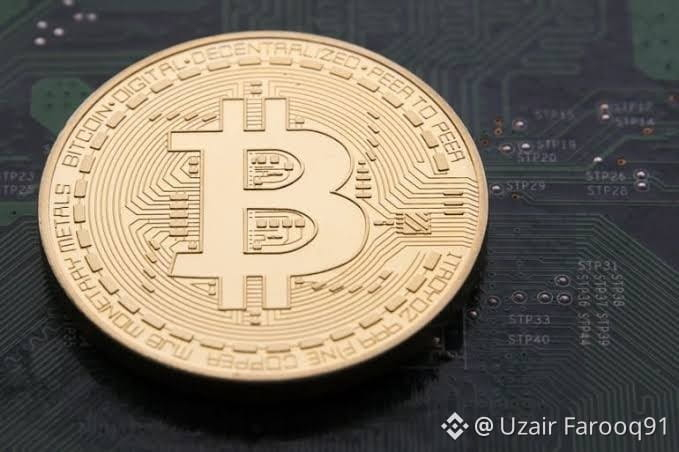
🚀 Bitcoin Back Above $80K!

Bitcoin $BTC is showing renewed strength after hitting $81,237 earlier this week — its highest level in more than three months — before pulling back to around $79,044.

Ray Dalio recommending a larger $BTC allocation as a potential hedge against a debt crisis

🟢 Market sentiment has also shifted to “Extreme Greed” on the Fear & Greed Index, while spot Bitcoin ETFs recorded six consecutive days of inflows.

🎯 Key resistance: $80K–$82K

The next major catalyst could be the Clarity Act, with a Senate vote expected by September 15. The outcome could play an important role in determining whether Bitcoin can continue its upward momentum.

$BTC bulls are back — but can Bitcoin break through $82K? 👀📊

#bitcoin #BTC #BitcoinETFs #bitcoin #Binance
$ETH Ethereum is preparing for significant upgrades and developments in 2024, making it a pivotal year for the network. Key updates include: 1. Dencun Upgrade: Expected in early 2024, this introduces "blob-carrying transactions," optimizing data storage and reducing costs. It is a step toward the larger goal of "danksharding," which aims to improve Ethereum's scalability by splitting the network into parallel segments (shards). 2. Scalability and Efficiency: Danksharding will further reduce costs and improve transaction speeds. Single-Slot Finality (SSF) could drastically shorten block finalization times. 3. Security Enhancements: Proposer-Builder Separation (PBS) to prevent censorship and ensure fair transaction processing. Improvements in cryptographic techniques to protect validators from potential attacks. 4. Layer 2 Expansion: Specialized subchains and rollups are becoming more prominent, enhancing Ethereum's ecosystem. Major Layer 2 platforms like Polygon and Optimism are introducing new frameworks (e.g., Chain Development Kits) to cater to specific niches like gaming, finance, and loyalty programs. These upgrades align with Ethereum’s long-term goals of improving decentralization, scalability, and user experience. Developers and companies are positioning Ethereum as a foundation for the next wave of blockchain applications, especially as Web3 adoption grows.
$ETH
Ethereum is preparing for significant upgrades and developments in 2024, making it a pivotal year for the network. Key updates include:

1. Dencun Upgrade: Expected in early 2024, this introduces "blob-carrying transactions," optimizing data storage and reducing costs. It is a step toward the larger goal of "danksharding," which aims to improve Ethereum's scalability by splitting the network into parallel segments (shards).

2. Scalability and Efficiency:

Danksharding will further reduce costs and improve transaction speeds.

Single-Slot Finality (SSF) could drastically shorten block finalization times.

3. Security Enhancements:

Proposer-Builder Separation (PBS) to prevent censorship and ensure fair transaction processing.

Improvements in cryptographic techniques to protect validators from potential attacks.

4. Layer 2 Expansion: Specialized subchains and rollups are becoming more prominent, enhancing Ethereum's ecosystem. Major Layer 2 platforms like Polygon and Optimism are introducing new frameworks (e.g., Chain Development Kits) to cater to specific niches like gaming, finance, and loyalty programs.

These upgrades align with Ethereum’s long-term goals of improving decentralization, scalability, and user experience. Developers and companies are positioning Ethereum as a foundation for the next wave of blockchain applications, especially as Web3 adoption grows.
#ETHOnTheRise "Crypto risk time" isn't a standard term in the cryptocurrency or financial world, but it could refer to the time-related risks associated with cryptocurrency investments. These risks can arise due to the volatile nature of cryptocurrencies, market timing, and operational or strategic decisions. Here’s a breakdown of what it might mean: 1. Volatility Timing Risks Cryptocurrency markets are extremely volatile and operate 24/7. This means: Prices can swing significantly in short periods. Investors might experience losses if they buy or sell at the "wrong" time. Certain periods, like announcements of regulations or economic reports, might amplify these risks. 2. Market Timing FOMO (Fear of Missing Out): Investors entering at peak prices due to hype. Sell-offs during dips: Exiting the market during a temporary decline instead of holding long-term. 3. Operational Risks Delayed transactions during high network congestion can lead to losses if the price changes significantly. Timing issues with staking rewards, withdrawals, or smart contract interactions. 4. Regulatory or Event Risks Governments often make announcements during specific time windows, which can lead to sharp market reactions. Major events like Bitcoin halvings or blockchain upgrades also create time-sensitive opportunities and risks. If you're looking at a specific context or application of the term, let me know, and I can refine this explanation!
#ETHOnTheRise
"Crypto risk time" isn't a standard term in the cryptocurrency or financial world, but it could refer to the time-related risks associated with cryptocurrency investments. These risks can arise due to the volatile nature of cryptocurrencies, market timing, and operational or strategic decisions. Here’s a breakdown of what it might mean:

1. Volatility Timing Risks

Cryptocurrency markets are extremely volatile and operate 24/7. This means:

Prices can swing significantly in short periods.

Investors might experience losses if they buy or sell at the "wrong" time.

Certain periods, like announcements of regulations or economic reports, might amplify these risks.

2. Market Timing

FOMO (Fear of Missing Out): Investors entering at peak prices due to hype.

Sell-offs during dips: Exiting the market during a temporary decline instead of holding long-term.

3. Operational Risks

Delayed transactions during high network congestion can lead to losses if the price changes significantly.

Timing issues with staking rewards, withdrawals, or smart contract interactions.

4. Regulatory or Event Risks

Governments often make announcements during specific time windows, which can lead to sharp market reactions.

Major events like Bitcoin halvings or blockchain upgrades also create time-sensitive opportunities and risks.

If you're looking at a specific context or application of the term, let me know, and I can refine this explanation!
Article
Bitcoin in 2025: Predictions and InsightsAs Bitcoin continues to mature as an asset class, 2025 is projected to be a significant year, driven by technological advancements, institutional adoption, and the impact of the 2024 halving event. Here’s an analysis of Bitcoin’s potential performance in 2025 based on market insights and predictions. Price Projections for 2025 1. Expected Price Range: Analysts forecast Bitcoin’s price in 2025 to range between $95,000 (minimum) and $160,000 (maximum), with an average expectation around $120,000. These estimates reflect an optimistic outlook supported by the supply scarcity resulting from the 2024 halving event【7】【9】【10】. 2. Factors Influencing Growth: Halving Impact: The reduced supply of Bitcoin post-halving is anticipated to exert upward price pressure. Institutional Adoption: Increased participation by institutional investors through Bitcoin ETFs and other products is expected to boost demand. Macroeconomic Trends: A favorable global economic environment, including stabilized inflation and potential interest rate cuts, could further enhance Bitcoin’s appeal as a store of value【8】【9】. Market Drivers 1. Technological Advancements: Innovations like the Lightning Network and improvements in Bitcoin’s infrastructure are likely to enhance transaction efficiency, furthering adoption【10】. 2. Regulatory Clarity: Clearer global regulations may bolster investor confidence, encouraging more significant capital inflows into Bitcoin markets. 3. Emerging Market Adoption: Nations experiencing economic instability may increasingly adopt Bitcoin as a hedge against hyperinflation, contributing to its global demand【10】. Challenges to Consider While the outlook is bullish, potential hurdles include regulatory crackdowns, competition from other cryptocurrencies, and market volatility, which could temper growth【9】【10】. Visualizing Bitcoin's Potential Price Trends Below is a chart projecting Bitcoin’s potential price trajectory throughout 2025. The chart above illustrates Bitcoin's potential price trends for 2025, with minimum, average, and maximum price projections. This provides a visual representation of expected market performance, highlighting Bitcoin's potential as an investment vehicle. If you need further details or adjustments, feel free to ask!

Bitcoin in 2025: Predictions and Insights

As Bitcoin continues to mature as an asset class, 2025 is projected to be a significant year, driven by technological advancements, institutional adoption, and the impact of the 2024 halving event. Here’s an analysis of Bitcoin’s potential performance in 2025 based on market insights and predictions.
Price Projections for 2025
1. Expected Price Range:
Analysts forecast Bitcoin’s price in 2025 to range between $95,000 (minimum) and $160,000 (maximum), with an average expectation around $120,000. These estimates reflect an optimistic outlook supported by the supply scarcity resulting from the 2024 halving event【7】【9】【10】.
2. Factors Influencing Growth:
Halving Impact: The reduced supply of Bitcoin post-halving is anticipated to exert upward price pressure.
Institutional Adoption: Increased participation by institutional investors through Bitcoin ETFs and other products is expected to boost demand.
Macroeconomic Trends: A favorable global economic environment, including stabilized inflation and potential interest rate cuts, could further enhance Bitcoin’s appeal as a store of value【8】【9】.
Market Drivers
1. Technological Advancements:
Innovations like the Lightning Network and improvements in Bitcoin’s infrastructure are likely to enhance transaction efficiency, furthering adoption【10】.
2. Regulatory Clarity:
Clearer global regulations may bolster investor confidence, encouraging more significant capital inflows into Bitcoin markets.
3. Emerging Market Adoption:
Nations experiencing economic instability may increasingly adopt Bitcoin as a hedge against hyperinflation, contributing to its global demand【10】.
Challenges to Consider
While the outlook is bullish, potential hurdles include regulatory crackdowns, competition from other cryptocurrencies, and market volatility, which could temper growth【9】【10】.
Visualizing Bitcoin's Potential Price Trends
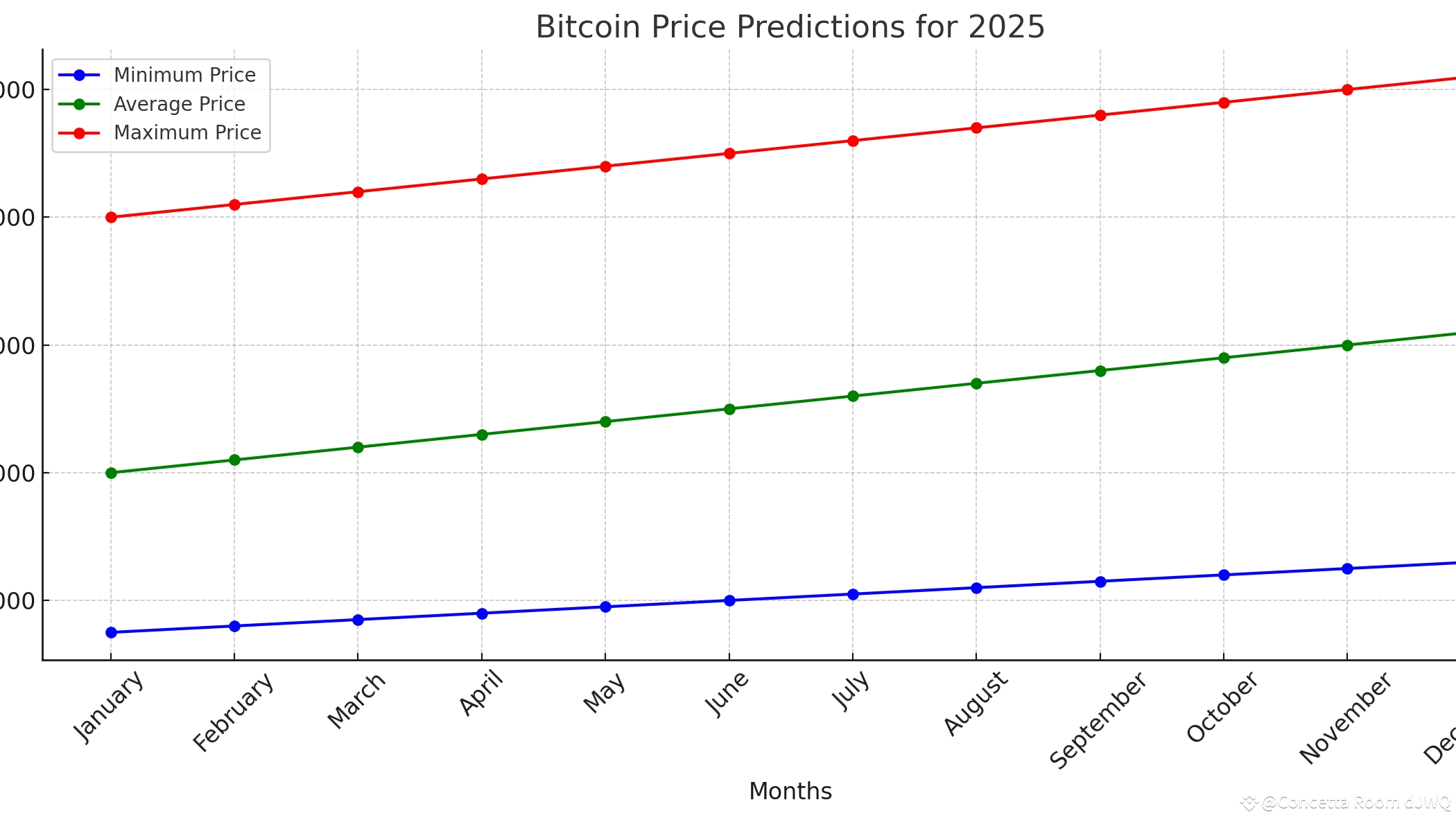
Below is a chart projecting Bitcoin’s potential price trajectory throughout 2025.
The chart above illustrates Bitcoin's potential price trends for 2025, with minimum, average, and maximum price projections. This provides a visual representation of expected market performance, highlighting Bitcoin's potential as an investment vehicle.
If you need further details or adjustments, feel free to ask!
https://safu.im/uImKGxM0?utm_medium=web_share_copy 10$ USDT BOX CODE🧧🧧🧧 BPBOB8SYK9
https://safu.im/uImKGxM0?utm_medium=web_share_copy
10$ USDT BOX CODE🧧🧧🧧 BPBOB8SYK9
Log in to explore more content
Join global crypto users on Binance Square
⚡️ Get latest and useful information about crypto.
💬 Trusted by the world’s largest crypto exchange.
👍 Discover real insights from verified creators.
Email / Phone number
Sitemap
Cookie Preferences
Platform T&Cs