
Smart_Snail
1.3k Posts
Smart_Snail
Report
Block User
Frequent Trader
8.5 Years
1 Following
701 Followers
8.8K+ Liked
Posts
PINNED
·
--
#TerraClassic I believe it’s time to accept a simple truth: one blockchain network for the financial infrastructure of the future is not enough. By definition, a system of this scale must be distributed.
When millions of tokenized financial instruments (RWA) hit the market, the load will be so high that a single network is unlikely to handle the entire stream efficiently. We need at least 5–6 major infrastructure solutions to reduce the risks of a single point of failure.
So all this “tribal” approach—who supports which chain and which coin for me—is secondary. In the end, it won’t be the loudest who survive, but those that have:
🧩 strong architecture
🧩 a professional team
🧩 real scalability
🧩 high transaction processing speed
🧩 low transaction costs
🧩 decentralization and privacy capabilities
I believe Binance understands the importance of such infrastructure, and that’s why it holds 92% of the total supply $LUNC and at least 45% $USTC , focusing its attention on scalability, interoperability, and secure interaction capabilities for AI agents through algorithmic strategies.
#TerraClassic I believe it’s time to accept a simple truth: one blockchain network for the financial infrastructure of the future is not enough. By definition, a system of this scale must be distributed.
When millions of tokenized financial instruments (RWA) hit the market, the load will be so high that a single network is unlikely to handle the entire stream efficiently. We need at least 5–6 major infrastructure solutions to reduce the risks of a single point of failure.
So all this “tribal” approach—who supports which chain and which coin for me—is secondary. In the end, it won’t be the loudest who survive, but those that have:
🧩 strong architecture
🧩 a professional team
🧩 real scalability
🧩 high transaction processing speed
🧩 low transaction costs
🧩 decentralization and privacy capabilities
I believe Binance understands the importance of such infrastructure, and that’s why it holds 92% of the total supply $LUNC and at least 45% $USTC , focusing its attention on scalability, interoperability, and secure interaction capabilities for AI agents through algorithmic strategies.
When millions of tokenized financial instruments (RWA) hit the market, the load will be so high that a single network is unlikely to handle the entire stream efficiently. We need at least 5–6 major infrastructure solutions to reduce the risks of a single point of failure.
So all this “tribal” approach—who supports which chain and which coin for me—is secondary. In the end, it won’t be the loudest who survive, but those that have:
🧩 strong architecture
🧩 a professional team
🧩 real scalability
🧩 high transaction processing speed
🧩 low transaction costs
🧩 decentralization and privacy capabilities
I believe Binance understands the importance of such infrastructure, and that’s why it holds 92% of the total supply $LUNC and at least 45% $USTC , focusing its attention on scalability, interoperability, and secure interaction capabilities for AI agents through algorithmic strategies.

36
130
3.7k
·
--
#TerraClassic Hello, community! Everyone who has been following me since the very first day on Binance Square knows how strongly I support the Terra Classic blockchain. I believe in the power and uniqueness of this project, and I sincerely want to go all the way with it through its recovery.
If you’ve noticed that lately I’ve been sharing news less often, don’t think that I’ve stopped believing. Not at all. It’s just that the entire crypto market is currently in a downturn, and even the strongest or most interesting changes inside the network can’t move the price of the asset yet. In these conditions, I decided to simply take a short information break and focus on actions rather than noise.
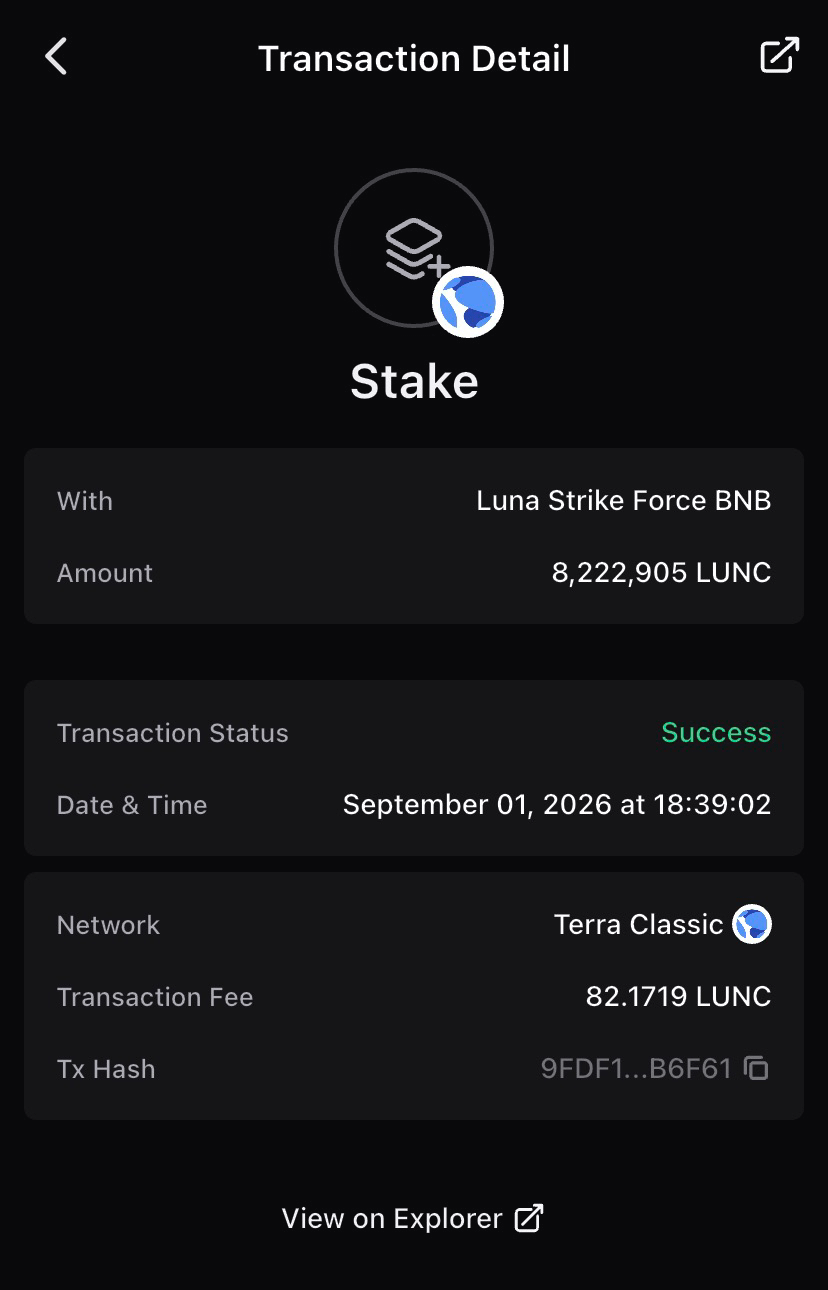
My strategy remains the same: as long as the market gives us great prices, I continue steadily accumulating $LUNC using the DCA strategy. All the coins I buy, I immediately send to a cold wallet—just today I sent another batch into staking at 3.5% per year.
Right now, all of us especially need mental discipline and mutual support. If you’ve chosen your path—don’t get off it and go all the way! #smartmoney $USTC
#TerraClassic Hello, community! Everyone who has been following me since the very first day on Binance Square knows how strongly I support the Terra Classic blockchain. I believe in the power and uniqueness of this project, and I sincerely want to go all the way with it through its recovery.
If you’ve noticed that lately I’ve been sharing news less often, don’t think that I’ve stopped believing. Not at all. It’s just that the entire crypto market is currently in a downturn, and even the strongest or most interesting changes inside the network can’t move the price of the asset yet. In these conditions, I decided to simply take a short information break and focus on actions rather than noise.
My strategy remains the same: as long as the market gives us great prices, I continue steadily accumulating $LUNC using the DCA strategy. All the coins I buy, I immediately send to a cold wallet—just today I sent another batch into staking at 3.5% per year.
Right now, all of us especially need mental discipline and mutual support. If you’ve chosen your path—don’t get off it and go all the way! #smartmoney $USTC
If you’ve noticed that lately I’ve been sharing news less often, don’t think that I’ve stopped believing. Not at all. It’s just that the entire crypto market is currently in a downturn, and even the strongest or most interesting changes inside the network can’t move the price of the asset yet. In these conditions, I decided to simply take a short information break and focus on actions rather than noise.
My strategy remains the same: as long as the market gives us great prices, I continue steadily accumulating $LUNC using the DCA strategy. All the coins I buy, I immediately send to a cold wallet—just today I sent another batch into staking at 3.5% per year.
Right now, all of us especially need mental discipline and mutual support. If you’ve chosen your path—don’t get off it and go all the way! #smartmoney $USTC

7
26
6.3k
·
--
Partly True
#dusk $DUSK @Dusk_Foundation
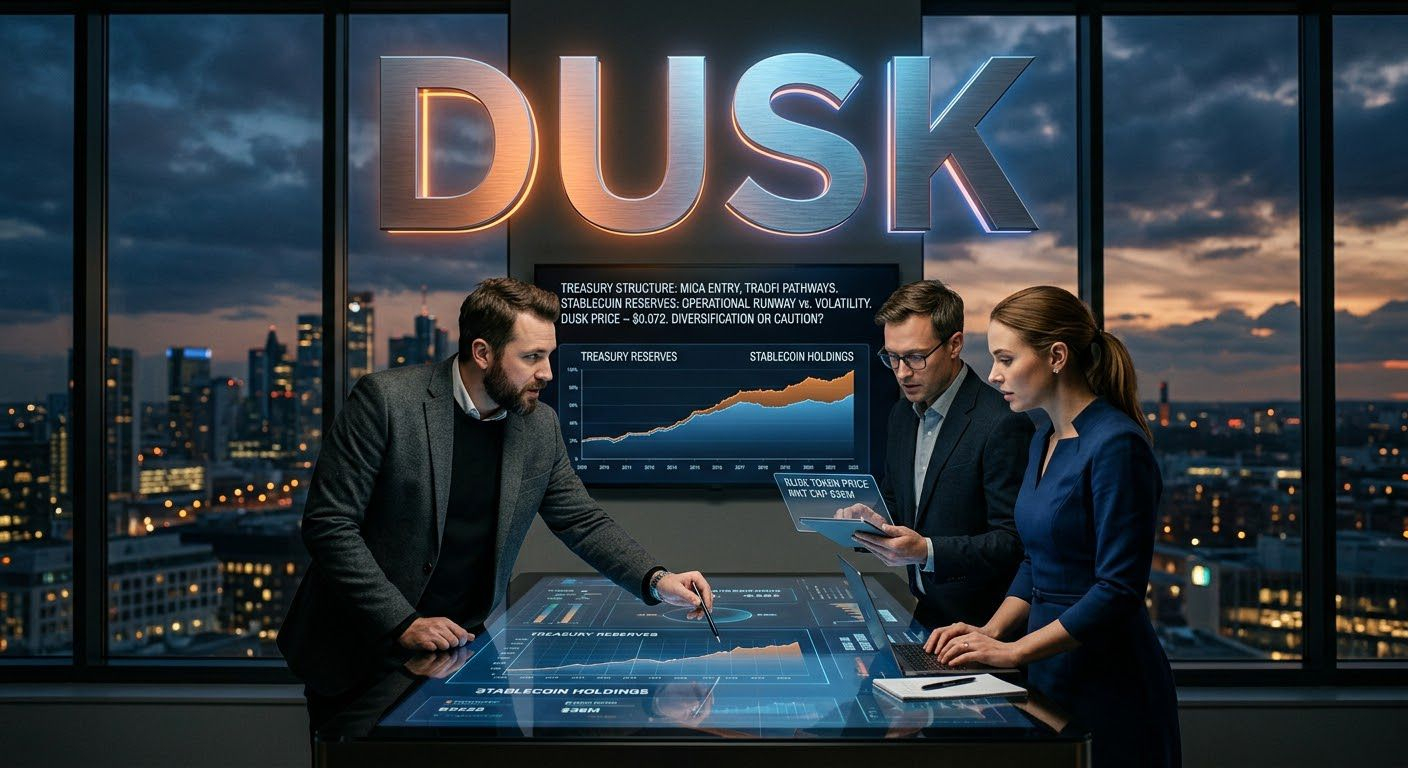
While studying Dusk’s treasury structure, I kept coming back to a single contrast: the fund positions MiCA as an entry point to TradFi, yet it primarily holds its own reserves in stablecoins rather than in the native DUSK. That point made me slow down.
This looks especially interesting in light of the events of August 16. After suspicious activity in the managed bridge wallet, the team quickly limited operations, updated addresses, and added a receiver blocklist in the Web Wallet. The response was fast and fairly pragmatic. It’s the treasury structure that allows them to act calmly. With the price of DUSK around $0.072 and a market cap of $36 million, keeping a significant portion of operational reserves in DUSK would mean being directly exposed to the volatility of their own token. Stablecoins provide the fund with a more predictable runway; they can be used to cover operational expenses and respond to incidents without turning the treasury into a trading portfolio.
For me, this is more of a boring yet rational approach to capital management. But the question remains: is this just sound diversification, or does it serve as an indirect signal that the team is being cautious about future demand?
#dusk $DUSK @Dusk
While studying Dusk’s treasury structure, I kept coming back to a single contrast: the fund positions MiCA as an entry point to TradFi, yet it primarily holds its own reserves in stablecoins rather than in the native DUSK. That point made me slow down.
This looks especially interesting in light of the events of August 16. After suspicious activity in the managed bridge wallet, the team quickly limited operations, updated addresses, and added a receiver blocklist in the Web Wallet. The response was fast and fairly pragmatic. It’s the treasury structure that allows them to act calmly. With the price of DUSK around $0.072 and a market cap of $36 million, keeping a significant portion of operational reserves in DUSK would mean being directly exposed to the volatility of their own token. Stablecoins provide the fund with a more predictable runway; they can be used to cover operational expenses and respond to incidents without turning the treasury into a trading portfolio.
For me, this is more of a boring yet rational approach to capital management. But the question remains: is this just sound diversification, or does it serve as an indirect signal that the team is being cautious about future demand?
While studying Dusk’s treasury structure, I kept coming back to a single contrast: the fund positions MiCA as an entry point to TradFi, yet it primarily holds its own reserves in stablecoins rather than in the native DUSK. That point made me slow down.
This looks especially interesting in light of the events of August 16. After suspicious activity in the managed bridge wallet, the team quickly limited operations, updated addresses, and added a receiver blocklist in the Web Wallet. The response was fast and fairly pragmatic. It’s the treasury structure that allows them to act calmly. With the price of DUSK around $0.072 and a market cap of $36 million, keeping a significant portion of operational reserves in DUSK would mean being directly exposed to the volatility of their own token. Stablecoins provide the fund with a more predictable runway; they can be used to cover operational expenses and respond to incidents without turning the treasury into a trading portfolio.
For me, this is more of a boring yet rational approach to capital management. But the question remains: is this just sound diversification, or does it serve as an indirect signal that the team is being cautious about future demand?
7
31
7.1k
·
--
#dusk $DUSK @Dusk_Foundation
The more I dig into Dusk, the more I realize that its sliding finality is easy to underestimate. The usual six confirmations used for Bitcoin is a probabilistic model— the longer you wait, the lower the risk of a reorg. But there is no formal state of “final finality.”
Dusk uses different logic: Accepted → Attested → Confirmed → Final.
I like this distinction because the application gains a more precise understanding of a transaction’s status. For a custodian or a financial platform, being included in a block and being finalized are not the same thing. And the “sliding” aspect itself is interesting: if iterations don’t pass, the protocol may require additional attestations before moving on. In other words, the buffer of reliability isn’t determined by a simple number of blocks. Yes, this makes things more complex for applications—they need to understand the state machine, not just wait for six confirmations. But for regulated settlements, this added complexity may be worth it, because uncertainty has a real cost of capital.
So I’m curious: what will end up being Dusk’s main advantage for RWA—faster finality, or a more precise understanding of the moment when capital can be moved safely?
#dusk $DUSK @Dusk
The more I dig into Dusk, the more I realize that its sliding finality is easy to underestimate. The usual six confirmations used for Bitcoin is a probabilistic model— the longer you wait, the lower the risk of a reorg. But there is no formal state of “final finality.”
Dusk uses different logic: Accepted → Attested → Confirmed → Final.
I like this distinction because the application gains a more precise understanding of a transaction’s status. For a custodian or a financial platform, being included in a block and being finalized are not the same thing. And the “sliding” aspect itself is interesting: if iterations don’t pass, the protocol may require additional attestations before moving on. In other words, the buffer of reliability isn’t determined by a simple number of blocks. Yes, this makes things more complex for applications—they need to understand the state machine, not just wait for six confirmations. But for regulated settlements, this added complexity may be worth it, because uncertainty has a real cost of capital.
So I’m curious: what will end up being Dusk’s main advantage for RWA—faster finality, or a more precise understanding of the moment when capital can be moved safely?
The more I dig into Dusk, the more I realize that its sliding finality is easy to underestimate. The usual six confirmations used for Bitcoin is a probabilistic model— the longer you wait, the lower the risk of a reorg. But there is no formal state of “final finality.”
Dusk uses different logic: Accepted → Attested → Confirmed → Final.
I like this distinction because the application gains a more precise understanding of a transaction’s status. For a custodian or a financial platform, being included in a block and being finalized are not the same thing. And the “sliding” aspect itself is interesting: if iterations don’t pass, the protocol may require additional attestations before moving on. In other words, the buffer of reliability isn’t determined by a simple number of blocks. Yes, this makes things more complex for applications—they need to understand the state machine, not just wait for six confirmations. But for regulated settlements, this added complexity may be worth it, because uncertainty has a real cost of capital.
So I’m curious: what will end up being Dusk’s main advantage for RWA—faster finality, or a more precise understanding of the moment when capital can be moved safely?

5
27
5.3k
·
--
#dusk $DUSK @Dusk_Foundation
As I delved into Dusk, I uncovered a consensus problem that I initially underestimated: the future-iteration generator might actually be interested in the failure of the current one. If a provider understands it will later get the generator role, it has an incentive to wait for the next opportunity. That means the protocol must account not only for technical correctness, but also for the economic behavior of participants.
Dusk addresses this with several mechanisms. Rewards to voters encourage support for the current iteration, and additional credits motivate the generator to include correct votes. Excluding the next generator reduces conflicts of interest, and a limit on the number of iterations prevents the game from continuing indefinitely.
I like the very logic of it—validators here are treated as economic actors rather than perfectly cooperative machines. But every added rule of incentives introduces a new assumption that needs to be tested in practice.
So my main question is: if participants start looking for ways to exploit these incentives for their own benefit, will Dusk’s model still be able to effectively encourage cooperation?
#dusk $DUSK @Dusk
As I delved into Dusk, I uncovered a consensus problem that I initially underestimated: the future-iteration generator might actually be interested in the failure of the current one. If a provider understands it will later get the generator role, it has an incentive to wait for the next opportunity. That means the protocol must account not only for technical correctness, but also for the economic behavior of participants.
Dusk addresses this with several mechanisms. Rewards to voters encourage support for the current iteration, and additional credits motivate the generator to include correct votes. Excluding the next generator reduces conflicts of interest, and a limit on the number of iterations prevents the game from continuing indefinitely.
I like the very logic of it—validators here are treated as economic actors rather than perfectly cooperative machines. But every added rule of incentives introduces a new assumption that needs to be tested in practice.
So my main question is: if participants start looking for ways to exploit these incentives for their own benefit, will Dusk’s model still be able to effectively encourage cooperation?
As I delved into Dusk, I uncovered a consensus problem that I initially underestimated: the future-iteration generator might actually be interested in the failure of the current one. If a provider understands it will later get the generator role, it has an incentive to wait for the next opportunity. That means the protocol must account not only for technical correctness, but also for the economic behavior of participants.
Dusk addresses this with several mechanisms. Rewards to voters encourage support for the current iteration, and additional credits motivate the generator to include correct votes. Excluding the next generator reduces conflicts of interest, and a limit on the number of iterations prevents the game from continuing indefinitely.
I like the very logic of it—validators here are treated as economic actors rather than perfectly cooperative machines. But every added rule of incentives introduces a new assumption that needs to be tested in practice.
So my main question is: if participants start looking for ways to exploit these incentives for their own benefit, will Dusk’s model still be able to effectively encourage cooperation?

7
31
5.1k
·
--
Verified
#dusk $DUSK @Dusk_Foundation
I decided to check what was actually going on in the Dusk network lately, and I found an interesting gap between the protocol level and user security. On August 16, the bridging services were paused after monitoring suspicious activity in an operational wallet. At the time of the check, they were still going through the hardening stage. At the same time, at the DuskDS level there were no block production issues—the network continued to operate.
What really caught my attention was that the main mitigation wasn’t based on the proof mechanism, but on the blocklist of recipients in the Web Wallet. Before sending to the flagged address, the user receives a warning. And here lies the paradox. The most complex cryptography in Dusk wasn’t the source of the problem—the protection worked specifically at the interface level. On the one hand, this is pragmatic, since the frontend makes it possible to quickly protect most users. But on the other hand, users’ own tools or the CLI do not automatically get the same protection.
For me, this has now become an important architectural question: if Dusk is built for regulated finance, should critical security be at the protocol level, not only at the interface level?
#dusk $DUSK @Dusk
I decided to check what was actually going on in the Dusk network lately, and I found an interesting gap between the protocol level and user security. On August 16, the bridging services were paused after monitoring suspicious activity in an operational wallet. At the time of the check, they were still going through the hardening stage. At the same time, at the DuskDS level there were no block production issues—the network continued to operate.
What really caught my attention was that the main mitigation wasn’t based on the proof mechanism, but on the blocklist of recipients in the Web Wallet. Before sending to the flagged address, the user receives a warning. And here lies the paradox. The most complex cryptography in Dusk wasn’t the source of the problem—the protection worked specifically at the interface level. On the one hand, this is pragmatic, since the frontend makes it possible to quickly protect most users. But on the other hand, users’ own tools or the CLI do not automatically get the same protection.
For me, this has now become an important architectural question: if Dusk is built for regulated finance, should critical security be at the protocol level, not only at the interface level?
I decided to check what was actually going on in the Dusk network lately, and I found an interesting gap between the protocol level and user security. On August 16, the bridging services were paused after monitoring suspicious activity in an operational wallet. At the time of the check, they were still going through the hardening stage. At the same time, at the DuskDS level there were no block production issues—the network continued to operate.
What really caught my attention was that the main mitigation wasn’t based on the proof mechanism, but on the blocklist of recipients in the Web Wallet. Before sending to the flagged address, the user receives a warning. And here lies the paradox. The most complex cryptography in Dusk wasn’t the source of the problem—the protection worked specifically at the interface level. On the one hand, this is pragmatic, since the frontend makes it possible to quickly protect most users. But on the other hand, users’ own tools or the CLI do not automatically get the same protection.
For me, this has now become an important architectural question: if Dusk is built for regulated finance, should critical security be at the protocol level, not only at the interface level?
6
28
5.5k
·
--
Verified
#dusk $DUSK @Dusk_Foundation
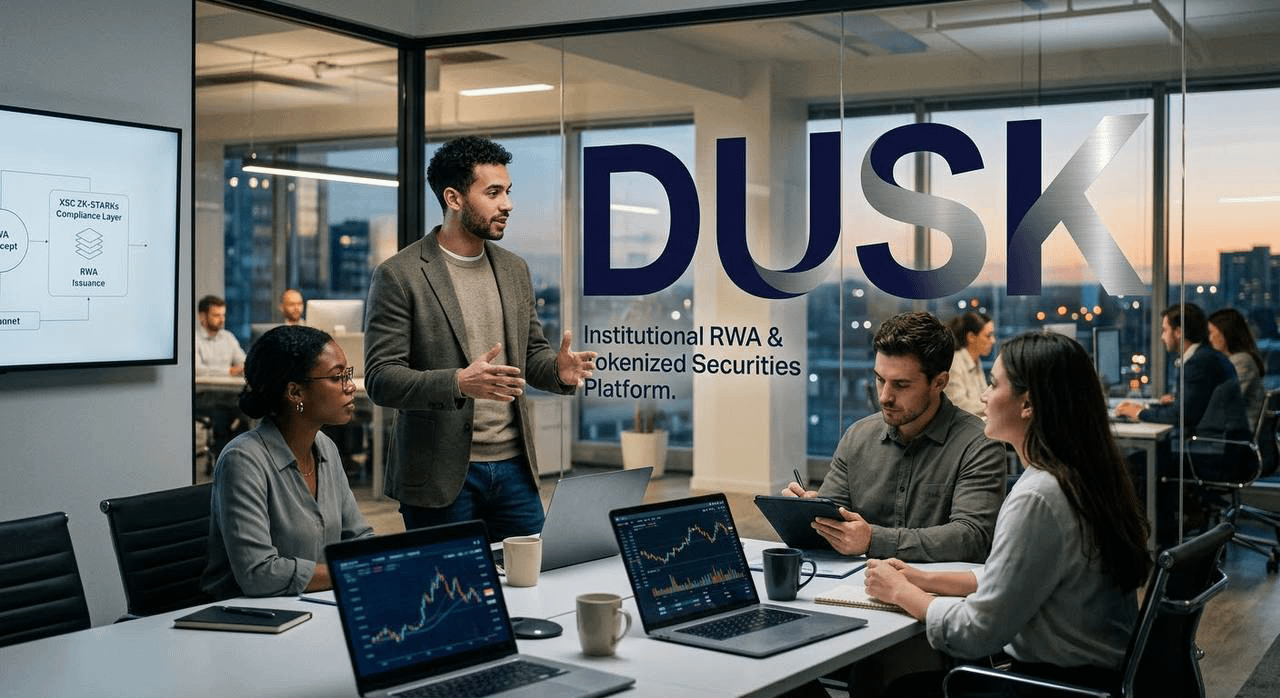
The deeper I delve into Dusk, the more clearly I understand that its bet isn’t just on privacy—it’s on institutional RWA. What especially interests me is that, around the network, an entire financial layer is gradually forming for tokenized securities.
The first thing that caught my attention was NPEX, a licensed European venue where shares and bonds can get an on-chain representation through Dusk infrastructure. Next to that, the direction of Securitize looks particularly compelling, linking the DUSK concept and tokenization with institutional standards in the US and Europe. I was also especially drawn to Chainlink CCIP—if RWAs can be moved between Dusk and other networks while preserving the compliance logic, that’s already far more interesting than a typical bridge.
But for me, the technical core is still XSC. The ZK mechanism makes it possible to conceal sensitive transaction data while still allowing it to be verified by authorized participants.
This is where I see Dusk’s main potential: it makes it possible to not choose between privacy and regulation, but to combine them into a single financial layer. Now the main question for me is whether, behind this infrastructure, there will be a real flow of issuers and capital?
#dusk $DUSK @Dusk
The deeper I delve into Dusk, the more clearly I understand that its bet isn’t just on privacy—it’s on institutional RWA. What especially interests me is that, around the network, an entire financial layer is gradually forming for tokenized securities.
The first thing that caught my attention was NPEX, a licensed European venue where shares and bonds can get an on-chain representation through Dusk infrastructure. Next to that, the direction of Securitize looks particularly compelling, linking the DUSK concept and tokenization with institutional standards in the US and Europe. I was also especially drawn to Chainlink CCIP—if RWAs can be moved between Dusk and other networks while preserving the compliance logic, that’s already far more interesting than a typical bridge.
But for me, the technical core is still XSC. The ZK mechanism makes it possible to conceal sensitive transaction data while still allowing it to be verified by authorized participants.
This is where I see Dusk’s main potential: it makes it possible to not choose between privacy and regulation, but to combine them into a single financial layer. Now the main question for me is whether, behind this infrastructure, there will be a real flow of issuers and capital?
The deeper I delve into Dusk, the more clearly I understand that its bet isn’t just on privacy—it’s on institutional RWA. What especially interests me is that, around the network, an entire financial layer is gradually forming for tokenized securities.
The first thing that caught my attention was NPEX, a licensed European venue where shares and bonds can get an on-chain representation through Dusk infrastructure. Next to that, the direction of Securitize looks particularly compelling, linking the DUSK concept and tokenization with institutional standards in the US and Europe. I was also especially drawn to Chainlink CCIP—if RWAs can be moved between Dusk and other networks while preserving the compliance logic, that’s already far more interesting than a typical bridge.
But for me, the technical core is still XSC. The ZK mechanism makes it possible to conceal sensitive transaction data while still allowing it to be verified by authorized participants.
This is where I see Dusk’s main potential: it makes it possible to not choose between privacy and regulation, but to combine them into a single financial layer. Now the main question for me is whether, behind this infrastructure, there will be a real flow of issuers and capital?
8
30
5.3k
·
--
#termmax @termmax
The longer I watch TermMax, the less I perceive it as simply a DeFi protocol with a fixed rate. For me, the main question has changed: can a fixed rate become a true onchain financial layer?
TermMax goes beyond ordinary lending—there are loans with fixed terms, leverage, vaults, limit orders, Alpha markets, and an RWA direction. What particularly hooks me is how these elements are connected. A user who values predictable loan costs solves one problem. A leveraged trader or a vault investor solves another. But everyone is united by one idea: clear timeframes and заранее known terms instead of a constantly fluctuating rate.
Against the backdrop of the growth of tokenized assets, this looks even more interesting. If onchain finance moves toward RWAs, capital will need not only liquidity but also the ability to plan the cost of money. At the same time, I understand that the more products there are, the more complexity and risk there is. That’s why I’m no longer looking at TermMax as just another lending protocol. I’m interested in whether the TMX TGE can turn this infrastructure into a genuinely used market for fixed onchain financing.
#termmax @TermMax
The longer I watch TermMax, the less I perceive it as simply a DeFi protocol with a fixed rate. For me, the main question has changed: can a fixed rate become a true onchain financial layer?
TermMax goes beyond ordinary lending—there are loans with fixed terms, leverage, vaults, limit orders, Alpha markets, and an RWA direction. What particularly hooks me is how these elements are connected. A user who values predictable loan costs solves one problem. A leveraged trader or a vault investor solves another. But everyone is united by one idea: clear timeframes and заранее known terms instead of a constantly fluctuating rate.
Against the backdrop of the growth of tokenized assets, this looks even more interesting. If onchain finance moves toward RWAs, capital will need not only liquidity but also the ability to plan the cost of money. At the same time, I understand that the more products there are, the more complexity and risk there is. That’s why I’m no longer looking at TermMax as just another lending protocol. I’m interested in whether the TMX TGE can turn this infrastructure into a genuinely used market for fixed onchain financing.
The longer I watch TermMax, the less I perceive it as simply a DeFi protocol with a fixed rate. For me, the main question has changed: can a fixed rate become a true onchain financial layer?
TermMax goes beyond ordinary lending—there are loans with fixed terms, leverage, vaults, limit orders, Alpha markets, and an RWA direction. What particularly hooks me is how these elements are connected. A user who values predictable loan costs solves one problem. A leveraged trader or a vault investor solves another. But everyone is united by one idea: clear timeframes and заранее known terms instead of a constantly fluctuating rate.
Against the backdrop of the growth of tokenized assets, this looks even more interesting. If onchain finance moves toward RWAs, capital will need not only liquidity but also the ability to plan the cost of money. At the same time, I understand that the more products there are, the more complexity and risk there is. That’s why I’m no longer looking at TermMax as just another lending protocol. I’m interested in whether the TMX TGE can turn this infrastructure into a genuinely used market for fixed onchain financing.
9
33
11.4k
·
--
Verified
#dusk $DUSK @Dusk_Foundation
One thought kept bothering me all day, so in the evening I calmly replayed the AMA Binance from August 19 and decided to look not at the noise around possible listings, but at the team’s rhetoric itself—Dusk’s.
I listened especially carefully to Emanuele Francioni and Hain Daewane. And the longer I listened, the more firmly I became convinced that Dusk is building not a hype-driven DeFi product, but infrastructure for a regulated market. For me, the main signal was between the lines: the team isn’t trying to fight regulators—they’re building a system that takes their requirements into account. If institutional capital really does come onchain en masse, then privacy along with compliance may become not a bonus, but a necessity.
At the same time, I see a weak spot. The technological foundation looks ambitious, but the team’s focus on engineering and the academic side is still more evident than its work with retail liquidity and marketing. After the AMA, my main question remained: will Dusk be able to turn its technological edge and the interest from exchanges into real volume on DuskTrade, or will it stay a strong product for technologists that simply got ahead of its market?
#dusk $DUSK @Dusk
One thought kept bothering me all day, so in the evening I calmly replayed the AMA Binance from August 19 and decided to look not at the noise around possible listings, but at the team’s rhetoric itself—Dusk’s.
I listened especially carefully to Emanuele Francioni and Hain Daewane. And the longer I listened, the more firmly I became convinced that Dusk is building not a hype-driven DeFi product, but infrastructure for a regulated market. For me, the main signal was between the lines: the team isn’t trying to fight regulators—they’re building a system that takes their requirements into account. If institutional capital really does come onchain en masse, then privacy along with compliance may become not a bonus, but a necessity.
At the same time, I see a weak spot. The technological foundation looks ambitious, but the team’s focus on engineering and the academic side is still more evident than its work with retail liquidity and marketing. After the AMA, my main question remained: will Dusk be able to turn its technological edge and the interest from exchanges into real volume on DuskTrade, or will it stay a strong product for technologists that simply got ahead of its market?
One thought kept bothering me all day, so in the evening I calmly replayed the AMA Binance from August 19 and decided to look not at the noise around possible listings, but at the team’s rhetoric itself—Dusk’s.
I listened especially carefully to Emanuele Francioni and Hain Daewane. And the longer I listened, the more firmly I became convinced that Dusk is building not a hype-driven DeFi product, but infrastructure for a regulated market. For me, the main signal was between the lines: the team isn’t trying to fight regulators—they’re building a system that takes their requirements into account. If institutional capital really does come onchain en masse, then privacy along with compliance may become not a bonus, but a necessity.
At the same time, I see a weak spot. The technological foundation looks ambitious, but the team’s focus on engineering and the academic side is still more evident than its work with retail liquidity and marketing. After the AMA, my main question remained: will Dusk be able to turn its technological edge and the interest from exchanges into real volume on DuskTrade, or will it stay a strong product for technologists that simply got ahead of its market?

8
30
6.9k
·
--
Verified
#termmax @termmax
While carefully studying the architecture of TermMax, I looked at the progress of Season 0 and noticed an interesting detail: all 4 out of 4 stages are already completed, but that still doesn’t mean the payout mechanism is fully understood. For me, what matters here is not the 4/4 mark itself, but what will happen in the next stage.
Continuing to break down the campaign mechanics, I found an interesting nuance: the RLUSD deposit program lists 5M TMX as rewards, while TermMax states that TMX earned via pre-mining will become available after the TGE. At the same time, in the whitepaper the TGE date is still labeled as TBA, and there is currently no overall conversion formula XP/AP/MP → TMX.
So, for me, 4/4 means the stages are completed, but it doesn’t confirm the amount of the future payout. We still don’t know how much one unit of XP, AP, or MP will be worth, nor what final volume a specific user will receive.
Yes, more activity may increase my balance. But it doesn’t make the unknown distribution formula any more certain. Now I’m watching three things: what exactly unlocks the new stage, how the distribution will be calculated, and when claims officially start. The points are already visible, but the payout math at the user level is still unknown.
#termmax @TermMax
While carefully studying the architecture of TermMax, I looked at the progress of Season 0 and noticed an interesting detail: all 4 out of 4 stages are already completed, but that still doesn’t mean the payout mechanism is fully understood. For me, what matters here is not the 4/4 mark itself, but what will happen in the next stage.
Continuing to break down the campaign mechanics, I found an interesting nuance: the RLUSD deposit program lists 5M TMX as rewards, while TermMax states that TMX earned via pre-mining will become available after the TGE. At the same time, in the whitepaper the TGE date is still labeled as TBA, and there is currently no overall conversion formula XP/AP/MP → TMX.
So, for me, 4/4 means the stages are completed, but it doesn’t confirm the amount of the future payout. We still don’t know how much one unit of XP, AP, or MP will be worth, nor what final volume a specific user will receive.
Yes, more activity may increase my balance. But it doesn’t make the unknown distribution formula any more certain. Now I’m watching three things: what exactly unlocks the new stage, how the distribution will be calculated, and when claims officially start. The points are already visible, but the payout math at the user level is still unknown.
While carefully studying the architecture of TermMax, I looked at the progress of Season 0 and noticed an interesting detail: all 4 out of 4 stages are already completed, but that still doesn’t mean the payout mechanism is fully understood. For me, what matters here is not the 4/4 mark itself, but what will happen in the next stage.
Continuing to break down the campaign mechanics, I found an interesting nuance: the RLUSD deposit program lists 5M TMX as rewards, while TermMax states that TMX earned via pre-mining will become available after the TGE. At the same time, in the whitepaper the TGE date is still labeled as TBA, and there is currently no overall conversion formula XP/AP/MP → TMX.
So, for me, 4/4 means the stages are completed, but it doesn’t confirm the amount of the future payout. We still don’t know how much one unit of XP, AP, or MP will be worth, nor what final volume a specific user will receive.
Yes, more activity may increase my balance. But it doesn’t make the unknown distribution formula any more certain. Now I’m watching three things: what exactly unlocks the new stage, how the distribution will be calculated, and when claims officially start. The points are already visible, but the payout math at the user level is still unknown.

43
53
20.4k
·
--
#dusk $DUSK @Dusk_Foundation The more I delve and dissect the deterministic sorting, the more interesting the weight decay mechanism becomes. At first glance everything is simple: the more DUSK a provider has, the higher its weight and the better its chance of being included in the selection. But after it gets chosen, its weight decreases by 1 DUSK before the next selection. For a large staker, this is almost an imperceptible adjustment—and of course it doesn’t negate the advantages of a big stake. Still, the principle itself intrigues me, because the next selection doesn’t happen with the same original weight. I see this as a slight balancing mechanism. A large stake remains a signal of economic security, but the selected provider receives the minimal reduction in weight, which slightly lowers the probability of being selected again. I find this approach more interesting than a hard limit for whales. It doesn’t break the staking economy; it only adds dynamics to how selection is distributed. At the same time, it’s important not to overestimate the effect—1 DUSK is too small compared to large positions—so this is not a solution to the issue of stake concentration. For me, this is more like a delicate tuning of incentives. I’m curious how noticeable the effect will be if the distribution of stake in the network changes substantially.
#dusk $DUSK @Dusk The more I delve and dissect the deterministic sorting, the more interesting the weight decay mechanism becomes. At first glance everything is simple: the more DUSK a provider has, the higher its weight and the better its chance of being included in the selection. But after it gets chosen, its weight decreases by 1 DUSK before the next selection. For a large staker, this is almost an imperceptible adjustment—and of course it doesn’t negate the advantages of a big stake. Still, the principle itself intrigues me, because the next selection doesn’t happen with the same original weight. I see this as a slight balancing mechanism. A large stake remains a signal of economic security, but the selected provider receives the minimal reduction in weight, which slightly lowers the probability of being selected again. I find this approach more interesting than a hard limit for whales. It doesn’t break the staking economy; it only adds dynamics to how selection is distributed. At the same time, it’s important not to overestimate the effect—1 DUSK is too small compared to large positions—so this is not a solution to the issue of stake concentration. For me, this is more like a delicate tuning of incentives. I’m curious how noticeable the effect will be if the distribution of stake in the network changes substantially.
11
30
10.2k
·
--
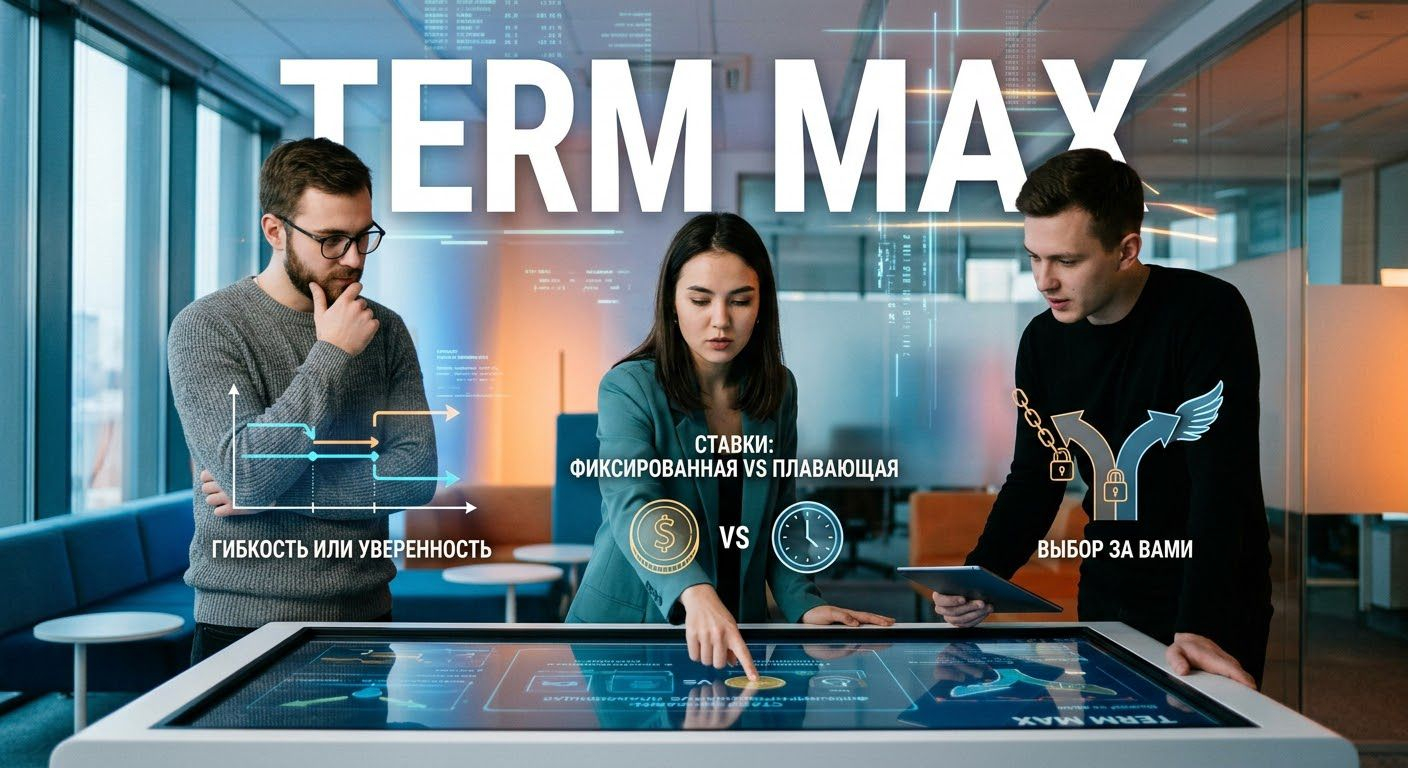
#termmax @termmax gives freedom of choice—and for me, that’s the top priority! Would you choose a guaranteed rate, or the ability to change your position at any moment? I caught myself thinking about this while I was looking at the TermMax architecture. Fixed lending provides what DeFi often lacks: predictability. I know in advance the rate, the term, and the potential yield, so I can plan my strategy calmly without constantly watching the market. But you pay for that certainty with less flexibility.
While the capital is locked, rates can rise, a more attractive opportunity may appear, or my view of the market may simply change. An early exit also might not be as convenient as it seems. This is exactly where I see TermMax’s main engineering tradeoff: thanks to it, a fixed rate turns uncertainty into a predictable cash flow, while a floating rate keeps the capital adaptive.
So for me, the question isn’t which model is better. They solve different problems: a fixed rate is about confidence, and a floating one is about freedom to act. If I had $3000 for 6 months, I wouldn’t pick blindly. I’d split the capital between the two models.
#termmax @TermMax gives freedom of choice—and for me, that’s the top priority! Would you choose a guaranteed rate, or the ability to change your position at any moment? I caught myself thinking about this while I was looking at the TermMax architecture. Fixed lending provides what DeFi often lacks: predictability. I know in advance the rate, the term, and the potential yield, so I can plan my strategy calmly without constantly watching the market. But you pay for that certainty with less flexibility.
While the capital is locked, rates can rise, a more attractive opportunity may appear, or my view of the market may simply change. An early exit also might not be as convenient as it seems. This is exactly where I see TermMax’s main engineering tradeoff: thanks to it, a fixed rate turns uncertainty into a predictable cash flow, while a floating rate keeps the capital adaptive.
So for me, the question isn’t which model is better. They solve different problems: a fixed rate is about confidence, and a floating one is about freedom to act. If I had $3000 for 6 months, I wouldn’t pick blindly. I’d split the capital between the two models.
While the capital is locked, rates can rise, a more attractive opportunity may appear, or my view of the market may simply change. An early exit also might not be as convenient as it seems. This is exactly where I see TermMax’s main engineering tradeoff: thanks to it, a fixed rate turns uncertainty into a predictable cash flow, while a floating rate keeps the capital adaptive.
So for me, the question isn’t which model is better. They solve different problems: a fixed rate is about confidence, and a floating one is about freedom to act. If I had $3000 for 6 months, I wouldn’t pick blindly. I’d split the capital between the two models.
11
1
29
16.1k
·
--
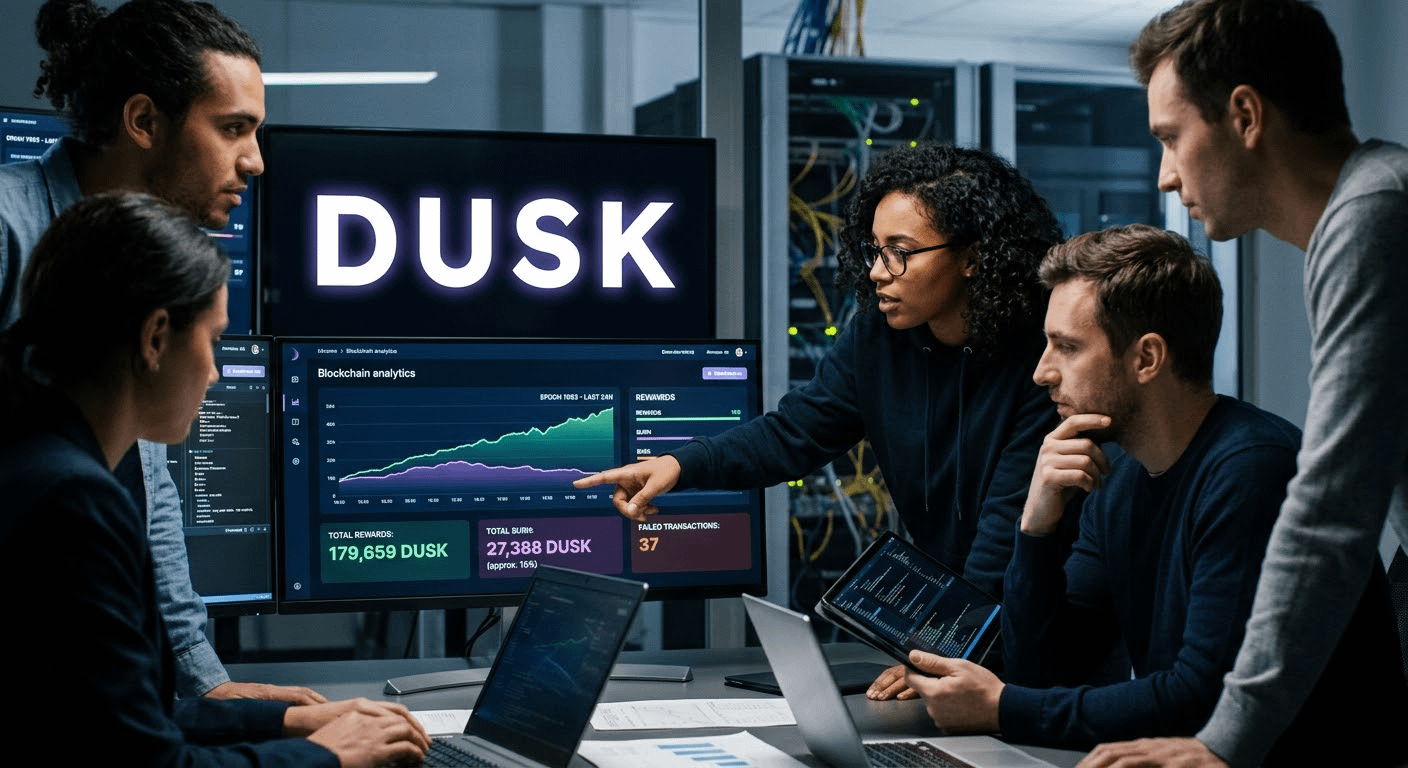
#dusk $DUSK @Dusk_Foundation Quiet infrastructure of DUSK grabbed me with one unexpected detail: the network constantly burns part of what it itself pays out. Delving into the structure, I opened the DUDE Explorer and studied the 1993 era. On paper everything looks fine, but what I saw over the past 24 hours really surprised me: a whole picture unfolded in front of me, where 179,659 DUSK went to rewards and 27,388 DUSK was burned. So, about 15% of the volume is effectively removed from circulation per day—quite a bold move. In the chart everything looks calm. But when you see reward and burn side by side, the mechanism feels different. This pairing allows validators to be paid for participation, while the network simultaneously returns part of the issuance back—genius! In addition, my vigilance let me notice 37 failed transactions during the same period. Not much against the total volume, but it’s exactly these kinds of details that show the real state of the network better than beautiful presentations. I updated the data several times and the picture stayed the same. And then I had the main question: is this a stable mechanism or a temporary effect of the current load? Now I want to check whether burn/reward stays around 15% between epochs or changes along with staking and network activity.
#dusk $DUSK @Dusk Quiet infrastructure of DUSK grabbed me with one unexpected detail: the network constantly burns part of what it itself pays out. Delving into the structure, I opened the DUDE Explorer and studied the 1993 era. On paper everything looks fine, but what I saw over the past 24 hours really surprised me: a whole picture unfolded in front of me, where 179,659 DUSK went to rewards and 27,388 DUSK was burned. So, about 15% of the volume is effectively removed from circulation per day—quite a bold move. In the chart everything looks calm. But when you see reward and burn side by side, the mechanism feels different. This pairing allows validators to be paid for participation, while the network simultaneously returns part of the issuance back—genius! In addition, my vigilance let me notice 37 failed transactions during the same period. Not much against the total volume, but it’s exactly these kinds of details that show the real state of the network better than beautiful presentations. I updated the data several times and the picture stayed the same. And then I had the main question: is this a stable mechanism or a temporary effect of the current load? Now I want to check whether burn/reward stays around 15% between epochs or changes along with staking and network activity.
10
27
5.6k
·
--
Partly True
#termmax @termmax
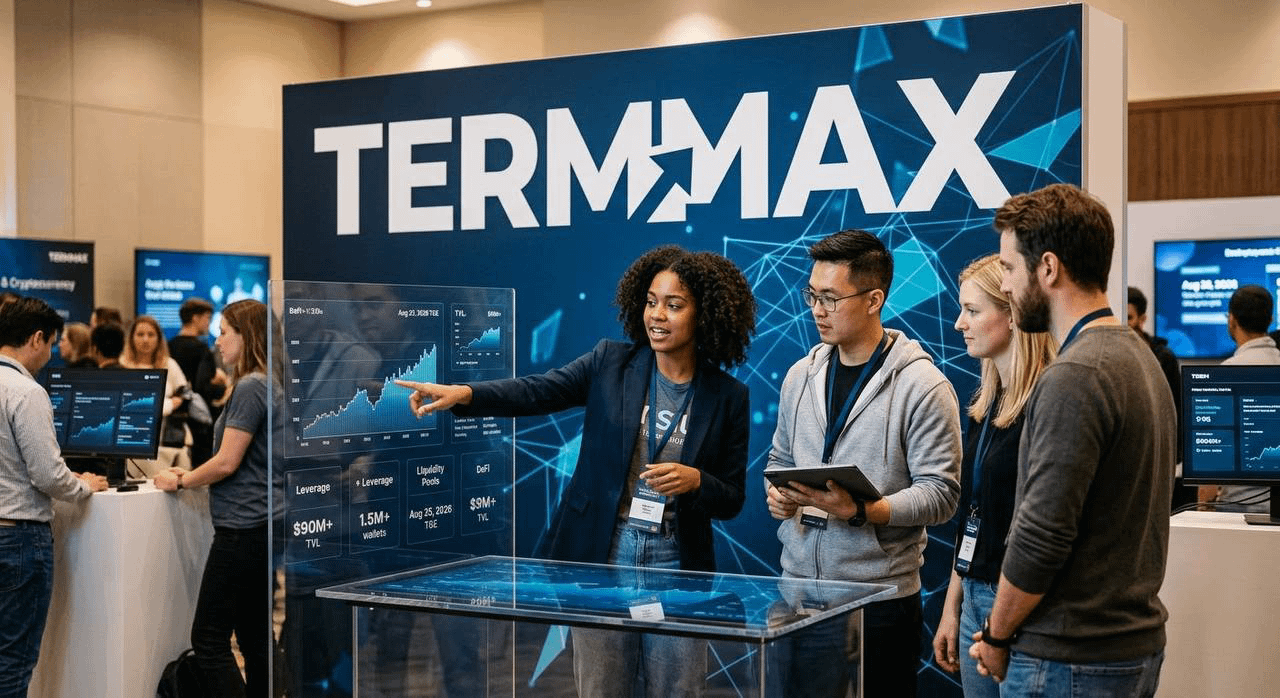
While dissecting TermMax, I first wanted to understand the mechanics of the shoulder and the concept of zero liquidation. But the deeper I dug into the protocol’s economics, the more I got hooked by something else. As of August 25, 2026, the TGE for TMX is scheduled, and there are already significant figures behind the project. Just imagine TVL above $90M and more than 1.5M registered wallets, plus 90K+ daily users across 10 EVM networks.
I started looking deeper and realized that much of the economy here may not be about traders at all. Borrowers create demand, but depositors and lenders form the foundation of liquidity by placing funds in vaults for fixed returns. That’s why I’m interested in comparing TMX with Binance Alpha tokens—for example, ALPHA and KERNEL—but what matters here is not the name, but the actual structure of demand.
According to DeFiLlama, I saw active loans of around $29M with TVL close to $34M on one of the networks. For me, that’s a signal that the lending side is working, but its scale needs to be separated from the deposit base.
And now I’m more interested not in the TGE itself, but in the reaction of different participants. Once TMX is unlocked, will the first wave be a crowd chasing yield, or traders who truly need leverage?
#termmax @TermMax
While dissecting TermMax, I first wanted to understand the mechanics of the shoulder and the concept of zero liquidation. But the deeper I dug into the protocol’s economics, the more I got hooked by something else. As of August 25, 2026, the TGE for TMX is scheduled, and there are already significant figures behind the project. Just imagine TVL above $90M and more than 1.5M registered wallets, plus 90K+ daily users across 10 EVM networks.
I started looking deeper and realized that much of the economy here may not be about traders at all. Borrowers create demand, but depositors and lenders form the foundation of liquidity by placing funds in vaults for fixed returns. That’s why I’m interested in comparing TMX with Binance Alpha tokens—for example, ALPHA and KERNEL—but what matters here is not the name, but the actual structure of demand.
According to DeFiLlama, I saw active loans of around $29M with TVL close to $34M on one of the networks. For me, that’s a signal that the lending side is working, but its scale needs to be separated from the deposit base.
And now I’m more interested not in the TGE itself, but in the reaction of different participants. Once TMX is unlocked, will the first wave be a crowd chasing yield, or traders who truly need leverage?
While dissecting TermMax, I first wanted to understand the mechanics of the shoulder and the concept of zero liquidation. But the deeper I dug into the protocol’s economics, the more I got hooked by something else. As of August 25, 2026, the TGE for TMX is scheduled, and there are already significant figures behind the project. Just imagine TVL above $90M and more than 1.5M registered wallets, plus 90K+ daily users across 10 EVM networks.
I started looking deeper and realized that much of the economy here may not be about traders at all. Borrowers create demand, but depositors and lenders form the foundation of liquidity by placing funds in vaults for fixed returns. That’s why I’m interested in comparing TMX with Binance Alpha tokens—for example, ALPHA and KERNEL—but what matters here is not the name, but the actual structure of demand.
According to DeFiLlama, I saw active loans of around $29M with TVL close to $34M on one of the networks. For me, that’s a signal that the lending side is working, but its scale needs to be separated from the deposit base.
And now I’m more interested not in the TGE itself, but in the reaction of different participants. Once TMX is unlocked, will the first wave be a crowd chasing yield, or traders who truly need leverage?
7
34
11.7k
·
--
#dusk $DUSK @Dusk_Foundation
While dissecting DUSK infrastructure, I decided to take a closer look at their bridge and the migration mechanics between Native Dusk and external networks such as Ethereum or the BNB Chain. At first, everything seemed fairly straightforward: you transfer tokens via the bridge, and if needed, you transfer them back.
But the deeper I dug into the mechanics, the more I became interested not in the route itself, but in the trust model.
Operational control can indeed be useful, but monitoring allows you to detect anomalous activity, technical failures, or suspicious movements more quickly. For bridge infrastructure, this is an important layer of protection.
However, an engineering trade-off appears here. The more authority the operator receives, the more dependency on centralized control grows. In addition, smart contract risks and risks from external networks remain—an issue on Ethereum or the BNB Chain could potentially affect the entire migration process.
So I don’t call the DUSK bridge bad or unsafe. For me, the more important question is: where does the reasonable boundary lie between operational control that protects the bridge, and the extra trust that this control creates?
#dusk $DUSK @Dusk
While dissecting DUSK infrastructure, I decided to take a closer look at their bridge and the migration mechanics between Native Dusk and external networks such as Ethereum or the BNB Chain. At first, everything seemed fairly straightforward: you transfer tokens via the bridge, and if needed, you transfer them back.
But the deeper I dug into the mechanics, the more I became interested not in the route itself, but in the trust model.
Operational control can indeed be useful, but monitoring allows you to detect anomalous activity, technical failures, or suspicious movements more quickly. For bridge infrastructure, this is an important layer of protection.
However, an engineering trade-off appears here. The more authority the operator receives, the more dependency on centralized control grows. In addition, smart contract risks and risks from external networks remain—an issue on Ethereum or the BNB Chain could potentially affect the entire migration process.
So I don’t call the DUSK bridge bad or unsafe. For me, the more important question is: where does the reasonable boundary lie between operational control that protects the bridge, and the extra trust that this control creates?
While dissecting DUSK infrastructure, I decided to take a closer look at their bridge and the migration mechanics between Native Dusk and external networks such as Ethereum or the BNB Chain. At first, everything seemed fairly straightforward: you transfer tokens via the bridge, and if needed, you transfer them back.
But the deeper I dug into the mechanics, the more I became interested not in the route itself, but in the trust model.
Operational control can indeed be useful, but monitoring allows you to detect anomalous activity, technical failures, or suspicious movements more quickly. For bridge infrastructure, this is an important layer of protection.
However, an engineering trade-off appears here. The more authority the operator receives, the more dependency on centralized control grows. In addition, smart contract risks and risks from external networks remain—an issue on Ethereum or the BNB Chain could potentially affect the entire migration process.
So I don’t call the DUSK bridge bad or unsafe. For me, the more important question is: where does the reasonable boundary lie between operational control that protects the bridge, and the extra trust that this control creates?
10
33
5.1k
·
--
#bstockscis @BinanceCIS
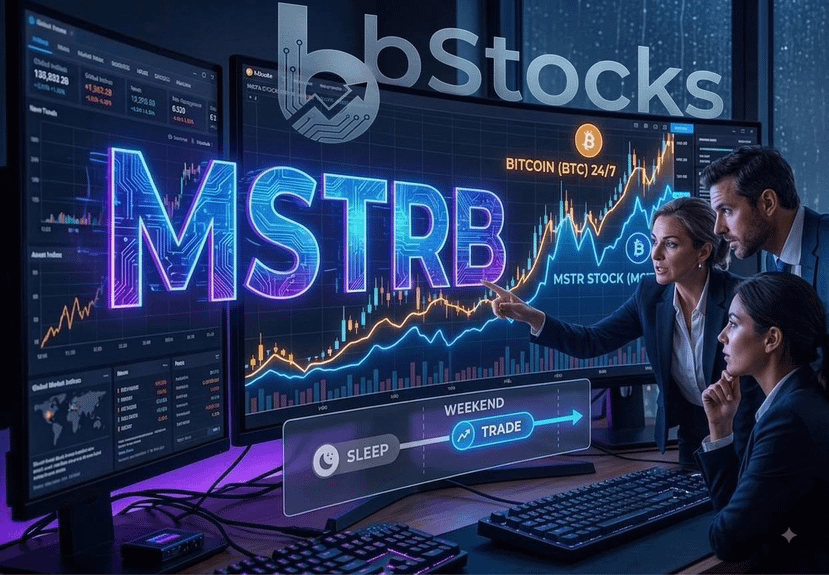
When I started breaking down MSTRB in the bStocks ecosystem, I quickly realized that treating it like a regular stock is a mistake. At its core, it’s MSTR—so most of the asset’s character is shaped by its relationship with Bitcoin. When BTC accelerates, MSTR can move much more sharply, and when it reverses, the drop becomes just as painful. That’s why after a deep drawdown, I wouldn’t enter MSTRB with a single trade. For me, the grid strategy works better here. I split my capital into several portions and build my position only within a confirmed range: near the lower boundary I buy gradually, in the middle I do nothing, and near the upper boundary I partially take profit. But the grid shouldn’t turn into endless averaging. If BTC breaks structure, and MSTRB leaves the range to the downside on rising volume, I stop buying and keep the cash. I like this exact logic of bStocks: you can work with exposure to MSTR in an on-chain environment and watch the market 24/7. But I remember the key point—MSTRB is not Bitcoin; it’s an asset with its own premium, risks, and volatility. My strategy is simple: enter in parts, exit in parts, and always leave capital ready for the next move.
#bstockscis @BinanceCIS
When I started breaking down MSTRB in the bStocks ecosystem, I quickly realized that treating it like a regular stock is a mistake. At its core, it’s MSTR—so most of the asset’s character is shaped by its relationship with Bitcoin. When BTC accelerates, MSTR can move much more sharply, and when it reverses, the drop becomes just as painful. That’s why after a deep drawdown, I wouldn’t enter MSTRB with a single trade. For me, the grid strategy works better here. I split my capital into several portions and build my position only within a confirmed range: near the lower boundary I buy gradually, in the middle I do nothing, and near the upper boundary I partially take profit. But the grid shouldn’t turn into endless averaging. If BTC breaks structure, and MSTRB leaves the range to the downside on rising volume, I stop buying and keep the cash. I like this exact logic of bStocks: you can work with exposure to MSTR in an on-chain environment and watch the market 24/7. But I remember the key point—MSTRB is not Bitcoin; it’s an asset with its own premium, risks, and volatility. My strategy is simple: enter in parts, exit in parts, and always leave capital ready for the next move.
When I started breaking down MSTRB in the bStocks ecosystem, I quickly realized that treating it like a regular stock is a mistake. At its core, it’s MSTR—so most of the asset’s character is shaped by its relationship with Bitcoin. When BTC accelerates, MSTR can move much more sharply, and when it reverses, the drop becomes just as painful. That’s why after a deep drawdown, I wouldn’t enter MSTRB with a single trade. For me, the grid strategy works better here. I split my capital into several portions and build my position only within a confirmed range: near the lower boundary I buy gradually, in the middle I do nothing, and near the upper boundary I partially take profit. But the grid shouldn’t turn into endless averaging. If BTC breaks structure, and MSTRB leaves the range to the downside on rising volume, I stop buying and keep the cash. I like this exact logic of bStocks: you can work with exposure to MSTR in an on-chain environment and watch the market 24/7. But I remember the key point—MSTRB is not Bitcoin; it’s an asset with its own premium, risks, and volatility. My strategy is simple: enter in parts, exit in parts, and always leave capital ready for the next move.
9
32
5.2k
·
--
#termmax @termmax
The most interesting part of TermMax isn’t the fixed rate—it’s what happens when you change your mind.
You lock in a position and get predictable returns. But weeks pass, market rates move, and waiting until maturity stops sounding appealing.
TermMax turns the fixed requirement into a transferable FT token, sending your position to the secondary market. On paper, the idea is simple—but it’s one of the most challenging problems in DeFi. The token is tied to ticking clocks, where two identical requirements are priced differently if one is settled in 20 days and the other in 200 days.
That’s why the AMM in TermMax and its pricing curve evaluate not just the token, but time and capital. Meanwhile, the secondary market helps both sides: if the FT trades below par, buying it back becomes a cheap way to repay the debt.
A fixed rate grabs attention, but the real experiment is the transferable debt. Creating a fixed rate is easy. Creating an instrument people want to trade after the initial hype fades—that’s where the true value of DeFi primitives is tested.
#termmax @TermMax
The most interesting part of TermMax isn’t the fixed rate—it’s what happens when you change your mind.
You lock in a position and get predictable returns. But weeks pass, market rates move, and waiting until maturity stops sounding appealing.
TermMax turns the fixed requirement into a transferable FT token, sending your position to the secondary market. On paper, the idea is simple—but it’s one of the most challenging problems in DeFi. The token is tied to ticking clocks, where two identical requirements are priced differently if one is settled in 20 days and the other in 200 days.
That’s why the AMM in TermMax and its pricing curve evaluate not just the token, but time and capital. Meanwhile, the secondary market helps both sides: if the FT trades below par, buying it back becomes a cheap way to repay the debt.
A fixed rate grabs attention, but the real experiment is the transferable debt. Creating a fixed rate is easy. Creating an instrument people want to trade after the initial hype fades—that’s where the true value of DeFi primitives is tested.
The most interesting part of TermMax isn’t the fixed rate—it’s what happens when you change your mind.
You lock in a position and get predictable returns. But weeks pass, market rates move, and waiting until maturity stops sounding appealing.
TermMax turns the fixed requirement into a transferable FT token, sending your position to the secondary market. On paper, the idea is simple—but it’s one of the most challenging problems in DeFi. The token is tied to ticking clocks, where two identical requirements are priced differently if one is settled in 20 days and the other in 200 days.
That’s why the AMM in TermMax and its pricing curve evaluate not just the token, but time and capital. Meanwhile, the secondary market helps both sides: if the FT trades below par, buying it back becomes a cheap way to repay the debt.
A fixed rate grabs attention, but the real experiment is the transferable debt. Creating a fixed rate is easy. Creating an instrument people want to trade after the initial hype fades—that’s where the true value of DeFi primitives is tested.

6
29
5.7k
·
--
Verified
#dusk $DUSK @Dusk_Foundation
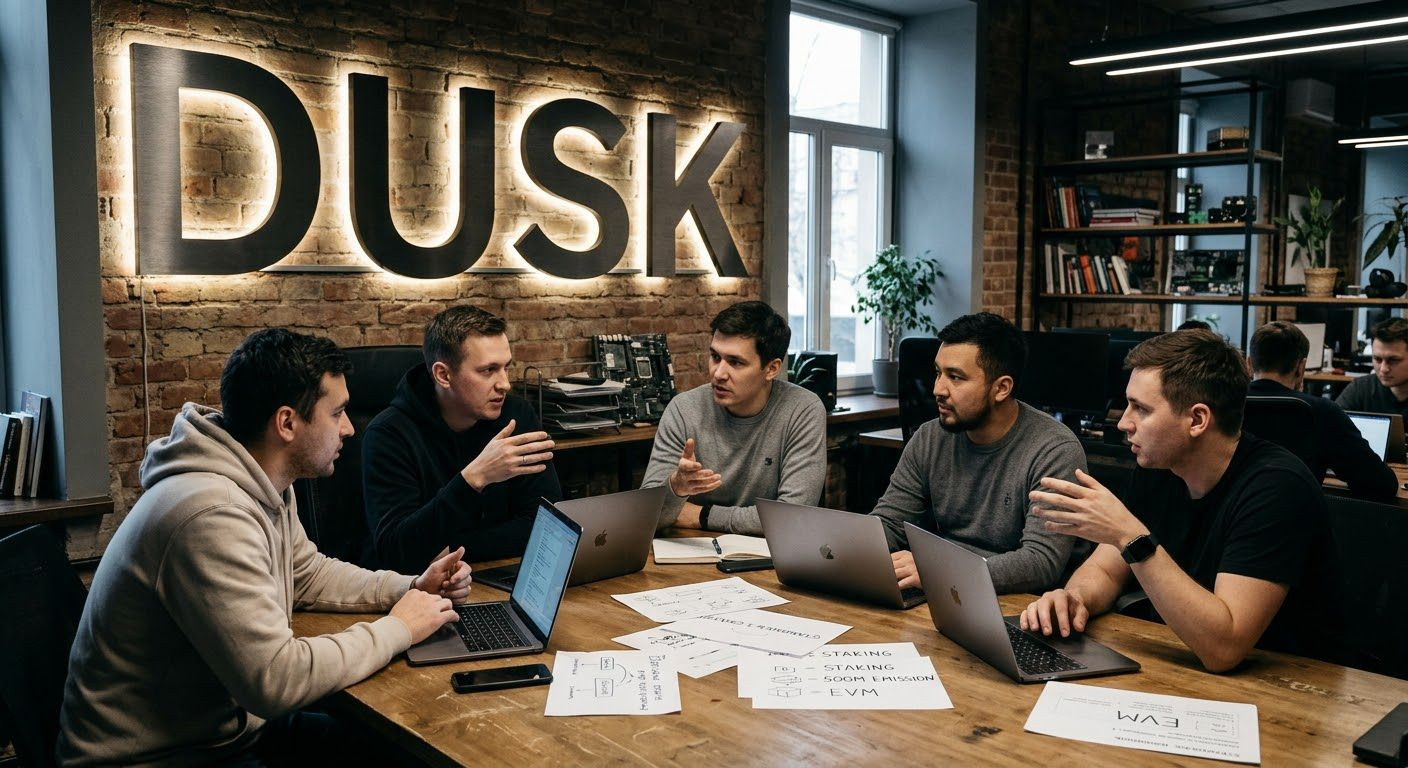
I spent my spare time analyzing DUSK and, to my surprise, realized that the staking mechanics interest me more than the privacy idea itself. With DUSK, the minimum stake is 1,000 tokens, activation takes about 1–2 epochs, and the planned issuance is 500M DUSK over 36 years, with the rate of issuance halving every four years.
At first, these figures look like typical tokenomics. But digging deeper, I found something more interesting. DUSK isn’t only needed by validators—it’s also used in staking, calculations, and gas. Meanwhile, the architecture is gradually expanding through DuskDS, DuskEVM, and DuskVM.
And this is where my main question arises. If EVM and privacy applications really start generating economic activity, demand for DUSK could be formed right away from multiple sources. In addition, Stake Abstraction allows smart contracts to participate in staking, paving the way for more native pools and automated strategies.
But for now, what I see is potential, not a proven demand model. I’m missing the key number: what share of DUSK activity today is tied to real applications, and what share is tied to staking and infrastructure? That’s exactly what I would check next.
#dusk $DUSK @Dusk
I spent my spare time analyzing DUSK and, to my surprise, realized that the staking mechanics interest me more than the privacy idea itself. With DUSK, the minimum stake is 1,000 tokens, activation takes about 1–2 epochs, and the planned issuance is 500M DUSK over 36 years, with the rate of issuance halving every four years.
At first, these figures look like typical tokenomics. But digging deeper, I found something more interesting. DUSK isn’t only needed by validators—it’s also used in staking, calculations, and gas. Meanwhile, the architecture is gradually expanding through DuskDS, DuskEVM, and DuskVM.
And this is where my main question arises. If EVM and privacy applications really start generating economic activity, demand for DUSK could be formed right away from multiple sources. In addition, Stake Abstraction allows smart contracts to participate in staking, paving the way for more native pools and automated strategies.
But for now, what I see is potential, not a proven demand model. I’m missing the key number: what share of DUSK activity today is tied to real applications, and what share is tied to staking and infrastructure? That’s exactly what I would check next.
I spent my spare time analyzing DUSK and, to my surprise, realized that the staking mechanics interest me more than the privacy idea itself. With DUSK, the minimum stake is 1,000 tokens, activation takes about 1–2 epochs, and the planned issuance is 500M DUSK over 36 years, with the rate of issuance halving every four years.
At first, these figures look like typical tokenomics. But digging deeper, I found something more interesting. DUSK isn’t only needed by validators—it’s also used in staking, calculations, and gas. Meanwhile, the architecture is gradually expanding through DuskDS, DuskEVM, and DuskVM.
And this is where my main question arises. If EVM and privacy applications really start generating economic activity, demand for DUSK could be formed right away from multiple sources. In addition, Stake Abstraction allows smart contracts to participate in staking, paving the way for more native pools and automated strategies.
But for now, what I see is potential, not a proven demand model. I’m missing the key number: what share of DUSK activity today is tied to real applications, and what share is tied to staking and infrastructure? That’s exactly what I would check next.
7
26
5.2k
·
--
Verified
#bstockscis @BinanceCIS
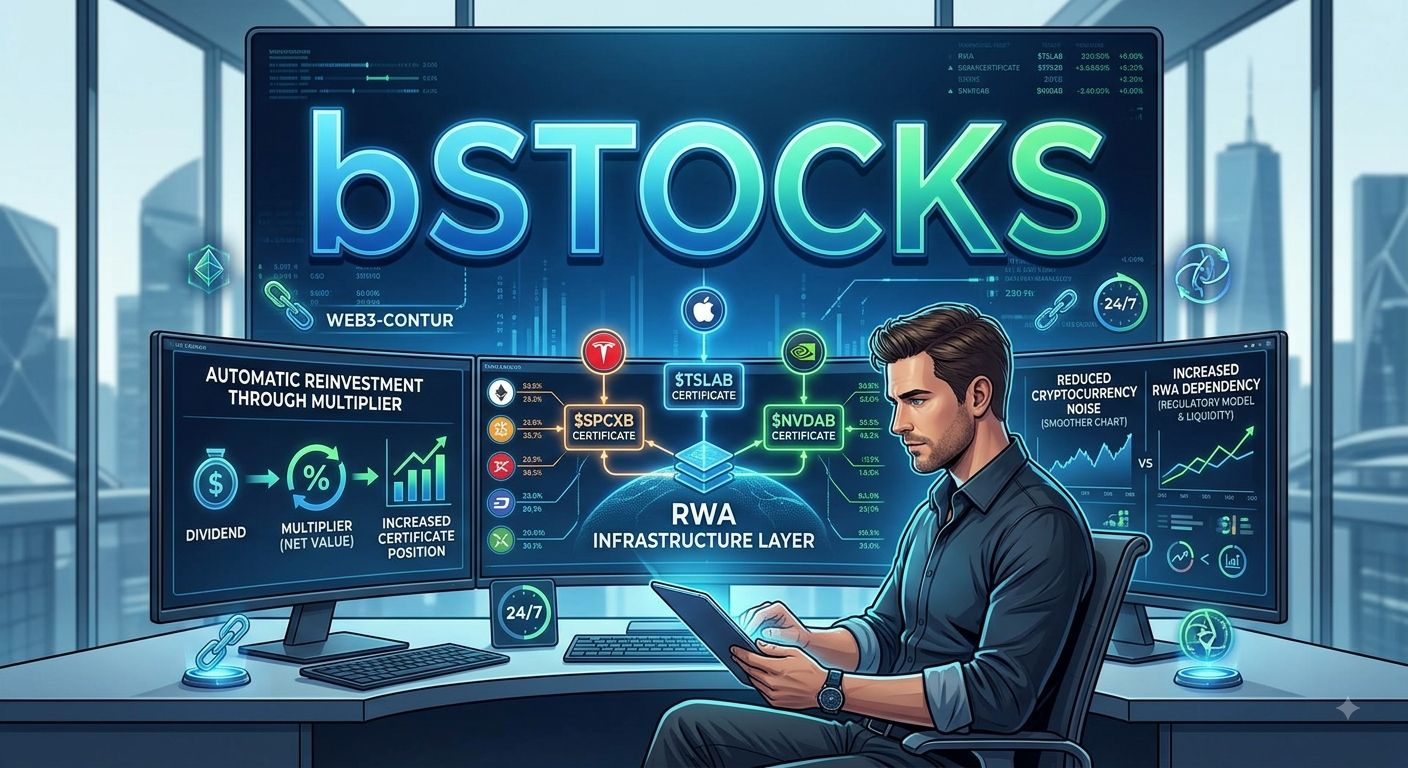
Recently, I caught myself on a simple thought: the constant hunt for gems, the fear of missing a pump, and endless altcoin drawdowns wear me out more than the market itself. So I decided to transfer part of my profits into bStocks—not as a quiet harbor, but as a way to reduce the noise in my portfolio.
When I look at $TSLAB, $SPCXB, or $NVDAB, I like the mechanics themselves, because they preserve the familiar Web3 loop where I can trade tokenized shares 24/7. Dividends don’t need to be manually redistributed, since after tax withholding their net value is automatically reinvested via the Multiplier, increasing my position.
But I don’t forget the cost of this simplicity. A bStock isn’t the stock itself—it’s a tokenized certificate backed by the underlying security through a regulated custodian.
So for me, bStocks aren’t a way to eliminate risk—they’re a way to change my profile. Less crypto noise, but more exposure to the RWA infrastructure, liquidity, and the custody model.
This kind of balance feels more honest to me than simply calling bStocks a safe haven.
#bstockscis @BinanceCIS
Recently, I caught myself on a simple thought: the constant hunt for gems, the fear of missing a pump, and endless altcoin drawdowns wear me out more than the market itself. So I decided to transfer part of my profits into bStocks—not as a quiet harbor, but as a way to reduce the noise in my portfolio.
When I look at $TSLAB, $SPCXB, or $NVDAB, I like the mechanics themselves, because they preserve the familiar Web3 loop where I can trade tokenized shares 24/7. Dividends don’t need to be manually redistributed, since after tax withholding their net value is automatically reinvested via the Multiplier, increasing my position.
But I don’t forget the cost of this simplicity. A bStock isn’t the stock itself—it’s a tokenized certificate backed by the underlying security through a regulated custodian.
So for me, bStocks aren’t a way to eliminate risk—they’re a way to change my profile. Less crypto noise, but more exposure to the RWA infrastructure, liquidity, and the custody model.
This kind of balance feels more honest to me than simply calling bStocks a safe haven.
Recently, I caught myself on a simple thought: the constant hunt for gems, the fear of missing a pump, and endless altcoin drawdowns wear me out more than the market itself. So I decided to transfer part of my profits into bStocks—not as a quiet harbor, but as a way to reduce the noise in my portfolio.
When I look at $TSLAB, $SPCXB, or $NVDAB, I like the mechanics themselves, because they preserve the familiar Web3 loop where I can trade tokenized shares 24/7. Dividends don’t need to be manually redistributed, since after tax withholding their net value is automatically reinvested via the Multiplier, increasing my position.
But I don’t forget the cost of this simplicity. A bStock isn’t the stock itself—it’s a tokenized certificate backed by the underlying security through a regulated custodian.
So for me, bStocks aren’t a way to eliminate risk—they’re a way to change my profile. Less crypto noise, but more exposure to the RWA infrastructure, liquidity, and the custody model.
This kind of balance feels more honest to me than simply calling bStocks a safe haven.
7
32
5k
·
--
Verified
#dusk $DUSK @Dusk_Foundation
While digging through Dusk’s August material on SME tokenization, I almost missed the most interesting part: the table of six stages of the lifecycle. The column “what remains” really hooked me. And that’s when the marketing image started to fall apart, because structured issuance still needs corporate approvals, transfer still requires a notary, and servicing still requires a living human being for tax reporting.
I realized a simple thing: Dusk doesn’t override legal reality—it adds an overarching digital layer on top of it. The partnership with NPEX shows this trade-off well: shares of Dutch BVs still require a notarial deed, even if the asset itself is already represented by a token.
For me, this matters more than a beautiful narrative about full tokenization. Blockchain does remove some friction—such as reconciling registries, manual calculations, and data fragmentation. But laws, notaries, and operators don’t just disappear.
That’s why I look at RWA pragmatically: tokenization doesn’t erase the old system; it gradually embeds itself alongside it. I wonder how many projects simply don’t like showing this part of the picture?
#dusk $DUSK @Dusk
While digging through Dusk’s August material on SME tokenization, I almost missed the most interesting part: the table of six stages of the lifecycle. The column “what remains” really hooked me. And that’s when the marketing image started to fall apart, because structured issuance still needs corporate approvals, transfer still requires a notary, and servicing still requires a living human being for tax reporting.
I realized a simple thing: Dusk doesn’t override legal reality—it adds an overarching digital layer on top of it. The partnership with NPEX shows this trade-off well: shares of Dutch BVs still require a notarial deed, even if the asset itself is already represented by a token.
For me, this matters more than a beautiful narrative about full tokenization. Blockchain does remove some friction—such as reconciling registries, manual calculations, and data fragmentation. But laws, notaries, and operators don’t just disappear.
That’s why I look at RWA pragmatically: tokenization doesn’t erase the old system; it gradually embeds itself alongside it. I wonder how many projects simply don’t like showing this part of the picture?
While digging through Dusk’s August material on SME tokenization, I almost missed the most interesting part: the table of six stages of the lifecycle. The column “what remains” really hooked me. And that’s when the marketing image started to fall apart, because structured issuance still needs corporate approvals, transfer still requires a notary, and servicing still requires a living human being for tax reporting.
I realized a simple thing: Dusk doesn’t override legal reality—it adds an overarching digital layer on top of it. The partnership with NPEX shows this trade-off well: shares of Dutch BVs still require a notarial deed, even if the asset itself is already represented by a token.
For me, this matters more than a beautiful narrative about full tokenization. Blockchain does remove some friction—such as reconciling registries, manual calculations, and data fragmentation. But laws, notaries, and operators don’t just disappear.
That’s why I look at RWA pragmatically: tokenization doesn’t erase the old system; it gradually embeds itself alongside it. I wonder how many projects simply don’t like showing this part of the picture?

5
25
5.1k
Log in to explore more content
Join global crypto users on Binance Square
⚡️ Get latest and useful information about crypto.
💬 Trusted by the world’s largest crypto exchange.
👍 Discover real insights from verified creators.
Email / Phone number
Trending Topics
BTCBreaks80K
22,995 views
712 Discussing
🚨 BITCOIN $80K IS BACK IN FOCUS! 🔥
BTC is pushing toward the $80,000 psychological resistance after reclaiming the $78K zone. A clean breakout and hold above $80K could bring $82K–$85K into focus next. 📈
But traders need to watch the rejection zone carefully — losing $77K–$78K could trigger another pullback.
🎯 Key levels:
• 🔥 Breakout: $80K
• 🚀 Next zone: $82K–$85K
• ⚠️ Support: $77K–$78K
$80K isn’t just a number — it’s the level bulls need to conquer.
Are we about to see the next BTC breakout? 👇
#bitcoin #BTC #BinanceSquare #btcbreaks80k
$BTC
ASHFAQ NAEEM
·4 Likes
·4.7k views
BuffettBecomesBerkshireChairmanEmeritus
2,368 views
183 Discussing
ZcashSpotETFTops$230MMonthlyInflow
1,021 views
44 Discussing