

财经少华
1.9k Posts

财经少华
 Square Verified+
Report
Block User
👑交易教学👑公众号:财经少华,微博号:少华0305🐦 X:@shaohua3570,🎈币安手续费邀请码:UIT4C6K5,不要忽视你的每笔交易手续费,它甚至可能超过你的本金,这是一大笔费用。感谢您,点赞和转发是对我最大的支持
Frequent Trader
2.5 Years
5.6K+ Following
39.2K+ Followers
143.1K+ Liked
Posts
All
Quotes
Videos
PINNED
·
--
Today, my exclusive chat room has opened, welcome everyone to my chat room, there are surprises every day! [币安王牌KOL少华](https://www.binance.com/zh-CN/service-group-landing?channelToken=-mxUSxOmR2V8mnzmREVSsA&type=1)
Today, my exclusive chat room has opened, welcome everyone to my chat room, there are surprises every day! 币安王牌KOL少华

836
579
115
2.1k
PINNED
·
--
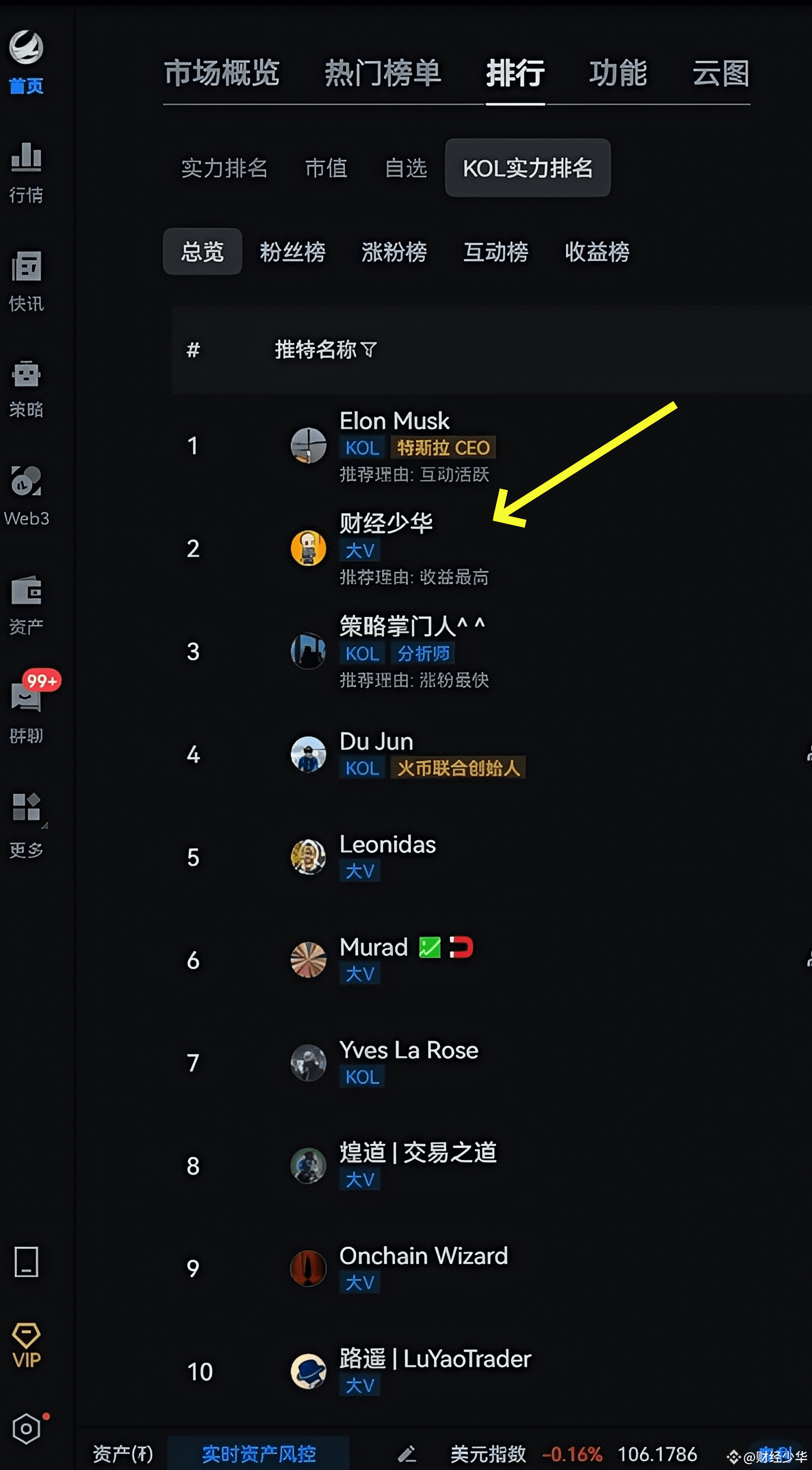
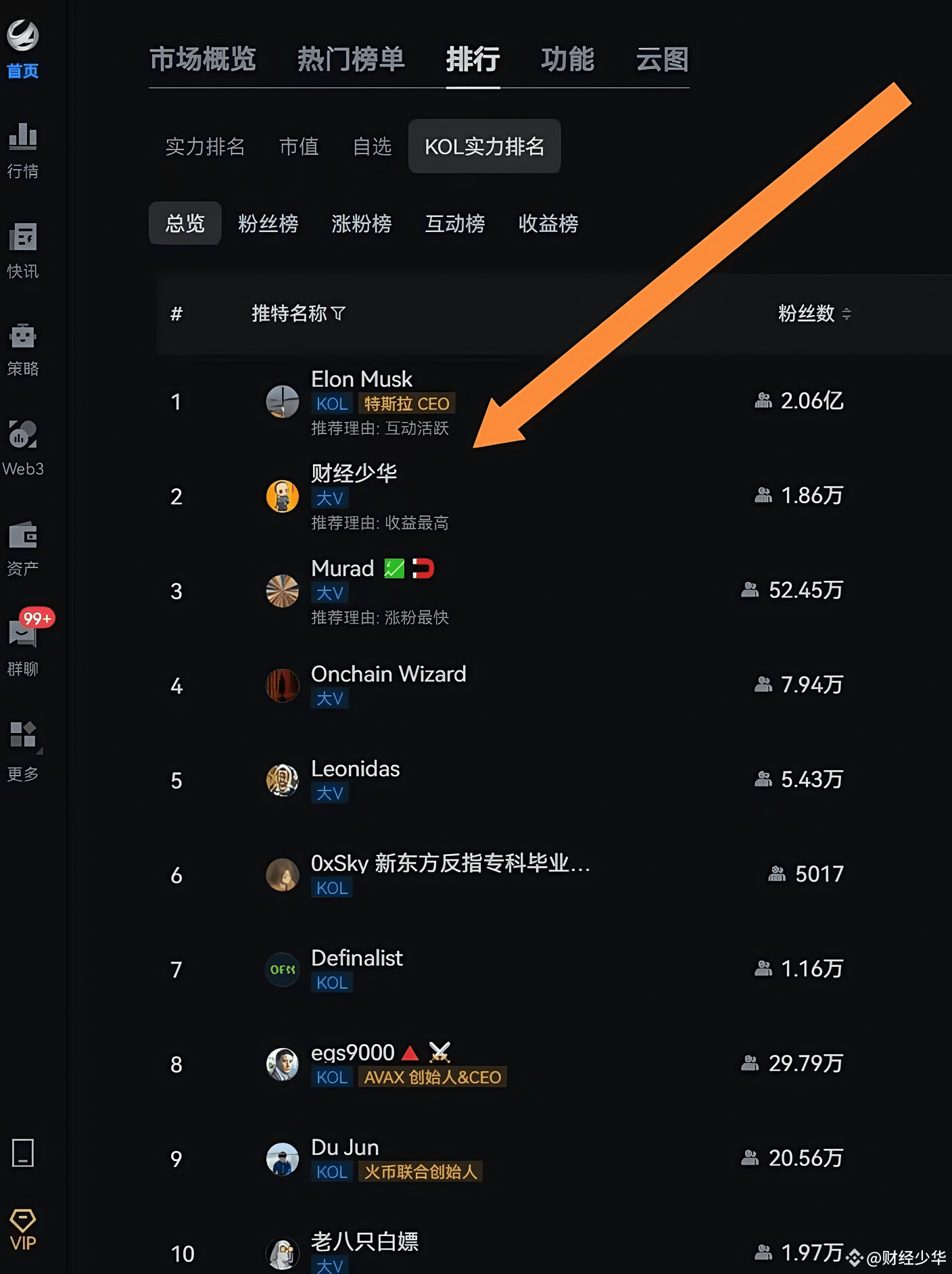
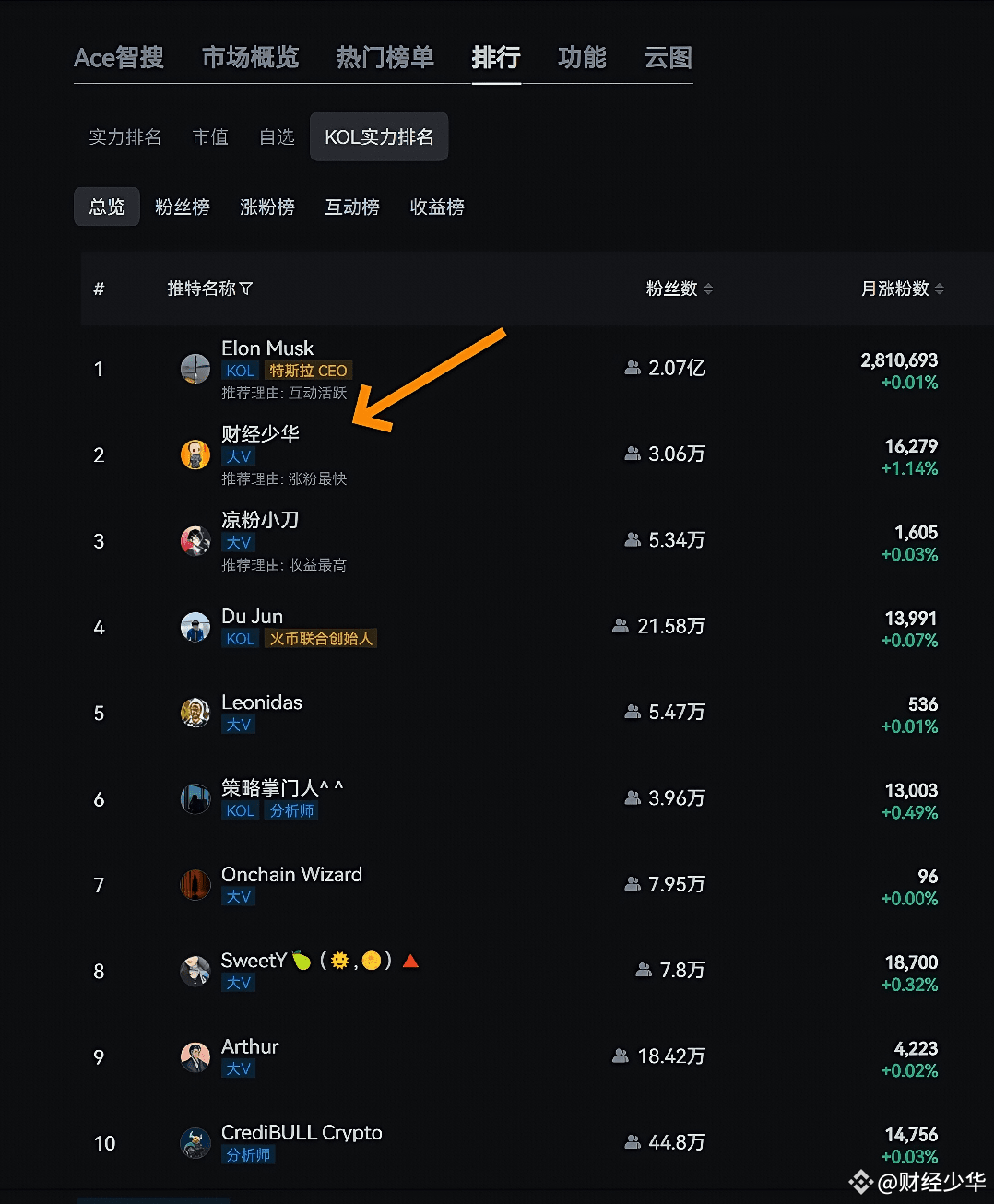
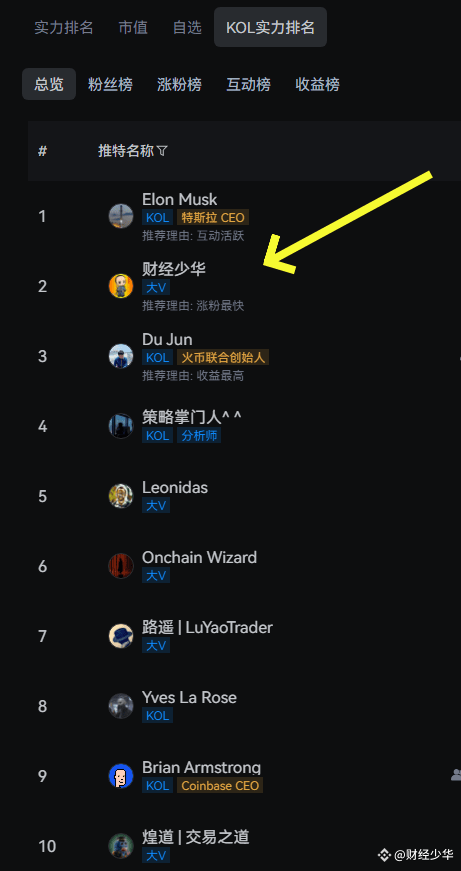
For four consecutive weeks, the third place on the Alcoin V ranking list has changed again and again.
Only the world's richest man Musk ranked first and I ranked second have not changed.
I have really become the second place for a thousand years😍😂😅🤭😁
For four consecutive weeks, the third place on the Alcoin V ranking list has changed again and again.
Only the world's richest man Musk ranked first and I ranked second have not changed.
I have really become the second place for a thousand years😍😂😅🤭😁
Only the world's richest man Musk ranked first and I ranked second have not changed.
I have really become the second place for a thousand years😍😂😅🤭😁
4k
2.4k
509
4k
·
--
When we trade, most of our decisions are not based on real-time accurate price information or a genuine edge in probability. Instead, they come from old habits and past traumas buried in our subconscious.
Very often, people rush to exit to avoid the fear caused by the last round of profit giving back or losses. For example, last time it happened in this exact state—causing me to make less. So this time I told myself, “Learn the lesson and avoid repeating it.” I immediately sold off… but the price didn’t continue falling, which led to me making less. Then in the next trade, you add this “lesson” from what happened last time into your next decision as the basis for action.
This kind of subconscious trigger driven by defensive instincts makes it seem like we’re making active choices. In reality, we’re just repeating a pre-designed response pattern. That’s also why, no matter how many principles and practical insights you’ve heard, once you’re in the middle of the market, your actions still get distorted.
To break out of this passive cycle, at the physical level you must create an isolation: write down your trading rules. Before trading, take out the trading rules and check whether the setup meets them. This is like forcibly adding a “gap” in decision-making. Many trading actions are done automatically—consciously or unconsciously. Impulses rise, and then the trade happens. So you need to cut that chain at the physical level. But most important is still understanding this: why do trades become profitable? You’re not relying on unconscious reactions driven by impulsive emotions to make money. You make money by executing an effective trading strategy over the long term.
When we trade, most of our decisions are not based on real-time accurate price information or a genuine edge in probability. Instead, they come from old habits and past traumas buried in our subconscious.
Very often, people rush to exit to avoid the fear caused by the last round of profit giving back or losses. For example, last time it happened in this exact state—causing me to make less. So this time I told myself, “Learn the lesson and avoid repeating it.” I immediately sold off… but the price didn’t continue falling, which led to me making less. Then in the next trade, you add this “lesson” from what happened last time into your next decision as the basis for action.
This kind of subconscious trigger driven by defensive instincts makes it seem like we’re making active choices. In reality, we’re just repeating a pre-designed response pattern. That’s also why, no matter how many principles and practical insights you’ve heard, once you’re in the middle of the market, your actions still get distorted.
To break out of this passive cycle, at the physical level you must create an isolation: write down your trading rules. Before trading, take out the trading rules and check whether the setup meets them. This is like forcibly adding a “gap” in decision-making. Many trading actions are done automatically—consciously or unconsciously. Impulses rise, and then the trade happens. So you need to cut that chain at the physical level. But most important is still understanding this: why do trades become profitable? You’re not relying on unconscious reactions driven by impulsive emotions to make money. You make money by executing an effective trading strategy over the long term.
Very often, people rush to exit to avoid the fear caused by the last round of profit giving back or losses. For example, last time it happened in this exact state—causing me to make less. So this time I told myself, “Learn the lesson and avoid repeating it.” I immediately sold off… but the price didn’t continue falling, which led to me making less. Then in the next trade, you add this “lesson” from what happened last time into your next decision as the basis for action.
This kind of subconscious trigger driven by defensive instincts makes it seem like we’re making active choices. In reality, we’re just repeating a pre-designed response pattern. That’s also why, no matter how many principles and practical insights you’ve heard, once you’re in the middle of the market, your actions still get distorted.
To break out of this passive cycle, at the physical level you must create an isolation: write down your trading rules. Before trading, take out the trading rules and check whether the setup meets them. This is like forcibly adding a “gap” in decision-making. Many trading actions are done automatically—consciously or unconsciously. Impulses rise, and then the trade happens. So you need to cut that chain at the physical level. But most important is still understanding this: why do trades become profitable? You’re not relying on unconscious reactions driven by impulsive emotions to make money. You make money by executing an effective trading strategy over the long term.

10
2
306
·
--
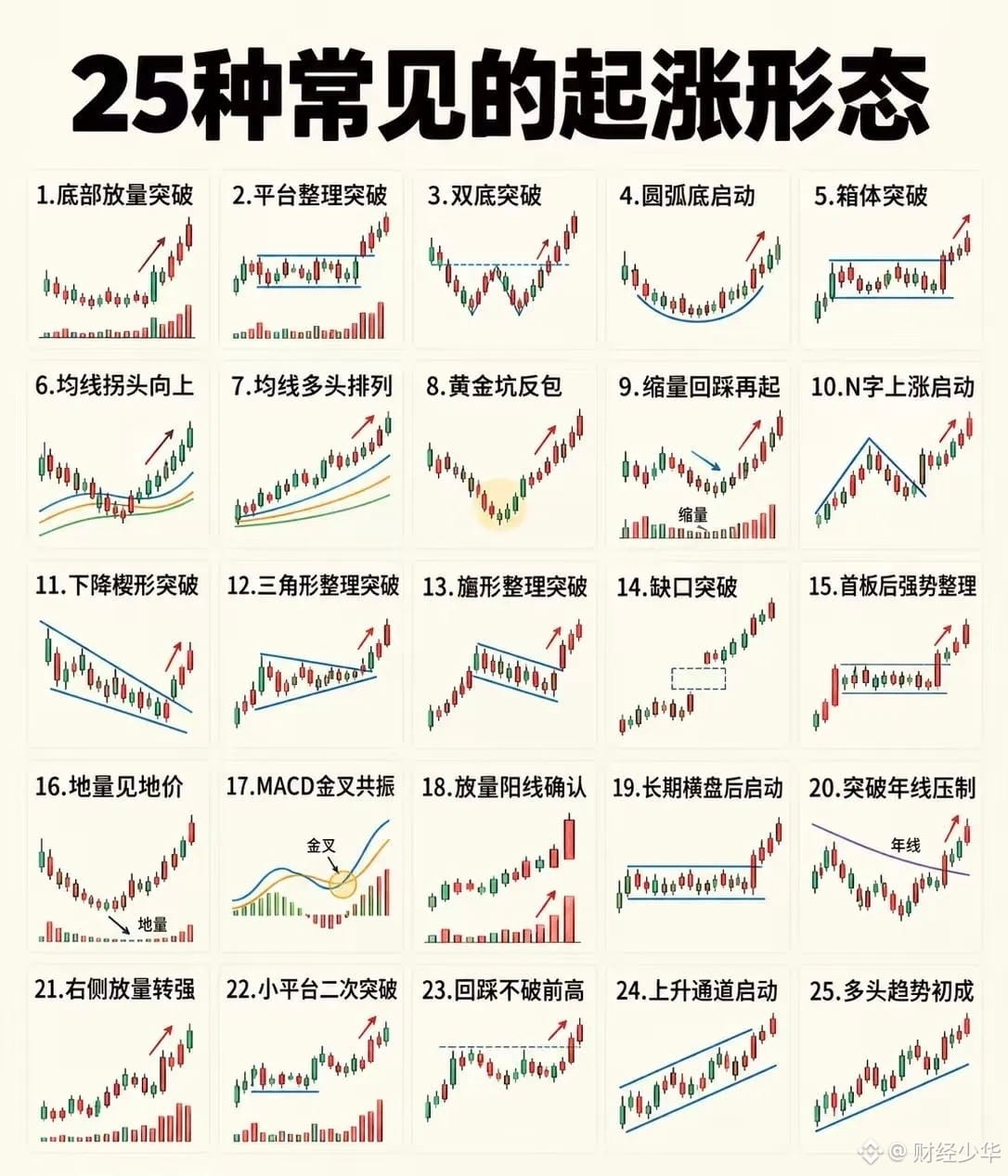
25 Common Rising Patterns—Save Them; You’ll Probably Need Them One Day.
25 Common Rising Patterns—Save Them; You’ll Probably Need Them One Day.
44
4
447
·
--
If longing had a shape, it would probably look like this short film. Mr. You Benchang walks in through the gate with Liu Huan. Behind the door stand Zhang Guorong, Teresa Teng, Anita Mui, Wong Ka Kui, Chang Yu-sheng, and CoCo Lee, among others. Each of them seems to be smiling, as if saying, “Don’t be sad—we’re here with you.”
If longing had a shape, it would probably look like this short film. Mr. You Benchang walks in through the gate with Liu Huan. Behind the door stand Zhang Guorong, Teresa Teng, Anita Mui, Wong Ka Kui, Chang Yu-sheng, and CoCo Lee, among others. Each of them seems to be smiling, as if saying, “Don’t be sad—we’re here with you.”
21
2
71
88.3k
·
--
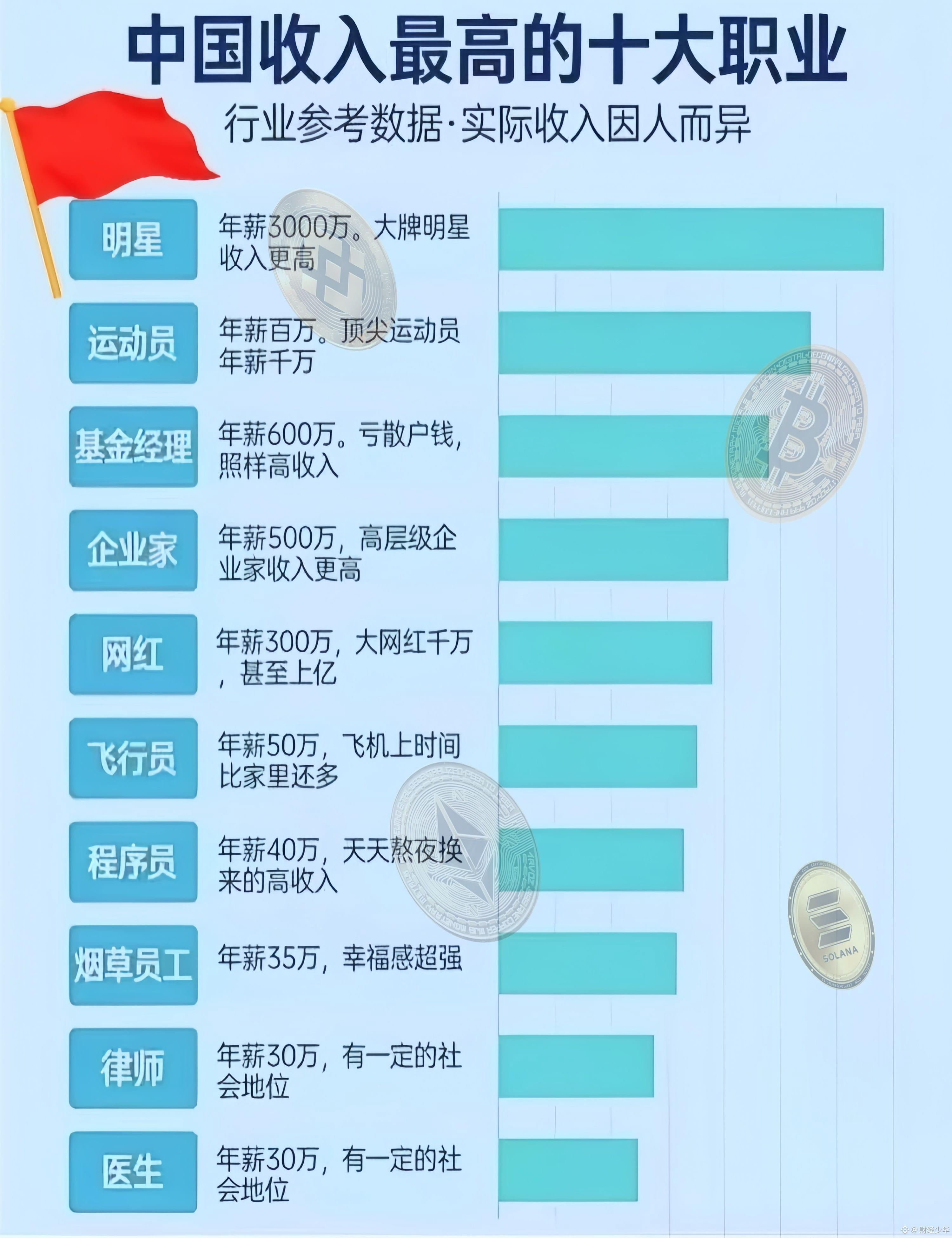
The Top 10 Highest-Paying Professions in China
The Top 10 Highest-Paying Professions in China
84
1
41
127.7k
·
--
As a child, I heard this song “The Crooked, Curving Moon,” and I didn’t have much feeling about it. I only thought it was melodious and sweet, and that middle part—where the singing “oooh oooh oooh”—lingered in my heart for a long time. When I was young, I didn’t know the meaning of the song. Later, whenever I hear it again, my heart is filled with longing for my family far away, remembrance for departed loved ones, and nostalgia for the youth I can never return to. The song is still there, the moon is still there—yet some people can never be seen again. Now, the singer of this song has also passed on. As I’ve grown older, I’ve come to feel even more deeply how quickly time flies and how unpredictable life can be. The music will eventually end, but this round of the crooked, curving moon will always hang in the memories of one generation.
As a child, I heard this song “The Crooked, Curving Moon,” and I didn’t have much feeling about it. I only thought it was melodious and sweet, and that middle part—where the singing “oooh oooh oooh”—lingered in my heart for a long time. When I was young, I didn’t know the meaning of the song. Later, whenever I hear it again, my heart is filled with longing for my family far away, remembrance for departed loved ones, and nostalgia for the youth I can never return to. The song is still there, the moon is still there—yet some people can never be seen again. Now, the singer of this song has also passed on. As I’ve grown older, I’ve come to feel even more deeply how quickly time flies and how unpredictable life can be. The music will eventually end, but this round of the crooked, curving moon will always hang in the memories of one generation.
1
1
1.7k
·
--
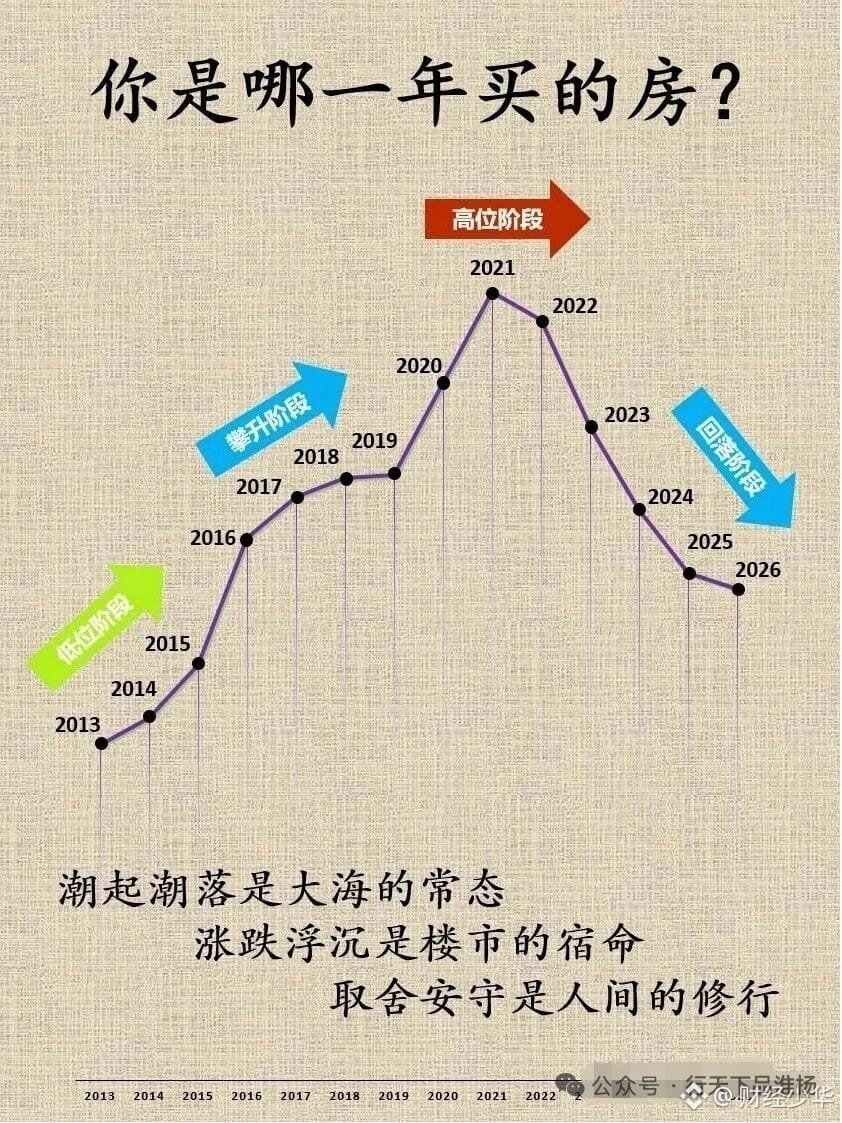
What year did you buy your house? With today’s housing prices, it makes people only be forced to bitterly laugh—yet they’re laughing so miserably. Prices have already dropped to this state. Will they fall further? Would you still dare to buy a house? I really don’t know.
What year did you buy your house? The time you bought it, and your day-to-day life experience today—between different people, the gap is truly enormous. Besides the veteran comrades who were lucky enough to buy welfare housing during the unit-led housing reform, everyone else who bought commercial housing has had their own share of sour, sweet, and bitter experiences.
What year did you buy your house? With today’s housing prices, it makes people only be forced to bitterly laugh—yet they’re laughing so miserably. Prices have already dropped to this state. Will they fall further? Would you still dare to buy a house? I really don’t know.
What year did you buy your house? The time you bought it, and your day-to-day life experience today—between different people, the gap is truly enormous. Besides the veteran comrades who were lucky enough to buy welfare housing during the unit-led housing reform, everyone else who bought commercial housing has had their own share of sour, sweet, and bitter experiences.
What year did you buy your house? The time you bought it, and your day-to-day life experience today—between different people, the gap is truly enormous. Besides the veteran comrades who were lucky enough to buy welfare housing during the unit-led housing reform, everyone else who bought commercial housing has had their own share of sour, sweet, and bitter experiences.
3
3
8.8k
·
--
In the market, everyone is looking for winning strategies, but over the long run, the real gap is usually created by a few simple behavior rules. These guidelines won’t make us win every battle, but they can help us avoid a lot of detours.
Behavior rules traders should stick to:
1. Don’t make trades without a plan—reject impulsive decisions.
2. Don’t exceed the limits of your own risk tolerance.
3. It’s okay to make judgment errors, but don’t allow unlimited, bottomless leniency.
4. Regularly review your past actions—don’t keep falling into the same traps.
5. Know how to wait in cash/with no position; sometimes doing nothing is also a choice.
It’s not hard to understand these principles—the challenge is remembering to hold to them every time the market fluctuates.
In the market, everyone is looking for winning strategies, but over the long run, the real gap is usually created by a few simple behavior rules. These guidelines won’t make us win every battle, but they can help us avoid a lot of detours.
Behavior rules traders should stick to:
1. Don’t make trades without a plan—reject impulsive decisions.
2. Don’t exceed the limits of your own risk tolerance.
3. It’s okay to make judgment errors, but don’t allow unlimited, bottomless leniency.
4. Regularly review your past actions—don’t keep falling into the same traps.
5. Know how to wait in cash/with no position; sometimes doing nothing is also a choice.
It’s not hard to understand these principles—the challenge is remembering to hold to them every time the market fluctuates.
Behavior rules traders should stick to:
1. Don’t make trades without a plan—reject impulsive decisions.
2. Don’t exceed the limits of your own risk tolerance.
3. It’s okay to make judgment errors, but don’t allow unlimited, bottomless leniency.
4. Regularly review your past actions—don’t keep falling into the same traps.
5. Know how to wait in cash/with no position; sometimes doing nothing is also a choice.
It’s not hard to understand these principles—the challenge is remembering to hold to them every time the market fluctuates.

2
656
·
--
Trading is all about waiting—using time to create space. Do you agree?
Trading is all about waiting—using time to create space. Do you agree?

4
1.3k
·
--
How much savings income can you live off and just lie flat?
Savings 100,000: annual interest 1,550, monthly interest 1,292
Savings 200,000: annual interest 3,100, monthly interest 2,583
Savings 300,000: annual interest 4,650, monthly interest 3,884
Savings 500,000: annual interest 7,750, monthly interest 6,465
Savings 1,000,000: annual interest 15,500, monthly interest 12,926
Savings 1,500,000: annual interest 23,250, monthly interest 19,387
Savings 2,000,000: annual interest 31,000, monthly interest 25,838
Savings 3,000,000: annual interest 46,500, monthly interest 38,759
Savings 5,000,000: annual interest 77,500, monthly interest 645810
Savings 10,000,000: annual interest 155,000, monthly interest 12,920
Having one million in savings but still can’t truly lie flat—where exactly is the problem? If you have one million, your monthly interest is only 1,292—this is still assuming a high rate. It doesn’t even cover rent, let alone food and daily living.
In the past, I always thought having one million would be enough to lie flat. Now I’ve figured out the truth: you can’t lie flat at all. It’s simply not possible.
If you want to live on interest alone, don’t even think about it unless you have three or five million.
The issue is that three or five million is harder to reach than climbing to heaven for ordinary people.
So don’t daydream. Work if you have to work; do your grind if you have to grind. Having more savings just makes life a little more comfortable—it’s still a long way from lying flat.
For ordinary hardworking people, you’d better be honest and keep working~
How much savings income can you live off and just lie flat?
Savings 100,000: annual interest 1,550, monthly interest 1,292
Savings 200,000: annual interest 3,100, monthly interest 2,583
Savings 300,000: annual interest 4,650, monthly interest 3,884
Savings 500,000: annual interest 7,750, monthly interest 6,465
Savings 1,000,000: annual interest 15,500, monthly interest 12,926
Savings 1,500,000: annual interest 23,250, monthly interest 19,387
Savings 2,000,000: annual interest 31,000, monthly interest 25,838
Savings 3,000,000: annual interest 46,500, monthly interest 38,759
Savings 5,000,000: annual interest 77,500, monthly interest 645810
Savings 10,000,000: annual interest 155,000, monthly interest 12,920
Having one million in savings but still can’t truly lie flat—where exactly is the problem? If you have one million, your monthly interest is only 1,292—this is still assuming a high rate. It doesn’t even cover rent, let alone food and daily living.
In the past, I always thought having one million would be enough to lie flat. Now I’ve figured out the truth: you can’t lie flat at all. It’s simply not possible.
If you want to live on interest alone, don’t even think about it unless you have three or five million.
The issue is that three or five million is harder to reach than climbing to heaven for ordinary people.
So don’t daydream. Work if you have to work; do your grind if you have to grind. Having more savings just makes life a little more comfortable—it’s still a long way from lying flat.
For ordinary hardworking people, you’d better be honest and keep working~
Savings 100,000: annual interest 1,550, monthly interest 1,292
Savings 200,000: annual interest 3,100, monthly interest 2,583
Savings 300,000: annual interest 4,650, monthly interest 3,884
Savings 500,000: annual interest 7,750, monthly interest 6,465
Savings 1,000,000: annual interest 15,500, monthly interest 12,926
Savings 1,500,000: annual interest 23,250, monthly interest 19,387
Savings 2,000,000: annual interest 31,000, monthly interest 25,838
Savings 3,000,000: annual interest 46,500, monthly interest 38,759
Savings 5,000,000: annual interest 77,500, monthly interest 645810
Savings 10,000,000: annual interest 155,000, monthly interest 12,920
Having one million in savings but still can’t truly lie flat—where exactly is the problem? If you have one million, your monthly interest is only 1,292—this is still assuming a high rate. It doesn’t even cover rent, let alone food and daily living.
In the past, I always thought having one million would be enough to lie flat. Now I’ve figured out the truth: you can’t lie flat at all. It’s simply not possible.
If you want to live on interest alone, don’t even think about it unless you have three or five million.
The issue is that three or five million is harder to reach than climbing to heaven for ordinary people.
So don’t daydream. Work if you have to work; do your grind if you have to grind. Having more savings just makes life a little more comfortable—it’s still a long way from lying flat.
For ordinary hardworking people, you’d better be honest and keep working~

45
20
53.8k
·
--
Wishing all my friends a Happy Mid-Autumn Festival and a blissful family life.
Wishing all my friends a Happy Mid-Autumn Festival and a blissful family life.

2
514
·
--
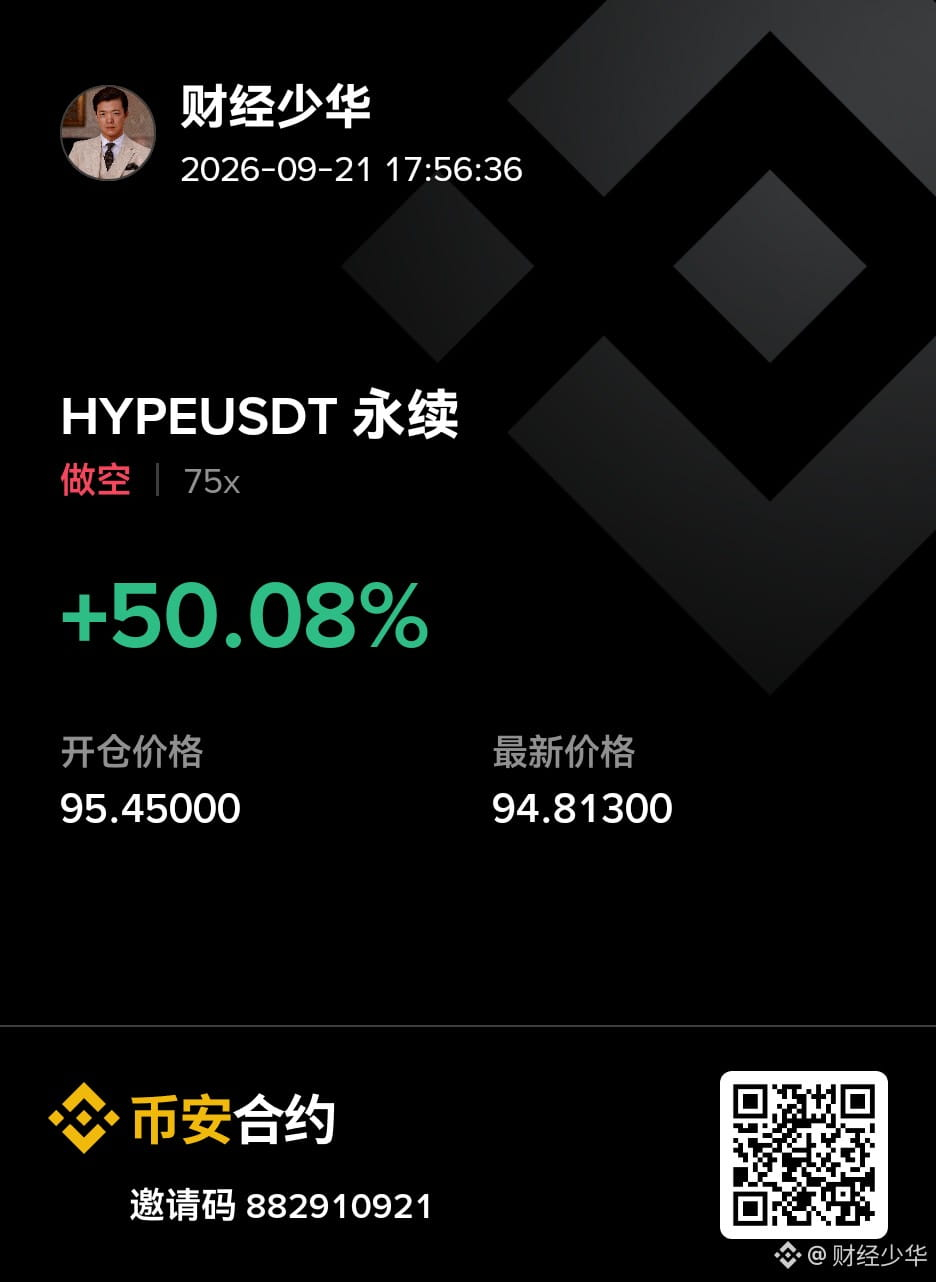
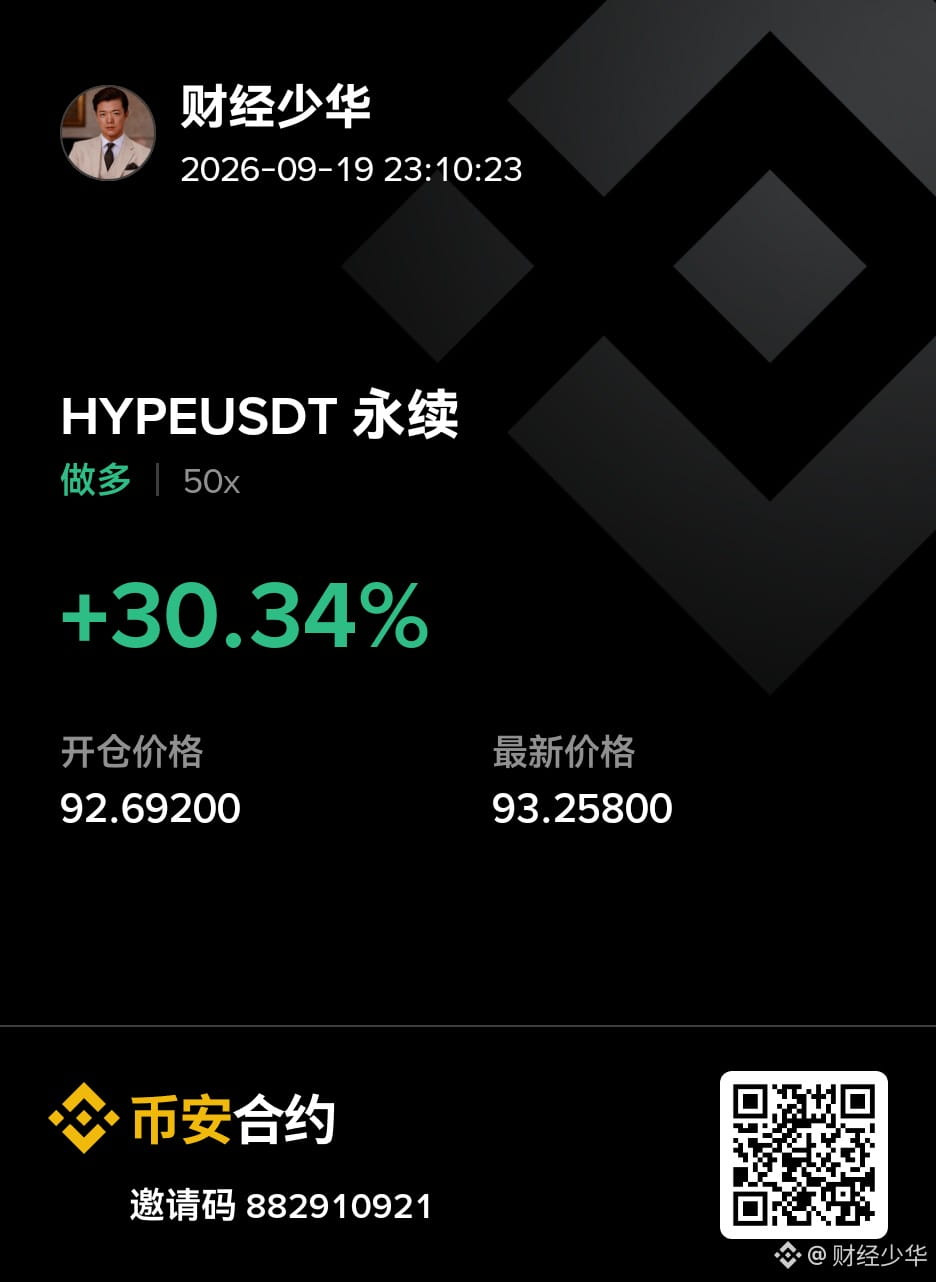
Made money with HYPE with a sell-side position (short position). Congrats to the friends who followed along.
Made money with HYPE with a sell-side position (short position). Congrats to the friends who followed along.
3
651
·
--
Do you think you’ll feel happy after drinking? Actually, having a drink doesn’t necessarily make you happy. But once you’ve had a drink, you will surely forget what isn’t happy. If you don’t taste the joys and sorrows of the world, who would know the meaning within? If you don’t envy the world’s love and longing, who would know the tears within? If you don’t go through the hardships of life, who would know the flavor within? Don’t fear that the wine has a story—what you fear is that the person with the story will drink.
Do you think you’ll feel happy after drinking? Actually, having a drink doesn’t necessarily make you happy. But once you’ve had a drink, you will surely forget what isn’t happy. If you don’t taste the joys and sorrows of the world, who would know the meaning within? If you don’t envy the world’s love and longing, who would know the tears within? If you don’t go through the hardships of life, who would know the flavor within? Don’t fear that the wine has a story—what you fear is that the person with the story will drink.
3
2k
·
--
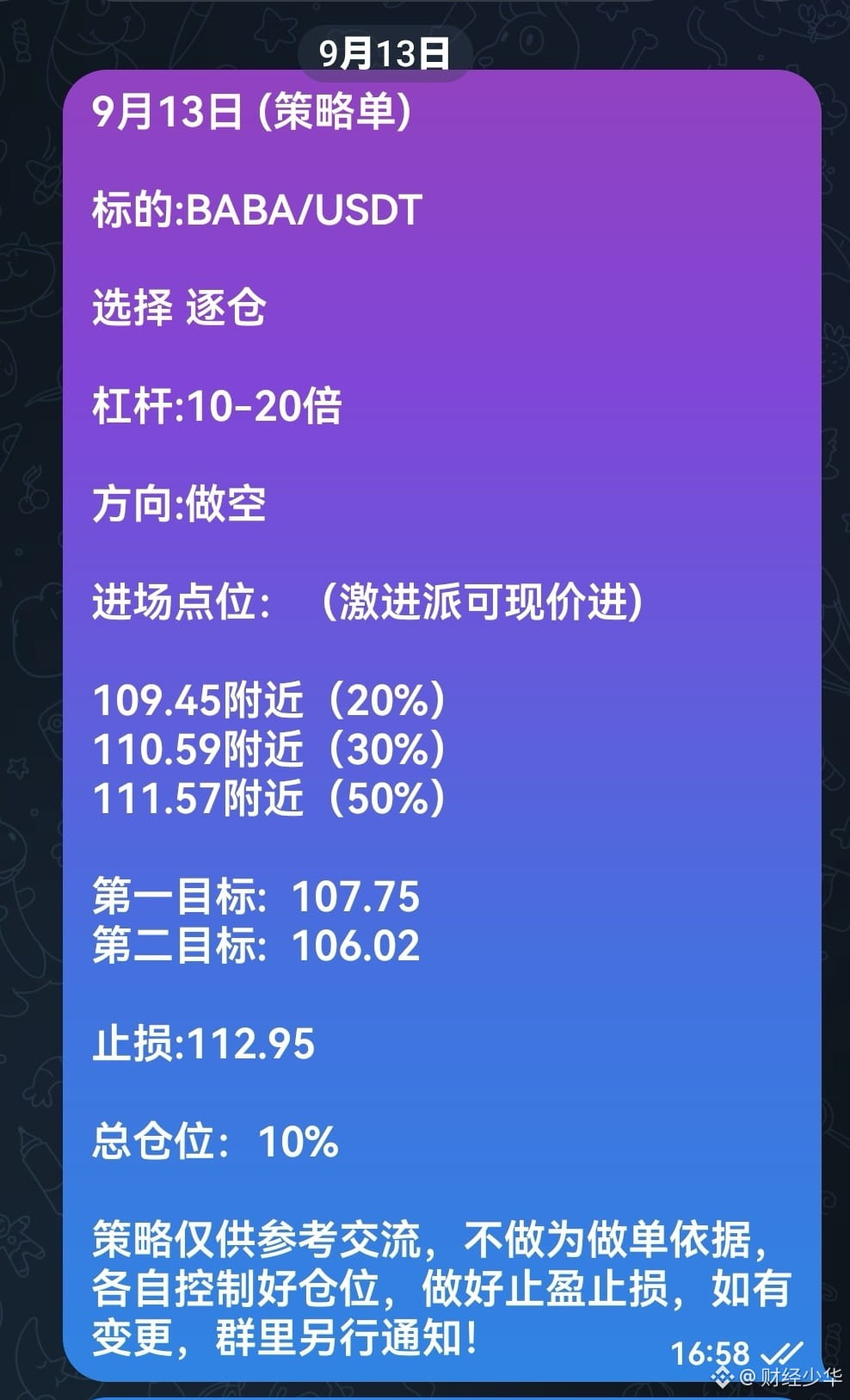
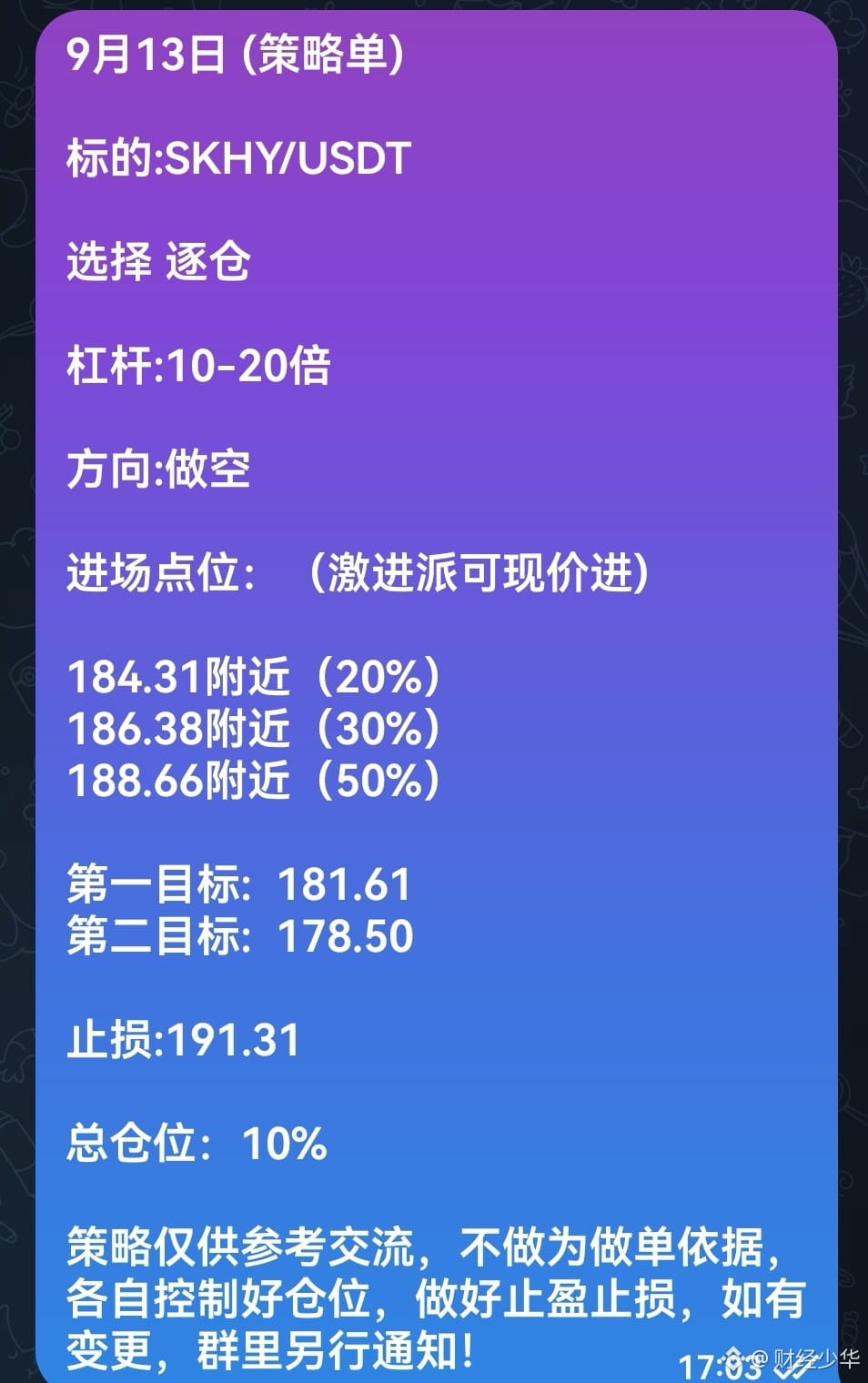
The strategy orders I provided today are all profitable—congratulations to the partners who followed along. Follow me; every day I’ll bring strategies to help everyone make money.
The strategy orders I provided today are all profitable—congratulations to the partners who followed along. Follow me; every day I’ll bring strategies to help everyone make money.
1
866
·
--
After the release of CPI data, Bitcoin investors remain cautious, with diverging confidence between buyers and sellers
This week, Bitcoin has been caught between sustained buying and short-term cautious sentiment.
The U.S. CPI overall met expectations, but core inflation on a monthly basis came in above forecasts, intensifying worries about rising interest rates. After the data was released, BTC fell to about $76,700, rebounded to around $80,000, and then slipped back to the $77,000 range. The deeper issue lies in the gap between long-term demand and near-term selling pressure. U.S. spot Bitcoin ETFs have seen three consecutive weeks of net inflows, and companies and long-term investors have continued accumulating. However, spot demand has been weak: Binance’s BTC reserves hit a two-year high, derivatives selling pressure has increased, and positions have not declined sufficiently. Investors have shifted from chasing FOMO to avoiding losses. Stablecoin liquidity and signs of Coinbase buying suggest demand has not disappeared, but buyer and seller confidence remains split. The macro environment is still dominant; rising oil prices, elevated bond yields, and inflation concerns may constrain additional liquidity.
After the release of CPI data, Bitcoin investors remain cautious, with diverging confidence between buyers and sellers
This week, Bitcoin has been caught between sustained buying and short-term cautious sentiment.
The U.S. CPI overall met expectations, but core inflation on a monthly basis came in above forecasts, intensifying worries about rising interest rates. After the data was released, BTC fell to about $76,700, rebounded to around $80,000, and then slipped back to the $77,000 range. The deeper issue lies in the gap between long-term demand and near-term selling pressure. U.S. spot Bitcoin ETFs have seen three consecutive weeks of net inflows, and companies and long-term investors have continued accumulating. However, spot demand has been weak: Binance’s BTC reserves hit a two-year high, derivatives selling pressure has increased, and positions have not declined sufficiently. Investors have shifted from chasing FOMO to avoiding losses. Stablecoin liquidity and signs of Coinbase buying suggest demand has not disappeared, but buyer and seller confidence remains split. The macro environment is still dominant; rising oil prices, elevated bond yields, and inflation concerns may constrain additional liquidity.
This week, Bitcoin has been caught between sustained buying and short-term cautious sentiment.
The U.S. CPI overall met expectations, but core inflation on a monthly basis came in above forecasts, intensifying worries about rising interest rates. After the data was released, BTC fell to about $76,700, rebounded to around $80,000, and then slipped back to the $77,000 range. The deeper issue lies in the gap between long-term demand and near-term selling pressure. U.S. spot Bitcoin ETFs have seen three consecutive weeks of net inflows, and companies and long-term investors have continued accumulating. However, spot demand has been weak: Binance’s BTC reserves hit a two-year high, derivatives selling pressure has increased, and positions have not declined sufficiently. Investors have shifted from chasing FOMO to avoiding losses. Stablecoin liquidity and signs of Coinbase buying suggest demand has not disappeared, but buyer and seller confidence remains split. The macro environment is still dominant; rising oil prices, elevated bond yields, and inflation concerns may constrain additional liquidity.

1
1k
Log in to explore more content
Join global crypto users on Binance Square
⚡️ Get latest and useful information about crypto.
💬 Trusted by the world’s largest crypto exchange.
👍 Discover real insights from verified creators.
Email / Phone number
Trending Topics
BNBSurpasses$790
6,817 views
64 Discussing
$BNB strategic long plan -> FOCUS NOW
BNB has created 2 strong lows after taking out internal liquidity
I'm expecting a move towards swing high $815-$830 and looking for a long on a retest of the green box
#BNBSurpasses$790 #bnb
Ghost Writer
·3 Likes
·2.8k views
ZamaRises15.99%ToIntradayHigh$0.09
2,144 views
61 Discussing
BitcoinSpotETFsDraw$6.34BInflowsInQ3
2,728 views
50 Discussing