A friend doing blockchain research asked me: âIs Babylon really selling security, or is it creating a market where security is priced?â
I find this question more interesting than I thought.
In the past, each blockchain almost had to build its own validator system and be solely responsible for its security level. But with @BabylonLabs_io , security is gradually becoming a resource that can be allocated across different BSNs.
Technical point: Babylon doesnât directly âsellâ security as a fixed service. Instead, it connects two sides of the market. One side is BTC holders who are ready to stake to provide security. The other side is the BSNs that need a strong security layer but donât want to build it from scratch. The value of security is shaped through rewards, risk levels, and each BSNâs demand, rather than by a predetermined fixed price.
That makes me think security is slowly becoming a kind of economic resource, where blockchains compete to attract security resourcesârather than only competing for users or liquidity.
Counterargument: the concept of a âsecurity marketâ only truly exists if both sides have the ability to choose. If a BSN doesnât have many alternative options, or if BTC holders canât easily move security between networks, then what we have is still just a service provisioning modelânot a market in the truest sense.
Iâm watching to see whether, as more and more BSNs join Babylon, the reward level for security will start reflecting the laws of supply and demand like any other marketâor whether itâs still mostly determined by the design of each individual project.
$BABY A friend I know working on a Layer 1 project asked me: âIf you can build your own validator, why would a new blockchain choose Babylon instead of building its own security system?â
I thought about it for quite a while. At face value, running validators yourself seems to make the project more self-directed.
But with @BabylonLabs_io , the problem isnât just about operatingâitâs about time and trust.
From a technical standpoint: to build a validator network strong enough, a new blockchain needs to attract validators, distribute tokens, create economic incentives, and wait for the network to mature. This process can take many years. Meanwhile, joining Babylon allows BSN to immediately leverage the security layer supported by BTC-staked assets, so it can focus resources on application development and users.
That doesnât mean Babylon is always the best choice. A blockchain with large scale, stable revenue, and a strong validator community might very well want to take full control of its security model instead of relying on a shared security layer.
Counterpoint: shared security also comes with trade-offs. BSN has to accept Babylon ecosystem-wide rules and mechanisms, rather than having full autonomy to design everything exactly the way it wants. This is a question of the balance between development speed and the degree of self-controlânot a matter of right or wrong.
Iâm curious: after a few years, how many blockchains will choose to stay on Babylon long-term, and how many will treat it as a âlaunchpadâ before building their own dedicated security layer.
The biggest thing Iâve learned about Bitcoin vaults isnât the âbridgeâ narrative, itâs the separation between where BTC is secured and where itâs actually used.
Thatâs what makes Babylonâs trust-minimized vault concept interesting to me.
The BTC itself stays locked on Bitcoin under predefined spending conditions, while a corresponding vault record can exist on another chain like Ethereum. In simple terms, Bitcoin handles the asset custody, while the other chain can handle programmable applications.
The part I find most important is the vault lifecycle: Pending â Verified â Active â InUse.
To me, this isnât just a status label. It represents a trust pipeline. A vault shouldnât instantly become usable just because someone claims BTC was deposited. The Bitcoin transaction needs to be confirmed and linked to the correct vault before the system can recognize it as verified.
The Taproot structure is another piece worth watching. Instead of relying on a simple wallet model, Taproot can support more flexible spending paths while keeping the Bitcoin-side rules enforced by Bitcoin itself.
My view: the real innovation isnât simply âputting BTC on another chain.â Itâs creating a verifiable connection between native BTC locked on Bitcoin and applications that want to use that BTC elsewhere.
Thatâs the takeaway Iâm watching: if the verification layer is strong, Bitcoin liquidity could become much more composable without turning every BTC holder into a customer of a centralized custodian.
The biggest Babylon insight, in my view, is simple: Bitcoin may no longer have to choose between staying native and accessing DeFi.
Babylonâs Trustless Bitcoin Vault (TBV) is designed to let native BTC act as collateral in Ethereum DeFi without bridges, wrapped custody, or pooled BTC.
The practical flow is interesting: users lock Signet BTC on Bitcoin, activate a vault, and receive vaultBTC as collateral. From there, the documented Testnet flow covers borrowing through Aave v4, repayment, withdrawal, and eventually redeeming back to Bitcoin.
That creates a different way to think about Bitcoin liquidity.
Instead of moving BTC away from its native environment, the goal is to make it useful across DeFi while keeping the underlying BTC locked on Bitcoin.
In my view, this is the real takeaway: Bitcoinâs next DeFi breakthrough may not be another wrapped asset it could be infrastructure that connects native BTC to broader financial applications without sacrificing its underlying custody model.
I'm curious whether Newton eventually makes this the default expectation instead of an optional security feature. That feels like the more interesting question.
Aesthetic_Meow
¡
--
What if the biggest security upgrade isn't another wallet, but one extra decision before a transaction? While testing @NewtonProtocol , one detail kept standing out. A transaction doesn't have to be executed just because it was signed. #Newt lets you simulate a policy first, then returns a simple result: allow = true or false. That tiny checkpoint changes how automation behaves. 3 things I wrote down while looking at Newton: _ Newton evaluates the transaction before execution, not after it settles. _ The #SDK checks a transaction intent using details like the sender, recipient, value, and policy data in a single simulation request. _ The result is binary. True means proceed. False means stop. No guessing, no partial execution. That matters more than it sounds. One policy simulation can prevent an AI agent or automated workflow from sending funds outside its approved limits. A failed check costs far less than an irreversible on-chain mistake. If you're building with $NEWT , try one habit: simulate every high-value transaction before broadcasting it. It adds one extra step, but it removes a surprising amount of uncertainty. I'm curious whether Newton eventually makes this the default expectation instead of an optional security feature. That feels like the more interesting question. #NewtonProtocol #NEWTtoken #NEWTUSDT $ETH
The space needs more layers like this that prioritize âdoes it actually settle safelyâ over raw speed. Newton is trying. Whether the operators stay honest and developers adopt the registry will show over the next cycles. Iâm keeping it on my list, but with position sizes that match the stage.
Aesthetic_Meow
¡
--
Why Newtonâs Agent Guardrails Feel Different (and What Could Still Go Wrong)
@NewtonProtocol lets you run AI agents on your funds without handing over the keys on paper, at least. The real tension is simple: DeFi automation has always traded security for convenience. Newton Protocol ($NEWT ) tries to fix that by adding a policy layer that checks rules before any transaction executes. Itâs not another yield farm. Itâs an authorization system built for agents and institutions. How Newton Actually Works (in practice) Developers write policies in Rego a policy language that evaluates offchain data like sanctions lists, KYC status, or spend limits. A decentralized operator network (backed by EigenLayer restaking) runs the check. Only compliant transactions go through. Everything produces a verifiable onchain receipt. I spent time digging into the docs and public info. Hereâs what stands out: Agent security without full custody: You define intents and granular permissions in the Newton Keystore rollup. Agents execute trades or rebalancing but stay inside your approved limits spending caps, approved addresses, even prompt-injection defenses for AI. No more âconnect wallet and pray.â Registry for composable services: The onchain Model Registry acts like a marketplace. Publish or discover math crunching, AI models, or other compute. Combine them into workflows. One provider for simulations, another for price oracles tied together with policy enforcement. Matches the DeFi + AI example you see in their materials. Multi-chain policy enforcement: Same rules apply across supported EVM chains. Useful for vaults that move positions or RWAs that need investor eligibility checks on every transfer. Verifiable receipts: Auditors or users can check every decision on the explorer. No black-box central service. Fact: Total stablecoin transfer volume runs over $4T monthly. Tokenized RWAs sit above $25B. Newton targets exactly these flows with compliance that doesnât live only in the frontend. Opinion: This feels like the missing middle layer between raw smart contracts and usable automation. Most agent projects stop at âitâs decentralized.â Newton adds the guardrails before execution. Quick Verification Checklist What Iâd check before putting real money near it: Source of any yields or rewards protocol fees, user payments, or temporary incentives? Who runs the operators and whatâs the actual slashing history (if any yet)? Can policies or APY-like parameters change via governance, and how fast? Withdrawal conditions and any lock periods on permissions or stakes. Audit status contracts are open-sourced with third-party reviews, but verify the latest reports yourself. Risks Worth Noting Smart contract and operator risk: Even with restaking and slashing, bugs or coordinated failures could let bad transactions through. Itâs newer infrastructure. Sustainability and adoption: If few agents or vaults integrate, the network effects stay weak. Policy enforcement only matters if people actually use it. Counterparty risk exists with any offchain data feeds too. Numbers I noted: NEWT total supply caps at 1 billion. Initial circulating around 21.5%. Staking secures both the keystore and agent operators. 14-day unstaking period. These are on-chain mechanics check current distribution and staking stats directly. The privacy angle is practical: sensitive data stays hashed or in ZK proofs. No full PII dumped onchain. Good for institutions that want onchain movement but regulated rails. I like that it separates policy from the main contract logic. Update rules without redeploying everything. Thatâs a small but real developer win. Still, itâs early. The registry sounds powerful for combining compute services math, AI, simulations but I havenât seen massive public usage data yet. The DeFi vault and agent use cases feel closest to shipping. Takeaway: Newton doesnât remove trade-offs. It just moves the trust point to verifiable pre-execution checks and economic security. Worth watching if youâre building or using agents. One practical frustration: setting up the first policy still needs SDK integration and some offchain setup. Not one-click for normies yet. That tension between power and simplicity will decide if it actually gets used beyond early teams. The space needs more layers like this that prioritize âdoes it actually settle safelyâ over raw speed. Newton is trying. Whether the operators stay honest and developers adopt the registry will show over the next cycles. Iâm keeping it on my list, but with position sizes that match the stage. #Newt #NEWTtoken #NEWTUSDT #NewtonProtocol
The Real Question Isn't How Fast a Transaction Is, It's Whether It Should Happen.
@NewtonProtocol #Newt $NEWT What if the biggest obstacle to onchain adoption isn't speed or scalability but whether a transaction should happen at all? That question completely changed how I look at Newton. Most blockchain discussions focus on making transactions faster, cheaper, or more scalable. But Newton starts much earlier in the process. Instead of asking, "How can we execute this transaction faster?" it asks, "Should this transaction be allowed to execute in the first place?" That difference may sound small, but it changes how authorization works across decentralized systems. The latest Newton Quickstart demonstrates this idea in a surprisingly practical way. In just a few minutes, developers can simulate a complete policy evaluation without deploying a smart contract or sending a real onchain transaction. At first, that might seem like a simple developer tool. In my view, it's actually a window into how programmable authorization could become a standard part of blockchain infrastructure. The example policy is straightforward. A transaction sender is checked against an OFAC sanctions list before the action is allowed to continue. Nothing is executed onchain. No gas is spent. No assets move. The entire process is a simulation that lets developers understand how authorization works before integrating it into production. That simplicity is what makes the concept powerful. Behind the scenes, Newton follows a structured workflow rather than relying on a single centralized approval. Your application creates an Intent describing the action a user wants to perform. That Intent is sent to the Newton Gateway. The Gateway forwards it to an available Operator responsible for evaluating the requested policy. The Operator runs a Rego policy using trusted PolicyData and returns a simple decision. Allow. Or deny. Everything happens before settlement. Instead of treating compliance as something outside blockchain, Newton turns it into programmable logic that becomes part of the transaction flow itself. This is where I think the architecture deserves more attention. Most developers are already familiar with smart contracts. Those contracts usually enforce rules after a transaction reaches the blockchain. Newton shifts important decision-making to the authorization stage. That means certain requirements can be verified before execution instead of reacting afterward. The policy language used here is Rego. Rather than embedding every compliance rule inside smart contracts, developers can write flexible authorization policies that are easier to update and maintain. Today's demonstration uses sanctions screening. Tomorrow the same system could evaluate identity requirements, treasury permissions, jurisdiction restrictions, institutional risk limits, DAO governance conditions, or entirely custom business logic. The framework stays the same. Only the policies change. Another detail that stood out to me is the role of PolicyData. Policies cannot make reliable decisions without reliable information. Some rules depend on sanctions databases. Others require pricing information, identity verification, or external risk assessments. PolicyData acts as the trusted information source feeding those evaluations. Without trustworthy data, even the smartest policy cannot produce trustworthy results. What makes this developer experience especially interesting is that no blockchain deployment is required. Many blockchain development workflows begin with testnets, wallets, contract deployment, and repeated iterations that consume both time and resources. Here, developers can experiment with authorization logic almost immediately. That lowers the barrier to understanding how policy-based authorization actually works. The Quickstart only simulates the process. Production introduces another important layer. Instead of returning only an allow-or-deny response, Operators produce a BLS attestation. This cryptographic proof is then verified by a smart contract before the transaction executes. In other words, the contract doesn't simply trust that authorization happened. It verifies mathematically that the policy evaluation occurred and that the result is authentic. That distinction matters. Trust-based systems depend on reputation. Verification-based systems depend on cryptography. For institutional adoption, that difference could become increasingly important. One thing I appreciate is that Newton doesn't present authorization as an obstacle to decentralization. Instead, it attempts to make authorization programmable, transparent, and verifiable. That approach feels more aligned with blockchain principles than relying on hidden manual approval processes. Of course, technology alone doesn't solve every challenge. Policies are only as good as the rules they contain and the data they consume. Developers still need to design thoughtful authorization logic that balances security, usability, privacy, and decentralization. No framework can replace good policy design. But providing the infrastructure to enforce those policies consistently is an important step. In my view, the biggest insight isn't the sanctions screening example itself. It's what the example represents. The same workflow can support countless authorization scenarios without fundamentally changing the architecture. Developers define an Intent. The Gateway routes it. Operators evaluate it. Trusted data informs the decision. A verifiable result is produced. The process remains consistent even as policies evolve. That consistency is valuable because blockchain applications are becoming increasingly complex. Financial products, institutional custody, tokenized assets, DAO governance, and enterprise workflows all require more sophisticated authorization than simple wallet signatures. Systems that can evaluate programmable rules before settlement may become increasingly relevant as the ecosystem matures. My biggest takeaway is this: We often think blockchain innovation begins when a transaction reaches the chain. Newton suggests the more important innovation may happen before that transaction is ever executed. If authorization becomes programmable, verifiable, and flexible, blockchain applications gain a new layer of security and control without abandoning decentralization. That's the part I'll be watching most closely not whether a transaction settles faster, but whether the authorization model itself becomes the foundation for the next generation of onchain applications. #BitcoinFallsOver50%FromOctoberHigh #MoonbeamToMigrateGLMRToBase #GillibrandCallsForDigitalAssetEthicsBan #RevolutToDelistUSDT $ETH $LAB
What happens when an AI agent can move funds faster than any human can react? That question explains why @NewtonProtocol is focusing on authorization before execution instead of relying on checks after a transaction is sent. #Newt Mainnet Beta is now live on Base and Ethereum, where most registered AI agents already operate. The goal is simple: enforce rules at the same speed that autonomous agents act. Instead of waiting for a manual review, $NEWT evaluates predefined policies before a transaction reaches settlement. Those policies can include wallet permissions, risk limits, compliance requirements, and external data conditions. If the rules are satisfied, the transaction proceeds. If not, it stops before funds move. In my view, this is one of the more practical shifts in on-chain infrastructure. As AI agents become more common, security cannot depend on humans approving transactions after the fact. It has to be built into the transaction flow itself. The real value of Newton is not making transactions faster. It is making autonomous transactions more predictable, programmable, and easier to control without slowing them down. The key lesson is simple: as AI moves at machine speed, Newton shows that authorization must move at machine speed too. $XAUT $ETH #BitcoinFallsOver50%FromOctoberHigh #MoonbeamToMigrateGLMRToBase #RevolutToDelistUSDT #GillibrandCallsForDigitalAssetEthicsBan
Worth testing if policy enforcement is your bottleneck. The rest depends on how the on-chain pieces hold up under pressure.
Aesthetic_Meow
¡
--
Getting a Newton API Key Feels Too StraightforwardâUntil You Try Integrating it.
The Newton Dashboard and API key system lets developers quickly access the gateway for policy simulations and tasks on chains like Sepolia. No heavy setup, just a key that works with the SDK. That's the claim on paper. In practice, it reduces friction for testing rules like sanctions checks, but leaves some open questions on long-term control. @NewtonProtocol #Newt $NEWT Self-service flow works fast: Sign in at dashboard.newton.xyz, grab a key, or use the dashboard.api.newt.foundation endpoints with SIWE or email OTP. One curl for challenge, sign, verify, then create key with rpc permissions. I tested the quickstart simulation, OFAC screening returned in seconds with a valid key. Permissions are granular: rpc_read for frontend task submission, rpc_write for secrets, full rpc combo for most cases. PolicyClient ownership ties to on-chain getOwner, so only contract owners manage sensitive data. Numbers: access tokens expire quickly, refresh via dedicated endpoint keeps sessions alive without full re-auth. SDK integration is direct: Add @newton-xyz/sdk, pass the key to walletClientActions, run simulateTask with intent + policyTaskData. Quickstart example uses pre-deployed policy ID on Sepolia no ETH or deployment needed for dry runs. Fact: this cut my test loop from hours to minutes. Risks to note: Smart contract risk on PolicyClient (ownership transfer is on-chain and irreversible without care). Platform risk, if dashboard or gateway rate limits hit during high load, simulations stall. API keys can be rotated or deleted, but leaked ones grant real gateway access until revoked. What I'd verify before relying on it: $MPLX Source of policy data oracles and whether results can change post-simulation. Withdrawal/revocation conditions for keys and on-chain ownership. Audit status of the gateway AVS operators and BLS attestation verification. $CL Can permissions or token expiry shift without notice? The setup lowers the barrier for adding verifiable policy checks to transactions. It feels solid for quick experiments and small integrations. Still, the tension remains: easy auth today doesn't guarantee smooth scaling when your contract handles real volume or cross-chain intents. The SDK handles the heavy lifting nicely, but you're still trusting the operator network for timely evaluations. #NewtonProtocol #NEWTtoken #NEWTUSDT One small frustration documentation mentions /llms.txt for full index, but it's not always there locally. Minor, yet it breaks the "just works" flow sometimes. Overall, Newtonâs key system delivers on speed for devs who want to enforce rules without building everything themselves. Worth testing if policy enforcement is your bottleneck. The rest depends on how the on-chain pieces hold up under pressure.
What if one @NewtonProtocol workflow could replace five separate integrations? I kept thinking #Newt was mainly about compute. Then I looked at one practical use case instead.
Aesthetic_Meow
¡
--
What if one @NewtonProtocol workflow could replace five separate integrations? I kept thinking #Newt was mainly about compute. Then I looked at one practical use case instead. A single #NewtonProtocol workflow can connect 5 different areas: DeFi automation, AI services, privacy-focused computation, multi-chain processing, and scientific workloads. That changes how you design an app more than it changes how you write code. Here's the part I found interesting: ⢠1 workflow: Pull data from multiple chains through Newton. ⢠2nd step: Let an AI service analyze it. ⢠3rd step: Run the task in a confidential compute environment if the data is sensitive. ⢠4th step: Send the result back on-chain automatically. That's fewer moving parts than stitching together separate systems. I also don't think every project needs all five capabilities. Most won't. But having them available inside Newton means developers can start simple and expand later instead of rebuilding the architecture. For $NEWT , that creates a different discussion. The value isn't only faster execution. It's reducing integration work before an application even reaches users. That's the practical angle I'm watching with Newton. Not the headline features. The number of connections you don't have to build yourself. #NEWTtoken #NEWTUSDT $CL $ETH Where do you see the biggest value in Newton?
Why does capital sit on the sidelines in crypto? Rules must hold before transactions settle. @NewtonProtocol mainnet beta is live: an onchain authorization layer that enforces policies on every tx. Checks conditions first, queries price data, sanctions, risk rules via RedStone and others. Solves compliance friction, turns manual reviews into verifiable, programmable code. Enables secure vaults, VaultKit lets curators embed controls for DeFi and RWAs without offchain trust. Practical takeaway: Define policy â Newton verifies â tx executes (or reverts). So what? Capital moves where rules are enforced onchain. Test Newtonâs beta for safer automation.
Why does crypto keep building authorization at the surface?
@NewtonProtocol #Newt $NEWT Traditional finance spent a century embedding checks deep into its systems. Crypto spent a decade leaving them at the wallet or app level easy to bypass. Newton Protocol changes that. It puts enforceable authorization back into the plumbing: checked in the contract, before any settlement. Key claim: Newton is a decentralized policy engine and authorization layer (built as an AVS on EigenLayer) that evaluates transactions against programmable rules before they execute. This creates verifiable, onchain compliance without changing user experience. It solves a core gap: crypto has strong settlement but weak pre-settlement gates. Policies live separately from contract logic, so rules can update fast while code stays immutable. Supporting point 1: How policies work and get enforced. Developers write or select policies in Rego, a declarative language. These pull onchain and offchain data sanctions lists, identity attestations, price feeds, risk scores. A lightweight snippet integrates the policy into any smart contract (vaults, stablecoins, RWAs, bridges). When a transaction fires, Newtonâs decentralized operator network evaluates it offchain against the policy. It produces a cryptographic attestation. Only compliant txs proceed. Non-compliant ones are blocked early. Every decision yields a signed, verifiable onchain receipt visible on the Newton Explorer. This reduces reliance on post-hoc fixes or trusted intermediaries. Supporting point 2: Problems it solves. Many exploits and compliance failures happen because checks sit at the interface. Users or bad actors route around them. Siloed per-app risk controls raise costs and create gaps. Regulations shift faster than contract upgrades. Newton moves authorization into the transaction path itself. It supports composable rules: investor eligibility, spending caps, depeg triggers, concentration limits, jurisdiction filters. Privacy stays intact via ZK proofs and verifiable credentials sensitive data isnât exposed. For devs, this means writing once and enforcing across chains. For institutions, it delivers auditable, real-time compliance receipts without rebuilding everything. Supporting point 3: What it means for users and developers. Users see no extra steps. They interact normally; invalid actions simply fail early. Developers add minimal code and tap shared templates instead of custom builds. Auditors and depositors verify enforcement onchain in seconds. It lowers systemic risk by shrinking on-chain exposure to unvetted actions. It also eases paths for regulated assets like stablecoins or RWAs by proving rules ran before capital moved. Practical takeaway Start small. Pick a vault or stablecoin flow. Use a prebuilt policy for basics like sanctions screening or spend limits. Add the contract snippet. Test evaluations and check receipts on the explorer. Iterate by updating the policy without redeploying core logic. Mini checklist for integration Define or select Rego policy (e.g., daily velocity + KYC check). Integrate lightweight SDK snippet into target contracts. Deploy and monitor attestations via Newton AVS. Verify decisions publicly on Newton Explorer. Combine policies (eligibility + risk limits) as needed. So what? Authorization at the interface is fragile. Newton embeds it where it belongs before settlement, in the contract plumbing. The result is safer movement of assets, clearer compliance for institutions, and simpler rule management for builders. In a world chasing trillions in onchain value, verifiable pre-execution gates arenât optional theyâre infrastructure. $ETH #NewtonProtocol #NEWTtoken #NEWTUSDT
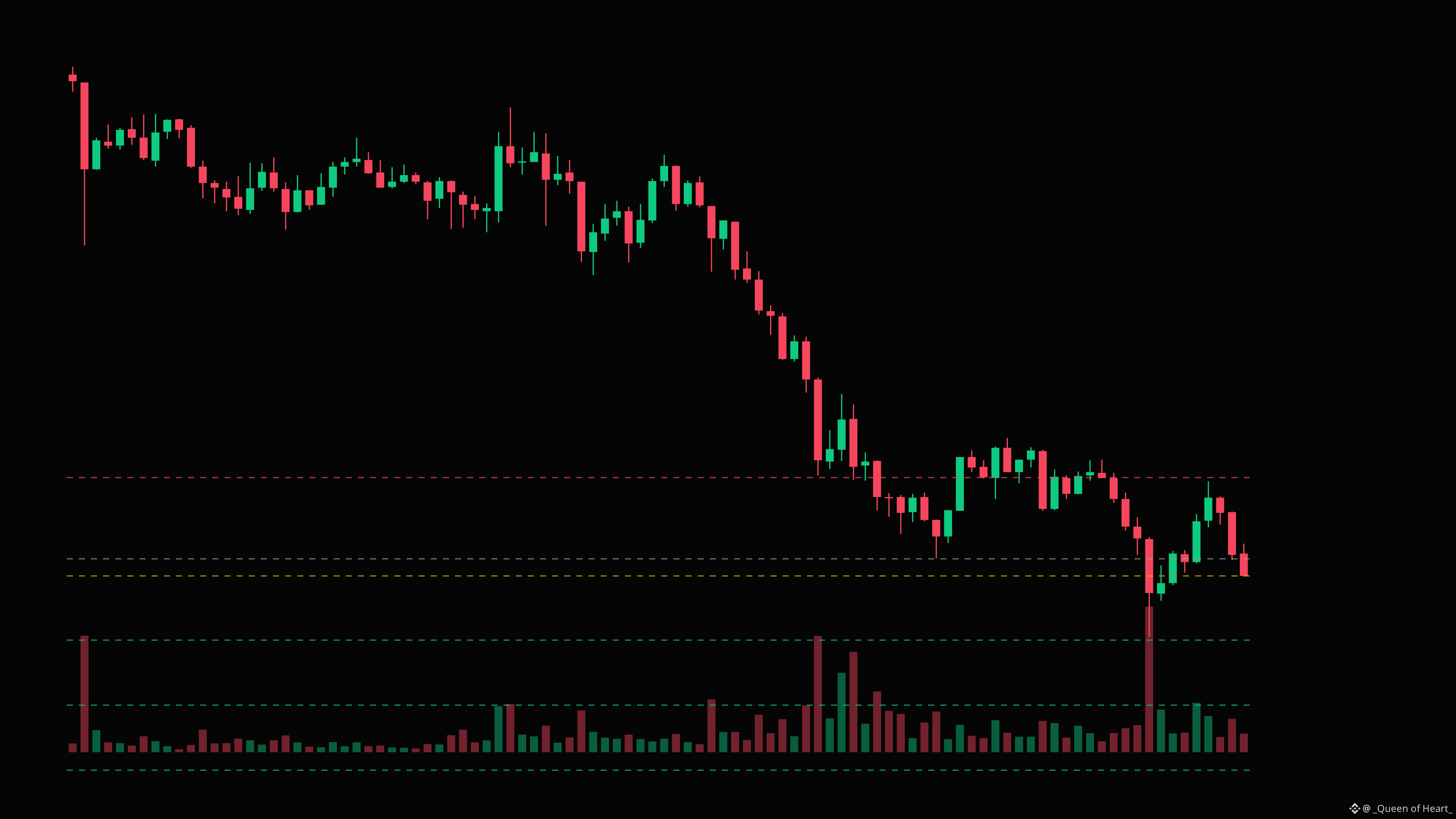
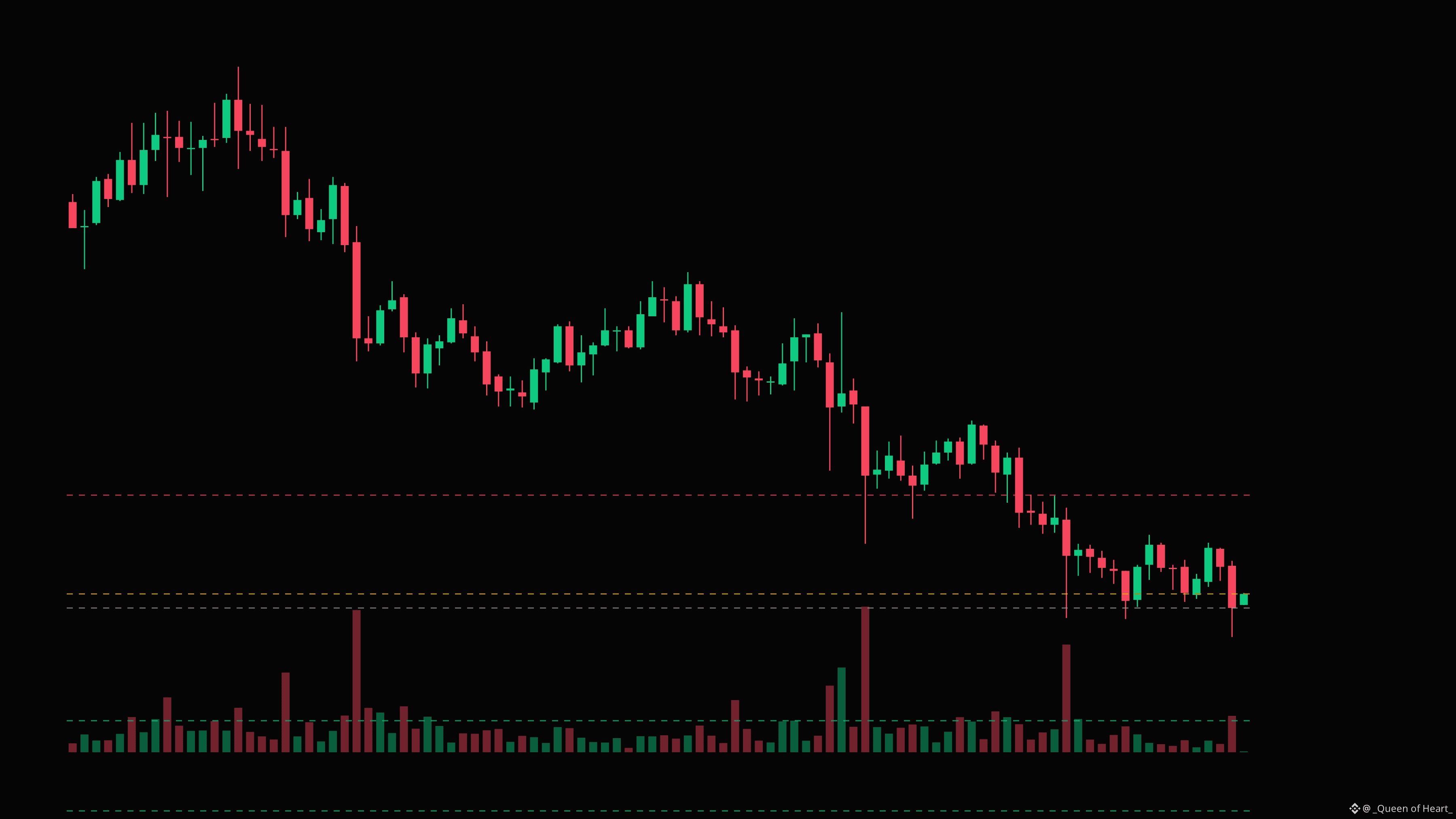
Quick Trade Idea for $NEWT (around 0.0491) #NewtonProtocol #Newt #NEWTtoken The chart shows a strong spike earlier that got rejected, and now price is consolidating near support. Short-term feel is neutral-to-bearish, but it could bounce from here. #NEWTUSDT Long Setup (my slight preference): Entry: 0.0489 â 0.0491 Stop Loss: 0.0484â0.0486 (tight below support) Take Profit: 0.0498 first, then 0.0505+
Short Setup (if it breaks down): Entry: below 0.0488 Stop Loss: 0.0495 Take Profit: 0.0480 then 0.0475
Keep risk small (1-2% of capital). This token moves fast, so watch volume and donât hold too long. Not financial advice just my quick read of the chart. Trade safe! @NewtonProtocol is $BASED on $ETH blockchain.....
The Transaction You See Isn't the Transaction That Happens
When money moves onchain, you see the settlement the final step. But what about everything that decides whether that transfer should happen at all? That missing piece is what @NewtonProtocol built. #Newton creates a verifiable, onchain authorization layer that checks compliance and risk before transactions settle turning "trust me" into "verify me." Here's how it actually works. Policies Live Onchain, Not in a Dashboard $NES Most crypto compliance happens at the UI level. A wallet blocks a transaction, or a dapp shows a warning. But users can bypass that by calling the smart contract directly. The enforcement isn't tied to the settlement. #Newt flips this. Policies are written in Rego, the same language enterprises use for compliance and enforced inside the smart contract itself. A policy might check: ¡ Whether a wallet is sanctioned ¡ If a vault's risk score exceeds a threshold ¡ Market volatility over the last 24 hours The policy travels with the transaction. There's no separate dashboard to bypass. Independent Operators Verify, Not One Entity $NEWT doesn't rely on a single gatekeeper. Instead, multiple independent operators evaluate every transaction proposal. Each operator: ¡ Receives the transaction + policy ¡ Pulls relevant data from providers like Chainalysis, RedStone, or your own custom source ¡ Signs off only if the policy passes What keeps them honest? Financial stake. Operators put up restaked ETH via EigenLayer. If they sign off incorrectly, anyone can challenge them with a zero-knowledge fraud proof. A caught operator gets slashed losing part of their stake. Dishonesty costs more than it gains. Privacy and Verifiability Aren't Tradeoffs $BAS This is where Newton separates from typical compliance tools. The system uses TEEs (Trusted Execution Environments) to evaluate private data without exposing it. So a policy can check your identity jurisdiction or transaction history without revealing who you are. The result is visible in the Newton Explorer, a public record of every task evaluated. You can see: ¡ What policy was enforced ¡ Which operators approved it ¡ The attestation proving the result You get an audit trail that's transparent, not opaque. That's critical as AML and KYC regulations tighten globally. Practical Takeaway: What This Means for Developers If you're building onchain, here's what Newton changes: Before Newton: ¡ You write compliance logic directly into your smart contract ¡ You wire in your own data providers ¡ Changes require redeployments ¡ You hope users don't bypass UI controls With Newton: ¡ You plug into the VaultKit SDK (by Magic Labs) ¡ Mix and match from a pre-built policy stack ¡ Tweak policies without redeploying contracts ¡ Get a verifiable audit trail in Newton Explorer The policy stack already includes partners like Chainalysis, vaults.fyi, and Webacy. You can also bring your own data source the connector compiles to a small WASM module that runs in a sandbox. Quick Checklist: Is Newton Right for You? ¡ You manage DeFi vaults or handle user funds ¡ You need verifiable compliance for regulators ¡ You want to enforce rules at the contract level, not UI ¡ You're tired of redeploying contracts for policy changes ¡ You want an audit trail that's public and verifiable The "So What" Section Blockchain settlement is fast. But settlement alone isn't enough for institutions. They need to know who is transacting and if it's safe. Newton adds that missing verification layer onchain, private, and auditable. For developers, it reduces the attack surface of writing custom logic into contracts. For users, it means rules are enforced without relying on a single trusted party. And for the ecosystem, it moves us closer to mainstream adoption: compliance that's verifiable, not just promised. You can state confidently that you're complying with regulations, and back it up with an audit trail that anyone can inspect. Newton is live on Ethereum and Base. The authorization layer is here and it's enforcing real policy onchain. #NEWTUSDT #NEWTtoken #NewtonProtocol