Binance Square
sevenbox
547 Posts

sevenbox

关注必回,1000粉发红包
381 Following
369 Followers
576 Liked
Posts
·
--
Recently, Trump seems to want to take a breakI just saw the news that a strong earthquake of magnitude 7.8 occurred in the waters near North Maluku Province, Indonesia, early this morning, with a tsunami warning issued and the epicenter only 10 kilometers deep. So far, there is 1 confirmed fatality, local communications are down, and rescue teams are still rushing to the island. Honestly, with earthquakes of this magnitude, physical things can just disappear without warning, leaving you no time to react. Suddenly, I thought of a question: if the earthquake buried your passport, burned your property deed, and paralyzed the banking system, how would you prove who you are? How would you prove that house is yours? Last month, several missiles in the Middle East targeted data centers, and with today's earthquake in Indonesia, it repeatedly reminds us— the trust system of the physical world is too fragile. Banks might close, data centers might explode, passports might get lost. But your identity, assets, and education credentials, if they all rely on centralized institutions for validation, do you really feel secure?

Recently, Trump seems to want to take a break

I just saw the news that a strong earthquake of magnitude 7.8 occurred in the waters near North Maluku Province, Indonesia, early this morning, with a tsunami warning issued and the epicenter only 10 kilometers deep. So far, there is 1 confirmed fatality, local communications are down, and rescue teams are still rushing to the island. Honestly, with earthquakes of this magnitude, physical things can just disappear without warning, leaving you no time to react. Suddenly, I thought of a question: if the earthquake buried your passport, burned your property deed, and paralyzed the banking system, how would you prove who you are? How would you prove that house is yours?
Last month, several missiles in the Middle East targeted data centers, and with today's earthquake in Indonesia, it repeatedly reminds us— the trust system of the physical world is too fragile. Banks might close, data centers might explode, passports might get lost. But your identity, assets, and education credentials, if they all rely on centralized institutions for validation, do you really feel secure?
Just saw on the trending list, Wu Jing rarely made a high-profile post to rise to the top. But compared to gossip, what I'm more concerned about is — the Iran conflict has entered its fifth week, the Strait of Hormuz is still largely closed, and the International Energy Agency warns that "there will be no oil to transport in April," with the level of oil supply shortages exceeding the total of the previous two crises. The global supply chain is breaking down, and the traditional banking system could collapse at any time. In such chaotic times, where can your assets and identity still be stored? This is why I am optimistic about @SignOfficial and $SIGN. It is not a speculative DID, but a sovereign-level digital infrastructure — having cumulatively distributed over 3 billion dollars' worth of tokens, covering over 55 million users, with an annual revenue of 15 million dollars and already profitable. It has helped Kyrgyzstan develop a CBDC, assisted Sierra Leone with on-chain identity, and is deeply integrated with the Abu Dhabi Blockchain Center. When the physical financial system collapses, digital certificates that can prove identity and secure assets are the true hard currency. #Sign geopolitical infrastructure $SIGN @SignOfficial (This content is a paid promotion) #sign地缘政治基建 $SIGN
Just saw on the trending list, Wu Jing rarely made a high-profile post to rise to the top. But compared to gossip, what I'm more concerned about is — the Iran conflict has entered its fifth week, the Strait of Hormuz is still largely closed, and the International Energy Agency warns that "there will be no oil to transport in April," with the level of oil supply shortages exceeding the total of the previous two crises.

The global supply chain is breaking down, and the traditional banking system could collapse at any time. In such chaotic times, where can your assets and identity still be stored? This is why I am optimistic about @SignOfficial and $SIGN . It is not a speculative DID, but a sovereign-level digital infrastructure — having cumulatively distributed over 3 billion dollars' worth of tokens, covering over 55 million users, with an annual revenue of 15 million dollars and already profitable. It has helped Kyrgyzstan develop a CBDC, assisted Sierra Leone with on-chain identity, and is deeply integrated with the Abu Dhabi Blockchain Center.

When the physical financial system collapses, digital certificates that can prove identity and secure assets are the true hard currency. #Sign geopolitical infrastructure $SIGN @SignOfficial

(This content is a paid promotion)
#sign地缘政治基建 $SIGN
Haha, it really has gone up!Just brushed up on the breaking news, the Central Bank of the UAE has officially registered the first USD stablecoin USDU, which is now trading on Crypto.com. This is not New York, not London, but Abu Dhabi. Why is this news worth digging into? Because the Strait of Hormuz has just fallen into a blockade predicament, and the Strait of Mandeb is also in a precarious situation. Morgan Stanley's tracking report shows that on March 29, the number of vessels passing through the Strait of Hormuz dropped to zero, and on the 28th there were only 3. Meanwhile, the Houthis have officially intervened in the conflict, claiming to consider launching military attacks or blockade actions in the Strait of Mandeb. Nearly one-third of global oil shipping traffic could be cut off at any moment, putting enormous pressure on energy trade volume.

Haha, it really has gone up!

Just brushed up on the breaking news, the Central Bank of the UAE has officially registered the first USD stablecoin USDU, which is now trading on Crypto.com. This is not New York, not London, but Abu Dhabi. Why is this news worth digging into? Because the Strait of Hormuz has just fallen into a blockade predicament, and the Strait of Mandeb is also in a precarious situation. Morgan Stanley's tracking report shows that on March 29, the number of vessels passing through the Strait of Hormuz dropped to zero, and on the 28th there were only 3. Meanwhile, the Houthis have officially intervened in the conflict, claiming to consider launching military attacks or blockade actions in the Strait of Mandeb. Nearly one-third of global oil shipping traffic could be cut off at any moment, putting enormous pressure on energy trade volume.
I just saw the news that the Houthi rebels in Yemen have officially intervened in the conflict, launching missiles at Israel and threatening to close the Bab el-Mandeb Strait—another maritime chokepoint for global oil and liquefied natural gas trade. If this strait is blocked, the global energy supply chain will be doubly shackled. How vulnerable is the Red Sea shipping lane? UN data shows that in the past, the Houthi rebels in Yemen forced most Western shipping companies to avoid the Red Sea and circumnavigate Africa; now this shadow looms again. Oil prices immediately surged, with Brent crude briefly breaking through $116, marking the fourth sharp rise in energy prices since the outbreak of the war. However, I think what's more worrying than oil prices is the silent erosion of the global trust system by this conflict. The physical world's trust system is being shattered one by one by missiles and sanctions—banks may shut down, cross-border payments may be disrupted, and identity verification may become invalid. In this era, trust itself has become a luxury. This has led me to pay close attention to @SignOfficial and $SIGN. It's not just an ordinary crypto asset, but an infrastructure designed to reshape the foundation of global trust. When physical credentials expire or physical data is destroyed, Sign's global credential verification and token distribution network ensures your critical information remains secure, reliable, and traceable even under extreme conditions. This "sovereign-level" digital infrastructure is becoming the last safe haven for assets and identity during crises. #SignGeopoliticalInfrastructure$SIGN @SignOfficial (This content is paid promotion) #sign地缘政治基建 $SIGN
I just saw the news that the Houthi rebels in Yemen have officially intervened in the conflict, launching missiles at Israel and threatening to close the Bab el-Mandeb Strait—another maritime chokepoint for global oil and liquefied natural gas trade. If this strait is blocked, the global energy supply chain will be doubly shackled.

How vulnerable is the Red Sea shipping lane? UN data shows that in the past, the Houthi rebels in Yemen forced most Western shipping companies to avoid the Red Sea and circumnavigate Africa; now this shadow looms again. Oil prices immediately surged, with Brent crude briefly breaking through $116, marking the fourth sharp rise in energy prices since the outbreak of the war.

However, I think what's more worrying than oil prices is the silent erosion of the global trust system by this conflict. The physical world's trust system is being shattered one by one by missiles and sanctions—banks may shut down, cross-border payments may be disrupted, and identity verification may become invalid. In this era, trust itself has become a luxury.

This has led me to pay close attention to @SignOfficial and $SIGN . It's not just an ordinary crypto asset, but an infrastructure designed to reshape the foundation of global trust. When physical credentials expire or physical data is destroyed, Sign's global credential verification and token distribution network ensures your critical information remains secure, reliable, and traceable even under extreme conditions. This "sovereign-level" digital infrastructure is becoming the last safe haven for assets and identity during crises.
#SignGeopoliticalInfrastructure$SIGN @SignOfficial

(This content is paid promotion)
#sign地缘政治基建 $SIGN
Have you learned AI today?The news I just brushed up on, Phoenix Network published a deep analysis today with a title that directly poses a soul-searching question: “Are Gulf countries still a ‘safe oasis’ for American AI giants?” The answer is obviously no. Last month, three data centers of Amazon in the Middle East were specifically targeted by missiles, directly causing local bank payment interruptions, business service suspensions, and even global AI services experienced outages. Even more provocatively, Iran directly stated that the offices and cloud facilities of Google, Microsoft, and NVIDIA are all potential targets. This matter made me completely understand one question: When missiles start targeting data centers, your assets in the cloud and the cross-border payment systems you rely on could turn into inaccessible ‘digital ruins’ overnight.

Have you learned AI today?

The news I just brushed up on, Phoenix Network published a deep analysis today with a title that directly poses a soul-searching question: “Are Gulf countries still a ‘safe oasis’ for American AI giants?” The answer is obviously no. Last month, three data centers of Amazon in the Middle East were specifically targeted by missiles, directly causing local bank payment interruptions, business service suspensions, and even global AI services experienced outages. Even more provocatively, Iran directly stated that the offices and cloud facilities of Google, Microsoft, and NVIDIA are all potential targets.
This matter made me completely understand one question: When missiles start targeting data centers, your assets in the cloud and the cross-border payment systems you rely on could turn into inaccessible ‘digital ruins’ overnight.
I just saw the news that a certain country's currency depreciated by more than 30% overnight, long queues formed in front of banks, and cross-border payments were urgently halted. Countless people's money instantly became "digital waste paper." This made me realize something completely: when your assets fully rely on a centralized financial system, a policy can make you lose everything overnight. So, where exactly are your identity and assets stored safely? This is also why I've been looking at @SignOfficial and $SIGN. It is not a speculative DID concept, but it helps countries build digital sovereignty infrastructure—on-chain identity, CBDC, cross-border credentials, with over 20 countries piloting. Your assets run on a decentralized network and will not disappear because a bank is closed or a policy suddenly changes. When currency can depreciate overnight, digital sovereignty is the real hard currency. #Sign geopolitical infrastructure $SIGN @Sign (This content is for paid collaboration) #sign地缘政治基建 $SIGN
I just saw the news that a certain country's currency depreciated by more than 30% overnight, long queues formed in front of banks, and cross-border payments were urgently halted. Countless people's money instantly became "digital waste paper."

This made me realize something completely: when your assets fully rely on a centralized financial system, a policy can make you lose everything overnight. So, where exactly are your identity and assets stored safely?

This is also why I've been looking at @SignOfficial and $SIGN . It is not a speculative DID concept, but it helps countries build digital sovereignty infrastructure—on-chain identity, CBDC, cross-border credentials, with over 20 countries piloting. Your assets run on a decentralized network and will not disappear because a bank is closed or a policy suddenly changes.

When currency can depreciate overnight, digital sovereignty is the real hard currency. #Sign geopolitical infrastructure $SIGN @Sign

(This content is for paid collaboration)
#sign地缘政治基建 $SIGN
Eating while watchingJust came across the news, early this morning, a country in the Middle East suddenly announced that its currency depreciated against the dollar by more than 30% overnight, long lines formed outside local banks, and the public rushed to exchange. The government urgently announced a 'suspension of cross-border remittance services,' and countless people's money instantly became 'digital waste paper.' Upon seeing this news, my first reaction was not about oil prices, but rather: Is there any hope for these people's assets? This is also why I have been pondering @SignOfficial and $SIGN recently. In the past, when discussing this project, everyone focused on the data—TokenTable distributed over 4 billion dollars in assets, with an annual revenue of 15 million and has been profitable, with Sequoia and Binance Labs investing 57 million. However, in today's news context, its value is completely different: it is not just about issuing you an identity verification, but rather helping the country build 'digital sovereignty infrastructure.'

Eating while watching

Just came across the news, early this morning, a country in the Middle East suddenly announced that its currency depreciated against the dollar by more than 30% overnight, long lines formed outside local banks, and the public rushed to exchange. The government urgently announced a 'suspension of cross-border remittance services,' and countless people's money instantly became 'digital waste paper.'
Upon seeing this news, my first reaction was not about oil prices, but rather: Is there any hope for these people's assets?
This is also why I have been pondering @SignOfficial and $SIGN recently.
In the past, when discussing this project, everyone focused on the data—TokenTable distributed over 4 billion dollars in assets, with an annual revenue of 15 million and has been profitable, with Sequoia and Binance Labs investing 57 million. However, in today's news context, its value is completely different: it is not just about issuing you an identity verification, but rather helping the country build 'digital sovereignty infrastructure.'
Is the second concubine about to take off again?I just came across the news that early this morning, a certain Middle Eastern country suddenly announced that its currency depreciated by over 30% against the US dollar overnight, with long lines forming outside local banks as the public rushed to exchange. The government urgently announced a 'suspension of cross-border remittance services,' and countless people's money instantly became 'digital waste paper.' Upon seeing this news, my first reaction was not the oil prices, but rather: Is there still hope for these people's assets? This is also why I've been pondering @SignOfficial and $SIGN recently. In the past, when discussing this project, everyone focused on the data—TokenTable distributed over $4 billion in assets, with an annual revenue of $15 million and already profitable, with Sequoia and Binance Labs investing $57 million. But in light of today's news, its value is completely different now: it is not just about giving you an identity certification; it is helping the country build 'digital sovereignty infrastructure.'

Is the second concubine about to take off again?

I just came across the news that early this morning, a certain Middle Eastern country suddenly announced that its currency depreciated by over 30% against the US dollar overnight, with long lines forming outside local banks as the public rushed to exchange. The government urgently announced a 'suspension of cross-border remittance services,' and countless people's money instantly became 'digital waste paper.'
Upon seeing this news, my first reaction was not the oil prices, but rather: Is there still hope for these people's assets?
This is also why I've been pondering @SignOfficial and $SIGN recently.
In the past, when discussing this project, everyone focused on the data—TokenTable distributed over $4 billion in assets, with an annual revenue of $15 million and already profitable, with Sequoia and Binance Labs investing $57 million. But in light of today's news, its value is completely different now: it is not just about giving you an identity certification; it is helping the country build 'digital sovereignty infrastructure.'
The news I just brushed up on, Li Changyu has passed away. At 87 years old, he died peacefully at home in the United States. This Chinese-American detective solved the Kennedy assassination case, the Simpson murder case, and handled over 8,000 cases in his lifetime. He once said a phrase that left a deep impression on me: "Corpses do not go missing; it's just that you haven't found them." In this life, what we leave behind is merely identity, assets, and honor. But the cases Li Changyu solved tell us: physical evidence can disappear, paper records can be destroyed, and even gravestones can weather away. This is also why I've been watching @SignOfficial and $SIGN. It's not about solving cases, but helping the country build identity and asset systems on the blockchain—digital sovereignty infrastructure. Over 20 countries are already piloting it, helping Kyrgyzstan with CBDC, and helping Sierra Leone with digital identity. Your education, assets running on a decentralized network will not disappear just because a data center gets bombed. People may leave, but what they leave behind should have a reliable place to be stored. $SIGN #Sign Geopolitical Infrastructure @Sign (This content is a paid partnership) #sign地缘政治基建 $SIGN
The news I just brushed up on, Li Changyu has passed away. At 87 years old, he died peacefully at home in the United States. This Chinese-American detective solved the Kennedy assassination case, the Simpson murder case, and handled over 8,000 cases in his lifetime. He once said a phrase that left a deep impression on me: "Corpses do not go missing; it's just that you haven't found them."

In this life, what we leave behind is merely identity, assets, and honor. But the cases Li Changyu solved tell us: physical evidence can disappear, paper records can be destroyed, and even gravestones can weather away.

This is also why I've been watching @SignOfficial and $SIGN . It's not about solving cases, but helping the country build identity and asset systems on the blockchain—digital sovereignty infrastructure. Over 20 countries are already piloting it, helping Kyrgyzstan with CBDC, and helping Sierra Leone with digital identity. Your education, assets running on a decentralized network will not disappear just because a data center gets bombed.

People may leave, but what they leave behind should have a reliable place to be stored. $SIGN

#Sign Geopolitical Infrastructure @Sign

(This content is a paid partnership)
#sign地缘政治基建 $SIGN
Trust Infrastructure Amid Geopolitical Fractures: Why the Narrative of $SIGN in the Middle East Cannot Be Ignored?The Middle East is undergoing a silent and profound transformation. This is not merely economic growth, but a structural digital transformation—from the blockchain ecosystem alliance in Abu Dhabi to the accelerated real estate tokenization in Gulf countries, the government is gradually moving finance, identity, and public services onto the chain. But large-scale on-chain adoption brings a core question: where does trust come from? When systems cross borders, institutions, and regulatory frameworks, traditional 'relational trust' is no longer sufficient in the fast-paced global economy. Validation is the only scalable answer. This is exactly where @SignOfficial comes in—it is not an exchange, not an application, but the underlying infrastructure layer that turns identity, ownership, and compliance into on-chain verifiable 'proof' rather than assumed commitments.

Trust Infrastructure Amid Geopolitical Fractures: Why the Narrative of $SIGN in the Middle East Cannot Be Ignored?

The Middle East is undergoing a silent and profound transformation. This is not merely economic growth, but a structural digital transformation—from the blockchain ecosystem alliance in Abu Dhabi to the accelerated real estate tokenization in Gulf countries, the government is gradually moving finance, identity, and public services onto the chain.
But large-scale on-chain adoption brings a core question: where does trust come from?
When systems cross borders, institutions, and regulatory frameworks, traditional 'relational trust' is no longer sufficient in the fast-paced global economy. Validation is the only scalable answer. This is exactly where @SignOfficial comes in—it is not an exchange, not an application, but the underlying infrastructure layer that turns identity, ownership, and compliance into on-chain verifiable 'proof' rather than assumed commitments.
Just saw on trending, Jay Chou's new album 'Reflection' has already sold over 3 million digital copies on the second day of its release. Many people in my friend circle are sharing screenshots, and the comments are filled with 'I cried listening' and 'It was worth the six-year wait'. To be honest, I'm also on repeat. But as I was listening, I suddenly thought of a question: where do you store this album? On your phone? In the cloud? What if your phone gets lost or the cloud service provider has issues? Jay Chou's songs can be downloaded again, but what about those truly important things in your life—your education, assets, identification? If they could also 'disappear' at any moment due to a server crash or an organization shutting down, would you be worried? That's why I've been watching @SignOfficial and $SIGN. What it does is digital sovereignty infrastructure—helping countries build identity and asset systems on the blockchain, already piloted in over 20 countries, assisting Kyrgyzstan with CBDC, and helping Sierra Leone with digital identity. Your assets running on a decentralized network won't disappear just because a data center gets bombed or a bank shuts down. An album may just lag a bit, but if assets and identity are lost, that's a real problem. #Sign geopolitical infrastructure $SIGN @SignOfficial (This content is a paid promotion) #sign地缘政治基建 $SIGN
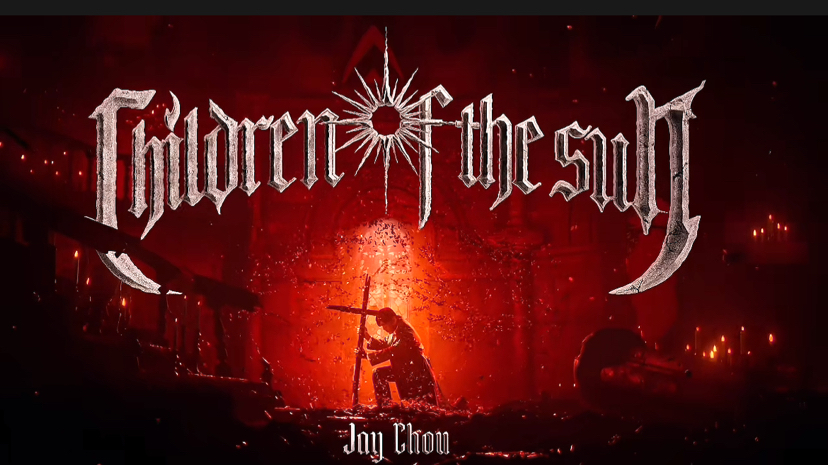
Just saw on trending, Jay Chou's new album 'Reflection' has already sold over 3 million digital copies on the second day of its release. Many people in my friend circle are sharing screenshots, and the comments are filled with 'I cried listening' and 'It was worth the six-year wait'. To be honest, I'm also on repeat.

But as I was listening, I suddenly thought of a question: where do you store this album? On your phone? In the cloud? What if your phone gets lost or the cloud service provider has issues? Jay Chou's songs can be downloaded again, but what about those truly important things in your life—your education, assets, identification? If they could also 'disappear' at any moment due to a server crash or an organization shutting down, would you be worried?

That's why I've been watching @SignOfficial and $SIGN . What it does is digital sovereignty infrastructure—helping countries build identity and asset systems on the blockchain, already piloted in over 20 countries, assisting Kyrgyzstan with CBDC, and helping Sierra Leone with digital identity. Your assets running on a decentralized network won't disappear just because a data center gets bombed or a bank shuts down.

An album may just lag a bit, but if assets and identity are lost, that's a real problem. #Sign geopolitical infrastructure $SIGN @SignOfficial

(This content is a paid promotion)
#sign地缘政治基建 $SIGN
Article
Which new song is good to listen to? Type it outJust saw the news, Jay Chou's new album (Reflection) will be launched precisely at 12:00 PM today, with QQ Music, NetEase Cloud, and Apple Music all syncing up. And once again, it’s the familiar plot— the server crashed. People in the circle have already started sharing screenshots, 'Got it' 'Finally waited for this day,' and the comment section is filled with 'Cannot access' 'Loading.' After waiting for six years, the album is finally released, and the enthusiasm of the fans directly overwhelmed the platform. To be honest, I also clicked in right away, and it took five minutes of spinning to load. Listening to the new song, a question suddenly popped into my mind: How do you plan to store this album? Store it on your phone? The phone might break. Store it in the cloud? The cloud service provider might go bankrupt. Store it on a hard drive? The hard drive might fail. You will find that the truly important things—whether it’s Jay Chou’s songs or your life credentials—are not really safe wherever you store them.

Which new song is good to listen to? Type it out

Just saw the news, Jay Chou's new album (Reflection) will be launched precisely at 12:00 PM today, with QQ Music, NetEase Cloud, and Apple Music all syncing up. And once again, it’s the familiar plot— the server crashed. People in the circle have already started sharing screenshots, 'Got it' 'Finally waited for this day,' and the comment section is filled with 'Cannot access' 'Loading.' After waiting for six years, the album is finally released, and the enthusiasm of the fans directly overwhelmed the platform.
To be honest, I also clicked in right away, and it took five minutes of spinning to load. Listening to the new song, a question suddenly popped into my mind: How do you plan to store this album? Store it on your phone? The phone might break. Store it in the cloud? The cloud service provider might go bankrupt. Store it on a hard drive? The hard drive might fail. You will find that the truly important things—whether it’s Jay Chou’s songs or your life credentials—are not really safe wherever you store them.
I just saw the news, gold prices have hit a new high again, and many people around me are asking if they should stock up a bit. But to be honest, when chaos truly hits, can you carry gold with you? When Iran's missiles fell in Dubai, gold bars were discounted because they couldn't be taken away. This reminds me of a more fundamental question: when the trust system in the physical world begins to collapse, where are your assets and identity securely stored? This is also why I have been looking at @SignOfficial and $SIGN. It is not a DID project that speculates on concepts, but is genuinely helping countries build digital sovereign infrastructure—already piloted in over 20 countries, helping Kyrgyzstan with CBDC, and helping Sierra Leone with digital identity. Your assets run on a decentralized network and will not disappear just because a desalination plant gets bombed. When banks may close and passports may become invalid, the only reliable thing is digital certificates that are not constrained by physical boundaries. #Sign geopolitical infrastructure $SIGN @SignOfficial (This content is a paid promotion) #sign地缘政治基建 $SIGN
I just saw the news, gold prices have hit a new high again, and many people around me are asking if they should stock up a bit. But to be honest, when chaos truly hits, can you carry gold with you? When Iran's missiles fell in Dubai, gold bars were discounted because they couldn't be taken away.

This reminds me of a more fundamental question: when the trust system in the physical world begins to collapse, where are your assets and identity securely stored?

This is also why I have been looking at @SignOfficial and $SIGN . It is not a DID project that speculates on concepts, but is genuinely helping countries build digital sovereign infrastructure—already piloted in over 20 countries, helping Kyrgyzstan with CBDC, and helping Sierra Leone with digital identity. Your assets run on a decentralized network and will not disappear just because a desalination plant gets bombed.

When banks may close and passports may become invalid, the only reliable thing is digital certificates that are not constrained by physical boundaries. #Sign geopolitical infrastructure $SIGN @SignOfficial

(This content is a paid promotion)
#sign地缘政治基建 $SIGN
Money does not just disappear; it only gets harvested and lost.I just came across a major financial news: UK challenger bank Monument announced that it will tokenize up to £250 million in retail deposits on the Midnight Network, marking the first time a regulated bank in the UK has completed such an operation on a public chain, with deposits accruing interest and fully protected by FSCS. Monument targets the 'wealthy masses' with investable assets ranging from £50,000 to £5,000,000, indicating that traditional financial institutions are beginning to take privacy public chains seriously. Why choose Midnight? Because 'selective disclosure' perfectly addresses the pain points of banks: proving compliance without exposing customer data.

Money does not just disappear; it only gets harvested and lost.

I just came across a major financial news: UK challenger bank Monument announced that it will tokenize up to £250 million in retail deposits on the Midnight Network, marking the first time a regulated bank in the UK has completed such an operation on a public chain, with deposits accruing interest and fully protected by FSCS.
Monument targets the 'wealthy masses' with investable assets ranging from £50,000 to £5,000,000, indicating that traditional financial institutions are beginning to take privacy public chains seriously. Why choose Midnight? Because 'selective disclosure' perfectly addresses the pain points of banks: proving compliance without exposing customer data.
I just came across a major financial news: UK challenger bank Monument announced it will tokenize up to £250 million in retail deposits on the Midnight Network, marking the first time a regulated bank in the UK has completed such an operation on a public blockchain, with deposits earning interest and fully protected by FSCS! This is not a small matter — Monument is targeting the "affluent mass" group with investable assets ranging from £50,000 to £5 million, indicating that traditional financial institutions are starting to take privacy public chains seriously. Why choose Midnight? Because "selective disclosure" perfectly addresses the pain points of banks: proving compliance without exposing customer data. The mainnet is set to go live at the end of the month, with a node lineup already including 10 institutions such as Google Cloud, MoneyGram, Worldpay, and Pairpoint of Vodafone. Holding $NIGHT automatically generates DUST to pay Gas, and the Gas cost does not fluctuate with ETH. What do you think will happen in the privacy track after banks enter the scene? #night @MidnightNetwork #night $NIGHT
I just came across a major financial news: UK challenger bank Monument announced it will tokenize up to £250 million in retail deposits on the Midnight Network, marking the first time a regulated bank in the UK has completed such an operation on a public blockchain, with deposits earning interest and fully protected by FSCS!

This is not a small matter — Monument is targeting the "affluent mass" group with investable assets ranging from £50,000 to £5 million, indicating that traditional financial institutions are starting to take privacy public chains seriously. Why choose Midnight? Because "selective disclosure" perfectly addresses the pain points of banks: proving compliance without exposing customer data.

The mainnet is set to go live at the end of the month, with a node lineup already including 10 institutions such as Google Cloud, MoneyGram, Worldpay, and Pairpoint of Vodafone. Holding $NIGHT automatically generates DUST to pay Gas, and the Gas cost does not fluctuate with ETH. What do you think will happen in the privacy track after banks enter the scene? #night @MidnightNetwork
#night $NIGHT
Is it my fault? My fault?I just saw a piece of news that three data centers of Amazon in the Middle East were bombed—UAE and Bahrain, missiles directly named, servers paralyzed. Local bank payments interrupted, corporate services suspended, even AI models like Claude experienced a global outage. What’s more alarming is that Iran directly stated that Google's, Microsoft's, and Nvidia's offices and cloud facilities in the Middle East are also potential targets. This left me stunned for a long time. To be honest, I used to think that war is just war, at most oil prices go up and a few flights get canceled. But this time it’s different—missiles hit the data centers. What does this mean? It means that the data you have in the cloud, the cross-border payment systems you rely on, and even the backend of your company's operations could all potentially turn into inaccessible 'digital ruins' overnight.

Is it my fault? My fault?

I just saw a piece of news that three data centers of Amazon in the Middle East were bombed—UAE and Bahrain, missiles directly named, servers paralyzed. Local bank payments interrupted, corporate services suspended, even AI models like Claude experienced a global outage. What’s more alarming is that Iran directly stated that Google's, Microsoft's, and Nvidia's offices and cloud facilities in the Middle East are also potential targets.
This left me stunned for a long time. To be honest, I used to think that war is just war, at most oil prices go up and a few flights get canceled. But this time it’s different—missiles hit the data centers. What does this mean? It means that the data you have in the cloud, the cross-border payment systems you rely on, and even the backend of your company's operations could all potentially turn into inaccessible 'digital ruins' overnight.
The news just刷到: international oil prices have plummeted! Trump announced a "5-day delay" in striking Iranian energy facilities, and Brent crude oil has directly dropped from its peak, closing down over 10%, falling below $100. Friends in the group trading oil are in a frenzy, with someone shouting, "Back to square one overnight." But this makes me think deeper: today we say we will strike, oil prices surge to $120; tomorrow we say we delay, and it directly crashes through $100. When the rules of the physical world can be rewritten at any time by a tweet, where exactly are your assets and identity safe? This is also why I have been watching @SignOfficial and $SIGN. It is not an ordinary DID project, but directly helps countries build digital sovereignty infrastructure—helping Kyrgyzstan with CBDC, helping Sierra Leone with digital identity, and piloting in over 20 countries. Your assets run on a decentralized network and will not disappear just because some desalination plant is bombed. $SIGN #Sign geopolitical infrastructure (This content is a paid promotion) #sign地缘政治基建 $SIGN
The news just刷到: international oil prices have plummeted! Trump announced a "5-day delay" in striking Iranian energy facilities, and Brent crude oil has directly dropped from its peak, closing down over 10%, falling below $100. Friends in the group trading oil are in a frenzy, with someone shouting, "Back to square one overnight."

But this makes me think deeper: today we say we will strike, oil prices surge to $120; tomorrow we say we delay, and it directly crashes through $100. When the rules of the physical world can be rewritten at any time by a tweet, where exactly are your assets and identity safe?

This is also why I have been watching @SignOfficial and $SIGN . It is not an ordinary DID project, but directly helps countries build digital sovereignty infrastructure—helping Kyrgyzstan with CBDC, helping Sierra Leone with digital identity, and piloting in over 20 countries. Your assets run on a decentralized network and will not disappear just because some desalination plant is bombed. $SIGN

#Sign geopolitical infrastructure

(This content is a paid promotion)
#sign地缘政治基建 $SIGN
I just came across a heavy piece of news: The National Development and Reform Commission has initiated temporary regulation on domestic refined oil prices, marking the first intervention since the implementation of the current mechanism in 2013! Originally set to increase by 2205 yuan/ton, it actually only rose by 1160 yuan, which is equivalent to saving car owners half their fuel costs. To be honest, my first reaction upon seeing this news was not about oil prices, but a heartbreaking question—why is intervention necessary? Because the external market is too volatile. The escalation of the U.S.-Israel conflict has caused international oil prices to drop by over 10% in one day, and then surge the next day. Ordinary people's wallets simply cannot withstand such a roller coaster. The state intervenes to ensure that energy costs are "decoupled from external fluctuations" and to guarantee stable economic operation. Isn't this the logic of the $NIGHT dual-token mechanism? Holding NIGHT automatically generates DUST to pay Gas, DUST is non-tradable and renewable, and Gas costs are completely decoupled from ETH fluctuations. No matter how volatile the external market is, the cost of your transfers remains stable. One stabilizes oil prices, and the other stabilizes Gas fees; the underlying logic is the same. The countdown to the mainnet launch at the end of the month is on, with the node lineup continuously strengthening: Worldpay (processing 3.7 trillion USD annually), MoneyGram (over 200 countries), Vodafone's Pairpoint, Google Cloud (Mandiant security monitoring), all coming in as nodes. Each one is not here to speculate on coins but to run real businesses. Total supply of 24 billion $NIGHT, all distributed through the Glacier Drop airdrop, with no VC dumping risk. Do you think this operation can stabilize things? Let's discuss in the comments @MidnightNetwork #night $NIGHT
I just came across a heavy piece of news: The National Development and Reform Commission has initiated temporary regulation on domestic refined oil prices, marking the first intervention since the implementation of the current mechanism in 2013! Originally set to increase by 2205 yuan/ton, it actually only rose by 1160 yuan, which is equivalent to saving car owners half their fuel costs.

To be honest, my first reaction upon seeing this news was not about oil prices, but a heartbreaking question—why is intervention necessary? Because the external market is too volatile. The escalation of the U.S.-Israel conflict has caused international oil prices to drop by over 10% in one day, and then surge the next day. Ordinary people's wallets simply cannot withstand such a roller coaster. The state intervenes to ensure that energy costs are "decoupled from external fluctuations" and to guarantee stable economic operation.

Isn't this the logic of the $NIGHT dual-token mechanism? Holding NIGHT automatically generates DUST to pay Gas, DUST is non-tradable and renewable, and Gas costs are completely decoupled from ETH fluctuations. No matter how volatile the external market is, the cost of your transfers remains stable. One stabilizes oil prices, and the other stabilizes Gas fees; the underlying logic is the same.

The countdown to the mainnet launch at the end of the month is on, with the node lineup continuously strengthening: Worldpay (processing 3.7 trillion USD annually), MoneyGram (over 200 countries), Vodafone's Pairpoint, Google Cloud (Mandiant security monitoring), all coming in as nodes. Each one is not here to speculate on coins but to run real businesses.

Total supply of 24 billion $NIGHT , all distributed through the Glacier Drop airdrop, with no VC dumping risk. Do you think this operation can stabilize things? Let's discuss in the comments @MidnightNetwork
#night $NIGHT

Article
Here's a flowerJust saw the news, Zhang Xuefeng has passed away. 42 years old, died of cardiac arrest, felt unwell after running at the company at noon, was sent to the hospital for rescue, and passed away at 3:50 PM. His Weibo and Douyin profile pictures have all turned gray, and the last update on his Moments was on March 22, clocking in 7 kilometers. To be honest, I feel quite sad after seeing this news. He was only 42 years old, and last year he was still in the live broadcast room arguing vigorously, saying he wanted to keep going for another twenty years. Who would have thought that a regular run would lead to this? This incident suddenly made me realize a truth: physical life is too fragile, it can be gone just like that.

Here's a flower

Just saw the news, Zhang Xuefeng has passed away. 42 years old, died of cardiac arrest, felt unwell after running at the company at noon, was sent to the hospital for rescue, and passed away at 3:50 PM. His Weibo and Douyin profile pictures have all turned gray, and the last update on his Moments was on March 22, clocking in 7 kilometers.
To be honest, I feel quite sad after seeing this news. He was only 42 years old, and last year he was still in the live broadcast room arguing vigorously, saying he wanted to keep going for another twenty years. Who would have thought that a regular run would lead to this?
This incident suddenly made me realize a truth: physical life is too fragile, it can be gone just like that.
Article
Breaking news is here, has the bull returned?Breaking news: Global payment giant Worldpay and cryptocurrency exchange Bullish have officially joined the founding node lineup of Midnight. This is already the 10th institutional-level node, including MoneyGram, Vodafone's Pairpoint, eToro, Google Cloud, and Blockdaemon. To be honest, I was a bit surprised to see this list. MoneyGram covers over 200 countries, Worldpay processes $3.7 trillion in transactions annually, and Google Cloud has sent Mandiant for threat monitoring—these are not here to speculate on cryptocurrency, they are here to run real businesses. Bullish is more direct, wanting to provide proof of reserves on Midnight, allowing exchanges to prove their solvency to regulators without having to disclose wallet addresses and transaction records.

Breaking news is here, has the bull returned?

Breaking news: Global payment giant Worldpay and cryptocurrency exchange Bullish have officially joined the founding node lineup of Midnight. This is already the 10th institutional-level node, including MoneyGram, Vodafone's Pairpoint, eToro, Google Cloud, and Blockdaemon.
To be honest, I was a bit surprised to see this list. MoneyGram covers over 200 countries, Worldpay processes $3.7 trillion in transactions annually, and Google Cloud has sent Mandiant for threat monitoring—these are not here to speculate on cryptocurrency, they are here to run real businesses. Bullish is more direct, wanting to provide proof of reserves on Midnight, allowing exchanges to prove their solvency to regulators without having to disclose wallet addresses and transaction records.
Log in to explore more content
Join global crypto users on Binance Square
⚡️ Get latest and useful information about crypto.
💬 Trusted by the world’s largest crypto exchange.
👍 Discover real insights from verified creators.
Email / Phone number
Sitemap
Cookie Preferences
Platform T&Cs