
Schlomo Khalidi
676 Posts

Schlomo Khalidi
Report
Block User
Frequent Trader
4.8 Years
103 Following
460 Followers
665 Liked
Posts
All
Quotes
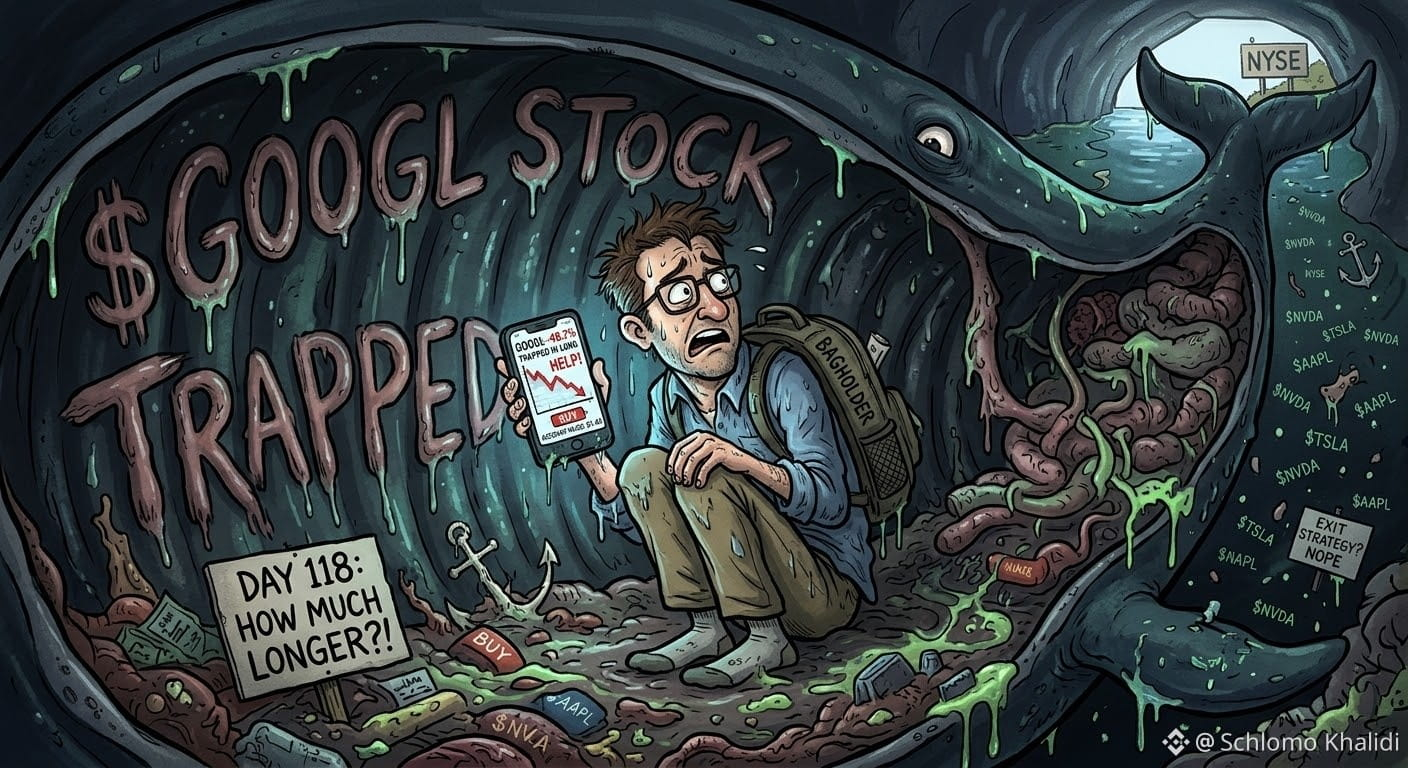
just like Jonah, $GOOGL trapped me inside a whales belly
just like Jonah, $GOOGL trapped me inside a whales belly
1
50
The post-election relief rally is here. Historically, the S&P 500 has surged after every single midterm since 1950.
Even with capex noise hitting mega-caps like $GOOGL , a year-end green wave is forming. If you’re stuck in a bad leveraged position, this bounce is your exit ramp. Do not bag-hold for a perfect recovery. Use this market strength to cut the dead weight and secure cash while the window is open.
Even with capex noise hitting mega-caps like $GOOGL , a year-end green wave is forming. If you’re stuck in a bad leveraged position, this bounce is your exit ramp. Do not bag-hold for a perfect recovery. Use this market strength to cut the dead weight and secure cash while the window is open.
2
438
Big relief rally setup building for $GOOGL
3 immediate triggers to watch:
🔺Election Relief Rally: Tech is catching a strong bid as US election results roll in. As one of the most beaten-down tech giants, $GOOGL is a prime target for aggressive short-covering flows.
🔺Capitulation Floor: Wall Street analyst downgrades have finally settled. With near-term expectations officially reset lower, institutional "dip buyers" are eyeing the cheap valuation multiple.
🔺Liquidity Gap: Intraday charts show a massive Fair Value Gap overhead. A push past local resistance could trigger algo buying to squeeze the price up toward the $285–$290 zone.
442
October officially turned every optimistic day trader into a long-term investor.
I am looking right at you, $GOOGL
The trading pipeline is absolutely undefeated:
Day trader to Swing trader and now a Long-term investor.
October officially turned every optimistic day trader into a long-term investor.
I am looking right at you, $GOOGL
The trading pipeline is absolutely undefeated:
Day trader to Swing trader and now a Long-term investor.
I am looking right at you, $GOOGL
The trading pipeline is absolutely undefeated:
Day trader to Swing trader and now a Long-term investor.

1
1
619
Holding a leveraged long position on $GOOGL right now requires you to fight a war on two fronts: the falling stock price and the bleeding funding fees that hit your account three times a day.
If you are committed to holding, you must immediately intervene to protect your account from a sudden liquidation
If you are committed to holding, you must immediately intervene to protect your account from a sudden liquidation
1
1
619
$GOOGL just let me off the hook and I'll never come again please i beg you🥺🥺
$GOOGL just let me off the hook and I'll never come again please i beg you🥺🥺
1
432
$GOOGL please skyrocket, your name is bigger than this 🚀🚀🔥
$GOOGL please skyrocket, your name is bigger than this 🚀🚀🔥
2
1
481
For $GOOGL buyers to fully hijack the tape and completely overpower institutional algorithms today when the market opens, one of these must happen:
1. Market Maker "Gamma" Trap
🔺A massive, coordinated morning surge in retail purchases of $285 and $290 strike call options.
🔺As explained by the mechanics of option hedging, market makers who sold those calls will be forced to buy millions of shares of GOOGL stock to hedge their risk as the price approaches $285. This creates a forced buying loop that institutional sell algorithms cannot stop.
2. A "Nasdaq Squeeze" (Macro Sentiment Flip)
🔺A sudden, aggressive morning rally in tech index futures (QQQ).
🔺 If broader macro sentiment suddenly shifts to "risk-on"—such as a drop in treasury yields or a relief bounce across other tech giants—algorithmic pool software will automatically lift all mega-cap tech boats. This forces institutional sellers to turn off their supply walls to avoid getting run over by the market index tide.
3. Institutional "Short-Covering" Chain Reaction
🔺GOOGL holding firmly above $281.51 for the first 30 minutes of trading.
🔺If institutional algorithmic systems see that their automated selling isn't driving the price down past the $278.80 floor, they will realize that the "dip buyers" are too strong. To limit loss on their intra-day short positions, their risk management systems will automatically switch from "Sell" to "Buy to Cover," accelerating the vertical climb past $288
1
469
Verified
Following $GOOGL Alphabet’s mixed Q3 2026 earnings report, Wall Street analysts are still overwhelmingly bullish on the company’s long-term prospects. However, several major investment banks have trimmed their 12-month price targets.
Despite the revisions, the consensus remains STRONG BUY, with 45 out of 53 covering analysts maintaining a bullish rating.
The average price target now stands at $404.69, implying more than 45% upside potential from current trading levels.
Recent Wall Street Revisions:
-BMO Capital: $480 → $425 (Buy)
-Barclays: $415 → $405 (Overweight)
-Jefferies: $445 → $400 (Buy)
-JPMorgan: $425 → $375 (Overweight)
-Wells Fargo: $371 → $365 (Overweight)
-Cantor Fitzgerald: $420 → $350 (Buy)
600
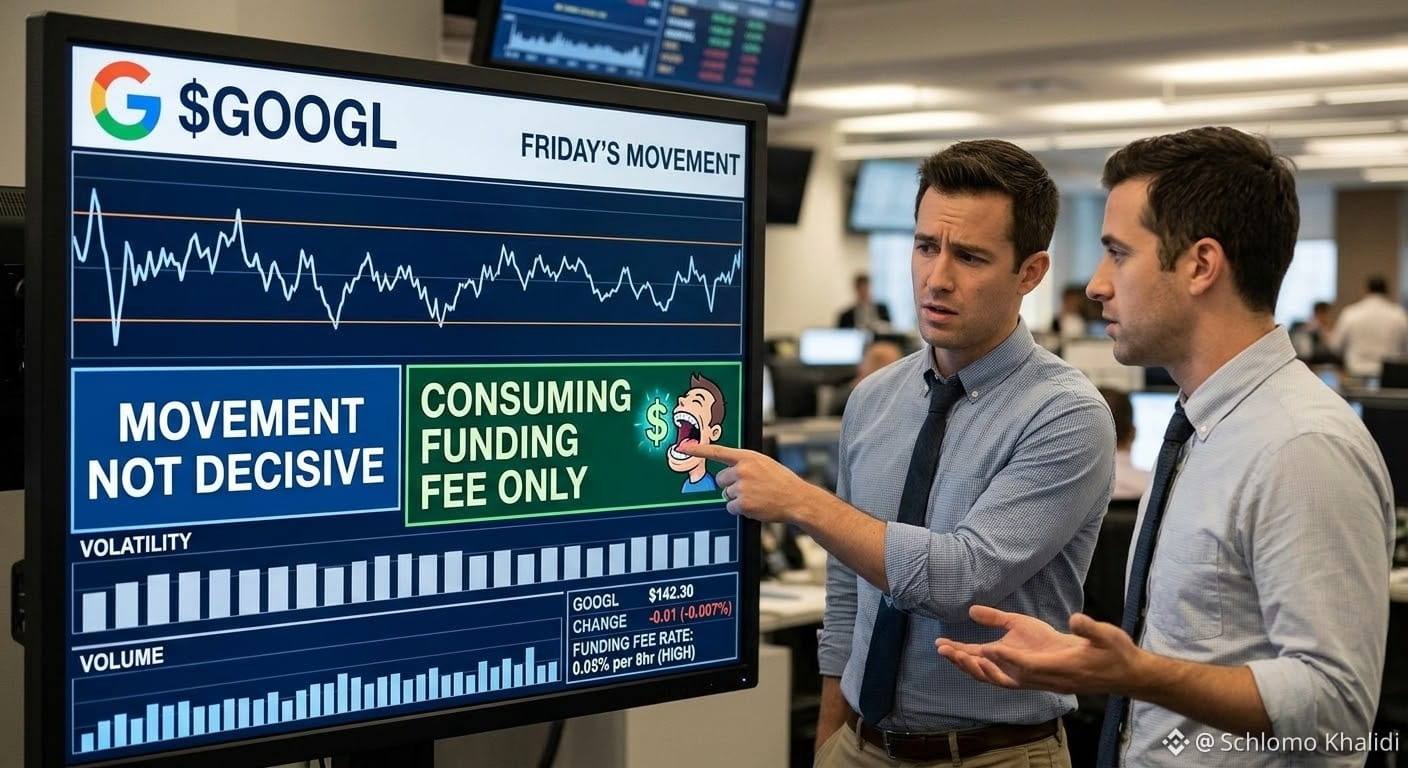
$GOOGL movement from Friday isn't decisive, it only wants to consume funding fee
$GOOGL movement from Friday isn't decisive, it only wants to consume funding fee
1
1.2k
Verified
The midterm elections will affect the stock market, primarily by driving short-term volatility before leading to a historically reliable post-election rally. Financial institutions note that while the countdown to Election Day often introduces market "jitters," the resolution of political uncertainty almost always benefits equities.
$SNDK $AMZNB $GOOGL
$SNDK $AMZNB $GOOGL
2
658
$GOOGL A lot of people are clinging unto you, please Pump to the 🌙
$GOOGL A lot of people are clinging unto you, please Pump to the 🌙

入云观市
·
--
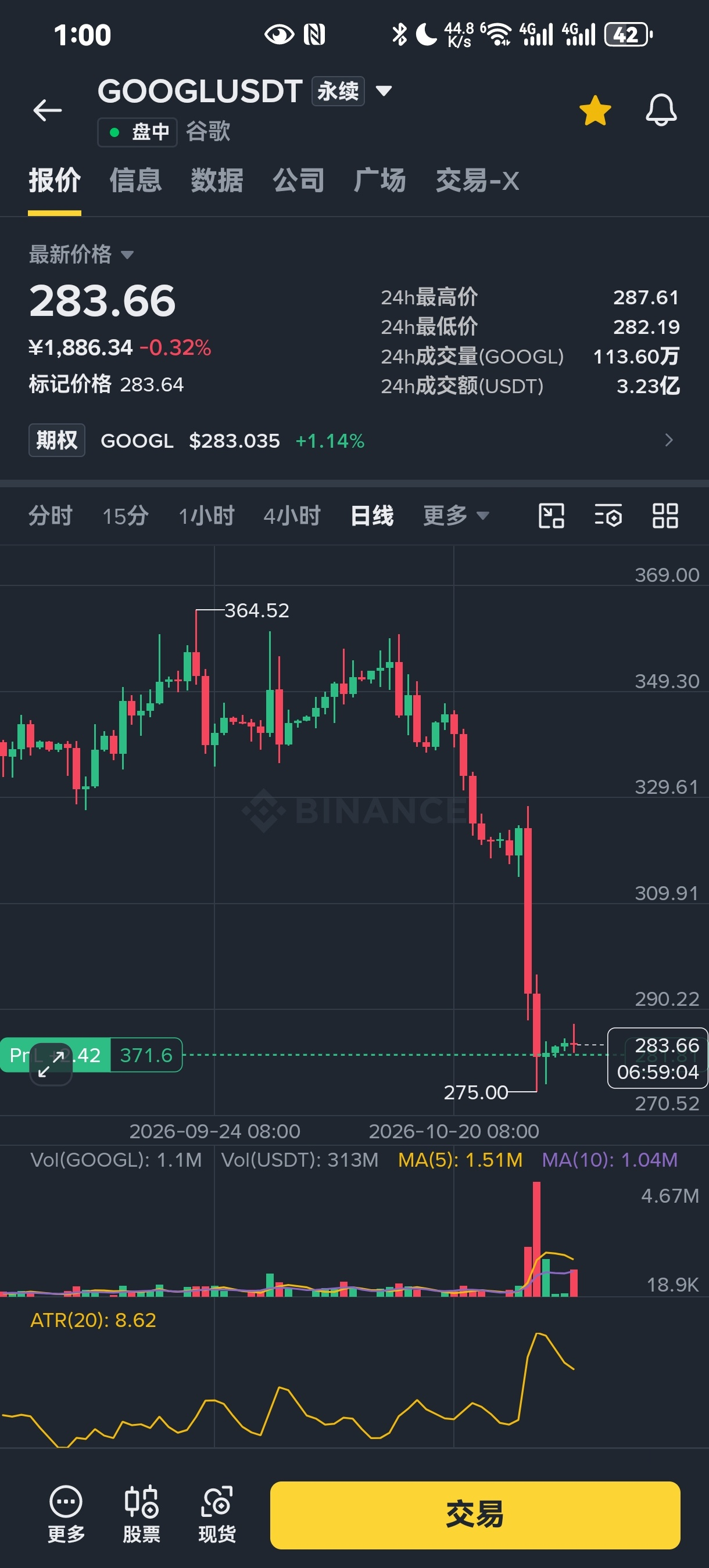
$GOOGL When others are fearful, I’m greedy. Google, I won’t leave until you let me get a bite. I’ll cling to you like a leech and show you that retail investors aren’t pushovers either.
2
469
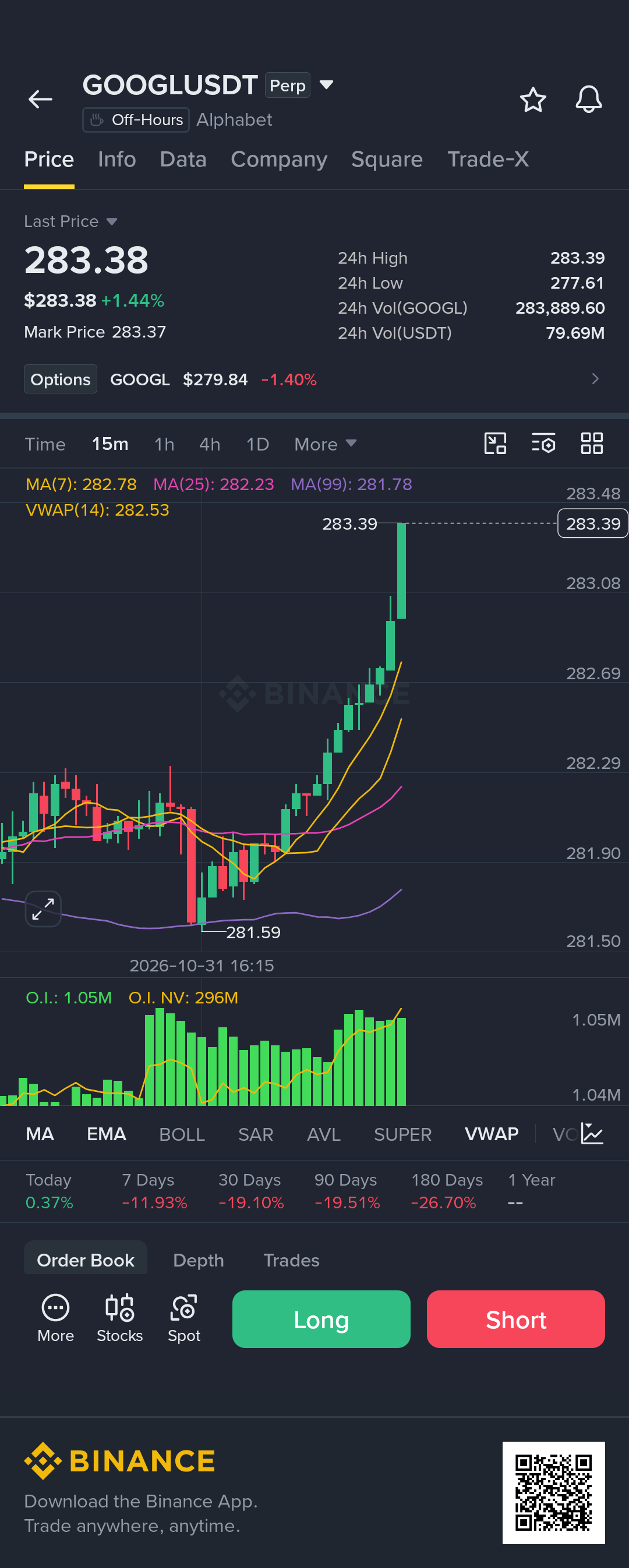
$GOOGL is pumping off-hours 😯🤔🫢🔥🚀
what does this mean?
$GOOGL is pumping off-hours 😯🤔🫢🔥🚀
what does this mean?
what does this mean?
3
580
Partly True
$GOOGL When an asset takes a massive 12% beating and subsequently spends the final hours of the week grinding sideways to higher (from $277.00 back up into the $281–$283 zone), it indicates seller exhaustion. The aggressive, indiscriminate dumping is over, and institutional "smart money" has stepped in to absorb the remaining sell orders.
Many traders who bought higher up (in the $290–$300 range) before earnings are now trapped underwater. As the price climbs back up on Monday and Tuesday, these traders often look to sell just to break even, creating a "ceiling" of resistance.
Because the selling panic has faded, expect a stable, constructive "U-shaped" accumulation phase rather than a vertical breakout. The price is primed to slowly chip away at the $284 and $288 resistance levels as buyers confidently rebuild their positions.
2
903

$GOOGL is starting on a high gear today 😀💪🏻 Saving the US stock market today
$GOOGL is starting on a high gear today 😀💪🏻 Saving the US stock market today
1
338
$GOOGL The panic has faded, now it's time to save the U.S stock Market ✊🏻✊🏻
$GOOGL The panic has faded, now it's time to save the U.S stock Market ✊🏻✊🏻
1
530
$GOOGL liquidation delayed is not liquidation denied 😅😅
$GOOGL liquidation delayed is not liquidation denied 😅😅
1
458
Log in to explore more content
Join global crypto users on Binance Square
⚡️ Get latest and useful information about crypto.
💬 Trusted by the world’s largest crypto exchange.
👍 Discover real insights from verified creators.
Email / Phone number
Trending Topics
USMidterms-WhatAreMarketsExpecting?
7,223 views
176 Discussing
UBS: Rising Democratic 'Blue Wave' Expectations Deepen Market Risk Aversion
Binance News
·1 Likes
·616 views
USOctoberNFP-AreRateCutsStillPossible
199,500 views
1,523 Discussing
AMDBeatsExpectations-AINarrativeContinues
1,244 views
75 Discussing